Tag: AI Recruitment

  • Trump Administration Launches ‘United States Tech Force’ to Recruit 1,000 Elite AI Engineers

    Trump Administration Launches ‘United States Tech Force’ to Recruit 1,000 Elite AI Engineers

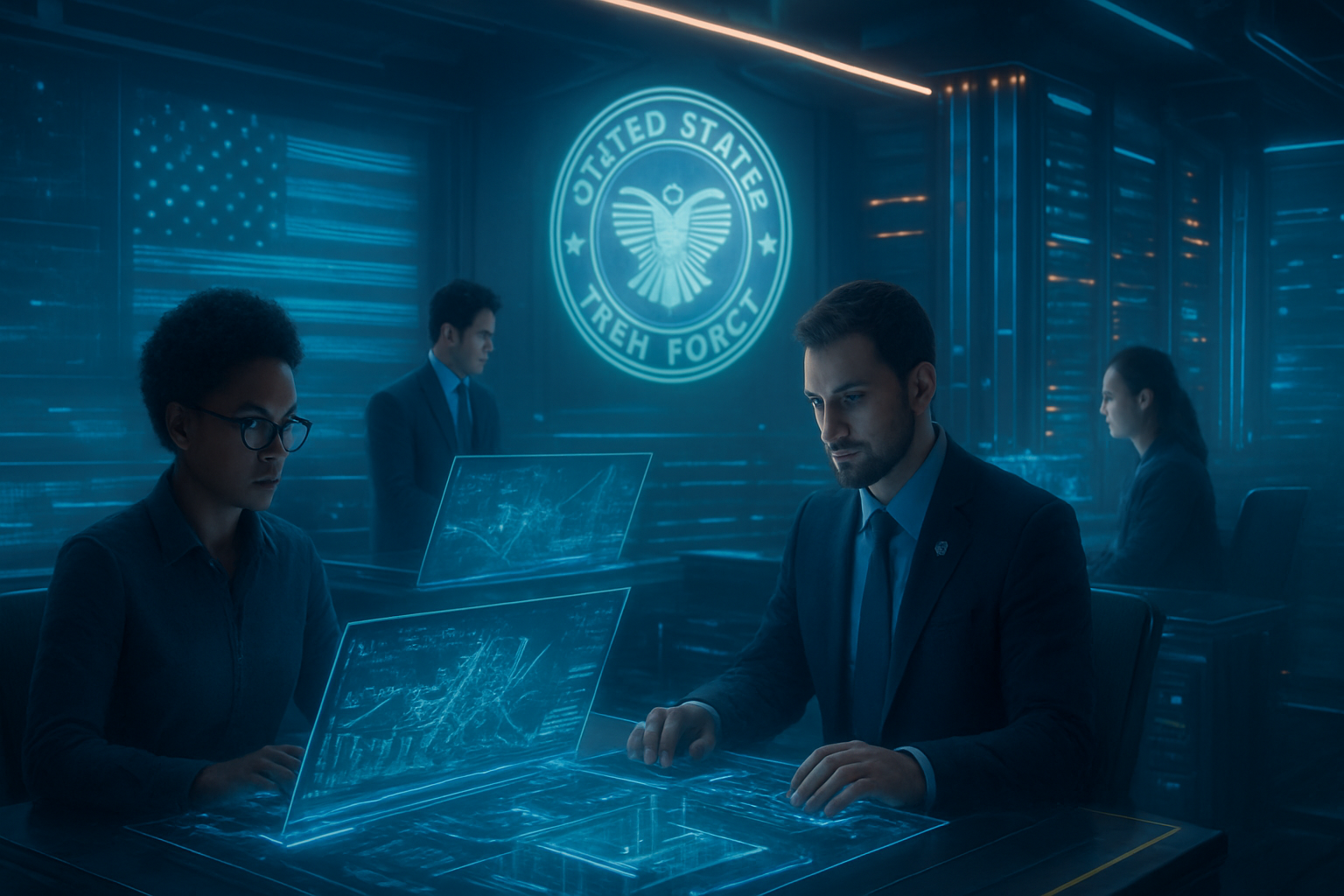
    In a bold move to solidify American dominance in the global artificial intelligence race, the second Trump administration has officially launched the "United States Tech Force" (USTF). The initiative aims to recruit a specialized corps of 1,000 elite AI engineers and technologists to modernize the nation’s aging government infrastructure and spearhead the integration of advanced machine learning into federal operations. Announced on December 15, 2025, the program is a cornerstone of the administration’s broader "Winning the Race: America’s AI Action Plan," signaling a massive shift toward a tech-centric federal workforce.

    The USTF is designed to bridge the widening gap between the private sector's rapid innovation and the government’s legacy systems. By offering high-tier salaries and bypassing traditional bureaucratic hurdles, the administration hopes to lure top-tier talent from Silicon Valley to Washington, D.C. This development comes at a critical juncture as the United States intensifies its competition with China for AI supremacy, positioning the federal government not just as a regulator, but as a primary architect of the next generation of AI-driven public services and national defense.

    Technical Elite: 1,000 Engineers for the "Stargate" Era

    The United States Tech Force is not a standard federal hiring surge; it is a highly selective "skills-first" recruitment drive. The program targets 1,000 engineers, data scientists, and cybersecurity specialists for two-year service terms. Unlike traditional civil service roles, the USTF does not require a college degree if applicants can prove "elite" technical proficiency through rigorous assessments and portfolios. These recruits will be placed in high-impact roles at the Department of War—the recently rebranded Department of Defense—and the Treasury, as well as the newly established "Trump Accounts" portal at the IRS.

    Technically, the USTF is the human component of the "Stargate" project, a $500 billion public-private partnership focused on building massive AI data centers and energy infrastructure across states like Texas and Ohio. These engineers will be tasked with migrating fragmented federal data into secure, cloud-native AI environments. The technical specifications of the initiative emphasize "battle-hardened" software engineering and the deployment of autonomous systems. Initial reactions from the AI research community are mixed; while some praise the focus on technical merit over credentials, others worry that a two-year term is insufficient for the deep architectural overhauls required by the government’s complex, decade-old systems.

    Silicon Valley Goes to Washington: Industry Impact and Corporate Synergy

    The announcement has sent ripples through the tech industry, as major players move to align themselves with the federal surge. Companies like Microsoft (NASDAQ: MSFT), Nvidia (NASDAQ: NVDA), and Oracle (NYSE: ORCL) have already signed on as partners. These firms are not only providing the hardware and cloud infrastructure for the initiative but have also agreed to create a "revolving door" for talent, promising to prioritize USTF alumni for high-paying roles once their two-year government service concludes. This creates a powerful strategic advantage for these giants, essentially allowing them to help shape the very federal systems they may later bid to maintain.

    However, the initiative poses a competitive challenge for smaller AI startups. With the federal government offering salaries between $150,000 and $200,000—placing recruits at the GS-13 and GS-14 pay grades—the USTF is competing directly for the same pool of "early-career" talent that typically fuels the startup ecosystem. Furthermore, the administration’s decision to allow recruits to retain their private-sector stock options has sparked debate. While it makes the roles more attractive to employees of Amazon (NASDAQ: AMZN) or Meta (NASDAQ: META), critics argue it creates a massive conflict of interest, potentially leading to "regulatory capture" where government tech policy is influenced by the financial interests of Big Tech.

    A Post-DOGE Pivot: The Broader AI Landscape

    The launch of the Tech Force is being viewed by many as a strategic "re-staffing" following the massive workforce reductions led by the Department of Government Efficiency (DOGE) earlier in 2025. After cutting over 200,000 federal roles and dismantling units like the U.S. Digital Service (USDS), the administration is now selectively "surging" specialized talent back into the fold. This "fire-and-hire" strategy is unprecedented in federal history and reflects a belief that the government should be leaner in bureaucracy but more potent in technical capability.

    The broader significance lies in the "AI Arms Race." By embedding elite engineers directly into national security and infrastructure, the U.S. is signaling a shift toward an offensive AI posture. This mirrors previous milestones like the Manhattan Project or the Apollo program, but with a modern, decentralized twist. However, the focus on "coders" over "ethicists" has drawn fire from civil society groups. Organizations like Public Citizen have warned that sidelining AI safety and ethics experts in favor of pure engineering talent could lead to the deployment of biased or unaccountable algorithms in critical areas like law enforcement and financial oversight.

    The Road Ahead: 2026 and the Future of Federal AI

    As the first wave of recruitment begins in late December 2025, the tech world is watching to see how quickly these 1,000 engineers can be integrated. The first cohort is expected to be in place by March 2026. Near-term projects include the automation of federal procurement and the deployment of AI-driven predictive maintenance for the nation’s power grid. In the long term, the administration envisions the Tech Force as a permanent "surge capacity" that can be deployed to any agency facing a technical crisis or a major modernization hurdle.

    Challenges remain, particularly regarding security clearances and the inherent friction between fast-moving tech culture and slow-moving federal bureaucracy. Experts predict that the success of the USTF will hinge on whether these engineers are given the actual authority to bypass legacy protocols. If successful, the program could serve as a blueprint for other nations looking to modernize their civil services. If it fails, it may be remembered as an expensive experiment that further blurred the lines between private corporate interests and public governance.

    Conclusion: A New Era for the Federal Workforce

    The United States Tech Force represents a paradigm shift in how the federal government views its workforce. By prioritizing elite technical skills and offering competitive compensation, the Trump administration is attempting to build a "digital vanguard" capable of navigating the complexities of the 21st century. The initiative’s deep ties to industry leaders like Palantir (NYSE: PLTR) and Apple (NASDAQ: AAPL) suggest a future where the boundary between public service and private enterprise is increasingly porous.

    As we move into 2026, the USTF will be a primary indicator of the administration’s ability to execute its ambitious AI agenda. Whether this "Tech Force" can truly modernize the government or if it will simply become a high-tech extension of corporate Silicon Valley remains to be seen. For now, the recruitment drive is on, and the eyes of the global tech community are firmly fixed on Washington.


    This content is intended for informational purposes only and represents analysis of current AI developments.

    TokenRing AI delivers enterprise-grade solutions for multi-agent AI workflow orchestration, AI-powered development tools, and seamless remote collaboration platforms.
    For more information, visit https://www.tokenring.ai/.
  • Uncle Sam Wants Your Algorithms: US Launches ‘Tech Force’ to Bridge AI Talent Chasm

    Uncle Sam Wants Your Algorithms: US Launches ‘Tech Force’ to Bridge AI Talent Chasm

    The launch of the Tech Force comes at a critical juncture as the federal government pivots its AI strategy from a focus on safety and ethics to a mandate of "innovation and dominance." With the global landscape shifting toward rapid AI deployment in both civilian and military sectors, the U.S. government is signaling that it will no longer settle for being a secondary player in the development of frontier models. The significance of this announcement lies not just in the numbers, but in the structural integration of private-sector expertise directly into the highest levels of federal policy and infrastructure.

    A New Blueprint for Federal Tech Recruitment

    The U.S. Tech Force is structured to hire an initial cohort of 1,000 technologists, including software engineers, data scientists, and AI researchers, for fixed two-year service terms. To address the persistent wage gap between Washington and Silicon Valley, the program offers salaries ranging from $150,000 to $200,000—a significant departure from the traditional General Schedule (GS) pay scales that often capped early-to-mid-career technical roles at much lower levels. This financial incentive is paired with a groundbreaking "Return-to-Industry" model, where more than 30 tech giants, including Microsoft (NASDAQ: MSFT), NVIDIA (NASDAQ: NVDA), Apple (NASDAQ: AAPL), and Meta (NASDAQ: META), have pledged to allow employees to take a leave of absence for government service.

    Technically, the Tech Force differs from its predecessor, the "AI Talent Surge" of 2023-2024, by moving away from a decentralized hiring model. While the previous surge successfully brought in roughly 200 professionals, it was plagued by retention issues and bureaucratic friction. The new Tech Force is managed centrally by the Office of Personnel Management (OPM) and focuses on "mission-critical" technical stacks. These include the development of the "Trump Accounts" platform—a high-scale financial system for tax-advantaged savings—and the integration of predictive logistics and autonomous systems within the newly rebranded Department of War. Initial reactions from the AI research community have been cautiously optimistic, with many praising the removal of "red tape," though some express concern over the speed of security clearances for such short-term rotations.

    Strategic Implications for the Tech Giants

    The Tech Force initiative creates a unique symbiotic relationship between the federal government and major AI labs. Companies like Microsoft (NASDAQ: MSFT) and NVIDIA (NASDAQ: NVDA) stand to benefit significantly, as their employees will gain firsthand experience in implementing AI at the massive scale of federal operations, potentially influencing government standards to align with their proprietary technologies. This "revolving door" model provides these companies with a strategic advantage, ensuring that the next generation of federal AI infrastructure is built by individuals familiar with their specific hardware and software ecosystems.

    However, the initiative also introduces potential disruptions for smaller startups and specialized AI firms. While tech giants can afford to lose a dozen engineers to a two-year government stint, smaller players may find it harder to compete for the remaining domestic talent pool, especially following the recent $100,000 fee imposed on new H-1B visas. Furthermore, the focus on "innovation and dominance" suggests a move toward preempting state-level AI regulations, which could streamline the market for major players but potentially stifle the niche regulatory-compliance startups that had emerged under previous, more restrictive safety frameworks.

    From Safety to Dominance: A Shift in the National AI Landscape

    The emergence of the Tech Force reflects a broader shift in the national AI landscape. The Biden-era U.S. AI Safety Institute has been reformed into the Center for AI Standards and Innovation (CAISI), with a new mandate to accelerate commercial testing and remove regulatory hurdles. This transition mirrors the rebranding of the Department of Defense to the Department of War, emphasizing a "warrior ethos" in AI development. The goal is no longer just to ensure AI is safe, but to ensure it is the most lethal and efficient in the world, specifically focusing on autonomous drones and intelligence synthesis.

    This shift has sparked a debate within the tech community regarding the ethical implications of such a rapid pivot. Critics point to the potential for "regulatory capture," where the very individuals building federal AI systems are the ones who will return to the private companies that benefit from those systems. Comparisons are being drawn to the Manhattan Project and the Apollo program, but with a modern twist: the government is no longer building the technology in a vacuum but is instead deeply intertwined with the commercial interests of Silicon Valley. This milestone marks the end of the "wait and see" era of federal AI policy and the beginning of a period of state-driven technological acceleration.

    The Horizon: The Genesis Mission and Beyond

    Looking ahead, the Tech Force is expected to be the primary engine behind the "Genesis Mission," an ambitious "Apollo program for AI" aimed at building a sovereign American Science and Security Platform. This initiative seeks to marshal federal resources to create a unified AI architecture for breakthroughs in biotechnology, nuclear energy, and materials science. In the near term, we can expect the first cohort of Tech Force recruits to begin work on streamlining the state department’s intelligence analysis tools, which are currently bogged down by legacy systems and fragmented data silos.

    The long-term success of the Tech Force will depend on the government's ability to solve the "clearance bottleneck." Even with high salaries and industry partnerships, the months-long process of obtaining high-level security clearances remains a significant deterrent for technologists used to the rapid pace of the private sector. Experts predict that if the Tech Force can successfully integrate even 50% of its initial 1,000-person goal by mid-2026, it will set a new standard for how modern governments operate in the digital age, potentially leading to a permanent "Technical Service" branch of the U.S. military or civil service.

    A New Era of Public-Private Synergy

    The launch of the U.S. Tech Force represents a watershed moment in the history of artificial intelligence and federal governance. By acknowledging that it cannot compete with the private sector on traditional terms, the U.S. government has instead chosen to integrate the private sector into its very fabric. The key takeaways from this initiative are clear: the federal government is prioritizing speed and technical superiority over cautious regulation, and it is willing to pay a premium to ensure that the brightest minds in AI are working on national priorities.

    As we move into 2026, the tech industry will be watching closely to see how the first "return-to-industry" transitions are handled and whether the Tech Force can truly deliver on its promise of modernizing the federal machine. The significance of this development cannot be overstated; it is a fundamental restructuring of how the world’s most powerful government interacts with the world’s most transformative technology. For now, the message from Washington is loud and clear: the AI race is on, and the U.S. is playing to win.


    This content is intended for informational purposes only and represents analysis of current AI developments.

    TokenRing AI delivers enterprise-grade solutions for multi-agent AI workflow orchestration, AI-powered development tools, and seamless remote collaboration platforms.
    For more information, visit https://www.tokenring.ai/.