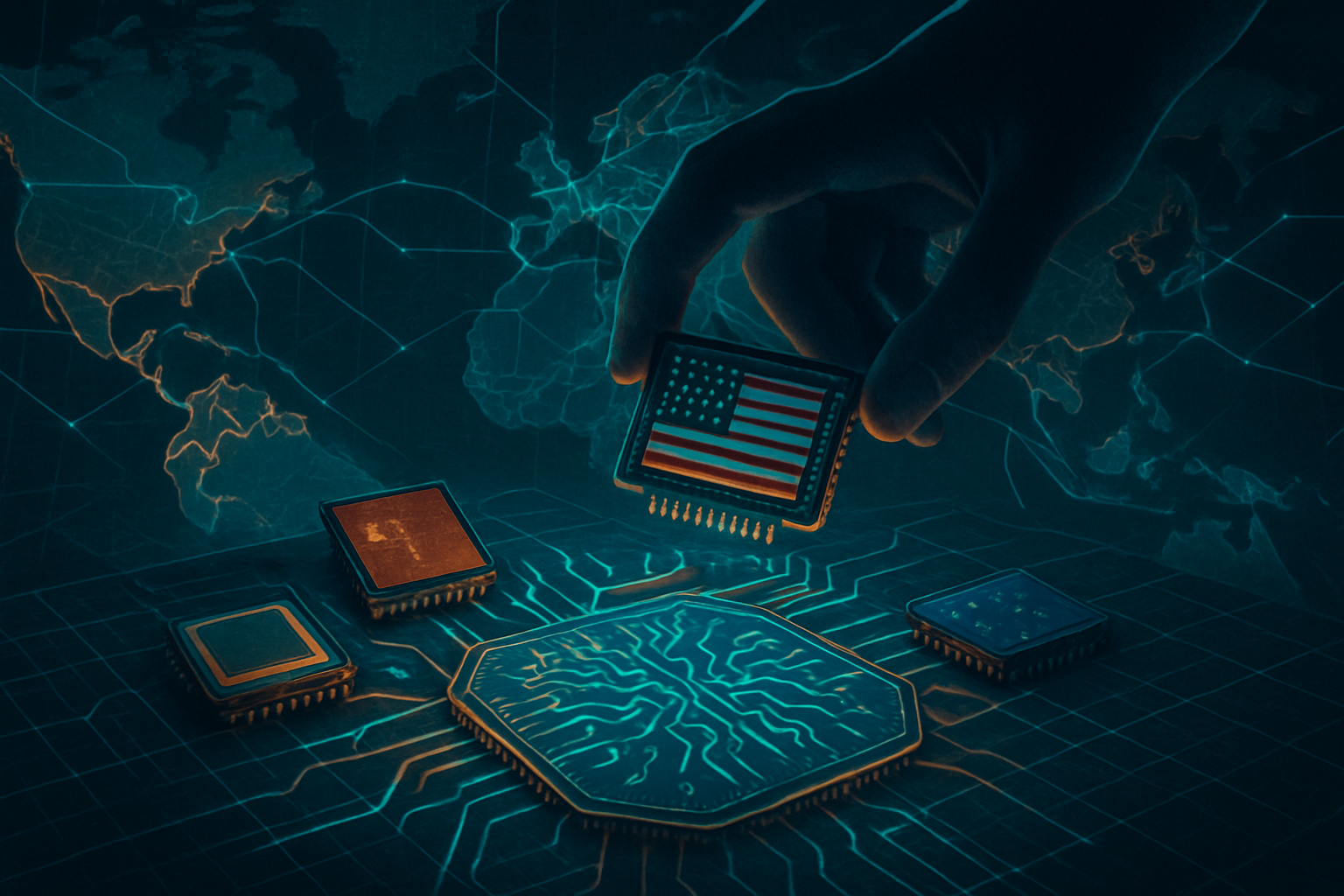
Tag: AI Sovereignty

  • The Open-Source Siege: SpacemiT’s 64-Core Vital Stone V100 Signals the Dawn of RISC-V Server Dominance

    The Open-Source Siege: SpacemiT’s 64-Core Vital Stone V100 Signals the Dawn of RISC-V Server Dominance

    In a move that marks a paradigm shift for the global semiconductor industry, Chinese chipmaker SpacemiT has officially launched its Vital Stone V100 processor, the world’s first RISC-V chip to successfully bridge the gap between low-power edge computing and full-scale data center performance. Released this January 2026, the V100 is built on a massive 64-core interconnect, signaling a direct assault on the high-performance computing (HPC) dominance currently held by the x86 and Arm architectures.

    The launch is bolstered by a massive $86.1 million (600 million yuan) Series B funding round, led by the Beijing Artificial Intelligence Industry Investment Fund. This capital infusion is explicitly aimed at establishing "AI Sovereignty"—a strategic push to provide global enterprises and sovereign nations with a high-performance, open-standard alternative to the proprietary licensing models of Arm Holdings (Nasdaq: ARM) and the architectural lock-in of Intel Corporation (Nasdaq: INTC) and Advanced Micro Devices, Inc. (Nasdaq: AMD).

    A New Benchmark in Silicon Scalability

    The Vital Stone V100 is engineered around SpacemiT’s proprietary X100 core, a 4-issue, 12-stage out-of-order microarchitecture that represents a significant leap for the RISC-V ecosystem. The headline feature is its high-density 64-core interconnect, which allows for the level of parallel processing required for modern cloud workloads and AI inference. Each core operates at a clock speed of up to 2.5 GHz, delivering performance benchmarks that finally rival enterprise-grade incumbents, specifically achieving over 9 points per GHz on the SPECINT2006 benchmark.

    Technical experts have highlighted the V100’s "AI Fusion" computing model as its most innovative trait. Unlike traditional server chips that rely on a separate Neural Processing Unit (NPU), the V100 integrates the RISC-V Intelligence Matrix Extension (IME) and 256-bit Vector 1.0 capabilities directly into the CPU instruction set. This integration allows the 64-core cluster to achieve approximately 32 TOPS (INT8) of AI performance without the latency overhead of off-chip communication. The processor is fully compliant with the RVA23 profile—the highest 64-bit standard—and includes full virtualization support (Hypervisor 1.0, AIA 1.0), making it a "drop-in" replacement for virtualized data center environments that previously required x86 or Arm-based hardware.

    Disrupting the Arm and x86 Duopoly

    The emergence of the Vital Stone V100 poses a credible threat to the established market leaders. For years, Arm Holdings (Nasdaq: ARM) has dominated the mobile and edge markets while slowly encroaching on the server space through partnerships with cloud giants. However, the V100 offers a reported 30% performance-per-watt advantage over comparable Arm Cortex-A55 clusters in edge-server scenarios. For cloud providers and data center operators, this efficiency translates directly into lower operational costs and reduced carbon footprints, making the V100 an attractive proposition for the next generation of "green" data centers.

    Furthermore, the $86 million Series B funding provides SpacemiT with the "war chest" necessary to scale mass production and build out the "RISC-V+AI+Triton" software ecosystem. This ecosystem is crucial for attracting developers away from the mature software stacks of Intel and NVIDIA Corporation (Nasdaq: NVDA). By positioning the V100 as an open-standard alternative, SpacemiT is tapping into a growing demand from tech giants in Asia and Europe who are eager to diversify their hardware supply chains and avoid the geopolitical risks associated with proprietary US-designed architectures.

    The Geopolitical Strategy of AI Sovereignty

    Beyond technical specs, the Vital Stone V100 is a political statement. The concept of "AI Sovereignty" has become a central theme in the 2026 tech landscape. As trade restrictions and export controls continue to reshape the global supply chain, nations are increasingly wary of relying on any single proprietary architecture. By leveraging the open-source RISC-V standard, SpacemiT offers a path to silicon independence, ensuring that the foundational hardware for artificial intelligence remains accessible regardless of diplomatic tensions.

    This shift mirrors the early days of the Linux operating system, which eventually broke the monopoly of proprietary server software. Just as Linux provided a transparent, community-driven alternative to Unix, the V100 is positioning RISC-V as the "Linux of hardware." Industry analysts suggest that this movement toward open standards could democratize AI development, allowing smaller firms and developing nations to build custom, high-performance silicon tailored to their specific needs without paying the "architecture tax" associated with legacy providers.

    The Road Ahead: Mass Production and the K3 Evolution

    The immediate future for SpacemiT involves a rapid scale-up of the Vital Stone V100 to meet the demands of early adopters in the robotics, autonomous systems, and edge-server sectors. The company has already indicated that the $86 million funding will also support the development of their next-generation K3 chip, which is expected to further increase core density and push clock speeds beyond the 3 GHz barrier.

    However, challenges remain. While the hardware is impressive, the "software gap" is the primary hurdle for RISC-V adoption. SpacemiT must convince major software vendors to optimize their stacks for the X100 core. Experts predict that the first wave of large-scale adoption will likely come from hyperscalers like Alibaba Group Holding Limited (NYSE: BABA), who have already invested heavily in their own RISC-V designs and are eager to see a robust merchant silicon market emerge to drive down costs across the industry.

    A Turning Point in Computing History

    The launch of the Vital Stone V100 and the successful Series B funding of SpacemiT represent a watershed moment for the semiconductor industry. It marks the point where RISC-V transitioned from an "experimental" architecture suitable for IoT devices to a "server-class" contender capable of powering the most demanding AI workloads. In the context of AI history, this may be remembered as the moment when the hardware monopoly of the late 20th century finally began to yield to a truly global, open-source model.

    As we move through 2026, the tech industry will be watching SpacemiT closely. The success of the V100 in real-world data center deployments will determine whether "AI Sovereignty" is a viable strategic path or a temporary geopolitical hedge. Regardless of the outcome, the arrival of a 64-core RISC-V server chip has forever altered the competitive landscape, forcing incumbents to innovate faster and more efficiently than ever before.


    This content is intended for informational purposes only and represents analysis of current AI developments.

    TokenRing AI delivers enterprise-grade solutions for multi-agent AI workflow orchestration, AI-powered development tools, and seamless remote collaboration platforms.
    For more information, visit https://www.tokenring.ai/.
  • RISC-V Reaches Server Maturity: SpacemiT Unveils 64-Core Vital Stone V100 with 30% Efficiency Gain Over ARM

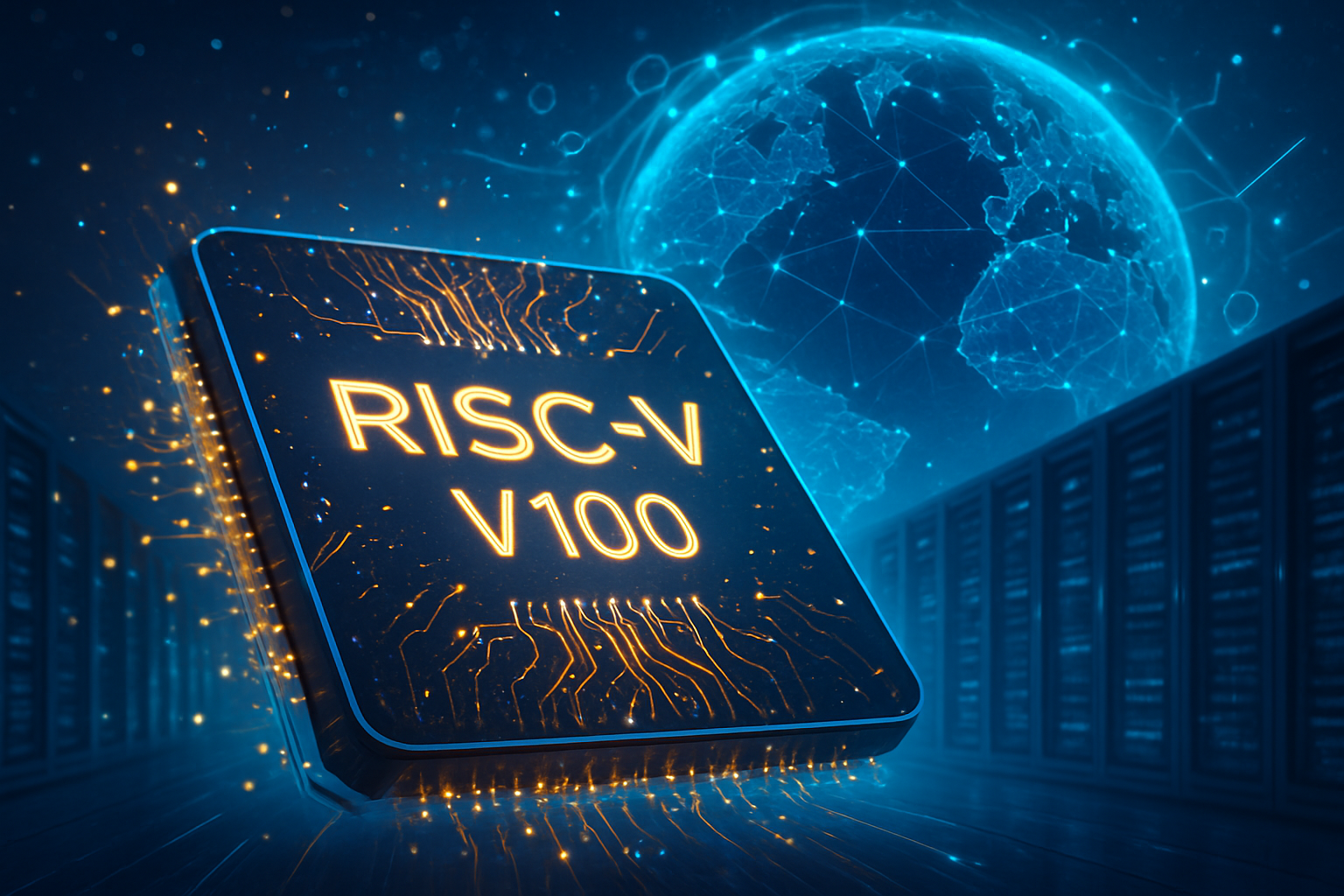
    RISC-V Reaches Server Maturity: SpacemiT Unveils 64-Core Vital Stone V100 with 30% Efficiency Gain Over ARM

    The landscape of data center and Edge AI architecture underwent a tectonic shift this month with the official launch of the Vital Stone V100, a 64-core server-class RISC-V processor from SpacemiT. Unveiled in January 2026, the V100 represents the most ambitious realization of the RISC-V open-standard architecture to date, moving beyond its traditional stronghold in low-power IoT devices and into the high-performance computing (HPC) and AI infrastructure markets. By integrating a sophisticated "fusion" of CPU and AI instructions directly into the silicon, SpacemiT is positioning the V100 as a direct challenger to established architectures that have long dominated the enterprise.

    The immediate significance of the Vital Stone V100 lies in its ability to deliver "AI Sovereignty" through an open-source hardware foundation. As geopolitical tensions continue to reshape the global supply chain, the arrival of a high-density, 64-core RISC-V chip provides a viable alternative to the proprietary licensing models of ARM Holdings (NASDAQ: ARM) and the legacy x86 dominance of Intel Corporation (NASDAQ: INTC) and Advanced Micro Devices, Inc. (NASDAQ: AMD). With its 30% performance-per-watt advantage over the ARM Cortex-A55 in edge-specific scenarios, the V100 isn't just an experimental alternative; it is a competitive powerhouse designed for the next generation of autonomous systems and distributed AI workloads.

    The X100 Core: A New Standard for Instruction Fusion

    At the heart of the Vital Stone V100 is the X100 core, a proprietary 4-issue, 12-stage out-of-order microarchitecture that fully adheres to the RVA23 profile—the highest current standard for 64-bit RISC-V application processors. The V100’s 64-core interconnect marks a watershed moment for the ecosystem, proving that RISC-V can scale to the density required for modern cloud and edge servers. Each core operates at a maximum frequency of 2.5 GHz, delivering over 9 points per GHz on the SPECINT2006 benchmark, placing it squarely in the performance tier needed for complex enterprise software.

    What truly differentiates the V100 from its predecessors and competitors is its approach to AI acceleration. Rather than relying on a separate, dedicated Neural Processing Unit (NPU) that often introduces data bottlenecking, SpacemiT has pioneered a "fusion" computing model. This integrates the RISC-V Intelligence Matrix Extension (IME) and 256-bit Vector 1.0 capabilities directly into the CPU's primary instruction set. This allows the processor to handle AI matrix operations natively, achieving approximately 32 TOPS (INT8) of AI performance across the full 64-core cluster. The AI research community has responded with notable enthusiasm, citing this architectural "fusion" as a key factor in reducing latency for real-time Edge AI applications like robotics and autonomous drone swarms.

    Market Disruption and the Rise of "AI Sovereignty"

    The launch of the Vital Stone V100 coincides with a massive $86.1 million Series B funding round for SpacemiT, led by the China Internet Investment Fund and the Beijing Artificial Intelligence Industry Investment Fund. This capital infusion underscores the strategic importance of the V100 as a tool for "AI Sovereignty." For tech giants and startups alike, the V100 offers a path to build infrastructure that is free from the restrictive licensing fees and export controls associated with traditional western silicon designs.

    Companies specializing in "Physical AI"—the application of AI to real-world hardware—stand to benefit most from the V100’s 30% efficiency advantage over ARM-based alternatives. In high-density environments where power consumption and thermal management are the primary limiting factors, such as smart city infrastructure and decentralized edge data centers, the V100 provides a significant cost-to-performance advantage. This development poses a direct threat to the market share of ARM (NASDAQ: ARM) in the edge server space and challenges NVIDIA Corporation (NASDAQ: NVDA) in the lower-to-mid-tier AI inference market, where the V100's native AI fusion can handle workloads that previously required a dedicated GPU or NPU.

    A Global Milestone for Open-Source Hardware

    The broader significance of the V100 cannot be overstated; it marks the end of the "experimentation phase" for open-source hardware. Historically, RISC-V was relegated to secondary roles as microcontrollers or secondary processors within larger systems. The Vital Stone V100 changes that narrative, positioning RISC-V as the "third pillar" of computing alongside x86 and ARM. By providing native support for standardized hypervisors (Hypervisor 1.0), IOMMUs, and the Advanced Interrupt Architecture (AIA 1.0), the V100 is a "drop-in" ready solution for virtualized data center environments.

    This shift toward open-source hardware is a mirror of the transition the software industry made toward Linux decades ago. Just as Linux broke the monopoly of proprietary operating systems, the V100 and the RVA23 standard represent a move toward a world where every layer of the computing stack—from the Instruction Set Architecture (ISA) to the application layer—is open and customizable. This transparency addresses growing concerns regarding hardware-level security backdoors and proprietary silicon "black boxes," making the V100 an attractive option for security-conscious government and enterprise sectors.

    The Road to Mass Production: What’s Next for SpacemiT?

    Looking ahead, SpacemiT has outlined an aggressive roadmap to capitalize on the V100's momentum. The company has confirmed that a smaller, 8-to-16 core variant dubbed the "K3" will enter mass production as early as April 2026. This chip will likely target consumer-grade Edge AI devices, while the flagship 64-core V100 begins its first small-scale deployments in server clusters toward the end of Q4 2026. Experts predict that the availability of these chips will trigger a surge in RISC-V-optimized software development, further maturing the ecosystem.

    The primary challenge remaining for SpacemiT and the RISC-V community is the continued optimization of software compilers and libraries to fully exploit the "fusion" AI instructions. While the hardware is ready, the full realization of the 30% performance-per-watt advantage will depend on how quickly developers can adapt their AI models to the new matrix extensions. However, with the backing of major investment funds and the growing demand for independent silicon, the momentum appears unstoppable.

    Final Assessment: A New Era of Computing

    The launch of the SpacemiT Vital Stone V100 in January 2026 will likely be remembered as the moment RISC-V achieved parity with its proprietary rivals in the data center. By delivering a 64-core design that fuses CPU and AI capabilities into a single, efficient package, SpacemiT has provided a blueprint for the future of decentralized AI infrastructure. The V100 is not just a processor; it is a statement of independence for the global technology industry.

    As we move further into 2026, the tech world will be watching for the first third-party benchmarks of the V100 in production environments. If SpacemiT can deliver on its promise of superior performance-per-watt at scale, the dominance of ARM and x86 in the edge and data center markets may finally face its most serious challenge yet.


    This content is intended for informational purposes only and represents analysis of current AI developments.

    TokenRing AI delivers enterprise-grade solutions for multi-agent AI workflow orchestration, AI-powered development tools, and seamless remote collaboration platforms.
    For more information, visit https://www.tokenring.ai/.

  • Dutch Government Seizes Control of Nexperia: A New Front in the Global AI Chip War

    Dutch Government Seizes Control of Nexperia: A New Front in the Global AI Chip War

    In a move signaling a dramatic escalation of geopolitical tensions in the semiconductor industry, the Dutch government has invoked emergency powers to seize significant control over Nexperia, a Chinese-owned chip manufacturer with deep roots in the Netherlands. This unprecedented intervention, unfolding in October 2025, underscores Europe's growing determination to safeguard critical technological sovereignty, particularly in the realm of artificial intelligence. The decision has sent shockwaves through global supply chains, intensifying a simmering "chips war" and casting a long shadow over Europe-China relations, with profound implications for the future of AI development and innovation.

    The immediate significance of this action for the AI sector cannot be overstated. As AI systems become increasingly sophisticated and pervasive, the foundational hardware—especially advanced semiconductors—is paramount. By directly intervening in a company like Nexperia, which produces essential components for everything from automotive electronics to AI data centers, the Netherlands is not just protecting a domestic asset; it is actively shaping the geopolitical landscape of AI infrastructure, prioritizing national security and supply chain resilience over traditional free-market principles.

    Unprecedented Intervention: The Nexperia Takeover and its Technical Underpinnings

    The Dutch government's intervention in Nexperia marks a historic application of the rarely used "Goods Availability Act," a Cold War-era emergency law. Citing "serious governance shortcomings" and a "threat to the continuity and safeguarding on Dutch and European soil of crucial technological knowledge and capabilities," the Dutch Minister of Economic Affairs gained authority to block or reverse Nexperia's corporate decisions for a year. This included the suspension of Nexperia's Chinese CEO, Zhang Xuezheng, and the appointment of a non-Chinese executive with a decisive vote on strategic matters. Nexperia, headquartered in Nijmegen, has been wholly owned by China's Wingtech Technology Co., Ltd. (SSE: 600745) since 2018.

    This decisive action was primarily driven by fears of sensitive chip technology and expertise being transferred to Wingtech Technology. These concerns were exacerbated by the U.S. placing Wingtech on its "entity list" in December 2024, a designation expanded to include its majority-owned subsidiaries in September 2025. Allegations also surfaced regarding Wingtech's CEO attempting to misuse Nexperia's funds to support a struggling Chinese chip factory. While Nexperia primarily manufactures standard and "discrete" semiconductor components, crucial for a vast array of industries including automotive and consumer electronics, it also develops more advanced "wide gap" semiconductors essential for electric vehicles, chargers, and, critically, AI data centers. The government's concern extended beyond specific chip designs to include valuable expertise in efficient business processes and yield rate optimization, particularly as Nexperia has been developing a "smart manufacturing" roadmap incorporating data-driven manufacturing, machine learning, and AI models for its back-end factories.

    This approach differs significantly from previous governmental interventions, such as the Dutch government's restrictions on ASML Holding N.V. (AMS: ASML) sales of advanced lithography equipment to China. While ASML restrictions were export controls on specific technologies, the Nexperia case represents a direct administrative takeover of a foreign-owned company's strategic management. Initial reactions have been sharply divided: Wingtech vehemently condemned the move as "politically motivated" and "discriminatory," causing its shares to plummet. The China Semiconductor Industry Association (CSIA) echoed this, opposing the intervention as an "abuse of 'national security'." Conversely, the European Commission has publicly supported the Dutch government's action, viewing it as a necessary step to ensure security of supply in a strategically sensitive sector.

    Competitive Implications for the AI Ecosystem

    The Dutch government's intervention in Nexperia creates a complex web of competitive implications for AI companies, tech giants, and startups globally. Companies that rely heavily on Nexperia's discrete components and wide-gap semiconductors for their AI hardware, power management, and advanced computing solutions stand to face both challenges and potential opportunities. European automotive manufacturers and industrial firms, which are major customers of Nexperia's products, could see increased supply chain stability from a European-controlled entity, potentially benefiting their AI-driven initiatives in autonomous driving and smart factories.

    However, the immediate disruption caused by China's retaliatory export control notice—prohibiting Nexperia's domestic unit and its subcontractors from exporting specific Chinese-made components—could impact global AI hardware production. Companies that have integrated Nexperia's Chinese-made parts into their AI product designs might need to quickly re-evaluate their sourcing strategies, potentially leading to delays or increased costs. For major AI labs and tech companies, particularly those with extensive global supply chains like Alphabet Inc. (NASDAQ: GOOGL), Microsoft Corporation (NASDAQ: MSFT), and Amazon.com, Inc. (NASDAQ: AMZN), this event underscores the urgent need for diversification and de-risking their semiconductor procurement.

    The intervention also highlights the strategic advantage of controlling foundational chip technology. European AI startups and research institutions might find it easier to collaborate with a Nexperia under Dutch oversight, fostering local innovation in AI hardware. Conversely, Chinese AI companies, already grappling with U.S. export restrictions, will likely intensify their efforts to build fully indigenous semiconductor supply chains, potentially accelerating their domestic chip manufacturing capabilities and fostering alternative ecosystems. This could lead to a further bifurcation of the global AI hardware market, with distinct supply chains emerging in the West and in China, each with its own set of standards and suppliers.

    Broader Significance: AI Sovereignty in a Fragmented World

    This unprecedented Dutch intervention in Nexperia fits squarely into the broader global trend of technological nationalism and the escalating "chips war." It signifies a profound shift from a purely economic globalization model to one heavily influenced by national security and technological sovereignty, especially concerning AI. The strategic importance of semiconductors, the bedrock of all advanced computing and AI, means that control over their production and supply chains has become a paramount geopolitical objective for major powers.

    The impacts are multifaceted. Firstly, it deepens the fragmentation of global supply chains. As nations prioritize control over critical technologies, the interconnectedness that once defined the semiconductor industry is giving way to localized, resilient, but potentially less efficient, ecosystems. Secondly, it elevates the discussion around "AI sovereignty"—the idea that a nation must control the entire stack of AI technology, from data to algorithms to the underlying hardware, to ensure its national interests and values are upheld. The Nexperia case is a stark example of a nation taking direct action to secure a piece of that critical AI hardware puzzle.

    Potential concerns include the risk of further retaliatory measures, escalating trade wars, and a slowdown in global technological innovation if collaboration is stifled by geopolitical divides. This move by the Netherlands, while supported by the EU, could also set a precedent for other nations to intervene in foreign-owned companies operating within their borders, particularly those in strategically sensitive sectors. Comparisons can be drawn to previous AI milestones where hardware advancements (like NVIDIA's (NASDAQ: NVDA) GPU dominance) were purely market-driven; now, geopolitical forces are directly shaping the availability and control of these foundational technologies.

    The Road Ahead: Navigating a Bipolar Semiconductor Future

    Looking ahead, the Nexperia saga is likely to catalyze several near-term and long-term developments. In the near term, we can expect increased scrutiny of foreign ownership in critical technology sectors across Europe and other allied nations. Governments will likely review existing legislation and potentially introduce new frameworks to protect domestic technological capabilities deemed vital for national security and AI leadership. The immediate challenge will be to mitigate the impact of China's retaliatory export controls on Nexperia's global operations and ensure the continuity of supply for its customers.

    Longer term, this event will undoubtedly accelerate the push for greater regional self-sufficiency in semiconductor manufacturing, particularly in Europe and the United States. Initiatives like the EU Chips Act will gain renewed urgency, aiming to bolster domestic production capabilities from design to advanced packaging. This includes fostering innovation in areas where Nexperia has expertise, such as wide-gap semiconductors and smart manufacturing processes that leverage AI. We can also anticipate a continued, and likely intensified, decoupling of tech supply chains between Western blocs and China, leading to the emergence of distinct, perhaps less optimized, but more secure, ecosystems for AI-critical semiconductors.

    Experts predict that the "chips war" will evolve from export controls to more direct state interventions, potentially involving nationalization or forced divestitures in strategically vital companies. The challenge will be to balance national security imperatives with the need for global collaboration to drive technological progress, especially in a field as rapidly evolving as AI. The coming months will be crucial in observing the full economic and political fallout of the Nexperia intervention, setting the tone for future international tech relations.

    A Defining Moment in AI's Geopolitical Landscape

    The Dutch government's direct intervention in Nexperia represents a defining moment in the geopolitical landscape of artificial intelligence. It underscores the undeniable truth that control over foundational semiconductor technology is now as critical as control over data or algorithms in the global race for AI supremacy. The key takeaway is clear: national security and technological sovereignty are increasingly paramount, even at the cost of disrupting established global supply chains and escalating international tensions.

    This development signifies a profound shift in AI history, moving beyond purely technological breakthroughs to a period where governmental policy and geopolitical maneuvering are direct shapers of the industry's future. The long-term impact will likely be a more fragmented, but potentially more resilient, global semiconductor ecosystem, with nations striving for greater self-reliance in AI-critical hardware.

    This intervention, while specific to Nexperia, serves as a powerful precedent for how governments may act to secure their strategic interests in the AI era. In the coming weeks and months, the world will be watching closely for further retaliatory actions from China, the stability of Nexperia's operations under new management, and how other nations react to this bold move. The Nexperia case is not just about a single chip manufacturer; it is a critical indicator of the intensifying struggle for control over the very building blocks of artificial intelligence, shaping the future trajectory of technological innovation and international relations.


    This content is intended for informational purposes only and represents analysis of current AI developments.

    TokenRing AI delivers enterprise-grade solutions for multi-agent AI workflow orchestration, AI-powered development tools, and seamless remote collaboration platforms.
    For more information, visit https://www.tokenring.ai/.