
Tag: AI Supercomputers

  • The Rise of the Silicon Fortress: How the ‘Sovereign AI’ Movement is Redrawing the Global Tech Map

    The Rise of the Silicon Fortress: How the ‘Sovereign AI’ Movement is Redrawing the Global Tech Map

    As of January 2026, the global artificial intelligence landscape has shifted from a race between private tech giants to a high-stakes geopolitical competition for "Sovereign AI." No longer content to "rent" intelligence from Silicon Valley, nations are aggressively building their own end-to-end AI stacks—encompassing domestic hardware, localized data centers, and culturally specific foundation models. This movement, once a strategic talking point, has evolved into a massive industrial mobilization, with countries like the United Arab Emirates, France, and the United Kingdom committing billions to ensure their digital autonomy in an era defined by agentic intelligence.

    The immediate significance of this shift cannot be overstated. By decoupling from the infrastructure of American and Chinese hyperscalers, these nations are attempting to safeguard their national security, preserve linguistic heritage, and insulate their economies from potential supply chain weaponization. The "Sovereign AI" movement represents a fundamental reordering of the digital world, where compute power is now viewed with the same strategic weight as oil reserves or nuclear capabilities.

    Technical Foundations: From Hybrid Architectures to Exascale Compute

    The technical spearhead of the Sovereign AI movement is characterized by a move away from generic, one-size-fits-all models toward specialized architectures. In the UAE, the Technology Innovation Institute (TII) recently launched the Falcon-H1 Arabic and Falcon H1R models in early January 2026. These models utilize a groundbreaking hybrid Mamba-Transformer architecture, which merges the deep reasoning capabilities of traditional Transformers with the linear-scaling efficiency of State Space Models (SSMs). This allows for a massive 256,000-token context window, enabling the UAE’s sovereign systems to process entire national archives or legal frameworks in a single pass—a feat previously reserved for the largest models from OpenAI or Google (NASDAQ: GOOGL).

    In Europe, the technical focus has shifted toward massive compute density. France’s Jean Zay supercomputer, following its "Phase 4" extension in mid-2025, now boasts an AI capacity of 125.9 petaflops, powered by over 1,400 NVIDIA (NASDAQ: NVDA) H100 GPUs. This infrastructure is specifically tuned for "sovereign training," allowing French researchers and companies like Mistral AI to develop models on domestic soil. Looking ahead to later in 2026, France is preparing to inaugurate the Jules Verne system, which aims to be the continent’s second exascale supercomputer, designed specifically for the next generation of "sovereign" foundation models.

    The United Kingdom has countered with its own massive technical investment: the Isambard-AI cluster in Bristol. Fully operational as of mid-2025, it utilizes 5,448 NVIDIA GH200 Grace Hopper superchips to deliver a staggering 21 exaFLOPS of AI performance. Unlike previous generations of supercomputers that were primarily for academic physics simulations, Isambard-AI is a dedicated "AI factory." It is part of a broader £18 billion infrastructure program designed to provide UK startups and government agencies with the raw power needed to build models that comply with British regulatory and safety standards without relying on external cloud providers.

    Market Disruption: The Dawn of the 'Sovereign Cloud'

    The Sovereign AI movement is creating a new class of winners in the tech industry. NVIDIA (NASDAQ: NVDA) has emerged as the primary beneficiary, with CEO Jensen Huang championing the "Sovereign AI" narrative to open up massive new revenue streams from nation-states. While traditional cloud giants like Amazon (NASDAQ: AMZN) and Microsoft (NASDAQ: MSFT) continue to dominate the commercial market, they are facing new competition from state-backed "Sovereign Clouds." These domestic providers offer guarantees that data will never leave national borders, a requirement that is becoming mandatory for government and critical infrastructure AI applications.

    Hardware providers like Hewlett Packard Enterprise (NYSE: HPE) and Intel (NASDAQ: INTC) are also finding renewed relevance as they partner with governments to build localized data centers. For instance, the UK’s Dawn cluster utilizes Intel Data Center GPU Max systems, showcasing a strategic move to diversify hardware dependencies. This shift is disrupting the traditional "winner-takes-all" dynamic of the AI industry; instead of a single global leader, we are seeing the rise of regional champions. Startups that align themselves with sovereign projects, such as France’s Mistral or the UAE’s G42, are gaining access to subsidized compute and government contracts that were previously out of reach.

    However, this trend poses a significant challenge to the dominance of US-based AI labs. As nations build their own "Silicon Fortresses," the addressable market for generic American models may shrink. If a country can provide its citizens and businesses with a "sovereign" model that is faster, cheaper, and more culturally attuned than a generic version of GPT-5, the strategic advantage of the early AI pioneers could rapidly erode.

    Geopolitical Significance: Linguistic Sovereignty and the Silicon Fortress

    Beyond the technical and economic implications, the Sovereign AI movement is a response to a profound cultural and political anxiety. UAE officials have framed the Falcon project as a matter of "linguistic sovereignty." By training models on high-quality Arabic datasets rather than translated English data, they ensure that the AI reflects the nuances of their culture rather than a Western-centric worldview. This is a direct challenge to the "cultural imperialism" of early LLMs, which often struggled with non-Western logic and social norms.

    This movement also signals a shift in global power dynamics. The UK's £18 billion program is a clear signal that the British government views AI as "Critical National Infrastructure" (CNI), on par with the power grid or water supply. By treating AI as a public utility, the UK and France are attempting to prevent a future where they are "vassal states" to foreign tech empires. This has led to what analysts call the "Silicon Fortress" era—a multipolar AI world where data and compute are increasingly siloed behind national borders.

    There are, however, significant concerns. Critics warn that a fragmented AI landscape could lead to a "race to the bottom" regarding AI safety. If every nation develops its own autonomous agents under different regulatory frameworks, global coordination on existential risks becomes nearly impossible. Furthermore, the massive energy requirements of these sovereign supercomputers are clashing with national net-zero goals, forcing governments to make difficult trade-offs between technological supremacy and environmental sustainability.

    The Horizon: Exascale Ambitions and Agentic Autonomy

    Looking toward the remainder of 2026 and beyond, the Sovereign AI movement is expected to move from "foundation models" to "sovereign agents." These are AI systems capable of autonomously managing national logistics, healthcare systems, and energy grids. The UK’s Sovereign AI Unit is already exploring "Agentic Governance" frameworks to oversee these systems. As the £18 billion program continues its rollout, we expect to see the birth of the first "Government-as-a-Service" platforms, where sovereign AI handles everything from tax processing to urban planning with minimal human intervention.

    The next major milestone will be the completion of the Jules Verne exascale system in France and the expansion of the UAE’s partnership with G42 to build a 1GW AI data center on European soil. These projects will likely trigger a second wave of sovereign investment from smaller nations in Southeast Asia and South America, who are watching the UAE-France-UK trio as a blueprint for their own digital independence. The challenge will be the "talent war"—as nations build the hardware, the struggle to attract and retain the world's top AI researchers will only intensify.

    Conclusion: A New Chapter in AI History

    The Sovereign AI movement marks the end of the "borderless" era of artificial intelligence. The massive investments by the UAE, France, and the UK demonstrate that in 2026, technological autonomy is no longer optional—it is a prerequisite for national relevance. From the hybrid architectures of the Falcon-H1 to the exascale ambitions of Isambard-AI and Jules Verne, the infrastructure being built today will define the geopolitical landscape for decades to come.

    As we move forward, the key metric for national success will not just be GDP, but "Compute-per-Capita" and the depth of a nation’s sovereign data reserves. The "Silicon Fortress" is here to stay, and the coming months will reveal whether this multipolar AI world leads to a new era of localized innovation or a fractured global community struggling to govern an increasingly autonomous technology. For now, the race for technological autonomy is in full sprint, and the finish line is nothing less than the future of national identity itself.


    This content is intended for informational purposes only and represents analysis of current AI developments.

    TokenRing AI delivers enterprise-grade solutions for multi-agent AI workflow orchestration, AI-powered development tools, and seamless remote collaboration platforms.
    For more information, visit https://www.tokenring.ai/.
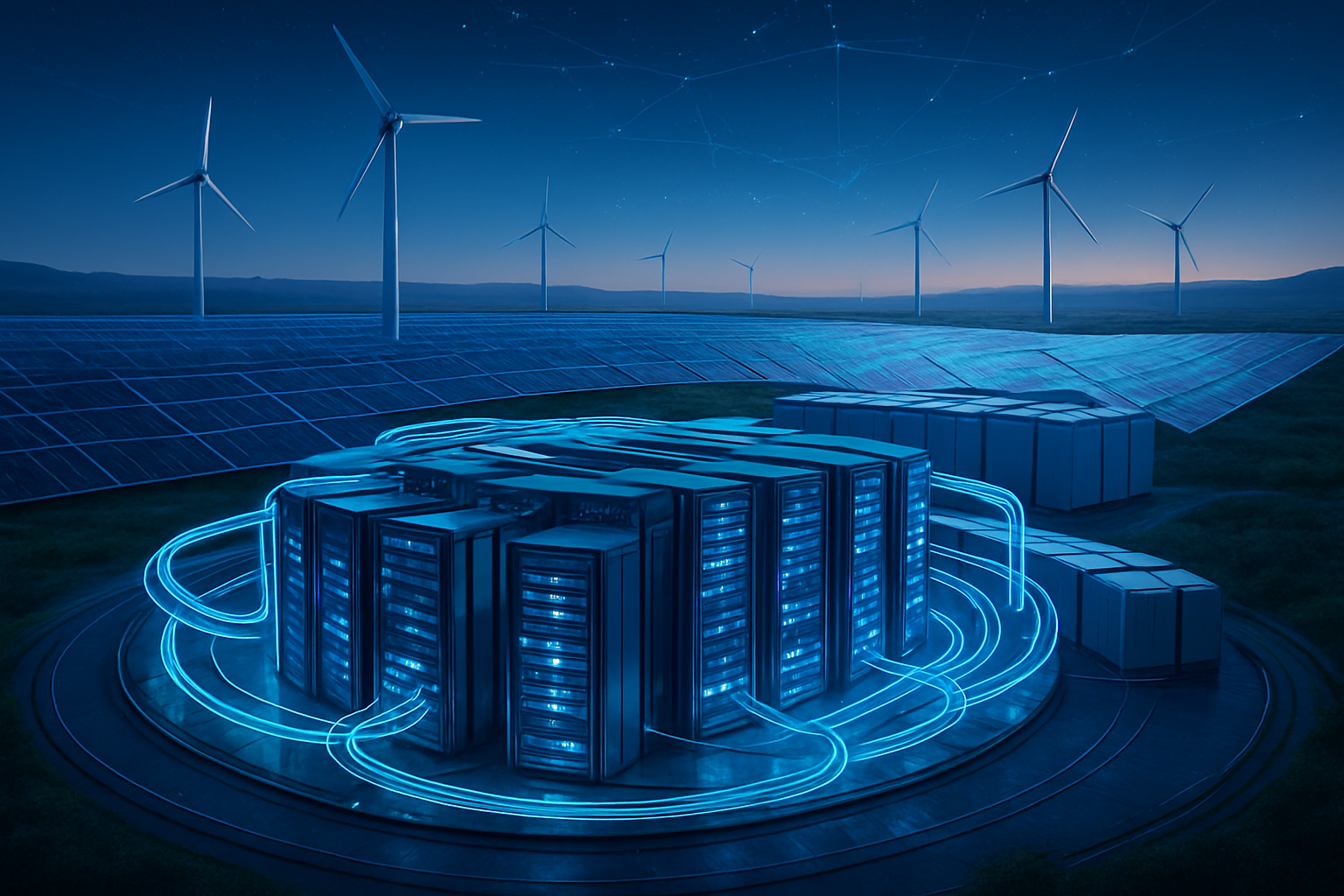
  • Google’s $4.75 Billion Intersect Acquisition: Securing the Power for the Next AI Frontier

    Google’s $4.75 Billion Intersect Acquisition: Securing the Power for the Next AI Frontier

    In a move that fundamentally redefines the relationship between Big Tech and the energy sector, Alphabet Inc. (NASDAQ: GOOGL) announced on December 22, 2025, that it has completed the $4.75 billion acquisition of Intersect Power, a leading developer of utility-scale renewable energy and integrated data center infrastructure. The deal, which includes a massive pipeline of solar, wind, and battery storage projects, marks the first time a major hyperscaler has moved beyond purchasing renewable energy credits to directly owning the generation and transmission assets required to power its global AI operations.

    The acquisition comes at a critical juncture for Google as it races to deploy its next generation of AI supercomputers. With the energy demands of large language models (LLMs) like Gemini scaling exponentially, the "power wall"—the physical limit of electricity available from traditional utility grids—has become the single greatest bottleneck in the AI arms race. By absorbing Intersect Power’s development platform and its specialized "co-location" strategy, Google is effectively bypassing the years-long backlogs of the public electrical grid to build self-sufficient, energy-integrated AI factories.

    The Technical Shift: From Grid-Dependent to Energy-Integrated

    At the heart of this acquisition is Intersect Power’s pioneering "Quantum" infrastructure model. Unlike traditional data centers that rely on the local utility for power, Intersect specializes in co-locating massive compute clusters directly alongside dedicated renewable energy plants. Their flagship project in Haskell County, Texas, serves as the blueprint: an 840 MW solar PV installation paired with 1.3 GWh of battery energy storage utilizing Tesla (NASDAQ: TSLA) Megapacks. This "behind-the-meter" approach allows Google to feed its servers directly from its own power source, drastically reducing transmission losses and avoiding the grid congestion that has delayed other tech projects by up to five years.

    This infrastructure is designed specifically to support Google’s 7th-generation custom AI silicon, codenamed "Ironwood." The Ironwood TPU (Tensor Processing Unit) represents a massive leap in compute density; a single liquid-cooled "superpod" now scales to 9,216 chips, delivering a staggering 42.5 Exaflops of AI performance. However, these capabilities come with a heavy price in wattage. A single Ironwood superpod can consume nearly 10 MW of power—enough to fuel thousands of homes. Intersect’s technology manages this load through advanced "Dynamic Thermal Management" software, which synchronizes the compute workload of the TPUs with the real-time output of the solar and battery arrays.

    Initial reactions from the AI research community have been overwhelmingly positive regarding the sustainability implications. Experts at the Clean Energy Institute noted that while Google’s total energy consumption rose by 27% in 2024, the move to own the "full stack" of energy production allows for a level of carbon-free energy (CFE) matching that was previously impossible. By utilizing First Solar (NASDAQ: FSLR) thin-film technology and long-duration storage, Google can maintain 24/7 "firm" power for its AI training runs without resorting to fossil-fuel-heavy baseload power from the public grid.

    Competitive Implications: The Battle for Sovereignty

    This acquisition signals a divergence in strategy among the "Big Three" cloud providers. While Microsoft (NASDAQ: MSFT) has doubled down on nuclear energy—most notably through its partnership with Constellation Energy (NASDAQ: CEG) to restart the Three Mile Island reactor—and Amazon (NASDAQ: AMZN) has pursued similar nuclear deals for its AWS division, Google is betting on a more diversified, modular approach. By owning a developer like Intersect, Google gains the agility to site data centers in regions where nuclear is not viable but solar and wind are abundant.

    The strategic advantage here is "speed-to-market." In the current landscape, the time it takes to secure a high-voltage grid connection is often longer than the time it takes to build the data center itself. By controlling the land, the permits, and the generation assets through Intersect, Google can potentially bring new AI clusters online 18 to 24 months faster than competitors who remain at the mercy of traditional utility timelines. This "energy sovereignty" could prove decisive in the race to achieve Artificial General Intelligence (AGI), where the first company to scale its compute to the next order of magnitude gains a compounding lead.

    Furthermore, this move disrupts the traditional Power Purchase Agreement (PPA) market. For years, tech giants used PPAs to claim they were "100% renewable" by buying credits from distant wind farms. However, the Intersect deal proves that the industry has realized PPAs are no longer sufficient to guarantee the physical delivery of electrons to power-hungry AI chips. Google’s competitors may now feel forced to follow suit, potentially leading to a wave of acquisitions of independent power producers (IPPs) by other tech giants, further consolidating the energy and technology sectors.

    The Broader AI Landscape: Breaking the Power Wall

    The Google-Intersect deal is a landmark event in what historians may later call the "Great Energy Pivot" of the 2020s. As AI models move from the training phase to the mass-inference phase—where billions of users interact with AI daily—the total energy footprint of the internet is expected to double. This acquisition addresses the "Power Wall" head-on, suggesting that the future of AI is not just about smarter algorithms, but about more efficient physical infrastructure. It mirrors the early days of the industrial revolution, when factories were built next to rivers for water power; today’s "AI mills" are being built next to solar and wind farms.

    However, the move is not without its concerns. Community advocates and some energy regulators have raised questions about the "cannibalization" of renewable resources. There is a fear that if Big Tech buys up the best sites for renewable energy and uses the power exclusively for AI, it could drive up electricity prices for residential consumers and slow the decarbonization of the public grid. Google has countered this by emphasizing that Intersect Power focuses on "additionality"—building new capacity that would not have existed otherwise—but the tension between corporate AI needs and public infrastructure remains a significant policy challenge.

    Comparatively, this milestone is as significant as Google’s early decision to design its own servers and TPUs. Just as Google realized it could not rely on off-the-shelf hardware to achieve its goals, it has now realized it cannot rely on the legacy energy grid. This vertical integration—from the sun to the silicon to the software—represents the most sophisticated industrial strategy ever seen in the technology sector.

    Future Horizons: Geothermal, Fusion, and Beyond

    Looking ahead, the Intersect acquisition is expected to serve as a laboratory for "next-generation" energy technologies. Google has already indicated that Intersect will lead its exploration into advanced geothermal energy, which provides the elusive "holy grail" of clean energy: carbon-free baseload power that runs 24/7. Near-term developments will likely include the deployment of iron-air batteries, which can store energy for several days, providing a safety net for AI training runs during periods of low sun or wind.

    In the long term, experts predict that Google may use Intersect’s infrastructure to experiment with small modular reactors (SMRs) or even fusion energy as those technologies mature. The goal is a completely "closed-loop" data center that operates entirely independently of the global energy market. Such a system would be immune to energy price volatility, providing Google with a massive cost advantage in the inference market, where the cost-per-query will be the primary metric of success for products like Gemini and Search.

    The immediate challenge will be the integration of two very different corporate cultures: the "move fast and break things" world of AI software and the highly regulated, capital-intensive world of utility-scale energy development. If Google can successfully bridge this gap, it will set a new standard for how technology companies operate in the 21st century.

    Summary and Final Thoughts

    The $4.75 billion acquisition of Intersect Power is more than just a capital expenditure; it is a declaration of intent. By securing its own power and cooling infrastructure, Google has fortified its position against the physical constraints that threaten to slow the progress of AI. The deal ensures that the next generation of "Ironwood" supercomputers will have the reliable, clean energy they need to push the boundaries of machine intelligence.

    Key Takeaways:

    • Direct Ownership: Google is moving from buying energy credits to owning the power plants.
    • Co-location Strategy: Building AI clusters directly next to renewable sources to bypass grid delays.
    • Vertical Integration: Control over the entire stack, from energy generation to custom AI silicon (TPUs).
    • Competitive Edge: A "speed-to-market" advantage over Microsoft and Amazon in the race for compute scale.

    As we move into 2026, the industry will be watching closely to see how quickly Google can operationalize Intersect’s pipeline. The success of this move could trigger a fundamental restructuring of the global energy market, as the world’s most powerful companies become its most significant energy producers. For now, Google has effectively "plugged in" its AI future, ensuring that the lights stay on for the next era of innovation.


    This content is intended for informational purposes only and represents analysis of current AI developments.

    TokenRing AI delivers enterprise-grade solutions for multi-agent AI workflow orchestration, AI-powered development tools, and seamless remote collaboration platforms.
    For more information, visit https://www.tokenring.ai/.

  • NVIDIA Unleashes the Desktop Supercomputer: DGX Spark Ignites a New Era of Accessible AI Power

    NVIDIA Unleashes the Desktop Supercomputer: DGX Spark Ignites a New Era of Accessible AI Power

    In a pivotal moment for artificial intelligence, NVIDIA (NASDAQ: NVDA) has officially launched the DGX Spark, hailed as the "world's smallest AI supercomputer." This groundbreaking desktop device, unveiled at CES 2025 and now shipping as of October 13, 2025, marks a significant acceleration in the trend of miniaturizing powerful AI hardware. By bringing petaflop-scale AI performance directly to individual developers, researchers, and small teams, the DGX Spark is poised to democratize access to advanced AI development, shifting capabilities previously confined to massive data centers onto desks around the globe.

    The immediate significance of the DGX Spark cannot be overstated. NVIDIA CEO Jensen Huang emphasized that "putting an AI supercomputer on the desks of every data scientist, AI researcher, and student empowers them to engage and shape the age of AI." This move is expected to foster unprecedented innovation by lowering the barrier to entry for developing and fine-tuning sophisticated AI models, particularly large language models (LLMs) and generative AI, in a local, controlled, and cost-effective environment.

    The Spark of Innovation: Technical Prowess in a Compact Form

    At the heart of the NVIDIA DGX Spark is the cutting-edge NVIDIA GB10 Grace Blackwell Superchip. This integrated powerhouse combines a powerful Blackwell-architecture GPU with a 20-core ARM CPU, featuring 10 Cortex-X925 performance cores and 10 Cortex-A725 efficiency cores. This architecture enables the DGX Spark to deliver up to 1 petaflop of AI performance at FP4 precision, a level of compute traditionally associated with enterprise-grade server racks.

    A standout technical feature is its 128GB of unified LPDDR5x system memory, which is coherently shared between the CPU and GPU. This unified memory architecture is critical for AI workloads, as it eliminates the data transfer overhead common in systems with discrete CPU and GPU memory pools. With this substantial memory capacity, a single DGX Spark unit can prototype, fine-tune, and run inference on large AI models with up to 200 billion parameters locally. For even more demanding tasks, two DGX Spark units can be seamlessly linked via a built-in NVIDIA ConnectX-7 (NASDAQ: NVDA) 200 Gb/s Smart NIC, extending capabilities to handle models with up to 405 billion parameters. The system also boasts up to 4TB of NVMe SSD storage, Wi-Fi 7, Bluetooth 5.3, and runs on NVIDIA's DGX OS, a custom Ubuntu Linux distribution pre-configured with the full NVIDIA AI software stack, including CUDA libraries and NVIDIA Inference Microservices (NIM).

    The DGX Spark fundamentally differs from previous AI supercomputers by prioritizing accessibility and a desktop form factor without sacrificing significant power. Traditional DGX systems from NVIDIA were massive, multi-GPU servers designed for data centers. The DGX Spark, in contrast, is a compact, 1.2 kg device that fits on a desk and plugs into a standard wall outlet, yet offers "supercomputing-class performance." While some initial reactions from the AI research community note that its LPDDR5x memory bandwidth (273 GB/s) might be slower for certain raw inference workloads compared to high-end discrete GPUs with GDDR7, the emphasis is clearly on its capacity to run exceptionally large models that would otherwise be impossible on most desktop systems, thereby avoiding common "CUDA out of memory" errors. Experts largely laud the DGX Spark as a valuable development tool, particularly for its ability to provide a local environment that mirrors the architecture and software stack of larger DGX systems, facilitating seamless deployment to cloud or data center infrastructure.

    Reshaping the AI Landscape: Corporate Impacts and Competitive Shifts

    The introduction of the DGX Spark and the broader trend of miniaturized AI supercomputers are poised to significantly reshape the competitive landscape for AI companies, tech giants, and startups alike.

    AI Startups and SMEs stand to benefit immensely. The DGX Spark lowers the barrier to entry for advanced AI development, allowing smaller entities to prototype, fine-tune, and experiment with sophisticated AI algorithms and models locally without the prohibitive costs of large cloud computing budgets or the wait times for shared resources. This increased accessibility fosters rapid innovation and enables startups to develop and refine AI-driven products more quickly and efficiently. Industries with stringent data compliance and security needs, such as healthcare and finance, will also find value in the DGX Spark's ability to process sensitive data on-premise, maintaining control and adhering to regulations like HIPAA and GDPR. Furthermore, companies focused on Physical AI and Edge Computing in sectors like robotics, smart cities, and industrial automation will find the DGX Spark ideal for developing low-latency, real-time AI processing capabilities at the source of data.

    For major AI labs and tech giants, the DGX Spark reinforces NVIDIA's ecosystem dominance. By extending its comprehensive AI software and hardware stack from data centers to the desktop, NVIDIA (NASDAQ: NVDA) incentivizes developers who start locally on DGX Spark to scale their workloads using NVIDIA's cloud infrastructure (e.g., DGX Cloud) or larger data center solutions like DGX SuperPOD. This solidifies NVIDIA's position across the entire AI pipeline. The trend also signals a rise in hybrid AI workflows, where companies combine the scalability of cloud infrastructure with the control and low latency of on-premise supercomputers, allowing for a "build locally, deploy globally" model. While the DGX Spark may reduce immediate dependency on expensive cloud GPU instances for iterative development, it also intensifies competition in the "mini supercomputer" space, with companies like Advanced Micro Devices (NASDAQ: AMD) and Apple (NASDAQ: AAPL) offering powerful alternatives with competitive memory bandwidth and architectures.

    The DGX Spark could disrupt existing products and services by challenging the absolute necessity of relying solely on expensive cloud computing for prototyping and fine-tuning mid-range AI models. For developers and smaller teams, it provides a cost-effective, local alternative. It also positions itself as a highly optimized solution for AI workloads, potentially making traditional high-end workstations less competitive for serious AI development. Strategically, NVIDIA gains by democratizing AI, enhancing data control and privacy for sensitive applications, offering cost predictability, and providing low latency for real-time applications. This complete AI platform, spanning from massive data centers to desktop and edge devices, strengthens NVIDIA's market leadership across the entire AI stack.

    The Broader Canvas: AI's Next Frontier

    The DGX Spark and the broader trend of miniaturized AI supercomputers represent a significant inflection point in the AI landscape, fitting into several overarching trends as of late 2025. This development is fundamentally about the democratization of AI, moving powerful computational resources from exclusive, centralized data centers to a wider, more diverse community of innovators. This shift is akin to the transition from mainframe computing to personal computers, empowering individuals and smaller entities to engage with and shape advanced AI.

    The overall impacts are largely positive: accelerated innovation across various fields, enhanced data security and privacy for sensitive applications through local processing, and cost-effectiveness compared to continuous cloud computing expenses. It empowers startups, small businesses, and academic institutions, fostering a more competitive and diverse AI ecosystem. However, potential concerns include the aggregate energy consumption from a proliferation of powerful AI devices, even if individually efficient. There's also a debate about the "true" supercomputing power versus marketing, though the DGX Spark's unified memory and specialized AI architecture offer clear advantages over general-purpose hardware. Critically, the increased accessibility of powerful AI development tools raises questions about ethical implications and potential misuse, underscoring the need for robust guidelines and regulations.

    NVIDIA CEO Jensen Huang draws a direct historical parallel, comparing the DGX Spark's potential impact to that of the original DGX-1, which he personally delivered to OpenAI (private company) in 2016 and credited with "kickstarting the AI revolution." The DGX Spark aims to replicate this by "placing an AI computer in the hands of every developer to ignite the next wave of breakthroughs." This move from centralized to distributed AI power, and the democratization of specialized AI tools, mirrors previous technological milestones. Given the current focus on generative AI, the DGX Spark's capacity to fine-tune and run inference on LLMs with billions of parameters locally is a critical advancement, enabling experimentation with models comparable to or even larger than GPT-3.5 directly on a desktop.

    The Horizon: What's Next for Miniaturized AI

    Looking ahead, the evolution of miniaturized AI supercomputers like the DGX Spark promises even more transformative changes in both the near and long term.

    In the near term (1-3 years), we can expect continued hardware advancements, with intensified integration of specialized chips like Neural Processing Units (NPUs) and AI accelerators directly into compact systems. Unified memory architectures will be further refined, and there will be a relentless pursuit of increased energy efficiency, with experts predicting annual improvements of 40% in AI hardware energy efficiency. Software optimization and the development of compact AI models (TinyML) will gain traction, employing sophisticated techniques like model pruning and quantization to enable powerful algorithms to run effectively on resource-constrained devices. The integration between edge devices and cloud infrastructure will deepen, leading to more intelligent hybrid cloud and edge AI orchestration. As AI moves into diverse environments, demand for ruggedized systems capable of withstanding harsh conditions will also grow.

    For the long term (3+ years), experts predict the materialization of "AI everywhere," with supercomputer-level performance becoming commonplace in consumer devices, turning personal computers into "mini data centers." Advanced miniaturization technologies, including chiplet architectures and 3D stacking, will achieve unprecedented levels of integration and density. The integration of neuromorphic computing, which mimics the human brain's structure, is expected to revolutionize AI hardware by offering ultra-low power consumption and high efficiency for specific AI inference tasks, potentially delivering 1000x improvements in energy efficiency. Federated learning will become a standard for privacy-preserving AI training across distributed edge devices, and ubiquitous connectivity through 5G and beyond will enable seamless interaction between edge and cloud systems.

    Potential applications and use cases are vast and varied. They include Edge AI for autonomous systems (self-driving cars, robotics), healthcare and medical diagnostics (local processing of medical images, real-time patient monitoring), smart cities and infrastructure (traffic optimization, intelligent surveillance), and industrial automation (predictive maintenance, quality control). On the consumer front, personalized AI and consumer devices will see on-device LLMs for instant assistance and advanced creative tools. Challenges remain, particularly in thermal management and power consumption, balancing memory bandwidth with capacity in compact designs, and ensuring robust security and privacy at the edge. Experts predict that AI at the edge is now a "baseline expectation," and that the "marriage of physics and neuroscience" through neuromorphic computing will redefine next-gen AI hardware.

    The AI Future, Now on Your Desk

    NVIDIA's DGX Spark is more than just a new product; it's a profound statement about the future trajectory of artificial intelligence. By successfully miniaturizing supercomputing-class AI power and placing it directly into the hands of individual developers, NVIDIA (NASDAQ: NVDA) has effectively democratized access to the bleeding edge of AI research and development. This move is poised to be a pivotal moment in AI history, potentially "kickstarting" the next wave of breakthroughs much like its larger predecessor, the DGX-1, did nearly a decade ago.

    The key takeaways are clear: AI development is becoming more accessible, localized, and efficient. The DGX Spark embodies the shift towards hybrid AI workflows, where the agility of local development meets the scalability of cloud infrastructure. Its significance lies not just in its raw power, but in its ability to empower a broader, more diverse community of innovators, fostering creativity and accelerating the pace of discovery.

    In the coming weeks and months, watch for the proliferation of DGX Spark-based systems from NVIDIA's hardware partners, including Acer (TWSE: 2353), ASUSTeK Computer (TWSE: 2357), Dell Technologies (NYSE: DELL), GIGABYTE Technology (TWSE: 2376), HP (NYSE: HPQ), Lenovo Group (HKEX: 0992), and Micro-Star International (TWSE: 2377). Also, keep an eye on how this new accessibility impacts the development of smaller, more specialized AI models and the emergence of novel applications in edge computing and privacy-sensitive sectors. The desktop AI supercomputer is here, and its spark is set to ignite a revolution.


    This content is intended for informational purposes only and represents analysis of current AI developments.

    TokenRing AI delivers enterprise-grade solutions for multi-agent AI workflow orchestration, AI-powered development tools, and seamless remote collaboration platforms.
    For more information, visit https://www.tokenring.ai/.