Tag: AI Talent

  • Microsoft Elevate Indonesia: Forging 500,000 AI Talents to Power National Digital Transformation

    Microsoft Elevate Indonesia: Forging 500,000 AI Talents to Power National Digital Transformation

    Jakarta, Indonesia – November 18, 2025 – Microsoft (NASDAQ: MSFT) has officially launched the second year of its ambitious 'Microsoft Elevate Indonesia' program, a critical initiative designed to cultivate a staggering 500,000 certified Artificial Intelligence (AI) talents across the archipelago by 2026. Unveiled on November 11, 2025, coinciding with Indonesia's National Heroes Day, this program is poised to be a cornerstone in accelerating the nation's digital transformation, empowering individuals and organizations to harness AI for societal and economic advancement. Building upon the foundational success of its predecessor, 'elevAIte Indonesia,' this enhanced iteration signals a deeper commitment to practical, human-centered AI innovation, aiming to create a new generation of "modern-day heroes" equipped to tackle real-world challenges.

    The initiative arrives at a pivotal moment for Indonesia, as the nation strives towards its "Golden Indonesia 2045" vision, which heavily relies on a digitally skilled workforce. Microsoft Elevate Indonesia is not merely a training program; it is a strategic investment in human capital, directly addressing the urgent need for robust AI capabilities to drive innovation across critical sectors. The program's launch underscores a collaborative effort between global tech giants and local governments to bridge the digital divide and foster an inclusive, AI-powered future for one of Southeast Asia's largest economies.

    A Deeper Dive into AI Skill Development and Program Specifics

    The second year of Microsoft Elevate Indonesia introduces a significantly evolved learning concept, transitioning from broad AI awareness to deep, practical certification. While its predecessor, 'elevAIte Indonesia,' successfully equipped over 1.2 million participants with general AI skills since December 2024, the new 'Elevate' program focuses intensely on certifying 500,000 individuals with demonstrable AI proficiency by 2026. This distinction highlights a shift towards quality over sheer quantity in talent development, aiming for a workforce that can not only understand AI but actively build and deploy AI solutions.

    The program's enhanced learning approach is meticulously structured with a composition of 40 percent theory and a robust 60 percent practical learning. Participants will gain hands-on experience utilizing cutting-edge Microsoft ecosystem tools, including AI-powered assistants like Copilot and educational platforms such as Minecraft Education. This practical emphasis ensures that participants are not just theoretical experts but can apply AI technologies to solve real-world problems. Microsoft Elevate is built upon three core pillars: Education, focusing on innovative AI solutions for the learning sector; Community Empowerment, equipping non-profit leaders and community changemakers with digital skills; and Government, supporting data-driven decision-making in the public sector through specialized training and advocacy. This multi-faceted approach aims to embed AI literacy and application across diverse societal strata, fostering a holistic digital transformation.

    This program significantly differs from previous, more generalized digital literacy initiatives by its explicit focus on certified AI talent. The emphasis on certification provides a tangible benchmark of skill, crucial for employers and for individuals seeking to enter the competitive AI job market. Initial reactions from the AI research community and industry experts have been largely positive, recognizing the program's potential to create a substantial pipeline of skilled workers, a critical component for any nation aiming for digital leadership. The integration of Microsoft's proprietary tools also ensures that participants are trained on technologies widely used in the enterprise, providing immediate employability and relevance.

    Competitive Implications and Market Positioning

    The 'Microsoft Elevate Indonesia' program holds significant implications for AI companies, tech giants, and startups, both globally and within Indonesia. Microsoft itself stands to benefit immensely. By training a massive pool of certified AI talents on its ecosystem tools like Azure AI, Copilot, and other platforms, Microsoft effectively expands its user base and strengthens its market dominance in cloud and AI services within the Indonesian market. This creates a powerful network effect, making Microsoft's offerings more attractive to businesses seeking AI-ready talent.

    For other major AI labs and tech companies, particularly those with a presence or interest in Southeast Asia, this initiative intensifies the talent acquisition landscape. While it creates a larger talent pool, it also means a significant portion of that talent will be familiar with Microsoft's specific technologies. Competitors may need to bolster their own training programs or partnerships to ensure a supply of talent skilled in their respective platforms. Indonesian tech startups, however, are major beneficiaries. Access to 500,000 certified AI talents by 2026 will dramatically lower recruitment barriers, accelerate product development, and foster a more vibrant local innovation ecosystem. This influx of skilled labor could disrupt existing product development cycles by enabling faster iteration and more sophisticated AI integration into local services and applications.

    The program also bolsters Indonesia's market positioning as an emerging hub for AI development in Southeast Asia. By proactively addressing the talent gap, Indonesia becomes a more attractive destination for foreign direct investment in technology. Companies looking to establish AI operations in the region will find a more readily available and certified workforce. This strategic advantage could lead to increased competition among global tech giants vying for market share and talent within Indonesia, potentially fostering a dynamic and rapidly evolving tech landscape.

    Wider Significance and Broader AI Landscape

    Microsoft Elevate Indonesia fits perfectly into the broader global AI landscape, which is increasingly characterized by a race for talent and national digital sovereignty. The program is a concrete manifestation of Indonesia's commitment to its "Golden Indonesia 2045" vision, aiming for the nation to become a global AI leader. It underscores a growing understanding that digital transformation is not just about infrastructure, but fundamentally about human capital development. This initiative is a proactive step to ensure Indonesia is not merely a consumer of AI technology but a significant contributor and innovator.

    The impacts extend beyond mere economic growth. By focusing on education, community empowerment, and government, the program aims for widespread digital inclusion and enhanced AI literacy across diverse segments of society. This democratizes access to AI skills, potentially reducing socio-economic disparities and empowering marginalized communities through technology. The Ministry of Communication and Digital Affairs (Komdigi) is a key partner, highlighting the government's strategic recognition of AI's transformative potential and the need for resilient, adaptive human resources. An IDC Study from September 2025 projects that every US$1 invested in AI skilling could generate US$75 of new value added to the Indonesian economy by September 2030, illustrating the profound economic implications.

    This initiative can be compared to other national AI strategies and talent development programs seen in countries like Singapore, the UK, or even China, which also prioritize large-scale AI skilling. What makes Indonesia's approach particularly significant is its scale and its specific focus on developing certified talent within a rapidly developing economy. It represents a critical milestone in Indonesia's journey to leverage AI for national progress, moving beyond basic digital literacy to advanced technological capabilities. Potential concerns, however, might include ensuring equitable access to the program across Indonesia's vast geography and maintaining the quality of certification as the program scales rapidly.

    Exploring Future Developments and Predictions

    Looking ahead, the 'Microsoft Elevate Indonesia' program is expected to yield significant near-term and long-term developments. In the near term, we can anticipate a noticeable increase in the number of AI-powered projects and startups emerging from Indonesia, fueled by the growing pool of certified talent. The integration of AI into government services and educational curricula is also likely to accelerate, driven by the program's specific pillars. The success of this initiative will be closely monitored, with early indicators likely to include the number of certifications issued, the employment rate of certified individuals in AI-related roles, and the demonstrable impact of their projects on local communities and industries.

    Potential applications and use cases on the horizon are vast. Certified AI talents could develop solutions for smart cities, precision agriculture, personalized education, advanced healthcare diagnostics, and more efficient public services, all tailored to Indonesia's unique challenges and opportunities. The program's emphasis on practical learning using Microsoft's ecosystem could also foster a new generation of developers specialized in building solutions on Azure, further entrenching Microsoft's platform in the Indonesian tech landscape.

    However, challenges remain. Ensuring the curriculum remains cutting-edge in a rapidly evolving AI field, scaling the program effectively across diverse regions, and addressing potential infrastructure disparities (e.g., internet access in remote areas) will be crucial. Experts predict that if successful, 'Microsoft Elevate Indonesia' could serve as a blueprint for similar large-scale AI talent development programs in other emerging economies. Its long-term impact could solidify Indonesia's position as a regional AI powerhouse, attracting further investment and fostering a culture of innovation that extends far beyond 2026. The continued collaboration between industry, government, and educational institutions will be paramount to sustaining this momentum.

    Comprehensive Wrap-Up and Long-Term Impact

    Microsoft's launch of the second year of 'Microsoft Elevate Indonesia' marks a significant strategic move, not just for the company but for the entire Indonesian nation. The program's ambitious target of 500,000 certified AI talents by 2026, coupled with its deep, practical learning approach and alignment with national digital transformation goals, positions it as a pivotal initiative in the current AI landscape. Key takeaways include the shift from broad AI awareness to specific skill certification, the strategic leverage of Microsoft's ecosystem, and the multi-sectoral approach targeting education, community, and government.

    This development holds considerable significance in AI history, particularly as a model for large-scale talent development in emerging markets. It underscores the critical role of public-private partnerships in building a future-ready workforce and highlights the economic multiplier effect of investing in AI education. The program's success or challenges will offer invaluable lessons for other nations embarking on similar digital transformation journeys.

    In the coming weeks and months, observers will be watching for the initial rollout results, the engagement levels of participants, and the first wave of certified talents entering the workforce. The long-term impact is expected to be profound, contributing significantly to Indonesia's economic growth, technological sovereignty, and its aspiration to become a global AI leader by 2045. As AI continues to reshape industries worldwide, initiatives like 'Microsoft Elevate Indonesia' are not just about training; they are about shaping the future of nations.


    This content is intended for informational purposes only and represents analysis of current AI developments.

    TokenRing AI delivers enterprise-grade solutions for multi-agent AI workflow orchestration, AI-powered development tools, and seamless remote collaboration platforms.
    For more information, visit https://www.tokenring.ai/.

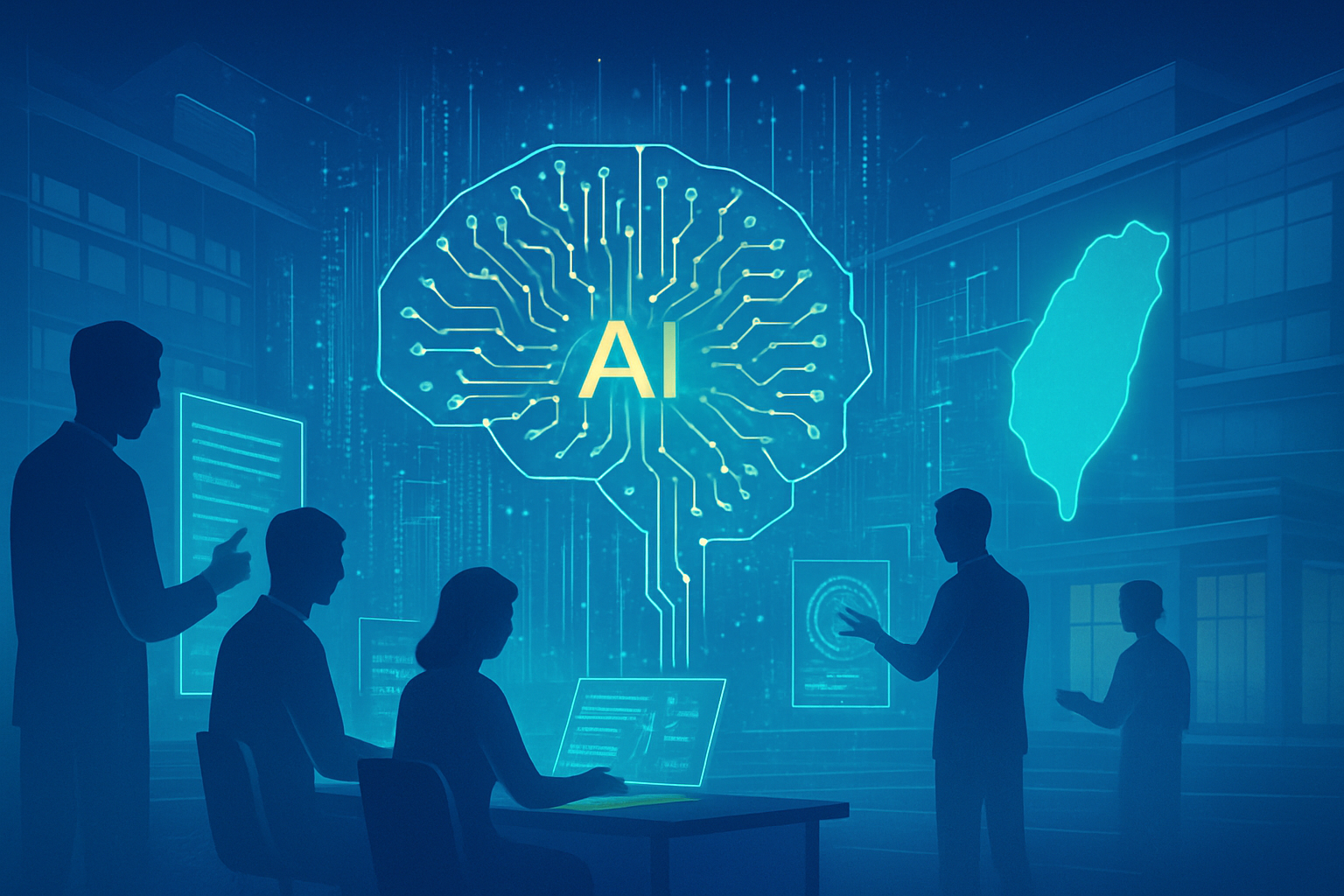
  • Taiwan Forges Ahead: A National Blueprint to Cultivate and Retain AI Talent

    Taiwan Forges Ahead: A National Blueprint to Cultivate and Retain AI Talent

    Taiwan is embarking on an ambitious and multi-faceted journey to solidify its position as a global Artificial Intelligence (AI) powerhouse. Through a comprehensive national strategy, the island nation is meticulously weaving together government policies, academic programs, and industry partnerships to not only cultivate a new generation of AI talent but also to staunchly retain its brightest minds against fierce international competition. This concerted effort, reaching its stride in late 2025, underscores Taiwan's commitment to leveraging its formidable semiconductor foundation to drive innovation across diverse AI applications, from smart manufacturing to advanced healthcare.

    A Symphony of Collaboration: Government, Academia, and Industry Unite for AI Excellence

    Taiwan's strategic approach to AI talent development is characterized by an intricate web of collaborations designed to create a vibrant and self-sustaining AI ecosystem. At the heart of this endeavor is the Taiwan AI Action Plan 2.0, launched in 2023, which explicitly aims to "drive industrial transformation and upgrading through AI, enhance social welfare through AI, and establish Taiwan as a global AI powerhouse," with "talent optimization and expansion" as a core pillar. Complementing this is the "Chip-Driven Taiwan Industrial Innovation Initiative" (November 2023), which leverages Taiwan's world-leading semiconductor industry to integrate AI into innovative applications, and the ambitious "10 new AI infrastructure initiatives" slated for 2025, focusing on core technological areas like silicon.

    Government efforts are robust and far-reaching. The Ministry of Economic Affairs' 2025 AI Talent Training Programme, commencing in August 2025, is a significant undertaking designed to train 200,000 AI professionals over four years. Its initial phase will develop 152 skilled individuals through a one-year curriculum that includes theoretical foundations, practical application, and corporate internships, with participants receiving financial support and committing to at least two years of work with a participating company. The Ministry of Digital Affairs (MODA), in March 2025, also outlined five key strategies—computing power, data, talent, marketing, and funding—and launched an AI talent program to enhance AI skills within the public sector, collaborating with the National Academy of Civil Service and the Taiwan AI Academy (AIA). Further demonstrating this commitment, the "Taiwan AI Government Talent Office" (TAIGTO) was launched in July 2025 to accelerate AI talent incubation within the public sector, alongside the Executive Yuan's AI Literacy Program for Civil Servants (June 2025).

    Universities are critical partners in this national effort. The Taiwan Artificial Intelligence College Alliance (TAICA), launched in September 2024 by the Ministry of Education and 25 universities (including top institutions like National Taiwan University (NTU), National Tsing Hua University (NTHU), and National Cheng Kung University (NCU)), aims to equip over 10,000 students with AI expertise within three years through intercollegiate courses. Leading universities also host dedicated AI research centers, such as NTU's MOST Joint Research Center for AI Technology and All Vista Healthcare (AINTU) and the NVIDIA-NTU Artificial Intelligence Joint Research Center. National Yang Ming Chiao Tung University (NYCU) boasts Pervasive AI Research (PAIR) Labs and a College of Artificial Intelligence, significantly expanding its AI research infrastructure through alumni donations from the semiconductor and electronics industries. The "National Key Area Industry-Academia Collaboration and Talent Cultivation Innovation Act" (2021) has further spurred a 10% increase in undergraduate and 15% increase in graduate programs in key areas like semiconductors and AI.

    Industry collaboration forms the third pillar, bridging academic research with real-world application. The Ministry of Economic Affairs' 2025 AI Talent Training Program has already attracted over 60 domestic and international companies, including Microsoft Taiwan and Acer (TWSE: 2353), to provide instructors and internships. The "Chip-based Industrial Innovation Program (CBI)" fosters innovation by integrating AI across various sectors. The Industrial Technology Research Institute (ITRI) acts as a crucial government think tank and industry partner, driving R&D in smart manufacturing, healthcare, and AI robotics. International tech giants like Microsoft (NASDAQ: MSFT) and Google (NASDAQ: GOOGL) have established AI R&D bases in Taiwan, fostering a vibrant ecosystem. Notably, NVIDIA (NASDAQ: NVDA) actively collaborates with Taiwanese universities, and CEO Jensen Huang announced plans to donate an "AI Factory," a large-scale AI infrastructure facility, accessible to both academia and industry. Semiconductor leaders such as Taiwan Semiconductor Manufacturing Company (TSMC) (TWSE: 2330) and MediaTek (TWSE: 2454) have established university research centers and engage in joint research, leveraging their advanced fabrication technologies crucial for AI development.

    Competitive Edge: How Taiwan's AI Talent Strategy Reshapes the Tech Landscape

    Taiwan's aggressive push to cultivate and retain AI talent has profound implications for a diverse array of companies, from local startups to global tech giants. Companies like Microsoft Taiwan, ASE Group (TWSE: 3711), and Acer (TWSE: 2353) stand to directly benefit from the Ministry of Economic Affairs' 2025 AI Talent Training Programme, which provides a direct pipeline of skilled professionals, some with mandatory work commitments post-graduation, ensuring a steady supply of local talent. This not only reduces recruitment costs but also fosters a deeper integration of AI expertise into their operations.

    For major AI labs and tech companies, particularly those with a significant presence in Taiwan, the enhanced talent pool strengthens their local R&D capabilities. NVIDIA's collaborations with universities and its planned "AI Factory" underscore the strategic value of Taiwan's talent. Similarly, semiconductor behemoths like TSMC (TWSE: 2330), MediaTek (TWSE: 2454), and AMD (NASDAQ: AMD), which already have deep roots in Taiwan, gain a competitive advantage by having access to a highly specialized workforce at the intersection of chips and AI. This synergy allows them to push the boundaries of AI hardware and optimize software-hardware co-design, crucial for next-generation AI.

    The influx of well-trained AI professionals also catalyzes the growth of local AI startups. With a robust ecosystem supported by government funding, academic research, and industry mentorship, new ventures find it easier to access the human capital needed to innovate and scale. This could lead to disruption in existing products or services by fostering novel AI-powered solutions across various sectors, from smart cities to personalized healthcare. Taiwan's strategic advantages include its world-class semiconductor manufacturing capabilities, which are fundamental to AI, and its concerted effort to create an attractive environment for both domestic and international talent. The "global elite card" initiative, offering incentives for high-income foreign professionals, further enhances Taiwan's market positioning as a hub for AI innovation and talent.

    Global Implications: Taiwan's AI Ambitions on the World Stage

    Taiwan's comprehensive AI talent strategy fits squarely into the broader global AI landscape, where nations are fiercely competing to lead in this transformative technology. By focusing on sovereign AI and computing power, coupled with significant investment in human capital, Taiwan aims to carve out a distinct and indispensable niche. This initiative is not merely about domestic development; it's about securing a strategic position in the global AI supply chain, particularly given its dominance in semiconductor manufacturing, which is the bedrock of advanced AI.

    The impacts are multi-fold. Firstly, it positions Taiwan as a reliable partner for international AI research and development, fostering deeper collaborations with global tech leaders. Secondly, it could accelerate the development of specialized AI applications tailored to Taiwan's industrial strengths, such as smart manufacturing and advanced chip design. Thirdly, it serves as a model for other nations seeking to develop their own AI ecosystems, particularly those with strong existing tech industries.

    However, potential concerns include the continued threat of talent poaching, especially from mainland China, despite the Taiwanese government's legal actions since 2021 to prevent such activities. Maintaining a competitive edge in salaries and research opportunities will be crucial. Comparisons to previous AI milestones reveal that access to skilled human capital is as vital as computational power and data. Taiwan's proactive stance, combining policy, education, and industry, echoes the national-level commitments seen in other AI-leading regions, but with a unique emphasis on its semiconductor prowess. The "National Talent Competitiveness Jumpstart Program" (September 2024), aiming to train 450,000 individuals and recruit 200,000 foreign professionals by 2028, signifies the scale of Taiwan's ambition and its commitment to international integration.

    The Horizon: Anticipating Future AI Developments in Taiwan

    Looking ahead, Taiwan's AI talent strategy is poised to unlock a wave of near-term and long-term developments. In the near term, the "AI New Ten Major Construction" Plan (June 2025), with its NT$200 billion (approx. $6.2 billion USD) allocation, will significantly enhance Taiwan's global competitiveness in AI, focusing on sovereign AI and computing power, cultivating AI talent, smart government, and balanced regional AI development. The annual investment of NT$150 billion specifically for AI talent cultivation within this plan signals an unwavering commitment.

    Expected applications and use cases on the horizon include further advancements in AI-driven smart manufacturing, leveraging Taiwan's industrial base, as well as breakthroughs in AI for healthcare, exemplified by ITRI's work on AI-powered chatbots and pain assessment systems. The integration of AI into public services, driven by MODA and TAIGTO initiatives, will lead to more efficient and intelligent government operations. Experts predict a continued focus on integrating generative AI with chip technologies, as outlined in the "Chip-based Industrial Innovation Program (CBI)," leading to innovative solutions across various sectors.

    Challenges that need to be addressed include sustaining the momentum of talent retention against global demand, ensuring equitable access to AI education across all demographics, and adapting regulatory frameworks to the rapid pace of AI innovation. The National Science and Technology Council (NSTC) Draft AI Basic Act (early 2025) is a proactive step in this direction, aiming to support the AI industry through policy measures and legal frameworks, including addressing AI-driven fraud and deepfake activities. What experts predict will happen next is a deepening of industry-academia collaboration, an increased flow of international AI talent into Taiwan, and Taiwan becoming a critical node in the global development of trustworthy and responsible AI, especially through initiatives like Taiwan AI Labs.

    A Strategic Leap Forward: Taiwan's Enduring Commitment to AI

    Taiwan's comprehensive strategy for retaining and developing AI talent represents a significant leap forward in its national technology agenda. The key takeaways are clear: a deeply integrated approach spanning government, universities, and industry is essential for building a robust AI ecosystem. Government initiatives like the "Taiwan AI Action Plan 2.0" and the "AI New Ten Major Construction" plan provide strategic direction and substantial funding. Academic alliances such as TAICA and specialized university research centers are cultivating a highly skilled workforce, while extensive industry collaborations with global players like Microsoft, NVIDIA, TSMC, and local powerhouses ensure that talent is nurtured with real-world relevance.

    This development's significance in AI history lies in Taiwan's unique position at the nexus of advanced semiconductor manufacturing and burgeoning AI innovation. By proactively addressing talent development and retention, Taiwan is not just reacting to global trends but actively shaping its future as a critical player in the AI revolution. Its focus on sovereign AI and computing power, coupled with a commitment to attracting international talent, underscores a long-term vision.

    In the coming weeks and months, watch for the initial outcomes of the Ministry of Economic Affairs' 2025 AI Talent Training Programme, the legislative progress of the NSTC Draft AI Basic Act, and further announcements regarding the "AI New Ten Major Construction" Plan. The continued evolution of university-industry partnerships and the expansion of international collaborations will also be key indicators of Taiwan's success in cementing its status as a global AI talent hub.


    This content is intended for informational purposes only and represents analysis of current AI developments.

    TokenRing AI delivers enterprise-grade solutions for multi-agent AI workflow orchestration, AI-powered development tools, and seamless remote collaboration platforms.
    For more information, visit https://www.tokenring.ai/.