
Tag: AI Tariffs

  • Silicon Sovereignty: US Levies 25% Section 232 Tariffs on Advanced AI Silicon

    Silicon Sovereignty: US Levies 25% Section 232 Tariffs on Advanced AI Silicon

    In a move that fundamentally reshapes the global semiconductor landscape, the United States government has officially implemented a 25% ad valorem tariff on high-performance AI and computing chips under Section 232 of the Trade Expansion Act of 1962. Formalized via a Presidential Proclamation on January 14, 2026, the tariffs specifically target high-end accelerators that form the backbone of modern large language model (LLM) training and inference. The policy, which went into effect at 12:01 a.m. EST on January 15, marks the beginning of an aggressive "tariffs-for-investment" strategy designed to force the relocation of advanced manufacturing to American soil.

    The immediate significance of this announcement cannot be overstated. By leveraging national security justifications—the hallmark of Section 232—the administration is effectively placing a premium on advanced silicon that is manufactured outside of the United States. While the measure covers a broad range of high-performance logic circuits, it explicitly identifies industry workhorses like NVIDIA’s H200 and AMD’s Instinct MI325X as primary targets. This shift signals a transition from "efficiency-first" global supply chains to a "security-first" domestic mandate, creating a bifurcated market for the world's most valuable technology.

    High-Performance Hardware in the Crosshairs

    The technical scope of the new tariffs is defined by rigorous performance benchmarks rather than just brand names. According to the Proclamation’s Annex, the 25% duty applies to integrated circuits with a Total Processing Performance (TPP) between 14,000 and 21,100, combined with DRAM bandwidth exceeding 4,500 GB/s. This technical net specifically ensnares the NVIDIA (NASDAQ: NVDA) H200, which features 141GB of HBM3E memory, and the AMD (NASDAQ: AMD) Instinct MI325X, a high-capacity 256GB HBM3E powerhouse. These specifications are essential for the massive throughput required by the Blackwell architecture and AMD’s latest enterprise offerings.

    This policy differs from previous export controls by focusing on the import of finished silicon into the U.S., rather than just restricting sales to foreign adversaries. It essentially creates a financial barrier that penalizes domestic reliance on foreign fabrication plants (fabs). Initial reactions from the AI research community have been a mix of strategic concern and cautious optimism. While some researchers fear the short-term cost of compute will rise, industry experts note that the technical specifications are carefully calibrated to capture the current "sweet spot" of enterprise AI, ensuring the government has maximum leverage over the most critical components of the AI revolution.

    Market Disruptions and the "Startup Shield"

    The market implications for tech giants and emerging startups are vastly different due to a sophisticated system of "end-use focused" exemptions. Major hyperscalers such as Microsoft (NASDAQ: MSFT), Alphabet (NASDAQ: GOOGL), and Meta (NASDAQ: META) are largely shielded from the immediate 25% price hike, provided the chips are destined for U.S.-based data centers. This carve-out ensures that the ongoing build-out of the "AI Factory" infrastructure—currently dominated by NVIDIA’s Blackwell (B200/GB200) systems—remains economically viable within American borders.

    Furthermore, the administration has introduced a "Startup Shield," exempting domestic AI developers and R&D labs from the tariffs. This strategic move is intended to maintain the competitive advantage of the U.S. innovation ecosystem while the manufacturing base catches up. However, companies that import these chips for secondary testing or re-export purposes without a domestic end-use certification will face the full 25% levy. This creates a powerful incentive for firms like NVIDIA and AMD to prioritize U.S. customers and domestic supply chain partners, potentially disrupting long-standing distribution channels in Asia and Europe.

    Geopolitical Realignment and the Taiwan Agreement

    This tariff rollout is the "Phase 1" of a broader geopolitical strategy to reshore 2nm and 3nm manufacturing. Coinciding with the tariff announcement, the U.S. and Taiwan signed a landmark $250 billion investment agreement. Under this deal, Taiwanese firms like TSMC (NYSE: TSM) have committed to massive new capacity in states like Arizona. In exchange, these companies receive "preferential Section 232 treatment," allowing them to import advanced chips duty-free at a ratio tied to their U.S. investment milestones. This effectively turns the tariff into a tool for industrial policy, rewarding companies that move their most advanced "crown jewel" fabrication processes to the U.S.

    The move fits into a broader trend of "computational nationalism," where the ability to produce and control AI silicon is viewed as a prerequisite for national sovereignty. It mirrors historical milestones like the 1980s semiconductor trade disputes but on a far more accelerated and high-stakes scale. By targeting the H200 and MI325X—chips that are currently "sold out" through much of 2026—the U.S. is leveraging high demand to force a permanent shift in where the next generation of silicon, such as NVIDIA's Rubin or AMD's MI455X, will be born.

    The Horizon: Rubin, MI455X, and the 2nm Era

    Looking ahead, the industry is already preparing for the "post-Blackwell" era. At CES 2026, NVIDIA CEO Jensen Huang detailed the Rubin (R100) architecture, which utilizes HBM4 memory and a 3nm process, scheduled for production in late 2026. Similarly, AMD has unveiled the MI455X, a 2nm-node beast with 432GB of HBM4 memory. The new Section 232 tariffs are designed to ensure that by the time these next-generation chips reach volume production, the domestic infrastructure—bolstered by the "Tariff Offset Program"—will be ready to handle a larger share of the manufacturing load.

    Near-term challenges remain, particularly regarding the complexity of end-use certifications and the potential for a "grey market" of non-certified silicon. However, analysts predict that the tariff will accelerate the adoption of "American-made" silicon as a premium tier for government and high-security enterprise contracts. As the U.S. domestic fabrication capacity from Intel (NASDAQ: INTC) and TSMC’s American fabs comes online between 2026 and 2028, the financial pressure of the 25% tariff is expected to transition into a permanent structural advantage for domestically produced AI hardware.

    A Pivot Point in AI History

    The January 2026 Section 232 tariffs represent a definitive pivot point in the history of artificial intelligence. It marks the moment when the U.S. government decided that the strategic risk of a distant supply chain outweighed the benefits of globalized production. By exempting startups and domestic data centers, the policy attempts a delicate "Goldilocks" approach: punishing foreign dependency without stifling the very innovation that the chips are meant to power.

    As we move deeper into 2026, the industry will be watching the "Tariff Offset Program" closely to see how quickly it can spur actual domestic output. The success of this measure will be measured not by the revenue the tariffs collect, but by the number of advanced fabs that break ground on American soil in the coming months. For NVIDIA, AMD, and the rest of the semiconductor world, the message is clear: the future of AI is no longer just about who has the fastest chip, but where that chip is made.


    This content is intended for informational purposes only and represents analysis of current AI developments.

    TokenRing AI delivers enterprise-grade solutions for multi-agent AI workflow orchestration, AI-powered development tools, and seamless remote collaboration platforms.
    For more information, visit https://www.tokenring.ai/.

  • The Silicon Surcharge: Impact of New 25% US Tariffs on Advanced AI Chips

    The Silicon Surcharge: Impact of New 25% US Tariffs on Advanced AI Chips

    In a move that has sent shockwaves through the global technology sector, the United States officially implemented a 25% tariff on frontier-class AI semiconductors, effective January 15, 2026. This aggressive trade policy, dubbed the "Silicon Surcharge," marks a pivotal shift in the American strategy to secure "Silicon Sovereignty." By targeting the world’s most advanced computing chips—specifically the NVIDIA H200 and the AMD Instinct MI325X—the U.S. government is effectively transitioning from a strategy of total export containment to a sophisticated "revenue-capture" model designed to fund domestic industrial resurgence.

    The proclamation, signed under Section 232 of the Trade Expansion Act of 1962, cites national security risks inherent in the fragility of globalized semiconductor supply chains. While the immediate effect is a significant price hike for international buyers, the policy includes a strategic "Domestic Use" carve-out, exempting chips destined for U.S.-based data centers and startups. This dual-track approach aims to keep the American AI boom accelerating while simultaneously taxing the AI development of geopolitical rivals to subsidize the next generation of American fabrication plants.

    Technical Specifications and the "Silicon Surcharge" Framework

    The new regulatory framework does not just name specific products; it defines "frontier-class" hardware through rigorous technical performance metrics. The 25% tariff applies to any high-performance AI accelerator meeting specific thresholds for Total Processing Performance (TPP) and DRAM bandwidth. Tier 1 coverage includes chips with a TPP between 14,000 and 17,500 and DRAM bandwidth ranging from 4,500 to 5,000 GB/s. Tier 2, which captures the absolute cutting edge like the NVIDIA (NASDAQ: NVDA) H200, targets units with a TPP exceeding 20,800 and bandwidth over 5,800 GB/s.

    Beyond raw performance, the policy specifically targets the "Taiwan-to-China detour." For years, advanced chips manufactured in Taiwan often transitioned through U.S. ports for final testing and packaging before being re-exported to international markets. Under the new rules, these chips attract the 25% levy the moment they enter U.S. customs, regardless of their final destination. This closes a loophole that previously allowed international buyers to benefit from U.S. logistics without contributing to the domestic industrial base.

    Initial reactions from the AI research community have been a mix of caution and strategic pivot. While researchers at major institutions express concern over the potential for increased hardware costs, the "Trusted Tier" certification process offers a silver lining. By providing end-use certifications, U.S. labs can bypass the surcharge, effectively creating a protected ecosystem for domestic innovation. However, industry experts warn that the administrative burden of "third-party lab testing" to prove domestic intent could slow down deployment timelines for smaller players in the short term.

    Market Impact: Tech Giants and the Localization Race

    The market implications for major chip designers and cloud providers are profound. NVIDIA (NASDAQ: NVDA) and Advanced Micro Devices (NASDAQ: AMD) are now in a high-stakes race to certify their latest architectures as "U.S. Manufactured." This has accelerated the timeline for localizing advanced packaging—the final and most complex stage of chip production. To avoid the surcharge permanently, these companies are leaning heavily on partners like Taiwan Semiconductor Manufacturing Company (NYSE: TSM) and Amkor Technology (NASDAQ: AMKR), both of whom are rushing to complete advanced packaging facilities in Arizona by late 2026.

    For hyper-scalers like Microsoft (NASDAQ: MSFT) and Amazon (NASDAQ: AMZN), the tariffs create a complex cost-benefit analysis. On one hand, their domestic data center expansions remain largely insulated due to the domestic-use exemptions. On the other hand, their international cloud regions—particularly those serving the Asia-Pacific market—face a sudden 25% increase in capital expenditure for high-end AI compute. This is expected to lead to a "tiered" pricing model for global AI services, where compute-intensive tasks are significantly cheaper to run on U.S.-based servers than on international ones.

    Startups and mid-tier AI labs may find themselves in a more competitive position domestically. By shielding local players from the "Silicon Surcharge," the U.S. government is providing an indirect subsidy to any company building its AI models on American soil. This market positioning is intended to drain talent and capital away from foreign AI hubs and toward the "Trusted Tier" ecosystem emerging within the United States.

    A Shift in the Geopolitical Landscape: The "China Tax"

    The January 2026 policy represents a fundamental evolution in U.S.-China trade relations. Moving away from the blanket bans of the early 2020s, the current administration has embraced a "tax-for-access" model. By allowing the sale of H200-class chips to international markets (including China) subject to the 25% surcharge, the U.S. is effectively taxing its rivals’ AI progress to fund its own domestic "CHIPS Act 2.0" initiatives. This "China Tax" is expected to generate billions in revenue, which has already been earmarked for the "One Big Beautiful Bill"—a massive 2025 legislative package that increased semiconductor investment tax credits from 25% to 35%.

    This strategy fits into a broader trend of "diffusion" rather than "containment." U.S. policymakers appear to have calculated that while China will eventually develop its own high-end chips, the U.S. can use the intervening years to build an unassailable lead in manufacturing capacity. This "Silicon Sovereignty" movement seeks to decouple the hardware stack from global vulnerabilities, ensuring that the critical infrastructure of the 21st century—AI compute—is designed, taxed, and increasingly built within a secure sphere of influence.

    Comparisons to previous milestones, such as the 2022 export controls, suggest this is a much more mature and economically integrated approach. Instead of a "cold war" in tech, we are seeing the rise of a "managed trade" era where the flow of high-end silicon is governed by both security concerns and aggressive industrial policy. The geopolitical landscape is no longer about who is allowed to buy the chips, but rather how much they are willing to pay into the American industrial fund to get them.

    Future Developments and the Road to 2027

    The near-term future will be dominated by the implementation of the $500 billion U.S.-Taiwan "America First" investment deal. This historic agreement, announced alongside the tariffs, secures massive direct investments from Taiwanese firms into U.S. soil. In exchange, the U.S. has granted these companies duty-free import allowances for construction materials and equipment, provided they hit strict milestones for operational "frontier-class" manufacturing by 2027.

    One of the biggest challenges on the horizon remains the "Advanced Packaging Gap." While the U.S. is proficient in chip design and is rapidly building fabrication plants (fabs), the specialized facilities required to "package" chips like the MI325X—stacking memory and processors with micron-level precision—are still largely concentrated in Asia. The success of the 25% tariff as a localization tool depends entirely on whether the Amkor and TSMC plants in Arizona can scale fast enough to meet the demand of the domestic-use "Trusted Tier."

    Experts predict that by early 2027, we will see the first truly "End-to-End American" H-series chips, which will be entirely exempt from the logistical and tax burdens of the current global system. This will likely trigger a second wave of AI development focused on "Edge Sovereignty," where AI is integrated into physical infrastructure, from autonomous power grids to national defense systems, all running on hardware that has never left the North American continent.

    Conclusion: A New Chapter in AI History

    The implementation of the 25% Silicon Surcharge on January 15, 2026, will likely be remembered as the moment the U.S. formalized its "Silicon Sovereignty" doctrine. By leveraging the immense market value of NVIDIA (NASDAQ: NVDA) and AMD (NASDAQ: AMD) hardware, the government has created a powerful mechanism to fund the reshoring of the most critical manufacturing process in the world. The shift from blunt bans to a revenue-capturing tariff reflects a sophisticated understanding of AI as both a national security asset and a primary economic engine.

    The key takeaways for the industry are clear: localization is no longer an option—it is a financial necessity. While the short-term volatility in chip prices and cloud costs may cause friction, the long-term intent is to create a self-sustaining, U.S.-centric AI ecosystem. In the coming months, stakeholders should watch for the first "Trusted Tier" certifications and the progress of the Arizona packaging facilities, as these will be the true barometers for the success of this high-stakes geopolitical gamble.


    This content is intended for informational purposes only and represents analysis of current AI developments.

    TokenRing AI delivers enterprise-grade solutions for multi-agent AI workflow orchestration, AI-powered development tools, and seamless remote collaboration platforms.
    For more information, visit https://www.tokenring.ai/.
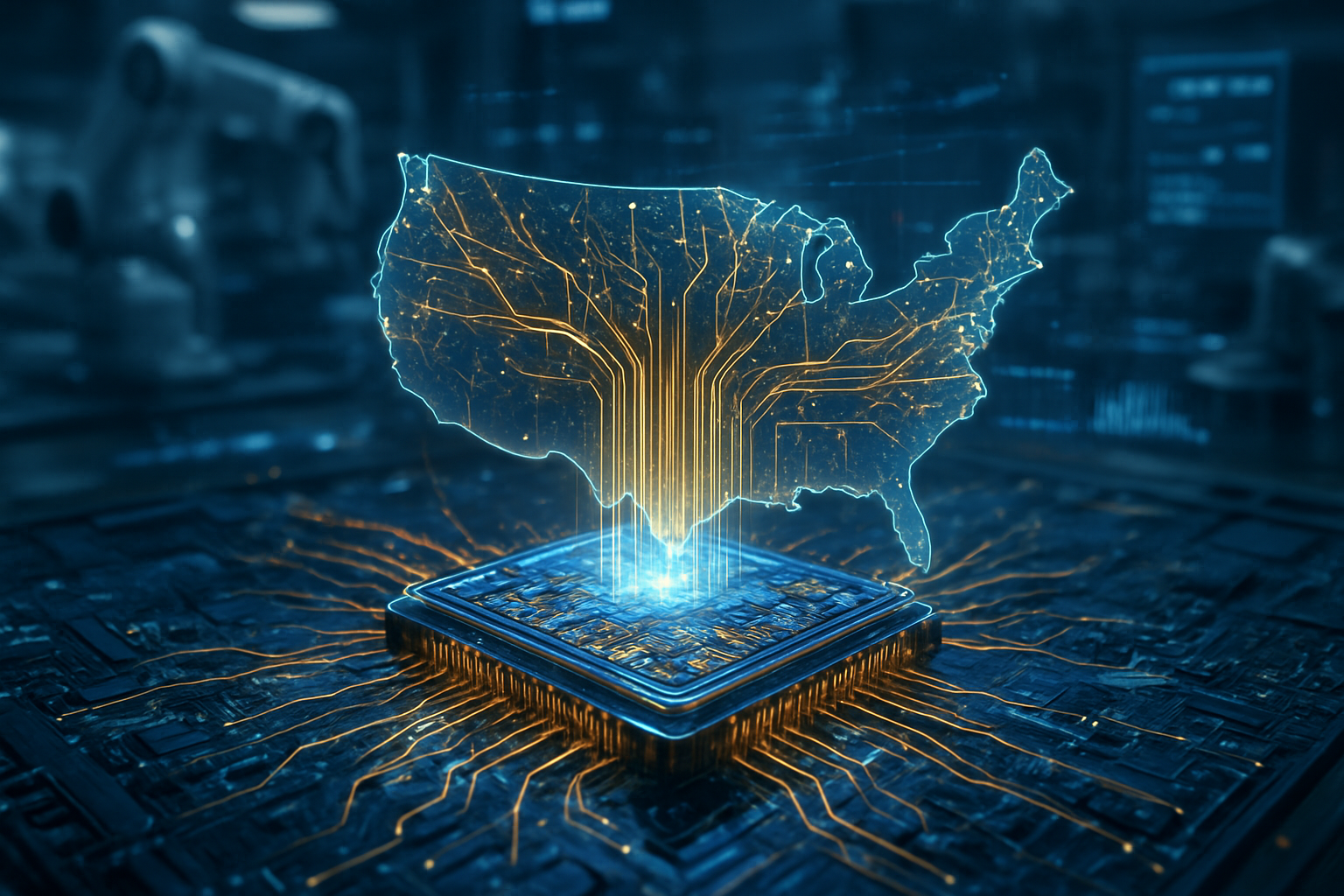
  • Silicon Sovereignty: Trump Administration Levies 25% Tariff on Foreign-Made AI Chips

    Silicon Sovereignty: Trump Administration Levies 25% Tariff on Foreign-Made AI Chips

    In a move that has sent shockwaves through the global technology sector, the Trump Administration has officially implemented a 25% tariff on high-end artificial intelligence (AI) chips manufactured outside the United States. Invoking Section 232 of the Trade Expansion Act of 1962, the White House has framed this "Silicon Surcharge" as a defensive measure necessary to protect national security and ensure what officials are calling "Silicon Sovereignty." The policy effectively transitions the U.S. strategy from mere export controls to an aggressive model of economic extraction and domestic protectionism.

    The immediate significance of this announcement cannot be overstated. By targeting the sophisticated silicon that powers the modern AI revolution, the administration is attempting to forcibly reshore the world’s most advanced manufacturing capabilities. For years, the U.S. has relied on a "fabless" model, designing chips domestically but outsourcing production to foundries in Asia. This new tariff structure aims to break that dependency, compelling industry giants to migrate their production lines to American soil or face a steep tax on the "oil of the 21st century."

    The technical scope of the tariff is surgical, focusing specifically on high-performance compute (HPC) benchmarks that define frontier AI models. The proclamation explicitly targets the latest iterations of hardware from industry leaders, including the H200 and the upcoming Blackwell series from NVIDIA (NASDAQ: NVDA), as well as the MI300 and MI325X accelerators from Advanced Micro Devices, Inc. (NASDAQ: AMD). Unlike broader trade duties, this 25% levy is triggered by specific performance metrics, such as total processing power (TFLOPS) and interconnect bandwidth speeds, ensuring that consumer-grade hardware for laptops and gaming remains largely unaffected while the "compute engines" of the AI era are heavily taxed.

    This approach marks a radical departure from the previous administration's "presumption of denial" strategy, which focused almost exclusively on preventing China from obtaining high-end chips. The 2026 policy instead prioritizes the physical location of the manufacturing process. Even chips destined for American data centers will be subject to the tariff if they are fabricated at offshore foundries like those operated by Taiwan Semiconductor Manufacturing Company (NYSE: TSM). This has led to a "policy whiplash" effect; for instance, certain NVIDIA chips previously banned for export to China may now be approved for sale there, but only after being routed through U.S. labs for "sovereignty testing," where the 25% tariff is collected upon entry.

    Initial reactions from the AI research community and industry experts have been a mix of alarm and strategic adaptation. While some researchers fear that the increased cost of hardware will slow the pace of AI development, others note that the administration has included narrow exemptions for U.S.-based startups and public sector defense applications to mitigate the domestic impact. "We are seeing the end of the globalized supply chain as we knew it," noted one senior analyst at a prominent Silicon Valley think tank. "The administration is betting that the U.S. market is too valuable to lose, forcing a total reconfiguration of how silicon is birthed."

    The market implications are profound, creating a clear set of winners and losers in the race for AI supremacy. Intel Corporation (NASDAQ: INTC) has emerged as the primary beneficiary, with its stock surging following the announcement. The administration has effectively designated Intel as a "National Champion," even reportedly taking a 9.9% equity stake in the company to ensure the success of its domestic foundry business. By making foreign-made chips 25% more expensive, the government has built a "competitive moat" around Intel’s 18A and future process nodes, positioning them as the more cost-effective choice for NVIDIA and AMD's next-generation designs.

    For major AI labs and tech giants like Microsoft (NASDAQ: MSFT), Google (NASDAQ: GOOGL), and Meta (NASDAQ: META), the tariffs introduce a new layer of capital expenditure complexity. These companies, which have spent billions on massive GPU clusters, must now weigh the costs of paying the "Silicon Surcharge" against the long-term project of transitioning their custom silicon—such as Google’s TPUs or Meta’s MTIA—to domestic foundries. This shift provides a strategic advantage to any firm that has already invested in U.S.-based manufacturing, while those heavily reliant on Taiwanese fabrication face a sudden and significant increase in training costs for their next-generation Large Language Models (LLMs).

    Smaller AI startups may find themselves in a precarious position despite the offered exemptions. While they might avoid the direct tariff cost, the broader supply chain disruption and the potential for a "bifurcated" hardware market could lead to longer lead times and reduced access to cutting-edge silicon. Meanwhile, NVIDIA’s Jensen Huang has already signaled a pragmatic shift, reportedly hedging against the policy by committing billions toward Intel’s domestic capacity. This move underscores a growing reality: for the world’s most valuable chipmaker, the path to market now runs through American factories.

    The broader significance of this move lies in the complete rejection of the "just-in-time" globalist philosophy that has dominated the tech industry for decades. The "Silicon Sovereignty" doctrine views the 90% concentration of advanced chip manufacturing in Taiwan as an unacceptable single point of failure. By leveraging tariffs, the U.S. is attempting to neutralize the geopolitical risk associated with the Taiwan Strait, essentially telling the world that American AI will no longer be built on a foundation that could be disrupted by a regional conflict.

    This policy also fundamentally alters the relationship between the U.S. and Taiwan. To mitigate the impact, the administration recently negotiated a "chips-for-protection" deal, where Taiwanese firms pledged $250 billion in U.S.-based investments in exchange for a tariff cap of 15% for compliant companies. However, this has created significant tension regarding the "Silicon Shield"—the theory that Taiwan’s vital role in the global economy protects it from invasion. As the most advanced 2nm and 1.4nm nodes are incentivized to move to Arizona and Ohio, some fear that Taiwan’s geopolitical leverage may be inadvertently weakened.

    Comparatively, this move is far more aggressive than the original CHIPS and Science Act. While that legislation used "carrots" in the form of subsidies to encourage domestic building, the 2026 tariffs are the "stick." It signals a pivot toward a more dirigiste economic policy where the state actively shapes the industrial landscape. The potential concern, however, remains a global trade war. China has already warned that these "protectionist barriers" will backfire, potentially leading to retaliatory measures against U.S. software and cloud services, or an acceleration of China’s own indigenous chip programs like the Huawei Ascend series.

    Looking ahead, the next 24 to 36 months will be a critical transition period for the semiconductor industry. Near-term developments will likely focus on the "Tariff Offset Program," which allows companies to earn credits against their tax bills by proving their chips were manufactured in the U.S. This will create a frantic rush to certify supply chains and may lead to a surge in demand for domestic assembly and testing facilities, not just the front-end wafer fabrication.

    In the long term, we can expect a "bifurcated" AI ecosystem. One side will be optimized for the U.S.-aligned "Sovereignty" market, utilizing domestic Intel and GlobalFoundries nodes, while the other side, centered in Asia, may rely on increasingly independent Chinese and regional supply chains. The challenge will be maintaining the pace of AI innovation during this fragmentation. Experts predict that if U.S. manufacturing can scale efficiently, the long-term result will be a more resilient, albeit more expensive, infrastructure for the American AI economy.

    The success of this gamble hinges on several factors: the ability of Intel and its peers to meet the rigorous yield and performance requirements of NVIDIA and AMD, and the government's ability to maintain these tariffs without causing a domestic inflationary spike in tech services. If the "Silicon Sovereignty" move succeeds, it will be viewed as the moment the U.S. reclaimed its industrial crown; if it fails, it could be remembered as the policy that handed the lead in AI cost-efficiency to the rest of the world.

    The implementation of the 25% tariff on high-end AI chips represents a watershed moment in the history of technology and trade. By prioritizing "Silicon Sovereignty" over global market efficiency, the Trump Administration has fundamentally reordered the priorities of the most powerful companies on earth. The message is clear: the United States will no longer tolerate a reality where its most critical future technology is manufactured in a geographically vulnerable region.

    Key takeaways include the emergence of Intel as a state-backed national champion, the forced transition of NVIDIA and AMD toward domestic foundries, and the use of trade policy as a primary tool for industrial reshoring. This development will likely be studied by future historians as the definitive end of the "fabless" era and the beginning of a new age of techno-nationalism.

    In the coming weeks, market watchers should keep a close eye on the implementation details of the Tariff Offset Program and the specific "sovereignty testing" protocols for exported chips. Furthermore, any retaliatory measures from China or further "chips-for-protection" negotiations with international partners will dictate the stability of the global tech economy in 2026 and beyond. The race for AI supremacy is no longer just about who has the best algorithms; it is now firmly about who controls the machines that build the machines.


    This content is intended for informational purposes only and represents analysis of current AI developments.

    TokenRing AI delivers enterprise-grade solutions for multi-agent AI workflow orchestration, AI-powered development tools, and seamless remote collaboration platforms.
    For more information, visit https://www.tokenring.ai/.