
Tag: AI Threats

  • OpenAI Backs Valthos Inc. in Landmark Move to Thwart AI Bio Attacks, Redefining Biosecurity in the Age of Advanced AI

    OpenAI Backs Valthos Inc. in Landmark Move to Thwart AI Bio Attacks, Redefining Biosecurity in the Age of Advanced AI

    NEW YORK, NY – October 24, 2025 – In a pivotal development underscoring the escalating concerns surrounding artificial intelligence's dual-use potential, OpenAI (private company) has officially announced its backing of Valthos Inc., a nascent biosecurity software startup. The venture, which emerged from stealth mode today, secured a substantial $30 million funding round from OpenAI, Founders Fund, and Lux Capital. This strategic investment signals a critical shift in the AI safety landscape, moving beyond theoretical discussions to concrete, proactive measures aimed at mitigating the catastrophic risks of AI-facilitated biological attacks. The timing of this announcement, coinciding with the official launch of Valthos, highlights the immediate and pressing nature of these biosecurity challenges as advanced AI models continue to evolve at an unprecedented pace.

    The establishment and funding of Valthos Inc. represent a significant milestone for both AI safety and global biosecurity. By directly investing in a dedicated entity focused on preventing AI-driven bioweapon attacks, OpenAI is not only demonstrating its commitment to responsible AI development but also setting a precedent for the industry. This move comes amidst growing warnings from AI researchers and national security experts about the potential for advanced AI to democratize access to dangerous biological engineering capabilities, enabling malicious actors with limited scientific training to design and deploy devastating pathogens. Valthos Inc.'s mission to build early-warning and defense systems is a direct response to this looming threat, aiming to establish a critical line of defense in an increasingly complex threat environment.

    Valthos Inc.: A New Frontier in AI-Powered Biodefense

    Valthos Inc., a New York-based biosecurity software startup, is at the forefront of this new defense paradigm. Co-founder and CEO Kathleen McMahon articulated the company's urgent mission: "The only way to deter an attack is to know when it's happening, update countermeasures, and deploy them fast." This ethos underpins Valthos's development of sophisticated AI-powered software tools designed to create an early-warning and rapid-response system against bioweapon attacks. The core technology involves aggregating vast amounts of biological data from diverse commercial and government sources, including critical environmental monitoring like air and wastewater. Through advanced AI algorithms, this data is then analyzed to identify emerging biological threats, assess their risks, and predict potential attack vectors.

    Beyond detection, Valthos is also pioneering AI systems to rapidly update designs for medical countermeasures, such as vaccines and therapeutics, in response to evolving biological threats. The company plans to forge crucial collaborations with pharmaceutical companies to accelerate the manufacturing and distribution of these vital defenses. This integrated approach marks a significant departure from traditional, often slower, biodefense strategies. Internally, OpenAI has been implementing its own robust biosecurity measures, including "safety-focused reasoning monitors" on its advanced AI models (such as o3 and o4-mini). These monitors are engineered to detect prompts related to dangerous biological materials and prevent the generation of harmful advice or step-by-step instructions that could aid in bioweapon creation. Furthermore, OpenAI conducts extensive "red-teaming" exercises with biology experts and government agencies to rigorously test its safeguards against real-world adversarial conditions, all part of its broader "Preparedness Framework" to evaluate model capabilities before launch and prevent "novice uplift"—the enablement of individuals with limited scientific knowledge to create biological threats.

    Initial reactions from the AI research and biosecurity communities have been a mix of cautious optimism and continued concern. While many acknowledge the critical need for such initiatives, there's a palpable tension regarding the inherent dual-use nature of AI. Experts from organizations like the Center for AI Safety have long warned of a "nightmare scenario" where AI could empower the creation of highly dangerous superviruses. The announcement has also reignited debates about open access versus stricter controls for advanced AI systems, with some questioning whether the benefits of open-source AI outweigh the risks in sensitive domains like biology. Skepticism also persists among some biosecurity experts who argue that the complex tacit knowledge and hands-on laboratory experience required for engineering deadly pathogens are still beyond current AI capabilities. Nevertheless, there's a widespread call for stronger governance, robust testing protocols, and deeper collaboration between public and private sectors to strengthen global biological defenses.

    Competitive Implications and Market Dynamics

    OpenAI's backing of Valthos Inc. carries significant implications for AI companies, tech giants, and startups alike. For OpenAI itself, this move solidifies its position as a leader not only in AI innovation but also in responsible AI development, potentially setting a new industry standard for addressing existential risks. The investment enhances its brand reputation and could be a differentiator in attracting top talent and partnerships. Valthos Inc. (private company) stands to benefit immensely from the substantial funding and the strategic association with OpenAI, gaining credibility and accelerated development potential in a nascent but critical market.

    This development places considerable pressure on other major AI labs and tech giants, including Alphabet (NASDAQ: GOOGL), Meta Platforms (NASDAQ: META), Microsoft (NASDAQ: MSFT), and Amazon (NASDAQ: AMZN), to demonstrate similar commitments to biosecurity. Failure to do so could expose them to reputational risks and accusations of neglecting the societal implications of their advanced AI models. The competitive landscape for AI safety and biosecurity solutions is poised for rapid growth, attracting more investment into startups specializing in threat detection, risk assessment, and countermeasure development. This could lead to a disruption of existing biodefense products and services, as AI-powered solutions promise unprecedented speed and accuracy.

    In terms of market positioning, OpenAI is strategically leveraging its influence to foster a new ecosystem of safety-focused ventures, viewing biosecurity as an indispensable service alongside AI development. This proactive stance could establish OpenAI as a thought leader in the responsible scaling of AI, potentially influencing regulatory frameworks and industry best practices. For Valthos, securing this early and prominent backing positions it as a front-runner in the emerging field of AI-powered biodefense, potentially attracting further partnerships with government agencies, research institutions, and pharmaceutical companies looking for cutting-edge solutions.

    Wider Significance in the AI Landscape

    This groundbreaking announcement from OpenAI and Valthos Inc. fits squarely into the broader AI landscape's intensifying focus on safety, ethics, and the "dual-use dilemma." It represents a concrete step in moving beyond theoretical discussions of AI's catastrophic risks to implementing tangible, proactive defense mechanisms. The development highlights a critical maturation point for the AI industry, where the pursuit of innovation is increasingly being balanced with a profound responsibility to mitigate potential harms. This initiative underscores that as AI capabilities advance, so too must the sophistication of our safeguards against its misuse.

    The impacts of Valthos Inc.'s work, if successful, could be transformative. It promises enhanced global biosecurity by providing earlier detection of biological threats, potentially preventing outbreaks or attacks before they escalate. Such a system could drastically reduce response times for public health emergencies and biodefense efforts. However, potential concerns also loom large. These include the risk of over-reliance on AI systems, the accuracy and explainability of early warning detections, and the privacy implications of aggregating vast amounts of biological and environmental data. There's also the ever-present specter of an "AI arms race," where malicious actors could also leverage advanced AI for offensive biological engineering, necessitating continuous innovation in defensive AI. This development draws parallels to historical milestones in nuclear non-proliferation and cybersecurity, marking a new frontier in the complex interplay of technology, ethics, and global security.

    Charting Future Developments and Challenges

    In the near term, we can expect Valthos Inc. to accelerate the development and deployment of its AI-powered software, focusing on integrating diverse data streams and refining its threat detection algorithms. Further collaboration with government agencies for data access and with pharmaceutical companies for countermeasure development will be crucial. OpenAI will likely continue to expand its internal red-teaming exercises and refine its Preparedness Framework, pushing the boundaries of internal model safety. The coming months will also likely see increased dialogue among policymakers, AI developers, and biosecurity experts to establish standardized protocols and potentially regulatory frameworks for AI in sensitive biological research.

    Looking further ahead, the long-term developments could involve the establishment of a global, AI-powered biodefense network, capable of real-time monitoring and response to biological threats anywhere in the world. Potential applications on the horizon include AI-driven pathogen discovery, personalized medical countermeasures, and highly resilient public health infrastructure. However, significant challenges remain. These include navigating the complex landscape of data sharing across international borders, overcoming regulatory hurdles, and continually evolving defensive AI to keep pace with the rapid advancements in both AI capabilities and biological engineering techniques. Experts predict that while AI will become an indispensable tool for public health and biodefense, constant vigilance and adaptive strategies will be paramount to counter the ever-present threat of misuse.

    A New Era for AI Safety and Global Biosecurity

    OpenAI's strategic investment in Valthos Inc. marks a seminal moment in the history of artificial intelligence and global security. The key takeaway is a clear and unequivocal message: the risks posed by advanced AI, particularly in the biological domain, are no longer theoretical but demand immediate and tangible solutions. Valthos Inc., with its mission to build AI-powered early-warning and defense systems against bioweapon attacks, represents a proactive and innovative approach to mitigating these existential threats. This development signifies a critical step in moving from abstract discussions of AI safety to applied, real-world solutions.

    The significance of this development in AI history cannot be overstated. It sets a powerful precedent for how AI companies should approach the dual-use dilemma of their technologies, emphasizing a "prevention-first mindset" and a commitment to fostering a robust biosecurity ecosystem. The long-term impact could redefine biodefense strategies, making them faster, more intelligent, and more resilient in the face of evolving biological threats. In the coming weeks and months, the world will be watching Valthos Inc.'s progress, the responses from other major AI developers, and the evolving regulatory landscape surrounding AI and biosecurity. This partnership is a stark reminder that as AI pushes the boundaries of human capability, so too must our commitment to safeguarding humanity.


    This content is intended for informational purposes only and represents analysis of current AI developments.

    TokenRing AI delivers enterprise-grade solutions for multi-agent AI workflow orchestration, AI-powered development tools, and seamless remote collaboration platforms.
    For more information, visit https://www.tokenring.ai/.
  • AI-Powered Cyber Threats Skyrocket: ISACA 2026 Poll Reveals Alarming Readiness Gap

    AI-Powered Cyber Threats Skyrocket: ISACA 2026 Poll Reveals Alarming Readiness Gap

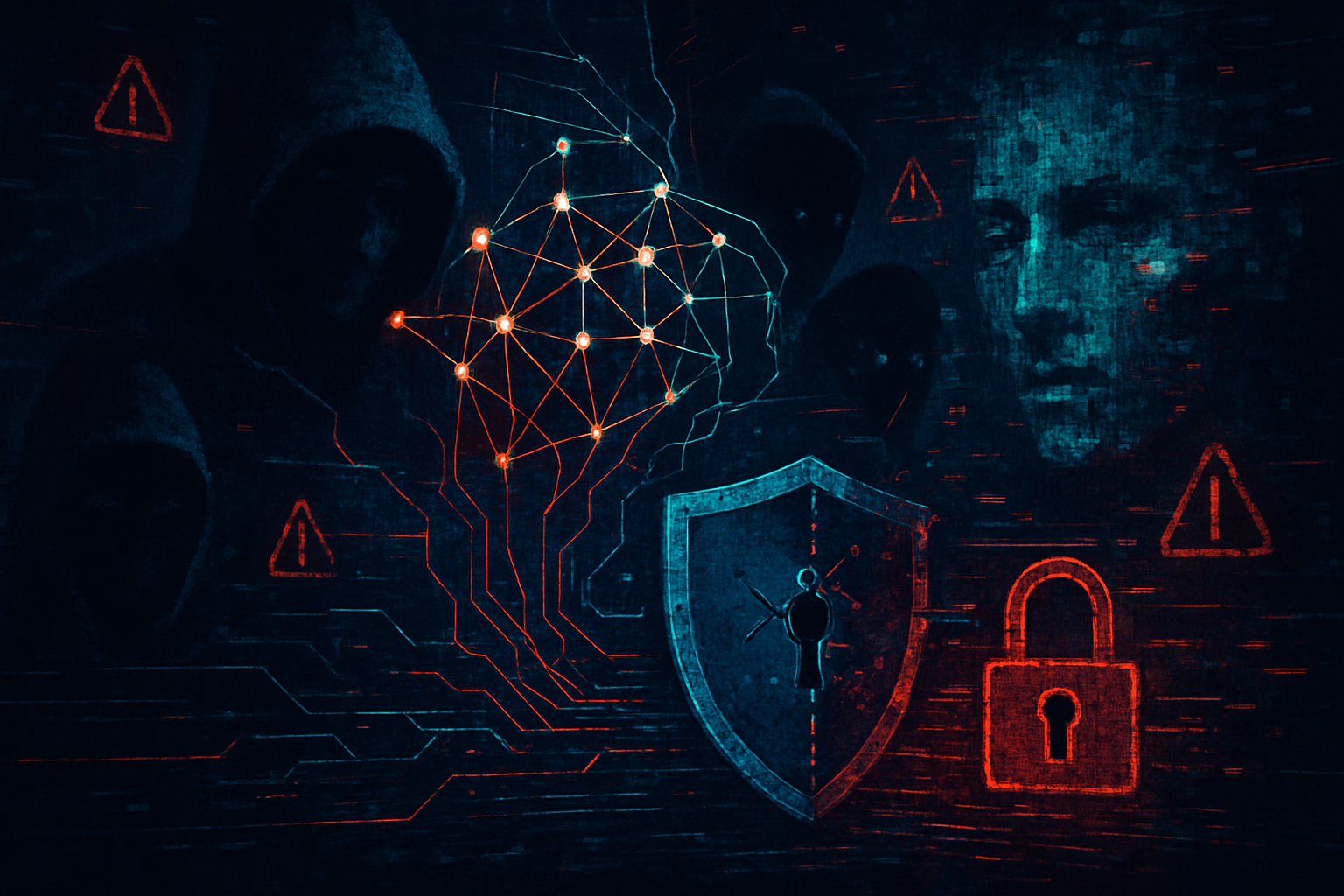
    Chicago, IL – October 21, 2025 – The cybersecurity landscape is bracing for an unprecedented surge in AI-driven threats, according to the pivotal ISACA 2026 Tech Trends and Priorities Report. Based on a comprehensive survey of nearly 3,000 digital trust professionals conducted in late 2025, the findings paint a stark picture: AI-driven social engineering has emerged as the leading cyber fear for the coming year, surpassing traditional concerns like ransomware. This marks a significant shift in the threat paradigm, demanding immediate attention from organizations worldwide.

    Despite the escalating threat, the report underscores a critical chasm in organizational preparedness. A mere 13% of global organizations feel "very prepared" to manage the risks associated with generative AI solutions. This alarming lack of readiness, characterized by underdeveloped governance frameworks, inadequate policies, and insufficient training, leaves a vast majority of enterprises vulnerable to increasingly sophisticated AI-powered attacks. The disconnect between heightened awareness of AI's potential for harm and the slow pace of implementing robust defenses poses a formidable challenge for cybersecurity professionals heading into 2026.

    The Evolving Arsenal: How AI Supercharges Cyber Attacks

    The ISACA 2026 report highlights a profound transformation in the nature of cyber threats, driven by the rapid advancements in artificial intelligence. Specifically, AI's ability to enhance social engineering tactics is not merely an incremental improvement but a fundamental shift in attack sophistication and scale. Traditional phishing attempts, often recognizable by grammatical errors or generic greetings, are being replaced by highly personalized, contextually relevant, and linguistically flawless communications generated by AI. This leap in quality makes AI-powered phishing and social engineering attacks significantly more challenging to detect, with 59% of professionals acknowledging this increased difficulty.

    At the heart of this technical evolution lies generative AI, particularly large language models (LLMs) and deepfake technologies. LLMs can craft persuasive narratives, mimic specific writing styles, and generate vast quantities of unique, targeted messages at an unprecedented pace. This allows attackers to scale their operations, launching highly individualized attacks against a multitude of targets simultaneously, a feat previously requiring immense manual effort. Deepfake technology further exacerbates this by enabling the creation of hyper-realistic forged audio and video, allowing attackers to impersonate individuals convincingly, bypass biometric authentication, or spread potent misinformation and disinformation campaigns. These technologies differ from previous approaches by moving beyond simple automation to genuine content generation and manipulation, making the 'human element' of detection far more complex.

    Initial reactions from the AI research community and industry experts underscore the gravity of these developments. Many have long warned about the dual-use nature of AI, where technologies designed for beneficial purposes can be weaponized. The ease of access to powerful generative AI tools, often open-source or available via APIs, means that sophisticated attack capabilities are no longer exclusive to state-sponsored actors but are within reach of a broader spectrum of malicious entities. Experts emphasize that the speed at which these AI capabilities are evolving necessitates a proactive and adaptive defense strategy, moving beyond reactive signature-based detection to behavioral analysis and AI-driven threat intelligence.

    Competitive Implications and Market Dynamics in the Face of AI Threats

    The escalating threat landscape, as illuminated by the ISACA 2026 poll, carries significant competitive implications across the tech industry, particularly for companies operating in the AI and cybersecurity sectors. Cybersecurity firms specializing in AI-driven threat detection, behavioral analytics, and deepfake identification stand to benefit immensely. Companies like Palo Alto Networks (NASDAQ: PANW), CrowdStrike Holdings (NASDAQ: CRWD), and SentinelOne (NYSE: S) are likely to see increased demand for their advanced security platforms that leverage AI and machine learning to identify anomalous behavior and sophisticated social engineering attempts. Startups focused on niche areas such as AI-generated content detection, misinformation tracking, and secure identity verification are also poised for growth.

    Conversely, major tech giants and AI labs, including Google (NASDAQ: GOOGL), Microsoft (NASDAQ: MSFT), and Meta Platforms (NASDAQ: META), face a dual challenge. While they are at the forefront of developing powerful generative AI tools, they also bear a significant responsibility for mitigating their misuse. Their competitive advantage will increasingly depend not only on the capabilities of their AI models but also on the robustness of their ethical AI frameworks and the security measures embedded within their platforms. Failure to adequately address these AI-driven threats could lead to reputational damage, regulatory scrutiny, and a loss of user trust, potentially disrupting existing products and services that rely heavily on AI for user interaction and content generation.

    The market positioning for companies across the board will be heavily influenced by their ability to adapt to this new threat paradigm. Organizations that can effectively integrate AI into their defensive strategies, offer comprehensive employee training, and establish strong governance policies will gain a strategic advantage. This dynamic is likely to spur further consolidation in the cybersecurity market, as larger players acquire innovative startups with specialized AI defense technologies, and will also drive significant investment in research and development aimed at creating more resilient and intelligent security solutions. The competitive landscape will favor those who can not only innovate with AI but also secure it against its own weaponized potential.

    Broader Significance: AI's Dual-Edged Sword and Societal Impacts

    The ISACA 2026 poll's findings underscore the broader significance of AI as a dual-edged sword, capable of both unprecedented innovation and profound societal disruption. The rise of AI-driven social engineering and deepfakes fits squarely into the broader AI landscape trend of increasing sophistication in autonomous and generative capabilities. This is not merely an incremental technological advancement but a fundamental shift that empowers malicious actors with tools previously unimaginable, blurring the lines between reality and deception. It represents a significant milestone, comparable in impact to the advent of widespread internet connectivity or the proliferation of mobile computing, but with a unique challenge centered on trust and authenticity.

    The immediate impacts are multifaceted. Individuals face an increased risk of financial fraud, identity theft, and personal data compromise through highly convincing AI-generated scams. Businesses confront heightened risks of data breaches, intellectual property theft, and reputational damage from sophisticated, targeted attacks that can bypass traditional security measures. Beyond direct cybercrime, the proliferation of AI-powered misinformation and disinformation campaigns poses a grave threat to democratic processes, public discourse, and social cohesion, as highlighted by earlier ISACA research indicating that 80% of professionals view misinformation as a major AI risk.

    Potential concerns extend to the erosion of trust in digital communications and media, the potential for AI to exacerbate existing societal biases through targeted manipulation, and the ethical dilemmas surrounding the development and deployment of increasingly powerful AI systems. Comparisons to previous AI milestones, such as the initial breakthroughs in machine learning for pattern recognition, reveal a distinct difference: current generative AI capabilities allow for creation rather than just analysis, fundamentally altering the attack surface and defense requirements. While AI offers immense potential for good, its weaponization for cyber attacks represents a critical inflection point that demands a global, collaborative response from governments, industry, and civil society to establish robust ethical guidelines and defensive mechanisms.

    Future Developments: A Race Between Innovation and Mitigation

    Looking ahead, the cybersecurity landscape will be defined by a relentless race between the accelerating capabilities of AI in offensive cyber operations and the innovative development of AI-powered defensive strategies. In the near term, experts predict a continued surge in the volume and sophistication of AI-driven social engineering attacks. We can expect to see more advanced deepfake technology used in business email compromise (BEC) scams, voice phishing (vishing), and even video conferencing impersonations, making it increasingly difficult for human users to discern authenticity. The integration of AI into other attack vectors, such as automated vulnerability exploitation and polymorphic malware generation, will also become more prevalent.

    On the defensive front, expected developments include the widespread adoption of AI-powered anomaly detection systems that can identify subtle deviations from normal behavior, even in highly convincing AI-generated content. Machine learning models will be crucial for real-time threat intelligence, predicting emerging attack patterns, and automating incident response. We will likely see advancements in digital watermarking and provenance tracking for AI-generated media, as well as new forms of multi-factor authentication that are more resilient to AI-driven impersonation attempts. Furthermore, AI will be increasingly leveraged to automate security operations centers (SOCs), freeing human analysts to focus on complex, strategic threats.

    However, significant challenges need to be addressed. The "AI vs. AI" arms race necessitates continuous innovation and substantial investment. Regulatory frameworks and ethical guidelines for AI development and deployment must evolve rapidly to keep pace with technological advancements. A critical challenge lies in bridging the skills gap within organizations, ensuring that cybersecurity professionals are adequately trained to understand and combat AI-driven threats. Experts predict that organizations that fail to embrace AI in their defensive posture will be at a severe disadvantage, emphasizing the need for proactive integration of AI into every layer of the security stack. The future will demand not just more technology, but a holistic approach combining AI, human expertise, and robust governance.

    Comprehensive Wrap-Up: A Defining Moment for Digital Trust

    The ISACA 2026 poll serves as a critical wake-up call, highlighting a defining moment in the history of digital trust and cybersecurity. The key takeaway is unequivocal: AI-driven social engineering and deepfakes are no longer theoretical threats but the most pressing cyber fears for the coming year, fundamentally reshaping the threat landscape. This unprecedented sophistication of AI-powered attacks is met with an alarming lack of organizational readiness, signaling a perilous gap between awareness and action. The report underscores that traditional security paradigms are insufficient; a new era of proactive, AI-augmented defense is imperative.

    This development's significance in AI history cannot be overstated. It marks a clear inflection point where the malicious application of generative AI has moved from potential concern to a dominant reality, challenging the very foundations of digital authenticity and trust. The implications for businesses, individuals, and societal stability are profound, demanding a strategic pivot towards comprehensive AI governance, advanced defensive technologies, and continuous workforce upskilling. Failure to adapt will not only lead to increased financial losses and data breaches but also to a deeper erosion of confidence in our interconnected digital world.

    In the coming weeks and months, all eyes will be on how organizations respond to these findings. We should watch for increased investments in AI-powered cybersecurity solutions, the accelerated development of ethical AI frameworks by major tech companies, and potentially new regulatory initiatives aimed at mitigating AI misuse. The proactive engagement of corporate boards, now demonstrating elevated AI risk awareness, will be crucial in driving the necessary organizational changes. The battle against AI-driven cyber threats will be a continuous one, requiring vigilance, innovation, and a collaborative spirit to safeguard our digital future.


    This content is intended for informational purposes only and represents analysis of current AI developments.

    TokenRing AI delivers enterprise-grade solutions for multi-agent AI workflow orchestration, AI-powered development tools, and seamless remote collaboration platforms.
    For more information, visit https://www.tokenring.ai/.