Tag: AI Trends 2026

  • The Copilot Era is Dead: How Salesforce Agentforce Sparked the Autonomous Business Revolution

    The Copilot Era is Dead: How Salesforce Agentforce Sparked the Autonomous Business Revolution

    As of January 15, 2026, the era of the "AI Copilot" is officially being relegated to the history books. What began in early 2023 as a fascination with chatbots that could summarize emails has matured into a global enterprise shift toward fully autonomous agents. At the center of this revolution is Salesforce ($CRM) and its Agentforce platform, which has fundamentally redefined the relationship between human workers and digital systems. By moving past the "human-in-the-loop" necessity that defined early AI assistants, Agentforce has enabled a new class of digital employees capable of reasoning, planning, and executing complex business processes without constant supervision.

    The immediate significance of this shift cannot be overstated. While 2024 was the year of experimentation, 2025 became the year of deployment. Enterprises have moved from asking "What can AI tell me?" to "What can AI do for me?" This transition marks the most significant architectural change in enterprise software since the move to the cloud, as businesses replace static workflows with dynamic, self-correcting agents that operate 24/7 across sales, service, marketing, and commerce.

    The Brain Behind the Machine: The Atlas Reasoning Engine

    Technically, the pivot to autonomy was made possible by the Atlas Reasoning Engine, the sophisticated "brain" that powers Agentforce. Unlike traditional Large Language Models (LLMs) that generate text based on probability, Atlas employs a "chain of thought" reasoning process. It functions by first analyzing a goal, then retrieving relevant metadata and real-time information from Data 360 (formerly Data Cloud). From there, it constructs a multi-step execution plan, performs the actions via APIs or low-code "Flows," and—most critically—evaluates its own results. If an action fails or returns unexpected data, Atlas can self-correct and try a different path, a capability that was almost non-existent in the "Copilot" era.

    The recent evolution into Agentforce 360 in late 2025 introduced Intelligent Context, which allows agents to process unstructured data like complex architectural diagrams or handwritten notes. This differs from previous approaches by removing the "data preparation" bottleneck. Whereas early AI required perfectly formatted SQL tables to function, today’s autonomous agents can "read" a 50-page PDF contract and immediately initiate a procurement workflow in an ERP system. Industry experts at the AI Research Consortium have noted that this "reasoning-over-context" approach has reduced AI hallucinations in business logic by over 85% compared to the 2024 baseline.

    Initial reactions from the research community have been largely positive regarding the safety guardrails Salesforce has implemented. By using a "metadata-driven" architecture, Agentforce ensures that an agent cannot exceed the permissions of a human user. This "sandbox" approach has quieted early fears of runaway AI, though debates continue regarding the transparency of the "hidden" reasoning steps Atlas takes when navigating particularly complex ethical dilemmas in customer service.

    The Agent Wars: Competitive Implications for Tech Giants

    The move toward autonomous agents has ignited a fierce "Agent War" among the world’s largest software providers. While Salesforce was early to market with its "Third Wave" messaging, Microsoft ($MSFT) has responded aggressively with Copilot Studio. By mid-2025, Microsoft successfully pivoted its "Copilot" branding to focus on "Autonomous Agents," allowing users to build digital workers that live inside Microsoft Teams and Outlook. The competition has become a battle for the "Agentic Operating System," with each company trying to prove its ecosystem is the most capable of hosting these digital employees.

    Other major players are carving out specific niches. ServiceNow ($NOW) has positioned its "Xanadu" and subsequent releases as the foundation for the "platform of platforms," focusing heavily on IT and HR service automation. Meanwhile, Alphabet's Google ($GOOGL) has leveraged its Vertex AI Agent Builder to offer deep integration between Gemini-powered agents and the broader Google Workspace. This competition is disrupting traditional "seat-based" pricing models. As agents become more efficient, the need for dozens of human users in a single department decreases, forcing vendors like Salesforce and Microsoft to experiment with "outcome-based" pricing—charging for successful resolutions rather than individual user licenses.

    For startups and smaller AI labs, the barrier to entry has shifted from "model performance" to "data gravity." Companies that own the data—like Salesforce with its CRM and Workday ($WDAY) with its HR data—have a strategic advantage. It is no longer enough to have a smart model; the agent must have the context and the "arms" (APIs) to act on that data. This has led to a wave of consolidation, as larger firms acquire "agentic-native" startups that specialize in specific vertical reasoning tasks.

    Beyond Efficiency: The Broader Societal and Labor Impact

    The wider significance of the autonomous agent movement is most visible in the changing structure of the workforce. We are currently witnessing what Gartner calls the "Middle Management Squeeze." By early 2026, it is estimated that 20% of organizations have begun using AI agents to handle the administrative coordination—scheduling, reporting, and performance tracking—that once occupied the majority of a manager's day. This is a fundamental shift from AI as a "productivity tool" to AI as a "labor substitute."

    However, this transition has not been without concern. The rapid displacement of entry-level roles in customer support and data entry has sparked renewed calls for "AI taxation" and universal basic income discussions in several regions. Comparisons are frequently drawn to the Industrial Revolution; while new roles like "Agent Orchestrators" and "AI Trust Officers" are emerging, they require a level of technical literacy that many displaced workers do not yet possess.

    Furthermore, the "Human-on-the-loop" model has become the new gold standard for governance. Unlike the "Human-in-the-loop" model, where a person checks every response, humans now primarily set the "guardrails" and "policies" for agents, intervening only when a high-stakes exception occurs. This transition has raised significant questions about accountability: if an autonomous agent negotiates a contract that violates a corporate policy, who is legally liable? These legal and ethical frameworks are still struggling to keep pace with the technical reality of 2026.

    Looking Ahead: The Multi-Agent Ecosystems of 2027

    Looking forward, the next frontier for Agentforce and its competitors is the "Multi-Agent Ecosystem." Experts predict that by 2027, agents will not just work for humans; they will work for each other. We are already seeing the first instances of a Salesforce sales agent negotiating directly with a procurement agent from a different company to finalize a purchase order. This "Agent-to-Agent" (A2A) economy could lead to a massive acceleration in global trade velocity.

    In the near term, we expect to see the "democratization of agency" through low-code "vibe-coding" interfaces. These tools allow non-technical business leaders to describe a workflow in natural language, which the system then translates into a fully functional autonomous agent. The challenge that remains is one of "Agent Sprawl"—the AI equivalent of "Shadow IT"—where companies lose track of the hundreds of autonomous processes running in the background, potentially leading to unforeseen logic loops or data leakage.

    The Wrap-Up: A Turning Point in Computing History

    The launch and subsequent dominance of Salesforce Agentforce represents a watershed moment in the history of artificial intelligence. It marks the point where AI transitioned from a curiosity that we talked to into a workforce that we manage. The key takeaway for 2026 is that the competitive moat for any business is no longer its software, but the "intelligence" and "autonomy" of its digital agents.

    As we look back at the "Copilot" era of 2023 and 2024, it seems as quaint as the early days of the dial-up internet. The move to autonomy is irreversible, and the organizations that successfully navigate the shift from "tools" to "agents" will be the ones that define the economic landscape of the next decade. In the coming weeks, watch for new announcements regarding "Outcome-Based Pricing" models and the first major legal precedents regarding autonomous AI actions in the enterprise.


    This content is intended for informational purposes only and represents analysis of current AI developments.

    TokenRing AI delivers enterprise-grade solutions for multi-agent AI workflow orchestration, AI-powered development tools, and seamless remote collaboration platforms.
    For more information, visit https://www.tokenring.ai/.
  • From Chatbot to Colleague: How Anthropic’s ‘Computer Use’ Redefined the Human-AI Interface

    From Chatbot to Colleague: How Anthropic’s ‘Computer Use’ Redefined the Human-AI Interface

    In the fast-moving history of artificial intelligence, October 22, 2024, stands as a watershed moment. It was the day Anthropic, the AI safety-first lab backed by Amazon.com, Inc. (NASDAQ: AMZN) and Alphabet Inc. (NASDAQ: GOOGL), unveiled its "Computer Use" capability for Claude 3.5 Sonnet. This breakthrough allowed an AI model to go beyond generating text and images; for the first time, a frontier model could "see" a desktop interface and interact with it—moving cursors, clicking buttons, and typing text—exactly like a human user.

    As we stand in mid-January 2026, the legacy of that announcement is clear. What began as a beta experiment in "pixel counting" has fundamentally shifted the AI industry from a paradigm of conversational assistants to one of autonomous "digital employees." Anthropic’s move didn't just add a new feature to a chatbot; it initiated the "agentic" era, where AI no longer merely advises us on tasks but executes them within the same software environments humans use every day.

    The technical architecture behind Claude’s computer use marked a departure from the traditional Robotic Process Automation (RPA) used by companies like UiPath Inc. (NYSE: PATH). While legacy automation relied on brittle backend scripts or pre-defined API integrations, Anthropic developed a "Vision-Action Loop." By taking rapid-fire screenshots of the screen, Claude 3.5 Sonnet interprets visual elements—icons, text fields, and buttons—through its vision sub-system. It then calculates the precise (x, y) pixel coordinates required to perform a mouse click or drag-and-drop action, simulating the physical presence of a human operator.

    To achieve this, Anthropic engineers specifically trained the model to navigate the complexities of a modern GUI, including the ability to "understand" when a window is minimized or when a pop-up needs to be dismissed. This was a significant leap over previous attempts at UI automation, which often failed if a button moved by a single pixel. Claude’s ability to "see" and "think" through the interface allowed it to score 14.9% on the OSWorld benchmark at launch—nearly double the performance of its closest competitors at the time—proving that vision-based reasoning was the future of cross-application workflows.

    The initial reaction from the AI research community was a mix of awe and immediate concern regarding security. Because the model was interacting with a live desktop, the potential for "prompt injection" via the screen became a primary topic of debate. If a malicious website contained hidden text instructing the AI to delete files, the model might inadvertently follow those instructions. Anthropic addressed this by recommending developers run the system in containerized, sandboxed environments, a practice that has since become the gold standard for agentic security in early 2026.

    The strategic implications of Anthropic's breakthrough sent shockwaves through the tech giants. Microsoft Corporation (NASDAQ: MSFT) and their partners at OpenAI were forced to pivot their roadmap to match Claude's desktop mastery. By early 2025, OpenAI responded with "Operator," a web-based agent, and has since moved toward a broader "AgentKit" framework. Meanwhile, Google (NASDAQ: GOOGL) integrated similar capabilities into its Gemini 2.0 and 3.0 series, focusing on "Agentic Commerce" within the Chrome browser and the Android ecosystem.

    For enterprise-focused companies, the stakes were even higher. Salesforce, Inc. (NYSE: CRM) and ServiceNow, Inc. (NYSE: NOW) quickly moved to integrate these agentic capabilities into their platforms, recognizing that an AI capable of navigating any software interface could potentially replace thousands of manual data-entry and "copy-paste" workflows. Anthropic's early lead in "Computer Use" allowed it to secure massive enterprise contracts, positioning Claude as the "middle-ware" of the digital workplace.

    Today, in 2026, we see a marketplace defined by protocol standards that Anthropic helped pioneer. Their Model Context Protocol (MCP) has evolved into a universal language for AI agents to talk to one another and share tools. This competitive environment has benefited the end-user, as the "Big Three" (Anthropic, OpenAI, and Google) now release model updates on a near-quarterly basis, each trying to outmaneuver the other in reliability, speed, and safety in the agentic space.

    Beyond the corporate horse race, the "Computer Use" capability signals a broader shift in how humanity interacts with technology. We are moving away from the "search and click" era toward the "intent and execute" era. When Claude 3.5 Sonnet was released, the primary use cases were simple tasks like filling out spreadsheets or booking flights. In 2026, this has matured into the "AI Employee" trend, where 72% of large enterprises now deploy autonomous agents to handle operations, customer support, and even complex software testing.

    This transition has not been without its growing pains. The rise of agents has forced a reckoning with digital security. The industry has had to develop the "Agent Payments Protocol" (AP2) and "MCP Guardian" to ensure that an AI agent doesn't overspend a corporate budget or leak sensitive data when navigating a third-party website. The concept of "Human-in-the-loop" has shifted from a suggestion to a legal requirement in many jurisdictions, as regulators scramble to keep up with agents that can act on a user's behalf 24/7.

    Comparatively, the leap from GPT-4’s text generation to Claude 3.5’s computer navigation is seen as a milestone on par with the release of the first graphical user interface (GUI) in the 1980s. Just as the mouse made the computer accessible to the masses, "Computer Use" made the desktop accessible to the AI. This hasn't just improved productivity; it has redefined the very nature of white-collar work, pushing human employees toward high-level strategy and oversight rather than administrative execution.

    Looking toward the remainder of 2026 and beyond, the focus is shifting from basic desktop control to "Physical AI" and specialized reasoning. Anthropic’s recent launch of "Claude Cowork" and the "Extended Thinking Mode" suggests that agents are becoming more reflective, capable of pausing to plan their next ten steps on a desktop before taking the first click. Experts predict that within the next 24 months, we will see the first truly "autonomous operating systems," where the OS itself is an AI agent that manages files, emails, and meetings without the user ever opening a traditional app.

    The next major challenge lies in cross-device fluidity. While Claude can now master the desktop, the industry is eyeing the "mobile gap." The goal is a seamless agent that can start a task on your laptop, continue it on your phone via voice, and finalize it through an AR interface. As companies like Shopify Inc. (NYSE: SHOP) adopt the Universal Commerce Protocol, these agents will soon be able to negotiate prices and manage complex logistics across the entire global supply chain with minimal human intervention.

    In summary, Anthropic’s "Computer Use" was the spark that ignited the agentic revolution. By teaching an AI to use a computer like a human, they broke the "text-only" barrier and paved the way for the digital coworkers that are now ubiquitous in 2026. The significance of this development cannot be overstated; it transitioned AI from a passive encyclopedia into an active participant in our digital lives.

    As we look ahead, the coming weeks will likely see even more refined governance tools and inter-agent communication protocols. The industry has proven that AI can use our tools; the next decade will be about whether we can build a world where those agents work safely, ethically, and effectively alongside us. For now, the "Day the Desktop Changed" remains the definitive turning point in the journey toward general-purpose AI.


    This content is intended for informational purposes only and represents analysis of current AI developments.

    TokenRing AI delivers enterprise-grade solutions for multi-agent AI workflow orchestration, AI-powered development tools, and seamless remote collaboration platforms.
    For more information, visit https://www.tokenring.ai/.
  • The Great Desktop Takeover: How Anthropic’s “Computer Use” Redefined the AI Frontier

    The Great Desktop Takeover: How Anthropic’s “Computer Use” Redefined the AI Frontier

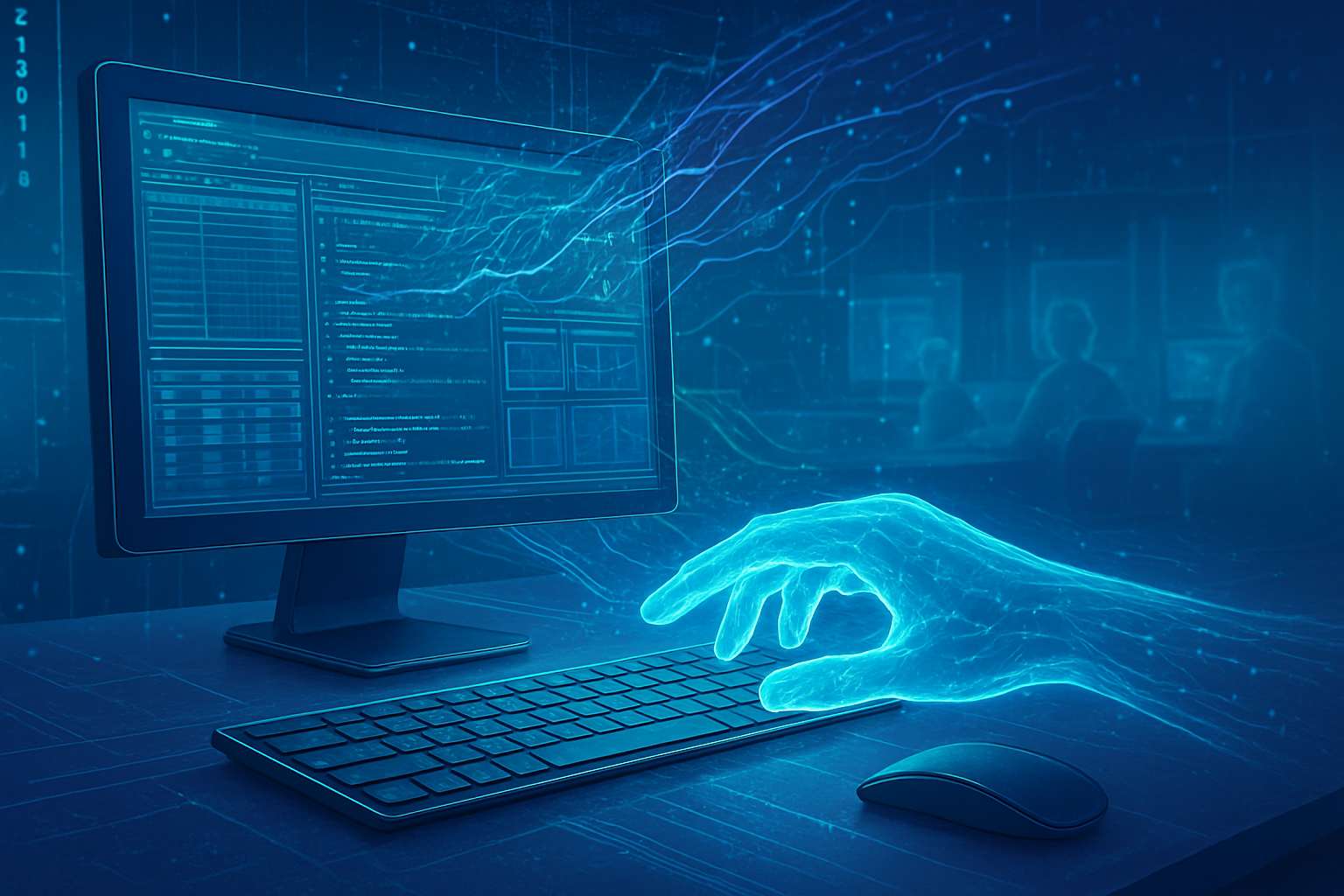
    The era of the passive chatbot is officially over. As of early 2026, the artificial intelligence landscape has transitioned from models that merely talk to models that act. At the center of this revolution is Anthropic’s "Computer Use" capability, a breakthrough that allows AI to navigate a desktop interface with the same visual and tactile precision as a human being. By interpreting screenshots, moving cursors, and typing text across any application, Anthropic has effectively given its Claude models a "body" to operate within the digital world, marking the most significant shift in AI agency since the debut of large language models.

    This development has fundamentally altered how enterprises approach productivity. No longer confined to the "walled gardens" of specific software integrations or brittle APIs, Claude can now bridge the gap between legacy systems and modern workflows. Whether it’s navigating a decades-old ERP system or orchestrating complex data transfers between disparate creative tools, the "Computer Use" feature has turned the personal computer into a playground for autonomous agents, sparking a high-stakes arms race among tech giants to control the "Agentic OS" of the future.

    The technical architecture of Anthropic’s Computer Use capability represents a radical departure from traditional automation. Unlike Robotic Process Automation (RPA), which relies on pre-defined scripts and rigid UI selectors, Claude operates through a continuous "Vision-Action Loop." The model captures a screenshot of the user's environment, analyzes the pixels to identify buttons and text fields, and then calculates the exact (x, y) coordinates needed to move the mouse or execute a click. This pixel-based approach allows the AI to interact with any software—from specialized scientific tools to standard office suites—without requiring custom backend integration.

    Since its initial beta release in late 2024, the technology has seen massive refinements. The current Claude 4.5 iteration, released in late 2025, introduced a "Thinking" layer that allows the agent to pause and reason through multi-step plans before execution. This "Hybrid Reasoning" has drastically reduced the "hallucinated clicks" that plagued earlier versions. Furthermore, a new "Zoom" capability allows the model to request high-resolution crops of specific screen regions, enabling it to read fine print or interact with dense spreadsheets that were previously illegible at standard resolutions.

    Initial reactions from the AI research community were a mix of awe and apprehension. While experts praised the move toward "Generalist Agents," many pointed out the inherent fragility of visual-only navigation. Early benchmarks, such as OSWorld, showed Claude’s success rate jumping from a modest 14.9% at launch to over 61% by 2026. This leap was largely attributed to Anthropic’s Model Context Protocol (MCP), an open standard that allows the AI to securely pull data from local files and databases, providing the necessary context to make sense of what it "sees" on the screen.

    The market impact of this "agency explosion" has been nothing short of disruptive. Anthropic’s strategic lead in desktop control has forced competitors to accelerate their own agentic roadmaps. OpenAI (Private) recently responded with "Operator," a browser-centric agent optimized for consumer tasks, while Google (NASDAQ:GOOGL) launched "Jarvis" to turn the Chrome browser into an autonomous action engine. However, Anthropic’s focus on full-desktop control has given it a distinct advantage in the B2B sector, where legacy software often lacks the web-based APIs that Google and OpenAI rely upon.

    Traditional RPA leaders like UiPath (NYSE:PATH) and Automation Anywhere (Private) have been forced to pivot or risk obsolescence. Once the kings of "scripted" automation, these companies are now repositioning themselves as "Agentic Orchestrators." For instance, UiPath recently launched its Maestro platform, which coordinates Anthropic agents alongside traditional robots, acknowledging that while AI can "reason," traditional RPA is still more cost-effective for high-volume, repetitive data entry. This hybrid approach is becoming the standard for enterprise-grade automation.

    The primary beneficiaries of this shift have been the cloud providers hosting these compute-heavy agents. Amazon (NASDAQ:AMZN), through its AWS Bedrock platform, has become the de facto home for Claude-powered agents, offering the "air-gapped" virtual machines required for secure desktop use. Meanwhile, Microsoft (NASDAQ:MSFT) has performed a surprising strategic maneuver by integrating Anthropic models into Office 365 alongside its OpenAI-based Copilots. By offering a choice of models, Microsoft ensures that its enterprise customers have access to the "pixel-perfect" navigation of Claude when OpenAI’s browser-based agents fall short.

    Beyond the corporate balance sheets, the wider significance of Computer Use touches on the very nature of human-computer interaction. We are witnessing a transition from the "Search and Click" era to the "Delegate and Approve" era. This fits into the broader trend of "Agentic AI," where the value of a model is measured by its utility rather than its chatty personality. Much like AlphaGo proved AI could master strategic systems and GPT-4 proved it could master language, Computer Use proves that AI can master the tools of modern civilization.

    However, this newfound agency brings harrowing security concerns. Security researchers have warned of "Indirect Prompt Injection," where a malicious website or document could contain hidden instructions that trick an AI agent into exfiltrating sensitive data or deleting files. Because the agent has the same permissions as the logged-in user, it can act as a "Confused Deputy," performing harmful actions under the guise of a legitimate task. Anthropic has countered this with specialized "Guardrail Agents" that monitor the main model’s actions in real-time, but the battle between autonomous agents and adversarial actors is only beginning.

    Ethically, the move toward autonomous computer use has reignited fears of white-collar job displacement. As agents become capable of handling 30–70% of routine office tasks—such as filing expenses, generating reports, and managing calendars—the "entry-level" cognitive role is under threat. The societal challenge of 2026 is no longer just about retraining workers for "AI tools," but about managing the "skill atrophy" that occurs when humans stop performing the foundational tasks that build expertise, delegating them instead to a silicon-based teammate.

    Looking toward the horizon, the next logical step is the "Agentic OS." Industry experts predict that by 2028, the traditional desktop metaphor—files, folders, and icons—will be replaced by a goal-oriented sandbox. In this future, users won't "open" applications; they will simply state a goal, and the operating system will orchestrate a fleet of background agents to achieve it. This "Zero-Click UI" will prioritize "Invisible Intelligence," where the interface only appears when the AI requires human confirmation or a high-level decision.

    The rise of the "Agent-to-Agent" (A2A) economy is another imminent development. Using protocols like MCP, an agent representing a buyer will negotiate in milliseconds with an agent representing a supplier, settling transactions via blockchain-based micropayments. While the technical hurdles—such as latency and "context window" management—remain significant, the potential for an autonomous B2B economy is a multi-trillion-dollar opportunity. The challenge for developers in the coming months will be perfecting the "handoff"—the moment an AI realizes it has reached the limit of its reasoning and must ask a human for help.

    In summary, Anthropic’s Computer Use capability is more than just a feature; it is a milestone in the history of artificial intelligence. It marks the moment AI stopped being a digital librarian and started being a digital worker. The shift from "talking" to "doing" has fundamentally changed the competitive dynamics of the tech industry, disrupted the multi-billion-dollar automation market, and forced a global conversation about the security and ethics of autonomous agency.

    As we move further into 2026, the success of this technology will depend on trust. Can enterprises secure their desktops against agent-based attacks? Can workers adapt to a world where their primary job is "Agent Management"? The answers to these questions will determine the long-term impact of the Agentic Revolution. For now, the world is watching as the cursor moves on its own, signaling the start of a new chapter in the human-machine partnership.


    This content is intended for informational purposes only and represents analysis of current AI developments.

    TokenRing AI delivers enterprise-grade solutions for multi-agent AI workflow orchestration, AI-powered development tools, and seamless remote collaboration platforms.
    For more information, visit https://www.tokenring.ai/.
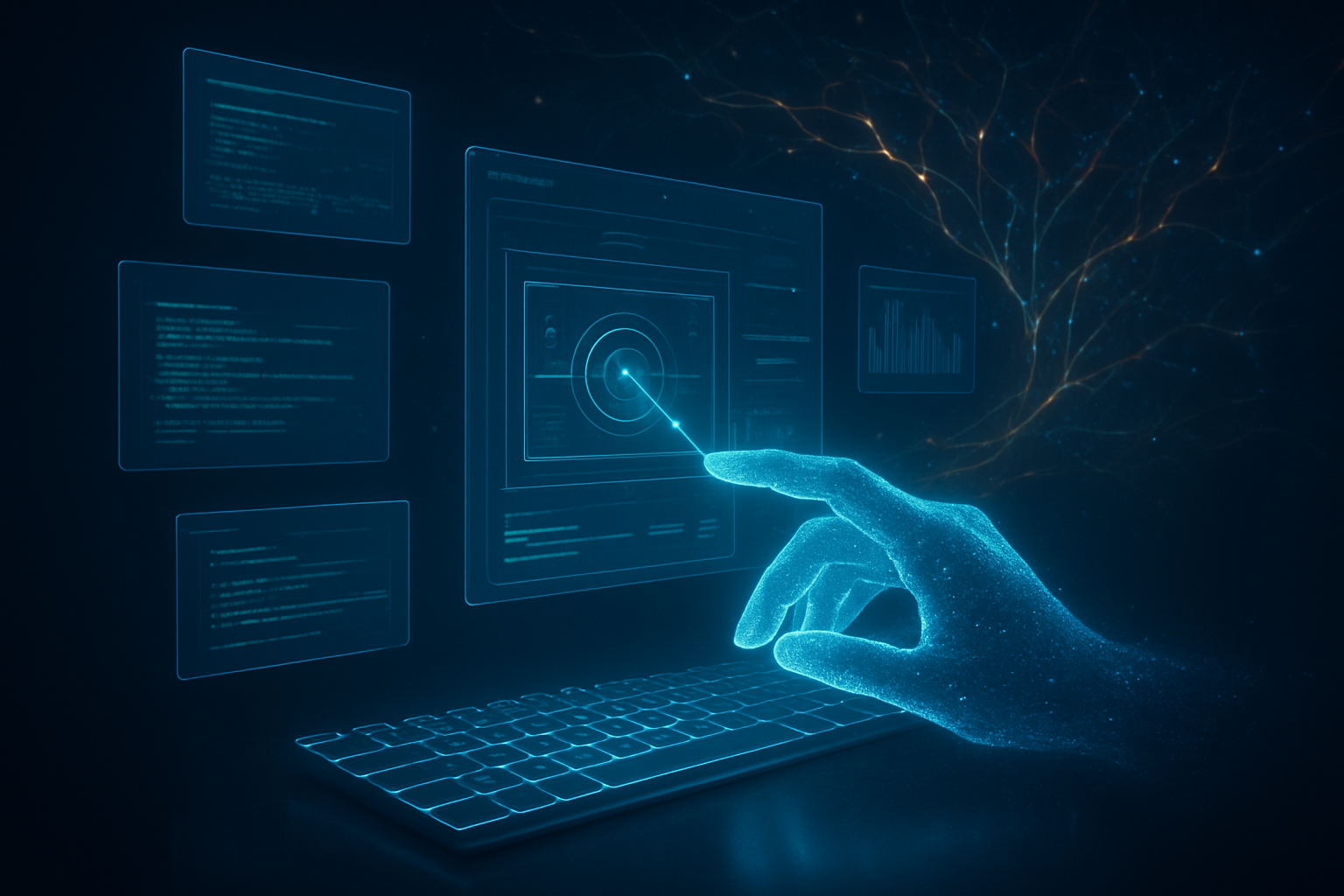
  • The Great Resolution War: Sora 2’s Social Storytelling vs. Veo 3’s 4K Professionalism

    The Great Resolution War: Sora 2’s Social Storytelling vs. Veo 3’s 4K Professionalism

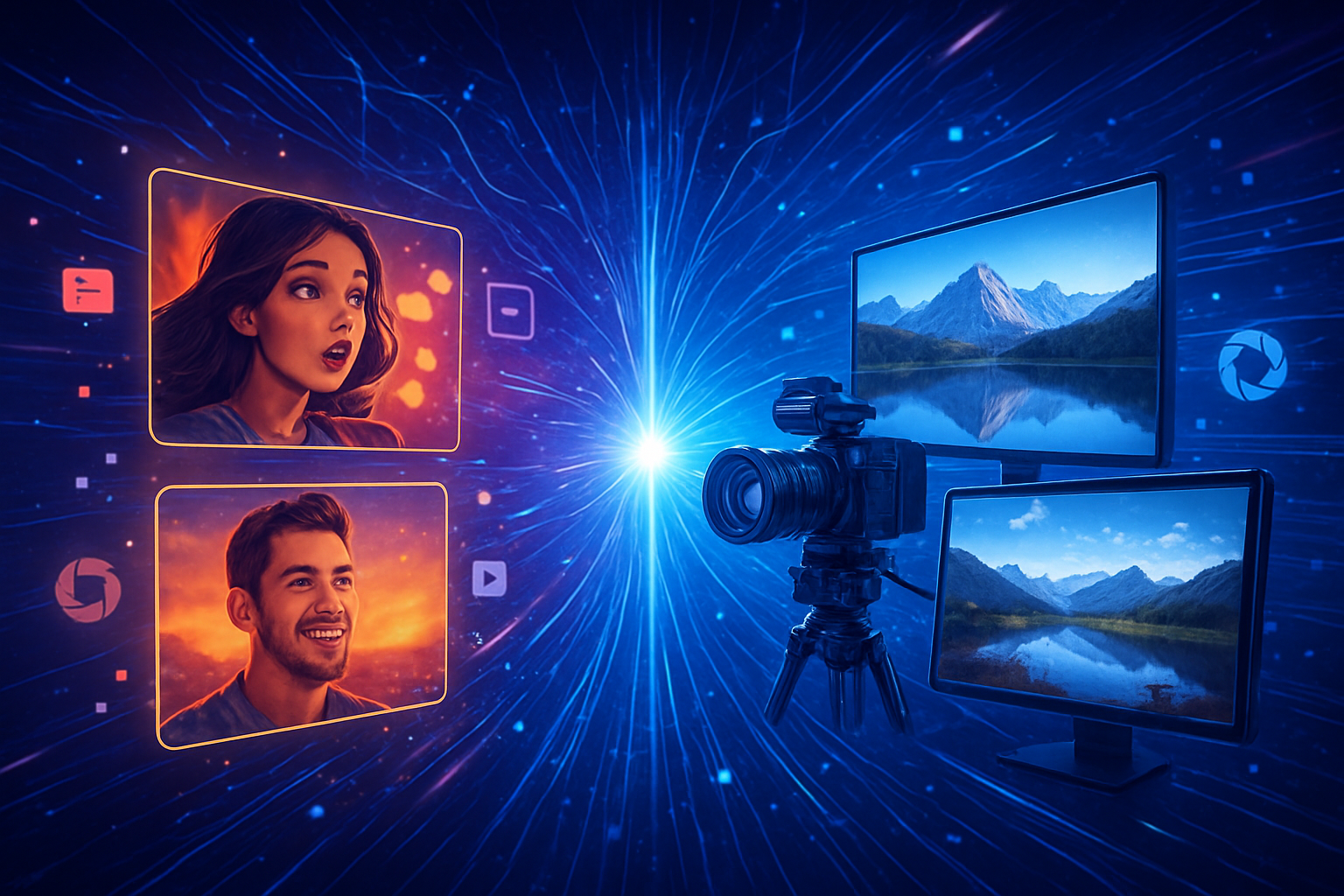
    As of January 9, 2026, the generative video landscape has transitioned from a playground of experimental tech to a bifurcated industry dominated by two distinct philosophies. OpenAI and Alphabet Inc. (NASDAQ:GOOGL) have spent the last quarter of 2025 drawing battle lines that define the future of digital media. While the "GPT-3.5 moment" for video arrived with the late 2025 releases of Sora 2 and Veo 3, the two tech giants are no longer competing for the same user base. Instead, they have carved out separate territories: one built on the viral, participatory culture of social media, and the other on the high-fidelity demands of professional cinematography.

    The immediate significance of this development cannot be overstated. We are moving beyond the era of "AI as a novelty" and into "AI as infrastructure." For the first time, creators can choose between a model that prioritizes narrative "cameos" and social integration and one that offers broadcast-grade 4K resolution with granular camera control. This split represents a fundamental shift in how AI companies view the value of generated pixels—whether they are meant to be shared in a feed or projected on a silver screen.

    Technical Prowess: From 'Cameos' to 4K Precision

    OpenAI’s Sora 2, which saw its wide release on September 30, 2025, has doubled down on what it calls "social-first storytelling." Technically, the model supports up to 1080p at 30fps, with a primary focus on character consistency and synchronized audio. The most talked-about feature is "Cameo," a system that allows users to upload a verified likeness and "star" in their own AI-generated scenes. This is powered by a multi-level consent framework and a "world state persistence" engine that ensures a character looks the same across multiple shots. OpenAI has also integrated native foley and dialogue generation, making the "Sora App"—a TikTok-style ecosystem—a self-contained production house for the influencer era.

    In contrast, Google’s Veo 3.1, updated in October 2025, is a technical behemoth designed for the professional suite. It boasts native 4K resolution at 60fps, a specification that has made it the darling of advertising agencies and high-end production houses. Veo 3 introduces "Camera Tokens," allowing directors to prompt specific cinematic movements like "dolly zoom" or "15-degree tilt" with mathematical precision. While Sora 2 focuses on the "who" and "what" of a story, Veo 3 focuses on the "how," providing a level of lighting and texture rendering that many experts claim is indistinguishable from physical cinematography. Initial reactions from the American Society of Cinematographers have been a mix of awe and existential dread, noting that Veo 3’s "Safe-for-Brand" guarantees make it far more viable for corporate use than its competitors.

    The Corporate Battlefield: Disney vs. The Cloud

    The competitive implications of these releases have reshaped the strategic alliances of the AI world. OpenAI’s landmark $1 billion partnership with The Walt Disney Company (NYSE:DIS) has given Sora 2 a massive advantage in the consumer space. By early 2026, Sora users began accessing licensed libraries of Marvel and Star Wars characters for "fan-inspired" content, essentially turning the platform into a regulated playground for the world’s most valuable intellectual property. This move has solidified OpenAI's position as a media company as much as a research lab, directly challenging the dominance of traditional social platforms.

    Google, meanwhile, has leveraged its existing infrastructure to win the enterprise war. By integrating Veo 3 into Vertex AI and Google Cloud, Alphabet Inc. (NASDAQ:GOOGL) has made generative video a plug-and-play tool for global marketing teams. This has put significant pressure on startups like Runway and Luma AI, which have had to pivot toward niche "indie" creator tools to survive. Microsoft (NASDAQ:MSFT), as a major backer of OpenAI, has benefited from the integration of Sora 2 into the Windows "Creative Suite," but Google’s 4K dominance in the professional sector remains a significant hurdle for the Redmond giant’s enterprise ambitions.

    The Trust Paradox and the Broader AI Landscape

    The broader significance of the Sora-Veo rivalry lies in the "Trust Paradox" of 2026. While the technology has reached a point of near-perfection, public trust in AI-generated content has seen a documented decline. This has forced both OpenAI and Google to lead the charge in C2PA metadata standards and invisible watermarking. The social impact is profound: we are entering an era where "seeing is no longer believing," yet the demand for personalized, AI-driven entertainment continues to skyrocket.

    This milestone mirrors the transition of digital photography in the early 2000s, but at a thousand times the speed. The ability of Sora 2 to maintain character consistency across a 60-second "Pro" clip is a breakthrough that solves the "hallucination" problems of 2024. However, the potential for misinformation remains a top concern for regulators. The European Union’s AI Office has already begun investigating the "Cameo" feature’s potential for identity theft, despite OpenAI’s rigorous government ID verification process. The industry is now balancing on a knife-edge between revolutionary creative freedom and the total erosion of visual truth.

    The Horizon: Long-Form and Virtual Realities

    Looking ahead, the next frontier for generative video is length and immersion. While Veo 3 can already stitch together 5-minute sequences in 1080p, the goal for 2027 is the "Infinite Feature Film"—a generative model capable of maintaining a coherent two-hour narrative. Experts predict that the next iteration of these models will move beyond 2D screens and into spatial computing. With the rumored updates to VR and AR headsets later this year, we expect to see "Sora Spatial" and "Veo 3D" environments that allow users to walk through their generated scenes in real-time.

    The challenges remaining are primarily computational and ethical. The energy cost of rendering 4K AI video at scale is a growing concern for environmental groups, leading to a push for more "inference-efficient" models. Furthermore, the "Cameo" feature has opened a Pandora’s box of digital estate rights—questions about who owns a person’s likeness after they pass away are already heading to the Supreme Court. Despite these hurdles, the momentum is undeniable; by the end of 2026, AI video will likely be the primary medium for both digital advertising and personalized storytelling.

    Final Verdict: A Bifurcated Future

    The rivalry between Sora 2 and Veo 3 marks the end of the "one-size-fits-all" AI model. OpenAI has successfully transformed video generation into a social experience, leveraging the power of "Cameo" and the Disney (NYSE:DIS) library to capture the hearts of the creator economy. Google, conversely, has cemented its role as the backbone of professional media, providing the 4K fidelity and "Flow" controls that the film and advertising industries demand.

    As we move into the second half of 2026, the key takeaway is that the "quality" of an AI model is now measured by its utility rather than just its parameters. Whether you are a teenager making a viral Marvel fan-film on your phone or a creative director at a global agency rendering a Super Bowl ad, the tools are now mature enough to meet the task. The coming months will be defined by how society adapts to this new "synthetic reality" and whether the safeguards put in place by these tech giants are enough to maintain the integrity of our digital world.


    This content is intended for informational purposes only and represents analysis of current AI developments.

    TokenRing AI delivers enterprise-grade solutions for multi-agent AI workflow orchestration, AI-powered development tools, and seamless remote collaboration platforms.
    For more information, visit https://www.tokenring.ai/.