
Tag: AI

  • China Unleashes Multi-Billion Dollar Offensive to Forge Semiconductor Self-Sufficiency

    China Unleashes Multi-Billion Dollar Offensive to Forge Semiconductor Self-Sufficiency

    China is embarking on an aggressive and financially robust campaign to fortify its domestic semiconductor industry, aiming for technological self-sufficiency amidst escalating global tensions and stringent export controls. At the heart of this ambitious strategy lies a comprehensive suite of financial incentives, notably including substantial energy bill reductions for data centers, coupled with a decisive mandate to exclusively utilize domestically produced AI chips. This strategic pivot is not merely an economic maneuver but a profound declaration of national security and technological sovereignty, poised to reshape global supply chains and accelerate the decoupling of the world's two largest economies in the critical domain of advanced computing.

    The immediate significance of these policies, which include guidance barring state-funded data centers from using foreign-made AI chips and offering up to 50% cuts in electricity bills for those that comply, cannot be overstated. These measures are designed to drastically reduce China's reliance on foreign technology, particularly from US suppliers, while simultaneously nurturing its burgeoning domestic champions. The ripple effects are already being felt, signaling a new era of intense competition and strategic realignment within the global semiconductor landscape.

    Policy Mandates and Economic Catalysts Driving Domestic Chip Adoption

    Beijing's latest directives represent one of its most assertive steps towards technological decoupling. State-funded data centers are now explicitly prohibited from utilizing foreign-made artificial intelligence (AI) chips. This mandate extends to projects less than 30% complete, requiring the removal or replacement of existing foreign chips, while more advanced projects face individual review. This follows earlier restrictions in September 2024 that barred major Chinese tech companies, including ByteDance (NASDAQ: BTD), Alibaba (NYSE: BABA), and Tencent (HKG: 0700), from acquiring advanced AI chips like Nvidia's (NASDAQ: NVDA) H20 GPUs, citing national security concerns. The new policy explicitly links eligibility for significant financial incentives to the exclusive use of domestic chips, effectively penalizing continued reliance on foreign vendors.

    To sweeten the deal and mitigate the immediate economic burden of switching to domestic alternatives, China has significantly increased subsidies, offering up to a 50% reduction in electricity bills for leading data centers that comply with the domestic chip mandate. These enhanced incentives are specifically directed at major Chinese tech companies that have seen rising electricity costs after being restricted from acquiring Nvidia's more energy-efficient chips. Estimates suggest that Chinese-made processors from companies like Huawei (SHE: 002502) and Cambricon (SSE: 688256) consume 30-50% more power than Nvidia's H20 chips for equivalent computational output, making these energy subsidies crucial for offsetting higher operational expenses.

    The exclusive domestic chip requirement is a non-negotiable condition for accessing these significant energy savings; data centers operating with foreign chips are explicitly excluded. This aggressive approach is not uniform across the nation, with interprovincial competition driving even more attractive incentive packages. Provinces with high concentrations of data centers, such as Gansu, Guizhou, and Inner Mongolia, are offering subsidies sometimes sufficient to cover a data center's entire operating cost for about a year. Industrial power rates in these regions, already lower, are further reduced by these new subsidies to approximately 0.4 yuan ($5.6 cents) per kilowatt-hour, highlighting the immense financial leverage being applied.

    This strategy marks a significant departure from previous, more gradual encouragement of domestic adoption. Instead of merely promoting local alternatives, the government is now actively enforcing their use through a combination of restrictions and compelling financial rewards. This two-pronged approach aims to rapidly accelerate the market penetration of Chinese chips and establish a robust domestic ecosystem, distinguishing it from earlier, less forceful initiatives that often saw foreign technology retain a dominant market share due to perceived performance or cost advantages.

    Reshaping the Competitive Landscape: Winners and Losers in the Chip War

    The repercussions of China's aggressive semiconductor policies are already profoundly impacting the competitive landscape, creating clear winners and losers among both domestic and international players. Foreign chipmakers, particularly those from the United States, are facing an existential threat to their market share within China's critical state-backed infrastructure. Nvidia (NASDAQ: NVDA), which once commanded an estimated 95% of China's AI chip market in 2022, has reportedly seen its share in state-backed projects plummet to near zero, with limited prospects for recovery. This dramatic shift underscores the vulnerability of even dominant players to nationalistic industrial policies and geopolitical tensions.

    Conversely, China's domestic semiconductor firms are poised for unprecedented growth and market penetration. Companies like Huawei (SHE: 002502), Cambricon (SSE: 688256), and Enflame are direct beneficiaries of these new mandates. With foreign competitors effectively sidelined in lucrative state-funded data center projects, these domestic champions are gaining guaranteed market access and a substantial increase in demand for their AI processors. This surge in orders provides them with crucial capital for research and development, manufacturing scale-up, and talent acquisition, accelerating their technological advancement and closing the gap with global leaders.

    Chinese tech giants such as ByteDance (NASDAQ: BTD), Alibaba (NYSE: BABA), and Tencent (HKG: 0700), while initially facing challenges due to the restrictions on advanced foreign chips, now stand to benefit from the energy subsidies. These subsidies directly alleviate the increased operational costs associated with using less energy-efficient domestic chips. This strategic support helps these companies maintain their competitive edge in AI development and cloud services within China, even as they navigate the complexities of a fragmented global supply chain. It also incentivizes them to deepen their collaboration with domestic chip manufacturers, fostering a more integrated and self-reliant national tech ecosystem.

    The competitive implications extend beyond chip manufacturers to the broader tech industry. Companies that can rapidly adapt their hardware and software stacks to integrate Chinese-made chips will gain a strategic advantage in the domestic market. This could lead to a bifurcation of product development, with Chinese companies optimizing for domestic hardware while international firms continue to innovate on global platforms. The market positioning for major AI labs and tech companies will increasingly depend on their ability to navigate these diverging technological ecosystems, potentially disrupting existing product roadmaps and service offerings that were previously built on a more unified global supply chain.

    The Broader Geopolitical and Economic Implications

    China's aggressive push for semiconductor self-sufficiency is not merely an industrial policy; it is a foundational pillar of its broader geopolitical strategy, deeply intertwined with national security and technological sovereignty. This initiative fits squarely within the context of the escalating tech war with the United States and other Western nations, serving as a direct response to export controls designed to cripple China's access to advanced chip technology. Beijing views mastery over semiconductors as critical for national security, economic resilience, and maintaining its trajectory as a global technological superpower, particularly under the ambit of its "Made in China 2025" and subsequent Five-Year Plans.

    The impacts of these policies are multifaceted. Economically, they are driving a significant reallocation of resources within China, channeling hundreds of billions of dollars through mechanisms like the "Big Fund" (National Integrated Circuit Industry Investment Fund) and its latest iteration, "Big Fund III," which committed an additional $47.5 billion in May 2024. This dwarfs direct incentives provided by the US CHIPS and Science Act, underscoring the scale of China's commitment. While fostering domestic growth, the reliance on currently less energy-efficient Chinese chips could, in the short term, potentially slow China's progress in high-end AI computing compared to global leaders who still have access to the most advanced international chips.

    Potential concerns abound, particularly regarding global supply chain stability and the risk of technological fragmentation. As China entrenches its domestic ecosystem, the global semiconductor industry could bifurcate, leading to parallel development paths and reduced interoperability. This could increase costs for multinational corporations, complicate product development, and potentially slow down global innovation if critical technologies are developed in isolation. Furthermore, the aggressive talent recruitment programs targeting experienced semiconductor engineers from foreign companies raise intellectual property concerns and intensify the global battle for skilled labor.

    Comparisons to previous AI milestones reveal a shift from a focus on foundational research and application to a more nationalistic, hardware-centric approach. While earlier milestones often celebrated collaborative international breakthroughs, China's current strategy is a stark reminder of how geopolitical tensions are now dictating the pace and direction of technological development. This strategic pivot marks a significant moment in AI history, underscoring that the future of artificial intelligence is inextricably linked to the control and production of its underlying hardware.

    The Road Ahead: Challenges and Breakthroughs on the Horizon

    The path forward for China's domestic semiconductor industry is fraught with both immense challenges and the potential for significant breakthroughs. In the near term, the primary challenge remains the gap in advanced manufacturing processes and design expertise compared to global leaders like Taiwan Semiconductor Manufacturing Company (TSMC) (NYSE: TSM) and Samsung (KRX: 005930). While Chinese firms are making rapid strides, particularly in mature nodes, achieving parity in cutting-edge process technologies (e.g., 3nm, 2nm) requires colossal investment, sustained R&D, and access to highly specialized equipment, much of which is currently restricted by export controls. The reliance on less energy-efficient domestic chips will also continue to be a short-to-medium term hurdle, potentially impacting the cost-effectiveness and performance scalability of large-scale AI deployments.

    However, the sheer scale of China's investment and the unified national effort are expected to yield substantial progress. Near-term developments will likely see further optimization and performance improvements in existing domestic AI chips from companies like Huawei and Cambricon, alongside advancements in packaging technologies to compensate for limitations in node size. We can also anticipate a surge in domestic equipment manufacturers and material suppliers, as China seeks to localize every segment of the semiconductor value chain. The intense domestic competition, fueled by government mandates and incentives, will act as a powerful catalyst for innovation.

    Looking further ahead, the long-term vision involves achieving self-sufficiency across the entire semiconductor spectrum, from design tools (EDA) to advanced manufacturing and packaging. Potential applications and use cases on the horizon include the widespread deployment of domestically powered AI in critical infrastructure, autonomous systems, advanced computing, and a myriad of consumer electronics. This would create a truly independent technological ecosystem, less vulnerable to external pressures. Experts predict that while full parity with the most advanced global nodes might take another decade or more, China will significantly reduce its reliance on foreign chips in critical sectors within the next five years, particularly for applications where performance is "good enough" rather than bleeding-edge.

    The key challenges that need to be addressed include fostering a truly innovative culture that can compete with the world's best, overcoming the limitations imposed by export controls on advanced lithography equipment, and attracting and retaining top-tier talent. What experts predict will happen next is a continued acceleration of domestic production, a deepening of indigenous R&D efforts, and an intensified global race for semiconductor supremacy, where technological leadership becomes an even more critical determinant of geopolitical power.

    A New Era of Technological Sovereignty and Global Realignments

    China's strategic initiatives and multi-billion dollar financial incentives aimed at boosting its domestic semiconductor industry represent a watershed moment in the global technology landscape. The key takeaways are clear: Beijing is unequivocally committed to achieving technological self-sufficiency, even if it means short-term economic inefficiencies and a significant reshaping of market dynamics. The combination of stringent mandates, such as the ban on foreign AI chips in state-funded data centers, and generous subsidies, including up to 50% cuts in electricity bills for compliant data centers, underscores a comprehensive and forceful approach to industrial policy.

    This development's significance in AI history cannot be overstated. It marks a decisive shift from a globally integrated technology ecosystem to one increasingly fragmented along geopolitical lines. For years, the AI revolution benefited from a relatively free flow of hardware and expertise. Now, the imperative of national security and technological sovereignty is compelling nations to build parallel, independent supply chains, particularly in the foundational technology of semiconductors. This will undoubtedly impact the pace and direction of AI innovation globally, fostering localized ecosystems and potentially leading to divergent technological standards.

    The long-term impact will likely see a more resilient, albeit potentially less efficient, Chinese semiconductor industry capable of meeting a significant portion of domestic demand. It will also force international companies to re-evaluate their China strategies, potentially leading to further decoupling or the development of "China-for-China" products. What to watch for in the coming weeks and months includes the practical implementation details of the energy subsidies, the performance benchmarks of new generations of Chinese AI chips, and the responses from international governments and companies as they adapt to this new, more fractured technological world order.


    This content is intended for informational purposes only and represents analysis of current AI developments.

    TokenRing AI delivers enterprise-grade solutions for multi-agent AI workflow orchestration, AI-powered development tools, and seamless remote collaboration platforms.
    For more information, visit https://www.tokenring.ai/.

  • The Silicon Barometer: How Semiconductor Fortunes Dictate the Tech Sector’s Volatile Ride

    The Silicon Barometer: How Semiconductor Fortunes Dictate the Tech Sector’s Volatile Ride

    Recent periods have starkly highlighted this symbiotic relationship. While the broader tech sector has grappled with inflationary pressures, geopolitical uncertainties, and shifting consumer demand, the cyclical nature of the chip market has amplified these challenges, leading to widespread slowdowns. Yet, in this turbulent environment, some companies, like electric vehicle pioneer Tesla (NASDAQ: TSLA), have occasionally defied the gravitational pull of a struggling chip sector, demonstrating unique market dynamics even while remaining fundamentally reliant on advanced silicon.

    The Microchip's Macro Impact: Decoding the Semiconductor-Tech Nexus

    The influence of semiconductors on the tech sector is multifaceted, extending far beyond simple supply and demand. Technically, advancements in semiconductor manufacturing—such as shrinking transistor sizes, improving power efficiency, and developing specialized architectures for AI and machine learning—are the primary drivers of innovation across all tech domains. When the semiconductor industry thrives, it enables more powerful, efficient, and affordable electronic devices, stimulating demand and investment in areas like cloud computing, 5G infrastructure, and the Internet of Things (IoT).

    Conversely, disruptions in this critical supply chain can send shockwaves across the globe. The "Great Chip Shortage" of 2021-2022, exacerbated by the COVID-19 pandemic and surging demand for remote work technologies, serves as a stark reminder. Companies across various sectors, from automotive to consumer electronics, faced unprecedented production halts and soaring input costs, with some resorting to acquiring legacy chips on the gray market at astronomical prices. This period clearly demonstrated how a technical bottleneck in chip production could stifle innovation and growth across the entire tech ecosystem.

    The subsequent downturn in late 2022 and 2023 saw the memory chip market, a significant segment, experience substantial revenue declines. This was not merely a supply issue but a demand contraction, driven by macroeconomic headwinds. The Philadelphia Semiconductor Index, a key barometer, experienced a significant decline, signaling a broader tech sector slowdown. This cyclical volatility, where boom periods fueled by technological breakthroughs are followed by corrections driven by oversupply or reduced demand, is a defining characteristic of the semiconductor industry and, by extension, the tech sector it underpins.

    Corporate Fortunes Tied to Silicon: Winners, Losers, and Strategic Plays

    The performance of the semiconductor industry has profound implications for a diverse array of companies, from established tech giants to nimble startups. Companies like Apple (NASDAQ: AAPL), Samsung (KRX: 005930), and Microsoft (NASDAQ: MSFT), heavily reliant on custom or off-the-shelf chips for their products and cloud services, directly feel the impact of chip supply and pricing. During shortages, their ability to meet consumer demand and launch new products is severely hampered, affecting revenue and market share.

    Conversely, semiconductor manufacturers themselves, such as NVIDIA (NASDAQ: NVDA), Intel (NASDAQ: INTC), and Advanced Micro Devices (NASDAQ: AMD), are at the forefront, their stock performance often mirroring the industry's health. NVIDIA, for instance, has seen its valuation soar on the back of insatiable demand for its AI-accelerating GPUs, showcasing how specific technological leadership within the semiconductor space can create immense competitive advantages. However, even these giants are not immune to broader market corrections, as seen in the late 2024/early 2025 tech sell-off that trimmed billions from their market values.

    Tesla (NASDAQ: TSLA), though not a semiconductor company, exemplifies the dual impact of chip performance. During the "Great Chip Shortage," Elon Musk highlighted the "insane" supply chain difficulties, which forced production slowdowns and threatened ambitious delivery targets. Yet, in other instances, investor optimism surrounding the electric vehicle (EV) market or company-specific developments has allowed Tesla to accelerate gains even when the broader semiconductor sector stumbled, as observed in March 2025. This highlights that while fundamental reliance on chips is universal, market perception and sector-specific trends can sometimes create temporary divergences in performance. However, a recent slowdown in EV investment and consumer demand in late 2025 has directly impacted the automotive semiconductor segment, contributing to a dip in Tesla's U.S. market share.

    The Broader Canvas: Semiconductors and the Global Tech Tapestry

    The semiconductor industry's influence extends beyond corporate balance sheets, touching upon geopolitical stability, national security, and the pace of global innovation. The concentration of advanced chip manufacturing in specific regions, notably Taiwan, has become a significant geopolitical concern, highlighting vulnerabilities in the global supply chain. Governments worldwide are now heavily investing in domestic semiconductor manufacturing capabilities to mitigate these risks, recognizing chips as strategic national assets.

    This strategic importance is further amplified by the role of semiconductors in emerging technologies. AI, quantum computing, and advanced connectivity (like 6G) all depend on increasingly sophisticated and specialized chips. The race for AI supremacy, for instance, is fundamentally a race for superior AI chips, driving massive R&D investments. The cyclical nature of the semiconductor market, therefore, isn't just an economic phenomenon; it's a reflection of the global technological arms race and the underlying health of the digital economy.

    Comparisons to previous tech cycles reveal a consistent pattern: periods of rapid technological advancement, often fueled by semiconductor breakthroughs, lead to widespread economic expansion. Conversely, slowdowns in chip innovation or supply chain disruptions can trigger broader tech downturns. The current environment, with its blend of unprecedented demand for AI chips and persistent macroeconomic uncertainties, presents a unique challenge, requiring a delicate balance between fostering innovation and ensuring supply chain resilience.

    The Road Ahead: Navigating Silicon's Future

    Looking ahead, the semiconductor industry is poised for continuous evolution, driven by relentless demand for processing power and efficiency. Expected near-term developments include further advancements in chip architecture (e.g., neuromorphic computing, chiplets), new materials beyond silicon, and increased automation in manufacturing. The ongoing "fab race," with countries like the U.S. and Europe investing billions in new foundries, aims to diversify the global supply chain and reduce reliance on single points of failure.

    Longer-term, the advent of quantum computing and advanced AI will demand entirely new paradigms in chip design and manufacturing. Challenges remain formidable, including the escalating costs of R&D and fabrication, the environmental impact of chip production, and the ever-present threat of geopolitical disruptions. Experts predict a continued period of high investment in specialized chips for AI and edge computing, even as demand for general-purpose chips might fluctuate with consumer spending. The industry will likely see further consolidation as companies seek economies of scale and specialized expertise.

    The focus will shift not just to making chips smaller and faster, but smarter and more energy-efficient, capable of handling the immense computational loads of future AI models and interconnected devices. What experts predict is a future where chip design and manufacturing become even more strategic, with national interests playing a larger role alongside market forces.

    A Fundamental Force: The Enduring Power of Silicon

    In summary, the semiconductor industry stands as an undeniable barometer for the stability and growth of the broader tech sector. Its health, whether booming or stumbling, sends ripples across every segment of the digital economy, influencing everything from corporate profits to national technological capabilities. Recent market stumbles, including the severe chip shortages and subsequent demand downturns, vividly illustrate how integral silicon is to our technological progress.

    The significance of this relationship in AI history cannot be overstated. As AI continues to permeate every industry, the demand for specialized, high-performance chips will only intensify, making the semiconductor sector an even more critical determinant of AI's future trajectory. What to watch for in the coming weeks and months are continued investments in advanced fabrication, the emergence of new chip architectures optimized for AI, and how geopolitical tensions continue to shape global supply chains. The resilience and innovation within the semiconductor industry will ultimately dictate the pace and direction of technological advancement for years to come.


    This content is intended for informational purposes only and represents analysis of current AI developments.

    TokenRing AI delivers enterprise-grade solutions for multi-agent AI workflow orchestration, AI-powered development tools, and seamless remote collaboration platforms.
    For more information, visit https://www.tokenring.ai/.
  • Samsung Heralded for Transformative AI and Semiconductor Innovation Ahead of CES® 2026

    Samsung Heralded for Transformative AI and Semiconductor Innovation Ahead of CES® 2026

    Seoul, South Korea – November 5, 2025 – Samsung Electronics (KRX: 005930) has once again cemented its position at the vanguard of technological advancement, earning multiple coveted CES® 2026 Innovation Awards from the Consumer Technology Association (CTA)®. This significant recognition, announced well in advance of the prestigious consumer electronics show slated for January 7-10, 2026, in Las Vegas, underscores Samsung’s unwavering commitment to pioneering transformative technologies, particularly in the critical fields of artificial intelligence and semiconductor innovation. The accolades not only highlight Samsung's robust pipeline of future-forward products and solutions but also signal the company's strategic vision to integrate AI seamlessly across its vast ecosystem, from advanced chip manufacturing to intelligent consumer devices.

    The immediate significance of these awards for Samsung is multifaceted. It powerfully reinforces the company's reputation as a global leader in innovation, generating considerable positive momentum and brand prestige ahead of CES 2026. This early acknowledgment positions Samsung as a key innovator to watch, amplifying anticipation for its official product announcements and demonstrations. For the broader tech industry, Samsung's consistent recognition often sets benchmarks, influencing trends and inspiring competitors to push their own technological boundaries. These awards further confirm the continued importance of AI, sustainable technology, and connected ecosystems as dominant themes, providing an early glimpse into the intelligent, integrated, and environmentally conscious technological solutions that will define the near future.

    Engineering Tomorrow: Samsung's AI and Semiconductor Breakthroughs

    While specific product details for the CES® 2026 Innovation Awards remain under wraps until the official event, Samsung's consistent leadership and recent advancements in 2024 and 2025 offer a clear indication of the types of transformative technologies likely to have earned these accolades. Samsung's strategy is characterized by an "AI Everywhere" vision, integrating intelligent capabilities across its extensive device ecosystem and into the very core of its manufacturing processes.

    In the realm of AI advancements, Samsung is pioneering on-device AI for enhanced user experiences. Innovations like Galaxy AI, first introduced with the Galaxy S24 series and expanding to the S25 and A series, enable sophisticated AI functions such as Live Translate, Interpreter, Chat Assist, and Note Assist directly on devices. This approach significantly advances beyond cloud-based processing by offering instant, personalized AI without constant internet connectivity, bolstering privacy, and reducing latency. Furthermore, Samsung is embedding AI into home appliances and displays with features like "AI Vision Inside" for smart inventory management in refrigerators and Vision AI for TVs, which offers on-device AI for real-time picture and sound quality optimization. This moves beyond basic automation to truly adaptive and intelligent environments. The company is also heavily investing in AI in robotics and "physical AI," developing advanced intelligent factory robotics and intelligent companions like Ballie, capable of greater autonomy and precision by linking virtual simulations with real-world data.

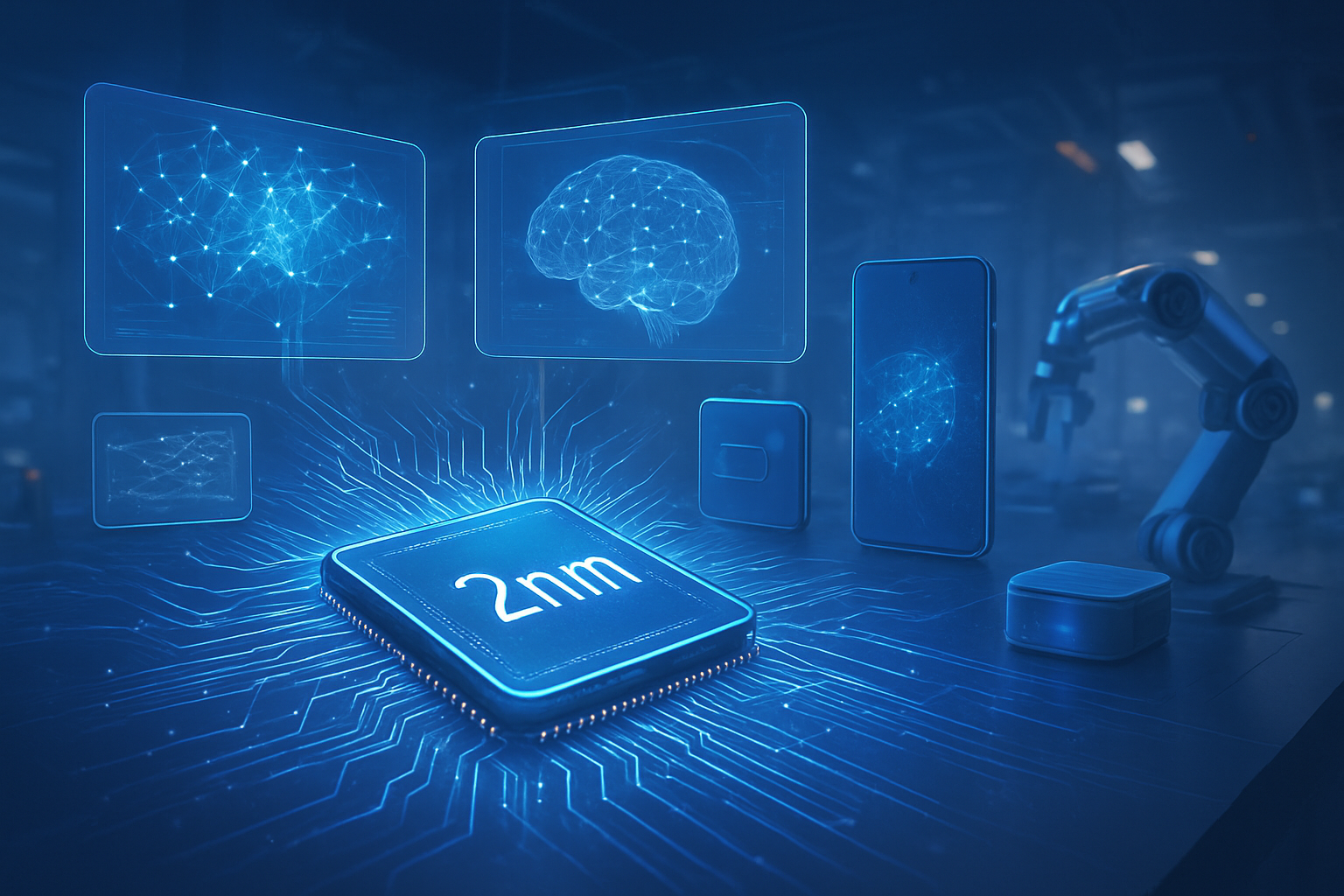
    The backbone of Samsung's AI ambitions lies in its semiconductor innovations. The company is at the forefront of next-generation memory solutions for AI, developing High-Bandwidth Memory (HBM4) as an essential component for AI servers and accelerators, aiming for superior performance. Additionally, Samsung has developed 10.7Gbps LPDDR5X DRAM, optimized for next-generation on-device AI applications, and 24Gb GDDR7 DRAM for advanced AI computing. These memory chips offer significantly higher bandwidth and lower power consumption, critical for processing massive AI datasets. In advanced process technology and AI chip design, Samsung is on track for mass production of its 2nm Gate-All-Around (GAA) process technology by 2025, with a roadmap to 1.4nm by 2027. This continuous reduction in transistor size leads to higher performance and lower power consumption. Samsung's Advanced Processor Lab (APL) is also developing next-generation AI chips based on RISC-V architecture, including the Mach 1 AI inference chip, allowing for greater technological independence and tailored AI solutions. Perhaps most transformative is Samsung's integration of AI into its own chip fabrication through the "AI Megafactory." This groundbreaking partnership with NVIDIA involves deploying over 50,000 NVIDIA GPUs to embed AI throughout the entire chip manufacturing flow, from design and development to automated physical tasks and digital twins for predictive maintenance. This represents a paradigm shift towards a "thinking" manufacturing system that continuously analyzes, predicts, and optimizes production in real-time, setting a new benchmark for intelligent chip manufacturing.

    The AI research community and industry experts generally view Samsung's consistent leadership with a mix of admiration and close scrutiny. They recognize Samsung as a global leader, often lauded for its innovations at CES. The strategic vision and massive investments, such as ₩47.4 trillion (US$33 billion) for capacity expansion in 2025, are seen as crucial for Samsung's AI-driven recovery and growth. The high-profile partnership with NVIDIA for the "AI Megafactory" has been particularly impactful, with NVIDIA CEO Jensen Huang calling it the "dawn of the AI industrial revolution." While Samsung has faced challenges in areas like high-bandwidth memory, its renewed focus on HBM4 and significant investments are interpreted as a strong effort to reclaim leadership. The democratization of AI through expanded language support in Galaxy AI is also recognized as a strategic move that could influence future industry standards.

    Reshaping the Competitive Landscape: Impact on Tech Giants and Startups

    Samsung's anticipated CES® 2026 Innovation Awards for its transformative AI and semiconductor innovations are set to significantly reshape the tech industry, creating new market dynamics and offering strategic advantages to some while posing considerable challenges to others. Samsung's comprehensive approach, spanning on-device AI, advanced memory, cutting-edge process technology, and AI-driven manufacturing, positions it as a formidable force.

    AI companies will experience a mixed impact. AI model developers and cloud AI providers stand to benefit from the increased availability of high-performance HBM4, enabling more complex and efficient model training and inference. Edge AI software and service providers will find new opportunities as robust on-device AI creates demand for lightweight AI models and privacy-preserving applications across various industries. Conversely, companies solely reliant on cloud processing for AI might face competition from devices offering similar functionalities locally, especially where latency, privacy, or offline capabilities are critical. Smaller AI hardware startups may also find it harder to compete in high-performance AI chip manufacturing given Samsung's comprehensive vertical integration and advanced foundry capabilities.

    Among tech giants, NVIDIA (NASDAQ: NVDA) is a clear beneficiary, with Samsung deploying 50,000 NVIDIA GPUs in its manufacturing and collaborating on HBM4 development, solidifying NVIDIA's dominance in AI infrastructure. Foundry customers like Qualcomm (NASDAQ: QCOM) and MediaTek (TPE: 2454), which rely on Samsung Foundry for their mobile SoCs, will benefit from advancements in 2nm GAA process technology, leading to more powerful and energy-efficient chips. Apple (NASDAQ: AAPL), Google (NASDAQ: GOOGL), and Microsoft (NASDAQ: MSFT), also heavily invested in on-device AI, will see the entire ecosystem pushed forward by Samsung's innovations. However, competitors like Intel (NASDAQ: INTC) and TSMC (NYSE: TSM) will face increased competition in leading-edge process technology as Samsung aggressively pursues its 2nm and 1.4nm roadmap. Memory competitors such as SK Hynix (KRX: 000660) and Micron (NASDAQ: MU) will also experience intensified competition as Samsung accelerates HBM4 development and production.

    Startups will find new avenues for innovation. AI software and application startups can leverage powerful on-device AI and advanced cloud infrastructure, fueled by Samsung's chips, to innovate faster in areas like personalized assistants, AR/VR, and specialized generative AI applications. Niche semiconductor design startups may find opportunities in specific IP blocks or custom accelerators that integrate with Samsung's advanced processes. However, hardware-centric AI startups, particularly those attempting to develop their own high-performance AI chips without strong foundry partnerships, will face immense difficulty competing with Samsung's vertically integrated approach.

    Samsung's comprehensive strategy forces a re-evaluation of market positions. Its unique vertical integration as a leading memory provider, foundry, and device manufacturer allows for unparalleled synergy, optimizing AI hardware from end-to-end. This drives an intense performance and efficiency race in AI chips, benefiting the entire industry by pushing innovation but demanding significant R&D from competitors. The emphasis on robust on-device AI also signals a shift away from purely cloud-dependent AI models, requiring major AI labs to adapt their strategies for effective AI deployment across a spectrum of devices. The AI Megafactory could also offer a more resilient and efficient supply chain, providing a competitive edge in chip production stability. These innovations will profoundly transform smartphones, TVs, and other smart devices with on-device generative AI, potentially disrupting traditional mobile app ecosystems. The AI Megafactory could also set new standards for manufacturing efficiency, pressuring other manufacturers to adopt similar AI-driven strategies. Samsung's market positioning will be cemented as a comprehensive AI solutions provider, leading an integrated AI ecosystem and strengthening its role as a foundry powerhouse and memory dominator in the AI era.

    A New Era of Intelligence: Wider Significance and Societal Impact

    Samsung's anticipated innovations at CES® 2026, particularly in on-device AI, high-bandwidth and low-power memory, advanced process technologies, and AI-driven manufacturing, represent crucial steps in enabling the next generation of intelligent systems and hold profound wider significance for the broader AI landscape and society. These advancements align perfectly with the dominant trends shaping the future of AI: the proliferation of on-device/edge AI, fueling generative AI's expansion, the rise of advanced AI agents and autonomous systems, and the transformative application of AI in manufacturing (Industry 4.0).

    The proliferation of on-device AI is a cornerstone of this shift, embedding intelligence directly into devices to meet the growing demand for faster processing, reduced latency, enhanced privacy, and lower power consumption. This decentralizes AI, making it more robust and responsive for everyday applications. Samsung's advancements in memory (HBM4, LPDDR5X) and process technology (2nm, 1.4nm GAA) directly support the insatiable data demands of increasingly complex generative AI models and advanced AI agents, providing the foundational hardware needed for both training and inference. HBM4 is projected to offer data transfer speeds up to 2TB/s and processing speeds of up to 11 Gbps, with capacities reaching 48GB, critical for high-performance computing and training large-scale AI models. LPDDR5X, supporting up to 10.7 Gbps, offers significant performance and power efficiency for power-sensitive on-device AI. The 2nm and 1.4nm GAA process technologies enable more transistors to be packed onto a chip, leading to significantly higher performance and lower power consumption crucial for advanced AI chips. Finally, the AI Megafactory in collaboration with NVIDIA signifies a profound application of AI within the semiconductor industry itself, optimizing production environments and accelerating the development of future semiconductors.

    These innovations promise accelerated AI development and deployment, leading to more sophisticated AI models across all sectors. They will enable enhanced consumer experiences through more intelligent, personalized, and secure functionalities in everyday devices, making technology more intuitive and responsive. The revolutionized manufacturing model of the AI Megafactory could become a blueprint for "intelligent manufacturing" across various industries, leading to unprecedented levels of automation, efficiency, and precision. This will also create new industry opportunities in healthcare, transportation, and smart infrastructure. However, potential concerns include the rising costs and investment required for cutting-edge AI chips and infrastructure, ethical implications and bias as AI becomes more pervasive, job displacement in traditional sectors, and the significant energy and water consumption of chip production and AI training. Geopolitical tensions also remain a concern, as the strategic importance of advanced semiconductor technology can exacerbate trade restrictions.

    Comparing these advancements to previous AI milestones, Samsung's current innovations are the latest evolution in a long history of AI breakthroughs. While early AI focused on theoretical concepts and rule-based systems, and the machine learning resurgence in the 1990s highlighted the importance of powerful computing, the deep learning revolution of the 2010s (fueled by GPUs and early HBM) demonstrated AI's capability in perception and pattern recognition. The current generative AI boom, with models like ChatGPT, has democratized advanced AI. Samsung's CES 2026 innovations build directly on this trajectory, with on-device AI making sophisticated intelligence more accessible, advanced memory and process technologies enabling the scaling challenges of today's generative AI, and the AI Megafactory representing a new paradigm: using AI to accelerate the creation of the very hardware that powers AI. This creates a virtuous cycle of innovation, moving beyond merely using AI to making AI more efficiently.

    The Horizon of Intelligence: Future Developments

    Samsung's strategic roadmap, underscored by its CES® 2026 Innovation Awards, signals a future where AI is deeply integrated into every facet of technology, from fundamental hardware to pervasive user experiences. The near-term and long-term developments stemming from these innovations promise to redefine industries and daily life.

    In the near term, Samsung plans a significant expansion of its Galaxy AI capabilities, aiming to equip over 400 million Galaxy devices with AI by 2025 and integrate AI into 90% of its products across all business areas by 2030. This includes highly personalized AI features leveraging knowledge graph technology and a hybrid AI model that balances on-device and cloud processing. For HBM4, mass production is expected in 2026, featuring significantly faster performance, increased capacity, and the ability for processor vendors like NVIDIA to design custom base dies, effectively turning the HBM stack into a more intelligent subsystem. Samsung also aims for mass production of its 2nm process technology by 2025 for mobile applications, expanding to HPC in 2026 and automotive in 2027. The AI Megafactory with NVIDIA will continue to embed AI throughout Samsung's manufacturing flow, leveraging digital twins via NVIDIA Omniverse for real-time optimization and predictive maintenance.

    The potential applications and use cases are vast. On-device AI will lead to personalized mobile experiences, enhanced privacy and security, offline functionality for mobile apps and IoT devices, and more intelligent smart homes and robotics. Advanced memory solutions like HBM4 will be critical for high-precision large language models, AI training clusters, and supercomputing, while LPDDR5X and its successor LPDDR6 will power flagship mobile devices, AR/VR headsets, and edge AI devices. The 2nm and 1.4nm GAA process technologies will enable more compact, feature-rich, and energy-efficient consumer electronics, AI and HPC acceleration, and advancements in automotive and healthcare technologies. AI-driven manufacturing will lead to optimized semiconductor production, accelerated development of next-generation devices, and improved supply chain resilience.

    However, several challenges need to be addressed for widespread adoption. These include the high implementation costs of advanced AI-driven solutions, ongoing concerns about data privacy and security, a persistent skill gap in AI and semiconductor technology, and the technical complexities and yield challenges associated with advanced process nodes like 2nm and 1.4nm GAA. Supply chain disruptions, exacerbated by the explosive demand for AI components like HBM and advanced GPUs, along with geopolitical risks, also pose significant hurdles. The significant energy and water consumption of chip production and AI training demand continuous innovation in energy-efficient designs and sustainable manufacturing practices.

    Experts predict that AI will continue to be the primary driver of market growth and innovation in the semiconductor sector, boosting design productivity by at least 20%. The "AI Supercycle" will lead to a shift from raw performance to application-specific efficiency, driving the development of customized chips. HBM will remain dominant in AI applications, with continuous advancements. The race to develop and mass-produce chips at 2nm and 1.4nm will intensify, and AI is expected to become even more deeply integrated into chip design and fabrication processes beyond 2028. A collaborative approach, with "alliances" becoming a trend, will be essential for addressing the technical challenges of advanced packaging and chiplet architectures.

    A Vision for the Future: Comprehensive Wrap-up

    Samsung's recognition for transformative technology and semiconductor innovation by the Consumer Technology Association, particularly for the CES® 2026 Innovation Awards, represents a powerful affirmation of its strategic direction and a harbinger of the AI-driven future. These awards, highlighting advancements in on-device AI, next-generation memory, cutting-edge process technology, and AI-driven manufacturing, collectively underscore Samsung's holistic approach to building an intelligent, interconnected, and efficient technological ecosystem.

    The key takeaways from these anticipated awards are clear: AI is becoming ubiquitous, embedded directly into devices for enhanced privacy and responsiveness; foundational hardware, particularly advanced memory and smaller process nodes, is critical for powering the next wave of complex AI models; and AI itself is revolutionizing the very process of technology creation through intelligent manufacturing. These developments mark a significant step towards the democratization of AI, making sophisticated capabilities accessible to a broader user base and integrating AI seamlessly into daily life. They also represent pivotal moments in AI history, enabling the scaling of generative AI, fostering the rise of advanced AI agents, and transforming industrial processes.

    The long-term impact on the tech industry and society will be profound. We can expect accelerated innovation cycles, the emergence of entirely new device categories, and a significant shift in the competitive landscape as companies vie for leadership in these foundational technologies. Societally, these innovations promise enhanced personalization, improved quality of life through smarter homes, cities, and healthcare, and continued economic growth. However, the ethical considerations surrounding AI bias, decision-making, and the transformation of the workforce will demand ongoing attention and proactive solutions.

    In the coming weeks and months, observers should keenly watch for Samsung's official announcements at CES 2026, particularly regarding the commercialization timelines and specific product integrations of its award-winning on-device AI capabilities. Further details on HBM4 and LPDDR5X product roadmaps, alongside partnerships with major AI chip designers, will be crucial. Monitoring news regarding the successful ramp-up and customer adoption of Samsung's 2nm and 1.4nm GAA process technologies will indicate confidence in its manufacturing prowess. Finally, expect more granular information on the technologies and efficiency gains within the "AI Megafactory" with NVIDIA, which could set a new standard for intelligent manufacturing. Samsung's strategic direction firmly establishes AI not merely as a software layer but as a deeply embedded force in the fundamental hardware and manufacturing processes that will define the next era of technology.


    This content is intended for informational purposes only and represents analysis of current AI developments.

    TokenRing AI delivers enterprise-grade solutions for multi-agent AI workflow orchestration, AI-powered development tools, and seamless remote collaboration platforms.
    For more information, visit https://www.tokenring.ai/.

  • AI Unleashes a New Era in Cell and Gene Therapy: A Quarter Century Update Reveals Transformative Potential

    AI Unleashes a New Era in Cell and Gene Therapy: A Quarter Century Update Reveals Transformative Potential

    The burgeoning fields of cell and gene therapy (CGT) are on the cusp of a profound revolution, driven by the relentless advancements in artificial intelligence. This transformative impact was a central theme at the recent Quarter Century Update conference, where leading experts like Deborah Phippard, PhD, and Renier Brentjens, MD, PhD, illuminated how AI is not merely optimizing but fundamentally reshaping the research, development, and practical application of these life-saving treatments. As the industry looks back at a quarter-century of progress and forward to a future brimming with possibility, AI stands out as the singular force accelerating breakthroughs and promising a new paradigm of personalized medicine.

    The discussions, which took place around late October 2025, underscored AI's versatile capacity to tackle some of the most complex challenges inherent in CGT, from identifying elusive therapeutic targets to streamlining intricate manufacturing processes. Renier Brentjens, a pioneer in CAR T-cell therapy, specifically highlighted the critical role of generative AI in rapidly advancing novel cell therapies, particularly in the challenging realm of oncology, including solid tumors. His insights, shared at the conference, emphasized that AI offers indispensable solutions to streamline the often lengthy and intricate journey of bringing complex new therapies from bench to bedside, promising to democratize access and accelerate the delivery of highly effective treatments.

    AI's Precision Engineering: Reshaping the Core of Cell and Gene Therapy

    AI's integration into cell and gene therapy introduces unprecedented technical capabilities, marking a significant departure from traditional, often laborious, and less precise approaches. By leveraging sophisticated algorithms and machine learning (ML), AI is accelerating discovery, optimizing designs, streamlining manufacturing, and enhancing clinical development, ultimately aiming for more precise, efficient, and personalized treatments.

    Specific advancements span the entire CGT value chain. In target identification, AI algorithms analyze vast genomic and molecular datasets to pinpoint disease-associated genetic targets and predict their therapeutic relevance. For CAR T-cell therapies, AI can predict tumor epitopes, improving on-target activity and minimizing cytotoxicity. For payload design optimization, AI and ML models enable rapid screening of numerous candidates to optimize therapeutic molecules like mRNA and viral vectors, modulating functional activity and tissue specificity while minimizing unwanted immune responses. This includes predicting CRISPR guide RNA (gRNA) target sites for more efficient editing with minimal off-target activity, with tools like CRISPR-GPT automating experimental design and data analysis. Furthermore, AI is crucial for immunogenicity prediction and mitigation, designing therapies that inherently avoid triggering adverse immune reactions by predicting and engineering less immunogenic protein sequences. In viral vector optimization, AI algorithms tailor vectors like adeno-associated viruses (AAVs) for maximum efficiency and specificity. Companies like Dyno Therapeutics utilize deep learning to design AAV variants with enhanced immunity-evasion properties and optimal targeting.

    These AI-driven approaches represent a monumental leap from previous methods, primarily by offering unparalleled speed, precision, and personalization. Historically, drug discovery and preclinical testing could span decades; AI compresses these timelines into months. Where earlier gene editing technologies struggled with off-target effects, AI significantly enhances precision, reducing the "trial-and-error" associated with experimental design. Moreover, AI enables true personalized medicine by analyzing patient-specific genetic and molecular data to design tailored therapies, moving beyond "one-size-fits-all" treatments. The research community, while excited by this transformative potential, also acknowledges challenges such as massive data requirements, the need for high-quality data, and ethical concerns around algorithmic transparency and bias. Deborah Phippard, Chief Scientific Officer at Precision for Medicine, emphasizes AI's expanding role in patient identification, disease phenotyping, and treatment matching, which can personalize therapy selection and improve patient access, particularly in complex diseases like cancer.

    The Competitive Arena: Who Benefits from the AI-CGT Convergence?

    The integration of AI into cell and gene therapy is creating a dynamic competitive environment, offering strategic advantages to a diverse range of players, from established pharmaceutical giants to agile tech companies and innovative startups. Companies that successfully harness AI stand to gain a significant edge in this rapidly expanding market.

    Pharmaceutical and Biotechnology Companies are strategically integrating AI to enhance various stages of the CGT value chain. Pioneers like Novartis (NYSE: NVS), a leader in CAR-T cell therapy, are leveraging AI to advance personalized medicine. CRISPR Therapeutics (NASDAQ: CRSP) is at the forefront of gene editing, with AI playing a crucial role in optimizing these complex processes. Major players such as Roche (OTCQX: RHHBY), Pfizer (NYSE: PFE), AstraZeneca (NASDAQ: AZN), Novo Nordisk (NYSE: NVO), Sanofi (NASDAQ: SNY), Merck (NYSE: MRK), Lilly (NYSE: LLY), and Gilead Sciences (NASDAQ: GILD) (via Kite Pharma) are actively investing in AI collaborations to accelerate drug development, improve operational efficiency, and identify novel therapeutic targets. These companies benefit from reduced R&D costs, accelerated time-to-market, and the potential for superior drug efficacy.

    Tech Giants are also emerging as crucial players, providing essential infrastructure and increasingly engaging directly in drug discovery. Nvidia (NASDAQ: NVDA) provides the foundational AI infrastructure, including GPUs and AI platforms, which are integral for computational tasks in drug discovery and genomics. Google (Alphabet Inc.) (NASDAQ: GOOGL), through DeepMind and Isomorphic Labs, is directly entering drug discovery to tackle complex biological problems using AI. IBM (NYSE: IBM) and Microsoft (NASDAQ: MSFT) are prominent players in the AI in CGT market through their cloud computing, AI platforms, and data analytics services. Their competitive advantage lies in solidifying their positions as essential technology providers and, increasingly, directly challenging traditional biopharma by entering drug discovery themselves.

    The startup ecosystem is a hotbed of innovation, driving significant disruption with specialized AI platforms. Companies like Dyno Therapeutics, specializing in AI-engineered AAV vectors for gene therapies, have secured partnerships with major players like Novartis and Roche. Insilico Medicine (NASDAQ: ISM), BenevolentAI (AMS: AIGO), and Recursion Pharmaceuticals (NASDAQ: RXRX) leverage AI and deep learning for accelerated target identification and novel molecule generation, attracting significant venture capital. These agile startups often bring drug candidates into clinical stages at unprecedented speeds and reduced costs, creating a highly competitive market where the acquisition of smaller, innovative AI-driven companies by major players is a key trend. The overall market for AI in cell and gene therapy is poised for robust growth, driven by technological advancements and increasing investment.

    AI-CGT: A Milestone in Personalized Medicine, Yet Fraught with Ethical Questions

    The integration of AI into cell and gene therapy marks a pivotal moment in the broader AI and healthcare landscape, signifying a shift towards truly personalized and potentially curative treatments. This synergy between two revolutionary fields—AI and genetic engineering—holds immense societal promise but also introduces significant ethical and data privacy concerns that demand careful consideration.

    AI acts as a crucial enabler, accelerating discovery, optimizing clinical trials, and streamlining manufacturing. Its ability to analyze vast multi-omics datasets facilitates the identification of therapeutic targets with unprecedented speed, while generative AI transforms data analysis and biomarker identification. This acceleration translates into transformative patient outcomes, offering hope for treating previously incurable diseases and moving beyond symptom management to address root causes. By improving efficiency across the entire value chain, AI has the potential to bring life-saving therapies to market more quickly and at potentially lower costs, making them accessible to a broader patient population. This aligns perfectly with the broader trend towards personalized medicine, ensuring treatments are highly targeted and effective for individual patients.

    However, the widespread adoption of AI in CGT also raises profound ethical and data privacy concerns. Ethical concerns include the risk of algorithmic bias, where AI models trained on biased data could perpetuate or amplify healthcare disparities. The "black box" nature of many advanced AI models, making their decision-making processes opaque, poses challenges for trust and accountability in a highly regulated field. The ability of AI to enhance gene editing techniques raises profound questions about the limits of human intervention in genetic material and the potential for unintended consequences or "designer babies." Furthermore, equitable access to AI-enhanced CGTs is a significant concern, as these potentially costly therapies could exacerbate existing healthcare inequalities.

    Data privacy concerns are paramount, given that CGT inherently involves highly sensitive genetic and health information. AI systems processing this data raise critical questions about consent, data ownership, and potential misuse. There's a risk of patient re-identification, even with anonymization efforts, especially with access to vast datasets. The rapid pace of AI development often outstrips regulatory frameworks, leading to anxiety about who has access to and control over personal health information. This development can be compared to the rise of CRISPR-Cas9 in 2012, another "twin revolution" alongside modern AI. Both technologies profoundly reshape society and carry similar ethical concerns regarding their potential for abuse and exacerbating social inequalities. The unique aspect of AI in CGT is the synergistic power of combining these two revolutionary fields, where AI not only assists but actively accelerates and refines the capabilities of gene editing itself, positioning it as one of the most impactful applications of AI in modern medicine.

    The Horizon: Anticipating AI's Next Chapter in Cell and Gene Therapy

    The future of AI in cell and gene therapy promises an accelerated pace of innovation, with near-term developments already showing significant impact and long-term visions pointing towards highly personalized and accessible treatments. Experts predict a future where AI is an indispensable component of the CGT toolkit, driving breakthroughs at an unprecedented rate.

    In the near term, AI will continue to refine target identification and validation, using ML models to analyze vast datasets and predict optimal therapeutic targets for conditions ranging from cancer to genetic disorders. Payload design optimization will see AI rapidly screening candidates to improve gene delivery systems and minimize immune responses, with tools like CRISPR-GPT further enhancing gene editing precision. Manufacturing and quality control will be significantly enhanced by AI and automation, with real-time data monitoring and predictive analytics ensuring process robustness and preventing issues. OmniaBio Inc., a CDMO, for example, is integrating advanced AI to enhance process optimization and reduce manufacturing costs. Clinical trial design and patient selection will also benefit from AI algorithms optimizing recruitment, estimating optimal dosing, and predicting adverse events based on patient profiles and real-world data.

    Looking further ahead, long-term developments envision fully automated and integrated research systems where wet-lab and in silico research are intricately interwoven, with AI continuously learning from experimental data to suggest optimized candidates. This will lead to highly personalized medicine, where multi-modal AI systems analyze various layers of biological information to develop tailored therapies, from patient-specific gene-editing strategies to engineered T cells for unique cancer profiles. AI is also expected to drive innovations in next-generation gene editing technologies beyond CRISPR-Cas9, such as base editing and prime editing, maximizing on-target efficiency and minimizing off-target effects. Experts predict a significant increase in FDA approvals for AI-enhanced gene and cell therapies, including adoptive T-cell therapy and CRISPR-based treatments. The primary challenges remain the limited availability of high-quality experimental data, the functional complexity of CGTs, data siloing, and the need for robust regulatory frameworks and explainable AI systems. However, the consensus is that AI will revolutionize CGT, shifting the industry from reactive problem-solving to predictive prevention, ultimately accelerating breakthroughs and making these life-changing treatments more widely available and affordable.

    A New Dawn for Medicine: AI's Enduring Legacy in Cell and Gene Therapy

    The integration of artificial intelligence into cell and gene therapy marks a pivotal and enduring moment in the history of medicine. The Quarter Century Update conference, through the insights of experts like Deborah Phippard and Renier Brentjens, has illuminated AI's profound role not just as an ancillary tool, but as a core driver of innovation that is fundamentally reshaping how we discover, develop, and deliver curative treatments. The key takeaway is clear: AI is compressing timelines, enhancing precision, and enabling personalization at a scale previously unimaginable, promising to unlock therapies for diseases once considered untreatable.

    This development's significance in AI history is profound, representing a shift from AI primarily assisting in diagnosis or traditional drug discovery to AI directly enabling the design, optimization, and personalized application of highly complex, living therapeutics. It underscores AI's growing capability to move beyond data analysis to become a generative force in biological engineering. While the journey is not without its challenges—particularly concerning data quality, ethical implications, and regulatory frameworks—the sheer potential for transforming patient lives positions AI in CGT as one of the most impactful applications of AI in modern medicine.

    In the coming weeks and months, the industry will be watching for continued advancements in AI-driven target identification, further optimization of gene editing tools, and the acceleration of clinical trials and manufacturing processes. We anticipate more strategic partnerships between AI firms and biotech companies, further venture capital investments in AI-powered CGT startups, and the emergence of more sophisticated regulatory discussions. The long-term impact will be nothing short of a paradigm shift towards a healthcare system defined by precision, personalization, and unprecedented therapeutic efficacy, all powered by the intelligent capabilities of AI. The future of medicine is here, and it is undeniably intelligent.


    This content is intended for informational purposes only and represents analysis of current AI developments.

    TokenRing AI delivers enterprise-grade solutions for multi-agent AI workflow orchestration, AI-powered development tools, and seamless remote collaboration platforms.
    For more information, visit https://www.tokenring.ai/.

  • Palantir’s Record Quarter Ignites AI Bubble Fears as Stock Stumbles

    Palantir’s Record Quarter Ignites AI Bubble Fears as Stock Stumbles

    Palantir Technologies Inc. (NYSE: PLTR) announced on Monday, November 3, 2025, a day before the current date, a stellar third quarter of 2025, reporting record-breaking financial results that significantly outpaced analyst expectations. The data analytics giant showcased explosive growth, particularly in its U.S. commercial segment, largely attributed to the robust adoption of its Artificial Intelligence Platform (AIP). Despite this impressive performance, the market's immediate reaction was a sharp decline in Palantir's stock, fueled by intensifying investor anxieties over an emerging "AI bubble" and concerns regarding the company's already lofty valuation.

    The Q3 2025 earnings report highlighted Palantir's 21st consecutive quarter of exceeding market forecasts, with revenue soaring and profitability reaching new heights. However, the paradox of record earnings leading to a stock dip underscores a growing tension in the tech sector: the struggle to reconcile undeniable AI-driven growth with speculative valuations that evoke memories of past market frenzies. As the broader market grapples with the sustainability of current AI stock prices, Palantir's recent performance has become a focal point in the heated debate surrounding the true value and long-term prospects of companies at the forefront of the artificial intelligence revolution.

    The Unpacking of Palantir's AI-Driven Surge and Market's Skeptical Gaze

    Palantir's third quarter of 2025 was nothing short of extraordinary, with the company reporting a staggering $1.18 billion in revenue, a 63% year-over-year increase and an 18% sequential jump, comfortably surpassing consensus estimates of $1.09 billion. This revenue surge was complemented by a net profit of $480 million, more than double the previous year's figure, translating to an earnings per share (EPS) of $0.21, well above the $0.17 forecast. A significant driver of this growth was the U.S. commercial sector, which saw its revenue skyrocket by 121% year-over-year to $397 million, underscoring the strong demand for Palantir's AI solutions among American businesses.

    The company's Artificial Intelligence Platform (AIP) has been central to this success, offering organizations a powerful toolset for integrating and leveraging AI across their operations. Palantir boasts a record-high adjusted operating margin of 51% and an unprecedented "Rule of 40" score of 114%, indicating exceptional efficiency and growth balance. Furthermore, total contract value (TCV) booked reached a record $2.8 billion, reflecting robust future demand. Palantir also raised its full-year 2025 revenue guidance to between $4.396 billion and $4.400 billion, projecting a 53% year-over-year growth, and offered strong Q4 2025 projections.

    Despite these stellar metrics, the market's reaction was swift and punitive. After a brief aftermarket uptick, Palantir's shares plummeted, closing down approximately 9% on Tuesday, November 4, 2025. This "sell the news" event was primarily attributed to the company's already "extreme" valuation. Trading at a 12-month forward price-to-earnings (P/E) ratio of 246.2 and a Price-to-Sales multiple of roughly 120x, Palantir's stock multiples are significantly higher than even other AI beneficiaries like Nvidia (NASDAQ: NVDA), which trades at a P/E of 33.3. This disparity has fueled analyst concerns that the current valuation presumes "virtually unlimited future growth" that may be unsustainable, placing Palantir squarely at the heart of the "AI bubble" debate.

    Competitive Implications in the AI Landscape

    Palantir's record earnings, largely driven by its Artificial Intelligence Platform, position the company as a significant beneficiary of the surging demand for AI integration across industries. The impressive growth in U.S. commercial revenue, specifically, indicates that businesses are increasingly turning to Palantir for sophisticated data analytics and AI deployment. This success not only solidifies Palantir's market share in the enterprise AI space but also intensifies competition with other major players and startups vying for dominance in the rapidly expanding AI market.

    Companies that stand to benefit directly from this development include Palantir's existing and future clients, who leverage AIP to enhance their operational efficiency, decision-making, and competitive edge. The platform's ability to integrate diverse data sources and deploy AI models at scale provides a strategic advantage, making Palantir an attractive partner for organizations navigating complex data environments. For Palantir itself, continued strong performance validates its long-term strategy and investments in AI, potentially attracting more enterprise customers and government contracts.

    However, the competitive landscape is fierce. Tech giants like Microsoft (NASDAQ: MSFT), Amazon (NASDAQ: AMZN), and Google (NASDAQ: GOOGL) are heavily investing in their own AI platforms and services, often bundling them with existing cloud infrastructure. Startups specializing in niche AI applications also pose a threat, offering agile and specialized solutions. Palantir's challenge will be to maintain its differentiation and value proposition against these formidable competitors. Its strong government ties and reputation for handling sensitive data provide a unique market positioning, but sustaining its current growth trajectory amidst increasing competition and a skeptical market valuation will require continuous innovation and strategic execution. The "AI bubble" concerns also mean that any perceived slowdown or inability to meet hyper-growth expectations could lead to significant market corrections, impacting not just Palantir but the broader AI sector.

    The Broader AI Bubble Debate and Historical Echoes

    Palantir's financial triumph juxtaposed with its stock's decline serves as a potent microcosm of the broader anxieties gripping the artificial intelligence sector: the fear of an "AI bubble." This concern is not new; the tech industry has a history of boom-and-bust cycles, from the dot-com bubble of the late 1990s to more recent surges in specific technology sub-sectors. The current debate centers on whether the extraordinary valuations of many AI companies, including Palantir, are justified by their underlying fundamentals and future growth prospects, or if they are inflated by speculative fervor.

    The "AI bubble" narrative has gained significant traction, with prominent figures like "Big Short" investor Michael Burry reportedly placing bearish bets against key AI players like Nvidia and Palantir, publicly warning of an impending market correction. Surveys from institutions like Bank of America Global Research indicate that a majority of investors, approximately 54%, believe AI stocks are currently in a bubble. This sentiment is further fueled by comments from executives at major financial institutions like Goldman Sachs (NYSE: GS) and Morgan Stanley (NYSE: MS), hinting at a potential market pullback. The concern is that while AI's transformative potential is undeniable, the pace of innovation and adoption may not be sufficient to justify current valuations, which often price in decades of aggressive growth.

    The impacts of a potential AI bubble bursting could be far-reaching, affecting not only high-flying AI companies but also the broader tech industry and investment landscape. A significant correction could lead to reduced investment in AI startups, a more cautious approach from venture capitalists, and a general dampening of enthusiasm that could slow down certain aspects of AI development and deployment. Comparisons to the dot-com era are inevitable, where promising technologies were severely overvalued, leading to a painful market reset. While today's AI advancements are arguably more foundational and integrated into the economy than many dot-com ventures were, the principles of market speculation and unsustainable valuations remain a valid concern. The challenge for investors and companies alike is to discern genuine, sustainable growth from speculative hype, ensuring that the long-term potential of AI is not overshadowed by short-term market volatility.

    Navigating the Future of AI Valuation and Palantir's Path

    Looking ahead, the trajectory of AI stock valuations, including that of Palantir, will largely depend on a delicate balance between continued technological innovation, demonstrable financial performance, and evolving investor sentiment. In the near term, experts predict heightened scrutiny on AI companies to translate their technological prowess into consistent, profitable growth. For Palantir, this means not only sustaining its impressive revenue growth but also demonstrating a clear path to expanding its customer base beyond its traditional government contracts, particularly in the U.S. commercial sector where it has seen explosive recent growth. The company's ability to convert its record contract bookings into realized revenue will be critical.

    Potential applications and use cases on the horizon for AI are vast, spanning across healthcare, manufacturing, logistics, and defense, offering substantial growth opportunities for companies like Palantir. The continued maturation of its Artificial Intelligence Platform (AIP) to cater to diverse industry-specific needs will be paramount. However, several challenges need to be addressed. The primary hurdle for Palantir and many AI firms is justifying their current valuations. This requires not just growth, but profitable growth at scale, demonstrating defensible moats against increasing competition. Regulatory scrutiny around data privacy and AI ethics could also pose significant challenges, potentially impacting development and deployment strategies.

    What experts predict next for the AI market is a period of increased volatility and potentially a re-evaluation of valuations. While the underlying technology and its long-term impact are not in question, the market's enthusiasm may cool, leading to more rational pricing. For Palantir, this could mean continued pressure on its stock price if it fails to consistently exceed already high expectations. However, if the company can maintain its rapid growth, expand its commercial footprint globally, and deliver on its ambitious guidance, it could solidify its position as a long-term AI leader, weathering any broader market corrections. The focus will shift from pure revenue growth to efficiency, profitability, and sustainable competitive advantage.

    A High-Stakes Game: Palantir's Paradox and the AI Horizon

    Palantir Technologies Inc.'s (NYSE: PLTR) recent Q3 2025 earnings report presents a compelling paradox: record-breaking financial performance met with a significant stock decline, underscoring the deep-seated anxieties surrounding the current "AI bubble" debate. The key takeaway is the stark contrast between Palantir's undeniable operational success – marked by explosive revenue growth, surging U.S. commercial adoption of its Artificial Intelligence Platform (AIP), and robust profitability – and the market's skeptical view of its sky-high valuation. This event serves as a critical indicator of the broader investment climate for AI stocks, where even stellar results are being scrutinized through the lens of potential overvaluation.

    This development holds significant historical resonance, drawing comparisons to past tech booms and busts. While the foundational impact of AI on society and industry is arguably more profound than previous technological waves, the speculative nature of investor behavior remains a constant. Palantir's situation highlights the challenge for companies in this era: not only to innovate and execute flawlessly but also to manage market expectations and justify valuations that often price in decades of future growth. The long-term impact will depend on whether companies like Palantir can consistently deliver on these elevated expectations and whether the underlying AI technologies can sustain their transformative power beyond the current hype cycle.

    In the coming weeks and months, all eyes will be on how Palantir navigates this high-stakes environment. Investors will be watching for continued strong commercial growth, especially internationally, and signs that the company can maintain its impressive operating margins. More broadly, the market will be keenly observing any further shifts in investor sentiment regarding AI stocks, particularly how other major AI players perform and whether prominent financial institutions continue to voice concerns about a bubble. The unfolding narrative around Palantir will undoubtedly offer valuable insights into the true sustainability of the current AI boom and the future trajectory of the artificial intelligence industry as a whole.


    This content is intended for informational purposes only and represents analysis of current AI developments.

    TokenRing AI delivers enterprise-grade solutions for multi-agent AI workflow orchestration, AI-powered development tools, and seamless remote collaboration platforms.
    For more information, visit https://www.tokenring.ai/.

  • BP Strikes Oil with AI: A New Era of Exploration Success

    BP Strikes Oil with AI: A New Era of Exploration Success

    London, UK – November 4, 2025 – In a testament to the transformative power of artificial intelligence, energy giant BP (London Stock Exchange: BP) is leveraging advanced AI technologies to achieve unprecedented success in oil and gas exploration. The company recently credited AI for delivering its strongest exploration performance in years, a significant announcement made during its third-quarter earnings discussions for 2025. This strategic integration of AI is not merely optimizing existing processes but fundamentally reshaping how the energy sector approaches the complex and high-stakes endeavor of discovering new hydrocarbon reserves.

    BP's embrace of AI marks a pivotal shift in the industry, demonstrating how cutting-edge computational power and sophisticated algorithms can unlock efficiencies and insights previously unimaginable. The company's proactive investment in AI-driven platforms and partnerships is yielding tangible results, from accelerating data analysis to dramatically improving the accuracy of drilling predictions. This success story underscores AI's growing role as an indispensable tool, not just for operational efficiency but for strategic advantage in a global energy landscape that demands both innovation and sustainability.

    Unearthing Insights: The Technical Prowess of BP's AI Arsenal

    BP's remarkable exploration performance is underpinned by a sophisticated suite of AI technologies and strategic collaborations. A cornerstone of this success is its long-standing partnership with Palantir Technologies Inc. (NYSE: PLTR), which was extended in September 2024 to integrate new AI capabilities via Palantir's AIP software. This collaboration has enabled BP to construct a "digital twin" of its extensive oil and gas operations, aggregating real-time data from over two million sensors into a unified operational picture. Palantir's AI Platform (AIP) empowers BP to utilize large language models (LLMs) to analyze vast datasets, providing actionable insights and suggesting courses of action, thereby accelerating human decision-making while mitigating potential AI "hallucinations."

    Beyond its work with Palantir, BP has made strategic investments in specialized AI firms. In 2019, BP invested $5 million in Belmont Technology to deploy its cloud-based machine-learning platform, affectionately known as "Sandy." This platform excels at integrating disparate geological, geophysical, reservoir, and historical project information, identifying novel connections and workflows to construct intricate "knowledge-graphs" of BP's subsurface assets. Sandy is designed to interpret complex data and run simulations up to 10,000 times faster than conventional methods, aiming for a staggering 90% reduction in the time required for data collection, interpretation, and simulation, ultimately compressing project lifecycles from initial exploration to detailed reservoir modeling.

    Further enhancing its AI capabilities, BP previously invested $20 million in Beyond Limits, a cognitive computing company applying technology initially developed for deep space exploration to challenging offshore environments. This technology aims to speed up operational insights and automate processes, with potential synergies arising from its integration with Belmont's knowledge-graphs. These advancements represent a significant departure from traditional, more labor-intensive, and time-consuming manual data analysis and simulation methods. Historically, geoscientists would spend months or even years sifting through seismic data and well logs. Now, AI platforms can process and interpret this data in a fraction of the time, identify subtle patterns, and generate predictive models with unprecedented accuracy, leading to a much higher exploration success rate and reducing costly dry holes. Initial reactions from the AI research community highlight the impressive scale and complexity of data being managed, positioning BP as a leader in industrial AI application.

    Reshaping the AI and Energy Tech Landscape

    BP's significant success with AI in exploration has profound implications for AI companies, tech giants, and startups alike. Companies like Palantir Technologies (NYSE: PLTR) and Belmont Technology stand to benefit immensely, as BP's endorsement serves as a powerful validation of their platforms' capabilities in a high-stakes industrial setting. This success story can attract more energy companies seeking similar efficiencies and competitive advantages, leading to increased demand for specialized AI solutions in the oil and gas sector. Palantir, in particular, solidifies its position as a critical partner for large-scale industrial data integration and AI deployment.

    The competitive landscape for major AI labs and tech companies will intensify as the energy sector recognizes the untapped potential of AI. While general-purpose AI models are becoming more accessible, BP's experience underscores the value of highly specialized, domain-specific AI applications. This could spur tech giants like Google (NASDAQ: GOOGL), Microsoft (NASDAQ: MSFT), and Amazon (NASDAQ: AMZN) to further develop and market their cloud AI services and custom solutions tailored for the energy industry. Startups focusing on niche areas such as AI for seismic interpretation, reservoir modeling, or drilling optimization could see a surge in investment and acquisition interest.

    This development also poses a potential disruption to existing products and services within the energy tech sector. Traditional geological software providers and data analytics firms that have not adequately integrated advanced AI capabilities may find their offerings becoming less competitive. BP's ability to reduce well planning time by 90% and achieve nearly 97% upstream reliability through AI sets a new benchmark, compelling competitors to accelerate their own AI adoption. Furthermore, the strategic advantages gained by early adopters like BP – including significant cost savings of $1.6 billion between 2021 and 2024, with a goal of $2 billion by 2026 – will force a re-evaluation of market positioning and investment strategies across the entire industry.

    Wider Significance in the AI Landscape

    BP's AI-driven exploration success fits squarely within the broader trend of industrial AI adoption, showcasing how AI is moving beyond consumer applications and into core heavy industries. This development highlights the increasing maturity of AI technologies, particularly in areas like machine learning, predictive analytics, and knowledge graph construction, to handle complex, real-world challenges with high economic impact. It underscores the critical role of data integration and digital twins in creating comprehensive, actionable insights from vast and diverse datasets, a significant trend across manufacturing, logistics, and now, energy exploration.

    The impacts are multi-faceted. Environmentally, more accurate exploration can lead to fewer exploratory wells and reduced operational footprints, though the primary goal remains hydrocarbon extraction. Economically, the enhanced efficiency and higher success rates translate into lower operational costs and potentially more stable energy supplies, which can have ripple effects on global markets. However, potential concerns include the ethical implications of AI-driven resource extraction, the energy consumption of large AI models, and the need for robust cybersecurity measures to protect sensitive operational data. Comparisons to previous AI milestones, such as AI's impact on drug discovery or financial trading, reveal a consistent pattern: when AI is applied to data-rich, complex problems, it can unlock efficiencies and capabilities that human analysis alone cannot match. This move by BP solidifies the notion that AI is not just an efficiency tool but a strategic imperative for resource-intensive industries.

    The Horizon: Future Developments and Applications

    Looking ahead, the successful deployment of AI in BP's exploration efforts signals a trajectory of continuous innovation. In the near term, we can expect further refinement of existing AI models, leading to even greater accuracy in predicting drilling "kicks" (currently at 98%) and further reductions in well planning and simulation times. The integration of advanced sensor technologies, coupled with edge AI processing, will likely provide real-time subsurface insights, allowing for dynamic adjustments during drilling operations. We could also see the expansion of AI into optimizing reservoir management throughout the entire lifecycle of a field, from initial discovery to enhanced oil recovery techniques.

    Potential applications on the horizon are vast. AI could be used to design more efficient drilling paths, minimize environmental impact by predicting optimal well placement, and even autonomously manage certain aspects of offshore operations. The development of "explainable AI" (XAI) will be crucial, allowing geoscientists to understand why an AI model made a particular prediction, fostering trust and enabling better collaboration between human experts and AI systems. Challenges that need to be addressed include the ongoing need for high-quality, labeled data to train sophisticated AI models, the computational demands of increasingly complex algorithms, and the development of robust regulatory frameworks for AI deployment in critical infrastructure. Experts predict that the next wave of innovation will involve multi-agent AI systems that can coordinate across different operational domains, leading to fully autonomous or semi-autonomous exploration and production workflows.

    A New Chapter in Energy and AI

    BP's leveraging of artificial intelligence for significant success in oil and gas exploration marks a pivotal moment in both the energy sector and the broader narrative of AI's impact. The key takeaway is clear: AI is no longer a futuristic concept but a present-day, value-generating asset, capable of transforming core industrial processes. BP's reported 12 exploration discoveries year-to-date in Q3 2025, including the largest find in 25 years with the Bumerangue discovery offshore Brazil, directly attributed to AI-driven insights, solidifies this development's significance in AI history. It demonstrates AI's capacity to not only optimize but to enable breakthroughs in fields traditionally reliant on human intuition and extensive manual analysis.

    This strategic pivot by BP highlights a fundamental shift in how global energy companies will operate in the coming decades. The long-term impact will likely see AI becoming deeply embedded in every facet of the energy value chain, from exploration and production to refining, distribution, and even renewable energy development. As AI capabilities continue to advance, driven by innovations in machine learning, data science, and computational power, its role in ensuring energy security and driving efficiency will only grow. What to watch for in the coming weeks and months are similar announcements from other major energy players, increased investment in AI startups specializing in energy solutions, and the ongoing evolution of AI platforms designed to tackle the unique complexities of resource industries. The era of AI-powered energy exploration has truly begun.


    This content is intended for informational purposes only and represents analysis of current AI developments.

    TokenRing AI delivers enterprise-grade solutions for multi-agent AI workflow orchestration, AI-powered development tools, and seamless remote collaboration platforms.
    For more information, visit https://www.tokenring.ai/.

  • The AI Revolution in Finance: CFOs Unlock Billions in Back-Office Efficiency

    The AI Revolution in Finance: CFOs Unlock Billions in Back-Office Efficiency

    In a transformative shift, Chief Financial Officers (CFOs) are increasingly turning to Artificial Intelligence (AI) to revolutionize their back-office operations, moving beyond traditional financial oversight to become strategic drivers of efficiency and growth. This widespread adoption is yielding substantial payoffs, fundamentally reshaping how finance departments operate by delivering unprecedented speed, transparency, and automation. The immediate significance lies in AI's capacity to streamline complex, data-intensive tasks, freeing human capital for higher-value strategic initiatives and enabling real-time, data-driven decision-making.

    This strategic embrace of AI positions finance leaders to not only optimize cost control and forecasting but also to enhance organizational resilience in a rapidly evolving business landscape. By automating routine processes and providing actionable insights, AI is allowing CFOs to proactively shape their companies' financial futures, fostering agility and competitive advantage in an era defined by digital innovation.

    Technical Foundations of the Financial AI Renaissance

    The core of this back-office revolution lies in the sophisticated application of several key AI technologies, each bringing unique capabilities to the finance function. These advancements differ significantly from previous, more rigid automation methods, offering dynamic and intelligent solutions.

    Robotic Process Automation (RPA), often augmented with AI and Machine Learning (ML), employs software bots to mimic human interactions with digital systems. These bots can automate high-volume, rule-based tasks such as data entry, invoice processing, and account reconciliation. Unlike traditional automation, which required deep system integration and custom coding, RPA operates at the user interface level, making it quicker and more flexible to deploy. This allows businesses to automate processes without overhauling their entire IT infrastructure. Initial reactions from industry experts highlight RPA's profound impact on reducing operational costs and liberating human workers from mundane, repetitive tasks. For example, RPA bots can automatically extract data from invoices, validate it against purchase orders, and initiate payment, drastically reducing manual errors and speeding up the accounts payable cycle.

    Predictive Analytics leverages historical and real-time data with statistical algorithms and ML techniques to forecast future financial outcomes and identify potential risks. This technology excels at processing vast, complex datasets, uncovering hidden patterns that traditional, simpler forecasting methods often miss. While traditional methods rely on averages and human intuition, predictive analytics incorporates a broader range of variables, including external market factors, to provide significantly higher accuracy. CFOs are utilizing these models for more precise sales forecasts, cash flow optimization, and credit risk management, shifting from reactive reporting to proactive strategy.

    Natural Language Processing (NLP) empowers computers to understand, interpret, and generate human language, both written and spoken. In finance, NLP is crucial for extracting meaningful insights from unstructured textual data, such as contracts, news articles, and financial reports. Unlike older keyword-based searches, NLP understands context and nuance, enabling sophisticated analysis. Industry experts view NLP as transformative for reducing manual work, accelerating trades, and assessing risks. For instance, NLP can scan thousands of loan agreements to extract key terms and risk factors, significantly cutting down manual review time, or analyze market sentiment from news feeds to inform investment decisions.

    Finally, Machine Learning (ML) algorithms are the backbone of many AI applications, designed to identify patterns, correlations, and make predictions or decisions without explicit programming. ML models continuously learn and adapt from new data, making them highly effective for complex, high-dimensional financial datasets. While traditional statistical models require pre-specified relationships, ML, especially deep learning, excels at discovering non-linear interactions. ML is critical for advanced fraud detection, where it analyzes thousands of variables in real-time to flag suspicious transactions, and for credit scoring, assessing creditworthiness with greater accuracy by integrating diverse data sources. The AI research community acknowledges ML's power but also raises concerns about model interpretability (the "black box" problem) and data privacy, especially in a regulated sector like finance.

    Industry Shifts: Who Benefits and Who Disrupts

    The widespread adoption of AI by CFOs in back-office operations is creating significant ripple effects across the technology landscape, benefiting a diverse range of companies while disrupting established norms.

    Tech giants like Alphabet (NASDAQ: GOOGL), Microsoft (NASDAQ: MSFT), and Amazon (NASDAQ: AMZN) are particularly well-positioned to capitalize on this trend. Their extensive cloud infrastructure (Google Cloud, Microsoft Azure, AWS) provides the scalable computing power and data storage necessary for complex AI deployments. These companies also invest heavily in frontier AI research, allowing them to integrate advanced AI capabilities directly into their enterprise software solutions and ERP systems. Their ability to influence policy and set industry standards for AI governance further solidifies their competitive advantage.

    Specialized AI solution providers focused on finance are also seeing a surge in demand. Companies offering AI governance platforms, compliance software, and automated solutions for specific finance functions like fraud detection, real-time transaction monitoring, and automated reconciliation are thriving. These firms can offer tailored, industry-specific solutions that address unique financial challenges. Similarly, Fintech innovators that embed AI into their core offerings, such as digital lending platforms or robo-advisors, are able to streamline their processes, enhance operational efficiency, and improve customer experiences, gaining a competitive edge.

    For AI startups, this environment presents both opportunities and challenges. Agile startups with niche solutions that address specific, underserved market needs within the finance back office can innovate quickly and gain traction. However, the high cost and complexity of developing and training large AI models, coupled with the need for robust legal and ethical frameworks, create significant barriers to entry. This may lead to consolidation, favoring larger entities with substantial monetary and human capital resources.

    The competitive implications are profound. Market positioning is increasingly tied to a company's commitment to "Trustworthy AI," emphasizing ethical principles, transparency, and regulatory compliance. Firms that control various parts of the AI supply chain, from hardware (like GPUs from NVIDIA (NASDAQ: NVDA)) to software and infrastructure, gain a strategic advantage. This AI-driven transformation is disrupting existing products and services by automating routine tasks, shifting workforce roles towards higher-value activities, and enabling the creation of hyper-personalized financial products. Mid-sized financial firms, in particular, may struggle to make the necessary investments, leading to a potential polarization of market players.

    Wider Significance: A Paradigm Shift for Finance

    The integration of AI into finance back-office operations transcends mere technological enhancement; it represents a fundamental paradigm shift with far-reaching implications for the broader AI landscape, the finance industry, and the economy as a whole. This development aligns with a global trend where AI is increasingly automating cognitive tasks, moving beyond simple rule-based automation to intelligent, adaptive systems.

    In the broader AI landscape, this trend highlights the maturation of AI technologies from experimental tools to essential business enablers. The rise of Generative AI (GenAI) and the anticipation of "agentic AI" systems, capable of autonomous, multi-step workflows, signify a move towards more sophisticated, human-like reasoning in financial operations. This empowers CFOs to evolve from traditional financial stewards to strategic leaders, driving growth and resilience through data-driven insights.

    The impacts on the finance industry are profound: increased efficiency and cost savings are paramount, with studies indicating significant productivity enhancements (e.g., 38%) and operational cost reductions (e.g., 40%) for companies adopting AI. This translates to enhanced decision-making, as AI processes vast datasets in real-time, providing actionable insights for forecasting and risk management. Improved fraud detection and regulatory compliance are also critical benefits, strengthening financial security and adherence to complex regulations.

    However, this transformation is not without its concerns. Job displacement is a dominant worry, particularly for routine back-office roles, with some estimates suggesting a significant portion of banking and insurance jobs could be affected. This necessitates substantial reskilling and upskilling efforts for the workforce. Ethical AI considerations are also paramount, including algorithmic bias stemming from historical data, the "black box" problem of opaque AI decision-making, and the potential for generative AI to produce convincing misinformation or "hallucinations." Data privacy and security remain critical fears, given the vast amounts of sensitive financial data processed by AI systems, raising concerns about breaches and misuse. Furthermore, the increasing dependency on technology for critical operations introduces risks of system failures and cyberattacks, while regulatory challenges struggle to keep pace with rapid AI advancements.

    Compared to previous AI milestones, such as early expert systems or even Robotic Process Automation (RPA), the current wave of AI is more transformative. While RPA automated repetitive tasks, today's AI, particularly with GenAI, is changing underlying business models and impacting cognitive skills, making finance a leading sector in the "third machine age." This parallels the "third machine age," automating white-collar cognitive tasks and positioning AI as the defining technological shift of the 2020s, akin to the internet or cloud computing.

    Future Horizons: The Evolving Role of the CFO

    The trajectory of AI in finance back-office operations points towards an increasingly autonomous, intelligent, and strategic future. Both near-term and long-term developments promise to further redefine financial management.

    In the near-term (1-3 years), we can expect widespread adoption of intelligent workflow automation, integrating RPA with ML and GenAI to handle entire workflows, from invoice processing to payroll. AI tools will achieve near-perfect accuracy in data entry and processing, while real-time fraud detection and compliance monitoring will become standard. Predictive analytics will fully empower finance teams to move from historical reporting to proactive optimization, anticipating operational needs and risks.

    Longer-term (beyond 3 years), the vision includes the rise of "agentic AI" systems. These autonomous agents will pursue goals, make decisions, and take actions with limited human input, orchestrating complex, multi-step workflows in areas like the accounting close process and intricate regulatory reporting. AI will transition from a mere efficiency tool to a strategic partner, deeply embedded in business strategies, providing advanced scenario planning and real-time strategic insights.

    Potential applications on the horizon include AI-driven contract analysis that can not only extract key terms but also draft counter-offers, and highly sophisticated cash flow forecasting that integrates real-time market data with external factors for dynamic precision. However, significant challenges remain. Overcoming integration with legacy systems is crucial, as is ensuring high-quality, consistent data for AI models. Addressing employee resistance through clear communication and robust training programs is vital, alongside bridging the persistent shortage of skilled AI talent. Data privacy, cybersecurity, and mitigating algorithmic bias will continue to demand rigorous attention, necessitating robust AI governance frameworks.

    Experts predict a profound restructuring of white-collar work, with AI dominating repetitive tasks within the next 15 years, as anticipated by leaders like Jamie Dimon of JPMorgan Chase (NYSE: JPM) and Larry Fink of BlackRock (NYSE: BLK). This will free finance professionals to focus on higher-value, strategic initiatives, complex problem-solving, and tasks requiring human judgment. AI is no longer a luxury but an absolute necessity for businesses seeking growth and competitiveness.

    A key trend is the emergence of agentic AI, offering autonomous digital coworkers capable of orchestrating end-to-end workflows, from invoice handling to proactive compliance monitoring. This will require significant organizational changes, team education, and updated operational risk policies. Enhanced data governance is symbiotic with AI, as AI can automate governance tasks like data classification and compliance tracking, while robust governance ensures data quality and ethical AI implementation. Critically, the CFO's role is evolving from a financial steward to a strategic leader, driving AI adoption, scrutinizing its ROI, and mitigating associated risks, ultimately leading the transition to a truly data-driven finance organization.

    A New Era of Financial Intelligence

    The ongoing integration of AI into finance back-office operations represents a watershed moment in the history of both artificial intelligence and financial management. The key takeaways underscore AI's unparalleled ability to automate, accelerate, and enhance the accuracy of core financial processes, delivering substantial payoffs in efficiency and strategic insight. This is not merely an incremental improvement but a fundamental transformation, marking an "AI evolution" where technology is no longer a peripheral tool but central to financial strategy and operations.

    This development's significance in AI history lies in its widespread commercialization and its profound impact on cognitive tasks, making finance a leading sector in the "third machine age." Unlike earlier, more limited applications, today's AI is reshaping underlying business models and demanding a new skill set from finance professionals, emphasizing data literacy and analytical interpretation.

    Looking ahead, the long-term impact will be characterized by an irreversible shift towards more agile, resilient, and data-driven financial operations. The roles of CFOs and their teams will continue to evolve, focusing on strategic advisory, risk management, and value creation, supported by increasingly sophisticated AI tools. This will foster a truly data-driven culture, where real-time insights guide every major financial decision.

    In the coming weeks and months, watch for accelerated adoption of generative AI for document processing and reporting, with a strong emphasis on demonstrating clear ROI for AI initiatives. Critical areas to observe include efforts to address data quality and legacy system integration, alongside significant investments in upskilling finance talent for an AI-augmented future. The evolution of cybersecurity measures and AI governance frameworks will also be paramount, as financial institutions navigate the complex landscape of ethical AI and regulatory compliance. The success of CFOs in strategically integrating AI will define competitive advantage and shape the future of finance for decades to come.


    This content is intended for informational purposes only and represents analysis of current AI developments.

    TokenRing AI delivers enterprise-grade solutions for multi-agent AI workflow orchestration, AI-powered development tools, and seamless remote collaboration platforms.
    For more information, visit https://www.tokenring.ai/.

  • The AI Regret: Why 55% of Companies Are Second-Guessing Layoffs Driven by Artificial Intelligence

    The AI Regret: Why 55% of Companies Are Second-Guessing Layoffs Driven by Artificial Intelligence

    A striking new report from Forrester Research reveals a sobering reality for businesses that enthusiastically embraced AI as a solution for workforce reduction: a significant 55% of employers surveyed now regret laying off staff in anticipation of artificial intelligence capabilities. This widespread remorse signals a critical misstep in corporate AI adoption strategies, highlighting a premature and often misguided belief in AI's immediate capacity to fully automate complex human roles. The findings serve as a stark warning, forcing companies to re-evaluate their approaches to AI integration, workforce planning, and the irreplaceable value of human expertise.

    The immediate significance of Forrester's findings cannot be overstated. It exposes a chasm between the hyped promise of AI and its current practical applications, prompting a necessary recalibration of expectations across the tech industry. As companies grapple with the unforeseen consequences of their layoff decisions, the report forecasts a wave of rehiring, a strategic delay in AI spending, and a renewed emphasis on reskilling and upskilling human workers. This pivotal moment demands a more thoughtful, human-centric approach to AI, moving beyond the narrative of replacement to one of augmentation and collaborative intelligence.

    The Unfulfilled Promise: Why AI-Driven Layoffs Backfired

    The regret expressed by over half of businesses stems from a confluence of factors, primarily rooted in an overestimation of AI's current capabilities and a profound lack of strategic planning. Many companies made swift layoff decisions based on the future potential of AI, rather than its present operational reality. Research cited by Forrester indicates that even advanced AI agents currently achieve only a 58% success rate on single-step tasks, falling far short of the efficacy required to seamlessly replace roles involving multi-faceted responsibilities, critical thinking, and nuanced human interaction. This technical limitation became a significant hurdle for organizations expecting immediate, comprehensive automation.

    Furthermore, a pervasive absence of comprehensive planning exacerbated the issue. Businesses often failed to adequately define AI's precise role within their existing workflows or to understand the extensive preparation required for its effective integration. The impulse to replace employees with AI led to an unforeseen and detrimental loss of invaluable human expertise—institutional knowledge, client relationships, and specialized skills that AI simply cannot replicate. This "brain drain" crippled operational efficiency and innovation in ways many leaders did not anticipate. In some instances, AI appears to have been used as a convenient pretext for workforce reductions that were, in reality, driven by broader macroeconomic pressures or pre-existing workforce optimization goals, further muddying the waters of genuine AI-driven transformation.

    The technical specifications and capabilities of AI, while advancing rapidly, are still largely in the realm of augmentation rather than wholesale replacement for many complex roles. While AI excels at repetitive, data-intensive tasks and can significantly enhance productivity, it currently lacks the nuanced understanding, emotional intelligence, and adaptive problem-solving skills inherent in human workers. This fundamental difference between AI's current state and its perceived potential is at the heart of the regret. Initial reactions from the AI research community and industry experts have largely affirmed this perspective, cautioning against the premature deployment of AI for wholesale job elimination and advocating for a more measured, ethical, and strategically sound integration that prioritizes human-AI collaboration.

    Repercussions and Realignments: Impact on the AI Industry

    Forrester's findings have significant competitive implications for major AI labs, tech companies, and startups alike. Companies that rushed into AI-driven layoffs are now facing operational bottlenecks and the costly prospect of rehiring, often at a premium, or resorting to less desirable alternatives. This scenario is expected to trigger a wave of rehiring in 2026, with many roles previously eliminated now needing to be refilled. However, Forrester predicts much of this rehiring will involve lower-wage human workers, potentially through offshoring or outsourcing, leading to the rise of "ghost workers" who perform tasks that AI isn't yet capable of handling. This could reignite offshoring practices as companies seek to mitigate costs while restoring lost human capacity.

    Conversely, companies that adopted a more cautious, augmentation-focused approach to AI stand to benefit. These businesses, which prioritized reskilling and upskilling their existing workforce to leverage AI tools, are now better positioned to harness AI's true value without suffering the loss of critical human capital. Enterprises are now expected to delay a quarter of their AI spending into 2027, as they struggle to identify tangible value from the technology. This shift will favor AI solution providers that offer clear, demonstrable ROI through augmentation tools rather than those promising unrealistic levels of automation and replacement. Market positioning will increasingly hinge on offering AI solutions that empower human workers, enhance existing services, and integrate seamlessly into established workflows, rather than those that advocate for radical, disruptive workforce overhauls. Companies like Alphabet (NASDAQ: GOOGL), Microsoft (NASDAQ: MSFT), and Amazon (NASDAQ: AMZN), with their broad portfolios of AI services, will need to emphasize the collaborative and augmenting aspects of their offerings to align with this evolving market sentiment.

    The impact on HR functions is also profound. While HR departments themselves are predicted to face staffing cuts, potentially by as much as half, they are simultaneously tasked with maintaining service levels using AI tools and, more critically, guiding their organizations through this complex AI transformation. This necessitates a strategic pivot for HR leaders, who must now champion reskilling initiatives and foster a culture that values human-AI collaboration. The potential for employee disengagement, stemming from the perceived misuse of AI in workforce reductions and the subsequent rehiring at lower rates, could foster a "deepening culture energy chasm," posing a significant challenge to organizational cohesion and productivity.

    A Broader Reckoning: AI's Place in the Workforce Landscape

    Forrester's report serves as a crucial reality check within the broader AI landscape, signaling a maturation of the discourse surrounding artificial intelligence. It underscores that while AI is a transformative technology, its integration into the workforce requires far more nuance, foresight, and ethical consideration than initially assumed. This finding fits into an evolving trend where the initial hype surrounding AI's disruptive potential is giving way to a more pragmatic understanding of its role as a powerful tool for augmentation rather than a universal replacement.

    The impacts extend beyond mere operational efficiency; they touch upon employee morale, corporate culture, and the very definition of work. The regret over layoffs highlights the significant operational setbacks and morale issues that arise when human expertise is undervalued or prematurely dismissed. There are also potential concerns surrounding the ethical implications of "ghost workers"—a hidden workforce performing tasks that AI was supposed to automate, raising questions about labor practices, transparency, and fair compensation. This scenario evokes comparisons to previous technological shifts where human labor was initially displaced, only to find new forms of engagement, albeit sometimes under less favorable conditions.

    This moment can be compared to earlier AI milestones where overzealous predictions were tempered by practical realities. Just as previous waves of automation didn't eliminate human jobs en masse but rather reshaped them, current AI is proving to be a catalyst for job transformation rather than outright destruction. The report reinforces the idea that critical thinking, creativity, emotional intelligence, and complex problem-solving remain uniquely human attributes, indispensable even in an increasingly AI-driven world. The broader significance lies in the imperative for businesses to adopt a balanced perspective, recognizing AI's strengths while respecting the enduring value of human capital.

    The Path Forward: Augmentation, Reskilling, and Strategic Integration

    Looking ahead, the near-term will undoubtedly see a significant focus on rehiring and a substantial increase in learning and development budgets across industries. Companies will invest heavily in reskilling and upskilling programs to ensure their existing workforce can effectively collaborate with AI tools. Forrester predicts that 80% of business leaders are now considering reskilling employees, with 51% identifying it as strategically important. This proactive approach aims to bridge the gap between AI's capabilities and organizational needs, fostering a workforce that is AI-literate and capable of leveraging these new technologies for enhanced productivity.

    Long-term developments will likely center on the refinement of human-centric AI strategies, where the emphasis remains firmly on augmentation. AI will increasingly be designed and deployed to empower human workers, automate tedious tasks, and provide intelligent assistance, thereby freeing up human talent for more creative, strategic, and interpersonal endeavors. The evolution of HR will be critical, with departments transforming into strategic partners focused on talent development, change management, and fostering a culture of continuous learning in an AI-integrated environment.

    However, significant challenges remain. Bridging the gap between AI's promise and its practical reality will require ongoing research, ethical development, and transparent communication. Managing employee morale and preventing a "deepening culture energy chasm" will demand empathetic leadership and clear communication about AI's role. Experts predict that AI will primarily augment 80% of existing roles, rather than replacing them entirely. In fact, 57% of those in charge of AI investment anticipate that it will lead to an increase in headcount, not a decrease, as new roles emerge to manage, train, and leverage AI systems. The future of work will not be about humans versus AI, but rather humans with AI.

    A New Era of Thoughtful AI Adoption

    Forrester's revelation that 55% of companies regret AI-related layoffs marks a pivotal moment in the history of artificial intelligence adoption. The key takeaway is clear: hasty, ill-conceived workforce reductions based on an overestimation of AI's current capabilities are detrimental to operational efficiency, employee morale, and ultimately, a company's bottom line. Strategic planning, a deep understanding of AI's augmenting role, and a commitment to investing in human capital are paramount for successful AI integration.

    This development signifies a crucial shift from the initial speculative hype surrounding AI to a more pragmatic, grounded approach. It serves as a powerful reminder that while AI is a revolutionary technology, human expertise, adaptability, and critical thinking remain irreplaceable assets. The long-term impact will be a recalibration of corporate strategies, emphasizing human-AI collaboration, continuous learning, and ethical considerations in technological deployment.

    In the coming weeks and months, watch for trends in rehiring, increased investment in employee reskilling and upskilling programs, and a greater emphasis from AI solution providers on tools that demonstrably augment human capabilities. This period will define how businesses truly harness the power of AI—not as a replacement, but as a powerful partner in a future where human ingenuity remains at the core of innovation.


    This content is intended for informational purposes only and represents analysis of current AI developments.

    TokenRing AI delivers enterprise-grade solutions for multi-agent AI workflow orchestration, AI-powered development tools, and seamless remote collaboration platforms.
    For more information, visit https://www.tokenring.ai/.

  • IBM’s AI Gambit: Thousands Cut as Big Blue Pivots to a Cognitive Future

    IBM’s AI Gambit: Thousands Cut as Big Blue Pivots to a Cognitive Future

    In a bold and somewhat stark demonstration of its commitment to an AI-first future, International Business Machines Corporation (NYSE: IBM) has undertaken significant workforce reductions over the past two years, with thousands of employees impacted by what the company terms a "workforce rebalancing." These strategic layoffs, which commenced in 2023 and have continued through 2024 with projections into 2025, are not merely cost-cutting measures but rather a direct consequence of IBM's aggressive pivot towards higher-growth businesses, specifically AI consulting and advanced software solutions. This transformative period underscores a critical shift within one of the tech industry's oldest giants, signaling a profound change in its operational structure and a clear bet on artificial intelligence as its primary growth engine.

    The move reflects a calculated decision by IBM to shed roles deemed automatable by AI and to reinvest resources into a workforce equipped for the complexities of developing, deploying, and consulting on AI technologies. While presenting immediate challenges for affected employees, the restructuring positions IBM to capitalize on the burgeoning enterprise AI market, aiming to lead the charge in helping businesses integrate intelligent systems into their core operations. This strategic realignment by IBM serves as a potent case study for the broader tech industry, illuminating the profound impact AI is already having on employment landscapes and corporate strategy.

    Reshaping the Workforce: IBM's AI-Driven Transformation

    IBM's strategic pivot towards AI is not a subtle adjustment but a comprehensive overhaul of its operational and human capital strategy. The company's CEO, Arvind Krishna, has been vocal about the role of AI in transforming internal processes and the external services IBM offers. Layoffs in 2023 saw approximately 8,000 employees affected, with a significant concentration in Human Resources, directly linked to the implementation of IBM's proprietary AI platform, "AskHR." This system, designed to automate repetitive administrative tasks like vacation requests and payroll, processed over 11.5 million interactions in 2024, handling about 94% of routine HR queries and demonstrating AI's immediate capacity for efficiency gains.

    Further workforce adjustments continued into 2024, with 3,400 job cuts announced in January, followed by additional reductions in marketing, communications, and other divisions throughout the year. While specific numbers vary by report, IBM confirmed ongoing "workforce rebalancing" impacting a "very low single-digit percentage" of its global workforce, targeting senior-level programmers, sales, and support personnel. Projections even suggest potential additional layoffs in March 2025, particularly within the Cloud Classic unit. Krishna estimates that AI could replace approximately 30% of about 26,000 non-customer-facing back-office roles over five years, totaling roughly 8,000 positions.

    This aggressive restructuring is underpinned by IBM's deep investment in core AI technologies, including machine learning, natural language processing (NLP), cognitive computing, and big data analytics. Central to its enterprise AI strategy is the "watsonx" platform, a comprehensive offering for building, training, and deploying AI models. This includes "IBM Granite," a family of open, high-performing, and trusted AI models specifically designed for business applications, emphasizing generative AI and large language models (LLMs). The company is also developing personalized AI assistants and agents to automate tasks and simplify processes for businesses, all built with a hybrid-by-design approach to ensure scalability across diverse cloud infrastructures. This focus differs from previous approaches by moving beyond standalone AI products to integrated, enterprise-grade platforms and consulting services that embed AI deeply into client operations. Initial reactions from the AI research community highlight IBM's pragmatic approach, focusing on tangible business value and ethical deployment, particularly with its emphasis on trusted AI models for sensitive sectors.

    Competitive Implications and Market Dynamics

    IBM's aggressive shift towards AI consulting and software has significant competitive implications for both established tech giants and emerging AI startups. By shedding legacy roles and investing heavily in AI capabilities, IBM aims to solidify its position as a leading enterprise AI provider. Companies like Accenture (NYSE: ACN), Deloitte, and other major consulting firms, which also offer AI integration services, will find themselves in direct competition with a revitalized IBM. IBM's long-standing relationships with large enterprises, coupled with its robust watsonx platform and specialized Granite models, provide a strong foundation for capturing a significant share of the AI consulting market, which has already secured $6 billion in contracts for IBM.

    The strategic focus on industry-specific AI solutions also positions IBM to disrupt existing products and services across various sectors. In healthcare, tools like Watson Health aim to accelerate drug discovery and improve diagnostics, directly competing with specialized health tech firms. In finance, IBM's AI for fraud detection and algorithmic trading challenges incumbent fintech solutions. Furthermore, its recent development of the IBM Defense Model, built on watsonx.ai for defense and national security, opens up new competitive avenues in highly specialized and lucrative government sectors. This targeted approach allows IBM to deliver higher-value, more tailored AI solutions, potentially displacing generic AI offerings or less integrated legacy systems.

    For major AI labs and tech companies like Microsoft (NASDAQ: MSFT) with its Azure AI, Google (NASDAQ: GOOGL) with its Vertex AI, and Amazon (NASDAQ: AMZN) with AWS AI, IBM's pivot intensifies the race for enterprise AI dominance. While these hyperscalers offer broad AI services, IBM's deep industry expertise and dedicated consulting arm provide a distinct advantage in complex, regulated environments. Startups specializing in niche AI applications might find themselves either partnering with IBM to leverage its extensive client base or facing direct competition from IBM's increasingly comprehensive AI portfolio. The market positioning for IBM is clear: to be the trusted partner for enterprises navigating the complexities of AI adoption, focusing on practical, secure, and scalable implementations rather than purely foundational research.

    Wider Significance for the AI Landscape and Workforce

    IBM's strategic realignment underscores a pivotal moment in the broader AI landscape, highlighting the accelerating trend of AI moving from research labs to practical enterprise deployment. This shift fits into the overarching narrative of digital transformation, where AI is no longer an optional add-on but a fundamental driver of efficiency, innovation, and competitive advantage. The impacts are multifaceted, extending beyond corporate balance sheets to the very fabric of the global workforce. The layoffs at IBM, while framed as a necessary rebalancing, serve as a stark reminder of AI's potential to displace jobs, particularly those involving routine, administrative, or back-office tasks.

    This raises significant concerns about the future of employment and the need for widespread reskilling and upskilling initiatives. While IBM has stated it is reinvesting in "critical thinking" roles that demand human creativity, problem-solving, and customer engagement, the transition is not seamless for those whose roles are automated. This mirrors historical industrial revolutions where technological advancements led to job displacement in some sectors while creating new opportunities in others. The key difference with AI is its pervasive nature, capable of impacting a wider array of cognitive tasks previously thought immune to automation.

    Comparisons to previous AI milestones, such as Deep Blue's victory over Garry Kasparov or Watson's triumph on Jeopardy!, reveal a progression from demonstrating AI's analytical prowess to its capacity for practical, large-scale business application. However, the current phase, characterized by generative AI and widespread enterprise adoption, carries far greater societal implications regarding employment and economic restructuring. The challenge for governments, educational institutions, and businesses alike is to manage this transition ethically and effectively, ensuring that the benefits of AI are broadly distributed and that displaced workers are supported in acquiring new skills for the emerging AI-driven economy.

    The Road Ahead: Expected Developments and Challenges

    Looking ahead, IBM's strategic pivot signals several expected near-term and long-term developments. In the near term, we can anticipate continued aggressive development and expansion of the watsonx platform, with new features, industry-specific models, and enhanced integration capabilities. IBM will likely intensify its focus on generative AI applications, particularly in areas like code generation, content creation, and intelligent automation of complex workflows within enterprises. The consulting arm will continue to be a significant growth driver, with IBM Consulting Advantage expanding to accelerate client transformations in hybrid cloud, business operations, and AI ROI maximization. We can also expect further refinement and specialized applications of models like the IBM Defense Model, pushing AI into highly secure and critical operational environments.

    Long-term, the challenge for IBM, and the broader industry, will be to sustain innovation while addressing the ethical implications and societal impacts of widespread AI adoption. Data privacy, algorithmic bias, and the responsible deployment of powerful AI models will remain paramount concerns. Experts predict a continued shift towards specialized AI agents and copilots that augment human capabilities rather than simply replacing them, requiring a more nuanced approach to workforce integration. The development of robust AI governance frameworks and industry standards will also be crucial.

    Challenges that need to be addressed include the ongoing talent gap in AI, the complexity of integrating AI into legacy systems, and ensuring the explainability and trustworthiness of AI models. What experts predict will happen next is a continued acceleration of AI adoption, particularly in regulated industries, driven by companies like IBM demonstrating clear ROI. However, this will be accompanied by increased scrutiny on the social and economic consequences, pushing for more human-centric AI design and policy.

    A New Era for Big Blue: A Comprehensive Wrap-up

    IBM's recent layoffs and its unwavering strategic pivot towards AI consulting and software mark a defining moment in the company's long history and serve as a microcosm for the broader technological revolution underway. The key takeaway is clear: AI is fundamentally reshaping corporate strategy, driving a re-evaluation of workforce composition, and demanding a proactive approach to skill development. IBM's aggressive "workforce rebalancing" is a tangible manifestation of its commitment to an AI-first future, where automation handles routine tasks, freeing human capital for "critical thinking" and innovation.

    This development holds immense significance in AI history, moving beyond theoretical advancements to large-scale, enterprise-level implementation that directly impacts human employment. It highlights the dual nature of AI as both a powerful engine for efficiency and a disruptive force for existing job structures. The long-term impact will likely see IBM emerge as a more agile, AI-centric organization, better positioned to compete in the digital economy. However, it also places a spotlight on the urgent need for society to adapt to an AI-driven world, fostering new skills and creating supportive frameworks for those whose livelihoods are affected.

    In the coming weeks and months, what to watch for will be the continued rollout and adoption rates of IBM's watsonx platform and Granite models, particularly in new industry verticals. Observe how other major tech companies respond to IBM's aggressive AI push, and critically, monitor the broader employment trends in the tech sector as AI's influence deepens. IBM's journey is not just a corporate narrative; it is a bellwether for the future of work in an increasingly intelligent world.


    This content is intended for informational purposes only and represents analysis of current AI developments.

    TokenRing AI delivers enterprise-grade solutions for multi-agent AI workflow orchestration, AI-powered development tools, and seamless remote collaboration platforms.
    For more information, visit https://www.tokenring.ai/.

  • Skyworks Solutions Soars Past Q4 Estimates, Forges New Horizon with Qorvo Merger

    Skyworks Solutions Soars Past Q4 Estimates, Forges New Horizon with Qorvo Merger

    Woburn, MA – November 4, 2025 – Skyworks Solutions Inc. (NASDAQ: SWKS), a leading innovator of high-performance analog semiconductors, has not only delivered a robust fourth fiscal quarter for 2025, significantly exceeding analyst expectations, but has also unveiled a monumental strategic move that promises to redefine its future: a $22 billion cash-and-stock merger with fellow RF giant Qorvo (NASDAQ: QRVO). This dual announcement—strong financial performance coupled with a transformative industry consolidation—has positioned Skyworks at the forefront of the evolving connectivity landscape, signaling a decisive shift towards diversification and market leadership in an increasingly complex technological world.

    The impressive Q4 earnings underscore Skyworks' resilience and operational efficiency amidst a challenging semiconductor market. However, it is the audacious merger with Qorvo, announced just days prior on October 28, 2025, that truly captures the industry's attention. This strategic consolidation is poised to create a diversified powerhouse, aiming to capitalize on high-growth segments such as AI data centers, 5G infrastructure, defense, automotive, and edge IoT, fundamentally reshaping the competitive dynamics of the RF and analog semiconductor sector.

    Financial Strength and a Strategic Reorientation: The Q4 Beat and Qorvo Catalyst

    Skyworks Solutions reported a strong close to its fiscal year 2025, with Q4 results surpassing consensus estimates across key metrics. The company posted revenue of $1.10 billion, comfortably exceeding analyst projections of approximately $1.00867 billion. Non-GAAP diluted earnings per share (EPS) reached $1.76, significantly outperforming the estimated $1.39 per share, while GAAP diluted EPS of $1.07 also beat expectations. These figures highlight Skyworks' ability to navigate market headwinds, driven by its advanced RF and analog solutions. The company also demonstrated strong cash generation, with $200 million in operating cash flow and $144 million in free cash flow for the quarter, contributing to annual figures of $1.30 billion and $1.11 billion, respectively.

    The financial strength provides a solid foundation for the newly announced merger with Qorvo. This $22 billion transaction is not merely an acquisition but a strategic realignment designed to create a more scaled and diversified connectivity business. The combined entity aims to leverage complementary product portfolios and R&D capabilities to accelerate innovation in critical high-growth sectors. Unlike previous strategies that might have focused on incremental improvements within existing market segments, this merger represents a bold leap towards establishing a dominant presence across a broader spectrum of advanced connectivity solutions, significantly reducing Skyworks' historical reliance on the mobile segment and particularly on a single major customer.

    Initial reactions from the AI research community and industry experts, while still coalescing, suggest a cautious optimism. Analysts generally maintain a "Hold" or "Neutral" rating for Skyworks, with an average price target ranging from $70.66 to $90.96. However, the merger introduces a new dimension to these valuations. Piper Sandler, for instance, set a high price target of $140.00 shortly before the merger announcement, indicating a belief in Skyworks' long-term potential. The anticipation of approximately $500 million in cost synergies within 24-36 months post-merger further underpins the strategic rationale, promising enhanced profitability and operational efficiency for the combined enterprise.

    Reshaping the Semiconductor Landscape: Competitive Implications and Market Dynamics

    The merger of Skyworks Solutions and Qorvo has profound implications for the semiconductor industry, particularly for companies operating in the RF, analog, and mixed-signal domains. The newly formed entity stands to benefit immensely from an expanded product portfolio, diversified customer base, and enhanced R&D capabilities. This consolidation creates a formidable competitor, challenging the market positioning of other major players such as Broadcom (NASDAQ: AVGO) and Qualcomm (NASDAQ: QCOM) in specific connectivity segments, and potentially disrupting smaller, specialized component providers.

    The strategic advantage lies in the combined company's ability to offer comprehensive, end-to-end solutions across a wider array of applications. This includes advanced 5G front-end modules, Wi-Fi 7 solutions, automotive infotainment and ADAS components, and specialized chips for AI data centers and edge IoT. By integrating their respective strengths, Skyworks and Qorvo can present a more compelling value proposition to OEMs, reducing the need for multiple suppliers and potentially streamlining design cycles. This could lead to significant market share gains in high-growth areas, further cementing their strategic advantages.

    The move also represents a proactive response to evolving market dynamics. With major customers like Apple (NASDAQ: AAPL) exploring in-house RF chip development, diversification becomes paramount. The merger significantly mitigates concentration risk by broadening the customer base and expanding into new, less consolidated markets. This strategic pivot allows the combined entity to better withstand potential shifts in demand from any single customer or market segment, fostering greater stability and long-term growth potential.

    Broader Significance: Industry Consolidation and the AI-Driven Future

    This merger fits squarely into the broader trend of consolidation within the semiconductor industry, driven by escalating R&D costs, the need for scale to compete globally, and the imperative to capture growth in emerging technologies like AI, 5G, and IoT. The creation of a larger, more diversified RF and analog powerhouse underscores the increasing complexity and integration required for next-generation connectivity solutions. It reflects an industry-wide recognition that specialized expertise across multiple domains is essential to power the pervasive intelligence demanded by an AI-driven world.

    The impacts of this consolidation are wide-ranging. It could lead to more integrated solutions for customers, potentially accelerating the development and deployment of new technologies. However, concerns might arise regarding market concentration, which could affect pricing and innovation in the long run if competition diminishes. Nevertheless, the strategic focus on AI data centers, 5G infrastructure, and edge IoT aligns with the most significant technological trends shaping the decade. This move is comparable to other major semiconductor mergers in recent history, where companies sought to gain critical mass and expand their technological footprint to address complex market demands and achieve economies of scale.

    The combined entity's enhanced R&D capabilities are particularly significant for the AI landscape. As AI processing moves increasingly to the edge, and as data centers demand higher bandwidth and lower latency, the need for advanced RF and analog components becomes critical. This merger positions the new company to be a key enabler of AI innovation, providing the foundational hardware for everything from sophisticated ADAS systems in autonomous vehicles to ultra-reliable communication for industrial IoT and high-speed data transfer within AI compute clusters.

    Charting the Course Ahead: Expected Developments and Expert Outlook

    In the near term, the focus for the combined Skyworks-Qorvo entity will undoubtedly be on the seamless integration of operations, product portfolios, and corporate cultures. Realizing the projected $500 million in cost synergies within the anticipated 24-36 month timeframe will be a key performance indicator. Investors and analysts will closely watch for updates on integration progress, as well as the initial performance of the newly combined segments, particularly in areas like Wi-Fi 7, automotive, and infrastructure.

    Looking further ahead, the potential applications and use cases are vast. The enhanced R&D capabilities are expected to drive innovation in next-generation 5G and 6G technologies, advanced Wi-Fi standards, and highly integrated solutions for the automotive sector, including ADAS and vehicle-to-everything (V2X) communication. The company is well-positioned to capitalize on the proliferation of edge IoT devices and the increasing demand for high-performance analog components in AI-powered data centers. Experts predict that the strategic diversification will lead to more stable revenue streams and a stronger competitive stance in the long run.

    However, challenges remain. The highly competitive nature of the semiconductor industry, ongoing macroeconomic uncertainties, and potential pricing pressures will continue to test the new entity. Furthermore, the persistent threat of key customers developing in-house chip designs, as seen with Apple, necessitates continuous innovation and diversification. The ability to effectively leverage AI-driven smartphone upgrade cycles and capitalize on the growing demand for complex RF solutions in premium Android devices (such as Google Pixel 9, Samsung Galaxy, and Oppo OnePlus) will be crucial for sustained growth.

    A New Era for Connectivity: Key Takeaways and Future Watchpoints

    Skyworks Solutions' Q4 2025 earnings report, exceeding analyst estimates, serves as a testament to its operational strength. However, the true significance of this period lies in its transformative merger with Qorvo. This strategic consolidation marks a pivotal moment in the semiconductor industry, creating a more diversified, scaled, and technologically capable entity poised to lead in the age of pervasive connectivity and artificial intelligence.

    This development is not just another corporate merger; it represents a strategic reorientation for two major players in the RF and analog space, aiming to build a future less dependent on cyclical smartphone markets and more focused on the secular growth drivers of 5G, IoT, automotive, and AI. The combined company's ability to offer a broader range of advanced solutions positions it as a critical enabler of the digital transformation across numerous industries.

    In the coming weeks and months, industry observers will be closely watching for updates on the merger's completion, the progress of integration efforts, and early indications of synergy realization. The market will also be keen to see how the new entity leverages its expanded R&D and product portfolio to capture market share in high-growth areas and navigate the ongoing challenges of the global semiconductor landscape. The Skyworks-Qorvo merger is undoubtedly a landmark event, setting the stage for a new era of innovation and competition in the critical realm of connectivity.


    This content is intended for informational purposes only and represents analysis of current AI developments.

    TokenRing AI delivers enterprise-grade solutions for multi-agent AI workflow orchestration, AI-powered development tools, and seamless remote collaboration platforms.
    For more information, visit https://www.tokenring.ai/.