
Tag: AI

  • AI’s Market Metamorphosis: How Intelligent Systems Are Rewriting Investment Playbooks

    AI’s Market Metamorphosis: How Intelligent Systems Are Rewriting Investment Playbooks

    The financial world is in the midst of a profound transformation, driven by the relentless expansion of Artificial Intelligence. From sophisticated algorithms executing trades in milliseconds to generative AI crafting personalized investment advice, AI is not merely enhancing existing financial practices but fundamentally reshaping market dynamics and investment strategies. This rapid evolution, fueled by an explosion of data, advancements in computational power, and increasingly sophisticated algorithms, presents both unprecedented opportunities and complex challenges for investors navigating this new landscape. As of November 3, 2025, the integration of AI has become a strategic imperative, dictating competitive advantages and demanding a proactive approach to technology adoption across the financial sector.

    The immediate significance for investors lies in AI's ability to unlock new levels of efficiency, risk management, and personalized service. AI algorithms can process and analyze vast amounts of structured and unstructured data at speeds unattainable by humans, identifying patterns and correlations that lead to more informed, data-driven decisions. This translates into improved risk mitigation through real-time monitoring and predictive analytics, highly personalized investment advice via robo-advisors, and a revolution in algorithmic trading. However, this transformation also introduces concerns about increased market volatility due to potential "herd-like" selling by algorithms and the growing opacity of AI-driven market behaviors.

    AI's Technical Revolution in Finance: Hardware, Software, and Services

    The technical underpinnings of AI's financial revolution span specialized hardware, advanced software, and integrated enterprise services. At the hardware level, specialized AI chips, including GPUs, ASICs, and FPGAs, are crucial for accelerating AI workloads. GPUs, such as NVIDIA's (NASDAQ: NVDA) latest architectures, provide massive parallel processing power for training deep learning models, while ASICs offer custom-designed efficiency for specific AI tasks, and FPGAs deliver adaptable, low-latency processing for high-frequency trading. These chips drastically outperform general-purpose CPUs by optimizing for the matrix operations central to AI, enabling faster data processing and model training critical for fleeting market opportunities. The increasing investment in this specialized hardware is making real-time predictive analytics more feasible than ever before.

    In the realm of software, Machine Learning (ML) and Deep Learning (DL) algorithms are at the forefront, analyzing extensive financial data to predict outcomes, identify patterns, and automate decisions. Unlike traditional statistical methods that rely on linearity assumptions, AI models detect complex, non-linear patterns in high-dimensional data, adapting to market changes in real-time without human biases. Natural Language Processing (NLP) enables the analysis of unstructured text data from news, social media, and earnings calls to gauge market sentiment and extract insights. Reinforcement Learning (RL) trains agents to optimize long-term trading metrics through trial and error, while Generative AI (GenAI) creates new content, from synthetic datasets for privacy-preserving model training to automated financial reports, and even replicating market behavior for scenario generation. While RL shows promise, some experts caution its effectiveness in trading compared to supervised learning due to direct feedback loops. GenAI, despite its power, faces concerns regarding accuracy and interpretability ("hallucinations").

    Enterprise services are integrating AI to streamline operations, enhance security, and improve customer experience. AI-powered cloud platforms offer scalable infrastructure and pre-built ML models for advanced data analytics and real-time processing. This translates into automated back-office operations, sophisticated Regulatory Technology (RegTech) solutions that monitor regulatory changes and ensure compliance, and AI-powered chatbots and virtual assistants providing 24/7 customer support and personalized banking experiences. These services move beyond traditional manual or rule-based systems by offering real-time, adaptive, and highly scalable solutions that continuously learn and improve. Initial reactions from the AI research community and industry experts are largely optimistic, with 90% of finance companies already using AI for decision-making. However, challenges such as cultural change, workforce readiness, and the need for explainable AI (XAI) to ensure transparency and trust are widely acknowledged. Concerns about algorithmic bias, data quality, and the potential for AI to heighten market fragility through "herding" behavior also persist.

    The Corporate Calculus: Winners, Disruptors, and Strategic Plays

    The AI expansion in financial markets is creating a new hierarchy of beneficiaries and disrupting established norms. Tech giants, with their vast cloud infrastructure, extensive AI research, and data processing capabilities, are pivotal players. Alphabet (NASDAQ: GOOGL) leverages its AI for data analytics and intelligent retrieval, while Microsoft (NASDAQ: MSFT) provides end-to-end ML deployment frameworks and partners with firms like Palantir Technologies (NYSE: PLTR) for advanced AI integration. Amazon (NASDAQ: AMZN), through AWS, offers the crucial cloud infrastructure powering countless financial AI applications. NVIDIA (NASDAQ: NVDA) remains a critical enabler, supplying the GPUs essential for AI processing in trading, banking, and fraud prevention. IBM (NYSE: IBM) offers AI programs like Watson Studio for fraud detection, and Salesforce (NYSE: CRM) provides AI-powered research tools.

    Established financial institutions are also making significant AI investments. JPMorgan Chase (NYSE: JPM) utilizes AI and ML for enhanced fraud detection, reducing false positives by 20%. Bank of America (NYSE: BAC) employs AI for personalized investment strategies and its virtual assistant "Erica," which has handled over 1.5 billion interactions. HSBC (NYSE: HSBC) uses AI for chatbots and anti-money laundering efforts. Goldman Sachs (NYSE: GS) leverages generative AI to assist developers, while DBS Bank (SGX: D05) uses AI for personalized offers and fraud prevention.

    A burgeoning ecosystem of startups and private AI companies is specializing in niche financial AI solutions. Kensho Technologies (acquired by S&P Global (NYSE: SPGI)) provides AI-powered data and analytics for investment research. Zest AI develops profitable lending systems, and AlphaSense uses AI and NLP for market intelligence, claiming a 20% increase in successful investment decisions for clients. Other notable players include Feedzai for real-time fraud prevention, HighRadius for autonomous finance solutions, and Numerai, a hedge fund crowdsourcing AI models. Startups like Model ML, Dataglade, and finbar are automating financial modeling, research, and analysis for investment banks and hedge funds.

    The competitive implications are profound. Tech giants aim for platform dominance, offering comprehensive AI services that reduce dependency on specialized data scientists, creating significant switching costs. They are also in a fierce "race to recruit talent, innovate, research and invest." However, specialized AI labs and fintech startups often provide more tailored solutions, forcing tech giants to either acquire or develop equally sophisticated niche offerings. AI is fundamentally disrupting existing products and services across retail banking (customer service, loan processing, fraud detection), investment banking (automated research, algorithmic trading, risk management), and wealth management (robo-advisors, personalized advice). This disruption leads to significant efficiency gains, cost reductions, enhanced risk management, superior customer experiences, and new revenue generation opportunities. Companies strategically leveraging AI gain competitive agility, with many traditional institutions forming partnerships with fintech firms to accelerate adoption.

    Beyond the Balance Sheet: AI's Broader Economic and Societal Footprint

    The expansion of AI in financial markets is not merely a technological upgrade; it's a transformative force deeply integrated into the broader AI landscape and current trends. This aligns with a global trend where AI adoption is soaring, with 78% of organizations using AI in at least one business function in 2025. The financial industry's readiness stems from its data-intensive nature, where efficient processing is paramount. AI is driving operational efficiency, enhancing decision-making and risk management, personalizing financial services, and revolutionizing algorithmic trading and regulatory compliance.

    The societal and economic impacts are significant. AI boosts productivity and economic growth, with studies suggesting an increase of up to 1.4% annually. However, it also brings the specter of job displacement, particularly in routine back-office and entry-level roles. Bloomberg Intelligence projects up to 200,000 job cuts across major global banks in the next three to five years due to AI, necessitating massive reskilling efforts and creating demand for new AI-centric roles. Conversely, AI has the potential to foster greater financial inclusion by making services more accessible to underserved populations. AI also reshapes market dynamics, with algorithmic trading potentially driving volatility and altering investor behavior, while also enabling new financial products and business models.

    Despite its promise, AI's rapid adoption in finance raises substantial concerns. Ethical challenges include algorithmic bias, where historical data can lead to discriminatory outcomes in lending, and the "black box" problem, making it difficult to understand AI's decision-making processes, eroding trust and complicating compliance. Data privacy and security are paramount, as AI systems rely on vast amounts of sensitive information, making them targets for cyberattacks. Regulatory challenges abound, as existing frameworks often lag behind AI's rapid pace, leading to uncertainty regarding accountability and liability when AI systems fail. There are fears that widespread adoption of similar AI tools could lead to "herding" behavior and systemic risk, exacerbating market fluctuations.

    Comparing this to previous AI milestones, the current shift goes beyond simple automation, transforming underlying business models and processes. While machines previously revolutionized manufacturing, AI is now significantly disrupting white-collar employment, with finance being a "ground zero." This parallels the "third machine age" where cognitive skills are automated. AI is seen as the defining technological shift of the 2020s, much like the internet in the 2000s and cloud computing in the 2010s, indicating a fundamental paradigm change for the financial industry.

    The Horizon Ahead: Navigating AI's Evolving Financial Landscape

    The future of AI in financial markets promises even deeper integration and more profound transformations in both the near and long term. In the near term (1-5 years), we can expect the rapid adoption of AI co-pilots assisting employees, enhanced customer service through more advanced and human-like chatbots, and continued improvements in fraud detection, cybersecurity, and risk assessment. AI will streamline compliance automation and enable real-time data analysis for immediate insights. Generative AI will become crucial for managing and analyzing unstructured data, improving data gathering and insights across the board.

    Looking further ahead (beyond 5 years), the industry is moving towards fully autonomous AI systems, or "agentic AI," capable of complex, multi-step workflows that mimic human logic and reasoning. These systems will not just assist but potentially lead financial operations, from market predictions to sophisticated trading strategies. Risk management will become even more proactive, leveraging predictive analytics to anticipate and mitigate crises, reducing reliance on historical data alone. AI will increasingly integrate with other emerging technologies like blockchain, creating an ecosystem for transparent, faster, and more secure transactions, and potentially driving significant changes in market structure and macroeconomic conditions.

    However, several challenges must be addressed for these developments to fully materialize. Algorithmic bias and fairness remain critical concerns, requiring inclusive data representation and sophisticated model development. Data privacy and security demand robust measures and strict regulatory compliance. Transparency and explainability of AI models are crucial for trust and legal compliance, especially as AI makes critical financial decisions. Regulatory frameworks need to evolve rapidly to keep pace with AI, assessing its impact on financial stability and establishing clear guidelines for accountability. High development costs, talent shortages, and issues with data quality and siloing also pose significant hurdles. Experts predict that while AI will continue to revolutionize finance, some agentic AI projects might be canceled due to escalating costs or unclear business value, emphasizing the need for proven use cases and trusted guardrails.

    Strategic Imperatives for the AI-Driven Market: A Comprehensive Outlook

    In summary, AI's profound impact on financial markets is undeniable, marking a pivotal moment in both financial and AI history. Key takeaways include AI's role in driving unprecedented efficiency, superior decision-making, advanced risk management, and hyper-personalized financial services. The rise of generative AI has further accelerated this shift, enabling new levels of data analysis and automation. This development signifies a paradigm shift, moving beyond mere automation to transforming underlying business models and processes, impacting white-collar jobs much like previous revolutions transformed manufacturing.

    The long-term impact points towards a future of even greater efficiency, deeper markets, and more accessible financial services, potentially leading to fully autonomous systems. However, this future is also fraught with challenges: the potential for systemic risk from interconnected AI models, increased market volatility, concentration risks with dominant AI providers, and the inherent opacity and ethical concerns of some AI systems. The specter of an "AI bubble" with potentially overinflated valuations also looms, demanding caution.

    For investors in the coming weeks and months, vigilance is key. Watch for continued investment in AI infrastructure, particularly from hardware providers like NVIDIA (NASDAQ: NVDA), and monitor the performance and valuations of AI-focused companies, especially the "Magnificent Seven." Keep an eye on emerging AI trading strategies, and critically, observe how global regulators adapt to the challenges posed by AI, particularly concerning financial stability, consumer protection, and ethical guidelines. New frameworks and adaptations to existing laws are inevitable. Finally, be cautious of hype-driven investments and prioritize firms that are building robust AI infrastructure, investing in data quality, and fostering a culture of innovation and continuous learning among their workforce. The journey of AI in finance is just beginning, and understanding its trajectory is crucial for navigating the markets of tomorrow.


    This content is intended for informational purposes only and represents analysis of current AI developments.

    TokenRing AI delivers enterprise-grade solutions for multi-agent AI workflow orchestration, AI-powered development tools, and seamless remote collaboration platforms.
    For more information, visit https://www.tokenring.ai/.

  • Los Angeles Orchestrates an AI-Powered Future for Global Sporting Spectacles

    Los Angeles Orchestrates an AI-Powered Future for Global Sporting Spectacles

    As the world's gaze turns towards Los Angeles in anticipation of a series of monumental sporting events—including the 2026 FIFA World Cup, the 2027 Super Bowl, and the 2028 Olympic and Paralympic Games—the city is not merely preparing to host; it is undergoing a profound technological metamorphosis. At the heart of this transformation is an ambitious integration of artificial intelligence (AI) across its urban fabric, aimed at revolutionizing everything from traffic flow and public safety to the overall visitor experience. This strategic deployment of AI, encapsulated in the "Smart City LA 2028" initiative, signifies a pivotal moment in urban development, positioning Los Angeles as a vanguard in leveraging intelligent systems for large-scale event management and sustainable metropolitan growth.

    The immediate significance of this AI-driven overhaul extends beyond mere logistical improvements. It represents a commitment to reimagining the urban environment itself, moving from a traditional "car city" to a multimodal transit hub powered by data and predictive analytics. By embedding AI into critical infrastructure and public services, Los Angeles seeks to not only ensure the seamless execution of these global events but also to establish a lasting legacy of efficiency, connectivity, and enhanced quality of life for its residents and future visitors. This proactive embrace of AI signals a new era for smart cities, where technology serves as the backbone for unprecedented levels of urban intelligence and responsiveness.

    The Digital Backbone: AI's Technical Blueprint for a Smarter LA

    Los Angeles's AI strategy is underpinned by a sophisticated array of technical advancements designed to address the complex challenges of hosting millions of attendees. A cornerstone of this approach is the evolution of traffic management. The city is upgrading its Automated Traffic Surveillance and Control (ATSAC) system, which already boasts 45,000 loop detectors and over 4,850 connected intersections. AI-powered algorithms analyze real-time data from these sensors and cameras to dynamically adjust traffic signals, predict congestion hotspots, and optimize flow. This differs significantly from previous static or reactive systems by offering predictive capabilities and adaptive responses, aiming to drastically reduce commute times and manage event-day surges more effectively.

    In the realm of public safety, AI is being deployed for predictive policing and crowd management. Computer vision systems are being integrated to monitor large gatherings, detecting unusual behaviors, unattended objects, or potential bottlenecks in real-time. AI models can simulate various crowd scenarios, factoring in variables like weather and expected attendance, to help planners design optimal entry/exit points and space utilization. This proactive approach to security and crowd control represents a significant leap from traditional human-centric surveillance, offering instant alerts and data-driven insights for emergency responders. Furthermore, the Los Angeles Police Department (LAPD) is utilizing virtual reality (VR) for officer training, allowing for immersive practice in de-escalation techniques and appropriate use-of-force scenarios, mitigating risks associated with real-life drills.

    Infrastructure upgrades are also heavily reliant on AI and related technologies. The Los Angeles International Airport (LAX) is undergoing a multi-billion dollar transformation, including an automated "people mover" system capable of handling 85 million passengers annually with two-minute peak-hour intervals, leveraging full automation and electric technology. The "Smart City LA 2028" plan also includes incentives for widespread fiber-optic buildout and a target of 10,000 public electric vehicle charging stations by 2024. These initiatives, while not solely AI-driven, create the essential data infrastructure and sustainable environment for AI systems to thrive, enabling everything from smart parking solutions to optimized energy grids. The initial reactions from urban planning and tech communities highlight the ambitious scale and integrated nature of LA's strategy, often pointing to it as a potential blueprint for other global cities facing similar challenges.

    Corporate Beneficiaries and Competitive Edge in the AI Arena

    The extensive AI integration in Los Angeles creates significant opportunities and competitive dynamics for a range of technology companies, from established giants to innovative startups. Google (NASDAQ: GOOGL) stands out as a primary beneficiary and key partner. The City of Los Angeles is collaborating with Google Public Sector to deploy Google Workspace with Gemini across its 27,500 employees, enhancing internal communication, automating administrative tasks, and streamlining project management. This partnership also leverages NotebookLM for reviewing large documents and identifying funding opportunities. As a founding partner for the LA28 Olympic and Paralympic Games, Google's Gemini and Google Cloud are poised to play a crucial role in data management, service personalization, and real-time communication for the event, significantly boosting its market position in government and large-scale event solutions.

    Beyond Google, companies specializing in smart city infrastructure, IoT devices, and cybersecurity are set to gain. Firms developing advanced sensor technologies, computer vision analytics platforms, and predictive modeling software will find a robust market in LA's ongoing development. The city's collaboration with the University of Southern California (USC) and various tech companies to form I3, a consortium focused on developing a city-wide Internet of Things (IoT) environment, signals a fertile ground for startups and established players in this domain. This initiative aims to connect everything from traffic lights and parking meters to smartphones, creating a truly responsive urban ecosystem.

    The competitive implications for major AI labs and tech companies are substantial. Success in Los Angeles could serve as a powerful case study, influencing other global cities preparing for major events or simply seeking to modernize their infrastructure. Companies that can demonstrate robust, scalable, and ethically sound AI solutions in a high-stakes environment like the Olympics will gain a significant strategic advantage. This development could also disrupt existing service models, pushing traditional urban planning and public safety contractors to adopt more AI-centric approaches or risk being outpaced by more technologically agile competitors. The focus on cybersecurity, given the increased digitization, also creates a burgeoning market for AI-powered threat detection and prevention solutions, positioning specialized cybersecurity firms for growth.

    The Broader AI Landscape: Vision, Concerns, and Milestones

    Los Angeles's ambitious AI strategy for its upcoming mega-events is more than just a local initiative; it's a significant marker in the broader AI landscape, illustrating the accelerating trend of "smart city" development globally. This integration of AI into urban planning, public safety, and citizen services highlights a shift from theoretical discussions about AI's potential to concrete, large-scale deployments that directly impact daily life. It fits into a wider movement where cities are increasingly viewing AI as a critical tool for improving efficiency, sustainability, and resilience in the face of growing populations and complex urban challenges. The sheer scale of data collection and analysis required for such an endeavor pushes the boundaries of current AI capabilities, particularly in areas like real-time predictive analytics and multimodal data fusion.

    However, this widespread deployment of AI also brings forth significant ethical concerns, primarily regarding privacy and potential bias. The use of AI-driven surveillance systems, while enhancing public safety, raises questions about the collection and use of biometric data, the potential for false positives, and algorithmic discrimination. California, with its strong constitutional right to privacy and the California Consumer Privacy Act (CCPA), is actively grappling with these issues, with legislators considering bills to ban discrimination by AI tools. These concerns underscore the critical need for transparent AI governance, robust data protection measures, and ongoing public discourse to ensure that technological advancements serve the public good without infringing on civil liberties.

    Comparing this to previous AI milestones, LA's project represents a move beyond isolated AI applications (like self-driving cars or voice assistants) towards a holistic, interconnected urban intelligence system. While not a singular "breakthrough" in the mold of AlphaGo's victory over Go champions, it signifies a crucial breakthrough in the practical, large-scale integration of diverse AI technologies into complex real-world environments. It demonstrates the maturation of AI from specialized tasks to an enabling technology for comprehensive urban transformation, potentially setting a new standard for how cities worldwide approach modernization and event management.

    The Horizon: Future Developments and Emerging Challenges

    Looking ahead, the AI initiatives in Los Angeles are poised for continuous evolution, with both near-term and long-term developments on the horizon. In the immediate future, we can expect further expansion of 5G connectivity across the city, providing the necessary high-speed infrastructure for more advanced AI applications, particularly those involving real-time data processing and edge computing. The rollout of personalized AI-powered travel itineraries and mobile applications will likely intensify, offering more sophisticated recommendations and seamless navigation for visitors. Interactive chatbots are also expected to become more prevalent, providing instant, multilingual assistance for event attendees and residents alike.

    Longer term, experts predict that Los Angeles will continue to refine its AI models, moving towards even more predictive and autonomous urban management systems. This could include highly adaptive infrastructure that anticipates needs before they arise, such as self-optimizing energy grids or waste management systems that respond dynamically to urban activity. The modernization of the city's 311 system with AI tools is designed to be a lasting piece of infrastructure, ensuring that improved service delivery extends far beyond the major events. Potential applications on the horizon include advanced environmental monitoring using AI to combat pollution, and AI-driven solutions for affordable housing and resource allocation, making the city more equitable.

    However, several challenges need to be addressed. The ongoing ethical debate surrounding AI surveillance and data privacy will require continuous legislative and technological safeguards. Ensuring the cybersecurity of interconnected urban systems will be paramount, as the increased reliance on digital infrastructure presents new vulnerabilities to cyberattacks. Furthermore, the challenge of integrating disparate AI systems from various vendors into a cohesive, interoperable framework will test the city's technical prowess and its ability to foster collaborative ecosystems. Experts predict a future where AI becomes an invisible layer of urban intelligence, seamlessly enhancing city functions, but only if these complex technical, ethical, and integration hurdles can be successfully navigated.

    A New Blueprint for Urban Intelligence: Wrapping Up LA's AI Journey

    Los Angeles's strategic embrace of artificial intelligence for its upcoming global sporting events marks a pivotal moment in the evolution of smart cities. The key takeaways from this ambitious undertaking are clear: AI is no longer a futuristic concept but a practical, indispensable tool for urban planning, public safety, and enhancing the citizen and visitor experience. By leveraging AI-powered traffic management, predictive security systems, and personalized digital services, Los Angeles is striving to become a connected, efficient, and intelligently responsive urban center. This development signifies a profound shift in how cities prepare for and manage large-scale events, setting a new global benchmark.

    The significance of this development in AI history lies in its demonstration of large-scale, integrated AI application in a complex, high-stakes environment. It moves beyond isolated AI successes to showcase the technology's capability to orchestrate an entire urban ecosystem. While the benefits of enhanced efficiency and safety are evident, the ongoing discussions around data privacy, algorithmic bias, and cybersecurity underscore the critical importance of responsible AI development and deployment. The city's efforts will serve as a living laboratory, providing invaluable lessons for other metropolitan areas around the world.

    In the coming weeks and months, the world will be watching Los Angeles closely. We should look for concrete results from the initial deployments, particularly in traffic flow improvements and public safety metrics. The ongoing dialogue between policymakers, technologists, and privacy advocates regarding AI governance will also be crucial. Ultimately, LA's journey is not just about hosting a few events; it's about forging a lasting legacy of urban intelligence, providing a compelling vision for how AI can fundamentally reshape our cities for the better, making them more resilient, responsive, and ready for the future.


    This content is intended for informational purposes only and represents analysis of current AI developments.

    TokenRing AI delivers enterprise-grade solutions for multi-agent AI workflow orchestration, AI-powered development tools, and seamless remote collaboration platforms.
    For more information, visit https://www.tokenring.ai/.

  • AI Fights Back: How Cutting-Edge Technology is Rewriting the Future of Food Security

    AI Fights Back: How Cutting-Edge Technology is Rewriting the Future of Food Security

    Global hunger, a persistent and devastating challenge, is meeting a formidable new adversary: artificial intelligence. As the world grapples with a burgeoning population, climate change, and geopolitical instabilities, AI is emerging as a transformative force, offering innovative solutions across the entire food system. From revolutionizing agricultural practices to optimizing complex supply chains and managing precious resources, AI's immediate significance lies in its capacity to amplify human efforts, making food production and distribution smarter, more efficient, and ultimately, more equitable. With the United Nations projecting a need for a 70% increase in food production by 2050 to feed 9.7 billion people, the strategic deployment of AI is not merely an advancement but a critical imperative for a sustainable and food-secure future.

    The power of AI in this fight stems from its unparalleled ability to process and analyze colossal datasets, discern intricate patterns, and generate actionable insights at speeds and scales impossible for human analysis alone. This leads to more informed decision-making and swifter responses to impending food crises. By enhancing rather than replacing human ingenuity, AI empowers farmers, humanitarian organizations, and policymakers to maximize their impact with available resources, playing a crucial role in predicting and mitigating shortages exacerbated by conflict, drought, and economic volatility. As of late 2025, the integration of AI into global food security initiatives is rapidly accelerating, demonstrating tangible breakthroughs that are already saving lives and building resilience in vulnerable communities worldwide.

    Precision Agriculture to Predictive Power: The Technical Edge of AI in Food Systems

    The technical advancements driving AI's impact on global hunger are multifaceted, spanning sophisticated algorithms, advanced robotics, and intelligent data analysis platforms. In agriculture, precision farming, powered by AI, represents a paradigm shift from broad-stroke methods to highly targeted interventions. Unlike traditional farming, which often relies on generalized practices across vast fields, AI-driven systems utilize data from a myriad of sources—including sensors, drones, satellites, and weather stations—to provide granular, real-time insights. For instance, companies like Blue River Technology (acquired by Deere & Company [NYSE: DE]) have developed systems like the LettuceBot, which employs computer vision and deep learning to differentiate weeds from crops, enabling precise herbicide application. This not only drastically reduces herbicide use—by up to 90% in some cases—but also minimizes environmental impact and cultivation costs, a stark contrast to the blanket spraying of previous eras.

    Furthermore, AI is making significant strides in crop yield optimization and genetic improvement. Platforms such as FarmView leverage AI to analyze vast genetic and environmental datasets, identifying optimal genetic markers for seeds that result in higher yields, enhanced nutritional content, and increased disease resistance in staple crops like sorghum. This intelligent crop breeding accelerates the development of resilient varieties, including drought-resistant wheat, a process that traditionally took decades through conventional breeding methods. In terms of pest and disease detection, deep learning AI models are enabling farmers to diagnose crop health issues through smartphone applications, often before visible symptoms appear, preventing catastrophic losses. Startups like Israel-based Prospera utilize AI to continuously analyze millions of data points from fields, detecting outbreaks of pests and diseases with remarkable accuracy and allowing for timely, targeted interventions, a significant leap from manual scouting or reactive treatments.

    Beyond the farm, AI is optimizing the notoriously complex global food supply chain. The World Food Programme's (WFP) "Optimus" program, for example, employs advanced mathematical models and AI algorithms to recommend optimal operational plans for food basket delivery. By analyzing past shipping routes, delivery times, and demand forecasts, Optimus identifies bottlenecks, predicts potential disruptions, and minimizes transport costs while maximizing impact, ensuring food reaches those in need more efficiently than traditional logistics planning. This differs from previous approaches that often relied on static models or human intuition, which struggled to adapt to dynamic variables like sudden crises or infrastructure damage. Initial reactions from the AI research community and humanitarian organizations have been overwhelmingly positive, highlighting AI's potential to not only streamline operations but also to enhance the accountability and effectiveness of aid efforts. The development of tools like DEEP (Digital Engine for Emergency Photo-analysis) and SKAI (developed by WFP and Google Research [NASDAQ: GOOGL]) further exemplifies this, using machine learning to automate post-disaster damage assessments from drone images, compressing critical insight delivery from weeks to mere hours—a crucial factor in rapid humanitarian response.

    Corporate Crossroads: AI's Impact on Tech Giants and Agri-Tech Innovators

    The burgeoning application of AI in combating global hunger is creating significant opportunities and competitive shifts among AI companies, tech giants, and a new wave of agri-tech startups. Major players like Google (NASDAQ: GOOGL), through initiatives such as Google Research's collaboration with the WFP on SKAI, are demonstrating how their core AI capabilities in machine learning and data analytics can be leveraged for humanitarian ends, simultaneously enhancing their public image and exploring new application domains for their technology. Similarly, Microsoft (NASDAQ: MSFT) has invested in AI for Earth initiatives, supporting projects that use AI to address environmental challenges, including food security. These tech giants stand to benefit by showcasing the societal impact of their AI platforms, attracting top talent, and potentially opening new markets for their cloud services and AI tools in the agricultural and humanitarian sectors.

    Traditional agricultural powerhouses are also keenly aware of this shift. Deere & Company (NYSE: DE), for instance, has strategically acquired AI-driven companies like Blue River Technology, integrating precision agriculture capabilities directly into their machinery and services. This move positions them at the forefront of smart farming, offering comprehensive solutions that combine hardware with intelligent software. This creates a competitive advantage over companies still primarily focused on conventional farm equipment, potentially disrupting the market for traditional agricultural inputs like fertilizers and pesticides by promoting more targeted, AI-guided applications. Startups, on the other hand, are flourishing in niche areas. Companies like Prospera, focused on AI-powered crop monitoring, or those developing AI for vertical farming, are attracting significant venture capital, demonstrating the market's confidence in specialized AI solutions. These startups often move with greater agility, innovating rapidly and challenging established players with focused, data-driven solutions.

    The competitive implications extend to major AI labs, which are increasingly seeing the agricultural and food security sectors as fertile ground for applying their research. The demand for robust AI models capable of handling diverse environmental data, predicting complex biological outcomes, and optimizing global logistics is pushing the boundaries of machine learning, computer vision, and predictive analytics. This could lead to new partnerships between AI research institutions and agricultural organizations, fostering innovation and creating new standards for data collection and analysis in the sector. Furthermore, the development of open-source AI tools specifically designed for agricultural applications could democratize access to these technologies, empowering smallholder farmers and creating a more level playing field, while also challenging companies that rely on proprietary, high-cost solutions. The strategic advantages lie with those companies that can effectively integrate AI across the entire food value chain, from seed to table, offering holistic, sustainable, and scalable solutions.

    A Wider Lens: AI's Transformative Role in the Global Landscape

    The integration of AI into the fight against global hunger is not an isolated phenomenon but rather a significant development within the broader AI landscape, reflecting a growing trend towards applying advanced intelligence to solve pressing global challenges. This movement signifies a maturation of AI, moving beyond consumer applications and enterprise optimization into areas of profound societal impact. It highlights AI's potential as a tool for sustainable development, aligning with global goals for poverty reduction, environmental protection, and improved health and well-being. The advancements in precision agriculture and supply chain optimization fit seamlessly into the broader push for sustainable practices, demonstrating how AI can enable more efficient resource use and reduce waste, which are critical in an era of climate change and diminishing natural resources.

    However, this wider significance also brings potential concerns. The "digital divide" remains a significant hurdle; smallholder farmers in developing nations, who often constitute the backbone of global food production, may lack access to the necessary technology, internet connectivity, or training to effectively utilize AI tools. This could exacerbate existing inequalities if not addressed through inclusive policies and accessible technology initiatives. Furthermore, data privacy and security, especially concerning agricultural data, are emerging as critical issues. Who owns the data generated by AI-powered farm equipment, and how is it protected from misuse? The reliance on complex AI systems also raises questions about transparency and accountability, particularly when critical decisions about food allocation or crop management are made by algorithms.

    Comparing this to previous AI milestones, the current applications in food security represent a shift from purely predictive or analytical tasks to prescriptive and interventionist roles. While earlier AI breakthroughs might have focused on optimizing financial markets or personalizing online experiences, the current wave is directly influencing physical systems and human livelihoods on a global scale. This marks a significant evolution, showcasing AI's capability to move from abstract problem-solving to tangible, real-world impact. It underscores the increasing recognition among AI developers and policymakers that the technology's greatest potential lies in addressing humanity's grand challenges, positioning AI as a critical enabler for a more resilient and equitable future, rather than just a driver of economic growth.

    The Horizon: Charting Future Developments and Overcoming Challenges

    Looking ahead, the trajectory of AI in combating global hunger promises even more profound and integrated solutions. In the near term, we can expect to see further refinement and widespread adoption of existing technologies. AI-powered remote crop monitoring, enhanced by 5G connectivity, will become more ubiquitous, providing real-time data and expert recommendations to farmers in increasingly remote areas. Robotic technology, combined with advanced computer vision, will move beyond mere detection to autonomous intervention, performing tasks like precise weeding, targeted nutrient application, and even selective harvesting of ripe produce, further reducing labor costs and increasing efficiency. We will also see AI playing a more significant role in the development of alternative food sources, with machine learning algorithms accelerating breakthroughs in lab-grown meats and plant-based proteins, optimizing their taste, texture, and nutritional profiles.

    Long-term developments are likely to involve the creation of highly integrated, self-optimizing food ecosystems. Imagine AI-driven networks that connect farms, distribution centers, and consumer demand in real-time, predicting surpluses and shortages with unprecedented accuracy and rerouting resources dynamically to prevent waste and alleviate hunger hotspots. The concept of "digital twins" for entire agricultural regions or even global food systems could emerge, allowing for sophisticated simulations and predictive modeling of various scenarios, from climate shocks to geopolitical disruptions. Experts predict that AI will become an indispensable component of national and international food security strategies, enabling proactive rather than reactive responses to crises.

    However, significant challenges need to be addressed to fully realize this potential. Ensuring equitable access to AI technologies for smallholder farmers remains paramount, requiring robust infrastructure development, affordable solutions, and comprehensive training programs. The ethical implications of AI in food systems, including data ownership, algorithmic bias in resource allocation, and the potential for job displacement in certain agricultural roles, must be carefully considered and mitigated through policy and responsible development. Furthermore, the need for high-quality, diverse, and representative data is crucial for training effective AI models that can perform reliably across different climates, soil types, and farming practices. What experts predict will happen next is a continued push towards collaborative initiatives between governments, tech companies, NGOs, and local communities to co-create AI solutions that are not only technologically advanced but also socially equitable and environmentally sustainable.

    A New Era of Food Security: AI's Enduring Legacy

    The journey of artificial intelligence in confronting global hunger marks a pivotal moment in both AI history and the ongoing quest for human well-being. The key takeaways from current developments are clear: AI is not just an incremental improvement but a foundational shift in how we approach food production, distribution, and resource management. Its ability to analyze vast datasets, optimize complex systems, and provide predictive insights is proving indispensable in creating more resilient and efficient food systems. From precision agriculture that maximizes yields while minimizing environmental impact, to intelligent supply chains that drastically reduce food waste and ensure timely delivery, AI is demonstrating its power to tackle one of humanity's most enduring challenges.

    This development's significance in AI history lies in its powerful demonstration of AI's capacity for profound societal impact, moving beyond commercial applications to address fundamental human needs. It underscores the technology's potential to be a force for good, provided it is developed and deployed responsibly and ethically. The long-term impact promises a future where food scarcity is not an inevitability but a solvable problem, where data-driven decisions lead to more equitable access to nutritious food, and where agriculture can thrive sustainably in the face of climate change.

    In the coming weeks and months, it will be crucial to watch for continued advancements in AI models specifically tailored for diverse agricultural environments, particularly in developing nations. We should also look for increased collaboration between public and private sectors to bridge the digital divide and ensure that AI's benefits are accessible to all. The ethical frameworks governing AI in food systems will also be a critical area of development, ensuring that these powerful tools are used responsibly and equitably. The fight against global hunger is far from over, but with AI now firmly on the front lines, the prospects for a food-secure world have never looked brighter.


    This content is intended for informational purposes only and represents analysis of current AI developments.

    TokenRing AI delivers enterprise-grade solutions for multi-agent AI workflow orchestration, AI-powered development tools, and seamless remote collaboration platforms.
    For more information, visit https://www.tokenring.ai/.

  • Beyond the Screen: Fox News Incident Exposes Deepfake Threat to Truth and Trust

    Beyond the Screen: Fox News Incident Exposes Deepfake Threat to Truth and Trust

    The digital landscape is increasingly fraught with the peril of AI-generated fake videos, a phenomenon that poses an existential threat to media integrity and public trust. These hyper-realistic manipulations, often indistinguishable from genuine content, are rapidly becoming a formidable tool for misinformation. A recent incident involving Fox News publishing AI-generated racist content serves as a stark and troubling case study, highlighting the immediate and profound challenges facing news organizations and the public in an era where "seeing is believing" is no longer a reliable axiom.

    This incident, which unfolded around November 2025, underscores the escalating sophistication and accessibility of deepfake technology. It exposed critical vulnerabilities in journalistic vetting processes and ignited widespread concern over the ease with which fabricated narratives can infiltrate mainstream media, ultimately eroding the foundational trust between news outlets and their audiences. The event is a crucial alarm bell, signaling an urgent need for enhanced vigilance, robust detection mechanisms, and a renewed commitment to critical evaluation of all digital content.

    The Algorithmic Illusion: Unpacking the Technology Behind Deepfakes

    The creation of AI-generated fake videos, or deepfakes, is a testament to the remarkable, yet often unsettling, advancements in artificial intelligence, primarily driven by deep learning. These sophisticated manipulations involve intricate processes of data collection, preprocessing, model training, and content generation, culminating in synthetic media that can convincingly mimic reality. At the heart of most deepfake creation lie two powerful neural network architectures: Generative Adversarial Networks (GANs) and, more recently, diffusion models.

    Generative Adversarial Networks (GANs) operate on a principle of adversarial competition. A 'generator' network creates synthetic content, such as images or video frames, while a 'discriminator' network simultaneously evaluates whether this content is real or fake. This iterative game pushes the generator to produce increasingly realistic fakes, and the discriminator to become more adept at identifying them, until the synthetic output is virtually indistinguishable from genuine media. Examples like StyleGAN have demonstrated the ability to generate highly realistic human faces. Diffusion models, a newer and increasingly prevalent technique, work by progressively adding noise to an image and then learning to reverse this process, generating new, high-quality images from pure noise. These models, exemplified by tools like Stable Diffusion, can be used for sophisticated face swaps or to create entirely new visual content based on text prompts, often leveraging techniques like Low-Rank Adaptation (LoRAs).

    Deepfakes represent a paradigm shift from traditional video manipulation techniques. Historically, altering videos involved laborious manual editing with software like Adobe Premiere or Final Cut Pro, requiring frame-by-frame adjustments. This process was labor-intensive, costly, and often left discernible artifacts. Deepfakes, in contrast, automate the process through AI, synthesizing or manipulating content autonomously with minimal human intervention. Their ability to learn from vast datasets enables the production of hyper-realistic results that far surpass the quality and seamlessness of older methods. Furthermore, the accessibility of AI tools, from open-source platforms to mobile apps, has democratized content manipulation, allowing individuals with limited technical expertise to create sophisticated deepfakes, a capability once reserved for highly skilled professionals.

    The AI research community and industry experts reacted to the emergence of deepfakes with a mixture of awe and profound concern. While recognizing the technological prowess, there was immediate alarm over the potential for malicious use, particularly for non-consensual pornographic videos, misinformation, fraud, and political propaganda. Experts quickly identified the threat to public trust and the potential for a "liar's dividend," where genuine content could be dismissed as fake. This led to calls for an "arms race" in deepfake detection, with initiatives like the Deepfake Detection Challenge aiming to spur research. Despite early predictions of a "misinformation apocalypse" in elections, a 2024 report from Meta (NASDAQ: META) indicated that AI content constituted a smaller percentage of fact-checked misinformation during election cycles. However, the risks of individual harassment, non-consensual content, and social engineering attacks using voice cloning remain significant.

    The Deepfake Double-Edged Sword: Impact on the AI Industry

    The proliferation of AI-generated fake videos presents a complex and evolving landscape for AI companies, tech giants, and startups, acting as both a catalyst for innovation and a significant liability. Companies involved in the development of generative AI find themselves at the forefront, grappling with the dual challenge of advancing capabilities while simultaneously mitigating potential misuse.

    On one side, a nascent industry is emerging around the legitimate applications of synthetic media. Companies like Synthesia, which enables businesses to create professional AI-generated videos without actors, and D-ID, specializing in animating still photos into lifelike video, are carving out new market niches in automated content creation, personalized marketing, and corporate training. Their market positioning hinges on the efficiency, scalability, and quality of their synthetic media outputs, offering cost-effective and innovative solutions for content production. Similarly, companies like Respeecher and Modulate.ai are advancing voice synthesis technology for applications in gaming and audiobooks.

    However, the more pervasive impact is the immense pressure deepfakes exert on major tech companies and social media platforms. Companies such as OpenAI, Google (Alphabet, NASDAQ: GOOGL), and Meta (NASDAQ: META) are in a critical "arms race" to develop sophisticated deepfake detection and mitigation strategies. OpenAI's advanced generative models like Sora, while showcasing impressive video generation capabilities, also heighten concerns about deepfake proliferation. In response, OpenAI is actively developing deepfake detectors, implementing content credentials (e.g., C2PA standard), and watermarks for AI-generated content to ensure provenance. Google, a significant player in deepfake detection, released the DeepFake Detection Dataset and developed SynthID for watermarking and detecting AI-generated content across its tools. Meta is similarly investing heavily, labeling AI-generated images on its platforms and developing invisible watermarking technology like Stable Signature, as well as AudioSeal for audio deepfakes.

    This dynamic creates significant competitive implications. For major AI labs and tech companies, leadership in generative AI now comes with the imperative of demonstrating responsible AI development. Their ability to deploy effective safeguards against deepfake misuse is crucial for maintaining public trust, avoiding regulatory scrutiny, and protecting their brand reputation. Failure to adequately address this threat could jeopardize their market leadership and user base. The market for deepfake detection is projected to grow substantially, from US$5.5 billion in 2023 to US$15.7 billion in 2026, creating a booming sector for cybersecurity firms and startups like Sensity, Truepic, and Reality Defender, which specialize in authentication and verification solutions. These companies are becoming indispensable for businesses and platforms seeking to protect against fraud, misinformation, and brand damage.

    Eroding Reality: Deepfakes' Broader Impact on Society, Politics, and Trust

    AI-generated fake videos are not merely a technical novelty; they represent a fundamental challenge to the very fabric of information, trust, and democratic processes, fitting squarely into the broader landscape of rapidly advancing generative AI. Their increasing realism and accessibility are accelerating a concerning trend towards a "post-truth" environment, where objective facts become negotiable and the line between reality and fabrication blurs.

    The societal impacts are profound. Deepfakes threaten to further erode public trust in media and information sources, making it increasingly difficult for individuals to discern truth from falsehood. This erosion can damage individual reputations, particularly through non-consensual explicit content, and foster a general atmosphere of skepticism towards all digital content. The ease with which deepfakes can spread misinformation on social media exacerbates existing societal divisions and makes informed decision-making more challenging for the average citizen.

    In the political arena, deepfakes have already emerged as a potent weapon in information warfare. They can be deployed to influence elections by fabricating misleading statements from candidates, creating fake endorsements, or manufacturing incriminating content. Incidents like deepfake videos of Ukrainian President Volodymyr Zelenskiy asking his army to cease fighting, or AI-generated audio influencing elections in Slovakia, demonstrate their capacity to sow confusion, manipulate public opinion, and destabilize political discourse. Hostile state actors can leverage deepfakes for psychological operations, spreading false narratives about military actions or intentions, thereby posing a significant threat to national security and international relations. The Israel-Hamas conflict has also witnessed the use of strikingly lifelike, AI-manipulated images to fuel misinformation, underscoring the global reach of this threat.

    These concerns are amplified by comparisons to previous AI milestones. While breakthroughs like AlphaGo's mastery of Go or the advanced language capabilities of GPT-3 showcased AI's intellectual prowess, deepfakes highlight AI's capacity for highly persuasive, realistic, and potentially deceptive media synthesis. The ability to create convincing fabricated realities represents a unique challenge in AI history, directly threatening the perceived authenticity of digital evidence and undermining the shared understanding of reality. The rapid evolution of AI video models, such as Luma Ray 2 and OpenAI's Sora, further intensifies this concern, pushing the boundaries of realism and making deepfakes an increasingly alarming aspect of generative AI's trajectory.

    The Unfolding Horizon: Future of Deepfakes and the Race for Authenticity

    The trajectory of AI-generated fake videos and their detection technologies suggests a future characterized by an escalating "arms race" between creators and defenders. Experts predict significant advancements in both the sophistication of deepfake generation and the ingenuity of verification methods, necessitating a multi-faceted approach to navigate this evolving digital landscape.

    In the near term, deepfake technology is expected to become even more accessible and realistic. We can anticipate enhanced realism and efficiency, with generative models requiring fewer computational resources and less training data to produce high-quality synthetic media. The integration of advanced generative AI platforms, such as OpenAI's Sora, means that creating hyper-realistic videos from simple text prompts will become increasingly commonplace, further blurring the lines between real and synthetic content. Furthermore, sophisticated audio deepfakes, capable of replicating voices with remarkable accuracy from minimal samples, will continue to advance, posing new challenges for authentication. Some experts even project that by 2026, as much as 90% of online content could be synthetically generated, underscoring the scale of this impending shift.

    To counter this surge, deepfake detection technologies will also undergo rapid evolution. Near-term developments include the deployment of AI-powered real-time detection systems that integrate machine learning with neural networks to scrutinize visual anomalies, audio disruptions, and syntactic inconsistencies. Multi-layered methodological approaches, combining multimedia forensics with advanced convolutional neural networks (CNNs), will become standard. The focus will also shift to "liveness detection," aiming to identify markers that distinguish genuine human-generated content from AI fakes. In the long term, detection will likely involve multimodal analysis, examining both visual and auditory cues, and potentially leveraging blockchain technology for content authentication to ensure the integrity of digital media. The development of explainable AI for detection, allowing users to understand why a neural network deems content a deepfake, will also be crucial.

    Despite the malicious potential, deepfakes also offer a range of positive applications on the horizon. In entertainment, they can be used for de-aging actors, creating realistic digital doubles, and providing seamless multi-language dubbing. Education could be revolutionized by bringing historical figures to life for interactive lessons, while marketing can benefit from personalized campaigns and AI-driven brand ambassadors. However, the challenges in combating deepfakes remain substantial. The "arms race" dynamic ensures that detection methods must constantly innovate to keep pace with evolving generation techniques. The limited effectiveness of current detection in real-world scenarios, the difficulty in generalizing detection models across various deepfake types, and the rapid spread of disinformation all present formidable hurdles. Experts predict that there will be no single "silver bullet" solution, emphasizing the need for a multi-layered approach encompassing technology, robust regulatory frameworks, global collaboration, and enhanced public media literacy.

    The New Digital Reality: A Call for Vigilance and Authenticity

    The growing problem of AI-generated fake videos represents one of the most significant challenges to emerge from the current wave of artificial intelligence advancements. The key takeaway is clear: the digital realm is increasingly populated by synthetic content that can deceive even seasoned media outlets, fundamentally altering our relationship with information and eroding the bedrock of public trust. The Fox News incident, where AI-generated racist content was inadvertently published as authentic news, serves as a pivotal moment in both AI history and media integrity. It unequivocally demonstrated the immediate and tangible threat posed by accessible deepfake technology, forcing a reckoning with the vulnerabilities inherent in our information ecosystem.

    This incident is not merely an isolated error; it is an assessment of the profound shift in our digital reality. It highlights that the era of "seeing is believing" is over, replaced by a critical need for skepticism and rigorous verification. The long-term impact of deepfakes on information, trust, and society is likely to be transformative and, without concerted action, potentially destabilizing. They threaten to further polarize societies, undermine democratic processes through targeted misinformation, and inflict severe individual harm through fraud, harassment, and reputational damage. The ethical and legal quandaries surrounding consent, defamation, and the right to publicity will continue to intensify, necessitating comprehensive legislative and regulatory responses.

    In the coming weeks and months, several critical areas demand our attention regarding AI content and authenticity. We must watch for continued advancements in deepfake generation, particularly in real-time capabilities and audio deepfakes, as the "arms race" intensifies. Simultaneously, the evolution of detection technologies, including multi-layered approaches, digital watermarking, and metadata tagging (such as the C2PA standard), will be crucial in the fight for authenticity. Global efforts to establish unified standards for AI governance and ethical AI development will gain momentum, with initiatives like the Munich Security Tech Accord signifying ongoing industry collaboration. Ultimately, the future of information integrity hinges on a collective commitment to media literacy, critical evaluation, and a proactive stance against the deceptive potential of AI-generated content.


    This content is intended for informational purposes only and represents analysis of current AI developments.

    TokenRing AI delivers enterprise-grade solutions for multi-agent AI workflow orchestration, AI-powered development tools, and seamless remote collaboration platforms.
    For more information, visit https://www.tokenring.ai/.

  • Ocean’s Digital Harvest: AI and IoT Revolutionize Fisheries and Aquaculture, as Universities Champion Innovation

    Ocean’s Digital Harvest: AI and IoT Revolutionize Fisheries and Aquaculture, as Universities Champion Innovation

    The global quest for sustainable food sources and efficient resource management is driving an unprecedented wave of technological innovation across the fisheries and aquaculture sectors. From AI-powered monitoring systems to advanced recirculating aquaculture systems, these advancements are reshaping how we interact with marine ecosystems and cultivate aquatic life. This transformative period was recently underscored at the 9th Convocation of Tamil Nadu Dr. J. Jayalalithaa Fisheries University (TNJFU) in Nagapattinam, India, held on September 18, 2024. The event celebrated academic achievements and implicitly highlighted the critical role of cutting-edge research and education in preparing the next generation for an industry increasingly reliant on digital and biological breakthroughs.

    The convocation, attended by dignitaries including Tamil Nadu Governor Thiru. R.N. Ravi and featuring a key address by Dr. C.N. Ravishankar, Director and Vice-Chancellor of ICAR-Central Institute of Fisheries Education, Mumbai, served as a poignant reminder of the sector's dynamic evolution. While specific technological exhibits weren't detailed, the university's emphasis on "innovative and Technology" and "significant achievements" in fisheries sciences, engineering, and food technology strongly suggests a curriculum and research agenda deeply intertwined with these modern advancements. The convergence of academic excellence and technological progress signals a future where fisheries and aquaculture are not just about harvesting, but about intelligent, sustainable stewardship of aquatic resources.

    The Digital Tides: Specific Advancements Reshaping Aquatic Industries

    The technological revolution sweeping through fisheries and aquaculture is multifaceted, integrating a suite of advanced tools that promise enhanced efficiency, sustainability, and productivity. At the forefront are Artificial Intelligence (AI), the Internet of Things (IoT), and robotics, which are being deployed across various stages of the supply chain, from monitoring marine environments to optimizing farming practices.

    In wild capture fisheries, remote sensing and satellite technology are providing unprecedented real-time data on oceanographic parameters, enabling precise identification of productive fishing grounds and crucial monitoring of climate change impacts and illegal fishing activities. This marks a significant departure from traditional methods that relied heavily on historical data and visual observation, offering a more dynamic and responsive approach to fisheries management. Drones and uncrewed vehicles (UAVs/USVs) further extend this reach, offering cost-effective surveillance, habitat mapping, and wildlife tracking, complementing traditional vessel-based surveys with high-resolution, agile data collection. Acoustic technologies, like advanced sonar, provide detailed underwater mapping and fish school detection, refining stock assessment and harvest strategies.

    Aquaculture, too, is experiencing a paradigm shift. Recirculating Aquaculture Systems (RAS) are revolutionizing fish farming by creating closed-loop, land-based environments that reuse up to 99% of water. These systems drastically reduce water consumption, enhance biosecurity by minimizing disease risks, and offer scalability through modular designs, contrasting sharply with traditional open-cage farming that is more susceptible to environmental fluctuations and effluent discharge. IoT and smart monitoring systems, equipped with sensors for oxygen, temperature, pH, and ammonia, provide real-time data streams, enabling predictive analytics for disease outbreaks and optimized feeding regimes. AI further enhances this by monitoring fish health and behavior, and powering smart feeding systems that prevent overfeeding and reduce waste. These integrated systems offer a level of control and precision previously unattainable, moving aquaculture towards a more industrialized and environmentally controlled form of food production.

    Corporate Currents: Beneficiaries and Competitive Shifts

    The rapid technological advancements in fisheries and aquaculture are creating significant opportunities and competitive shifts across the industry, benefiting a diverse range of companies from established tech giants to specialized startups. Companies specializing in AI, IoT, robotics, and data analytics are particularly well-positioned to capitalize on this transformation.

    Tech giants with strong AI and cloud computing capabilities, such as Microsoft (NASDAQ: MSFT), Amazon (NASDAQ: AMZN) with AWS, and Google (NASDAQ: GOOGL), stand to benefit from providing the underlying infrastructure and AI platforms that power these smart aquaculture and fisheries solutions. Their machine learning frameworks and data storage solutions are essential for processing the vast amounts of data generated by sensors, drones, and satellites. Furthermore, specialized companies focusing on marine technology, such as Kongsberg Gruppen (OSE: KOG) with its advanced acoustic and maritime solutions, or Xocean (private), which deploys uncrewed surface vessels for data collection, are seeing increased demand for their hardware and services.

    The competitive landscape is also seeing the rise of innovative startups. Companies developing AI-driven solutions for fish health monitoring, precision feeding, and automated farm management, like AquaManager (private) or BioFishency (private), are gaining traction. Similarly, those innovating in sustainable aquafeed ingredients, such as companies producing insect-based proteins or algae, are poised for growth, potentially disrupting traditional feed markets dominated by conventional fishmeal producers. The shift towards land-based RAS also creates opportunities for engineering firms and technology providers specializing in water treatment, filtration, and system design, like AquaMaof Aquaculture Technologies (private) or Pure Salmon Technology (private). This disruption forces traditional fisheries and aquaculture operators to either adopt new technologies or risk being outcompeted by more efficient and sustainable rivals. Market positioning now increasingly hinges on the ability to integrate and leverage these digital and biological innovations for improved yield, reduced environmental impact, and enhanced traceability.

    Broader Horizons: Impact and Ethical Considerations

    These technological leaps in fisheries and aquaculture are not isolated events; they are integral to broader global trends in food security, environmental sustainability, and the digitalization of primary industries. The integration of AI, IoT, and advanced biological techniques into aquatic food production signifies a crucial step towards a more resilient and efficient global food system, aligning with the United Nations' Sustainable Development Goals.

    The impacts are far-reaching. Environmentally, these technologies offer the promise of reducing the ecological footprint of seafood production. Smart fishing gear minimizes bycatch, remote monitoring combats illegal fishing, and RAS significantly reduces water usage and nutrient runoff compared to traditional methods. Economically, they can lead to increased yields, lower operational costs, and improved product quality, benefiting producers and consumers alike. Socially, these advancements can create new high-skilled jobs in technology and data analysis within the aquatic sectors, though they may also require significant retraining for existing workforces.

    However, this progress is not without its concerns. The reliance on complex technology introduces new vulnerabilities, such as cybersecurity risks to automated systems and data privacy issues. There are also ethical considerations surrounding the increasing industrialization of animal agriculture and the potential for technological solutions to exacerbate inequalities if access to these innovations is not equitable. Comparisons to previous agricultural revolutions are apt; just as mechanization transformed land-based farming, digital and biological technologies are now poised to redefine aquatic food production. The challenge lies in ensuring that these powerful tools are deployed responsibly, transparently, and inclusively, avoiding unintended consequences that could undermine their potential benefits.

    Charting Future Waters: The Path Ahead

    The trajectory of technological advancements in fisheries and aquaculture points towards an even more integrated, intelligent, and autonomous future for aquatic food production. Near-term developments are likely to focus on refining existing technologies and improving their accessibility and cost-effectiveness for a wider range of producers. We can expect to see more sophisticated AI models for predictive analytics, capable of forecasting disease outbreaks with greater accuracy and optimizing growth conditions with unprecedented precision. The proliferation of smaller, more affordable IoT sensors and drone technology will make real-time monitoring capabilities available to a broader spectrum of farms and fishing vessels.

    Looking further ahead, the horizon includes fully autonomous aquaculture farms, where robotic systems manage feeding, cleaning, and health monitoring with minimal human intervention. Advanced genetic editing techniques will likely lead to the development of aquatic species with enhanced disease resistance, faster growth rates, and improved nutritional profiles. The concept of "digital twins" for entire aquaculture facilities or even marine ecosystems could emerge, allowing for virtual experimentation and optimization before real-world implementation. Challenges remain, particularly in standardizing data collection, ensuring interoperability between diverse technological systems, and developing robust regulatory frameworks to govern these rapidly evolving practices. Experts predict a continued convergence of biotechnology and information technology, leading to truly "smart" aquatic systems that are not only productive but also inherently sustainable and resilient against environmental changes.

    The Next Wave: A Comprehensive Wrap-up

    The technological advancements currently reshaping fisheries and aquaculture represent a pivotal moment in the global effort to secure sustainable food sources. From AI-driven analytics and IoT-enabled monitoring to closed-loop Recirculating Aquaculture Systems and smart fishing gear, these innovations are fundamentally altering how humanity interacts with and harvests from aquatic environments. The recent 9th Convocation of Tamil Nadu Dr. J. Jayalalithaa Fisheries University served as a timely reminder of the academic and research commitment underpinning this transformation, highlighting the critical role of education in fostering the expertise required for this new era.

    This development's significance in AI history lies in its application to a vital, yet often overlooked, primary industry. It demonstrates AI's capacity to move beyond conventional tech sectors and deliver tangible, impactful solutions for global challenges like food security and environmental conservation. The long-term impact promises more efficient, environmentally friendly, and traceable seafood production, but also necessitates careful consideration of ethical implications, data security, and equitable access to these powerful tools. In the coming weeks and months, observers should watch for further integration of these technologies into commercial operations, continued investment in sustainable aquafeed alternatives, and policy discussions surrounding the regulation and support of this rapidly evolving sector. The future of our oceans and the food they provide is increasingly intertwined with the intelligent application of technology.


    This content is intended for informational purposes only and represents analysis of current AI developments.

    TokenRing AI delivers enterprise-grade solutions for multi-agent AI workflow orchestration, AI-powered development tools, and seamless remote collaboration platforms.
    For more information, visit https://www.tokenring.ai/.

  • Prosus Fuels India’s Travel Tech Ascent with $146M Ixigo Investment, Eyeing AI-Driven Future

    Prosus Fuels India’s Travel Tech Ascent with $146M Ixigo Investment, Eyeing AI-Driven Future

    New Delhi, India – November 3, 2025 – In a landmark move signaling deep confidence in India's burgeoning digital economy, Dutch technology investment giant Prosus (AMS: PRX) has made its inaugural investment in a publicly listed Indian company, injecting a substantial ₹1,295.56 crore (approximately $146 million) into online travel agency Ixigo (NSE: IXIGO). The initial acquisition of a 10.1% stake, announced on October 10, 2025, was swiftly followed by an increased holding to 15.16% through secondary market purchases, valuing Ixigo at an impressive $1.45 billion. This strategic investment not only underscores Prosus's long-term commitment to high-growth markets but also promises to significantly accelerate Ixigo's ambitious expansion plans, particularly in the realm of artificial intelligence.

    The immediate significance of this investment is multi-faceted. For Prosus, a global powerhouse with existing significant stakes in Indian unicorns like Swiggy and PayU, the Ixigo deal marks a pivotal expansion into India's vibrant online travel sector. It solidifies their strategy of backing market leaders in rapidly digitizing economies. For Ixigo, the capital infusion is a transformative catalyst, empowering the company to fortify its competitive position, scale its operations, and crucially, invest heavily in cutting-edge AI platforms and services. This infusion of "patient capital" from Prosus is expected to provide Ixigo with not just financial backing but also strategic guidance and access to global best practices, paving the way for a new era of innovation in Indian travel technology.

    A Deep Dive into the Strategic Investment and Ixigo's AI Ambitions

    Prosus's entry into Ixigo unfolded in two distinct phases. The initial investment involved a direct primary infusion of capital into Ixigo through a preferential issue of new equity shares, allowing Ixigo to raise funds directly from Prosus. This was followed by a secondary acquisition of an additional 5.06% stake from existing shareholders, specifically Elevation Capital and Peak XV Partners, through off-market transactions. This dual approach allowed Prosus to both provide fresh capital to Ixigo for growth and consolidate a significant ownership stake.

    Ixigo, formally Le Travenues Technology Ltd, has carved out a strong niche in the Indian online travel market since its inception in 2007. Its business model is built around being an all-in-one online travel agency (OTA), aggregating travel information and enabling bookings for flights, train tickets, bus tickets, and hotels. The company primarily generates revenue through a commission-based model on bookings, supplemented by advertising partnerships, convenience fees, and value-added services such as "Travel Guarantee" and "ixigo Assured." A key differentiator for Ixigo is its strategic focus on the 'Bharat' market – the Tier II and smaller cities in India – catering to the "next billion users" who are increasingly adopting digital services. In the April-June quarter of the current financial year, train ticketing accounted for 41% of Ixigo's revenue, flights 33%, and bus ticketing 24%, showcasing a diversified revenue base.

    Crucially, a significant portion of the newly acquired funds, up to 25%, is earmarked for enhancing Ixigo's artificial intelligence capabilities. This includes developing new AI platforms, products, and services, and specifically, a generative AI-based travel planning tool. This focus on AI sets Ixigo apart, aiming to leverage advanced algorithms for personalized travel recommendations, optimized booking experiences, and improved customer service. This strategic direction aligns with the global trend of AI transforming the travel industry, promising a more intuitive and efficient experience for users. The investment from Prosus, known for its long-term strategic vision and deep understanding of consumer internet businesses, is poised to accelerate Ixigo's AI roadmap, differentiating it from traditional OTAs and positioning it at the forefront of travel tech innovation in India.

    Reshaping the Indian Travel Tech Landscape

    This substantial investment by Prosus into Ixigo carries significant implications for the competitive dynamics of India's online travel sector. Ixigo, already a prominent player, stands to benefit immensely. The capital infusion provides a war chest for organic growth, including technological advancements and product diversification, as well as inorganic growth opportunities through potential acquisitions, mergers, and joint ventures. This will allow Ixigo to expand its market share and enhance its offerings, particularly in the hotel booking segment and its AI-driven services.

    The competitive landscape for other major online travel agencies in India, such as MakeMyTrip (NASDAQ: MMYT) and EaseMyTrip (NSE: EASEMYTRIP), will undoubtedly intensify. With Prosus's backing, Ixigo will have greater resources to innovate, offer competitive pricing, and enhance its user experience, potentially leading to increased market share. This could spur a new wave of innovation across the sector as competitors respond to Ixigo's strengthened position. Furthermore, the investment validates the immense potential of the Indian online travel market, potentially attracting further domestic and international investment into other promising startups in the ecosystem. Tech giants like Google and Amazon, which have their own travel-related services, will also be watching closely, as Ixigo's enhanced capabilities could pose a more direct challenge in certain segments, especially with its focus on the 'Bharat' market. The strategic advantage for Ixigo lies in its ability to leverage Prosus's global expertise while maintaining its deep understanding of local Indian consumer behavior, particularly in the underserved smaller cities.

    Broader Implications for India's Digital Economy and AI Adoption

    Prosus's investment in Ixigo is more than just a financial transaction; it's a powerful affirmation of India's robust and rapidly expanding digital economy. It signals continued confidence from global investors in the long-term growth trajectory of Indian consumer internet businesses, especially those catering to the 'next billion' users. This move reinforces the broader trend of digitization across various sectors in India, with online travel being a significant beneficiary. The emphasis on AI by Ixigo, enabled by this investment, highlights a critical shift in the Indian tech landscape – a move towards integrating advanced technologies to solve local problems and enhance user experiences.

    This development fits perfectly into the broader AI landscape, where intelligent systems are increasingly being deployed to personalize services, optimize operations, and create new value propositions. For India, it signifies a step forward in mainstream AI adoption beyond just enterprise solutions, bringing generative AI directly into consumer-facing applications like travel planning. While the immediate impacts are largely positive, potential concerns could arise regarding market concentration if Ixigo's growth leads to significant consolidation. However, in a market as vast and diverse as India, there remains ample room for multiple players and continuous innovation. This investment can be compared to previous milestones where global investors poured capital into Indian e-commerce or fintech, often catalyzing significant industry growth and technological advancement. It underscores the maturity of the Indian startup ecosystem, where companies are now attracting substantial investments even after listing, demonstrating sustained growth potential.

    The Road Ahead: Future Developments and Challenges

    The Prosus investment ushers in an exciting period for Ixigo and the broader Indian online travel sector. In the near term, we can expect Ixigo to aggressively expand its product offerings, particularly in the hotel booking segment, and significantly enhance its AI-driven features. The generative AI-based travel planning tool, once fully deployed, could revolutionize how users plan their trips, offering highly personalized itineraries and recommendations. We might also see Ixigo pursuing strategic acquisitions to expand its geographical reach or consolidate its position in specific travel verticals.

    Long-term, the collaboration with Prosus could see Ixigo leveraging global best practices in technology and business scaling, potentially exploring international expansion, though its primary focus is likely to remain on the vast Indian market. Experts predict that Ixigo will become an even more formidable competitor, pushing the boundaries of what's possible in online travel through AI. However, challenges remain. The Indian travel market is highly competitive and sensitive to economic fluctuations. Ixigo will need to continuously innovate, maintain competitive pricing, and ensure a seamless user experience to retain and grow its customer base. Regulatory changes, data privacy concerns associated with AI, and the constant need to adapt to evolving consumer preferences will also be critical factors to navigate. The success of Ixigo's AI initiatives will be a key indicator of its future trajectory, demonstrating how effectively it can translate advanced technology into tangible value for travelers.

    A New Chapter for India's Digital Travel Frontier

    Prosus's strategic investment in Ixigo marks a significant turning point for India's digital travel sector and a powerful endorsement of the country's AI potential. This multi-million dollar commitment not only provides Ixigo with the financial muscle to accelerate its growth and innovation, particularly in artificial intelligence, but also sends a clear signal to the global investment community about the enduring attractiveness of the Indian market. The infusion of capital is set to bolster Ixigo's competitive standing, allowing it to further penetrate the 'Bharat' market and deliver more personalized and efficient travel experiences through AI-driven platforms.

    The significance of this development in AI history, specifically within the Indian context, lies in its potential to democratize advanced AI applications for a wider consumer base. By earmarking a substantial portion of the investment for AI development, Ixigo is poised to become a pioneer in leveraging generative AI for everyday travel planning, setting a new benchmark for the industry. In the coming weeks and months, industry watchers will be keenly observing Ixigo's execution of its AI roadmap, its market share gains, and any strategic acquisitions that might follow. This investment is not just about a company growing; it's about a nation's digital infrastructure evolving, powered by global capital and cutting-edge artificial intelligence, promising a future where travel planning is smarter, more personalized, and accessible to all.


    This content is intended for informational purposes only and represents analysis of current AI developments.

    TokenRing AI delivers enterprise-grade solutions for multi-agent AI workflow orchestration, AI-powered development tools, and seamless remote collaboration platforms.
    For more information, visit https://www.tokenring.ai/.
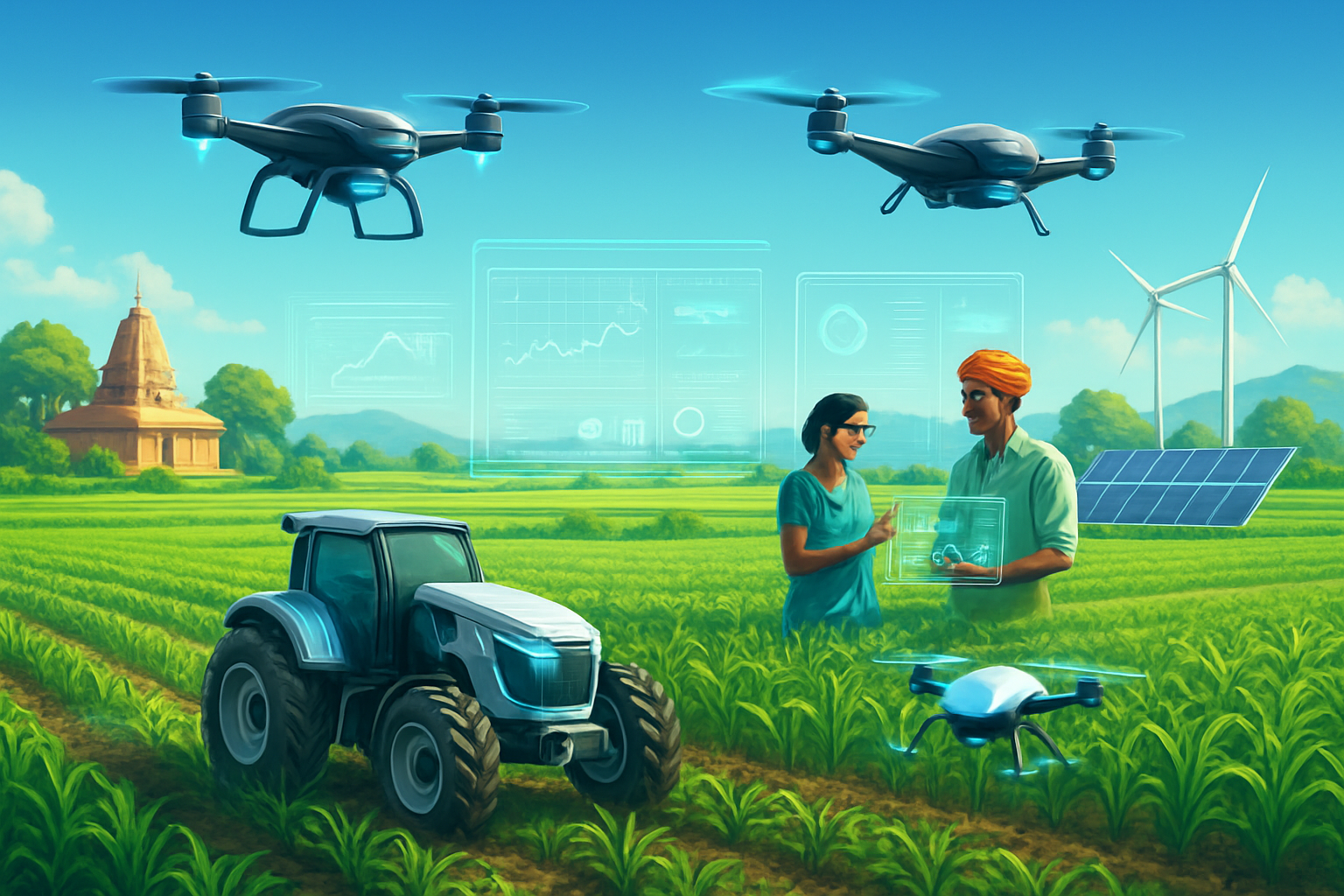
  • India Unveils Ambitious Tech-Led Farming Revolution: NITI Aayog’s Roadmap for an AI-Powered Agricultural Future

    India Unveils Ambitious Tech-Led Farming Revolution: NITI Aayog’s Roadmap for an AI-Powered Agricultural Future

    GANDHINAGAR, INDIA – November 3, 2025 – In a landmark move set to redefine the future of Indian agriculture, NITI Aayog, India's premier policy think tank, today unveiled a comprehensive roadmap titled "Reimagining Agriculture: A Roadmap for Frontier Technology Led Transformation." Launched in collaboration with global consulting firm BCG, tech giant Google (NASDAQ: GOOGL), and the Confederation of Indian Industry (CII), this ambitious initiative charts a 10-year course to integrate cutting-edge frontier technologies, including Artificial Intelligence (AI) and Agentic AI, into the nation's farmlands. The vision, announced at a pivotal event in Gandhinagar, aims to dramatically enhance productivity, ensure sustainability, and significantly boost farmer incomes, aligning directly with India's overarching goal of becoming a developed nation by 2047 (Viksit Bharat 2047).

    This groundbreaking roadmap signifies a proactive stride towards leveraging the power of advanced technology to address longstanding challenges in the agricultural sector, from climate change impacts and resource management to market access and income stability. By democratizing access to sophisticated tools and data-driven insights, NITI Aayog seeks to foster inclusive rural prosperity and solidify India's position as a global leader in agri-tech innovation. The initiative is poised to unlock new levels of agricultural resilience, ensuring food security for its vast population while creating new economic opportunities across the value chain.

    Engineering a Smarter Harvest: The Technical Blueprint for Agricultural Transformation

    The "Reimagining Agriculture" roadmap is not merely a conceptual framework but a detailed technical blueprint for integrating a diverse array of frontier technologies into every facet of farming. At its core are advancements in Artificial Intelligence (AI), including sophisticated Agentic AI, which will power applications such as hyper-local AI-driven weather forecasts, early pest and disease detection, and predictive farming models that optimize planting and harvesting schedules. This move towards intelligent automation marks a significant departure from traditional, often reactive, agricultural practices, enabling proactive decision-making based on real-time data and predictive analytics.

    Beyond AI, the roadmap champions Digital Twins, allowing for the creation of virtual models of entire farm ecosystems to simulate and predict outcomes, optimize resource allocation, and test different scenarios without physical intervention. Precision Agriculture techniques, combined with Smart Sensors and the Internet of Things (IoT), will enable granular monitoring of crop health, soil conditions, and water usage, ensuring efficient input management. This contrasts sharply with previous, often generalized, approaches to resource application, promising substantial reductions in waste and environmental impact. Furthermore, Advanced Mechanization and Robotics are set to address labor shortages and improve operational efficiency, while the development of Climate-Resilient Seeds and the promotion of Verticalized Farming will enhance adaptability to changing climatic conditions and optimize land use. Drones are earmarked for widespread use in monitoring, spraying, and data collection, while Blockchain Technology will be deployed to enhance data integrity, traceability, and provide quality certification across the agricultural supply chain, bridging existing data silos and fostering trust.

    The Agri-Tech Gold Rush: Implications for Companies and Market Dynamics

    NITI Aayog's vision for tech-led farming is set to ignite a significant "agri-tech gold rush," creating immense opportunities for a diverse range of companies, from established tech giants to nimble startups. Google (NASDAQ: GOOGL), already a collaborator in this initiative, stands to benefit significantly through its cloud services, AI platforms, and data analytics capabilities, which will be crucial for processing the vast amounts of agricultural data generated. Similarly, other cloud providers and AI solution developers will find a burgeoning market for specialized agricultural applications.

    The competitive landscape will see intensified innovation, particularly among agri-tech startups focusing on precision farming, drone technology, IoT sensors, and AI-driven predictive analytics. Companies like Mahindra & Mahindra (NSE: M&M), a major player in agricultural machinery, could see increased demand for advanced, robot-enabled farm equipment, while also potentially venturing deeper into integrated smart farming solutions. The emphasis on data systems and blockchain will open doors for companies specializing in secure data management and supply chain transparency. This development could disrupt traditional agricultural input suppliers by shifting focus towards data-driven recommendations and optimized resource use, forcing them to adapt or partner with tech providers. Market positioning will favor companies that can offer end-to-end solutions, integrate seamlessly with existing farm infrastructure, and demonstrate tangible improvements in farmer profitability and sustainability.

    A New Green Revolution: Wider Significance and Global Implications

    NITI Aayog's "Reimagining Agriculture" roadmap represents a pivotal moment in the broader AI landscape, signaling a dedicated national effort to harness frontier technologies for a foundational sector. It aligns with global trends where AI is increasingly being deployed to tackle complex challenges like food security, climate change, and sustainable resource management. This initiative positions India as a significant player in the global agri-tech innovation ecosystem, potentially serving as a model for other developing nations facing similar agricultural challenges.

    The impacts are far-reaching: from boosting rural economies and creating new skilled jobs to enhancing national food security and reducing agriculture's environmental footprint. By fostering climate resilience and diversifying farming practices, the roadmap directly addresses the existential threat of climate change to agriculture. However, potential concerns include the digital divide, ensuring equitable access to technology for all farmers, data privacy, and the ethical deployment of AI. Comparisons to previous "Green Revolutions" highlight this initiative's potential to usher in a new era of productivity, but this time driven by intelligence and sustainability rather than just chemical inputs and mechanization. It represents a paradigm shift from input-intensive to knowledge-intensive agriculture.

    Cultivating the Future: Expected Developments and Emerging Horizons

    In the near term, we can expect a rapid rollout of pilot projects and the establishment of "centers of excellence" to foster interdisciplinary research and talent development in agri-tech. The government's role as a facilitator will likely see the creation of robust policy frameworks, incentives for technology adoption, and significant investments in digital and physical infrastructure to bridge the 'phygital divide.' Over the long term, the widespread integration of Agentic AI could lead to fully autonomous farm management systems, where AI agents manage everything from planting to harvesting, optimizing for yield, resource efficiency, and market demand.

    Potential applications on the horizon include hyper-personalized crop management based on individual plant health, AI-driven market prediction tools that advise farmers on optimal selling times, and advanced robotics for delicate tasks like fruit picking. Challenges that need to be addressed include overcoming farmer skepticism and ensuring trust in new technologies, developing user-friendly interfaces for complex AI tools, and securing adequate capital flows for agri-tech startups. Experts predict a significant transformation of the agricultural workforce, requiring new skill sets and a collaborative ecosystem involving technologists, agronomists, and policymakers to realize the full potential of this vision.

    Harvesting Innovation: A New Era for Indian Agriculture

    NITI Aayog's "Reimagining Agriculture" roadmap marks a monumental commitment to transforming Indian farming through frontier technologies. The key takeaways are clear: a strategic, holistic, and technology-driven approach is being adopted to enhance productivity, sustainability, and farmer incomes, with AI at its forefront. This development is not just another milestone; it represents a fundamental re-evaluation of how agriculture will operate in the 21st century, placing India at the vanguard of this global shift.

    Its significance in AI history lies in demonstrating a national-level commitment to deploying advanced AI and related technologies in a critical sector, with a clear focus on practical, scalable solutions tailored to diverse needs. The long-term impact could be a more resilient, efficient, and prosperous agricultural sector, contributing substantially to India's economic growth and global food security. In the coming weeks and months, stakeholders will be keenly watching for the detailed implementation plans, the first wave of public-private partnerships, and the initial pilot project outcomes, which will set the stage for this ambitious and transformative journey.


    This content is intended for informational purposes only and represents analysis of current AI developments.

    TokenRing AI delivers enterprise-grade solutions for multi-agent AI workflow orchestration, AI-powered development tools, and seamless remote collaboration platforms.
    For more information, visit https://www.tokenring.ai/.
  • Microsoft Forges $9.7 Billion Cloud AI Pact with IREN, Securing NVIDIA’s Cutting-Edge Chips Amidst Surging Demand

    Microsoft Forges $9.7 Billion Cloud AI Pact with IREN, Securing NVIDIA’s Cutting-Edge Chips Amidst Surging Demand

    In a landmark move poised to reshape the landscape of artificial intelligence infrastructure, Microsoft (NASDAQ: MSFT) has inked a colossal five-year, $9.7 billion cloud services agreement with Australian AI infrastructure provider IREN (NASDAQ: IREN). This strategic alliance is explicitly designed to secure access to NVIDIA's (NASDAQ: NVDA) advanced GB300 AI processors, directly addressing the escalating global demand for AI computing power that has become a critical bottleneck for tech giants. The deal underscores an aggressive pivot by Microsoft to bolster its AI capabilities and maintain its competitive edge in the rapidly expanding AI market, while simultaneously transforming IREN from a bitcoin mining operator into a formidable AI cloud services powerhouse.

    This monumental partnership not only provides Microsoft with crucial access to next-generation AI hardware but also highlights the intense race among technology leaders to build robust, scalable AI infrastructure. The immediate significance lies in its potential to alleviate the severe compute crunch that has plagued the AI industry, enabling faster development and deployment of sophisticated AI applications. For IREN, the agreement represents a profound strategic shift, validating its vertically integrated AI cloud platform and promising stable, high-margin revenue streams, a transformation that has already been met with significant investor confidence.

    Unpacking the Technical Blueprint: A New Era of AI Cloud Infrastructure

    The $9.7 billion, five-year agreement between Microsoft and IREN is more than just a financial transaction; it's a meticulously engineered strategy to deploy a state-of-the-art AI cloud infrastructure. A pivotal element of the deal is a 20% prepayment from Microsoft, providing IREN with substantial upfront capital to accelerate the development and deployment of the necessary facilities. This infrastructure will be phased in through 2026 at IREN's expansive 750-megawatt campus in Childress, Texas. The plan includes the construction of new liquid-cooled data centers, capable of delivering approximately 200 megawatts of critical IT capacity, specifically optimized for high-density AI workloads.

    Central to this advanced infrastructure is guaranteed access to NVIDIA's next-generation GB300 AI processors. These chips are not merely incremental upgrades; they represent a significant leap forward, specifically designed to power sophisticated AI applications such as reasoning models, complex agentic AI systems, and advanced multi-modal generative AI. The GB300s are crucial for handling the immense computational demands of large language models (LLMs) like those underpinning Microsoft's Copilot and OpenAI's ChatGPT. To secure these vital components, IREN has independently entered into a separate $5.8 billion agreement with Dell Technologies (NYSE: DELL) for the purchase of the NVIDIA GB300 chips and associated equipment, illustrating the intricate and capital-intensive supply chain required to meet current AI hardware demands.

    This approach differs significantly from traditional cloud infrastructure expansion. Instead of Microsoft undertaking the massive capital expenditure of building new data centers and securing power sources, it opts for a service-based access model. This strategy allows Microsoft to secure cutting-edge AI computing capacity without the immediate burden of heavy capital outlays and the rapid depreciation of chip assets as newer processors emerge. For IREN, leveraging its existing data center expertise and secured power capacity, combined with its new focus on AI, positions it uniquely to provide a fully integrated AI cloud platform, from the physical data centers to the GPU stack. This vertical integration is a key differentiator, promising enhanced efficiency and performance for Microsoft's demanding AI workloads.

    Reshaping the AI Ecosystem: Competitive Shifts and Strategic Advantages

    The Microsoft-IREN deal carries profound implications for AI companies, tech giants, and startups across the industry. For Microsoft (NASDAQ: MSFT), this partnership is a critical strategic maneuver to solidify its position as a leading provider of AI services. By securing a substantial tranche of NVIDIA's (NASDAQ: NVDA) GB300 chips through IREN, Microsoft directly addresses the compute bottleneck that has limited its ability to fully capitalize on the AI boom. This move grants Microsoft a significant competitive advantage, allowing it to accelerate the development and deployment of its AI products and services, including its Azure AI offerings and collaborations with OpenAI. It provides much-needed capacity without the immediate, heavy capital expenditure associated with building and operating new, specialized data centers, allowing for more agile scaling.

    For IREN (NASDAQ: IREN), the deal marks a transformative epoch. Formerly known for its bitcoin mining operations, this $9.7 billion agreement validates its strategic pivot into a high-growth AI infrastructure provider. The partnership offers IREN a stable and substantially larger revenue stream compared to the volatile cryptocurrency market, solidifying its market position and providing a clear path for future expansion. The significant surge in IREN's stock shares following the announcement reflects strong investor confidence in this strategic reorientation and the value of its vertically integrated AI cloud platform. This shift positions IREN as a crucial enabler in the AI supply chain, benefiting directly from the insatiable demand for AI compute.

    The competitive implications for other major cloud providers, such as Amazon Web Services (AWS) and Google Cloud, are substantial. As Microsoft proactively secures vast amounts of advanced AI hardware, it intensifies the race for AI compute capacity. Competitors will likely need to pursue similar large-scale partnerships or accelerate their own infrastructure investments to avoid falling behind. This deal also highlights the increasing importance of strategic alliances between cloud providers and specialized infrastructure companies, potentially disrupting traditional models of data center expansion. Startups and smaller AI labs, while not directly involved, will benefit from the increased overall AI compute capacity made available through cloud providers, potentially leading to more accessible and affordable AI development resources in the long run, though the immediate high demand might still pose challenges.

    Broader AI Significance: A Response to the Compute Crunch

    This monumental deal between Microsoft (NASDAQ: MSFT) and IREN (NASDAQ: IREN), powered by NVIDIA's (NASDAQ: NVDA) chips, is a powerful testament to the broader trends and challenges within the artificial intelligence landscape. It unequivocally underscores the immense and growing hunger for computing power that is the bedrock of modern AI. The "compute crunch" – a severe shortage of the specialized hardware, particularly GPUs, needed to train and run complex AI models – has been a major impediment to AI innovation and deployment. This partnership represents a direct, large-scale response to this crisis, highlighting that access to hardware is now as critical as the algorithms themselves.

    The impacts of this deal are far-reaching. It signals a new phase of massive capital investment in AI infrastructure, moving beyond just research and development to the industrial-scale deployment of AI capabilities. It also showcases the increasingly global and interconnected nature of the AI hardware supply chain, with an Australian company building infrastructure in Texas to serve a global cloud giant, all reliant on chips from an American designer. Potential concerns might arise regarding the concentration of AI compute power among a few large players, potentially creating barriers for smaller entities or fostering an oligopoly in AI development. However, the immediate benefit is the acceleration of AI capabilities across various sectors.

    Compared to previous AI milestones, such as the development of early neural networks or the breakthrough of deep learning, this deal represents a different kind of milestone: one of industrialization and scaling. While past achievements focused on algorithmic breakthroughs, this deal focuses on the practical, physical infrastructure required to bring those algorithms to life at an unprecedented scale. It fits into the broader AI landscape by reinforcing the trend of vertically integrated AI strategies, where control over hardware, software, and cloud services becomes a key differentiator. This deal is not just about a single company's gain; it's about setting a precedent for how the industry will tackle the fundamental challenge of scaling AI compute in the coming years.

    The Road Ahead: Future Developments and Expert Predictions

    The Microsoft (NASDAQ: MSFT) and IREN (NASDAQ: IREN) partnership, fueled by NVIDIA's (NASDAQ: NVDA) GB300 chips, is expected to usher in several near-term and long-term developments in the AI sector. In the immediate future, Microsoft will likely experience significant relief from its AI capacity constraints, enabling it to accelerate the development and deployment of its various AI initiatives, including Azure AI services, Copilot integration, and further advancements with OpenAI. This increased capacity is crucial for maintaining its competitive edge against other cloud providers. We can anticipate more aggressive product launches and feature rollouts from Microsoft's AI divisions as the new infrastructure comes online throughout 2026.

    Looking further ahead, this deal could set a precedent for similar large-scale, multi-year partnerships between cloud providers and specialized AI infrastructure companies. As the demand for AI compute continues its exponential growth, securing dedicated access to cutting-edge hardware will become a standard strategic imperative. Potential applications and use cases on the horizon include more sophisticated enterprise AI solutions, advanced scientific research capabilities, hyper-personalized consumer experiences, and the development of truly autonomous agentic AI systems that require immense processing power for real-time decision-making and learning. The liquid-cooled data centers planned by IREN also hint at the increasing need for energy-efficient and high-density computing solutions as chip power consumption rises.

    However, several challenges need to be addressed. The global supply chain for advanced AI chips remains a delicate balance, and any disruptions could impact the rollout schedules. Furthermore, the sheer energy consumption of these massive AI data centers raises environmental concerns, necessitating continued innovation in sustainable computing and renewable energy sources. Experts predict that the "AI arms race" for compute power will only intensify, pushing chip manufacturers like NVIDIA to innovate even faster, and prompting cloud providers to explore diverse strategies for securing capacity, including internal chip development and more distributed infrastructure models. The continuous evolution of AI models will also demand even more flexible and scalable infrastructure, requiring ongoing investment and innovation.

    Comprehensive Wrap-Up: A Defining Moment in AI Infrastructure

    The $9.7 billion cloud deal between Microsoft (NASDAQ: MSFT) and IREN (NASDAQ: IREN), anchored by NVIDIA's (NASDAQ: NVDA) advanced GB300 chips, represents a defining moment in the history of artificial intelligence infrastructure. The key takeaway is the industry's strategic pivot towards massive, dedicated investments in compute capacity to meet the insatiable demand of modern AI. This partnership serves as a powerful illustration of how tech giants are proactively addressing the critical compute bottleneck, shifting from a focus solely on algorithmic breakthroughs to the equally vital challenge of industrial-scale AI deployment.

    This development's significance in AI history cannot be overstated. It marks a clear transition from a period where AI advancements were primarily constrained by theoretical models and data availability, to one where the physical limitations of hardware and infrastructure are the primary hurdles. The deal validates IREN's bold transformation into a specialized AI cloud provider and showcases Microsoft's strategic agility in securing crucial resources. It underscores the global nature of the AI supply chain and the fierce competition driving innovation and investment in the semiconductor market.

    In the long term, this partnership is likely to accelerate the development and widespread adoption of advanced AI applications across all sectors. It sets a precedent for how future AI infrastructure will be built, financed, and operated, emphasizing strategic alliances and specialized facilities. What to watch for in the coming weeks and months includes the progress of IREN's data center construction in Childress, Texas, Microsoft's subsequent AI product announcements leveraging this new capacity, and how rival cloud providers respond with their own capacity-securing strategies. The ongoing evolution of NVIDIA's chip roadmap and the broader semiconductor market will also be crucial indicators of the future trajectory of AI.


    This content is intended for informational purposes only and represents analysis of current AI developments.

    TokenRing AI delivers enterprise-grade solutions for multi-agent AI workflow orchestration, AI-powered development tools, and seamless remote collaboration platforms.
    For more information, visit https://www.tokenring.ai/.

  • Google’s AI-Powered Play Store Summaries: A New Era for App Discovery

    Google’s AI-Powered Play Store Summaries: A New Era for App Discovery

    In a significant stride towards enhancing user experience and streamlining app discovery, Google (NASDAQ: GOOGL) has begun rolling out AI-generated app review summaries within its Google Play Store. This innovative feature, which condenses countless user reviews into a concise, digestible paragraph, aims to provide users with an immediate grasp of an application's overall sentiment, highlighting both its strengths and weaknesses. The rollout, initiated in late October and early November 2025, marks a pivotal moment in the ongoing integration of artificial intelligence into everyday digital platforms, promising to reshape how users interact with and select mobile applications.

    The immediate significance of this development is multi-faceted. For millions of users navigating the vast landscape of the Play Store, these AI summaries offer a welcome respite from the often-overwhelming task of sifting through thousands of individual reviews. By providing a quick, holistic overview, Google aims to empower users to make faster, more informed download decisions, thereby enhancing the efficiency and satisfaction of the app browsing experience. For developers, while primarily user-facing, the feature offers an AI-curated snapshot of public sentiment, potentially aiding in quicker identification of prevalent issues or popular features without extensive manual analysis. This move aligns with Google's broader strategy to infuse AI, particularly its Gemini model, across its ecosystem, simplifying information digestion and reinforcing its position at the forefront of AI innovation.

    The Technical Backbone: How AI Distills User Voices

    At its core, Google's AI-generated app review summaries leverage sophisticated Natural Language Processing (NLP) techniques to process and synthesize vast quantities of user feedback. While Google has not disclosed the precise NLP models, the functionality strongly indicates the application of advanced transformer architectures, similar to those found in large language models (LLMs) like Gemini, for sentiment analysis, topic modeling, and text summarization. The system reads through numerous reviews, identifies common themes, and then generates a balanced, coherent summary paragraph, typically three to four sentences long, under a "Users are saying" heading. This goes beyond simple keyword counting or statistical aggregation, employing generative models to cluster and paraphrase sentiments into a more human-like narrative.

    Accompanying these summaries are interactive "chips" or buttons, allowing users to filter reviews by specific topics such as "performance," "design," "stability," or "ads." This capability provides a deeper, targeted insight into particular aspects of an app, enabling users to drill down into areas of specific interest or concern. This approach significantly differs from previous methods, which often relied on displaying aggregate star ratings or simply listing the most popular individual reviews. The AI-driven synthesis offers a more comprehensive and nuanced overview, condensing diverse feedback into a single, coherent narrative that highlights an app's overall pros and cons. The feature is available for apps with a "sufficient number of reviews" and has been observed on Play Store versions 48.5.23-31.

    Initial reactions from the AI research community and industry experts have been largely positive regarding the utility of the feature, praising its ability to save users time. However, concerns have also been raised regarding the accuracy and reliability of the summaries, particularly the potential for overgeneralization, loss of context, and occasional factual errors. Experts emphasize that these summaries should serve as a starting point for users, not a definitive judgment, and stress the importance of transparency, including clear labeling of AI-generated content and direct links to original reviews.

    Reshaping the Competitive Landscape: Winners and Challengers

    Google's integration of AI review summaries into the Play Store has significant implications for AI companies, tech giants, and startups alike. Google (NASDAQ: GOOGL) itself stands to benefit immensely by enhancing the Play Store's user experience, increasing engagement, and solidifying its market positioning as a leader in practical AI integration. This move further encourages app usage and downloads within its Android ecosystem. Developers of well-reviewed apps will also likely see their strengths highlighted, potentially boosting visibility and download rates. AI infrastructure providers, supplying the underlying computing power and specialized AI chips, will also experience increased demand as AI integration becomes more widespread.

    However, Google is not pioneering this specific application. Apple (NASDAQ: AAPL) introduced a similar feature to its App Store earlier in 2025, and Amazon (NASDAQ: AMZN) has long utilized AI for summarizing product reviews. This indicates a competitive parity rather than a groundbreaking advantage, pushing all major tech players to continuously refine their AI summarization capabilities. Microsoft (NASDAQ: MSFT), while not operating a primary app store in the same vein, will likely continue to integrate similar AI-powered synthesis across its software and services, reflecting the industry-wide expectation for intelligent content features.

    For startups, the impact is a double-edged sword. Well-regarded apps with positive feedback may gain quicker visibility. However, startups with fewer reviews might not qualify for an AI summary, making it harder to compete. Concerns also exist that inaccurate or overgeneralized summaries could misrepresent unique selling points or amplify niche negative feedback. This development necessitates an evolution in App Store Optimization (ASO) strategies, with a greater emphasis on cultivating high-quality, concise reviews that AI can effectively summarize, and a focus on quickly addressing issues highlighted by the AI. Third-party review analysis tools may also face disruption, needing to pivot their offerings as AI provides immediate, accessible alternatives.

    Wider Significance: AI's March into Everyday Experience

    Google's AI-generated app review summaries represent more than just a new feature; they are a clear manifestation of a broader AI trend – the pervasive integration of advanced AI into everyday user experiences to enhance information accessibility and streamline decision-making. This initiative builds upon significant advancements in Natural Language Processing (NLP) and generative AI, which have revolutionized text understanding and generation. It signifies a shift from mere statistical aggregation of reviews to AI actively interpreting and synthesizing complex user sentiments into coherent narratives.

    The impacts are profound. On the one hand, information accessibility is significantly enhanced, allowing users to quickly grasp the essence of an app without cognitive overload. This streamlines the app selection process and saves time. On the other hand, critical questions arise regarding user trust. The potential for AI to overgeneralize, misinterpret, or even "hallucinate" information could lead to misinformed decisions if users rely solely on these summaries. Transparency, including clear "Summarized by Google AI" labels and direct links to original reviews, is paramount to maintaining user confidence.

    Content moderation also gains a new dimension, as AI assists in filtering spam and identifying key themes. However, the challenge lies in the AI's ability to represent diverse opinions fairly and detect nuanced context, raising concerns about potential algorithmic bias. The "black box" nature of many AI models, where the decision-making process is opaque, further complicates error correction and accountability.

    Compared to foundational AI breakthroughs like the invention of neural networks or the transformer architecture, Google's AI review summaries are an application and refinement of existing powerful AI tools. Its true significance lies in democratizing access to AI-powered information processing on a massive scale, demonstrating how advanced AI is moving from niche applications to integral features in widely used consumer platforms, thereby impacting daily digital interactions for millions.

    The Horizon: What's Next for AI in App Stores

    The integration of AI into app stores is only just beginning, with a trajectory pointing towards increasingly intelligent and personalized experiences. In the near term (1-2 years), we can expect a broader rollout of AI-generated review summaries across more languages and regions, accompanied by continuous refinement in accuracy and reliability. Both Google and Apple (NASDAQ: AAPL) are expected to enhance these features, potentially offering more dynamic and real-time updates to reflect the latest user feedback. AI will also drive even more sophisticated hyper-personalization in app recommendations and search, with "ask a question" features providing context-aware comparisons and suggestions. Developers will see AI playing a crucial role in App Store Optimization (ASO), automating content quality checks and providing deeper insights for listing optimization.

    Looking further ahead (3-5+ years), experts predict that AI will evolve to become the "brain" of the smartphone, orchestrating various apps to fulfill complex user requests without direct app interaction. Generative AI could revolutionize app creation and customization, enabling individuals to create personalized AI plugins and assisting developers in code generation, UI design, and bug identification, significantly shortening development cycles. Apps will become proactively adaptive, anticipating user needs and adjusting interfaces and content in real-time. Advanced AI will also bolster security and fraud detection within app ecosystems.

    However, significant challenges remain. Ensuring the absolute accuracy of AI summaries and mitigating inherent biases in training data are ongoing priorities. Maintaining real-time relevance as apps constantly evolve with updates and new features poses a complex technical hurdle. The transparency and explainability of AI models will need to improve to build greater user trust and address compliance issues. Furthermore, the risk of manipulation, where AI could be used to generate misleading reviews, necessitates robust authentication and moderation mechanisms. Experts widely predict a future where AI is not just a feature but a standard, embedded capability in applications, transforming them into smarter, personalized tools that drive user engagement and retention.

    A New Chapter in Digital Engagement

    Google's (NASDAQ: GOOGL) introduction of AI-generated app review summaries in the Play Store marks a pivotal moment in the evolution of digital platforms. This development signifies a clear shift towards leveraging advanced artificial intelligence to simplify complex information, enhance user experience, and streamline decision-making in the app ecosystem. The immediate impact is a more efficient and informed app discovery process for users, while for developers, it offers a distilled view of public sentiment, highlighting areas for improvement and success.

    In the broader context of AI history, this initiative underscores the practical application of sophisticated NLP and generative AI models, moving them from research labs into the hands of millions of everyday users. It's an evolutionary step that builds upon foundational AI breakthroughs, democratizing access to intelligent information processing. The long-term impact on the tech industry will see continued investment in AI-driven personalization, content synthesis, and optimization across all major platforms, intensifying the competitive landscape among tech giants.

    As we move forward, key areas to watch include the continued expansion of this feature to more regions and languages, ongoing improvements in AI accuracy and bias mitigation, and the deeper integration of AI capabilities across the Play Store, potentially including AI-powered Q&A and enhanced app highlights. The evolution of developer tools to leverage these AI insights will also be crucial. Ultimately, Google's AI-generated review summaries herald a new chapter in digital engagement, where intelligence and personalization become the bedrock of the app experience, reshaping how we discover, use, and perceive mobile technology.


    This content is intended for informational purposes only and represents analysis of current AI developments.

    TokenRing AI delivers enterprise-grade solutions for multi-agent AI workflow orchestration, AI-powered development tools, and seamless remote collaboration platforms.
    For more information, visit https://www.tokenring.ai/.

  • OpenAI Forges $38 Billion Cloud Alliance with Amazon AWS, Reshaping AI’s Future

    OpenAI Forges $38 Billion Cloud Alliance with Amazon AWS, Reshaping AI’s Future

    In a monumental announcement that sent ripples across the technology landscape today, November 3, 2025, OpenAI revealed a strategic multi-year partnership with Amazon Web Services (AWS) (NASDAQ: AMZN) valued at an staggering $38 billion. This landmark agreement signifies a pivotal shift in OpenAI's cloud computing strategy, marking its first major collaboration with the world's leading cloud infrastructure provider and immediately reshaping the dynamics of the artificial intelligence and cloud computing sectors. The deal underscores the insatiable demand for computational power driving the AI revolution and highlights the increasingly intricate web of alliances forming among tech giants.

    The partnership is poised to provide OpenAI with unprecedented access to massive computing capacity, a critical necessity for training its next-generation AI models and scaling its existing advanced generative AI services, including the ubiquitous ChatGPT. For Amazon (NASDAQ: AMZN), this represents a significant victory, solidifying AWS's position as a cornerstone infrastructure provider for one of the most innovative and influential companies in the rapidly expanding AI industry. This alliance is not just about compute; it's a strategic maneuver that could redefine the competitive landscape for years to come.

    A Deep Dive into the Compute Colossus: Technical Specifications and Strategic Diversification

    The seven-year agreement between OpenAI and Amazon Web Services is meticulously designed to fuel OpenAI's ambitious AI development roadmap. At its core, the deal grants OpenAI immediate and expanding access to AWS's cutting-edge infrastructure, specifically leveraging hundreds of thousands of NVIDIA (NASDAQ: NVDA) graphics processing units (GPUs). This includes the highly anticipated GB200s and GB300s, with a significant portion of this capacity expected to be deployed by the end of 2026 and further expansion options extending into 2027 and beyond. The primary deployment will be within the United States, utilizing AWS's Amazon EC2 UltraServers, which are engineered for high-performance AI processing, ensuring maximum efficiency and low-latency across interconnected systems.

    This partnership is a direct response to OpenAI's escalating need for "massive, reliable compute" to advance its "agentic workloads" and train increasingly complex AI models. The technical specifications point to a future where OpenAI can iterate on its models at an unprecedented scale, pushing the boundaries of what generative AI can achieve. This approach differs significantly from previous strategies where a single cloud provider might have dominated. By integrating AWS into its compute ecosystem, OpenAI gains access to a robust, scalable, and globally distributed infrastructure, which is crucial for maintaining its leadership in the fast-evolving AI domain.

    Initial reactions from the AI research community and industry experts have been largely positive, albeit with some caveats regarding the sheer scale of investment. Many see this as a pragmatic move by OpenAI to diversify its cloud dependencies. This deal follows a renegotiation of OpenAI's long-standing partnership with Microsoft (NASDAQ: MSFT), which previously held a "right of first refusal" for exclusive cloud provisioning. While OpenAI has committed an additional $250 billion to Microsoft Azure services, and reportedly engaged with Oracle (NYSE: ORCL) for a $300 billion deal and Google (NASDAQ: GOOGL) for further discussions, the AWS agreement firmly establishes OpenAI's new multi-cloud strategy. This diversification not only enhances operational resilience but also fosters a more competitive environment among cloud providers, potentially driving further innovation in AI infrastructure. However, the cumulative infrastructure spending commitments, reportedly reaching over $610 billion for OpenAI across various providers and a staggering $1.4 trillion overall, have sparked discussions among market watchers about a potential "bubble" in AI spending and infrastructure investment.

    Reshaping the AI Landscape: Competitive Implications and Market Dynamics

    The $38 billion pact between OpenAI and Amazon Web Services carries profound implications for AI companies, tech giants, and burgeoning startups alike, fundamentally reshaping the competitive landscape. OpenAI stands to be a primary beneficiary, gaining not only a substantial increase in compute power but also a diversified and resilient infrastructure backbone. This move significantly bolsters its ability to innovate rapidly, train more sophisticated models, and scale its services globally, further cementing its position as a frontrunner in generative AI. The enhanced capabilities are expected to translate into more powerful and reliable AI products, benefiting its enterprise clients and end-users of platforms like ChatGPT.

    For Amazon (NASDAQ: AMZN) and its AWS division, this deal is a monumental win. It unequivocally positions AWS as a premier destination for hyperscale AI workloads, directly challenging rivals like Microsoft Azure and Google Cloud. The agreement serves as a powerful validation of AWS's infrastructure capabilities, security, and expertise in handling the most demanding AI requirements. This strategic advantage could attract other major AI players and enterprise clients seeking robust, scalable, and reliable cloud solutions for their AI initiatives. Amazon's stock saw a notable uptick following the announcement, reflecting investor confidence in this significant market capture.

    The competitive implications for major AI labs and tech companies are substantial. Microsoft (NASDAQ: MSFT), while still a major partner for OpenAI, now faces increased competition from AWS in servicing OpenAI's compute needs. This multi-cloud approach by OpenAI could encourage other AI developers to diversify their cloud providers, leading to a more fragmented and competitive cloud market for AI infrastructure. Startups, while not directly benefiting from the $38 billion deal, will observe this trend closely. The increased availability of advanced AI infrastructure, driven by hyperscalers competing for top-tier clients, could indirectly lead to more accessible and affordable compute resources for smaller players in the long run. However, the immense spending by AI leaders also raises the barrier to entry, potentially making it harder for undercapitalized startups to compete at the frontier of AI development. This deal could disrupt existing product roadmaps, forcing cloud providers to accelerate their AI-specific offerings and services to remain competitive.

    Wider Significance: AI Trends, Impacts, and Future Concerns

    This colossal $38 billion deal between OpenAI and Amazon Web Services fits squarely into the broader AI landscape, highlighting several critical trends. Firstly, it underscores the relentless pursuit of computational power as the primary fuel for advancing artificial general intelligence (AGI). The sheer scale of the investment reflects the industry's belief that more powerful models require exponentially greater compute resources. This partnership also exemplifies the growing trend of strategic alliances among tech giants, where traditional competitors find common ground in servicing the burgeoning AI market. It's a testament to the fact that no single company, not even one as dominant as OpenAI, can unilaterally build and maintain the entire infrastructure required for frontier AI development.

    The impacts of this deal are far-reaching. For the AI industry, it means an accelerated pace of innovation, as OpenAI gains the necessary resources to push the boundaries of model size, complexity, and capability. This could lead to breakthroughs in areas like reasoning, multi-modal AI, and agentic systems. For cloud computing, it solidifies AWS's leadership in the high-stakes AI infrastructure race and will likely spur further investment and innovation in specialized hardware and software for AI workloads across all major cloud providers. However, potential concerns also emerge. The concentration of immense compute power in the hands of a few leading AI labs, even if distributed across multiple cloud providers, raises questions about ethical AI development, accessibility, and the potential for a "compute divide" that widens the gap between well-funded entities and smaller research groups. The massive capital expenditure also fuels concerns about the sustainability of the current AI boom and whether the returns will justify the astronomical investments.

    Comparing this to previous AI milestones, this deal isn't a singular algorithmic breakthrough but rather an infrastructure milestone that enables future breakthroughs. It echoes the early days of the internet, where massive investments in data centers and network infrastructure laid the groundwork for the digital revolution. While not as immediately tangible as AlphaGo beating a Go champion or the release of GPT-3, this partnership is a foundational event, providing the bedrock upon which the next generation of AI innovations will be built. It signifies a maturation of the AI industry, moving beyond purely research-focused endeavors to large-scale industrialization and deployment.

    The Road Ahead: Expected Developments and Emerging Challenges

    Looking ahead, the strategic alliance between OpenAI and Amazon (NASDAQ: AMZN) is expected to catalyze a cascade of near-term and long-term developments across the AI ecosystem. In the near term, we can anticipate a significant acceleration in the development and deployment of OpenAI's "agentic workloads" – AI systems capable of autonomous decision-making and task execution. This could manifest as more sophisticated AI assistants, enhanced automation tools, and more capable generative models that understand and respond to complex prompts with greater nuance. The increased compute capacity will also likely enable OpenAI to train larger and more multimodal models, integrating text, image, audio, and video more seamlessly.

    On the horizon, potential applications and use cases are vast. Expect to see advancements in personalized AI, scientific discovery, and complex problem-solving. For instance, more powerful AI could dramatically accelerate drug discovery, material science, or climate modeling. The partnership could also lead to more robust and reliable AI for critical infrastructure, from autonomous transportation to advanced cybersecurity systems. The enhanced scalability offered by AWS will also facilitate the global deployment of OpenAI's services, making advanced AI more accessible to businesses and individuals worldwide.

    However, several challenges need to be addressed. The sheer energy consumption of such massive AI infrastructure is a growing concern, necessitating innovations in sustainable computing and energy efficiency. Ethical considerations around AI safety, bias, and accountability will also become even more critical as AI systems grow in capability and autonomy. Furthermore, managing the operational complexities of a multi-cloud strategy across different providers will require sophisticated orchestration and robust security protocols. Experts predict that this deal will intensify the race among cloud providers to offer even more specialized and optimized AI infrastructure, potentially leading to a new era of "AI-optimized" data centers and hardware. We might also see a consolidation of AI model training onto a few dominant cloud platforms, raising questions about vendor lock-in and open-source alternatives.

    A New Epoch for AI: Wrapping Up a Transformative Alliance

    The $38 billion partnership between OpenAI and Amazon Web Services represents a truly transformative moment in the history of artificial intelligence. It is a powerful testament to the escalating demand for computational resources necessary to fuel the next wave of AI innovation. The deal's key takeaways include OpenAI's strategic pivot to a multi-cloud approach, significantly enhancing its operational resilience and compute capacity, and AWS's reinforced position as a dominant force in providing hyperscale AI infrastructure. This alliance not only benefits the two companies directly but also signals a broader industry trend towards massive infrastructure investments to support frontier AI development.

    This development's significance in AI history cannot be overstated. While not a direct algorithmic breakthrough, it is a foundational infrastructure agreement that will enable countless future breakthroughs. It underscores that the future of AI is deeply intertwined with the scalability, reliability, and accessibility of cloud computing. This partnership effectively lays down a critical piece of the global infrastructure needed for the realization of more advanced and pervasive AI systems. It is a strategic move that acknowledges the distributed nature of modern technological advancement, where even leading innovators rely on a robust ecosystem of partners.

    Looking ahead, the long-term impact will likely include an acceleration in AI capabilities across various sectors, intensified competition among cloud providers for AI workloads, and continued debates around the economic and ethical implications of such vast AI investments. What to watch for in the coming weeks and months includes further details on the specific deployments of NVIDIA (NASDAQ: NVDA) GPUs, the rollout of new OpenAI models and features leveraging this enhanced compute, and how competitors like Microsoft (NASDAQ: MSFT) and Google (NASDAQ: GOOGL) respond with their own strategic partnerships or infrastructure announcements. This deal is not merely a transaction; it is a harbinger of a new epoch in AI development, characterized by unprecedented scale and strategic collaboration.


    This content is intended for informational purposes only and represents analysis of current AI developments.

    TokenRing AI delivers enterprise-grade solutions for multi-agent AI workflow orchestration, AI-powered development tools, and seamless remote collaboration platforms.
    For more information, visit https://www.tokenring.ai/.