
Tag: AI

  • The New Iron Curtain: US-China Tech War Escalates with Chip Controls and Rare Earth Weaponization, Reshaping Global AI and Supply Chains

    The New Iron Curtain: US-China Tech War Escalates with Chip Controls and Rare Earth Weaponization, Reshaping Global AI and Supply Chains

    As of October 2025, the geopolitical landscape of technology is undergoing a seismic shift, with the US-China tech war intensifying dramatically. This escalating conflict, primarily centered on advanced semiconductors and critical software, is rapidly forging a bifurcated global technology ecosystem, often dubbed a "digital Cold War." The immediate significance of these developments is profound, marking a pivotal moment where critical technologies like AI chips and rare earth elements are explicitly weaponized as instruments of national power, fundamentally altering global supply chains and accelerating a fierce race for AI supremacy.

    The deepening chasm forces nations and corporations alike to navigate an increasingly fragmented market, compelling alignment with either the US-led or China-led technological bloc. This strategic rivalry is not merely about trade imbalances; it's a battle for future economic and military dominance, with artificial intelligence (AI), machine learning (ML), and large language models (LLMs) at its core. The implications ripple across industries, driving both unprecedented innovation under duress and significant economic volatility, as both superpowers vie for technological self-reliance and global leadership.

    The Silicon Curtain Descends: Technical Restrictions and Indigenous Innovation

    The technical battleground of the US-China tech war is characterized by a complex web of restrictions, counter-restrictions, and an accelerated drive for indigenous innovation, particularly in the semiconductor and AI sectors. The United States, under its current administration, has significantly tightened its export controls, moving beyond nuanced policies to a more comprehensive blockade aimed at curtailing China's access to cutting-edge AI capabilities.

    In a pivotal shift, the previous "AI Diffusion Rule" that allowed for a "green zone" of lower-tier chip exports was abruptly ended in April 2025 by the Trump administration, citing national security. This initially barred US companies like NVIDIA (NASDAQ: NVDA) and Advanced Micro Devices (NASDAQ: AMD) from a major market. A subsequent compromise in August 2025 allowed for the export of mid-range AI chips, such as NVIDIA's H20 and AMD's MI308, but under stringent revenue-sharing conditions, requiring US firms to contribute 15% of their China sales revenue to the Department of Commerce for export licenses. Further broadening these restrictions in October 2025, export rules now encompass subsidiaries at least 50% owned by sanctioned Chinese firms, closing what the US termed a "significant loophole." Concurrently, the US Senate passed the Guaranteeing Access and Innovation for National Artificial Intelligence (GAIN AI) Act, mandating that advanced AI chipmakers prioritize American customers over overseas orders, especially those from China. President Trump has also publicly threatened new export controls on "any and all critical software" by November 1, 2025, alongside 100% tariffs on Chinese goods, in retaliation for China's rare earth export restrictions.

    In response, China has dramatically accelerated its "survival strategy" of technological self-reliance. Billions are being poured into domestic semiconductor production through initiatives like "Made in China 2025," bolstering state-backed giants such as Semiconductor Manufacturing International Corporation (SMIC) and Huawei Technologies Co., Ltd. Significant investments are also fueling research in AI and quantum computing. A notable technical countermeasure is China's focus on "AI sovereignty," developing its own AI foundation models trained exclusively on domestic data. This strategy has yielded impressive results, with Chinese firms releasing powerful large language models (LLMs) like DeepSeek-R1 in January 2025. Reports indicate DeepSeek-R1 is competitive with, and potentially more efficient than, top Western models such as OpenAI's ChatGPT-4 and xAI's Grok, achieving comparable performance with less computing power and at a fraction of the cost. By July 2025, Chinese state media claimed the country's firms had released over 1,500 LLMs, accounting for 40% of the global total. Furthermore, Huawei's Ascend 910C chip, mass-shipped in September 2025, is now reportedly rivaling NVIDIA's H20 in AI inference tasks, despite being produced with older 7nm technology, showcasing China's ability to optimize performance from less advanced hardware.

    The technical divergence is also evident in China's expansion of its export control regime on October 9, 2025, implementing comprehensive restrictions on rare earths and related technologies with extraterritorial reach, effective December 1, 2025. This move weaponizes China's dominance in critical minerals, applying to foreign-made items with Chinese rare earth content or processing technologies. Beijing also blacklisted Canadian semiconductor research firm TechInsights after it published a report on Huawei's AI chips. These actions underscore a fundamental shift where both nations are leveraging their unique technological strengths and vulnerabilities as strategic assets in an intensifying global competition.

    Corporate Crossroads: Navigating a Fragmented Global Tech Market

    The escalating US-China tech war is profoundly reshaping the competitive landscape for AI companies, tech giants, and startups worldwide, forcing strategic realignments and creating both immense challenges and unexpected opportunities. Companies with significant exposure to both markets are finding themselves at a critical crossroads, compelled to adapt to a rapidly bifurcating global technology ecosystem.

    US semiconductor giants like NVIDIA (NASDAQ: NVDA) and Advanced Micro Devices (NASDAQ: AMD) initially faced significant revenue losses due to outright export bans to China. While a partial easing of restrictions now allows for the export of mid-range AI chips, the mandated 15% revenue contribution to the US Department of Commerce for export licenses effectively turns these sales into a form of statecraft, impacting profitability and market strategy. Furthermore, the GAIN AI Act, prioritizing American customers, adds another layer of complexity, potentially limiting these companies' ability to fully capitalize on the massive Chinese market. Conversely, this pressure has spurred investments in alternative markets and R&D for more compliant, yet still powerful, chip designs. For US tech giants like Alphabet (NASDAQ: GOOGL), Microsoft (NASDAQ: MSFT), and Amazon (NASDAQ: AMZN), the restrictions on software and hardware could impact their global AI development efforts and cloud services, necessitating separate development tracks for different geopolitical regions.

    On the Chinese side, companies like Huawei Technologies Co., Ltd., Baidu (NASDAQ: BIDU), Alibaba Group Holding Limited (NYSE: BABA), and Tencent Holdings Ltd. (HKG: 0700) are experiencing a surge in domestic support and investment, driving an aggressive push towards self-sufficiency. Huawei's Ascend 910C chip, reportedly rivaling NVIDIA's H20, is a testament to this indigenous innovation, positioning it as a significant player in China's AI hardware ecosystem. Similarly, the rapid proliferation of Chinese-developed LLMs, such as DeepSeek-R1, signals a robust domestic AI software industry that is becoming increasingly competitive globally, despite hardware limitations. These developments allow Chinese tech giants to reduce their reliance on Western technology, securing their market position within China and potentially expanding into allied nations. However, they still face challenges in accessing the most advanced manufacturing processes and global talent pools.

    Startups on both sides are also navigating this complex environment. US AI startups might find it harder to access funding if their technologies are perceived as having dual-use potential that could fall under export controls. Conversely, Chinese AI startups are benefiting from massive state-backed funding and a protected domestic market, fostering a vibrant ecosystem for indigenous innovation. The competitive implications are stark: the global AI market is fragmenting, leading to distinct US-centric and China-centric product lines and services, potentially disrupting existing global standards and forcing multinational corporations to make difficult choices about their operational alignment. This strategic bifurcation could lead to a less efficient but more resilient global supply chain for each bloc, with significant long-term implications for market dominance and technological leadership.

    A New Era of AI Geopolitics: Broader Implications and Concerns

    The escalating US-China tech war represents a profound shift in the broader AI landscape, moving beyond mere technological competition to a full-blown geopolitical struggle that could redefine global power dynamics. This conflict is not just about who builds the fastest chip or the smartest AI; it's about who controls the foundational technologies that will shape the 21st century, impacting everything from economic prosperity to national security.

    One of the most significant impacts is the acceleration of a "technological balkanization," where two distinct and largely independent AI and semiconductor ecosystems are emerging. This creates a "Silicon Curtain," forcing countries and companies to choose sides, which could stifle global collaboration, slow down overall AI progress, and lead to less efficient, more expensive technological development. The weaponization of critical technologies, from US export controls on advanced chips to China's retaliatory restrictions on rare earth elements, highlights a dangerous precedent where economic interdependence is replaced by strategic leverage. This shift fundamentally alters global supply chains, pushing nations towards costly and often redundant efforts to onshore or "friendshore" production, increasing costs for consumers and businesses worldwide.

    The drive for "AI sovereignty" in China, exemplified by the rapid development of domestic LLMs and chips like the Ascend 910C, demonstrates that restrictions, while intended to curb progress, can inadvertently galvanize indigenous innovation. This creates a feedback loop where US restrictions spur Chinese self-reliance, which in turn fuels further US concerns and restrictions. This dynamic risks creating two parallel universes of AI development, each with its own ethical frameworks, data standards, and application methodologies, making interoperability and global governance of AI increasingly challenging. Potential concerns include the fragmentation of global research efforts, the duplication of resources, and the creation of digital divides between aligned and non-aligned nations.

    Comparing this to previous AI milestones, the current situation represents a more profound and systemic challenge. While the "AI Winter" of the past was characterized by funding cuts and disillusionment, the current "AI Cold War" is driven by state-level competition and national security imperatives, ensuring sustained investment but within a highly politicized and restricted environment. The impacts extend beyond the tech sector, influencing international relations, trade policies, and even the future of scientific collaboration. The long-term implications could include a slower pace of global innovation, higher costs for advanced technologies, and a world where technological progress is more unevenly distributed, exacerbating existing geopolitical tensions.

    The Horizon of Division: Future Developments and Expert Predictions

    Looking ahead, the trajectory of the US-China tech war suggests a future defined by continued strategic competition, accelerated indigenous development, and an evolving global technological order. Experts predict a sustained push for technological decoupling, even as both sides grapple with the economic realities of complete separation.

    In the near term, we can expect the US to continue refining its export control mechanisms, potentially expanding them to cover a broader range of software and AI-related services, as President Trump has threatened. The focus will likely remain on preventing China from acquiring "frontier-class" AI capabilities that could bolster its military and surveillance apparatus. Concurrently, the GAIN AI Act's implications will become clearer, as US chipmakers adjust their production and sales strategies to prioritize domestic demand. China, on its part, will intensify its efforts to develop fully indigenous semiconductor manufacturing capabilities, potentially through novel materials and architectures to bypass current restrictions. Further advancements in optimizing AI models for less advanced hardware are also expected, as demonstrated by the efficiency of recent Chinese LLMs.

    Long-term developments will likely see the solidification of two distinct technological ecosystems. This means continued investment in alternative supply chains and domestic R&D for both nations and their allies. We may witness the emergence of new international standards and alliances for AI and critical technologies, distinct from existing global frameworks. Potential applications on the horizon include the widespread deployment of AI in national defense, energy management (as China aims for global leadership by 2030), and critical infrastructure, all developed within these separate technological spheres. Challenges that need to be addressed include managing the economic costs of decoupling, preventing unintended escalations, and finding mechanisms for international cooperation on global challenges that transcend technological divides, such as climate change and pandemic preparedness.

    Experts predict that while a complete technological divorce is unlikely due to deep economic interdependencies, a "managed separation" or "selective dependence" will become the norm. This involves each side strategically controlling access to critical technologies while maintaining some level of commercial trade in non-sensitive areas. The focus will shift from preventing China's technological advancement entirely to slowing it down and ensuring the US maintains a significant lead in critical areas. What happens next will hinge on the political will of both administrations, the resilience of their respective tech industries, and the willingness of other nations to align with either bloc, shaping a future where technology is inextricably linked to geopolitical power.

    A Defining Moment in AI History: The Enduring Impact

    The US-China tech war, particularly its focus on software restrictions and semiconductor geopolitics, marks a defining moment in the history of artificial intelligence and global technology. This isn't merely a trade dispute; it's a fundamental reshaping of the technological world order, with profound and lasting implications for innovation, economic development, and international relations. The key takeaway is the accelerated bifurcation of global tech ecosystems, creating a "Silicon Curtain" that divides the world into distinct technological spheres.

    This development signifies the weaponization of critical technologies, transforming AI chips and rare earth elements from commodities into strategic assets of national power. While the immediate effect has been supply chain disruption and economic volatility, the long-term impact is a paradigm shift towards technological nationalism and self-reliance, particularly in China. The resilience and innovation demonstrated by Chinese firms in developing competitive AI models and chips under severe restrictions underscore the unintended consequence of galvanizing indigenous capabilities. Conversely, the US strategy aims to maintain its technological lead and control access to cutting-edge advancements, ensuring its national security and economic interests.

    In the annals of AI history, this period will be remembered not just for groundbreaking advancements in large language models or new chip architectures, but for the geopolitical crucible in which these innovations are being forged. It underscores that technological progress is no longer a purely scientific or commercial endeavor but is deeply intertwined with national strategy and power projection. The long-term impact will be a more fragmented, yet potentially more resilient, global tech landscape, with differing standards, supply chains, and ethical frameworks for AI development.

    What to watch for in the coming weeks and months includes further announcements of export controls or retaliatory measures from both sides, the performance of new indigenous chips and AI models from China, and the strategic adjustments of multinational corporations. The ongoing dance between technological competition and geopolitical tension will continue to define the pace and direction of AI development, making this an era of unprecedented challenge and transformative change for the tech industry and society at large.


    This content is intended for informational purposes only and represents analysis of current AI developments.

    TokenRing AI delivers enterprise-grade solutions for multi-agent AI workflow orchestration, AI-powered development tools, and seamless remote collaboration platforms.
    For more information, visit https://www.tokenring.ai/.

  • Lam Research’s Robust Q1: A Bellwether for the AI-Powered Semiconductor Boom

    Lam Research’s Robust Q1: A Bellwether for the AI-Powered Semiconductor Boom

    Lam Research Corporation (NASDAQ: LRCX) has kicked off its fiscal year 2026 with a powerful first quarter, reporting earnings that significantly surpassed analyst expectations. Announced on October 22, 2025, these strong results not only signal a healthy and expanding semiconductor equipment market but also underscore the company's indispensable role in powering the global artificial intelligence (AI) revolution. As a critical enabler of advanced chip manufacturing, Lam Research's performance serves as a key indicator of the sustained capital expenditures by chipmakers scrambling to meet the insatiable demand for AI-specific hardware.

    The company's impressive financial showing, particularly its robust revenue and earnings per share, highlights the ongoing technological advancements required for next-generation AI processors and memory. With AI workloads demanding increasingly complex and efficient semiconductors, Lam Research's leadership in critical etch and deposition technologies positions it at the forefront of this transformative era. Its Q1 success is a testament to the surging investments in AI-driven semiconductor manufacturing inflections, making it a crucial bellwether for the entire industry's trajectory in the age of artificial intelligence.

    Technical Prowess Driving AI Innovation

    Lam Research's stellar Q1 fiscal year 2026 performance, ending September 28, 2025, was marked by several key financial achievements. The company reported revenue of $5.32 billion, comfortably exceeding the consensus analyst forecast of $5.22 billion. U.S. GAAP EPS soared to $1.24, significantly outperforming the $1.21 per share analyst consensus and representing a remarkable increase of over 40% compared to the prior year's Q1. This financial strength is directly tied to Lam Research's advanced technological offerings, which are proving crucial for the intricate demands of AI chip production.

    A significant driver of this growth is Lam Research's expertise in advanced packaging and High Bandwidth Memory (HBM) technologies. The re-acceleration of memory investment, particularly for HBM, is vital for high-performance AI accelerators. Lam Research's advanced packaging solutions, such as its SABRE 3D systems, are critical for creating the 2.5D and 3D packages essential for these powerful AI devices, leading to substantial market share gains. These solutions allow for the vertical stacking of memory and logic, drastically reducing data transfer latency and increasing bandwidth—a non-negotiable requirement for efficient AI processing.

    Furthermore, Lam Research's tools are fundamental enablers of leading-edge logic nodes and emerging architectures like gate-all-around (GAA) transistors. AI workloads demand processors that are not only powerful but also energy-efficient, pushing the boundaries of semiconductor design. The company's deposition and etch equipment are indispensable for manufacturing these complex, next-generation semiconductor device architectures, which feature increasingly smaller and more intricate structures. Lam Research's innovation in this area ensures that chipmakers can continue to scale performance while managing power consumption, a critical balance for AI at the edge and in the data center.

    The introduction of new technologies further solidifies Lam Research's technical leadership. The company recently unveiled VECTOR® TEOS 3D, an inter-die gapfill tool specifically designed to address critical advanced packaging challenges in 3D integration and chiplet technologies. This innovation explicitly paves the way for new AI-accelerating architectures by enabling denser and more reliable interconnections between stacked dies. Such advancements differentiate Lam Research from previous approaches by providing solutions tailored to the unique complexities of 3D heterogeneous integration, an area where traditional 2D scaling methods are reaching their physical limits. Initial reactions from the AI research community and industry experts have been overwhelmingly positive, recognizing these tools as essential for the continued evolution of AI hardware.

    Competitive Implications and Market Positioning in the AI Era

    Lam Research's robust Q1 performance and its strategic focus on AI-enabling technologies carry significant competitive implications across the semiconductor and AI landscapes. Companies positioned to benefit most directly are the leading-edge chip manufacturers (fabs) like Taiwan Semiconductor Manufacturing Company (TSMC: TPE) and Samsung Electronics (KRX: 005930), as well as memory giants such as SK Hynix (KRX: 000660) and Micron Technology (NASDAQ: MU). These companies rely heavily on Lam Research's advanced equipment to produce the complex logic and HBM chips that power AI servers and devices. Lam's success directly translates to their ability to ramp up production of high-demand AI components.

    The competitive landscape for major AI labs and tech companies, including NVIDIA (NASDAQ: NVDA), Google (NASDAQ: GOOGL), Microsoft (NASDAQ: MSFT), and Amazon (NASDAQ: AMZN), is also profoundly affected. As these tech giants invest billions in developing their own AI accelerators and data center infrastructure, the availability of cutting-edge manufacturing equipment becomes a bottleneck. Lam Research's ability to deliver advanced etch and deposition tools ensures that the supply chain for AI chips remains robust, enabling these companies to rapidly deploy new AI models and services. Its leadership in advanced packaging, for instance, is crucial for companies leveraging chiplet architectures to build more powerful and modular AI processors.

    Potential disruption to existing products or services could arise if competitors in the semiconductor equipment space, such as Applied Materials (NASDAQ: AMAT) or Tokyo Electron (TYO: 8035), fail to keep pace with Lam Research's innovations in AI-specific manufacturing processes. While the market is large enough for multiple players, Lam's specialized tools for HBM and advanced logic nodes give it a strategic advantage in the highest-growth segments driven by AI. Its focus on solving the intricate challenges of 3D integration and new materials for AI chips positions it as a preferred partner for chipmakers pushing the boundaries of performance.

    From a market positioning standpoint, Lam Research has solidified its role as a "critical enabler" and a "quiet supplier" in the AI chip boom. Its strategic advantage lies in providing the foundational equipment that allows chipmakers to produce the smaller, more complex, and higher-performance integrated circuits necessary for AI. This deep integration into the manufacturing process gives Lam Research significant leverage and ensures its sustained relevance as the AI industry continues its rapid expansion. The company's proactive approach to developing solutions for future AI architectures, such as GAA and advanced packaging, reinforces its long-term strategic advantage.

    Wider Significance in the AI Landscape

    Lam Research's strong Q1 performance is not merely a financial success story; it's a profound indicator of the broader trends shaping the AI landscape. This development fits squarely into the ongoing narrative of AI's insatiable demand for computational power, pushing the limits of semiconductor technology. It underscores that the advancements in AI are inextricably linked to breakthroughs in hardware manufacturing, particularly in areas like advanced packaging, 3D integration, and novel transistor architectures. Lam's results confirm that the industry is in a capital-intensive phase, with significant investments flowing into the foundational infrastructure required to support increasingly complex AI models and applications.

    The impacts of this robust performance are far-reaching. It signifies a healthy supply chain for AI chips, which is critical for mitigating potential bottlenecks in AI development and deployment. A strong semiconductor equipment market, led by companies like Lam Research, ensures that the innovation pipeline for AI hardware remains robust, enabling the continuous evolution of machine learning models and the expansion of AI into new domains. Furthermore, it highlights the importance of materials science and precision engineering in achieving AI milestones, moving beyond just algorithmic breakthroughs to encompass the physical realization of intelligent systems.

    Potential concerns, however, also exist. The heavy reliance on a few key equipment suppliers like Lam Research could pose risks if there are disruptions in their operations or if geopolitical tensions affect global supply chains. While the current outlook is positive, any significant slowdown in capital expenditure by chipmakers or shifts in technology roadmaps could impact future performance. Moreover, the increasing complexity of manufacturing processes, while enabling advanced AI, also raises the barrier to entry for new players, potentially concentrating power among established semiconductor giants and their equipment partners.

    Comparing this to previous AI milestones, Lam Research's current trajectory echoes the foundational role played by hardware innovators during earlier tech booms. Just as specialized hardware enabled the rise of personal computing and the internet, advanced semiconductor manufacturing is now the bedrock for the AI era. This moment can be likened to the early days of GPU acceleration, where NVIDIA's (NASDAQ: NVDA) hardware became indispensable for deep learning. Lam Research, as a "quiet supplier," is playing a similar, albeit less visible, foundational role, enabling the next generation of AI breakthroughs by providing the tools to build the chips themselves. It signifies a transition from theoretical AI advancements to widespread, practical implementation, underpinned by sophisticated manufacturing capabilities.

    Future Developments and Expert Predictions

    Looking ahead, Lam Research's strong Q1 performance and its strategic focus on AI-enabling technologies portend several key near-term and long-term developments in the semiconductor and AI industries. In the near term, we can expect continued robust capital expenditure from chip manufacturers, particularly those focusing on AI accelerators and high-performance memory. This will likely translate into sustained demand for Lam Research's advanced etch and deposition systems, especially those critical for HBM production and leading-edge logic nodes like GAA. The company's guidance for Q2 fiscal year 2026, while showing a modest near-term contraction in gross margins, still reflects strong revenue expectations, indicating ongoing market strength.

    Longer-term, the trajectory of AI hardware will necessitate even greater innovation in materials science and 3D integration. Experts predict a continued shift towards heterogeneous integration, where different types of chips (logic, memory, specialized AI accelerators) are integrated into a single package, often in 3D stacks. This trend will drive demand for Lam Research's advanced packaging solutions, including its SABRE 3D systems and new tools like VECTOR® TEOS 3D, which are designed to address the complexities of inter-die gapfill and robust interconnections. We can also anticipate further developments in novel memory technologies beyond HBM, and advanced transistor architectures that push the boundaries of physics, all requiring new generations of fabrication equipment.

    Potential applications and use cases on the horizon are vast, ranging from more powerful and efficient AI in data centers, enabling larger and more complex large language models, to advanced AI at the edge for autonomous vehicles, robotics, and smart infrastructure. These applications will demand chips with higher performance-per-watt, lower latency, and greater integration density, directly aligning with Lam Research's areas of expertise. The company's innovations are paving the way for AI systems that can process information faster, learn more efficiently, and operate with greater autonomy.

    However, several challenges need to be addressed. Scaling manufacturing processes to atomic levels becomes increasingly difficult and expensive, requiring significant R&D investments. Geopolitical factors, trade policies, and intellectual property disputes could also impact global supply chains and market access. Furthermore, the industry faces the challenge of attracting and retaining skilled talent capable of working with these highly advanced technologies. Experts predict that the semiconductor equipment market will continue to be a high-growth sector, but success will hinge on continuous innovation, strategic partnerships, and the ability to navigate complex global dynamics. The next wave of AI breakthroughs will be as much about materials and manufacturing as it is about algorithms.

    A Crucial Enabler in the AI Revolution's Ascent

    Lam Research's strong Q1 fiscal year 2026 performance serves as a powerful testament to its pivotal role in the ongoing artificial intelligence revolution. The key takeaways from this report are clear: the demand for advanced semiconductors, fueled by AI, is not only robust but accelerating, driving significant capital expenditures across the industry. Lam Research, with its leadership in critical etch and deposition technologies and its strategic focus on advanced packaging and HBM, is exceptionally well-positioned to capitalize on and enable this growth. Its financial success is a direct reflection of its technological prowess in facilitating the creation of the next generation of AI-accelerating hardware.

    This development's significance in AI history cannot be overstated. It underscores that the seemingly abstract advancements in machine learning and large language models are fundamentally dependent on the tangible, physical infrastructure provided by companies like Lam Research. Without the sophisticated tools to manufacture ever-more powerful and efficient chips, the progress of AI would inevitably stagnate. Lam Research's innovations are not just incremental improvements; they are foundational enablers that unlock new possibilities for AI, pushing the boundaries of what intelligent systems can achieve.

    Looking towards the long-term impact, Lam Research's continued success ensures a healthy and innovative semiconductor ecosystem, which is vital for sustained AI progress. Its focus on solving the complex manufacturing challenges of 3D integration and leading-edge logic nodes guarantees that the hardware necessary for future AI breakthroughs will continue to evolve. This positions the company as a long-term strategic partner for the entire AI industry, from chip designers to cloud providers and AI research labs.

    In the coming weeks and months, industry watchers should keenly observe several indicators. Firstly, the capital expenditure plans of major chipmakers will provide further insights into the sustained demand for equipment. Secondly, any new technological announcements from Lam Research or its competitors regarding advanced packaging or novel transistor architectures will signal the next frontiers in AI hardware. Finally, the broader economic environment and geopolitical stability will continue to influence the global semiconductor supply chain, impacting the pace and scale of AI infrastructure development. Lam Research's performance remains a critical barometer for the health and future direction of the AI-powered tech industry.


    This content is intended for informational purposes only and represents analysis of current AI developments.

    TokenRing AI delivers enterprise-grade solutions for multi-agent AI workflow orchestration, AI-powered development tools, and seamless remote collaboration platforms.
    For more information, visit https://www.tokenring.ai/.

  • The AI Chip Wars Intensify: Patent Battles Threaten to Reshape Semiconductor Innovation

    The AI Chip Wars Intensify: Patent Battles Threaten to Reshape Semiconductor Innovation

    The burgeoning era of artificial intelligence, fueled by insatiable demand for processing power, is igniting a new frontier of legal warfare within the semiconductor industry. As companies race to develop the next generation of AI chips and infrastructure, patent disputes are escalating in frequency and financial stakes, threatening to disrupt innovation, reshape market leadership, and even impact global supply chains. These legal skirmishes, particularly evident in 2024 and 2025, are no longer confined to traditional chip manufacturing but are increasingly targeting the very core of AI hardware and its enabling technologies.

    Recent high-profile cases, such as Xockets' lawsuit against NVIDIA (NASDAQ: NVDA) and Microsoft (NASDAQ: MSFT) over Data Processing Unit (DPU) technology crucial for generative AI, and ParTec AG's ongoing battle with NVIDIA regarding supercomputing architectures, underscore the immediate significance of these disputes. These actions seek to block the sale of essential AI components and demand billions in damages, casting a long shadow over the rapid advancements in AI. Beyond direct infringement claims, geopolitical tensions, exemplified by the Nexperia standoff, add another layer of complexity, demonstrating how intellectual property (IP) control is becoming a critical battleground for national technological sovereignty.

    Unpacking the Technical Battlegrounds: DPUs, Supercomputing, and AI Accelerators

    The current wave of semiconductor patent disputes delves deep into the foundational technologies powering modern AI. A prime example is the lawsuit filed by Xockets Inc., a Texas-based startup, in September 2024 against NVIDIA and Microsoft. Xockets alleges that both tech giants unlawfully utilized its "New Cloud Processor" and "New Cloud Fabric" technology, which it defines as Data Processing Unit (DPU) technology. This DPU technology is claimed to be integral to NVIDIA's latest Blackwell GPU-enabled AI computer systems and, by extension, to Microsoft's generative AI platforms that leverage these systems. Xockets is seeking not only substantial damages but also a court injunction to halt the sale of products infringing its patents, a move that could significantly impede the rollout of NVIDIA's critical AI hardware. This dispute highlights the increasing importance of specialized co-processors, like DPUs, in offloading data management and networking tasks from the main CPU and GPU, thereby boosting the efficiency of large-scale AI workloads.

    Concurrently, German supercomputing firm ParTec AG has escalated its patent dispute with NVIDIA, filing its third lawsuit in Munich by August 2025. ParTec accuses NVIDIA of infringing its patented "dynamic Modular System Architecture (dMSA)" technology in NVIDIA's highly successful DGX AI supercomputers. The dMSA technology is critical for enabling CPUs, GPUs, and other processors to dynamically coordinate and share workloads, a necessity for the immense computational demands of complex AI calculations. ParTec's demand for NVIDIA to cease selling its DGX systems in 18 European countries could force NVIDIA to undertake costly redesigns or pay significant licensing fees, potentially reshaping the European AI hardware market. These cases illustrate a shift from general-purpose computing to highly specialized architectures optimized for AI, where IP ownership of these optimizations becomes paramount. Unlike previous eras focused on CPU or GPU design, the current disputes center on the intricate interplay of components and the software-defined hardware capabilities that unlock AI's full potential.

    The settlement of Singular Computing LLC's lawsuit against Google (NASDAQ: GOOGL) in January 2024, though concluded, further underscores the technical and financial stakes. Singular Computing alleged that Google's Tensor Processing Units (TPUs), specialized AI accelerators, infringed on its patents related to Low-Precision, High Dynamic Range (LPHDR) processing systems. These systems are crucial for AI applications as they trade computational precision for efficiency, allowing for faster and less power-intensive AI inference and training. The lawsuit, which initially sought up to $7 billion in damages, highlighted how even seemingly subtle advancements in numerical processing within AI chips can become the subject of multi-billion-dollar legal battles. The initial reactions from the AI research community to such disputes often involve concerns about potential stifling of innovation, as companies might become more cautious in adopting new technologies for fear of litigation, or a greater emphasis on cross-licensing agreements to mitigate risk.

    Competitive Implications and Market Realignments for AI Giants

    These escalating patent disputes carry profound implications for AI companies, tech giants, and startups alike, potentially reshaping competitive landscapes and market positioning. Companies like NVIDIA, a dominant force in AI hardware with its GPUs and supercomputing platforms, face direct threats to their core product lines. Should Xockets or ParTec prevail, NVIDIA could be forced to redesign its Blackwell GPUs or DGX systems for specific markets, incur substantial licensing fees, or even face sales injunctions. Such outcomes would not only impact NVIDIA's revenue and profitability but also slow down the deployment of critical AI infrastructure globally, affecting countless AI labs and businesses relying on their technology. Competitors, particularly those developing alternative AI accelerators or DPU technologies, could seize such opportunities to gain market share or leverage their own IP portfolios.

    For tech giants like Microsoft and Google, who are heavily invested in generative AI and cloud-based AI services, these disputes present a dual challenge. As users and deployers of advanced AI hardware, they are indirectly exposed to the risks associated with their suppliers' IP battles. Microsoft, for instance, is named in the Xockets lawsuit due to its use of NVIDIA's AI systems. Simultaneously, as developers of their own custom AI chips (like Google's TPUs), they must meticulously navigate the patent landscape to avoid infringement. The Singular Computing settlement, even though it concluded, serves as a stark reminder of the immense financial liabilities associated with IP in custom AI silicon. Startups in the AI hardware space, while potentially holding valuable IP, also face the daunting prospect of challenging established players, as seen with Xockets. The sheer cost and complexity of litigation can be prohibitive, even for those with strong claims.

    The broader competitive implication is a potential shift in strategic advantages. Companies with robust and strategically acquired patent portfolios, or those adept at navigating complex licensing agreements, may find themselves in a stronger market position. This could lead to increased M&A activity focused on acquiring critical IP, or more aggressive patenting strategies to create defensive portfolios. The disputes could also disrupt existing product roadmaps, forcing companies to divert resources from R&D into legal defense or product redesigns. Ultimately, the outcomes of these legal battles will influence which companies can innovate most freely and quickly in the AI hardware space, thereby impacting their ability to deliver cutting-edge AI products and services to market.

    Broader Significance: IP as the New Geopolitical Battleground

    The proliferation of semiconductor patent disputes is more than just a series of legal skirmishes; it's a critical indicator of how intellectual property has become a central battleground in the broader AI landscape. These disputes highlight the immense economic and strategic value embedded in every layer of the AI stack, from foundational chip architectures to specialized processing units and even new AI-driven form factors. They fit into a global trend where technological leadership, particularly in AI, is increasingly tied to the control and protection of core IP. The current environment mirrors historical periods of intense innovation, such as the early days of the internet or the mobile revolution, where patent wars defined market leaders and technological trajectories.

    Beyond traditional infringement claims, these disputes are increasingly intertwined with geopolitical considerations. The Nexperia standoff, unfolding in late 2025, is a stark illustration. While not a direct patent infringement case, it involves the Dutch government seizing temporary control of Nexperia, a crucial supplier of foundational semiconductor components, due to alleged "improper transfer" of production capacity and IP to its Chinese parent company, Wingtech Technology. This move, met with retaliatory export blocks from China, reveals extreme vulnerabilities in global supply chains for components vital to sectors like automotive AI. It underscores how national security and technological sovereignty concerns are now driving interventions in IP control, impacting the availability of "unglamorous but vital" chips for AI-driven systems. This situation raises potential concerns about market fragmentation, where IP laws and government interventions could lead to different technological standards or product availability across regions, hindering global AI collaboration and development.

    Comparisons to previous AI milestones reveal a new intensity. While earlier AI advancements focused on algorithmic breakthroughs, the current era is defined by the hardware infrastructure that scales these algorithms. The patent battles over DPUs, AI supercomputer architectures, and specialized accelerators are direct consequences of this hardware-centric shift. They signal that the "picks and shovels" of the AI gold rush—the semiconductors—are now as hotly contested as the algorithms themselves. The financial stakes, with billions of dollars in damages sought or awarded, reflect the perceived future value of these technologies. This broader significance means that the outcomes of these legal battles will not only shape corporate fortunes but also influence national competitiveness in the global race for AI dominance.

    The Road Ahead: Anticipated Developments and Challenges

    Looking ahead, the landscape of semiconductor patent disputes in the AI era is expected to become even more complex and dynamic. In the near term, we can anticipate a continued surge in litigation as more AI-specific hardware innovations reach maturity and market adoption. Expert predictions suggest an increase in "patent troll" activity from Non-Practicing Entities (NPEs) who acquire broad patent portfolios and target successful AI hardware manufacturers, adding another layer of cost and risk. We will likely see further disputes over novel AI chip designs, neuromorphic computing architectures, and specialized memory solutions optimized for AI workloads. The focus will also broaden beyond core processing units to include interconnect technologies, power management, and cooling solutions, all of which are critical for high-performance AI systems.

    Long-term developments will likely involve more strategic cross-licensing agreements among major players, as companies seek to mitigate the risks of widespread litigation. There might also be a push for international harmonization of patent laws or the establishment of specialized courts or arbitration bodies to handle the intricacies of AI-related IP. Potential applications and use cases on the horizon, such as ubiquitous edge AI, autonomous systems, and advanced robotics, will rely heavily on these contested semiconductor technologies, meaning the outcomes of current disputes could dictate which companies lead in these emerging fields. Challenges that need to be addressed include the enormous financial burden of litigation, which can stifle innovation, and the potential for patent thickets to slow down technological progress by creating barriers to entry for smaller innovators.

    Experts predict that the sheer volume and complexity of AI-related patents will necessitate new approaches to IP management and enforcement. There's a growing consensus that the industry needs to find a balance between protecting inventors' rights and fostering an environment conducive to rapid innovation. What happens next could involve more collaborative R&D efforts to share IP, or conversely, a hardening of stances as companies guard their competitive advantages fiercely. The legal and technological communities will need to adapt quickly to define clear boundaries and ownership in an area where hardware and software are increasingly intertwined, and where the definition of an "invention" in AI is constantly evolving.

    A Defining Moment in AI's Hardware Evolution

    The current wave of semiconductor patent disputes represents a defining moment in the evolution of artificial intelligence. It underscores that while algorithms and data are crucial, the physical hardware that underpins and accelerates AI is equally, if not more, critical to its advancement and commercialization. The sheer volume and financial scale of these legal battles, particularly those involving DPUs, AI supercomputers, and specialized accelerators, highlight the immense economic value and strategic importance now attached to every facet of AI hardware innovation. This period is characterized by aggressive IP protection, where companies are fiercely defending their technological breakthroughs against rivals and non-practicing entities.

    The key takeaways from this escalating conflict are clear: intellectual property in semiconductors is now a primary battleground for AI leadership; the stakes are multi-billion-dollar lawsuits and potential sales injunctions; and the disputes are not only technical but increasingly geopolitical. The significance of this development in AI history cannot be overstated; it marks a transition from a phase primarily focused on software and algorithmic breakthroughs to one where hardware innovation and its legal protection are equally paramount. These battles will shape which companies emerge as dominant forces in the AI era, influencing everything from the cost of AI services to the pace of technological progress.

    In the coming weeks and months, the tech world should watch closely the progression of cases like Xockets vs. NVIDIA/Microsoft and ParTec vs. NVIDIA. The rulings in these and similar cases will set precedents for IP enforcement in AI hardware, potentially leading to new licensing models, strategic partnerships, or even industry consolidation. Furthermore, the geopolitical dimensions of IP control, as seen in the Nexperia situation, will continue to be a critical factor, impacting global supply chain resilience and national technological independence. How the industry navigates these complex legal and strategic challenges will ultimately determine the trajectory and accessibility of future AI innovations.


    This content is intended for informational purposes only and represents analysis of current AI developments.

    TokenRing AI delivers enterprise-grade solutions for multi-agent AI workflow orchestration, AI-powered development tools, and seamless remote collaboration platforms.
    For more information, visit https://www.tokenring.ai/.

  • Meta Pivots AI Strategy with Significant Job Cuts, Doubling Down on ‘Superintelligence’

    Meta Pivots AI Strategy with Significant Job Cuts, Doubling Down on ‘Superintelligence’

    MENLO PARK, CA – October 22, 2025 – Meta Platforms (NASDAQ: META) today announced a substantial restructuring within its Artificial Intelligence (AI) division, eliminating approximately 600 positions. The move, effective immediately, signals a strategic pivot for the tech giant, as it aims to streamline operations and intensely focus on its ambitious "superintelligence" initiatives, specifically within its nascent TBD Lab.

    The layoffs impact various segments of Meta's long-standing AI research and development efforts, including the renowned Facebook Artificial Intelligence Research (FAIR) unit, several product-related AI teams, and core AI infrastructure divisions. This decisive action, communicated internally by Chief AI Officer Alexandr Wang, underscores a desire for increased agility and efficiency, even as Meta continues to make aggressive investments in the broader AI landscape.

    A Sharper Focus: From Broad Research to AGI Acceleration

    The 600 job cuts represent a significant shift in Meta's approach to AI, moving away from a more diffuse, academic research model towards a concentrated effort on commercial Artificial General Intelligence (AGI) development. While units like FAIR have historically been at the forefront of fundamental AI research, the current restructuring suggests a re-prioritization towards projects with more immediate or direct pathways to "superintelligence."

    Crucially, Meta's newly established TBD Lab unit, which is tasked with building next-generation large language models and developing advanced AGI capabilities, remains entirely unaffected by these layoffs and is, in fact, continuing to expand its hiring. This dichotomy highlights Meta's dual strategy: prune areas deemed less aligned with its accelerated AGI timeline while simultaneously pouring resources into its most ambitious AI endeavors. Chief AI Officer Wang emphasized that the reductions aim to create a more agile operation, reducing bureaucracy and enabling faster decision-making by fostering a leaner, more impactful workforce. Insiders suggest that CEO Mark Zuckerberg's reported frustration with the pace of visible breakthroughs and commercial returns from existing AI initiatives played a role in this strategic re-evaluation.

    This approach contrasts sharply with previous industry trends where large tech companies often maintained broad AI research portfolios. Meta's current move indicates a departure from this diversified model, opting instead for a laser-focused, high-stakes gamble on achieving "superintelligence." The immediate reaction from the market was relatively subdued, with Meta's stock experiencing only a slight dip of 0.6% on the news, a less significant decline compared to broader market indices. However, the cuts have sparked discussions within the AI community, raising questions about the balance between fundamental research and commercialization, especially given Meta's recent substantial investments in AI, including a reported $14.3 billion into Scale AI and aggressive talent acquisition.

    Competitive Implications and Industry Ripples

    Meta's strategic pivot carries significant competitive implications for the broader AI industry. By shedding 600 positions and intensely focusing on its TBD Lab for "superintelligence," Meta is signaling a more aggressive, yet potentially narrower, competitive stance against rivals like OpenAI, Google (NASDAQ: GOOGL), and Microsoft (NASDAQ: MSFT). Companies primarily focused on niche AI applications or those reliant on broad-spectrum AI research might find themselves in a more challenging environment if this trend towards hyper-specialization continues.

    The immediate beneficiaries of this development could be other tech giants or well-funded AI startups looking to acquire top-tier talent. The displaced employees from FAIR and other Meta AI divisions represent a highly skilled pool of researchers and engineers who will undoubtedly be sought after by companies eager to bolster their own AI capabilities. This could lead to a significant talent migration, potentially strengthening competitors or fueling new ventures in the AI ecosystem. Furthermore, this move could disrupt existing AI product roadmaps within Meta, as resources are reallocated, potentially delaying less critical AI-driven features in favor of core AGI development.

    From a market positioning perspective, Meta is making a clear statement: its future in AI is inextricably linked to achieving "superintelligence." This strategic gamble, while potentially high-reward, also carries substantial risk. It positions Meta directly at the frontier of AI development, challenging the notion that incremental improvements across a wide array of AI applications are sufficient. The competitive landscape will undoubtedly intensify as other major players assess their own AI strategies in light of Meta's bold repositioning.

    A Broader Trend in the AI Landscape

    Meta's decision to cut AI jobs and re-focus its strategy is not an isolated incident but rather fits into a broader trend observed across the AI landscape: a drive towards efficiency, consolidation, and the relentless pursuit of commercially viable, transformative AI. This "year of efficiency," as CEO Mark Zuckerberg previously termed it, reflects a maturation of the AI industry, where the initial euphoria of broad exploration is giving way to a more pragmatic, results-oriented approach.

    The impacts of such a move are multifaceted. On one hand, it could accelerate breakthroughs in AGI by concentrating talent and resources on a singular, ambitious goal. On the other hand, it raises concerns about the narrowing of fundamental research, potentially stifling diverse avenues of AI exploration that may not immediately align with a "superintelligence" mandate. The job cuts also highlight the inherent volatility of the tech employment market, even in high-demand fields like AI. While Meta encourages affected employees to apply for other internal roles, the sheer volume of cuts in specific areas suggests a significant reshuffling of talent.

    This event draws comparisons to previous AI milestones where companies made bold, often risky, strategic shifts to gain a competitive edge. It underscores the immense pressure on tech giants to demonstrate tangible returns on their colossal AI investments, moving beyond academic papers and towards deployable, impactful technologies. The pursuit of "superintelligence" is arguably the ultimate expression of this drive, representing a potential paradigm shift far beyond current large language models.

    The Road Ahead: Superintelligence and Uncharted Territory

    The future developments stemming from Meta's intensified focus on "superintelligence" are poised to be transformative, yet fraught with challenges. In the near term, the industry will be closely watching for any announcements or demonstrations from the TBD Lab, expecting glimpses of the advanced capabilities that Meta believes will define the next era of AI. The continued hiring for this elite unit suggests a concerted effort to accelerate development, potentially leading to breakthroughs in areas like advanced reasoning, multimodal understanding, and even rudimentary forms of AGI within the next few years.

    Potential applications on the horizon, if Meta's "superintelligence" ambitions bear fruit, could revolutionize virtually every industry. From highly sophisticated personal AI assistants that anticipate needs and execute complex tasks autonomously, to scientific discovery engines capable of solving humanity's grand challenges, the implications are vast. However, the journey is not without significant hurdles. Technical challenges in scaling AGI, ensuring its safety and alignment with human values, and addressing ethical considerations surrounding autonomous decision-making remain paramount.

    Experts predict that this strategic shift will intensify the "AI arms race" among leading tech companies, pushing them to invest even more heavily in foundational AGI research. The competition for top AI talent, particularly those specializing in novel architectures and ethical AI, will likely escalate. What happens next largely depends on the TBD Lab's ability to deliver on its ambitious mandate and Meta's willingness to sustain such focused, high-cost research over the long term, even without immediate commercial returns.

    A High-Stakes Bet on the Future of AI

    Meta's decision to cut 600 AI jobs while simultaneously accelerating its "superintelligence" strategy marks a defining moment in the company's AI journey and the broader tech landscape. The key takeaway is a clear and unequivocal commitment from Meta to pivot from diversified AI research towards a concentrated, high-stakes bet on achieving AGI through its TBD Lab. This move signifies a belief that a leaner, more focused team can more effectively tackle the immense challenges of building truly transformative AI.

    This development's significance in AI history could be profound, representing a shift from a "land grab" phase of broad AI exploration to a more targeted, resource-intensive pursuit of ultimate AI capabilities. It underscores the increasing pressure on tech giants to demonstrate not just innovation, but also commercial viability and strategic efficiency in their AI endeavors. The long-term impact will hinge on whether Meta's focused approach yields the anticipated breakthroughs and whether the company can navigate the ethical and technical complexities inherent in developing "superintelligence."

    In the coming weeks and months, the industry will be watching closely for several key indicators: further insights into the TBD Lab's progress, the absorption of displaced Meta AI talent by competitors or new ventures, and any subsequent announcements from Meta regarding its AI roadmap. This aggressive repositioning by Meta could very well set a new precedent for how major tech companies approach the race to AGI, ushering in an era of hyper-focused, high-investment AI development.


    This content is intended for informational purposes only and represents analysis of current AI developments.

    TokenRing AI delivers enterprise-grade solutions for multi-agent AI workflow orchestration, AI-powered development tools, and seamless remote collaboration platforms.
    For more information, visit https://www.tokenring.ai/.

  • Tesla’s AI Ambition Drives Sky-High Valuation Amidst EV Market Headwinds

    Tesla’s AI Ambition Drives Sky-High Valuation Amidst EV Market Headwinds

    October 22, 2025 – In a significant recalibration of investor priorities, Tesla (NASDAQ: TSLA) is increasingly being valued not just as a pioneer in electric vehicles (EVs), but as a burgeoning artificial intelligence and robotics powerhouse. This dramatic shift in sentiment comes at a crucial time, as projections indicate a slowdown in the company's core EV sales, largely due to intensifying competition and the recent expiration of key federal tax credits. Despite these automotive headwinds, the promise of an AI-driven future—from autonomous driving to humanoid robots—has propelled Tesla's market valuation to dizzying heights, reflecting a broader market trend of prioritizing future AI potential over present financial realities.

    The pivot in investor focus underscores a growing conviction that Tesla's true long-term value lies beyond its automotive manufacturing. While the company reported a record 497,099 vehicle deliveries in Q3 2025, analysts anticipate a challenging Q4 and beyond, with some forecasting a significant drop in sales following the September 30, 2025, expiration of the $7,500 federal EV tax credit. Aggressive price cuts to maintain market share have also compressed margins, leading to lower earnings per share despite increased revenue. Amidst this backdrop, CEO Elon Musk's persistent narrative of Tesla as an AI and robotics leader has resonated deeply, convincing investors to look past current automotive struggles and bet on a future defined by high-margin software and revolutionary hardware.

    Tesla's AI Ecosystem: From Self-Driving to Humanoid Robotics

    Tesla's AI strategy is multifaceted, anchored by several ambitious projects that aim to transform transportation, logistics, and even labor. Central to this vision is the company's Full Self-Driving (FSD) software. As of October 2025, Tesla introduced FSD v14, which boasts enhanced navigation capabilities and improved handling of emergency vehicles. The company is actively pushing FSD as a significant revenue stream, offering it as both a one-time purchase and a subscription service, with aspirations for millions of subscribers. The practical application of this technology has already begun, with Tesla initiating its robotaxi service in Austin in June 2025, and subsequently expanding testing to nine cities. A dedicated "Cybercab" robotaxi model, targeting a price point around $30,000, is slated for production in 2026, promising to revolutionize personal transportation and potentially add trillions to Tesla's valuation.

    Beyond autonomous vehicles, Tesla's Optimus humanoid robot stands as another cornerstone of its AI ambitions. Elon Musk has boldly stated that Optimus could eventually account for approximately 80% of Tesla's future value. The company aims for full-scale production in early 2026, with an audacious target of a million units per year within the next five years, and prototypes for Generation 3 expected by the end of 2025. While the project has faced production delays, with initial 2025 scaling goals for 5,000 units reduced to only hundreds built so far, the long-term vision remains a powerful draw for investors.

    A significant technical evolution occurred in Tesla's AI infrastructure during August and October 2025, with the official halting of the in-house Dojo supercomputer project. Initially designed to train AI for Autopilot, FSD, and Optimus using Tesla's D1 chip for "vision-only" autonomous driving, Dojo 2 was ultimately deemed an "evolutionary dead end" by Elon Musk. Instead, Tesla has strategically shifted its resources to developing more versatile AI5 and AI6 chips. These new chips, produced by TSMC (NYSE: TSM) and Samsung (KRX: 005930) respectively, are designed to handle both inference and training tasks across cars, robots, and general AI training. This pivot signifies a move towards a more flexible and robust AI hardware foundation, complementing its large-scale GPU training cluster, "Cortex," in Austin, which reportedly expanded to approximately 67,000 H100-equivalent GPUs in Q2 2025. This departure from a proprietary, vision-centric architecture towards a more generalized and externally-sourced chip strategy highlights Tesla's adaptability and commitment to leveraging the best available technology for its diverse AI ecosystem.

    Competitive Landscape and Market Disruption

    Tesla's aggressive push into AI and robotics positions it as a formidable competitor not only to traditional automakers but also to established tech giants and emerging AI startups. By focusing on integrating hardware and software across multiple domains—from vehicles to humanoids—Tesla is carving out a unique strategic advantage. Companies like Alphabet (NASDAQ: GOOGL) with Waymo, Amazon (NASDAQ: AMZN) with its robotics divisions, and various specialized autonomous driving startups face a different kind of rival in Tesla: one that controls the entire stack from chip design (or at least core chip architecture) to end-user hardware and software.

    The potential for disruption is immense. If Tesla successfully scales its robotaxi service, it could fundamentally alter urban transportation, challenging ride-sharing giants and even public transport systems. The widespread deployment of Optimus could revolutionize industrial automation, logistics, and even domestic labor, potentially impacting job markets and creating entirely new service economies. This integrated approach, where data from millions of vehicles feeds into AI training for both FSD and Optimus, creates a powerful feedback loop that few other companies can replicate. While the execution risks are high, the strategic vision offers Tesla a competitive moat that extends far beyond manufacturing electric cars, allowing it to compete for talent and investment in the cutting-edge fields of AI and robotics.

    The Broader AI Landscape and Investment Trends

    Tesla's current valuation, heavily buoyed by its AI prospects, is emblematic of a broader trend sweeping the tech industry: the increasing premium placed on future AI-driven growth. Wall Street analysts, such as Dan Ives of Wedbush, are now forecasting Tesla's valuation could reach $2 trillion by early 2026 and potentially $3 trillion by year-end, contingent on the successful ramp-up of its autonomy and robotics efforts. This valuation model diverges sharply from traditional automotive metrics, aligning more closely with the speculative growth narratives seen in leading software and AI companies.

    This shift signifies a maturation in the market's understanding of AI's transformative potential. Investors are increasingly willing to overlook near-term financial challenges in established businesses if a company demonstrates a credible path to dominating future AI-driven markets. However, this also raises potential concerns about market exuberance and the risk of an "AI bubble," reminiscent of past tech booms. The challenge lies in distinguishing genuine, sustainable AI innovation from speculative hype. Tesla's situation serves as a critical test case: can a company with significant hardware manufacturing overhead successfully transition its narrative and valuation to that of a pure-play AI leader, or will the realities of scaling complex AI and robotics solutions temper these lofty expectations? The outcome will undoubtedly influence investment strategies across the entire tech sector, from established giants to nimble AI startups, dictating how capital is allocated and what types of innovation are prioritized.

    Future Developments on the Horizon

    Looking ahead, the coming months and years will be critical for Tesla's AI ambitions. Near-term, the focus will be on the continued rollout and refinement of FSD v14, alongside the expansion of the robotaxi service beyond its initial testing cities. The successful production and deployment of the dedicated Cybercab model in 2026 will be a key milestone. For Optimus, the delivery of Generation 3 prototypes by the end of 2025 and the commencement of full-scale production in early 2026 will be closely watched indicators of progress. The performance of the new AI5 and AI6 chips in both training and inference tasks, particularly as they integrate into Tesla's vehicle and robot platforms, will also be crucial.

    Longer-term, the vision extends to the widespread adoption of FSD, enabling a truly ubiquitous robotaxi network that could fundamentally change urban mobility. The mass deployment of Optimus robots across various industries and homes could unlock unprecedented levels of automation and productivity. However, significant challenges remain. Scaling production of both Cybercabs and Optimus robots to the ambitious targets will require overcoming complex manufacturing hurdles. Regulatory approval for fully autonomous vehicles and humanoid robots across diverse jurisdictions will be a continuous process. Furthermore, public acceptance and ethical considerations surrounding advanced AI and robotics will need to be carefully addressed. Experts predict that Tesla's ability to execute on these ambitious projects, coupled with its capacity to navigate regulatory landscapes and garner public trust, will ultimately determine whether its AI-driven valuation proves to be a visionary forecast or an overly optimistic projection.

    A Defining Moment for Tesla and the AI Industry

    Tesla's current trajectory marks a defining moment, not just for the company, but for the broader artificial intelligence industry. The shift in investor focus from EV sales to AI potential underscores a powerful narrative: that the future of technology, and indeed much of the global economy, will be profoundly shaped by advancements in AI and robotics. Tesla's audacious bets on FSD, robotaxis, and Optimus, backed by its evolving AI chip strategy, represent a high-stakes gamble on becoming a leader in "physical AI"—AI that interacts with and operates in the real world.

    The key takeaway is that the market is increasingly willing to assign immense value to companies demonstrating credible long-term AI vision and execution, even if their traditional business segments face immediate challenges. This development highlights the growing belief in AI's transformative power and its potential to unlock unprecedented revenue streams and market capitalization. However, it also serves as a reminder of the inherent risks in such forward-looking valuations. The coming weeks and months will be crucial. Investors will be closely watching for tangible progress in FSD capabilities, the successful rollout of the Cybercab, and concrete advancements in Optimus production and functionality. Tesla's journey will undoubtedly offer valuable lessons on the interplay between innovative technology, market sentiment, and the complex realities of bringing advanced AI to a global scale.


    This content is intended for informational purposes only and represents analysis of current AI developments.

    TokenRing AI delivers enterprise-grade solutions for multi-agent AI workflow orchestration, AI-powered development tools, and seamless remote collaboration platforms.
    For more information, visit https://www.tokenring.ai/.
  • Amazon’s Robotic Revolution: A Glimpse into a Future Without 600,000 Human Jobs

    Amazon’s Robotic Revolution: A Glimpse into a Future Without 600,000 Human Jobs

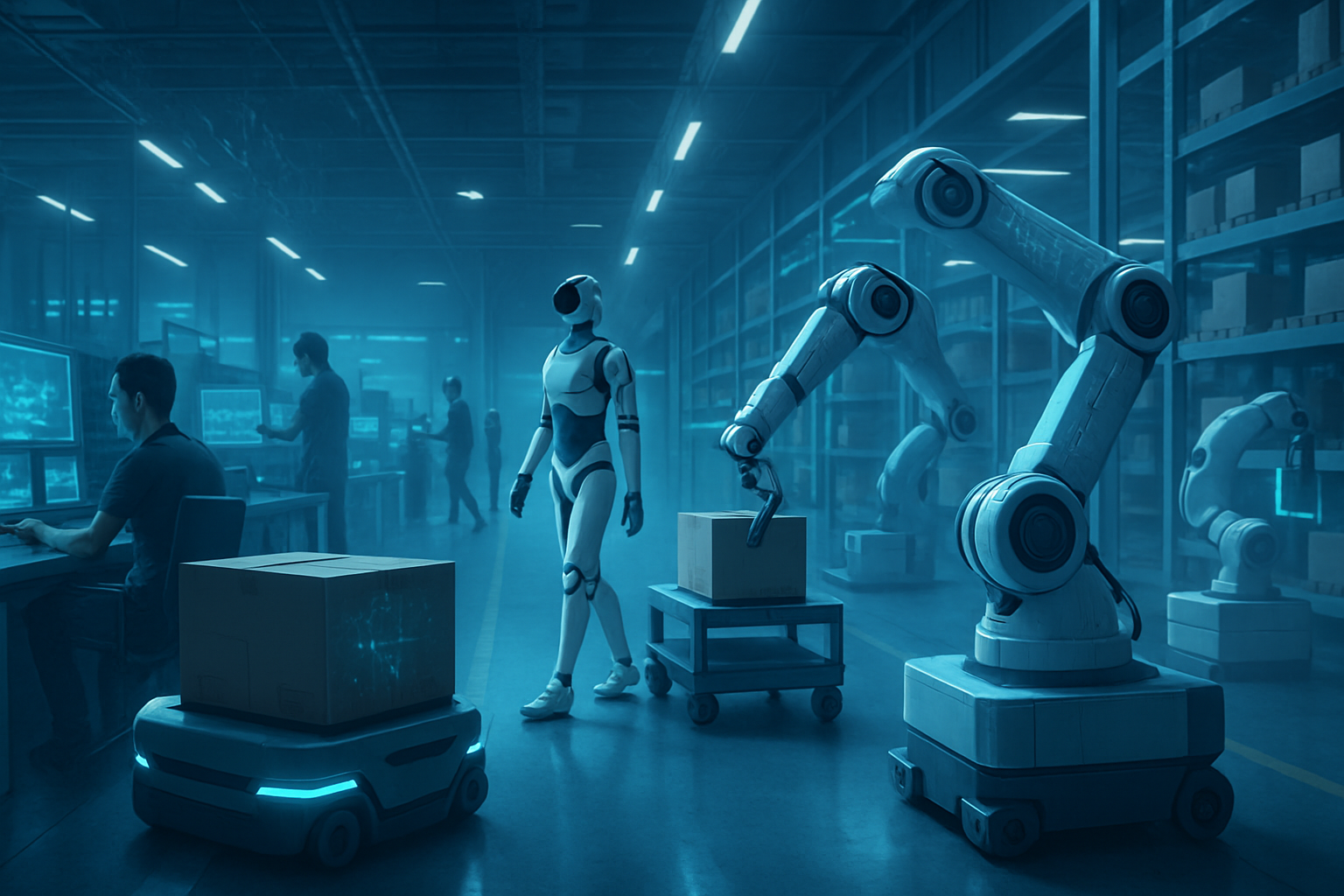
    Seattle, WA – October 22, 2025 – Amazon.com Inc. (NASDAQ: AMZN) is reportedly poised to usher in a new era of automation, with internal documents suggesting the e-commerce giant is considering using advanced robotics and artificial intelligence to fill roles that would otherwise require hiring an additional 600,000 workers by 2033. This ambitious strategy, driven by anticipated sales growth and a relentless pursuit of efficiency, signals a profound shift in the company's operational model and casts a long shadow over the future of work in the logistics and retail sectors.

    The immediate significance of this development is multifaceted. It highlights an accelerating trend towards large-scale automation, where robots are not merely assisting human workers but are strategically deployed to "flatten the hiring curve" for future growth. For the labor market, this foreshadows a potential long-term reduction in new job opportunities for repetitive tasks, intensifying the debate around job displacement, the ethics of automation, and the urgent need for workforce retraining. While Amazon has reportedly pushed back against the full scope of these leaked documents, emphasizing its role as a job creator, the underlying internal considerations underscore a strategic imperative to leverage AI and robotics for unprecedented operational cost savings and efficiency gains.

    The Technical Backbone of Amazon's Automated Future

    Amazon's journey into large-scale automation is built upon a sophisticated and continuously evolving array of robotic systems and AI-powered platforms. The company already operates over 750,000 robots globally, and its future plans involve a deeper integration of these technologies into every facet of its fulfillment network.

    At the core of this transformation are diverse robotic units. The foundational Kiva Robots (now Amazon Robotics drive units) autonomously move entire shelving units to human operators, a "goods-to-person" system that revolutionized warehouse efficiency. More recently, Amazon introduced Proteus, its first fully autonomous mobile robot (AMR) designed to safely navigate and work alongside human employees in shared spaces, using advanced perception and navigation to avoid collisions. For intricate tasks, robotic arms like Sparrow leverage computer vision and AI to detect, select, and handle individual products of varying shapes and sizes, a significant leap from older systems that handled uniform packages. Cardinal assists with heavy lifting and sorting, capable of moving over 20kg packages.

    Perhaps the most forward-looking development is the integration of Digit, a bipedal humanoid robot from Agility Robotics. Digit's two-legged design allows it to navigate environments built for humans, including stairs and uneven terrains, making it adaptable to existing infrastructure. Initial tests involve tasks like tote recycling. Additionally, integrated systems like Sequoia combine mobile robots, gantry systems, and robotic arms with ergonomic workstations to identify and store inventory up to 75% faster and reduce order processing time by 25%. The Hercules drive unit further improves storage density, and Vulcan, Amazon's first robot with a sense of touch, enhances delicate item manipulation.

    Technically, this scale of automation differs from previous approaches in several key ways. The emphasis on human-robot coexistence (Proteus, Digit) allows for seamless integration into shared workspaces, moving beyond the caged-off environments of traditional industrial robots. The development of advanced dexterity and perception (Sparrow, Vulcan) enables robots to handle the vast diversity of Amazon's inventory, a task previously requiring human precision. The bipedal navigation of Digit opens up new possibilities for automation in complex, multi-level facilities. Critically, these systems are powered by integrated AI and machine learning, enabling real-time decision-making, optimal fleet orchestration (e.g., the DeepFleet generative AI model), and continuous operational optimization, a far cry from pre-programmed, rigid automation.

    Initial reactions from the AI research community and industry experts are mixed. While the efficiency gains and technological innovation are widely acknowledged, there are significant concerns about the potential for large-scale job displacement. Nobel laureate Daron Acemoglu has expressed apprehension that Amazon's success in automation could be emulated by other companies, leading to widespread labor market shifts. Amazon, however, counters by highlighting the creation of new, higher-skilled roles in robotics maintenance and engineering, and its investment in upskilling programs for its workforce.

    Reshaping the AI and Tech Landscape

    Amazon's aggressive push into large-scale AI and robotics is not just an internal operational shift; it's a seismic event that is reshaping the competitive dynamics across the entire tech industry, from AI companies and tech giants to specialized startups.

    Amazon (NASDAQ: AMZN) itself stands to be the primary beneficiary. By automating up to 75% of its warehouse operations, the company anticipates billions in annual savings by 2027, leading to higher operating margins and enabling faster delivery times. This strategic advantage in cost leadership and efficiency is crucial for maintaining its dominance in e-commerce. The internal documents reportedly project savings of approximately 30 cents per item processed, translating to an estimated $12.6 billion in operational cost savings between 2025 and 2027.

    The development creates a lucrative environment for specialized AI and robotics startups. Companies like Agility Robotics (developer of Digit), Figure AI, Swiss-Mile, Skild AI, Rightbot, and Instock are direct beneficiaries, receiving investments from Amazon's venture arms and gaining opportunities to integrate their technologies into Amazon's massive operational network. This provides crucial validation and accelerates their growth. Semiconductor and AI chip manufacturers, such as NVIDIA (NASDAQ: NVDA), also stand to gain significantly from the increased demand for high-powered AI computing infrastructure required to run these sophisticated robotic systems.

    For other tech giants, Amazon's move intensifies the "AI arms race." Competitors in retail and logistics, including Walmart (NYSE: WMT), Target (NYSE: TGT), and FedEx (NYSE: FDX), are compelled to accelerate their own automation strategies to match Amazon's speed and cost efficiency. In the cloud computing arena, Amazon Web Services (AWS) benefits as the underlying infrastructure for Amazon's vast AI and robotics operations, further solidifying its market position against rivals like Microsoft Azure (NASDAQ: MSFT) and Google Cloud (NASDAQ: GOOGL). This competitive pressure drives all major players to invest heavily in proprietary AI infrastructure and advanced AI services.

    The potential disruption to existing products and services is significant. The entire logistics and supply chain industry is being redefined, with Amazon's integrated AI-powered robots slashing shipping costs and accelerating delivery times, setting new industry benchmarks that challenge traditional delivery services. This shift also disrupts workforce dynamics, necessitating massive retraining initiatives as demand for traditional warehouse roles declines while demand for higher-skilled technical and supervisory roles surges. Amazon's strategic advantages lie in unparalleled cost reduction, enhanced customer experience through faster and more reliable delivery, operational resilience against labor shortages, and a data-driven optimization "flywheel" that continuously improves its AI systems.

    A Wider Lens: Implications for Society and the Future of Work

    Amazon's large-scale AI and robotics adoption is more than just a corporate strategy; it's a real-world demonstration of advanced AI's profound impact on society, pushing the boundaries of what's possible while raising critical questions about the future of work and social equity. This development fits squarely within the broader trend of hyper-automation, where intelligent technologies are integrated to automate processes end-to-end.

    The impacts on employment are perhaps the most significant. While Amazon projects avoiding 600,000 hires by 2033, it also claims to have created over 700 new categories of skilled jobs, such as robotics technicians and systems engineers, and upskilled over 700,000 employees. This suggests a polarization of the labor market, where low- and medium-skilled jobs face increasing pressure, while demand for high-skilled technical roles escalates. The nature of work itself is transforming, with robots handling repetitive and physically demanding tasks, theoretically allowing humans to focus on more complex problem-solving and supervisory roles.

    However, this transition comes with potential concerns. The displacement of a large number of low-skilled jobs without adequate reskilling programs could exacerbate income inequality, particularly in communities heavily reliant on logistics employment. There are also concerns about worker welfare and surveillance, as AI-powered systems monitor performance, potentially leading to increased pressure and algorithmic management. The ethical implications extend to algorithmic bias in decision-making and the privacy of data collected from workers. Furthermore, some analyses suggest that automation may disproportionately affect minority workers, who constitute a significant portion of Amazon's warehouse workforce.

    Comparing this to previous AI milestones, Amazon's acquisition of Kiva Systems in 2012 was a pivotal moment for warehouse automation. However, the current drive represents an acceleration beyond mere productivity enhancement. It's about fundamentally reshaping the workforce by flattening hiring curves and actively seeking to replace future labor demand. Unlike earlier industrial revolutions that unfolded over decades, the rapid pace of AI integration means these shifts are occurring within years, necessitating a far more agile societal response. This marks a significant step towards the "Amazonian Era" where algorithmic systems control fundamental aspects of work, setting a precedent for industries worldwide.

    The Road Ahead: Challenges and Expert Predictions

    The trajectory of Amazon's AI and robotics strategy points towards a future characterized by increasingly autonomous and intelligent operations, but not without significant challenges and ongoing societal adjustments.

    In the near term (1-3 years), Amazon aims for a substantial increase in automation, with 75% of certain fulfillment tasks managed by machines. This includes replicating highly automated warehouses, like the one in Shreveport, across 40 facilities by late 2027. The deployment of "cobots" designed to work safely alongside humans will expand, and generative AI models like "DeepFleet" will further optimize robot efficiency. Deeper interoperability among AI services and expanded on-device AI capabilities are also expected.

    Long-term (beyond 3 years), by 2033, Amazon's goal of automating 75% of overall operations to avoid 600,000 hires will drive a complete re-imagining of its workforce. AI is expected to become foundational across its ecosystem, from personalized recommendations and hyper-intelligent customer service agents to AI-guided business decisions. Applications will extend beyond logistics to areas like sustainability (optimizing energy, reducing waste), healthcare, finance, and education, with AWS playing a pivotal role in democratizing AI solutions for enterprises.

    However, several challenges need to be addressed. The most pressing is the job displacement issue and the massive undertaking of reskilling and upskilling the existing workforce to fill new, higher-skilled roles in robotics maintenance, AI engineering, and data analysis. The pace of technological change risks outstripping the ability of many workers to adapt. Ethical concerns regarding algorithmic bias, data privacy, and worker surveillance will require robust frameworks and transparent governance. Worker safety and conditions also remain a concern, as some studies suggest a correlation between automation and increased injury rates or mental strain due to the pressure to keep pace with machines. Technical integration and reliability of complex AI systems, along with potential regulatory scrutiny and labor pushback, are also significant hurdles.

    Experts predict a profound transformation of the workplace. Amazon CEO Andy Jassy anticipates that AI will reduce the company's total corporate workforce over the next few years due to efficiency gains, even as new roles emerge. MIT professor Daron Acemoglu warns that Amazon could shift from being a "net job creator to a net job destroyer." While some experts predict the displacement of 85 million jobs globally by 2025, others suggest the emergence of 97 million new roles better suited to human-machine collaboration. The consensus points to a future of sophisticated human-machine collaboration, but one that demands massive investments in retraining, support programs, and thoughtful long-term planning to navigate the socio-economic shifts and prevent widespread unemployment. Employees who become proficient in AI will be best positioned for the roles of tomorrow.

    A New Frontier in Automation

    Amazon's reported consideration of using robots to absorb the demand for 600,000 additional workers marks a pivotal moment in the history of AI and automation. It underscores the unparalleled efficiency and cost savings that advanced robotics can deliver, profoundly impacting Amazon's market positioning and forcing competitors to accelerate their own technological adoption.

    The long-term impact of this development will be felt across industries and societies. It accelerates the shift towards a hybrid human-robot workforce, demanding a proactive approach to education, workforce retraining, and the development of ethical guidelines for AI deployment. As Amazon continues to push the boundaries of automation, the world will be watching closely to see how this technological leap balances innovation with its broader societal responsibilities. The coming weeks and months will likely bring further details on Amazon's implementation plans, the evolution of its robotic fleet, and the ongoing dialogue surrounding the future of work in an increasingly automated world.


    This content is intended for informational purposes only and represents analysis of current AI developments.

    TokenRing AI delivers enterprise-grade solutions for multi-agent AI workflow orchestration, AI-powered development tools, and seamless remote collaboration platforms.
    For more information, visit https://www.tokenring.ai/.

  • Meta Slashes 600 Roles in Superintelligence Labs, Signals Aggressive AGI Pivot

    Meta Slashes 600 Roles in Superintelligence Labs, Signals Aggressive AGI Pivot

    MENLO PARK, CA – October 22, 2025 – Meta Platforms (NASDAQ: META) today announced a significant restructuring within its ambitious Superintelligence Labs AI unit, resulting in the elimination of approximately 600 roles. This strategic decision, disclosed through internal memos, underscores the tech giant's intensified focus on developing "superintelligent" AI and artificial general intelligence (AGI), while simultaneously streamlining its vast AI operations. The move signals a shift towards greater efficiency and a more agile approach in the fiercely competitive race for advanced AI.

    The cuts, affecting a portion of the several thousand employees within the Superintelligence Labs, come just months after the unit's formation in July 2025. While presenting immediate challenges for the affected personnel, Meta's leadership frames the restructuring as a necessary step to reduce bureaucracy and accelerate decision-making, ultimately aiming to empower a leaner team to achieve more impactful breakthroughs in AI. This strategic recalibration highlights Meta's commitment to its long-term vision of building AI that surpasses human intelligence, even as it navigates the complexities of large-scale organizational management.

    A Surgical Strike for Superintelligence: Details of Meta's AI Overhaul

    The approximately 600 roles cut from Meta's (NASDAQ: META) Superintelligence Labs represent a targeted reduction across various established AI teams, including the venerable Facebook Artificial Intelligence Research (FAIR) division, product-related AI teams, and units dedicated to AI infrastructure. Notably, the newly formed TBD Lab group, which is explicitly tasked with pioneering cutting-edge superintelligence research, was intentionally spared from these layoffs and is, in fact, continuing to actively recruit top talent. This distinction clearly delineates Meta's current priorities, emphasizing a surgical approach to consolidate resources around its most ambitious AGI initiatives.

    Meta Superintelligence Labs (MSL) was officially established by CEO Mark Zuckerberg in July 2025 with the explicit and formidable mission to build "superintelligent AI" capable of benefiting billions of people. This definition of superintelligence, as articulated by Meta, refers to AI systems that are superior to human intelligence across all possible cognitive domains. MSL was conceived as a unifying entity, bringing together Meta's diverse AI efforts, including the development of its Llama language models, fundamental research from FAIR, and applied AI projects aimed at product integration. The current restructuring, therefore, is not a retreat from this mission, but rather a re-engineering of the organizational machinery designed to achieve it.

    This current approach marks a notable divergence from previous, potentially broader, AI strategies. While Meta has been a long-term investor in AI since 2013, fostering a wide array of research and development, Chief AI Officer Alexandr Wang indicated in an internal memo that the AI team's operations had become "overly bureaucratic." The job cuts are intended to foster a more agile structure, where a leaner team requires "fewer conversations to make a decision," thereby increasing the individual responsibility, scope, and impact of each remaining role. This shift also follows a period of senior staff departures and a reportedly lukewarm reception to its open-source Llama 4 model, suggesting a broader strategic reset to ensure Meta's AI investments yield more decisive results. Initial reactions from within the company, while acknowledging the difficulty of the situation, have also highlighted the internal encouragement for affected employees to apply for other open positions within Meta, with the expectation that many will transition to new roles internally.

    Competitive Ripples: Reshaping the AI Industry Landscape

    Meta's (NASDAQ: META) strategic restructuring within its Superintelligence Labs carries significant competitive implications for the broader AI industry. By shedding approximately 600 roles to foster a leaner, more efficient unit focused squarely on AGI, Meta is signaling an aggressive push that could intensify pressure on its major rivals. Companies like Google (NASDAQ: GOOGL) with its DeepMind division, Microsoft (NASDAQ: MSFT) through its deep partnership with OpenAI, and a myriad of well-funded AI startups are all vying for leadership in advanced AI. Meta's move suggests a belief that a more concentrated effort, rather than a widely distributed one, is the optimal path to achieving superintelligence.

    This development could indirectly benefit companies and startups that possess inherently agile structures or those that can quickly pivot their research priorities. Smaller, focused AI labs, particularly those specializing in niche AGI components or foundational models, might find themselves in a stronger competitive position if Meta's streamlined approach proves more effective. The availability of highly skilled AI talent, now potentially seeking new opportunities, could also be a boon for other tech giants or burgeoning AI startups looking to bolster their own teams.

    The potential disruption to existing products or services within Meta (NASDAQ: META) itself is likely to be minimal in the short term, given the strategic nature of the cuts aimed at future-oriented AGI development rather than current product lines. However, the internal reshuffling could lead to a temporary slowdown in certain non-AGI related AI research areas, allowing competitors to gain ground in those specific domains. From a market positioning standpoint, if Meta's intensified AGI focus yields significant breakthroughs, it could dramatically enhance its long-term strategic advantage, solidifying its place at the forefront of AI innovation and potentially creating new revenue streams through advanced AI services and products. Conversely, if the streamlining proves too aggressive or fails to deliver on its ambitious AGI goals, it could set back Meta's competitive standing.

    Broader Implications: A Catalyst for AI's Next Chapter

    Meta's (NASDAQ: META) decision to prune its Superintelligence Labs aligns with a broader trend observed across the AI landscape: a strategic pivot towards efficiency and a heightened, almost singular, focus on achieving artificial general intelligence. While the AI industry has seen continuous growth, there's a growing sentiment that resources, particularly human capital, must be optimally deployed to tackle the monumental challenges of AGI. This move by a tech titan like Meta could serve as a catalyst, prompting other major players to re-evaluate the scale and scope of their own AI divisions, potentially leading to similar restructurings aimed at accelerating AGI development.

    The impacts of this restructuring are multifaceted. On one hand, it could lead to a more intense and focused race for AGI, potentially accelerating breakthroughs as top talent and resources are concentrated on this ultimate goal. The reallocation of approximately 600 highly skilled AI professionals, even if many are re-absorbed internally, signifies a significant shift in the talent pool, potentially increasing competition for top AGI researchers across the industry. On the other hand, there are potential concerns regarding employee morale and the risk of "brain drain" if affected individuals choose to leave Meta (NASDAQ: META) entirely, taking their expertise to competitors. There's also a subtle risk that an overly narrow focus on AGI might inadvertently de-emphasize other critical areas of AI research, such as ethical AI, interpretability, or more immediate, practical applications, which could have long-term societal implications.

    Comparing this to previous AI milestones and breakthroughs, Meta's (NASDAQ: META) move echoes historical moments where major technological shifts necessitated organizational re-evaluations. While not an "AI winter" scenario, it represents a strategic consolidation, reminiscent of how companies in past tech cycles have streamlined operations to focus on the next big wave. It signifies a maturation of the AI industry, moving beyond a phase of broad exploratory research to one of intense, directed engineering towards a specific, transformative goal: superintelligence. This shift underscores the immense capital and human resources now being dedicated to AGI, positioning it as the defining technological frontier of our era.

    The Road Ahead: Navigating the Path to Superintelligence

    In the near term, the immediate aftermath of Meta's (NASDAQ: META) restructuring will involve the integration of affected employees into new roles within the company, a process Meta is actively encouraging. The newly streamlined Superintelligence Labs, particularly the unaffected TBD Lab, are expected to intensify their focus on core AGI research, potentially leading to faster iterations of Meta's Llama models and more aggressive timelines for foundational AI breakthroughs. We can anticipate more targeted research announcements and perhaps a clearer roadmap for how Meta plans to achieve its superintelligence goals. The internal re-alignment is designed to make the AI division more nimble, which could translate into quicker development cycles and more rapid deployment of experimental AI capabilities.

    Looking further ahead, the long-term developments hinge on the success of this aggressive AGI pivot. If Meta's (NASDAQ: META) leaner structure proves effective, it could position the company as a frontrunner in the development of true artificial general intelligence. This could unlock entirely new product categories, revolutionize existing services across the Meta ecosystem (Facebook, Instagram, WhatsApp, Quest), and establish new industry standards for AI capabilities. Potential applications on the horizon range from highly sophisticated conversational AI that understands nuanced human intent, to advanced content generation tools, and even foundational AI that powers future metaverse experiences with unprecedented realism and interactivity.

    However, significant challenges remain. Retaining top AI talent and maintaining morale amidst such a significant organizational change will be crucial. Achieving AGI is an undertaking fraught with technical complexities, requiring breakthroughs in areas like common sense reasoning, multimodal understanding, and efficient learning. Managing public perception and addressing ethical concerns surrounding superintelligent AI will also be paramount. Experts predict that while Meta's (NASDAQ: META) gamble is high-stakes, if successful, it could fundamentally alter the competitive landscape, pushing other tech giants to accelerate their own AGI efforts. The coming months will be critical in observing whether this restructuring truly empowers Meta to leap ahead in the race for superintelligence or if it introduces unforeseen hurdles.

    A Defining Moment in Meta's AI Journey

    Meta's (NASDAQ: META) decision to cut approximately 600 roles from its Superintelligence Labs AI unit marks a defining moment in the company's ambitious pursuit of artificial general intelligence. The key takeaway is a strategic consolidation: a move away from a potentially sprawling, bureaucratic structure towards a leaner, more agile team explicitly tasked with accelerating the development of "superintelligent" AI. This is not a retreat from AI, but rather a sharpened focus, a doubling down on AGI as the ultimate frontier.

    This development holds significant historical weight within the AI landscape. It underscores the immense resources and strategic intent now being poured into AGI by major tech players, indicating a shift from broad exploratory research to a more directed, engineering-centric approach. It signals that the race for AGI is intensifying, with companies willing to make difficult organizational choices to gain a competitive edge. The implications ripple across the industry, potentially reallocating top talent, influencing the strategic priorities of rival companies, and setting a new benchmark for efficiency in large-scale AI research.

    In the coming weeks and months, the tech world will be watching closely. Key indicators to monitor include Meta's (NASDAQ: META) ability to successfully re-integrate affected employees, the pace of new research announcements from the streamlined Superintelligence Labs, and any shifts in the AI strategies of its primary competitors. This restructuring is a bold gamble, one that could either propel Meta to the forefront of the AGI revolution or highlight the inherent challenges in orchestrating such a monumental undertaking. Its long-term impact on the future of AI will undoubtedly be profound.


    This content is intended for informational purposes only and represents analysis of current AI developments.

    TokenRing AI delivers enterprise-grade solutions for multi-agent AI workflow orchestration, AI-powered development tools, and seamless remote collaboration platforms.
    For more information, visit https://www.tokenring.ai/.

  • AI Revolutionizes Heart Attack Care: New Study Unlocks Personalized Risk Assessment and Treatment Discoveries

    AI Revolutionizes Heart Attack Care: New Study Unlocks Personalized Risk Assessment and Treatment Discoveries

    A groundbreaking international study has unveiled the transformative potential of artificial intelligence (AI) in revolutionizing how medical professionals assess risk and guide treatment for heart attack patients. This pivotal research demonstrates AI's capacity to analyze vast and complex patient data, leading to significantly more accurate risk predictions, highly personalized treatment strategies, and even the revelation of previously unknown treatment possibilities. The findings mark a significant leap forward in medical AI applications, promising a future where cardiovascular care is not only more precise but also more proactive and tailored to individual needs.

    The study's implications extend beyond mere efficiency, pointing towards a paradigm shift in cardiology. By discerning intricate patterns in clinical data that elude traditional methods, AI is poised to enhance diagnostic accuracy, optimize therapeutic interventions, and ultimately improve patient outcomes on a global scale. This development underscores the growing synergy between advanced AI technologies and critical healthcare challenges, heralding a new era of data-driven medicine.

    A Deep Dive into AI's Technical Triumph in Cardiovascular Health

    The core of this breakthrough lies in sophisticated machine learning models, notably GRACE 3.0, a new AI model designed to predict risks and treatment outcomes for patients with acute coronary syndrome (ACS), including heart attacks. Developed from health data encompassing over 600,000 patients across ten European countries, GRACE 3.0 leverages advanced machine learning techniques like XGBoost and Rboost. These algorithms are adept at identifying complex, non-linear patterns in clinical data that traditional, linear models, such as its predecessor GRACE 2.0, often miss. The model has demonstrated remarkable accuracy, with an in-hospital mortality prediction achieving an AUC of 0.90 and one-year mortality predictions reaching a time-dependent AUC of 0.84, significantly surpassing older scoring systems.

    Beyond risk prediction, AI is also enhancing rapid diagnosis. AI-enabled electrocardiogram (EKG) testing has shown the ability to dramatically reduce the time to diagnose and transfer ST-elevation myocardial infarction (STEMI) patients to cardiac catheterization laboratories for critical treatment. A study in Taiwan observed a reduction in treatment waiting time for STEMI patients from approximately 52 minutes to 43 minutes, a crucial nine-minute gain given that heart damage can rapidly escalate due to oxygen deprivation. These AI-powered EKGs boast high diagnostic accuracy, with an 88% positive predictive value and a 99.9% negative predictive value for STEMI. Furthermore, an AI model named "Queen of Hearts" by Powerful Medical received the U.S. Food and Drug Administration's (FDA) breakthrough device designation in March 2025, specifically for detecting STEMI signs in electrocardiography results, aiming to streamline diagnosis and triage.

    This AI-driven approach fundamentally differs from previous methodologies by moving beyond fixed risk thresholds to emphasize individual treatment effects. While traditional risk assessment tools provide a general probability, AI can identify individual risk profiles and predict the personal benefit a patient will derive from specific interventions. This granular understanding challenges long-standing clinical assumptions about uniform treatment responses, revealing "profound heterogeneity" in how patients react to therapies. Initial reactions from the AI research community have been overwhelmingly positive, with experts highlighting the models' ability to uncover hidden insights within existing data, paving the way for truly personalized medicine.

    Competitive Implications and Market Disruption in the AI Landscape

    This groundbreaking development in AI-driven cardiovascular risk assessment and treatment guidance carries significant implications for a wide array of AI companies, tech giants, and startups. Companies specializing in medical AI, particularly those focused on diagnostic tools, predictive analytics, and personalized medicine platforms, stand to benefit immensely. Firms like Google (NASDAQ: GOOGL), through its DeepMind AI division, and Microsoft (NASDAQ: MSFT), with its extensive cloud infrastructure and AI services, are already heavily invested in healthcare AI and are well-positioned to integrate such advancements into their offerings. Their robust research capabilities and access to vast datasets provide a strong foundation for developing and deploying similar or even more sophisticated models.

    Startups focused on niche areas within healthcare AI, such as those developing AI for medical imaging analysis, electronic health record (EHR) integration, or clinical decision support systems, will also see substantial opportunities. Companies like Powerful Medical, which received FDA breakthrough designation for its "Queen of Hearts" AI model, exemplify the potential for specialized AI firms to carve out significant market shares by addressing specific, high-impact medical needs. The ability of AI to identify subtle inflammation and scarring in cardiac CT scans, predicting heart attack risk up to ten years in advance, opens new avenues for diagnostic imaging companies and AI-powered preventative health platforms.

    The competitive landscape will likely intensify as major AI labs and tech companies race to acquire or partner with these specialized medical AI startups. This development could disrupt existing products and services by rendering less accurate, traditional risk assessment tools obsolete. Healthcare providers and insurance companies will increasingly demand AI solutions that offer superior predictive accuracy and personalized treatment insights, creating a strong market pull for these advanced technologies. Companies that can effectively integrate these AI models into clinical workflows, ensuring seamless adoption and demonstrating clear improvements in patient outcomes and cost-efficiency, will gain a strategic advantage. This will also drive innovation in data privacy and security, as the handling of sensitive patient data becomes even more critical.

    Broader Significance and the Evolving AI Landscape

    This advancement in AI for heart attack risk assessment and treatment guidance represents a pivotal moment in the broader AI landscape, signaling a maturation of AI applications from theoretical promise to tangible, life-saving tools. It firmly places medical AI at the forefront of AI innovation, demonstrating its capacity to move beyond automation and into complex decision-making support. This breakthrough aligns with the overarching trend of AI becoming increasingly specialized and integrated into domain-specific applications, particularly in sectors like healthcare where the stakes are exceptionally high.

    The impact of this development is profound. It promises to democratize access to highly accurate diagnostic and prognostic tools, potentially reducing health disparities by providing consistent, high-quality risk assessment regardless of geographical location or clinician experience. The ability of AI to uncover "profound heterogeneity" in treatment responses challenges the long-standing one-size-fits-all approach in medicine, paving the way for truly personalized treatment plans. This could lead to a significant reduction in unnecessary interventions for some patients while ensuring that others receive aggressive, early treatment when it offers the most benefit. Potential concerns, however, include the ethical implications of algorithmic bias in medical datasets, ensuring data privacy and security, and the need for robust regulatory frameworks to govern the deployment of AI in critical healthcare decisions.

    Compared to previous AI milestones, such as the development of image recognition for radiology or natural language processing for medical transcription, this advancement represents a leap into prescriptive analytics—not just identifying a problem, but recommending a tailored solution. It parallels breakthroughs like AlphaFold in protein folding, demonstrating AI's power to accelerate scientific discovery and fundamentally alter research methodologies. This development underscores the growing confidence in AI's ability to handle complex, real-world data in high-stakes environments, pushing the boundaries of what was previously thought possible in medical diagnosis and treatment.

    The Horizon: Future Developments and Expert Predictions

    The immediate future will likely see the widespread adoption and integration of these AI models into clinical practice, particularly GRACE 3.0 and similar AI-enabled EKG systems. Near-term developments will focus on refining these models with even larger and more diverse datasets to enhance their generalizability across different populations and healthcare systems. We can expect to see further FDA approvals and similar regulatory designations for other AI-powered diagnostic and prognostic tools in cardiology. The emphasis will also be on developing user-friendly interfaces that seamlessly integrate AI insights into existing electronic health record (EHR) systems, making them actionable for clinicians at the point of care.

    In the long term, the potential applications and use cases are vast. Experts predict that AI will not only continue to refine risk assessment and treatment guidance but will also play a crucial role in drug discovery and development for cardiovascular diseases. By analyzing omics data (genomics, proteomics, metabolomics) alongside clinical data, AI could identify novel drug targets, predict patient responses to new therapies, and accelerate the development of personalized RNA therapies for heart conditions. AI's ability to re-evaluate existing clinical trial data could also unlock hidden insights, optimizing future trial designs and resource allocation in research. We may also see AI-powered virtual assistants providing real-time clinical decision support, guiding physicians through complex cases and ensuring adherence to the latest evidence-based guidelines.

    However, several challenges need to be addressed. Ensuring data quality and representativeness across diverse populations is paramount to mitigate algorithmic bias and ensure equitable outcomes. The development of robust ethical guidelines and regulatory frameworks will be crucial to build trust and ensure responsible AI deployment in healthcare. Furthermore, continuous education and training for healthcare professionals will be necessary to effectively leverage these AI tools and integrate them into their daily practice. Experts predict that the next wave of innovation will involve multi-modal AI, combining imaging, genetic, and clinical data to create even more comprehensive and predictive models, leading to a truly preventative and personalized approach to cardiovascular health.

    A New Epoch for Cardiovascular Care: Wrapping Up AI's Impact

    The international study demonstrating AI's capacity to transform risk assessment and treatment guidance for heart attack patients marks a profound and enduring milestone in the history of artificial intelligence and medicine. The key takeaway is clear: AI is no longer just an auxiliary tool but a central driver of precision medicine, capable of unlocking insights that were previously inaccessible to human analysis alone. From the enhanced accuracy of GRACE 3.0 in predicting individual patient outcomes to the accelerated diagnosis provided by AI-enabled EKGs, this development signifies a paradigm shift towards highly personalized, data-driven cardiovascular care.

    This breakthrough's significance in AI history cannot be overstated. It underscores AI's growing ability to tackle complex, real-world problems with direct implications for human health, moving beyond theoretical applications to deliver tangible, life-saving benefits. The capacity of AI to reveal new treatment possibilities by identifying hidden patterns in patient data suggests a future where AI not only supports existing medical practices but actively contributes to the discovery of novel therapeutic strategies. The long-term impact will likely include a significant reduction in cardiovascular mortality and morbidity, a more equitable distribution of advanced medical care, and a fundamental reshaping of medical research and clinical practice.

    In the coming weeks and months, the world will be watching for further validations of these AI models, their broader adoption in clinical settings, and the emergence of new startups and research initiatives building upon these foundational advancements. Regulatory bodies will continue to grapple with frameworks for AI in medicine, and ethical discussions around data privacy and algorithmic fairness will intensify. This is not just a technological upgrade; it is the dawn of a new epoch for cardiovascular health, powered by the intelligence of machines working in concert with human expertise.


    This content is intended for informational purposes only and represents analysis of current AI developments.

    TokenRing AI delivers enterprise-grade solutions for multi-agent AI workflow orchestration, AI-powered development tools, and seamless remote collaboration platforms.
    For more information, visit https://www.tokenring.ai/.

  • KLA Corporation Leads the Charge: Process Control Dominance Fuels Bullish Semiconductor Sentiment Amidst AI Boom

    KLA Corporation Leads the Charge: Process Control Dominance Fuels Bullish Semiconductor Sentiment Amidst AI Boom

    The semiconductor industry is experiencing an unprecedented wave of bullish sentiment in 2025, largely propelled by the insatiable demand for Artificial Intelligence (AI) and high-performance computing (HPC). In this dynamic environment, KLA Corporation (NASDAQ: KLAC) has emerged as a standout performer, demonstrating significant outperformance against its peer, Lam Research Corporation (NASDAQ: LRCX). This divergence highlights a critical shift in market confidence, underscoring the escalating importance of precision and quality control in the increasingly complex world of advanced chip manufacturing.

    KLA's leadership signals that while the race to design more powerful AI chips continues, the ability to manufacture them flawlessly and efficiently is becoming an equally, if not more, crucial determinant of success. Investors are keenly observing which companies provide the foundational technologies that enable these cutting-edge innovations, placing a premium on those that can ensure high yields and reliability in an era of miniaturization and sophisticated chip architectures.

    The Technical Edge: KLA's Precision in a Complex World

    KLA Corporation's robust performance is deeply rooted in its market-leading position in process control, defect inspection, and metrology solutions. As of late 2025, KLA commands a dominant market share of approximately 56% in the process control segment, a testament to its indispensable role in modern semiconductor fabrication. With chips becoming denser, featuring advanced packaging techniques, 3D architectures, and ever-shrinking process nodes, the ability to detect and rectify microscopic defects has become paramount for achieving acceptable manufacturing yields. KLA's technologies, particularly its AI-augmented inspection tools and high-bandwidth memory (HBM) process control solutions, are critical enablers for the next generation of AI and HPC applications. The demand for KLA's advanced packaging and process control solutions is projected to surge by a remarkable 70% in 2025, escalating from an estimated $500 million in 2024 to over $850 million.

    In contrast, Lam Research Corporation (NASDAQ: LRCX) remains a powerhouse in deposition and etch equipment, essential processes for building and refining nanometer-scale transistors. In early 2025, Lam introduced its Akara etch system, designed to offer greater precision and speed for advanced 3D memory and logic devices. Its Altus Halo deposition tool is also at the forefront of semiconductor manufacturing innovation. Lam Research was further recognized with the 2025 SEMI Award for North America for its groundbreaking cryogenic etch technology (Lam Cryo™ 3.0), vital for 3D NAND device manufacturing in the AI era, while also offering significant energy and emissions reductions. The company is strategically positioned in Gate-All-Around (GAA) technology and advanced packaging with tools like HALO ALD Moly and SABER 3D.

    The outperformance of KLA, despite Lam Research's significant advancements, highlights a critical differentiation. While Lam Research excels at building the intricate structures of advanced chips, KLA specializes in verifying and optimizing those structures. As manufacturing complexity scales, the need for stringent quality control and defect detection intensifies. The market's current valuation of KLA's niche reflects the industry's focus on mitigating yield losses and ensuring the reliability of increasingly expensive and complex AI chips, making KLA's offerings indispensable at the bleeding edge of semiconductor production. Analyst sentiment further reinforces this, with KLA receiving multiple upgrades and price target increases throughout late 2024 and mid-2025, and Citi maintaining KLA as a "Top Pick" with a $1,060 target in August 2025.

    Competitive Dynamics and Strategic Implications for the AI Ecosystem

    KLA Corporation's (NASDAQ: KLAC) ascendancy in the current market climate has profound implications for the entire AI ecosystem, from chip designers to data center operators. Companies at the forefront of AI chip development, such as NVIDIA Corporation (NASDAQ: NVDA), Advanced Micro Devices, Inc. (NASDAQ: AMD), and Intel Corporation (NASDAQ: INTC), are direct beneficiaries. KLA's sophisticated process control tools enable these firms to achieve higher yields and consistent quality for their highly complex and specialized AI accelerators, critical for performance and cost efficiency. Similarly, major foundries like Taiwan Semiconductor Manufacturing Company Limited (NYSE: TSM) and Samsung Foundry, along with Outsourced Semiconductor Assembly and Test (OSAT) players, heavily rely on KLA's equipment to meet the stringent demands of their advanced manufacturing lines.

    This competitive landscape means that while Lam Research Corporation (NASDAQ: LRCX) remains a crucial partner in chip fabrication, KLA's specialized advantage in process control grants it a unique strategic leverage in a high-growth, high-margin segment. The escalating complexity of AI chips makes robust inspection and metrology capabilities a non-negotiable requirement, effectively solidifying KLA's market positioning as an essential enabler of next-generation technology. For startups and smaller players in the semiconductor equipment space, this trend could lead to increased pressure to innovate rapidly in specialized niches or face consolidation, as larger players like KLA continue to expand their technological leadership.

    The potential disruption lies not in one company replacing another, but in the shifting priorities within the manufacturing workflow. The market's emphasis on KLA underscores that the bottlenecks in advanced chip production are increasingly shifting towards quality assurance and yield optimization. This strategic advantage allows KLA to influence manufacturing roadmaps and standards, ensuring that its tools are integral to any advanced fabrication process, thereby reinforcing its long-term growth trajectory and competitive moats.

    Wider Significance: A Bellwether for AI's Industrialization

    The bullish sentiment in the semiconductor sector, particularly KLA Corporation's (NASDAQ: KLAC) strong performance, serves as a powerful bellwether for the broader industrialization of Artificial Intelligence. This trend signifies that AI is moving beyond theoretical research and initial deployment, demanding robust, scalable, and highly reliable hardware infrastructure. It's no longer just about groundbreaking algorithms; it's equally about the ability to mass-produce the sophisticated silicon that powers them with impeccable precision.

    The impacts of this development are far-reaching. Improved process control and higher manufacturing yields translate directly into more reliable and potentially more affordable AI hardware in the long run, accelerating the adoption of AI across various industries. This efficiency is critical for managing the immense capital expenditures associated with advanced chip fabrication. However, potential concerns include the robustness of the global supply chain, which remains vulnerable to geopolitical tensions and unforeseen disruptions, and the growing talent gap for engineers capable of operating and maintaining such highly specialized and complex equipment. Comparisons to previous AI milestones, such as the initial breakthroughs in deep learning or the rise of large language models, reveal a consistent pattern: advancements in software are always eventually constrained or amplified by the underlying hardware capabilities. KLA's current standing indicates that the industry is now confronting and overcoming these hardware manufacturing hurdles with increasing sophistication.

    This era marks a pivotal moment where manufacturing excellence is as critical as design innovation. The drive for smaller nodes, 3D integration, and heterogeneous computing for AI demands unprecedented levels of control at every stage of production. The market's confidence in KLA reflects a collective understanding that without this foundational precision, the ambitious promises of AI cannot be fully realized, making the semiconductor equipment sector a central pillar in the ongoing AI revolution.

    The Horizon: Future Developments in Precision Manufacturing

    Looking ahead, the trajectory of the semiconductor equipment sector, particularly in process control and metrology, is poised for continued innovation and expansion. Near-term developments will likely focus on further integrating Artificial Intelligence directly into inspection tools, enabling predictive maintenance, real-time anomaly detection, and autonomous process optimization. This self-improving manufacturing ecosystem will be crucial for maintaining high yields as chip designs become even more intricate. In the long term, we can expect advancements that support next-generation computing paradigms, including highly specialized AI accelerators, neuromorphic chips designed to mimic the human brain, and even the foundational hardware for nascent quantum computing technologies.

    Potential applications and use cases on the horizon are vast. Enhanced manufacturing precision will enable the creation of more powerful and energy-efficient edge AI devices, bringing intelligent capabilities closer to the source of data. It will also facilitate the development of more robust autonomous systems, advanced medical diagnostics, and sophisticated scientific research tools that rely on flawless data processing. However, significant challenges remain. The exponential rise in research and development costs for ever-more complex equipment, the daunting task of managing and analyzing petabytes of data generated by billions of inspection points, and ensuring seamless interoperability across diverse vendor equipment are formidable hurdles that need continuous innovation.

    Experts predict a sustained period of strong growth for the process control segment of the semiconductor equipment market, potentially leading to further consolidation as companies seek to acquire specialized expertise and market share. The relentless pursuit of technological boundaries by AI will continue to be the primary catalyst, pushing the semiconductor industry to new heights of precision and efficiency. The coming years will undoubtedly see a fascinating interplay between design ingenuity and manufacturing prowess, with companies like KLA Corporation (NASDAQ: KLAC) playing an instrumental role in shaping the future of AI.

    Comprehensive Wrap-up: Precision as the Pillar of AI's Future

    The current bullish sentiment in the semiconductor sector, epitomized by KLA Corporation's (NASDAQ: KLAC) robust outperformance against Lam Research Corporation (NASDAQ: LRCX), offers critical insights into the evolving landscape of Artificial Intelligence. The key takeaway is the undeniable strategic advantage held by companies specializing in process control, defect inspection, and metrology. As AI chips grow exponentially in complexity, the ability to manufacture them with unparalleled precision and ensure high yields becomes a non-negotiable prerequisite for technological advancement. KLA's dominance in this niche underscores the market's confidence in foundational technologies that directly impact the reliability and scalability of AI hardware.

    This development marks a significant chapter in AI history, emphasizing that the journey to advanced intelligence is as much about the meticulous execution of manufacturing as it is about groundbreaking algorithmic design. The semiconductor sector's health, particularly the performance of its equipment providers, serves as a powerful indicator of the broader tech industry's future trajectory and the sustained momentum of AI innovation. The long-term impact will be a more robust, efficient, and ultimately more accessible AI ecosystem, driven by the foundational quality and precision enabled by companies like KLA.

    In the coming weeks and months, industry watchers should keenly observe quarterly earnings reports from key semiconductor equipment players, paying close attention to guidance on capital expenditures and R&D investments. New product announcements in metrology and inspection, particularly those leveraging AI for enhanced capabilities, will also be crucial indicators. Furthermore, updates on global fab construction and government initiatives aimed at strengthening domestic semiconductor manufacturing will provide additional context for the sustained growth and strategic importance of this vital sector.


    This content is intended for informational purposes only and represents analysis of current AI developments.

    TokenRing AI delivers enterprise-grade solutions for multi-agent AI workflow orchestration, AI-powered development tools, and seamless remote collaboration platforms.
    For more information, visit https://www.tokenring.ai/.

  • Teradyne: A Critical Enabler of the AI Revolution and a Long-Term Investment Powerhouse

    Teradyne: A Critical Enabler of the AI Revolution and a Long-Term Investment Powerhouse

    In the rapidly evolving landscape of artificial intelligence and semiconductor technology, Teradyne (NASDAQ: TER) stands as a foundational pillar, a "picks and shovels" provider whose automated test equipment (ATE) is indispensable for validating the increasingly complex chips that power our digital future. As of October 2025, Teradyne demonstrates robust market presence, with its stock price hovering around $139.78 to $143.33 USD and a market capitalization between $22.22 billion and $22.80 billion. The company's strategic position at the forefront of AI hardware validation, coupled with its diversification into industrial automation, underscores its critical relevance and long-term growth potential in the tech industry.

    Teradyne's core business revolves around two primary segments: Semiconductor Test and Industrial Automation. The Semiconductor Test division, its largest, provides essential equipment for integrated circuit manufacturers, ensuring the quality and functionality of everything from logic and RF chips to advanced memory devices. This segment is crucial for testing chips used in a vast array of applications, including automotive, industrial, communications, consumer electronics, and, most notably, the burgeoning field of AI hardware. The Industrial Automation segment, encompassing collaborative robots (cobots) from Universal Robots and autonomous mobile robots (AMRs) from Mobile Industrial Robots (MiR), addresses the growing demand for automation across various manufacturing sectors. Teradyne's role is not just about testing; it's about enabling innovation, accelerating time-to-market, and ensuring the reliability of the very components that drive technological progress.

    Decoding Teradyne's Investment Trajectory: Resilience and Growth in a Cyclical Industry

    Teradyne has consistently delivered strong long-term investment performance, largely attributable to its pivotal role in the semiconductor ecosystem. Over the past decade, an investment of $100 in Teradyne stock would have grown to approximately $757.17, representing an impressive average annual return of 22.58%. This significant outperformance against the broader market highlights the company's resilience and strategic positioning. While the semiconductor industry is inherently cyclical, Teradyne's durable operating model, characterized by strong profitability and robust cash flow, has allowed it to maintain consistent investments in R&D and customer support, insulating it from short-term market volatility.

    Financially, Teradyne has demonstrated solid metrics. Its revenue for the twelve months ending June 30, 2025, stood at $2.828 billion, reflecting a 4.57% year-over-year increase, with annual revenue for 2024 at $2.82 billion, up 5.36% from 2023. The company boasts strong profitability, with a gross profit margin of 59.14% and net income of $469.17 million for the trailing twelve months ending June 2025. Despite some cyclical declines in revenue in 2022 and 2023, Teradyne's strategic focus on high-growth areas like AI, 5G, and automotive has positioned it for sustained expansion. Its ability to continuously innovate and provide advanced testing solutions for new semiconductor technologies, exemplified by products like the Titan HP platform for AI and cloud infrastructure and UltraPHY 224G for high-speed data centers, is crucial to maintaining its market leadership and ensuring continued growth.

    The company's growth potential is significantly bolstered by the secular trends in Artificial Intelligence (AI), 5G, and the automotive sector. AI is a dominant driver, with Teradyne acting as a crucial "picks and shovels" provider for the AI hardware boom. It supplies essential tools to ensure the quality and yield of increasingly complex AI chips, including AI accelerators and custom ASICs, where it holds a significant market share. The rollout of 5G technology also presents a substantial growth avenue, as 5G devices and infrastructure demand advanced testing solutions for higher data rates and millimeter-wave frequencies. Furthermore, the automotive sector, particularly with the rise of electric vehicles (EVs) and autonomous driving, requires specialized ATE for power semiconductors like Silicon Carbide (SiC) and Gallium Nitride (GaN) devices, an area where Teradyne excels through partnerships with industry leaders like Infineon.

    Teradyne's Centrality: Shaping the Semiconductor Competitive Landscape

    Teradyne's technological prowess and dominant market position exert a profound influence across the semiconductor industry, impacting AI companies, tech giants, and nascent startups alike. As a leading provider of automated test equipment, its solutions are indispensable for validating the increasingly complex chips that underpin the artificial intelligence revolution.

    For AI companies, particularly those designing AI-specific chips like AI Systems-on-a-Chip (SoCs) and High-Bandwidth Memory (HBM), Teradyne's comprehensive portfolio of testing equipment and software is critical. Innovations such as the Titan HP system-level test (SLT) platform and the UltraPHY 224G instrument enable these companies to accelerate design cycles, reduce development costs, and bring more powerful, error-free AI hardware to market faster. This directly benefits major AI chip designers and manufacturers such as NVIDIA (NASDAQ: NVDA), Intel (NASDAQ: INTC), and AMD (NASDAQ: AMD), as well as custom ASIC developers. These tech giants rely heavily on Teradyne's sophisticated ATE to validate their cutting-edge AI processors, ensuring they meet the stringent performance and reliability requirements for deployment in data centers, AI PCs, and edge AI devices.

    Semiconductor startups also benefit significantly. By providing access to advanced testing tools, Teradyne helps these agile innovators validate their designs with greater confidence and efficiency, reducing time-to-market and mitigating risks. This allows them to compete more effectively against larger, established players. Beyond chip designers, foundries and Integrated Device Manufacturers (IDMs) like Taiwan Semiconductor Manufacturing Company (TSMC: TPE) and Apple (NASDAQ: AAPL), which have strong relationships with Teradyne, benefit from the advanced testing capabilities essential for their production processes.

    Teradyne's market leadership, particularly its estimated 50% market share in non-GPU AI ASIC designs and AI system-level testing, positions it as a critical "bottleneck control point" in the AI hardware supply chain. This dominance creates a dependency among major AI labs and tech companies on Teradyne's cutting-edge test solutions, effectively accelerating innovation by enabling faster design cycles and higher yields. Companies utilizing Teradyne's advanced testers gain a significant time-to-market advantage, reshaping the competitive landscape.

    The company's focus on AI-driven semiconductor testing also disrupts traditional testing methodologies. By leveraging AI and machine learning, Teradyne enhances testing accuracy, predicts component failures, and optimizes test parameters, leading to significant reductions in test time and costs. The shift towards comprehensive system-level testing, exemplified by the Titan HP platform, disrupts older approaches that fall short in validating highly integrated, multi-chip AI modules. In the industrial automation market, Teradyne's collaborative robots (Universal Robots) and autonomous mobile robots (MiR) are disrupting manufacturing processes by improving productivity, lowering costs, and addressing labor shortages, making automation accessible and flexible for a wider range of industries.

    Teradyne's Wider Significance: Fueling the AI Era

    Teradyne's role extends far beyond its financial performance; it is a critical enabler of the broader AI and semiconductor landscape. Its significance lies in its position as an indispensable infrastructure provider for the AI hardware revolution. As AI models grow in sophistication, the chips powering them become exponentially more complex, making rigorous testing a non-negotiable step for quality control and economic viability. Teradyne provides the essential tools that ensure these intricate AI hardware components function flawlessly, thereby accelerating the development and deployment of AI across all sectors.

    The semiconductor industry is undergoing a fundamental transformation, shifting from a purely cyclical pattern to one driven by robust, structural growth, primarily fueled by the insatiable demand for AI and High-Performance Computing (HPC). Key market trends include the explosive growth in AI hardware, particularly custom ASICs and High-Bandwidth Memory (HBM), where Teradyne has made targeted innovations. The increasing technological complexity, with chip nodes shrinking below 5nm, demands advanced testing methodologies like system-level testing (SLT) and "Known Good Die" (KGD) workflows, areas where Teradyne is a leader. Geopolitical and legislative influences, such as the CHIPS Act, are also driving increased demand for domestic test resources, further solidifying Teradyne's strategic importance.

    Teradyne's impact is multi-faceted: it accelerates AI development by guaranteeing the quality and reliability of foundational hardware, enables chip manufacturers to innovate and scale their AI offerings more quickly, and contributes to industry-wide efforts through initiatives like the SEMI Smart Data-AI Initiative, which aims to standardize test data and foster collaboration. Its specialized testers, like the Magnum 7H for HBM, and its dominance in custom ASIC testing underscore its critical role in enabling the AI hardware revolution.

    However, this market dominance also presents potential concerns. Teradyne, alongside its main competitor Advantest (OTC: ATEYY), forms a duopoly controlling approximately 90-95% of the semiconductor test equipment market. While this reflects technological leadership, the high cost and technical complexity of advanced test systems could create barriers to entry, potentially concentrating power among a few dominant providers. Furthermore, the rapid pace of technological advancement in semiconductors means Teradyne must continually innovate to anticipate future chip designs and testing requirements, particularly with the shift towards chiplet-based architectures and heterogeneous integration. The company also faces challenges from the inherent cyclicality of the semiconductor industry, intense competition, geopolitical risks, and the recent underperformance of its Robotics segment.

    Compared to previous AI or semiconductor milestones, Teradyne's contributions are best understood as critical enabling infrastructure rather than direct computational breakthroughs. While milestones like the rise of GPUs and specialized AI accelerators focused on increasing raw computational power, Teradyne's role, particularly with innovations like the UltraPHY 224G, addresses the fundamental bottleneck of reliably validating these complex components. Its work mirrors crucial infrastructure developments from earlier computing revolutions, ensuring that the theoretical power of AI algorithms can be translated into reliable, real-world performance by guaranteeing the quality and functionality of the foundational AI hardware.

    The Horizon: Future Developments and Expert Outlook

    The future outlook for Teradyne is largely optimistic, driven by its strategic alignment with the burgeoning AI market and ongoing advancements in semiconductor technology, despite facing challenges in its industrial automation segment.

    In the Semiconductor Test segment, the near term is marked by robust demand for testing AI accelerator ASICs and High Bandwidth Memory (HBM). The UltraFLEX platform is seeing record utilization for System-on-Chip (SoC) designs, and the Titan HP system has achieved its first hyperscaler acceptance for testing AI accelerators. Long-term, Teradyne is well-positioned for sustained growth as chip architectures become increasingly complex due to AI, 5G, silicon photonics, and advanced packaging techniques like chiplets. The company's significant investment in R&D ensures its testing tools remain compatible with future chip designs, with the broader semiconductor test market projected to grow at a CAGR of 7-9% through 2030. Potential applications on the horizon include validating cloud and edge AI processors, high-speed data center and silicon photonics interconnects, and next-generation communication technologies like mmWave and 5G/6G devices. The integration of AI into testing promises predictive capabilities to identify failures early, reduce downstream costs, and optimize test flows, crucial for "Known Good Die" (KGD) workflows in multi-chip AI modules.

    The Industrial Automation segment, despite some near-term challenges and restructuring efforts, showed sequential recovery in Q2 2025. A significant development is the partnership with NVIDIA (NASDAQ: NVDA), which has led to the AI-powered MiR1200 Pallet Jack, generating substantial backlog. A strategic partnership with Analog Devices Inc. (NASDAQ: ADI) also aims to accelerate AI in robotics. Long-term prospects remain strong, with the global industrial robotics market, particularly collaborative robots, projected for robust growth. Teradyne's robotics segment is projected to achieve an 18-24% CAGR through 2028, with potential involvement in large-scale warehouse automation programs serving as a significant growth catalyst. AI-powered cobots and AMRs are expected to further enhance safety, efficiency, and optimize fabrication and backend operations, addressing worker shortages.

    However, challenges persist. Teradyne operates in a highly competitive market requiring continuous innovation. Geopolitical and economic headwinds, including trade tensions and the inherent cyclicality of the semiconductor industry, pose ongoing risks. The increasing technological complexity of chips demands ATE systems with higher data rates and multi-station testing capabilities, leading to decreasing wafer yields and higher testing costs. The robotics segment's performance requires continued strategic realignment to ensure profitability, and the high cost of innovation necessitates significant ongoing R&D investment. A global shortage of skilled engineers in the semiconductor industry also presents a talent challenge.

    Despite these challenges, expert predictions for Teradyne and the broader AI/semiconductor industry are largely optimistic. Analysts generally rate Teradyne as a "Moderate Buy," with forecasts suggesting earnings growth of 21.6% per year and revenue growth of 12.5% per year. Management projects a doubling of EPS from 2024 to 2028, targeting revenues between $4.5 billion and $5.5 billion by 2028. Teradyne is recognized as a "wide-moat" provider, one of only two companies globally capable of testing the most advanced semiconductors, holding a leading market share in AI system-level testing (50%) and custom ASIC testing (over 50% of incremental Total Addressable Market). The global semiconductor industry is expected to reach $1 trillion in revenue by 2030, with AI-related devices potentially accounting for 71% of that revenue. Semiconductor test is considered the "next frontier" for AI innovation, crucial for optimizing manufacturing processes and accelerating time-to-market.

    A Cornerstone in the AI Era: Teradyne's Enduring Impact

    Teradyne's journey as a long-term investment powerhouse is inextricably linked to its role as an essential enabler of the AI revolution. The company's automated test equipment forms the bedrock upon which the most advanced AI chips are validated, ensuring their quality, reliability, and performance. This makes Teradyne not just a beneficiary of the AI boom, but a fundamental driver of its acceleration.

    The key takeaways from this analysis underscore Teradyne's strategic importance: its dominant market position in semiconductor testing, especially for AI chips; its consistent long-term financial performance despite industry cyclicality; and its proactive investments in high-growth areas like AI, 5G, and automotive. While its industrial automation segment has faced recent headwinds, strategic partnerships and product innovations are setting the stage for future growth.

    Teradyne's significance in AI history cannot be overstated. It represents the critical, often overlooked, infrastructure layer that transforms theoretical AI advancements into tangible, functional hardware. Without robust testing solutions, the complexity of modern AI processors would render mass production impossible, stifling innovation and delaying the widespread adoption of AI. Teradyne's continuous innovation in ATE ensures that as AI chips become more intricate, the tools to validate them evolve in lockstep, guaranteeing the integrity of the AI ecosystem.

    Looking ahead, investors and industry observers should watch for several key indicators. Continued expansion in Teradyne's AI-related testing revenue will be a strong signal of its ongoing leadership in this critical market. The performance and profitability turnaround of its Industrial Automation segment, particularly with the success of AI-powered robotics solutions like the MiR1200 Pallet Jack, will be crucial for its diversification strategy. Furthermore, monitoring the company's strategic partnerships and acquisitions in areas like silicon photonics and advanced packaging will provide insights into its ability to anticipate and adapt to future technological shifts in the semiconductor landscape. Teradyne remains a cornerstone of the AI era, and its trajectory will continue to offer a bellwether for the health and innovation within the broader semiconductor and technology industries.


    This content is intended for informational purposes only and represents analysis of current AI developments.

    TokenRing AI delivers enterprise-grade solutions for multi-agent AI workflow orchestration, AI-powered development tools, and seamless remote collaboration platforms.
    For more information, visit https://www.tokenring.ai/.