
Tag: AI

  • TSMC: The Unseen Architect of AI’s Future – Barclays’ Raised Target Price Signals Unwavering Confidence

    TSMC: The Unseen Architect of AI’s Future – Barclays’ Raised Target Price Signals Unwavering Confidence

    Taiwan Semiconductor Manufacturing Company (TSMC) (NYSE: TSM), the world's preeminent pure-play semiconductor foundry, continues to solidify its indispensable role in the global technology landscape, particularly as the foundational bedrock of the artificial intelligence (AI) revolution. Recent actions by Barclays, including multiple upward revisions to TSMC's target price, culminating in a raise to $330.00 from $325.00 on October 9, 2025, underscore profound investor confidence and highlight the company's critical trajectory within the booming AI and high-performance computing (HPC) sectors. This consistent bullish outlook from a major investment bank signals not only TSMC's robust financial health but also its unwavering technological leadership, reflecting the overall vibrant health and strategic direction of the global semiconductor industry.

    Barclays' repeated "Overweight" rating and increased price targets for TSMC are a testament to the foundry's unparalleled dominance in advanced chip manufacturing, which is the cornerstone of modern AI. The firm's analysis, led by Simon Coles, consistently cites the "unstoppable" growth of artificial intelligence and TSMC's leadership in advanced process node technologies (such as N7 and below) as primary drivers. With TSMC's U.S.-listed shares already up approximately 56% year-to-date as of October 2025, outperforming even NVIDIA (NASDAQ: NVDA), the raised targets signify a belief that TSMC's growth trajectory is far from peaking, driven by a relentless demand for sophisticated silicon that powers everything from data centers to edge devices.

    The Silicon Bedrock: TSMC's Unrivaled Technical Prowess

    TSMC's position as the "unseen architect" of the AI era is rooted in its unrivaled technical leadership and relentless innovation in semiconductor manufacturing. The company's mastery of cutting-edge fabrication technologies, particularly its advanced process nodes, is the critical enabler for the high-performance, energy-efficient chips demanded by AI and HPC applications.

    TSMC has consistently pioneered the industry's most advanced nodes:

    • N7 (7nm) Process Node: Launched in volume production in 2018, N7 offered significant improvements over previous generations, becoming a workhorse for early AI and high-performance mobile chips. Its N7+ variant, introduced in 2019, marked TSMC's first commercial use of Extreme Ultraviolet (EUV) lithography, streamlining production and boosting density.
    • N5 (5nm) Process Node: Volume production began in 2020, extensively employing EUV. N5 delivered a substantial leap in performance and power efficiency, along with an 80% increase in logic density over N7. Derivatives like N4 and N4P further optimized this platform for various applications, with Apple's (NASDAQ: AAPL) A14 and M1 chips being early adopters.
    • N3 (3nm) Process Node: TSMC initiated high-volume production of N3 in 2022, offering 60-70% higher logic density and 15% higher performance compared to N5, while consuming 30-35% less power. Unlike some competitors, TSMC maintained the FinFET transistor architecture for N3, focusing on yield and efficiency. Variants like N3E and N3P continue to refine this technology.

    This relentless pursuit of miniaturization and efficiency is critical for AI and HPC, which require immense computational power within strict power budgets. Smaller nodes allow for higher transistor density, directly translating to greater processing capabilities. Beyond wafer fabrication, TSMC's advanced packaging solutions, such as CoWoS (Chip-on-Wafer-on-Substrate) and SoIC (System-on-Integrated-Chips), are equally vital. These technologies enable 2.5D and 3D integration of complex components, including High-Bandwidth Memory (HBM), dramatically improving data transfer speeds and overall system performance—a necessity for modern AI accelerators. TSMC's 3DFabric platform offers comprehensive support for these advanced packaging and die stacking configurations, ensuring a holistic approach to high-performance chip solutions.

    TSMC's pure-play foundry model is a key differentiator. Unlike Integrated Device Manufacturers (IDMs) like Intel (NASDAQ: INTC) and Samsung (KRX: 005930), which design and manufacture their own chips while also offering foundry services, TSMC focuses exclusively on manufacturing. This eliminates potential conflicts of interest, fostering deep trust and long-term partnerships with fabless design companies globally. Furthermore, TSMC's consistent execution on its technology roadmap, coupled with superior yield rates at advanced nodes, has consistently outpaced competitors. While rivals strive to catch up, TSMC's massive production capacity, extensive ecosystem, and early adoption of critical technologies like EUV have cemented its technological and market leadership, making it the preferred manufacturing partner for the world's most innovative tech companies.

    Market Ripple Effects: Fueling Giants, Shaping Startups

    TSMC's market dominance and advanced manufacturing capabilities are not merely a technical achievement; they are a fundamental force shaping the competitive landscape for AI companies, tech giants, and semiconductor startups worldwide. Its ability to produce the most sophisticated chips dictates the pace of innovation across the entire AI industry.

    Major tech giants are the primary beneficiaries of TSMC's prowess. NVIDIA, the leader in AI GPUs, heavily relies on TSMC's advanced nodes and CoWoS packaging for its cutting-edge accelerators, including the Blackwell and Rubin platforms. Apple, TSMC's largest single customer, depends entirely on the foundry for its custom A-series and M-series chips, which are increasingly integrating advanced AI capabilities. Companies like AMD (NASDAQ: AMD) leverage TSMC for their Instinct accelerators and CPUs, while hyperscalers such as Alphabet's Google (NASDAQ: GOOGL), Amazon (NASDAQ: AMZN), and Microsoft (NASDAQ: MSFT) increasingly design their own custom AI chips (e.g., TPUs, Inferentia) for optimized workloads, with many manufactured by TSMC. Google's Tensor G5, for instance, manufactured by TSMC, enables advanced generative AI models to run directly on devices. This symbiotic relationship allows these giants to push the boundaries of AI, but also creates a significant dependency on TSMC's manufacturing capacity and technological roadmap.

    For semiconductor startups and smaller AI firms, TSMC presents both opportunity and challenge. The pure-play foundry model enables these companies to innovate in chip design without the prohibitive cost of building fabs. However, the immense demand for TSMC's advanced nodes, particularly for AI, often leads to premium pricing and tight allocation, necessitating strong funding and strategic partnerships for startups to secure access. TSMC's Open Innovation Platform (OIP) and expanding advanced packaging capacity are aimed at broadening access, but the competitive implications remain significant. Companies like Intel and Samsung are aggressively investing in their foundry services to challenge TSMC, but they currently struggle to match TSMC's yield rates, production scalability, and technological lead in advanced nodes, giving TSMC's customers a distinct competitive advantage. This dynamic centralizes the AI hardware ecosystem around a few dominant players, making market entry challenging for new players.

    TSMC's continuous advancements also drive significant disruption. The rapid iteration of chip technology accelerates hardware obsolescence, compelling companies to continuously upgrade to maintain competitive performance in AI. The rise of powerful "on-device AI," enabled by TSMC-manufactured chips like Google's Tensor G5, could disrupt cloud-dependent AI services by reducing the need for constant cloud connectivity for certain tasks, offering enhanced privacy and speed. Furthermore, the superior energy efficiency of newer process nodes (e.g., 2nm consuming 25-30% less power than 3nm) compels massive AI data centers to upgrade their infrastructure for substantial energy savings, driving continuous demand for TSMC's latest offerings. TSMC is also leveraging AI-powered design tools to optimize chip development, showcasing a recursive innovation where AI designs the hardware for AI, leading to unprecedented gains in efficiency and performance.

    Wider Significance: The Geopolitical Nexus of Global AI

    TSMC's market position transcends mere technological leadership; it represents a critical nexus within the broader AI and global semiconductor landscape, reflecting overall industry health, impacting global supply chains, and carrying profound geopolitical implications.

    As the world's largest pure-play foundry, commanding a record 70.2% share of the global pure-play foundry market as of Q2 2025, TSMC's performance is a leading indicator for the entire IT sector. Its consistent revenue growth, technological innovation, and strong financial health signal resilience and robust demand within the global market. For example, TSMC's Q3 2025 revenue of $32.5 billion, exceeding forecasts, was significantly driven by a 60% increase in AI/HPC sales. This outperformance underscores TSMC's indispensable role in manufacturing cutting-edge chips for AI accelerators, GPUs, and HPC applications, demonstrating that while the semiconductor market has historical cycles, the current AI-driven demand is creating an unusual and sustained growth surge.

    TSMC is an indispensable link in the international semiconductor supply chain. Its production capabilities support global technology development across an array of electronic devices, data centers, automotive systems, and AI applications. The pure-play foundry model, pioneered by TSMC, unbundled the semiconductor industry, allowing chip design companies to flourish without the immense capital expenditure of fabrication plants. However, this concentration also means that TSMC's strategic choices and any disruptions, whether due to geopolitical tensions or natural disasters, can have catastrophic ripple effects on the cost and availability of chips globally. A full-scale conflict over Taiwan, for instance, could result in a $10 trillion loss to the global economy, highlighting the profound strategic vulnerabilities inherent in this concentration.

    The near-monopoly TSMC holds on advanced chip manufacturing, particularly with its most advanced facilities concentrated in Taiwan, raises significant geopolitical concerns. This situation has led to the concept of a "silicon shield," suggesting that the world's reliance on TSMC's chips deters potential Chinese aggression. However, it also makes Taiwan a critical focal point in US-China technological and political tensions. In response, and to enhance domestic supply chain resilience, countries like the United States have implemented initiatives such as the CHIPS and Science Act, incentivizing TSMC to establish fabs in other regions. TSMC has responded by investing heavily in new facilities in Arizona (U.S.), Japan, and Germany to mitigate these risks and diversify its manufacturing footprint, albeit often at higher operational costs. This global expansion, while reducing geopolitical risk, also introduces new challenges related to talent transfer and maintaining efficiency.

    TSMC's current dominance marks a unique milestone in semiconductor history. While previous eras saw vertically integrated companies like Intel hold sway, TSMC's pure-play model fundamentally reshaped the industry. Its near-monopoly on the most advanced manufacturing processes, particularly for critical AI technologies, is unprecedented in its global scope and impact. The company's continuous, heavy investment in R&D and capital expenditures, often outpacing entire government stimulus programs, has created a powerful "flywheel effect" that has consistently cemented its technological and market leadership, making it incredibly difficult for competitors to catch up. This makes TSMC a truly unparalleled "titan" in the global technology landscape, shaping not just the tech industry, but also international relations and economic stability.

    The Road Ahead: Navigating Growth and Geopolitics

    Looking ahead, TSMC's future developments are characterized by an aggressive technology roadmap, continued advancements in manufacturing and packaging, and strategic global diversification, all while navigating a complex interplay of opportunities and challenges.

    TSMC's technology roadmap remains ambitious. The 2nm (N2) process is on track for volume production in late 2025, promising a 25-30% reduction in power consumption or a 10-15% increase in performance compared to 3nm chips. This node will be the first to feature nanosheet transistor technology, with major clients like Intel, AMD, and MediaTek reportedly early adopters. Beyond 2nm, the A16 technology (1.6nm-class), slated for production readiness in late 2026, will integrate nanosheet transistors with an innovative Super Power Rail (SPR) solution, enhancing logic density and power delivery efficiency, making it ideal for datacenter-grade AI processors. NVIDIA is reportedly an early customer for A16. Further down the line, the A14 (1.4nm) process node is projected for mass production in 2028, utilizing second-generation Gate-All-Around (GAAFET) nanosheet technology and a new NanoFlex Pro standard cell architecture, aiming for significant performance and power efficiency gains.

    Beyond process nodes, TSMC is making substantial advancements in manufacturing and packaging. The company plans to construct ten new factories by 2025 across Taiwan, the United States (Arizona), Japan, and Germany, representing investments of up to $165 billion in the U.S. alone. Crucially, TSMC is aggressively expanding its CoWoS capacity, aiming to quadruple its output by the end of 2025 and further increase it to 130,000 wafers per month by 2026 to meet surging AI demand. New advanced packaging methods, such as those utilizing square substrates for generative AI applications, and the System on Wafer-X (SoW-X) platform, projected for mass production in 2027, are set to deliver unprecedented computing power for HPC.

    The primary driver for these advancements is the rapidly expanding AI market, which accounted for a staggering 60% of TSMC's Q2 2025 revenue and is projected to double in 2025, growing 40% annually over the next five years. The A14 process node will support a wide range of AI applications, from data center GPUs to edge devices, while new packaging methods cater to the increased power requirements of generative AI. Experts predict the global semiconductor market to surpass $1 trillion by 2030, with AI and HPC constituting 45% of the market structure, further solidifying TSMC's long-term growth prospects across AI-enhanced smartphones, autonomous driving, EVs, and emerging applications like AR/VR and humanoid robotics.

    However, significant challenges loom. Global expansion incurs higher operating costs due to differences in labor, energy, and materials, potentially impacting short-term gross margins. Geopolitical risks, particularly concerning Taiwan's status and US-China tensions, remain paramount. The U.S. government's "50-50" semiconductor production proposal raises concerns for TSMC's investment plans, and geopolitical uncertainty has led to a cautious "wait and see" approach for future CoWoS expansion. Talent shortages, ensuring effective knowledge transfer to overseas fabs, and managing complex supply chain dependencies also represent critical hurdles. Within Taiwan, environmental concerns such as water and energy shortages pose additional challenges.

    Despite these challenges, experts remain highly optimistic. Analysts maintain a "Strong Buy" consensus for TSMC, with average 12-month price targets ranging from $280.25 to $285.50, and some long-term forecasts reaching $331 by 2030. TSMC's management expects AI revenues to double again in 2025, growing 40% annually over the next five years, potentially pushing its valuation beyond the $3 trillion threshold. The global semiconductor market is expected to maintain a healthy 10% annual growth rate in 2025, primarily driven by HPC/AI, smartphones, automotive, and IoT, with TechInsights forecasting 2024 to be a record year. TSMC's fundamental strengths—scale, advanced technology leadership, and strong customer relationships—provide resilience against potential market volatility.

    Comprehensive Wrap-up: TSMC's Enduring Legacy

    TSMC's recent performance and Barclays' raised target price underscore several key takeaways: the company's unparalleled technological leadership in advanced chip manufacturing, its indispensable role in powering the global AI revolution, and its robust financial health amidst a surging demand for high-performance computing. TSMC is not merely a chip manufacturer; it is the foundational architect enabling the next generation of AI innovation, from cloud data centers to intelligent edge devices.

    The significance of this development in AI history cannot be overstated. TSMC's pure-play foundry model, pioneered decades ago, has now become the critical enabler for an entire industry. Its ability to consistently deliver smaller, faster, and more energy-efficient chips is directly proportional to the advancements we see in AI models, from generative AI to autonomous systems. Without TSMC's manufacturing prowess, the current pace of AI development would be significantly hampered. The company's leadership in advanced packaging, such as CoWoS, is also a game-changer, allowing for the complex integration of components required by modern AI accelerators.

    In the long term, TSMC's impact will continue to shape the global technology landscape. Its strategic global expansion, while costly, aims to build supply chain resilience and mitigate geopolitical risks, ensuring that the world's most critical chips remain accessible. The company's commitment to heavy R&D investment ensures it stays at the forefront of silicon innovation, pushing the boundaries of what is possible. However, the concentration of advanced manufacturing capabilities, particularly in Taiwan, will continue to be a focal point of geopolitical tension, requiring careful diplomacy and strategic planning.

    In the coming weeks and months, industry watchers should keenly observe TSMC's progress on its 2nm and A16 nodes, any further announcements regarding global fab expansion, and its capacity ramp-up for advanced packaging technologies like CoWoS. The interplay between surging AI demand, TSMC's ability to scale production, and the evolving geopolitical landscape will be critical determinants of both the company's future performance and the trajectory of the global AI industry. TSMC remains an undisputed titan, whose silicon innovations are literally building the future.

    This content is intended for informational purposes only and represents analysis of current AI developments.

    TokenRing AI delivers enterprise-grade solutions for multi-agent AI workflow orchestration, AI-powered development tools, and seamless remote collaboration platforms.
    For more information, visit https://www.tokenring.ai/.

  • Ho Chi Minh City Ignites Southeast Asia’s AI and Semiconductor Revolution: A Bold Vision for a High-Tech Future

    Ho Chi Minh City Ignites Southeast Asia’s AI and Semiconductor Revolution: A Bold Vision for a High-Tech Future

    Ho Chi Minh City (HCMC) is embarking on an ambitious journey to transform itself into a powerhouse for Artificial Intelligence (AI) and semiconductor development, a strategic pivot poised to reshape the technological landscape of Southeast Asia. This bold initiative, backed by substantial government investment and critical international partnerships, signifies Vietnam's intent to move beyond manufacturing and into high-value innovation. The city's comprehensive strategy focuses intensely on cultivating a highly skilled engineering workforce and fostering a robust research and development (R&D) ecosystem, setting the stage for a new era of technological leadership in the region.

    This strategic bet is not merely aspirational; it is a meticulously planned blueprint with concrete targets extending to 2045. As of October 9, 2025, HCMC is actively implementing programs designed to attract top-tier talent, establish world-class R&D centers, and integrate its burgeoning tech sector into global supply chains. The immediate significance lies in the potential for HCMC to become a crucial node in the global semiconductor and AI industries, offering an alternative and complementary hub to existing centers, while simultaneously driving significant economic growth and technological advancement within Vietnam.

    Unpacking HCMC's High-Tech Blueprint: From Talent Nurturing to R&D Apex

    HCMC's strategic blueprint is characterized by a multi-pronged approach to cultivate a thriving AI and semiconductor ecosystem. At its core is an aggressive talent development program, aiming to train at least 9,000 university-level engineers for the semiconductor industry by 2030. This encompasses not only integrated circuit (IC) design but also crucial adjacent fields such as AI, big data, cybersecurity, and blockchain. Nationally, Vietnam envisions training 50,000 semiconductor engineers by 2030, and an impressive 100,000 engineers across AI and semiconductor fields in the coming years, underscoring the scale of this human capital investment.

    To achieve these ambitious targets, HCMC is investing heavily in specialized training programs. The Saigon Hi-Tech Park (SHTP) Training Center is being upgraded to an internationally standardized facility, equipped with advanced laboratories, workshops, and computer rooms. This hands-on approach is complemented by robust university-industry collaborations, with local universities and colleges expanding their semiconductor-related curricula. Furthermore, global tech giants are directly involved: Advanced Micro Devices, Inc. (NASDAQ: AMD) is coordinating intensive training courses in AI, microchip design, and semiconductor technology, while Intel Corporation (NASDAQ: INTC) is partnering with HCMC to launch an AI workforce training program targeting public officials and early-career professionals.

    Beyond talent, HCMC is committed to fostering a vibrant R&D environment. The city plans to establish at least one international-standard R&D center by 2030 and aims for at least five internationally recognized Centers of Excellence (CoE) in critical technology fields. The SHTP is prioritizing the completion of R&D infrastructure for semiconductor chips, specifically focusing on packaging and testing facilities. A national-level shared semiconductor laboratory at Vietnam National University – HCMC is also underway, poised to enhance research capacity and accelerate product testing. By 2030, HCMC aims to allocate 2% of its Gross Regional Domestic Product (GRDP) to R&D, a significant increase that highlights its dedication to innovation.

    This concerted effort distinguishes HCMC's strategy from mere industrial expansion. It's a holistic ecosystem play, integrating education, research, and industry to create a self-sustaining innovation hub. Initial reactions from the AI research community and industry experts have been largely positive, recognizing Vietnam's strong potential due to its large, young, and increasingly educated workforce, coupled with proactive government policies. The emphasis on both AI and semiconductors also reflects a forward-thinking approach, acknowledging the intertwined nature of these two critical technologies in driving future innovation.

    Reshaping the Competitive Landscape: Opportunities and Disruptions

    Ho Chi Minh City's aggressive push into AI and semiconductor development stands to significantly impact a wide array of AI companies, tech giants, and startups globally. Companies with existing manufacturing or R&D footprints in Vietnam, such as Intel Corporation (NASDAQ: INTC), which already operates one of its largest global assembly and test facilities in HCMC and recently began producing its advanced 18A chip technology there, are poised to benefit immensely. This strategic alignment could lead to further expansion and deeper integration into the Vietnamese innovation ecosystem, leveraging local talent and government incentives.

    Beyond existing players, this development creates fertile ground for new investments and partnerships. Advanced Micro Devices, Inc. (NASDAQ: AMD) has already signed a Memorandum of Understanding (MoU) with HCMC, exploring the establishment of an R&D Centre and supporting policy development. NVIDIA Corporation (NASDAQ: NVDA) is also actively collaborating with the Vietnamese government, signing an AI cooperation agreement to establish an AI research and development center and an AI data center, even exploring shifting part of its manufacturing to Vietnam. These collaborations underscore HCMC's growing appeal as a strategic location for high-tech operations, offering proximity to talent and a supportive regulatory environment.

    For smaller AI labs and startups, HCMC presents a compelling new frontier. The availability of a rapidly growing pool of skilled engineers, coupled with dedicated R&D infrastructure and government incentives, could lower operational costs and accelerate innovation. This might lead to a decentralization of AI development, with more startups choosing HCMC as a base, potentially disrupting the dominance of established tech hubs. The focus on generative and agentic AI, as evidenced by Qualcomm Incorporated's (NASDAQ: QCOM) new AI R&D center in Vietnam, indicates a commitment to cutting-edge research that could attract specialized talent and foster groundbreaking applications.

    The competitive implications extend to global supply chains. As HCMC strengthens its position in semiconductor design, packaging, and testing, it could offer a more diversified and resilient alternative to existing manufacturing centers, reducing geopolitical risks for tech giants. For companies heavily reliant on AI hardware and software development, HCMC's emergence could mean access to new talent pools, innovative R&D capabilities, and a more competitive landscape for sourcing technology solutions, ultimately driving down costs and accelerating product cycles.

    Broader Significance: A New Dawn for Southeast Asian Tech

    Ho Chi Minh City's strategic foray into AI and semiconductor development represents a pivotal moment in the broader AI landscape, signaling a significant shift in global technological power. This initiative aligns perfectly with the overarching trend of decentralization in tech innovation, moving beyond traditional hubs in Silicon Valley, Europe, and East Asia. It underscores a growing recognition that diverse talent pools and supportive government policies in emerging economies can foster world-class technological ecosystems.

    The impacts of this strategy are multifaceted. Economically, it promises to elevate Vietnam's position in the global value chain, transitioning from a manufacturing-centric economy to one driven by high-tech R&D and intellectual property. Socially, it will create high-skilled jobs, foster a culture of innovation, and potentially improve living standards through technological advancement. Environmentally, the focus on digital and green transformation, with investments like the VND125 billion (approximately US$4.9 million) Digital and Green Transformation Research Center at SHTP, suggests a commitment to sustainable technological growth, a crucial consideration in the face of global climate challenges.

    Potential concerns, however, include the significant investment required to sustain this growth, the challenge of rapidly scaling a high-quality engineering workforce, and the need to maintain intellectual property protections in a competitive global environment. The success of HCMC's vision will depend on consistent policy implementation, continued international collaboration, and the ability to adapt to the fast-evolving technological landscape. Nevertheless, comparisons to previous AI milestones and breakthroughs highlight HCMC's proactive approach. Much like how countries like South Korea and Taiwan strategically invested in semiconductors decades ago to become global leaders, HCMC is making a similar long-term bet on the foundational technologies of the 21st century.

    This move also has profound geopolitical implications, potentially strengthening Vietnam's strategic importance as a reliable partner in the global tech supply chain. As nations increasingly seek to diversify their technological dependencies, HCMC's emergence as an AI and semiconductor hub offers a compelling alternative, fostering greater resilience and balance in the global technology ecosystem. It's a testament to the idea that innovation can flourish anywhere with the right vision, investment, and human capital.

    The Road Ahead: Anticipating Future Milestones and Challenges

    Looking ahead, the near-term developments for Ho Chi Minh City's AI and semiconductor ambitions will likely focus on the accelerated establishment of the planned R&D centers and Centers of Excellence, particularly within the Saigon Hi-Tech Park. We can expect to see a rapid expansion of specialized training programs in universities and technical colleges, alongside the rollout of initial cohorts of semiconductor and AI engineers. The operationalization of the national-level shared semiconductor laboratory at Vietnam National University – HCMC will be a critical milestone, enabling advanced research and product testing. Furthermore, more announcements regarding foreign direct investment and partnerships from global tech companies, drawn by the burgeoning ecosystem and attractive incentives, are highly probable in the coming months.

    In the long term, the potential applications and use cases stemming from HCMC's strategic bet are vast. A robust local AI and semiconductor industry could fuel innovation in smart cities, advanced manufacturing, healthcare, and autonomous systems. The development of indigenous AI solutions and chip designs could lead to new products and services tailored for the Southeast Asian market and beyond. Experts predict that HCMC could become a key player in niche areas of semiconductor manufacturing, such as advanced packaging and testing, and a significant hub for AI model development and deployment, especially in areas requiring high-performance computing.

    However, several challenges need to be addressed. Sustaining the momentum of talent development will require continuous investment in education and a dynamic curriculum that keeps pace with technological advancements. Attracting and retaining top-tier international researchers and engineers will be crucial for accelerating R&D capabilities. Furthermore, navigating the complex global intellectual property landscape and ensuring robust cybersecurity measures will be paramount to protecting innovations and fostering trust. Experts predict that while HCMC has laid a strong foundation, its success will ultimately hinge on its ability to foster a truly innovative culture that encourages risk-taking, collaboration, and continuous learning, while maintaining a competitive edge against established global players.

    HCMC's Bold Leap: A Comprehensive Wrap-up

    Ho Chi Minh City's strategic push to become a hub for AI and semiconductor development represents one of the most significant technological initiatives in Southeast Asia in recent memory. The key takeaways include a clear, long-term vision extending to 2045, aggressive targets for training a highly skilled workforce, substantial investment in R&D infrastructure, and a proactive approach to forging international partnerships with industry leaders like Intel (NASDAQ: INTC), AMD (NASDAQ: AMD), NVIDIA (NASDAQ: NVDA), and Qualcomm (NASDAQ: QCOM). These efforts are designed to transform HCMC into a high-value innovation economy, moving beyond traditional manufacturing.

    This development holds immense significance in AI history, showcasing how emerging economies are strategically positioning themselves to become integral to the future of technology. It highlights a global shift towards a more diversified and resilient tech ecosystem, where talent and innovation are increasingly distributed across continents. HCMC's commitment to both AI and semiconductors underscores a profound understanding of the symbiotic relationship between these two critical fields, recognizing that advancements in one often drive breakthroughs in the other.

    The long-term impact could see HCMC emerge as a vital node in the global tech supply chain, a source of cutting-edge AI research, and a regional leader in high-tech manufacturing. It promises to create a ripple effect, inspiring other cities and nations in Southeast Asia to invest similarly in future-forward technologies. In the coming weeks and months, it will be crucial to watch for further announcements regarding government funding allocations, new university programs, additional foreign direct investments, and the progress of key infrastructure projects like the national-level shared semiconductor laboratory. HCMC's journey is not just a local endeavor; it's a testament to the power of strategic vision in shaping the global technological future.

    This content is intended for informational purposes only and represents analysis of current AI developments.
    TokenRing AI delivers enterprise-grade solutions for multi-agent AI workflow orchestration, AI-powered development tools, and seamless remote collaboration platforms.
    For more information, visit https://www.tokenring.ai/.

  • Silicon’s Crucible: As 6G Dawn Approaches (2025), Semiconductors Become the Ultimate Architects of Our Connected Future

    Silicon’s Crucible: As 6G Dawn Approaches (2025), Semiconductors Become the Ultimate Architects of Our Connected Future

    As of October 2025, the global telecommunications industry stands on the precipice of a monumental shift, with the foundational research for 6G rapidly transitioning into critical development and prototyping phases. While commercial 6G deployment is still anticipated in the early 2030s, the immediate significance of this transition for the semiconductor industry cannot be overstated. Semiconductors are not merely components in the 6G equation; they are the indispensable architects, designing and fabricating the very fabric of the next-generation wireless world.

    The journey to 6G, promising unprecedented speeds of up to 1 terabit per second, near-zero latency, and the seamless integration of AI into every facet of connectivity, demands a revolution in chip technology. This pivotal moment, as standardization efforts commence and prototyping intensifies, places immense pressure and offers unparalleled opportunities for semiconductor manufacturers. The industry is actively engaged in developing advanced materials like Gallium Nitride (GaN) and Silicon Carbide (SiC) for high-frequency operations extending into the terahertz spectrum, pioneering innovative packaging solutions, and integrating AI chipsets directly into network infrastructure to manage the immense complexity and computational demands. The race to deliver high-performance, energy-efficient chips capable of enabling truly immersive digital experiences and autonomous systems is now, defining which nations and companies will lead the charge into the era of ubiquitous, intelligent connectivity.

    The Technical Imperative: Pushing the Boundaries of Silicon

    The Sixth Generation (6G) of wireless communication is poised to revolutionize connectivity by pushing the boundaries of existing technologies, aiming for unprecedented data rates, ultra-low latency, and pervasive intelligence. This ambitious leap necessitates significant innovations in semiconductor technology, differing markedly from the demands of its predecessor, 5G.

    Specific Technical Demands of 6G

    6G networks are envisioned to deliver capabilities far beyond 5G, enabling applications such as real-time analytics for smart cities, remote-controlled robotics, advanced healthcare diagnostics, holographic communications, extended reality (XR), and tactile internet. To achieve this, several key technical demands must be met:

    • Higher Frequencies (mmWave, sub-THz, THz): While 5G pioneered the use of millimeter-wave (mmWave) frequencies (24-100 GHz), 6G will extensively explore and leverage even higher frequency bands, specifically sub-terahertz (sub-THz) and terahertz (THz) ranges. The THz band is defined as frequencies from 0.1 THz up to 10 THz. Higher frequencies offer vast untapped spectrum and extremely high bandwidths, crucial for ultra-high data rates, but are more susceptible to significant path loss and atmospheric absorption. 6G will also utilize a "workhorse" cmWave spectrum (7-15 GHz) for broad coverage.
    • Increased Data Rates: 6G aims for peak data rates in the terabit per second (Tbps) range, with some projections suggesting up to 1 Tbps, a 100-fold increase over 5G's targeted 10 Gbps.
    • Extreme Low Latency and Enhanced Reliability: 6G targets latency less than 0.1 ms (a 100-fold increase over 5G) and network dependability of 99.99999%, enabling real-time human-machine interaction.
    • New Communication Paradigms: 6G will integrate novel communication concepts:
      • AI-Native Air Interface: AI and Machine Learning (ML) will be intrinsically integrated, enabling intelligent resource allocation, network optimization, and improved energy efficiency.
      • Integrated Sensing and Communication (ISAC): 6G will combine sensing and communication, allowing the network to transmit data and sense the physical environment for applications like holographic digital twins.
      • Holographic Communication: This paradigm aims to enable holographic projections and XR by simultaneously transmitting multiple data streams.
      • Reconfigurable Intelligent Surfaces (RIS): RIS are passive controllable surfaces that can dynamically manipulate radio waves to shape the radio environment, enhancing coverage and range of high-frequency signals.
      • Non-Terrestrial Networks (NTN): 6G will integrate aerial connectivity (LEO satellites, HAPS, UAVs) for ubiquitous coverage.

    Semiconductor Innovations for 6G

    Meeting these extreme demands requires substantial advancements in semiconductor technology, pushing beyond the limits of traditional silicon scaling.

    • Materials:
      • Gallium Nitride (GaN): Critical for high-frequency performance and power handling, enabling faster, more reliable communication. Innovations include GaN-based device architectures like Superlattice Castellated Field Effect Transistors (SLCFETs) for W-band operations.
      • Indium Phosphide (InP) and Silicon-Germanium (SiGe): Explored for sub-THz operations (500-1000 GHz and beyond 1 THz) for power amplifiers (PAs) and low-noise amplifiers (LNAs).
      • Advanced CMOS: While challenged by high voltages, CMOS remains viable for 6G's multi-antenna systems due to reduced transmit power requirements.
      • 2D Materials (e.g., graphene) and Wide-Bandgap (WBG) Semiconductors (GaN, SiC): Indispensable for power electronics in 5G/6G infrastructure and data centers due to their efficiency.
      • Liquid Crystals (LC): Being developed for RIS as an energy-efficient, scalable alternative.
    • Architectures:
      • Heterogeneous Integration and Chiplets: Advanced packaging and chiplet technology are crucial. Chiplets, specialized ICs, are interconnected within a single package, allowing for optimal process node utilization and enhanced performance. A new chip prototype integrates photonic components into a conventional electronic-based circuit board using chiplets for high-frequency 6G networks.
      • Advanced Packaging (2.5D, 3D ICs, Fan-out, Antenna-in-Package): Essential for miniaturization and performance. 2.5D and 3D packaging are critical for High-Performance Computing (HPC). Fan-out packaging is used for application processors and 5G/6G modem chips. Antenna-in-package (AiP) technology addresses signal loss and heat management in high-frequency systems.
      • AI Accelerators: Specialized AI hardware (GPUs, ASICs, NPUs) will handle the immense computational demands of 6G's AI-driven applications.
      • Energy-Efficient Designs: Efforts focus on breakthroughs in energy-efficient architectures to manage projected power requirements.
    • Manufacturing Processes:
      • Extreme Ultraviolet (EUV) Lithography: Continued miniaturization for next-generation logic at 2nm nodes and beyond.
      • Gate-All-Around FET (GAAFET) Transistors: Succeeding FinFET, GAAFETs enhance electrostatic control for more powerful and energy-efficient processors.
      • Wafer-Level Packaging: Allows for single-digit micrometer interconnect pitches and high bandwidths.

    How This Differs from 5G and Initial Reactions

    The shift from 5G to 6G represents a radical upgrade in semiconductor technology. While 5G primarily uses sub-6 GHz and mmWave (24-100 GHz), 6G significantly expands into sub-THz and THz bands (above 100 GHz). 5G aims for peak speeds of around 10 Gbps; 6G targets Tbps-level. 6G embeds AI as a fundamental component and introduces concepts like ISAC, holographic communication, and RIS as core enablers, which were not central to 5G's initial design. The complexity of 5G's radio interface led to a nearly 200-fold increase in processing needs over 4G LTE, and 6G will demand even more advanced semiconductor processes.

    The AI research community and industry experts have responded positively to the vision of 6G, recognizing the strategic importance of integrating advanced AI with semiconductor innovation. There's strong consensus that AI will be an indispensable tool for 6G, optimizing complex wireless systems. However, experts acknowledge significant hurdles, including the high cost of infrastructure, technical complexity in achieving stable terahertz waves, power consumption, thermal management, and the need for global standardization. The industry is increasingly focused on advanced packaging and novel materials as the "new battleground" for semiconductor innovation.

    Industry Tectonic Plates Shift: Impact on Tech Giants and Innovators

    The advent of 6G technology, anticipated to deliver speeds up to 100 times faster than 5G (reaching 1 terabit per second) and near-zero latency of 0.1 milliseconds, is set to profoundly reshape the semiconductor industry and its various players. This next-generation wireless communication standard will integrate AI natively, operate on terahertz (THz) frequencies, and enable a fully immersive and intelligent digital world, driving unprecedented demand for advanced semiconductor innovations.

    Impact on Industry Players

    6G's demanding performance requirements will ignite a significant surge in demand for cutting-edge semiconductors, benefiting established manufacturers and foundry leaders.

    • Major Semiconductor Manufacturers:
      • Advanced Process Nodes: Companies like Taiwan Semiconductor Manufacturing Company (TSMC: TSM) and Samsung Electronics Co., Ltd. (SMSN.L) stand to benefit from the demand for sub-5nm and even 3nm process nodes.
      • RF Components: Companies specializing in high-frequency RF front-end modules (RF FEMs), power amplifiers (PAs), and filters, such as Qualcomm Incorporated (QCOM), Broadcom Inc. (AVGO), Skyworks Solutions Inc. (SWKS), and Qorvo Inc. (QRVO), will see increased demand.
      • New Materials and Packaging: GlobalFoundries Inc. (GFS), through its partnership with Raytheon Technologies, is making strides in GaN-on-Si RF technology. MACOM Technology Solutions Holdings Inc (MTSI) also has direct exposure to GaN technology.
      • AI Accelerators and Specialized Processing: NVIDIA Corporation (NVDA), with its AI-driven simulation platforms and superchips, is strategically positioned. Intel Corporation (INTC) is also investing heavily in AI and 6G. Qualcomm (QCOM)'s Cloud AI 100 Ultra processor is designed for AI inferencing.
    • Network Equipment Providers: Companies like Ericsson (ERIC), Nokia Corporation (NOK), Huawei Technologies Co., Ltd. (private), ZTE Corporation (000063.SZ / 0763.HK), and Cisco Systems, Inc. (CSCO) are key players investing in 6G R&D, requiring advanced semiconductor components for new base stations and core network infrastructure.
    • AI Companies and Tech Giants:
      • AI Chip Designers: NVIDIA (NVDA), Advanced Micro Devices, Inc. (AMD), and Qualcomm (QCOM) will see their AI-specific chips become indispensable.
      • Tech Giants Leveraging AI and 6G: Google (GOOGL) and Microsoft Corporation (MSFT) will benefit for cloud services and distributed AI. Apple Inc. (AAPL) and Meta Platforms, Inc. (META) will leverage 6G for immersive AR/VR experiences. Amazon.com, Inc. (AMZN) could leverage 6G for AWS cloud computing and autonomous systems.
    • Startups: Opportunities exist in niche semiconductor solutions, novel materials, advanced packaging, specialized AI algorithms for 6G, and disruptive use cases like advanced mixed reality.

    Competitive Implications and Potential Disruption

    The 6G era will intensify competition, particularly in the race for AI-native infrastructure and ecosystem control. Tech giants will vie for dominance across the entire 6G stack, leading to increased custom silicon design. The massive data generated by 6G will further fuel the competitive advantage of companies that can effectively leverage it for AI. Geopolitical factors, such as US sanctions impacting China's access to advanced lithography, could also foster technological sovereignty.

    Disruptions will be significant: the metaverse and XR will be transformed, real-time remote operations will become widespread in healthcare and manufacturing, and a truly pervasive Internet of Things (IoT) will emerge. Telecommunication companies have an opportunity to move beyond being "data pipes" and generate new value from enhanced connectivity and AI-driven services.

    Market Positioning and Strategic Advantages

    Companies are adopting several strategies: early R&D investment (e.g., Samsung (SMSN.L), Huawei, Intel (INTC)), strategic partnerships, differentiation through specialized solutions, and leveraging AI-driven design and optimization tools (e.g., Synopsys (SNPS), Cadence Design Systems (CDNS)). The push for open networks and hardware-software disaggregation offers more choices, while a focus on energy efficiency presents a strategic advantage. Government funding and policies, such as India's Semiconductor Mission, also play a crucial role in shaping market positioning.

    A New Digital Epoch: Wider Significance and Societal Shifts

    The convergence of 6G telecommunications and advanced semiconductor innovations is poised to usher in a transformative era, profoundly impacting the broader AI landscape and society at large. As of October 2025, while 5G continues its global rollout, extensive research and development are already shaping the future of 6G, with commercial availability anticipated around 2030.

    Wider Significance of 6G

    6G networks are envisioned to be a significant leap beyond 5G, offering unprecedented capabilities, including data rates potentially reaching 1 terabit per second (Tbps), ultra-low latency measured in microseconds (down to 0.1 ms), and a massive increase in device connectivity, supporting up to 10 million devices per square kilometer. This represents a 10 to 100 times improvement over 5G in capacity and speed.

    New applications and services enabled by 6G will include:

    • Holographic Telepresence and Immersive Experiences: Enhancing AR/VR to create fully immersive metaverse experiences.
    • Autonomous Systems and Industry 4.0: Powering fully autonomous vehicles, robotic factories, and intelligent drones.
    • Smart Cities and IoT: Facilitating hyper-connected smart cities with real-time monitoring and autonomous public transport.
    • Healthcare Innovations: Enabling remote surgeries, real-time diagnostics, and unobtrusive health monitoring.
    • Integrated Sensing and Communication (ISAC): Turning 6G networks into sensors for high-precision target perception and smart traffic management.
    • Ubiquitous Connectivity: Integrating satellite-based networks for global coverage, including remote and underserved areas.

    Semiconductor Innovations

    Semiconductor advancements are foundational to realizing the potential of 6G and advanced AI. The industry is undergoing a profound transformation, driven by an "insatiable appetite" for computational power. Key innovations as of 2025 and anticipated future trends include:

    • Advanced Process Nodes: Development of 3nm and 2nm manufacturing nodes.
    • 3D Stacking (3D ICs) and Advanced Packaging: Vertically integrating multiple semiconductor dies to dramatically increase compute density and reduce latency.
    • Novel Materials: Exploration of GaN and SiC for power electronics, and 2D materials like graphene for future applications.
    • AI Chips and Accelerators: Continued development of specialized AI-focused processors. The AI chip market is projected to exceed $150 billion in 2025.
    • AI in Chip Design and Manufacturing: AI-powered Electronic Design Automation (EDA) tools automate tasks and optimize chip design, while AI improves manufacturing efficiency.

    Fit into the Broader AI Landscape and Trends

    6G and advanced semiconductor innovations are inextricably linked with the evolution of AI, creating a powerful synergy:

    • AI-Native Networks: 6G is designed to be AI-native, with AI/ML at its core for network optimization and intelligent automation.
    • Edge AI and Distributed AI: Ultra-low latency and massive connectivity enable widespread Edge AI, running AI models directly on local devices, leading to faster responses and enhanced privacy.
    • Pervasive and Ubiquitous AI: The seamless integration of communication, sensing, computation, and intelligence will lead to AI embedded in every aspect of daily life.
    • Digital Twins: 6G will support highly accurate digital twins for advanced manufacturing and smart cities.
    • AI for 6G and 6G for AI: AI will enable 6G by optimizing network functions, while 6G will further advance AI/ML by efficiently transporting algorithms and exploiting local data.

    Societal Impacts

    The combined forces of 6G and semiconductor advancements will bring significant societal transformations: enhanced quality of life, economic growth and new industries, smart environments, and immersive human experiences. The global semiconductor market is projected to exceed $1 trillion by 2030, largely fueled by AI.

    Potential Concerns

    Alongside the benefits, there are several critical concerns:

    • Energy Consumption: Both 6G infrastructure and AI systems require massive power, exacerbating the climate crisis.
    • Privacy and Data Security: Hyper-connectivity and pervasive AI raise significant privacy and security concerns, requiring robust quantum-resistant cryptography.
    • Digital Divide: While 6G can bridge divides, there's a risk of exacerbating inequalities if access remains uneven or unaffordable.
    • Ethical Implications and Job Displacement: Increasing AI autonomy raises ethical questions and potential job displacement.
    • Geopolitical Tensions and Supply Chain Vulnerabilities: These factors increase costs and hinder innovation, fostering a push for technological sovereignty.
    • Technological Fragmentation: Geopolitical factors could lead to technology blocks, negatively impacting scalability and internationalization.

    Comparisons to Previous Milestones

    • 5G Rollout: 6G represents a transformative shift, not just an enhancement. It aims for speeds hundreds or thousands of times faster and near-zero latency, with AI being fundamentally native.
    • Early Internet: Similar to the early internet, 6G and AI are poised to be general-purpose technologies that can drastically alter societies and economies, fusing physical and digital worlds.
    • Early AI Milestones: The current AI landscape, amplified by 6G and advanced semiconductors, emphasizes distributed AI, edge computing, and real-time autonomous decision-making on a massive scale, moving from "connected things" to "connected intelligence."

    As of October 2025, 6G is still in the research and development phase, with standardization expected to begin in 2026 and commercial availability around 2030. The ongoing advancements in semiconductors are critical to overcoming the technical challenges and enabling the envisioned capabilities of 6G and the next generation of AI.

    The Horizon Beckons: Future Developments in 6G and Semiconductors

    The sixth generation of wireless technology, 6G, and advancements in semiconductor technology are poised to bring about transformative changes across various industries and aspects of daily life. These developments, driven by increasing demands for faster, more reliable, and intelligent systems, are progressing on distinct but interconnected timelines.

    6G Technology Developments

    The journey to 6G is characterized by ongoing research, standardization efforts, and the gradual introduction of advanced capabilities that build upon 5G.

    Near-Term Developments (Next 1-3 years from October 9, 2025, up to October 2028):

    • Standardization and Research Focus: The pre-standardization phase is underway, with 3GPP initiating requirement-related work in Release 19 (2024). The period until 2026 is dedicated to defining technical performance requirements. Early proof-of-concept demonstrations are expected.
    • Key Technological Focus Areas: R&D will concentrate on network resilience, AI-Radio Access Network (AI-RAN), generative AI, edge computing, advanced RF utilization, sensor fusion, immersive services, digital twins, and sustainability.
    • Spectrum Exploration: Initial efforts focus on leveraging the FR3 spectrum (centimeter wave) and new spectrum in the centimetric range (7-15 GHz).
    • Early Trials and Government Initiatives: South Korea aims to commercialize initial 6G services by 2028. India has also launched multiple 6G research initiatives.

    Long-Term Developments (Beyond 2028):

    • Commercial Deployment: Commercial 6G services are widely anticipated around 2030, with 3GPP Release 21 specifications expected by 2028.
    • Ultra-High Performance: 6G networks are expected to achieve data speeds up to 1 Tbps and ultra-low latency.
    • Cyber-Physical World Integration: 6G will facilitate a seamless merger of the physical and digital worlds, involving ultra-lean design, limitless connectivity, and integrated sensing and communication.
    • AI-Native Networks: AI and ML will be deeply integrated into network operation and management for optimization and intelligent automation.
    • Enhanced Connectivity: 6G will integrate with satellite, Wi-Fi, and other non-terrestrial networks for ubiquitous global coverage.

    Potential Applications and Use Cases:

    6G is expected to unlock a new wave of applications:

    • Immersive Extended Reality (XR): High-fidelity AR/VR/MR experiences transforming gaming, education, and remote collaboration.
    • Holographic Communication: Realistic three-dimensional teleconferencing.
    • Autonomous Mobility: Enhanced support for autonomous vehicles with real-time environmental information.
    • Massive Digital Twinning: Real-time digital replicas of physical objects or environments.
    • Massive Internet of Things (IoT) Deployments: Support for billions of connected devices with ultra-low power consumption.
    • Integrated Sensing and Communication (ISAC): Networks gathering environmental information for new services like high-accuracy location.
    • Advanced Healthcare: Redefined telemedicine and AI-driven diagnostics.
    • Beyond-Communication Services: Exposing network, positioning, sensing, AI, and compute services to third-party developers.
    • Quantum Communication: Potential integration of quantum technologies for secure, high-speed channels.

    Challenges for 6G:

    • Spectrum Allocation: Identifying and allocating suitable THz frequency bands, which suffer from significant absorption.
    • Technological Limitations: Developing efficient antennas and network components for ultra-high data rates and ultra-low latency.
    • Network Architecture and Integration: Managing complex heterogeneous networks and developing new protocols.
    • Energy Efficiency and Sustainability: Addressing the increasing energy consumption of wireless networks.
    • Security and Privacy: New vulnerabilities from decentralized, AI-driven 6G, requiring advanced encryption and AI-driven threat detection.
    • Standardization and Interoperability: Achieving global consensus on technical standards.
    • Cost and Infrastructure Deployment: Significant investments required for R&D and deploying new infrastructure.
    • Talent Shortage: A critical shortage of professionals with combined expertise in wireless communication and AI.

    Semiconductor Technology Developments

    The semiconductor industry, the backbone of modern technology, is undergoing rapid transformation driven by the demands of AI, 5G/6G, electric vehicles, and quantum computing.

    Near-Term Developments (Next 1-3 years from October 9, 2025, up to October 2028):

    • AI-Driven Chip Design and Manufacturing: AI and ML are significantly driving the demand for faster, more efficient chips. AI-driven tools are expected to revolutionize chip design and verification, dramatically compressing development cycles. AI will also transform manufacturing optimization through predictive maintenance, defect detection, and real-time process control in fabrication plants.
    • Advanced Materials and Architectures: Expect continued innovation in wide-bandgap (WBG) materials like Silicon Carbide (SiC) and Gallium Nitride (GaN), with increased production, improved yields, and reduced costs. These are crucial for high-power applications in EVs, fast charging, renewables, and data centers.
    • Advanced Packaging and Memory: Chiplets, 3D ICs, and advanced packaging techniques (e.g., CoWoS/SoIC) are becoming standard for high-performance computing (HPC) and AI applications, with capacity expanding aggressively.
    • Geopolitical and Manufacturing Shifts: Governments are actively investing in domestic semiconductor manufacturing, with new fabrication facilities by TSMC (TSM), Intel (INTC), and Samsung (SMSN.L) expected to begin operations and expand in the US between 2025 and 2028. India is also projected to approve more semiconductor fabs in 2025.
    • Market Growth: The global semiconductor market is projected to reach approximately $697 billion in 2025, an 11% year-over-year increase, primarily driven by strong demand in data centers and AI technologies.
    • Automotive Sector Growth: The automotive semiconductor market is expected to outperform the broader industry, with an 8-9% compound annual growth rate (CAGR) from 2025 to 2030.
    • Edge AI and Specialized Chips: AI-capable PCs are projected to account for about 57% of shipments in 2026, and over 400 million GenAI smartphones are expected in 2025. There will be a rise in specialized AI chips tailored for specific applications.

    Long-Term Developments (Beyond 2028):

    • Trillion-Dollar Market: The semiconductor market is forecast to reach a $1 trillion valuation by 2030.
    • Autonomous Manufacturing: The vision includes fully autonomous manufacturing facilities and AI-designed chips with minimal human intervention.
    • Modular and Heterogeneous Computing: Fully modular semiconductor designs with custom chiplets optimized for specific AI workloads will dominate. There will be a significant transition from 2.5D to more prevalent 3D heterogeneous computing, and co-packaged optics (CPO) are expected to replace traditional copper interconnects.
    • New Materials and Architectures: Graphene and other two-dimensional (2D) materials are promising alternatives to silicon, helping to overcome the physical limits of traditional silicon technology. New architectures like Gate-All-Around FETs (GAA-FETs) and Complementary FETs (CFETs) will enable denser, more energy-efficient chips.
    • Integration with Quantum and Photonics: Further miniaturization and integration with quantum computing and photonics.
    • Techno-Nationalism and Diversification: Geopolitical tensions will likely solidify a deeply bifurcated global semiconductor market.

    Potential Applications and Use Cases:

    Semiconductor innovations will continue to power and enable new technologies across virtually every sector: AI and High-Performance Computing, autonomous systems, 5G/6G Communications, healthcare and biotechnology, Internet of Things (IoT) and smart environments, renewable energy, flexible and wearable electronics, environmental monitoring, space exploration, and optoelectronics.

    Challenges for Semiconductor Technology:

    • Increasing Complexity and Cost: The continuous shrinking of technology nodes makes chip design and manufacturing processes increasingly intricate and expensive.
    • Supply Chain Vulnerability and Geopolitical Tensions: The global and highly specialized nature of the semiconductor supply chain makes it vulnerable, leading to "techno-nationalism."
    • Talent Shortage: A severe and intensifying global shortage of skilled workers.
    • Technological Limits of Silicon: Silicon is approaching its inherent physical limits, driving the need for new materials and architectures.
    • Energy Consumption and Environmental Impact: The immense power demands of AI-driven data centers raise significant sustainability concerns.
    • Manufacturing Optimization: Issues such as product yield, quality control, and cost optimization remain critical.
    • Legacy Systems Integration: Many companies struggle with integrating legacy systems and data silos.

    Expert Predictions:

    Experts predict that the future of both 6G and semiconductor technologies will be deeply intertwined with artificial intelligence. For 6G, AI will be integral to network optimization, predictive maintenance, and delivering personalized experiences. In semiconductors, AI is not only a primary driver of demand but also a tool for accelerating chip design, verification, and manufacturing optimization. The global semiconductor market is expected to continue its robust growth, reaching $1 trillion by 2030, with specialized AI chips and advanced packaging leading the way. While commercial 6G deployment is still some years away (early 2030s), the strategic importance of 6G for technological, economic, and geopolitical power means that countries and coalitions are actively pursuing leadership.

    A New Era of Intelligence and Connectivity: The 6G-Semiconductor Nexus

    The advent of 6G technology, inextricably linked with groundbreaking advancements in semiconductors, promises a transformative leap in connectivity, intelligence, and human-machine interaction. This wrap-up consolidates the pivotal discussions around the challenges and opportunities at this intersection, highlighting its profound implications for AI and telecommunications.

    Summary of Key Takeaways

    The drive towards 6G is characterized by ambitions far exceeding 5G, aiming for ultra-fast data rates, near-zero latency, and massive connectivity. Key takeaways from this evolving landscape include:

    • Unprecedented Performance Goals: 6G aims for data rates reaching terabits per second (Tbps), with latency as low as 0.1 milliseconds (ms), a significant improvement over 5G's capabilities.
    • Deep Integration of AI: 6G networks will be "AI-native," relying on AI and machine learning (ML) to optimize resource allocation, predict network demand, and enhance security.
    • Expanded Spectrum Utilization: 6G will move into higher radio frequencies, including sub-Terahertz (THz) and potentially up to 10 THz, requiring revolutionary hardware.
    • Pervasive Connectivity and Sensing: 6G envisions merging diverse communication platforms (aerial, ground, sea, space) and integrating sensing, localization, and communication.
    • Semiconductors as the Foundation: Achieving 6G's goals is contingent upon radical upgrades in semiconductor technology, including new materials like Gallium Nitride (GaN), advanced process nodes, and innovative packaging technologies.
    • Challenges: Significant hurdles remain, including the enormous cost of building 6G infrastructure, resolving spectrum allocation, achieving stable terahertz waves, and ensuring robust cybersecurity.

    Significance in AI History and Telecommunications

    The development of 6G and advanced semiconductors marks a pivotal moment in both AI history and telecommunications:

    • For AI History: 6G represents the necessary infrastructure for the next generation of AI. Its ultra-low latency and massive capacity will enable real-time, on-device AI applications, shifting processing to the network edge. This "Network for AI" paradigm will allow the proliferation of personal AI helpers and truly autonomous, cognitive networks.
    • For Telecommunications: 6G is a fundamental transformation, redefining network operation into a self-managing, cognitive platform. It will enable highly personalized services, real-time network assurance, and immersive user experiences, fostering new revenue opportunities. The integration of AI will allow networks to dynamically adjust to customer needs and manage dense IoT deployments.

    Final Thoughts on Long-Term Impact

    The long-term impact of 6G and advanced semiconductors will be profound and far-reaching:

    • Hyper-Connected, Intelligent Societies: Smart cities, autonomous vehicles, and widespread digital twin models will become a reality.
    • Revolutionized Healthcare: Remote diagnostics, real-time remote surgery, and advanced telemedicine will become commonplace.
    • Immersive Human Experiences: Hyper-realistic extended reality (AR/VR/MR) and holographic communications will become seamless.
    • Sustainability and Energy Efficiency: Energy efficiency will be a major design criterion for 6G, optimizing energy consumption across components.
    • New Economic Paradigms: The convergence will drive Industry 5.0, enabling new business models and services, with the semiconductor market projected to surpass $1 trillion by 2030.

    What to Watch For in the Coming Weeks and Months (from 10/9/2025)

    The period between late 2025 and 2026 is critical for the foundational development of 6G:

    • Standardization Progress: Watch for initial drafts and discussions from the ITU-R and 3GPP that will define the core technical specifications for 6G.
    • Semiconductor Breakthroughs: Expect announcements regarding new chip prototypes and manufacturing processes, particularly addressing higher frequencies and power efficiency. The semiconductor industry is already experiencing strong growth in 2025, projected to reach $700.9 billion.
    • Early Prototypes and Trials: Look for demonstrations of 6G capabilities in laboratory or limited test environments, focusing on sub-THz communication, integrated sensing, and AI-driven network management. Qualcomm (QCOM) anticipates pre-commercial 6G devices as early as 2028.
    • Government Initiatives and Funding: Monitor announcements from governments and alliances (like the EU's Hexa-X and the US Next G Alliance) regarding research grants and roadmaps for 6G development. South Korea's $325 million 6G development plan in 2025 is a prime example.
    • Addressing Challenges: Keep an eye on progress in addressing critical challenges such as efficient power management for higher frequencies, enhanced security solutions including post-quantum cryptography, and strategies to manage the massive data generated by 6G networks.

    The journey to 6G is a complex but exhilarating one, promising to redefine our digital existence. The coming months will be crucial for laying the groundwork for a truly intelligent and hyper-connected future.


    This content is intended for informational purposes only and represents analysis of current AI developments.

    TokenRing AI delivers enterprise-grade solutions for multi-agent AI workflow orchestration, AI-powered development tools, and seamless remote collaboration platforms.
    For more information, visit https://www.tokenring.ai/.

  • China’s Rare Earth Clampdown Ignites Global Tech Tensions, Threatening AI and Defense Supply Chains

    China’s Rare Earth Clampdown Ignites Global Tech Tensions, Threatening AI and Defense Supply Chains

    Beijing's Expanded Export Restrictions Send Shockwaves Through Semiconductor and Defense Industries

    On Thursday, October 9, 2025, China significantly expanded its rare earth export restrictions, implementing stringent new controls that directly target foreign defense and advanced semiconductor users. This decisive move, announced by China's Ministry of Commerce, marks a critical escalation in the ongoing geopolitical competition, leveraging Beijing's near-monopoly on these vital materials to assert national security interests and strategic leverage. The immediate significance of these restrictions lies in their profound potential to disrupt global supply chains, impede national defense capabilities, and introduce significant uncertainty for the worldwide semiconductor industry, particularly impacting the development and deployment of artificial intelligence (AI) technologies.

    The expanded measures, some taking immediate effect and others slated for December 1, 2025, go far beyond previous rare earth export quotas. They introduce broad licensing requirements for a wider range of rare earth elements and, critically, the advanced processing technologies used to extract and refine them. This strategic pivot signals China's intent to control not just the raw materials, but also the intellectual property and manufacturing know-how that underpins the global rare earth supply chain, directly challenging the technological independence of nations reliant on these critical inputs.

    The Indispensable Role of Rare Earths in High-Tech and China's Strategic Chokepoint

    Rare earth elements (REEs), a group of 17 metallic elements including the 15 lanthanides, scandium, and yttrium, are not "rare" in geological terms but are notoriously difficult and costly to mine and process. Their unique electrical, magnetic, and optical properties make them indispensable for modern high-tech applications, particularly in semiconductor manufacturing and advanced AI hardware. For instance, cerium oxide (CeO2) is crucial for chemical-mechanical planarization (CMP), a vital wafer polishing step in chip fabrication. Neodymium, often alloyed with praseodymium, is essential for powerful permanent magnets used in critical semiconductor manufacturing equipment like lithography scanners, as well as in AI-powered robotics, drones, and electric vehicle motors. Dysprosium and terbium enhance the high-temperature performance of these magnets, while europium is pivotal for phosphors in advanced displays. Gallium and germanium, also categorized as critical rare earths, are fundamental to high-performance chips and optoelectronics.

    The October 2025 restrictions significantly broaden the scope of China's export controls. They now encompass all 17 rare earth elements, adding holmium, erbium, thulium, europium, and ytterbium to the existing list. More importantly, the controls extend to advanced processing technologies for rare earth mining, smelting, separation, metallurgy, magnetic material manufacturing, and secondary resource recovery, including specialized equipment for rare earth recycling. Export applications for "advanced semiconductors" (logic chips at 14 nanometers and below, memory chips with 256 layers or more, and associated manufacturing tools) will be approved only on a case-by-case basis, introducing immense uncertainty. Furthermore, licenses for "foreign military forces" or "overseas defense users" will, "in principle," not be granted, effectively imposing a near-blanket ban.

    These new measures represent a significant escalation from previous Chinese export controls. Earlier restrictions, such as those implemented in April 2025, primarily focused on specific rare earth elements and magnets. The October 2025 controls shift towards a technology-focused approach, explicitly targeting downstream applications in advanced tech sectors like semiconductors and AI with military potential. A key departure is the "extraterritorial" application, requiring foreign entities to obtain export licenses for products containing even "tiny amounts" (0.1% or more of value) of Chinese-origin rare earths or those manufactured using Chinese rare earth processing technology. This mirrors Western, particularly U.S., restrictions on semiconductor exports, signaling a tit-for-tat escalation in the tech trade war. Initial reactions from the AI research community and industry experts are largely characterized by alarm, with many interpreting the move as China "weaponizing" its rare earth dominance to gain geopolitical leverage.

    Ripple Effects: Tech Giants, AI Innovators, and Defense Contractors on Edge

    The expanded rare earth export restrictions are poised to send significant ripple effects across the global technology landscape, creating clear winners and losers. Major tech giants and defense contractors, heavily reliant on Chinese rare earths for their sophisticated products and manufacturing processes, stand to be severely disadvantaged. Conversely, non-Chinese rare earth producers, alternative material developers, and recycling innovators are likely to see a surge in demand and investment.

    Companies like Apple (NASDAQ: AAPL), Dell Technologies (NYSE: DELL), HP (NYSE: HPQ), IBM (NYSE: IBM), Intel (NASDAQ: INTC), Samsung (KRX: 005930), and TSMC (NYSE: TSM) face substantial disruption. Their extensive use of rare earths in smartphones, laptops, servers, AI accelerators, and data centers, as well as in critical semiconductor manufacturing equipment, will lead to potential production delays, increased costs, and complex compliance hurdles. AI labs and startups developing hardware, robotics, or advanced computing solutions that depend on specialized rare earth components will also experience heightened supply chain uncertainty and potentially prohibitive material costs. Defense contractors are perhaps the most impacted, facing a near-blanket license prohibition for rare earth materials used in military applications, which will disrupt supply chains for guidance systems, radar technologies, and advanced weaponry.

    On the other hand, non-Chinese rare earth producers and processors are poised to benefit significantly. Companies such as MP Materials (NYSE: MP), operating the Mountain Pass mine in California, USA Rare Earth, which is building an integrated "mine-to-magnet" supply chain in the U.S., American Battery Technology (NASDAQ: ABML), focusing on rare earth salvage from battery recycling, and NioCorp (NASDAQ: NB), exploring rare earth magnet recycling, are strategically positioned. These firms will likely attract increased demand and strategic investments from governments and industries seeking to diversify supply chains. Developers of rare earth alternatives, such as ceramic magnets or advanced alloys, and e-waste recycling companies will also find new opportunities. Interestingly, Chinese rare earth companies like China Northern Rare Earth Group and Shenghe Resources saw their share prices surge, as these restrictions solidify China's dominant market position and enhance its pricing power.

    The competitive implications are profound, accelerating global efforts to establish resilient rare earth supply chains outside China. This includes increased investment in mining, processing, and recycling facilities in other countries, as well as the development of "friend-shoring" initiatives. Tech companies will face higher raw material costs and potential manufacturing delays, compelling them to invest heavily in R&D to redesign products or develop viable alternative materials. Nations and companies that successfully secure diversified rare earth supply chains or develop effective alternatives will gain a significant strategic and competitive advantage, while those heavily reliant on Chinese rare earths will face persistent vulnerabilities.

    Geopolitical Chessboard: AI, National Security, and Resource Nationalism

    China's expanded rare earth export restrictions signify a major geopolitical maneuver, underscoring the critical role of these materials in the broader AI landscape and global power dynamics. This move fits squarely into a global trend of resource nationalism and technological decoupling, where nations increasingly view control over strategic materials as essential for national security and economic sovereignty.

    The restrictions establish China's overwhelming control over the rare earth supply chain as a critical "chokepoint" in the global AI race. By controlling these essential inputs for AI chips, robotics, and advanced computing infrastructure, Beijing gains substantial leverage over nations developing advanced AI capabilities. This weaponization of resources is not new for China, which previously imposed an embargo on Japan in 2010 and, more recently, restricted exports of gallium, germanium, antimony, graphite, and tungsten between 2023 and 2025—all crucial for defense applications. These actions draw parallels to historical strategic resource control events, such as the OPEC oil embargoes of the 1970s, which similarly demonstrated how controlling vital resources could exert significant geopolitical pressure and reshape industrial strategies.

    The direct targeting of foreign defense and semiconductor industries has profound national security implications, particularly for the United States and its allies. It poses a significant threat to military readiness and reindustrialization ambitions, forcing a rapid reassessment of strategic vulnerabilities. The extraterritorial reach of the new rules, requiring licenses for products containing even trace amounts of Chinese rare earths, creates widespread uncertainty and compliance challenges across global manufacturing. This escalates the ongoing trade and technology rivalry between the U.S. and China, raising the specter of further retaliatory measures and increasing the risk of a more confrontational global environment, akin to the "chip wars" but upstreamed to the raw material level.

    These restrictions will undoubtedly intensify efforts by countries to "friendshore" or "reshore" critical mineral supplies, building more resilient supply chains with politically aligned nations or boosting domestic production. The European Commission has already expressed concern, urging China to act as a reliable partner, while South Korea and Taiwan, major semiconductor hubs, are assessing the impact and exploring diversification strategies. The long-term consequence is a likely acceleration towards a more fragmented global technology landscape, driven by national security imperatives rather than purely economic efficiency.

    The Road Ahead: Diversification, Innovation, and Enduring Challenges

    Looking ahead, China's expanded rare earth export restrictions will catalyze significant near-term and long-term developments in global supply chains, material science, and geopolitical responses. While immediate disruptions and price volatility are expected, particularly as existing rare earth inventory buffers deplete within the next 3-6 months, the long-term trajectory points towards a concerted global effort to reduce dependence on Chinese rare earths.

    In the near term, high-tech manufacturers and defense contractors will grapple with securing critical components, potentially facing complete license bans for military uses and stricter conditions for advanced semiconductors. This will lead to increased costs and investment uncertainty. In the long term, nations are accelerating efforts to develop indigenous rare earth supply chains, investing in mining projects in Australia, the U.S., Canada, and Brazil, and enhancing recycling capacities. New processing plants, such as one set to open in Texas by 2026, and efforts by Belgium and South Korea to produce rare earth oxides and magnets by 2025, signal a determined push for diversification.

    Material science research is also intensifying to find rare earth substitutes. While the unique properties of REEs make them difficult to replace without performance compromises, breakthroughs are emerging. A UK-based company, Materials Nexus, reportedly developed a rare-earth-free magnet using AI in just three months, showcasing the potential of advanced computational methods. Other research focuses on manganese-based, iron-nitride, and tetrataenite magnets as alternatives. Innovations in rare earth processing, including advanced hydrometallurgical techniques, bioleaching, in-situ leaching, and AI-enhanced recycling methods, are crucial for establishing competitive non-Chinese supply chains and reducing environmental impact.

    Despite these promising developments, significant challenges remain. Building new rare earth production capacity is a lengthy and costly endeavor, often taking 10-15 years and hundreds of millions of dollars. Non-Chinese projects face higher production costs, complex permitting, and environmental concerns. Alternative magnet materials often offer lower magnetic strength and may require larger components, posing a performance gap. Western nations also face a skilled workforce shortage in the rare earth industry. Experts predict that while China's dominance is formidable, it may diminish over the next decade as new sources emerge globally, particularly reducing China's share of raw materials from an estimated 62% to 28% by 2035. However, the demand for rare earth elements is projected to double by 2050, driven by the renewable energy transition, creating persistent supply constraints even with diversification efforts.

    A New Era of Resource Geopolitics: AI's Unforeseen Vulnerability

    China's expanded rare earth export restrictions on October 9, 2025, mark a pivotal moment in global trade and technology, fundamentally reshaping the landscape for AI development and national security. This strategic move, leveraging China's unparalleled dominance in rare earth mining and processing, underscores a stark reality: access to critical raw materials is now as vital a battleground as control over advanced semiconductor manufacturing.

    The key takeaway is that the era of globally integrated and optimized supply chains, driven purely by economic efficiency, is rapidly giving way to a new paradigm defined by resource nationalism and strategic autonomy. For the AI industry, this represents an unforeseen vulnerability. The very building blocks of AI hardware—from high-performance chips and data center cooling systems to advanced robotics and autonomous vehicles—are now subject to geopolitical leverage. This will undoubtedly accelerate the trend towards technological decoupling, forcing nations to prioritize supply chain resilience over cost, even if it means slower innovation or higher prices in the short term.

    The long-term impact will be a profound restructuring of global technology supply chains, characterized by intensified investment in non-Chinese rare earth sources, a surge in R&D for alternative materials and recycling technologies, and closer integration of critical minerals policy with climate and security agendas. While China's short-term leverage is undeniable, the long-term effectiveness of such export controls remains debated, with some experts suggesting they may ultimately accelerate global self-sufficiency and diminish China's future dominance.

    In the coming weeks and months, observers should closely watch for official responses from major importing nations, particularly the U.S., EU, Japan, and South Korea, including potential retaliatory measures and diplomatic efforts. The immediate impact on critical industries, rare earth price volatility, and the strategic adjustments made by major tech and defense companies will be crucial indicators. Furthermore, any announcements of new mining projects, processing facilities, and recycling initiatives outside of China will signal the global commitment to building truly resilient rare earth supply chains, charting a new course for the future of AI and global technological independence.


    This content is intended for informational purposes only and represents analysis of current AI developments.

    TokenRing AI delivers enterprise-grade solutions for multi-agent AI workflow orchestration, AI-powered development tools, and seamless remote collaboration platforms. For more information, visit https://www.tokenring.ai/.

  • China Blacklists Canadian Consultancy TechInsights: A New Front in the Global Chip War

    China Blacklists Canadian Consultancy TechInsights: A New Front in the Global Chip War

    October 9, 2025 – In a significant escalation of geopolitical tensions within the semiconductor industry, China has officially added the Canadian semiconductor consultancy, TechInsights, to its "Unreliable Entity List." This move, announced today, effectively bans the firm from conducting business with organizations or individuals within China, sending a clear message to foreign entities scrutinizing Beijing's technological advancements. The immediate fallout marks a critical juncture in the ongoing tech war, underscoring China's resolve to protect its technological ambitions and control the narrative around its domestic chip capabilities.

    TechInsights, a prominent global authority in semiconductor and electronics analysis, has gained notoriety for its meticulous chip teardowns, particularly those that have exposed the intricate details of Huawei Technologies Co. Ltd. (SHE: 002502)'s advanced chip designs and supply chain dependencies. This retaliatory action by Beijing is a direct consequence of TechInsights' recent reports, which, in collaboration with Bloomberg and other outlets, revealed the presence of non-Chinese components—specifically from Taiwan Semiconductor Manufacturing Company (TSMC) (NYSE: TSM), Samsung Electronics Co. Ltd. (KRX: 005930), and SK Hynix Inc. (KRX: 000660)—in Huawei's cutting-edge AI semiconductors, such as the Ascend 910C and 910B. These findings challenged China's narrative of complete domestic technological independence for Huawei's most advanced products amidst stringent U.S. export controls.

    The Indispensable Role of Chip Teardowns in a Geopolitical Minefield

    Semiconductor consultancies like TechInsights are not merely dismantling gadgets; they are dissecting the very sinews of modern technology, providing indispensable insights that drive competitive intelligence, safeguard intellectual property, and enable crucial supply chain scrutiny. Their work involves a painstaking process of reverse engineering, where engineers meticulously delayer chips to the transistor level, reconstructing schematics and identifying internal structures, materials, and fabrication processes. This granular analysis reveals a chip's architecture, process node (e.g., 7nm, 5nm), packaging techniques, and the origins of its components.

    For competitive intelligence, these teardowns offer an unparalleled window into rivals' design strategies, manufacturing costs, and technological innovations, allowing companies to benchmark performance and anticipate market shifts. In the realm of intellectual property (IP) analysis, teardowns are critical for detecting potential patent infringements and developing "evidence-of-use" charts vital for licensing and litigation. However, it is in supply chain scrutiny where their importance has soared amidst escalating geopolitical tensions. By identifying specific components and their manufacturers, consultancies expose the intricate web of global dependencies, helping governments and corporations assess compliance with sanctions, manage risks, and understand vulnerabilities to geopolitical disruptions. TechInsights' revelations about Huawei's AI chips, for instance, provided concrete evidence of how Chinese firms navigate complex global supply chains despite stringent sanctions, offering critical data for policymakers and industry observers alike.

    Navigating the Tech War: Implications for Global Semiconductor Players and National Strategies

    China's targeting of TechInsights is a clear manifestation of its broader strategy to achieve technological self-sufficiency and assert tech sovereignty in the face of aggressive U.S. export controls. Beijing's motivations are multi-faceted: to deter further foreign scrutiny into its domestic technological progress, to control information that might undermine its narrative of self-reliance, and to acquire critical knowledge for reverse engineering and accelerating indigenous innovation. The incident underscores China's persistent reliance on foreign hardware for advanced chips, despite massive investments and its "Made in China 2025" initiative.

    The implications for major semiconductor companies are profound. Huawei (SHE: 002502), already under severe U.S. export curbs since 2019, continues its aggressive push for indigenous solutions, with its HiSilicon subsidiary ramping up production of AI chips like the Ascend 910B and the forthcoming 910D to rival offerings from Nvidia Corporation (NASDAQ: NVDA). However, the TechInsights reports highlight the enduring challenge of achieving complete self-sufficiency. TSMC (NYSE: TSM), as the world's leading contract chipmaker, finds itself precariously positioned between U.S. restrictions and its significant business with Chinese customers. Following the recent revelations, TSMC has reportedly halted advanced chip orders from mainland China for certain clients to ensure compliance with U.S. regulations, a move that could impact its revenue. Similarly, South Korean memory giants Samsung Electronics Co. Ltd. (KRX: 005930) and SK Hynix Inc. (KRX: 000660) are navigating U.S. export controls on equipment for their Chinese plants, adopting a "dual-track strategy" to balance Western market expansion with continued supply to China, even as China's AI chip self-sufficiency drive threatens to narrow the technology gap. For nations, the overarching goal is tech sovereignty, with the U.S. strengthening export controls and fostering domestic manufacturing through the CHIPS and Science Act, while the EU pursues its own European Chips Act. This global scramble is leading to a strategic shift towards diversifying supply chains and localizing capabilities to mitigate geopolitical risks.

    A Widening "Silicon Curtain" and the Future of AI

    This latest development fits squarely into a broader AI landscape characterized by a fierce global race for AI dominance and heightened concerns over technological control. The ability to design and manufacture advanced semiconductors is unequivocally seen as fundamental to AI development and national security, making control over this domain synonymous with economic power and geopolitical influence. China's pursuit of "independent and controllable" AI directly challenges the U.S.'s efforts to restrict its access to advanced AI chips, creating a "Silicon Curtain" that threatens to bifurcate the global technology ecosystem.

    The US-China tech war has starkly exposed the extreme vulnerabilities of the global semiconductor supply chain, which is highly concentrated and specialized, with Taiwan alone producing over 50% of the world's chips. This incident further underscores the urgent need for nations to secure their access to critical components, driving a strategic shift from "just-in-time" to "just-in-case" supply chain strategies. Massive investments in regional fabrication, vertical integration by tech giants, and diversification of suppliers are now the norm. The fragmentation of the supply chain creates both challenges and strategic opportunities, emphasizing the need for robust technological infrastructure and vendor diversification. This ongoing "chip war" is a defining feature of current international relations, fueling geopolitical tensions and competition, and risks stifling global scientific collaboration and the pace of global AI development.

    The Road Ahead: Bifurcation, Resilience, and Unwavering Ambition

    In the near term, the geopolitical semiconductor landscape will be marked by intensified government-backed investments aimed at boosting domestic manufacturing capabilities across the U.S., Europe, and China. Expect continued supply chain disruptions and rising costs as export controls and trade restrictions persist. Companies will accelerate "friend-shoring" strategies, diversifying their manufacturing bases to allied countries to mitigate risks. China, for its part, will double down on its "Made in China 2025" initiative, channeling billions into indigenous R&D to achieve self-sufficiency in advanced semiconductors, reportedly aiming for 5nm chips for smartphones and instructing major tech companies to prioritize local AI chips.

    Longer term, experts predict the solidification of a bifurcated global semiconductor market, characterized by distinct technological ecosystems and standards catering to different geopolitical blocs. This "Silicon Curtain" risks leading to divergent technological standards and potentially incompatible hardware, which could slow global AI progress as innovation becomes increasingly siloed. The emphasis in supply chain management will fundamentally shift from economic efficiency to strategic resilience and national security, resulting in a more regionalized, and likely more expensive, semiconductor industry. Despite current efforts by the U.S. to slow its progress, China's long-term goal of becoming a global leader in chip production remains undeterred, though it is currently estimated to be 5-10 years behind in the most advanced semiconductor technologies. Challenges remain formidable, including the fragility of the global supply chain, concentration of manufacturing in Taiwan, reliance on critical minerals, talent shortages, and the immense costs of domestic manufacturing. Experts foresee continued escalation of the US-China tech war, with the U.S. imposing further controls on chips and future technologies, and China continuing its retaliatory measures, expanding the battleground to AI and 6G wireless technology.

    A Defining Moment in the Tech Geopolitics

    The blacklisting of TechInsights by China is more than just an isolated incident; it is a profound indicator of the intensifying geopolitical struggle for technological supremacy. This development highlights the critical role of independent analysis in exposing the realities of global supply chains and the lengths to which nations will go to protect their technological ambitions. It underscores the ongoing "chip war" as a defining battle for global technological leadership, national security, and economic dominance.

    As the "Silicon Curtain" descends, the world watches to see how nations and companies will adapt to this increasingly fragmented and politicized landscape. The coming weeks and months will likely bring further retaliatory measures, accelerated domestic investment, and continued efforts by all parties to secure their technological future. The drive for tech sovereignty and supply chain resilience will continue to reshape the global semiconductor industry, with profound implications for the pace and direction of AI innovation worldwide.


    This content is intended for informational purposes only and represents analysis of current AI developments.

    TokenRing AI delivers enterprise-grade solutions for multi-agent AI workflow orchestration, AI-powered development tools, and seamless remote collaboration platforms. For more information, visit https://www.tokenring.ai/.
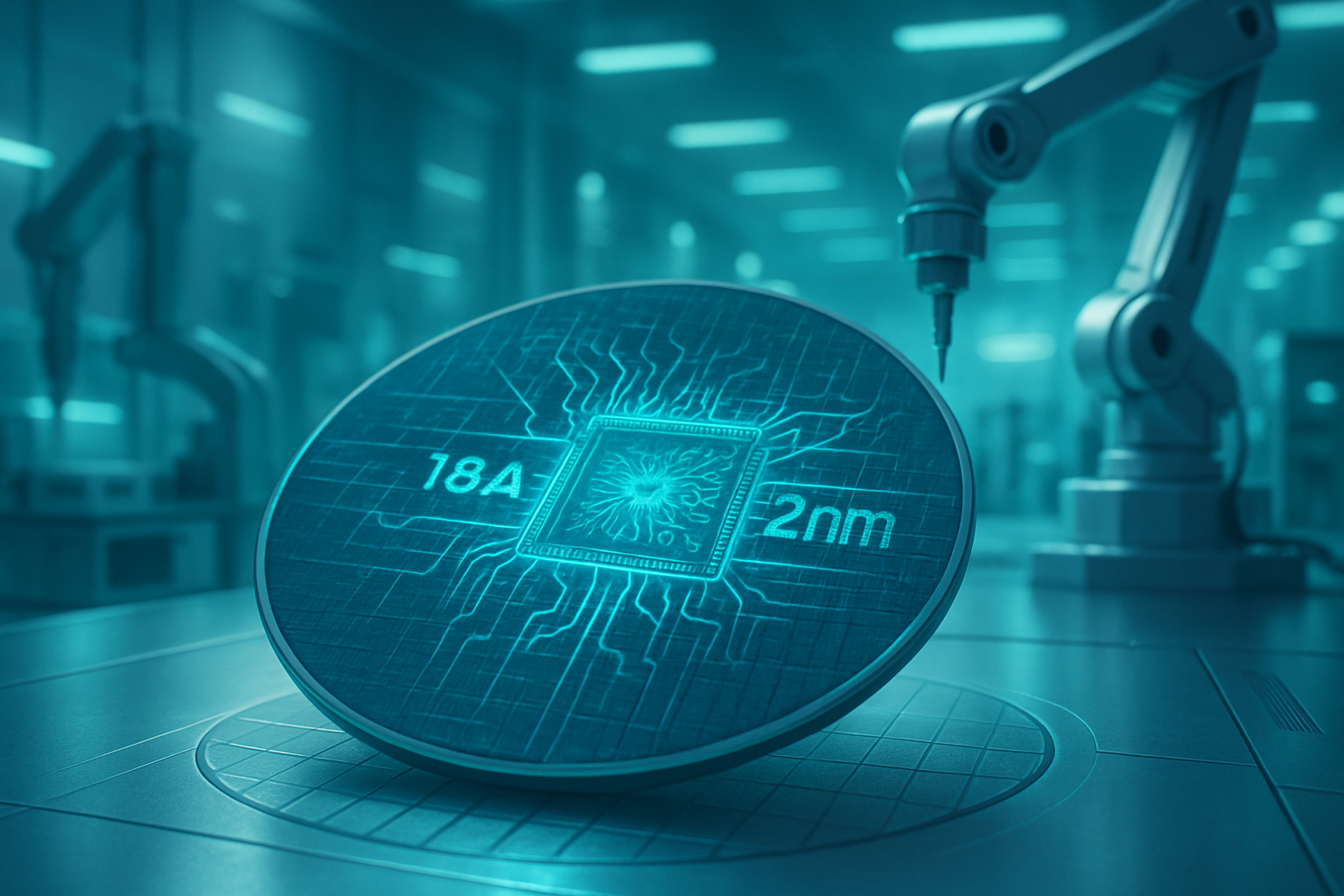
  • LEO Satellite IoT Breakthrough: Unmodified Devices Go Global with Nordic Semiconductor, Sateliot, and Gatehouse Satcom

    LEO Satellite IoT Breakthrough: Unmodified Devices Go Global with Nordic Semiconductor, Sateliot, and Gatehouse Satcom

    Oslo, Norway – October 9, 2025 – In a monumental leap for global connectivity, a groundbreaking collaboration between Nordic Semiconductor (OSL: NOD), Sateliot, and Gatehouse Satcom has successfully demonstrated the world's first-ever 5G IoT transmission between a standard commercial cellular IoT device and a Low Earth Orbit (LEO) satellite. This achievement, announced on October 8th and 9th, 2025, heralds a new era of ubiquitous, reliable, and affordable connectivity for the Internet of Things (IoT), promising to extend coverage to the approximately 80% of the Earth's surface currently unreached by terrestrial networks. The breakthrough means that millions of existing and future IoT devices can now seamlessly connect to space-based networks without any hardware modifications, transforming Sateliot's LEO satellites into "cell towers in space" and unlocking unprecedented potential for remote monitoring and data collection across industries.

    This pivotal development is set to democratize access to IoT connectivity, enabling a vast array of applications from smart agriculture and asset tracking to environmental monitoring and critical infrastructure management in the most remote and hard-to-reach areas. By leveraging standard cellular IoT technology, the partnership has eliminated the need for specialized satellite hardware, significantly lowering the cost and complexity of deploying global IoT solutions and reinforcing Europe's leadership in satellite-based telecommunications.

    Unpacking the Technical Marvel: 5G IoT from Orbit

    The core of this unprecedented achievement lies in the successful demonstration of a 5G Narrowband IoT (NB-IoT) system operating over an S-band Non-Geostationary Orbit (NGSO) satellite. This end-to-end solution was rigorously validated in full compliance with the 3GPP 5G NB-IoT Release 17 standard, a critical benchmark that extends terrestrial mobile standards into space. This ensures that satellites are no longer isolated communication silos but integral parts of the broader 5G ecosystem, allowing for unified global networks and seamless interoperability.

    At the heart of this technical marvel is Nordic Semiconductor's (OSL: NOD) nRF9151 module. This low-power cellular IoT System-in-Package (SiP) module is optimized for satellite communication and boasts industry-leading battery life. Crucially, devices equipped with the nRF9151 module can transmit and receive data over Sateliot's LEO constellation without requiring any hardware alterations. This "unmodified cellular device" capability is a game-changer, as it means the same device designed for a terrestrial cellular network can now automatically roam and connect to a satellite network when out of ground-based coverage, mirroring the familiar roaming experience of mobile phones.

    Gatehouse Satcom played an indispensable role by providing its specialized 5G satellite communications software, the "5G NTN NB-IoT NodeB." This software is purpose-built for Non-Terrestrial Network (NTN) environments, rather than being an adaptation of terrestrial solutions. It is engineered to manage the complex dynamics inherent in LEO satellite communications, including real-time Doppler compensation, precise timing synchronization, mobility management, and intelligent beam management. Gatehouse Satcom's software ensures strict adherence to 3GPP standards, allowing satellites to function as base stations within the 5G framework and supporting connectivity across various orbits and payload modes.

    This breakthrough fundamentally differentiates itself from previous satellite IoT solutions in two key aspects: device modification and standardization. Historically, satellite IoT often relied on proprietary, specialized, and often expensive hardware, creating fragmented networks. The new solution, however, leverages standard commercial cellular IoT devices and is fully compliant with 3GPP 5G NB-IoT Release 17 for NTN. This adherence to an open standard ensures interoperability, future-proofing, and significantly lowers the entry barriers and costs for IoT deployments, effectively merging the ubiquitous reach of satellite networks with the cost-efficiency and widespread adoption of cellular IoT.

    Reshaping the AI and Tech Landscape

    The advent of ubiquitous LEO satellite IoT connectivity is poised to profoundly impact AI companies, tech giants, and startups, ushering in a new era of global data accessibility and intelligent automation. For AI companies, this means an unprecedented influx of real-time data from virtually any location on Earth. Low latency and higher bandwidth from LEO constellations will feed richer, more continuous data streams to AI models, significantly improving their accuracy and predictive capabilities. This will also enable the expansion of Edge AI, allowing for faster decision-making for AI-powered devices in remote environments crucial for applications like autonomous vehicles and industrial automation.

    Tech giants, particularly those investing heavily in LEO constellations like SpaceX's (Starlink) and Amazon's (NASDAQ: AMZN) Project Kuiper, stand to solidify their positions as foundational infrastructure providers. These companies are building massive LEO networks, aiming for global coverage and directly competing with traditional internet service providers in remote areas. Through vertical integration, companies like Amazon can seamlessly merge LEO connectivity with their existing cloud services (AWS), offering end-to-end solutions from satellite hardware to data processing and AI analytics. This control over the connectivity layer further enhances their data collection capabilities and subsequent AI development, leveraging vast datasets for advanced analytics and machine learning.

    For startups, the LEO satellite IoT landscape presents a dual scenario of immense opportunity and significant challenge. While building and launching LEO constellations remains capital-intensive, startups can thrive by focusing on niche innovation. This includes developing specialized IoT devices, advanced AI algorithms, and vertical-specific solutions that leverage LEO connectivity. Partnerships with established LEO operators will be crucial for accessing infrastructure and market reach. Startups that innovate in edge AI and data analytics, processing LEO IoT data onboard satellites or at the network edge to reduce bandwidth and accelerate insights, will find significant opportunities. This development also disrupts existing products and services, as LEO satellite IoT offers a cost-effective alternative to terrestrial networks in remote areas and superior performance compared to older GEO/MEO satellite services for many real-time IoT applications.

    Industries set to benefit immensely from this development include agriculture (Agritech), where AI can optimize farming with real-time data from remote sensors; maritime and logistics, enabling global tracking and predictive maintenance for supply chains; mining and oil & gas, for remote monitoring of operations in isolated locations; and environmental monitoring, providing crucial data for climate change research and disaster response. Companies like John Deere (NYSE: DE), for instance, are already integrating satellite communications for remote diagnostics and machine-to-machine communication in their farming machinery, showcasing the tangible benefits.

    A New Frontier in Global Connectivity and AI

    This LEO satellite IoT connectivity breakthrough signifies a profound shift in the broader technological landscape, deeply intertwining with current global connectivity and AI trends. It represents a critical step towards truly ubiquitous connectivity, ensuring that devices can communicate regardless of geographical barriers. As a core component of 5G Non-Terrestrial Networks (NTN), it integrates seamlessly into the evolving 5G architecture, enhancing coverage, improving reliability, and offering resilient services in previously unserved regions. This development accelerates the trend towards hybrid networks, combining LEO, MEO, GEO, and terrestrial cellular networks to optimize cost, performance, and coverage for diverse IoT use cases.

    The most significant impact on the AI landscape is the enablement of massive data collection. LEO satellite IoT unlocks unprecedented volumes of real-time data from a global footprint of IoT devices, including vast geographical areas previously considered "connectivity deserts." This continuous stream of data from diverse, remote environments is invaluable for training and operating AI models, facilitating informed decision-making and process optimization across industries. It drives more comprehensive and accurate AI insights, accelerating progress in fields like environmental monitoring, logistics optimization, and disaster prediction. This milestone can be compared to the early days of widespread internet adoption, but with the added dimension of truly global, machine-to-machine communication fueling the next generation of AI.

    However, this transformative technology is not without its challenges and concerns. Regulatory aspects, particularly spectrum management, are becoming increasingly complex as demand for satellite communication intensifies, leading to potential scarcity and interference. Companies must navigate a labyrinth of national and international licensing and compliance frameworks. Security is another paramount concern; the proliferation of gateways and a massive number of terminals in LEO satellite communication systems expands the attack surface, making them vulnerable to cyber threats. Robust cybersecurity measures are essential to protect data privacy and system integrity.

    Environmentally, the exponential increase in LEO satellites, particularly mega-constellations, raises serious concerns about orbital debris. The risk of collisions, which generate more debris, poses a threat to operational satellites and future space missions. While regulations are emerging, such as the FCC's requirement for non-functional LEO satellites to deorbit within five years, global coordination and enforcement remain critical to ensure the sustainability of space.

    The Road Ahead: An Increasingly Connected World

    The near-term future of LEO satellite IoT connectivity is marked by rapid expansion and deeper integration. Forecasts predict a significant increase in LEO satellites, with some estimates suggesting a rise from 10,000 in 2024 to over 24,000 by 2029, with LEOs constituting 98% of new satellite launches. This proliferation will lead to enhanced global coverage, with LEO networks expected to provide 90% global IoT coverage by 2026. Cost reduction through miniaturization and CubeSat technology will make satellite IoT solutions increasingly economical for widespread deployment, while further integration of 5G with satellite networks will solidify direct-to-device (D2D) connectivity for unmodified cellular IoT devices.

    In the long term, the landscape will evolve towards multi-orbit and hybrid networks, combining LEOs with GEO satellites and terrestrial 5G/fiber networks to optimize for diverse IoT use cases. Artificial intelligence and machine learning will be increasingly embedded in satellite systems, both in orbit and in ground control, to optimize performance, manage traffic, and ensure efficient use of orbital resources. Experts also predict the rise of edge computing in space, moving processing power closer to devices to reduce transmission costs and enable remote control. Beyond 5G, satellite constellations will play a crucial role in supporting space-based 6G networks, managing data in space, and seamlessly integrating even more devices globally.

    New applications on the horizon are vast, ranging from hyper-precision agriculture and enhanced maritime logistics to real-time environmental monitoring and advanced disaster response systems. Remote healthcare will bridge gaps in underserved regions, while critical infrastructure monitoring will provide consistent data from isolated assets. Autonomous vehicles and drones will gain real-time, global communication capabilities, even enabling the exploration of "Deep Space IoT" for lunar or Martian missions.

    However, challenges remain, including managing massive connectivity with high signaling overhead, handling the high mobility and frequent handovers of LEO satellites, and designing ultra-low-power IoT devices. Addressing regulatory complexities, ensuring robust security and data privacy across global networks, and mitigating space congestion and debris are also critical. Experts are highly optimistic, predicting the global LEO satellite IoT market to grow significantly, reaching billions of dollars by the end of the decade, with hundreds of millions of IoT devices connected via satellite by 2030. This growth will likely drive a shift in business models, with strategic partnerships becoming crucial to bridge capabilities and attract enterprise users in "sovereign verticals" like public safety and defense.

    A Defining Moment in Connectivity

    The LEO satellite IoT connectivity breakthrough achieved by Nordic Semiconductor, Sateliot, and Gatehouse Satcom marks a defining moment in the history of global connectivity and its symbiotic relationship with artificial intelligence. The ability to connect standard commercial cellular IoT devices directly to LEO satellites without modification is a paradigm shift, eliminating previous barriers of cost, complexity, and geographical reach. This development ensures that the digital divide for IoT is rapidly closing, enabling a truly connected world where data can be collected and utilized from virtually anywhere.

    This milestone is not merely an incremental improvement; it is a foundational change that will fuel the next generation of AI innovation. By providing unprecedented access to real-time, global data, it will empower AI models to deliver more accurate insights, enable sophisticated automation in remote environments, and drive the creation of entirely new intelligent applications across every sector. The long-term impact will be a more efficient, responsive, and data-rich world, fostering economic growth and addressing critical global challenges from climate change to disaster management.

    As we move forward, the tech world will be watching closely for continued advancements in LEO constellation deployment, further standardization efforts, and the emergence of innovative AI-driven solutions that leverage this newfound global connectivity. The coming weeks and months will likely see accelerated adoption, new partnerships, and a clearer picture of the full transformative potential unleashed by this pivotal breakthrough.


    This content is intended for informational purposes only and represents analysis of current AI developments.

    TokenRing AI delivers enterprise-grade solutions for multi-agent AI workflow orchestration, AI-powered development tools, and seamless remote collaboration platforms. For more information, visit https://www.tokenring.ai/.

  • Tata Communications Unveils Agentic Voice AI Platform to Revolutionize BFSI Customer Journeys

    Tata Communications Unveils Agentic Voice AI Platform to Revolutionize BFSI Customer Journeys

    Mumbai, India – October 8, 2025 – Tata Communications (NSE: TCOM | BSE: 500483), a global digital ecosystem enabler, has announced the launch of a groundbreaking Voice AI Platform, powered by Agentic AI, poised to dramatically transform customer interactions within the Banking, Financial Services, and Insurance (BFSI) sector. This innovative platform, introduced around October 6-8, 2025, aims to integrate unprecedented levels of speed, scale, and intelligence into financial services customer interactions, marking a significant leap forward in conversational AI.

    The new Voice AI platform is designed to move beyond traditional automated responses, offering highly personalized and outcome-driven interactions. By directly connecting to enterprise APIs and fintech platforms, it empowers financial institutions to streamline entire customer journeys, from initial inquiries to complex transaction resolutions, all while delivering a more natural and efficient customer experience.

    Technical Prowess: Unpacking Tata Communications' Agentic AI

    At the heart of Tata Communications' new offering is its sophisticated Agentic AI, a paradigm shift from conventional rule-based or even generative AI chatbots. Unlike previous approaches that often rely on predefined scripts or large language models for generating text, Agentic AI focuses on goal-oriented, autonomous actions. This means the platform isn't just responding to queries; it's actively working to achieve specific outcomes, such as processing a loan application, updating account details, or resolving a billing dispute, by orchestrating various internal and external systems.

    The platform boasts a unified speech-to-speech architecture, enabling natural, real-time voice conversations with sub-500 millisecond latency. This near-instantaneous response time significantly reduces customer frustration often associated with automated systems. Furthermore, its multilingual capabilities are extensive, supporting over 40 Indian and global languages, including Hindi, Tamil, Spanish, and Mandarin, with dynamic language switching and accent adaptation – a critical feature for diverse markets like India. Key technical differentiators include context retention across sessions, adaptive dialogue flows for more intelligent conversations, and real-time analytics providing transcription, call summaries, and sentiment analysis. This robust infrastructure, built on Tata Communications AI Cloud, ensures enterprise-grade security and scalability, a non-negotiable for the highly regulated BFSI sector. Initial reactions from industry experts highlight the platform's potential to set a new benchmark for automated customer service, praising its integration capabilities and focus on end-to-end task resolution.

    Competitive Landscape and Market Implications

    The launch of Tata Communications' Voice AI Platform carries significant competitive implications across the AI and tech industries. Tata Communications itself stands to benefit immensely, strengthening its position as a leading provider of digital transformation solutions, particularly in the lucrative BFSI sector. By offering a specialized, high-performance solution, it can capture a substantial market share from financial institutions eager to modernize their customer service operations.

    This development poses a direct challenge to traditional contact center solution providers and generic conversational AI vendors. Companies relying on older Interactive Voice Response (IVR) systems or less sophisticated chatbot technologies may find their offerings quickly becoming obsolete as BFSI clients demand the advanced, outcome-driven capabilities of Agentic AI. Fintech startups, while potentially facing new competition, could also find opportunities to integrate with Tata Communications' platform, leveraging its robust infrastructure and AI capabilities to enhance their own services. Major AI labs and tech giants, while often having their own AI research, might find themselves either partnering with or competing against this specialized offering, especially if they haven't developed equally mature, industry-specific agentic AI solutions for voice interactions. The platform's direct integration with fintech ecosystems suggests a potential disruption to existing service delivery models, enabling financial institutions to automate complex processes that previously required human intervention, thereby optimizing operational costs and improving service efficiency.

    Broader Significance in the AI Landscape

    Tata Communications' Agentic Voice AI Platform represents a crucial milestone in the broader evolution of artificial intelligence, particularly in the realm of conversational AI and enterprise automation. It underscores a growing trend towards specialized, goal-oriented AI systems that can not only understand but also execute complex tasks autonomously, moving beyond mere information retrieval. This development fits perfectly within the narrative of digital transformation, where businesses are increasingly leveraging AI to enhance customer experience, streamline operations, and drive efficiency.

    The impacts are far-reaching. For the BFSI sector, it promises more personalized, efficient, and consistent customer interactions, potentially leading to higher customer satisfaction and loyalty. However, potential concerns include data privacy and security, given the sensitive nature of financial data, though Tata Communications' commitment to enterprise-grade security addresses this. There are also discussions around the ethical implications of AI agents handling critical financial tasks and the potential for job displacement in traditional contact centers. This platform can be compared to previous AI milestones like the advent of sophisticated search engines or early natural language processing breakthroughs, but it distinguishes itself by emphasizing proactive task completion rather than just information processing, signaling a shift towards truly intelligent automation that can mimic human-like decision-making and action.

    Future Trajectories and Expert Predictions

    Looking ahead, the launch of Tata Communications' Agentic Voice AI Platform is likely just the beginning of a wave of similar specialized AI solutions. In the near term, we can expect to see rapid adoption within the BFSI sector as institutions seek competitive advantages. Future developments will likely focus on even deeper integration with emerging technologies such as blockchain for enhanced security in financial transactions, and advanced predictive analytics to anticipate customer needs before they arise. Potential applications could extend beyond customer service to areas like fraud detection, personalized financial advisory, and automated compliance checks, further embedding AI into the core operations of financial institutions.

    Challenges that need to be addressed include the continuous refinement of AI ethics, ensuring transparency and accountability in autonomous decision-making, and navigating complex regulatory landscapes as AI takes on more critical roles. Experts predict that the next phase will involve AI platforms becoming even more proactive and anticipatory, evolving into truly "co-pilot" systems that augment human capabilities rather than merely replacing them. We might see the platform learning from human agents' best practices to improve its own performance, and seamlessly handing off complex, nuanced interactions to human counterparts while managing simpler, repetitive tasks with high efficiency.

    A New Era for Financial Customer Experience

    Tata Communications' launch of its Agentic Voice AI Platform marks a pivotal moment in the convergence of AI and financial services. By offering a solution that prioritizes speed, scale, and intelligence through outcome-driven Agentic AI, the company is not just enhancing customer service; it's redefining the very fabric of customer interactions in the BFSI sector. The platform's ability to seamlessly integrate with existing fintech ecosystems, handle multiple languages, and provide real-time analytics positions it as a transformative tool for institutions aiming to stay competitive in an increasingly digital world.

    This development's significance in AI history lies in its clear demonstration of Agentic AI's practical application in a high-stakes industry, moving beyond theoretical discussions to tangible, enterprise-grade solutions. It sets a new benchmark for what intelligent automation can achieve, pushing the boundaries of what customers can expect from their financial service providers. In the coming weeks and months, industry watchers will be keenly observing the platform's adoption rates, the measurable impact on customer satisfaction and operational efficiency within early adopters, and how competing AI vendors respond to this advanced offering. The stage is set for a new era where AI-powered voice interactions are not just responsive, but truly intelligent and proactive.

    This content is intended for informational purposes only and represents analysis of current AI developments.

    TokenRing AI delivers enterprise-grade solutions for multi-agent AI workflow orchestration, AI-powered development tools, and seamless remote collaboration platforms.
    For more information, visit https://www.tokenring.ai/.

  • News Corp Declares ‘Grand Theft Australia’ on AI Firms, Demanding Copyright Accountability

    News Corp Declares ‘Grand Theft Australia’ on AI Firms, Demanding Copyright Accountability

    Melbourne, Australia – October 8, 2025 – In a powerful address today, News Corp Australasia executive chairman Michael Miller issued a stark warning to artificial intelligence (AI) firms, accusing them of committing "Grand Theft Australia" by illicitly leveraging copyrighted content to train their sophisticated models. Speaking at the Melbourne Press Club, Miller's pronouncement underscores a burgeoning global conflict between content creators and the rapidly advancing AI industry over intellectual property rights, demanding urgent government intervention and a re-evaluation of how AI consumes and profits from creative works.

    News Corp's (NASDAQ: NWS) (ASX: NWS) strong stance highlights a critical juncture in the evolution of AI, where the technological prowess of generative models clashes with established legal frameworks designed to protect creators. The media giant's aggressive push for accountability signals a potential paradigm shift, forcing AI developers to confront the ethical and legal implications of their data sourcing practices and potentially ushering in an era of mandatory licensing and fair compensation for the vast datasets fueling AI innovation.

    The Digital Plunder: News Corp's Stance on AI's Content Consumption

    News Corp's core grievance centers on the widespread, unauthorized practice of text and data mining (TDM), where AI systems "hoover up" vast quantities of copyrighted material—ranging from news articles and literary works to cultural expressions—without explicit permission or remuneration. Michael Miller characterized this as a "second 'big steal'," drawing a pointed parallel to the early digital age when tech platforms allegedly built their empires on the uncompensated use of others' content. The company vehemently opposes any proposed "text and data mining exception" to Australia's Copyright Act, arguing that such a legislative change would effectively legalize this "theft" and undermine the very foundation of creative industries.

    This position is further reinforced by News Corp CEO Robert Thomson's earlier warnings. In August 2025, Thomson famously described the exploitation of intellectual property by AI as "vandalising virtuosity," questioning the use of copyrighted books, such as Donald Trump's "The Art of the Deal," to train AI models without consent. He likened it to "the art of the steal," emphasizing that the current approach by many AI firms bypasses the fundamental principle of intellectual property. Unlike previous technological shifts that sought to digitize and distribute content, the current AI paradigm involves ingesting and transforming content into new outputs, raising complex questions about originality, derivation, and the rights of the original creators. This approach significantly differs from traditional content aggregation or search indexing, where content is typically linked or excerpted rather than fully absorbed and re-synthesized. Initial reactions from the creative community have largely echoed News Corp's concerns, with many artists, writers, and journalists expressing alarm over the potential devaluation of their work.

    Reshaping the AI Landscape: Implications for Tech Giants and Startups

    News Corp's aggressive posture carries significant implications for AI companies, tech giants, and burgeoning startups alike. The company's "woo and sue" strategy is a dual-pronged approach: on one hand, it involves forming strategic partnerships, such as the multi-year licensing deal with OpenAI (OpenAI) to use News Corp's current and archived content. This suggests a pathway for AI companies to legitimately access high-quality data. On the other hand, News Corp is actively pursuing legal action against firms it accuses of copyright infringement. Dow Jones and the New York Post, both News Corp-owned entities, sued Perplexity AI (Perplexity AI) in October 2024 for alleged misuse of articles, while Brave (Brave) has been accused of monetizing widespread IP theft.

    This dual strategy is likely to compel AI developers to reconsider their data acquisition methods. Companies that have historically relied on scraping the open web for training data may now face increased legal risks and operational costs as they are forced to seek licensing agreements. This could lead to a competitive advantage for firms willing and able to invest in legitimate content licensing, while potentially disrupting smaller startups that lack the resources for extensive legal battles or licensing fees. The market could see a pivot towards training models on public domain content, synthetically generated data, or exclusively licensed datasets, which might impact the diversity and quality of AI model outputs. Furthermore, News Corp's actions could set a precedent, influencing how other major content owners approach AI companies and potentially leading to a broader industry shift towards a more regulated, compensation-based model for AI training data.

    A Global Call for Fair Play: Wider Significance in the AI Era

    The "Grand Theft Australia" warning is not an isolated incident but rather a significant development within the broader global debate surrounding generative AI and intellectual property rights. It underscores a fundamental tension between the rapid pace of technological innovation and the need to uphold the rights of creators, ensuring that the economic benefits of AI are shared equitably. News Corp frames this issue as crucial for safeguarding Australia's cultural and creative sovereignty, warning that surrendering intellectual property to large language models would lead to "less media, less Australian voices, and less Australian stories," thereby eroding national culture and identity.

    This situation resonates with ongoing discussions in other jurisdictions, where content creators and media organizations are lobbying for stronger copyright protections against AI. The impacts extend beyond mere financial compensation; they touch upon the future viability of journalism, literature, and artistic expression. The potential for AI to dilute the value of human-created content or even replace creative jobs without proper ethical and legal frameworks is a significant concern. Comparisons to previous AI milestones, such as the rise of deep learning or the advent of autonomous systems, often focused on technical capabilities. However, the current debate around copyright highlights the profound societal and economic implications that AI's integration into daily life brings, demanding a more holistic regulatory response than ever before.

    Charting the Future: Regulation, Licensing, and the Path Forward

    Looking ahead, the "Grand Theft Australia" declaration is poised to accelerate developments in AI regulation and content licensing. In the near term, we can anticipate intensified lobbying efforts both for and against text and data mining exceptions in Australia and other nations. The outcomes of News Corp's ongoing lawsuits against AI firms like Perplexity AI and Brave will be closely watched, as they could establish crucial legal precedents for defining "fair use" in the context of AI training data. These legal battles will test the boundaries of existing copyright law and likely shape future legislative amendments.

    In the long term, experts predict a growing movement towards more robust and standardized licensing models for AI training data. This could involve the development of new market mechanisms for content creators to license their work to AI developers, potentially creating new revenue streams for industries currently struggling with digital monetization. However, significant challenges remain, including establishing fair market rates for content, developing effective tracking and attribution systems for AI-generated outputs, and balancing the imperative for AI innovation with the protection of intellectual property. Policymakers face the complex task of crafting regulations that foster technological advancement while simultaneously safeguarding creative industries and ensuring ethical AI development. The discussions initiated by News Corp's warning are likely to contribute significantly to the global discourse on responsible AI governance.

    A Defining Moment for AI and Intellectual Property

    News Corp's "Grand Theft Australia" warning marks a pivotal moment in the ongoing narrative of artificial intelligence. It serves as a powerful reminder that while AI's technological capabilities continue to expand at an unprecedented rate, the fundamental principles of intellectual property, fair compensation, and ethical data usage cannot be overlooked. The aggressive stance taken by one of the world's largest media conglomerates signals a clear demand for AI firms to transition from a model of uncompensated content consumption to one of legitimate licensing and partnership.

    The significance of this development in AI history lies in its potential to shape the very foundation upon which future AI models are built. It underscores the urgent need for policymakers, tech companies, and content creators to collaborate on establishing clear, enforceable guidelines that ensure a fair and sustainable ecosystem for both innovation and creativity. As the legal battles unfold and legislative debates intensify in the coming weeks and months, the world will be watching closely to see whether the era of "Grand Theft Australia" gives way to a new paradigm of respectful collaboration and equitable compensation in the age of AI.

    This content is intended for informational purposes only and represents analysis of current AI developments.

    TokenRing AI delivers enterprise-grade solutions for multi-agent AI workflow orchestration, AI-powered development tools, and seamless remote collaboration platforms.
    For more information, visit https://www.tokenring.ai/.

  • AstraZeneca’s US$555 Million AI Bet: Revolutionizing Immunology Drug Discovery

    AstraZeneca’s US$555 Million AI Bet: Revolutionizing Immunology Drug Discovery

    In a landmark move signaling the accelerating convergence of artificial intelligence and pharmaceutical research, AstraZeneca (LSE: AZN) has forged a multi-target research collaboration with Algen Biotechnologies, an AI-driven functional genomics company, in a deal potentially worth up to US$555 million. Announced in October 2025, this strategic partnership aims to leverage Algen's cutting-edge AI platform to discover and commercialize novel immunology therapies, underscoring the pharmaceutical industry's growing reliance on AI to transform drug discovery and development.

    The collaboration represents a significant validation for AI's role in identifying new biological insights and therapeutic targets, particularly in complex disease areas like chronic inflammatory conditions. For AstraZeneca, it enhances its already robust AI-driven R&D pipeline, while for Algen Biotechnologies, it provides substantial financial backing and the opportunity to translate its innovative AI-discovered programs into potential clinical realities, solidifying its position at the forefront of AI-powered biotech.

    Unpacking AlgenBrain™: AI-Powered Functional Genomics for Causal Biology

    At the heart of this transformative partnership is Algen Biotechnologies' proprietary "AlgenBrain™" platform. This sophisticated system integrates advanced computational models with scalable, single-cell experimental systems, offering a paradigm shift in how therapeutic targets are identified. AlgenBrain™ operates on a "biology-first, data-driven" principle, aiming to reverse-engineer disease trajectories through a continuous learning loop that combines experimental biology with AI.

    Technically, AlgenBrain™ excels by capturing billions of dynamic RNA changes within human, disease-relevant cell types. It then links these RNA changes to functional outcomes and therapeutic indices using high-throughput gene modulation, powered by its proprietary "AlgenCRISPR™" system. AlgenCRISPR™ enables precise and fine-tuned gene modulation at an industrial scale, allowing the platform to decode complex biology at a single-cell level. Through deep learning models built on these vast datasets, AlgenBrain™ maps causal links between gene regulation and disease progression, identifying novel genes that, when therapeutically targeted, possess the potential to reverse disease processes. This focus on causal biology, rather than mere correlation, is a crucial differentiator from many previous approaches.

    Traditional drug discovery often relies on less precise methods, crude phenotypes, or labor-intensive target prioritization without direct biological validation, leading to lengthy timelines (10-15 years) and high failure rates. AlgenBrain™'s approach dramatically speeds up preclinical discovery and aims to improve translational accuracy, thereby increasing the probability of clinical success. The integration of advanced CRISPR technology with deep learning allows for rapid, scaled decoding of cellular networks and the identification of effective intervention points, moving beyond simply predicting protein structures to understanding and modulating complex molecular interactions. Initial reactions from the industry, particularly highlighted by AstraZeneca's substantial investment and the company's spin-out from Nobel Laureate Jennifer Doudna's lab at UC Berkeley, indicate strong confidence in AlgenBrain™'s potential to deliver on these promises.

    Reshaping the AI and Pharma Landscape: Competitive Dynamics and Disruptions

    The AstraZeneca-Algen Biotechnologies deal sends a powerful signal across the AI drug discovery landscape, with significant implications for other AI companies, tech giants, and startups. This multi-million dollar commitment from a pharmaceutical behemoth serves as a strong validation for the entire sector, likely spurring increased venture capital and corporate investment into innovative AI-driven biotech startups. Companies specializing in functional genomics, single-cell analysis, and AI-driven causal inference – much like Algen – are poised to see heightened interest and funding.

    The deal also intensifies pressure on other pharmaceutical giants to accelerate their own AI adoption strategies. Many, including AstraZeneca (LSE: AZN) itself, are already heavily invested, with partnerships spanning companies like CSPC Pharmaceuticals (HKG: 1093), Tempus AI, Pathos AI, Turbine, and BenevolentAI (LSE: BENE). Those that lag in integrating AI risk falling behind in identifying novel targets, optimizing drug candidates, and reducing crucial R&D timelines and costs. Tech giants like Alphabet (NASDAQ: GOOGL), Microsoft (NASDAQ: MSFT), and Amazon (NASDAQ: AMZN), which provide foundational cloud computing, advanced machine learning tools, and data analytics platforms, stand to benefit from the increased demand for their services within the pharmaceutical sector. Their scalable computing resources are indispensable for processing the vast biological datasets required for AI drug discovery.

    Potential disruptions to existing products and services are manifold. AI's ability to identify targets and optimize drug candidates more rapidly can significantly shorten the drug discovery phase, potentially bringing new therapies to patients faster. This can lead to higher success rates and reduced costs, mitigating the exorbitant expenditures and high failure rates of traditional R&D. Furthermore, AI-driven insights into disease mechanisms are paving the way for more personalized and targeted therapies, shifting away from a "one-size-fits-all" approach. Traditional, largely wet-lab-based R&D models may be augmented or partially replaced by AI-driven computational methods, necessitating workforce reskilling and resource reallocation. For AstraZeneca, this deal solidifies its market positioning as a leader in AI-driven drug discovery, securing a strategic advantage in potentially high-value therapeutic areas. For Algen Biotechnologies, the partnership provides critical validation, substantial financial backing, and access to AstraZeneca's deep expertise in translational science and clinical development, establishing Algen as a key innovator at the intersection of CRISPR and AI.

    Wider Significance: AI's Broad Impact on Pharma, Healthcare, and Society

    The AstraZeneca-Algen Biotechnologies collaboration is more than just a corporate deal; it's a significant indicator of the broader AI landscape and its transformative impact on the pharmaceutical industry, healthcare, and society. This partnership exemplifies a pivotal shift towards data-driven, biology-first approaches in drug discovery, driven by AI's unparalleled ability to process and interpret vast, complex biological and chemical datasets. Facing escalating R&D costs, lengthy timelines, and persistently low success rates in traditional drug development, pharmaceutical companies are increasingly embracing AI to accelerate discovery, enhance preclinical development, streamline clinical trials, and facilitate drug repurposing.

    The broader impacts are profound: for the pharmaceutical industry, it promises dramatically increased efficiency, reduced costs, and higher success rates in bringing new drugs to market, thereby maximizing the effective patent life of novel therapies. In healthcare, this translates to faster delivery of life-saving treatments and improved patient outcomes, particularly through the advancement of precision medicine where treatments are tailored to an individual's unique genetic and biological profile. Societally, the benefits include addressing unmet medical needs and improving global health, with potentially reduced R&D costs contributing to greater accessibility and affordability of healthcare.

    However, this rapid integration of AI also raises critical concerns. Algorithmic bias, if not carefully managed, could exacerbate existing health disparities. The "black box" nature of some AI systems poses challenges for transparency and explainability, hindering regulatory approval and eroding trust. Data privacy and security are paramount, given the reliance on vast amounts of sensitive patient data. Ethical dilemmas arise concerning accountability for AI-driven decisions and intellectual property ownership when AI autonomously designs molecules. Regulatory bodies are actively working to develop frameworks to address these complexities, ensuring responsible AI deployment.

    This deal builds upon a decade-long trajectory of increasing AI sophistication in drug discovery. While early AI applications in the 20th century were rudimentary, the 2010s saw widespread adoption driven by advances in big data, deep learning, genomics, and high-throughput screening. Milestones like Insilico Medicine's rapid prediction of a molecule for a specific target in 2019, Deep Genomics' "AI-discovered therapeutic candidate," BenevolentAI's quick identification of a COVID-19 treatment, and DeepMind's AlphaFold breakthrough in protein structure prediction have paved the way. The AstraZeneca-Algen deal, with its focus on combining AI with CRISPR-based gene modulation for novel target generation, represents a convergence of these powerful technologies, pushing the boundaries of what AI can achieve in decoding and intervening in complex biological processes.

    The Horizon: Future Developments in AI-Driven Drug Discovery

    The AstraZeneca-Algen Biotechnologies partnership is a harbinger of significant future developments in AI-driven drug discovery. In the near term (1-5 years), AI is expected to further accelerate hit identification and lead optimization, cutting initial drug discovery phases by 1-2 years and potentially reducing design efforts by 70%. Improved prediction of drug efficacy and toxicity will reduce costly late-stage failures, while AI will streamline clinical trials through predictive analytics for patient selection, optimizing protocols, and real-time monitoring, potentially reducing trial duration by 15-30%. The industry will likely witness an increased number of collaborations between pharma giants and AI specialists, with an estimated 30% of new drugs expected to be discovered using AI by 2025.

    Looking further ahead (5-10+ years), experts predict AI will facilitate the development of "life-changing, game-changing drugs," enabling scientists to "invent new biology" – designing novel biological entities that do not exist in nature. Highly personalized medicine, where treatments are tailored to an individual's unique genetic and biological profile, will become more commonplace. The emergence of autonomous discovery pipelines, capable of generating viable molecules for a high percentage of targets, and AI-powered "co-scientists" that can generate novel hypotheses and experimental protocols, are on the horizon. The integration of AI with other cutting-edge technologies like quantum computing and synthetic biology promises even faster and more personalized drug discovery.

    However, several challenges must be addressed for these developments to fully materialize. Data availability, quality, and bias remain critical hurdles, as AI models demand vast amounts of high-quality, consistent, and unbiased data. The lack of transparency and interpretability in many AI models, often termed "black boxes," can hinder trust, validation, and regulatory approval. Regulatory and ethical considerations, including data privacy, fairness, and accountability, require robust frameworks to keep pace with rapid AI advancements. The inherent complexity of biological systems and the need for seamless interdisciplinary collaboration between AI experts, biologists, and chemists are also crucial for successful integration. Experts widely agree that AI will serve as an indispensable tool, enhancing human intelligence and scientific capabilities rather than replacing researchers, with the global AI in pharma market projected to reach approximately US$16.5 billion by 2034.

    A New Era of Predictive and Precision Medicine: A Comprehensive Wrap-up

    The AstraZeneca (LSE: AZN) and Algen Biotechnologies deal, valued at up to US$555 million, stands as a pivotal moment in the ongoing narrative of AI's integration into pharmaceutical R&D. It underscores a strategic imperative for global pharmaceutical leaders to embrace cutting-edge AI platforms to accelerate the discovery of novel therapeutic targets, particularly in challenging areas like immunology. By leveraging Algen's "AlgenBrain™" platform, which combines advanced CRISPR gene modulation with AI-driven functional genomics, AstraZeneca aims to decode complex chronic inflammatory conditions and bring more effective, precise therapies to patients faster.

    This collaboration is a key takeaway, highlighting the industry's shift towards data-driven, "biology-first" approaches. It further solidifies AstraZeneca's position as an early and aggressive adopter of AI, complementing its existing network of AI partnerships. In the broader context of AI history, this deal signifies the maturation of AI from a supplementary tool to a central driver in drug discovery, validating AI-driven functional genomics as a robust pathway for preclinical development.

    The long-term impact promises a fundamental reshaping of how medicines are discovered and delivered. By dramatically improving the efficiency, success rates, and precision of drug development, AI has the potential to lower costs, shorten timelines, and usher in an era of truly personalized medicine. The focus on uncovering causal links in disease progression will likely lead to breakthrough treatments for previously intractable conditions.

    In the coming weeks and months, observers should closely watch for any early-stage progress from the AstraZeneca-Algen collaboration, such as the identification of novel immunology targets. Expect a continued surge in strategic partnerships between pharmaceutical giants and specialized AI biotechs, further fueling the projected substantial growth of the AI-based drug discovery market. Advancements in generative AI and multimodal models, along with the increasing application of AI in clinical trial optimization and the integration of real-world data, will be critical trends to monitor. Finally, the evolution of regulatory frameworks to accommodate AI-discovered and AI-developed drugs will be crucial as these novel therapies move closer to market. This partnership is a clear indicator that AI is not just a tool, but an indispensable partner in the future of healthcare.

    This content is intended for informational purposes only and represents analysis of current AI developments.
    TokenRing AI delivers enterprise-grade solutions for multi-agent AI workflow orchestration, AI-powered development tools, and seamless remote collaboration platforms.
    For more information, visit https://www.tokenring.ai/

  • AI Accelerator Chip Market Set to Skyrocket to US$283 Billion by 2032, Fueled by Generative AI and Autonomous Systems

    AI Accelerator Chip Market Set to Skyrocket to US$283 Billion by 2032, Fueled by Generative AI and Autonomous Systems

    The global AI accelerator chip market is poised for an unprecedented surge, with projections indicating a staggering growth to US$283.13 billion by 2032. This monumental expansion, representing a compound annual growth rate (CAGR) of 33.19% from its US$28.59 billion valuation in 2024, underscores the foundational role of specialized silicon in the ongoing artificial intelligence revolution. The immediate significance of this forecast is profound, signaling a transformative era for the semiconductor industry and the broader tech landscape as companies scramble to meet the insatiable demand for the computational power required by advanced AI applications.

    This explosive growth is primarily driven by the relentless advancement and widespread adoption of generative AI, the increasing sophistication of natural language processing (NLP), and the burgeoning field of autonomous systems. These cutting-edge AI domains demand specialized hardware capable of processing vast datasets and executing complex algorithms with unparalleled speed and efficiency, far beyond the capabilities of general-purpose processors. As AI continues to permeate every facet of technology and society, the specialized chips powering these innovations are becoming the bedrock of modern technological progress, reshaping global supply chains and solidifying the semiconductor sector as a critical enabler of future-forward solutions.

    The Silicon Brains Behind the AI Revolution: Technical Prowess and Divergence

    The projected explosion in the AI accelerator chip market is intrinsically linked to the distinct technical capabilities these specialized processors offer, setting them apart from traditional CPUs and even general-purpose GPUs. At the heart of this revolution are architectures meticulously designed for the parallel processing demands of machine learning and deep learning workloads. Generative AI, for instance, particularly large language models (LLMs) like ChatGPT and Gemini, requires immense computational resources for both training and inference. Training LLMs involves processing petabytes of data, demanding thousands of interconnected accelerators working in concert, while inference requires efficient, low-latency processing to deliver real-time responses.

    These AI accelerators come in various forms, including Graphics Processing Units (GPUs), Application-Specific Integrated Circuits (ASICs), Field-Programmable Gate Arrays (FPGAs), and neuromorphic chips. GPUs, particularly those from NVIDIA (NASDAQ: NVDA), have dominated the market, especially for large-scale training models, due to their highly parallelizable architecture. However, ASICs, exemplified by Google's (NASDAQ: GOOGL) Tensor Processing Units (TPUs) and Amazon's (NASDAQ: AMZN) Inferentia, are gaining significant traction, particularly within hyperscalers, for their optimized performance and energy efficiency for specific AI tasks. These ASICs offer superior performance per watt for their intended applications, reducing operational costs for large data centers.

    The fundamental difference lies in their design philosophy. While CPUs are designed for sequential processing and general-purpose tasks, and general-purpose GPUs excel in parallel graphics rendering, AI accelerators are custom-built to accelerate matrix multiplications and convolutions – the mathematical backbone of neural networks. This specialization allows them to perform AI computations orders of magnitude faster and more efficiently. The AI research community and industry experts have universally embraced these specialized chips, recognizing them as indispensable for pushing the boundaries of AI. Initial reactions have highlighted the critical need for continuous innovation in chip design and manufacturing to keep pace with AI's exponential growth, leading to intense competition and rapid development cycles among semiconductor giants and innovative startups alike. The integration of AI accelerators into broader system-on-chip (SoC) designs is also becoming more common, further enhancing their efficiency and versatility across diverse applications.

    Reshaping the Competitive Landscape: Beneficiaries and Disruptors

    The anticipated growth of the AI accelerator chip market is poised to profoundly reshape the competitive dynamics across the tech industry, creating clear beneficiaries, intensifying rivalries, and potentially disrupting existing product ecosystems. Leading semiconductor companies like NVIDIA (NASDAQ: NVDA) stand to gain immensely, having established an early and dominant position in the AI hardware space with their powerful GPU architectures. Their CUDA platform has become the de facto standard for AI development, creating a significant ecosystem lock-in. Similarly, Advanced Micro Devices (AMD) (NASDAQ: AMD) is aggressively expanding its MI series accelerators, positioning itself as a strong challenger, as evidenced by strategic partnerships such as OpenAI's reported commitment to significant chip purchases from AMD. Intel (NASDAQ: INTC), while facing stiff competition, is also investing heavily in its AI accelerator portfolio, including Gaudi and Arctic Sound-M chips, aiming to capture a share of this burgeoning market.

    Beyond these traditional chipmakers, tech giants with vast cloud infrastructures are increasingly developing their own custom silicon to optimize performance and reduce reliance on external vendors. Google's (NASDAQ: GOOGL) TPUs, Amazon's (NASDAQ: AMZN) Trainium and Inferentia, and Microsoft's (NASDAQ: MSFT) Maia AI accelerator are prime examples of this trend. This in-house chip development strategy offers these companies a strategic advantage, allowing them to tailor hardware precisely to their software stacks and specific AI workloads, potentially leading to superior performance and cost efficiencies within their ecosystems. This move by hyperscalers represents a significant competitive implication, as it could temper the growth of third-party chip sales to these major customers while simultaneously driving innovation in specialized ASIC design.

    Startups focusing on novel AI accelerator architectures, such as neuromorphic computing or photonics-based chips, also stand to benefit from increased investment and demand for diverse solutions. These companies could carve out niche markets or even challenge established players with disruptive technologies that offer significant leaps in efficiency or performance for particular AI paradigms. The market's expansion will also fuel innovation in ancillary sectors, including advanced packaging, cooling solutions, and specialized software stacks, creating opportunities for a broader array of companies. The competitive landscape will be characterized by a relentless pursuit of performance, energy efficiency, and cost-effectiveness, with strategic partnerships and mergers becoming commonplace as companies seek to consolidate expertise and market share.

    The Broader Tapestry of AI: Impacts, Concerns, and Milestones

    The projected explosion of the AI accelerator chip market is not merely a financial forecast; it represents a critical inflection point in the broader AI landscape, signaling a fundamental shift in how artificial intelligence is developed and deployed. This growth trajectory fits squarely within the overarching trend of AI moving from research labs to pervasive real-world applications. The sheer demand for specialized hardware underscores the increasing complexity and computational intensity of modern AI, particularly with the rise of foundation models and multimodal AI systems. It signifies that AI is no longer a niche technology but a core component of digital infrastructure, requiring dedicated, high-performance processing units.

    The impacts of this growth are far-reaching. Economically, it will bolster the semiconductor industry, creating jobs, fostering innovation, and driving significant capital investment. Technologically, it enables breakthroughs that were previously impossible, accelerating progress in fields like drug discovery, climate modeling, and personalized medicine. Societally, more powerful and efficient AI chips will facilitate the deployment of more intelligent and responsive AI systems across various sectors, from smart cities to advanced robotics. However, this rapid expansion also brings potential concerns. The immense energy consumption of large-scale AI training, heavily reliant on these powerful chips, raises environmental questions and necessitates a focus on energy-efficient designs. Furthermore, the concentration of advanced chip manufacturing in a few regions presents geopolitical risks and supply chain vulnerabilities, as highlighted by recent global events.

    Comparing this moment to previous AI milestones, the current acceleration in chip demand is analogous to the shift from general-purpose computing to specialized graphics processing for gaming and scientific visualization, which laid the groundwork for modern GPU computing. However, the current AI-driven demand is arguably more transformative, as it underpins the very intelligence of future systems. It mirrors the early days of the internet boom, where infrastructure build-out was paramount, but with the added complexity of highly specialized and rapidly evolving hardware. The race for AI supremacy is now inextricably linked to the race for silicon dominance, marking a new era where hardware innovation is as critical as algorithmic breakthroughs.

    The Road Ahead: Future Developments and Uncharted Territories

    Looking to the horizon, the trajectory of the AI accelerator chip market promises a future brimming with innovation, new applications, and evolving challenges. In the near term, we can expect continued advancements in existing architectures, with companies pushing the boundaries of transistor density, interconnect speeds, and packaging technologies. The integration of AI accelerators directly into System-on-Chips (SoCs) for edge devices will become more prevalent, enabling powerful AI capabilities on smartphones, IoT devices, and autonomous vehicles without constant cloud connectivity. This will drive the proliferation of "AI-enabled PCs" and other smart devices capable of local AI inference.

    Long-term developments are likely to include the maturation of entirely new computing paradigms. Neuromorphic computing, which seeks to mimic the structure and function of the human brain, holds the promise of ultra-efficient AI processing, particularly for sparse and event-driven data. Quantum computing, while still in its nascent stages, could eventually offer exponential speedups for certain AI algorithms, though its widespread application is still decades away. Photonics-based chips, utilizing light instead of electrons, are also an area of active research, potentially offering unprecedented speeds and energy efficiency.

    The potential applications and use cases on the horizon are vast and transformative. We can anticipate highly personalized AI assistants that understand context and nuance, advanced robotic systems capable of complex reasoning and dexterity, and AI-powered scientific discovery tools that accelerate breakthroughs in materials science, medicine, and energy. Challenges, however, remain significant. The escalating costs of chip design and manufacturing, the need for robust and secure supply chains, and the imperative to develop more energy-efficient architectures to mitigate environmental impact are paramount. Furthermore, the development of software ecosystems that can fully leverage these diverse hardware platforms will be crucial. Experts predict a future where AI hardware becomes increasingly specialized, with a diverse ecosystem of chips optimized for specific tasks, from ultra-low-power edge inference to massive cloud-based training, leading to a more heterogeneous and powerful AI infrastructure.

    A New Era of Intelligence: The Silicon Foundation of Tomorrow

    The projected growth of the AI accelerator chip market to US$283.13 billion by 2032 represents far more than a mere market expansion; it signifies the establishment of a robust, specialized hardware foundation upon which the next generation of artificial intelligence will be built. The key takeaways are clear: generative AI, autonomous systems, and advanced NLP are the primary engines of this growth, demanding unprecedented computational power. This demand is driving intense innovation among semiconductor giants and hyperscalers, leading to a diverse array of specialized chips designed for efficiency and performance.

    This development holds immense significance in AI history, marking a definitive shift towards hardware-software co-design as a critical factor in AI progress. It underscores that algorithmic breakthroughs alone are insufficient; they must be coupled with powerful, purpose-built silicon to unlock their full potential. The long-term impact will be a world increasingly infused with intelligent systems, from hyper-personalized digital experiences to fully autonomous physical agents, fundamentally altering industries and daily life.

    As we move forward, the coming weeks and months will be crucial for observing how major players like NVIDIA (NASDAQ: NVDA), AMD (NASDAQ: AMD), and Intel (NASDAQ: INTC) continue to innovate and compete. We should also watch for further strategic partnerships between chip manufacturers and leading AI labs, as well as the continued development of custom AI silicon by tech giants such as Google (NASDAQ: GOOGL), Amazon (NASDAQ: AMZN), and Microsoft (NASDAQ: MSFT). The evolution of energy-efficient designs and advancements in manufacturing processes will also be critical indicators of the market's trajectory and its ability to address growing environmental concerns. The future of AI is being forged in silicon, and the rapid expansion of this market is a testament to the transformative power of artificial intelligence.

    This content is intended for informational purposes only and represents analysis of current AI developments.

    TokenRing AI delivers enterprise-grade solutions for multi-agent AI workflow orchestration, AI-powered development tools, and seamless remote collaboration platforms.
    For more information, visit https://www.tokenring.ai/.