
Tag: AI

  • Global Chip Renaissance: A Trillion-Dollar Bet on Semiconductor Sovereignty and AI’s Future

    Global Chip Renaissance: A Trillion-Dollar Bet on Semiconductor Sovereignty and AI’s Future

    The global semiconductor industry is in the midst of an unprecedented investment and expansion drive, committing an estimated $1 trillion towards new fabrication plants (fabs) by 2030. This monumental undertaking is a direct response to persistent chip shortages, escalating geopolitical tensions, and the insatiable demand for advanced computing power fueled by the artificial intelligence (AI) revolution. Across continents, nations and tech giants are scrambling to diversify manufacturing, onshore production, and secure their positions in a supply chain deemed critical for national security and economic prosperity. This strategic pivot promises to redefine the technological landscape, fostering greater resilience and innovation while simultaneously addressing the burgeoning needs of AI, 5G, and beyond.

    Technical Leaps and AI's Manufacturing Mandate

    The current wave of semiconductor manufacturing advancements is characterized by a relentless pursuit of miniaturization, sophisticated packaging, and the transformative integration of AI into every facet of production. At the heart of this technical evolution lies the transition to sub-3nm process nodes, spearheaded by the adoption of Gate-All-Around (GAA) FETs. This architectural shift, moving beyond the traditional FinFET, allows for superior electrostatic control over the transistor channel, leading to significant improvements in power efficiency (10-15% lower dynamic power, 25-30% lower static power) and enhanced performance. Companies like Samsung (KRX: 005930) have already embraced GAAFETs at their 3nm node and are pushing towards 2nm, while Taiwan Semiconductor Manufacturing Company (TSMC) (NYSE: TSM) and Intel (NASDAQ: INTC) are aggressively following suit, with TSMC's 2nm (N2) risk production starting in July 2024 and Intel's 18A (1.8nm) node expected for manufacturing in late 2024. These advancements are heavily reliant on Extreme Ultraviolet (EUV) lithography, which continues to evolve with higher throughput and the development of High-NA EUV for future sub-2nm nodes.

    Beyond transistor scaling, advanced packaging technologies have emerged as a crucial battleground for performance and efficiency. As traditional scaling approaches physical limits, techniques like Flip Chip, Integrated System In Package (ISIP), and especially 3D Packaging (3D-IC) are becoming mainstream. 3D-IC involves vertically stacking multiple dies interconnected by Through-Silicon Vias (TSVs), reducing footprint, shortening interconnects, and enabling heterogeneous integration of diverse components like memory and logic. Companies like TSMC with its 3DFabric and Intel with Foveros are at the forefront. Innovations like Hybrid Bonding are enabling ultra-fine pitch interconnections for dramatically higher density, while Panel-Level Packaging (PLP) offers cost reductions for larger chips.

    Crucially, AI is not merely a consumer of these advanced chips but an active co-creator. AI's integration into manufacturing processes is fundamentally reinventing how semiconductors are designed and produced. AI-driven Electronic Design Automation (EDA) tools leverage machine learning and generative AI for automated layout, floor planning, and design verification, exploring millions of options in hours. In the fabs, AI powers predictive maintenance, automated optical inspection (AOI) for defect detection, and real-time process control, significantly improving yield rates and reducing downtime. The Tata Electronics semiconductor manufacturing facility in Dholera, Gujarat, India, a joint venture with Powerchip Semiconductor Manufacturing Corporation (PSMC), exemplifies this trend. With an investment of approximately US$11 billion, this greenfield fab will focus on 28nm to 110nm technologies for analog and logic IC chips, incorporating state-of-the-art AI-enabled factory automation to maximize efficiency. Additionally, Tata's Outsourced Semiconductor Assembly and Test (OSAT) facility in Jagiroad, Assam, with a US$3.6 billion investment, will utilize advanced packaging technologies such as Wire Bond, Flip Chip, and Integrated Systems Packaging (ISP), further solidifying India's role in the advanced packaging segment. Industry experts widely agree that this symbiotic relationship between AI and semiconductor manufacturing marks a "transformative phase" and the dawn of an "AI Supercycle," where AI accelerates its own hardware evolution.

    Reshaping the Competitive Landscape: Winners, Disruptors, and Strategic Plays

    The global semiconductor expansion is profoundly reshaping the competitive dynamics for AI companies, tech giants, and startups, with significant implications for market positioning and strategic advantages. The increased manufacturing capacity and diversification directly address the escalating demand for chips, particularly the high-performance GPUs and AI-specific processors essential for training and running large-scale AI models.

    AI companies and major AI labs stand to benefit immensely from a more stable and diverse supply chain, which can alleviate chronic chip shortages and potentially reduce the exorbitant costs of acquiring advanced hardware. This improved access will accelerate the development and deployment of sophisticated AI systems. Tech giants such as Apple (NASDAQ: AAPL), Samsung (KRX: 005930), Google (NASDAQ: GOOGL), Meta Platforms (NASDAQ: META), and Microsoft (NASDAQ: MSFT), already heavily invested in custom silicon for their AI workloads and cloud services, will gain greater control over their AI infrastructure and reduce dependency on external suppliers. The intensifying "silicon arms race" among foundries like TSMC, Intel, and Samsung is fostering a more competitive environment, pushing the boundaries of chip performance and offering more options for custom chip manufacturing.

    The trend towards vertical integration by tech giants is a significant disruptor. Hyperscalers are increasingly designing their own custom silicon, optimizing performance and power efficiency for their specific AI workloads. This strategy not only enhances supply chain resilience but also allows them to differentiate their offerings and gain a competitive edge against traditional semiconductor vendors. For startups, the expanded manufacturing capacity can democratize access to advanced chips, which were previously expensive and hard to source. This is a boon for AI hardware startups developing specialized inference hardware and Edge AI startups innovating in areas like autonomous vehicles and industrial IoT, as they gain access to energy-efficient and specialized chips. The automotive industry, severely hit by past shortages, will also see improved production capabilities for vehicles with advanced driver-assistance systems.

    However, the expansion also brings potential disruptions. The shift towards specialized AI chips means that general-purpose CPUs are becoming less efficient for complex AI algorithms, accelerating the obsolescence of products relying on less optimized hardware. The rise of Edge AI, enabled by specialized chips, will move AI processing to local devices, reducing reliance on cloud infrastructure for real-time applications and transforming consumer electronics and IoT. While diversification enhances supply chain resilience, building fabs in regions like the U.S. and Europe can be significantly more expensive than in Asia, potentially leading to higher manufacturing costs for some chips. Governments worldwide, including the U.S. with its CHIPS Act and the EU with its Chips Act, are incentivizing domestic production to secure technological sovereignty, a strategy exemplified by India's ambitious Tata plant, which aims to position the country as a major player in the global semiconductor value chain and achieve technological self-reliance.

    A New Era of Technological Sovereignty and AI-Driven Innovation

    The global semiconductor manufacturing expansion signifies far more than just increased production; it marks a pivotal moment in the broader AI landscape, signaling a concerted effort towards technological sovereignty, economic resilience, and a redefined future for AI development. This unprecedented investment, projected to reach $1 trillion by 2030, is fundamentally reshaping global supply chains, moving away from concentrated hubs towards a more diversified and geographically distributed model.

    This strategic shift is deeply intertwined with the burgeoning AI revolution. AI's insatiable demand for sophisticated computing power is the primary catalyst, driving the need for smaller, faster, and more energy-efficient chips, including high-performance GPUs and specialized AI accelerators. Beyond merely consuming chips, AI is actively revolutionizing the semiconductor industry itself. Machine learning and generative AI are accelerating chip design, optimizing manufacturing processes, and reducing costs across the value chain. The Tata plant in India, designed as an "AI-enabled" fab, perfectly illustrates this symbiotic relationship, aiming to integrate advanced automation and data analytics to maximize efficiency and produce chips for a range of AI applications.

    The positive impacts of this expansion are multifaceted. It promises enhanced supply chain resilience, mitigating risks from geopolitical tensions and natural disasters that exposed vulnerabilities during past chip shortages. The increased investment fuels R&D, leading to continuous technological advancements essential for next-generation AI, 5G/6G, and autonomous systems. Furthermore, these massive capital injections are generating significant economic growth and job creation globally.

    However, this ambitious undertaking is not without potential concerns. The rapid build-out raises questions about overcapacity and market volatility, with some experts drawing parallels to past speculative booms like the dot-com era. The environmental impact of resource-intensive semiconductor manufacturing, particularly its energy and water consumption, remains a significant challenge, despite efforts to integrate AI for efficiency. Most critically, a severe and worsening global talent shortage across various roles—engineers, technicians, and R&D specialists—threatens to impede growth and innovation. Deloitte projects that over a million additional skilled workers will be needed by 2030, a deficit that could slow the trajectory of AI development. Moreover, the intensified competition for manufacturing capabilities exacerbates geopolitical instability, particularly between major global powers.

    Compared to previous AI milestones, the current era is distinct due to the unprecedented scale of investment and the active role of AI in driving its own hardware evolution. Unlike earlier breakthroughs where hardware passively enabled new applications, today, AI is dynamically influencing chip design and manufacturing. The long-term implications are profound: nations are actively pursuing technological sovereignty, viewing domestic chip manufacturing as a matter of national security and economic independence. This aims to reduce reliance on foreign suppliers and ensure access to critical chips for defense and cutting-edge AI infrastructure. While this diversification seeks to enhance economic stability, the massive capital expenditures coupled with the talent crunch and geopolitical risks pose challenges that could affect long-term economic benefits and widen global economic disparities.

    The Horizon of Innovation: Sub-2nm, Quantum, and Sustainable Futures

    The semiconductor industry stands at the precipice of a new era, with aggressive roadmaps extending to sub-2nm process nodes and transformative applications on the horizon. The ongoing global investments and expansion, including the significant regional initiatives like the Tata plant in India, are foundational to realizing these future developments.

    In the near-term, the race to sub-2nm nodes is intensifying. TSMC is set for mass production of its 2nm (N2) process in the second half of 2025, with volume availability for devices expected in 2026. Intel is aggressively pursuing its 18A (1.8nm) node, aiming for readiness in late 2024, potentially ahead of TSMC. Samsung (KRX: 005930) is also on track for 2nm Gate-All-Around (GAA) mass production by 2025, with plans for 1.4nm by 2027. These nodes promise significant improvements in performance, power consumption, and logic area, critical for next-generation AI and HPC. Beyond silicon, advanced materials like silicon photonics are gaining traction for faster optical communication within chips, and glass substrates are emerging as a promising option for advanced packaging due to better thermal stability.

    New packaging technologies will continue to be a primary driver of performance. Heterogeneous integration and 3D/2.5D packaging are already mainstream, combining diverse components within a single package to enhance speed, bandwidth, and energy efficiency. TSMC's CoWoS 2.5D advanced packaging capacity is projected to reach 70,000 wafers per month in 2025. Hybrid bonding is a game-changer for ultra-fine interconnect pitch, enabling dramatically higher density in 3D stacks, while Panel-Level Packaging (PLP) offers cost reductions for larger chips. AI will increasingly be used in packaging design to automate layouts and predict stress points.

    These technological leaps will enable a wave of potential applications and use cases. AI at the Edge is set to transform industries by moving AI processing from the cloud to local devices, enabling real-time decision-making, low latency, enhanced privacy, and reduced bandwidth. This is crucial for autonomous vehicles, industrial automation, smart cameras, and advanced robotics. The market for AI-specific chips is projected to exceed $150 billion by 2025. Quantum computing, while still nascent, is on the cusp of industrial relevance. Experts predict it will revolutionize material discovery, optimize fabrication processes, enhance defect detection, and accelerate chip design. Companies like IBM (NYSE: IBM), Google (NASDAQ: GOOGL), and various startups are making strides in quantum chip production. Advanced robotics will see increased automation in fabs, with fully automated facilities potentially becoming the norm by 2035, and AI-powered robots learning and adapting to improve efficiency.

    However, significant challenges need to be addressed. The talent shortage remains a critical global issue, threatening to limit the industry's ability to scale. Geopolitical risks and potential trade restrictions continue to pose threats to global supply chains. Furthermore, sustainability is a growing concern. Semiconductor manufacturing is highly resource-intensive, with immense energy and water demands. The Semiconductor Climate Consortium (SCC) has announced initiatives for 2025 to accelerate decarbonization, standardize data collection, and promote renewable energy.

    Experts predict the semiconductor market will reach $697 billion in 2025, with a trajectory to hit $1 trillion in sales by 2030. AI chips are expected to be the most attractive segment, with demand for generative AI chips alone exceeding $150 billion in 2025. Advanced packaging is becoming "the new battleground," crucial as node scaling limits are approached. The industry will increasingly focus on eco-friendly practices, with more ambitious net-zero targets from leading companies. The Tata plant in India, with its focus on mid-range nodes and advanced packaging, is strategically positioned to cater to the burgeoning demands of automotive, communications, and consumer electronics sectors, contributing significantly to India's technological independence and the global diversification of the semiconductor supply chain.

    A Resilient Future Forged in Silicon: The AI-Driven Era

    The global semiconductor industry is undergoing a monumental transformation, driven by an unprecedented wave of investment and expansion. This comprehensive push, exemplified by the establishment of new fabrication plants worldwide and strategic regional initiatives like the Tata Group's entry into semiconductor manufacturing in India, is a decisive response to past supply chain vulnerabilities and the ever-growing demands of the AI era. The industry's commitment of an estimated $1 trillion by 2030 underscores a collective ambition to achieve greater supply chain resilience, diversify manufacturing geographically, and secure technological sovereignty.

    The key takeaways from this global renaissance are manifold. Technologically, the industry is rapidly advancing to sub-3nm nodes utilizing Gate-All-Around (GAA) FETs and pushing the boundaries of Extreme Ultraviolet (EUV) lithography. Equally critical are the innovations in advanced packaging, including Flip Chip, Integrated System In Package (ISIP), and 3D-IC, which are now fundamental to boosting chip performance and efficiency. Crucially, AI is not just a beneficiary but a driving force behind these advancements, revolutionizing chip design, optimizing manufacturing processes, and enhancing quality control. The Tata plant in Dholera, Gujarat, and its associated OSAT facility in Assam, are prime examples of this integration, aiming to produce chips for a diverse range of applications, including the burgeoning automotive, communications, and AI sectors, while leveraging AI-enabled factory automation.

    This development's significance in AI history cannot be overstated. It marks a symbiotic relationship where AI fuels the demand for advanced hardware, and simultaneously, advanced hardware, shaped by AI, accelerates AI's own evolution. This "AI Supercycle" promises to democratize access to powerful computing, foster innovation in areas like Edge AI and quantum computing, and empower startups alongside tech giants. However, challenges such as the persistent global talent shortage, escalating geopolitical risks, and the imperative for sustainability remain critical hurdles that the industry must navigate.

    Looking ahead, the coming weeks and months will be crucial. We can expect continued announcements regarding new fab constructions and expansions, particularly in the U.S., Europe, and Asia. The race to achieve mass production of 2nm and 1.8nm nodes will intensify, with TSMC, Intel, and Samsung vying for leadership. Further advancements in advanced packaging, including hybrid bonding and panel-level packaging, will be closely watched. The integration of AI into every stage of the semiconductor lifecycle will deepen, leading to more efficient and automated fabs. Finally, the industry's commitment to addressing environmental concerns and the critical talent gap will be paramount for sustaining this growth. The success of initiatives like the Tata plant will serve as a vital indicator of how emerging regions contribute to and benefit from this global silicon renaissance, ultimately shaping the future trajectory of technology and society.


    This content is intended for informational purposes only and represents analysis of current AI developments.

    TokenRing AI delivers enterprise-grade solutions for multi-agent AI workflow orchestration, AI-powered development tools, and seamless remote collaboration platforms.
    For more information, visit https://www.tokenring.ai/.

  • AI’s Insatiable Appetite Fuels Unprecedented Global Chip Boom: A Trillion-Dollar Horizon Looms

    AI’s Insatiable Appetite Fuels Unprecedented Global Chip Boom: A Trillion-Dollar Horizon Looms

    As of November 2025, the global semiconductor industry is in the throes of an extraordinary boom, primarily propelled by the explosive and ever-growing demand for Artificial Intelligence (AI) technologies. This surge is not merely a cyclical uptick but a profound transformation of market dynamics, driving colossal investments and reshaping the strategic landscape of the tech world. The insatiable appetite for AI, from sophisticated data center infrastructure to intelligent edge devices, is creating a "super cycle" that promises to push the semiconductor market towards an astounding $1 trillion valuation by the end of the decade.

    This current boom is characterized by robust growth projections, with the industry expected to reach revenues between $697 billion and $728 billion in 2025, marking an impressive 11% to 15% year-over-year increase. This builds on a strong 19% growth observed in 2024, signaling a sustained period of expansion. However, the market presents a nuanced "tale of two markets," where companies deeply entrenched in AI infrastructure are flourishing, while some traditional segments grapple with oversupply and muted demand. The overarching narrative, however, remains dominated by the revolutionary impact of AI, which is fundamentally altering the design, production, and consumption of advanced semiconductor chips.

    The Technical Core: Specialized Silicon Powering the AI Revolution

    The current AI-driven chip boom is specifically distinguished by an unprecedented demand for highly specialized silicon, critical for processing complex AI workloads. At the forefront of this demand are Graphics Processing Units (GPUs), High-Bandwidth Memory (HBM), Neural Processing Units (NPUs), and custom AI accelerators. These components are the backbone of modern AI, enabling everything from large language models to autonomous systems.

    GPUs, pioneered and dominated by companies like NVIDIA Corporation (NASDAQ: NVDA), remain indispensable for parallel processing in AI training and inference. Their architecture is inherently suited for the massive computational demands of deep learning algorithms. However, the performance of these GPUs is increasingly bottlenecked by memory bandwidth, leading to a dramatic surge in demand for HBM. HBM has emerged as a critical component, with its market revenue projected to hit $21 billion in 2025, representing a staggering 70% year-over-year increase. In 2024, HBM constituted 20% of total DRAM sales, up from just 6% a year prior, underscoring its pivotal role in AI workloads. Companies like SK Hynix (KRX: 000660) and Samsung Electronics Co., Ltd. (KRX: 005930) are key players, with SK Hynix holding approximately 60% of the global HBM market share in Q3 2025.

    Beyond GPUs and HBM, NPUs are becoming standard in "AI PCs" and advanced smartphones, bringing AI capabilities directly to the edge. Custom AI accelerators, designed by tech giants for their specific cloud infrastructure, also play a significant role. This specialized focus differs markedly from previous chip booms, which were often driven by broader PC or smartphone cycles. The current boom is more concentrated on high-performance, high-value components, pushing the boundaries of semiconductor manufacturing and design. Initial reactions from the AI research community highlight the critical need for continued innovation in chip architecture and memory technology to keep pace with ever-growing model sizes and computational requirements. Industry experts emphasize that without these specialized chips, the advancements in AI witnessed today would be severely constrained.

    Competitive Battlegrounds: Who Benefits from the AI Gold Rush?

    The AI-fueled chip boom is creating clear winners and intensifying competitive pressures across the technology landscape, profoundly affecting AI companies, tech giants, and startups alike. Companies at the forefront of AI chip design and manufacturing stand to benefit immensely.

    NVIDIA Corporation (NASDAQ: NVDA) continues to be a dominant force, particularly in the market for high-end GPUs and AI accelerators, leveraging its CUDA ecosystem to maintain a strong competitive advantage. However, rivals such as Advanced Micro Devices, Inc. (NASDAQ: AMD) are rapidly gaining ground with their MI series accelerators, posing a significant challenge to NVIDIA's hegemony. Intel Corporation (NASDAQ: INTC), traditionally a CPU powerhouse, is aggressively investing in its AI chip offerings, including its Gaudi accelerators and Core Ultra processors with integrated NPUs, aiming to carve out a substantial share in this burgeoning market. These companies are not just selling chips; they are selling entire platforms that integrate hardware, software, and development tools, creating sticky ecosystems for AI developers.

    Beyond the traditional chipmakers, hyperscale cloud providers are major beneficiaries and drivers of this boom. Companies like Google LLC (NASDAQ: GOOGL), Amazon.com, Inc. (NASDAQ: AMZN), and Microsoft Corporation (NASDAQ: MSFT) are investing hundreds of billions annually in AI infrastructure, with a significant portion dedicated to compute and networking equipment. These tech giants are increasingly designing and deploying their own custom AI silicon—such as Google's TPUs, Amazon's Inferentia and Trainium chips, and Apple Inc.'s (NASDAQ: AAPL) Neural Engine—for internal use and to power their cloud AI services. This trend not only provides them with strategic advantages in performance and cost but also reduces their reliance on external suppliers, potentially disrupting the market for off-the-shelf AI accelerators. Startups in the AI hardware space are also emerging, focusing on niche accelerators for specific AI workloads or energy-efficient designs, attracting significant venture capital investment as they seek to innovate alongside the established players.

    Wider Significance: Reshaping the Global Tech Landscape

    The current AI-driven chip boom is more than just a market trend; it's a fundamental shift that is reshaping the broader AI landscape and global technological power dynamics. This fits into the overarching trend of AI becoming the central pillar of technological innovation, demanding ever-increasing computational resources. The sheer scale of investment—with global semiconductor companies expected to allocate around $185 billion to capital expenditures in 2025 to expand manufacturing capacity by 7%—underscores the industry's commitment to supporting this AI growth.

    However, this boom comes with significant impacts and potential concerns. The "AI demand shock" for memory and processor chips is creating widening supply-demand imbalances, leading to price surges and constrained availability for certain high-end components. This highlights vulnerabilities in the global supply chain, which are further exacerbated by geopolitical tensions and trade restrictions. For instance, US export controls targeting advanced semiconductor technology shipments to China continue to prompt manufacturing decentralization and fragmented sourcing strategies, adding complexity and cost. The enormous computational power required by advanced AI models also raises concerns about energy consumption, making energy efficiency a top priority in chip design and cloud infrastructure development.

    Comparisons to previous AI milestones reveal that this "super cycle" is distinct. Unlike earlier booms driven by specific applications (e.g., internet, mobile), the current AI wave is pervasive, affecting almost every sector and attracting widespread investment from both private enterprises and governments. This suggests a more sustained and transformative impact on technology and society. While the optimism is high, some experts caution against overestimating the market potential beyond specific high-demand AI segments, warning against potential over-optimism and a future market correction in less specialized areas.

    Future Developments: The Road Ahead for AI Silicon

    Looking ahead, the trajectory of the AI-driven chip boom points towards continued rapid innovation and expansion, with several key developments on the horizon. Near-term, we can expect relentless advancements in chip architecture, focusing on greater energy efficiency and specialized designs for various AI tasks, from training massive foundation models to running lightweight AI on edge devices. The market for generative AI-specific chip sales alone is projected to exceed $150 billion in 2025, indicating a strong focus on hardware tailored for this transformative AI paradigm.

    Long-term, the semiconductor market is widely anticipated to reach the $1 trillion valuation mark by 2030, driven by sustained AI growth. This growth will be fueled by the proliferation of AI across industries, from smart manufacturing and healthcare to autonomous vehicles and personalized computing. We can anticipate further integration of AI capabilities directly into CPUs and other general-purpose processors, making AI ubiquitous. Potential applications and use cases are vast, including hyper-personalized digital assistants, fully autonomous systems, advanced medical diagnostics, and real-time environmental monitoring powered by sophisticated AI at the edge.

    However, several challenges need to be addressed. The talent shortage for skilled semiconductor engineers and AI researchers remains a critical bottleneck. Furthermore, managing the environmental impact of increasing data center energy consumption and the complex supply chain logistics will require innovative solutions. Geopolitical stability and fair access to advanced manufacturing capabilities will also be crucial for sustained growth. Experts predict that the next wave of innovation will involve novel materials, advanced packaging technologies, and potentially quantum computing integration, all aimed at overcoming the physical limits of current silicon technology and unlocking even greater AI potential.

    Comprehensive Wrap-Up: A Defining Era for AI and Semiconductors

    The current global chip boom, unequivocally driven by the surging demand for AI technologies, marks a defining era in the history of both artificial intelligence and the semiconductor industry. Key takeaways include the unprecedented demand for specialized AI chips like GPUs and HBM, the massive investments by tech giants in custom silicon, and the profound reshaping of competitive landscapes. This is not merely a transient market fluctuation but a foundational shift that underscores AI's central role in the future of technology.

    The significance of this development in AI history cannot be overstated. It represents the hardware enablement of the AI revolution, transforming theoretical advancements into practical, deployable solutions. Without the relentless innovation and scaling of semiconductor technology, many of the AI breakthroughs we witness today would be impossible. This super cycle is distinct from previous ones due to the pervasive nature of AI's impact across virtually all sectors, suggesting a more enduring transformation.

    As we move forward, the long-term impact will be a world increasingly powered by intelligent machines, reliant on ever more sophisticated and efficient silicon. What to watch for in the coming weeks and months includes further announcements from leading chipmakers regarding next-generation AI accelerators, strategic partnerships between AI developers and semiconductor manufacturers, and continued investment by cloud providers in expanding their AI infrastructure. The geopolitical landscape surrounding semiconductor manufacturing and supply chains will also remain a critical factor, shaping the industry's evolution and global technological leadership. The AI-driven chip boom is a testament to human ingenuity and a clear indicator of the transformative power of artificial intelligence.


    This content is intended for informational purposes only and represents analysis of current AI developments.

    TokenRing AI delivers enterprise-grade solutions for multi-agent AI workflow orchestration, AI-powered development tools, and seamless remote collaboration platforms.
    For more information, visit https://www.tokenring.ai/.

  • GCL Technology Secures US$700 Million Capital Infusion from Infini Global Master Fund, Reshaping Semiconductor Landscape

    GCL Technology Secures US$700 Million Capital Infusion from Infini Global Master Fund, Reshaping Semiconductor Landscape

    Hong Kong, November 7, 2025 – GCL Technology Holdings (HKEX: 3800), a leading player in the new energy and semiconductor materials sector, has successfully concluded a significant share issuance, raising approximately HK$5.446 billion (US$700 million) from Infini Global Master Fund. This strategic capital injection, finalized with a key tranche on November 7, 2025, marks a pivotal moment for GCL Technology (HKEX: 3800), bolstering its financial position and fueling ambitious expansion plans in critical areas like polysilicon and silane gas production. The move not only reflects GCL Technology's (HKEX: 3800) strategic foresight but also highlights evolving investment trends and financial strategies within the dynamic global semiconductor industry.

    The substantial capital raising through a private placement to Infini Global Master Fund, an entity linked to Hong Kong-based hedge fund Infini Capital Management and backed by Middle Eastern sovereign funds, underscores a growing appetite for investments in companies poised to capitalize on the surging demand for semiconductor and renewable energy components. This infusion of funds is set to significantly enhance GCL Technology's (HKEX: 3800) operational capabilities and market competitiveness, particularly as the world grapples with persistent supply chain challenges and a heightened focus on domestic production of essential materials.

    Strategic Capital Infusion: A Deep Dive into GCL Technology's Share Issuance

    GCL Technology Holdings (HKEX: 3800) executed this strategic financing through the issuance of approximately 4.736 billion new shares via private placement to Infini Global Master Fund. The shares were priced at HK$1.15 each, a carefully considered valuation aimed at attracting significant institutional investment while providing a solid foundation for future growth. The initial agreement was announced on September 16, 2025, with a major tranche completed on October 10, 2025, and the final Tranche 2A completed on the current date, November 7, 2025, involving 1,353,043,000 shares. A crucial aspect of this agreement is the six-month lock-up period imposed on the newly issued shares, a measure designed to ensure stability in the company's shareholding structure and signal long-term commitment from the investor.

    The capital raised is earmarked for several critical initiatives. A significant portion will be directed towards the structural adjustment and supply-side reform of GCL Technology's (HKEX: 3800) polysilicon production capacity. This move is aimed at consolidating inefficient capacity, reducing low-price competition, and channeling resources towards high-quality, advanced polysilicon production, a fundamental material for solar cells and, indirectly, some semiconductor applications. Furthermore, a substantial investment will target the enhancement of research and development (R&D) and production capacity for silane gas. GCL Technology (HKEX: 3800) aims to leverage its existing global leadership in silane gas production to replace overseas supplies, thereby bolstering domestic self-sufficiency in this vital semiconductor and solar cell precursor. The remaining funds will optimize the company's capital structure and provide general working capital.

    This private placement strategy differs from traditional public offerings by directly engaging a sophisticated institutional investor, allowing for a more streamlined fundraising process and potentially more favorable terms tailored to both parties. The immediate market reaction saw GCL Technology's (HKEX: 3800) shares slip by 5% immediately after the October 10 filing, likely due to dilution concerns. However, the stock had previously surged by as much as 7% following the initial September 16 announcement, settling to a 4% gain and bringing year-to-date gains to 21% at that time. As of November 7, 2025, the company's share price momentum has picked up, increasing nearly 39% year-to-date and 29% over the preceding 90 days, reflecting renewed investor confidence in the company's strategic direction and the value proposition of the capital injection. The company's current price-to-sales ratio of 3.4x is notably higher than the Hong Kong Semiconductor industry average of 1.8x, suggesting a premium valuation by the market.

    Competitive Implications and Market Repositioning

    This substantial capital infusion positions GCL Technology Holdings (HKEX: 3800) to significantly strengthen its competitive standing in both the new energy and semiconductor materials sectors. By investing in polysilicon capacity optimization, the company aims to move up the value chain, focusing on higher-quality materials essential for advanced solar cells and potentially other high-tech applications. This could lead to a more stable and profitable polysilicon business, benefiting not only GCL Technology (HKEX: 3800) but also the broader materials sector by fostering a more stable and value-driven industrial ecosystem.

    The expansion of its silane gas business holds particular competitive implications for the semiconductor industry. Silane gas is a critical component in the manufacturing of integrated circuits, thin-film transistors for displays, and advanced solar cells. By increasing its R&D and production capabilities, GCL Technology (HKEX: 3800) is directly addressing the rising global demand for this material. This strategic move could reduce reliance on overseas suppliers, mitigate supply chain risks, and potentially disrupt the market by offering a more robust and localized supply. Companies reliant on silane gas, particularly those in semiconductor fabrication and advanced solar panel manufacturing, stand to benefit from a more secure and potentially cost-effective supply from GCL Technology (HKEX: 3800).

    Furthermore, the investment also partly supports GCL Technology's (HKEX: 3800) perovskite technology initiatives and commercialization efforts. Perovskite materials, known for their high efficiency and versatility, have potential applications beyond solar, including advanced electronics and optoelectronics. Success in this area could open new revenue streams and establish GCL Technology (HKEX: 3800) as a frontrunner in next-generation material science, posing a long-term competitive challenge to existing material providers and offering strategic advantages in an evolving tech landscape. This move underscores a broader trend among tech giants and specialized material companies to diversify their portfolios and invest in foundational technologies.

    Wider Significance for AI and Semiconductor Trends

    GCL Technology's (HKEX: 3800) successful capital raise through Infini Global Master Fund is indicative of several broader trends impacting the AI and semiconductor landscapes. Firstly, it highlights the increasing strategic importance of foundational materials in the technology supply chain. As AI models become more complex and data centers expand, the demand for advanced semiconductors continues to surge, placing immense pressure on the supply of raw materials like polysilicon and silane gas. Investments like this are crucial for ensuring the stability and growth of the entire digital infrastructure that sustains AI development.

    Secondly, the involvement of Infini Global Master Fund, backed by Middle Eastern sovereign funds, signals a growing trend of long-term, strategic investments from diverse global capital sources into critical technology sectors. Sovereign wealth funds, with their patient capital and geopolitical interests, are increasingly looking to secure stakes in industries vital for future economic growth and national security. This trend could lead to more stable and substantial funding for capital-intensive sectors like semiconductor manufacturing and materials, potentially mitigating the volatility often associated with venture capital or traditional equity markets.

    Potential concerns, however, include the concentration of critical material production and the geopolitical implications of such investments. While increased domestic or regional supply can enhance security, it also raises questions about global market dynamics and fair competition. Comparisons to previous AI milestones and breakthroughs often focus on software or chip design, but this event underscores that the physical infrastructure and material science behind these innovations are equally critical. Without a robust supply of high-quality materials, the most advanced AI algorithms and hardware designs cannot be realized. This investment is a stark reminder that the "picks and shovels" of the AI revolution are as important as the gold itself.

    Future Developments and Expert Predictions

    Looking ahead, the capital injection into GCL Technology Holdings (HKEX: 3800) is expected to catalyze significant developments in the near and long term. In the immediate future, we anticipate an accelerated expansion of GCL Technology's (HKEX: 3800) silane gas production capacity, aiming to capture a larger share of the global market and reduce reliance on existing overseas suppliers. This could lead to more stable pricing and supply for semiconductor manufacturers. The optimization of polysilicon production is also expected to yield higher-quality materials, which will be crucial for the next generation of solar cells and potentially for specific semiconductor applications requiring ultra-pure silicon.

    Over the long term, the investment in perovskite technology commercialization holds immense promise. Experts predict that perovskite materials could revolutionize various sectors beyond solar, including advanced displays, sensors, and even components for quantum computing, if scalability and stability challenges are successfully addressed. GCL Technology's (HKEX: 3800) commitment to R&D in this area could position it at the forefront of a new materials revolution. The company's strategic focus on foundational materials, coupled with significant capital backing, suggests a trajectory towards becoming a more integrated and influential player in the global technology supply chain.

    Challenges that need to be addressed include the continued need for technological innovation to maintain a competitive edge, navigating complex geopolitical trade dynamics, and ensuring sustainable and environmentally responsible production practices. Experts predict that such strategic capital raises will become more common as countries and investors seek to secure critical inputs for advanced technologies. The emphasis will shift towards resilience in supply chains and the development of advanced materials, making companies like GCL Technology (HKEX: 3800) increasingly attractive investment targets.

    A New Dawn for GCL Technology and Semiconductor Resilience

    In summary, GCL Technology Holdings' (HKEX: 3800) successful capital raise of US$700 million from Infini Global Master Fund marks a significant milestone, providing the company with the financial muscle to execute its strategic vision. Key takeaways include the substantial investment in polysilicon and silane gas production, GCL Technology's (HKEX: 3800) ambition to become a critical domestic supplier of essential materials, and the increasing role of long-term institutional investors in shaping the future of the semiconductor industry. This development underscores the growing recognition that the resilience of the global technology ecosystem hinges on a robust and diversified supply of foundational materials.

    This event's significance in the broader AI and technology history lies in its emphasis on the material science underpinning advanced computing. While much attention is often given to software and chip design, this capital injection highlights the indispensable role of raw materials and their processing in enabling the next generation of AI and other technological breakthroughs. The move by GCL Technology (HKEX: 3800) represents a strategic effort to fortify the supply chain from the ground up.

    In the coming weeks and months, industry watchers will be keen to observe the tangible progress GCL Technology (HKEX: 3800) makes in expanding its production capacities and advancing its perovskite technology. The market will also closely monitor how this increased capital translates into enhanced competitive advantages and whether it sets a precedent for similar investments in other critical material suppliers within the semiconductor and new energy sectors. This capital raise is not just a financial transaction; it's a strategic move that could redefine GCL Technology's (HKEX: 3800) role in the global tech landscape and contribute significantly to the resilience of the semiconductor supply chain.


    This content is intended for informational purposes only and represents analysis of current AI developments.

    TokenRing AI delivers enterprise-grade solutions for multi-agent AI workflow orchestration, AI-powered development tools, and seamless remote collaboration platforms.
    For more information, visit https://www.tokenring.ai/.

  • Samsung Overhauls Business Support Amid HBM Race and Legal Battles: A Strategic Pivot for Memory Chip Dominance

    Samsung Overhauls Business Support Amid HBM Race and Legal Battles: A Strategic Pivot for Memory Chip Dominance

    Samsung Electronics (KRX: 005930) is undergoing a significant strategic overhaul, converting its temporary Business Support Task Force into a permanent Business Support Office. This pivotal restructuring, announced around November 7, 2025, is a direct response to a challenging landscape marked by persistent legal disputes and an urgent imperative to regain leadership in the fiercely competitive High Bandwidth Memory (HBM) sector. The move signals a critical juncture for the South Korean tech giant, as it seeks to fortify its competitive edge and navigate the complex demands of the global memory chip market.

    This organizational shift is not merely an administrative change but a strategic declaration of intent, reflecting Samsung's determination to address its HBM setbacks and mitigate ongoing legal risks. The company's proactive measures are poised to send ripples across the memory chip industry, impacting rivals and influencing the trajectory of next-generation memory technologies crucial for the burgeoning artificial intelligence (AI) era.

    Strategic Restructuring: A New Blueprint for HBM Dominance and Legal Resilience

    Samsung Electronics' strategic pivot involves the formal establishment of a permanent Business Support Office, a move designed to imbue the company with enhanced agility and focused direction in navigating its dual challenges of HBM market competitiveness and ongoing legal entanglements. This new office, transitioning from a temporary task force, is structured into three pivotal divisions: "strategy," "management diagnosis," and "people." This architecture is a deliberate effort to consolidate and streamline functions that were previously disparate, fostering a more cohesive and responsive operational framework.

    Leading this critical new chapter is Park Hark-kyu, a seasoned financial expert and former Chief Financial Officer, whose appointment signals Samsung's emphasis on meticulous management and robust execution. Park Hark-kyu succeeds Chung Hyun-ho, marking a generational shift in leadership and signifying the formal conclusion of what the industry perceived as Samsung's "emergency management system." The new office is distinct from the powerful "Future Strategy Office" dissolved in 2017, with Samsung emphasizing its smaller scale and focused mandate on business competitiveness rather than group-wide control.

    The core of this restructuring is Samsung's aggressive push to reclaim its technological edge in the HBM market. The company has faced criticism since 2024 for lagging behind rivals like SK Hynix (KRX: 000660) in supplying HBM chips crucial for AI accelerators. The new office will spearhead efforts to accelerate the mass production of advanced HBM chips, specifically HBM4. Notably, Samsung is in "close discussion" with Nvidia (NASDAQ: NVDA), a key AI industry player, for HBM4 supply, and has secured deals to provide HBM3e chips for Broadcom (NASDAQ: AVGO) and Advanced Micro Devices (NASDAQ: AMD) new MI350 Series AI accelerators. These strategic partnerships and product developments underscore a vigorous drive to diversify its client base and solidify its position in the high-growth HBM segment, which was once considered a "biggest drag" on its financial performance.

    This organizational overhaul also coincides with the resolution of significant legal risks for Chairman Lee Jae-yong, following his acquittal by the Supreme Court in July 2025. This legal clarity has provided the impetus for the sweeping personnel changes and the establishment of the permanent Business Support Office, enabling Chairman Lee to consolidate control and prepare for future business initiatives without the shadow of prolonged legal battles. Unlike previous strategies that saw Samsung dominate in broad memory segments like DRAM and NAND flash, this new direction indicates a more targeted approach, prioritizing high-value, high-growth areas like HBM, potentially even re-evaluating its Integrated Device Manufacturer (IDM) strategy to focus more intensely on advanced memory offerings.

    Reshaping the AI Memory Landscape: Competitive Ripples and Strategic Realignment

    Samsung Electronics' reinvigorated strategic focus on High Bandwidth Memory (HBM), underpinned by its internal restructuring, is poised to send significant competitive ripples across the AI memory landscape, affecting tech giants, AI companies, and even startups. Having lagged behind in the HBM race, particularly in securing certifications for its HBM3E products, Samsung's aggressive push to reclaim its leadership position will undoubtedly intensify the battle for market share and innovation.

    The most immediate impact will be felt by its direct competitors in the HBM market. SK Hynix (KRX: 000660), which currently holds a dominant market share (estimated 55-62% as of Q2 2025), faces a formidable challenge in defending its lead. Samsung's plans to aggressively increase HBM chip production, accelerate HBM4 development with samples already shipping to key clients like Nvidia, and potentially engage in price competition, could erode SK Hynix's market share and its near-monopoly in HBM3E supply to Nvidia. Similarly, Micron Technology (NASDAQ: MU), which has recently climbed to the second spot with 20-25% market share by Q2 2025, will encounter tougher competition from Samsung in the HBM4 segment, even as it solidifies its role as a critical third supplier.

    Conversely, major consumers of HBM, such as AI chip designers Nvidia and Advanced Micro Devices (NASDAQ: AMD), stand to be significant beneficiaries. A more competitive HBM market promises greater supply stability, potentially lower costs, and accelerated technological advancements. Nvidia, already collaborating with Samsung on HBM4 development and its AI factory, will gain from a diversified HBM supply chain, reducing its reliance on a single vendor. This dynamic could also empower AI model developers and cloud AI providers, who will benefit from the increased availability of high-performance HBM, enabling the creation of more complex and efficient AI models and applications across various sectors.

    The intensified competition is also expected to shift pricing power from HBM manufacturers to their major customers, potentially leading to a 6-10% drop in HBM Average Selling Prices (ASPs) in the coming year, according to industry observers. This could disrupt existing revenue models for memory manufacturers but simultaneously fuel the "AI Supercycle" by making high-performance memory more accessible. Furthermore, Samsung's foray into AI-powered semiconductor manufacturing, utilizing over 50,000 Nvidia GPUs, signals a broader industry trend towards integrating AI into the entire chip production process, from design to quality assurance. This vertical integration strategy could present challenges for smaller AI hardware startups that lack the capital and technological expertise to compete at such a scale, while niche semiconductor design startups might find opportunities in specialized IP blocks or custom accelerators that can integrate with Samsung's advanced manufacturing processes.

    The AI Supercycle and Samsung's Resurgence: Broader Implications and Looming Challenges

    Samsung Electronics' strategic overhaul and intensified focus on High Bandwidth Memory (HBM) resonate deeply within the broader AI landscape, signaling a critical juncture in the ongoing "AI supercycle." HBM has emerged as the indispensable backbone for high-performance computing, providing the unprecedented speed, efficiency, and lower power consumption essential for advanced AI workloads, particularly in training and inferencing large language models (LLMs). Samsung's renewed commitment to HBM, driven by its restructured Business Support Office, is not merely a corporate maneuver but a strategic imperative to secure its position in an era where memory bandwidth dictates the pace of AI innovation.

    This pivot underscores HBM's transformative role in dismantling the "memory wall" that once constrained AI accelerators. The continuous push for higher bandwidth, capacity, and power efficiency across HBM generations—from HBM1 to the impending HBM4 and beyond—is fundamentally reshaping how AI systems are designed and optimized. HBM4, for instance, is projected to deliver a 200% bandwidth increase over HBM3E and up to 36 GB capacity, sufficient for high-precision LLMs, while simultaneously achieving approximately 40% lower power per bit. This level of innovation is comparable to historical breakthroughs like the transition from CPUs to GPUs for parallel processing, enabling AI to scale to unprecedented levels and accelerate discovery in deep learning.

    However, this aggressive pursuit of HBM leadership also brings potential concerns. The HBM market is effectively an oligopoly, dominated by SK Hynix (KRX: 000660), Samsung, and Micron Technology (NASDAQ: MU). SK Hynix initially gained a significant competitive edge through early investment and strong partnerships with AI chip leader Nvidia (NASDAQ: NVDA), while Samsung initially underestimated HBM's potential, viewing it as a niche market. Samsung's current push with HBM4, including reassigning personnel from its foundry unit to HBM and substantial capital expenditure, reflects a determined effort to regain lost ground. This intense competition among a few dominant players could lead to market consolidation, where only those with massive R&D budgets and manufacturing capabilities can meet the stringent demands of AI leaders.

    Furthermore, the high-stakes environment in HBM innovation creates fertile ground for intellectual property disputes. As the technology becomes more complex, involving advanced 3D stacking techniques and customized base dies, the likelihood of patent infringement claims and defensive patenting strategies increases. Such "patent wars" could slow down innovation or escalate costs across the entire AI ecosystem. The complexity and high cost of HBM production also pose challenges, contributing to the expensive nature of HBM-equipped GPUs and accelerators, thus limiting their widespread adoption primarily to enterprise and research institutions. While HBM is energy-efficient per bit, the sheer scale of AI workloads results in substantial absolute power consumption in data centers, necessitating costly cooling solutions and adding to the environmental footprint, which are critical considerations for the sustainable growth of AI.

    The Road Ahead: HBM's Evolution and the Future of AI Memory

    The trajectory of High Bandwidth Memory (HBM) is one of relentless innovation, driven by the insatiable demands of artificial intelligence and high-performance computing. Samsung Electronics' strategic repositioning underscores a commitment to not only catch up but to lead in the next generations of HBM, shaping the future of AI memory. The near-term and long-term developments in HBM technology promise to push the boundaries of bandwidth, capacity, and power efficiency, unlocking new frontiers for AI applications.

    In the near term, the focus remains squarely on HBM4, with Samsung aggressively pursuing its development and mass production for a late 2025/2026 market entry. HBM4 is projected to deliver unprecedented bandwidth, ranging from 1.2 TB/s to 2.8 TB/s per stack, and capacities up to 36GB per stack through 12-high configurations, potentially reaching 64GB. A critical innovation in HBM4 is the introduction of client-specific 'base die' layers, allowing processor vendors like Nvidia (NASDAQ: NVDA) and Advanced Micro Devices (NASDAQ: AMD) to design custom base dies that integrate portions of GPU functionality directly into the HBM stack. This customization capability, coupled with Samsung's transition to FinFET-based logic processes for HBM4, promises significant performance boosts, area reduction, and power efficiency improvements, targeting a 50% power reduction with its new process.

    Looking further ahead, HBM5, anticipated around 2028-2029, is projected to achieve bandwidths of 4 TB/s per stack and capacities scaling up to 80GB using 16-high stacks, with some roadmaps even hinting at 20-24 layers by 2030. Advanced bonding technologies like wafer-to-wafer (W2W) hybrid bonding are expected to become mainstream from HBM5, crucial for higher I/O counts, lower power consumption, and improved heat dissipation. Moreover, future HBM generations may incorporate Processing-in-Memory (PIM) or Near-Memory Computing (NMC) structures, further reducing data movement and enhancing bandwidth by bringing computation closer to the data.

    These technological advancements will fuel a proliferation of new AI applications and use cases. HBM's high bandwidth and low power consumption make it a game-changer for edge AI and machine learning, enabling more efficient processing in resource-constrained environments for real-time analytics in smart cities, industrial IoT, autonomous vehicles, and portable healthcare. For specialized generative AI, HBM is indispensable for accelerating the training and inference of complex models with billions of parameters, enabling faster response times for applications like chatbots and image generation. The synergy between HBM and other technologies like Compute Express Link (CXL) will further enhance memory expansion, pooling, and sharing across heterogeneous computing environments, accelerating AI development across the board.

    However, significant challenges persist. Power consumption remains a critical concern; while HBM is energy-efficient per bit, the overall power consumption of HBM-powered AI systems continues to rise, necessitating advanced thermal management solutions like immersion cooling for future generations. Manufacturing complexity, particularly with 3D-stacked architectures and the transition to advanced packaging, poses yield challenges and increases production costs. Supply chain resilience is another major hurdle, given the highly concentrated HBM market dominated by just three major players. Experts predict an intensified competitive landscape, with the "real showdown" in the HBM market commencing with HBM4. Samsung's aggressive pricing strategies and accelerated development, coupled with Nvidia's pivotal role in influencing HBM roadmaps, will shape the future market dynamics. The HBM market is projected for explosive growth, with its revenue share within the DRAM market expected to reach 50% by 2030, making technological leadership in HBM a critical determinant of success for memory manufacturers in the AI era.

    A New Era for Samsung and the AI Memory Market

    Samsung Electronics' strategic transition of its business support office, coinciding with a renewed and aggressive focus on High Bandwidth Memory (HBM), marks a pivotal moment in the company's history and for the broader AI memory chip sector. After navigating a period of legal challenges and facing criticism for falling behind in the HBM race, Samsung is clearly signaling its intent to reclaim its leadership position through a comprehensive organizational overhaul and substantial investments in next-generation memory technology.

    The key takeaways from this development are Samsung's determined ambition to not only catch up but to lead in the HBM4 era, its critical reliance on strong partnerships with AI industry giants like Nvidia (NASDAQ: NVDA), and the strategic shift towards a more customer-centric and customizable "Open HBM" approach. The significant capital expenditure and the establishment of an AI-powered manufacturing facility underscore the lucrative nature of the AI memory market and Samsung's commitment to integrating AI into every facet of its operations.

    In the grand narrative of AI history, HBM chips are not merely components but foundational enablers. They have fundamentally addressed the "memory wall" bottleneck, allowing GPUs and AI accelerators to process the immense data volumes required by modern large language models and complex generative AI applications. Samsung's pioneering efforts in concepts like Processing-in-Memory (PIM) further highlight memory's evolving role from a passive storage unit to an active computational element, a crucial step towards more energy-efficient and powerful AI systems. This strategic pivot is an assessment of memory's significance in AI history as a continuous trajectory of innovation, where advancements in hardware directly unlock new algorithmic and application possibilities.

    The long-term impact of Samsung's HBM strategy will be a sustained acceleration of AI growth, fueled by a robust and competitive HBM supply chain. This renewed competition among the few dominant players—Samsung, SK Hynix (KRX: 000660), and Micron Technology (NASDAQ: MU)—will drive continuous innovation, pushing the boundaries of bandwidth, capacity, and energy efficiency. Samsung's vertical integration advantage, spanning memory and foundry operations, positions it uniquely to control costs and timelines in the complex HBM production process, potentially reshaping market leadership dynamics in the coming years. The "Open HBM" strategy could also foster a more collaborative ecosystem, leading to highly specialized and optimized AI hardware solutions.

    In the coming weeks and months, the industry will be closely watching the qualification results of Samsung's HBM4 samples with key customers like Nvidia. Successful certification will be a major validation of Samsung's technological prowess and a crucial step towards securing significant orders. Progress in achieving high yield rates for HBM4 mass production, along with competitive responses from SK Hynix and Micron regarding their own HBM4 roadmaps and customer engagements, will further define the evolving landscape of the "HBM Wars." Any additional collaborations between Samsung and Nvidia, as well as developments in complementary technologies like CXL and PIM, will also provide important insights into Samsung's broader AI memory strategy and its potential to regain the "memory crown" in this critical AI era.


    This content is intended for informational purposes only and represents analysis of current AI developments.

    TokenRing AI delivers enterprise-grade solutions for multi-agent AI workflow orchestration, AI-powered development tools, and seamless remote collaboration platforms.
    For more information, visit https://www.tokenring.ai/.

  • Skyworks Solutions Navigates Choppy Waters: Quarterly Gains Amidst Annual Declines Signal Potential Turnaround

    Skyworks Solutions Navigates Choppy Waters: Quarterly Gains Amidst Annual Declines Signal Potential Turnaround

    Skyworks Solutions (NASDAQ: SWKS), a leading innovator of high-performance analog semiconductors connecting people, places, and things, recently unveiled its latest annual results for fiscal year 2025, which concluded on October 3, 2025, with the company reporting its fourth fiscal quarter and full fiscal year results on November 4, 2025. While the semiconductor giant demonstrated robust performance in its fourth fiscal quarter, showcasing revenue that surpassed expectations and solid net income, a closer look at the full fiscal year data reveals a more complex financial narrative marked by annual declines in both revenue and net income. This mixed bag of results offers critical insights into the company's health within the dynamic semiconductor sector, suggesting a potential inflection point as it grapples with market headwinds while eyeing future growth drivers like the AI-driven smartphone upgrade cycle.

    The immediate significance of these results is the clear indication of a company in transition. The strong fourth-quarter performance suggests that Skyworks may be finding its footing after a challenging period, with strategic segments showing renewed vigor. However, the overarching annual declines underscore the persistent pressures faced by the semiconductor industry, including inventory adjustments and macroeconomic uncertainties. Investors and industry observers are now keenly watching to see if the recent quarterly momentum can translate into sustained annual growth, particularly as the company positions itself to capitalize on emerging technological shifts.

    A Deeper Dive into Skyworks' Financial Landscape

    Skyworks Solutions' fourth fiscal quarter of 2025 proved to be a beacon of strength, with the company achieving an impressive revenue of $1.10 billion. This figure not only exceeded the high end of its guidance range but also surpassed analyst expectations by a notable 8.91%. This quarterly success was largely fueled by strong performance in key segments: the mobile business saw a significant sequential growth of 21% and a year-over-year increase of 7%, while the broad markets segment also experienced sequential growth of 3% and year-over-year growth of 7%, driven by advancements in edge IoT, automotive, and data center markets.

    Despite this robust quarterly showing, the full fiscal year 2025 annual revenue figures, based on trailing twelve months (TTM) ending June 30, 2025, paint a different picture, indicating a decline to $4.012 billion, an 8.24% decrease year-over-year. Similarly, fiscal year 2024 annual revenue stood at $4.178 billion, representing a 12.45% decrease from fiscal year 2023. On the profitability front, Skyworks reported a GAAP diluted earnings per share (EPS) of $0.94 for Q4 2025, with non-GAAP diluted EPS reaching $1.76, aligning with analyst forecasts. Quarterly net income for Q4 2025 was $264 million. However, mirroring the revenue trend, the full fiscal year net income experienced a significant decline. Annual net income for fiscal year 2024 plummeted to $596 million, a substantial 39.36% drop from $983 million in fiscal year 2023. The TTM net income ending June 30, 2025, further declined to $396 million, a 49.22% year-over-year decrease. These figures highlight the challenges Skyworks faced throughout the fiscal year, despite a strong finish in the final quarter.

    Crucially, while grappling with revenue and net income pressures, Skyworks demonstrated strong cash flow generation in fiscal year 2025, generating $1.30 billion in annual operating cash flow and $1.11 billion in annual free cash flow, achieving a healthy 27% free cash flow margin. This strong cash position provides a vital buffer and flexibility for future investments and strategic maneuvers, differentiating it from companies with less robust liquidity during periods of market volatility.

    Implications for the Semiconductor Sector and Competitive Landscape

    Skyworks Solutions' recent financial performance carries significant implications for both the company itself and the broader semiconductor sector. The strong fourth-quarter results, particularly the growth in mobile and broad markets, suggest a potential rebound in demand for certain semiconductor components after a period of inventory correction and cautious spending. This could signal a broader stabilization, if not an outright recovery, for other players in the industry, especially those heavily reliant on smartphone and IoT markets.

    For Skyworks, the ability to exceed guidance and demonstrate sequential and year-over-year growth in key segments during Q4 2025 reinforces its competitive positioning. The company's expertise in radio frequency (RF) solutions, crucial for wireless communication, continues to be a foundational strength. As the world increasingly moves towards more connected devices, 5G proliferation, and the nascent stages of 6G, Skyworks' specialized portfolio positions it to capture significant market share. However, the annual declines underscore the intense competition and cyclical nature of the semiconductor industry, where even established players must continuously innovate and adapt to evolving technological standards and customer demands.

    The competitive landscape remains fierce, with companies like Broadcom (NASDAQ: AVGO), Qorvo (NASDAQ: QRVO), and Qualcomm (NASDAQ: QCOM) vying for market dominance in various segments. Skyworks' focus on high-performance analog and mixed-signal semiconductors for diversified markets, including automotive and industrial IoT, provides some diversification away from its traditional mobile stronghold. The company's strategic advantage lies in its deep customer relationships and its ability to deliver highly integrated solutions that are critical for complex wireless systems. The recent results suggest that while challenges persist, Skyworks is actively working to leverage its strengths and navigate competitive pressures.

    Wider Significance in the Evolving AI Landscape

    Skyworks Solutions' financial trajectory fits squarely within the broader narrative of the evolving semiconductor landscape, which is increasingly shaped by the pervasive influence of artificial intelligence. While Skyworks itself is not a primary AI chip designer in the same vein as NVIDIA, its components are integral to the devices that enable AI applications, particularly at the edge. The company's management explicitly highlighted an anticipated "AI-driven smartphone upgrade cycle" as a future growth driver, underscoring how AI is becoming a critical catalyst across the entire technology ecosystem, from data centers to end-user devices.

    This trend signifies a pivotal shift where even foundational hardware providers like Skyworks will see their fortunes tied to AI adoption. As smartphones become more intelligent, integrating on-device AI for tasks like enhanced photography, voice assistants, and personalized user experiences, the demand for sophisticated RF front-ends, power management, and connectivity solutions – Skyworks' core competencies – will inevitably increase. These AI features require more processing power and efficient data handling, which in turn demands higher performance and more complex semiconductor designs from companies like Skyworks.

    Potential concerns, however, include the timing and scale of this anticipated AI-driven upgrade cycle. While the promise of AI is immense, the actual impact on consumer purchasing behavior and the resulting demand for components can be subject to market dynamics and economic conditions. Comparisons to previous technology milestones, such as the 4G to 5G transition, suggest that while new technologies eventually drive upgrades, the pace can be unpredictable. Skyworks' ability to capitalize on this trend will depend on its continued innovation in supporting the power, performance, and integration requirements of next-generation AI-enabled devices.

    Charting the Course: Future Developments and Expert Predictions

    Looking ahead, Skyworks Solutions has provided an outlook for the first fiscal quarter of 2026 (the December quarter), anticipating revenue to fall between $975 million and $1.025 billion. Non-GAAP diluted EPS is projected to be $1.40 at the midpoint of this revenue range. The company expects its mobile business to experience a low to mid-teens sequential decline, which is typical for the post-holiday season, while broad markets are projected for modest sequential growth and mid- to high-single-digit year-over-year growth. This forecast suggests a cautious but stable near-term outlook, with continued strength in diversified segments.

    Management remains optimistic about future growth, particularly driven by the aforementioned AI-driven smartphone upgrade cycle. Experts predict that as AI capabilities become more integrated into consumer electronics, the demand for complex RF solutions that enable faster, more efficient wireless communication will continue to rise. Potential applications and use cases on the horizon include further advancements in edge computing, more sophisticated automotive connectivity for autonomous vehicles, and expanded IoT deployments across various industries, all of which rely heavily on Skyworks' product portfolio.

    However, challenges remain. The global economic environment, supply chain stability, and geopolitical factors could all impact future performance. Furthermore, the pace of innovation in AI and related technologies means Skyworks must continuously invest in research and development to stay ahead of the curve. What experts predict will happen next is a gradual but sustained recovery in the semiconductor market, with companies like Skyworks poised to benefit from long-term trends in connectivity and AI, provided they can effectively navigate the near-term volatility and execute on their strategic initiatives.

    Comprehensive Wrap-Up: A Resilient Player in a Transforming Market

    In summary, Skyworks Solutions' latest financial results present a nuanced picture of a company demonstrating resilience and strategic adaptation in a challenging market. While the full fiscal year 2025 and trailing twelve months data reveal declines in both annual revenue and net income, the robust performance in the fourth fiscal quarter of 2025 offers a strong signal of potential recovery and positive momentum. Key takeaways include the company's ability to exceed quarterly guidance, the sequential and year-over-year growth in its mobile and broad markets segments, and its impressive cash flow generation, which provides a solid financial foundation.

    This development holds significant importance in the context of current AI history, as it underscores how even foundational semiconductor companies are increasingly aligning their strategies with AI-driven market shifts. Skyworks' anticipation of an AI-driven smartphone upgrade cycle highlights the profound impact AI is having across the entire technology value chain, influencing demand for underlying hardware components. The long-term impact of this period will likely be defined by how effectively Skyworks can leverage its core strengths in RF and connectivity to capitalize on these emerging AI opportunities.

    In the coming weeks and months, investors and industry observers should watch for continued trends in quarterly performance, particularly how the company's mobile business performs in subsequent quarters and the sustained growth of its broad markets segment. Further insights into the actualization of the AI-driven smartphone upgrade cycle and Skyworks' ability to secure design wins in next-generation devices will be crucial indicators of its future trajectory. The company's strong cash position provides flexibility, but its ultimate success will hinge on its innovation pipeline and market execution in a rapidly evolving technological landscape.


    This content is intended for informational purposes only and represents analysis of current AI developments.

    TokenRing AI delivers enterprise-grade solutions for multi-agent AI workflow orchestration, AI-powered development tools, and seamless remote collaboration platforms.
    For more information, visit https://www.tokenring.ai/.

  • Alpha and Omega Semiconductor (AOSL) Faces Downgrade Amidst AI Push-Out and Profitability Concerns

    Alpha and Omega Semiconductor (AOSL) Faces Downgrade Amidst AI Push-Out and Profitability Concerns

    Alpha and Omega Semiconductor (NASDAQ: AOSL) experienced a significant setback yesterday, November 6, 2025, as B. Riley Securities downgraded the company's stock from a "Buy" to a "Neutral" rating. This move signals a potential shift in market sentiment and raises questions about the company's near-term trajectory within the highly competitive semiconductor industry. The downgrade was accompanied by a steep reduction in the price target, from $40 to $24, reflecting growing concerns over the company's recent financial performance and future outlook.

    The analyst action comes on the heels of Alpha and Omega Semiconductor's mixed fiscal first-quarter results and a materially below-consensus forecast for the second fiscal quarter of 2026. A primary driver behind B. Riley's cautious stance is the disappointing performance within AOSL's crucial Compute segment, which reportedly suffered from an "AI driver push-out" and reduced volume. This development, coupled with missed gross margin expectations and a return to negative earnings per share (EPS), has cast a shadow over the company's profitability prospects, with concerns that this trend could persist well into the second half of fiscal year 2026.

    Deep Dive into the Downgrade: Technical Glitches and Market Realities

    The analyst downgrade by B. Riley Securities offers a granular look into the challenges currently facing Alpha and Omega Semiconductor (NASDAQ: AOSL). At the heart of the revised outlook is the significant underperformance of the company's Compute segment. This segment, critical for power management solutions in various computing applications, including those leveraging artificial intelligence, has evidently not met expectations. The specific mention of an "AI driver push-out" is particularly telling. This likely refers to delays in the adoption or production ramp-up of AI-specific components or systems that AOSL was expected to supply, indicating either technical hurdles, customer-side delays, or a slowdown in the broader AI hardware market than previously anticipated.

    Technically, AOSL specializes in power semiconductors, including power MOSFETs, ICs, and diodes, which are essential components for efficient power conversion and management in a wide array of electronic devices, from consumer electronics to data centers and automotive applications. The missed gross margins suggest either pricing pressures in their competitive markets, higher-than-expected production costs, or an unfavorable product mix during the quarter. When compared to previous quarters where the company might have benefited from strong demand in specific segments, the current situation indicates a deviation from expected operational efficiency and market capture. The return to negative EPS further underscores operational challenges, implying that revenue generation is not sufficient to cover costs, leading to a "challenged stock catalyst profile" that analysts believe will extend well into the first half of 2026.

    This scenario differs from previous growth narratives where companies like AOSL were expected to capitalize on the burgeoning demand for AI infrastructure. While many semiconductor firms have seen a boost from the AI boom, AOSL's experience suggests that not all segments or companies within the ecosystem are benefiting equally or on the same timeline. The "AI driver push-out" implies that the ramp-up for certain AI-related components might be more staggered or delayed than initially projected, impacting suppliers who were banking on immediate volume increases. Initial reactions from the broader semiconductor community, while not explicitly stated, would likely reflect a cautious re-evaluation of the AI market's immediate impact on specific niche players.

    Ripple Effects Across the Semiconductor Landscape

    The downgrade of Alpha and Omega Semiconductor (NASDAQ: AOSL) carries significant implications, not just for the company itself, but also for the broader semiconductor industry, particularly those players heavily invested in or banking on the AI boom. Companies with diverse product portfolios and less reliance on a single, albeit promising, growth vector like "AI drivers" might stand to benefit from a perception of greater stability. Conversely, smaller, more specialized semiconductor firms that have bet heavily on the immediate and rapid acceleration of AI hardware deployment could face increased scrutiny and potentially similar analyst downgrades if the "AI push-out" trend becomes more widespread.

    This development could intensify competitive pressures among major AI labs and tech companies. If the supply chain for certain AI components faces delays or if the cost structures for these components become less favorable, it could impact the timelines and profitability of developing and deploying new AI solutions. For tech giants like NVIDIA (NASDAQ: NVDA), Advanced Micro Devices (NASDAQ: AMD), and Intel (NASDAQ: INTC), who are deeply entrenched in the AI hardware space, such issues could prompt a re-evaluation of their supplier relationships and potentially lead to a consolidation of orders with more robust and diversified partners. Startups relying on cutting-edge, specialized components might find their innovation cycles affected by supply chain uncertainties or increased component costs.

    The "AI driver push-out" could disrupt existing product roadmaps and services across the tech ecosystem. Companies that had planned product launches or service expansions contingent on the immediate availability and performance of certain AI-enabling semiconductors might need to adjust their strategies. This situation could also lead to a strategic advantage for companies that have either diversified their supply chains or developed proprietary solutions that are less susceptible to external component delays. Market positioning will become even more critical, with companies demonstrating resilience and adaptability in their supply chains and product development likely gaining an edge over competitors facing similar component-related headwinds.

    Wider Significance: A Reality Check for the AI Hype Cycle

    The downgrade of Alpha and Omega Semiconductor (NASDAQ: AOSL) serves as a potent reminder that even within the red-hot artificial intelligence sector, growth is not always linear or without its challenges. This event fits into the broader AI landscape as a "reality check" against the often-unbridled optimism surrounding AI's immediate impact on every segment of the tech industry. While the long-term trajectory for AI remains overwhelmingly positive, the "AI driver push-out" specifically highlights that the integration and mass deployment of AI hardware can encounter unforeseen delays, whether due to technical complexities, market readiness, or economic factors.

    The impacts of such a delay extend beyond individual companies. It suggests that the demand for certain specialized AI components might be ramping up at a more measured pace than initially forecast by some analysts. This could lead to temporary oversupply in specific niches or a re-calibration of investment priorities within the semiconductor manufacturing sector. Potential concerns include a broader slowdown in capital expenditure by AI infrastructure developers if component availability or cost-effectiveness becomes an issue, potentially ripping through equipment suppliers and foundries. This situation contrasts with earlier AI milestones, such as the initial breakthroughs in deep learning or the rapid adoption of large language models, which often spurred immediate and widespread demand for high-performance computing hardware.

    Comparing this to previous AI milestones, where breakthroughs often led to immediate surges in demand for underlying technologies, the AOSL situation points to the complexities of commercialization and scaling. It underscores that the path from technological innovation to widespread market adoption is rarely smooth, especially in capital-intensive industries like semiconductors. While the overall trend towards AI integration across industries is undeniable, this event highlights that specific market segments and product cycles can experience volatility, requiring a more nuanced understanding of the AI supply chain and its vulnerabilities.

    The Road Ahead: Navigating AI's Evolving Demands

    Looking ahead, the "AI driver push-out" experienced by Alpha and Omega Semiconductor (NASDAQ: AOSL) signals that the near-term landscape for certain AI-related hardware components may be more volatile than previously anticipated. In the near-term, we can expect increased scrutiny on other semiconductor companies with significant exposure to specialized AI components, with analysts likely re-evaluating their revenue and profitability forecasts. Companies may also pivot to diversify their product offerings or accelerate development in other, less AI-dependent segments to mitigate risks associated with potential delays.

    Longer-term, the demand for AI-enabling semiconductors is still expected to grow substantially, driven by the proliferation of AI across various industries, from autonomous vehicles to advanced robotics and enterprise data centers. However, the current situation underscores the need for robust supply chain management and flexible manufacturing capabilities. Potential applications and use cases on the horizon will continue to drive innovation in power management and specialized processing units, but the timeline for widespread adoption might be more staggered. Challenges that need to be addressed include improving the efficiency and cost-effectiveness of AI hardware, ensuring resilient supply chains, and accurately forecasting market demand in a rapidly evolving technological landscape.

    Experts predict that while the overall AI market will continue its upward trajectory, companies will need to demonstrate greater agility and strategic foresight. The "AI driver push-out" could lead to a period of consolidation or strategic partnerships as companies seek to strengthen their positions and mitigate risks. What happens next will largely depend on how quickly these "AI drivers" ultimately ramp up and whether the underlying issues are company-specific or indicative of broader industry trends. The coming months will be crucial in determining if this is an isolated blip for AOSL or a harbinger of more widespread adjustments in the AI hardware supply chain.

    Wrap-Up: A Cautionary Tale in the AI Era

    The analyst downgrade of Alpha and Omega Semiconductor (NASDAQ: AOSL) by B. Riley Securities serves as a critical reminder that even in the most promising technological revolutions, market dynamics are complex and subject to unforeseen shifts. Key takeaways from this event include the vulnerability of even well-positioned companies to supply chain disruptions or delays in key growth segments like AI, and the immediate impact of financial performance misses on investor confidence. The "AI driver push-out" specifically highlights that while the promise of AI is immense, its commercialization and the subsequent demand for underlying hardware can be subject to unpredictable timelines.

    This development holds significant, albeit cautionary, importance in the history of AI's economic impact. It underscores that the path to widespread AI adoption is not a monolithic surge but a series of nuanced advancements and occasional setbacks. It challenges the notion that every company tangentially related to AI will experience immediate and exponential growth, prompting a more discerning view of investment opportunities within the sector. The long-term impact will likely be a more refined understanding of the AI supply chain, encouraging greater diversification and resilience among component manufacturers.

    In the coming weeks and months, investors and industry observers should closely watch for updates from Alpha and Omega Semiconductor regarding their Compute segment and overall profitability. Furthermore, it will be important to monitor the broader semiconductor market for any signs that the "AI driver push-out" is a more widespread phenomenon affecting other players. The resilience of the AI market will be tested by how quickly such delays are resolved and how effectively companies adapt their strategies to navigate the evolving demands of this transformative technology.


    This content is intended for informational purposes only and represents analysis of current AI developments.

    TokenRing AI delivers enterprise-grade solutions for multi-agent AI workflow orchestration, AI-powered development tools, and seamless remote collaboration platforms.
    For more information, visit https://www.tokenring.ai/.

  • ASML Navigates Geopolitical Fault Lines: China’s Enduring Gravitas Amidst a Global Chip Boom and AI Ascent

    ASML Navigates Geopolitical Fault Lines: China’s Enduring Gravitas Amidst a Global Chip Boom and AI Ascent

    ASML Holding N.V. (NASDAQ: ASML; Euronext: ASML), the Dutch titan and sole producer of extreme ultraviolet (EUV) lithography machines, finds itself in an increasingly complex and high-stakes geopolitical tug-of-war. Despite escalating U.S.-led export controls aimed at curtailing China's access to advanced semiconductor technology, ASML has consistently reaffirmed its commitment to the Chinese market. This steadfast dedication underscores China's undeniable significance to the global semiconductor equipment manufacturing industry, even as the world experiences an unprecedented chip boom fueled by soaring demand for artificial intelligence (AI) capabilities. The company's balancing act highlights the intricate dance between commercial imperatives and national security concerns, setting a precedent for the future of global tech supply chains.

    The strategic importance of ASML's technology, particularly its EUV systems, cannot be overstated; they are indispensable for fabricating the most advanced chips that power everything from cutting-edge AI models to next-generation smartphones. As of late 2024 and throughout 2025, China has remained a crucial component of ASML's global growth strategy, at times contributing nearly half of its total sales. This strong performance, however, has been punctuated by significant volatility, largely driven by Chinese customers accelerating purchases of less advanced Deep Ultraviolet (DUV) machines in anticipation of tighter restrictions. While ASML anticipates a normalization of China sales to around 20-25% of total revenue in 2025 and a further decline in 2026, its long-term commitment to the market, operating strictly within legal frameworks, signals the enduring economic gravity of the world's second-largest economy.

    The Technical Crucible: ASML's Lithography Legacy in a Restricted Market

    ASML's technological prowess is unparalleled, particularly in lithography, the process of printing intricate patterns onto silicon wafers. The company's product portfolio is broadly divided into EUV and DUV systems, each serving distinct segments of chip manufacturing.

    ASML has never sold its most advanced Extreme Ultraviolet (EUV) lithography machines to China. These state-of-the-art systems, capable of etching patterns down to 8 nanometers, are critical for producing the smallest and most complex chip designs required for leading-edge AI processors and high-performance computing. The export ban on EUV to China has been in effect since 2019, fundamentally altering China's path to advanced chip self-sufficiency.

    Conversely, ASML has historically supplied, and continues to supply, Deep Ultraviolet (DUV) lithography systems to China. These machines are vital for manufacturing a broad spectrum of chips, particularly mature-node chips (e.g., 28nm and thicker) used extensively in consumer electronics, automotive components, and industrial applications. However, the landscape for DUV sales has also become increasingly constrained. Starting January 1, 2024, the Dutch government, under U.S. pressure, imposed restrictions on the export of certain advanced DUV lithography systems to China, specifically targeting ASML's Twinscan 2000 series (such as NXT:2000i, NXT:2050i, NXT:2100i, NXT:2150i). These rules cover systems capable of making chips at the 5-nanometer process or more advanced. Further tightening in late 2024 and early 2025 included restrictions on maintenance services, spare parts, and software updates for existing DUV equipment, posing a significant operational challenge for Chinese fabs as early as 2025.

    The DUV systems ASML is permitted to sell to China are generally those capable of producing chips at older, less advanced nodes (e.g., 28nm and above). The restricted DUV systems, like the TWINSCAN NXT:2000i, represent high-productivity, dual-stage immersion lithography tools designed for volume production at advanced nodes. They boast resolutions down to 38 nm, a 1.35 NA 193 nm catadioptric projection lens, and high productivity of up to 4,600 wafers per day. These advanced DUV tools were instrumental in developing 7nm-class process technology for companies like Taiwan Semiconductor Manufacturing Company (TSMC) (NYSE: TSM). The export regulations specifically target tools for manufacturing logic chips with non-planar transistors on 14nm/16nm nodes and below, 3D NAND with 128 layers or more, and DRAM memory chips of 18nm half-pitch or less.

    Initial reactions from the semiconductor industry have been mixed. ASML executives have openly acknowledged the significant impact of these controls, with CEO Christophe Fouquet noting that the EUV ban effectively pushes China's chip manufacturing capabilities back by 10 to 15 years. Paradoxically, the initial imposition of DUV restrictions led to a surge in ASML's sales to China as customers rushed to stockpile equipment. However, this "pull-in" of demand is now expected to result in a sharp decline in sales for 2025 and 2026. Critics of the export controls argue that they may inadvertently accelerate China's efforts towards self-sufficiency, with reports indicating that Chinese firms are actively working to develop homegrown DUV machines and even attempting to reverse-engineer ASML's DUV lithography systems. ASML, for its part, prefers to continue servicing its machines in China to maintain control and prevent independent maintenance, demonstrating its nuanced approach to the market.

    Corporate Ripples: Impact on Tech Giants and Emerging Players

    The intricate dance between ASML's market commitment and global export controls sends significant ripples across the semiconductor industry, impacting not only ASML but also its competitors and major chip manufacturers.

    For ASML (NASDAQ: ASML; Euronext: ASML) itself, the impact is a double-edged sword. While the company initially saw a surge in China-derived revenue in 2023 and 2024 due to stockpiling, it anticipates a sharp decline from 2025 onwards, with China's contribution to total revenue expected to normalize to around 20%. This has led to a revised, narrower revenue forecast for 2025 and potentially lower margins. However, ASML maintains a positive long-term outlook, projecting total net sales between €44 billion and €60 billion by 2030, driven by global wafer demand and particularly by increasing demand for EUV from advanced logic and memory customers outside China. The restrictions, while limiting sales in China, reinforce ASML's critical role in advanced chip manufacturing for allied nations. Yet, compliance with U.S. pressure has created tensions with European allies and carries the risk of retaliatory measures from China, such as rare earth export controls, which could impact ASML's supply chain. The looming restrictions on maintenance and parts for DUV equipment in China also pose a significant disruption, potentially "bricking" existing machines in Chinese fabs.

    Competitors like Nikon Corp. (TYO: 7731) and Canon Inc. (TYO: 7751) face a mixed bag of opportunities and challenges. With ASML facing increasing restrictions on its DUV exports, especially advanced immersion DUV, Nikon and Canon could potentially gain market share in China, particularly for less advanced DUV technologies (KrF and i-line) which are largely immune from current export restrictions. Canon, in particular, has seen strong demand for its older DUV equipment, as these machines remain crucial for mainstream nodes and emerging applications like 2.5D/3D advanced packaging for AI chips. Canon is also exploring Nanoimprint Lithography (NIL) as a potential alternative. However, Nikon also faces pressure to comply with similar export restrictions from Japan, potentially limiting its sales of more advanced DUV systems to China. Both companies also contend with a technological lag behind ASML in advanced lithography, especially EUV and advanced ArF immersion lithography.

    For major Chinese chip manufacturers such as Semiconductor Manufacturing International Corporation (SMIC) (HKG: 0981; SSE: 688981) and Huawei Technologies Co., Ltd., the export controls represent an existential challenge and a powerful impetus for self-sufficiency. They are effectively cut off from ASML's EUV machines and face severe restrictions on advanced DUV immersion systems needed for sub-14nm chips. This directly hinders their ability to produce cutting-edge chips. Despite these hurdles, SMIC notably achieved production of 7nm chips (for Huawei's Mate 60 Pro) using existing DUV lithography combined with multi-patterning techniques, demonstrating remarkable ingenuity. SMIC is even reportedly trialing 5nm-class chips using DUV, albeit with potentially higher costs and lower yields. The restrictions on software updates, spare parts, and maintenance for existing ASML DUV tools, however, threaten to impair their current production lines. In response, China has poured billions into its domestic semiconductor sector, with companies like Shanghai Micro Electronics Equipment Co. (SMEE) working to develop homegrown DUV immersion lithography systems. This relentless pursuit aims to build a resilient, albeit parallel, semiconductor supply chain, reducing reliance on foreign technology.

    Broader Strokes: AI, Geopolitics, and the Future of Tech

    ASML's ongoing commitment to the Chinese market, juxtaposed against an increasingly restrictive export control regime, is far more than a corporate strategy—it is a bellwether for the broader AI landscape, geopolitical trends, and the fundamental structure of global technology.

    At its core, this situation is profoundly shaped by the insatiable demand for AI chips. Artificial intelligence is not merely a trend; it is a "megatrend" structurally driving semiconductor demand across all sectors. ASML anticipates benefiting significantly from robust AI investments, as its lithography equipment is the bedrock for manufacturing the advanced logic and memory chips essential for AI applications. The race for AI supremacy has thus made control over advanced chip manufacturing, particularly ASML's EUV technology, a critical "chokepoint" in global competition.

    This leads directly to the phenomenon of AI nationalism and technological sovereignty. U.S.-led export controls are explicitly designed to limit China's ability to develop cutting-edge AI for strategic purposes, effectively denying it the most advanced tools. This, in turn, has fueled China's aggressive push for "AI sovereignty" and semiconductor self-sufficiency, leading to unprecedented investments in domestic chip development and a new era of techno-nationalism. The geopolitical impacts are stark: strained international relations between China and the U.S., as well as China and the Netherlands, contribute to global instability. ASML's financial performance has become a proxy for U.S.-China tech relations, highlighting its central role in this struggle. China's dominance in rare earth materials, critical for ASML's lithography systems, also provides it with powerful retaliatory leverage, signaling a long-term "bifurcation" of the global tech ecosystem.

    Several potential concerns emerge from this dynamic. Foremost among them is the risk of supply chain disruption. While ASML has contingency plans, sustained Chinese export controls on rare earth materials could eventually tighten access to key elements vital for its high-precision lithography systems. The specter of tech decoupling looms large; ASML executives contend that a complete decoupling of the global semiconductor supply chain is "extremely difficult and expensive," if not impossible, given the vast network of specialized global suppliers. However, the restrictions are undeniably pushing towards parallel, less integrated supply chains. The ban on servicing DUV equipment could significantly impact the production yields of Chinese semiconductor foundries, hindering their ability to produce even less advanced chips. Paradoxically, these controls may also inadvertently accelerate Chinese innovation and self-sufficiency efforts, potentially undermining U.S. technological leadership in the long run.

    In a historical context, the current situation with ASML and China echoes past instances of technological monopolization and strategic denial. ASML's monopoly on EUV technology grants it unparalleled influence, reminiscent of eras where control over foundational technologies dictated global power dynamics. ASML's own history, with its strategic bet on DUV lithography in the late 1990s, offers a parallel in how critical innovation can solidify market position. However, the present environment marks a distinct shift towards "techno-nationalism," where national interests and security concerns increasingly override principles of open competition and globalized supply chains. This represents a new and complex phase in technological competition, driven by the strategic importance of AI and advanced computing.

    The Horizon: Anticipating Future Developments

    The trajectory of ASML's engagement with China, and indeed the entire global semiconductor industry, is poised for significant shifts in the near and long term, shaped by evolving regulatory landscapes and accelerating technological advancements.

    In the near term (late 2025 – 2026), ASML anticipates a "significant decline" or "normalization" of its China sales after the earlier stockpiling surge. This implies China's revenue contribution will stabilize around 20-25% of ASML's total. However, conflicting reports for 2026 suggest potential stabilization or even a "significant rise" in China sales, driven by sustained investment in China's mainstream manufacturing landscape. Despite the fluctuations in China, ASML maintains a robust global outlook, projecting overall sales growth of approximately 15% for 2025, buoyed by global demand, particularly from AI investments. The company does not expect its total net sales in 2026 to fall below 2025 levels.

    The regulatory environment is expected to remain stringent. U.S. export controls on advanced DUV systems and specific Chinese fabs are likely to persist, with the Dutch government continuing to align, albeit cautiously, with U.S. policy. While a full ban on maintenance and spare parts for DUV equipment has been rumored, the actual implementation may be more nuanced, yet still impactful. Conversely, China's tightened rare-earth export curbs could continue to affect ASML, potentially leading to supply chain disruptions for critical components.

    On the technological front, China's push for self-sufficiency will undoubtedly intensify. Reports of SMIC (HKG: 0981; SSE: 688981) producing 7nm and even 5nm chips using only DUV lithography and advanced multi-patterning techniques highlight China's resilience and ingenuity. While these chips currently incur higher manufacturing costs and lower yields, this demonstrates a determined effort to overcome restrictions. ASML, meanwhile, remains at the forefront with its EUV technology, including the development of High Numerical Aperture (NA) EUV, which promises to enable even smaller, more complex patterns and further extend Moore's Law. ASML is also actively exploring solutions for advanced packaging, a critical area for improving chip performance as traditional scaling approaches physical limits.

    Potential applications and use cases for advanced chip technology are vast and expanding. AI remains a primary driver, demanding high-performance chips for AI accelerators, data centers, and various AI-driven systems. The automotive industry is increasingly semiconductor-intensive, powering EVs, advanced driver-assistance systems (ADAS), and future autonomous vehicles. The Internet of Things (IoT), industrial automation, quantum computing, healthcare, 5G communications, and renewable energy infrastructure will all continue to fuel demand for advanced semiconductors.

    However, significant challenges persist. Geopolitical tensions and supply chain disruptions remain a constant threat, prompting companies to diversify manufacturing locations. The immense costs and technological barriers to establishing new fabs, coupled with global talent shortages, are formidable hurdles. China's push for domestic DUV systems introduces new competitive dynamics, potentially eroding ASML's market share in China over time. The threat of rare-earth export curbs and limitations on maintenance and repair services for existing ASML equipment in China could severely impact the longevity and efficiency of Chinese chip production.

    Expert predictions generally anticipate a continued re-shaping of the global semiconductor landscape. While ASML expects a decline in China's sales contribution, its overall growth remains optimistic, driven by strong AI investments. Experts like former Intel executive William Huo and venture capitalist Chamath Palihapitiya acknowledge China's formidable progress in producing advanced chips without EUV, warning that the U.S. risks losing its technological edge without urgent innovation, as China's self-reliance efforts demonstrate significant ingenuity under pressure. The world is likely entering an era of split semiconductor ecosystems, with rising competition between East and West, driven by technological sovereignty goals. AI, advanced packaging, and innovations in power components are identified as key technology trends fueling semiconductor innovation through 2025 and beyond.

    A Pivotal Moment: The Long-Term Trajectory

    ASML's continued commitment to the Chinese market, set against the backdrop of an escalating tech rivalry and a global chip boom, marks a pivotal moment in the history of artificial intelligence and global technology. The summary of key takeaways reveals a company navigating a treacherous geopolitical landscape, balancing commercial opportunity with regulatory compliance, while simultaneously being an indispensable enabler of the AI revolution.

    Key Takeaways:

    • China's Enduring Importance: Despite export controls, China remains a critical market for ASML, driving significant sales, particularly for DUV systems.
    • Regulatory Tightening: U.S.-led export controls, implemented by the Netherlands, are increasingly restricting ASML's ability to sell advanced DUV equipment and provide maintenance services to China.
    • Catalyst for Chinese Self-Sufficiency: The restrictions are accelerating China's aggressive pursuit of domestic chipmaking capabilities, with notable progress in DUV-based advanced node production.
    • Global Supply Chain Bifurcation: The tech rivalry is fostering a division into distinct semiconductor ecosystems, with long-term implications for global trade and innovation.
    • ASML as AI Infrastructure: ASML's lithography technology is foundational to AI's advancement, enabling the miniaturization of transistors essential for powerful AI chips.

    This development's significance in AI history cannot be overstated. ASML (NASDAQ: ASML; Euronext: ASML) is not just a supplier; it is the "infrastructure to power the AI revolution," the "arbiter of progress" that allows Moore's Law to continue driving the exponential growth in computing power necessary for AI. Without ASML's innovations, the current pace of AI development would be drastically slowed. The strategic control over its technology has made it a central player in the geopolitical struggle for AI dominance.

    Looking ahead, the long-term impact points towards a more fragmented yet highly innovative global semiconductor landscape. While ASML maintains confidence in overall long-term demand driven by AI, the near-to-medium-term decline in China sales is a tangible consequence of geopolitical pressures. The most profound risk is that a full export ban could galvanize China to independently develop its own lithography technology, potentially eroding ASML's technological edge and global market dominance over time. The ongoing trade tensions are undeniably fueling China's ambition for self-sufficiency, poised to fundamentally reshape the global tech landscape.

    What to watch for in the coming weeks and months:

    • Enforcement of Latest U.S. Restrictions: How the Dutch authorities implement and enforce the most recent U.S. restrictions on DUV immersion lithography systems, particularly for specific Chinese manufacturing sites.
    • China's Domestic Progress: Any verified reports or confirmations of Chinese companies, like SMIC (HKG: 0981; SSE: 688981), achieving further significant breakthroughs in developing and testing homegrown DUV machines.
    • ASML's 2026 Outlook: ASML's detailed 2026 outlook, expected in January, will provide crucial insights into its future projections for sales, order bookings, and the anticipated long-term impact of the geopolitical environment and AI-driven demand.
    • Rare-Earth Market Dynamics: The actual consequences of China's rare-earth export curbs on ASML's supply chain, shipment timings, and the pricing of critical components.
    • EU's Tech Policy Evolution: Developments in the European Union's discussions about establishing its own comprehensive export controls, which could signify a new layer of regulatory complexity.
    • ASML's China Service Operations: The effectiveness and sustainability of ASML's commitment to servicing its Chinese customers, particularly with the new "reuse and repair" center.
    • ASML's Financial Performance: Beyond sales figures, attention should be paid to ASML's overall order bookings and profit margins as leading indicators of how well it is navigating the challenging global landscape.
    • Geopolitical Dialogue and Retaliation: Any further high-level discussions between the U.S., Netherlands, and other allies regarding chip policies, as well as potential additional retaliatory measures from Beijing.

    The unfolding narrative of ASML's China commitment is not merely a corporate story; it's a reflection of the intense technological rivalry shaping the 21st century, with profound implications for global power dynamics and the future trajectory of AI.


    This content is intended for informational purposes only and represents analysis of current AI developments.

    TokenRing AI delivers enterprise-grade solutions for multi-agent AI workflow orchestration, AI-powered development tools, and seamless remote collaboration platforms.
    For more information, visit https://www.tokenring.ai/.

  • Intel and Tesla: A Potential AI Chip Alliance Set to Reshape Automotive Autonomy and the Semiconductor Landscape

    Intel and Tesla: A Potential AI Chip Alliance Set to Reshape Automotive Autonomy and the Semiconductor Landscape

    Elon Musk, the visionary CEO of Tesla (NASDAQ: TSLA), recently hinted at a potential, groundbreaking partnership with Intel (NASDAQ: INTC) for the production of Tesla's next-generation AI chips. This revelation, made during Tesla's annual shareholder meeting on Thursday, November 6, 2025, sent ripples through the tech and semiconductor industries, suggesting a future where two titans could collaborate to drive unprecedented advancements in automotive artificial intelligence and beyond.

    Musk's statement underscored Tesla's escalating demand for AI chips to power its ambitious autonomous driving capabilities and burgeoning robotics division. He emphasized that even the "best-case scenario for chip production from our suppliers" would be insufficient to meet Tesla's future volume requirements, leading to the consideration of a "gigantic chip fab," or "terafab," and exploring discussions with Intel. This potential alliance not only signals a strategic pivot for Tesla in securing its critical hardware supply chain but also represents a pivotal opportunity for Intel to solidify its position as a leading foundry in the fiercely competitive AI chip market. The announcement, coming just a day before the current date of November 7, 2025, highlights the immediate and forward-looking implications of such a collaboration.

    Technical Deep Dive: Powering the Future of AI on Wheels

    The prospect of an Intel-Tesla partnership for AI chip production is rooted in the unique strengths and strategic needs of both companies. Tesla, renowned for its vertical integration, designs custom silicon meticulously optimized for its specific autonomous driving and robotics workloads. Its current FSD (Full Self-Driving) chip, known as Hardware 3 (HW3), is fabricated by Samsung (KRX: 005930) on a 14nm FinFET CMOS process, delivering 73.7 TOPS (tera operations per second) per chip, with two chips combining for 144 TOPS in the vehicle's computer. Furthermore, Tesla's ambitious Dojo supercomputer platform, designed for AI model training, leverages its custom D1 chip, manufactured by TSMC (NYSE: TSM) on a 7nm node, boasting 354 computing cores and achieving 376 teraflops (BF16).

    However, Tesla is already looking far ahead, actively developing its fifth-generation AI chip (AI5), with high-volume production anticipated around 2027, and plans for a subsequent AI6 chip by mid-2028. These future chips are specifically designed as inference-focused silicon for real-time decision-making within vehicles and robots. Musk has stated that these custom processors are optimized for Tesla's AI software stack, not general-purpose, and aim to be significantly more power-efficient and cost-effective than existing solutions. Tesla recently ended its in-house Dojo supercomputer program, consolidating its AI chip development focus entirely on these inference chips.

    Intel, under its IDM 2.0 strategy, is aggressively positioning its Intel Foundry (formerly Intel Foundry Services – IFS) as a major player in contract chip manufacturing, aiming to regain process leadership by 2025 with its Intel 18A node and beyond. Intel's foundry offers cutting-edge process technologies, including the forthcoming Intel 18A (equivalent to or better than current leading nodes) and 14A, along with advanced packaging solutions like Foveros and EMIB, crucial for high-performance, multi-chiplet designs. Intel also possesses a diverse portfolio of AI accelerators, such as the Gaudi 3 (5nm process, 64 TPCs, 1.8 PFlops of FP8/BF16) for AI training and inference, and AI-enhanced Software-Defined Vehicle (SDV) SoCs, which offer up to 10x AI performance for multimodal and generative AI in automotive applications.

    A partnership would see Tesla leveraging Intel's advanced foundry capabilities to manufacture its custom AI5 and AI6 chips. This differs significantly from Tesla's current reliance on Samsung and TSMC by diversifying its manufacturing base, enhancing supply chain resilience, and potentially providing access to Intel's leading-edge process technology roadmap. Intel's aggressive push to attract external customers for its foundry, coupled with its substantial manufacturing presence in the U.S. and Europe, could provide Tesla with the high-volume capacity and geographical diversification it seeks, potentially mitigating the immense capital expenditure and operational risks of building its own "terafab" from scratch. This collaboration could also open avenues for integrating proven Intel IP blocks into future Tesla designs, further optimizing performance and accelerating development cycles.

    Reshaping the AI Competitive Landscape

    The potential alliance between Intel and Tesla carries profound competitive implications across the AI chip manufacturing ecosystem, sending ripples through established market leaders and emerging players alike.

    Nvidia (NASDAQ: NVDA), currently the undisputed titan in the AI chip market, especially for training large language models and with its prominent DRIVE platform in automotive AI, stands to face significant competition. Tesla's continued vertical integration, amplified by manufacturing support from Intel, would reduce its reliance on general-purpose solutions like Nvidia's GPUs, directly challenging Nvidia's dominance in the rapidly expanding automotive AI sector. While Tesla's custom chips are application-specific, a strengthened Intel Foundry, bolstered by a high-volume customer like Tesla, could intensify competition across the broader AI accelerator market where Nvidia holds a commanding share.

    AMD (NASDAQ: AMD), another formidable player striving to grow its AI chip market share with solutions like Instinct accelerators and automotive-focused SoCs, would also feel the pressure. An Intel-Tesla partnership would introduce another powerful, vertically integrated force in automotive AI, compelling AMD to accelerate its own strategic partnerships and technological advancements to maintain competitiveness.

    For other automotive AI companies like Mobileye (NASDAQ: MBLY) (an Intel subsidiary) and Qualcomm (NASDAQ: QCOM), which offer platforms like Snapdragon Ride, Tesla's deepened vertical integration, supported by Intel's foundry, could compel them and their OEM partners to explore similar in-house chip development or closer foundry relationships. This could lead to a more fragmented yet highly specialized automotive AI chip market.

    Crucially, the partnership would be a monumental boost for Intel Foundry, which aims to become the world's second-largest pure-play foundry by 2030. A large-scale, long-term contract with Tesla would provide substantial revenue, validate Intel's advanced process technologies like 18A, and significantly bolster its credibility against established foundry giants TSMC (NYSE: TSM) and Samsung (KRX: 005930). While Samsung recently secured a substantial $16.5 billion deal to supply Tesla's AI6 chips through 2033, an Intel partnership could see a portion of Tesla's future orders shift, intensifying competition for leading-edge foundry business and potentially pressuring existing suppliers to offer more aggressive terms. This move would also contribute to a more diversified global semiconductor supply chain, a strategic goal for many nations.

    Broader Significance: Trends, Impacts, and Concerns

    This potential Intel-Tesla collaboration transcends a mere business deal; it is a significant development reflecting and accelerating several critical trends within the broader AI landscape.

    Firstly, it squarely fits into the rise of Edge AI, particularly in the automotive sector. Tesla's dedicated focus on inference chips like AI5 and AI6, designed for real-time processing directly within vehicles, exemplifies the push for low-latency, high-performance AI at the edge. This is crucial for safety-critical autonomous driving functions, where instantaneous decision-making is paramount. Intel's own AI-enhanced SoCs for software-defined vehicles further underscore this trend, enabling advanced in-car AI experiences and multimodal generative AI.

    Secondly, it reinforces the growing trend of vertical integration in AI. Tesla's strategy of designing its own custom AI chips, and potentially controlling their manufacturing through a close foundry partner like Intel, mirrors the success seen with Apple's (NASDAQ: AAPL) custom A-series and M-series chips. This deep integration of hardware and software allows for unparalleled optimization, leading to superior performance, efficiency, and differentiation. For Intel, offering its foundry services to a major innovator like Tesla expands its own vertical integration, encompassing manufacturing for external customers and broadening its "systems foundry" approach.

    Thirdly, the partnership is deeply intertwined with geopolitical factors in chip manufacturing. The global semiconductor industry is a focal point of international tensions, with nations striving for supply chain resilience and technological sovereignty. Tesla's exploration of Intel, with its significant U.S. and European manufacturing presence, is a strategic move to diversify its supply chain away from a sole reliance on Asian foundries, mitigating geopolitical risks. This aligns with U.S. government initiatives, such as the CHIPS Act, to bolster domestic semiconductor production. A Tesla-Intel alliance would thus contribute to a more secure, geographically diversified chip supply chain within allied nations, positioning both companies within the broader context of the U.S.-China tech rivalry.

    While promising significant innovation, the prospect also raises potential concerns. While fostering competition, a dominant Intel-Tesla partnership could lead to new forms of market concentration if it creates a closed ecosystem difficult for smaller innovators to penetrate. There are also execution risks for Intel's foundry business, which faces immense capital intensity and fierce competition from established players. Ensuring Intel can consistently deliver advanced process technology and meet Tesla's ambitious production timelines will be crucial.

    Comparing this to previous AI milestones, it echoes Nvidia's early dominance with GPUs and CUDA, which became the standard for AI training. However, the Intel-Tesla collaboration, focused on custom silicon, could represent a significant shift away from generalized GPU dominance for specific, high-volume applications like automotive AI. It also reflects a return to strategic integration in the semiconductor industry, moving beyond the pure fabless-foundry model towards new forms of collaboration where chip designers and foundries work hand-in-hand for optimized, specialized hardware.

    The Road Ahead: Future Developments and Expert Outlook

    The potential Intel-Tesla AI chip partnership heralds a fascinating period of evolution for both companies and the broader tech landscape. In the near term (2026-2028), we can expect to see Tesla push forward with the limited production of its AI5 chip in 2026, targeting high-volume manufacturing by 2027, followed by the AI6 chip by mid-2028. If the partnership materializes, Intel Foundry would play a crucial role in manufacturing these chips, validating its advanced process technology and attracting other customers seeking diversified, cutting-edge foundry services. This would significantly de-risk Tesla's AI chip supply chain, reducing its dependence on a limited number of overseas suppliers.

    Looking further ahead, beyond 2028, Elon Musk's vision of a "Tesla terafab" capable of scaling to one million wafer starts per month remains a long-term possibility. While leveraging Intel's foundry could mitigate the immediate need for such a massive undertaking, it underscores Tesla's commitment to securing its AI chip future. This level of vertical integration, mirroring Apple's (NASDAQ: AAPL) success with custom silicon, could allow Tesla unparalleled optimization across its hardware and software stack, accelerating innovation in autonomous driving, its Robotaxi service, and the development of its Optimus humanoid robots. Tesla also plans to create an oversupply of AI5 chips to power not only vehicles and robots but also its data centers.

    The potential applications and use cases are vast, primarily centered on enhancing Tesla's core businesses. Faster, more efficient AI chips would enable more sophisticated real-time decision-making for FSD, advanced driver-assistance systems (ADAS), and complex robotic tasks. Beyond automotive, the technological advancements could spur innovation in other edge AI applications like industrial automation, smart infrastructure, and consumer electronics requiring high-performance, energy-efficient processing.

    However, significant challenges remain. Building and operating advanced semiconductor fabs are incredibly capital-intensive, costing billions and taking years to achieve stable output. Tesla would need to recruit top talent from experienced chipmakers, and acquiring highly specialized equipment like EUV lithography machines (from sole supplier ASML Holding N.V. (NASDAQ: ASML)) poses a considerable hurdle. For Intel, demonstrating its manufacturing capabilities can consistently meet Tesla's stringent performance and efficiency requirements for custom AI silicon will be crucial, especially given its historical lag in certain AI chip segments.

    Experts predict that if this partnership or Tesla's independent fab ambitions succeed, it could signal a broader industry shift towards greater vertical integration and specialized AI silicon across various sectors. This would undoubtedly boost Intel's foundry business and intensify competition in the custom automotive AI chip market. The focus on "inference at the edge" for real-time decision-making, as emphasized by Tesla, is seen as a mature, business-first approach that can rapidly accelerate autonomous driving capabilities and is a trend that will likely define the next era of AI hardware.

    A New Era for AI and Automotive Tech

    The potential Intel-Tesla AI chip partnership, though still in its exploratory phase, represents a pivotal moment in the convergence of artificial intelligence, automotive technology, and semiconductor manufacturing. It underscores Tesla's relentless pursuit of autonomy and its strategic imperative to control the foundational hardware for its AI ambitions. For Intel, it is a critical validation of its revitalized foundry business and a significant step towards re-establishing its prominence in the burgeoning AI chip market.

    The key takeaways are clear: Tesla is seeking unparalleled control and scale for its custom AI silicon, while Intel is striving to become a dominant force in advanced contract manufacturing. If successful, this collaboration could reshape the competitive landscape, intensify the drive for specialized edge AI solutions, and profoundly impact the global semiconductor supply chain, fostering greater diversification and resilience.

    The long-term impact on the tech industry and society could be transformative. By potentially accelerating the development of advanced AI in autonomous vehicles and robotics, it could lead to safer transportation, more efficient logistics, and new forms of automation across industries. For Intel, it could be a defining moment, solidifying its position as a leader not just in CPUs, but in cutting-edge AI accelerators and foundry services.

    What to watch for in the coming weeks and months are any official announcements from either Intel or Tesla regarding concrete discussions or agreements. Further details on Tesla's "terafab" plans, Intel's foundry business updates, and milestones for Tesla's AI5 and AI6 chips will be crucial indicators of the direction this potential alliance will take. The reactions from competitors like Nvidia, AMD, TSMC, and Samsung will also provide insights into the evolving dynamics of custom AI chip manufacturing. This potential partnership is not just a business deal; it's a testament to the insatiable demand for highly specialized and efficient AI processing power, poised to redefine the future of intelligent systems.


    This content is intended for informational purposes only and represents analysis of current AI developments.

    TokenRing AI delivers enterprise-grade solutions for multi-agent AI workflow orchestration, AI-powered development tools, and seamless remote collaboration platforms.
    For more information, visit https://www.tokenring.ai/.
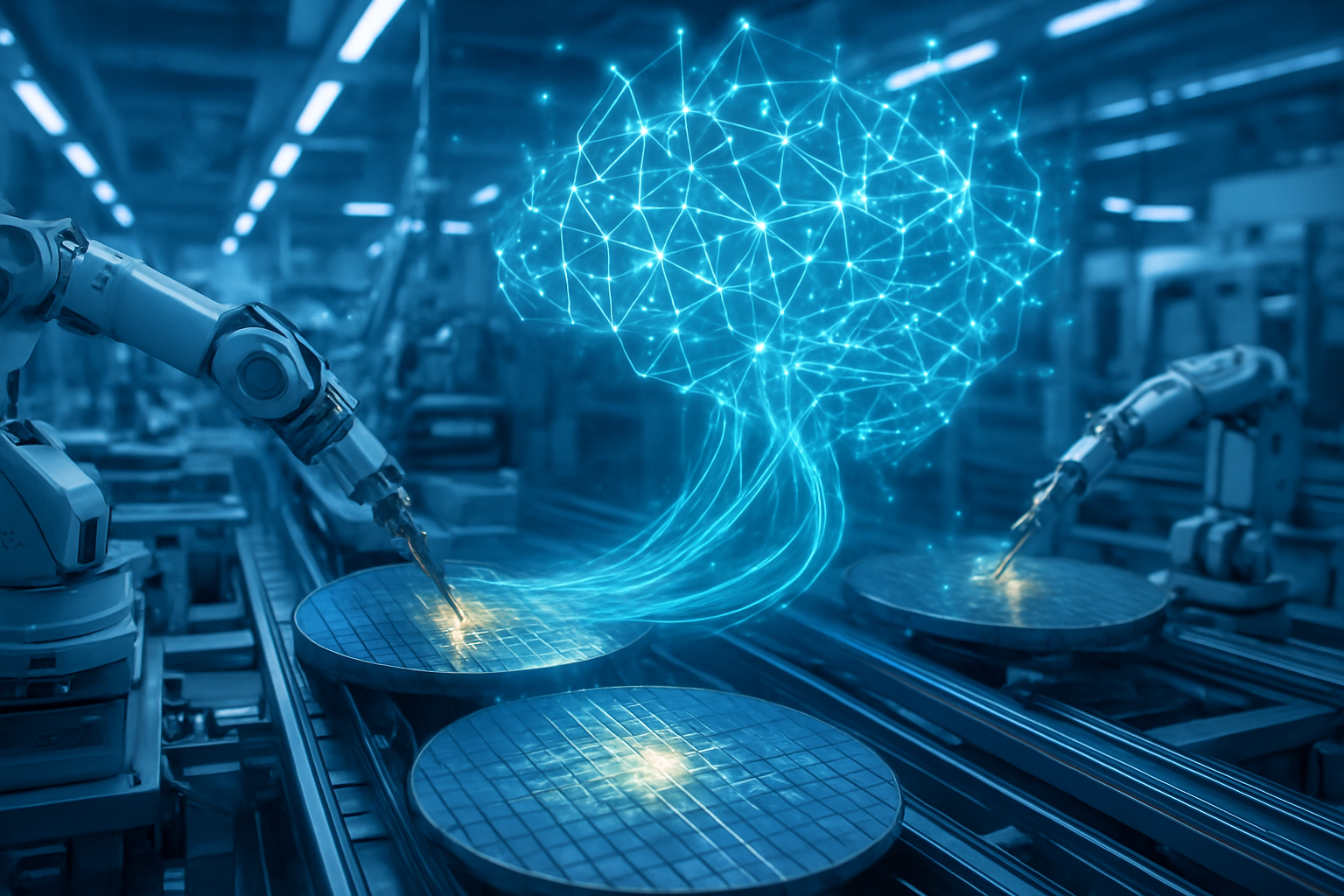
  • Qualcomm Unleashes AI200 and AI250 Chips, Igniting New Era of Data Center AI Competition

    Qualcomm Unleashes AI200 and AI250 Chips, Igniting New Era of Data Center AI Competition

    San Diego, CA – November 7, 2025 – Qualcomm Technologies (NASDAQ: QCOM) has officially declared its aggressive strategic push into the burgeoning artificial intelligence (AI) market for data centers, unveiling its groundbreaking AI200 and AI250 chips. This bold move, announced on October 27, 2025, signals a dramatic expansion beyond Qualcomm's traditional dominance in mobile processors and sets the stage for intensified competition in the highly lucrative AI compute arena, currently led by industry giants like Nvidia (NASDAQ: NVDA) and AMD (NASDAQ: AMD).

    The immediate significance of this announcement cannot be overstated. Qualcomm's entry into the high-stakes AI data center market positions it as a direct challenger to established players, aiming to capture a substantial share of the rapidly expanding AI inference workload segment. Investors have reacted positively, with Qualcomm's stock experiencing a significant surge following the news, reflecting strong confidence in the company's new direction and the potential for substantial new revenue streams. This initiative represents a pivotal "next chapter" in Qualcomm's diversification strategy, extending its focus from powering smartphones to building rack-scale AI infrastructure for data centers worldwide.

    Technical Prowess and Strategic Differentiation in the AI Race

    Qualcomm's AI200 and AI250 are not merely incremental updates but represent a deliberate, inference-optimized architectural approach designed to address the specific demands of modern AI workloads, particularly large language models (LLMs) and multimodal models (LMMs). Both chips are built upon Qualcomm's acclaimed Hexagon Neural Processing Units (NPUs), refined over years of development for mobile platforms and now meticulously customized for data center applications.

    The Qualcomm AI200, slated for commercial availability in 2026, boasts an impressive 768 GB of LPDDR memory per card. This substantial memory capacity is a key differentiator, engineered to handle the immense parameter counts and context windows of advanced generative AI models, as well as facilitate multi-model serving scenarios where numerous models or large models can reside directly in the accelerator's memory. The Qualcomm AI250, expected in 2027, takes innovation a step further with its pioneering "near-memory computing architecture." Qualcomm claims this design will deliver over ten times higher effective memory bandwidth and significantly lower power consumption for AI workloads, effectively tackling the critical "memory wall" bottleneck that often limits inference performance.

    Unlike the general-purpose GPUs offered by Nvidia and AMD, which are versatile for both AI training and inference, Qualcomm's chips are purpose-built for AI inference. This specialization allows for deep optimization in areas critical to inference, such as throughput, latency, and memory capacity, prioritizing efficiency and cost-effectiveness over raw peak performance. Qualcomm's strategy hinges on delivering "high performance per dollar per watt" and "industry-leading total cost of ownership (TCO)," appealing to data centers seeking to optimize operational expenditures. Initial reactions from industry analysts acknowledge Qualcomm's proven expertise in chip performance, viewing its entry as a welcome expansion of options in a market hungry for diverse AI infrastructure solutions.

    Reshaping the Competitive Landscape for AI Innovators

    Qualcomm's aggressive entry into the AI data center market with the AI200 and AI250 chips is poised to significantly reshape the competitive landscape for major AI labs, tech giants, and startups alike. The primary beneficiaries will be those seeking highly efficient, cost-effective, and scalable solutions for deploying trained AI models.

    For major AI labs and enterprises, the lower TCO and superior power efficiency for inference could dramatically reduce operational expenses associated with running large-scale generative AI services. This makes advanced AI more accessible and affordable, fostering broader experimentation and deployment. Tech giants like Microsoft (NASDAQ: MSFT), Amazon (NASDAQ: AMZN), and Meta Platforms (NASDAQ: META) are both potential customers and competitors. Qualcomm is actively engaging with these hyperscalers for potential server rack deployments, which could see their cloud AI offerings integrate these new chips, driving down the cost of AI services. This also provides these companies with crucial vendor diversification, reducing reliance on a single supplier for their critical AI infrastructure. For startups, particularly those focused on generative AI, the reduced barrier to entry in terms of cost and power could be a game-changer, enabling them to compete more effectively. Qualcomm has already secured a significant deployment commitment from Humain, a Saudi-backed AI firm, for 200 megawatts of AI200-based racks starting in 2026, underscoring this potential.

    The competitive implications for Nvidia and AMD are substantial. Nvidia, which currently commands an estimated 90% of the AI chip market, primarily due to its strength in AI training, will face a formidable challenger in the rapidly growing inference segment. Qualcomm's focus on cost-efficient, power-optimized inference solutions presents a credible alternative, contributing to market fragmentation and addressing the global demand for high-efficiency AI compute that no single company can meet. AMD, also striving to gain ground in the AI hardware market, will see intensified competition. Qualcomm's emphasis on high memory capacity (768 GB LPDDR) and near-memory computing could pressure both Nvidia and AMD to innovate further in these critical areas, ultimately benefiting the entire AI ecosystem with more diverse and efficient hardware options.

    Broader Implications: Democratization, Energy, and a New Era of AI Hardware

    Qualcomm's strategic pivot with the AI200 and AI250 chips holds wider significance within the broader AI landscape, aligning with critical industry trends and addressing some of the most pressing concerns facing the rapid expansion of artificial intelligence. Their focus on inference-optimized ASICs represents a notable departure from the general-purpose GPU approach that has characterized AI hardware for years, particularly since the advent of deep learning.

    This move has the potential to significantly contribute to the democratization of AI. By emphasizing a low Total Cost of Ownership (TCO) and offering superior performance per dollar per watt, Qualcomm aims to make large-scale AI inference more accessible and affordable. This could empower a broader spectrum of enterprises and cloud providers, including mid-scale operators and edge data centers, to deploy powerful AI models without the prohibitive capital and operational expenses previously associated with high-end solutions. Furthermore, Qualcomm's commitment to a "rich software stack and open ecosystem support," including seamless compatibility with leading AI frameworks and "one-click deployment" for models from platforms like Hugging Face, aims to reduce integration friction and accelerate enterprise AI adoption, fostering widespread innovation.

    Crucially, Qualcomm is directly addressing the escalating energy consumption concerns associated with large AI models. The AI250's innovative near-memory computing architecture, promising a "generational leap" in efficiency and significantly lower power consumption, is a testament to this commitment. The rack solutions also incorporate direct liquid cooling for thermal efficiency, with a competitive rack-level power consumption of 160 kW. This relentless focus on performance per watt is vital for sustainable AI growth and offers an attractive alternative for data centers looking to reduce their operational expenditures and environmental footprint. However, Qualcomm faces significant challenges, including Nvidia's entrenched dominance, its robust CUDA software ecosystem, and the need to prove its solutions at a massive data center scale.

    The Road Ahead: Future Developments and Expert Outlook

    Looking ahead, Qualcomm's AI strategy with the AI200 and AI250 chips outlines a clear path for near-term and long-term developments, promising a continuous evolution of its data center offerings and a broader impact on the AI industry.

    In the near term (2026-2027), the focus will be on the successful commercial availability and deployment of the AI200 and AI250. Qualcomm plans to offer these as complete rack-scale AI inference solutions, featuring direct liquid cooling and a comprehensive software stack optimized for generative AI workloads. The company is committed to an annual product release cadence, ensuring continuous innovation in performance, energy efficiency, and TCO. Beyond these initial chips, Qualcomm's long-term vision (beyond 2027) includes the development of its own in-house CPUs for data centers, expected in late 2027 or 2028, leveraging the expertise of the Nuvia team to deliver high-performance, power-optimized computing alongside its NPUs. This diversification into data center AI chips is a strategic move to reduce reliance on the maturing smartphone market and tap into high-growth areas.

    Potential future applications and use cases for Qualcomm's AI chips are vast and varied. They are primarily engineered for efficient execution of large-scale generative AI workloads, including LLMs and LMMs, across enterprise data centers and hyperscale cloud providers. Specific applications range from natural language processing in financial services, recommendation engines in retail, and advanced computer vision in smart cameras and robotics, to multi-modal AI assistants, real-time translation, and confidential computing for enhanced security. Experts generally view Qualcomm's entry as a significant and timely strategic move, identifying a substantial opportunity in the AI data center market. Predictions suggest that Qualcomm's focus on inference scalability, power efficiency, and compelling economics positions it as a potential "dark horse" challenger, with material revenue projected to ramp up in fiscal 2028, potentially earlier due to initial engagements like the Humain deal.

    A New Chapter in AI Hardware: A Comprehensive Wrap-up

    Qualcomm's launch of the AI200 and AI250 chips represents a pivotal moment in the evolution of AI hardware, marking a bold and strategic commitment to the data center AI inference market. The key takeaways from this announcement are clear: Qualcomm is leveraging its deep expertise in power-efficient NPU design to offer highly specialized, cost-effective, and energy-efficient solutions for the surging demand in generative AI inference. By focusing on superior memory capacity, innovative near-memory computing, and a comprehensive software ecosystem, Qualcomm aims to provide a compelling alternative to existing GPU-centric solutions.

    This development holds significant historical importance in the AI landscape. It signifies a major step towards diversifying the AI hardware supply chain, fostering increased competition, and potentially accelerating the democratization of AI by making powerful models more accessible and affordable. The emphasis on energy efficiency also addresses a critical concern for the sustainable growth of AI. While Qualcomm faces formidable challenges in dislodging Nvidia's entrenched dominance and building out its data center ecosystem, its strategic advantages in specialized inference, mobile heritage, and TCO focus position it for long-term success.

    In the coming weeks and months, the industry will be closely watching for further details on commercial availability, independent performance benchmarks against competitors, and additional strategic partnerships. The successful deployment of the Humain project will be a crucial validation point. Qualcomm's journey into the AI data center market is not just about new chips; it's about redefining its identity as a diversified semiconductor powerhouse and playing a central role in shaping the future of artificial intelligence.


    This content is intended for informational purposes only and represents analysis of current AI developments.

    TokenRing AI delivers enterprise-grade solutions for multi-agent AI workflow orchestration, AI-powered development tools, and seamless remote collaboration platforms.
    For more information, visit https://www.tokenring.ai/.

  • Tesla Eyes Intel for AI Chip Production in a Game-Changing Partnership

    Tesla Eyes Intel for AI Chip Production in a Game-Changing Partnership

    In a move that could significantly reshape the artificial intelligence (AI) chip manufacturing landscape, Elon Musk has publicly indicated that Tesla (NASDAQ: TSLA) is exploring a potential partnership with Intel (NASDAQ: INTC) for the production of its next-generation AI chips. Speaking at Tesla's annual meeting, Musk revealed that discussions with Intel would be "worthwhile," citing concerns that current suppliers, Taiwan Semiconductor Manufacturing Company (NYSE: TSM) and Samsung (KRX: 005930), might be unable to meet the burgeoning demand for AI chips critical to Tesla's ambitious autonomous driving and robotics initiatives.

    This prospective collaboration signals a strategic pivot for Tesla, aiming to secure a robust and scalable supply chain for its custom AI hardware. For Intel, a partnership with a high-volume innovator like Tesla could provide a substantial boost to its foundry services, reinforcing its position as a leading domestic chip manufacturer. The announcement has sent ripples through the tech industry, highlighting the intense competition and strategic maneuvers underway to dominate the future of AI hardware.

    Tesla's AI Ambitions and Intel's Foundry Future

    The potential partnership is rooted in Tesla's aggressive roadmap for its custom AI chips. The company is actively developing its fifth-generation AI chip, internally dubbed "AI5," designed to power its advanced autonomous driving systems. Initial, limited production of the AI5 is projected for 2026, with high-volume manufacturing targeted for 2027. Looking further ahead, Tesla also plans for an "AI6" chip by mid-2028, aiming to double the performance of its predecessor. Musk has emphasized the cost-effectiveness and power efficiency of Tesla's custom AI chips, estimating they could consume approximately one-third the power of Nvidia's (NASDAQ: NVDA) Blackwell chip at only 10% of the manufacturing cost.

    To overcome potential supply shortages, Musk even suggested the possibility of constructing a "gigantic chip fab," or "terafab," with an initial output target of 100,000 wafer starts per month, eventually scaling to 1 million. This audacious vision underscores the scale of Tesla's AI ambitions and its determination to control its hardware destiny. For Intel, this represents a significant opportunity. The company has been aggressively expanding its foundry services, actively seeking external customers for its advanced manufacturing technology. With substantial investment and government backing, including a 10% stake from the U.S. government to bolster domestic chipmaking capacity, Intel is well-positioned to become a key player in contract chip manufacturing.

    This potential collaboration differs significantly from traditional client-supplier relationships. Tesla's deep expertise in AI software and hardware architecture, combined with Intel's advanced manufacturing capabilities, could lead to highly optimized chip designs and production processes. The synergy could accelerate the development of specialized AI silicon, potentially setting new benchmarks for performance, power efficiency, and cost in the autonomous driving and robotics sectors. Initial reactions from the AI research community suggest that such a partnership could foster innovation in custom silicon design, pushing the boundaries of what's possible for edge AI applications.

    Reshaping the AI Chip Competitive Landscape

    A potential alliance between Intel (NASDAQ: INTC) and Tesla (NASDAQ: TSLA) carries significant competitive implications for major AI labs and tech companies. For Intel, securing a high-profile customer like Tesla would be a monumental win for its foundry business, Intel Foundry Services (IFS). It would validate Intel's significant investments in advanced process technology and its strategy to become a leading contract chip manufacturer, directly challenging Taiwan Semiconductor Manufacturing Company (NYSE: TSM) and Samsung (KRX: 005930) in the high-performance computing and AI segments. This partnership could provide Intel with the volume and revenue needed to accelerate its technology roadmap and regain market share in the cutting-edge chip production arena.

    For Tesla, aligning with Intel could significantly de-risk its AI chip supply chain, reducing its reliance on a limited number of overseas foundries. This strategic move would ensure a more stable and potentially geographically diversified production base for its critical AI hardware, which is essential for scaling its autonomous driving fleet and robotics ventures. By leveraging Intel's manufacturing prowess, Tesla could achieve its ambitious production targets for AI5 and AI6 chips, maintaining its competitive edge in AI-driven innovation.

    The competitive landscape for AI chip manufacturing is already intense, with Nvidia (NASDAQ: NVDA) dominating the high-end GPU market and numerous startups developing specialized AI accelerators. A Tesla-Intel partnership could intensify this competition, particularly in the automotive and edge AI sectors. It could prompt other automakers and tech giants to reconsider their own AI chip strategies, potentially leading to more in-house chip development or new foundry partnerships. This development could disrupt existing market dynamics, offering new avenues for chip design and production, and fostering an environment where custom silicon becomes even more prevalent for specialized AI workloads.

    Broader Implications for the AI Ecosystem

    The potential Intel (NASDAQ: INTC) and Tesla (NASDAQ: TSLA) partnership fits squarely into the broader trend of vertical integration and specialization within the AI landscape. As AI models grow in complexity and demand for computational power skyrockets, companies are increasingly seeking to optimize their hardware for specific AI workloads. Tesla's pursuit of custom AI chips and a dedicated manufacturing partner underscores the critical need for tailored silicon that can deliver superior performance and efficiency compared to general-purpose processors. This move reflects a wider industry shift where leading AI innovators are taking greater control over their technology stack, from algorithms to silicon.

    The impacts of such a collaboration could extend beyond just chip manufacturing. It could accelerate advancements in AI hardware design, particularly in areas like power efficiency, real-time processing, and robust inference capabilities crucial for autonomous systems. By having a closer feedback loop between chip design (Tesla) and manufacturing (Intel), the partnership could drive innovations that address the unique challenges of deploying AI at the edge in safety-critical applications. Potential concerns, however, might include the complexity of integrating two distinct corporate cultures and technological approaches, as well as the significant capital expenditure required to scale such a venture.

    Comparisons to previous AI milestones reveal a consistent pattern: breakthroughs in AI often coincide with advancements in underlying hardware. Just as the development of powerful GPUs fueled the deep learning revolution, a dedicated focus on highly optimized AI silicon, potentially enabled by partnerships like this, could unlock the next wave of AI capabilities. This development could pave the way for more sophisticated autonomous systems, more efficient AI data centers, and a broader adoption of AI in diverse industries, marking another significant step in the evolution of artificial intelligence.

    The Road Ahead: Future Developments and Challenges

    The prospective partnership between Intel (NASDAQ: INTC) and Tesla (NASDAQ: TSLA) heralds several expected near-term and long-term developments in the AI hardware space. In the near term, we can anticipate intensified discussions and potentially formal agreements outlining the scope and scale of the collaboration. This would likely involve joint engineering efforts to optimize Tesla's AI chip designs for Intel's manufacturing processes, aiming for the projected 2026 initial production of the AI5 chip. The focus will be on achieving high yields and cost-effectiveness while meeting Tesla's stringent performance and power efficiency requirements.

    Longer term, if successful, this partnership could lead to a deeper integration, potentially extending to the development of future generations of AI chips (like the AI6) and even co-investment in manufacturing capabilities, such as the "terafab" envisioned by Elon Musk. Potential applications and use cases on the horizon are vast, ranging from powering more advanced autonomous vehicles and humanoid robots to enabling new AI-driven solutions in energy management and smart manufacturing, areas where Tesla is also a significant player. The collaboration could establish a new paradigm for specialized AI silicon development, influencing how other industries approach their custom hardware needs.

    However, several challenges need to be addressed. These include navigating the complexities of advanced chip manufacturing, ensuring intellectual property protection, and managing the significant financial and operational investments required. Scaling production to meet Tesla's ambitious targets will be a formidable task, demanding seamless coordination and technological innovation from both companies. Experts predict that if this partnership materializes and succeeds, it could set a precedent for how leading-edge AI companies secure their hardware future, further decentralizing chip production and fostering greater specialization in the global semiconductor industry.

    A New Chapter in AI Hardware

    The potential partnership between Intel (NASDAQ: INTC) and Tesla (NASDAQ: TSLA) represents a pivotal moment in the ongoing evolution of artificial intelligence hardware. Key takeaways include Tesla's strategic imperative to secure a robust and scalable supply chain for its custom AI chips, driven by the explosive demand for autonomous driving and robotics. For Intel, this collaboration offers a significant opportunity to validate and expand its foundry services, challenging established players and reinforcing its position in domestic chip manufacturing. The synergy between Tesla's innovative AI chip design and Intel's advanced production capabilities could accelerate technological advancements, leading to more efficient and powerful AI solutions.

    This development's significance in AI history cannot be overstated. It underscores the increasing trend of vertical integration in AI, where companies seek to optimize every layer of their technology stack. The move is a testament to the critical role that specialized hardware plays in unlocking the full potential of AI, moving beyond general-purpose computing towards highly tailored solutions. If successful, this partnership could not only solidify Tesla's leadership in autonomous technology but also propel Intel back to the forefront of cutting-edge semiconductor manufacturing.

    In the coming weeks and months, the tech world will be watching closely for further announcements regarding this potential alliance. Key indicators to watch for include formal agreements, details on technological collaboration, and any updates on the projected timelines for AI chip production. The outcome of these discussions could redefine competitive dynamics in the AI chip market, influencing investment strategies and technological roadmaps across the entire artificial intelligence ecosystem.


    This content is intended for informational purposes only and represents analysis of current AI developments.

    TokenRing AI delivers enterprise-grade solutions for multi-agent AI workflow orchestration, AI-powered development tools, and seamless remote collaboration platforms.
    For more information, visit https://www.tokenring.ai/.