
Tag: AIHardware

  • Silicon Sovereignty: India’s Semiconductor Mission Hits Full Throttle as Commercial Production Begins in 2026

    Silicon Sovereignty: India’s Semiconductor Mission Hits Full Throttle as Commercial Production Begins in 2026

    As of January 21, 2026, the global semiconductor landscape has reached a definitive turning point. The India Semiconductor Mission (ISM), once viewed by skeptics as an ambitious but distant dream, has transitioned into a tangible industrial powerhouse. With a cumulative investment of Rs 1.60 lakh crore ($19.2 billion) fueling the domestic ecosystem, India has officially joined the elite ranks of semiconductor-producing nations. This milestone marks the shift from construction and planning to the active commercial rollout of "Made in India" chips, positioning the nation as a critical pillar in the global technology supply chain and a burgeoning hub for AI hardware.

    The immediate significance of this development cannot be overstated. As global demand for AI-optimized silicon, automotive electronics, and 5G infrastructure continues to surge, India’s entry into high-volume manufacturing provides a much-needed alternative to traditional East Asian hubs. By successfully operationalizing four major plants—led by industry giants like Tata Electronics and Micron Technology, Inc. (NASDAQ: MU)—India is not just securing its own digital future but is also offering global tech firms a resilient, geographically diverse production base to mitigate supply chain risks.

    From Blueprints to Silicon: The Technical Evolution of India’s Fab Landscape

    The technical cornerstone of this evolution is the Dholera "mega-fab" established by Tata Electronics in partnership with Powerchip Semiconductor Manufacturing Corp. (TWSE: 6770). As of January 2026, this $10.9 billion facility has initiated high-volume trial runs, processing 300mm wafers at nodes ranging from 28nm to 110nm. Unlike previous attempts at semiconductor manufacturing in the region, the Dholera plant utilizes state-of-the-art automated wafer handling and precision lithography systems tailored for the automotive and power management sectors. This shift toward mature nodes is a strategic calculation, addressing the most significant volume demands in the global market rather than competing immediately for the sub-5nm "bleeding edge" occupied by TSMC.

    Simultaneously, the advanced packaging sector has seen explosive growth. Micron Technology, Inc. (NASDAQ: MU) has officially moved its Sanand facility into full-scale commercial production this month, shipping high-density DRAM and NAND flash products to global markets. This facility is notable for its modular construction and advanced ATMP (Assembly, Testing, Marking, and Packaging) techniques, which have set a new benchmark for speed-to-market in the industry. Meanwhile, Tata’s Assam-based facility is preparing for mid-2026 pilot production, aiming for a staggering capacity of 48 million chips per day using Flip Chip and Integrated Systems Packaging technologies, which are essential for high-performance AI servers.

    Industry experts have noted that India’s approach differs from previous efforts through its focus on the "OSAT-first" (Outsourced Semiconductor Assembly and Test) strategy. By proving capability in testing and packaging before the full fabrication process is matured, India has successfully built a workforce and logistics network that can support the complex needs of modern silicon. This strategy has drawn praise from the international research community, which views India's rapid scale-up as a masterclass in industrial policy and public-private partnership.

    Competitive Landscapes and the New Silicon Silk Road

    The commercial success of these plants is creating a ripple effect across the public markets and the broader tech sector. CG Power and Industrial Solutions Ltd (NSE: CGPOWER), through its joint venture with Renesas Electronics Corporation (TSE: 6723) and Stars Microelectronics, has already inaugurated its pilot production line in Sanand. This move has positioned CG Power as a formidable player in the specialty chip market, particularly for power electronics used in electric vehicles and industrial automation. Similarly, Kaynes Technology India Ltd (NSE: KAYNES) has achieved a historic milestone this month, commencing full-scale commercial operations at its Sanand OSAT facility and shipping the first "Made in India" Multi-Chip Modules (MCM) to international clients.

    For global tech giants, India’s semiconductor surge represents a strategic advantage in the AI arms race. Companies specializing in AI hardware can now look to India for diversified sourcing, reducing their over-reliance on a handful of concentrated manufacturing zones. This diversification is expected to disrupt the existing pricing power of established foundries, as India offers competitive labor costs coupled with massive government subsidies (averaging 50% of project costs from the central government, with additional state-level support).

    Startups in the fabless design space are also among the biggest beneficiaries. With local manufacturing and packaging now available, the cost of prototyping and small-batch production is expected to plummet. This is likely to trigger a "design-led" boom in India, where local engineers—who already form 20% of the world’s semiconductor design workforce—can now see their designs manufactured on home soil, accelerating the development of domestic AI accelerators and IoT devices.

    Geopolitics, AI, and the Strategic Significance of the Rs 1.60 Lakh Crore Bet

    The broader significance of the India Semiconductor Mission extends far beyond economic metrics; it is a play for strategic autonomy. In a world where silicon is the "new oil," India's ability to manufacture its own chips provides a buffer against geopolitical tensions and supply chain weaponization. This aligns with the global trend of "friend-shoring," where democratic nations seek to build critical technology infrastructure within the borders of trusted allies.

    The mission's success is a vital component of the global AI landscape. Modern AI models require massive amounts of memory and specialized processing power. By hosting facilities like Micron’s Sanand plant, India is directly contributing to the hardware stack that powers the next generation of Large Language Models (LLMs) and autonomous systems. This development mirrors historical milestones like the rise of the South Korean semiconductor industry in the 1980s, but at a significantly accelerated pace driven by the urgent needs of the 2020s' AI revolution.

    However, the rapid expansion is not without its concerns. The sheer scale of these plants places immense pressure on local infrastructure, particularly the requirements for ultra-pure water and consistent, high-voltage electricity. Environmental advocates have also raised questions regarding the management of hazardous waste and chemicals used in the etching and cleaning processes. Addressing these sustainability challenges will be crucial if India is to maintain its momentum without compromising local ecological health.

    The Horizon: ISM 2.0 and the Path to Sub-7nm Nodes

    Looking ahead, the next 24 to 36 months will see the launch of "ISM 2.0," a policy framework expected to focus on advanced logic nodes and specialized compound semiconductors like Gallium Nitride (GaN) and Silicon Carbide (SiC). Near-term developments include the expected announcements of second-phase expansions for both Tata and Micron, potentially moving toward 14nm or 12nm nodes to support more advanced AI processing.

    The potential applications on the horizon are vast. Experts predict that by 2027, India will not only be a packaging hub but will also host dedicated fabs for "edge AI" chips—low-power processors designed to run AI locally on smartphones and wearable devices. The primary challenge remaining is the cultivation of a high-skill talent pipeline. While India has a surplus of design engineers, the "shop floor" expertise required to run billion-dollar cleanrooms is still being developed through intensive international training programs.

    Conclusion: A New Era for Global Technology

    The status of the India Semiconductor Mission in January 2026 is a testament to what can be achieved through focused industrial policy and massive capital injection. With Tata Electronics, Micron, CG Semi, and Kaynes all moving into commercial or pilot production, India has successfully broken the barrier to entry into one of the world's most complex and capital-intensive industries. The cumulative investment of Rs 1.60 lakh crore has laid a foundation that will support India's goal of reaching a $100 billion semiconductor market by 2030.

    In the history of AI and computing, 2026 will likely be remembered as the year the "Silicon Map" was redrawn. For the tech industry, the coming months will be defined by the first performance data from Indian-packaged chips as they enter global servers and devices. As India continues to scale its capacity and refine its technical expertise, the world will be watching closely to see if the nation can maintain this breakneck speed and truly establish itself as the third pillar of the global semiconductor industry.


    This content is intended for informational purposes only and represents analysis of current AI developments.

    TokenRing AI delivers enterprise-grade solutions for multi-agent AI workflow orchestration, AI-powered development tools, and seamless remote collaboration platforms.
    For more information, visit https://www.tokenring.ai/.
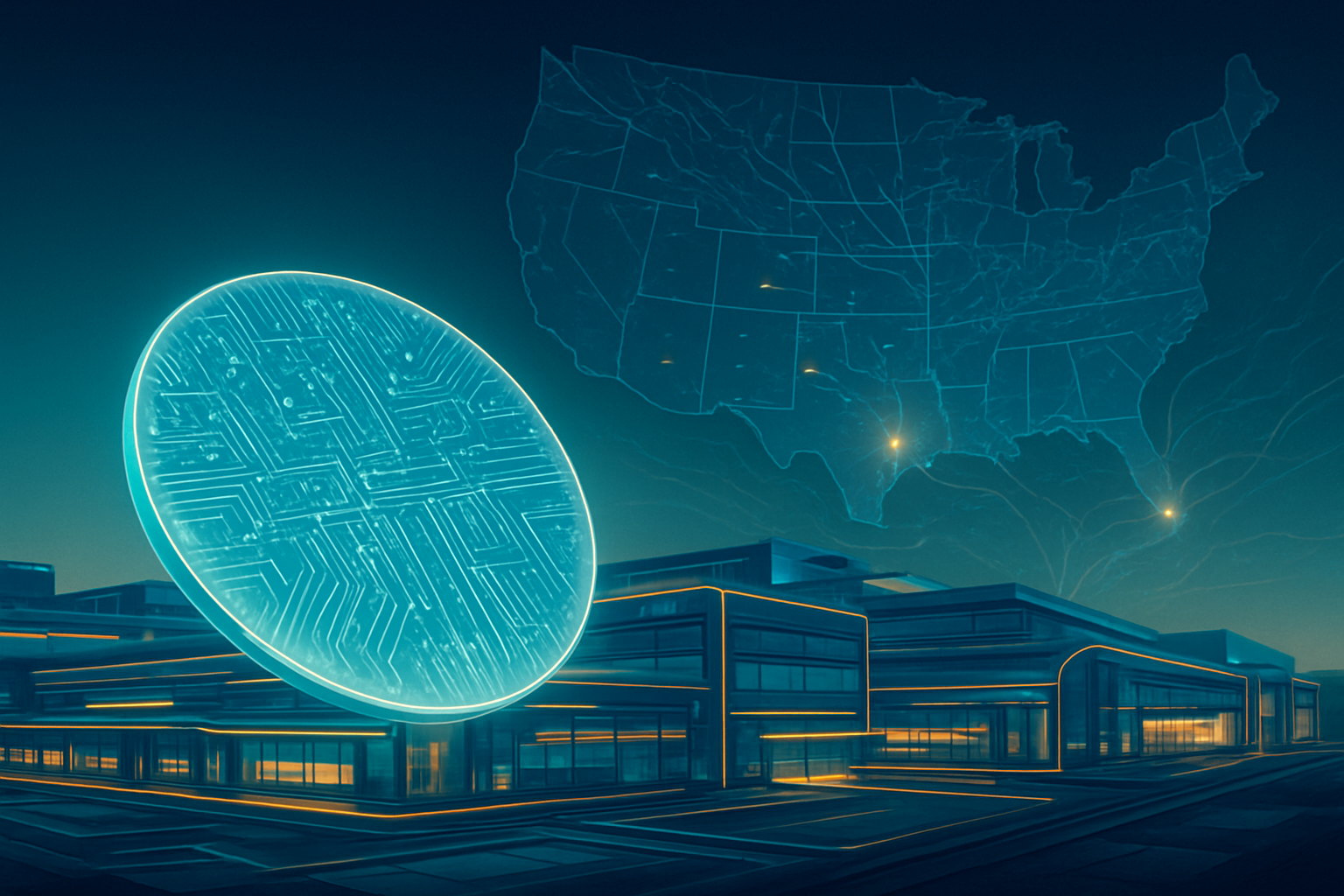
  • CHIPS Act Success: US-Made 18A Chips Enter Mass Production as Arizona and Texas Fabs Go Online

    CHIPS Act Success: US-Made 18A Chips Enter Mass Production as Arizona and Texas Fabs Go Online

    CHANDLER, AZ – As 2026 begins, the American semiconductor landscape has reached a historic turning point. The US CHIPS and Science Act has officially transitioned from a legislative ambition into its "delivery phase," marked by the commencement of high-volume manufacturing (HVM) at Intel’s (NASDAQ: INTC) Ocotillo campus. Fab 52 is now actively churning out 18A silicon, the world’s most advanced process node, signaling the return of leading-edge manufacturing to American soil.

    This milestone is joined by a resurgence in the "Silicon Prairie," where Samsung (KRX: 005930) has successfully resumed operations and equipment installation at its Taylor, Texas facility following a strategic pause in mid-2025. Together, these developments represent a definitive victory for bipartisan manufacturing policies spanning the Biden and Trump administrations. By re-establishing the United States as a premier destination for logic chip fabrication, these facilities are significantly reducing the global "single point of failure" risk currently concentrated in East Asia.

    Technical Dominance: The 18A Era and RibbonFET Innovation

    Intel’s 18A (1.8nm-class) process represents more than just a nomenclature shift; it is the culmination of the company’s "Five Nodes in Four Years" roadmap. The technical breakthrough rests on two primary pillars: RibbonFET and PowerVia. RibbonFET is Intel’s first implementation of a Gate-All-Around (GAA) transistor architecture, which replaces the aging FinFET design to provide higher drive current and lower leakage. Complementing this is PowerVia, a pioneering backside power delivery system that moves power routing to the bottom of the wafer, decoupling it from signal lines. This separation drastically reduces voltage droop and allows for more efficient transistor packing.

    Industry analysts and researchers have reacted with cautious optimism as yields for 18A are reported to have stabilized between 65% and 75%—a critical threshold for commercial profitability. Initial benchmark data suggests that 18A provides a 10% improvement in performance-per-watt over its predecessor, Intel 20A, and positions Intel to compete directly with TSMC’s (NYSE: TSM) upcoming 2nm production. The first consumer product utilizing this technology, the "Panther Lake" Core Ultra Series 3, began shipping to OEMs earlier this month, with a full retail launch scheduled for late January 2026.

    Strategic Realignment: Foundry Competition and Corporate Winners

    The move into HVM at Fab 52 is a massive boon for Intel Foundry, which has struggled to gain traction against the dominance of TSMC. In a landmark victory for the domestic ecosystem, Apple (NASDAQ: AAPL) has reportedly qualified Intel’s 18A for a subset of its future M-series silicon, intended for 2027 release. This marks the first time in over a decade that Apple has diversified its leading-edge manufacturing beyond Taiwan. Simultaneously, Microsoft (NASDAQ: MSFT) and Meta (NASDAQ: META) are expected to leverage the Arizona facility for their custom AI accelerators, seeking to bypass the multi-year queues at TSMC.

    Samsung’s Taylor facility is also pivoting toward a high-stakes future. After pausing in 2025 to recalibrate its strategy, the Taylor fab has bypassed its original 4nm plans to focus exclusively on 2nm (SF2) production. While Samsung is currently in the equipment installation phase—moving in advanced High-NA EUV lithography machines—the Texas plant is positioned to be a primary alternative for companies like NVIDIA (NASDAQ: NVDA) and Qualcomm (NASDAQ: QCOM). The strategic advantage of having two viable leading-edge foundries on US soil cannot be overstated, as it provides domestic tech giants with unprecedented leverage in price negotiations and supply chain security.

    Geopolitics and the "Silicon Heartland" Legacy

    The activation of these fabs is the most tangible evidence yet of the CHIPS Act's success in "de-risking" the global technology supply chain. For years, the concentration of 90% of the world’s advanced logic chips in Taiwan was viewed by economists and defense officials as a critical vulnerability. The emergence of the "Silicon Desert" in Arizona and the "Silicon Prairie" in Texas creates a dual-hub system that insulates the US economy from potential regional conflicts or maritime disruptions in the Pacific.

    This development also marks a shift in the broader AI landscape. As generative AI models grow in complexity, the demand for specialized, high-efficiency silicon has outpaced global capacity. By bringing 18A and 2nm production to domestic shores, the US is ensuring that the hardware necessary to run the next generation of AI—from LLMs to autonomous systems—is manufactured within its own borders. While concerns regarding the environmental impact of these massive "mega-fabs" and the local water requirements in arid regions like Arizona persist, the economic and security benefits have remained the primary drivers of federal support.

    Future Horizons: The Roadmap to 14A and Beyond

    Looking ahead, the semiconductor industry is already focused on the sub-2nm era. Intel has already begun pilot work on its 14A node, which is expected to enter the equipment-ready phase by 2027. Experts predict that the next two years will see an aggressive "talent war" as Intel, Samsung, and TSMC (at its own Arizona site) compete for the specialized workforce required to operate these complex facilities. The challenge of scaling a skilled workforce remains the most significant bottleneck for the continued expansion of the US semiconductor footprint.

    Furthermore, we can expect a surge in "chiplet" technology, where components manufactured at different fabs are combined into a single package. This would allow a company to use Intel 18A for high-performance compute cores while using Samsung’s Taylor facility for specialized AI accelerators, all integrated into a domestic assembly process. The long-term goal of the Department of Commerce is to create a "closed-loop" ecosystem where design, fabrication, and advanced packaging all occur within North America.

    A New Chapter for Global Technology

    The successful ramp-up of Intel’s Fab 52 and the resumption of Samsung’s Taylor project represent more than just corporate achievements; they are the benchmarks of a new era in industrial policy. The US has officially broken the cycle of manufacturing offshoring that defined the previous three decades, proving that leading-edge silicon can be produced competitively in the West.

    In the coming months, the focus will shift from construction and "first silicon" to yield optimization and customer onboarding. Watch for further announcements regarding TSMC’s Arizona progress and the potential for a "CHIPS 2" legislative package aimed at securing the supply of mature-node chips used in the automotive and medical sectors. For now, the successful delivery of 18A marks the beginning of the "Silicon Renaissance," a period that will likely define the technological and geopolitical landscape of the late 2020s.


    This content is intended for informational purposes only and represents analysis of current AI and semiconductor developments as of January 15, 2026.

    TokenRing AI delivers enterprise-grade solutions for multi-agent AI workflow orchestration, AI-powered development tools, and seamless remote collaboration platforms. For more information, visit https://www.tokenring.ai/.

  • India’s Silicon Century: Micron’s Sanand Facility Ramps Up as Semiconductor Mission Hits $18 Billion Milestone

    India’s Silicon Century: Micron’s Sanand Facility Ramps Up as Semiconductor Mission Hits $18 Billion Milestone

    As 2025 draws to a close, India’s ambitious journey to become a global semiconductor powerhouse has reached a definitive turning point. Micron Technology, Inc. (NASDAQ: MU) has officially completed the civil construction of its landmark Assembly, Test, Marking, and Packaging (ATMP) facility in Sanand, Gujarat. This milestone marks the transition of the $2.75 billion project from a high-stakes construction site to a live operational hub, signaling the first major success of the India Semiconductor Mission (ISM). With cleanrooms validated and advanced machinery now humming, the facility is preparing for high-volume commercial production in early 2026, positioning India as a critical node in the global memory chip supply chain.

    The progress at Sanand is not an isolated success but the centerpiece of a broader industrial awakening. As of December 2025, the ISM has successfully catalyzed a cumulative investment of $18.2 billion across ten major approved projects. From the massive 300mm wafer fab being erected by Tata Electronics in Dholera to the operational pilot lines of the CG Power and Industrial Solutions Ltd (NSE: CGPOWER) and Renesas Electronics Corp (TYO: 6723) joint venture, the Indian landscape is being physically reshaped by the "Silicon Century." This rapid industrialization represents one of the most significant shifts in the global technology hardware sector in decades, directly challenging established hubs in East Asia.

    Engineering the Future: Technical Feats at Sanand and Dholera

    The Micron Sanand facility is a marvel of modern modular engineering, a first for the company’s global operations. Spanning 93 acres with a built-up area of 1.4 million square feet, the plant utilized a "modularization strategy" where massive structural sections—some weighing over 700 tonnes—were pre-assembled and lifted into place using precision strand jacks. This approach allowed Micron to complete the Phase 1 structure in record time despite the complexities of building a Class 100 cleanroom. The facility is now entering its final equipment calibration phase, utilizing Zero Liquid Discharge (ZLD) technology to ensure sustainability in the arid Gujarat climate, a technical requirement that has become a blueprint for future Indian fabs.

    Further north in Dholera, Tata Electronics is making parallel strides with its $11 billion mega-fab, partnered with Powerchip Semiconductor Manufacturing Corp (TPE: 6770). As of late 2025, the primary building structures are complete, and the project has moved into the "Advanced Equipment Installation" phase. This facility is designed to process 300mm (12-inch) wafers, targeting mature nodes between 28nm and 110nm. These nodes are the workhorses of the automotive, power management, and IoT sectors. Initial pilot runs for "Made-in-India" logic chips are expected to emerge from the Dholera lines by the end of this month, marking the first time a commercial-grade silicon wafer has been processed on Indian soil.

    The technical ecosystem is further bolstered by the inauguration of the G1 facility in Sanand by the CG Power-Renesas-Stars Microelectronics joint venture. This unit serves as India’s first end-to-end OSAT (Outsourced Semiconductor Assembly and Test) pilot line to reach operational status. With a capacity of 0.5 million units per day, the G1 facility is already undergoing customer qualification trials for chips destined for 5G infrastructure and electric vehicles. The speed at which these facilities have moved from groundbreaking to equipment installation has surprised global industry experts, who initially viewed India’s 2021 semiconductor policy as overly optimistic.

    Shifting Tides: Impact on Tech Giants and the Global Supply Chain

    The operationalizing of these facilities is already causing a ripple effect across the boardrooms of global tech giants. Apple Inc. (NASDAQ: AAPL), which now sources approximately 20% of its global iPhone output from India, stands as a primary beneficiary. Localized semiconductor packaging and eventual fabrication will allow Apple and its manufacturing partners, such as Foxconn, to further reduce lead times and logistics costs. Similarly, Samsung Electronics (KRX: 005930) has continued to pivot its production focus toward its massive Noida hub, viewing India's emerging chip ecosystem as a hedge against geopolitical volatility in the Taiwan Strait and the ongoing tech decoupling from China.

    For the incumbent semiconductor leaders, India’s rise presents a new competitive theater. While the current focus is on "legacy" nodes and backend packaging, the strategic advantage lies in the "China+1" strategy. Major AI labs and tech companies are increasingly looking to diversify their hardware dependencies. The presence of Micron and Tata Electronics provides a viable alternative for high-volume, cost-sensitive components. This shift is also empowering a new generation of Indian fabless startups. Under the Design Linked Incentive (DLI) scheme, over 70 startups are now designing indigenous processors, such as the DHRUV64, which will eventually be manufactured in the very fabs now rising in Dholera and Sanand.

    The market positioning of these new Indian facilities is focused on the "middle of the pyramid"—the high-volume chips that power the world's appliances, cars, and smartphones. By securing the packaging and mature-node fabrication segments first, India is building the foundational expertise required to eventually compete in the sub-7nm "leading-edge" space. This strategic patience has earned the respect of the industry, as it avoids the "white elephant" projects that have plagued other nations' attempts to enter the semiconductor market.

    A Geopolitical Pivot: India’s Role in the Global Landscape

    The completion of Micron’s civil work and the $18 billion investment milestone are more than just industrial achievements; they are geopolitical statements. In the broader AI and technology landscape, hardware sovereignty has become as crucial as software prowess. India’s successful execution of the ISM projects by late 2025 places it in an elite group of nations capable of hosting complex semiconductor manufacturing. This development mirrors previous milestones like the rise of Taiwan’s TSMC in the 1980s or South Korea’s memory boom in the 1990s, though India is attempting this transition at a significantly faster pace.

    However, the rapid expansion has not been without concerns. The massive requirements for ultrapure water and stable, high-voltage electricity have forced the Gujarat and Assam state governments to invest billions in dedicated utility corridors. Environmentalists have raised questions regarding the long-term impact of semiconductor manufacturing on local water tables, prompting companies like Micron to adopt world-class recycling technologies. Despite these challenges, the consensus among global analysts is that India’s entry into the semiconductor value chain is a "net positive" for global supply chain resilience, reducing the world's over-reliance on a few concentrated geographic zones.

    Comparing this to previous AI and tech milestones, the "ramping of Sanand" is being viewed as the hardware equivalent of India's IT services boom in the late 1990s. While the software era made India the "back office" of the world, the semiconductor era aims to make it the "engine room." The integration of AI-driven manufacturing processes within these new fabs is also a notable trend, with Micron utilizing advanced AI for defect detection and yield optimization, further bridging the gap between India's software expertise and its new hardware ambitions.

    The Road Ahead: What’s Next for the India Semiconductor Mission?

    Looking toward 2026 and beyond, the focus will shift from "building" to "yielding." The immediate priority for Micron will be the successful ramp-up of commercial shipments to global markets, while Tata Electronics will aim to move from pilot runs to high-volume 300mm wafer production. Experts predict that the next phase of the ISM will involve attracting a "leading-edge" fab (sub-10nm) and expanding the domestic ecosystem for semiconductor grade chemicals and gases. The government is expected to announce "ISM 2.0" in early 2026, which may include expanded fiscal support to reach a total investment target of $50 billion by 2030.

    Potential applications on the horizon include the domestic manufacturing of AI accelerators and specialized chips for India’s burgeoning space and defense sectors. Challenges remain, particularly in the realm of talent acquisition. While India has a massive pool of chip designers, the specialized workforce required for "cleanroom operations" and "wafer fabrication" is still being developed through intensive training programs in collaboration with universities in the US and Taiwan. The success of these talent pipelines will be the ultimate factor in determining the long-term sustainability of the Dholera and Sanand clusters.

    Conclusion: A New Era of Indian Electronics

    The progress of the India Semiconductor Mission in late 2025 represents a historic triumph of policy and industrial execution. The completion of Micron’s Sanand facility and the rapid advancement of Tata’s Dholera fab are the tangible fruits of an $18 billion gamble that many doubted would pay off. These facilities are no longer just blueprints; they are the physical foundations of a self-reliant digital economy that will influence the global technology landscape for decades to come.

    As we move into 2026, the world will be watching the first commercial exports of memory chips from Sanand and the first logic chips from Dholera. These milestones will serve as the final validation of India’s place in the global semiconductor hierarchy. For the tech industry, the message is clear: the global supply chain has a new, formidable anchor in the Indian subcontinent. The "Silicon Century" has truly begun, and its heart is beating in the industrial corridors of Gujarat.


    This content is intended for informational purposes only and represents analysis of current AI developments.

    TokenRing AI delivers enterprise-grade solutions for multi-agent AI workflow orchestration, AI-powered development tools, and seamless remote collaboration platforms.
    For more information, visit https://www.tokenring.ai/.