Tag: Alphabet Inc

  • Cinematic AI for All: Google Veo 3 Reaches Wide Availability, Redefining the Future of Digital Media

    Cinematic AI for All: Google Veo 3 Reaches Wide Availability, Redefining the Future of Digital Media

    In a landmark shift for the global creative economy, Google has officially transitioned its flagship generative video model, Veo 3, from restricted testing to wide availability. As of late January 2026, the technology is now accessible to millions of creators through the Google ecosystem, including direct integration into YouTube and Google Cloud’s Vertex AI. This move represents the first time a high-fidelity, multimodal video engine—capable of generating synchronized audio and cinematic-quality visuals in one pass—has been deployed at this scale, effectively democratizing professional-grade production tools for anyone with a smartphone or a browser.

    The rollout marks a strategic offensive by Alphabet Inc. (NASDAQ: GOOGL) to dominate the burgeoning AI video market. By embedding Veo 3.1 into YouTube Shorts and the specialized "Google Flow" filmmaking suite, the company is not just offering a standalone tool but is attempting to establish the fundamental infrastructure for the next generation of digital storytelling. The immediate significance is clear: the barrier to entry for high-production-value video has been lowered to a simple text or image prompt, fundamentally altering how content is conceived, produced, and distributed on a global stage.

    Technical Foundations: Physics, Consistency, and Sound

    Technically, Veo 3.1 and the newly previewed Veo 3.2 represent a massive leap forward in "temporal consistency" and "identity persistence." Unlike earlier models that struggled with morphing objects or shifting character faces, Veo 3 uses a proprietary "Ingredients to Video" architecture. This allows creators to upload reference images of characters or objects, which the AI then keeps visually identical across dozens of different shots and angles. Currently, the model supports native 1080p resolution with 4K upscaling available for enterprise users, delivering 24 frames per second—the global standard for cinematic motion.

    One of the most disruptive technical advancements is Veo’s native, synchronized audio generation. While competitors often require users to stitch together video from one AI and sound from another, Veo 3.1 generates multimodal outputs where the dialogue, foley (like footsteps or wind), and background score are temporally aligned with the visual action. The model also understands "cinematic grammar," allowing users to prompt specific camera movements such as "dolly zooms," "tracking shots," or "low-angle pans" with a level of precision that mirrors professional cinematography.

    Initial reactions from the AI research community have been overwhelmingly positive, particularly regarding the "physics-aware" capabilities of the upcoming Veo 3.2. Early benchmarks suggest that Google has made significant strides in simulating gravity, fluid dynamics, and light refraction, areas where previous models often failed. Industry experts note that while some competitors may offer slightly higher raw visual polish in isolated clips, Google’s integration of sound and character consistency makes it the first truly "production-ready" tool for narrative filmmaking.

    Competitive Dynamics: The Battle for the Creator Desktop

    The wide release of Veo 3 has sent shockwaves through the competitive landscape, putting immediate pressure on rivals like OpenAI and Runway. While Runway’s Gen-4.5 currently leads some visual fidelity charts, it lacks the native audio integration and massive distribution channel that Google enjoys via YouTube. OpenAI (which remains a private entity but maintains a heavy partnership with Microsoft Corp. (NASDAQ: MSFT)) has responded by doubling down on its Sora 2 model, which focuses on longer 25-second durations and high-profile studio partnerships, but Google’s "all-in-one" workflow is seen as a major strategic advantage for the mass market.

    For Alphabet Inc., the benefit is twofold: it secures the future of YouTube as the primary hub for AI-generated entertainment and provides a high-margin service for Google Cloud. By offering Veo 3 through Vertex AI, Google is positioning itself as the backbone for advertising agencies, gaming studios, and corporate marketing departments that need to generate high volumes of localized video content at a fraction of traditional costs. This move directly threatens the traditional stock video industry, which is already seeing a sharp decline in license renewals as brands shift toward custom AI-generated assets.

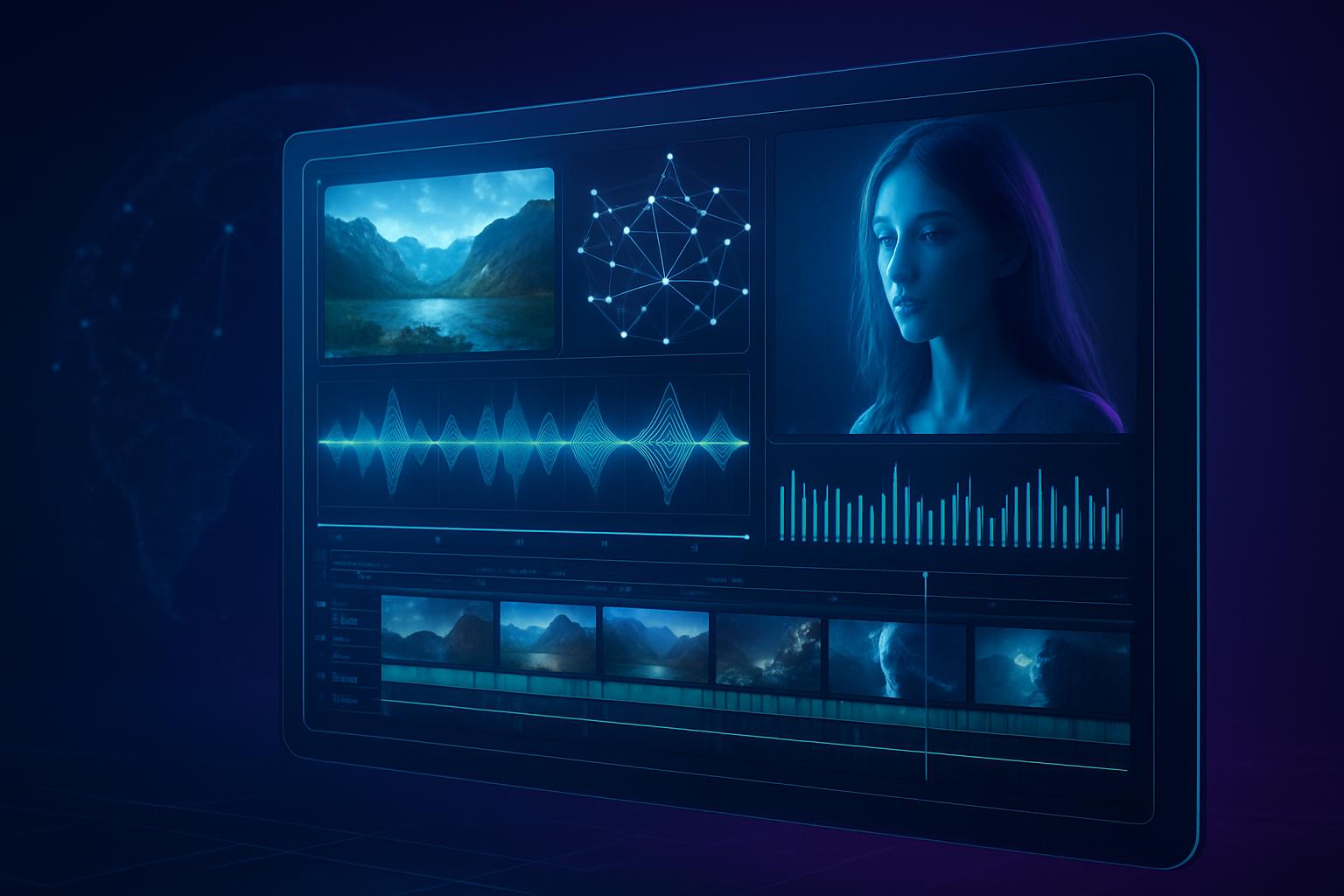
    Startups in the video editing and production space are also feeling the disruption. As Google integrates "Flow"—a storyboard-style interface that allows users to drag and drop AI clips into a timeline—many standalone AI video wrappers may find their value propositions evaporating. The battle has moved beyond who can generate the best five-second clip to who can provide the most comprehensive, end-to-end creative ecosystem.

    Broader Implications: Democratization and Ethical Frontiers

    Beyond the corporate skirmishes, the wide availability of Veo 3 represents a pivotal moment in the broader AI landscape. We are moving from the era of "AI as a novelty" to "AI as a utility." The impact on the labor market for junior editors, stock footage cinematographers, and entry-level animators is a growing concern for industry guilds and labor advocates. However, proponents argue that this is the ultimate democratization of creativity, allowing a solo creator in a developing nation to produce a film with the same visual scale as a Hollywood studio.

    The ethical implications, however, remain a central point of debate. Google has implemented "SynthID" watermarking—an invisible, tamper-resistant digital signature—across all Veo-generated content to combat deepfakes and misinformation. Despite these safeguards, the ease with which hyper-realistic video can now be created raises significant questions about digital provenance and the potential for large-scale deception during a high-stakes global election year.

    Comparatively, the launch of Veo 3 is being hailed as the "GPT-4 moment" for video. Just as large language models transformed text-based communication, Veo is expected to do the same for the visual medium. It marks the transition where the "uncanny valley"—that unsettling feeling that something is almost human but not quite—is finally being bridged by sophisticated physics engines and consistent character rendering.

    The Road Ahead: From Clips to Feature Films

    Looking ahead, the next 12 to 18 months will likely see the full rollout of Veo 3.2, which promises to extend clip durations from seconds to minutes, potentially enabling the first fully AI-generated feature films. Researchers are currently focusing on "World Models," where the AI doesn't just predict pixels but actually understands the three-dimensional space it is rendering. This would allow for seamless transitions between AI-generated video and interactive VR environments, blurring the lines between filmmaking and game development.

    Potential use cases on the horizon include personalized education—where textbooks are replaced by AI-generated videos tailored to a student's learning style—and "dynamic advertising," where commercials are generated in real-time based on a viewer's specific interests and surroundings. The primary challenge remaining is the high computational cost of these models; however, as specialized AI hardware continues to evolve, the cost per minute of video is expected to plummet, making AI video as ubiquitous as digital photography.

    A New Chapter in Visual Storytelling

    The wide availability of Google Veo 3 marks the beginning of a new era in digital media. By combining high-fidelity visuals, consistent characters, and synchronized audio into a single, accessible platform, Google has effectively handed a professional movie studio to anyone with a YouTube account. The key takeaways from this development are clear: the barrier to high-end video production has vanished, the competition among AI titans has reached a fever pitch, and the very nature of "truth" in video content is being permanently altered.

    In the history of artificial intelligence, the release of Veo 3 will likely be remembered as the point where generative video became a standard tool for human expression. In the coming weeks, watch for a flood of high-quality AI content on social platforms and a potential response from OpenAI as the industry moves toward longer, more complex narrative capabilities. The cinematic revolution is no longer coming; it is already here, and it is being rendered in real-time.


    This content is intended for informational purposes only and represents analysis of current AI developments.

    TokenRing AI delivers enterprise-grade solutions for multi-agent AI workflow orchestration, AI-powered development tools, and seamless remote collaboration platforms.
    For more information, visit https://www.tokenring.ai/.
  • Google Launches Veo 3.1: A Paradigm Shift in Cinematic AI Video and Character Consistency

    Google Launches Veo 3.1: A Paradigm Shift in Cinematic AI Video and Character Consistency

    Google, a subsidiary of Alphabet Inc. (NASDAQ: GOOGL), has officially moved the goalposts in the generative AI arms race with the wide release of Veo 3.1. Launched as a major update on January 13, 2026, the model marks a shift from experimental text-to-video generation to a production-ready creative suite. By introducing a "co-director" philosophy, Veo 3.1 aims to solve the industry’s most persistent headache: maintaining visual consistency across multiple shots while delivering the high-fidelity resolution required for professional filmmaking.

    The announcement comes at a pivotal moment as the AI video landscape matures. While early models focused on the novelty of "prompting" a scene into existence, Veo 3.1 prioritizes precision. With features like "Ingredients to Video" and native 4K upscaling, Google is positioning itself not just as a tool for viral social media clips, but as a foundational infrastructure for the multi-billion dollar advertising and entertainment industries.

    Technical Mastery: From Diffusion to Direction

    At its core, Veo 3.1 is built on a sophisticated 3D Latent Diffusion Transformer architecture. Unlike previous iterations that processed video as a series of independent frames, this model processes space, time, and audio joints simultaneously. This unified approach allows for the native generation of synchronized dialogue, sound effects, and ambient noise with roughly 10ms of latency between vision and sound. The result is a seamless audio-visual experience where characters' lip-syncing and movement-based sounds—like footsteps or the rustle of clothes—feel physically grounded.

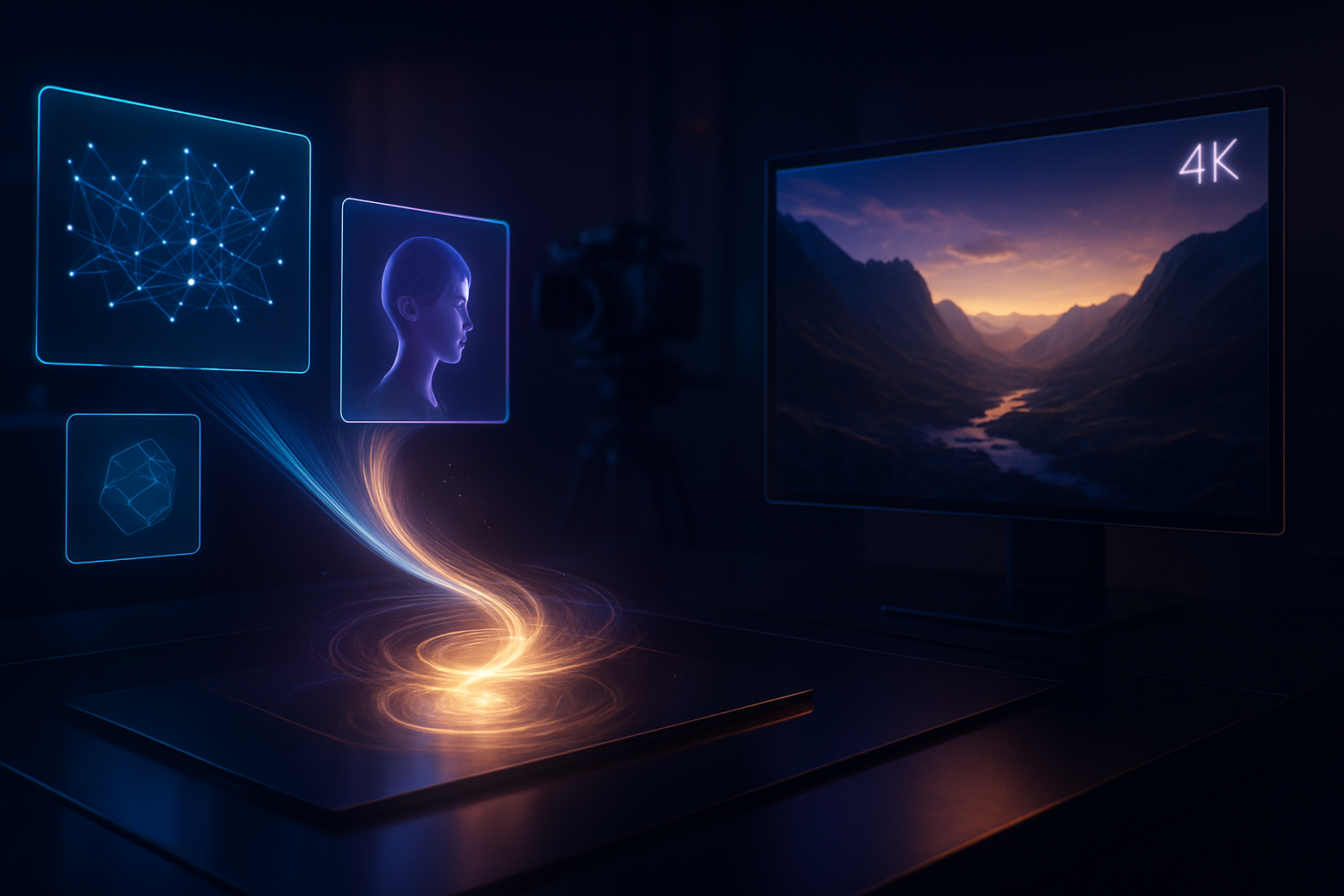
    The headline feature of Veo 3.1 is "Ingredients to Video," a tool that allows creators to upload up to three reference images—be they specific characters, complex objects, or abstract style guides. The model uses these "ingredients" to anchor the generation process, ensuring that a character’s face, clothing, and the environment remain identical across different scenes. This solves the "identity drift" problem that has long plagued AI video, where a character might look like a different person from one shot to the next. Additionally, a new "Frames to Video" interpolation tool allows users to provide a starting and ending image, with the AI generating a cinematic transition that adheres to the lighting and physics of both frames.

    Technical specifications reveal a massive leap in accessibility and quality. Veo 3.1 supports native 1080p HD, with an enterprise-tier 4K upscaling option available via Google Flow and Vertex AI. It also addresses the rise of short-form content by offering native 9:16 vertical output, eliminating the quality degradation usually associated with cropping landscape footage. Initial reactions from the AI research community have been overwhelmingly positive, with experts noting that while OpenAI’s Sora 2 might hold a slight edge in raw physics simulation (such as water dynamics), Veo 3.1 is the superior "utilitarian" tool for filmmakers who need control and resolution over sheer randomness.

    The Battle for the Studio: Competitive Implications

    The release of Veo 3.1 creates a significant challenge for rivals like Microsoft (NASDAQ: MSFT)-backed OpenAI and startups like Runway and Kling AI. By integrating Veo 3.1 directly into the Gemini app, YouTube Shorts, and the Google Vids productivity suite, Alphabet Inc. (NASDAQ: GOOGL) is leveraging its massive distribution network to reach millions of creators instantly. This ecosystem advantage makes it difficult for standalone video startups to compete, as Google can offer a unified workflow—from scriptwriting in Gemini to video generation in Veo and distribution on YouTube.

    In the enterprise sector, Google’s strategic partnerships are already bearing fruit. Advertising giant WPP (NYSE: WPP) has reportedly begun integrating Veo 3.1 into its production workflows, aiming to slash the time and cost of creating hyper-localized global ad campaigns. Similarly, the storytelling platform Pocket FM noted a significant increase in user engagement by using the model to create promotional trailers with realistic lip-sync. For major AI labs, the pressure is now on to match Google’s "Ingredients" approach, as creators increasingly demand tools that function like digital puppets rather than unpredictable slot machines.

    Market positioning for Veo 3.1 is clear: it is the "Pro" option. While Meta Platforms (NASDAQ: META) continues to refine its Movie Gen for social media users, Google is targeting the middle-to-high end of the creative market. By focusing on 4K output and character consistency, Google is making a play for the pre-visualization and B-roll markets, potentially disrupting traditional stock footage companies and visual effects (VFX) houses that handle repetitive, high-volume content.

    A New Era for Digital Storytelling and Its Ethical Shadow

    The significance of Veo 3.1 extends far beyond technical benchmarks; it represents the "professionalization" of synthetic media. We are moving away from the era of "AI-generated video" as a genre itself and into an era where AI is a transparent part of the production pipeline. This transition mirrors the shift from traditional cell animation to CGI in the late 20th century. By lowering the barrier to entry for cinematic-quality visuals, Google is democratizing high-end storytelling, allowing small independent creators to produce visuals that were once the exclusive domain of major studios.

    However, this breakthrough brings intensified concerns regarding digital authenticity. To combat the potential for deepfakes and misinformation, Google has integrated its SynthID watermarking technology directly into the Veo 3.1 metadata. This invisible digital watermark persists even after video editing or compression, a critical safety feature as the world approaches the 2026 election cycles in several major democracies. Critics, however, argue that watermarking is only a partial solution and that the "uncanny valley"—while narrower than ever—still poses risks for psychological manipulation when combined with the model's high-fidelity audio capabilities.

    Comparing Veo 3.1 to previous milestones, it is being hailed as the "GPT-4 moment" for video. Just as large language models shifted from generating coherent sentences to solving complex reasoning tasks, Veo 3.1 has shifted from generating "dreamlike" sequences to generating logically consistent, high-resolution cinema. It marks the end of the "primitive" phase of generative video and the beginning of the "utility" phase.

    The Horizon: Real-Time Generation and Beyond

    Looking ahead, the next frontier for the Veo lineage is real-time interaction. Experts predict that by 2027, iterations of this technology will allow for "live-prompting," where a user can change the lighting or camera angle of a scene in real-time as the video plays. This has massive implications for the gaming industry and virtual reality. Imagine a game where the environment isn't pre-rendered but is generated on-the-fly based on the player's unique story choices, powered by hardware from the likes of NVIDIA (NASDAQ: NVDA).

    The immediate challenge for Google and its peers remains "perfect physics." While Veo 3.1 excels at texture and style, complex multi-object collisions—such as a glass shattering or a person walking through a crowd—still occasionally produce visual artifacts. Solving these high-complexity physical interactions will likely be the focus of the rumored "Veo 4" project. Furthermore, as the model moves into more hands, the demand for longer-form native generation (beyond the current 60-second limit) will necessitate even more efficient compute strategies and memory-augmented architectures.

    Wrapping Up: The New Standard for Synthetic Cinema

    Google Veo 3.1 is more than just a software update; it is a declaration of intent. By prioritizing consistency, resolution, and audio-visual unity, Google has provided a blueprint for how AI will integrate into the professional creative world. The model successfully bridges the gap between the creative vision in a director's head and the final pixels on the screen, reducing the "friction" of production to an unprecedented degree.

    As we move into the early months of 2026, the tech industry will be watching closely to see how OpenAI responds and how YouTube's creator base adopts these tools. The long-term impact of Veo 3.1 may very well be a surge in high-quality independent cinema and a complete restructuring of the advertising industry. For now, the "Ingredients to Video" feature stands as a benchmark of what happens when AI moves from being a toy to being a tool.


    This content is intended for informational purposes only and represents analysis of current AI developments.

    TokenRing AI delivers enterprise-grade solutions for multi-agent AI workflow orchestration, AI-powered development tools, and seamless remote collaboration platforms.
    For more information, visit https://www.tokenring.ai/.
  • NotebookLM’s Audio Overviews: Turning Documents into AI-Generated Podcasts

    NotebookLM’s Audio Overviews: Turning Documents into AI-Generated Podcasts

    In the span of just over a year, Google’s NotebookLM has transformed from a niche experimental tool into a cultural and technological phenomenon. Its standout feature, "Audio Overviews," has fundamentally changed how students, researchers, and professionals interact with dense information. By late 2024, the tool had already captured the public's imagination, but as of January 6, 2026, it has become an indispensable "cognitive prosthesis" for millions, turning static PDFs and messy research notes into engaging, high-fidelity podcast conversations that feel eerily—and delightfully—human.

    The immediate significance of this development lies in its ability to bridge the gap between raw data and human storytelling. Unlike traditional text-to-speech tools that drone on in a monotonous cadence, Audio Overviews leverages advanced generative AI to create a two-person banter-filled dialogue. This shift from "reading" to "listening to a discussion" has democratized complex subjects, allowing users to absorb the nuances of a 50-page white paper or a semester’s worth of lecture notes during a twenty-minute morning commute.

    The Technical Alchemy: From Gemini 1.5 Pro to Seamless Banter

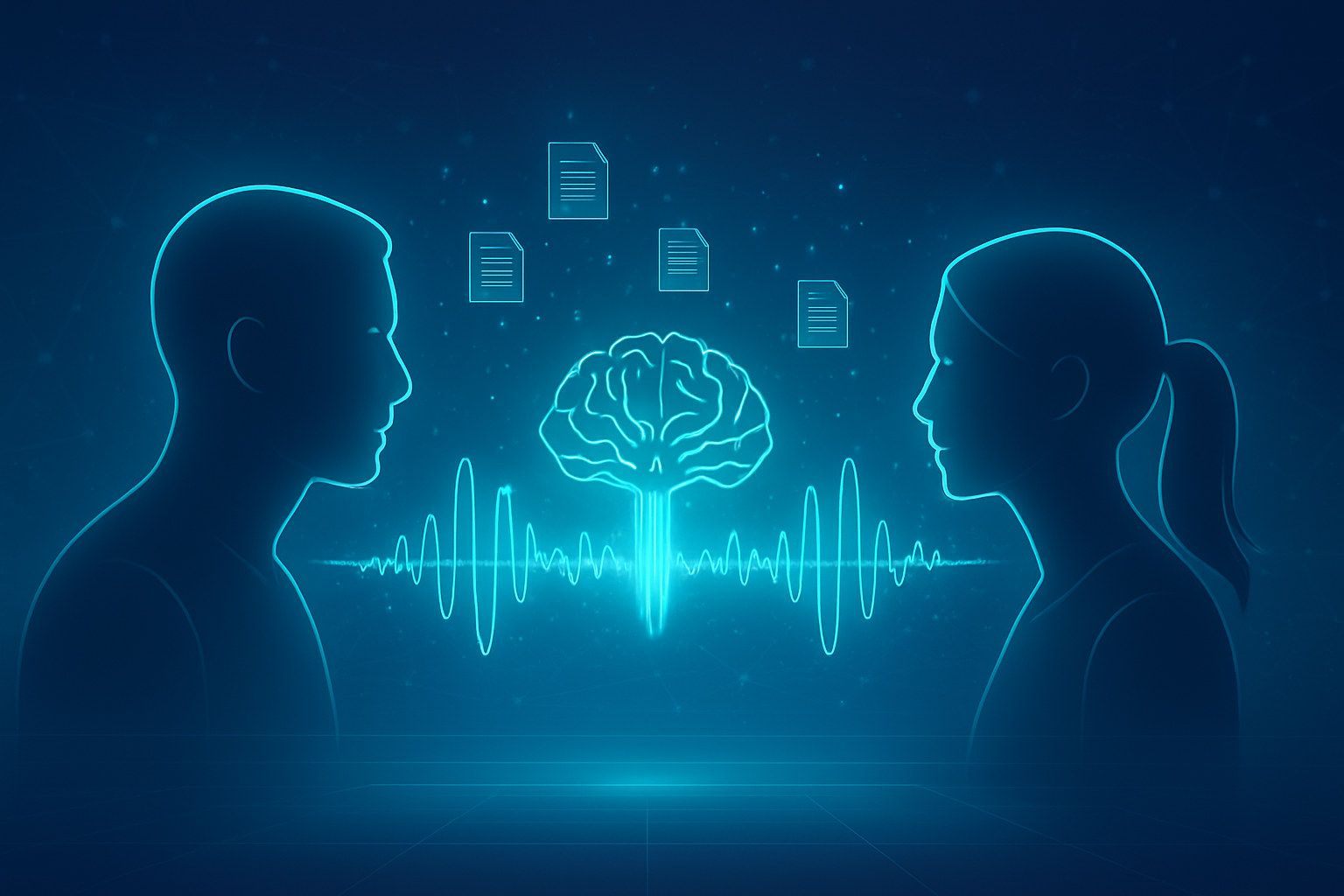
    At the heart of NotebookLM’s success is its integration with Alphabet Inc. (NASDAQ: GOOGL) and its cutting-edge Gemini 1.5 Pro architecture. This model’s massive 1-million-plus token context window allows the AI to "read" and synthesize thousands of pages of disparate documents simultaneously. Unlike previous iterations of AI summaries that provided bullet points, Audio Overviews uses a sophisticated "social" synthesis layer. This layer doesn't just summarize; it scripts a narrative between two AI personas—typically a male and a female host—who interpret the data, highlight key themes, and even express simulated "excitement" over surprising findings.

    What truly sets this technology apart is the inclusion of "human-like" imperfections. The AI hosts are programmed to use natural intonations, rhythmic pauses, and filler words such as "um," "uh," and "right?" to mimic the flow of a genuine conversation. This design choice was a calculated move to overcome the "uncanny valley" effect. By making the AI sound relatable and informal, Google reduced the cognitive load on the listener, making the information feel less like a lecture and more like a shared discovery. Furthermore, the system is strictly "grounded" in the user’s uploaded sources, a technical safeguard that significantly minimizes the hallucinations often found in general-purpose chatbots.

    A New Battleground: Big Tech’s Race for the "Audio Ear"

    The viral success of NotebookLM sent shockwaves through the tech industry, forcing competitors to accelerate their own audio-first strategies. Meta Platforms, Inc. (NASDAQ: META) responded in late 2024 with "NotebookLlama," an open-source alternative that aimed to replicate the podcast format. While Meta’s entry offered more customization for developers, industry experts noted that it initially struggled to match the natural "vibe" and high-fidelity banter of Google’s proprietary models. Meanwhile, OpenAI, heavily backed by Microsoft (NASDAQ: MSFT), pivoted its Advanced Voice Mode to focus more on multi-host research discussions, though NotebookLM maintained its lead due to its superior integration with citation-heavy research workflows.

    Startups have also found themselves in the crosshairs. ElevenLabs, the leader in AI voice synthesis, launched "GenFM" in mid-2025 to compete directly in the audio-summary space. This competition has led to a rapid diversification of the market, with companies now competing on "personality profiles" and latency. For Google, NotebookLM has served as a strategic moat for its Workspace ecosystem. By offering "NotebookLM Business" with enterprise-grade privacy, Alphabet has ensured that corporate data remains secure while providing executives with a tool that turns internal quarterly reports into "on-the-go" audio briefings.

    The Broader AI Landscape: From Information Retrieval to Information Experience

    NotebookLM’s Audio Overviews represent a broader trend in the AI landscape: the shift from Retrieval-Augmented Generation (RAG) as a backend process to RAG as a front-end experience. It marks a milestone where AI is no longer just a tool for answering questions but a medium for creative synthesis. This transition has raised important discussions about "vibe-based" learning. Critics argue that the engaging nature of the podcasts might lead users to over-rely on the AI’s interpretation rather than engaging with the source material directly. However, proponents argue that for the "TL;DR" (Too Long; Didn't Read) generation, this is a vital gateway to deeper literacy.

    The ethical implications are also coming into focus. As the AI hosts become more indistinguishable from humans, the potential for misinformation—if the tool is fed biased or false documents—becomes more potent. Unlike a human podcast host who might have a track record of credibility, the AI host’s authority is purely synthetic. This has led to calls for clearer digital watermarking in AI-generated audio to ensure listeners are always aware when they are hearing a machine-generated synthesis of data.

    The Horizon: Agentic Research and Hyper-Personalization

    Looking forward, the next phase of NotebookLM is already beginning to take shape. Throughout 2025, Google introduced "Interactive Join Mode," allowing users to interrupt the AI hosts and steer the conversation in real-time. Experts predict that by the end of 2026, these audio overviews will evolve into fully "agentic" research assistants. Instead of just summarizing what you give them, the AI hosts will be able to suggest missing pieces of information, browse the web to find supporting evidence, and even interview the user to refine the research goals.

    Hyper-personalization is the next major frontier. We are moving toward a world where a user can choose the "personality" of their research hosts—perhaps a skeptical investigative journalist for a legal brief, or a simplified, "explain-it-like-I'm-five" duo for a complex scientific paper. As the underlying models like Gemini 2.0 continue to lower latency, these conversations will become indistinguishable from a live Zoom call with a team of experts, further blurring the lines between human and machine collaboration.

    Wrapping Up: A New Chapter in Human-AI Interaction

    Google’s NotebookLM has successfully turned the "lonely" act of research into a social experience. By late 2024, it was a viral hit; by early 2026, it is a standard-bearer for how generative AI can be applied to real-world productivity. The brilliance of Audio Overviews lies not just in its technical sophistication but in its psychological insight: humans are wired for stories and conversation, not just data points.

    As we move further into 2026, the key to NotebookLM’s continued dominance will be its ability to maintain trust through grounding while pushing the boundaries of creative synthesis. Whether it’s a student cramming for an exam or a CEO prepping for a board meeting, the "podcast in your pocket" has become the new gold standard for information consumption. The coming months will likely see even deeper integration into mobile devices and wearable tech, making the AI-generated podcast the ubiquitous soundtrack of the information age.


    This content is intended for informational purposes only and represents analysis of current AI developments.

    TokenRing AI delivers enterprise-grade solutions for multi-agent AI workflow orchestration, AI-powered development tools, and seamless remote collaboration platforms.
    For more information, visit https://www.tokenring.ai/.
  • The Age of the Autonomous Analyst: Google’s Gemini Deep Research Redefines the Knowledge Economy

    The Age of the Autonomous Analyst: Google’s Gemini Deep Research Redefines the Knowledge Economy

    On December 11, 2025, Alphabet Inc. (NASDAQ: GOOGL) fundamentally shifted the trajectory of artificial intelligence with the release of Gemini Deep Research. Moving beyond the era of simple conversational chatbots, this new "agentic" system is designed to function as an autonomous knowledge worker capable of conducting multi-hour, multi-step investigations. By bridging the gap between information retrieval and professional synthesis, Google has introduced a tool that doesn't just answer questions—it executes entire research projects, signaling a new phase in the AI arms race where duration and depth are the new benchmarks of excellence.

    The immediate significance of Gemini Deep Research lies in its ability to handle "System 2" thinking—deliberative, logical reasoning that requires time and iteration. Unlike previous iterations of AI that provided near-instantaneous but often shallow responses, this agent can spend up to 60 minutes navigating the web, analyzing hundreds of sources, and refining its search strategy in real-time. For the professional analyst market, this represents a transition from AI as a writing assistant to AI as a primary investigator, potentially automating thousands of hours of manual due diligence and literature review.

    Technical Foundations: The Rise of Inference-Time Compute

    At the heart of Gemini Deep Research is the Gemini 3 Pro model, a foundation specifically post-trained for factual accuracy and complex planning. The system distinguishes itself through "iterative planning," a process where the agent breaks a complex prompt into a detailed research roadmap. Before beginning its work, the agent presents this plan to the user for modification, ensuring a "human-in-the-loop" experience that prevents the model from spiraling into irrelevant data. Once authorized, the agent utilizes its massive 2-million-token context window and the newly launched Interactions API to manage long-duration tasks without losing the "thread" of the investigation.

    Technical experts have highlighted the agent's performance on "Humanity’s Last Exam" (HLE), a benchmark designed to be nearly impossible for AI to solve. Gemini Deep Research achieved a landmark score of 46.4%, significantly outperforming previous industry leaders. This leap is attributed to "inference-time compute"—the strategy of giving a model more time and computational resources to "think" during the response phase rather than just relying on pre-trained patterns. Furthermore, the inclusion of the Model Context Protocol (MCP) allows the agent to connect seamlessly with external enterprise tools like BigQuery and Google Finance, making it a "discoverable" agent across the professional software stack.

    Initial reactions from the AI research community have been overwhelmingly positive, with many noting that Google has successfully solved the "context drift" problem that plagued earlier attempts at long-form research. By maintaining stateful sessions server-side, Gemini Deep Research can cross-reference information found in the 5th minute of a search with a discovery made in the 50th minute, creating a cohesive and deeply cited final report that mirrors the output of a senior human analyst.

    Market Disruption and the Competitive Landscape

    The launch of Gemini Deep Research has sent ripples through the tech industry, particularly impacting the competitive standing of major AI labs. Alphabet Inc. (NASDAQ: GOOGL) saw its shares surge 4.5% following the announcement, as investors recognized the company’s ability to leverage its dominant search index into a high-value enterprise product. This move puts direct pressure on OpenAI, backed by Microsoft (NASDAQ: MSFT), whose own "Deep Research" tools (based on the o3 and GPT-5 architectures) are now locked in a fierce battle for the loyalty of financial and legal institutions.

    While OpenAI’s models are often praised for their raw analytical rigor, Google’s strategic advantage lies in its vast ecosystem. Gemini Deep Research is natively integrated into Google Workspace, allowing it to ingest proprietary PDFs from Drive and export finished reports directly to Google Docs with professional formatting and paragraph-level citations. This "all-in-one" workflow threatens specialized startups like Perplexity AI, which, while fast, may struggle to compete with the deep synthesis and ecosystem lock-in that Google now offers to its Gemini Business and Enterprise subscribers.

    The strategic positioning of this tool targets high-value sectors such as biotech, legal background investigations, and B2B sales. By offering a tool that can perform 20-page "set-and-synthesize" reports for $20 to $30 per seat, Google is effectively commoditizing high-level research tasks. This disruption is likely to force a pivot among smaller AI firms toward more niche, vertical-specific agents, as the "generalist researcher" category is now firmly occupied by the tech giants.

    The Broader AI Landscape: From Chatbots to Agents

    Gemini Deep Research represents a pivotal moment in the broader AI landscape, marking the definitive shift from "generative AI" to "agentic AI." For the past three years, the industry has focused on the speed of generation; now, the focus has shifted to the quality of the process. This milestone aligns with the trend of "agentic workflows," where AI is given the agency to use tools, browse the web, and correct its own mistakes over extended periods. It is a significant step toward Artificial General Intelligence (AGI), as it demonstrates a model's ability to set and achieve long-term goals autonomously.

    However, this advancement brings potential concerns, particularly regarding the "black box" nature of long-duration tasks. While Google has implemented a "Research Plan" phase, the actual hour-long investigation occurs out of sight, raising questions about data provenance and the potential for "hallucination loops" where the agent might base an entire report on a single misinterpreted source. To combat this, Google has emphasized its "Search Grounding" technology, which forces the model to verify every claim against the live web index, but the complexity of these reports means that human verification remains a bottleneck.

    Comparisons to previous milestones, such as the release of GPT-4 or the original AlphaGo, suggest that Gemini Deep Research will be remembered as the moment AI became a "worker" rather than a "tool." The impact on the labor market for junior analysts and researchers could be profound, as tasks that once took three days of manual labor can now be completed during a lunch break, forcing a re-evaluation of how entry-level professional roles are structured.

    Future Horizons: What Comes After Deep Research?

    Looking ahead, the next 12 to 24 months will likely see the expansion of these agentic capabilities into even longer durations and more complex environments. Experts predict that we will soon see "multi-day" agents that can monitor specific market sectors or scientific developments indefinitely, providing daily synthesized briefings. We can also expect deeper integration with multimodal inputs, where an agent could watch hours of video footage from a conference or analyze thousands of images to produce a research report.

    The primary challenge moving forward will be the cost and scalability of inference-time compute. Running a model for 60 minutes is exponentially more expensive than a 5-second chatbot response. As Google and its competitors look to scale these tools to millions of users, we may see the emergence of new hardware specialized for "thinking" rather than just "predicting." Additionally, the industry must address the legal and ethical implications of AI agents that can autonomously navigate and scrape the web at such a massive scale, potentially leading to new standards for "agent-friendly" web protocols.

    Final Thoughts: A Landmark in AI History

    Gemini Deep Research is more than just a software update; it is a declaration that the era of the autonomous digital workforce has arrived. By successfully combining long-duration reasoning with the world's most comprehensive search index, Google has set a new standard for what professional-grade AI should look like. The ability to produce cited, structured, and deeply researched reports marks a maturation of LLM technology that moves past the novelty of conversation and into the utility of production.

    As we move into 2026, the industry will be watching closely to see how quickly enterprise adoption scales and how competitors respond to Google's HLE benchmark dominance. For now, the takeaway is clear: the most valuable AI is no longer the one that talks the best, but the one that thinks the longest. The "Autonomous Analyst" is no longer a concept of the future—it is a tool available today, and its impact on the knowledge economy is only just beginning to be felt.


    This content is intended for informational purposes only and represents analysis of current AI developments.

    TokenRing AI delivers enterprise-grade solutions for multi-agent AI workflow orchestration, AI-powered development tools, and seamless remote collaboration platforms.
    For more information, visit https://www.tokenring.ai/.