
Tag: Alphabet

  • The Browser Wars 2.0: OpenAI Unveils ‘Atlas’ to Remap the Internet Experience

    The Browser Wars 2.0: OpenAI Unveils ‘Atlas’ to Remap the Internet Experience

    On October 21, 2025, OpenAI fundamentally shifted the landscape of digital navigation with the release of Atlas, an AI-native browser designed to replace the traditional search-and-click model with a paradigm of delegation and autonomous execution. By integrating its most advanced reasoning models directly into the browsing engine, OpenAI is positioning Atlas not just as a tool for viewing the web, but as an agentic workspace capable of performing complex tasks on behalf of the user. The launch marks the most aggressive challenge to the dominance of Google Chrome, owned by Alphabet Inc. (NASDAQ: GOOGL), in over a decade.

    The immediate significance of Atlas lies in its departure from the "tab-heavy" workflow that has defined the internet since the late 1990s. Instead of acting as a passive window to websites, Atlas serves as an active participant. With the introduction of a dedicated "Ask ChatGPT" sidebar and a revolutionary "Agent Mode," the browser can now navigate websites, fill out forms, and synthesize information across multiple domains without the user ever having to leave a single interface. This "agentic" approach suggests a future where the browser is less of a viewer and more of a digital personal assistant.

    The OWL Architecture: Engineering a Proactive Web Experience

    Technically, Atlas is built on a sophisticated foundation that OpenAI calls the OWL (OpenAI’s Web Layer) architecture. While the browser utilizes the open-source Chromium engine to ensure compatibility with modern web standards and existing extensions, the user interface is a custom-built environment developed using SwiftUI and AppKit. This dual-layer approach allows Atlas to maintain the speed and stability of a traditional browser while running a "heavyweight" local AI sub-runtime in parallel. This sub-runtime includes on-device models like OptGuideOnDeviceModel, which handle real-time page structure analysis and intent recognition without sending every click to the cloud.

    The standout feature of Atlas is its Integrated Agent Mode. When toggled, the browser UI shifts to a distinct blue highlight, and a "second cursor" appears on the screen, representing the AI’s autonomous actions. In this mode, ChatGPT can execute multi-step workflows—such as researching a product, comparing prices across five different retailers, and adding the best option to a shopping cart—while the user watches in real-time. This differs from previous AI "copilots" or plugins, which were often limited to text summarization or basic data scraping. Atlas has the "hand-eye coordination" to interact with dynamic web elements, including JavaScript-heavy buttons and complex drop-down menus.

    Initial reactions from the AI research community have been a mix of technical awe and caution. Experts have noted that OpenAI’s ability to map the Document Object Model (DOM) of a webpage directly into a transformer-based reasoning engine represents a significant breakthrough in computer vision and natural language processing. However, the developer community has also pointed out the immense hardware requirements; Atlas is currently exclusive to high-end macOS devices, with Windows and mobile versions still in development.

    Strategic Jujitsu: Challenging Alphabet’s Search Hegemony

    The release of Atlas is a direct strike at the heart of the business model for Alphabet Inc. (NASDAQ: GOOGL). For decades, Google has relied on the "search-and-click" funnel to drive its multi-billion-dollar advertising engine. By encouraging users to delegate their browsing to an AI agent, OpenAI effectively bypasses the search results page—and the ads that live there. Market analysts observed a 3% to 5% dip in Alphabet’s share price immediately following the Atlas announcement, reflecting investor anxiety over this "disintermediation" of the web.

    Beyond Google, the move places pressure on Microsoft (NASDAQ: MSFT), OpenAI’s primary partner. While Microsoft has integrated GPT technology into its Edge browser, Atlas represents a more radical, "clean-sheet" design that may eventually compete for the same user base. Apple (NASDAQ: AAPL) also finds itself in a complex position; while Atlas is currently a macOS-exclusive power tool, its success could force Apple to accelerate the integration of "Apple Intelligence" into Safari to prevent a mass exodus of its most productive users.

    For startups and smaller AI labs, Atlas sets a daunting new bar. Companies like Perplexity AI, which recently launched its own 'Comet' browser, now face a competitor with deeper model integration and a massive existing user base of ChatGPT Plus subscribers. OpenAI is leveraging a freemium model to capture the market, keeping basic browsing free while locking the high-utility Agent Mode behind its $20-per-month subscription tiers, creating a high-margin recurring revenue stream that traditional browsers lack.

    The End of the Open Web? Privacy and Security in the Agentic Era

    The wider significance of Atlas extends beyond market shares and into the very philosophy of the internet. By using "Browser Memories" to track user habits and research patterns, OpenAI is creating a hyper-personalized web experience. However, this has sparked intense debate about the "anti-web" nature of AI browsers. Critics argue that by summarizing and interacting with sites on behalf of users, Atlas could starve content creators of traffic and ad revenue, potentially leading to a "hollowed-out" internet where only the most AI-friendly sites survive.

    Security concerns have also taken center stage. Shortly after launch, researchers identified a vulnerability known as "Tainted Memories," where malicious websites could inject hidden instructions into the AI’s persistent memory. These instructions could theoretically prompt the AI to leak sensitive data or perform unauthorized actions in future sessions. This highlights a fundamental challenge: as browsers become more autonomous, they also become more susceptible to complex social engineering and prompt injection attacks that traditional firewalls and antivirus software are not yet equipped to handle.

    Comparisons are already being drawn to the "Mosaic moment" of 1993. Just as Mosaic made the web accessible to the masses through a graphical interface, Atlas aims to make the web "executable" through a conversational interface. It represents a shift from the Information Age to the Agentic Age, where the value of a tool is measured not by how much information it provides, but by how much work it completes.

    The Road Ahead: Multi-Agent Orchestration and Mobile Horizons

    Looking forward, the evolution of Atlas is expected to focus on "multi-agent orchestration." In the near term, OpenAI plans to allow Atlas to communicate with other AI agents—such as those used by travel agencies or corporate internal tools—to negotiate and complete tasks with even less human oversight. We are likely to see the browser move from a single-tab experience to a "workspace" model, where the AI manages dozens of background tasks simultaneously, providing the user with a curated summary of completed actions at the end of the day.

    The long-term challenge for OpenAI will be the transition to mobile. While Atlas is a powerhouse on the desktop, the constraints of mobile operating systems and battery life pose significant hurdles for running heavy local AI runtimes. Experts predict that OpenAI will eventually release a "lite" version of Atlas for iOS and Android that relies more heavily on cloud-based inference, though this may run into friction with the strict app store policies maintained by Apple and Google.

    A New Map for the Digital World

    OpenAI’s Atlas is more than just another browser; it is an attempt to redefine the interface between humanity and the sum of digital knowledge. By moving the AI from a chat box into the very engine we use to navigate the world, OpenAI has created a tool that prioritizes outcomes over exploration. The key takeaways from this launch are clear: the era of "searching" is being eclipsed by the era of "doing," and the browser has become the primary battlefield for AI supremacy.

    As we move into 2026, the industry will be watching closely to see how Google responds with its own AI-integrated Chrome updates and whether OpenAI can resolve the significant security and privacy hurdles inherent in autonomous browsing. For now, Atlas stands as a monumental development in AI history—a bold bet that the future of the internet will not be browsed, but commanded.


    This content is intended for informational purposes only and represents analysis of current AI developments.

    TokenRing AI delivers enterprise-grade solutions for multi-agent AI workflow orchestration, AI-powered development tools, and seamless remote collaboration platforms.
    For more information, visit https://www.tokenring.ai/.

  • Google’s Project Astra: The Dawn of the Universal AI Assistant

    Google’s Project Astra: The Dawn of the Universal AI Assistant

    As the calendar turns to the final days of 2025, the promise of a truly "universal AI assistant" has shifted from the realm of science fiction into the palm of our hands. At the center of this transformation is Project Astra, a sweeping research initiative from Google DeepMind that has fundamentally changed how we interact with technology. No longer confined to text boxes or static voice commands, Astra represents a new era of "agentic AI"—a system that can see, hear, remember, and reason about the physical world in real-time.

    What began as a viral demonstration at Google I/O 2024 has matured into a sophisticated suite of capabilities now integrated across the Google ecosystem. Whether it is helping a developer debug complex system code by simply looking at a monitor, or reminding a forgetful user that their car keys are tucked under a sofa cushion it "saw" twenty minutes ago, Astra is the realization of Alphabet Inc.'s (NASDAQ: GOOGL; NASDAQ: GOOG) vision for a proactive, multimodal companion. Its immediate significance lies in its ability to collapse the latency between human perception and machine intelligence, creating an interface that feels less like a tool and more like a collaborator.

    The Architecture of Perception: Gemini 2.5 Pro and Multimodal Memory

    At the heart of Project Astra’s 2025 capabilities is the Gemini 2.5 Pro model, a breakthrough in neural architecture that treats video, audio, and text as a single, continuous stream of information. Unlike previous generations of AI that processed data in discrete "chunks" or required separate models for vision and speech, Astra utilizes a native multimodal framework. This allows the assistant to maintain a latency of under 300 milliseconds—fast enough to engage in natural, fluid conversation without the awkward pauses that plagued earlier AI iterations.

    Astra’s technical standout is its Contextual Memory Graph. This feature allows the AI to build a persistent spatial and temporal map of its environment. During recent field tests, users demonstrated Astra’s ability to recall visual details from hours prior, such as identifying which shelf a specific book was placed on or recognizing a subtle change in a laboratory experiment. This differs from existing technologies like standard RAG (Retrieval-Augmented Generation) by prioritizing visual "anchors" and spatial reasoning, allowing the AI to understand the "where" and "when" of the physical world.

    The industry's reaction to Astra's full rollout has been one of cautious awe. AI researchers have praised Google’s "world model" approach, which enables the assistant to simulate outcomes before suggesting them. For instance, when viewing a complex coding environment, Astra doesn't just read the syntax; it understands the logic flow and can predict how a specific change might impact the broader system. This level of "proactive reasoning" has set a new benchmark for what is expected from large-scale AI models in late 2025.

    A New Front in the AI Arms Race: Market Implications

    The maturation of Project Astra has sent shockwaves through the tech industry, intensifying the competition between Google, OpenAI, and Microsoft (NASDAQ: MSFT). While OpenAI’s GPT-5 has made strides in complex reasoning, Google’s deep integration with the Android operating system gives Astra a strategic advantage in "ambient computing." By embedding these capabilities into the Samsung (KRX: 005930) Galaxy S25 and S26 series, Google has secured a massive hardware footprint that its rivals struggle to match.

    For startups, Astra represents both a platform and a threat. The launch of the Agent Development Kit (ADK) in mid-2025 allowed smaller developers to build specialized "Astra-like" agents for niche industries like healthcare and construction. However, the sheer "all-in-one" nature of Astra threatens to Sherlock many single-purpose AI apps. Why download a separate app for code explanation or object tracking when the system-level assistant can perform those tasks natively? This has forced a strategic pivot among AI startups toward highly specialized, proprietary data applications that Astra cannot easily replicate.

    Furthermore, the competitive pressure on Apple Inc. (NASDAQ: AAPL) has never been higher. While Apple Intelligence has focused on on-device privacy and personal context, Project Astra’s cloud-augmented "world knowledge" offers a level of real-time environmental utility that Siri has yet to fully achieve. The battle for the "Universal Assistant" title is now being fought not just on benchmarks, but on whose AI can most effectively navigate the physical realities of a user's daily life.

    Beyond the Screen: Privacy and the Broader AI Landscape

    Project Astra’s rise fits into a broader 2025 trend toward "embodied AI," where intelligence is no longer tethered to a chat interface. It represents a shift from reactive AI (waiting for a prompt) to proactive AI (anticipating a need). However, this leap forward brings significant societal concerns. An AI that "remembers where you left your keys" is an AI that is constantly recording and analyzing your private spaces. Google has addressed this with "Privacy Sandbox for Vision," which purports to process visual memory locally on-device, but skepticism remains among privacy advocates regarding the long-term storage of such intimate metadata.

    Comparatively, Astra is being viewed as the "GPT-3 moment" for vision-based agents. Just as GPT-3 proved that large language models could handle diverse text tasks, Astra has proven that a single model can handle diverse real-world visual and auditory tasks. This milestone marks the end of the "narrow AI" era, where different models were needed for translation, object detection, and speech-to-text. The consolidation of these functions into a single "world model" is perhaps the most significant architectural shift in the industry since the transformer was first introduced.

    The Future: Smart Glasses and Project Mariner

    Looking ahead to 2026, the next frontier for Project Astra is the move away from the smartphone entirely. Google’s ongoing collaboration with Samsung under the "Project Moohan" codename is expected to bear fruit in the form of Android XR smart glasses. These devices will serve as the native "body" for Astra, providing a heads-up, hands-free experience where the AI can label the world in real-time, translate street signs instantly, and provide step-by-step repair instructions overlaid on physical objects.

    Near-term developments also include the full release of Project Mariner, an agentic extension of Astra designed to handle complex web-based tasks. While Astra handles the physical world, Mariner is designed to navigate the digital one—booking multi-leg flights, managing corporate expenses, and conducting deep-dive market research autonomously. The challenge remains in "grounding" these agents to ensure they don't hallucinate actions in the physical world, a hurdle that experts predict will be the primary focus of AI safety research over the next eighteen months.

    A New Chapter in Human-Computer Interaction

    Project Astra is more than just a software update; it is a fundamental shift in the relationship between humans and machines. By successfully combining real-time multimodal understanding with long-term memory and proactive reasoning, Google has delivered a prototype for the future of computing. The ability to "look and talk" to an assistant as if it were a human companion marks the beginning of the end for the traditional graphical user interface.

    As we move into 2026, the significance of Astra in AI history will likely be measured by how quickly it becomes invisible. When an AI can seamlessly assist with code, chores, and memory without being asked, it ceases to be a "tool" and becomes part of the user's cognitive environment. The coming months will be critical as Google rolls out these features to more regions and hardware, testing whether the world is ready for an AI that never forgets and always watches.


    This content is intended for informational purposes only and represents analysis of current AI developments.

    TokenRing AI delivers enterprise-grade solutions for multi-agent AI workflow orchestration, AI-powered development tools, and seamless remote collaboration platforms.
    For more information, visit https://www.tokenring.ai/.
  • Google’s AlphaGenome: Decoding the ‘Dark Genome’ to Revolutionize Disease Prediction and Drug Discovery

    Google’s AlphaGenome: Decoding the ‘Dark Genome’ to Revolutionize Disease Prediction and Drug Discovery

    In a monumental shift for the field of computational biology, Google DeepMind, a subsidiary of Alphabet Inc. (NASDAQ: GOOGL), officially launched AlphaGenome earlier this year, a breakthrough AI model designed to decode the "dark genome." For decades, the 98% of human DNA that does not code for proteins was largely dismissed as "junk DNA." AlphaGenome changes this narrative by providing a comprehensive map of how these non-coding regions regulate gene expression, effectively acting as a master key to the complex logic that governs human health and disease.

    The launch, which took place in June 2025, represents the culmination of years of research into sequence-to-function modeling. By predicting how specific mutations in non-coding regions can trigger or prevent diseases, AlphaGenome provides clinicians and researchers with a predictive power that was previously unimaginable. This development is not just an incremental improvement; it is a foundational shift that moves genomics from descriptive observation to predictive engineering, offering a new lens through which to view cancer, cardiovascular disease, and rare genetic disorders.

    AlphaGenome is built on a sophisticated hybrid architecture that combines the local pattern-recognition strengths of Convolutional Neural Networks (CNNs) with the long-range relational capabilities of Transformers. This dual-natured approach allows the model to process up to one million base pairs of DNA in a single input—a staggering 100-fold increase over previous state-of-the-art models. While earlier tools were limited to looking at local mutations, AlphaGenome can observe how a "switch" flipped at one end of a DNA strand affects a gene located hundreds of thousands of base pairs away.

    The model’s precision is equally impressive, offering base-pair resolution that allows scientists to see the impact of a single-letter change in the genetic code. Beyond just predicting whether a mutation is "bad," AlphaGenome predicts over 11 distinct molecular modalities, including transcription start sites, histone modifications, and 3D chromatin folding. This multi-modal output provides a holistic view of the cellular environment, showing exactly how a genetic variant alters the machinery of the cell.

    This release completes what researchers are calling the "Alpha Trinity" of genomics. While AlphaFold revolutionized our understanding of protein structures and AlphaMissense identified harmful mutations in coding regions, AlphaGenome addresses the remaining 98% of the genome. By bridging the gap between DNA sequence and biological function, it provides the "regulatory logic" that the previous models lacked. Initial reactions from the research community have been overwhelmingly positive, with experts at institutions like Memorial Sloan Kettering describing it as a "paradigm shift" that finally unifies long-range genomic context with microscopic precision.

    The business implications of AlphaGenome are profound, particularly for the pharmaceutical and biotechnology sectors. Alphabet Inc. (NASDAQ: GOOGL) has positioned the model as a central pillar of its "AI for Science" strategy, offering access via the AlphaGenome API for non-commercial research. This move creates a strategic advantage by making Google’s infrastructure the default platform for the next generation of genomic discovery. Biotech startups and established giants alike are now racing to integrate these predictive capabilities into their drug discovery pipelines, potentially shaving years off the time it takes to identify viable drug targets.

    The competitive landscape is also shifting. Major tech rivals such as Microsoft (NASDAQ: MSFT) and Meta Platforms Inc. (NASDAQ: META), which have their own biological modeling initiatives like ESM-3, now face a high bar set by AlphaGenome’s multi-modal integration. For hardware providers like NVIDIA (NASDAQ: NVDA), the rise of such massive genomic models drives further demand for specialized AI chips capable of handling the intense computational requirements of "digital wet labs." The ability to simulate thousands of genetic scenarios in seconds—a process that previously required weeks of physical lab work—is expected to disrupt the traditional contract research organization (CRO) market.

    Furthermore, the model’s ability to assist in synthetic biology allows companies to "write" DNA with specific functions. This opens up new markets in personalized medicine, where therapies can be designed to activate only in specific cell types, such as a treatment that triggers only when it detects a specific regulatory signature in a cancer cell. By controlling the "operating system" of the genome, Google is not just providing a tool; it is establishing a foundational platform for the bio-economy of the late 2020s.

    Beyond the corporate and technical spheres, AlphaGenome represents a milestone in the broader AI landscape. It marks a transition from "Generative AI" focused on text and images to "Scientific AI" focused on the fundamental laws of nature. Much like AlphaGo demonstrated AI’s mastery of complex games, AlphaGenome demonstrates its ability to master the most complex code known to humanity: the human genome. This transition suggests that the next frontier of AI value lies in its application to physical and biological realities rather than purely digital ones.

    However, the power to decode and potentially "write" genomic logic brings significant ethical and societal concerns. The ability to predict disease risk with high accuracy from birth raises questions about genetic privacy and the potential for "genetic profiling" by insurance companies or employers. There are also concerns regarding the "black box" nature of deep learning; while AlphaGenome is highly accurate, understanding why it makes a specific prediction remains a challenge for researchers, which is a critical hurdle for clinical adoption where explainability is paramount.

    Comparisons to previous milestones, such as the Human Genome Project, are frequent. While the original project gave us the "map," AlphaGenome is providing the "manual" for how to read it. This leap forward accelerates the trend of "precision medicine," where treatments are tailored to an individual’s unique regulatory landscape. The impact on public health could be transformative, shifting the focus from treating symptoms to preemptively managing genetic risks identified decades before they manifest as disease.

    In the near term, we can expect a surge in "AI-first" clinical trials, where AlphaGenome is used to stratify patient populations based on their regulatory genetic profiles. This could significantly increase the success rates of clinical trials by ensuring that therapies are tested on individuals most likely to respond. Long-term, the model is expected to evolve to include epigenetic data—information on how environmental factors like diet, stress, and aging modify gene expression—which is currently a limitation of the static DNA-based model.

    The next major challenge for the DeepMind team will be integrating temporal data—how the genome changes its behavior over a human lifetime. Experts predict that within the next three to five years, we will see the emergence of "Universal Biological Models" that combine AlphaGenome’s regulatory insights with real-time health data from wearables and electronic health records. This would create a "digital twin" of a patient’s biology, allowing for continuous, real-time health monitoring and intervention.

    AlphaGenome stands as one of the most significant achievements in the history of artificial intelligence. By successfully decoding the non-coding regions of the human genome, Google DeepMind has unlocked a treasure trove of biological information that remained obscured for decades. The model’s ability to predict disease risk and regulatory function with base-pair precision marks the beginning of a new era in medicine—one where the "dark genome" is no longer a mystery but a roadmap for health.

    As we move into 2026, the tech and biotech industries will be closely watching the first wave of drug targets identified through the AlphaGenome API. The long-term impact of this development will likely be measured in the lives saved through earlier disease detection and the creation of highly targeted, more effective therapies. For now, AlphaGenome has solidified AI’s role not just as a tool for automation, but as a fundamental partner in scientific discovery, forever changing our understanding of the code of life.


    This content is intended for informational purposes only and represents analysis of current AI developments.

    TokenRing AI delivers enterprise-grade solutions for multi-agent AI workflow orchestration, AI-powered development tools, and seamless remote collaboration platforms.
    For more information, visit https://www.tokenring.ai/.

  • Google Rewrites the Search Playbook: Gemini 3 Flash Takes Over as ‘Deep Research’ Agent Redefines Professional Inquiry

    Google Rewrites the Search Playbook: Gemini 3 Flash Takes Over as ‘Deep Research’ Agent Redefines Professional Inquiry

    In a move that signals the definitive end of the "blue link" era, Alphabet Inc. (NASDAQ:GOOGL) has officially overhauled its flagship product, making Gemini 3 Flash the global default engine for AI-powered Search. The rollout, completed in mid-December 2025, marks a pivotal shift in how billions of users interact with information, moving from simple query-and-response to a system that prioritizes real-time reasoning and low-latency synthesis. Alongside this, Google has unveiled "Gemini Deep Research," a sophisticated autonomous agent designed to handle multi-step, hours-long professional investigations that culminate in comprehensive, cited reports.

    The significance of this development cannot be overstated. By deploying Gemini 3 Flash as the backbone of its search infrastructure, Google is betting on a "speed-first" reasoning architecture that aims to provide the depth of a human-like assistant without the sluggishness typically associated with large-scale language models. Meanwhile, Gemini Deep Research targets the high-end professional market, offering a tool that can autonomously plan, execute, and refine complex research tasks—effectively turning a 20-hour manual investigation into a 20-minute automated workflow.

    The Technical Edge: Dynamic Thinking and the HLE Frontier

    At the heart of this announcement is the Gemini 3 model family, which introduces a breakthrough capability Google calls "Dynamic Thinking." Unlike previous iterations, Gemini 3 Flash allows the search engine to modulate its reasoning depth via a thinking_level parameter. This allows the system to remain lightning-fast for simple queries while automatically scaling up its computational effort for nuanced, multi-layered questions. Technically, Gemini 3 Flash is reported to be three times faster than the previous Gemini 2.5 Pro, while actually outperforming it on complex reasoning benchmarks. It maintains a massive 1-million-token context window, allowing it to process vast amounts of web data in a single pass.

    Gemini Deep Research, powered by the more robust Gemini 3 Pro, represents the pinnacle of Google’s agentic AI efforts. It achieved a staggering 46.4% on "Humanity’s Last Exam" (HLE)—a benchmark specifically designed to thwart current AI models—surpassing the 38.9% scored by OpenAI’s GPT-5 Pro. The agent operates through a new "Interactions API," which supports stateful, background execution. Instead of a stateless chat, the agent creates a structured research plan that users can critique before it begins its autonomous loop: searching the web, reading pages, identifying information gaps, and restarting the process until the prompt is fully satisfied.

    Industry experts have noted that this "plan-first" approach significantly reduces the "hallucination" issues that plagued earlier AI search attempts. By forcing the model to cite its reasoning path and cross-reference multiple sources before generating a final report, Google has created a system that feels more like a digital analyst than a chatbot. The inclusion of "Nano Banana Pro"—an image-specific variant of the Gemini 3 Pro model—also allows users to generate and edit high-fidelity visual data directly within their research reports, further blurring the lines between search, analysis, and content creation.

    A New Cold War: Google, OpenAI, and the Microsoft Pivot

    This launch has sent shockwaves through the competitive landscape, particularly affecting Microsoft Corporation (NASDAQ:MSFT) and OpenAI. For much of 2024 and early 2025, OpenAI held the prestige lead with its o-series reasoning models. However, Google’s aggressive pricing—integrating Deep Research into the standard $20/month Gemini Advanced tier—has placed immense pressure on OpenAI’s more restricted and expensive "Deep Research" offerings. Analysts suggest that Google’s massive distribution advantage, with over 2 billion users already in its ecosystem, makes this a formidable "moat-building" move that startups will find difficult to breach.

    The impact on Microsoft has been particularly visible. In a candid December 2025 interview, Microsoft AI CEO Mustafa Suleyman admitted that the Gemini 3 family possesses reasoning capabilities that the current iteration of Copilot struggles to match. This admission followed reports that Microsoft had reorganized its AI unit and converted its profit rights in OpenAI into a 27% equity stake, a strategic move intended to stabilize its partnership while it prepares a response for the upcoming Windows 12 launch. Meanwhile, specialized players like Perplexity AI are being forced to retreat into niche markets, focusing on "source transparency" and "ecosystem neutrality" to survive the onslaught of Google’s integrated Workspace features.

    The strategic advantage for Google lies in its ability to combine the open web with private user data. Gemini Deep Research can draw context from a user’s Gmail, Drive, and Chat, allowing it to synthesize a research report that is not only factually accurate based on public information but also deeply relevant to a user’s internal business data. This level of integration is something that independent labs like OpenAI or search-only platforms like Perplexity cannot easily replicate without significant enterprise partnerships.

    The Industrialization of AI: From Chatbots to Agents

    The broader significance of this milestone lies in what Gartner analysts are calling the "Industrialization of AI." We are moving past the era of "How smart is the model?" and into the era of "What is the ROI of the agent?" The transition of Gemini 3 Flash to the default search engine signifies that agentic reasoning is no longer an experimental feature; it is a commodity. This shift mirrors previous milestones like the introduction of the first graphical web browser or the launch of the iPhone, where a complex technology suddenly became an invisible, essential part of daily life.

    However, this transition is not without its concerns. The autonomous nature of Gemini Deep Research raises questions about the future of web traffic and the "fair use" of content. If an agent can read twenty websites and summarize them into a perfect report, the incentive for users to visit those original sites diminishes, potentially starving the open web of the ad revenue that sustains it. Furthermore, as AI agents begin to make more complex "professional" decisions, the industry must grapple with the ethical implications of automated research that could influence financial markets, legal strategies, or medical inquiries.

    Comparatively, this breakthrough represents a leap over the "stochastic parrots" of 2023. By achieving high scores on the HLE benchmark, Google has demonstrated that AI is beginning to master "system 2" thinking—slow, deliberate reasoning—rather than just "system 1" fast, pattern-matching responses. This move positions Google not just as a search company, but as a global reasoning utility.

    Future Horizons: Windows 12 and the 15% Threshold

    Looking ahead, the near-term evolution of these tools will likely focus on multimodal autonomy. Experts predict that by mid-2026, Gemini Deep Research will not only read and write but will be able to autonomously join video calls, conduct interviews, and execute software tasks based on its findings. Gartner predicts that by 2028, over 15% of all business decisions will be made or heavily influenced by autonomous agents like Gemini. This will necessitate a new framework for "Agentic Governance" to ensure that these systems remain aligned with human intent as they scale.

    The next major battleground will be the operating system. With Microsoft expected to integrate deep agentic capabilities into Windows 12, Google is likely to counter by deepening the ties between Gemini and ChromeOS and Android. The challenge for both will be maintaining latency; as agents become more complex, the "wait time" for a research report could become a bottleneck. Google’s focus on the "Flash" model suggests they believe speed will be the ultimate differentiator in the race for user adoption.

    Final Thoughts: A Landmark Moment in Computing

    The launch of Gemini 3 Flash as the search default and the introduction of Gemini Deep Research marks a definitive turning point in the history of artificial intelligence. It represents the moment when AI moved from being a tool we talk to to being a partner that works for us. Google has successfully transitioned from providing a list of places where answers might be found to providing the answers themselves, fully formed and meticulously researched.

    In the coming weeks and months, the tech world will be watching closely to see how OpenAI responds and whether Microsoft can regain its footing in the AI interface race. For now, Google has reclaimed the narrative, proving that its vast data moats and engineering prowess are still its greatest assets. The era of the autonomous research agent has arrived, and the way we "search" will never be the same.


    This content is intended for informational purposes only and represents analysis of current AI developments.

    TokenRing AI delivers enterprise-grade solutions for multi-agent AI workflow orchestration, AI-powered development tools, and seamless remote collaboration platforms.
    For more information, visit https://www.tokenring.ai/.

  • Google’s $4.75B Power Play: Acquiring Intersect to Fuel the AI Revolution

    Google’s $4.75B Power Play: Acquiring Intersect to Fuel the AI Revolution

    In a move that underscores the desperate scramble for energy to fuel the generative AI revolution, Alphabet Inc. (NASDAQ: GOOGL) announced on December 22, 2025, that it has entered into a definitive agreement to acquire Intersect, the data center and power development division of Intersect Power. The $4.75 billion all-cash deal represents a paradigm shift for the tech giant, moving Google from a purchaser of renewable energy to a direct owner and developer of the massive infrastructure required to energize its next-generation AI data center clusters.

    The acquisition is a direct response to the "power crunch" that has become the primary bottleneck for AI scaling. As Google deploys increasingly dense clusters of high-performance GPUs—many of which now require upwards of 1,200 watts per chip—the traditional reliance on public utility grids has become a strategic liability. By bringing Intersect’s development pipeline and expertise in-house, Alphabet aims to bypass years of regulatory delays and ensure that its computing capacity is never throttled by a lack of electrons.

    The Technical Shift: Co-Location and Grid Independence

    At the heart of this acquisition is Intersect’s pioneering "co-location" model, which integrates data center facilities directly with dedicated renewable energy generation and massive battery storage. The crown jewel of the deal is a massive project currently under construction in Haskell County, Texas. This site features a 640 MW solar park paired with a 1.3 GW battery energy storage system (BESS), creating a self-sustaining ecosystem where the data center can draw power directly from the source without relying on the strained Texas ERCOT grid.

    This approach differs fundamentally from the traditional Power Purchase Agreement (PPA) model that tech companies have used for the last decade. Previously, companies would sign contracts to buy "green" energy from a distant wind farm to offset their carbon footprint, but the physical electricity still traveled through a congested public grid. By owning the generation assets and the data center on the same site, Google eliminates the "interconnection queue"—a multi-year backlog where new projects wait for permission to connect to the grid. This allows Google to build and activate AI clusters in "lockstep" with its energy supply.

    Furthermore, the acquisition provides Google with a testbed for advanced energy technologies that go beyond standard solar and wind. Intersect’s engineering team will now lead Alphabet’s efforts to integrate advanced geothermal systems, long-duration iron-air batteries, and carbon-capture-enabled natural gas into their power mix. This technical flexibility is essential for achieving "24/7 carbon-free energy," a goal that becomes exponentially harder as AI workloads demand constant, high-intensity power regardless of whether the sun is shining or the wind is blowing.

    Initial reactions from the AI research community suggest that this move is viewed as a "moat-building" exercise. Experts at the Frontier AI Institute noted that while software optimizations can reduce energy needs, the physical reality of training trillion-parameter models requires raw wattage that only a direct-ownership model can reliably provide. Industry analysts have praised the deal as a necessary evolution for a company that is transitioning from a software-first entity to a massive industrial power player.

    Competitive Implications: The New Arms Race for Electrons

    The acquisition of Intersect places Google in a direct "energy arms race" with other hyperscalers like Microsoft Corp. (NASDAQ: MSFT) and Amazon.com Inc. (NASDAQ: AMZN). While Microsoft has focused heavily on reviving nuclear power—most notably through its deal to restart the Three Mile Island reactor—Google’s strategy with Intersect emphasizes a more diversified, modular approach. By controlling the development arm, Google can rapidly deploy smaller, distributed energy-plus-compute nodes across various geographies, rather than relying on a few massive, centralized nuclear plants.

    This move potentially disrupts the traditional relationship between tech companies and utility providers. If the world’s largest companies begin building their own private microgrids, utilities may find themselves losing their most profitable customers while still being expected to maintain the infrastructure for the rest of the public. For startups and smaller AI labs, the barrier to entry just got significantly higher. Without the capital to spend billions on private energy infrastructure, smaller players may be forced to lease compute from Google or Microsoft at a premium, further consolidating power in the hands of the "Big Three" cloud providers.

    Strategically, the deal secures Google’s supply chain for the next decade. Intersect had a projected pipeline of over 10.8 gigawatts of power in development by 2028. By folding this pipeline into Alphabet, Google ensures that its competitors cannot swoop in and buy the same land or energy rights. In the high-stakes world of AI, where the first company to scale their model often wins the market, having a guaranteed power supply is now as important as having the best algorithms.

    The Broader AI Landscape and Societal Impact

    The Google-Intersect deal is a landmark moment in the transition of AI from a digital phenomenon to a physical one. It highlights a growing trend where "AI companies" are becoming indistinguishable from "infrastructure companies." This mirrors previous industrial revolutions; just as the early automotive giants had to invest in rubber plantations and steel mills to secure their future, AI leaders are now forced to become energy moguls.

    However, this development raises significant concerns regarding the environmental impact of AI. While Google remains committed to its 2030 carbon-neutral goals, the sheer scale of the energy required for AI is staggering. Critics argue that by sequestering vast amounts of renewable energy and storage capacity for private data centers, tech giants may be driving up the cost of clean energy for the general public and slowing down the broader decarbonization of the electrical grid.

    There is also the question of "energy sovereignty." As corporations begin to operate their own massive, private power plants, the boundary between public utility and private enterprise blurs. This could lead to new regulatory challenges as governments grapple with how to tax and oversee these "private utilities" that are powering the most influential technology in human history. Comparisons are already being drawn to the early 20th-century "company towns," but on a global, digital scale.

    Looking Ahead: SMRs and the Geothermal Frontier

    In the near term, expect Google to integrate Intersect’s development team into its existing partnerships with firms like Kairos Power and Fervo Energy. The goal will be to create a standardized "AI Power Template"—a blueprint for a data center that can be dropped anywhere in the world, complete with its own modular nuclear reactor or enhanced geothermal well. This would allow Google to expand into regions with poor grid infrastructure, further extending its global reach.

    The long-term vision includes the deployment of Small Modular Reactors (SMRs) alongside the solar and battery assets acquired from Intersect. Experts predict that by 2030, a significant portion of Google’s AI training will happen on "off-grid" campuses that are entirely self-sufficient. The challenge will be managing the immense heat generated by these facilities and finding ways to recycle that thermal energy, perhaps for local industrial use or municipal heating, to improve overall efficiency.

    As the transaction heads toward a mid-2026 closing, all eyes will be on how the Federal Energy Regulatory Commission (FERC) and other regulators view this level of vertical integration. If approved, it will likely trigger a wave of similar acquisitions as other tech giants seek to buy up the remaining independent power developers, forever changing the landscape of both the energy and technology sectors.

    Summary and Final Thoughts

    Google’s $4.75 billion acquisition of Intersect marks a definitive end to the era where AI was seen purely as a software challenge. It is now a race for land, water, and, most importantly, electricity. By taking direct control of its energy future, Alphabet is signaling that it views power generation as a core competency, just as vital as search algorithms or chip design.

    The significance of this development in AI history cannot be overstated. It represents the "industrialization" phase of artificial intelligence, where the physical constraints of the real world dictate the pace of digital innovation. For investors and industry watchers, the key metrics to watch in the coming months will not just be model performance or user growth, but gigawatts under management and interconnection timelines.

    As we move into 2026, the success of this acquisition will be measured by Google's ability to maintain its AI scaling trajectory without compromising its environmental commitments. The "power crunch" is real, and with the Intersect deal, Google has just placed a multi-billion dollar bet that it can engineer its way out of it.


    This content is intended for informational purposes only and represents analysis of current AI developments.

    TokenRing AI delivers enterprise-grade solutions for multi-agent AI workflow orchestration, AI-powered development tools, and seamless remote collaboration platforms.
    For more information, visit https://www.tokenring.ai/.

  • The Delphi-2M Breakthrough: AI Now Predicts 1,200 Diseases Decades Before They Manifest

    The Delphi-2M Breakthrough: AI Now Predicts 1,200 Diseases Decades Before They Manifest

    In a development that many are hailing as the "AlphaFold moment" for clinical medicine, an international research consortium has unveiled Delphi-2M, a generative transformer model capable of forecasting the progression of more than 1,200 diseases up to 20 years in advance. By treating a patient’s medical history as a linguistic sequence—where health events are "words" and a person's life is the "sentence"—the model has demonstrated an uncanny ability to predict not just what diseases a person might develop, but exactly when they are likely to occur.

    The announcement, which first broke in late 2025 through a landmark study in Nature, marks a definitive shift from reactive healthcare to a new era of proactive, "longitudinal" medicine. Unlike previous AI tools that focused on narrow tasks like detecting a tumor on an X-ray, Delphi-2M provides a comprehensive "weather forecast" for human health, analyzing the complex interplay between past diagnoses, lifestyle choices, and demographic factors to simulate thousands of potential future health trajectories.

    The "Grammar" of Disease: How Delphi-2M Decodes Human Health

    Technically, Delphi-2M is a modified Generative Pre-trained Transformer (GPT) based on the nanoGPT architecture. Despite its relatively modest size of 2.2 million parameters, the model punches far above its weight class due to the high density of its training data. Developed by a collaboration between the European Molecular Biology Laboratory (EMBL), the German Cancer Research Center (DKFZ), and the University of Copenhagen, the model was trained on the UK Biobank dataset of 400,000 participants and validated against 1.9 million records from the Danish National Patient Registry.

    What sets Delphi-2M apart from existing medical AI like Alphabet Inc.'s (NASDAQ: GOOGL) Med-PaLM 2 is its fundamental objective. While Med-PaLM 2 is designed to answer medical questions and summarize notes, Delphi-2M is a "probabilistic simulator." It utilizes a unique "dual-head" output: one head predicts the type of the next medical event (using a vocabulary of 1,270 disease and lifestyle tokens), while the second head predicts the time interval until that event occurs. This allows the model to achieve an average area under the curve (AUC) of 0.76 across 1,258 conditions, and a staggering 0.97 for predicting mortality.

    The research community has reacted with a mix of awe and strategic recalibration. Experts note that Delphi-2M effectively consolidates hundreds of specialized clinical calculators—such as the QRISK score for cardiovascular disease—into a single, cohesive framework. By integrating Body Mass Index (BMI), smoking status, and alcohol consumption alongside chronological medical codes, the model captures the "natural history" of disease in a way that static diagnostic tools cannot.

    A New Battlefield for Big Tech: From Chatbots to Predictive Agents

    The emergence of Delphi-2M has sent ripples through the tech sector, forcing a pivot among the industry's largest players. Oracle Corporation (NYSE: ORCL) has emerged as a primary beneficiary of this shift. Following its aggressive acquisition of Cerner, Oracle has spent late 2025 rolling out a "next-generation AI-powered Electronic Health Record (EHR)" built natively on Oracle Cloud Infrastructure (OCI). For Oracle, models like Delphi-2M are the "intelligence engine" that transforms the EHR from a passive filing cabinet into an active clinical assistant that alerts doctors to a patient’s 10-year risk of chronic kidney disease or heart failure during a routine check-up.

    Meanwhile, Microsoft Corporation (NASDAQ: MSFT) is positioning its Azure Health platform as the primary distribution hub for these predictive models. Through its "Healthcare AI Marketplace" and partnerships with firms like Health Catalyst, Microsoft is enabling hospitals to deploy "Agentic AI" that can manage population health at scale. On the hardware side, NVIDIA Corporation (NASDAQ: NVDA) continues to provide the essential "AI Factory" infrastructure. NVIDIA’s late-2025 partnerships with pharmaceutical giants like Eli Lilly and Company (NYSE: LLY) highlight how predictive modeling is being used not just for patient care, but to identify cohorts for clinical trials years before they become symptomatic.

    For Alphabet Inc. (NASDAQ: GOOGL), the rise of specialized longitudinal models presents a competitive challenge. While Google’s Gemini 3 remains a leader in general medical reasoning, the company is now under pressure to integrate similar "time-series" predictive capabilities into its health stack to prevent specialized models like Delphi-2M from dominating the clinical decision-support market.

    Ethical Frontiers and the "Immortality Bias"

    Beyond the technical and corporate implications, Delphi-2M raises profound questions about the future of the AI landscape. It represents a transition from "generative assistance" to "predictive autonomy." However, this power comes with significant caveats. One of the most discussed issues in the late 2025 research is "immortality bias"—a phenomenon where the model, trained on the specific age distributions of the UK Biobank, initially struggled to predict mortality for individuals under 40.

    There are also deep concerns regarding data equity. The "healthy volunteer bias" inherent in the UK Biobank means the model may be less accurate for underserved populations or those with different lifestyle profiles than the original training cohort. Furthermore, the ability to predict a terminal illness 20 years in advance creates a minefield for the insurance industry and patient privacy. If a model can predict a "health trajectory" with high accuracy, how do we prevent that data from being used to deny coverage or employment?

    Despite these concerns, the broader significance of Delphi-2M is undeniable. It provides a "proof of concept" that the same transformer architectures that mastered human language can master the "language of biology." Much like AlphaFold revolutionized protein folding, Delphi-2M is being viewed as the foundation for a "digital twin" of human health.

    The Road Ahead: Synthetic Patients and Preventative Policy

    In the near term, the most immediate application for Delphi-2M may not be in the doctor’s office, but in the research lab. The model’s ability to generate synthetic patient trajectories is a game-changer for medical research. Scientists can now create "digital cohorts" of millions of simulated patients to test the potential long-term impact of new drugs or public health policies without the privacy risks or costs associated with real-world longitudinal studies.

    Looking toward 2026 and beyond, experts predict the integration of genomic data into the Delphi framework. By combining the "natural history" of a patient’s medical records with their genetic blueprint, the predictive window could extend even further, potentially identifying risks from birth. The challenge for the coming months will be "clinical grounding"—moving these models out of the research environment and into validated medical workflows where they can be used safely by clinicians.

    Conclusion: The Dawn of the Predictive Era

    The release of Delphi-2M in late 2025 stands as a watershed moment in the history of artificial intelligence. It marks the point where AI moved beyond merely understanding medical data to actively simulating the future of human health. By achieving high-accuracy predictions across 1,200 diseases, it has provided a roadmap for a healthcare system that prevents illness rather than just treating it.

    As we move into 2026, the industry will be watching closely to see how regulatory bodies like the FDA and EMA respond to "predictive agent" technology. The long-term impact of Delphi-2M will likely be measured not just in the stock prices of companies like Oracle and NVIDIA, but in the years of healthy life added to the global population through the power of foresight.


    This content is intended for informational purposes only and represents analysis of current AI developments.

    TokenRing AI delivers enterprise-grade solutions for multi-agent AI workflow orchestration, AI-powered development tools, and seamless remote collaboration platforms.
    For more information, visit https://www.tokenring.ai/.
  • Google’s $4.75 Billion Intersect Acquisition: Securing the Power for the Next AI Frontier

    Google’s $4.75 Billion Intersect Acquisition: Securing the Power for the Next AI Frontier

    In a move that fundamentally redefines the relationship between Big Tech and the energy sector, Alphabet Inc. (NASDAQ: GOOGL) announced on December 22, 2025, that it has completed the $4.75 billion acquisition of Intersect Power, a leading developer of utility-scale renewable energy and integrated data center infrastructure. The deal, which includes a massive pipeline of solar, wind, and battery storage projects, marks the first time a major hyperscaler has moved beyond purchasing renewable energy credits to directly owning the generation and transmission assets required to power its global AI operations.

    The acquisition comes at a critical juncture for Google as it races to deploy its next generation of AI supercomputers. With the energy demands of large language models (LLMs) like Gemini scaling exponentially, the "power wall"—the physical limit of electricity available from traditional utility grids—has become the single greatest bottleneck in the AI arms race. By absorbing Intersect Power’s development platform and its specialized "co-location" strategy, Google is effectively bypassing the years-long backlogs of the public electrical grid to build self-sufficient, energy-integrated AI factories.

    The Technical Shift: From Grid-Dependent to Energy-Integrated

    At the heart of this acquisition is Intersect Power’s pioneering "Quantum" infrastructure model. Unlike traditional data centers that rely on the local utility for power, Intersect specializes in co-locating massive compute clusters directly alongside dedicated renewable energy plants. Their flagship project in Haskell County, Texas, serves as the blueprint: an 840 MW solar PV installation paired with 1.3 GWh of battery energy storage utilizing Tesla (NASDAQ: TSLA) Megapacks. This "behind-the-meter" approach allows Google to feed its servers directly from its own power source, drastically reducing transmission losses and avoiding the grid congestion that has delayed other tech projects by up to five years.

    This infrastructure is designed specifically to support Google’s 7th-generation custom AI silicon, codenamed "Ironwood." The Ironwood TPU (Tensor Processing Unit) represents a massive leap in compute density; a single liquid-cooled "superpod" now scales to 9,216 chips, delivering a staggering 42.5 Exaflops of AI performance. However, these capabilities come with a heavy price in wattage. A single Ironwood superpod can consume nearly 10 MW of power—enough to fuel thousands of homes. Intersect’s technology manages this load through advanced "Dynamic Thermal Management" software, which synchronizes the compute workload of the TPUs with the real-time output of the solar and battery arrays.

    Initial reactions from the AI research community have been overwhelmingly positive regarding the sustainability implications. Experts at the Clean Energy Institute noted that while Google’s total energy consumption rose by 27% in 2024, the move to own the "full stack" of energy production allows for a level of carbon-free energy (CFE) matching that was previously impossible. By utilizing First Solar (NASDAQ: FSLR) thin-film technology and long-duration storage, Google can maintain 24/7 "firm" power for its AI training runs without resorting to fossil-fuel-heavy baseload power from the public grid.

    Competitive Implications: The Battle for Sovereignty

    This acquisition signals a divergence in strategy among the "Big Three" cloud providers. While Microsoft (NASDAQ: MSFT) has doubled down on nuclear energy—most notably through its partnership with Constellation Energy (NASDAQ: CEG) to restart the Three Mile Island reactor—and Amazon (NASDAQ: AMZN) has pursued similar nuclear deals for its AWS division, Google is betting on a more diversified, modular approach. By owning a developer like Intersect, Google gains the agility to site data centers in regions where nuclear is not viable but solar and wind are abundant.

    The strategic advantage here is "speed-to-market." In the current landscape, the time it takes to secure a high-voltage grid connection is often longer than the time it takes to build the data center itself. By controlling the land, the permits, and the generation assets through Intersect, Google can potentially bring new AI clusters online 18 to 24 months faster than competitors who remain at the mercy of traditional utility timelines. This "energy sovereignty" could prove decisive in the race to achieve Artificial General Intelligence (AGI), where the first company to scale its compute to the next order of magnitude gains a compounding lead.

    Furthermore, this move disrupts the traditional Power Purchase Agreement (PPA) market. For years, tech giants used PPAs to claim they were "100% renewable" by buying credits from distant wind farms. However, the Intersect deal proves that the industry has realized PPAs are no longer sufficient to guarantee the physical delivery of electrons to power-hungry AI chips. Google’s competitors may now feel forced to follow suit, potentially leading to a wave of acquisitions of independent power producers (IPPs) by other tech giants, further consolidating the energy and technology sectors.

    The Broader AI Landscape: Breaking the Power Wall

    The Google-Intersect deal is a landmark event in what historians may later call the "Great Energy Pivot" of the 2020s. As AI models move from the training phase to the mass-inference phase—where billions of users interact with AI daily—the total energy footprint of the internet is expected to double. This acquisition addresses the "Power Wall" head-on, suggesting that the future of AI is not just about smarter algorithms, but about more efficient physical infrastructure. It mirrors the early days of the industrial revolution, when factories were built next to rivers for water power; today’s "AI mills" are being built next to solar and wind farms.

    However, the move is not without its concerns. Community advocates and some energy regulators have raised questions about the "cannibalization" of renewable resources. There is a fear that if Big Tech buys up the best sites for renewable energy and uses the power exclusively for AI, it could drive up electricity prices for residential consumers and slow the decarbonization of the public grid. Google has countered this by emphasizing that Intersect Power focuses on "additionality"—building new capacity that would not have existed otherwise—but the tension between corporate AI needs and public infrastructure remains a significant policy challenge.

    Comparatively, this milestone is as significant as Google’s early decision to design its own servers and TPUs. Just as Google realized it could not rely on off-the-shelf hardware to achieve its goals, it has now realized it cannot rely on the legacy energy grid. This vertical integration—from the sun to the silicon to the software—represents the most sophisticated industrial strategy ever seen in the technology sector.

    Future Horizons: Geothermal, Fusion, and Beyond

    Looking ahead, the Intersect acquisition is expected to serve as a laboratory for "next-generation" energy technologies. Google has already indicated that Intersect will lead its exploration into advanced geothermal energy, which provides the elusive "holy grail" of clean energy: carbon-free baseload power that runs 24/7. Near-term developments will likely include the deployment of iron-air batteries, which can store energy for several days, providing a safety net for AI training runs during periods of low sun or wind.

    In the long term, experts predict that Google may use Intersect’s infrastructure to experiment with small modular reactors (SMRs) or even fusion energy as those technologies mature. The goal is a completely "closed-loop" data center that operates entirely independently of the global energy market. Such a system would be immune to energy price volatility, providing Google with a massive cost advantage in the inference market, where the cost-per-query will be the primary metric of success for products like Gemini and Search.

    The immediate challenge will be the integration of two very different corporate cultures: the "move fast and break things" world of AI software and the highly regulated, capital-intensive world of utility-scale energy development. If Google can successfully bridge this gap, it will set a new standard for how technology companies operate in the 21st century.

    Summary and Final Thoughts

    The $4.75 billion acquisition of Intersect Power is more than just a capital expenditure; it is a declaration of intent. By securing its own power and cooling infrastructure, Google has fortified its position against the physical constraints that threaten to slow the progress of AI. The deal ensures that the next generation of "Ironwood" supercomputers will have the reliable, clean energy they need to push the boundaries of machine intelligence.

    Key Takeaways:

    • Direct Ownership: Google is moving from buying energy credits to owning the power plants.
    • Co-location Strategy: Building AI clusters directly next to renewable sources to bypass grid delays.
    • Vertical Integration: Control over the entire stack, from energy generation to custom AI silicon (TPUs).
    • Competitive Edge: A "speed-to-market" advantage over Microsoft and Amazon in the race for compute scale.

    As we move into 2026, the industry will be watching closely to see how quickly Google can operationalize Intersect’s pipeline. The success of this move could trigger a fundamental restructuring of the global energy market, as the world’s most powerful companies become its most significant energy producers. For now, Google has effectively "plugged in" its AI future, ensuring that the lights stay on for the next era of innovation.


    This content is intended for informational purposes only and represents analysis of current AI developments.

    TokenRing AI delivers enterprise-grade solutions for multi-agent AI workflow orchestration, AI-powered development tools, and seamless remote collaboration platforms.
    For more information, visit https://www.tokenring.ai/.

  • Google Unveils Gemini Deep Research: The Era of the 60-Minute Autonomous AI Colleague Begins

    Google Unveils Gemini Deep Research: The Era of the 60-Minute Autonomous AI Colleague Begins

    On December 11, 2025, Google, a subsidiary of Alphabet Inc. (NASDAQ: GOOGL), fundamentally shifted the landscape of artificial intelligence with the launch of its Gemini Deep Research agent. Unlike the conversational chatbots that defined the early 2020s, this new agent is a specialized, autonomous engine designed to undertake complex, long-horizon research tasks that previously required days of human effort. Powered by the cutting-edge Gemini 3 Pro model, the agent can operate independently for up to 60 minutes, navigating the open web and private data repositories to synthesize high-level intelligence reports.

    The release marks a pivotal moment in the transition from generative AI to "agentic AI." By moving beyond simple prompt-and-response interactions, Google has introduced a system capable of self-correction, multi-step planning, and deep-dive verification. The immediate significance of this launch is clear: Gemini Deep Research is not just a tool for writing emails or summarizing articles; it is a professional-grade research colleague capable of handling the heavy lifting of corporate due diligence, scientific literature reviews, and complex market analysis.

    The Architecture of Autonomy: Gemini 3 Pro and the 60-Minute Loop

    At the heart of this advancement is Gemini 3 Pro, a model built on a sophisticated Mixture-of-Experts (MoE) architecture. While the model boasts a total parameter count exceeding one trillion, it maintains operational efficiency by activating only 15 to 20 billion parameters per query. Most notably, Gemini 3 Pro introduces a "High-Thinking" mode, which allows the model to perform internal reasoning and chain-of-thought processing before generating an output. This technical leap is supported by a massive 1-million-token context window, enabling the agent to ingest and analyze vast amounts of data—from entire codebases to multi-hour video files—without losing the "thread" of the research.

    The Deep Research agent operates through a modular pipeline that distinguishes it from previous iterations of Gemini. When assigned a task via the new Interactions API, the agent enters an autonomous reasoning loop consisting of three primary stages:

    • The Planner: Decomposes a broad query into logical, sequential sub-goals.
    • The Browser: Executes Google Search calls and navigates deep into individual websites to extract granular data, identifying and filling knowledge gaps as it goes.
    • The Synthesizer: Compiles the findings into a structured, fully cited report that often exceeds 15 pages of dense analysis.

    This process can run for a maximum of 60 minutes, allowing the AI to iterate on its findings and verify facts across multiple sources. This is a significant departure from the near-instantaneous but often superficial responses of earlier models. Initial reactions from the AI research community have been overwhelmingly positive, with experts noting that Google has successfully solved the "context drift" problem that plagued earlier attempts at long-duration AI tasks.

    Market Shakedown: Alphabet Reclaims the AI Throne

    The timing of the launch was no coincidence, occurring on the same day that OpenAI released its GPT-5.2 model. This "clash of the titans" saw Alphabet (NASDAQ: GOOGL) shares surge by 4.5% to an all-time high, as investors reacted to the realization that Google had not only closed the performance gap with its rivals but had potentially surpassed them in agentic capabilities. Market analysts from major firms like Bank of America and TD Cowen have highlighted that the Deep Research agent positions Google as the leader in the enterprise AI space, particularly for industries that rely on high-stakes factual accuracy.

    The competitive implications are profound. While OpenAI’s latest models continue to show strength in novel problem-solving, Gemini 3 Pro’s dominance in long-term planning and multimodal depth gives it a strategic advantage in the corporate sector. Companies like Box, Inc. (NYSE: BOX) have already integrated Gemini 3 Pro into their platforms to handle "context dumps"—unstructured data that the agent can now organize and analyze with unprecedented precision. This development poses a direct challenge to specialized AI startups that had previously carved out niches in automated research, as Google’s native integration with its search index provides a data moat that is difficult to replicate.

    A New Benchmark for Intelligence: "Humanity's Last Exam"

    The true measure of the Deep Research agent’s power was demonstrated through its performance on "Humanity's Last Exam" (HLE). Developed by nearly 1,000 global experts, HLE is designed to be the final barrier for AI reasoning, featuring PhD-level questions across a vast array of academic subjects. While the base Gemini 3 Pro model scored a respectable 37.5% on the exam, the Deep Research agent—when allowed to use its autonomous tools and 60-minute reasoning window—shattered records with a score of 46.4%.

    This performance is a landmark in the AI landscape. For comparison, previous-generation models struggled to cross the 22% threshold. The jump to 46.4% signifies a move toward "System 2" thinking in AI—deliberative, analytical, and logical reasoning. However, this breakthrough also brings potential concerns regarding the "black box" nature of autonomous research. As these agents begin to handle more sensitive data, the industry is calling for increased transparency in how the "Synthesizer" module weighs conflicting information and how it avoids the echo chambers of the open web.

    The Road to General Purpose Agents

    Looking ahead, the launch of Gemini Deep Research is expected to trigger a wave of near-term developments in "vibe coding" and interactive application generation. Because Gemini 3 Pro can generate fully functional UIs from a simple prompt, the next logical step is an agent that not only researches a problem but also builds the software solution to address it. Experts predict that within the next 12 to 18 months, we will see these agents integrated into real-time collaborative environments, acting as "third-party participants" in boardrooms and research labs.

    The challenges remaining are significant, particularly regarding the ethical implications of autonomous web navigation and the potential for "hallucination loops" during the 60-minute execution window. However, the trajectory is clear: the industry is moving away from AI as a reactive tool and toward AI as a proactive partner. The next phase of development will likely focus on "multi-agent orchestration," where different specialized Gemini agents—one for research, one for coding, and one for legal compliance—work in tandem to complete massive projects.

    Conclusion: A Turning Point in AI History

    Google’s Gemini Deep Research launch on December 11, 2025, will likely be remembered as the moment the "AI winter" fears were permanently put to rest. By delivering a system that can think, plan, and research for an hour at a time, Alphabet has moved the goalposts for what is possible in the field of artificial general intelligence (AGI). The record-breaking performance on "Humanity's Last Exam" serves as a stark reminder that the gap between human and machine reasoning is closing faster than many anticipated.

    In the coming weeks and months, the tech world will be watching closely to see how enterprise adoption scales and how competitors respond to Google's "agentic" lead. For now, the message is clear: the era of the autonomous AI colleague has arrived, and the way we gather, synthesize, and act on information will never be the same.


    This content is intended for informational purposes only and represents analysis of current AI developments.

    TokenRing AI delivers enterprise-grade solutions for multi-agent AI workflow orchestration, AI-powered development tools, and seamless remote collaboration platforms.
    For more information, visit https://www.tokenring.ai/.

  • NOAA Launches Project EAGLE: The AI Revolution in Global Weather Forecasting

    NOAA Launches Project EAGLE: The AI Revolution in Global Weather Forecasting

    On December 17, 2025, the National Oceanic and Atmospheric Administration (NOAA) ushered in a new era of meteorological science by officially operationalizing its first suite of AI-driven global weather models. This milestone, part of an initiative dubbed Project EAGLE, represents the most significant shift in American weather forecasting since the introduction of satellite data. By moving from purely physics-based simulations to a sophisticated hybrid AI-physics framework, NOAA is now delivering forecasts that are not only more accurate but are produced at a fraction of the computational cost of traditional methods.

    The immediate significance of this development cannot be overstated. For decades, the Global Forecast System (GFS) has been the backbone of American weather prediction, relying on supercomputers to solve complex fluid dynamics equations. The transition to the new Artificial Intelligence Global Forecast System (AIGFS) and its ensemble counterparts means that 16-day global forecasts, which previously required hours of supercomputing time, can now be generated in roughly 40 minutes. This speed allows for more frequent updates and more granular data, providing emergency responders and the public with critical lead time during rapidly evolving extreme weather events.

    Technical Breakthroughs: AIGFS, AIGEFS, and the Hybrid Edge

    The technical core of Project EAGLE consists of three primary systems: the AIGFS v1.0, the AIGEFS v1.0 (ensemble system), and the HGEFS v1.0 (Hybrid Global Ensemble Forecast System). The AIGFS is a deterministic model based on a specialized version of GraphCast, an AI architecture originally developed by Google DeepMind, a subsidiary of Alphabet Inc. (NASDAQ: GOOGL). While the base architecture is shared, NOAA researchers retrained the model using the agency’s proprietary Global Data Assimilation System (GDAS) data, tailoring the AI to better handle the nuances of North American geography and global atmospheric patterns.

    The most impressive technical feat is the 99.7% reduction in computational resources required for the AIGFS compared to the traditional physics-based GFS. While the old system required massive clusters of CPUs to simulate atmospheric physics, the AI models leverage the parallel processing power of modern GPUs. Furthermore, the HGEFS—a "grand ensemble" of 62 members—combines 31 traditional physics-based members with 31 AI-driven members. This hybrid approach mitigates the "black box" nature of AI by grounding its statistical predictions in established physical laws, resulting in a system that extended forecast skill by an additional 18 to 24 hours in initial testing.

    Initial reactions from the AI research community have been overwhelmingly positive, though cautious. Experts at the Earth Prediction Innovation Center (EPIC) noted that while the AIGFS significantly reduces errors in tropical cyclone track forecasting, early versions still show a slight degradation in predicting hurricane intensity compared to traditional models. This trade-off—better path prediction but slightly less precision in wind speed—is a primary reason why NOAA has opted for a hybrid operational strategy rather than a total replacement of physics-based systems.

    The Silicon Race for the Atmosphere: Industry Impact

    The operationalization of these models cements the status of tech giants as essential partners in national infrastructure. Alphabet Inc. (NASDAQ: GOOGL) stands as a primary beneficiary, with its DeepMind architecture now serving as the literal engine for U.S. weather forecasts. This deployment validates the real-world utility of GraphCast beyond academic benchmarks. Meanwhile, Microsoft Corp. (NASDAQ: MSFT) has secured its position through a Cooperative Research and Development Agreement (CRADA), hosting NOAA's massive data archives on its Azure cloud platform and piloting the EPIC projects that made Project EAGLE possible.

    The hardware side of this revolution is dominated by NVIDIA Corp. (NASDAQ: NVDA). The shift from CPU-heavy physics models to GPU-accelerated AI models has triggered a massive re-allocation of NOAA’s hardware budget toward NVIDIA’s H200 and Blackwell architectures. NVIDIA is also collaborating with NOAA on "Earth-2," a digital twin of the planet that uses models like CorrDiff to predict localized supercell storms and tornadoes at a 3km resolution—precision that was computationally impossible just three years ago.

    This development creates a competitive pressure on other global meteorological agencies. While the European Centre for Medium-Range Weather Forecasts (ECMWF) launched its own AI system, AIFS, in February 2025, NOAA’s hybrid ensemble approach is now being hailed as the more robust solution for handling extreme outliers. This "weather arms race" is driving a surge in startups focused on AI-driven climate risk assessment, as they can now ingest NOAA’s high-speed AI data to provide hyper-local forecasts for insurance and energy companies.

    A Milestone in the Broader AI Landscape

    Project EAGLE fits into a broader trend of "Scientific AI," where machine learning is used to accelerate the discovery and simulation of physical processes. Much like AlphaFold revolutionized biology, the AIGFS is revolutionizing atmospheric science. This represents a move away from "Generative AI" that creates text or images, toward "Predictive AI" that manages real-world physical risks. The transition marks a maturing of the AI field, proving that these models can handle the high-stakes, zero-failure environment of national security and public safety.

    However, the shift is not without concerns. Critics point out that AI models are trained on historical data, which may not accurately reflect the "new normal" of a rapidly changing climate. If the atmosphere behaves in ways it never has before, an AI trained on the last 40 years of data might struggle to predict unprecedented "black swan" weather events. Furthermore, the reliance on proprietary architectures from companies like Alphabet and Microsoft raises questions about the long-term sovereignty of public weather data.

    Despite these concerns, the efficiency gains are undeniable. The ability to run hundreds of forecast scenarios simultaneously allows meteorologists to quantify uncertainty in ways that were previously a luxury. In an era of increasing climate volatility, the reduced computational cost means that even smaller nations can eventually run high-quality global models, potentially democratizing weather intelligence that was once the sole domain of wealthy nations with supercomputers.

    The Horizon: 3km Resolution and Beyond

    Looking ahead, the next phase of NOAA’s AI integration will focus on "downscaling." While the current AIGFS provides global coverage, the near-term goal is to implement AI models that can predict localized weather—such as individual thunderstorms or urban heat islands—at a 1-kilometer to 3-kilometer resolution. This will be a game-changer for the aviation and agriculture industries, where micro-climates can dictate operational success or failure.

    Experts predict that within the next two years, we will see the emergence of "Continuous Data Assimilation," where AI models are updated in real-time as new satellite and sensor data arrives, rather than waiting for the traditional six-hour forecast cycles. The challenge remains in refining the AI's ability to predict extreme intensity and rare atmospheric phenomena. Addressing the "intensity gap" in hurricane forecasting will be the primary focus of the AIGFS v2.0, expected in late 2026.

    Conclusion: A New Era of Certainty

    The launch of Project EAGLE and the operationalization of the AIGFS suite mark a definitive turning point in the history of meteorology. By successfully blending the statistical power of AI with the foundational reliability of physics, NOAA has created a forecasting framework that is faster, cheaper, and more accurate than its predecessors. This is not just a technical upgrade; it is a fundamental reimagining of how we interact with the planet's atmosphere.

    As we look toward 2026, the success of this rollout will be measured by its performance during the upcoming spring tornado season and the Atlantic hurricane season. The significance of this development in AI history is clear: it is the moment AI moved from being a digital assistant to a critical guardian of public safety. For the tech industry, it underscores the vital importance of the partnership between public institutions and private innovators. The world is watching to see how this "new paradigm" holds up when the clouds begin to gather.


    This content is intended for informational purposes only and represents analysis of current AI developments.

    TokenRing AI delivers enterprise-grade solutions for multi-agent AI workflow orchestration, AI-powered development tools, and seamless remote collaboration platforms.
    For more information, visit https://www.tokenring.ai/.
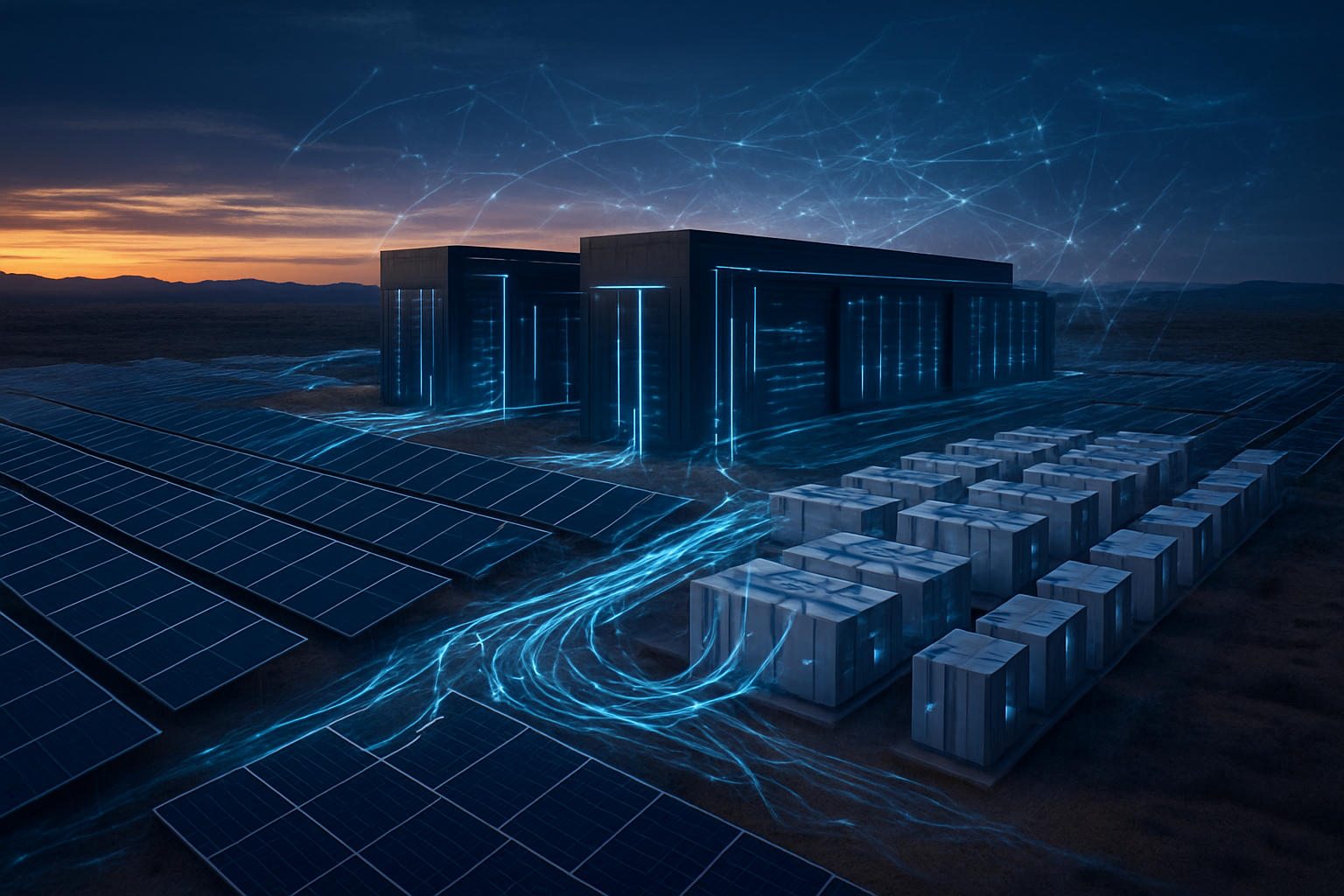
  • Chip Stocks Set to Soar in 2026: A Deep Dive into the Semiconductor Boom

    Chip Stocks Set to Soar in 2026: A Deep Dive into the Semiconductor Boom

    The semiconductor industry is poised for an unprecedented boom in 2026, with investor confidence reaching new heights. Projections indicate the global semiconductor market is on track to approach or even exceed the trillion-dollar mark, driven by a confluence of transformative technological advancements and insatiable demand across diverse sectors. This robust outlook signals a highly attractive investment climate, with significant opportunities for growth in key areas like logic and memory chips.

    This bullish sentiment is not merely speculative; it's underpinned by fundamental shifts in technology and consumer behavior. The relentless rise of Artificial Intelligence (AI) and Generative AI (GenAI), the accelerating transformation of the automotive industry, and the pervasive expansion of 5G and the Internet of Things (IoT) are acting as powerful tailwinds. Governments worldwide are also pouring investments into domestic semiconductor manufacturing, further solidifying the industry's foundation and promising sustained growth well into the latter half of the decade.

    The Technological Bedrock: AI, Automotive, and Advanced Manufacturing

    The projected surge in the semiconductor market for 2026 is fundamentally rooted in groundbreaking technological advancements and their widespread adoption. At the forefront is the exponential growth of Artificial Intelligence (AI) and Generative AI (GenAI). These revolutionary technologies demand increasingly sophisticated and powerful chips, including advanced node processors, Graphics Processing Units (GPUs), Tensor Processing Units (TPUs), and Neural Processing Units (NPUs). This has led to a dramatic increase in demand for high-performance computing (HPC) chips and the expansion of data center infrastructure globally. Beyond simply powering AI applications, AI itself is transforming chip design, accelerating development cycles, and optimizing layouts for superior performance and energy efficiency. Sales of AI-specific chips are projected to exceed $150 billion in 2025, with continued upward momentum into 2026, marking a significant departure from previous chip cycles driven primarily by PCs and smartphones.

    Another critical driver is the profound transformation occurring within the automotive industry. The shift towards Electric Vehicles (EVs), Advanced Driver-Assistance Systems (ADAS), and fully Software-Defined Vehicles (SDVs) is dramatically increasing the semiconductor content in every new car. This fuels demand for high-voltage power semiconductors like Silicon Carbide (SiC) and Gallium Nitride (GaN) for EVs, alongside complex sensors and processors essential for autonomous driving technologies. The automotive sector is anticipated to be one of the fastest-growing segments, with an expected annual growth rate of 10.7%, far outpacing traditional automotive component growth. This represents a fundamental change from past automotive electronics, which were less complex and integrated.

    Furthermore, the global rollout of 5G connectivity and the pervasive expansion of Internet of Things (IoT) devices, coupled with the rise of edge computing, are creating substantial demand for high-performance, energy-efficient semiconductors. AI chips embedded directly into IoT devices enable real-time data processing, reducing latency and enhancing efficiency. This distributed intelligence paradigm is a significant evolution from centralized cloud processing, requiring a new generation of specialized, low-power AI-enabled chips. The AI research community and industry experts have largely reacted with enthusiasm, recognizing these trends as foundational for the next era of computing and connectivity. However, concerns about the sheer scale of investment required for cutting-edge fabrication and the increasing complexity of chip design remain pertinent discussion points.

    Corporate Beneficiaries and Competitive Dynamics

    The impending semiconductor boom of 2026 will undoubtedly reshape the competitive landscape, creating clear winners among AI companies, tech giants, and innovative startups. Companies specializing in Logic and Memory are positioned to be the primary beneficiaries, as these segments are forecast to expand by over 30% year-over-year in 2026, predominantly fueled by AI applications. This highlights substantial opportunities for companies like NVIDIA Corporation (NASDAQ: NVDA), which continues to dominate the AI accelerator market with its GPUs, and memory giants such as Micron Technology, Inc. (NASDAQ: MU) and Samsung Electronics Co., Ltd. (KRX: 005930), which are critical suppliers of high-bandwidth memory (HBM) and server DRAM. Their strategic advantages lie in their established R&D capabilities, manufacturing prowess, and deep integration into the AI supply chain.

    The competitive implications for major AI labs and tech companies are significant. Firms that can secure consistent access to advanced node chips and specialized AI hardware will maintain a distinct advantage in developing and deploying cutting-edge AI models. This creates a critical interdependence between hardware providers and AI developers. Tech giants like Alphabet Inc. (NASDAQ: GOOGL) and Amazon.com, Inc. (NASDAQ: AMZN), with their extensive cloud infrastructure and AI initiatives, will continue to invest heavily in custom AI silicon and securing supply from leading foundries like Taiwan Semiconductor Manufacturing Company Limited (NYSE: TSM). TSMC, as the world's largest dedicated independent semiconductor foundry, is uniquely positioned to benefit from the demand for leading-edge process technologies.

    Potential disruption to existing products or services is also on the horizon. Companies that fail to adapt to the demands of AI-driven computing or cannot secure adequate chip supply may find their offerings becoming less competitive. Startups innovating in niche areas such as neuromorphic computing, quantum computing components, or specialized AI accelerators for edge devices could carve out significant market positions, potentially challenging established players in specific segments. Market positioning will increasingly depend on a company's ability to innovate at the hardware-software interface, ensuring their chips are not only powerful but also optimized for the specific AI workloads of the future. The emphasis on financial health and sustainability, coupled with strong cash generation, will be crucial for companies to support the massive capital expenditures required to maintain technological leadership and investor trust.

    Broader Significance and Societal Impact

    The anticipated semiconductor surge in 2026 fits seamlessly into the broader AI landscape and reflects a pivotal moment in technological evolution. This isn't merely a cyclical upturn; it represents a foundational shift driven by the pervasive integration of AI into nearly every facet of technology and society. The demand for increasingly powerful and efficient chips underpins the continued advancement of generative AI, autonomous systems, advanced scientific computing, and hyper-connected environments. This era is marked by a transition from general-purpose computing to highly specialized, AI-optimized hardware, a trend that will define technological progress for the foreseeable future.

    The impacts of this growth are far-reaching. Economically, it will fuel job creation in high-tech manufacturing, R&D, and software development. Geopolitically, the strategic importance of semiconductor manufacturing and supply chain resilience will continue to intensify, as evidenced by global initiatives like the U.S. CHIPS Act and similar programs in Europe and Asia. These investments aim to reduce reliance on concentrated manufacturing hubs and bolster technological sovereignty, but they also introduce complexities related to international trade and technology transfer. Environmentally, there's an increasing focus on sustainable and green semiconductors, addressing the significant energy consumption associated with advanced manufacturing and large-scale data centers.

    Potential concerns, however, accompany this rapid expansion. Persistent supply chain volatility, particularly for advanced node chips and high-bandwidth memory (HBM), is expected to continue well into 2026, driven by insatiable AI demand. This could lead to targeted shortages and sustained pricing pressures. Geopolitical tensions and export controls further exacerbate these risks, compelling companies to adopt diversified supplier strategies and maintain strategic safety stocks. Comparisons to previous AI milestones, such as the deep learning revolution, suggest that while the current advancements are profound, the scale of hardware investment and the systemic integration of AI represent an unprecedented phase of technological transformation, with potential societal implications ranging from job displacement to ethical considerations in autonomous decision-making.

    The Horizon: Future Developments and Challenges

    Looking ahead, the semiconductor industry is set for a dynamic period of innovation and expansion, with several key developments on the horizon for 2026 and beyond. Near-term, we can expect continued advancements in 3D chip stacking and chiplet architectures, which allow for greater integration density and improved performance by combining multiple specialized dies into a single package. This modular approach is becoming crucial for overcoming the physical limitations of traditional monolithic chip designs. Further refinement in neuromorphic computing and quantum computing components will also gain traction, though their widespread commercial application may extend beyond 2026. Experts predict a relentless pursuit of higher power efficiency, particularly for AI accelerators, to manage the escalating energy demands of large-scale AI models.

    Potential applications and use cases are vast and continue to expand. Beyond data centers and autonomous vehicles, advanced semiconductors will power the next generation of augmented and virtual reality devices, sophisticated medical diagnostics, smart city infrastructure, and highly personalized AI assistants embedded in everyday objects. The integration of AI chips directly into edge devices will enable more intelligent, real-time processing closer to the data source, reducing latency and enhancing privacy. The proliferation of AI into industrial automation and robotics will also create new markets for specialized, ruggedized semiconductors.

    However, significant challenges need to be addressed. The escalating cost of developing and manufacturing leading-edge chips continues to be a major hurdle, requiring immense capital expenditure and fostering consolidation within the industry. The increasing complexity of chip design necessitates advanced Electronic Design Automation (EDA) tools and highly skilled engineers, creating a talent gap. Furthermore, managing the environmental footprint of semiconductor manufacturing and the power consumption of AI systems will require continuous innovation in materials science and energy efficiency. Experts predict that the interplay between hardware and software optimization will become even more critical, with co-design approaches becoming standard to unlock the full potential of next-generation AI. Geopolitical stability and securing resilient supply chains will remain paramount concerns for the foreseeable future.

    A New Era of Silicon Dominance

    In summary, the semiconductor industry is entering a transformative era, with 2026 poised to mark a significant milestone in its growth trajectory. The confluence of insatiable demand from Artificial Intelligence, the profound transformation of the automotive sector, and the pervasive expansion of 5G and IoT are driving unprecedented investor confidence and pushing global market revenues towards the trillion-dollar mark. Key takeaways include the critical importance of logic and memory chips, the strategic positioning of companies like NVIDIA, Micron, Samsung, and TSMC, and the ongoing shift towards specialized, AI-optimized hardware.

    This development's significance in AI history cannot be overstated; it represents the hardware backbone essential for realizing the full potential of the AI revolution. The industry is not merely recovering from past downturns but is fundamentally re-architecting itself to meet the demands of a future increasingly defined by intelligent systems. The massive capital investments, relentless innovation in areas like 3D stacking and chiplets, and the strategic governmental focus on supply chain resilience underscore the long-term impact of this boom.

    What to watch for in the coming weeks and months includes further announcements regarding new AI chip architectures, advancements in manufacturing processes, and the strategic partnerships formed between chip designers and foundries. Investors should also closely monitor geopolitical developments and their potential impact on supply chains, as well as the ongoing efforts to address the environmental footprint of this rapidly expanding industry. The semiconductor sector is not just a participant in the AI revolution; it is its very foundation, and its continued evolution will shape the technological landscape for decades to come.


    This content is intended for informational purposes only and represents analysis of current AI developments.

    TokenRing AI delivers enterprise-grade solutions for multi-agent AI workflow orchestration, AI-powered development tools, and seamless remote collaboration platforms.
    For more information, visit https://www.tokenring.ai/.