Tag: Amazon Bedrock

  • The Great UI Takeover: How Anthropic’s ‘Computer Use’ Redefined the Digital Workspace

    The Great UI Takeover: How Anthropic’s ‘Computer Use’ Redefined the Digital Workspace

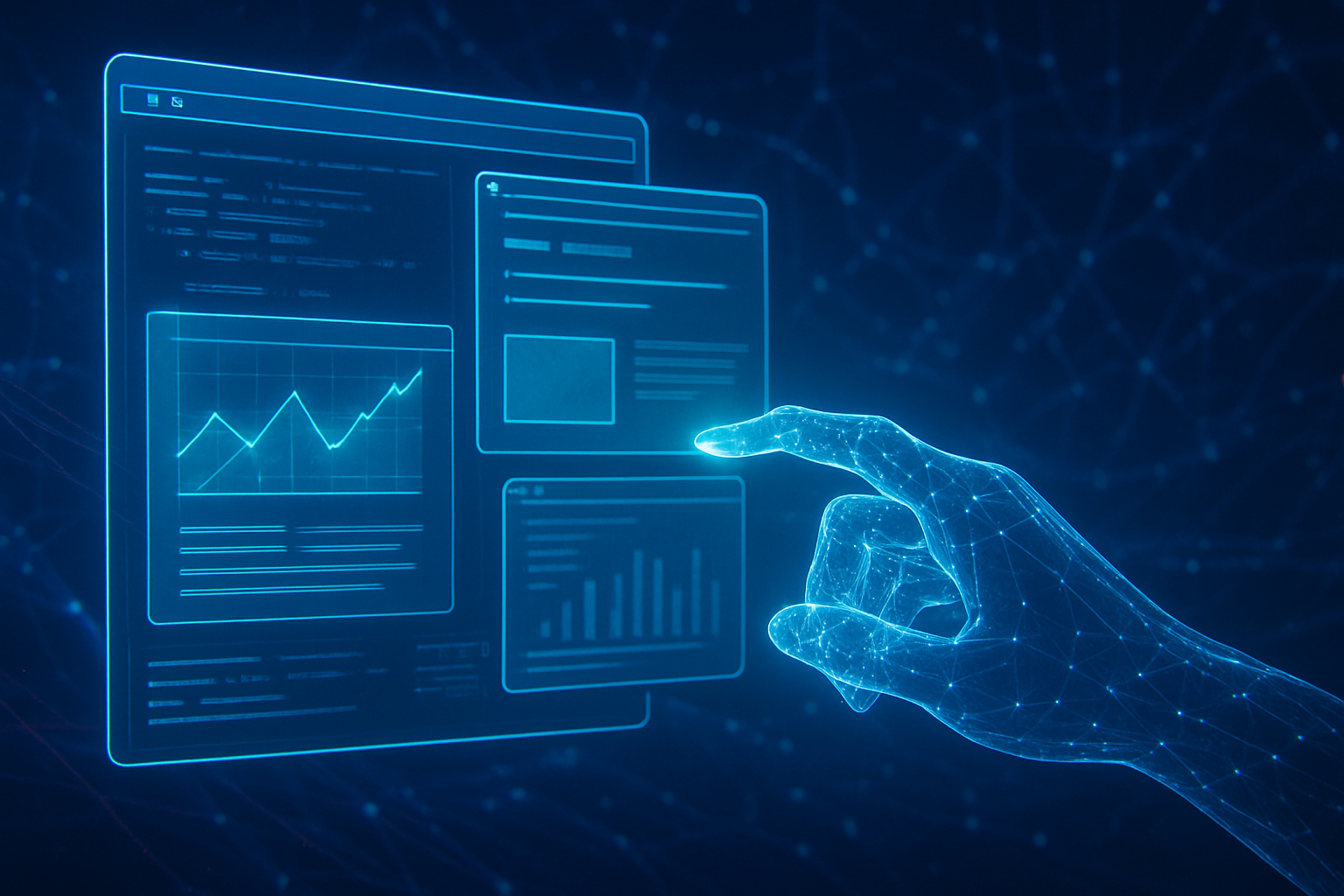
    In the fast-evolving landscape of artificial intelligence, a single breakthrough in late 2024 fundamentally altered the relationship between humans and machines. Anthropic’s introduction of "Computer Use" for its Claude 3.5 Sonnet model marked the first time a major AI lab successfully enabled a Large Language Model (LLM) to interact with software exactly as a human does. By viewing screens, moving cursors, and clicking buttons, Claude effectively transitioned from a passive chatbot into an active "digital worker," capable of navigating complex workflows across multiple applications without the need for specialized APIs.

    As we move through early 2026, this capability has matured from a developer-focused beta into a cornerstone of enterprise productivity. The shift has sparked a massive realignment in the tech industry, moving the goalposts from simple text generation to "agentic" autonomy. No longer restricted to the confines of a chat box, AI agents are now managing spreadsheets, conducting market research across dozens of browser tabs, and even performing legacy data entry—tasks that were previously thought to be the exclusive domain of human cognitive labor.

    The Vision-Action Loop: Bridging the Gap Between Pixels and Productivity

    At its core, Anthropic’s Computer Use technology operates on what engineers call a "Vision-Action Loop." Unlike traditional Robotic Process Automation (RPA), which relies on rigid scripts and back-end code that breaks if a UI element shifts by a few pixels, Claude interprets the visual interface of a computer in real-time. The model takes a series of rapid screenshots—effectively a "flipbook" of the desktop environment—and uses high-level reasoning to identify buttons, text fields, and icons. It then calculates the precise (x, y) coordinates required to move the cursor and execute commands via a virtual keyboard and mouse.

    The technical leap was evidenced by the model’s performance on the OSWorld benchmark, a grueling test of an AI's ability to operate open-ended computer environments. At its October 2024 launch, Claude 3.5 Sonnet scored a then-unprecedented 14.9% in the screenshot-only category—doubling the capabilities of its nearest competitors. By late 2025, with the release of the Claude 4 series and the integration of a specialized "Thinking" layer, these scores surged past 60%, nearing human-level proficiency in navigating file systems and web browsers. This evolution was bolstered by the Model Context Protocol (MCP), an open standard that allowed Claude to securely pull context from local files and databases to inform its visual decisions.

    Initial reactions from the research community were a mix of awe and caution. Experts noted that while the model was exceptionally good at reasoning through a UI, the "hallucinated click" problem—where the AI misinterprets a button or gets stuck in a loop—required significant safety guardrails. To combat this, Anthropic implemented a "Human-in-the-Loop" architecture for sensitive tasks, ensuring that while the AI could move the mouse, a human operator remained the final arbiter for high-stakes actions like financial transfers or system deletions.

    Strategic Realignment: The Battle for the Agentic Desktop

    The emergence of Computer Use has triggered a strategic arms race among the world’s largest technology firms. Amazon.com, Inc. (NASDAQ: AMZN) was among the first to capitalize on the technology, integrating Claude’s agentic capabilities into its Amazon Bedrock platform. This move solidified Amazon’s position as a primary infrastructure provider for "AI agents," allowing corporate clients to deploy autonomous workers directly within their cloud environments. Alphabet Inc. (NASDAQ: GOOGL) followed suit, leveraging its Google Cloud Vertex AI to offer similar capabilities, eventually providing Anthropic with massive TPU (Tensor Processing Unit) clusters to scale the intensive visual processing required for these models.

    The competitive implications for Microsoft Corporation (NASDAQ: MSFT) have been equally profound. While Microsoft has long dominated the workplace through its Windows OS and Office suite, the ability for an external AI like Claude to "see" and "use" Windows applications challenged the company's traditional software moat. Microsoft responded by integrating similar "Action" agents into its Copilot ecosystem, but Anthropic’s model-agnostic approach—the ability to work on any OS—gave it a unique strategic advantage in heterogeneous enterprise environments.

    Furthermore, specialized players like Palantir Technologies Inc. (NYSE: PLTR) have integrated Claude’s Computer Use into defense and government sectors. By 2025, Palantir’s "AIP" (Artificial Intelligence Platform) was using Claude to automate complex logistical analysis that previously took teams of analysts days to complete. Even Salesforce, Inc. (NYSE: CRM) has felt the disruption, as Claude-driven agents can now perform CRM data entry and lead management autonomously, bypassing traditional UI-heavy workflows and moving toward a "headless" enterprise model.

    Security, Safety, and the Road to AGI

    The broader significance of Claude’s computer interaction capability cannot be overstated. It represents a major milestone on the road to Artificial General Intelligence (AGI). By mastering the human interface, AI models have effectively bypassed the need for every software application to have a modern API. This has profound implications for "legacy" industries—such as banking, healthcare, and government—where critical data is often trapped in decades-old software that doesn't play well with modern tools.

    However, this breakthrough has also heightened concerns regarding AI safety and security. The prospect of an autonomous agent that can navigate a computer as a user raises the stakes for "prompt injection" attacks. If a malicious website can trick a visiting AI agent into clicking a "delete account" button or exporting sensitive data, the consequences are far more severe than a simple chat hallucination. In response, 2025 saw a flurry of new security standards focused on "Agentic Permissioning," where users grant AI agents specific, time-limited permissions to interact with certain folders or applications.

    Comparing this to previous milestones, if the release of GPT-4 was the "brain" moment for AI, Claude’s Computer Use was the "hands" moment. It provided the physical-digital interface necessary for AI to move from theory to execution. This transition has sparked a global debate about the future of work, as the line between "software that assists humans" and "software that replaces tasks" continues to blur.

    The 2026 Outlook: From Tools to Teammates

    Looking ahead, the near-term developments in Computer Use are focused on reducing latency and improving multi-modal reasoning. By the end of 2026, experts predict that "Autonomous Personal Assistants" will be a standard feature on most high-end consumer hardware. We are already seeing the first iterations of "Claude Cowork," a consumer-facing application that allows non-technical users to delegate entire projects—such as organizing a vacation or reconciling monthly expenses—with a single natural language command.

    The long-term challenge remains the "Reliability Gap." While Claude can now handle 95% of common UI tasks, the final 5%—handling unexpected pop-ups, network lag, or subtle UI changes—requires a level of common sense that is still being refined. Developers are currently working on "Long-Horizon Planning," which would allow Claude to maintain focus on a single task for hours or even days, checking its own work and correcting errors as it goes.

    What experts find most exciting is the potential for "Cross-App Intelligence." Imagine an AI that doesn't just write a report, but opens your email to gather data, uses Excel to analyze it, creates charts in PowerPoint, and then uploads the final product to a company Slack channel—all without a single human click. This is no longer a futuristic vision; it is the roadmap for the next eighteen months.

    A New Era of Human-Computer Interaction

    The introduction and subsequent evolution of Claude’s Computer Use have fundamentally changed the nature of computing. We have moved from an era where humans had to learn the "language" of computers—menus, shortcuts, and syntax—to an era where computers are learning the language of humans. The UI is no longer a barrier; it is a shared playground where humans and AI agents work side-by-side.

    The key takeaway from this development is the shift from "Generative AI" to "Agentic AI." The value of a model is no longer measured solely by the quality of its prose, but by the efficiency of its actions. As we watch this technology continue to permeate the enterprise and consumer sectors, the long-term impact will be measured in the trillions of hours of mundane digital labor that are reclaimed for more creative and strategic endeavors.

    In the coming weeks, keep a close eye on new "Agentic Security" protocols and the potential announcement of Claude 5, which many believe will offer the first "Zero-Latency" computer interaction experience. The era of the digital teammate has not just arrived; it is already hard at work.


    This content is intended for informational purposes only and represents analysis of current AI developments.

    TokenRing AI delivers enterprise-grade solutions for multi-agent AI workflow orchestration, AI-powered development tools, and seamless remote collaboration platforms.
    For more information, visit https://www.tokenring.ai/.
  • IBM and AWS Forge “Agentic Alliance” to Scale Autonomous AI Across the Global 2000

    IBM and AWS Forge “Agentic Alliance” to Scale Autonomous AI Across the Global 2000

    In a move that signals the end of the "Copilot" era and the dawn of autonomous digital labor, International Business Machines Corp. (NYSE: IBM) and Amazon.com, Inc. (NASDAQ: AMZN) announced a massive expansion of their strategic partnership during the AWS re:Invent 2025 conference earlier this month. The collaboration is specifically designed to help enterprises break out of "pilot purgatory" by providing a unified, industrial-grade framework for deploying Agentic AI—autonomous systems capable of reasoning, planning, and executing complex, multi-step business processes with minimal human intervention.

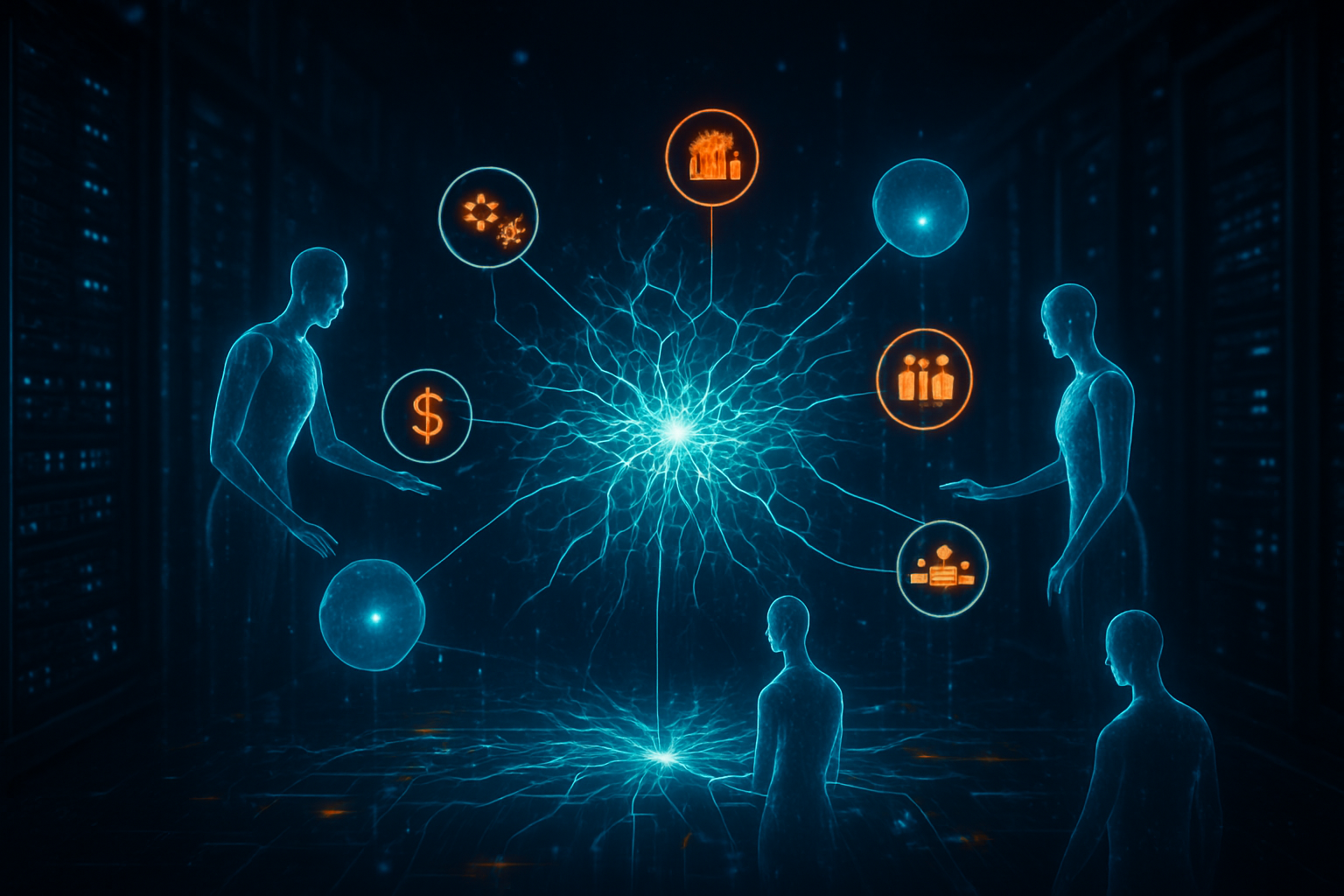
    The partnership centers on the deep technical integration of IBM watsonx Orchestrate with Amazon Bedrock’s newly matured AgentCore infrastructure. By combining IBM’s deep domain expertise and governance frameworks with the massive scale and model diversity of AWS, the two tech giants are positioning themselves as the primary architects of the "Agentic Enterprise." This alliance aims to provide the Global 2000 with the tools necessary to move beyond simple chatbots and toward a workforce of specialized AI agents that can manage everything from supply chain logistics to complex regulatory compliance.

    The Technical Backbone: watsonx Orchestrate Meets Bedrock AgentCore

    The centerpiece of this announcement is the seamless integration between IBM watsonx Orchestrate and Amazon Bedrock AgentCore. This integration creates a unified "control plane" for Agentic AI, allowing developers to build agents in the watsonx environment that natively leverage Bedrock’s advanced capabilities. Key technical features include the adoption of AgentCore Memory, which provides agents with both short-term conversational context and long-term user preference retention, and AgentCore Observability, an OpenTelemetry-compatible tracing system that allows IT teams to monitor every "thought" and action an agent takes for auditing purposes.

    A standout technical innovation introduced in this partnership is ContextForge, an open-source Model Context Protocol (MCP) gateway and registry. Running on AWS serverless infrastructure, ContextForge acts as a digital "traffic cop," enabling agents to securely discover, authenticate, and interact with thousands of legacy APIs and enterprise data sources without the need for bespoke integration code. This solves one of the primary hurdles of Agentic AI: the "tool-use" problem, where agents often struggle to interact with non-AI software.

    Furthermore, the partnership grants enterprises unprecedented model flexibility. Through Amazon Bedrock, IBM’s orchestrator can now toggle between high-reasoning models like Anthropic’s Claude 3.5, Amazon’s own Nova series, and IBM’s specialized Granite models. This allows for a "best-of-breed" approach where a Granite model might handle a highly regulated financial calculation while a Claude model handles the natural language communication with a client, all within the same agentic workflow.

    To accelerate the creation of these agents, IBM also unveiled Project Bob, an AI-first Integrated Development Environment (IDE) built on VS Code. Project Bob is designed specifically for agentic lifecycle management, featuring "review modes" where AI agents proactively flag security vulnerabilities in code and assist in migrating legacy systems—such as transitioning Java 8 applications to Java 17—directly onto the AWS cloud.

    Shifting the Competitive Landscape: The Battle for "Trust Supremacy"

    The IBM/AWS alliance significantly alters the competitive dynamics of the AI market, which has been dominated by the rivalry between Microsoft Corp. (NASDAQ: MSFT) and Alphabet Inc. (NASDAQ: GOOGL). While Microsoft has focused on embedding "Agent 365" into its ubiquitous Office suite and Google has championed its "Agent2Agent" (A2A) protocol for high-performance multimodal reasoning, the IBM/AWS partnership is carving out a niche as the "neutral" and "sovereign" choice for highly regulated industries.

    By focusing on Hybrid Cloud and Sovereign AI, IBM and AWS are targeting sectors like banking, healthcare, and government, where data cannot simply be handed over to a single-cloud ecosystem. IBM’s recent achievement of FedRAMP authorization for 11 software solutions on AWS GovCloud further solidifies this lead, allowing federal agencies to deploy autonomous agents in environments that meet the highest security standards. This "Trust Supremacy" strategy is a direct challenge to Salesforce, Inc. (NYSE: CRM), which has seen rapid adoption of its Agentforce platform but remains largely confined to the CRM data silo.

    Industry analysts suggest that this partnership benefits both companies by playing to their historical strengths. AWS gains a massive consulting and implementation arm through IBM Consulting, which has already been named a launch partner for the new AWS Agentic AI Specialization. Conversely, IBM gains a world-class infrastructure partner that allows its watsonx platform to scale globally without the capital expenditure required to build its own massive data centers.

    The Wider Significance: From Assistants to Digital Labor

    This partnership marks a pivotal moment in the broader AI landscape, representing the formal transition from "Generative AI" (focused on content creation) to "Agentic AI" (focused on action). For the past two years, the industry has focused on "Copilots" that require constant human prompting. The IBM/AWS integration moves the needle toward "Digital Labor," where agents operate autonomously in the background, only surfacing to a human "manager" when an exception occurs or a final approval is required.

    The implications for enterprise productivity are profound. Early reports from financial services firms using the joint IBM/AWS stack indicate a 67% increase in task speed for complex workflows like loan approval and a 41% reduction in errors. However, this shift also brings significant concerns regarding "agent sprawl"—a phenomenon where hundreds of autonomous agents operating independently could create unpredictable systemic risks. The focus on governance and observability in the watsonx-Bedrock integration is a direct response to these fears, positioning safety as a core feature rather than an afterthought.

    Comparatively, this milestone is being likened to the "Cloud Wars" of the early 2010s. Just as the shift to cloud computing redefined corporate IT, the shift to Agentic AI is expected to redefine the corporate workforce. The IBM/AWS alliance suggests that the winners of this era will not just be those with the smartest models, but those who can most effectively govern a decentralized "population" of digital agents.

    Looking Ahead: The Road to the Agentic Economy

    In the near term, the partnership is doubling down on SAP S/4HANA modernization. A specific Strategic Collaboration Agreement will see autonomous agents deployed to automate core SAP processes in finance and supply chain management, such as automated invoice reconciliation and real-time supplier risk assessment. These "out-of-the-box" agents are expected to be a major revenue driver for both companies in 2026.

    Long-term, the industry is watching for the emergence of a true Agent-to-Agent (A2A) economy. Experts predict that within the next 18 to 24 months, we will see IBM-governed agents on AWS negotiating directly with Salesforce agents or Microsoft agents to settle cross-company contracts and logistics. The challenge will be establishing a universal protocol for these interactions; while IBM is betting on the Model Context Protocol (MCP), the battle for the industry standard is far from over.

    The next few months will be critical as the first wave of "Agentic-first" enterprises goes live. Watch for updates on how these systems handle "edge cases" and whether the governance frameworks provided by IBM can truly prevent the hallucination-driven errors that plagued earlier iterations of LLM deployments.

    A New Era of Enterprise Autonomy

    The expanded partnership between IBM and AWS represents a sophisticated maturation of the AI market. By integrating watsonx Orchestrate with Amazon Bedrock, the two companies have created a formidable platform that addresses the three biggest hurdles to AI adoption: integration, scale, and trust. This is no longer about experimenting with prompts; it is about building the digital infrastructure of the next century.

    As we look toward 2026, the success of this alliance will be measured by how many "Digital Employees" are successfully onboarded into the global workforce. For the CIOs of the Global 2000, the message is clear: the time for pilots is over, and the era of the autonomous enterprise has arrived. The coming weeks will likely see a flurry of "Agentic transformation" announcements as competitors scramble to match the depth of the IBM/AWS integration.


    This content is intended for informational purposes only and represents analysis of current AI developments.

    TokenRing AI delivers enterprise-grade solutions for multi-agent AI workflow orchestration, AI-powered development tools, and seamless remote collaboration platforms.
    For more information, visit https://www.tokenring.ai/.