Tag: Amazon

  • Tech Titans Fuel Market Rally with AI Innovations: Apple, Amazon Lead the Charge, Netflix Makes Hollywood Moves

    Tech Titans Fuel Market Rally with AI Innovations: Apple, Amazon Lead the Charge, Netflix Makes Hollywood Moves

    As of late October 2025, the tech industry continues to be a powerful engine for market rallies, with giants like Apple (NASDAQ: AAPL) and Amazon (NASDAQ: AMZN) at the forefront, demonstrating sustained growth and influence. Despite earlier market jitters over escalating AI infrastructure spending, robust earnings reports and strategic advancements in artificial intelligence have reignited investor confidence, pushing these companies to new heights. This resurgence is not merely a reflection of market sentiment but a testament to profound underlying technological innovations, with AI serving as the primary catalyst for their continued expansion and competitive edge.

    Apple, fresh off a strong fiscal Q4 2025, saw its market capitalization briefly eclipse the $4 trillion mark, propelled by record services revenue and the anticipation surrounding its privacy-centric AI initiatives like Apple Intelligence. Similarly, Amazon's impressive Q3 2025 results, driven by the explosive growth of Amazon Web Services (AWS) and significant investments in custom AI chips and infrastructure, sent its stock soaring. Meanwhile, Netflix (NASDAQ: NFLX) is quietly but effectively integrating generative AI into its content production and advertising strategies, signaling a broader industry shift towards AI-powered operational enhancements and new viewer experiences, even amidst a slight dip in its stock after a tax-related earnings miss. These developments underscore a pivotal moment where technological leadership, particularly in AI, directly translates into market dominance and sets the stage for the next era of digital transformation.

    Underlying Technological Innovations and AI Paradigms

    The recent market dynamism is deeply rooted in the distinct and ambitious technological advancements spearheaded by these tech titans, particularly in the realm of artificial intelligence. Each company is carving out its unique niche, pushing the boundaries of what AI can achieve, from on-device privacy-centric intelligence to expansive cloud-based AI infrastructure and generative AI-powered content creation.

    Apple's (NASDAQ: AAPL) strategy revolves around deeply embedding AI into its ecosystem with Apple Intelligence, a suite of generative AI models designed for iOS 18, iPadOS 18, and macOS Sequoia. This approach prioritizes privacy and on-device processing, leveraging its custom Apple Silicon chips and Neural Engine to perform complex machine learning tasks locally. This allows for features like custom-generated emojis, advanced photo editing, sophisticated writing assistance, and a more contextually aware Siri—a fully AI-powered version of which is anticipated in 2026. A significant departure from its historically closed ecosystem, Apple is also embracing a multi-model strategy, integrating third-party AI models like OpenAI's ChatGPT, with rumored discussions underway for Google's Gemini, Anthropic, and Perplexity. This shift distinguishes Apple by offering a hybrid AI experience that combines the best of on-device privacy with the power of leading cloud-based models, directly addressing the capabilities of competitors while maintaining its core privacy principles.

    Amazon (NASDAQ: AMZN), through its powerhouse Amazon Web Services (AWS), is positioning itself as the foundational layer for enterprise AI. Its strategy is characterized by aggressive investment in custom AI hardware and a comprehensive suite of cloud-based machine learning services. AWS Bedrock has expanded significantly, now offering access to a broader array of foundation models from partners like OpenAI, DeepSeek, and Anthropic, alongside its own proprietary models. Crucially, Amazon's commitment to custom AI silicon is evident with the strong adoption of its Trainium2 chips, which have become a multi-billion-dollar business, experiencing 150% quarter-over-quarter growth. The company further solidified its infrastructure leadership with Project Rainier, a massive AI compute cluster featuring nearly 500,000 Trainium2 chips dedicated to training Anthropic's Claude AI models, and the introduction of new Amazon EC2 P6e-GB200 UltraServers utilizing NVIDIA Grace Blackwell Superchips. This focus on scalable, high-performance, and cost-efficient AI infrastructure via AWS, coupled with internal AI tools like "Quick Suite" and "Transform" for employee productivity, sets Amazon apart as a key enabler of the global AI revolution.

    Netflix (NASDAQ: NFLX) is demonstrating a practical and impactful application of generative AI directly within its core business: content creation and viewer experience. While AI has long powered its recommendation engine, the streaming giant is now integrating generative AI into its production pipeline. A notable example is the Argentine sci-fi series "El Eternauta," which utilized AI for visual effects, reportedly achieving results ten times faster and at a lower cost than traditional methods for scenes like a collapsing building. This move showcases a shift from purely analytical AI to creative AI, enhancing production workflows rather than replacing human creativity. Furthermore, Netflix is deploying generative AI in its advertising systems, preparing to launch interactive, AI-driven ads in the latter half of 2025 that dynamically adjust to viewer interests. The company has also rolled out new conversational AI experiences for title search, further refining content discovery. These advancements highlight Netflix's pragmatic approach to leveraging AI for operational efficiency, innovative content delivery, and enhanced monetization, demonstrating a tangible return on AI investment in a highly competitive entertainment landscape.

    Initial reactions from the AI research community and industry experts have largely lauded these strategic moves. Apple's multi-model AI integration is seen as a pragmatic acknowledgment of the diverse strengths of different AI systems, while its on-device approach is praised for advancing privacy in generative AI. Amazon's relentless pursuit of custom silicon and massive compute clusters through AWS is viewed as critical for scaling the next generation of AI models and democratizing access for enterprises. Netflix's direct application of generative AI in content production is considered a significant step towards industrializing creative AI, offering a glimpse into the future of media production where AI tools augment human artistry and efficiency.

    Competitive Landscape and Corporate Impact

    The aggressive AI advancements by Apple (NASDAQ: AAPL), Amazon (NASDAQ: AMZN), and Netflix (NASDAQ: NFLX) are reshaping the competitive landscape across multiple industries, creating both immense opportunities and significant challenges for established tech giants, emerging AI labs, and startups alike. These developments solidify the market leaders' positions while simultaneously fostering an environment ripe for strategic partnerships and potential disruptions.

    Apple's foray into on-device AI with Apple Intelligence, coupled with its willingness to integrate third-party models, presents a dual impact. For Apple, it enhances the value proposition of its entire hardware and software ecosystem, driving both device sales and its burgeoning services revenue—a division that saw 15% growth in its latest fiscal quarter. This strategy also helps Apple directly compete with Google (NASDAQ: GOOGL) and Microsoft (NASDAQ: MSFT) in the generative AI space, where it had previously lagged. For leading AI labs like OpenAI, Anthropic, and potentially Google (with Gemini), securing integration into Apple's vast user base represents a massive distribution channel and validation of their models, opening up new revenue streams and accelerating their reach. However, this also intensifies competition among these AI model providers to secure prime positioning within Apple's ecosystem, potentially leading to a "winner-take-most" scenario for specific use cases. Startups focusing solely on cloud-based AI solutions might find it harder to compete with Apple's privacy-first, on-device processing unless they offer truly differentiated capabilities.

    Amazon's strategic focus on AI infrastructure through AWS has profound implications for the entire tech industry. By offering custom AI chips like Trainium2 and massive compute clusters such as Project Rainier, Amazon is not just participating in the AI race; it's building the very tracks on which the race is run. This benefits not only Amazon by cementing AWS's dominance in cloud computing and attracting top-tier AI developers, but also a myriad of AI startups and enterprises that rely on AWS for their computational needs. The strong adoption of Trainium2 and the launch of new NVIDIA Grace Blackwell Superchip-powered UltraServers underscore Amazon's commitment to providing cutting-edge, scalable AI compute. This competitive advantage in infrastructure could disrupt traditional hardware manufacturers and smaller cloud providers, making it difficult for them to match Amazon's scale and cost efficiencies. Furthermore, Amazon's substantial investment in Anthropic, yielding a $9.5 billion pre-tax gain, positions it as a key player in the development and deployment of leading-edge foundation models, potentially giving AWS customers early or preferential access to advanced AI capabilities.

    Netflix's integration of generative AI into content production and advertising signals a significant shift in the entertainment industry. For Netflix, these innovations promise efficiency gains in content creation, potentially leading to faster production cycles and cost savings, as demonstrated by "El Eternauta." The introduction of interactive, AI-driven ads could unlock new monetization avenues and enhance advertiser appeal, directly impacting its revenue growth. This move puts pressure on traditional studios and other streaming services to adopt similar AI-powered workflows to remain competitive in content volume, quality, and cost-effectiveness. While AI is augmenting human creativity rather than replacing it, this development could lead to a restructuring of roles within Hollywood, with new demands for AI-savvy creatives and technicians. For AI startups specializing in creative tools or advertising technology, Netflix's adoption creates a massive market opportunity, but also necessitates robust, ethically sound, and scalable solutions that can integrate seamlessly into large-scale production environments.

    Broader AI Landscape and Societal Implications

    The current wave of AI integration by tech giants like Apple, Amazon, and Netflix transcends mere product updates; it signifies a profound shift in the broader AI landscape, marking a new era of practical, pervasive, and economically impactful artificial intelligence. This moment can be likened to previous technological inflection points, such as the advent of the internet or mobile computing, as AI moves from a specialized domain to a fundamental driver of innovation across diverse sectors, from consumer electronics to cloud infrastructure and creative industries.

    These developments underscore several key trends in the AI world. Firstly, the emphasis on hybrid AI deployments is growing, as exemplified by Apple's blend of on-device privacy-preserving AI with selective cloud-based models. This reflects an industry-wide effort to balance performance, scalability, and data privacy. Secondly, the democratization of advanced AI capabilities through cloud platforms like AWS Bedrock, coupled with specialized hardware, is accelerating. Amazon's massive investments in custom AI chips and compute clusters make cutting-edge AI accessible to a wider range of enterprises and startups, lowering the barrier to entry for developing and deploying sophisticated AI solutions. Thirdly, the practical application of generative AI in creative fields is becoming a reality, with Netflix leading the charge in content production and advertising. This moves AI beyond analytical tasks into generative roles, augmenting human creativity and opening new avenues for efficiency and innovation in media.

    However, this rapid advancement is not without its potential concerns. The escalating capital expenditure by Big Tech on AI infrastructure, while fueling market rallies, also raises questions about the concentration of AI power and resources within a few dominant players. This could create a widening gap between tech giants and smaller entities, potentially stifling competition and innovation in the long run. Ethical considerations surrounding the use of generative AI in content creation, including issues of intellectual property and potential job displacement in creative industries, remain paramount. While Netflix has established guidelines for responsible AI use, the broader industry will need robust frameworks to address these challenges. Furthermore, the sheer scale of data processing required for these AI systems continues to raise privacy concerns, even with efforts like Apple's on-device processing, highlighting an ongoing tension between AI utility and user data protection.

    Compared to previous AI milestones, such as the initial breakthroughs in machine learning for pattern recognition or the rise of deep learning for image and speech recognition, the current phase is characterized by generative AI's ability to create novel content and its direct integration into core business operations. Past AI innovations often served as backend enhancements; today, AI is becoming a front-facing, interactive, and transformative force. The collective efforts of Apple, Amazon, and Netflix illustrate a maturation of AI technology, where theoretical capabilities are now being translated into tangible products, services, and operational efficiencies that directly impact financial performance and consumer experience on a global scale. This marks a significant leap from specialized AI applications to pervasive, ecosystem-wide intelligence.

    The Road Ahead: Future Developments and Challenges

    Looking ahead, the trajectory set by Apple, Amazon, and Netflix points towards a future where AI becomes even more deeply embedded in every facet of technology, from personal devices to global cloud infrastructure and creative industries. The near-term promises a rapid evolution of existing AI capabilities, while the long-term forecasts revolutionary shifts in how we interact with technology and consume content.

    For Apple (NASDAQ: AAPL), the immediate future will see the maturation of Apple Intelligence, with a more advanced, personalized, and contextually aware Siri expected in 2026. The integration of additional third-party AI models beyond OpenAI, potentially including Google's Gemini, Anthropic, and Perplexity, will broaden the capabilities of its ecosystem, offering users unparalleled choice and flexibility. We can anticipate deeper AI integration within augmented reality (AR) experiences, particularly with advancements in the Vision Pro and future iPhone models, creating seamless blend of digital and physical worlds. Amazon (NASDAQ: AMZN) will continue its aggressive expansion of AWS AI services, with further iterations of custom AI chips like Trainium and the deployment of even larger compute clusters to meet the insatiable demand for AI training and inference. The focus will be on making secure, scalable AI agents via AWS Bedrock AgentCore more accessible for enterprises, alongside continued internal AI optimization through tools like "Quick Suite." Netflix (NASDAQ: NFLX) is poised to launch interactive, AI-driven ads in the latter half of 2025, promising a new frontier in personalized advertising. Expect generative AI to become even more pervasive in content production, not just for visual effects but potentially for script development, character design, and even dynamic content adaptation, pushing the boundaries of storytelling.

    However, this accelerated pace of innovation also brings significant challenges. The escalating cost of AI development and deployment, particularly the capital expenditure on advanced hardware, remains a critical concern, potentially widening the gap between tech behemoths and smaller players. Ethical considerations around generative AI—ensuring content integrity, preventing misuse, and navigating complex intellectual property rights—will demand robust solutions and industry-wide standards. While companies like Netflix are proactively developing internal guidelines, regulatory bodies will likely play an increasing role in shaping the ethical landscape of AI. Furthermore, the imperative to balance powerful AI capabilities with user privacy will intensify, requiring continuous innovation in areas like federated learning and secure multi-party computation. Experts predict a continued convergence of hardware and software, the emergence of more sophisticated multimodal AI, and the development of truly autonomous AI agents that can perform complex tasks with minimal human oversight. The next few years will be defined by how these tech giants navigate these opportunities and challenges, setting the precedent for the responsible and impactful deployment of artificial intelligence globally.

    Conclusion: A New Era of AI-Driven Growth

    The current market rally, substantially driven by the technological prowess of Apple, Amazon, and Netflix, marks a pivotal moment in the history of artificial intelligence. The key takeaway is clear: AI has moved beyond a theoretical or niche application to become the central engine for innovation, operational efficiency, and market value creation for the world's leading tech companies. Their distinct yet equally impactful approaches—Apple's privacy-centric on-device intelligence, Amazon's foundational cloud AI infrastructure, and Netflix's creative generative AI applications—collectively illustrate a mature and multifaceted AI ecosystem that is transforming industries from the ground up.

    This period stands as a significant milestone in AI history, demonstrating the technology's readiness for widespread commercial adoption and its capacity to directly influence financial markets and consumer experiences. Unlike earlier phases where AI was often an invisible backend process, we are now witnessing AI as a front-and-center feature, enabling new product capabilities, streamlining complex operations, and even generating creative content. The long-term impact will likely see AI becoming an indispensable layer across all digital interactions and services, fundamentally redefining user interfaces, business models, and creative workflows. The strategic investments and innovations by these tech titans are not merely incremental improvements but foundational shifts that will shape the competitive landscape for decades to come.

    In the coming weeks and months, industry observers should closely watch several key indicators. For Apple (NASDAQ: AAPL), the performance and user adoption of Apple Intelligence, particularly its multi-model integration strategy, will reveal how successfully it can leverage AI to further differentiate its ecosystem and drive services revenue. For Amazon (NASDAQ: AMZN), continued growth in AWS AI services and the expansion of its custom AI chip ecosystem will be crucial metrics for its leadership in foundational AI infrastructure. Netflix (NASDAQ: NFLX) will offer insights into the commercial viability and creative impact of generative AI in media production, especially with the rollout of interactive, AI-driven advertising. Beyond these individual companies, the broader implications—including the ongoing debate around AI ethics, the development of regulatory frameworks, and the potential for AI to foster both unprecedented growth and societal challenges—will remain critical areas of focus as the AI revolution continues to unfold.


    This content is intended for informational purposes only and represents analysis of current AI developments.

    TokenRing AI delivers enterprise-grade solutions for multi-agent AI workflow orchestration, AI-powered development tools, and seamless remote collaboration platforms.
    For more information, visit https://www.tokenring.ai/.
  • Amazon’s AI Gambit: 14,000 Corporate Jobs Cut as AI Investment Soars to Unprecedented Levels

    Amazon’s AI Gambit: 14,000 Corporate Jobs Cut as AI Investment Soars to Unprecedented Levels

    In a bold strategic maneuver that sent ripples across the global tech industry, Amazon.com Inc. (NASDAQ: AMZN) announced on October 28, 2025, its decision to eliminate approximately 14,000 corporate jobs while simultaneously accelerating its massive investments in artificial intelligence. This dual-pronged approach signals a profound reorientation for the e-commerce and cloud computing giant, prioritizing AI-driven efficiency and innovation over a larger human corporate footprint. The move underscores a growing trend within big tech to leverage advanced AI capabilities to streamline operations and unlock new growth vectors, even if it means significant workforce adjustments.

    The announcement, coinciding with the current date, highlights a critical juncture where AI is transitioning from a futuristic concept to a direct driver of corporate restructuring. Amazon's decision is poised to redefine its operational ethos, aiming for a "leaner and faster" organization akin to a startup, a vision championed by CEO Andy Jassy. While the immediate impact is a significant reduction in its corporate workforce, the long-term play is a calculated bet on AI as the ultimate engine for future profitability and market dominance.

    A Strategic Pivot: AI as the New Corporate Backbone

    Amazon's corporate restructuring, impacting an estimated 14,000 employees – roughly 4% of its corporate workforce – is not merely a cost-cutting measure but a strategic pivot towards an AI-first future. The layoffs are broad, affecting diverse departments including Human Resources (People Experience and Technology – PXT), Operations, Devices and Services (including Alexa and Fire TV teams), Prime Video, Amazon Studios, and even segments within its highly profitable Amazon Web Services (AWS) division, particularly in sales, marketing, and operations. These cuts, which began on October 28, 2025, are anticipated to continue into 2026, signaling an ongoing, deep-seated transformation.

    Concurrently, Amazon is pouring unprecedented capital into AI, with generative AI at the forefront. CEO Andy Jassy revealed in June 2025 that Amazon had over 1,000 generative AI services and applications either in progress or already launched, emphasizing that this is just the beginning. The company is committed to building more AI agents across all its business units. A significant portion of its projected capital expenditures, expected to exceed $100 billion in 2025, is earmarked for expanding AWS infrastructure specifically for AI. This includes pledging approximately $10 billion apiece for new data center projects in Mississippi, Indiana, Ohio, and North Carolina since early 2024. Furthermore, AWS has committed an additional $100 million to its Generative AI Innovation Center to accelerate the development and deployment of agentic AI systems for its customers.

    This strategic shift differs markedly from previous growth cycles, where Amazon's expansion often meant proportionate increases in its human workforce. Today, the narrative is about AI-driven efficiency, automation, and a deliberate reduction of bureaucracy. Jassy’s vision, which includes initiatives like a "Bureaucracy Mailbox" launched in September 2024 to solicit employee feedback on inefficiencies, aims to increase ownership and agility within teams. Initial reactions from analysts have been largely positive, viewing the layoffs as a necessary "deep cleaning" of the corporate workforce and a strong signal of commitment to AI, which is expected to yield significant productivity gains and margin improvements.

    Reshaping the AI Landscape: Competitive Implications and Market Dynamics

    Amazon's aggressive investment in AI, coupled with its corporate downsizing, has profound implications for the broader AI ecosystem, including rival tech giants, established AI labs, and burgeoning startups. By committing over $100 billion to AI infrastructure in 2025 and developing over a thousand generative AI services, Amazon is not just participating in the AI race; it's actively trying to lead it. This intensifies the competitive pressure on other hyperscalers like Microsoft Corp. (NASDAQ: MSFT), Alphabet Inc. (NASDAQ: GOOGL), and Meta Platforms Inc. (NASDAQ: META), compelling them to either match or exceed Amazon's pace of investment and integration.

    Companies that stand to benefit directly from Amazon’s AI surge include hardware providers specializing in AI chips (such as NVIDIA Corporation (NASDAQ: NVDA)), advanced cooling solutions, and specialized data center components. AI startups offering niche solutions for agentic AI systems, model customization, and enterprise-grade AI deployment (like those supported by AWS Bedrock AgentCore and Nova capabilities) will also find a fertile ground for collaboration and integration. Conversely, companies relying on traditional software development models or human-intensive operational processes may face increased disruption as Amazon sets new benchmarks for AI-driven efficiency.

    The potential disruption to existing products and services is vast. Amazon's integration of generative AI into Alexa, e-commerce shopping tools, inventory management, demand forecasting, warehouse robotics, and customer service chatbots signifies a comprehensive overhaul of its core offerings. This could set new industry standards for customer experience, supply chain optimization, and operational cost structures, forcing competitors to adapt or risk falling behind. Amazon's market positioning as a leader in both cloud infrastructure (AWS) and AI innovation provides a formidable strategic advantage, enabling it to offer end-to-end AI solutions from foundational models to highly customized applications, thereby capturing a larger share of the burgeoning AI market.

    The Broader Significance: AI's Impact on Work and Society

    Amazon's strategic shift is a microcosm of a much larger trend sweeping across the global economy: the transformative impact of artificial intelligence on the nature of work and corporate structure. The decision to cut 14,000 corporate jobs while simultaneously accelerating AI spending highlights AI's growing role not just as an augmentative tool but as a direct driver of workforce optimization and, in some cases, displacement. This fits squarely into the broader AI landscape where generative AI and agentic systems are increasingly automating repetitive tasks, enhancing productivity, and necessitating a re-evaluation of human capital requirements.

    The impacts on the tech workforce are significant. While new jobs in AI development, engineering, and ethical oversight are emerging, there is an undeniable shift in required skills. Employees in roles susceptible to AI automation face the imperative of reskilling and upskilling to remain relevant in an evolving job market. This situation raises potential concerns regarding economic inequality, the social safety net for displaced workers, and the ethical responsibility of corporations in managing this transition. Amazon's move could serve as a bellwether, prompting other large enterprises to similarly assess their workforce needs in light of advanced AI capabilities.

    Comparing this to previous technological milestones, such as the internet revolution or the advent of mobile computing, AI presents an even more profound challenge and opportunity. While past shifts created new industries and job categories, the current wave of AI, particularly generative and agentic AI, possesses the capacity to directly perform cognitive tasks traditionally reserved for humans. This makes Amazon's decision a pivotal moment, illustrating how a major tech player is actively navigating this "tipping point away from human capital to technological infrastructure," as one analyst put it.

    The Road Ahead: What to Expect from Amazon's AI Future

    Looking ahead, Amazon's aggressive AI strategy suggests several key developments in the near and long term. In the immediate future, we can expect continued integration of AI across all Amazon services, from highly personalized shopping experiences to more efficient warehouse logistics driven by advanced robotics and AI-powered forecasting. The 90-day transition period for affected employees, ending in late January 2026, will be a critical time for internal mobility and external job market adjustments. Further workforce adjustments, particularly in roles deemed automatable by AI, are anticipated into 2026, as indicated by Amazon's HR chief.

    On the horizon, the potential applications and use cases are vast. We could see the emergence of even more sophisticated AI agents capable of handling complex customer service inquiries autonomously, highly optimized supply chains that anticipate and respond to disruptions in real-time, and innovative AI-powered tools that redefine how businesses operate on AWS. The company's focus on enterprise-scale AI agent deployment, as evidenced by its AWS Generative AI Innovation Center and new Bedrock capabilities, suggests a future where AI agents become integral to business operations for a wide array of industries.

    However, significant challenges remain. Amazon, and the tech industry at large, will need to address the societal implications of AI-driven job displacement, including the need for robust reskilling programs and potentially new models of employment. Ethical deployment of AI, ensuring fairness, transparency, and accountability, will also be paramount. Experts predict a continued "deep cleaning" of corporate workforces across the tech sector, with a greater reliance on AI for operational efficiency becoming the norm. The success of Amazon's bold bet will largely depend on its ability to effectively scale its AI innovations while navigating these complex human and ethical considerations.

    A Defining Moment in AI History

    Amazon's decision to cut 14,000 corporate jobs while simultaneously pouring billions into artificial intelligence marks a defining moment in the history of AI and corporate strategy. It underscores a clear and unequivocal message: AI is not just a tool for marginal improvements but a fundamental force capable of reshaping entire corporate structures and workforce requirements. The key takeaway is Amazon's unwavering commitment to an AI-first future, driven by the belief that generative AI will unlock unprecedented efficiency and innovation.

    This development is significant because it provides a tangible example of how a leading global corporation is actively reallocating resources from human capital to technological infrastructure. It validates the widespread prediction that AI will be a major disruptor of traditional job roles, particularly in corporate functions. As we move forward, the long-term impact will likely include a redefinition of what constitutes a "corporate job," a heightened demand for AI-centric skills, and a continued push for operational leaness across industries.

    In the coming weeks and months, the tech world will be watching closely. Key indicators to monitor include Amazon's financial performance (especially its margins), further announcements regarding AI product launches and service integrations, the success of its internal talent transition programs, and how other major tech companies respond to this aggressive strategic shift. Amazon's AI gambit is not just a corporate story; it's a powerful narrative about the evolving relationship between humanity and artificial intelligence in the 21st century.


    This content is intended for informational purposes only and represents analysis of current AI developments.

    TokenRing AI delivers enterprise-grade solutions for multi-agent AI workflow orchestration, AI-powered development tools, and seamless remote collaboration platforms.
    For more information, visit https://www.tokenring.ai/.

  • The Silicon Backbone of Intelligence: How Advanced Semiconductors Are Forging AI’s Future

    The Silicon Backbone of Intelligence: How Advanced Semiconductors Are Forging AI’s Future

    The relentless march of Artificial Intelligence (AI) is inextricably linked to the groundbreaking advancements in semiconductor technology. Far from being mere components, advanced chips—Graphics Processing Units (GPUs), Application-Specific Integrated Circuits (ASICs), and Tensor Processing Units (TPUs)—are the indispensable engine powering today's AI breakthroughs and accelerated computing. This symbiotic relationship has ignited an "AI Supercycle," where AI's insatiable demand for computational power drives chip innovation, and in turn, these cutting-edge semiconductors unlock even more sophisticated AI capabilities. The immediate significance is clear: without these specialized processors, the scale, complexity, and real-time responsiveness of modern AI, from colossal large language models to autonomous systems, would remain largely theoretical.

    The Technical Crucible: Forging Intelligence in Silicon

    The computational demands of modern AI, particularly deep learning, are astronomical. Training a large language model (LLM) involves adjusting billions of parameters through trillions of intensive calculations, requiring immense parallel processing power and high-bandwidth memory. Inference, while less compute-intensive, demands low latency and high throughput for real-time applications. This is where advanced semiconductor architectures shine, fundamentally differing from traditional computing paradigms.

    Graphics Processing Units (GPUs), pioneered by companies like NVIDIA (NASDAQ: NVDA) and AMD (NASDAQ: AMD), are the workhorses of modern AI. Originally designed for parallel graphics rendering, their architecture, featuring thousands of smaller, specialized cores, is perfectly suited for the matrix multiplications and linear algebra operations central to deep learning. Modern GPUs, such as NVIDIA's H100 and the upcoming H200 (Hopper Architecture), boast massive High Bandwidth Memory (HBM3e) capacities (up to 141 GB) and memory bandwidths reaching 4.8 TB/s. Crucially, they integrate Tensor Cores that accelerate deep learning tasks across various precision formats (FP8, FP16), enabling faster training and inference for LLMs with reduced memory usage. This parallel processing capability allows GPUs to slash AI model training times from weeks to hours, accelerating research and development.

    Application-Specific Integrated Circuits (ASICs) represent the pinnacle of specialization. These custom-designed chips are hardware-optimized for specific AI and Machine Learning (ML) tasks, offering unparalleled efficiency for predefined instruction sets. Examples include Google's (NASDAQ: GOOGL) Tensor Processing Units (TPUs), a prominent class of AI ASICs. TPUs are engineered for high-volume, low-precision tensor operations, fundamental to deep learning. Google's Trillium (v6e) offers 4.7x peak compute performance per chip compared to its predecessor, and the upcoming TPU v7, Ironwood, is specifically optimized for inference acceleration, capable of 4,614 TFLOPs per chip. ASICs achieve superior performance and energy efficiency—often orders of magnitude better than general-purpose CPUs—by trading broad applicability for extreme optimization in a narrow scope. This architectural shift from general-purpose CPUs to highly parallel and specialized processors is driven by the very nature of AI workloads.

    The AI research community and industry experts have met these advancements with immense excitement, describing the current landscape as an "AI Supercycle." They recognize that these specialized chips are driving unprecedented innovation across industries and accelerating AI's potential. However, concerns also exist regarding supply chain bottlenecks, the complexity of integrating sophisticated AI chips, the global talent shortage, and the significant cost of these cutting-edge technologies. Paradoxically, AI itself is playing a crucial role in mitigating some of these challenges by powering Electronic Design Automation (EDA) tools that compress chip design cycles and optimize performance.

    Reshaping the Corporate Landscape: Winners, Challengers, and Disruptions

    The AI Supercycle, fueled by advanced semiconductors, is dramatically reshaping the competitive landscape for AI companies, tech giants, and startups alike.

    NVIDIA (NASDAQ: NVDA) remains the undisputed market leader, particularly in data center GPUs, holding an estimated 92% market share in 2024. Its powerful hardware, coupled with the robust CUDA software platform, forms a formidable competitive moat. However, AMD (NASDAQ: AMD) is rapidly emerging as a strong challenger with its Instinct series (e.g., MI300X, MI350), offering competitive performance and building its ROCm software ecosystem. Intel (NASDAQ: INTC), a foundational player in semiconductor manufacturing, is also investing heavily in AI-driven process optimization and its own AI accelerators.

    Tech giants like Google (NASDAQ: GOOGL), Microsoft (NASDAQ: MSFT), Amazon (NASDAQ: AMZN), and Meta (NASDAQ: META) are increasingly pursuing vertical integration, designing their own custom AI chips (e.g., Google's TPUs, Microsoft's Maia and Cobalt chips, Amazon's Graviton and Trainium). This strategy aims to optimize chips for their specific AI workloads, reduce reliance on external suppliers, and gain greater strategic control over their AI infrastructure. Their vast financial resources also enable them to secure long-term contracts with leading foundries, mitigating supply chain vulnerabilities.

    For startups, accessing these advanced chips can be a challenge due to high costs and intense demand. However, the availability of versatile GPUs allows many to innovate across various AI applications. Strategic advantages now hinge on several factors: vertical integration for tech giants, robust software ecosystems (like NVIDIA's CUDA), energy efficiency as a differentiator, and continuous heavy investment in R&D. The mastery of advanced packaging technologies by foundries like Taiwan Semiconductor Manufacturing Company (TSMC) (NYSE: TSM) and Samsung (KRX: 005930) is also becoming a critical strategic advantage, giving them immense strategic importance and pricing power.

    Potential disruptions include severe supply chain vulnerabilities due to the concentration of advanced manufacturing in a few regions, particularly TSMC's dominance in leading-edge nodes and advanced packaging. This can lead to increased costs and delays. The booming demand for AI chips is also causing a shortage of everyday memory chips (DRAM and NAND), affecting other tech sectors. Furthermore, the immense costs of R&D and manufacturing could lead to a concentration of AI power among a few well-resourced players, potentially exacerbating a divide between "AI haves" and "AI have-nots."

    Wider Significance: A New Industrial Revolution with Global Implications

    The profound impact of advanced semiconductors on AI extends far beyond corporate balance sheets, touching upon global economics, national security, environmental sustainability, and ethical considerations. This synergy is not merely an incremental step but a foundational shift, akin to a new industrial revolution.

    In the broader AI landscape, advanced semiconductors are the linchpin for every major trend: the explosive growth of large language models, the proliferation of generative AI, and the burgeoning field of edge AI. The AI chip market is projected to exceed $150 billion in 2025 and reach $283.13 billion by 2032, underscoring its foundational role in economic growth and the creation of new industries.

    However, this technological acceleration is shadowed by significant concerns:

    • Geopolitical Tensions: The "chip wars," particularly between the United States and China, highlight the strategic importance of semiconductor dominance. Nations are investing billions in domestic chip production (e.g., U.S. CHIPS Act, European Chips Act) to secure supply chains and gain technological sovereignty. The concentration of advanced chip manufacturing in regions like Taiwan creates significant geopolitical vulnerability, with potential disruptions having cascading global effects. Export controls, like those imposed by the U.S. on China, further underscore this strategic rivalry and risk fragmenting the global technology ecosystem.
    • Environmental Impact: The manufacturing of advanced semiconductors is highly resource-intensive, demanding vast amounts of water, chemicals, and energy. AI-optimized hyperscale data centers, housing these chips, consume significantly more electricity than traditional data centers. Global AI chip manufacturing emissions quadrupled between 2023 and 2024, with electricity consumption for AI chip manufacturing alone potentially surpassing Ireland's total electricity consumption by 2030. This raises urgent concerns about energy consumption, water usage, and electronic waste.
    • Ethical Considerations: As AI systems become more powerful and are even used to design the chips themselves, concerns about inherent biases, workforce displacement due to automation, data privacy, cybersecurity vulnerabilities, and the potential misuse of AI (e.g., autonomous weapons, surveillance) become paramount.

    This era differs fundamentally from previous AI milestones. Unlike past breakthroughs focused on single algorithmic innovations, the current trend emphasizes the systemic application of AI to optimize foundational industries, particularly semiconductor manufacturing. Hardware is no longer just an enabler but the primary bottleneck and a geopolitical battleground. The unique symbiotic relationship, where AI both demands and helps create its hardware, marks a new chapter in technological evolution.

    The Horizon of Intelligence: Future Developments and Predictions

    The future of advanced semiconductor technology for AI promises a relentless pursuit of greater computational power, enhanced energy efficiency, and novel architectures.

    In the near term (2025-2030), expect continued advancements in process nodes (3nm, 2nm, utilizing Gate-All-Around architectures) and a significant expansion of advanced packaging and heterogeneous integration (3D chip stacking, larger interposers) to boost density and reduce latency. Specialized AI accelerators, particularly for energy-efficient inference at the edge, will proliferate. Companies like Qualcomm (NASDAQ: QCOM) are pushing into data center AI inference with new chips, while Meta (NASDAQ: META) is developing its own custom accelerators. A major focus will be on reducing the energy footprint of AI chips, driven by both technological imperative and regulatory pressure. Crucially, AI-driven Electronic Design Automation (EDA) tools will continue to accelerate chip design and manufacturing processes.

    Longer term (beyond 2030), transformative shifts are on the horizon. Neuromorphic computing, inspired by the human brain, promises drastically lower energy consumption for AI tasks, especially at the edge. Photonic computing, leveraging light for data transmission, could offer ultra-fast, low-heat data movement, potentially replacing traditional copper interconnects. While nascent, quantum accelerators hold the potential to revolutionize AI training times and solve problems currently intractable for classical computers. Research into new materials beyond silicon (e.g., graphene) will continue to overcome physical limitations. Experts even predict a future where AI systems will not just optimize existing designs but autonomously generate entirely new chip architectures, acting as "AI architects."

    These advancements will enable a vast array of applications: powering colossal LLMs and generative AI in hyperscale cloud data centers, deploying real-time AI inference on countless edge devices (autonomous vehicles, IoT sensors, AR/VR), revolutionizing healthcare (drug discovery, diagnostics), and building smart infrastructure.

    However, significant challenges remain. The physical limits of semiconductor scaling (Moore's Law) necessitate massive investment in alternative technologies. The high costs of R&D and manufacturing, coupled with the immense energy consumption of AI and chip production, demand sustainable solutions. Supply chain complexity and geopolitical risks will continue to shape the industry, fostering a "sovereign AI" movement as nations strive for self-reliance. Finally, persistent talent shortages and the need for robust hardware-software co-design are critical hurdles.

    The Unfolding Future: A Wrap-Up

    The critical dependence of AI development on advanced semiconductor technology is undeniable and forms the bedrock of the ongoing AI revolution. Key takeaways include the explosive demand for specialized AI chips, the continuous push for smaller process nodes and advanced packaging, the paradoxical role of AI in designing its own hardware, and the rapid expansion of edge AI.

    This era marks a pivotal moment in AI history, defined by a symbiotic relationship where AI both demands increasingly powerful silicon and actively contributes to its creation. This dynamic ensures that chip innovation directly dictates the pace and scale of AI progress. The long-term impact points towards a new industrial revolution, with continuous technological acceleration across all sectors, driven by advanced edge AI, neuromorphic, and eventually quantum computing. However, this future also brings significant challenges: market concentration, escalating geopolitical tensions over chip control, and the environmental footprint of this immense computational power.

    In the coming weeks and months, watch for continued announcements from major semiconductor players (NVIDIA, Intel, AMD, TSMC) regarding next-generation AI chip architectures and strategic partnerships. Keep an eye on advancements in AI-driven EDA tools and an intensified focus on energy-efficient designs. The proliferation of AI into PCs and a broader array of edge devices will accelerate, and geopolitical developments regarding export controls and domestic chip production initiatives will remain critical. The financial performance of AI-centric companies and the strategic adaptations of specialty foundries will be key indicators of the "AI Supercycle's" continued trajectory.


    This content is intended for informational purposes only and represents analysis of current AI developments.

    TokenRing AI delivers enterprise-grade solutions for multi-agent AI workflow orchestration, AI-powered development tools, and seamless remote collaboration platforms.
    For more information, visit https://www.tokenring.ai/.

  • AI Revolutionizes Retail: Amazon’s Smart Shopping Tools and OpenAI’s Strategic Partnerships Usher in a New Era of E-commerce

    AI Revolutionizes Retail: Amazon’s Smart Shopping Tools and OpenAI’s Strategic Partnerships Usher in a New Era of E-commerce

    The landscape of e-commerce is undergoing a profound transformation, driven by a new wave of artificial intelligence innovations that promise to fundamentally reshape how consumers discover, evaluate, and purchase products. At the forefront of this revolution are tech giants like Amazon, which is rolling out sophisticated AI-powered shopping assistants, and strategic collaborations such as the groundbreaking partnership between OpenAI and retail behemoth Walmart. These developments signal a decisive shift towards hyper-personalized, proactive, and remarkably efficient shopping experiences, moving beyond traditional search-and-browse models to an era of intelligent, conversational commerce. The immediate significance is clear: consumers are gaining unprecedented assistance in navigating vast product selections, while retailers are unlocking new avenues for engagement and operational efficiency.

    The Technical Deep Dive: Unpacking the AI Engines of Modern Retail

    The latest AI advancements in e-commerce are characterized by their ability to understand nuanced user intent, provide contextual recommendations, and even complete complex transactions autonomously. Amazon (NASDAQ: AMZN) has introduced a suite of tools designed to combat "analysis paralysis" and streamline the shopping journey. Its "Help Me Decide" tool, for instance, leverages advanced machine learning algorithms to analyze a user's browsing history, search queries, shopping patterns, and product preferences. When a shopper lingers on similar items, the tool intelligently recommends a specific product, offering detailed justifications drawn from product features and aggregated customer reviews. This goes beyond simple collaborative filtering by incorporating a deeper understanding of individual decision-making processes, even suggesting "upgrade" or "budget" alternatives.

    Complementing this, Amazon is piloting "Rufus," an AI shopping assistant powered by a large language model (LLM) that can answer complex product questions in real-time, compare items, and even provide information about past orders. This conversational interface marks a significant departure from static product pages, offering dynamic, personalized assistance. Furthermore, AI Shopping Guides utilize generative AI to synthesize information from various sources, presenting users with curated product selections and insights for over 100 product types, adapting to individual shopping needs. This differs from previous approaches by moving from reactive keyword-based searches to proactive, context-aware guidance that anticipates user requirements. Initial reactions from industry experts highlight the sophistication of these tools, noting their potential to significantly reduce friction in the purchasing process and set new benchmarks for customer experience.

    Meanwhile, the partnership between OpenAI and Walmart (NYSE: WMT) represents a strategic leap into "agentic commerce." This collaboration integrates OpenAI's powerful generative AI, specifically ChatGPT, directly into the shopping experience, enabling customers to plan meals, restock essentials, or discover new products through natural language conversations. The "Instant Checkout" feature, co-developed with Stripe, allows these conversational interactions to seamlessly transition into completed purchases, with Walmart handling the fulfillment. This is a fundamental shift from traditional e-commerce, where AI primarily served as a recommendation engine or a backend optimization tool. Here, the AI acts as a true shopping agent, capable of understanding complex requests, making informed suggestions, and executing transactions. This direct integration of a leading LLM into a transactional pipeline sets a new standard for conversational commerce and underscores the growing trend of embedding AI capabilities deeply into consumer touchpoints.

    Competitive Landscape and Market Disruption

    These developments are poised to significantly reshape the competitive landscape of the retail and tech industries. Amazon, with its new AI-powered shopping tools, stands to further cement its dominance in e-commerce. By making the shopping experience more intuitive and personalized, Amazon aims to increase customer satisfaction, reduce bounce rates, and drive higher conversion rates. The integration of AI for sellers, such as "Enhance My Listing" and AI video generators, also empowers its vast network of merchants, indirectly strengthening the platform's overall appeal and competitive edge. This aggressive AI push is a strategic move to maintain its market leadership against emerging threats and evolving consumer expectations.

    The OpenAI-Walmart partnership, on the other hand, presents a formidable challenge to Amazon's singular dominance. By leveraging OpenAI's cutting-edge AI, Walmart is positioning itself as a leader in conversational and agentic commerce, potentially drawing a significant segment of online shoppers who prefer a more interactive and guided experience. This collaboration could disrupt existing e-commerce models by shifting consumer habits towards AI-first shopping interfaces, where the AI proactively manages the entire purchasing journey. For OpenAI, these retail partnerships, which also extend to platforms like Etsy and Shopify, solidify its position as a critical infrastructure provider for the next generation of e-commerce. It demonstrates the versatility and commercial viability of its large language models beyond content generation, embedding them directly into transactional workflows. This creates competitive implications for other AI labs and tech companies vying for similar enterprise partnerships, highlighting the importance of robust, scalable AI solutions for real-world applications.

    Startups in the retail tech space will face both opportunities and challenges. Those offering specialized AI solutions that complement these larger platforms, such as advanced analytics, personalized marketing, or supply chain optimization, may find new markets. However, companies that offer generic recommendation engines or basic chatbot services might find their offerings commoditized or overshadowed by the sophisticated, integrated solutions from giants like Amazon and the OpenAI-Walmart alliance. The market is increasingly demanding comprehensive, end-to-end AI solutions, pushing smaller players to specialize or integrate deeply with larger ecosystems.

    Broader Significance and Societal Implications

    The integration of advanced AI into e-commerce fits into a broader AI landscape characterized by the rapid maturation of large language models and their deployment in real-world applications. This trend signifies a move beyond AI as a backend optimization tool to AI as a direct customer interface, capable of complex reasoning, personalized interaction, and autonomous transaction. It underscores the increasing emphasis on "agentic AI" – systems that can not only process information but also take action on behalf of the user.

    The impacts are far-reaching. For consumers, it promises unprecedented convenience, reducing the time and mental effort required for shopping. For businesses, it offers enhanced personalization, improved customer engagement, and significant operational efficiencies through optimized inventory, supply chain, and demand forecasting. However, these advancements also raise potential concerns. Privacy implications are paramount, as AI systems collect and analyze vast amounts of personal data to provide tailored experiences. There are also ethical considerations around algorithmic bias in recommendations, potentially reinforcing existing inequalities or limiting consumer choice. Furthermore, the increasing automation of shopping tasks could have implications for employment in customer service and retail support roles, necessitating a focus on workforce retraining and adaptation.

    Comparing this to previous AI milestones, such as the rise of recommendation engines in the early 2010s or the advent of basic chatbots, the current wave represents a qualitative leap. These new AI systems are not just suggesting products; they are engaging in sophisticated conversations, understanding complex needs, and facilitating entire purchasing processes. This marks a transition from AI as a tool for passive filtering to AI as an active, intelligent assistant, fundamentally altering the user-system dynamic in commerce. The ability of AI to proactively anticipate and fulfill needs, as seen in agentic commerce, is a breakthrough that holds the potential to redefine consumer expectations across industries.

    The Future of Shopping: A Glimpse into Tomorrow

    Looking ahead, the trajectory of AI in e-commerce points towards even more integrated and immersive shopping experiences. In the near term, we can expect to see wider adoption and refinement of conversational AI shopping assistants, becoming standard features across major retail platforms. These assistants will likely gain enhanced capabilities in understanding multimodal inputs (voice, image, text) and providing richer, more interactive responses, potentially incorporating augmented reality (AR) for virtual try-ons or product visualizations directly within the shopping interface. The "Instant Checkout" model, pioneered by OpenAI and its partners, is expected to expand rapidly, making direct purchases from AI conversations a common occurrence.

    Long-term developments could see AI becoming an almost invisible layer that anticipates needs before they even arise. Imagine an AI that proactively replenishes household staples based on consumption patterns, suggests gifts for upcoming events based on social cues, or even curates entire lifestyle packages tailored to evolving preferences. The concept of "proactive commerce," where AI agents manage a significant portion of routine purchasing, is firmly on the horizon. Challenges that need to be addressed include ensuring data security and privacy as AI systems become more deeply embedded in personal lives, developing robust ethical guidelines for AI-driven recommendations, and fostering transparency in algorithmic decision-making. Furthermore, the seamless integration of AI across various channels – online, in-store, and through smart home devices – will be crucial for a truly unified shopping experience.

    Experts predict that the future of retail will be characterized by a symbiotic relationship between human shoppers and AI assistants, with AI handling the mundane and complex tasks, freeing humans to focus on discovery, inspiration, and enjoyment. The focus will shift from simply buying products to solving problems and enhancing lifestyles through intelligent recommendations and automated fulfillment. We can anticipate AI-powered personal shoppers becoming as common as search engines are today, fundamentally altering consumer behavior and the competitive dynamics of the global retail market.

    Wrap-Up: A New Chapter in AI-Powered Commerce

    The recent advancements in AI for e-commerce, exemplified by Amazon's sophisticated shopping tools and the strategic OpenAI-Walmart partnership, mark a pivotal moment in the history of artificial intelligence and retail. The key takeaways are clear: AI is moving beyond simple automation to become a proactive, intelligent agent in the shopping journey, offering unprecedented levels of personalization and convenience. This shift is redefining customer expectations, creating new competitive battlegrounds for tech giants, and opening novel avenues for innovation across the retail ecosystem.

    The significance of these developments in AI history cannot be overstated. They represent a tangible step towards general-purpose AI applications that can engage in complex human-like interactions and execute real-world transactions. This demonstrates the commercial viability and transformative power of large language models when integrated with robust retail infrastructure. The long-term impact will likely see a more efficient, intuitive, and deeply personalized shopping experience for consumers, coupled with significant operational efficiencies and new business models for retailers.

    In the coming weeks and months, it will be crucial to watch for the widespread adoption rates of these new AI shopping tools, the expansion of conversational commerce platforms, and the regulatory responses to data privacy and ethical concerns. The rapid pace of innovation suggests that what seems futuristic today will quickly become commonplace, cementing AI's role as an indispensable driver of the future of commerce.


    This content is intended for informational purposes only and represents analysis of current AI developments.

    TokenRing AI delivers enterprise-grade solutions for multi-agent AI workflow orchestration, AI-powered development tools, and seamless remote collaboration platforms.
    For more information, visit https://www.tokenring.ai/.

  • Amazon’s ‘Help Me Decide’ AI Ignites the E-commerce Personalization Arms Race

    Amazon’s ‘Help Me Decide’ AI Ignites the E-commerce Personalization Arms Race

    Seattle, WA – October 23, 2025 – Amazon (NASDAQ: AMZN) has officially launched its groundbreaking 'Help Me Decide' AI feature in the U.S., a significant stride in its ongoing mission to redefine online shopping. This innovative tool, designed to combat "choice paralysis" among consumers overwhelmed by the vast selection on its platform, represents a pivotal moment in the escalating e-commerce AI battle. By offering highly personalized product recommendations coupled with clear, concise explanations, Amazon aims to simplify the shopping journey, boost conversion rates, and further cement its dominance in the digital retail space.

    The introduction of 'Help Me Decide' is more than just a new feature; it's a strategic declaration in the intensifying "AI shopping wars." Coming on the heels of other major AI initiatives, this tool underscores Amazon's aggressive strategy to infuse artificial intelligence into every facet of the customer experience, effectively raising the bar for personalization and intelligent assistance across the online retail sector.

    Under the Hood: How Amazon's AI Crafts Your Perfect Pick

    Amazon's 'Help Me Decide' is a sophisticated AI-powered shopping assistant built to cut through the noise of billions of products and guide shoppers to their ideal purchase. It leverages advanced large language models (LLMs) and a robust suite of Amazon Web Services (AWS) to deliver its intelligent recommendations.

    When a user browses several similar items without making a purchase, a "Help Me Decide" button proactively appears on the product detail page. Upon activation, the AI meticulously analyzes the user's comprehensive "Amazon footprint," encompassing browsing history, search queries, past purchases, and expressed preferences. This deep dive into individual shopping behavior allows the system to build a nuanced profile of the customer's current needs and long-term preferences.

    The core of 'Help Me Decide' lies in its ability to not just suggest a product, but to explain the rationale behind that suggestion. Utilizing services like Amazon Bedrock (for accessing and customizing foundation models), Amazon OpenSearch (for efficient indexing and searching of vast product and review data), and Amazon SageMaker (for building, training, and deploying ML models), the system generates a single "top pick" product. This recommendation is accompanied by bullet-point rationales that highlight relevant features, incorporate insights from customer reviews, and explicitly demonstrate how the product aligns with the user's specific needs and history. For instance, if a user has been viewing camping tents after recently purchasing cold-weather sleeping bags and hiking boots, 'Help Me Decide' might recommend an all-season, four-person tent, explaining its suitability for family adventures. To offer flexibility, the feature also presents "upgrade picks" and "budget options."

    This approach marks a significant departure from Amazon's previous recommendation engines, which primarily relied on collaborative filtering and item-to-item similarity ("customers who bought this also bought…"). While effective, those systems lacked the explanatory power and generative AI capabilities of 'Help Me Decide.' The new feature moves beyond simple product matching to a more consultative, human-like interaction, aiming to build a compelling case for why a product is the right fit. This contextual depth and explanatory power set it apart from many existing e-commerce AI technologies, positioning it as a "shopping psychology engine" designed to alleviate decision fatigue and instill purchase confidence.

    The E-commerce AI Battle Intensifies: Amazon vs. the Alliances

    The launch of 'Help Me Decide' is a critical strategic maneuver by Amazon in the intensifying "AI shopping wars," directly countering alliances such as the partnership between Walmart (NYSE: WMT) and OpenAI. This feature solidifies Amazon's market positioning by deepening personalization within its vast, proprietary e-commerce ecosystem, aiming to boost conversion rates and customer satisfaction.

    Amazon's strategy is characterized by a "walled garden" approach, where its extensive data reserves and robust AWS infrastructure enable it to control the entire customer journey. The integration of 'Help Me Decide' with other AI tools like Rufus (a conversational shopping assistant), Interests (personalized product discovery), and Shopping Guides creates a formidable, end-to-end AI-driven shopping experience that is difficult for competitors to replicate without similar data access and processing power. By "doubling down on AI-driven customer experience as its moat," Amazon seeks to reduce cart abandonment and significantly improve purchase completion rates, translating into substantial revenue gains.

    In contrast, the Walmart-OpenAI partnership represents a strategic gamble on an "open" AI ecosystem. This collaboration allows consumers to browse and purchase Walmart products directly through the ChatGPT chatbot, featuring an "Instant Checkout" option. Walmart (NYSE: WMT) positions itself as an indispensable fulfillment backbone for any AI assistant, making its inventory and logistics data easily accessible to external AI platforms. This "bridge-building" strategy aims to redefine the "traffic entry point" for shopping, betting that if AI assistants become the primary interface, companies like Walmart, which provide reliable real-time product and fulfillment data, could win orders even if the initial customer interaction happens outside their owned platforms.

    Other tech giants, including Google (NASDAQ: GOOGL), are also aggressively rolling out rival AI shopping features, indicating a fierce battle for consumer wallets and attention. For smaller AI companies and startups, directly competing with Amazon or the Walmart-OpenAI alliance in comprehensive AI-driven shopping experiences is resource-intensive. Instead, opportunities may lie in providing enabling AI technologies for specific e-commerce needs, platform-specific solutions for independent merchants, or focusing on niche retail AI applications that the giants haven't yet addressed. The contrasting strategies highlight different visions for the future of AI in commerce, where ownership of the customer relationship and data access are paramount.

    Wider Implications: Shaping Consumer Behavior and Retail Standards

    Amazon's 'Help Me Decide' feature extends beyond a mere product recommendation tool; it represents a significant shift in the broader AI landscape and its application in retail. It is a key component of a larger trend towards hyper-personalization, conversational commerce, and proactive customer engagement, signaling a move from traditional keyword searches to more dynamic, intelligent shopping interactions.

    The impacts of this feature are far-reaching. For consumers, it promises to alleviate the "paradox of choice," saving time and increasing confidence in purchases by providing clear, reasoned explanations for recommendations. This fosters a shift towards more guided and conversational shopping experiences, mirroring the assistance of an in-store associate. For the retail industry, 'Help Me Decide' is expected to significantly enhance e-commerce efficiency and conversion rates, driving substantial revenue growth. It also intensifies competitive pressure, forcing rivals to innovate rapidly in AI-driven personalization.

    However, this advancement also brings potential concerns. The feature's reliance on extensive user data for hyper-personalization raises significant questions about data privacy and the transparency of AI's data usage, especially given increasing regulatory scrutiny. There are also concerns about algorithmic bias, where AI systems, if trained on biased data, could inadvertently perpetuate societal biases or limit product discovery. Amazon (NASDAQ: AMZN) has faced issues with algorithmic bias in the past, such as a recruiting engine that discriminated against women, highlighting the ongoing challenge of ensuring fairness in AI. Furthermore, the impact on third-party sellers needs careful consideration; if the AI prioritizes Amazon's own brands or preferred vendors, it could disadvantage other sellers, creating a dependency on optimizing listings specifically for Amazon's AI algorithms.

    Compared to previous AI milestones in e-commerce, 'Help Me Decide' marks a fundamental evolution. Earlier recommendation engines primarily offered a multitude of personalized options. This new feature moves beyond simple suggestions to actively helping shoppers choose a single best option, complete with a rationale. This "shopping psychology engine" aims to build a compelling case for why a specific product fits the customer's needs, representing a shift towards predictive commerce and a more consultative AI role in the shopping journey.

    The Horizon of E-commerce AI: From Assistance to Autonomy

    The launch of 'Help Me Decide' sets the stage for a future where AI plays an increasingly pivotal, and potentially autonomous, role in online retail. Near-term developments for the feature are likely to focus on even deeper personalization, incorporating real-time contextual factors like local weather or current trends. Enhanced conversational capabilities will allow users to refine recommendations through natural language dialogue, while its application will expand to more complex purchases requiring extensive research, such as electronics or home appliances. Seamless omnichannel integration could see 'Help Me Decide' extending to smart home devices or even physical stores.

    Looking further ahead, the long-term vision for 'Help Me Decide' could involve its evolution into a more autonomous "AI agent." This agentic commerce model would anticipate consumer needs, navigate shopping options, negotiate deals, and execute transactions on behalf of the user, aligning with human intent but acting independently. Experts predict that such AI agents could orchestrate up to $1 trillion in the U.S. B2C retail market alone by 2030, with global projections reaching $3 trillion to $5 trillion, signaling a "seismic shift" in the marketplace. Other long-term trends include predictive shopping and replenishment, where AI anticipates and even automatically orders consumables, and deeper integration with virtual and augmented reality for immersive "try-before-you-buy" experiences.

    However, several challenges must be addressed for this future to materialize ethically and effectively. Data quality and quantity remain crucial, as AI algorithms require vast amounts of high-quality data, and ensuring data privacy and security will be paramount to maintaining consumer trust amidst increasing regulatory scrutiny. Addressing algorithmic bias through diverse datasets and continuous evaluation is also critical. Furthermore, the "black box problem" of opaque AI decision-making needs to be tackled with greater transparency and explainability. Experts predict that success in AI-driven e-commerce will hinge on giving AI agents access to accurate, up-to-date customer data and integrating agentic AI early, making AI not just an option, but a necessity for businesses to stay competitive.

    A New Era of Guided Commerce

    Amazon's 'Help Me Decide' feature marks a significant milestone in the history of AI in e-commerce, moving beyond simple recommendations to a truly guided and intelligent shopping experience. By leveraging generative AI to address the pervasive problem of "choice paralysis," Amazon (NASDAQ: AMZN) is not just improving its own platform but also setting new standards for personalization and customer engagement across the entire retail industry.

    The key takeaway is that the future of online shopping is increasingly conversational, predictive, and deeply personalized. This development intensifies the competitive landscape, pushing tech giants and even smaller players to innovate rapidly in AI. While challenges related to data privacy, algorithmic bias, and the impact on third-party sellers remain crucial considerations, the long-term trajectory points towards an era of autonomous AI agents that anticipate and fulfill consumer needs with unprecedented efficiency.

    In the coming weeks and months, the tech world will be watching closely to see how consumers adopt 'Help Me Decide,' how Amazon further integrates its growing suite of AI tools, and how competitors like Walmart (NYSE: WMT) and Google (NASDAQ: GOOGL) respond with their own advancements. The "AI shopping wars" have just begun, and the ultimate winner will be the one that can most effectively leverage AI to build trust, simplify decisions, and deliver unparalleled value to the connected consumer.


    This content is intended for informational purposes only and represents analysis of current AI developments.

    TokenRing AI delivers enterprise-grade solutions for multi-agent AI workflow orchestration, AI-powered development tools, and seamless remote collaboration platforms.
    For more information, visit https://www.tokenring.ai/.
  • Amazon’s Robotic Revolution: A Glimpse into a Future Without 600,000 Human Jobs

    Amazon’s Robotic Revolution: A Glimpse into a Future Without 600,000 Human Jobs

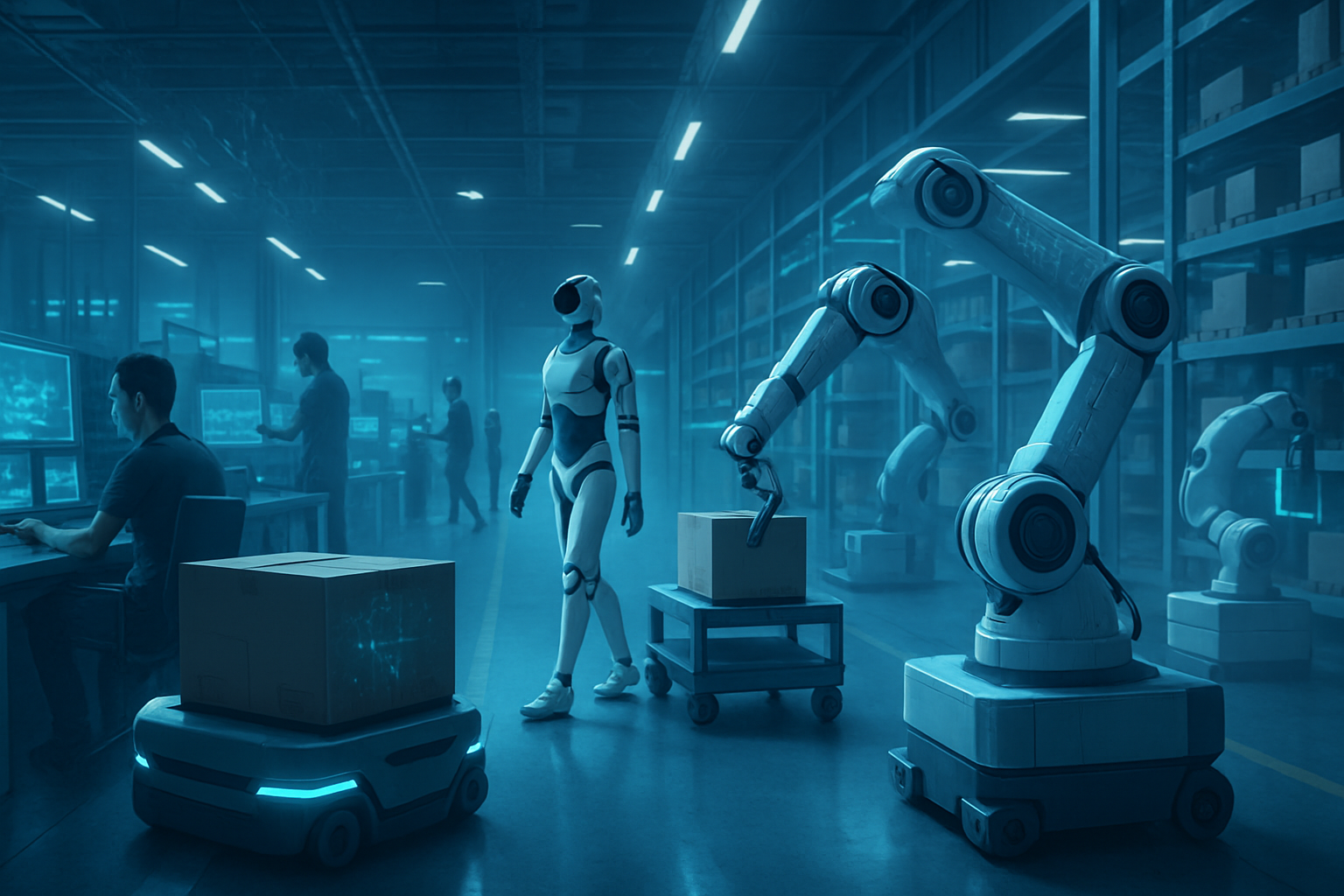
    Seattle, WA – October 22, 2025 – Amazon.com Inc. (NASDAQ: AMZN) is reportedly poised to usher in a new era of automation, with internal documents suggesting the e-commerce giant is considering using advanced robotics and artificial intelligence to fill roles that would otherwise require hiring an additional 600,000 workers by 2033. This ambitious strategy, driven by anticipated sales growth and a relentless pursuit of efficiency, signals a profound shift in the company's operational model and casts a long shadow over the future of work in the logistics and retail sectors.

    The immediate significance of this development is multifaceted. It highlights an accelerating trend towards large-scale automation, where robots are not merely assisting human workers but are strategically deployed to "flatten the hiring curve" for future growth. For the labor market, this foreshadows a potential long-term reduction in new job opportunities for repetitive tasks, intensifying the debate around job displacement, the ethics of automation, and the urgent need for workforce retraining. While Amazon has reportedly pushed back against the full scope of these leaked documents, emphasizing its role as a job creator, the underlying internal considerations underscore a strategic imperative to leverage AI and robotics for unprecedented operational cost savings and efficiency gains.

    The Technical Backbone of Amazon's Automated Future

    Amazon's journey into large-scale automation is built upon a sophisticated and continuously evolving array of robotic systems and AI-powered platforms. The company already operates over 750,000 robots globally, and its future plans involve a deeper integration of these technologies into every facet of its fulfillment network.

    At the core of this transformation are diverse robotic units. The foundational Kiva Robots (now Amazon Robotics drive units) autonomously move entire shelving units to human operators, a "goods-to-person" system that revolutionized warehouse efficiency. More recently, Amazon introduced Proteus, its first fully autonomous mobile robot (AMR) designed to safely navigate and work alongside human employees in shared spaces, using advanced perception and navigation to avoid collisions. For intricate tasks, robotic arms like Sparrow leverage computer vision and AI to detect, select, and handle individual products of varying shapes and sizes, a significant leap from older systems that handled uniform packages. Cardinal assists with heavy lifting and sorting, capable of moving over 20kg packages.

    Perhaps the most forward-looking development is the integration of Digit, a bipedal humanoid robot from Agility Robotics. Digit's two-legged design allows it to navigate environments built for humans, including stairs and uneven terrains, making it adaptable to existing infrastructure. Initial tests involve tasks like tote recycling. Additionally, integrated systems like Sequoia combine mobile robots, gantry systems, and robotic arms with ergonomic workstations to identify and store inventory up to 75% faster and reduce order processing time by 25%. The Hercules drive unit further improves storage density, and Vulcan, Amazon's first robot with a sense of touch, enhances delicate item manipulation.

    Technically, this scale of automation differs from previous approaches in several key ways. The emphasis on human-robot coexistence (Proteus, Digit) allows for seamless integration into shared workspaces, moving beyond the caged-off environments of traditional industrial robots. The development of advanced dexterity and perception (Sparrow, Vulcan) enables robots to handle the vast diversity of Amazon's inventory, a task previously requiring human precision. The bipedal navigation of Digit opens up new possibilities for automation in complex, multi-level facilities. Critically, these systems are powered by integrated AI and machine learning, enabling real-time decision-making, optimal fleet orchestration (e.g., the DeepFleet generative AI model), and continuous operational optimization, a far cry from pre-programmed, rigid automation.

    Initial reactions from the AI research community and industry experts are mixed. While the efficiency gains and technological innovation are widely acknowledged, there are significant concerns about the potential for large-scale job displacement. Nobel laureate Daron Acemoglu has expressed apprehension that Amazon's success in automation could be emulated by other companies, leading to widespread labor market shifts. Amazon, however, counters by highlighting the creation of new, higher-skilled roles in robotics maintenance and engineering, and its investment in upskilling programs for its workforce.

    Reshaping the AI and Tech Landscape

    Amazon's aggressive push into large-scale AI and robotics is not just an internal operational shift; it's a seismic event that is reshaping the competitive dynamics across the entire tech industry, from AI companies and tech giants to specialized startups.

    Amazon (NASDAQ: AMZN) itself stands to be the primary beneficiary. By automating up to 75% of its warehouse operations, the company anticipates billions in annual savings by 2027, leading to higher operating margins and enabling faster delivery times. This strategic advantage in cost leadership and efficiency is crucial for maintaining its dominance in e-commerce. The internal documents reportedly project savings of approximately 30 cents per item processed, translating to an estimated $12.6 billion in operational cost savings between 2025 and 2027.

    The development creates a lucrative environment for specialized AI and robotics startups. Companies like Agility Robotics (developer of Digit), Figure AI, Swiss-Mile, Skild AI, Rightbot, and Instock are direct beneficiaries, receiving investments from Amazon's venture arms and gaining opportunities to integrate their technologies into Amazon's massive operational network. This provides crucial validation and accelerates their growth. Semiconductor and AI chip manufacturers, such as NVIDIA (NASDAQ: NVDA), also stand to gain significantly from the increased demand for high-powered AI computing infrastructure required to run these sophisticated robotic systems.

    For other tech giants, Amazon's move intensifies the "AI arms race." Competitors in retail and logistics, including Walmart (NYSE: WMT), Target (NYSE: TGT), and FedEx (NYSE: FDX), are compelled to accelerate their own automation strategies to match Amazon's speed and cost efficiency. In the cloud computing arena, Amazon Web Services (AWS) benefits as the underlying infrastructure for Amazon's vast AI and robotics operations, further solidifying its market position against rivals like Microsoft Azure (NASDAQ: MSFT) and Google Cloud (NASDAQ: GOOGL). This competitive pressure drives all major players to invest heavily in proprietary AI infrastructure and advanced AI services.

    The potential disruption to existing products and services is significant. The entire logistics and supply chain industry is being redefined, with Amazon's integrated AI-powered robots slashing shipping costs and accelerating delivery times, setting new industry benchmarks that challenge traditional delivery services. This shift also disrupts workforce dynamics, necessitating massive retraining initiatives as demand for traditional warehouse roles declines while demand for higher-skilled technical and supervisory roles surges. Amazon's strategic advantages lie in unparalleled cost reduction, enhanced customer experience through faster and more reliable delivery, operational resilience against labor shortages, and a data-driven optimization "flywheel" that continuously improves its AI systems.

    A Wider Lens: Implications for Society and the Future of Work

    Amazon's large-scale AI and robotics adoption is more than just a corporate strategy; it's a real-world demonstration of advanced AI's profound impact on society, pushing the boundaries of what's possible while raising critical questions about the future of work and social equity. This development fits squarely within the broader trend of hyper-automation, where intelligent technologies are integrated to automate processes end-to-end.

    The impacts on employment are perhaps the most significant. While Amazon projects avoiding 600,000 hires by 2033, it also claims to have created over 700 new categories of skilled jobs, such as robotics technicians and systems engineers, and upskilled over 700,000 employees. This suggests a polarization of the labor market, where low- and medium-skilled jobs face increasing pressure, while demand for high-skilled technical roles escalates. The nature of work itself is transforming, with robots handling repetitive and physically demanding tasks, theoretically allowing humans to focus on more complex problem-solving and supervisory roles.

    However, this transition comes with potential concerns. The displacement of a large number of low-skilled jobs without adequate reskilling programs could exacerbate income inequality, particularly in communities heavily reliant on logistics employment. There are also concerns about worker welfare and surveillance, as AI-powered systems monitor performance, potentially leading to increased pressure and algorithmic management. The ethical implications extend to algorithmic bias in decision-making and the privacy of data collected from workers. Furthermore, some analyses suggest that automation may disproportionately affect minority workers, who constitute a significant portion of Amazon's warehouse workforce.

    Comparing this to previous AI milestones, Amazon's acquisition of Kiva Systems in 2012 was a pivotal moment for warehouse automation. However, the current drive represents an acceleration beyond mere productivity enhancement. It's about fundamentally reshaping the workforce by flattening hiring curves and actively seeking to replace future labor demand. Unlike earlier industrial revolutions that unfolded over decades, the rapid pace of AI integration means these shifts are occurring within years, necessitating a far more agile societal response. This marks a significant step towards the "Amazonian Era" where algorithmic systems control fundamental aspects of work, setting a precedent for industries worldwide.

    The Road Ahead: Challenges and Expert Predictions

    The trajectory of Amazon's AI and robotics strategy points towards a future characterized by increasingly autonomous and intelligent operations, but not without significant challenges and ongoing societal adjustments.

    In the near term (1-3 years), Amazon aims for a substantial increase in automation, with 75% of certain fulfillment tasks managed by machines. This includes replicating highly automated warehouses, like the one in Shreveport, across 40 facilities by late 2027. The deployment of "cobots" designed to work safely alongside humans will expand, and generative AI models like "DeepFleet" will further optimize robot efficiency. Deeper interoperability among AI services and expanded on-device AI capabilities are also expected.

    Long-term (beyond 3 years), by 2033, Amazon's goal of automating 75% of overall operations to avoid 600,000 hires will drive a complete re-imagining of its workforce. AI is expected to become foundational across its ecosystem, from personalized recommendations and hyper-intelligent customer service agents to AI-guided business decisions. Applications will extend beyond logistics to areas like sustainability (optimizing energy, reducing waste), healthcare, finance, and education, with AWS playing a pivotal role in democratizing AI solutions for enterprises.

    However, several challenges need to be addressed. The most pressing is the job displacement issue and the massive undertaking of reskilling and upskilling the existing workforce to fill new, higher-skilled roles in robotics maintenance, AI engineering, and data analysis. The pace of technological change risks outstripping the ability of many workers to adapt. Ethical concerns regarding algorithmic bias, data privacy, and worker surveillance will require robust frameworks and transparent governance. Worker safety and conditions also remain a concern, as some studies suggest a correlation between automation and increased injury rates or mental strain due to the pressure to keep pace with machines. Technical integration and reliability of complex AI systems, along with potential regulatory scrutiny and labor pushback, are also significant hurdles.

    Experts predict a profound transformation of the workplace. Amazon CEO Andy Jassy anticipates that AI will reduce the company's total corporate workforce over the next few years due to efficiency gains, even as new roles emerge. MIT professor Daron Acemoglu warns that Amazon could shift from being a "net job creator to a net job destroyer." While some experts predict the displacement of 85 million jobs globally by 2025, others suggest the emergence of 97 million new roles better suited to human-machine collaboration. The consensus points to a future of sophisticated human-machine collaboration, but one that demands massive investments in retraining, support programs, and thoughtful long-term planning to navigate the socio-economic shifts and prevent widespread unemployment. Employees who become proficient in AI will be best positioned for the roles of tomorrow.

    A New Frontier in Automation

    Amazon's reported consideration of using robots to absorb the demand for 600,000 additional workers marks a pivotal moment in the history of AI and automation. It underscores the unparalleled efficiency and cost savings that advanced robotics can deliver, profoundly impacting Amazon's market positioning and forcing competitors to accelerate their own technological adoption.

    The long-term impact of this development will be felt across industries and societies. It accelerates the shift towards a hybrid human-robot workforce, demanding a proactive approach to education, workforce retraining, and the development of ethical guidelines for AI deployment. As Amazon continues to push the boundaries of automation, the world will be watching closely to see how this technological leap balances innovation with its broader societal responsibilities. The coming weeks and months will likely bring further details on Amazon's implementation plans, the evolution of its robotic fleet, and the ongoing dialogue surrounding the future of work in an increasingly automated world.


    This content is intended for informational purposes only and represents analysis of current AI developments.

    TokenRing AI delivers enterprise-grade solutions for multi-agent AI workflow orchestration, AI-powered development tools, and seamless remote collaboration platforms.
    For more information, visit https://www.tokenring.ai/.

  • Tech Titans Redraw the Map: Napster’s Nashville Ascent and Amazon’s Global Hiring Blitz Reshape Economies

    Tech Titans Redraw the Map: Napster’s Nashville Ascent and Amazon’s Global Hiring Blitz Reshape Economies

    Nashville, TN & Global — October 17, 2025 — The technology landscape is currently experiencing a dynamic period of strategic expansion, with major players like Napster and Amazon making significant moves that promise to reshape regional economies and job markets. Napster Corp., having recently solidified its presence in Nashville, Tennessee, is positioning itself at the nexus of music and cutting-edge AI, while e-commerce giant Amazon (NASDAQ: AMZN) continues its relentless global growth with announcements to hire hundreds of thousands across its U.S. operations and invest billions in new facilities across the UK. These bold initiatives underscore a broader trend of tech companies investing heavily in infrastructure and talent, signaling both immense opportunity and potential challenges for the communities they impact.

    These expansion plans are not merely about increasing headcount or office space; they represent calculated strategies to capture emerging markets, optimize logistics, and foster innovation. For job seekers, these announcements translate into a wealth of opportunities, from entry-level warehouse roles to highly specialized AI development positions. However, the rapid influx of tech capital and talent also brings with it a complex set of economic and social implications, particularly concerning housing affordability and the strain on local infrastructure, demanding careful consideration from policymakers and community leaders alike.

    Strategic Moves and Technical Underpinnings

    Napster's journey to Nashville, Tennessee, formally announced on May 25, 2023, marked a pivotal moment for the digital music pioneer. The relocation of its global corporate headquarters from the West Coast was a strategic decision by CEO Jon Vlassopulos, a Nashville native, to tap into the city's burgeoning music innovation ecosystem. The vision for Napster Corp. (now operating under the Infinite Reality umbrella, which acquired Napster in March 2025 for $207 million) is to develop a next-generation music service powered by Web3 technologies and AI, transforming traditional music streaming into a more engaging, participatory, and social experience for artists and fans. While specific job creation numbers for the Nashville HQ were not publicly detailed, the company is actively recruiting local and global talent, focusing on engineers and professionals in product development, marketing, and operations. This move also precedes considerations for a separate "Napster Studios" in Fort Lauderdale, which would focus on film production and related creative industries, indicating a broader diversification into AI-powered digital experiences across media and entertainment.

    Concurrently, Amazon's expansion is characterized by sheer scale and strategic logistical prowess. For the current 2025 holiday season, Amazon is undertaking a record-breaking hiring drive, planning to onboard 250,000 full-time, part-time, and seasonal employees across its U.S. fulfillment and transportation networks. These roles, which include warehouse associates, delivery drivers, and operations coordinators, often do not require prior experience, with regular employees earning an average of $23 per hour plus benefits, and seasonal workers averaging over $19 per hour. This massive recruitment effort, backed by a $1 billion investment in increased pay and benefits, is a direct response to anticipated holiday e-commerce demand and reinforces Amazon's commitment to maintaining its logistical supremacy. Beyond the U.S., Amazon is executing a multi-year, £40 billion investment in the UK, which includes the opening of a new fulfillment center in Hull in 2025 (creating approximately 2,000 roles), another in Northampton in 2026 (adding 2,000 jobs), and two more warehouses in the East Midlands by 2027, collectively generating thousands more positions. These UK expansions are designed to bolster Amazon's physical footprint and improve customer experiences across key regions.

    These expansions differ significantly from previous tech booms, which often focused on centralized hubs like Silicon Valley. While Amazon maintains large corporate campuses, its logistics expansion is highly distributed, impacting numerous smaller communities. Napster's move to Nashville represents a conscious effort to decentralize tech innovation, seeking out specialized regional ecosystems that align with its core business. Both strategies highlight a maturation of the tech industry, where growth is not just about raw numbers but about strategic placement and leveraging specific regional advantages, whether it's Nashville's music heritage for Napster or key logistical arteries for Amazon.

    Competitive Implications and Market Positioning

    Napster's relocation to Nashville and its subsequent integration into Napster Corp. under Infinite Reality's vision has profound implications for the music streaming and broader digital entertainment sectors. By focusing on Web3 technologies and AI-powered experiences, Napster aims to carve out a new niche beyond traditional subscription models, challenging established players like Spotify (NYSE: SPOT) and Apple Music (NASDAQ: AAPL) by offering more interactive and rewarding experiences for artists and fans. This move could invigorate Nashville's local tech and music startup scene, attracting venture capital and fostering collaborations that could lead to new business models in digital media. The potential "Napster Studios" in Fort Lauderdale further signals an ambition to become a comprehensive platform for content creation and distribution, leveraging AI to streamline production and post-production processes, potentially disrupting traditional film and media industries.

    Amazon's colossal hiring sprees and infrastructure investments, conversely, reinforce its already dominant market position in e-commerce and cloud computing. The 250,000 U.S. holiday hires ensure Amazon can meet surging consumer demand, putting immense competitive pressure on traditional retailers and smaller e-commerce platforms that struggle to match its logistical scale and speed. The multi-billion-pound investment in UK fulfillment centers solidifies Amazon's European footprint, making it even harder for competitors to gain traction. This continued expansion also creates significant opportunities for companies in the logistics technology space, as Amazon's vast network requires constant innovation in automation, supply chain management, and last-mile delivery. However, it also means smaller businesses might find themselves increasingly reliant on Amazon's ecosystem, either as sellers on its marketplace or as providers of services within its supply chain, potentially limiting their autonomy.

    The strategic advantages gained by both companies are clear: Napster seeks to differentiate itself through innovative, artist-centric, and fan-engaging AI/Web3 experiences, aiming for a blue ocean strategy in a crowded market. Amazon, on the other hand, is doubling down on its core strengths – efficiency, scale, and customer convenience – to maintain its red ocean dominance, using its sheer size and investment capacity to outmaneuver rivals. These moves demonstrate that while AI is a common thread, its application and strategic impact vary greatly across different segments of the tech industry.

    Wider Significance in the AI Landscape

    These significant expansions by Napster and Amazon fit squarely within the broader AI landscape, highlighting several key trends. Firstly, they underscore the increasing regionalization of tech hubs, moving beyond the traditional Silicon Valley paradigm. Napster's choice of Nashville exemplifies a trend where companies seek specific talent pools and cultural ecosystems that align with their mission, leveraging local strengths rather than solely concentrating in established tech centers. This decentralization can lead to the emergence of new innovation clusters, fostering economic diversity across different geographies.

    Secondly, these expansions reflect the pervasive integration of AI into core business functions. While Napster explicitly builds its next-generation platform around Web3 and AI-powered digital experiences, Amazon's vast logistical network is increasingly optimized by AI algorithms for everything from warehouse automation to delivery route planning and demand forecasting. The sheer scale of Amazon's operations means that even incremental AI improvements can yield massive efficiencies, further cementing its competitive edge. The demand for hundreds of thousands of new employees, even with AI integration, demonstrates that human capital remains critical, especially for roles requiring adaptability, customer interaction, and last-mile delivery, albeit often augmented by AI tools.

    The impacts on local economies are profound. While the direct creation of high-paying tech jobs and the indirect "multiplier effect" in supporting sectors like retail, hospitality, and construction bring significant economic stimulus, they also present substantial challenges. Regions experiencing rapid tech growth, such as Nashville and the areas surrounding Amazon's new facilities, often face skyrocketing housing prices and and rents, leading to gentrification and the potential displacement of long-term, lower-income residents. This strain on housing and public infrastructure (transportation, utilities) is a recurring concern in tech-driven economic booms, echoing the challenges faced by Seattle during Amazon's rapid growth or the San Francisco Bay Area due to Silicon Valley's expansion. Addressing these concerns requires proactive urban planning, investment in affordable housing initiatives, and robust public-private partnerships to ensure equitable growth.

    Exploring Future Developments

    Looking ahead, the trajectories of Napster and Amazon suggest continued evolution and expansion, heavily influenced by technological advancements and market dynamics. For Napster Corp., the near-term focus will likely be on the successful launch and adoption of its AI-powered, Web3-centric music platform. Experts predict that the integration of AI will allow for highly personalized music discovery, dynamic content creation tools for artists, and immersive fan experiences that leverage virtual and augmented reality. The potential "Napster Studios" in Fort Lauderdale could evolve into a hub for AI-assisted content production, democratizing access to high-quality media creation tools. Challenges will include navigating the complexities of blockchain technology, ensuring user adoption of new Web3 paradigms, and competing with established platforms that are also rapidly integrating AI.

    Amazon's future developments will undoubtedly involve further automation in its fulfillment centers, driven by advanced robotics and AI, which will refine logistics and potentially shift the nature of warehouse jobs towards oversight and maintenance roles. The company's massive investment in the UK and other international markets signals sustained global expansion, with new facilities likely to incorporate cutting-edge AI for efficiency and sustainability. Experts anticipate Amazon will continue to push the boundaries of last-mile delivery, exploring drone technology and autonomous vehicles, all orchestrated by sophisticated AI systems. The long-term challenge for Amazon, as with any rapidly expanding tech giant, will be to manage its vast workforce, adapt to evolving labor markets, and address increasing regulatory scrutiny regarding market power and worker conditions.

    What experts predict will happen next is a continued "techification" of various industries, with AI acting as a primary catalyst. This will likely lead to further regional specialization, where cities and regions cultivate specific tech niches. The demand for AI talent will intensify, leading to an even more competitive global market for skilled professionals. Additionally, there will be increased pressure on governments and local authorities to develop comprehensive strategies that harness the economic benefits of tech expansion while mitigating its negative social impacts, particularly in housing and infrastructure.

    A Comprehensive Wrap-Up

    The recent expansion plans by Napster and Amazon represent a significant chapter in the ongoing narrative of technological growth and its societal impact. Napster's strategic move to Nashville and its pivot towards AI-powered Web3 experiences highlight a nuanced approach to innovation, seeking to disrupt established markets by building new, engaging paradigms. Amazon's relentless global hiring and infrastructure investments, conversely, underscore the continued dominance of e-commerce and the critical role of sophisticated logistics, increasingly optimized by AI, in meeting consumer demand.

    The key takeaways from these developments are twofold: firstly, the tech industry is not only growing but also diversifying its geographical footprint, leading to the emergence of new tech hubs and specialized ecosystems. Secondly, AI is no longer a futuristic concept but an integral component of both foundational infrastructure (Amazon's logistics) and innovative product offerings (Napster's next-gen music platform). The significance of these developments in AI history lies in their demonstration of how artificial intelligence is becoming deeply embedded in economic growth, shaping job markets, and influencing urban development.

    The long-term impact will be a continued reshaping of urban centers and regional economies, with both immense opportunities for prosperity and significant challenges related to equitable growth and resource management. As we watch the coming weeks and months, critical areas to monitor include the successful rollout and adoption of Napster's new platform, the ongoing integration of Amazon's vast new workforce and facilities, and the proactive policy responses from local and national governments to manage the socio-economic effects of this aggressive tech expansion. The interplay between technological advancement, economic growth, and societal well-being will remain a central theme as these tech titans continue to redraw the map of innovation.


    This content is intended for informational purposes only and represents analysis of current AI developments.

    TokenRing AI delivers enterprise-grade solutions for multi-agent AI workflow orchestration, AI-powered development tools, and seamless remote collaboration platforms.
    For more information, visit https://www.tokenring.ai/.

  • Semiconductor Stocks Soar Amidst AI Supercycle: A Resilient Tech Market Defies Fluctuations

    Semiconductor Stocks Soar Amidst AI Supercycle: A Resilient Tech Market Defies Fluctuations

    The technology sector is currently experiencing a remarkable surge in optimism, particularly evident in the robust performance of semiconductor stocks. This positive sentiment, observed around October 2025, is largely driven by the burgeoning "AI Supercycle"—an era of immense and insatiable demand for artificial intelligence and high-performance computing (HPC) capabilities. Despite broader market fluctuations and ongoing geopolitical concerns, the semiconductor industry has been propelled to new financial heights, establishing itself as the fundamental building block of a global AI-driven economy.

    This unprecedented demand for advanced silicon is creating a new data center ecosystem and fostering an environment where innovation in chip design and manufacturing is paramount. Leading semiconductor companies are not merely benefiting from this trend; they are actively shaping the future of AI by delivering the foundational hardware that underpins every major AI advancement, from large language models to autonomous systems.

    The Silicon Engine of AI: Unpacking Technical Advancements Driving the Boom

    The current semiconductor boom is underpinned by relentless technical advancements in AI chips, including Graphics Processing Units (GPUs), Application-Specific Integrated Circuits (ASICs), and High Bandwidth Memory (HBM). These innovations are delivering immense computational power and efficiency, essential for the escalating demands of generative AI, large language models (LLMs), and high-performance computing workloads.

    Leading the charge in GPUs, Nvidia (NASDAQ: NVDA) has introduced its H200 (Hopper Architecture), featuring 141 GB of HBM3e memory—a significant leap from the H100's 80 GB—and offering 4.8 TB/s of memory bandwidth. This translates to substantial performance boosts, including up to 4 petaFLOPS of FP8 performance and nearly double the inference performance for LLMs like Llama2 70B compared to its predecessor. Nvidia's upcoming Blackwell architecture (launched in 2025) and Rubin GPU platform (2026) promise even greater transformer acceleration and HBM4 memory integration. AMD (NASDAQ: AMD) is aggressively challenging with its Instinct MI300 series (CDNA 3 Architecture), including the MI300A APU and MI300X accelerator, which boast up to 192 GB of HBM3 memory and 5.3 TB/s bandwidth. The AMD Instinct MI325X and MI355X further push the boundaries with up to 288 GB of HBM3e and 8 TBps bandwidth, designed for massive generative AI workloads and supporting models up to 520 billion parameters on a single chip.

    ASICs are also gaining significant traction for their tailored optimization. Intel (NASDAQ: INTC) Gaudi 3, for instance, features two compute dies with eight Matrix Multiplication Engines (MMEs) and 64 Tensor Processor Cores (TPCs), equipped with 128 GB of HBM2e memory and 3.7 TB/s bandwidth, excelling at training and inference with 1.8 PFlops of FP8 and BF16 compute. Hyperscalers like Google (NASDAQ: GOOGL) continue to advance their Tensor Processing Units (TPUs), with the seventh-generation TPU, Ironwood, offering a more than 10x improvement over previous high-performance TPUs and delivering 42.5 exaflops of AI compute in a pod configuration. Companies like Cerebras Systems with its WSE-3, and startups like d-Matrix with its Corsair platform, are also pushing the envelope with massive on-chip memory and unparalleled efficiency for AI inference.

    High Bandwidth Memory (HBM) is critical in overcoming the "memory wall." HBM3e, an enhanced variant of HBM3, offers significant improvements in bandwidth, capacity, and power efficiency, with solutions operating at up to 9.6 Gb/s speeds. The HBM4 memory standard, finalized by JEDEC in April 2025, targets 2 TB/s of bandwidth per memory stack and supports taller stacks up to 16-high, enabling a maximum of 64 GB per stack. This expanded memory is crucial for handling increasingly large AI models that often exceed the memory capacity of older chips. The AI research community is reacting with a mix of excitement and urgency, recognizing the "AI Supercycle" and the critical need for these advancements to enable the next generation of LLMs and democratize AI capabilities through more accessible, high-performance computing.

    Reshaping the AI Landscape: Impact on Companies and Competitive Dynamics

    The AI-driven semiconductor boom is profoundly reshaping competitive dynamics across major AI labs, tech giants, and startups, with strategic advantages being aggressively pursued and significant disruptions anticipated.

    Nvidia (NASDAQ: NVDA) remains the undisputed market leader in AI GPUs, commanding approximately 80% of the AI chip market. Its robust CUDA software stack and AI-optimized networking solutions create a formidable ecosystem and high switching costs. AMD (NASDAQ: AMD) is emerging as a strong challenger, with its Instinct MI300X and upcoming MI350/MI450 series GPUs designed to compete directly with Nvidia. A major strategic win for AMD is its multi-billion-dollar, multi-year partnership with OpenAI to deploy its advanced Instinct MI450 GPUs, diversifying OpenAI's supply chain. Intel (NASDAQ: INTC) is pursuing an ambitious AI roadmap, featuring annual updates to its AI product lineup, including new AI PC processors and server processors, and making a strategic pivot to strengthen its foundry business (IDM 2.0).

    Hyperscalers like Google (NASDAQ: GOOGL), Microsoft (NASDAQ: MSFT), and Amazon (NASDAQ: AMZN) are aggressively pursuing vertical integration by developing their own custom AI chips (ASICs) to gain strategic independence, optimize hardware for specific AI workloads, and reduce operational costs. Google continues to leverage its Tensor Processing Units (TPUs), while Microsoft has signaled a fundamental pivot towards predominantly using its own Microsoft AI chips in its data centers. Amazon Web Services (AWS) offers scalable, cloud-native AI hardware through its custom chips like Graviton and Trainium/Inferentia. These efforts enable them to offer differentiated and potentially more cost-effective AI services, intensifying competition in the cloud AI market. Major AI labs like OpenAI are also forging multi-billion-dollar partnerships with chip manufacturers and even designing their own custom AI chips to gain greater control over performance and supply chain resilience.

    For startups, the boom presents both opportunities and challenges. While the cost of advanced chip manufacturing is high, cloud-based, AI-augmented design tools are lowering barriers, allowing nimble startups to access advanced resources. Companies like Groq, specializing in high-performance AI inference chips, exemplify this trend. However, startups with innovative AI applications may find themselves competing not just on algorithms and data, but on access to optimized hardware, making strategic partnerships and consistent chip supply crucial. The proliferation of NPUs in consumer devices like "AI PCs" (projected to comprise 43% of PC shipments by late 2025) will democratize advanced AI by enabling sophisticated models to run locally, potentially disrupting cloud-based AI processing models.

    Wider Significance: The AI Supercycle and its Broader Implications

    The AI-driven semiconductor boom of October 2025 represents a profound and transformative period, often referred to as a "new industrial revolution" or the "AI Supercycle." This surge is fundamentally reshaping the technological and economic landscape, impacting global economies and societies, while also raising significant concerns regarding overvaluation and ethical implications.

    Economically, the global semiconductor market is experiencing unparalleled growth, projected to reach approximately $697 billion in 2025, an 11% increase over 2024, and is on an ambitious trajectory towards a $1 trillion valuation by 2030. The AI chip market alone is expected to surpass $150 billion in 2025. This growth is fueled by massive capital expenditures from tech giants and substantial investments from financial heavyweights. Societally, AI's pervasive integration is redefining its role in daily life and driving economic growth, though it also brings concerns about potential workforce disruption due to automation.

    However, this boom is not without its concerns. Many financial experts, including the Bank of England and the IMF, have issued warnings about a potential "AI equity bubble" and "stretched" equity market valuations, drawing comparisons to the dot-com bubble of the late 1990s. While some deals exhibit "circular investment structures" and massive capital expenditure, unlike many dot-com startups, today's leading AI companies are largely profitable with solid fundamentals and diversified revenue streams, reinvesting substantial free cash flow into real infrastructure. Ethical implications, such as job displacement and the need for responsible AI development, are also paramount. The energy-intensive nature of AI data centers and chip manufacturing raises significant environmental concerns, necessitating innovations in energy-efficient designs and renewable energy integration. Geopolitical tensions, particularly US export controls on advanced chips to China, have intensified the global race for semiconductor dominance, leading to fears of supply chain disruptions and increased prices.

    The current AI-driven semiconductor cycle is unique in its unprecedented scale and speed, fundamentally altering how computing power is conceived and deployed. AI-related capital expenditures reportedly surpassed US consumer spending as the primary driver of economic growth in the first half of 2025. While a "sharp market correction" remains a risk, analysts believe that the systemic wave of AI adoption will persist, leading to consolidation and increased efficiency rather than a complete collapse, indicating a structural transformation rather than a hollow bubble.

    Future Horizons: The Road Ahead for AI Semiconductors

    The future of AI semiconductors promises continued innovation across chip design, manufacturing processes, and new computing paradigms, all aimed at overcoming the limitations of traditional silicon-based architectures and enabling increasingly sophisticated AI.

    In the near term, we can expect further advancements in specialized architectures like GPUs with enhanced Tensor Cores, more custom ASICs optimized for specific AI workloads, and the widespread integration of Neural Processing Units (NPUs) for efficient on-device AI inference. Advanced packaging techniques such as heterogeneous integration, chiplets, and 2.5D/3D stacking will become even more prevalent, allowing for greater customization and performance. The push for miniaturization will continue with the progression to 3nm and 2nm process nodes, supported by Gate-All-Around (GAA) transistors and High-NA EUV lithography, with high-volume manufacturing anticipated by 2025-2026.

    Longer term, emerging computing paradigms hold immense promise. Neuromorphic computing, inspired by the human brain, offers extremely low power consumption by integrating memory directly into processing units. In-memory computing (IMC) performs tasks directly within memory, eliminating the "von Neumann bottleneck." Photonic chips, using light instead of electricity, promise higher speeds and greater energy efficiency. While still nascent, the integration of quantum computing with semiconductors could unlock unparalleled processing power for complex AI algorithms. These advancements will enable new use cases in edge AI for autonomous vehicles and IoT devices, accelerate drug discovery and personalized medicine in healthcare, optimize manufacturing processes, and power future 6G networks.

    However, significant challenges remain. The immense energy consumption of AI workloads and data centers is a growing concern, necessitating innovations in energy-efficient designs and cooling. The high costs and complexity of advanced manufacturing create substantial barriers to entry, while supply chain vulnerabilities and geopolitical tensions continue to pose risks. The traditional "von Neumann bottleneck" remains a performance hurdle that in-memory and neuromorphic computing aim to address. Furthermore, talent shortages across the semiconductor industry could hinder ambitious development timelines. Experts predict sustained, explosive growth in the AI chip market, potentially reaching $295.56 billion by 2030, with a continued shift towards heterogeneous integration and architectural innovation. A "virtuous cycle of innovation" is anticipated, where AI tools will increasingly design their own chips, accelerating development and optimization.

    Wrap-Up: A New Era of Silicon-Powered Intelligence

    The current market optimism surrounding the tech sector, particularly the semiconductor industry, is a testament to the transformative power of artificial intelligence. The "AI Supercycle" is not merely a fleeting trend but a fundamental reshaping of the technological and economic landscape, driven by a relentless pursuit of more powerful, efficient, and specialized computing hardware.

    Key takeaways include the critical role of advanced GPUs, ASICs, and HBM in enabling cutting-edge AI, the intense competitive dynamics among tech giants and AI labs vying for hardware supremacy, and the profound societal and economic impacts of this silicon-powered revolution. While concerns about market overvaluation and ethical implications persist, the underlying fundamentals of the AI boom, coupled with massive investments in real infrastructure, suggest a structural transformation rather than a speculative bubble.

    This development marks a significant milestone in AI history, underscoring that hardware innovation is as crucial as software breakthroughs in pushing AI from theoretical concepts to pervasive, real-world applications. In the coming weeks and months, we will continue to watch for further advancements in process nodes, the maturation of emerging computing paradigms like neuromorphic chips, and the strategic maneuvering of industry leaders as they navigate this dynamic and high-stakes environment. The future of AI is being built on silicon, and the pace of innovation shows no signs of slowing.


    This content is intended for informational purposes only and represents analysis of current AI developments.

    TokenRing AI delivers enterprise-grade solutions for multi-agent AI workflow orchestration, AI-powered development tools, and seamless remote collaboration platforms.
    For more information, visit https://www.tokenring.ai/.

  • TSMC’s AI-Driven Earnings Ignite US Tech Rally, Fueling Market Optimism

    TSMC’s AI-Driven Earnings Ignite US Tech Rally, Fueling Market Optimism

    Taiwan Semiconductor Manufacturing Co. (NYSE: TSM), the undisputed behemoth in advanced chip fabrication and a linchpin of the global artificial intelligence (AI) supply chain, sent a jolt of optimism through the U.S. stock market today, October 16, 2025. The company announced exceptionally strong third-quarter 2025 earnings, reporting a staggering 39.1% jump in profit, significantly exceeding analyst expectations. This robust performance, primarily fueled by insatiable demand for cutting-edge AI chips, immediately sent U.S. stock indexes ticking higher, with technology stocks leading the charge and reinforcing investor confidence in the enduring AI megatrend.

    The news reverberated across Wall Street, with TSMC's U.S.-listed shares (NYSE: TSM) surging over 2% in pre-market trading and maintaining momentum throughout the day. This surge added to an already impressive year-to-date gain of over 55% for the company's American Depositary Receipts (ADRs). The ripple effect was immediate and widespread, boosting futures for the S&P 500 and Nasdaq 100, and propelling shares of major U.S. chipmakers and AI-linked technology companies. Nvidia (NASDAQ: NVDA) saw gains of 1.1% to 1.2%, Micron Technology (NASDAQ: MU) climbed 2.9% to 3.6%, and Broadcom (NASDAQ: AVGO) advanced by 1.7% to 1.8%, underscoring TSMC's critical role in powering the next generation of AI innovation.

    The Microscopic Engine of the AI Revolution: TSMC's Advanced Process Technologies

    TSMC's dominance in advanced chip manufacturing is not merely about scale; it's about pushing the very limits of physics to create the microscopic engines that power the AI revolution. The company's relentless pursuit of smaller, more powerful, and energy-efficient process technologies—particularly its 5nm, 3nm, and upcoming 2nm nodes—is directly enabling the exponential growth and capabilities of artificial intelligence.

    The 5nm process technology (N5 family), which entered volume production in 2020, marked a significant leap from the preceding 7nm node. Utilizing extensive Extreme Ultraviolet (EUV) lithography, N5 offered up to 15% more performance at the same power or a 30% reduction in power consumption, alongside a 1.8x increase in logic density. Enhanced versions like N4P and N4X have further refined these capabilities for high-performance computing (HPC) and specialized applications.

    Building on this, TSMC commenced high-volume production for its 3nm FinFET (N3) technology in 2022. N3 represents a full-node advancement, delivering a 10-15% increase in performance or a 25-30% decrease in power consumption compared to N5, along with a 1.7x logic density improvement. Diversified 3nm offerings like N3E, N3P, and N3X cater to various customer needs, from enhanced performance to cost-effectiveness and HPC specialization. The N3E process, in particular, offers a wider process window for better yields and significant density improvements over N5.

    The most monumental leap on the horizon is TSMC's 2nm process technology (N2 family), with risk production already underway and mass production slated for the second half of 2025. N2 is pivotal because it marks the transition from FinFET transistors to Gate-All-Around (GAA) nanosheet transistors. Unlike FinFETs, GAA nanosheets completely encircle the transistor's channel with the gate, providing superior control over current flow, drastically reducing leakage, and enabling even higher transistor density. N2 is projected to offer a 10-15% increase in speed or a 20-30% reduction in power consumption compared to 3nm chips, coupled with over a 15% increase in transistor density. This continuous evolution in transistor architecture and lithography, from DUV to extensive EUV and now GAA, fundamentally differentiates TSMC's current capabilities from previous generations like 10nm and 7nm, which relied on less advanced FinFET and DUV technologies.

    The AI research community and industry experts have reacted with profound optimism, acknowledging TSMC as an indispensable foundry for the AI revolution. TSMC's ability to deliver these increasingly dense and efficient chips is seen as the primary enabler for training larger, more complex AI models and deploying them efficiently at scale. The 2nm process, in particular, is generating high interest, with reports indicating it will see even stronger demand than 3nm, with approximately 10 out of 15 initial customers focused on HPC, clearly signaling AI and data centers as the primary drivers. While cost concerns persist for these cutting-edge nodes (with 2nm wafers potentially costing around $30,000), the performance gains are deemed essential for maintaining a competitive edge in the rapidly evolving AI landscape.

    Symbiotic Success: How TSMC Powers Tech Giants and Shapes Competition

    TSMC's strong earnings and technological leadership are not just a boon for its shareholders; they are a critical accelerant for the entire U.S. technology sector, profoundly impacting the competitive positioning and product roadmaps of major AI companies, tech giants, and even emerging startups. The relationship is symbiotic: TSMC's advancements enable its customers to innovate, and their demand fuels TSMC's growth and investment in future technologies.

    Nvidia (NASDAQ: NVDA), the undisputed leader in AI acceleration, is a cornerstone client, heavily relying on TSMC for manufacturing its cutting-edge GPUs, including the H100 and future architectures like Blackwell. TSMC's ability to produce these complex chips with billions of transistors (Blackwell chips contain 208 billion transistors) is directly responsible for Nvidia's continued dominance in AI training and inference. Similarly, Apple (NASDAQ: AAPL) is a massive customer, leveraging TSMC's advanced nodes for its A-series and M-series chips, which increasingly integrate sophisticated on-device AI capabilities. Apple reportedly uses TSMC's 3nm process for its M4 and M5 chips and has secured significant 2nm capacity, even committing to being the largest customer at TSMC's Arizona fabs. The company is also collaborating with TSMC to develop its custom AI chips, internally codenamed "Project ACDC," for data centers.

    Qualcomm (NASDAQ: QCOM) depends on TSMC for its advanced Snapdragon chips, integrating AI into mobile and edge devices. AMD (NASDAQ: AMD) utilizes TSMC's advanced packaging and leading-edge nodes for its next-generation data center GPUs (MI300 series) and EPYC CPUs, positioning itself as a strong challenger in the high-performance computing (HPC) and AI markets. Even Intel (NASDAQ: INTC), which has its own foundry services, relies on TSMC for manufacturing some advanced components and is exploring deeper partnerships to boost its competitiveness in the AI chip market.

    Hyperscale cloud providers like Alphabet's Google (NASDAQ: GOOGL) and Amazon (NASDAQ: AMZN) (AWS) are increasingly designing their own custom AI silicon (ASICs) – Google's Tensor Processing Units (TPUs) and AWS's Inferentia and Trainium chips – and largely rely on TSMC for their fabrication. Google, for instance, has transitioned its Tensor processors for future Pixel phones from Samsung to TSMC's N3E process, expecting better performance and power efficiency. Even OpenAI, the creator of ChatGPT, is reportedly working with Broadcom (NASDAQ: AVGO) and TSMC to develop its own custom AI inference chips on TSMC's 3nm process, aiming to optimize hardware for unique AI workloads and reduce reliance on external suppliers.

    This reliance means TSMC's robust performance directly translates into faster innovation and product roadmaps for these companies. Access to TSMC's cutting-edge technology and massive production capacity (thirteen million 300mm-equivalent wafers per year) is crucial for meeting the soaring demand for AI chips. This dynamic reinforces the leadership of innovators who can secure TSMC's capacity, while creating substantial barriers to entry for smaller firms. The trend of major tech companies designing custom AI chips, fabricated by TSMC, could also disrupt the traditional market dominance of off-the-shelf GPU providers for certain workloads, especially inference.

    A Foundational Pillar: TSMC's Broader Significance in the AI Landscape

    TSMC's sustained success and technological dominance extend far beyond quarterly earnings; they represent a foundational pillar upon which the entire modern AI landscape is being constructed. Its centrality in producing the specialized, high-performance computing infrastructure needed for generative AI models and data centers positions it as the "unseen architect" powering the AI revolution.

    The company's estimated 70-71% market share in the global pure-play wafer foundry market, intensifying to 60-70% in advanced nodes (7nm and below), underscores its indispensable role. AI and HPC applications now account for a staggering 59-60% of TSMC's total revenue, highlighting how deeply intertwined its fate is with the trajectory of AI. This dominance accelerates the pace of AI innovation by enabling increasingly powerful and energy-efficient chips, dictating the speed at which breakthroughs can be scaled and deployed.

    TSMC's impact is comparable to previous transformative technological shifts. Much like Intel's microprocessors were central to the personal computer revolution, or foundational software platforms enabled the internet, TSMC's advanced fabrication and packaging technologies (like CoWoS and SoIC) are the bedrock upon which the current AI supercycle is built. It's not merely adapting to the AI boom; it is engineering its future by providing the silicon that enables breakthroughs across nearly every facet of artificial intelligence, from cloud-based models to intelligent edge devices.

    However, this extreme concentration of advanced chip manufacturing, primarily in Taiwan, presents significant geopolitical concerns and vulnerabilities. Taiwan produces around 90% of the world's most advanced chips, making it an indispensable part of global supply chains and a strategic focal point in the US-China tech rivalry. This creates a "single point of failure," where a natural disaster, cyber-attack, or geopolitical conflict in the Taiwan Strait could cripple the world's chip supply with catastrophic global economic consequences, potentially costing over $1 trillion annually. The United States, for instance, relies on TSMC for 92% of its advanced AI chips, spurring initiatives like the CHIPS and Science Act to bolster domestic production. While TSMC is diversifying its manufacturing locations with fabs in Arizona, Japan, and Germany, Taiwan's government mandates that cutting-edge work remains on the island, meaning geopolitical risks will continue to be a critical factor for the foreseeable future.

    The Horizon of Innovation: Future Developments and Looming Challenges

    The future of TSMC and the broader semiconductor industry, particularly concerning AI chips, promises a relentless march of innovation, though not without significant challenges. Near-term, TSMC's N2 (2nm-class) process node is on track for mass production in late 2025, promising enhanced AI capabilities through faster computing speeds and greater power efficiency. Looking further, the A16 (1.6nm-class) node is expected by late 2026, followed by the A14 (1.4nm) node in 2028, featuring innovative Super Power Rail (SPR) Backside Power Delivery Network (BSPDN) for improved efficiency in data center AI applications. Beyond these, TSMC is preparing for its 1nm fab, designated as Fab 25, in Shalun, Tainan, as part of a massive Giga-Fab complex.

    As traditional node scaling faces physical limits, advanced packaging innovations are becoming increasingly critical. TSMC's 3DFabric™ family, including CoWoS, InFO, and TSMC-SoIC, is evolving. A new chip packaging approach replacing round substrates with square ones is designed to embed more semiconductors in a single chip for high-power AI applications. A CoWoS-based SoW-X platform, delivering 40 times more computing power, is expected by 2027. The demand for High Bandwidth Memory (HBM) for these advanced packages is creating "extreme shortages" for 2025 and much of 2026, highlighting the intensity of AI chip development.

    Beyond silicon, the industry is exploring post-silicon technologies and revolutionary chip architectures such as silicon photonics, neuromorphic computing, quantum computing, in-memory computing (IMC), and heterogeneous computing. These advancements will enable a new generation of AI applications, from powering more complex large language models (LLMs) in high-performance computing (HPC) and data centers to facilitating autonomous systems, advanced Edge AI in IoT devices, personalized medicine, and industrial automation.

    However, critical challenges loom. Scaling limits present physical hurdles like quantum tunneling and heat dissipation at sub-10nm nodes, pushing research into alternative materials. Power consumption remains a significant concern, with high-performance AI chips demanding advanced cooling and more energy-efficient designs to manage their substantial carbon footprint. Geopolitical stability is perhaps the most pressing challenge, with the US-China rivalry and Taiwan's pivotal role creating a fragile environment for the global chip supply. Economic and manufacturing constraints, talent shortages, and the need for robust software ecosystems for novel architectures also need to be addressed.

    Industry experts predict an explosive AI chip market, potentially reaching $1.3 trillion by 2030, with significant diversification and customization of AI chips. While GPUs currently dominate training, Application-Specific Integrated Circuits (ASICs) are expected to account for about 70% of the inference market by 2025 due to their efficiency. The future of AI will be defined not just by larger models but by advancements in hardware infrastructure, with physical systems doing the heavy lifting. The current supply-demand imbalance for next-generation GPUs (estimated at a 10:1 ratio) is expected to continue driving TSMC's revenue growth, with its CEO forecasting around mid-30% growth for 2025.

    A New Era of Silicon: Charting the AI Future

    TSMC's strong Q3 2025 earnings are far more than a financial triumph; they are a resounding affirmation of the AI megatrend and a testament to the company's unparalleled significance in the history of computing. The robust demand for its advanced chips, particularly from the AI sector, has not only boosted U.S. tech stocks and overall market optimism but has also underscored TSMC's indispensable role as the foundational enabler of the artificial intelligence era.

    The key takeaway is that TSMC's technological prowess, from its 3nm and 5nm nodes to the upcoming 2nm GAA nanosheet transistors and advanced packaging innovations, is directly fueling the rapid evolution of AI. This allows tech giants like Nvidia, Apple, AMD, Google, and Amazon to continuously push the boundaries of AI hardware, shaping their product roadmaps and competitive advantages. However, this centralized reliance also highlights significant vulnerabilities, particularly the geopolitical risks associated with concentrated advanced manufacturing in Taiwan.

    TSMC's impact is comparable to the most transformative technological milestones of the past, serving as the silicon bedrock for the current AI supercycle. As the company continues to invest billions in R&D and global expansion (with new fabs in Arizona, Japan, and Germany), it aims to mitigate these risks while maintaining its technological lead.

    In the coming weeks and months, the tech world will be watching for several key developments: the successful ramp-up of TSMC's 2nm production, further details on its A16 and 1nm plans, the ongoing efforts to diversify the global semiconductor supply chain, and how major AI players continue to leverage TSMC's advancements to unlock unprecedented AI capabilities. The trajectory of AI, and indeed much of the global technology landscape, remains inextricably linked to the microscopic marvels emerging from TSMC's foundries.


    This content is intended for informational purposes only and represents analysis of current AI developments.

    TokenRing AI delivers enterprise-grade solutions for multi-agent AI workflow orchestration, AI-powered development tools, and seamless remote collaboration platforms.
    For more information, visit https://www.tokenring.ai/.

  • The Quantum Foundry: How Semiconductor Breakthroughs are Forging the Future of AI

    The Quantum Foundry: How Semiconductor Breakthroughs are Forging the Future of AI

    The convergence of quantum computing and artificial intelligence stands as one of the most transformative technological narratives of our time. At its heart lies the foundational semiconductor technology that underpins the very existence of quantum computers. Recent advancements in creating and controlling quantum bits (qubits) across various architectures—superconducting, silicon spin, and topological—are not merely incremental improvements; they represent a paradigm shift poised to unlock unprecedented computational power for artificial intelligence, tackling problems currently intractable for even the most powerful classical supercomputers. This evolution in semiconductor design and fabrication is setting the stage for a new era of AI breakthroughs, promising to redefine industries and solve some of humanity's most complex challenges.

    The Microscopic Battleground: Unpacking Qubit Semiconductor Technologies

    The physical realization of qubits demands specialized semiconductor materials and fabrication processes capable of maintaining delicate quantum states for sufficient durations. Each leading qubit technology presents a unique set of technical requirements, manufacturing complexities, and operational characteristics.

    Superconducting Qubits, championed by industry giants like Google (NASDAQ: GOOGL) and IBM (NYSE: IBM), are essentially artificial atoms constructed from superconducting circuits, primarily aluminum or niobium on silicon or sapphire substrates. Key components like Josephson junctions, typically Al/AlOx/Al structures, provide the necessary nonlinearity for qubit operation. These qubits are macroscopic, measuring in micrometers, and necessitate operating temperatures near absolute zero (10-20 millikelvin) to preserve superconductivity and quantum coherence. While coherence times typically range in microseconds, recent research has pushed these beyond 100 microseconds. Fabrication leverages advanced nanofabrication techniques, including lithography and thin-film deposition, often drawing parallels to established CMOS pilot lines for 200mm and 300mm wafers. However, scalability remains a significant challenge due to extreme cryogenic overhead, complex control wiring, and the sheer volume of physical qubits (thousands per logical qubit) required for error correction.

    Silicon Spin Qubits, a focus for Intel (NASDAQ: INTC) and research powerhouses like QuTech and Imec, encode quantum information in the intrinsic spin of electrons or holes confined within nanoscale silicon structures. The use of isotopically purified silicon-28 (²⁸Si) is crucial to minimize decoherence from nuclear spins. These qubits are significantly smaller, with quantum dots around 50 nanometers, offering higher density. A major advantage is their high compatibility with existing CMOS manufacturing infrastructure, promising a direct path to mass production. While still requiring cryogenic environments, some silicon spin qubits can operate at relatively higher temperatures (around 1 Kelvin), simplifying cooling infrastructure. They boast long coherence times, from microseconds for electron spins to seconds for nuclear spins, and have demonstrated single- and two-qubit gate fidelities exceeding 99.95%, surpassing fault-tolerant thresholds using standard 300mm foundry processes. Challenges include achieving uniformity across large arrays and developing integrated cryogenic control electronics.

    Topological Qubits, a long-term strategic bet for Microsoft (NASDAQ: MSFT), aim for inherent fault tolerance by encoding quantum information in non-local properties of quasiparticles like Majorana Zero Modes (MZMs). This approach theoretically makes them robust against local noise. Their realization requires exotic material heterostructures, often combining superconductors (e.g., aluminum) with specific semiconductors (e.g., Indium-Arsenide nanowires) fabricated atom-by-atom using molecular beam epitaxy. These systems demand extremely low temperatures and precise magnetic fields. While still largely experimental and facing skepticism regarding their unambiguous identification and control, their theoretical promise of intrinsic error protection could drastically reduce the overhead for quantum error correction, a "holy grail" for scalable quantum computing.

    Initial reactions from the AI and quantum research communities reflect a blend of optimism and caution. Superconducting qubits are acknowledged for their maturity and fast gates, but their scalability issues are a constant concern. Silicon spin qubits are increasingly viewed as a highly promising platform due lauded for their CMOS compatibility and potential for high-density integration. Topological qubits, while still nascent and controversial, are celebrated for their theoretical robustness, with any verified progress generating considerable excitement for their potential to simplify fault-tolerant quantum computing.

    Reshaping the AI Ecosystem: Implications for Tech Giants and Startups

    The rapid advancements in quantum computing semiconductors are not merely a technical curiosity; they are fundamentally reshaping the competitive landscape for AI companies, tech giants, and innovative startups. Companies are strategically investing in diverse qubit technologies and hybrid approaches to unlock new computational paradigms and gain a significant market advantage.

    Google (NASDAQ: GOOGL) is heavily invested in superconducting qubits, with its Quantum AI division focusing on hardware and cutting-edge quantum software. Through open-source frameworks like Cirq and TensorFlow Quantum, Google is bridging classical machine learning with quantum computation, prototyping hybrid classical-quantum AI models. Their strategy emphasizes hardware scalability through cryogenic infrastructure, modular architectures, and strategic partnerships, including simulating 40-qubit systems with NVIDIA (NASDAQ: NVDA) GPUs.

    IBM (NYSE: IBM), an "AI First" company, has established a comprehensive quantum ecosystem via its IBM Quantum Cloud and Qiskit SDK, providing cloud-based access to its superconducting quantum computers. IBM leverages AI to optimize quantum programming and execution efficiency through its Qiskit AI Transpiler and is developing AI-driven cryptography managers to address future quantum security risks. The company aims for 100,000 qubits by 2033, showcasing its long-term commitment.

    Intel (NASDAQ: INTC) is strategically leveraging its deep expertise in CMOS manufacturing to advance silicon spin qubits. Its "Tunnel Falls" chip and "Horse Ridge" cryogenic control electronics demonstrate progress towards high qubit density and fault-tolerant quantum computing, positioning Intel to potentially mass-produce quantum processors using existing fabs.

    Microsoft (NASDAQ: MSFT) has committed to fault-tolerant quantum systems through its topological qubit research and the "Majorana 1" chip. Its Azure Quantum platform provides cloud access to both its own quantum tools and third-party quantum hardware, integrating quantum with high-performance computing (HPC) and AI. Microsoft views quantum computing as the "next big accelerator in cloud," investing substantially in AI data centers and custom silicon.

    Beyond these giants, companies like Amazon (NASDAQ: AMZN) offer quantum computing services through Amazon Braket, while NVIDIA (NASDAQ: NVDA) provides critical GPU infrastructure and SDKs for hybrid quantum-classical computing. Numerous startups, such as Quantinuum and IonQ (NYSE: IONQ), are exploring "quantum AI" applications, specializing in different qubit technologies (trapped ions for IonQ) and developing generative quantum AI frameworks.

    The companies poised to benefit most are hyperscale cloud providers offering quantum computing as a service, specialized quantum hardware and software developers, and early adopters in high-stakes industries like pharmaceuticals, materials science, and finance. Quantum-enhanced AI promises to accelerate R&D, solve previously unsolvable problems, and demand new skills, creating a competitive race for quantum-savvy AI professionals. Potential disruptions include faster and more efficient AI training, revolutionized machine learning, and an overhaul of cybersecurity, necessitating a rapid transition to post-quantum cryptography. Strategic advantages will accrue to first-movers who successfully integrate quantum-enhanced AI, achieve reduced costs, foster innovation, and build robust strategic partnerships.

    A New Frontier: Wider Significance and the Broader AI Landscape

    The advancements in quantum computing semiconductors represent a pivotal moment, signaling a fundamental shift in the broader AI landscape. This is not merely an incremental improvement but a foundational technology poised to address critical bottlenecks and enable future breakthroughs, particularly as classical hardware approaches its physical limits.

    The impacts on various industries are profound. In healthcare and drug discovery, quantum-powered AI can accelerate drug development by simulating complex molecular interactions with unprecedented accuracy, leading to personalized treatments and improved diagnostics. For finance, quantum algorithms can revolutionize investment strategies, risk management, and fraud detection through enhanced optimization and real-time data analysis. The automotive and manufacturing sectors will see more efficient autonomous vehicles and optimized production processes. Cybersecurity faces both threats and solutions, as quantum computing necessitates a rapid transition to post-quantum cryptography while simultaneously offering new quantum-based encryption methods. Materials science will benefit from quantum simulations to design novel materials for more efficient chips and other applications, while logistics and supply chain management will see optimized routes and inventory.

    However, this transformative potential comes with significant concerns. Error correction remains a formidable challenge; qubits are inherently fragile and prone to decoherence, requiring substantial hardware overhead to form stable "logical" qubits. Scalability to millions of qubits, essential for commercially relevant applications, demands specialized cryogenic environments and intricate connectivity. Ethical implications are also paramount: quantum AI could exacerbate data privacy concerns, amplify biases in training data, and complicate AI explainability. The high costs and specialized expertise could widen the digital divide, and the potential for misuse (e.g., mass surveillance) requires careful consideration and ethical governance. The environmental impact of advanced semiconductor production and cryogenic infrastructure also demands sustainable practices.

    Comparing this development to previous AI milestones highlights its unique significance. While classical AI's progress has been driven by massive data and increasingly powerful GPUs, it struggles with problems having enormous solution spaces. Quantum computing, leveraging superposition and entanglement, offers an exponential increase in processing capacity, a more dramatic leap than the polynomial speedups of past classical computing advancements. This addresses the current hardware limits pushing deep learning and large language models to their breaking point. Experts view the convergence of quantum computing and AI in semiconductor design as a "mutually reinforcing power couple" that could accelerate the development of Artificial General Intelligence (AGI), marking a paradigm shift from incremental improvements to a fundamental transformation in how intelligent systems are built and operate.

    The Quantum Horizon: Charting Future Developments

    The journey of quantum computing semiconductors is far from over, with exciting near-term and long-term developments poised to reshape the technological landscape and unlock the full potential of AI.

    In the near-term (1-5 years), we expect continuous improvements in current qubit technologies. Companies like IBM and Google will push superconducting qubit counts and coherence times, with IBM aiming for 100,000 qubits by 2033. IonQ (NYSE: IONQ) and other trapped-ion qubit developers will enhance algorithmic qubit counts and fidelities. Intel (NASDAQ: INTC) will continue refining silicon spin qubits, focusing on integrated cryogenic control electronics to boost performance and scalability. A major focus will be on advancing hybrid quantum-classical architectures, where quantum co-processors augment classical systems for specific computational bottlenecks. Breakthroughs in real-time, low-latency quantum error mitigation, such as those demonstrated by Rigetti and Riverlane, will be crucial for making these hybrid systems more practical.

    The long-term (5-10+ years) vision is centered on achieving fault-tolerant, large-scale quantum computers. IBM has a roadmap for 200 logical qubits by 2029 and 2,000 by 2033, capable of millions of quantum gates. Microsoft (NASDAQ: MSFT) aims for a million-qubit system based on topological qubits, which are theorized to be inherently more stable. We will see advancements in photonic qubits for room-temperature operation and novel architectures like modular systems and advanced error correction codes (e.g., quantum low-density parity-check codes) to significantly reduce the physical qubit overhead required for logical qubits. Research into high-temperature superconductors could eventually eliminate the need for extreme cryogenic cooling, further simplifying hardware.

    These advancements will enable a plethora of potential applications and use cases for quantum-enhanced AI. In drug discovery and healthcare, quantum AI will simulate molecular behavior and biochemical reactions with unprecedented speed and accuracy, accelerating drug development and personalized medicine. Materials science will see the design of novel materials with desired properties at an atomic level. Financial services will leverage quantum AI for dramatic portfolio optimization, enhanced credit scoring, and fraud detection. Optimization and logistics will benefit from quantum algorithms excelling at complex supply chain management and industrial automation. Quantum neural networks (QNNs) will emerge, processing information in fundamentally different ways, leading to more robust and expressive AI models. Furthermore, quantum computing will play a critical role in cybersecurity, enabling quantum-safe encryption protocols.

    Despite this promising outlook, remaining challenges are substantial. Decoherence, the fragility of qubits, continues to demand sophisticated engineering and materials science. Manufacturing at scale requires precision fabrication, high-purity materials, and complex integration of qubits, gates, and control systems. Error correction, while improving (e.g., IBM's new error-correcting code is 10 times more efficient), still demands significant physical qubit overhead. The cost of current quantum computers, driven by extreme cryogenic requirements, remains prohibitive for widespread adoption. Finally, a persistent shortage of quantum computing experts and the complexity of developing quantum algorithms pose additional hurdles.

    Expert predictions point to several major breakthroughs. IBM anticipates the first "quantum advantage"—where quantum computers outperform classical methods—by late 2026. Breakthroughs in logical qubits, with Google and Microsoft demonstrating logical qubits outperforming physical ones in error rates, mark a pivotal moment for scalable quantum computing. The synergy between AI and quantum computing is expected to accelerate, with hybrid quantum-AI systems impacting optimization, drug discovery, and climate modeling. The quantum computing market is projected for significant growth, with commercial systems capable of accurate calculations with 200 to 1,000 reliable logical qubits considered a technical inflection point. The future will also see integrated quantum and classical platforms and, ultimately, autonomous AI-driven semiconductor design.

    The Quantum Leap: A Comprehensive Wrap-Up

    The journey into quantum computing, propelled by groundbreaking advancements in semiconductor technology, is fundamentally reshaping the landscape of Artificial Intelligence. The meticulous engineering of superconducting, silicon spin, and topological qubits is not merely pushing the boundaries of physics but is laying the groundwork for AI systems of unprecedented power and capability. This intricate dance between quantum hardware and AI software promises to unlock solutions to problems that have long evaded classical computation, from accelerating drug discovery to optimizing global supply chains.

    The significance of this development in AI history cannot be overstated. It represents a foundational shift, akin to the advent of the internet or the rise of deep learning, but with a potentially far more profound impact due to its exponential computational advantages. Unlike previous AI milestones that often relied on scaling classical compute, quantum computing offers a fundamentally new paradigm, addressing the inherent limitations of classical physics. While the immediate future will see the refinement of hybrid quantum-classical approaches, the long-term trajectory points towards fault-tolerant quantum computers that will enable AI to tackle problems of unparalleled complexity and scale.

    However, the path forward is fraught with challenges. The inherent fragility of qubits, the immense engineering hurdles of manufacturing at scale, the resource-intensive nature of error correction, and the staggering costs associated with cryogenic operations all demand continued innovation and investment. Ethical considerations surrounding data privacy, algorithmic bias, and the potential for misuse also necessitate proactive engagement from researchers, policymakers, and industry leaders.

    As we move forward, the coming weeks and months will be crucial for watching key developments. Keep an eye on progress in achieving higher logical qubit counts with lower error rates across all platforms, particularly the continued validation of topological qubits. Monitor the development of quantum error correction techniques and their practical implementation in larger systems. Observe how major tech companies like Google (NASDAQ: GOOGL), IBM (NYSE: IBM), Intel (NASDAQ: INTC), and Microsoft (NASDAQ: MSFT) continue to refine their quantum roadmaps and forge strategic partnerships. The convergence of AI and quantum computing is not just a technological frontier; it is the dawn of a new era of intelligence, demanding both audacious vision and rigorous execution.


    This content is intended for informational purposes only and represents analysis of current AI developments.

    TokenRing AI delivers enterprise-grade solutions for multi-agent AI workflow orchestration, AI-powered development tools, and seamless remote collaboration platforms.
    For more information, visit https://www.tokenring.ai/.