Tag: Android XR

  • Google’s Gemini-Powered Vision: The Return of Smart Glasses as the Ultimate AI Interface

    Google’s Gemini-Powered Vision: The Return of Smart Glasses as the Ultimate AI Interface

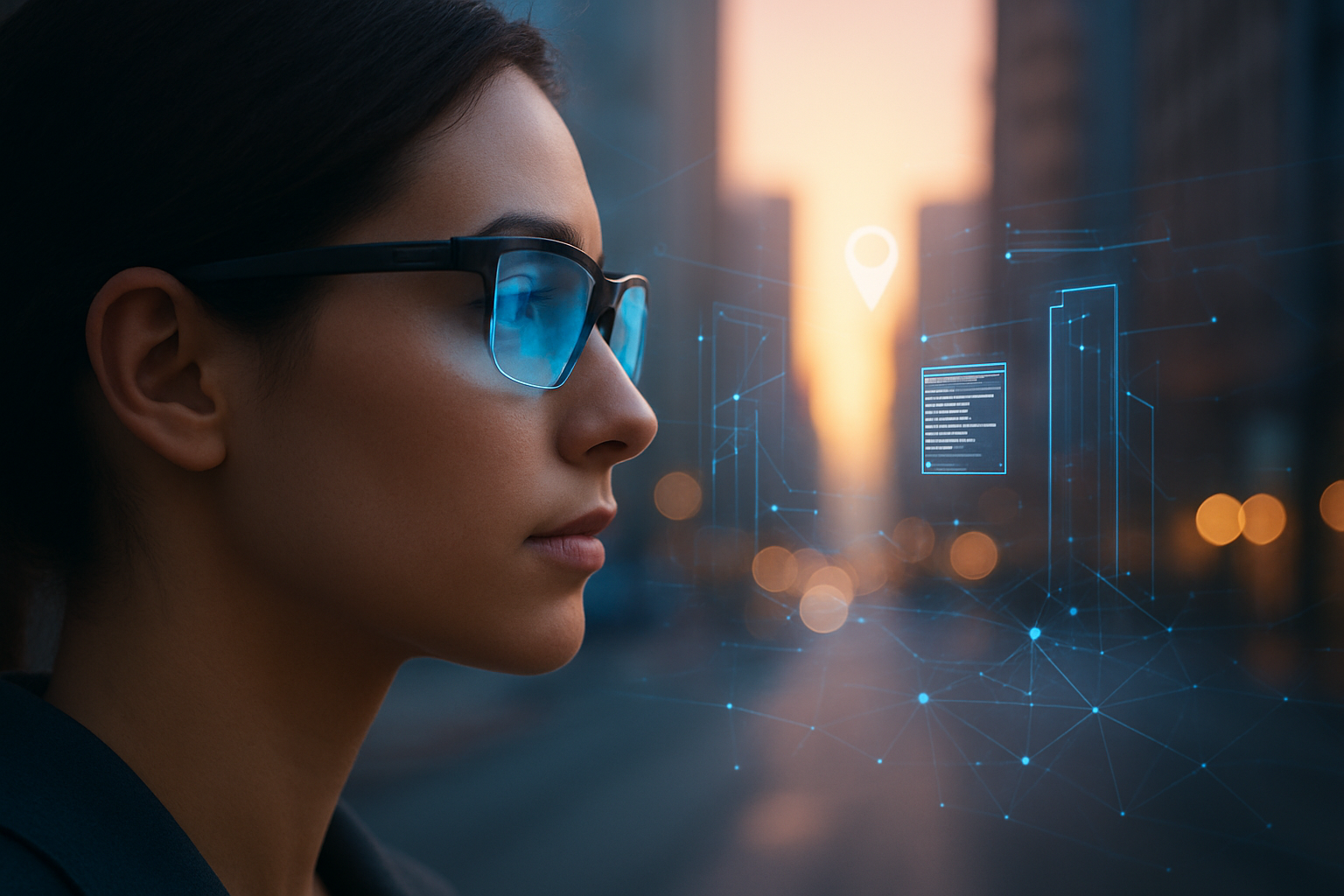
    As the tech world approaches the end of 2025, the race to claim the "prime real estate" of the human face has reached a fever pitch. Reports from internal sources at Alphabet Inc. (NASDAQ: GOOGL) and recent industry demonstrations suggest that Google is preparing a massive, coordinated return to the smart glasses market. Unlike the ill-fated Google Glass of a decade ago, this new generation of wearables is built from the ground up to serve as the physical vessel for Gemini, Google’s most advanced multimodal AI. By integrating the real-time visual processing of "Project Astra," Google aims to provide users with a "universal AI agent" that can see, hear, and understand the world alongside them in real-time.

    The significance of this move cannot be overstated. For years, the industry has theorized that the smartphone’s dominance would eventually be challenged by ambient computing—technology that exists in the background of our lives rather than demanding our constant downward gaze. With Gemini-integrated glasses, Google is betting that the combination of high-fashion frames and low-latency AI reasoning will finally move smart glasses from a niche enterprise tool to an essential consumer accessory. This development marks a pivotal shift for Google, moving away from being a search engine you "go to" and toward an intelligence that "walks with" you.

    The Brain Behind the Lens: Project Astra and Multimodal Mastery

    At the heart of the upcoming Google glasses is Project Astra, a breakthrough from Google DeepMind designed to handle multimodal inputs with near-zero latency. Technically, these glasses differ from previous iterations by moving beyond simple notifications or basic photo-taking. Leveraging the Gemini 2.5 and Ultra models, the glasses can perform "contextual reasoning" on a continuous video feed. In recent developer previews, a user wearing the glasses was able to look at a complex mechanical engine and ask, "What part is vibrating?" The AI, identifying the movement through the camera and correlating it with acoustic data, highlighted the specific bolt in the user’s field of view using an augmented reality (AR) overlay.

    The hardware itself is reportedly split into two distinct categories to maximize market reach. The first is an "Audio-Only" model, focusing on sleek, lightweight frames that look indistinguishable from standard eyewear. These rely on bone-conduction audio and directional microphones to provide a conversational interface. The second, more ambitious model features a high-resolution Micro-LED display engine developed by Raxium—a startup Google acquired in 2022. These "Display AI" glasses utilize advanced waveguides to project private, high-contrast text and graphics directly into the user’s line of sight, enabling real-time translation subtitles and turn-by-turn navigation that anchors 3D arrows to the physical street.

    Initial reactions from the AI research community have been largely positive, particularly regarding Google’s "long context window" technology. This allows the glasses to "remember" visual inputs for up to 10 minutes, solving the "where are my keys?" problem by allowing the AI to recall exactly where it last saw an object. However, experts note that the success of this technology hinges on battery efficiency. To combat heat and power drain, Google is utilizing the Snapdragon XR2+ Gen 2 chip from Qualcomm Inc. (NASDAQ: QCOM), offloading heavy computational tasks to the user’s smartphone via the new "Android XR" operating system.

    The Battle for the Face: Competitive Stakes and Strategic Shifts

    The intensifying rumors of Google's smart glasses have sent ripples through the boardrooms of Silicon Valley. Google’s strategy is a direct response to the success of the Ray-Ban Meta glasses produced by Meta Platforms, Inc. (NASDAQ: META). While Meta initially held a lead in the "fashion-first" category, Google has pivoted after being blocked from a partnership with EssilorLuxottica (EPA: EL) by a $3 billion investment from Meta. In response, Google has formed a strategic alliance with Warby Parker Inc. (NYSE: WRBY) and the high-end fashion label Gentle Monster. This "open platform" approach, branded as Android XR, is intended to make Google the primary software provider for all eyewear manufacturers, mirroring the strategy that made Android the dominant mobile OS.

    This development poses a significant threat to Apple Inc. (NASDAQ: AAPL), whose Vision Pro headset remains a high-end, tethered experience focused on "spatial computing" rather than "daily-wear AI." While Apple is rumored to be working on its own lightweight glasses, Google’s integration of Gemini gives it a head start in functional utility. Furthermore, the partnership with Samsung Electronics (KRX: 005930) to develop a "Galaxy XR" ecosystem ensures that Google has the manufacturing muscle to scale quickly. For startups in the AI hardware space, such as those developing standalone pins or pendants, the arrival of a functional, stylish glass from Google could prove disruptive, as the eyes and ears of a pair of glasses offer a far more natural data stream for an AI than a chest-mounted camera.

    Privacy, Subtitles, and the "Glasshole" Legacy

    The wider significance of Google’s return to eyewear lies in how it addresses the societal scars left by the original Google Glass. To avoid the "Glasshole" stigma of the mid-2010s, the 2025/2026 models are rumored to include significant privacy-first hardware features. These include a physical shutter for the camera and a highly visible LED ring that glows brightly when the device is recording or processing visual data. Google is also reportedly implementing an "Incognito Mode" that uses geofencing to automatically disable cameras in sensitive locations like hospitals or bathrooms.

    Beyond privacy, the cultural impact of real-time visual context is profound. The ability to have live subtitles during a conversation with a foreign-language speaker or to receive "social cues" via AI analysis could fundamentally change human interaction. However, this also raises concerns about "reality filtering," where users may begin to rely too heavily on an AI’s interpretation of their surroundings. Critics argue that an always-on AI assistant could further erode human memory and attention spans, creating a world where we only "see" what the algorithm deems relevant to our current task.

    The Road to 2026: What Lies Ahead

    In the near term, we expect Google to officially unveil the first consumer-ready Gemini glasses at Google I/O in early 2026, with a limited "Explorer Edition" potentially shipping to developers by the end of this year. The focus will likely be on "utility-first" use cases: helping users with DIY repairs, providing hands-free cooking instructions, and revolutionizing accessibility for the visually impaired. Long-term, the goal is to move the glasses from a smartphone accessory to a standalone device, though this will require breakthroughs in solid-state battery technology and 6G connectivity.

    The primary challenge remains the social friction of head-worn cameras. While the success of Meta’s Ray-Bans has softened public resistance, a device that "thinks" and "reasons" about what it sees is a different beast entirely. Experts predict that the next year will be defined by a "features war," where Google, Meta, and potentially OpenAI—through their rumored partnership with Jony Ive and Luxshare Precision Industry Co., Ltd. (SZSE: 002475)—will compete to prove whose AI is the most helpful in the real world.

    Final Thoughts: A New Chapter in Ambient Computing

    The rumors of Gemini-integrated Google Glasses represent more than just a hardware refresh; they signal the beginning of the "post-smartphone" era. By combining the multimodal power of Gemini with the design expertise of partners like Warby Parker, Google is attempting to fix the mistakes of the past and deliver on the original promise of wearable technology. The key takeaway is that the AI is no longer a chatbot in a window; it is becoming a persistent layer over our physical reality.

    As we move into 2026, the tech industry will be watching closely to see if Google can successfully navigate the delicate balance between utility and intrusion. If they succeed, the glasses could become as ubiquitous as the smartphone, turning every glance into a data-rich experience. For now, the world waits for the official word from Mountain View, but the signals are clear: the future of AI is not just in our pockets—it’s right before our eyes.


    This content is intended for informational purposes only and represents analysis of current AI developments.

    TokenRing AI delivers enterprise-grade solutions for multi-agent AI workflow orchestration, AI-powered development tools, and seamless remote collaboration platforms.
    For more information, visit https://www.tokenring.ai/.
  • Qualcomm and Google Forge Alliance to Power Next-Gen AR: Snapdragon AR2 Gen 1 Set to Revolutionize Spatial Computing

    Qualcomm and Google Forge Alliance to Power Next-Gen AR: Snapdragon AR2 Gen 1 Set to Revolutionize Spatial Computing

    The augmented reality (AR) landscape is on the cusp of a transformative shift, driven by a strategic collaboration between chip giant Qualcomm (NASDAQ: QCOM) and tech behemoth Google (NASDAQ: GOOGL). This partnership centers around the groundbreaking Snapdragon AR2 Gen 1 platform, a purpose-built chipset designed to usher in a new era of sleek, lightweight, and highly intelligent AR glasses. While Qualcomm unveiled the AR2 Gen 1 on November 16, 2022, during the Snapdragon Summit, the deeper alliance with Google is proving crucial for the platform's ecosystem, focusing on AI development and the foundational Android XR operating system. This synergy aims to overcome long-standing barriers to AR adoption, promising to redefine mobile computing and immersive experiences for both consumers and enterprises.

    This collaboration is not a co-development of the AR2 Gen 1 hardware itself, which was engineered by Qualcomm. Instead, Google's involvement is pivotal in providing the advanced AI capabilities and a robust software ecosystem that will bring the AR2 Gen 1-powered devices to life. Through Google Cloud's Vertex AI Neural Architecture Search (NAS) and the burgeoning Android XR platform, Google is set to imbue these next-generation AR glasses with unprecedented intelligence, contextual awareness, and a familiar, developer-friendly environment. The immediate significance lies in the promise of AR glasses that are finally practical for all-day wear, capable of seamless integration into daily life, and powered by cutting-edge artificial intelligence.

    Unpacking the Technical Marvel: Snapdragon AR2 Gen 1's Distributed Architecture

    The Snapdragon AR2 Gen 1 platform represents a significant technical leap, moving away from monolithic designs to a sophisticated multi-chip distributed processing architecture. This innovative approach is purpose-built for the unique demands of thin, lightweight AR glasses, ensuring high performance while maintaining minimal power consumption. The platform is fabricated on an advanced 4-nanometer (4nm) process, delivering optimal efficiency.

    At its core, the AR2 Gen 1 comprises three key components: a main AR processor, an AR co-processor, and a connectivity platform. The main AR processor, with a 40% smaller PCB area than previous designs, handles perception and display tasks, supporting up to nine concurrent cameras for comprehensive environmental understanding. It integrates a custom Engine for Visual Analytics (EVA), an optimized Qualcomm Spectra™ ISP, and a Qualcomm® Hexagon™ Processor (NPU) for accelerating AI-intensive tasks. Crucially, it features a dedicated hardware acceleration engine for motion tracking, localization, and an AI accelerator for reducing latency in sensitive interactions like hand tracking. The AR co-processor, designed for placement in the nose bridge for better weight distribution, includes its own CPU, memory, AI accelerator, and computer vision engine. This co-processor aggregates sensor data, enables on-glass eye tracking, and supports iris authentication for security and foveated rendering, a technique that optimizes processing power where the user is looking.

    Connectivity is equally critical, and the AR2 Gen 1 is the first AR platform to feature Wi-Fi 7 connectivity through the Qualcomm FastConnect™ 7800 system. This enables ultra-low sustained latency of less than 2 milliseconds between the AR glasses and a host device (like a smartphone or PC), even in congested environments, with a peak throughput of 5.8 Gbps. This distributed processing, coupled with advanced connectivity, allows the AR2 Gen 1 to achieve 2.5 times better AI performance and 50% lower power consumption compared to the Snapdragon XR2 Gen 1, operating at less than 1W. This translates to AR glasses that are not only more powerful but also significantly more comfortable, with a 45% reduction in wires and a motion-to-photon latency of less than 9ms for a truly seamless wireless experience.

    Reshaping the Competitive Landscape: Impact on AI and Tech Giants

    This Qualcomm-Google partnership, centered on the Snapdragon AR2 Gen 1 and Android XR, is set to profoundly impact the competitive dynamics across AI companies, tech giants, and startups within the burgeoning AR market. The collaboration creates a powerful open-ecosystem alternative, directly challenging the proprietary, "walled garden" approaches favored by some industry players.

    Qualcomm (NASDAQ: QCOM) stands to solidify its position as the indispensable hardware provider for the next generation of AR devices. By delivering a purpose-built, high-performance, and power-efficient platform, it becomes the foundational silicon for a wide array of manufacturers, effectively establishing itself as the "Android of AR" for chipsets. Google (NASDAQ: GOOGL), in turn, is strategically pivoting to be the dominant software and AI provider for the AR ecosystem. By offering Android XR as an open, unified operating system, integrated with its powerful Gemini generative AI, Google aims to replicate its smartphone success, fostering a vast developer community and seamlessly integrating its services (Maps, YouTube, Lens) into AR experiences without the burden of first-party hardware manufacturing. This strategic shift allows Google to exert broad influence across the AR market.

    The partnership poses a direct competitive challenge to companies like Apple (NASDAQ: AAPL) with its Vision Pro and Meta Platforms (NASDAQ: META) with its Quest line and smart glasses. While Apple targets a high-end, immersive mixed reality experience, and Meta focuses on VR and its own smart glasses, Qualcomm and Google are prioritizing lightweight, everyday AR glasses with a broad range of hardware partners. This open approach, combined with the technical advancements of AR2 Gen 1, could accelerate mainstream AR adoption, potentially disrupting the market for bulky XR headsets and even reducing long-term reliance on smartphones as AR glasses become more capable and standalone. AI companies will benefit significantly from the 2.5x boost in on-device AI performance, enabling more sophisticated and responsive AR applications, while developers gain a unified and accessible platform with Android XR, potentially diminishing fragmented AR development efforts.

    Wider Significance: A Leap Towards Ubiquitous Spatial Computing

    The Qualcomm Snapdragon AR2 Gen 1 platform, fortified by Google's AI and Android XR, represents a watershed moment in the broader AI and AR landscape, signaling a clear trajectory towards ubiquitous spatial computing. This development directly addresses the long-standing challenges of AR—namely, the bulkiness, limited battery life, and lack of a cohesive software ecosystem—that have hindered mainstream adoption.

    This initiative aligns perfectly with the overarching trend of miniaturization and wearability in technology. By enabling AR glasses that are sleek, comfortable, and consume less than 1W of power, the partnership is making a tangible move towards making AR an all-day, everyday utility rather than a niche gadget. Furthermore, the significant boost in on-device AI performance (2.5x increase) and dedicated AI accelerators for tasks like object recognition, hand tracking, and environmental understanding underscore the growing importance of edge AI. This capability is crucial for real-time responsiveness in AR, reducing reliance on constant cloud connectivity and enhancing privacy. The deep integration of Google's Gemini generative AI within Android XR is poised to create unprecedentedly personalized and adaptive experiences, transforming AR glasses into intelligent personal assistants that can "see" and understand the world from the user's perspective.

    However, this transformative potential comes with significant concerns. The extensive collection of environmental and user data (eye tracking, location, visual analytics) by AI-powered AR devices raises profound privacy and data security questions. Ensuring transparent data usage policies and robust security measures will be paramount for earning public trust. Ethical implications surrounding pervasive AI, such as the potential for surveillance, autonomy erosion, and manipulation through personalized content, also warrant careful consideration. The challenge of "AI hallucinations" and bias, where AI models might generate inaccurate or discriminatory information, remains a concern that needs to be meticulously managed in AR contexts. Compared to previous AR milestones like the rudimentary smartphone-based AR experiences (e.g., Pokémon Go) or the social and functional challenges faced by early ventures like Google Glass, this partnership signifies a more mature and integrated approach. It moves beyond generalized XR platforms by creating a purpose-built AR solution with a cohesive hardware-software ecosystem, positioning it as a foundational technology for the next generation of spatial computing.

    The Horizon of Innovation: Future Developments and Expert Predictions

    The collaborative efforts behind the Snapdragon AR2 Gen 1 platform and Android XR are poised to unleash a cascade of innovations in the near and long term, promising to redefine how we interact with digital information and the physical world.

    In the near term (2025-2026), a wave of AR glasses from numerous manufacturers is expected to hit the market, leveraging the AR2 Gen 1's capabilities. Google (NASDAQ: GOOGL) itself plans to release new Android XR-equipped AI glasses in 2026, including both screen-free models focused on assistance and those with optional in-lens displays for visual navigation and translations, developed with partners like Warby Parker and Gentle Monster. Samsung's (KRX: 005930) first Android XR headset, codenamed Project Moohan, is also anticipated for 2026. Breakthroughs like VoxelSensors' Single Photon Active Event Sensor (SPAES) 3D sensing technology, expected on AR2 Gen 1 platforms by December 2025, promise significant power savings and advancements in "Physical AI" for interpreting the real world. Qualcomm (NASDAQ: QCOM) is also pushing on-device AI, with related chips capable of running large AI models locally, reducing cloud reliance.

    Looking further ahead, Qualcomm envisions a future where lightweight, standalone smart glasses for all-day wear could eventually replace the smartphone as a primary computing device. Experts predict the emergence of "spatial agents"—highly advanced AI assistants that can preemptively offer context-aware information based on the user's environment and activities. Potential applications are vast, ranging from everyday assistance like real-time visual navigation and language translation to transformative uses in productivity (private virtual workspaces), immersive entertainment, and industrial applications (remote assistance, training simulations). Challenges remain, including further miniaturization, extending battery life, expanding the field of view without compromising comfort, and fostering a robust developer ecosystem. However, industry analysts predict a strong wave of hardware innovation in the second half of 2025, with over 20 million AR-capable eyewear shipments by 2027, driven by the convergence of AR and AI. Experts emphasize that the success of lightweight form factors, intuitive user interfaces, on-device AI, and open platforms like Android XR will be key to mainstream consumer adoption, ultimately leading to personalized and adaptive experiences that make AR glasses indispensable companions.

    A New Era of Spatial Computing: Comprehensive Wrap-up

    The partnership between Qualcomm (NASDAQ: QCOM) and Google (NASDAQ: GOOGL) to advance the Snapdragon AR2 Gen 1 platform and its surrounding ecosystem marks a pivotal moment in the quest for truly ubiquitous augmented reality. This collaboration is not merely about hardware or software; it's about engineering a comprehensive foundation for a new era of spatial computing, one where digital information seamlessly blends with our physical world through intelligent, comfortable, and stylish eyewear. The key takeaways include the AR2 Gen 1's breakthrough multi-chip distributed architecture enabling unprecedented power efficiency and a sleek form factor, coupled with Google's strategic role in infusing powerful AI (Gemini) and an open, developer-friendly operating system (Android XR).

    This development's significance in AI history lies in its potential to democratize sophisticated AR, moving beyond niche applications and bulky devices towards mass-market adoption. By addressing critical barriers of form factor, power, and a fragmented software landscape, Qualcomm and Google are laying the groundwork for AR glasses to become an integral part of daily life, potentially rivaling the smartphone in its transformative impact. The long-term implications suggest a future where AI-powered AR glasses act as intelligent companions, offering contextual assistance, immersive experiences, and new paradigms for human-computer interaction across personal, professional, and industrial domains.

    As we move into the coming weeks and months, watch for the initial wave of AR2 Gen 1-powered devices from various OEMs, alongside further details on Google's Android XR rollout and the integration of its AI capabilities. The success of these early products and the growth of the developer ecosystem around Android XR will be crucial indicators of how quickly this vision of ubiquitous spatial computing becomes a tangible reality. The journey to truly smart, everyday AR glasses is accelerating, and this partnership is undeniably at the forefront of that revolution.


    This content is intended for informational purposes only and represents analysis of current AI developments.

    TokenRing AI delivers enterprise-grade solutions for multi-agent AI workflow orchestration, AI-powered development tools, and seamless remote collaboration platforms.
    For more information, visit https://www.tokenring.ai/.
  • Google’s AI-Powered Smart Glasses Set for 2026: A New Era of Ambient Computing

    Google’s AI-Powered Smart Glasses Set for 2026: A New Era of Ambient Computing

    Google (NASDAQ: GOOGL) is poised to make a monumental return to the wearable technology arena in 2026 with the launch of its highly anticipated AI-powered smart glasses. This strategic move signals Google's most ambitious push into smart eyewear since the initial Google Glass endeavor, aiming to redefine daily interaction with digital assistance through advanced artificial intelligence. Leveraging its powerful Gemini AI platform and the Android XR operating system, Google intends to usher in a new era of "context-aware computing" that seamlessly integrates into the fabric of everyday life, transforming how individuals access information and interact with their environment.

    The announcement of a fixed launch window for 2026 has already sent ripples across the tech industry, reportedly "reshuffling rival plans" and compelling hardware partners and app developers to accelerate their own strategies. This re-entry into wearables signifies a major paradigm shift, pushing AI beyond the confines of smartphones and into "constant proximity" on a user's face. Google's multi-tiered product strategy, encompassing both audio-only and display-enabled glasses, aims to foster gradual adoption while intensifying the burgeoning competition in the wearable AI market, directly challenging existing players like Meta's (NASDAQ: META) Ray-Ban Meta AI glasses and anticipating entries from other tech giants such as Apple (NASDAQ: AAPL).

    The Technical Rebirth: Gemini AI at the Forefront of Wearable Computing

    Google's 2026 smart glasses represent a profound technological evolution from its predecessor, Google Glass. At the core of this advancement is the deep integration of Google's Gemini AI assistant, which will power both the screen-free and display-enabled variants. Gemini enables multimodal interaction, allowing users to converse naturally with the glasses, leveraging input from built-in microphones, speakers, and cameras to "see" and "hear" the world as the user does. This contextual awareness facilitates real-time assistance, from identifying objects and translating signs to offering proactive suggestions based on observed activities or overheard conversations.

    The product lineup will feature two primary categories, both running on Android XR: lightweight Audio-Only AI Glasses for all-day wear, prioritizing natural conversational interaction with Gemini, and Display AI Glasses which will incorporate an in-lens display visible only to the wearer. The latter is envisioned to present helpful information like turn-by-turn navigation, real-time language translation captions, appointment reminders, and message previews. Some prototypes even show monocular or binocular displays capable of true mixed-reality visuals. While much of the heavy AI processing will be offloaded to a wirelessly connected smartphone to maintain a lightweight form factor, some on-device processing for immediate tasks and privacy considerations is expected, potentially utilizing specialized AR chipsets from partners like Qualcomm Technologies (NASDAQ: QCOM).

    This approach significantly differs from Google Glass, which focused on general-purpose computing with limited AI. The new glasses are fundamentally AI-centric, designed to be an ambient AI companion rather than merely a screen replacement. Privacy, a major concern with Google Glass, is being addressed with "intelligence around privacy and interaction," including features like dimming content when someone is in proximity and local processing of sensitive data. Furthermore, strategic partnerships with eyewear brands like Warby Parker and Gentle Monster aim to overcome past design and social acceptance hurdles, ensuring the new devices are stylish, comfortable, and discreet. Initial reactions from the AI research community express excitement for the potential of advanced AI to transform wearables, though skepticism remains regarding design, usability, and real-world utility, given past challenges.

    Reshaping the Tech Landscape: Competitive Dynamics and Market Disruption

    Google's re-entry into the smart glasses market with an AI-first strategy is set to profoundly impact the tech industry, creating new beneficiaries and intensifying competition. Hardware partners, particularly Samsung (KRX: 005930) for co-development and chip manufacturers like Qualcomm Technologies (NASDAQ: QCOM), stand to gain significantly from their involvement in the manufacturing and design of these sophisticated devices. Eyewear fashion brands like Warby Parker (NYSE: WRBY) and Gentle Monster will also play a crucial role in ensuring the glasses are aesthetically appealing and socially acceptable. Moreover, the Android XR platform and the Gemini Live API will open new avenues for AI developers, content creators, and service providers to innovate within a burgeoning ecosystem for spatial computing.

    The competitive implications for major AI labs and tech companies are substantial. Meta (NASDAQ: META), a current leader with its Ray-Ban Meta smart glasses, will face direct competition from Google's Gemini-integrated offering. This rivalry is expected to drive rapid innovation in design, AI capabilities, and ecosystem development. Apple (NASDAQ: AAPL), also rumored to be developing its own AI-based smart glasses, could enter the market by late 2026, setting the stage for a major platform battle between Google's Android XR and Apple's rumored ecosystem. While Samsung (KRX: 005930) is partnering with Google on Android XR, it is also pursuing its own XR headset development, indicating a dual strategy to capture market share.

    These AI smart glasses have the potential to disrupt several existing product categories. While designed to complement rather than replace smartphones, they could reduce reliance on handheld devices for quick information access and notifications. Current voice assistants on smartphones and smart speakers might face disruption as users shift to more seamless, always-on, and contextually aware interactions directly through their glasses. Furthermore, the integration of many smartwatch and headphone functionalities with added visual or contextual intelligence could consolidate the wearable market. Google's strategic advantages lie in its vast ecosystem, the power of Gemini AI, a tiered product strategy for gradual adoption, and critical partnerships, all built on the lessons learned from past ventures.

    A New Frontier for AI: Broader Significance and Ethical Considerations

    Google's 2026 AI-powered smart glasses represent a critical inflection point in the broader AI landscape, embodying the vision of ambient computing. This paradigm envisions technology as an invisible, ever-present assistant that anticipates user needs, operating proactively and contextually to blend digital information into the physical world. Central to this is multimodal AI, powered by Gemini, which allows the glasses to process visual, audio, and textual data simultaneously, enabling real-time assistance that understands and reacts to the user's surroundings. The emphasis on on-device AI for immediate tasks also enhances responsiveness and privacy by minimizing cloud reliance.

    Societally, these glasses could offer enhanced accessibility, providing hands-free assistance, real-time language translation, and visual aids, thereby streamlining daily routines and empowering individuals. They promise to redefine human-technology interaction, moving beyond discrete device interactions to a continuous, integrated digital overlay on reality. However, the transformative potential comes with significant concerns. The presence of always-on cameras and microphones in discreet eyewear raises profound privacy invasion and surveillance risks, potentially leading to a normalization of "low-grade, always-on surveillance" and questions about bystander consent. The digital divide could also be exacerbated by the high cost of such advanced technology, creating an "AI divide" that further marginalizes underserved communities.

    Comparing this to previous AI milestones, Google's current initiative is a direct successor to the ill-fated Google Glass (2013), aiming to learn from its failures in privacy, design, and utility by integrating far more powerful multimodal AI. It also enters a market where Meta's (NASDAQ: META) Ray-Ban Smart Glasses have already paved the way for greater consumer acceptance. The advanced AI capabilities in these forthcoming glasses are a direct result of decades of AI research, from IBM's Deep Blue (1997) to DeepMind's AlphaGo (2016) and the revolution brought by Large Language Models (LLMs) like GPT-3 and Google's BERT in the late 2010s and early 2020s, all of which contribute to making context-aware, multimodal AI in a compact form factor a reality today.

    The Road Ahead: Anticipated Developments and Lingering Challenges

    Looking beyond the 2026 launch, Google's AI smart glasses are expected to undergo continuous evolution in both hardware and AI capabilities. Near-term developments will focus on refining the initial audio-only and display-enabled models, improving comfort, miniaturization, and the seamless integration of Gemini. Long-term, hardware iterations will likely lead to even lighter devices, more powerful on-device AI chips to reduce smartphone reliance, advanced displays with wider fields of view, and potentially new control mechanisms like wrist-wearable controllers. AI model improvements will aim for deeper contextual understanding, enabling "proactive AI" that anticipates user needs, enhanced multimodal capabilities, and a personalized "copilot" that learns user behavior for highly tailored assistance.

    The potential applications and use cases are vast, spanning everyday assistance like hands-free messaging and navigation, to communication with real-time language translation, and information access for identifying objects or learning about surroundings. Professional applications in healthcare, logistics, and manufacturing could also see significant benefits. However, several challenges must be addressed for widespread adoption. Technical limitations such as battery life, weight and comfort, and the balance between processing power and heat generation remain critical hurdles. Social acceptance and the lingering stigma from Google Glass are paramount, requiring careful attention to privacy concerns and transparency. Furthermore, robust regulatory frameworks for data privacy and control will be essential to build consumer trust.

    Experts predict a multi-phase evolution for the smart glasses market, with the initial phase focusing on practical AI assistance. Google's strategy is viewed as a "comprehensive ecosystem play," leveraging Android and Gemini to gradually acclimate users to spatial computing. Intense competition from Meta (NASDAQ: META), Apple (NASDAQ: AAPL), and other players is expected, driving innovation. Many believe AI glasses are not meant to replace smartphones but to become a ubiquitous, intelligent interface that blends digital information with the real world. Ultimately, the success of Google's AI smart glasses hinges on earning user trust, effectively addressing privacy concerns, and providing meaningful control over data and interactions.


    This content is intended for informational purposes only and represents analysis of current AI developments.

    TokenRing AI delivers enterprise-grade solutions for multi-agent AI workflow orchestration, AI-powered development tools, and seamless remote collaboration platforms.
    For more information, visit https://www.tokenring.ai/.