
Tag: Ansys

  • The “Silicon-to-Systems” Era Begins: Synopsys Finalizes $35 Billion Acquisition of Ansys

    The “Silicon-to-Systems” Era Begins: Synopsys Finalizes $35 Billion Acquisition of Ansys

    The landscape of semiconductor engineering has undergone a tectonic shift as Synopsys Inc. (NASDAQ: SNPS) officially completed its $35 billion acquisition of Ansys Inc., marking the largest merger in the history of electronic design automation (EDA). Finalized following a grueling 18-month regulatory review that spanned three continents, the deal represents a definitive pivot from traditional chip-centric design to a holistic "Silicon-to-Systems" philosophy. By uniting the world’s leading chip design software with the gold standard in physics-based simulation, the combined entity aims to solve the physics-defying challenges of the AI era, where heat, stress, and electromagnetic interference are now as critical to success as logic gates.

    The immediate significance of this merger lies in its timing. As of early 2026, the industry is racing toward the "Angstrom Era," with 2nm and 1.8A nodes entering mass production at foundries like Taiwan Semiconductor Manufacturing Company (NYSE: TSM) and Intel (NASDAQ: INTC). At these scales, the physical environment surrounding a chip is no longer a peripheral concern but a primary failure mode. The Synopsys-Ansys integration provides the first unified platform capable of simulating how a billion-transistor processor interacts with its package, its cooling system, and the electromagnetic noise of a modern AI data center—all before a single physical prototype is ever manufactured.

    A Unified Architecture for the Angstrom Era

    The technical backbone of the merger is the deep integration of Ansys’s multiphysics solvers directly into the Synopsys design stack. Historically, chip design and physics simulation were siloed workflows; a designer would layout a chip in Synopsys tools and then "hand off" the design to a simulation team using Ansys to check for thermal or structural issues. This sequential process often led to "late-stage surprises" where heat hotspots or mechanical warpage forced engineers back to the drawing board, costing millions in lost time. The new "Shift-Left" workflow eliminates this friction by embedding tools like Ansys RedHawk-SC and HFSS directly into the Synopsys 3DIC Compiler, allowing for real-time, physics-aware design.

    This convergence is particularly vital for the rise of multi-die systems and 3D-ICs. As the industry moves away from monolithic chips toward heterogeneous "chiplets" stacked vertically, the complexity of power delivery and heat dissipation has grown exponentially. The combined company's new "3Dblox" standard allows designers to create a unified data model that accounts for thermal-aware placement—where AI-driven algorithms automatically reposition components to prevent heat build-up—and electromagnetic sign-off for high-speed die-to-die connectivity like UCIe. Initial benchmarks from early adopters suggest that this integrated approach can reduce design cycle times by as much as 40% for advanced 3D-stacked AI accelerators.

    Furthermore, the role of artificial intelligence has been elevated through the Synopsys.ai suite, which now leverages Ansys solvers as "fast native engines." These AI-driven "Design Space Optimization" (DSO) tools can evaluate thousands of potential layouts in minutes, using Ansys’s 50 years of physics data to predict structural reliability and power integrity. Industry experts, including researchers from the IEEE, have hailed this as the birth of "Physics-AI," where generative models are no longer just predicting code or text, but are actively synthesizing the physical architecture of the next generation of intelligent machines.

    Competitive Moats and the Industry Response

    The completion of the merger has sent shockwaves through the competitive landscape, effectively creating a "one-stop-shop" that rivals struggle to match. By owning the dominant tools for both the logical and physical domains, Synopsys has built a formidable strategic moat. Major tech giants like Nvidia (NASDAQ: NVDA) and AMD (NASDAQ: AMD), along with hyperscalers such as Amazon (NASDAQ: AMZN) and Microsoft (NASDAQ: MSFT), stand to benefit most from this consolidation. These companies, which are increasingly designing their own custom silicon, can now leverage a singular, vertically integrated toolchain to accelerate their time-to-market for specialized AI hardware.

    Competitors have been forced to respond with aggressive defensive maneuvers. Cadence Design Systems (NASDAQ: CDNS) recently bolstered its own multiphysics portfolio through the multi-billion dollar acquisition of Hexagon’s MSC Software, while Siemens (OTC: SIEGY) integrated Altair Engineering into its portfolio to connect chip design with broader industrial manufacturing. However, Synopsys’s head start in AI-native integration gives it a distinct advantage. Meanwhile, Keysight Technologies (NYSE: KEYS) has emerged as an unexpected winner; to appease regulators, Synopsys was required to divest several high-profile assets to Keysight, including its Optical Solutions Group, effectively turning Keysight into a more capable fourth player in the high-end simulation market.

    Market analysts suggest that this merger may signal the end of the "best-of-breed" era in EDA, where companies would mix and match tools from different vendors. The sheer efficiency of the Synopsys-Ansys integrated stack makes "mixed-vendor" flows significantly more expensive and error-prone. This has led to concerns among smaller fabless startups about potential "vendor lock-in," as the cost of switching away from the dominant Synopsys ecosystem becomes prohibitive. Nevertheless, for the "Titans" of the industry, the merger offers a clear path to managing the systemic complexity that has become the hallmark of the post-Moore’s Law world.

    The Dawn of "SysMoore" and the AI Virtuous Cycle

    Beyond the immediate business implications, the merger represents a milestone in the "SysMoore" era—a term coined to describe the transition from transistor scaling to system-level scaling. As the physical limits of silicon are reached, performance gains must come from how chips are packaged and integrated into larger systems. This merger is the first software-level acknowledgment that the system is the new "chip." It fits into a broader trend where AI is creating a virtuous cycle: AI-designed chips are being used to power more advanced AI models, which in turn are used to design even more efficient chips.

    The environmental significance of this development is also profound. AI-designed chips are notoriously power-hungry, but the "Shift-Left" approach allows engineers to find hidden energy efficiencies that human designers would likely miss. By using "Digital Twins"—virtual replicas of entire data centers powered by Ansys simulation—companies can optimize cooling and airflow at the system level, potentially reducing the massive carbon footprint of generative AI training. However, some critics remain concerned that the consolidation of such powerful design tools into a single entity could stifle the very innovation needed to solve these global energy challenges.

    This milestone is often compared to the failed Nvidia-ARM merger of 2022. Unlike that deal, which was blocked due to concerns about Nvidia controlling a neutral industry standard, the Synopsys-Ansys merger is viewed as "complementary" rather than "horizontal." It doesn't consolidate competitors; it integrates neighbors in the supply chain. This regulatory approval signals a shift in how governments view tech consolidation in the age of strategic AI competition, prioritizing the creation of robust national champions capable of leading the global hardware race.

    The Road Ahead: 1.8A and Beyond

    Looking toward the future, the new Synopsys-Ansys entity faces a roadmap defined by both immense technical opportunity and significant geopolitical risk. In the near term, the integration will focus on supporting the 1.8A (18 Angstrom) node. These chips will utilize "Backside Power Delivery" and GAAFET transistors, technologies that are incredibly sensitive to thermal and electromagnetic fluctuations. The combined company’s success will largely be measured by how effectively it helps foundries like TSMC and Intel bring these nodes to high-yield mass production.

    On the horizon, we can expect the launch of "Synopsys Multiphysics AI," a platform that could potentially automate the entire physical verification process. Experts predict that by 2027, "Agentic AI" will be able to take a high-level architectural description and autonomously generate a fully simulated, physics-verified chip layout with minimal human intervention. This would democratize high-end chip design, allowing smaller startups to compete with the likes of Apple (NASDAQ: AAPL) by providing them with the "virtual engineering teams" previously only available to the world’s wealthiest corporations.

    However, challenges remain. The company must navigate the increasingly complex US-China trade landscape. In late 2025, Synopsys faced pressure to limit certain software exports to China, a move that could impact a significant portion of its revenue. Furthermore, the internal task of unifying two massive, decades-old software codebases is a Herculean engineering feat. If the integration of the databases is not handled seamlessly, the promised "single source of truth" for designers could become a source of technical debt and software bugs.

    A New Chapter in Computing History

    The finalization of the Synopsys-Ansys merger is more than just a corporate transaction; it is the starting gun for the next decade of computing. By bridging the gap between the digital logic of EDA and the physical reality of multiphysics, the industry has finally equipped itself with the tools necessary to build the "intelligent systems" of the future. The key takeaways for the industry are clear: system-level integration is the new frontier, AI is the primary design architect, and physics is no longer a constraint to be checked, but a variable to be optimized.

    As we move into 2026, the significance of this development in AI history cannot be overstated. We have moved from a world where AI was merely a workload to a world where AI is the master craftsman of its own hardware. In the coming months, the industry will watch closely for the first "Tape-Outs" of 2nm AI chips designed entirely within the integrated Synopsys-Ansys environment. Their performance and thermal efficiency will be the ultimate testament to whether this $35 billion gamble has truly changed the world.


    This content is intended for informational purposes only and represents analysis of current AI developments.

    TokenRing AI delivers enterprise-grade solutions for multi-agent AI workflow orchestration, AI-powered development tools, and seamless remote collaboration platforms.
    For more information, visit https://www.tokenring.ai/.
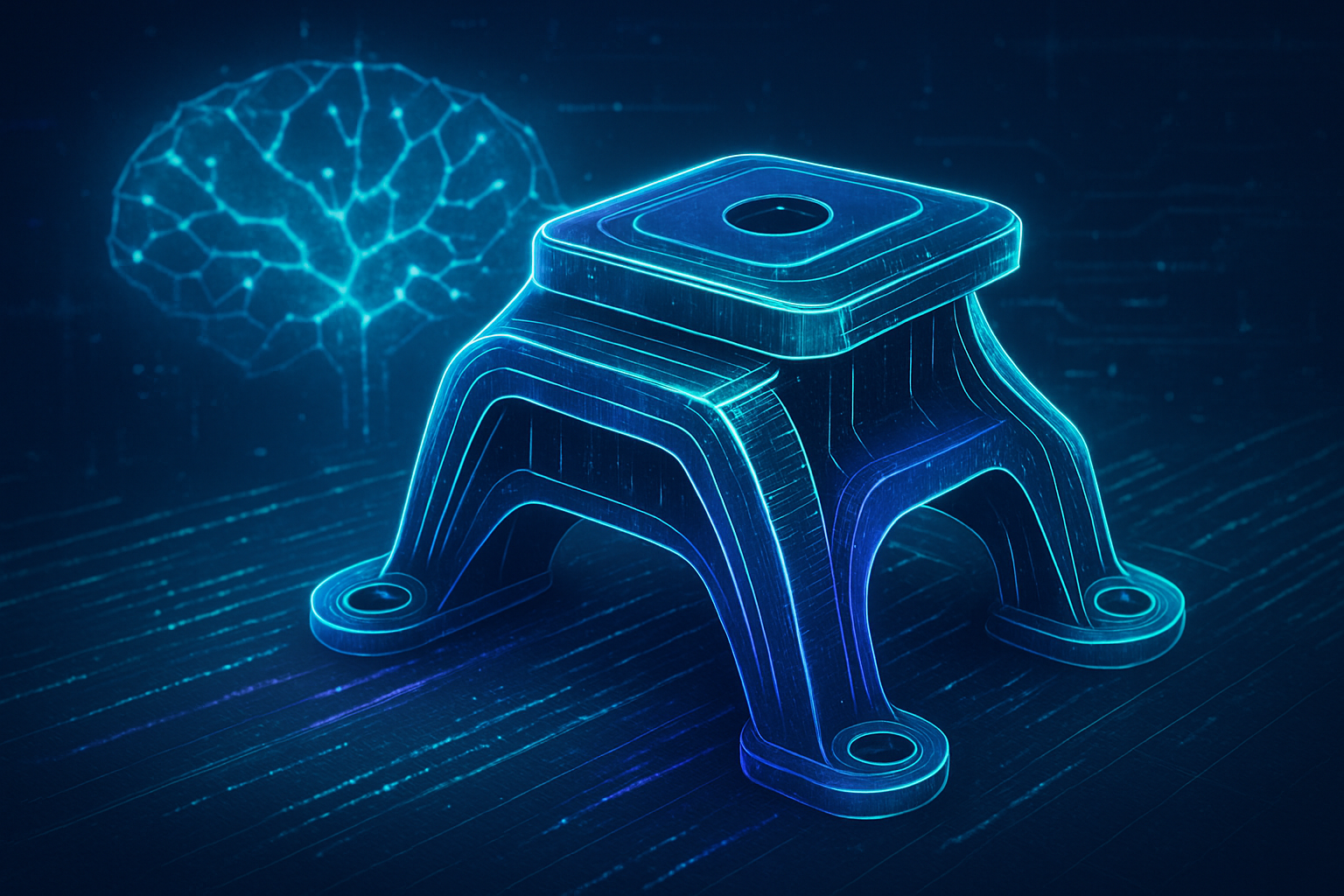
  • Sumitomo Riko Revolutionizes Automotive Design with Ansys AI: A New Era for Industrial Engineering

    Sumitomo Riko Revolutionizes Automotive Design with Ansys AI: A New Era for Industrial Engineering

    Tokyo, Japan – October 9, 2025 – Sumitomo Riko Co., Ltd. (TYO: 5191), a global leader in high-performance rubber and plastic automotive components, has announced a groundbreaking integration of Ansys SimAI technology to dramatically enhance its automotive component design and manufacturing processes. This strategic collaboration marks a significant leap forward in the application of artificial intelligence to industrial engineering, promising to accelerate product development cycles and foster unprecedented innovation in the automotive sector. The initiative is poised to redefine how complex engineering challenges, particularly in computation-intensive tasks like anti-vibration design and thermal analyses, are approached and resolved.

    The immediate significance of this partnership lies in its potential to compress product development timelines and elevate the precision of design iterations. By leveraging Ansys SimAI, Sumitomo Riko aims to achieve a tenfold acceleration in simulation cycles for certain tasks, delivering high-fidelity performance predictions in mere minutes rather than hours. This breakthrough not only promises substantial time savings—reportedly over an hour per new design—but also empowers engineers to make data-driven decisions much earlier in the design phase, long before the costly and time-consuming process of physical prototyping begins. This heralds a new era where AI-driven simulation becomes an indispensable tool in the industrial design toolkit, pushing the boundaries of what's possible in automotive engineering.

    Technical Deep Dive: Ansys SimAI's Transformative Power in Automotive Design

    The technical core of this advancement lies in Ansys SimAI, a physics-agnostic, software-as-a-service (SaaS) application that marries the renowned predictive accuracy of Ansys' traditional simulation tools with the blistering speed of generative AI. For Sumitomo Riko, this translates into a revolutionary approach to designing critical components such as vibration isolators and hoses, where understanding complex behaviors under extreme loads and temperatures is paramount. SimAI's ability to rapidly analyze existing simulation data and generate high-fidelity AI models is a game-changer. These models can then swiftly and accurately predict the performance of new component designs, encompassing mechanical, thermal, and even chemical responses across the entire product lifecycle.

    A key differentiator from previous approaches is SimAI's elimination of the need for parameterized geometry. Traditional simulation workflows often demand extensive time and specialized expertise for pre-processing tasks, including the meticulous definition of geometric parameters. By removing this hurdle, Ansys SimAI allows Sumitomo Riko to convert its vast archives of existing simulation data into fast, high-fidelity AI models that predict component behavior without this complex, time-consuming step. This fundamental shift not only democratizes access to advanced simulation capabilities but also significantly streamlines the entire design workflow. Initial reactions from the engineering community highlight the potential for unparalleled efficiency gains, with experts noting that such a reduction in simulation time could unlock entirely new avenues for design exploration and optimization previously deemed impractical due to computational limitations.

    Furthermore, Sumitomo Riko is not just using SimAI for isolated tasks; they are integrating workflow automation capabilities across their entire product lifecycle. This holistic approach ensures that the benefits of AI-driven simulation extend from initial conceptualization through manufacturing and even into product retirement processes. Specific applications include accelerating computation-heavy tasks such as anti-vibration design and exploration, battery cooling analyses, magnetic field analysis, and mixing heat transfer analysis. The ability to obtain accurate predictions in under five minutes for tasks that traditionally took hours represents a paradigm shift, enabling engineers to iterate more frequently, explore a wider design space, and ultimately arrive at more robust and innovative solutions.

    Market Implications: Reshaping the AI and Engineering Landscape

    This collaboration between Sumitomo Riko and Ansys (NASDAQ: ANSS) has profound implications for a diverse array of companies within the AI, tech, and engineering sectors. Ansys, as the provider of the core SimAI technology, stands to benefit significantly, solidifying its position as a frontrunner in AI-driven simulation and demonstrating the tangible, industrial value of its offerings. This partnership serves as a powerful case study, likely attracting other manufacturing giants looking to replicate Sumitomo Riko's efficiency gains. Companies specializing in AI-powered design tools, data analytics for engineering, and simulation software will find their market validated and potentially expanded by this breakthrough.

    The competitive landscape for major AI labs and tech companies is also set to intensify. While many large tech players are investing heavily in general-purpose AI, Ansys' success with SimAI highlights the immense value of specialized, physics-informed AI solutions tailored for specific industrial applications. This could spur further development of vertical AI solutions, prompting other software vendors to integrate similar capabilities or risk being outmaneuvered. For startups in the AI engineering space, this development offers both inspiration and a clear market signal: there is a strong demand for AI tools that can directly address complex, real-world industrial challenges and deliver measurable improvements in efficiency and innovation.

    Potential disruption to existing products or services could be significant, particularly for legacy simulation software providers that rely solely on traditional, computationally intensive methods. The speed and accessibility offered by SimAI could render older, slower tools less competitive, compelling them to integrate AI or risk obsolescence. Sumitomo Riko's early adoption of this technology grants it a strategic advantage in the automotive components market, allowing for faster product cycles, more optimized designs, and potentially higher-performing components. This market positioning could force competitors to accelerate their own AI integration efforts to keep pace with the innovation curve established by this partnership.

    Broader Significance: AI's March into Industrial Heartlands

    The Sumitomo Riko-Ansys collaboration fits squarely into the broader AI landscape as a powerful testament to the technology's maturation and its increasing penetration into traditional industrial sectors. For years, AI breakthroughs were often associated with consumer applications, language models, or image recognition. This development signifies a critical shift, demonstrating AI's ability to tackle complex, physics-based engineering problems with unprecedented efficiency. It underscores the trend of "democratizing simulation," making advanced analytical capabilities accessible to a wider range of engineers, not just specialized simulation experts.

    The impacts are multi-faceted. Environmentally, faster and more optimized designs could lead to lighter, more fuel-efficient automotive components, contributing to reduced carbon footprints. Economically, it promises significant cost savings through reduced prototyping, faster time-to-market, and more efficient use of engineering resources. However, potential concerns may arise regarding the workforce, as the automation of certain design tasks could necessitate upskilling or reskilling of engineers. The reliance on AI models also raises questions about validation and the potential for "black box" decision-making, though Ansys' emphasis on high-fidelity, physics-informed AI aims to mitigate such risks.

    Comparing this to previous AI milestones, this development resonates with the impact of early CAD/CAM systems that revolutionized drafting and manufacturing. Just as those tools transformed manual processes into digital ones, AI-driven simulation is poised to transform the digital simulation process itself, making it orders of magnitude faster and more insightful. It's a clear indicator that AI is moving beyond augmentation to truly transformative capabilities in core engineering functions, setting a new benchmark for what's achievable in industrial design and development.

    The Road Ahead: Future Developments and Challenges

    Looking ahead, the partnership between Sumitomo Riko and Ansys is likely just the beginning of a deeper integration of AI into industrial design. In the near term, we can expect to see an expansion of SimAI's application within Sumitomo Riko to an even broader range of automotive components and manufacturing processes. This could include predictive maintenance models, material science optimization, and even generative design workflows where AI proposes novel component geometries based on performance criteria. The success of this implementation will undoubtedly encourage other major automotive suppliers and OEMs to explore similar AI-driven simulation strategies.

    Potential applications and use cases on the horizon extend beyond automotive. Industries such as aerospace, heavy machinery, consumer electronics, and even medical devices, which all rely heavily on complex simulations for product development, are prime candidates for similar AI integration. Imagine AI-designed aircraft components that are lighter and stronger, or medical implants perfectly optimized for patient-specific biomechanics. The ability to rapidly iterate and predict performance will unlock innovation across these sectors.

    However, challenges remain. The quality and quantity of training data are crucial for the accuracy of AI models; ensuring robust, diverse datasets will be an ongoing task. Trust and validation of AI-generated designs will also be critical, requiring rigorous testing and verification protocols. Furthermore, the integration of these advanced AI tools into existing, often complex, enterprise IT infrastructures presents its own set of technical and organizational hurdles. Experts predict a continued focus on "explainable AI" (XAI) in engineering, where the reasoning behind AI's design suggestions can be understood and validated by human engineers. The evolution of AI ethics in engineering design will also become increasingly important as AI takes on more creative and decision-making roles.

    A New Horizon in AI-Driven Engineering

    The collaboration between Sumitomo Riko and Ansys represents a pivotal moment in the history of industrial AI. By leveraging Ansys SimAI to dramatically accelerate and enhance automotive component design, Sumitomo Riko is not merely adopting a new tool; it is embracing a new paradigm of engineering. The key takeaways are clear: AI is no longer a peripheral technology but a core driver of efficiency, innovation, and competitive advantage in traditionally hardware-intensive industries. The ability to achieve tenfold speedups in simulation and deliver high-fidelity predictions in minutes fundamentally reshapes the product development lifecycle.

    This development's significance in AI history lies in its powerful demonstration of specialized AI successfully tackling complex, physics-based problems in a mission-critical industrial application. It serves as a compelling proof point for the value of combining deep domain expertise with cutting-edge AI capabilities. The long-term impact will likely be a widespread adoption of AI-driven simulation across various engineering disciplines, leading to faster innovation cycles, more optimized products, and potentially a more sustainable approach to manufacturing.

    In the coming weeks and months, industry watchers will be keenly observing the tangible results emerging from Sumitomo Riko's implementation, looking for quantifiable improvements in product performance, time-to-market, and cost efficiency. The success of this partnership will undoubtedly inspire further investment and research into AI for industrial design, solidifying its role as a transformative force in the global economy.


    This content is intended for informational purposes only and represents analysis of current AI developments.
    TokenRing AI delivers enterprise-grade solutions for multi-agent AI workflow orchestration, AI-powered development tools, and seamless remote collaboration platforms. For more information, visit https://www.tokenring.ai/.