Tag: Apple Intelligence

  • Apple Intelligence: A Privacy-First Paradigm Shift Reshaping the Future of Personal AI

    Apple Intelligence: A Privacy-First Paradigm Shift Reshaping the Future of Personal AI

    Apple is embarking on a profound transformation of its entire ecosystem with the ambitious rollout of "Apple Intelligence." Far beyond a mere feature update, this initiative represents a strategic pivot, deeply integrating generative artificial intelligence across its iPhones, iPads, and Macs. Unveiled with significant fanfare at WWDC 2024 and 2025, and progressively rolling out through late 2024 and early 2025, Apple Intelligence is designed to imbue every facet of the user experience with personalized, context-aware, and privacy-centric AI capabilities. Its immediate significance lies in enhancing daily interactions, from intelligent writing tools and custom image generation to a significantly smarter Siri, all while setting a new industry standard for on-device and private cloud processing.

    This comprehensive AI push is not just about catching up to competitors but about redefining the user's relationship with technology, making devices more proactive, intuitive, and deeply personal. With major updates like iOS 18.1/26, iPadOS 18.1/26, and macOS Sequoia 15.1/Tahoe, Apple is laying the groundwork for an AI-infused future that prioritizes user privacy and seamless integration across its vast hardware and software portfolio.

    The Technical Core: On-Device Power Meets Private Cloud Compute

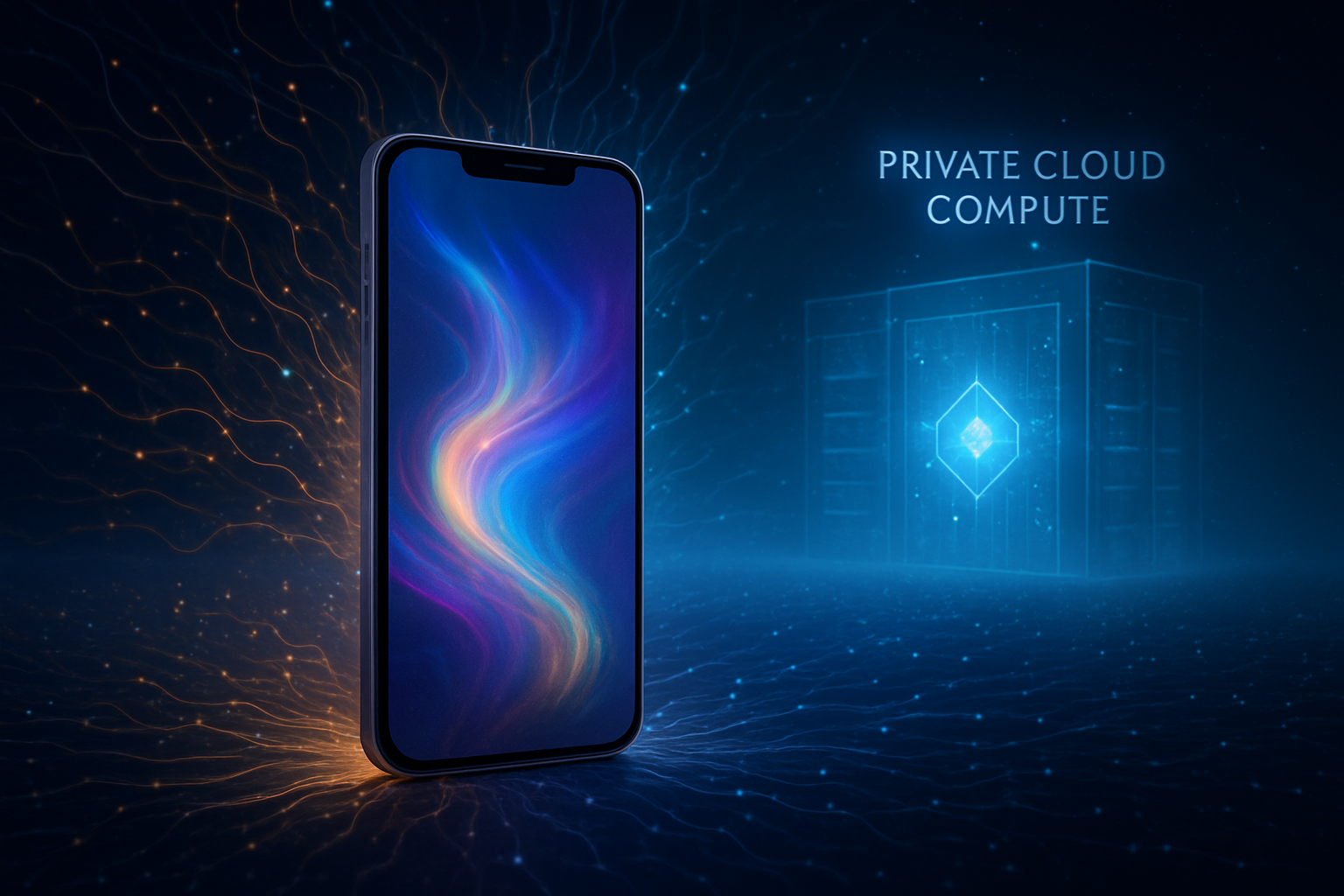
    Apple Intelligence is built upon a sophisticated hybrid architecture, seamlessly blending on-device processing with a groundbreaking cloud infrastructure dubbed Private Cloud Compute (PCC). This dual approach is central to its privacy-first philosophy, allowing most AI tasks to be handled directly on the user's device while securely offloading more complex computations to Apple Silicon-powered cloud servers.

    At its core, Apple Intelligence utilizes a compact, approximately 3-billion-parameter on-device model, meticulously optimized for Apple Silicon with innovations like KV-cache sharing and 2-bit quantization-aware training. This model efficiently powers system-wide writing tools, enabling users to rewrite, proofread, summarize, and adjust the tone of text in applications like Mail and Notes. It also fuels creative features such as "Genmoji" for personalized emojis and "Image Playground" for generating images from text descriptions, often incorporating context from conversations.

    For tasks demanding greater computational power, the server-based PCC model employs a novel Parallel-Track Mixture-of-Experts (PT-MoE) transformer architecture. These custom-built servers, running a hardened operating system based on iOS and macOS, extend the hardware-level security of iPhones (including the Secure Enclave) to the cloud. Critically, PCC is designed for stateless computation, meaning user data is never stored or accessible by Apple staff after a request is fulfilled, a claim Apple invites independent security researchers to audit.

    This hybrid model distinguishes Apple Intelligence significantly from previous Apple AI approaches, which primarily focused on a less integrated, command-and-response Siri. The current iteration marks a fundamental shift towards generative AI, making Siri more context-aware, conversational, and capable of performing complex, cross-app actions. Compared to competitors like Google (NASDAQ: GOOGL) and OpenAI, Apple's emphasis on privacy-first, on-device processing via custom Apple Silicon (such as the M5 chip, announced October 15, 2025, with a next-generation Neural Accelerator) and the auditable PCC stands out. While competitors often rely heavily on massive cloud-based processing of user data, Apple's approach is characterized by a "trust play," contrasting with the "velocity play" of rivals who prioritize rapid, cloud-scale model development.

    Initial reactions from the AI research community have largely praised the Private Cloud Compute architecture as a groundbreaking step for AI privacy, setting a new industry standard. Experts commend Apple's ability to seamlessly integrate AI features into its ecosystem, making them feel natural and "invisible" to the user. However, some critics note Apple's perceived late entry into the generative AI race, with concerns about whether its on-device focus can truly keep pace with the scale and complexity of cloud-based systems from competitors. The strict hardware requirements (iPhone 15 Pro, M1 or later for iPads and Macs) also mean many older devices are incompatible, leading to questions about upgrade cycles.

    Reshaping the AI Industry: Beneficiaries, Rivals, and Disruptions

    Apple Intelligence is poised to reshape the competitive dynamics among AI companies, tech giants, and startups, creating both beneficiaries and significant competitive pressures.

    Apple (NASDAQ: AAPL) itself stands to gain immensely. The company anticipates Apple Intelligence will drive its "largest device upgrade cycle ever," boosting sales across its hardware portfolio and significantly enhancing its high-margin services revenue. Its strategy hinges on "differentiation" through privacy and user-centric design, fostering deeper brand loyalty. Beyond Apple, Google (NASDAQ: GOOGL) is a notable beneficiary through its strategic partnership. Reports indicate that Google's Gemini AI model is being integrated into a revamped Siri, expected around March 2026. This collaboration grants Google deeper access to Apple's vast user base and provides a prominent distribution channel for Gemini. Other AI model providers like OpenAI, Anthropic, and Perplexity AI also stand to benefit from Apple's multi-AI partner strategy, as Apple evaluates integrating additional external models into its ecosystem. Hardware suppliers, such as Broadcom (NASDAQ: AVGO), are also poised for gains as Apple invests heavily in its AI infrastructure and custom silicon development.

    Competitively, Apple is attempting to position itself as the "Switzerland of AI," willing to collaborate while maintaining control over the user experience and interface. Its privacy-first approach and custom silicon remain key strategic advantages. However, Apple is widely perceived by analysts as "behind" competitors like Microsoft (NASDAQ: MSFT), Google, and OpenAI in the broader generative AI race. Delays in delivering key AI features, particularly a truly modernized Siri (now anticipated for iOS 26.4 in early 2026, or even iOS 27 in September 2026), have led to skepticism and impacted its stock performance in early 2025. Meanwhile, Google, Microsoft, Meta (NASDAQ: META), and Amazon (NASDAQ: AMZN) continue their "velocity play," prioritizing rapid, cloud-scale model development and frequent feature drops. OpenAI's strategic acquisition of io, an AI hardware startup, even hints at a potential direct competition with Apple's device ecosystem by late 2026.

    Potential disruptions to existing products and services are significant. A truly AI-powered Siri, especially with Gemini integration, could challenge the dominance of other digital assistants like Amazon's Alexa. An AI-powered Safari, reportedly in development, could reduce user reliance on traditional search engines, impacting Google's search revenue. Furthermore, Apple's native generative AI tools for writing and image creation could disrupt standalone third-party applications by offering similar functionalities directly within the Apple ecosystem. The company's strong emphasis on privacy could also raise user expectations across the industry, pressuring other tech companies to adopt more robust data protection measures.

    Wider Significance: Privacy, Progression, and Persistent Concerns

    Apple Intelligence marks a pivotal moment in the broader AI landscape, signaling a clear direction for personalized, privacy-centric AI, yet not without its challenges and comparisons to past milestones.

    Its fit within current AI trends is distinct due to its unwavering commitment to privacy. While the broader industry grapples with the implications of large language models and their data demands, Apple's on-device processing and Private Cloud Compute offer a compelling alternative, aiming to deliver advanced AI without compromising user data. This approach could influence how other tech companies develop and deploy AI, potentially setting a new standard for data protection. The strategic alliance with Google for Gemini integration, expected around March 2026, underscores a pragmatic trend in the industry: even tech giants recognize the immense resources and specialized expertise required for cutting-edge AI, leading to "unlikely alliances."

    Societal impacts are projected to be profound. Enhanced personalization and convenience, from intelligent notification summaries to proactive suggestions, could lead to a more intuitive digital life. The emphasis on privacy could foster greater trust in AI systems. Features like live translation in FaceTime and Messages are set to break down language barriers, fostering greater global connectivity. In health, AI-powered features in the Apple Watch, such as continuous heart health monitoring, could provide early warnings and promote healthier lifestyles. However, concerns persist. While Apple prioritizes privacy, the complexity of integrating AI systems, including third-party models, introduces new cybersecurity vulnerabilities. Reports of "Sploitlight" in macOS in early 2025 highlighted how system-wide search tools could be exploited. Furthermore, Apple has faced criticism and even class-action lawsuits in 2025 for allegedly misleading investors about the readiness of key Apple Intelligence features, leading to user disillusionment and skepticism about execution. The "data Catch-22" – the need for vast datasets for training versus strict privacy principles – remains a fundamental challenge. Broader societal concerns about job displacement and the ethical implications of pervasive AI also loom large.

    Compared to previous AI milestones, Apple Intelligence represents a significant evolution for Siri, which, since its 2011 launch, has often been criticized for lagging. The planned revamp with Google Gemini integration marks one of Siri's "biggest overhauls in history," aiming to transform it into a truly intelligent, context-aware system. This move also highlights a shift from purely proprietary development to a hybrid strategy, a new milestone for Apple. While many previous AI breakthroughs were heavily cloud-dependent, Apple Intelligence's strong emphasis on on-device processing, supported by powerful custom silicon like the M5 chip, represents a distinct paradigm, prioritizing local execution and data minimization.

    The Horizon: Future Developments and Expert Predictions

    The trajectory of Apple Intelligence points towards a continuous evolution, with significant near-term and long-term developments poised to further integrate AI across Apple's ecosystem.

    In the near term, the primary focus remains the substantial overhaul of Siri. A major AI-powered revamp is anticipated to debut with iOS 26.4 in March 2026, promising enhanced on-device intelligence, greater contextual awareness, and seamless cross-application functionality. Further significant upgrades are projected with iOS 27, expected alongside the iPhone 18 lineup in September 2026, expanding real-time contextual understanding and smarter task automation. Apple is also moving towards a diversified AI partnership strategy by 2026, aiming to integrate multiple third-party AI models beyond OpenAI, including Google Gemini, Anthropic, and Perplexity, to reduce dependence and accelerate innovation. Integration into the Apple Vision Pro (NASDAQ: AAPL) is already underway, with features like Writing Tools and Image Playground having arrived with visionOS 2.4 in April 2025, and further multimodal AI capabilities expected with a more refined Vision Pro model in late 2025. Hardware releases in early 2026 will include new MacBook Air and Pro models featuring M5 chips, with M6-based configurations later in the year, alongside a rumored foldable iPhone and new smart home devices.

    Long-term, Apple's vision for Intelligence emphasizes a "personal intelligence infrastructure," where devices interact with multiple intelligence layers, combining on-device processing with cloud-tier model orchestration. The Vision Pro is expected to evolve into a critical "spatial AI testbed," becoming a cognitive interface capable of interpreting user gaze and intentions in immersive environments. In the health sector, Apple is predicted to incorporate AI-based mental health tracking, emotion detection through voice analysis, and adaptive coaching, all processed locally, by 2026. Apple is also opening up access to its on-device foundation model for developers, fostering a broad ecosystem of intelligent third-party apps.

    Potential applications on the horizon are vast, ranging from an even more capable Siri that can coordinate complex tasks across apps, to advanced writing and content creation tools. Productivity will see boosts through AI-generated summaries, prioritized notifications, and automated professional tasks. Personalized health insights, smart home automation, and enhanced accessibility features are also expected. Challenges, however, persist. Apple needs to effectively catch up with competitors in generative AI, address Siri's perceived performance issues and delays, and overcome initial bugs and feature gaps. Balancing privacy with increasingly complex AI tasks and navigating regulatory approvals in key markets like China will also be crucial.

    Experts predict that the revamped Siri will be a pivotal feature for Apple in 2026, solidifying its role as a core component of the iPhone experience. CEO Tim Cook's statements confirm the strategic diversification of AI partners, viewed as a play for platform independence. Many analysts believe Apple is "playing the long game," prioritizing privacy, seamless integration, and a robust developer ecosystem over being a first-mover. WWDC 2026 is expected to be a crucial event to showcase significant advancements, and iOS 27 is predicted to mark a "transformative leap" for Apple Intelligence.

    A Comprehensive Wrap-up: Apple's AI Defining Moment

    Apple Intelligence represents a defining moment for Apple (NASDAQ: AAPL), marking its most comprehensive and strategic foray into the realm of generative artificial intelligence. The key takeaways from this initiative are its unwavering commitment to a privacy-first approach, achieved through a sophisticated hybrid architecture of on-device processing and the innovative Private Cloud Compute. This strategy aims to deliver advanced AI capabilities directly to users while maintaining stringent data protection standards, a significant differentiator in a competitive landscape. The rollout has brought immediate enhancements to user experience, from intelligent writing and image generation to a significantly smarter, context-aware Siri.

    The significance of this development in AI history lies in Apple's attempt to redefine how mainstream technology companies approach AI. By prioritizing trust, on-device capabilities, and an auditable cloud infrastructure, Apple is setting a new benchmark for privacy in the age of pervasive AI. Its strategic alliances, particularly the integration of Google's (NASDAQ: GOOGL) Gemini into Siri, also signal a new era of pragmatic collaboration even among fierce rivals, acknowledging the immense resources required for cutting-edge AI development.

    Looking ahead, the long-term impact of Apple Intelligence will largely depend on Apple's ability to consistently deliver on its ambitious promises, address user concerns about performance and delays, and effectively integrate its AI across an ever-expanding ecosystem. The evolution of Siri, the continued advancement of Apple Silicon, and the expansion of its multi-AI partner strategy will be critical indicators of success.

    What to watch for in the coming weeks and months includes the highly anticipated launch of the revamped Siri with iOS 26.4 in March 2026, the progress of Apple Intelligence integration into the Vision Pro, and further announcements regarding new hardware releases featuring advanced AI capabilities. The industry will also be closely observing how Apple navigates the delicate balance between innovation, user privacy, and competitive pressures from other tech giants who are aggressively pursuing cloud-centric AI strategies. The success of Apple Intelligence will not only shape Apple's future but also influence the broader trajectory of personal AI for years to come.


    This content is intended for informational purposes only and represents analysis of current AI developments.

    TokenRing AI delivers enterprise-grade solutions for multi-agent AI workflow orchestration, AI-powered development tools, and seamless remote collaboration platforms.
    For more information, visit https://www.tokenring.ai/.
  • Apple Intelligence Takes Center Stage: A Deep Dive into Cupertino’s AI Revolution

    Apple Intelligence Takes Center Stage: A Deep Dive into Cupertino’s AI Revolution

    Cupertino, CA – October 4, 2025 – In a strategic and expansive push, Apple Inc. (NASDAQ: AAPL) has profoundly accelerated its artificial intelligence (AI) initiatives over the past year, cementing "Apple Intelligence" as a cornerstone of its ecosystem. From late 2024 through early October 2025, the tech giant has unveiled a suite of sophisticated AI capabilities, deeper product integrations, and notable strategic shifts that underscore its commitment to embedding advanced AI across its vast device landscape. These developments, marked by a meticulous focus on privacy, personalization, and user experience, signal a pivotal moment not just for Apple, but for the broader AI industry.

    The company's approach, characterized by a blend of on-device processing and strategic cloud partnerships, aims to democratize powerful generative AI tools for millions of users while upholding its stringent privacy standards. This aggressive rollout, encompassing everything from enhanced writing tools and real-time translation to AI-driven battery optimization and a significant pivot towards AI-powered smart glasses, illustrates Apple's ambition to redefine interaction with technology in an increasingly intelligent world. The immediate significance lies in the tangible enhancements to everyday user workflows and the competitive pressure it exerts on rivals in the rapidly evolving AI landscape.

    The Intelligent Core: Unpacking Apple's Technical AI Innovations

    Apple Intelligence, the umbrella term for these advancements, has seen a staggered but impactful rollout, beginning with core features in iOS 18.1, iPadOS 18.1, and macOS Sequoia 15.1 in October 2024. This initial phase introduced a suite of AI-powered writing tools, enabling users to rewrite, proofread, and summarize text seamlessly across applications. Complementary features like Genmoji, for custom emoji generation, and Image Playground, for on-device image creation, demonstrated Apple's intent to infuse creativity into its AI offerings. Throughout 2025, these capabilities expanded dramatically, with iOS 19/26 introducing enhanced summarization in group chats, keyword-triggered customized notifications, and an AI-driven battery optimization feature that learns user behavior to conserve power, especially on newer, thinner devices like the iPhone 17 Air.

    Technically, these advancements are underpinned by Apple's robust hardware. The M4 chip, first seen in the May 2024 iPad Pro, was lauded for its "outrageously powerful" Neural Engine, capable of handling demanding AI tasks. The latest iPhone 17 series, released in September 2025, features the A19 chip (A19 Pro for Pro models), boasting an upgraded 16-core Neural Engine and Neural Accelerators within its GPU cores, significantly boosting on-device generative AI and system-intensive tasks. This emphasis on local processing is central to Apple's "privacy-first" approach, minimizing sensitive user data transmission to cloud servers. For tasks requiring server-side inference, Apple utilizes "Private Cloud Compute" with advanced privacy protocols, a significant differentiator in the AI space.

    Beyond consumer-facing features, Apple has also made strides in foundational AI research and developer enablement. At WWDC 2025, the company unveiled its Foundation Models Framework, providing third-party developers API access to Apple's on-device large language models (LLMs). This framework empowers developers to integrate AI features directly within their applications, often processed locally, fostering a new wave of intelligent app development. Further demonstrating its research prowess, Apple researchers quietly published "MM1: Methods, Analysis & Insights from Multimodal LLM Pre-training" in early October 2025, detailing new methods for training multimodal LLMs with state-of-the-art performance, showcasing a commitment to advancing the core science of AI.

    Initial reactions from the AI research community have been a mix of commendation for Apple's privacy-centric integration and critical assessment of the broader generative AI landscape. While the seamless integration of AI features has been widely praised, Apple researchers themselves contributed to a critical discourse with their June 2025 paper, "The Illusion of Thinking," which examined large reasoning models (LRMs) from leading AI labs. The paper suggested that, despite significant hype, these models often perform poorly on complex tasks and exhibit "fundamental limitations," contributing to Apple's cautious, quality-focused approach to certain generative AI deployments, notably the delayed full overhaul of Siri.

    Reshaping the AI Competitive Landscape

    Apple's aggressive foray into pervasive AI has significant ramifications for the entire tech industry, creating both opportunities and competitive pressures. Companies like OpenAI, a key partner through the integration of its ChatGPT (upgraded to GPT-5 by August 2025), stand to benefit from massive user exposure and validation within Apple's ecosystem. Similarly, if Apple proceeds with rumored evaluations of models from Anthropic, Perplexity AI, DeepSeek, or Google (NASDAQ: GOOGL), these partnerships could broaden the reach of their respective AI technologies. Developers leveraging Apple's Foundation Models Framework will also find new avenues for creating AI-enhanced applications, potentially fostering a vibrant new segment of the app economy.

    The competitive implications for major AI labs and tech giants are substantial. Apple's "privacy-first" on-device AI, combined with its vast user base and integrated hardware-software ecosystem, puts immense pressure on rivals like Samsung (KRX: 005930), Google, and Microsoft (NASDAQ: MSFT) to enhance their own on-device AI capabilities and integrate them more seamlessly. The pivot towards AI-powered smart glasses, following the reported cessation of lighter Vision Pro development by October 2025, directly positions Apple to challenge Meta Platforms (NASDAQ: META) in the burgeoning AR/wearable AI space. This strategic reallocation of resources signals Apple's belief that advanced AI interaction, particularly through voice and visual search, will be the next major computing paradigm.

    Potential disruption to existing products and services is also a key consideration. As Apple's native AI writing and image generation tools become more sophisticated and deeply integrated, they could potentially disrupt standalone AI applications offering similar functionalities. The ongoing evolution of Siri, despite its delays, promises a more conversational and context-aware assistant that could challenge other voice assistant platforms. Apple's market positioning is uniquely strong due to its control over both hardware and software, allowing for optimized performance and a consistent user experience that few competitors can match. This vertical integration provides a strategic advantage, enabling Apple to embed AI not as an add-on, but as an intrinsic part of the user experience.

    Wider Significance: AI's Evolving Role in Society

    Apple's comprehensive AI strategy fits squarely into the broader trend of pervasive AI, signaling a future where intelligent capabilities are not confined to specialized applications but are seamlessly integrated into the tools we use daily. This move validates the industry's shift towards embedding AI into operating systems and core applications, making advanced functionalities accessible to a mainstream audience. The company's unwavering emphasis on privacy, with much of its Apple Intelligence computation performed locally on Apple Silicon chips and sensitive tasks handled by "Private Cloud Compute," sets a crucial standard for responsible AI development, potentially influencing industry-wide practices.

    The impacts of these developments are far-reaching. Users can expect increased productivity through intelligent summarization and writing aids, more personalized experiences across their devices, and new forms of creative expression through tools like Genmoji and Image Playground. Live Translation, particularly its integration into AirPods Pro 3, promises to break down communication barriers in real-time. However, alongside these benefits, potential concerns arise. While Apple champions privacy, the complexities of server-side processing for certain AI tasks still necessitate vigilance. The proliferation of AI-generated content, even for seemingly innocuous purposes like Genmoji, raises questions about authenticity and the potential for misuse or misinformation, a challenge the entire AI industry grapples with.

    Comparisons to previous AI milestones reveal a distinct approach. Unlike some generative AI breakthroughs that focus on a single, powerful "killer app," Apple's strategy is about enhancing the entire ecosystem. It's less about a standalone AI product and more about intelligent augmentation woven into the fabric of its operating systems and devices. This integrated approach, combined with its critical perspective on AI reasoning models as highlighted in "The Illusion of Thinking," positions Apple as a thoughtful, yet ambitious, player in the AI race, balancing innovation with a healthy skepticism about the technology's current limitations.

    The Horizon: Anticipating Future AI Developments

    Looking ahead, the trajectory of Apple's AI journey promises continued innovation and expansion. Near-term developments will undoubtedly focus on the full realization of a truly "LLM Siri," a more conversational, context-aware assistant with on-screen awareness and cross-app functionality, initially anticipated for later in iOS 19/26. While quality concerns have caused delays, internal testing of a "ChatGPT-like app" suggests Apple is preparing for a significant overhaul, potentially arriving in full force with iOS 20 in 2026. This evolution will be critical for Apple to compete effectively in the voice assistant space.

    Longer-term, the accelerated development of AI-powered smart glasses represents a significant shift. These glasses are expected to heavily rely on voice and advanced AI interaction, including visual search, instant translations, and scene recognition, with an initial introduction as early as 2026. This move suggests a future where AI facilitates seamless interaction with the digital and physical worlds through an entirely new form factor, potentially unlocking unprecedented applications in augmented reality, real-time information access, and personalized assistance.

    However, significant challenges remain. Overcoming the engineering hurdles for a truly conversational and reliable Siri is paramount. Balancing user privacy with the increasing demands of advanced, often cloud-dependent, AI models will continue to be a tightrope walk for Apple. Furthermore, ensuring the responsible development and deployment of increasingly powerful AI, addressing ethical considerations, and mitigating potential biases will be an ongoing imperative. Experts predict a continued focus on multimodal AI, integrating various data types (text, image, audio) for more comprehensive understanding, and a decisive push into AR/smart glasses as the next major AI interface, with Apple positioned to lead this transition.

    A New Era of Intelligent Computing

    In summary, Apple's aggressive and multifaceted AI strategy, encapsulated by "Apple Intelligence," marks a significant turning point for the company and the broader tech industry. By integrating advanced AI capabilities deeply into its hardware and software ecosystem, focusing on on-device processing for privacy, and strategically partnering for cloud-based intelligence, Apple is democratizing sophisticated AI for its massive user base. The strategic pivot towards AI-powered smart glasses underscores a long-term vision for how users will interact with technology in the coming decade.

    This development holds profound significance in AI history, solidifying Apple's position as a major player in the generative AI era, not just as a consumer of the technology, but as an innovator shaping its responsible deployment. The company's commitment to a privacy-first approach, even while integrating powerful LLMs, sets a crucial benchmark for the industry. In the coming weeks and months, the tech world will be watching closely for the next evolution of Siri, further progress on the AI-powered smart glasses, and any new strategic partnerships or privacy frameworks Apple might unveil. The era of truly intelligent, personalized computing has arrived, and Apple is at its forefront.

    This content is intended for informational purposes only and represents analysis of current AI developments.

    TokenRing AI delivers enterprise-grade solutions for multi-agent AI workflow orchestration, AI-powered development tools, and seamless remote collaboration platforms.
    For more information, visit https://www.tokenring.ai/.