Tag: Apple Silicon

  • Intel’s 18A Renaissance: 60% Yield Milestone and Apple Silicon Win Signals a New Foundry Era

    Intel’s 18A Renaissance: 60% Yield Milestone and Apple Silicon Win Signals a New Foundry Era

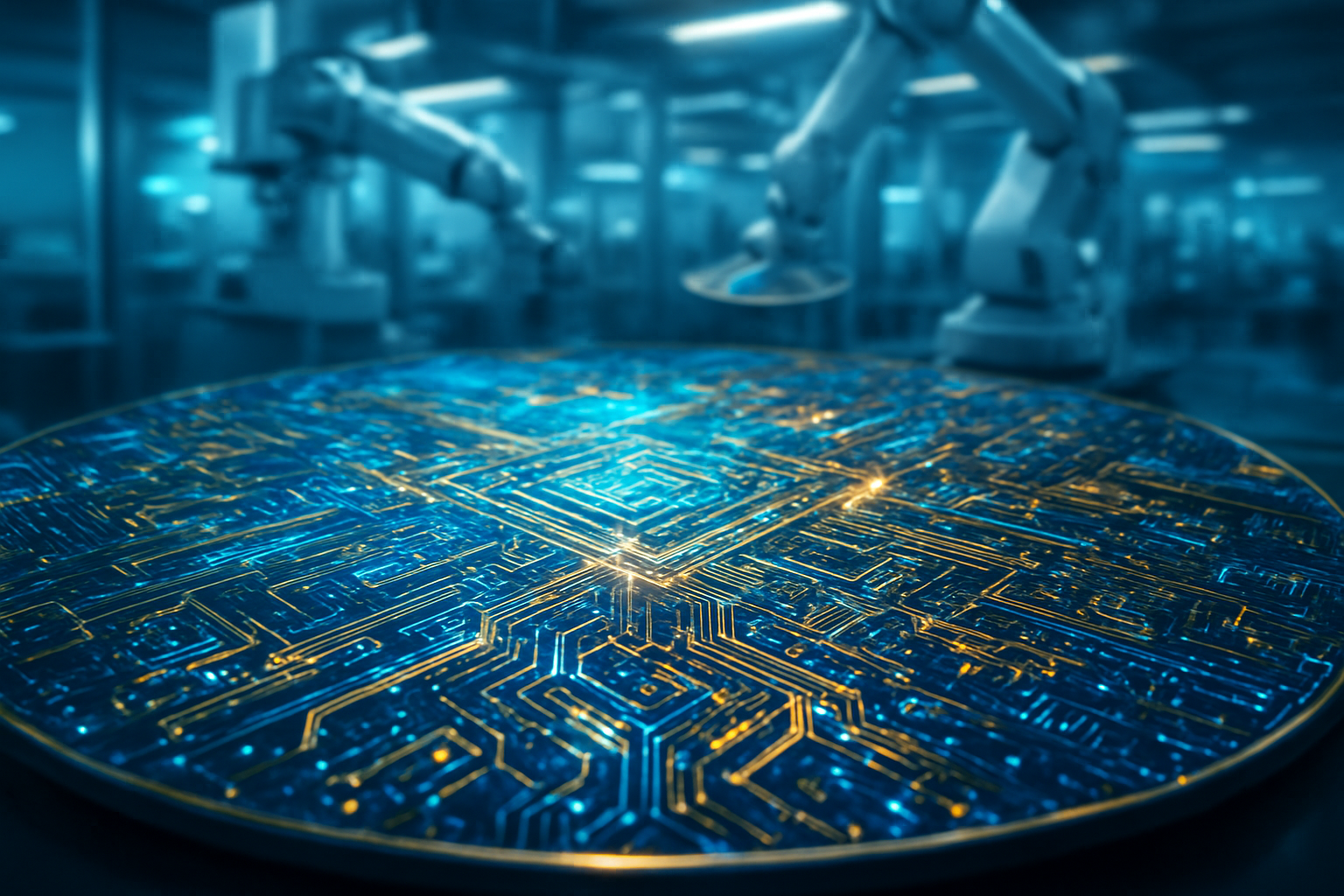
    As of January 15, 2026, the semiconductor landscape has undergone its most significant shift in a decade. Intel Corporation (NASDAQ: INTC) has officially declared its 18A (1.8nm-class) process node ready for the global stage, confirming that it has achieved high-volume manufacturing (HVM) with stable yields surpassing the critical 60% threshold. This milestone marks the successful completion of CEO Pat Gelsinger’s "Five Nodes in Four Years" roadmap, a high-stakes gamble that has effectively restored the company’s status as a leading-edge manufacturer.

    The immediate significance of this announcement cannot be overstated. For years, Taiwan Semiconductor Manufacturing Company (NYSE: TSM) has held a near-monopoly on the world’s most advanced silicon. However, with Intel 18A now producing chips at scale, the industry has a viable, high-performance alternative located on U.S. soil. The news reached a fever pitch this week with the confirmation that Apple (NASDAQ: AAPL) has qualified the 18A process for a significant portion of its future Apple Silicon lineup, breaking a years-long exclusive partnership with TSMC for its most advanced chips.

    The Technical Triumph: 18A Hits High-Volume Maturity

    The 18A node is not merely an incremental improvement; it represents a fundamental architectural departure from the FinFET era. At the heart of this "Renaissance" are two pivotal technologies: RibbonFET and PowerVia. RibbonFET is Intel’s implementation of Gate-All-Around (GAA) transistors, which utilize four vertically stacked nanoribbons to provide superior electrostatic control. This architecture drastically reduces current leakage, a primary hurdle in the quest for energy-efficient AI processing.

    Perhaps more impressively, Intel has beaten TSMC to the punch with the implementation of PowerVia, the industry’s first high-volume backside power delivery system. By moving power routing from the top of the wafer to the back, Intel has eliminated the "wiring bottleneck" where power and data signals compete for space. This innovation has resulted in a 30% increase in transistor density and a 15% improvement in performance-per-watt. Current reports from Fab 52 in Arizona indicate that 18A yields have stabilized between 65% and 75%, a figure that many analysts deemed impossible just eighteen months ago.

    The AI research community and industry experts have reacted with a mix of surprise and validation. "Intel has done what many thought was a suicide mission," noted one senior analyst at KeyBanc Capital Markets. "By achieving a 60%+ yield on a node that integrates both GAA and backside power simultaneously, they have effectively leapfrogged the standard industry ramp-up cycle." Initial benchmarking of Intel’s "Panther Lake" consumer CPUs and "Clearwater Forest" Xeon processors shows a clear lead in AI inference tasks, driven by the tight integration of these new transistor designs.

    Reshuffling the Silicon Throne: Apple and the Strategic Pivot

    The strategic earthquake of 2026 is undoubtedly the "Apple Silicon win." For the first time since the transition away from Intel-based Macs, Apple (NASDAQ: AAPL) has diversified its foundry needs. Apple has qualified 18A for its upcoming entry-level M-series chips, slated for the 2027 MacBook Air and iPad Pro lines. This move provides Apple with critical supply chain redundancy and geographic diversity, moving a portion of its "Crown Jewel" production from Taiwan to Intel’s domestic facilities.

    This development is a massive blow to the competitive moat of TSMC. While the Taiwanese giant still leads in absolute density with its N2 node, Intel’s early lead in backside power delivery has made 18A an irresistible target for tech giants. Microsoft (NASDAQ: MSFT) has already confirmed it will use 18A for its Maia 2 AI accelerators, and Amazon (NASDAQ: AMZN) has partnered with Intel for a custom "AI Fabric" chip. These design wins suggest that Intel Foundry Services (IFS) is no longer a "vanity project," but a legitimate competitor capable of stealing the most high-value customers in the world.

    For startups and smaller AI labs, the emergence of a second high-volume advanced node provider is a game-changer. The "foundry bottleneck" that characterized the 2023-2024 AI boom is beginning to ease. With more capacity available across two world-class providers, the cost of custom silicon for specialized AI workloads is expected to decline, potentially disrupting the dominance of off-the-shelf high-end GPUs from vendors like Nvidia (NASDAQ: NVDA).

    The Broader AI Landscape: Powering the 2026 AI PC

    The 18A Renaissance fits into the broader trend of "Edge AI" and the rise of the AI PC. As the industry moves away from centralized cloud-based LLMs toward locally-run, high-privacy AI models, the efficiency of the underlying silicon becomes the primary differentiator. Intel’s 18A provides the thermal and power envelope necessary to run multi-billion parameter models on laptops without sacrificing battery life. This aligns perfectly with the current shift in the AI landscape toward agentic workflows that require "always-on" intelligence.

    Geopolitically, the success of 18A is a landmark moment for the CHIPS Act and Western semiconductor independence. By January 2026, Intel has solidified its role as a "National Champion," ensuring that the most critical infrastructure for the AI era can be manufactured within the United States. This reduces the systemic risk of a "single point of failure" in the global supply chain, a concern that has haunted the tech industry for the better part of a decade.

    However, the rise of Intel 18A is not without its concerns. The concentration of leading-edge manufacturing in just two companies (Intel and TSMC) leaves Samsung struggling to keep pace, with reports suggesting their 2nm yields are still languishing below 40%. A duopoly in high-end manufacturing could lead to price stagnation if Intel and TSMC do not engage in aggressive price competition for the mid-market.

    The Road Ahead: 14A and the Future of IFS

    Looking toward the late 2020s, Intel is already preparing its next act: the 14A node. Expected to enter risk production in 2027, 14A will incorporate High-NA EUV lithography, further pushing the boundaries of Moore’s Law. In the near term, the industry is watching the retail launch of Panther Lake on January 27, 2026, which will be the first real-world test of 18A silicon in the hands of millions of consumers.

    The primary challenge moving forward will be maintaining these yields as volume scales to meet the demands of giants like Apple and Microsoft. Intel must also prove that its software stack for foundry customers—often cited as a weakness compared to TSMC—is mature enough to support the complex design cycles of modern SoC (System on a Chip) architectures. Experts predict that if Intel can maintain its current trajectory, it could reclaim the title of the world's most advanced semiconductor manufacturer by 2028.

    A Comprehensive Wrap-Up

    Intel’s 18A node has officially transitioned from a promise to a reality, marking one of the greatest corporate turnarounds in tech history. By hitting a 60% yield and securing a historic design win from Apple, Intel has not only saved itself from irrelevance but has fundamentally rebalanced the global power structure of the semiconductor industry.

    The significance of this development in AI history is profound; it provides the physical foundation for the next generation of generative AI, specialized accelerators, and the ubiquitous AI PCs of 2026. For the first time in years, the "Intel Inside" logo is once again a symbol of the leading edge. In the coming weeks, market watchers should keep a close eye on the retail performance of 18A consumer chips and further announcements from Intel Foundry regarding new hyperscaler partnerships. The era of the single-source silicon monopoly is over.


    This content is intended for informational purposes only and represents analysis of current AI developments.

    TokenRing AI delivers enterprise-grade solutions for multi-agent AI workflow orchestration, AI-powered development tools, and seamless remote collaboration platforms.
    For more information, visit https://www.tokenring.ai/.
  • Intel Closes in on Historic Deal to Manufacture Apple M-Series Chips on 18A Node by 2027

    Intel Closes in on Historic Deal to Manufacture Apple M-Series Chips on 18A Node by 2027

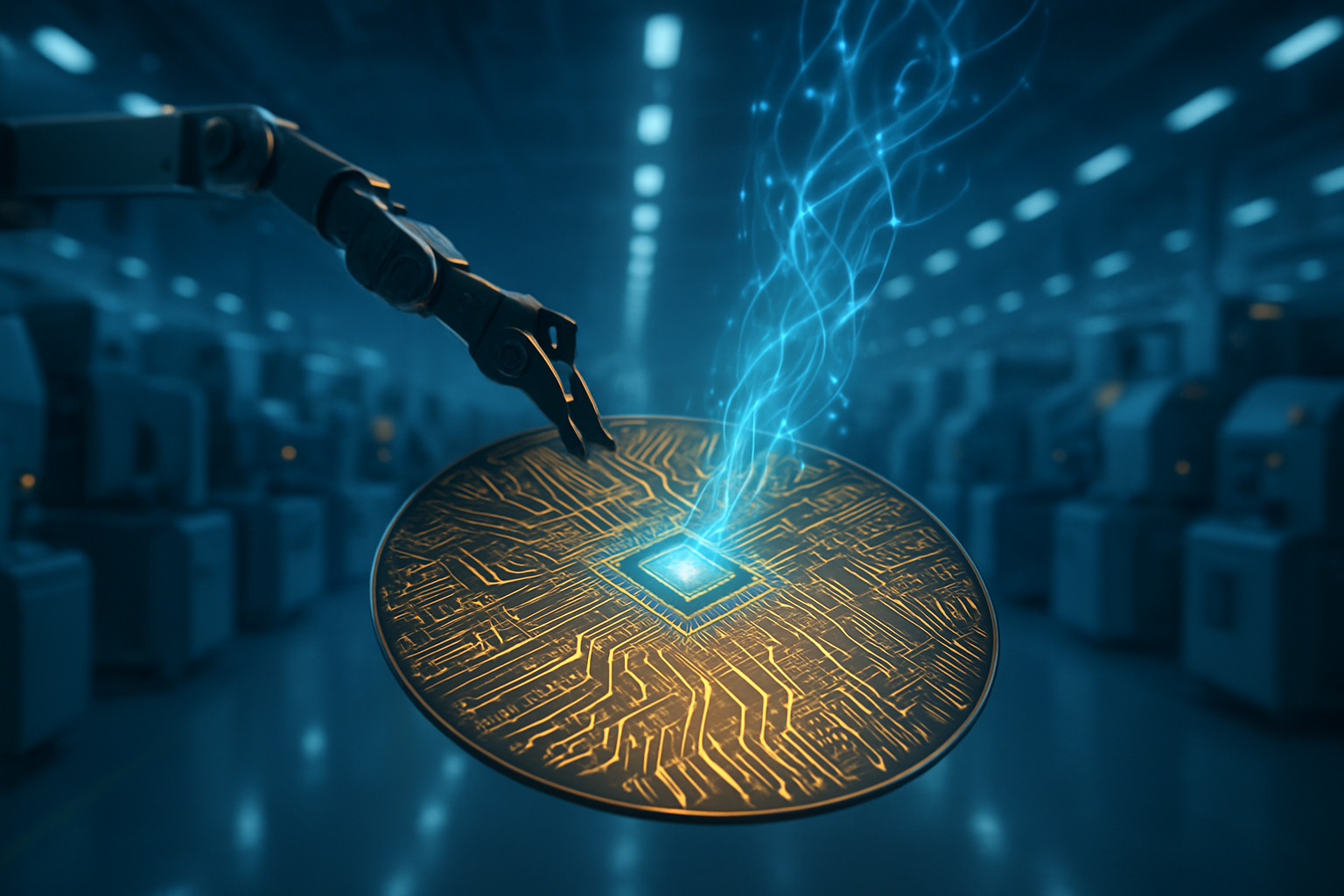
    In what is being hailed as a watershed moment for the global semiconductor industry, Apple Inc. (NASDAQ: AAPL) has reportedly begun the formal qualification process for Intel’s (NASDAQ: INTC) 18A manufacturing node. According to industry insiders and supply chain reports surfacing in late 2025, the two tech giants are nearing a definitive agreement that would see Intel manufacture entry-level M-series silicon for future MacBooks and iPads starting in 2027. This potential partnership marks the first time Intel would produce chips for Apple since the Cupertino-based company famously transitioned to its own ARM-based "Apple Silicon" and severed its processor supply relationship with Intel in 2020.

    The significance of this development cannot be overstated. For Apple, the move represents a strategic pivot toward geopolitical "de-risking," as the company seeks to diversify its advanced-node supply chain away from its near-total reliance on Taiwan Semiconductor Manufacturing Company (NYSE: TSM). For Intel, securing Apple as a foundry customer would serve as the ultimate validation of its "five nodes in four years" roadmap and its ambitious transformation into a world-class contract manufacturer. If the deal proceeds, it would signal a profound "manufacturing renaissance" for the United States, bringing the production of the world’s most advanced consumer electronics back to American soil.

    The Technical Leap: RibbonFET, PowerVia, and the 18AP Variant

    The technical foundation of this deal rests on Intel’s 18A (1.8nm-class) process, which is widely considered the company’s "make-or-break" node. Unlike previous generations, 18A introduces two revolutionary architectural shifts: RibbonFET and PowerVia. RibbonFET is Intel’s implementation of Gate-All-Around (GAA) transistor technology, which replaces the long-standing FinFET design. By surrounding the transistor channel with the gate on all four sides, RibbonFET significantly reduces power leakage and allows for higher drive currents at lower voltages. This is paired with PowerVia, a breakthrough "backside power delivery" system that moves power routing to the reverse side of the wafer. By separating the power and signal lines, Intel has managed to reduce voltage drop to less than 1%, compared to the 6–7% seen in traditional front-side delivery systems, while simultaneously improving chip density.

    According to leaked documents from November 2025, Apple has already received version 0.9.1 GA of the Intel 18AP Process Design Kit (PDK). The "P" in 18AP stands for "Performance," a specialized variant of the 18A node optimized for high-efficiency consumer devices. Reports suggest that 18AP offers a 15% to 20% improvement in performance-per-watt over the standard 18A node, making it an ideal candidate for Apple’s high-volume, entry-level chips like the upcoming M6 or M7 base models. Apple’s engineering teams are currently engaged in intensive architectural modeling to ensure that Intel’s yields can meet the rigorous quality standards that have historically made TSMC the gold standard of the industry.

    The reaction from the AI research and semiconductor communities has been one of cautious optimism. While TSMC remains the leader in volume and reliability, analysts note that Intel’s early lead in backside power delivery gives them a unique competitive edge. Experts suggest that if Intel can successfully scale 18A production at its Fab 52 facility in Arizona, it could match or even exceed the power efficiency of TSMC’s 2nm (N2) node, which Apple is currently using for its flagship "Pro" and "Max" chips.

    Shifting the Competitive Landscape for Tech Giants

    The potential deal creates a new "dual-foundry" reality that fundamentally alters the power dynamics between the world’s largest tech companies. For years, Apple has been TSMC’s most important customer, often receiving exclusive first-access to new nodes. By bringing Intel into the fold, Apple gains immense bargaining power and a critical safety net. This strategy allows Apple to bifurcate its lineup: keeping its highest-end "Pro" and "Max" chips with TSMC in Taiwan and Arizona, while shifting its massive volume of entry-level MacBook Air and iPad silicon to Intel’s domestic fabs.

    This development also has major implications for other industry leaders like Nvidia (NASDAQ: NVDA) and Microsoft (NASDAQ: MSFT). Both companies have already expressed interest in Intel Foundry, but an "Apple-certified" 18A process would likely trigger a stampede of other fabless chip designers toward Intel. If Intel can prove it can handle the volume and complexity of Apple's designs, it effectively removes the "reputational risk" that has hindered Intel Foundry’s growth in its early years. Conversely, for TSMC, the loss of even a portion of Apple’s business represents a significant long-term threat to its market dominance, forcing the Taiwanese firm to accelerate its own US-based expansion and innovate even faster to maintain its lead.

    Furthermore, the split of Intel’s manufacturing business into a separate subsidiary—Intel Foundry—has been a masterstroke in building trust. By maintaining a separate profit-and-loss (P&L) statement and strict data firewalls, Intel has convinced Apple that its proprietary chip designs will remain secure from Intel’s own product divisions. This structural change was a prerequisite for Apple even considering a return to the Intel ecosystem.

    Geopolitics and the Quest for Semiconductor Sovereignty

    Beyond the technical and commercial aspects, the Apple-Intel deal is deeply rooted in the broader geopolitical struggle for semiconductor sovereignty. In the current climate of late 2025, "concentration risk" in the Taiwan Strait has become a primary concern for the US government and Silicon Valley executives alike. Apple’s move is a direct response to this instability, aligning with CEO Tim Cook’s 2025 pledge to invest heavily in a domestic silicon supply chain. By utilizing Intel’s facilities in Oregon and Arizona, Apple is effectively "onshoring" the production of its most popular products, insulating itself from potential trade disruptions or regional conflicts.

    This shift also highlights the success of the US CHIPS and Science Act, which provided the financial framework for Intel’s massive fab expansions. In late 2025, the US government finalized an $8.9 billion equity investment in Intel, effectively cementing the company’s status as a "National Strategic Asset." This government backing ensures that Intel has the capital necessary to compete with the subsidized giants of East Asia. For the first time in decades, the United States is positioned to host the manufacturing of sub-2nm logic chips, a feat that seemed impossible just five years ago.

    However, this "manufacturing renaissance" is not without its critics. Some industry analysts worry that the heavy involvement of the US government could lead to inefficiencies or that Intel may struggle to maintain the relentless pace of innovation required to stay at the leading edge. Comparisons are often made to the early days of the semiconductor industry, but the scale of today’s technology is vastly more complex. The success of the 18A node is not just a corporate milestone for Intel; it is a test case for whether Western nations can successfully reclaim the heights of advanced manufacturing.

    The Road to 2027 and the 14A Horizon

    Looking ahead, the next 12 to 18 months will be critical. Apple is expected to make a final "go/no-go" decision by the first quarter of 2026, following the release of Intel’s finalized 1.0 PDK. If the qualification is successful, Intel will begin the multi-year process of "ramping" the 18A node for mass production. This involves fine-tuning the High-NA EUV (Extreme Ultraviolet) lithography machines that Intel has been pioneered in its Oregon research facilities. These $380 million machines from ASML are the key to reaching even smaller dimensions, and Intel's early adoption of this technology is a major factor in Apple's interest.

    The roadmap doesn't stop at 18A. Reports indicate that Apple is already looking toward Intel’s 14A (1.4nm) process for 2028 and beyond. This suggests that the 2027 deal is not a one-off experiment but the beginning of a long-term strategic partnership. As AI applications continue to demand more compute power and better energy efficiency, the ability to manufacture at the 1.4nm level will be the next great frontier. We can expect to see future M-series chips leveraging these nodes to integrate even more advanced neural engines and on-device AI capabilities that were previously relegated to the cloud.

    The challenges remain significant. Intel must prove it can achieve the high yields necessary for Apple’s massive product launches, which often require tens of millions of chips in a single quarter. Any delays in the 18A ramp could have a domino effect on Apple’s product release cycles. Experts predict that the first half of 2026 will be defined by "yield-watch" reports as the industry monitors Intel's progress in translating laboratory success into factory floor reality.

    A New Era for Silicon Valley

    The potential return of Apple to Intel’s manufacturing plants marks the end of one era and the beginning of another. It signifies a move away from the "fabless" versus "integrated" dichotomy of the past decade and toward a more collaborative, geographically diverse ecosystem. If the 2027 production timeline holds, it will be remembered as the moment the US semiconductor industry regained its footing on the global stage, proving that it could still compete at the absolute bleeding edge of technology.

    For the consumer, this deal promises more efficient, more powerful devices that are less susceptible to global supply chain shocks. For the industry, it provides a much-needed second source for advanced logic, breaking the effective monopoly that TSMC has held over the high-end market. As we move into 2026, all eyes will be on the test wafers coming out of Intel’s Arizona fabs. The stakes could not be higher: the future of the Mac, the viability of Intel Foundry, and the technological sovereignty of the United States all hang in the balance.


    This content is intended for informational purposes only and represents analysis of current AI and semiconductor developments.

    TokenRing AI delivers enterprise-grade solutions for multi-agent AI workflow orchestration, AI-powered development tools, and seamless remote collaboration platforms.
    For more information, visit https://www.tokenring.ai/.
  • The Silent Revolution: How Local NPUs Are Moving the AI Brain from the Cloud to Your Pocket

    The Silent Revolution: How Local NPUs Are Moving the AI Brain from the Cloud to Your Pocket

    As we close out 2025, the center of gravity in the artificial intelligence world has shifted. For years, the "AI experience" was synonymous with the cloud—a round-trip journey from a user's device to a massive data center and back. However, the release of the latest generation of silicon from the world’s leading chipmakers has effectively ended the era of cloud-dependency for everyday tasks. We are now witnessing the "Great Edge Migration," where the intelligence that once required a room full of servers now resides in the palm of your hand.

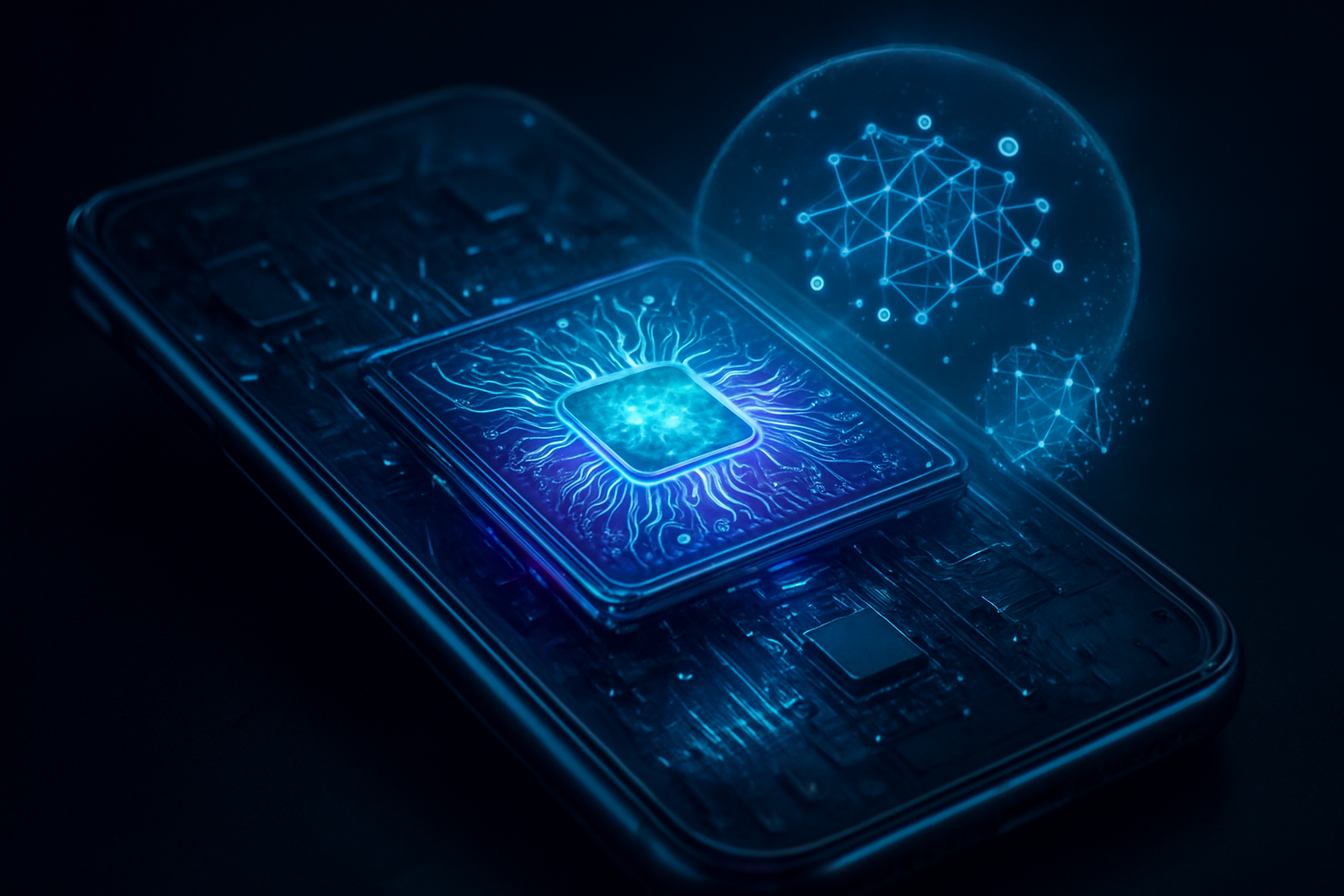
    The significance of this development cannot be overstated. With the arrival of high-performance Neural Processing Units (NPUs) in flagship smartphones and laptops, the industry has crossed a critical threshold: the ability to run high-reasoning Large Language Models (LLMs) locally, with zero latency and total privacy. This transition marks a fundamental departure from the "chatbot" era toward "Agentic AI," where devices no longer just answer questions but proactively manage our digital lives using on-device data that never leaves the hardware.

    The Silicon Arms Race: 100 TOPS and the Death of Latency

    The technical backbone of this shift is a new class of "NPU-heavy" processors that prioritize AI throughput over traditional raw clock speeds. Leading the charge is Qualcomm (NASDAQ: QCOM) with its Snapdragon 8 Elite Gen 5, which features a Hexagon NPU capable of a staggering 100 Trillions of Operations Per Second (TOPS). Unlike previous generations that focused on burst performance, this new silicon is designed for "sustained inference," allowing it to run models like Llama 3.2 at over 200 tokens per second—faster than most humans can read.

    Apple (NASDAQ: AAPL) has taken a different but equally potent approach with its A19 Pro and M5 chips. While Apple’s dedicated Neural Engine remains a powerhouse, the company has integrated "Neural Accelerators" directly into every GPU core, bringing total system AI performance to 133 TOPS on the base M5. Meanwhile, Intel (NASDAQ: INTC) has utilized its 18A process for the Panther Lake series, delivering 50 NPU TOPS while focusing on "Time to First Token" (TTFT) to ensure that local AI interactions feel instantaneous. AMD (NASDAQ: AMD) has targeted the high-end workstation market with its Strix Halo chips, which boast enough unified memory to run massive 70B-parameter models locally—a feat that was unthinkable for a laptop just 24 months ago.

    This hardware evolution is supported by a sophisticated software layer. Microsoft (NASDAQ: MSFT) has solidified its Copilot+ PC requirements, mandating a minimum of 40 NPU TOPS and 16GB of RAM. The new Windows Copilot Runtime now provides developers with a library of over 40 local models, including Phi-4 and Whisper, which can be called natively by any application. This bypasses the need for expensive API calls to the cloud, allowing even small indie developers to integrate world-class AI into their software without the overhead of server costs.

    Disruption at the Edge: The New Power Dynamics

    This shift toward local inference is radically altering the competitive landscape of the tech industry. While NVIDIA (NASDAQ: NVDA) remains the undisputed king of AI training in the data center, the "Inference War" is being won at the edge by the likes of Qualcomm and Apple. As more processing moves to the device, the reliance on massive cloud clusters for everyday AI tasks is beginning to wane, potentially easing the astronomical electricity demands on hyperscalers like Amazon (NASDAQ: AMZN) and Google (NASDAQ: GOOGL).

    For tech giants, the strategic advantage has moved to vertical integration. Apple’s "Private Cloud Compute" and Qualcomm’s "AI Stack 2025" are designed to create a seamless handoff between local and cloud AI, but the goal is clearly to keep as much data on-device as possible. This "local-first" strategy provides a significant moat; a company that controls the silicon, the OS, and the local models can offer a level of privacy and speed that a cloud-only competitor simply cannot match.

    However, this transition has introduced a new economic reality: the "AI Tax." To support these local models, hardware manufacturers are being forced to increase base RAM specifications, with 16GB now being the absolute minimum for a functional AI PC. This has led to a surge in demand for high-speed memory from suppliers like Micron (NASDAQ: MU) and Samsung (KRX: 005930), contributing to a 5% to 10% increase in the average selling price of premium devices. HP (NYSE: HPQ) and other PC manufacturers have acknowledged that these costs are being passed to the consumer, framed as a "productivity premium" for the next generation of computing.

    Privacy, Sovereignty, and the 'Inference Gap'

    The wider significance of Edge AI lies in the reclamation of digital privacy. In the cloud-AI era, users were forced to trade their data for intelligence. In the Edge AI era, data sovereignty is the default. For enterprise sectors such as healthcare and finance, local AI is not just a convenience; it is a regulatory necessity. Being able to run a 10B-parameter model on a local workstation allows a doctor to analyze patient data or a lawyer to summarize sensitive contracts without ever risking a data leak to a third-party server.

    Despite these gains, the industry is grappling with the "Inference Gap." While a Snapdragon 8 Gen 5 can run a 3B-parameter model with ease, it still lacks the deep reasoning capabilities of a trillion-parameter model like GPT-5. To bridge this, the industry is moving toward "Hybrid AI" architectures. In this model, the local NPU handles "fast" thinking—context-aware tasks, scheduling, and basic writing—while the cloud is reserved for "slow" thinking—complex logic, deep research, and heavy computation.

    This hybrid approach mirrors the human brain's dual-process theory, and it is becoming the standard for 2026-ready operating systems. The concern among researchers, however, is "Semantic Drift," where local models may provide slightly different or less accurate answers than their cloud counterparts, leading to inconsistencies in user experience across different devices.

    The Road Ahead: Agentic AI and the End of the App

    Looking toward 2026, the next frontier for Edge AI is the "Agentic OS." We are moving away from a world of siloed applications and toward a world of persistent agents. Instead of opening a travel app, a banking app, and a calendar, a user will simply tell their device to "plan a weekend trip within my budget," and the local NPU will orchestrate the entire process by interacting with the underlying services on the user's behalf.

    We are also seeing the emergence of new form factors. The low-power, high-output NPUs developed for phones are now finding their way into AI smart glasses. These devices use local visual NPUs to perform real-time translation and object recognition, providing an augmented reality experience that is processed entirely on the frame to preserve battery life and privacy. Experts predict that by 2027, the "AI Phone" will be less of a communication device and more of a "personal cognitive peripheral" that coordinates a fleet of wearable sensors.

    A New Chapter in Computing History

    The shift to Edge AI represents one of the most significant architectural changes in the history of computing, comparable to the transition from mainframes to PCs or the move from desktop to mobile. By bringing the power of large language models directly to consumer silicon, the industry has solved the twin problems of latency and privacy that have long dogged the AI revolution.

    As we look toward 2026, the key metric for a device's worth is no longer its screen resolution or its camera megapixels, but its "Intelligence Density"—how much reasoning power it can pack into a pocket-sized form factor. The silent hum of billions of NPUs worldwide is the sound of a new era, where AI is no longer a destination we visit on the web, but a fundamental part of the tools we carry with us every day. In the coming months, watch for the first "AI-native" operating systems to emerge, signaling the final step in this historic migration from the cloud to the edge.


    This content is intended for informational purposes only and represents analysis of current AI developments.

    TokenRing AI delivers enterprise-grade solutions for multi-agent AI workflow orchestration, AI-powered development tools, and seamless remote collaboration platforms.
    For more information, visit https://www.tokenring.ai/.