Tag: Apple

  • Apple’s Next Frontier: Affordable AI Smart Glasses Set to Redefine Wearable Tech

    Apple’s Next Frontier: Affordable AI Smart Glasses Set to Redefine Wearable Tech

    Apple (NASDAQ: AAPL) is reportedly making a significant strategic pivot in its wearable technology ambitions, shifting focus from its high-end Vision Pro headset to an ambitious project: affordable, AI-powered smart glasses. This move, rumored to culminate in a product launch as early as late 2026 or 2027, signals Apple's intent to democratize spatial computing and directly challenge rivals like Meta Platforms (NASDAQ: META) in the burgeoning consumer AI hardware market. By prioritizing a lighter, more accessible, and cost-effective device, Apple aims to achieve the mass adoption that has eluded more premium augmented reality (AR) offerings, fundamentally reshaping how users interact with artificial intelligence in their daily lives.

    This strategic redirection is not merely about introducing a new gadget; it represents Apple's vision for the next paradigm of personal computing. With internal challenges and the high price point of the Vision Pro limiting its widespread appeal, the company is now channeling its considerable resources into a product designed for the mainstream. These rumored smart glasses are poised to integrate seamlessly into the Apple ecosystem, leveraging the iPhone's processing power to deliver sophisticated AI capabilities in a subtle, always-on form factor, potentially setting a new standard for wearable AI and bringing intelligent assistance directly to our eyes and ears.

    A Glimpse into the Future: Technical Specifications and AI Integration

    Apple's forthcoming affordable AI smart glasses, reportedly code-named N50, are anticipated to be a marvel of minimalist design and powerful AI integration. Unlike the full augmented reality experience of the Vision Pro, these glasses are expected to initially function more as an intelligent iPhone accessory, offloading complex processing tasks to the user's smartphone to keep the glasses lightweight and cost-effective, potentially undercutting the $1,000 mark. This approach significantly differs from previous attempts at standalone AR devices, which often struggled with bulk, battery life, and high manufacturing costs.

    Key technical specifications and anticipated features paint a picture of a device deeply embedded with artificial intelligence. Enhanced Siri functionality is central, allowing for hands-free voice control and real-time information overlays. The glasses are expected to feature visual intelligence capabilities, including object recognition and real-time conversation translation, transforming everyday interactions. Integrated speakers will provide audio cues and music playback, while microphones will facilitate voice commands and phone calls. Cameras are also a certainty, enabling video capture, environmental sensing, and potentially spatial video recording, with an LED indicator ensuring user privacy. Apple is reportedly exploring 3D printing technology for manufacturing, allowing for diverse material finishes and customizable designs, including options for standard and prescription lenses. Furthermore, a suite of health-related sensors is also under consideration, hinting at broader applications beyond mere information display.

    The strategic reliance on the iPhone for computational heavy lifting is a crucial differentiator. This not only helps in reducing the glasses' physical footprint and cost but also ensures robust performance by tapping into the iPhone's advanced processors. While initial models are not expected to feature full AR displays, this foundational platform is seen as a stepping stone towards more advanced AR capabilities in future generations. Initial reactions from industry experts suggest cautious optimism, with many recognizing Apple's potential to mainstream wearable AI, provided the company can refine Siri's capabilities and overcome challenges like potential eye strain from prolonged display use, which could limit early adoption to a niche market.

    Reshaping the Competitive Landscape: Apple vs. Meta and Beyond

    Apple's foray into affordable AI smart glasses is set to ignite a fierce battle in the nascent consumer AI hardware market, with Meta Platforms (NASDAQ: META) standing as its most direct competitor. Meta has already achieved considerable success with its Ray-Ban smart glasses, selling millions of units by offering a fashionable and functional device focused on social sharing and basic AI assistance. Apple's entry, backed by its unparalleled brand loyalty and ecosystem, will undoubtedly intensify this rivalry, pushing both companies to innovate further in design, AI capabilities, and price point.

    This development holds significant competitive implications for major AI labs and tech companies. Companies like Google (NASDAQ: GOOGL), which has its own history with smart glasses, and other players in the Android XR ecosystem, will need to closely watch Apple's strategy. Apple's ability to seamlessly integrate hardware, software, and services could set a new benchmark, potentially disrupting existing product categories like traditional smartwatches and even some smartphone functions by offering a more pervasive and subtle form of interaction. The glasses are expected to leverage Apple's vast App Store and ARKit platform, potentially catalyzing a new wave of content creation and applications specifically designed for wearable AI.

    Market positioning and strategic advantages for Apple are clear: leveraging its robust ecosystem, strong brand recognition, and a proven track record of turning niche technologies into mass-market phenomena. By making AI glasses affordable and deeply integrated with the iPhone, Apple aims to make spatial computing an everyday reality for millions, not just a luxury. This could also benefit accessory manufacturers and developers within the Apple ecosystem, creating new opportunities for innovation. However, the success will hinge on Apple's ability to deliver a compelling user experience that justifies the purchase, making the glasses a must-have accessory rather than a mere novelty.

    The Broader AI Tapestry: Impacts and Ethical Considerations

    Apple's anticipated entry into the affordable AI smart glasses market represents a pivotal moment in the broader AI landscape, signaling a clear trend towards pervasive, embedded artificial intelligence in our daily lives. This move aligns with the industry's shift from large, general-purpose AI models to more specialized, on-device AI that offers real-time assistance without constant cloud connectivity. The smart glasses embody the vision of "ambient computing," where technology fades into the background, providing information and assistance seamlessly and intuitively.

    The impacts of widespread adoption of AI smart glasses are multifaceted. On one hand, they promise unprecedented convenience, offering instant access to information, hands-free communication, and enhanced perception of the world through AI-powered overlays. Imagine real-time language translation during travel, instant identification of plants or landmarks, or discreet health monitoring. On the other hand, such pervasive technology raises significant concerns, particularly regarding privacy and surveillance. The presence of always-on cameras and microphones, even with privacy indicators, could lead to public apprehension about being constantly recorded or monitored. Ethical considerations around data collection, facial recognition, and potential misuse of such powerful visual and audio capture devices will undoubtedly become central to public discourse.

    Comparisons to previous AI milestones highlight the transformative potential. Just as smartphones revolutionized mobile computing, and smart speakers brought voice AI into homes, smart glasses could usher in an era of "visual AI," fundamentally changing how we interact with digital information and the physical world. This development marks a significant step towards the futuristic visions often depicted in science fiction, where technology is an invisible extension of ourselves. However, it also underscores the growing need for robust regulatory frameworks and public education to navigate the complex societal implications of such advanced wearable AI.

    The Horizon of Innovation: Future Developments and Challenges

    Looking ahead, Apple's affordable AI smart glasses are expected to evolve significantly, with near-term developments focusing on refining the core user experience and expanding AI capabilities. Future iterations will likely see increased independence from the iPhone, potentially integrating more powerful on-device AI chips to handle complex tasks directly. Experts predict a gradual introduction of more sophisticated augmented reality features, moving beyond simple information overlays to truly immersive spatial computing experiences, perhaps mirroring some of the capabilities currently found in the Vision Pro but in a much lighter and more affordable package.

    Potential applications and use cases on the horizon are vast and transformative. Beyond personal assistance and communication, these glasses could revolutionize fields such as education, healthcare, and professional training. Imagine surgeons receiving real-time patient data overlays during operations, or technicians getting step-by-step repair instructions visually projected onto equipment. The integration with Apple's health ecosystem could lead to continuous, passive health monitoring, detecting early signs of conditions and providing proactive wellness guidance. The development of a rich third-party app ecosystem, similar to the iPhone's, will be crucial for unlocking the full potential of these devices.

    However, significant challenges need to be addressed. Battery life remains a perpetual hurdle for wearable tech, and balancing powerful AI with extended usage will be key. User comfort, especially for prolonged wear, is paramount, requiring innovative design and material science. Perhaps most critically, the refinement of AI, particularly Siri, to be truly intelligent, context-aware, and proactive will determine the glasses' utility and adoption. Experts predict that the initial generations will serve as a crucial learning phase, gathering user data and feedback to inform the development of truly indispensable AI companions. The ethical and privacy concerns, as mentioned earlier, will also require continuous attention and transparent solutions from Apple.

    A New Era of Personal Computing: Wrap-up and Outlook

    Apple's rumored venture into affordable AI smart glasses marks a pivotal moment in the evolution of personal computing and artificial intelligence. The key takeaway is a strategic shift towards accessibility and mass adoption, aiming to embed AI seamlessly into daily life through a lightweight, cost-effective wearable device. This development signifies Apple's commitment to mainstreaming spatial computing and directly challenging competitors in the burgeoning market for AI-powered consumer hardware.

    The significance of this development in AI history cannot be overstated. It represents a tangible step towards a future where AI is not confined to screens or voice assistants but is an ever-present, intelligent layer augmenting our perception and interaction with the world. While the Vision Pro showcased the pinnacle of AR technology, these smart glasses aim to make the concept of intelligent wearables a reality for millions, potentially setting the stage for the next major computing platform.

    In the coming weeks and months, industry watchers will be keenly observing any further leaks or official announcements regarding the N50 project. We will also be watching how Meta and other competitors respond to this looming threat, potentially accelerating their own affordable smart glass initiatives. The long-term impact of Apple's entry will likely be a dramatic expansion of the wearable AI market, fostering innovation, but also necessitating a critical examination of privacy, ethics, and the societal implications of always-on, visually intelligent devices. This content is intended for informational purposes only and represents analysis of current AI developments.

    TokenRing AI delivers enterprise-grade solutions for multi-agent AI workflow orchestration, AI-powered development tools, and seamless remote collaboration platforms. For more information, visit https://www.tokenring.ai/.

  • TSM’s AI-Fueled Ascent: The Semiconductor Giant’s Unstoppable Rise and Its Grip on the Future of Tech

    TSM’s AI-Fueled Ascent: The Semiconductor Giant’s Unstoppable Rise and Its Grip on the Future of Tech

    Taiwan Semiconductor Manufacturing Company (TSM), the world's undisputed leader in advanced chip fabrication, has demonstrated an extraordinary surge in its stock performance, solidifying its position as the indispensable linchpin of the global artificial intelligence (AI) revolution. As of October 2025, TSM's stock has not only achieved remarkable highs but continues to climb, driven by an insatiable global demand for the cutting-edge semiconductors essential to power every facet of AI, from sophisticated large language models to autonomous systems. This phenomenal growth underscores TSM's critical role, not merely as a component supplier, but as the foundational infrastructure upon which the entire AI and tech sector is being built.

    The immediate significance of TSM's trajectory cannot be overstated. Its unparalleled manufacturing capabilities are directly enabling the rapid acceleration of AI innovation, dictating the pace at which new AI breakthroughs can transition from concept to reality. For tech giants and startups alike, access to TSM's advanced process nodes and packaging technologies is a competitive imperative, making the company a silent kingmaker in the fiercely contested AI landscape. Its performance is a bellwether for the health and direction of the broader semiconductor industry, signaling a structural shift where AI-driven demand is now the dominant force shaping technological advancement and market dynamics.

    The Unseen Architecture: How TSM's Advanced Fabrication Powers the AI Revolution

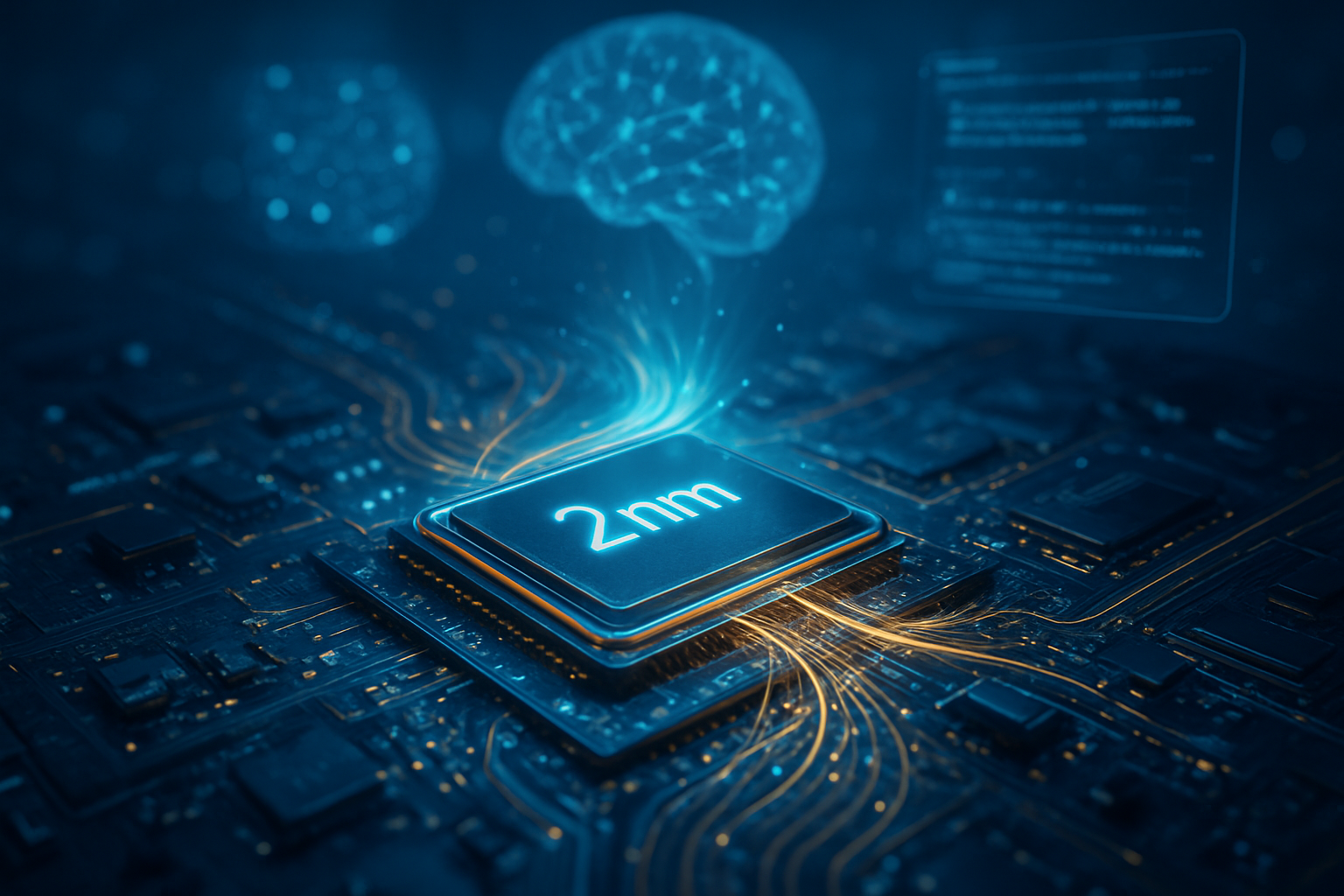
    TSM's remarkable growth is deeply rooted in its unparalleled dominance in advanced process node technology and its strategic alignment with the burgeoning AI and High-Performance Computing (HPC) sectors. The company commands an astonishing 70% of the global semiconductor market share, a figure that escalates to over 90% when focusing specifically on advanced AI chips. TSM's leadership in 3nm, 5nm, and 7nm technologies, coupled with aggressive expansion into future 2nm and 1.4nm nodes, positions it at the forefront of manufacturing the most complex and powerful chips required for next-generation AI.

    What sets TSM apart is not just its sheer scale but its consistent ability to deliver superior yield rates and performance at these bleeding-edge nodes, a challenge that competitors like Samsung and Intel have struggled to consistently match. This technical prowess is crucial because AI workloads demand immense computational power and efficiency, which can only be achieved through increasingly dense and sophisticated chip architectures. TSM’s commitment to pushing these boundaries directly translates into more powerful and energy-efficient AI accelerators, enabling the development of larger AI models and more complex applications.

    Beyond silicon fabrication, TSM's expertise in advanced packaging technologies, such as Chip-on-Wafer-on-Substrate (CoWoS) and Small Outline Integrated Circuits (SOIC), provides a significant competitive edge. These packaging innovations allow for the integration of multiple high-bandwidth memory (HBM) stacks and logic dies into a single, compact unit, drastically improving data transfer speeds and overall AI chip performance. This differs significantly from traditional packaging methods by enabling a more tightly integrated system-in-package approach, which is vital for overcoming the memory bandwidth bottlenecks that often limit AI performance. The AI research community and industry experts widely acknowledge TSM as the "indispensable linchpin" and "kingmaker" of AI, recognizing that without its manufacturing capabilities, the current pace of AI innovation would be severely hampered. The high barriers to entry for replicating TSM's technological lead, financial investment, and operational excellence ensure its continued leadership for the foreseeable future.

    Reshaping the AI Ecosystem: TSM's Influence on Tech Giants and Startups

    TSM's unparalleled manufacturing capabilities have profound implications for AI companies, tech giants, and nascent startups, fundamentally reshaping the competitive landscape. Companies like Nvidia (for its H100 GPUs and next-gen Blackwell AI chips, reportedly sold out through 2025), AMD (for its MI300 series and EPYC server processors), Apple, Google (Tensor Processing Units – TPUs), Amazon (Trainium3), and Tesla (for self-driving chips) stand to benefit immensely. These industry titans rely almost exclusively on TSM to fabricate their most advanced AI processors, giving them access to the performance and efficiency needed to maintain their leadership in AI development and deployment.

    Conversely, this reliance creates competitive implications for major AI labs and tech companies. Access to TSM's limited advanced node capacity becomes a strategic advantage, often leading to fierce competition for allocation. Companies with strong, long-standing relationships and significant purchasing power with TSM are better positioned to secure the necessary hardware, potentially creating a bottleneck for smaller players or those with less influence. This dynamic can either accelerate the growth of well-established AI leaders or stifle the progress of emerging innovators if they cannot secure the advanced chips required to train and deploy their models.

    The market positioning and strategic advantages conferred by TSM's technology are undeniable. Companies that can leverage TSM's 3nm and 5nm processes for their custom AI accelerators gain a significant edge in performance-per-watt, crucial for both cost-efficiency in data centers and power-constrained edge AI devices. This can lead to disruption of existing products or services by enabling new levels of AI capability that were previously unachievable. For instance, the ability to pack more AI processing power into a smaller footprint can revolutionize everything from mobile AI to advanced robotics, creating new market segments and rendering older, less efficient hardware obsolete.

    The Broader Canvas: TSM's Role in the AI Landscape and Beyond

    TSM's ascendancy fits perfectly into the broader AI landscape, highlighting a pivotal trend: the increasing specialization and foundational importance of hardware in driving AI advancements. While much attention is often given to software algorithms and model architectures, TSM's success underscores that without cutting-edge silicon, these innovations would remain theoretical. The company's role as the primary foundry for virtually all leading AI chip designers means it effectively sets the physical limits and possibilities for AI development globally.

    The impacts of TSM's dominance are far-reaching. It accelerates the development of more sophisticated AI models by providing the necessary compute power, leading to breakthroughs in areas like natural language processing, computer vision, and drug discovery. However, it also introduces potential concerns, particularly regarding supply chain concentration. A single point of failure or geopolitical instability affecting Taiwan could have catastrophic consequences for the global tech industry, a risk that TSM is actively trying to mitigate through its global expansion strategy in the U.S., Japan, and Europe.

    Comparing this to previous AI milestones, TSM's current influence is akin to the foundational role played by Intel in the PC era or NVIDIA in the early GPU computing era. However, the complexity and capital intensity of advanced semiconductor manufacturing today are exponentially greater, making TSM's position even more entrenched. The company's continuous innovation in process technology and packaging is pushing beyond traditional transistor scaling, fostering a new era of specialized chips optimized for AI, a trend that marks a significant evolution from general-purpose computing.

    The Horizon of Innovation: Future Developments Driven by TSM

    Looking ahead, the trajectory of TSM's technological advancements promises to unlock even greater potential for AI. In the near term, expected developments include the further refinement and mass production of 2nm and 1.4nm process nodes, which will enable AI chips with unprecedented transistor density and energy efficiency. This will translate into more powerful AI accelerators that consume less power, critical for expanding AI into edge devices and sustainable data centers. Long-term developments are likely to involve continued investment in novel materials, advanced 3D stacking technologies, and potentially even new computing paradigms like neuromorphic computing, all of which will require TSM's manufacturing expertise.

    The potential applications and use cases on the horizon are vast. More powerful and efficient AI chips will accelerate the development of truly autonomous vehicles, enable real-time, on-device AI for personalized experiences, and power scientific simulations at scales previously unimaginable. In healthcare, AI-powered diagnostics and drug discovery will become faster and more accurate. Challenges that need to be addressed include the escalating costs of developing and manufacturing at advanced nodes, which could concentrate AI development in the hands of a few well-funded entities. Additionally, the environmental impact of chip manufacturing and the need for sustainable practices will become increasingly critical.

    Experts predict that TSM will continue to be the cornerstone of AI hardware innovation. The company's ongoing R&D investments and strategic capacity expansions are seen as crucial for meeting the ever-growing demand. Many foresee a future where custom AI chips, tailored for specific workloads, become even more prevalent, further solidifying TSM's role as the go-to foundry for these specialized designs. The race for AI supremacy will continue to be a race for silicon, and TSM is firmly in the lead.

    The AI Age's Unseen Architect: A Comprehensive Wrap-Up

    In summary, Taiwan Semiconductor Manufacturing Company's (TSM) recent stock performance and technological dominance are not merely financial headlines; they represent the foundational bedrock upon which the entire artificial intelligence era is being constructed. Key takeaways include TSM's unparalleled leadership in advanced process nodes and packaging technologies, its indispensable role as the primary manufacturing partner for virtually all major AI chip designers, and the insatiable demand for AI and HPC chips as the primary driver of its exponential growth. The company's strategic global expansion, while costly, aims to bolster supply chain resilience in an increasingly complex geopolitical landscape.

    This development's significance in AI history is profound. TSM has become the silent architect, enabling breakthroughs from the largest language models to the most sophisticated autonomous systems. Its consistent ability to push the boundaries of semiconductor physics has directly facilitated the current rapid pace of AI innovation. The long-term impact will see TSM continue to dictate the hardware capabilities available to AI developers, influencing everything from the performance of future AI models to the economic viability of AI-driven services.

    As we look to the coming weeks and months, it will be crucial to watch for TSM's continued progress on its 2nm and 1.4nm process nodes, further details on its global fab expansions, and any shifts in its CoWoS packaging capacity. These developments will offer critical insights into the future trajectory of AI hardware and, by extension, the broader AI and tech sector. TSM's journey is a testament to the fact that while AI may seem like a software marvel, its true power is inextricably linked to the unseen wonders of advanced silicon manufacturing.

    This content is intended for informational purposes only and represents analysis of current AI developments.

    TokenRing AI delivers enterprise-grade solutions for multi-agent AI workflow orchestration, AI-powered development tools, and seamless remote collaboration platforms.
    For more information, visit https://www.tokenring.ai/.