
Tag: ASML

  • India’s Chip Ambition: From Design Hub to Global Semiconductor Powerhouse, Backed by Industry Giants

    India’s Chip Ambition: From Design Hub to Global Semiconductor Powerhouse, Backed by Industry Giants

    India is rapidly ascending as a formidable player in the global semiconductor landscape, transitioning from a prominent design hub to an aspiring manufacturing and packaging powerhouse. This strategic pivot, fueled by an ambitious government agenda and significant international investments, is reshaping the global chip supply chain and drawing the attention of industry behemoths like ASML (AMS: ASML), the Dutch lithography equipment giant. With developments accelerating through October 2025, India's concerted efforts are setting the stage for it to become a crucial pillar in the world's semiconductor ecosystem, aiming to capture a substantial share of the trillion-dollar market by 2030.

    The nation's aggressive push, encapsulated by the India Semiconductor Mission (ISM), is a direct response to global supply chain vulnerabilities exposed in recent years and a strategic move to bolster its technological sovereignty. By offering robust financial incentives and fostering a conducive environment for manufacturing, India is attracting investments that promise to bring advanced fabrication (fab), assembly, testing, marking, and packaging (ATMP) capabilities to its shores. This comprehensive approach, combining policy support with skill development and international collaboration, marks a significant departure from previous, more fragmented attempts, signaling a serious and sustained commitment to building an end-to-end semiconductor value chain.

    Unpacking India's Semiconductor Ascent: Policy, Investment, and Innovation

    India's journey towards semiconductor self-reliance is underpinned by a multi-pronged strategy that leverages government incentives, attracts massive private investment, and focuses heavily on indigenous skill development and R&D. The India Semiconductor Mission (ISM), launched in December 2021 with an initial outlay of approximately $9.2 billion, serves as the central orchestrator, vetting projects and disbursing incentives. A key differentiator of this current push compared to previous efforts is the scale and commitment of financial support, with the Production Linked Incentive (PLI) Scheme offering up to 50% of project costs for fabs and ATMP facilities, potentially reaching 75% with state-level subsidies. As of October 2025, this initial allocation is nearly fully committed, prompting discussions for a second phase, indicating the overwhelming response and rapid progress.

    Beyond manufacturing, the Design Linked Incentive (DLI) Scheme is fostering indigenous intellectual property, supporting 23 chip design projects by September 2025. Complementing these, the Electronics Components Manufacturing Scheme (ECMS), approved in March 2025, has already attracted investment proposals exceeding $13 billion by October 2025, nearly doubling its initial target. This comprehensive policy framework differs significantly from previous, less integrated approaches by addressing the entire semiconductor value chain, from design to advanced packaging, and by actively engaging international partners through agreements with the US (TRUST), UK (TSI), EU, and Japan.

    The tangible results of these policies are evident in the significant investments pouring into the sector. Tata Electronics, in partnership with Taiwan's Powerchip Semiconductor Manufacturing Corp (PSMC), is establishing India's first wafer fabrication facility in Dholera, Gujarat, with an investment of approximately $11 billion. This facility, targeting 28 nm and above nodes, expects trial production by early 2027. Simultaneously, Tata Electronics is building a state-of-the-art ATMP facility in Jagiroad, Assam, with a $27 billion investment, anticipated to be operational by mid-2025. US-based memory chipmaker Micron Technology (NASDAQ: MU) is investing $2.75 billion in an ATMP facility in Sanand, Gujarat, with Phase 1 expected to be operational by late 2024 or early 2025. Other notable projects include a tripartite collaboration between CG Power (NSE: CGPOWER), Renesas, and Stars Microelectronics for a semiconductor plant in Sanand, and Kaynes SemiCon (a subsidiary of Kaynes Technology India Limited (NSE: KAYNES)) on track to deliver India's first packaged semiconductor chips by October 2025 from its OSAT unit. Furthermore, India inaugurated its first centers for advanced 3-nanometer chip design in May 2025, pushing the boundaries of innovation.

    Competitive Implications and Corporate Beneficiaries

    India's emergence as a semiconductor hub carries profound implications for global tech giants, established AI companies, and burgeoning startups. Companies directly investing in India, such as Micron Technology (NASDAQ: MU), Tata Electronics, and CG Power (NSE: CGPOWER), stand to benefit significantly from the substantial government subsidies, a rapidly growing domestic market, and a vast, increasingly skilled talent pool. For Micron, its ATMP facility in Sanand not only diversifies its manufacturing footprint but also positions it strategically within a burgeoning electronics market. Tata's dual investment in a fab and an ATMP unit marks a monumental step for an Indian conglomerate, establishing it as a key domestic player in a highly capital-intensive industry.

    The competitive landscape is shifting as major global players eye India for diversification and growth. ASML (AMS: ASML), a critical enabler of advanced chip manufacturing, views India as attractive due to its immense talent pool for engineering and software development, a rapidly expanding market for electronics, and its role in strengthening global supply chain resilience. While ASML currently focuses on establishing a customer support office and showcasing its lithography portfolio, its engagement signals future potential for deeper collaboration, especially as India's manufacturing capabilities mature. For other companies like Intel (NASDAQ: INTC), AMD (NASDAQ: AMD), and NVIDIA (NASDAQ: NVDA), which already have significant design and R&D operations in India, the development of local manufacturing and packaging capabilities could streamline their supply chains, reduce lead times, and potentially lower costs for products targeted at the Indian market.

    This strategic shift could disrupt existing supply chain dependencies, particularly on East Asian manufacturing hubs, by offering an alternative. For startups and smaller AI labs, India's growing ecosystem, supported by schemes like the DLI, provides opportunities for indigenous chip design and development, fostering local innovation. However, the success of these ventures will depend on continued government support, access to cutting-edge technology, and the ability to compete on a global scale. The market positioning of Indian domestic firms like Tata and Kaynes Technology is being significantly enhanced, transforming them from service providers or component assemblers to integrated semiconductor players, creating new strategic advantages in the global tech race.

    Wider Significance: Reshaping the Global AI and Tech Landscape

    India's ambitious foray into semiconductor manufacturing is not merely an economic endeavor; it represents a significant geopolitical and strategic move that will profoundly impact the broader AI and tech landscape. The most immediate and critical impact is on global supply chain diversification and resilience. The COVID-19 pandemic and geopolitical tensions have starkly highlighted the fragility of a highly concentrated semiconductor supply chain. India's emergence offers a crucial alternative, reducing the world's reliance on a few key regions and mitigating risks associated with natural disasters, trade disputes, or regional conflicts. This diversification is vital for all tech sectors, including AI, which heavily depend on a steady supply of advanced chips for training models, running inference, and developing new hardware.

    This development also fits into the broader trend of "friend-shoring" and de-risking in global trade, particularly in critical technologies. India's strong democratic institutions and strategic partnerships with Western nations make it an attractive location for semiconductor investments, aligning with efforts to build more secure and politically stable supply chains. The economic implications for India are transformative, promising to create hundreds of thousands of high-skilled jobs, attract foreign direct investment, and significantly boost its manufacturing sector, contributing to its goal of becoming a developed economy. The growth of a domestic semiconductor industry will also catalyze innovation in allied sectors like AI, IoT, automotive electronics, and telecommunications, as local access to advanced chips can accelerate product development and deployment.

    Potential concerns, however, include the immense capital intensity of semiconductor manufacturing, the need for consistent policy support over decades, and challenges related to infrastructure (reliable power, water, and logistics) and environmental regulations. While India boasts a vast talent pool, scaling up the highly specialized workforce required for advanced fab operations remains a significant hurdle. Technology transfer and intellectual property protection will also be crucial for securing partnerships with leading global players. Comparisons to previous AI milestones reveal that access to powerful, custom-designed chips has been a consistent driver of AI breakthroughs. India's ability to produce these chips domestically could accelerate its own AI research and application development, similar to how local chip ecosystems have historically fueled technological advancement in other nations. This strategic move is not just about manufacturing chips; it's about building the foundational infrastructure for India's digital future and its role in the global technological order.

    Future Trajectories and Expert Predictions

    Looking ahead, the next few years are critical for India's semiconductor ambitions, with several key developments expected to materialize. The operationalization of Micron Technology's (NASDAQ: MU) ATMP facility by early 2025 and Tata Electronics' (in partnership with PSMC) wafer fab by early 2027 will be significant milestones, demonstrating India's capability to move beyond design into advanced manufacturing and packaging. Experts predict a phased approach, with India initially focusing on mature nodes (28nm and above) and advanced packaging, gradually moving towards more cutting-edge technologies as its ecosystem matures and expertise deepens. The ongoing discussions for a second phase of the PLI scheme underscore the government's commitment to continuous investment and expansion.

    The potential applications and use cases on the horizon are vast, spanning across critical sectors. Domestically produced chips will fuel the growth of India's burgeoning smartphone market, automotive sector (especially electric vehicles), 5G infrastructure, and the rapidly expanding Internet of Things (IoT) ecosystem. Crucially, these chips will be vital for India's burgeoning AI sector, enabling more localized and secure development of AI models and applications, from smart city solutions to advanced robotics and healthcare diagnostics. The development of advanced 3nm chip design centers also hints at future capabilities in high-performance computing, essential for cutting-edge AI research.

    However, significant challenges remain. Ensuring a sustainable supply of ultra-pure water and uninterrupted power for fabs is paramount. Attracting and retaining top-tier global talent, alongside upskilling the domestic workforce to meet the highly specialized demands of semiconductor manufacturing, will be an ongoing effort. Technology transfer and intellectual property protection will also be crucial for securing partnerships with leading global players. Experts predict that while India may not immediately compete with leading-edge foundries like TSMC (TPE: 2330) or Samsung (KRX: 005930) in terms of process nodes, its strategic focus on mature nodes, ATMP, and design will establish it as a vital hub for diversified supply chains and specialized applications. The next decade will likely see India solidify its position as a reliable and significant contributor to the global semiconductor supply, potentially becoming the "pharmacy of the world" for chips.

    A New Era for India's Tech Destiny: A Comprehensive Wrap-up

    India's determined push into the semiconductor sector represents a pivotal moment in its technological and economic history. The confluence of robust government policies like the India Semiconductor Mission, substantial domestic and international investments from entities like Tata Electronics and Micron Technology, and a concerted effort towards skill development is rapidly transforming the nation into a potential global chip powerhouse. The engagement of industry leaders such as ASML (AMS: ASML) further validates India's strategic importance and long-term potential, signaling a significant shift in the global semiconductor landscape.

    This development holds immense significance for the AI industry and the broader tech world. By establishing an indigenous semiconductor ecosystem, India is not only enhancing its economic resilience but also securing the foundational hardware necessary for its burgeoning AI research and application development. The move towards diversified supply chains is a critical de-risking strategy for the global economy, offering a stable and reliable alternative amidst geopolitical uncertainties. While challenges related to infrastructure, talent, and technology transfer persist, the momentum generated by current initiatives and the strong political will suggest that India is well-positioned to overcome these hurdles.

    In the coming weeks and months, industry observers will be closely watching the progress of key projects, particularly the operationalization of Micron's ATMP facility and the groundbreaking developments at Tata's fab and ATMP units. Further announcements regarding the second phase of the PLI scheme and new international collaborations will also be crucial indicators of India's continued trajectory. This strategic pivot is more than just about manufacturing chips; it is about India asserting its role as a key player in shaping the future of global technology and innovation, cementing its position as a critical hub in the digital age.

    This content is intended for informational purposes only and represents analysis of current AI developments.

    TokenRing AI delivers enterprise-grade solutions for multi-agent AI workflow orchestration, AI-powered development tools, and seamless remote collaboration platforms.
    For more information, visit https://www.tokenring.ai/.
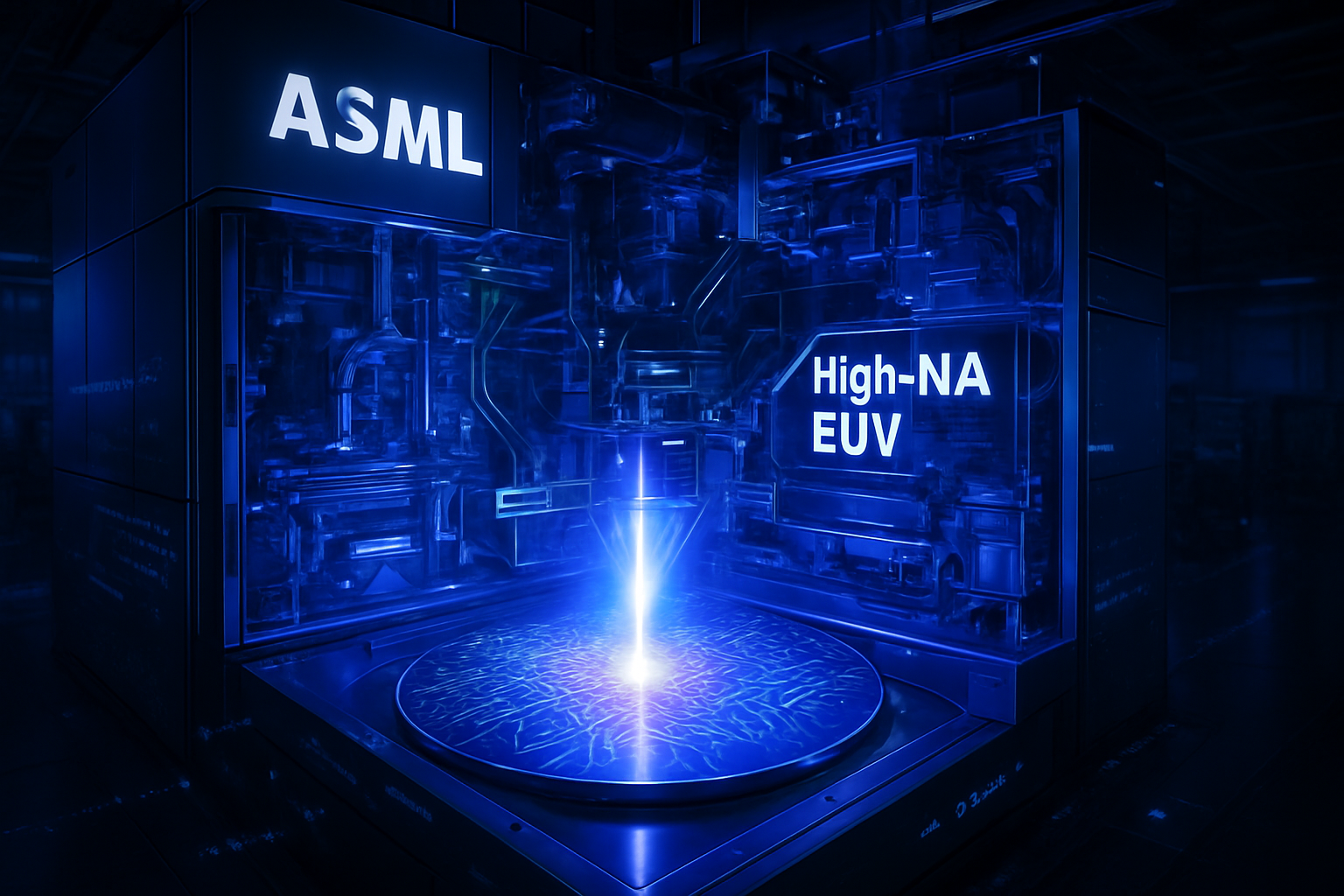
  • Europe’s Chip Dream at Risk: ASML Leaders Decry EU Policy Barriers and Lack of Engagement

    Europe’s Chip Dream at Risk: ASML Leaders Decry EU Policy Barriers and Lack of Engagement

    In a series of pointed criticisms that have sent ripples through the European technology landscape, leaders from Dutch chip giant ASML Holding N.V. (ASML:AMS) have publicly admonished the European Union for its perceived inaccessibility to Europe's own tech companies and its often-unrealistic ambitions. These strong remarks, particularly from former CEO Peter Wennink, current CEO Christophe Fouquet, and Executive Vice President of Global Public Affairs Frank Heemskerk, highlight deep-seated concerns about the bloc's ability to foster a competitive and resilient semiconductor industry. Their statements, resonating in late 2025, underscore a growing frustration among key industrial players who feel disconnected from the very policymakers shaping their future, posing a significant threat to the EU's strategic autonomy goals and its standing in the global tech race.

    The immediate significance of ASML's outspokenness cannot be overstated. As a linchpin of the global semiconductor supply chain, manufacturing the advanced lithography machines essential for producing cutting-edge chips, ASML's perspective carries immense weight. The criticisms directly challenge the efficacy and implementation of the EU Chips Act, a flagship initiative designed to double Europe's global chip market share to 20% by 2030. If Europe's most vital technology companies find the policy environment prohibitive or unsupportive, the ambitious goals of the EU Chips Act risk becoming unattainable, potentially leading to a diversion of critical investments and talent away from the continent.

    Unpacking ASML's Grievances: A Multifaceted Critique of EU Tech Policy

    ASML's leadership has articulated a comprehensive critique, touching upon several critical areas where EU policy and engagement fall short. Former CEO Peter Wennink, in January 2024, famously dismissed the EU's 20% market share goal for European chip producers by 2030 as "totally unrealistic," noting Europe's current share is "8% at best." He argued that current investments from major players like Taiwan Semiconductor Manufacturing Company (TSMC:TPE), Robert Bosch GmbH, NXP Semiconductors N.V. (NXPI:NASDAQ), and Infineon Technologies AG (IFX:ETR) are insufficient, estimating that approximately a dozen new fabrication facilities (fabs) and an additional €500 billion investment would be required to meet such targets. This stark assessment directly questions the foundational assumptions of the EU Chips Act, suggesting a disconnect between ambition and the practicalities of industrial growth.

    Adding to this, Frank Heemskerk, ASML's Executive Vice President of Global Public Affairs, recently stated in October 2025 that the EU is "relatively inaccessible to companies operating in Europe." He candidly remarked that "It's not always easy" to secure meetings with top European policymakers, including Commission President Ursula von der Leyen. Heemskerk even drew a sharp contrast, quoting a previous ASML executive who found it "easier to get a meeting in the White House with a senior official than to get a meeting with a commissioner." This perceived lack of proactive engagement stands in sharp opposition to experiences elsewhere, such as current CEO Christophe Fouquet's two-hour meeting with Indian Prime Minister Narendra Modi, where Modi actively sought input, advising Fouquet to "tell me what we can do better." This highlights a significant difference in how industrial leaders are engaged at the highest levels of government, potentially putting European companies at a disadvantage.

    Furthermore, both Wennink and Fouquet have expressed deep concerns about the impact of geopolitical tensions and US-led export controls on advanced chip-making technologies, particularly those targeting China. Fouquet, who took over as CEO in April 2025, labeled these bans as "economically motivated" and warned against disrupting the global semiconductor ecosystem, which could lead to supply chain disruptions, increased costs, and hindered innovation. Wennink previously criticized such discussions for being driven by "ideology" rather than "facts, content, numbers, or data," expressing apprehension when "ideology cuts straight through" business operations. Fouquet has urged European policymakers to assert themselves more, advocating for Europe to "decide for itself what it wants" rather than being dictated by external powers. He also cautioned that isolating China would only push the country to develop its own lithography industry, ultimately undermining Europe's long-term position.

    Finally, ASML has voiced significant irritation regarding the Netherlands' local business climate and attitudes toward the tech sector, particularly concerning "knowledge migrants" – skilled international workers. With roughly 40% of its Dutch workforce being international, ASML's former CEO Wennink criticized policies that could restrict foreign talent, warning that such measures could weaken the Netherlands. He also opposed the idea of teaching solely in Dutch at universities, emphasizing that the technology industry operates globally in English and that maintaining English as the language of instruction is crucial for attracting international students and fostering an inclusive educational environment. These concerns underscore a critical bottleneck for the European semiconductor industry, where a robust talent pipeline is as vital as financial investment.

    Competitive Whirlwind: How EU Barriers Shape the Tech Landscape

    ASML's criticisms resonate deeply within the broader technology ecosystem, affecting not just the chip giant itself but also a multitude of AI companies, tech giants, and startups across Europe. The perceived inaccessibility of EU policymakers and the challenging business climate could lead ASML, a cornerstone of global technology, to prioritize investments and expansion outside of Europe. This potential diversion of resources and expertise would be a severe blow to the continent's aspirations for technological leadership, impacting the entire value chain from chip design to advanced AI applications.

    The competitive implications are stark. While the EU Chips Act aims to attract major global players like TSMC and Intel Corporation (INTC:NASDAQ) to establish fabs in Europe, ASML's concerns suggest that the underlying policy framework might not be sufficiently attractive or supportive for long-term growth. If Europe struggles to retain its own champions like ASML, attracting and retaining other global leaders becomes even more challenging. This could lead to a less competitive European semiconductor industry, making it harder for European AI companies and startups to access cutting-edge hardware, which is fundamental for developing advanced AI models and applications.

    Furthermore, the emphasis on "strategic autonomy" without practical support for industry leaders risks disrupting existing products and services. If European companies face greater hurdles in navigating export controls or attracting talent within the EU, their ability to innovate and compete globally could diminish. This might force European tech giants to re-evaluate their operational strategies, potentially shifting R&D or manufacturing capabilities to regions with more favorable policy environments. For smaller AI startups, the lack of a robust, accessible, and integrated semiconductor ecosystem could mean higher costs, slower development cycles, and reduced competitiveness against well-resourced counterparts in the US and Asia. The market positioning of European tech companies could erode, losing strategic advantages if the EU fails to address these foundational concerns.

    Broader Implications: Europe's AI Future on the Line

    ASML's critique extends beyond the semiconductor sector, illuminating broader challenges within the European Union's approach to technology and innovation. It highlights a recurring tension between the EU's ambitious regulatory and strategic goals and the practical realities faced by its leading industrial players. The EU Chips Act, while well-intentioned, is seen by ASML's leadership as potentially misaligned with the actual investment and operational environment required for success. This situation fits into a broader trend where Europe struggles to translate its scientific prowess into industrial leadership, often hampered by complex regulatory frameworks, perceived bureaucratic hurdles, and a less agile policy-making process compared to other global tech hubs.

    The impacts of these barriers are multifaceted. Economically, a less competitive European semiconductor industry could lead to reduced investment, job creation, and technological sovereignty. Geopolitically, if Europe's champions feel unsupported, the continent's ability to exert influence in critical tech sectors diminishes, making it more susceptible to external pressures and supply chain vulnerabilities. There are also significant concerns about the potential for "brain drain" if restrictive policies regarding "knowledge migrants" persist, exacerbating the already pressing talent shortage in high-tech fields. This could lead to a vicious cycle where a lack of talent stifles innovation, further hindering industrial growth.

    Comparing this to previous AI milestones, the current situation underscores a critical juncture. While Europe boasts strong AI research capabilities, the ability to industrialize and scale these innovations is heavily dependent on a robust hardware foundation. If the semiconductor industry, spearheaded by companies like ASML, faces systemic barriers, the continent's AI ambitions could be significantly curtailed. Previous milestones, such as the development of foundational AI models or specific applications, rely on ever-increasing computational power. Without a healthy and accessible chip ecosystem, Europe risks falling behind in the race to develop and deploy next-generation AI, potentially ceding leadership to regions with more supportive industrial policies.

    The Road Ahead: Navigating Challenges and Forging a Path

    The path forward for the European semiconductor industry, and indeed for Europe's broader tech ambitions, hinges on several critical developments in the near and long term. Experts predict that the immediate focus will be on the EU's response to these high-profile criticisms. The Dutch government's "Operation Beethoven," initiated to address ASML's concerns and prevent the company from expanding outside the Netherlands, serves as a template for the kind of proactive engagement needed. Such initiatives must be scaled up and applied across the EU to demonstrate a genuine commitment to supporting its industrial champions.

    Expected near-term developments include a re-evaluation of the practical implementation of the EU Chips Act, potentially leading to more targeted incentives and streamlined regulatory processes. Policymakers will likely face increased pressure to engage directly and more frequently with industry leaders to ensure that policies are grounded in reality and effectively address operational challenges. On the talent front, there will be ongoing debates and potential reforms regarding immigration policies for skilled workers and the language of instruction in higher education, as these are crucial for maintaining a competitive workforce.

    In the long term, the success of Europe's semiconductor and AI industries will depend on its ability to strike a delicate balance between strategic autonomy and global integration. While reducing reliance on foreign supply chains is a valid goal, protectionist measures that alienate key players or disrupt the global ecosystem could prove self-defeating. Potential applications and use cases on the horizon for advanced AI will demand even greater access to cutting-edge chips and robust manufacturing capabilities. The challenges that need to be addressed include fostering a more agile and responsive policy-making environment, ensuring sufficient and sustained investment in R&D and manufacturing, and cultivating a deep and diverse talent pool. Experts predict that if these fundamental issues are not adequately addressed, Europe risks becoming a consumer rather than a producer of advanced technology, thereby undermining its long-term economic and geopolitical influence.

    A Critical Juncture for European Tech

    ASML's recent criticisms represent a pivotal moment for the European Union's technological aspirations. The blunt assessment from the leadership of one of Europe's most strategically important companies serves as a stark warning: without fundamental changes in policy engagement, investment strategy, and talent retention, the EU's ambitious goals for its semiconductor industry, and by extension its AI future, may remain elusive. The key takeaways are clear: the EU must move beyond aspirational targets to create a truly accessible, supportive, and pragmatic environment for its tech champions.

    The significance of this development in AI history is profound. The advancement of artificial intelligence is inextricably linked to the availability of advanced computing hardware. If Europe fails to cultivate a robust and competitive semiconductor ecosystem, its ability to innovate, develop, and deploy cutting-edge AI technologies will be severely hampered. This could lead to a widening technology gap, impacting everything from economic competitiveness to national security.

    In the coming weeks and months, all eyes will be on Brussels and national capitals to see how policymakers respond. Will they heed ASML's warnings and engage in meaningful reforms, or will the status quo persist? Watch for concrete policy adjustments, increased dialogue between industry and government, and any shifts in investment patterns from major tech players. The future trajectory of Europe's technological sovereignty, and its role in shaping the global AI landscape, may well depend on how these critical issues are addressed.

    This content is intended for informational purposes only and represents analysis of current AI developments.

    TokenRing AI delivers enterprise-grade solutions for multi-agent AI workflow orchestration, AI-powered development tools, and seamless remote collaboration platforms.
    For more information, visit https://www.tokenring.ai/.