Tag: Atlas Robot

  • Industrial Evolution: Boston Dynamics’ Electric Atlas Reports for Duty at Hyundai’s Georgia Metaplant

    Industrial Evolution: Boston Dynamics’ Electric Atlas Reports for Duty at Hyundai’s Georgia Metaplant

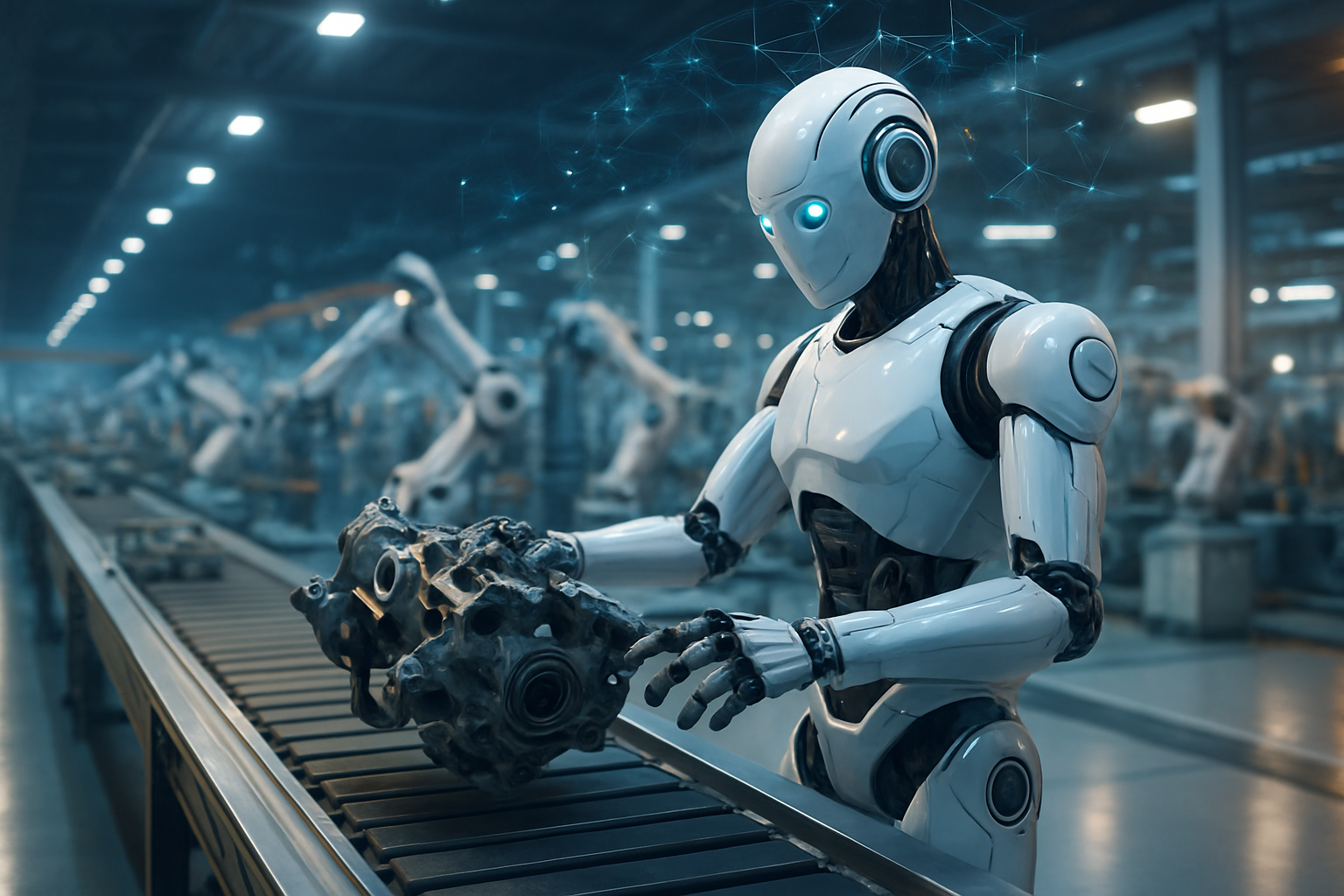
    In a landmark moment for the commercialization of humanoid robotics, Boston Dynamics has officially moved its all-electric Atlas robot from the laboratory to the factory floor. As of January 2026, the company—wholly owned by the Hyundai Motor Company (KRX: 005380)—has begun the industrial deployment of its next-generation humanoid at the Hyundai Motor Group Metaplant America (HMGMA) in Savannah, Georgia. This shift marks the transition of Atlas from a viral research sensation to a functional industrial asset, specialized for heavy lifting and autonomous parts sequencing within one of the world's most advanced automotive manufacturing hubs.

    The deployment centers on the "Software-Defined Factory" (SDF) philosophy, where hardware and software are seamlessly integrated to allow for rapid iteration and real-time optimization. At the HMGMA, Atlas is no longer performing the backflips that made its hydraulic predecessor famous; instead, it is tackling the "dull, dirty, and dangerous" tasks of a live production environment. By automating the movement of heavy components and organizing parts for human assembly lines, Hyundai aims to set a new global standard for the "Metaplant" of the future, leveraging what experts are calling "Physical AI."

    Precision Power: The Technical Architecture of the Electric Atlas

    The all-electric Atlas represents a radical departure from the hydraulic architecture that defined the platform for over a decade. While the previous model was a marvel of power density, its reliance on high-pressure pumps and hoses made it noisy, prone to leaks, and difficult to maintain in a sterile factory environment. The new 2026 production model utilizes custom-designed electric direct-drive actuators with a staggering torque density of 220 Nm/kg. This allows the robot to maintain a sustained payload capacity of 66 lbs (30 kg) and a burst-lift capability of up to 110 lbs (50 kg), comfortably handling the heavy engine components and battery modules typical of electric vehicle (EV) production.

    Technical specifications for the electric Atlas include 56 degrees of freedom—nearly triple that of the hydraulic version—and many of its joints are capable of full 360-degree rotation. This "superhuman" range of motion allows the robot to navigate cramped warehouse aisles by spinning its torso or limbs rather than turning its entire base, minimizing its footprint and increasing efficiency. Its perception system has been upgraded to a 360-degree sensor suite utilizing LiDAR and high-resolution cameras, processed locally by an onboard NVIDIA Corporation (NASDAQ: NVDA) Jetson Thor platform. This provides the robot with total spatial awareness, allowing it to operate safely alongside human workers without the need for safety cages.

    Initial reactions from the robotics community have been overwhelmingly positive, with researchers noting that the move to electric actuators simplifies the control stack significantly. Unlike previous approaches that required complex fluid dynamics modeling, the electric Atlas uses high-fidelity force control and tactile-sensing hands. This allows it to perform "blind" manipulations—sensing the weight and friction of an object through its fingertips—much like a human worker, which is critical for tasks like threading bolts or securing delicate wiring harnesses.

    The Humanoid Arms Race: Competitive and Strategic Implications

    The deployment at the Georgia Metaplant places Hyundai at the forefront of a burgeoning "Humanoid Arms Race," directly challenging the progress of Tesla (NASDAQ: TSLA) and its Optimus program. While Tesla has emphasized high-volume production and vertical integration, Hyundai’s strategy leverages the decades of R&D expertise from Boston Dynamics combined with one of the largest manufacturing footprints in the world. By treating the Georgia facility as a "live laboratory," Hyundai is effectively bypassing the simulation-to-reality gap that has slowed other competitors.

    This development is also a major win for the broader AI ecosystem. The electric Atlas’s "brain" is the result of collaboration between Boston Dynamics and Alphabet Inc. (NASDAQ: GOOGL) via its DeepMind unit, focusing on Large Behavior Models (LBM). These models enable the robot to handle "unstructured" environments—meaning it can figure out what to do if a parts bin is slightly out of place or if a component is dropped. This level of autonomy disrupts the traditional industrial robotics market, which has historically relied on fixed-path programming. Startups focusing on specialized robotic components, such as high-torque motors and haptic sensors, are likely to see increased investment as the demand for humanoid-scale parts scales toward mass production.

    Strategically, the HMGMA deployment serves as a blueprint for the "Robot Metaplant Application Center" (RMAC). This facility acts as a validation hub where manufacturing data is fed into Atlas’s AI models to ensure 99.9% reliability. By proving the technology in their own plants first, Hyundai and Boston Dynamics are positioning themselves to sell not just robots, but entire autonomous labor solutions to other industries, from aerospace to logistics.

    Physical AI and the Broader Landscape of Automation

    The integration of Atlas into the Georgia Metaplant is a milestone in the rise of "Physical AI"—the application of advanced machine learning to the physical world. For years, AI breakthroughs were largely confined to the digital realm, such as Large Language Models and image generation. However, the deployment of Atlas signifies that AI has matured enough to manage the complexities of gravity, friction, and multi-object interaction in real time. This move mirrors the "GPT-3 moment" for robotics, where the technology moves from an impressive curiosity to an essential tool for global industry.

    However, the shift is not without its concerns. The prospect of 30,000 humanoid units per year, as projected by Hyundai for the end of the decade, raises significant questions regarding the future of the manufacturing workforce. While Hyundai maintains that Atlas is designed to augment human labor by taking over the most strenuous tasks, labor economists warn of potential displacement in traditional assembly roles. The broader significance lies in how society will adapt to a world where "general-purpose" robots can be retrained for new tasks overnight simply by downloading a new software update, much like a smartphone app.

    Compared to previous milestones, such as the first deployment of UNIMATE in the 1960s, the Atlas rollout is uniquely collaborative. The use of "Digital Twins" allows engineers in South Korea to simulate tasks in a virtual environment before "pushing" the code to robots in Georgia. This global, cloud-based approach to labor is a fundamental shift in how manufacturing is conceptualized, turning a physical factory into a programmable asset.

    The Road Ahead: From Parts Sequencing to Full Assembly

    In the near term, we can expect the fleet of Atlas robots at the HMGMA to expand from a handful of pilot units to a full-scale workforce. The immediate focus remains on parts sequencing and material handling, but the roadmap for 2027 and 2028 includes more complex assembly tasks. These will include the installation of interior trim and the routing of EV cooling systems—tasks that require the high dexterity and fine motor skills that Boston Dynamics is currently refining in the RMAC.

    Looking further ahead, the goal is for Atlas to reach a state of "unsupervised autonomy," where it can self-diagnose mechanical issues and navigate to autonomous battery-swapping stations without human intervention. The challenges remaining are significant, particularly in the realm of long-term durability and the energy density of batteries required for a full 8-hour shift of heavy lifting. However, experts predict that as the "Software-Defined Factory" matures, the hardware will become increasingly modular, allowing for "hot-swapping" of limbs or sensors in minutes rather than hours.

    A New Chapter in Robotics History

    The deployment of the all-electric Atlas at Hyundai’s Georgia Metaplant is more than just a corporate milestone; it is a signal that the era of the general-purpose humanoid has arrived. By moving beyond the hydraulic prototypes of the past and embracing a software-first, all-electric architecture, Boston Dynamics and Hyundai have successfully bridged the gap between a high-tech demo and an industrial workhorse.

    The coming months will be critical as the HMGMA scales its production of EVs and its integration of robotic labor. Observers should watch for the reliability metrics coming out of the Savannah facility and the potential for Boston Dynamics to announce third-party pilot programs with other industrial giants. While the backflips may be over, the real work for Atlas—and the future of the global manufacturing sector—has only just begun.


    This content is intended for informational purposes only and represents analysis of current AI developments.

    TokenRing AI delivers enterprise-grade solutions for multi-agent AI workflow orchestration, AI-powered development tools, and seamless remote collaboration platforms.
    For more information, visit https://www.tokenring.ai/.
  • From Backflips to the Assembly Line: Boston Dynamics’ Electric Atlas Begins Industrial Deployment at Hyundai’s Georgia Mega-Plant

    From Backflips to the Assembly Line: Boston Dynamics’ Electric Atlas Begins Industrial Deployment at Hyundai’s Georgia Mega-Plant

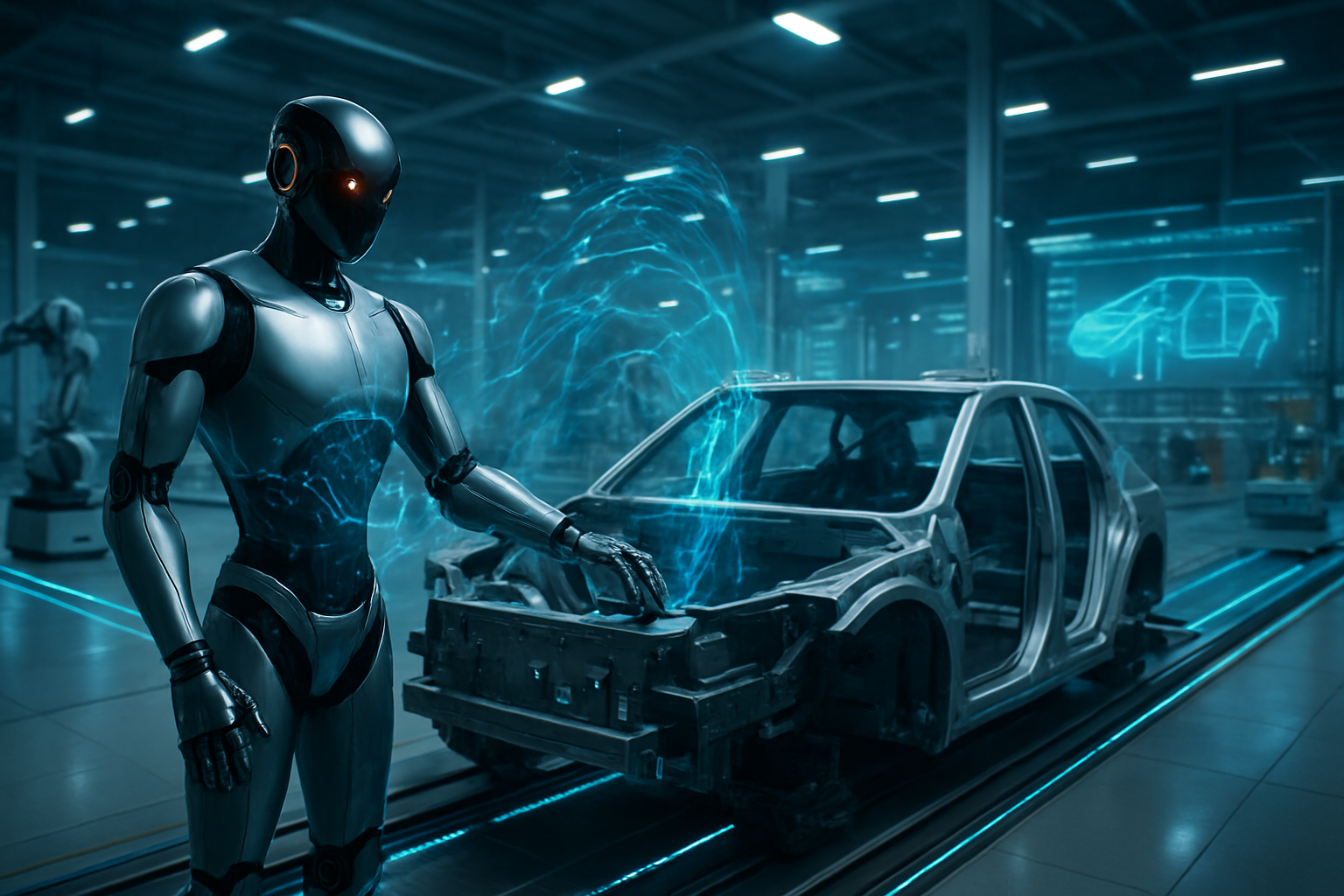
    In a milestone that signals the long-awaited transition of humanoid robotics from laboratory curiosities to industrial assets, Boston Dynamics and its parent company, Hyundai Motor Group (KRX: 005380), have officially launched field tests for the all-electric Atlas robot. This month, the robot began autonomous operations at the Hyundai Motor Group Metaplant America (HMGMA) in Ellabell, Georgia. Moving beyond the viral parkour videos of its predecessor, this new generation of Atlas is performing the "dull, dirty, and dangerous" work of a modern automotive factory, specifically tasked with sorting and sequencing heavy components in the plant’s warehouse.

    The deployment marks a pivotal moment for the robotics industry. While humanoid robots have long been promised as the future of labor, the integration of Atlas into a live manufacturing environment—operating without tethers or human remote control—demonstrates a new level of maturity in both hardware and AI orchestration. By leveraging advanced machine learning and a radically redesigned electric chassis, Atlas is now proving it can handle the physical variability of a factory floor, a feat that traditional stationary industrial robots have struggled to master.

    Engineering the Industrial Humanoid

    The technical evolution from the hydraulic Atlas to the 2026 electric production model represents a complete architectural overhaul. While the previous version relied on high-pressure hydraulics that were prone to leaks and required immense power, the new Atlas utilizes custom-designed, high-torque electric actuators. These allow for a staggering 56 degrees of freedom, including unique 360-degree rotating joints in the waist, head, and limbs. This "superhuman" range of motion enables the robot to turn in place and reach for components in cramped quarters without needing to reorient its entire body, a massive efficiency gain over human-constrained skeletal designs.

    During the ongoing Georgia field tests, Atlas has been observed autonomously sequencing automotive roof racks—a task that requires identifying specific parts, navigating a shifting warehouse floor, and placing heavy items into precise slots for the assembly line. The robot boasts a sustained payload capacity of 66 lbs (30 kg), with the ability to burst-lift up to 110 lbs (50 kg). Unlike the scripted demonstrations of the past, the current Atlas utilizes an AI "brain" powered by Nvidia (NASDAQ: NVDA) hardware and vision models developed in collaboration with Google DeepMind, a subsidiary of Alphabet Inc. (NASDAQ: GOOGL). This allows the robot to adapt to environmental changes in real-time, such as a bin being moved or a human worker crossing its path.

    Industry experts have been quick to note that this is not just a hardware test, but a trial of "embodied AI." Initial reactions from the robotics research community suggest that the most impressive feat is Atlas’s "end-to-end" learning capability. Rather than being programmed with every specific movement, the robot has been trained in simulation to understand the physics of the objects it handles. This allows it to manipulate irregular shapes and respond to slips or weight shifts with a fluidity that mirrors human reflexes, far surpassing the rigid movements seen in earlier humanoid iterations.

    Strategic Implications for the Robotics Market

    For Hyundai Motor Group, this deployment is a strategic masterstroke in its quest to build "Software-Defined Factories." By integrating Boston Dynamics’ technology directly into its $7.6 billion Georgia facility, Hyundai is positioning itself as a leader in the next generation of manufacturing. This move places immense pressure on competitors like Tesla (NASDAQ: TSLA), whose Optimus robot is also in early testing phases, and startups like Figure and Agility Robotics. Hyundai’s advantage lies in its "closed-loop" ecosystem: it owns the robot designer (Boston Dynamics), the AI infrastructure, and the massive manufacturing plants where the technology can be refined at scale.

    The competitive implications extend beyond the automotive sector. Logistics giants and electronic manufacturers are watching the Georgia tests as a bellwether for the viability of general-purpose humanoids. If Atlas can reliably sort parts at HMGMA, it threatens to disrupt the market for specialized, single-task warehouse robots. Companies that can provide a "worker" that fits into human-centric infrastructure without needing expensive facility retrofits will hold a significant strategic advantage. Market analysts suggest that Hyundai’s goal of producing 30,000 humanoid units annually by 2028 is no longer a "moonshot" but a tangible production target.

    A New Chapter in the Global AI Landscape

    The shift of Atlas to the factory floor fits into a broader global trend of "embodied AI," where the intelligence of large language models is being wedded to physical machines. We are moving away from the era of "narrow AI"—which can only do one thing well—to "general-purpose robotics." This milestone is comparable to the introduction of the first industrial robotic arm in the 1960s, but with a crucial difference: the new generation of robots can see, learn, and adapt to the world around them.

    However, the transition is not without concerns. While Hyundai emphasizes "human-centered automation"—using robots to take over ergonomically straining tasks like lifting heavy roof moldings—the long-term impact on the workforce remains a subject of intense debate. Labor advocates are monitoring the deployment closely, questioning how the "30,000 units by 2028" goal will affect the demand for entry-level industrial labor. Furthermore, as these robots become increasingly autonomous and integrated into cloud networks, cybersecurity and the potential for systemic failures in automated supply chains have become primary topics of discussion among tech policy experts.

    The Roadmap to Full Autonomy

    Looking ahead, the next 24 months will likely see Atlas expand its repertoire from simple sorting to complex component assembly. This will require even finer motor skills and more sophisticated tactile feedback in the robot's grippers. Near-term developments are expected to focus on multi-robot orchestration, where fleets of Atlas units communicate with each other and the plant's central management system to optimize the flow of materials in real-time.

    Experts predict that by the end of 2026, we will see the first "robot-only" shifts in specific high-hazard areas of the Metaplant. The ultimate challenge remains the "99.9% reliability" threshold required for full-scale production. While Atlas has shown it can perform tasks in a field test, maintaining that performance over thousands of hours without technical intervention is the final hurdle. As the hardware becomes a commodity, the real battleground will move to the software—specifically, the ability to rapidly "teach" robots new tasks using generative AI and synthetic data.

    Conclusion: From Laboratory to Industrial Reality

    The deployment of the electric Atlas at Hyundai’s Georgia plant marks a definitive end to the era of robotics-as-entertainment. We have entered the era of robotics-as-infrastructure. By taking a humanoid out of the lab and putting it into the high-stakes environment of a billion-dollar automotive factory, Boston Dynamics and Hyundai have set a new benchmark for what is possible in the field of automation.

    The key takeaway from this development is that the "brain" and the "body" of AI have finally caught up with each other. In the coming months, keep a close eye on the performance metrics coming out of HMGMA—specifically the "mean time between failures" and the speed of autonomous task acquisition. If these field tests continue to succeed, the sight of a humanoid robot walking the factory floor will soon move from a futuristic novelty to a standard feature of the global industrial landscape.


    This content is intended for informational purposes only and represents analysis of current AI developments.

    TokenRing AI delivers enterprise-grade solutions for multi-agent AI workflow orchestration, AI-powered development tools, and seamless remote collaboration platforms.
    For more information, visit https://www.tokenring.ai/.
  • The Robot That Thinks: Google DeepMind and Boston Dynamics Unveil Gemini 3-Powered Atlas

    The Robot That Thinks: Google DeepMind and Boston Dynamics Unveil Gemini 3-Powered Atlas

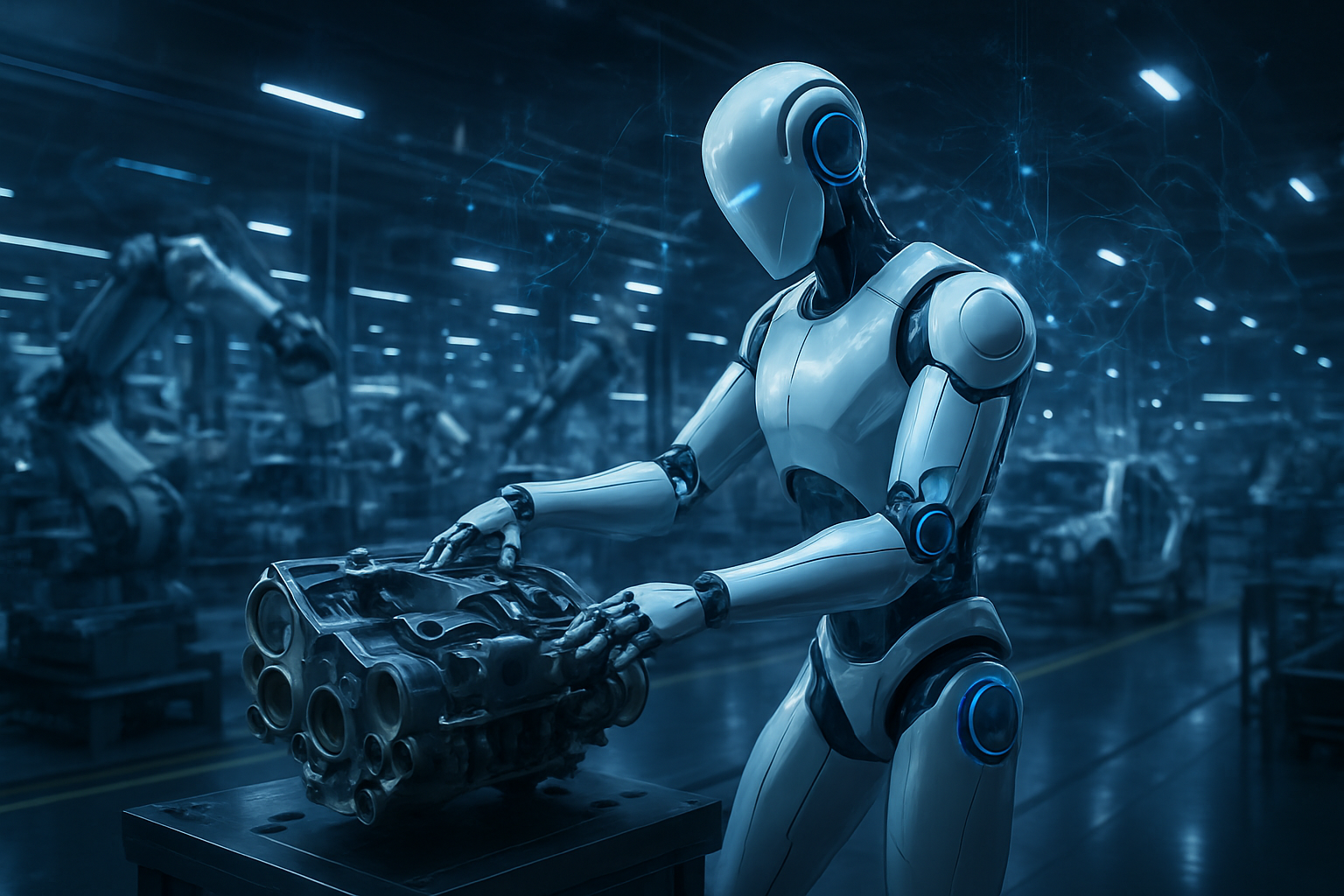
    In a move that marks a definitive turning point for the field of embodied artificial intelligence, Google DeepMind and Boston Dynamics have officially announced the full-scale integration of the Gemini 3 foundation model into the all-electric Atlas humanoid robot. Unveiled this week at CES 2026, the collaboration represents a fusion of the world’s most advanced "brain"—a multimodal, trillion-parameter reasoning engine—with the world’s most capable "body." This integration effectively ends the era of pre-programmed robotic routines, replacing them with a system capable of understanding complex verbal instructions and navigating unpredictable human environments in real-time.

    The significance of this announcement cannot be overstated. For decades, humanoid robots were limited by their inability to reason about the physical world; they could perform backflips in controlled settings but struggled to identify a specific tool in a cluttered workshop. By embedding Gemini 3 directly into the Atlas hardware, Alphabet Inc. (NASDAQ: GOOGL) and Boston Dynamics, a subsidiary of Hyundai Motor Company (OTCMKTS: HYMTF), have created a machine that doesn't just move—it perceives, plans, and adapts. This "brain-body" synthesis allows the 2026 Atlas to function as an autonomous agent capable of high-level cognitive tasks, potentially disrupting industries ranging from automotive manufacturing to logistics and disaster response.

    Embodied Reasoning: The Technical Architecture of Gemini-Atlas

    At the heart of this breakthrough is the Gemini 3 architecture, released by Google DeepMind in late 2025. Unlike its predecessors, Gemini 3 utilizes a Sparse Mixture-of-Experts (MoE) design optimized for robotics, featuring a massive 1-million-token context window. This allows the robot to "remember" the entire layout of a factory floor or a multi-step assembly process without losing focus. The model’s "Deep Think Mode" provides a reasoning layer where the robot can pause for milliseconds to simulate various physical outcomes before committing to a movement. This is powered by the onboard NVIDIA Corporation (NASDAQ: NVDA) Jetson Thor module, which provides over 2,000 TFLOPS of AI performance, allowing the robot to process real-time video, audio, and tactile sensor data simultaneously.

    The physical hardware of the electric Atlas has been equally transformed. The 2026 production model features 56 active joints, many of which offer 360-degree rotation, exceeding the range of motion of any human. To bridge the gap between high-level AI reasoning and low-level motor control, DeepMind developed a proprietary "Action Decoder" running at 50Hz. This acts as a digital cerebellum, translating Gemini 3’s abstract goals—such as "pick up the fragile glass"—into precise torque commands for Atlas’s electric actuators. This architecture solves the latency issues that plagued previous humanoid attempts, ensuring that the robot can react to a falling object or a human walking into its path within 20 milliseconds.

    Initial reactions from the AI research community have been overwhelmingly positive. Dr. Aris Xanthos, a leading robotics researcher, noted that the ability of Atlas to understand open-ended verbal commands like "Clean up the spill and find a way to warn others" is a "GPT-3 moment for robotics." Unlike previous systems that required thousands of hours of reinforcement learning for a single task, the Gemini-Atlas system can learn new industrial workflows with as few as 50 human demonstrations. This "few-shot" learning capability is expected to drastically reduce the time and cost of deploying humanoid fleets in dynamic environments.

    A New Power Dynamic in the AI and Robotics Industry

    The collaboration places Alphabet Inc. and Hyundai Motor Company in a dominant position within the burgeoning humanoid market, creating a formidable challenge for competitors. Tesla, Inc. (NASDAQ: TSLA), which has been aggressively developing its Optimus robot, now faces a rival that possesses a significantly more mature software stack. While Optimus has made strides in mechanical design, the integration of Gemini 3 gives Atlas a superior "world model" and linguistic understanding that Tesla’s current FSD-based (Full Self-Driving) architecture may struggle to match in the near term.

    Furthermore, this partnership signals a shift in how AI companies approach the market. Rather than competing solely on chatbots or digital assistants, tech giants are now racing to give their AI a physical presence. Startups like Figure AI and Agility Robotics, while innovative, may find it difficult to compete with the combined R&D budgets and data moats of Google and Boston Dynamics. The strategic advantage here lies in the data loop: every hour Atlas spends on a factory floor provides multimodal data that further trains Gemini 3, creating a self-reinforcing cycle of improvement that is difficult for smaller players to replicate.

    The market positioning is clear: Hyundai intends to use the Gemini-powered Atlas to fully automate its "Metaplants," starting with the RMAC facility in early 2026. This move is expected to drive down manufacturing costs and set a new standard for industrial efficiency. For Alphabet, the integration serves as a premier showcase for Gemini 3’s versatility, proving that their foundation models are not just for search engines and coding, but are the essential operating systems for the physical world.

    The Societal Impact of the "Robotic Awakening"

    The broader significance of the Gemini-Atlas integration lies in its potential to redefine the human-robot relationship. We are moving away from "automation," where robots perform repetitive tasks in cages, toward "collaboration," where robots work alongside humans as intelligent peers. The ability of Atlas to navigate complex environments in real-time means it can be deployed in "fenceless" environments—hospitals, construction sites, and eventually, retail spaces. This transition marks the arrival of the "General Purpose Robot," a concept that has been the holy grail of science fiction for nearly a century.

    However, this breakthrough also brings significant concerns to the forefront. The prospect of robots capable of understanding and executing complex verbal commands raises questions about safety and job displacement. While the 2026 Atlas includes "Safety-First" protocols—hardcoded overrides that prevent the robot from exerting force near human vitals—the ethical implications of autonomous decision-making in high-stakes environments remain a topic of intense debate. Critics argue that the rapid deployment of such capable machines could outpace our ability to regulate them, particularly regarding data privacy and the security of the "brain-body" link.

    Comparatively, this milestone is being viewed as the physical manifestation of the LLM revolution. Just as ChatGPT transformed how we interact with information, the Gemini-Atlas integration is transforming how we interact with the physical world. It represents a shift from "Narrow AI" to "Embodied General AI," where the intelligence is no longer trapped behind a screen but is capable of manipulating the environment to achieve goals. This is the first time a foundation model has been successfully used to control a high-degree-of-freedom humanoid in a non-deterministic, real-world setting.

    The Road Ahead: From Factories to Front Doors

    Looking toward the near future, the next 18 to 24 months will likely see the first large-scale deployments of Gemini-powered Atlas units across Hyundai’s global manufacturing network. Experts predict that by late 2027, the technology will have matured enough to move beyond the factory floor into more specialized sectors such as hazardous waste removal and search-and-rescue. The "Deep Think" capabilities of Gemini 3 will be particularly useful in disaster zones where the robot must navigate rubble and make split-second decisions without constant human oversight.

    Long-term, the goal remains a consumer-grade humanoid robot. While the current 2026 Atlas is priced for industrial use—estimated at $150,000 per unit—advancements in mass production and the continued optimization of the Gemini architecture could see prices drop significantly by the end of the decade. Challenges remain, particularly regarding battery life; although the 2026 model features a 4-hour swappable battery, achieving a full day of autonomous operation without intervention is still a hurdle. Furthermore, the "Action Decoder" must be refined to handle even more delicate tasks, such as elder care or food preparation, which require a level of tactile sensitivity that is still in the early stages of development.

    A Landmark Moment in the History of AI

    The integration of Gemini 3 into the Boston Dynamics Atlas is more than just a technical achievement; it is a historical landmark. It represents the successful marriage of two previously distinct fields: large-scale language modeling and high-performance robotics. By giving Atlas a "brain" capable of reasoning, Google DeepMind and Boston Dynamics have fundamentally changed the trajectory of human technology. The key takeaway from this week’s announcement is that the barrier between digital intelligence and physical action has finally been breached.

    As we move through 2026, the tech industry will be watching closely to see how the Gemini-Atlas system performs in real-world industrial settings. The success of this collaboration will likely trigger a wave of similar partnerships, as other AI labs seek to find "bodies" for their models. For now, the world has its first true glimpse of a future where robots are not just tools, but intelligent partners capable of understanding our words and navigating our world.


    This content is intended for informational purposes only and represents analysis of current AI developments.

    TokenRing AI delivers enterprise-grade solutions for multi-agent AI workflow orchestration, AI-powered development tools, and seamless remote collaboration platforms.
    For more information, visit https://www.tokenring.ai/.