Tag: Automotive AI

  • NXP and eInfochips Forge Alliance to Power Software-Defined Vehicle Revolution

    NXP and eInfochips Forge Alliance to Power Software-Defined Vehicle Revolution

    Eindhoven, Netherlands & San Jose, CA – October 24, 2025 – In a strategic move set to significantly accelerate the development and deployment of software-defined vehicles (SDVs), NXP Semiconductors (NASDAQ: NXPI) has announced a multi-year partnership with eInfochips, an Arrow Electronics company. This collaboration, officially unveiled on October 23, 2025, is designed to revolutionize software distribution and elevate customer support for NXP's critical S32 platform, a cornerstone of the automotive industry's shift towards intelligent, connected, and autonomous vehicles. The alliance is poised to streamline the complex process of integrating advanced automotive software, promising faster innovation cycles and more robust solutions for manufacturers worldwide.

    This partnership comes at a pivotal time when the automotive sector is undergoing a profound transformation, driven by the increasing complexity of vehicle software. By leveraging eInfochips' extensive engineering expertise and NXP's cutting-edge S32 processors, the initiative aims to simplify access to essential software packages and provide unparalleled technical assistance, thereby empowering developers and accelerating the journey towards a fully software-defined automotive future.

    Technical Deep Dive: Enhancing the S32 Ecosystem for SDVs

    The core of this transformative partnership lies in bolstering the NXP S32 family of microcontrollers and microprocessors, which are central to modern automotive architectures. eInfochips, already recognized as an NXP Gold Partner, will now play a pivotal role in distributing standard and premium software packages and tools specifically tailored for the S32 platform. This includes critical components for connected car solutions, hardware acceleration, telemetry applications, and Fast Path Packet Forwarding on S32-based reference designs. The S32 platform, particularly with the integration of S32 CoreRide, is NXP's strategic answer to the demands of software-defined vehicles, providing a robust foundation for hardware-software integration and reference designs.

    This collaboration marks a significant departure from traditional software support models. By entrusting eInfochips with comprehensive software support and maintenance, NXP is creating a more agile and responsive ecosystem. This "best-in-class support" system is engineered to facilitate successful and efficient application development, dramatically reducing time-to-market for customers. Unlike previous approaches that might have involved more fragmented support channels, this consolidated effort ensures that NXP customers integrating S32 processors and microcontrollers receive consistent, high-quality technical and functional safety support, including ongoing assistance for battery energy storage systems. Initial reactions from the automotive embedded software community highlight the potential for this partnership to standardize and simplify development workflows, which has long been a challenge in the highly complex automotive domain.

    Competitive Implications and Market Positioning

    This strategic alliance carries significant implications for AI companies, tech giants, and startups operating within the automotive and embedded systems space. NXP Semiconductors (NASDAQ: NXPI) stands to significantly benefit by strengthening its position as a leading provider of automotive semiconductor solutions. By enhancing its software ecosystem and support services through eInfochips, NXP makes its S32 platform even more attractive to automotive OEMs and Tier 1 suppliers, who are increasingly prioritizing comprehensive software enablement. This move directly addresses a critical pain point in the industry: the complexity of integrating and maintaining software on high-performance automotive hardware.

    For tech giants and major AI labs venturing into automotive software, this partnership provides a more robust and supported platform for their innovations. Companies developing advanced driver-assistance systems (ADAS), infotainment systems, and autonomous driving algorithms will find a more streamlined path to deployment on NXP's S32 platform. Conversely, this development could intensify competitive pressures on other semiconductor manufacturers who may not offer as integrated or well-supported a software ecosystem. Startups specializing in automotive software development tools, middleware, or specific application development for SDVs might find new opportunities to collaborate within this expanded NXP-eInfochips ecosystem, potentially becoming solution partners or benefiting from improved platform stability. The partnership solidifies NXP's market positioning by offering a compelling, end-to-end solution that spans hardware, software, and critical support, thereby creating a strategic advantage in the rapidly evolving SDV landscape.

    Wider Significance in the AI and Automotive Landscape

    This partnership is a clear indicator of the broader trend towards software-defined everything, a paradigm shift that is profoundly impacting the AI and automotive industries. As vehicles become sophisticated rolling computers, the software stack becomes as critical, if not more so, than the hardware. This collaboration fits perfectly into the evolving AI landscape by providing a more accessible and supported platform for deploying AI-powered features, from advanced perception systems to predictive maintenance and personalized user experiences. The emphasis on streamlining software distribution and support directly addresses the challenges of managing complex AI models and algorithms in safety-critical automotive environments.

    The impacts are far-reaching. It promises to accelerate the adoption of advanced AI features in production vehicles by reducing development friction. Potential concerns, however, could revolve around the consolidation of software support, though NXP and eInfochips aim to deliver best-in-class service. This development can be compared to previous AI milestones where foundational platforms or ecosystems were significantly enhanced, such as the maturation of cloud AI platforms or specialized AI development kits. By making the underlying automotive computing platform more developer-friendly, NXP and eInfochips are effectively lowering the barrier to entry for AI innovation in vehicles, potentially leading to a faster pace of innovation and differentiation in the market. It underscores the critical importance of a robust software ecosystem for hardware providers in the age of AI.

    Future Developments and Expert Predictions

    Looking ahead, this partnership is expected to yield several near-term and long-term developments. In the near term, customers can anticipate a more seamless experience in acquiring and integrating NXP S32 software, coupled with enhanced, responsive technical support. This will likely translate into faster project timelines and reduced development costs for automotive OEMs and Tier 1 suppliers. Long-term, the collaboration is poised to foster an even richer ecosystem around the S32 CoreRide platform, potentially leading to the co-development of new software tools, specialized modules, and advanced reference designs optimized for AI and autonomous driving applications. We can expect to see more integrated solutions that combine NXP's hardware capabilities with eInfochips' software expertise, pushing the boundaries of what's possible in SDVs.

    Potential applications and use cases on the horizon include highly sophisticated AI inference at the edge within vehicles, advanced sensor fusion algorithms, and over-the-air (OTA) update capabilities that are more robust and secure. Challenges that need to be addressed include continuously scaling the support infrastructure to meet growing demands, ensuring seamless integration with diverse customer development environments, and staying ahead of rapidly evolving automotive software standards and cybersecurity threats. Experts predict that this kind of deep hardware-software partnership will become increasingly common as the industry moves towards greater software definition, ultimately leading to more innovative, safer, and more personalized driving experiences. The focus will shift even more towards integrated solutions rather than disparate components.

    A New Era for Automotive Software Ecosystems

    The partnership between NXP Semiconductors and eInfochips represents a significant milestone in the evolution of automotive software ecosystems. The key takeaway is the strategic emphasis on streamlining software distribution and providing comprehensive customer support for NXP's critical S32 platform, directly addressing the complexities inherent in developing software-defined vehicles. This collaboration is set to empower automotive manufacturers and developers, accelerating their journey towards bringing next-generation AI-powered vehicles to market.

    In the grand tapestry of AI history, this development underscores the growing importance of robust, integrated platforms that bridge the gap between advanced hardware and sophisticated software. It highlights that even the most powerful AI chips require a well-supported and accessible software ecosystem to unlock their full potential. The long-term impact will likely be a more efficient, innovative, and competitive automotive industry, where software differentiation becomes a primary driver of value. In the coming weeks and months, industry observers will be watching closely for initial customer feedback, the rollout of new software packages, and how this partnership further solidifies NXP's leadership in the software-defined vehicle space.


    This content is intended for informational purposes only and represents analysis of current AI developments.

    TokenRing AI delivers enterprise-grade solutions for multi-agent AI workflow orchestration, AI-powered development tools, and seamless remote collaboration platforms.
    For more information, visit https://www.tokenring.ai/.
  • Texas Instruments: A Foundational AI Enabler Navigates Slow Recovery with Strong Franchise

    Texas Instruments: A Foundational AI Enabler Navigates Slow Recovery with Strong Franchise

    Texas Instruments (NASDAQ: TXN), a venerable giant in the semiconductor industry, is demonstrating remarkable financial resilience and strategic foresight as it navigates a period of slow market recovery. While the broader semiconductor landscape experiences fluctuating demand, particularly outside the booming high-end AI accelerator market, TI's robust financial health and deep-seated "strong franchise" in analog and embedded processing position it as a critical, albeit often understated, enabler for the pervasive deployment of artificial intelligence, especially at the edge, in industrial automation, and within the automotive sector. As of Q3 2025, the company's consistent revenue growth, strong cash flow, and significant long-term investments underscore its pivotal role in building the intelligent infrastructure that underpins the AI revolution.

    TI's strategic focus on foundational chips, coupled with substantial investments in domestic manufacturing, ensures a stable supply chain and a diverse customer base, insulating it from some of the more volatile swings seen in other segments of the tech industry. This stability allows TI to steadily advance its AI-enabled product portfolio, embedding intelligence directly into a vast array of real-world applications. The narrative of TI in late 2024 and mid-2025 is one of a financially sound entity meticulously building the silicon bedrock for a smarter, more automated future, even as it acknowledges and adapts to a semiconductor market recovery that is "continuing, though at a slower pace than prior upturns."

    Embedding Intelligence: Texas Instruments' Technical Contributions to AI

    Texas Instruments' technical contributions to AI are primarily concentrated on delivering efficient, real-time intelligence at the edge, a critical complement to the cloud-centric AI processing that dominates headlines. The company's strategy from late 2024 to mid-2025 has seen the introduction and enhancement of several product lines specifically designed for AI and machine learning applications in industrial, automotive, and personal electronics sectors.

    A cornerstone of TI's edge AI platform is its scalable AM6xA series of vision processors, including the AM62A, AM68A, and AM69A. These processors are engineered for low-power, real-time AI inference. The AM62A, for instance, is optimized for battery-operated devices like video doorbells, performing advanced object detection and classification while consuming less than 2 watts. For more demanding applications, the AM68A and AM69A offer higher performance and scalability, supporting up to 8 and 12 cameras respectively. These chips integrate dedicated AI hardware accelerators for deep learning algorithms, delivering processing power from 1 to 32 TOPS (Tera Operations Per Second). This enables them to simultaneously stream multiple 4K60 video feeds while executing onboard AI inference, significantly reducing latency and simplifying system design for applications ranging from traffic management to industrial inspection. This differs from previous approaches by offering a highly integrated, low-power solution that brings sophisticated AI capabilities directly to the device, reducing the need for constant cloud connectivity and enabling faster, more secure decision-making.

    Further expanding its AI capabilities, TI introduced the TMS320F28P55x series of C2000™ real-time microcontrollers (MCUs) in November 2024. These MCUs are notable as the industry's first real-time microcontrollers with an integrated neural processing unit (NPU). This NPU offloads neural network execution from the main CPU, resulting in a 5 to 10 times lower latency compared to software-only implementations, achieving up to 99% fault detection accuracy in industrial and automotive applications. This represents a significant technical leap for embedded control systems, enabling highly accurate predictive maintenance and real-time anomaly detection crucial for smart factories and autonomous systems. In the automotive realm, TI continues to innovate with new chips for advanced driver-assistance systems (ADAS). In April 2025, it unveiled a portfolio including the LMH13000 high-speed lidar laser driver for improved real-time decision-making and the AWR2944P front and corner radar sensor, which features enhanced computational capabilities and an integrated radar hardware accelerator specifically for machine learning in edge AI automotive applications. These advancements are critical for the development of more robust and reliable autonomous vehicles.

    Initial reactions from the embedded systems community and industrial automation experts have been largely positive, recognizing the practical implications of bringing AI inference directly to the device level. While not as flashy as cloud AI supercomputers, these integrated solutions are seen as essential for the widespread adoption and functionality of AI in the physical world, offering tangible benefits in terms of latency, power consumption, and data privacy. Furthermore, TI's commitment to a robust software development kit (SDK) and ecosystem, including AI tools and pre-trained models, facilitates rapid prototyping and deployment, lowering the barrier to entry for developers looking to incorporate AI into embedded systems. Beyond edge devices, TI also addresses the burgeoning power demands of AI computing in data centers with new power management devices and reference designs, including gallium nitride (GaN) products, enabling scalable power architectures from 12V to 800V DC, critical for the efficiency and density requirements of next-generation AI infrastructures.

    Shaping the AI Landscape: Implications for Companies and Competitive Dynamics

    Texas Instruments' foundational role in analog and embedded processing, now increasingly infused with AI capabilities, significantly shapes the competitive landscape for AI companies, tech giants, and startups alike. While TI may not be directly competing with the likes of Nvidia (NASDAQ: NVDA) or Advanced Micro Devices (NASDAQ: AMD) in the high-performance AI accelerator market, its offerings are indispensable to companies building the intelligent devices and systems that utilize AI.

    Companies that stand to benefit most from TI's developments are those focused on industrial automation, robotics, smart factories, automotive ADAS and autonomous driving, medical devices, and advanced IoT applications. Startups and established players in these sectors can leverage TI's low-power, high-performance edge AI processors and MCUs to integrate sophisticated AI inference directly into their products, enabling features like predictive maintenance, real-time object recognition, and enhanced sensor fusion. This reduces their reliance on costly and latency-prone cloud processing for every decision, democratizing AI deployment in real-world environments. For example, a robotics startup can use TI's vision processors to equip its robots with on-board intelligence for navigation and object manipulation, while an automotive OEM can enhance its ADAS systems with TI's radar and lidar chips for more accurate environmental perception.

    The competitive implications for major AI labs and tech companies are nuanced. While TI isn't building the next large language model (LLM) training supercomputer, it is providing the essential building blocks for the deployment of AI models in countless edge applications. This positions TI as a critical partner rather than a direct competitor to companies developing cutting-edge AI algorithms. Its robust, long-lifecycle analog and embedded chips are integrated deeply into systems, providing a stable revenue stream and a resilient market position, even as the market for high-end AI accelerators experiences rapid shifts. Analysts note that TI's margins are "a lot less cyclical" compared to other semiconductor companies, reflecting the enduring demand for its core products. However, TI's "limited exposure to the artificial intelligence (AI) capital expenditure cycle" for high-end AI accelerators is a point of consideration, potentially impacting its growth trajectory compared to firms more deeply embedded in that specific, booming segment.

    Potential disruption to existing products or services is primarily positive, enabling a new generation of smarter, more autonomous devices. TI's integrated NPU in its C2000 MCUs, for instance, allows for significantly faster and more accurate real-time fault detection than previous software-only approaches, potentially disrupting traditional industrial control systems with more intelligent, self-optimizing alternatives. TI's market positioning is bolstered by its proprietary 300mm manufacturing strategy, aiming for over 95% in-house production by 2030, which provides dependable, low-cost capacity and strengthens control over its supply chain—a significant strategic advantage in a world sensitive to geopolitical risks and supply chain disruptions. Its direct-to-customer model, accounting for approximately 80% of its 2024 revenue, offers deeper insights into customer needs and fosters stronger partnerships, further solidifying its market hold.

    The Wider Significance: Pervasive AI and Foundational Enablers

    Texas Instruments' advancements, particularly in edge AI and embedded intelligence, fit into the broader AI landscape as a crucial enabler of pervasive, distributed AI. While much of the public discourse around AI focuses on massive cloud-based models and their computational demands, the practical application of AI in the physical world often relies on efficient processing at the "edge"—close to the data source. TI's chips are fundamental to this paradigm, allowing AI to move beyond data centers and into everyday devices, machinery, and vehicles, making them smarter, more responsive, and more autonomous. This complements, rather than competes with, the advancements in cloud AI, creating a more holistic and robust AI ecosystem where intelligence can be deployed where it makes the most sense.

    The impacts of TI's work are far-reaching. By providing low-power, high-performance processors with integrated AI accelerators, TI is enabling a new wave of innovation in sectors traditionally reliant on simpler embedded systems. This means more intelligent industrial robots capable of complex tasks, safer and more autonomous vehicles with enhanced perception, and smarter medical devices that can perform real-time diagnostics. The ability to perform AI inference on-device reduces latency, enhances privacy by keeping data local, and decreases reliance on network connectivity, making AI applications more reliable and accessible in diverse environments. This foundational work by TI is critical for unlocking the full potential of AI beyond large-scale data analytics and into the fabric of daily life and industry.

    Potential concerns, however, include TI's relatively limited direct exposure to the hyper-growth segment of high-end AI accelerators, which some analysts view as a constraint on its overall AI-driven growth trajectory compared to pure-play AI chip companies. Geopolitical tensions, particularly concerning U.S.-China trade relations, also pose a challenge, as China remains a significant market for TI. Additionally, the broader semiconductor market is experiencing fragmented growth, with robust demand for AI and logic chips contrasting with headwinds in other segments, including some areas of analog chips where oversupply risks have been noted.

    Comparing TI's contributions to previous AI milestones, its role is akin to providing the essential infrastructure rather than a headline-grabbing breakthrough in AI algorithms or model size. Just as the development of robust microcontrollers and power management ICs was crucial for the widespread adoption of digital electronics, TI's current focus on AI-enabled embedded processors is vital for the transition to an AI-driven world. It's a testament to the fact that the AI revolution isn't just about bigger models; it's also about making intelligence ubiquitous and practical, a task at which TI excels. Its long design cycles and deep integration into customer systems provide a different kind of milestone: enduring, pervasive intelligence.

    The Road Ahead: Future Developments and Expert Predictions

    Looking ahead, Texas Instruments is poised for continued strategic development, building on its strong franchise and cautious navigation of the slow market recovery. Near-term and long-term developments will likely center on the continued expansion of its AI-enabled embedded processing portfolio and further investment in its advanced manufacturing capabilities. The company is committed to its ambitious capital expenditure plans, projecting to spend around $50 billion by 2025 on multi-year phased expansions in the U.S., including a minimum of $20 billion to complete ongoing projects by 2026. These investments, partially offset by anticipated U.S. CHIPS Act incentives, underscore TI's commitment to controlling its supply chain and providing reliable, low-cost capacity for future demand, including that driven by AI.

    Expected future applications and use cases on the horizon are vast. We can anticipate more sophisticated industrial automation, where TI's MCUs with integrated NPUs enable even more precise predictive maintenance and real-time process optimization, leading to highly autonomous factories. In the automotive sector, continued advancements in TI's radar, lidar, and vision processors will contribute to higher levels of vehicle autonomy, enhancing safety and efficiency. The proliferation of smart home devices, wearables, and other IoT endpoints will also benefit from TI's low-power edge AI solutions, making everyday objects more intelligent and responsive without constant cloud interaction. As AI models become more efficient, they can be deployed on increasingly constrained edge devices, expanding the addressable market for TI's specialized processors.

    Challenges that need to be addressed include navigating ongoing macroeconomic uncertainties and geopolitical tensions, which can impact customer capital spending and supply chain stability. Intense competition in specific embedded product markets, particularly in automotive infotainment and ADAS from players like Qualcomm, will also require continuous innovation and strategic positioning. Furthermore, while TI's exposure to high-end AI accelerators is limited, it must continue to demonstrate how its foundational chips are essential enablers for the broader AI ecosystem to maintain investor confidence and capture growth opportunities.

    Experts predict that TI will continue to generate strong cash flow and maintain its leadership in analog and embedded processing. While it may not be at the forefront of the high-performance AI chip race dominated by GPUs, its role as an enabler of pervasive, real-world AI is expected to solidify. Analysts anticipate steady revenue growth in the coming years, with some adjusted forecasts for 2025 and beyond reflecting a cautious but optimistic outlook. The strategic investments in domestic manufacturing are seen as a long-term advantage, providing resilience against global supply chain disruptions and strengthening its competitive position.

    Comprehensive Wrap-up: TI's Enduring Significance in the AI Era

    In summary, Texas Instruments' financial health, characterized by consistent revenue and profit growth as of Q3 2025, combined with its "strong franchise" in analog and embedded processing, positions it as an indispensable, albeit indirect, force in the ongoing artificial intelligence revolution. While navigating a "slow recovery" in the broader semiconductor market, TI's strategic investments in advanced manufacturing and its focused development of AI-enabled edge processors, real-time MCUs with NPUs, and automotive sensor chips are critical for bringing intelligence to the physical world.

    This development's significance in AI history lies in its contribution to the practical, widespread deployment of AI. TI is not just building chips; it's building the foundational components that allow AI to move from theoretical models and cloud data centers into the everyday devices and systems that power our industries, vehicles, and homes. Its emphasis on low-power, real-time processing at the edge is crucial for creating a truly intelligent environment, where decisions are made quickly and efficiently, close to the source of data.

    Looking to the long-term impact, TI's strategy ensures that as AI becomes more sophisticated, the underlying hardware infrastructure for its real-world application will be robust, efficient, and readily available. The company's commitment to in-house manufacturing and direct customer engagement also fosters a resilient supply chain, which is increasingly vital in a complex global economy.

    What to watch for in the coming weeks and months includes TI's progress on its new 300mm wafer fabrication facilities, the expansion of its AI-enabled product lines into new industrial and automotive applications, and how it continues to gain market share in its core segments amidst evolving competitive pressures. Its ability to leverage its financial strength and manufacturing prowess to adapt to the dynamic demands of the AI era will be key to its sustained success and its continued role as a foundational enabler of intelligence everywhere.


    This content is intended for informational purposes only and represents analysis of current AI developments.

    TokenRing AI delivers enterprise-grade solutions for multi-agent AI workflow orchestration, AI-powered development tools, and seamless remote collaboration platforms.
    For more information, visit https://www.tokenring.ai/.
  • General Motors to Power Next-Gen In-Car AI with Google Gemini by 2026, Revolutionizing Driver Interaction

    General Motors to Power Next-Gen In-Car AI with Google Gemini by 2026, Revolutionizing Driver Interaction

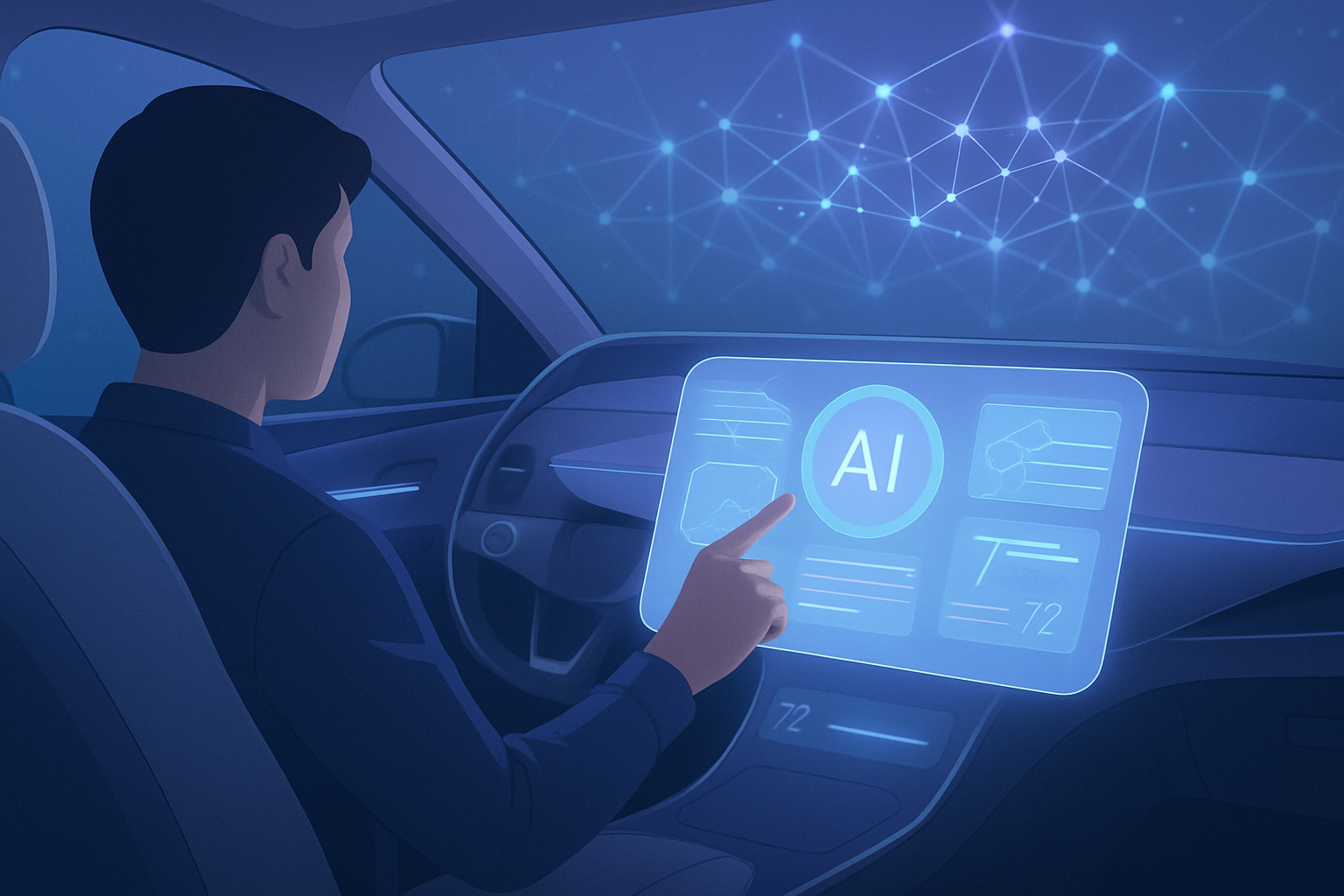
    General Motors (NYSE: GM) is set to redefine the in-car experience, announcing plans to integrate Google's (NASDAQ: GOOGL) advanced Gemini AI assistant into its vehicles starting in 2026. This strategic move positions GM at the forefront of a burgeoning trend within the automotive industry: the adoption of generative AI to create more intuitive, natural-sounding, and highly responsive driver interactions. Building on an established partnership with Google, this integration promises to transform how drivers and passengers engage with their vehicles, moving beyond rudimentary voice commands to truly conversational AI.

    This significant development underscores a broader industry shift, where automakers are racing to leverage cutting-edge artificial intelligence to enhance safety, convenience, and personalization. By embedding Gemini, GM aims to offer a sophisticated digital co-pilot capable of understanding complex requests, providing contextual information, and seamlessly managing various vehicle functions, thereby setting a new benchmark for automotive intelligence and user experience.

    The Dawn of Conversational Co-Pilots: Gemini's Technical Leap in Automotive AI

    The integration of Google Gemini into GM's vehicles by 2026 signifies a profound technical evolution in automotive AI, moving light-years beyond the rudimentary voice assistants of yesteryear. At its core, Gemini's power lies in its multimodal capabilities and advanced natural language understanding, setting a new benchmark for in-car interaction. Unlike previous systems that processed different data types in isolation, Gemini is designed to inherently understand and reason across text, voice, images, and contextual cues from the vehicle's environment simultaneously. This means it can interpret camera video to spot pedestrians, LiDAR for distance mapping, radar for object detection, and even audio like sirens, integrating all this information in real-time to provide a truly comprehensive understanding of the driving situation.

    This leap is fundamentally about moving from rule-based, command-and-response systems to generative AI. Older assistants required precise phrasing and often struggled with accents or follow-up questions, leading to frustrating interactions. Gemini, powered by large language models (LLMs), liberates drivers from these constraints, enabling natural, conversational dialogue. It understands nuance, intent, and subtle implications, allowing for fluid conversations without the need for memorized commands. Furthermore, Gemini offers contextual awareness and personalization, remembering user preferences and past interactions to provide proactive, tailored suggestions—whether recommending a scenic route based on calendar events, warning about weather, or suggesting a coffee stop with specific criteria, all while considering real-time traffic and even the vehicle's EV battery status. This hybrid processing approach, balancing on-device AI for instant responses with cloud-based AI for complex tasks, ensures both responsiveness and depth of capability.

    Initial reactions from the AI research community and industry experts are a blend of excitement and cautious optimism. On one hand, the potential for enhanced user experience, improved safety through real-time, context-aware ADAS support, and streamlined vehicle design and manufacturing processes is widely acknowledged. Experts foresee generative AI creating "empathetic" in-car assistants that can adapt to a driver's mood or provide engaging conversations to combat drowsiness. However, significant concerns persist, particularly regarding data privacy and security given the vast amounts of sensitive data collected (location, biometrics, driver behavior). The "hallucination" problem inherent in LLMs, where models can produce arbitrary or incorrect outputs, poses a critical safety challenge in an automotive context. Furthermore, the "black box" dilemma of algorithmic transparency, computational demands, ethical considerations in accident scenarios, and the high cost of training and maintaining such sophisticated AI systems remain key challenges that require ongoing attention and collaboration between automakers, tech providers, and regulators.

    Shifting Gears: The Competitive Implications of Generative AI in the Automotive Sector

    The integration of Google Gemini into General Motors' (NYSE: GM) vehicles by 2026 is poised to send ripples across the AI landscape, profoundly impacting major AI labs, tech giants, and burgeoning startups. Google (NASDAQ: GOOGL) stands as a primary beneficiary, significantly extending the reach and influence of its Gemini AI model from consumer devices into a vast automotive fleet. This deep integration, building upon GM's existing "Google built-in" platform, not only solidifies Google's critical foothold in the lucrative in-car AI market but also provides an invaluable source of real-world data for further training and refinement of its multimodal AI capabilities in a unique, demanding environment. This move intensifies the "Automotive AI Wars," forcing competitors to accelerate their own strategies.

    For other major AI labs, such as OpenAI, Anthropic, and Mistral, the GM-Google partnership escalates the pressure to secure similar automotive deals. While Mercedes-Benz (ETR: MBG) has already integrated ChatGPT (backed by OpenAI), and Stellantis (NYSE: STLA) partners with French AI firm Mistral, GM's stated intention to test foundational models from "OpenAI, Anthropic, and other AI firms" for broader applications beyond Gemini suggests ongoing opportunities for these labs to compete for specialized AI solutions within the automotive ecosystem. Meta's (NASDAQ: META) Llama model, for instance, is already finding utility with automotive AI companies like Impel, showcasing the diverse applications of these foundational models.

    Among tech giants, Microsoft (NASDAQ: MSFT), Amazon (NASDAQ: AMZN), and Apple (NASDAQ: AAPL) face renewed impetus to sharpen their automotive AI strategies. Microsoft, leveraging its Azure cloud platform, is actively pursuing AI-enabled insights and autonomous driving platforms. This deal will likely prompt Microsoft to further differentiate its offerings, potentially by deepening ties with other automakers and emphasizing its enterprise AI solutions for manufacturing and R&D. Amazon, through AWS, is a major cloud infrastructure provider for AI, but the Gemini integration underscores the need for a more comprehensive and deeply integrated in-car AI strategy beyond its existing Alexa presence. Apple, having reportedly pivoted to focus heavily on generative AI, will likely enhance Siri with generative AI and push its "edge compute" capabilities within its vast device ecosystem to offer highly personalized and secure in-car experiences through iOS integration, potentially bypassing direct automaker partnerships for core AI functionality.

    For startups in the automotive AI space, the landscape becomes both more challenging and potentially more opportunistic. They face heightened competition from well-resourced tech giants, making it harder to gain market share. However, the projected substantial growth of the overall automotive AI market, from $4.8 billion in 2024 to an estimated $186.4 billion by 2034, creates ample space for specialized innovation. Startups focusing on niche solutions—such as advanced sensor fusion, predictive maintenance, or specific retail AI applications—may find pathways to success, potentially becoming attractive acquisition targets or strategic partners for larger players looking to fill technology gaps. The strategic advantages for Google and GM lie in deep integration and ecosystem lock-in, offering an enhanced user experience, data-driven innovation, and leadership in the software-defined vehicle era, fundamentally shifting vehicle differentiation from hardware to software and AI capabilities.

    Beyond the Dashboard: Gemini's Broader Impact on AI and Society

    General Motors' (NYSE: GM) decision to integrate Google Gemini into its vehicles by 2026 is far more than an automotive upgrade; it represents a pivotal moment in the broader AI landscape, signaling the mainstreaming of generative and multimodal AI into everyday consumer life. This move aligns perfectly with several overarching AI trends: the pervasive adoption of Large Language Models (LLMs) in physical environments, the rise of multimodal AI capable of processing diverse inputs simultaneously (text, voice, images, environmental data), and the evolution towards truly contextual and conversational AI. Gemini aims to transform the car into an "AI-first ecosystem," where the vehicle becomes an "agentic" AI, capable of not just processing information but also taking action and accomplishing tasks through rich, natural interaction.

    The societal impacts of such deep AI integration are multifaceted. Drivers can anticipate a significantly enhanced experience, marked by intuitive, personalized interactions that reduce cognitive load and potentially improve safety through advanced hands-free controls and proactive assistance. This could also dramatically increase accessibility for individuals with limited mobility, offering greater independence. Economically, GM anticipates robust revenue growth from software and services, unlocking new streams through personalized features and predictive maintenance. However, this also raises questions about job market transformation in sectors reliant on human drivers and the ethical implications of in-vehicle customized advertising. On a positive note, AI-optimized connected vehicles could contribute to more sustainable transportation by reducing congestion and fuel usage, supporting environmental goals.

    Beyond privacy, several critical ethical concerns come to the forefront. Building and maintaining public trust in AI systems, especially in safety-critical applications, is paramount. The "black box" nature of some AI decision-making processes, coupled with potential algorithmic bias stemming from unrepresentative training data, demands rigorous attention to transparency, fairness, and explainability (XAI). The historical omission of female dummies in crash tests, leading to higher injury rates for women, serves as a stark reminder of how biases can manifest. Furthermore, assigning accountability and liability in scenarios where AI systems make decisions, particularly in unavoidable accidents, remains a complex challenge. The increasing autonomy of in-car AI also raises profound questions about the balance of control between human and machine, and the ethical implications of AI systems acting independently.

    This integration stands as a significant milestone, building upon and surpassing previous AI advancements. It represents a dramatic evolution from rudimentary, command-based in-car voice assistants and even Google's earlier Google Assistant, offering a fluid, conversational, and context-aware experience. While separate, it also complements the progression of Advanced Driver-Assistance Systems (ADAS) and autonomous driving initiatives like GM's Super Cruise, moving towards a more holistic, AI-driven vehicle environment. Compared to consumer tech AI assistants like Siri or Alexa, Gemini's multimodal capabilities and deep ecosystem integration suggest a more profound and integrated AI experience, potentially processing visual data from inside and outside the car. Ultimately, GM's embrace of Gemini is not merely an incremental update; it signals a fundamental shift in how vehicles will interact with their occupants and the broader digital world, demanding careful development and responsible deployment to ensure societal benefits outweigh potential risks.

    The Road Ahead: What's Next for Automotive AI

    GM's integration of Google Gemini by 2026 is merely the beginning of a profound transformation in automotive AI, setting the stage for a future where vehicles are not just modes of transport but intelligent, intuitive, and deeply integrated digital companions. In the near term, drivers can anticipate an immediate enhancement in conversational AI, with Gemini serving as the default voice recognition system, enabling more natural, multi-turn dialogues for everything from climate control to complex navigation queries. This will usher in truly personalized in-car experiences, where the AI learns driver preferences and proactively adjusts settings, infotainment suggestions, and even routes. We'll also see advancements in predictive maintenance, with AI systems monitoring vehicle components to anticipate issues before they arise, and further refinement of Advanced Driver-Assistance Systems (ADAS) through enhanced data processing and decision-making algorithms.

    Looking further ahead, the long-term vision includes the widespread adoption of "eyes-off" autonomous driving, with GM planning to debut Level 3 autonomy by 2028, starting with vehicles like the Cadillac Escalade IQ. This will be supported by new centralized computing platforms, also launching around 2028, significantly boosting AI performance and enabling fully software-defined vehicles (SDVs) that can gain new features and improvements throughout their lifespan via over-the-air updates. Beyond basic assistance, vehicles will host proprietary AI companions capable of handling complex, contextual queries and learning from individual driving habits. Advanced Vehicle-to-Everything (V2X) communication, enhanced by AI, will optimize traffic flow and prevent accidents, while future infotainment could incorporate AI-driven augmented reality and emotion-based personalization, deeply integrated into smart home ecosystems.

    The potential applications and use cases are vast. AI agents could proactively open trunks for drivers with shopping bags, provide real-time traffic delay notifications based on calendar appointments, or offer in-depth vehicle knowledge by integrating the entire owner's manual for instant troubleshooting. In commercial sectors, AI will continue to optimize logistics and fleet management. For Electric Vehicles (EVs), AI will enhance energy management, optimizing battery health, charging efficiency, and predicting ideal charging times and locations. Ultimately, AI will elevate safety through improved predictive capabilities and driver monitoring for fatigue or distraction. However, significant challenges persist, including the immense data and computational constraints of LLMs, ensuring the safety and security of complex AI systems (including preventing "hallucinations"), addressing privacy concerns, seamlessly integrating the AI development lifecycle with automotive production, and establishing robust ethical frameworks and regulations.

    Experts predict that AI will become the core differentiator in the automotive industry, evolving from an optional feature to an essential layer across the entire vehicle stack. The future will see a shift towards seamless, integrated, and adaptive AI systems that reduce manual tasks through specialized agents. There will be an increasing focus on "domain-tuned" LLMs, specifically optimized for automotive retail environments and safety research, moving beyond general-purpose models for critical applications. This continuous innovation will span the entire automotive value chain—from design and production to sales and after-sales services—making cars smarter, factories more adaptive, and supply chains more predictive. The consensus is clear: AI will be the backbone of future mobility, transforming not just how we drive, but how we experience and interact with our vehicles.

    The Intelligent Turn: A New Era for Automotive and AI

    General Motors' (NYSE: GM) planned integration of Google Gemini into its vehicles by 2026 marks a watershed moment, fundamentally reshaping the in-car experience and solidifying the automotive industry's pivot towards software-defined vehicles driven by advanced AI. The key takeaway is a dramatic shift from rudimentary voice commands to genuinely conversational, context-aware interactions, powered by Gemini's multimodal capabilities and natural language processing. This deep integration with Google Automotive Services (GAS) promises seamless access to Google's vast ecosystem, transforming the vehicle into an intelligent extension of the driver's digital life and a central component of GM's strategy for robust revenue growth from software and services.

    In the annals of AI history, this move is significant for bringing advanced generative AI directly into the vehicle cockpit, pushing the boundaries of human-AI interaction in a driving environment. It underscores a broader industry trend where AI is becoming a core differentiator, moving beyond mere infotainment to influence vehicle design, safety, and operational efficiency. The long-term impact will redefine what consumers expect from their vehicles, with personalized, intuitive experiences becoming the norm. For GM, this integration is central to its electrification and technology roadmap, enabling continuous improvement and new features throughout a vehicle's lifespan. However, the journey will also necessitate careful navigation of persistent challenges, including data privacy and security, the probabilistic nature of generative AI requiring rigorous safety testing, and the complex ethical considerations of AI decision-making in critical automotive functions.

    As we approach 2026, the industry will be closely watching for specific details regarding which GM models will first receive the Gemini update and the exact features available at launch. Real-world performance and user feedback on Gemini's natural language understanding, accuracy, and responsiveness will be crucial. Furthermore, the deepening integrations of Gemini with vehicle-specific functions—from diagnostics to predictive maintenance and potentially GM's Super Cruise system—will be a key area of observation. The competitive responses from other automakers and tech giants, alongside the rapid evolution of Gemini itself with new features and capabilities from Google (NASDAQ: GOOGL), will shape the trajectory of in-car AI. Finally, while distinct from Gemini, the development and public reception of GM's planned "eyes-off" autonomous driving capabilities, particularly in the 2028 Cadillac Escalade IQ, will be closely watched for how these advanced driving systems seamlessly interact with the AI assistant to create a truly cohesive user experience. The era of the intelligent vehicle has arrived, and its evolution promises to be one of the most exciting narratives in technology.


    This content is intended for informational purposes only and represents analysis of current AI developments.

    TokenRing AI delivers enterprise-grade solutions for multi-agent AI workflow orchestration, AI-powered development tools, and seamless remote collaboration platforms.
    For more information, visit https://www.tokenring.ai/.

  • Hyundai Mobis Drives South Korea’s Automotive Chip Revolution: A New Era for AI-Powered Vehicles

    As the global automotive industry races towards a future dominated by autonomous driving and intelligent in-car AI, the development of a robust and localized semiconductor ecosystem has become paramount. South Korea, a powerhouse in both automotive manufacturing and semiconductor technology, is making significant strides in this critical area, with Hyundai Mobis (KRX: 012330) emerging as a pivotal leader. The company's strategic initiatives, substantial investments, and collaborative efforts are not only bolstering South Korea's self-reliance in automotive chips but also laying the groundwork for the next generation of smart vehicles powered by advanced AI.

    The drive for dedicated automotive-grade chips is more crucial than ever. Modern electric vehicles (EVs) can house around 1,000 semiconductors, while fully autonomous cars are projected to require over 2,000. These aren't just any chips; they demand stringent reliability, safety, and performance standards that consumer electronics chips often cannot meet. Hyundai Mobis's aggressive push to design and manufacture these specialized components domestically represents a significant leap towards securing the future of AI-driven mobility and reducing the current 95-97% reliance on foreign suppliers for South Korea's automotive sector.

    Forging a Domestic Semiconductor Powerhouse: The Technical Blueprint

    Huyndai Mobis's strategy is multifaceted, anchored by the recently launched Auto Semicon Korea (ASK) forum in September 2025. This pioneering private-sector-led alliance unites 23 prominent companies and research institutions, including semiconductor giants like Samsung Electronics (KRX: 005930), LX Semicon (KOSDAQ: 108320), SK keyfoundry, and DB HiTek (KRX: 000990), alongside international partners such as GlobalFoundries (NASDAQ: GFS). The ASK forum's core mission is to construct a comprehensive domestic supply chain for automotive-grade chips, aiming to localize core production and accelerate South Korea's technological sovereignty in this vital domain. Hyundai Mobis plans to expand this forum annually, inviting startups and technology providers to further enrich the ecosystem.

    Technically, Hyundai Mobis is committed to independently designing and manufacturing over 10 types of crucial automotive chips, including Electronic Control Units (ECUs) and Microcontroller Units (MCUs), with mass production slated to commence by 2026. This ambitious timeline reflects the urgency of establishing domestic capabilities. The company is already mass-producing 16 types of in-house designed semiconductors—covering power, data processing, communication, and sensor chips—through external foundries, with an annual output reaching 20 million units. Furthermore, Hyundai Mobis has secured ISO 26262 certification for its semiconductor R&D processes, a testament to its rigorous safety and quality management, and a crucial enabler for partners transitioning into the automotive sector.

    This approach differs significantly from previous strategies that heavily relied on a few global semiconductor giants. By fostering a collaborative domestic ecosystem, Hyundai Mobis aims to provide a "technical safety net" for companies, particularly those from consumer electronics, to enter the high-stakes automotive market. The focus on defining controller-specific specifications and supporting real-vehicle-based validation is projected to drastically shorten development cycles for automotive semiconductors, potentially cutting R&D timelines by up to two years for integrated power semiconductors and other core components. This localized, integrated development is critical for the rapid iteration and deployment required by advanced autonomous driving and in-car AI systems.

    Reshaping the AI and Tech Landscape: Corporate Implications

    Hyundai Mobis's leadership in this endeavor carries profound implications for AI companies, tech giants, and startups alike. Domestically, companies like Samsung Electronics, LX Semicon, SK keyfoundry, and DB HiTek stand to benefit immensely from guaranteed demand and collaborative development opportunities within the ASK forum. These partnerships could catalyze their expansion into the high-growth automotive sector, leveraging their existing semiconductor expertise. Internationally, Hyundai Mobis's November 2024 investment of $15 million in US-based fabless semiconductor company Elevation Microsystems highlights a strategic focus on high-voltage power management solutions for EVs and autonomous driving, including advanced power semiconductors like silicon carbide (SiC) and gallium nitride (GaN) FETs. This signals a selective engagement with global innovators to acquire niche, high-performance technologies.

    The competitive landscape is poised for disruption. By increasing the domestic semiconductor adoption rate from the current 5% to 10% by 2030, Hyundai Mobis and Hyundai Motor Group are directly challenging the market dominance of established foreign automotive chip suppliers. This strategic shift enhances South Korea's global competitiveness in automotive technology and reduces supply chain vulnerabilities, a lesson painfully learned during recent global chip shortages. Hyundai Mobis, as a Tier 1 supplier and now a significant chip designer, is strategically positioning itself as a central figure in the automotive value chain, capable of managing the entire supply chain from chip design to vehicle integration.

    This integrated approach offers a distinct strategic advantage. By having direct control over semiconductor design and development, Hyundai Mobis can tailor chips precisely to the needs of its autonomous driving and in-car AI systems, optimizing performance, power efficiency, and security. This vertical integration reduces reliance on external roadmaps and allows for faster innovation cycles, potentially giving Hyundai Motor Group a significant edge in bringing advanced AI-powered vehicles to market.

    Wider Significance: A Pillar of AI-Driven Mobility

    Huyndai Mobis's initiatives fit squarely into the broader AI landscape and the accelerating trend towards software-defined vehicles (SDVs). The increasing sophistication of AI algorithms for perception, decision-making, and control in autonomous systems demands purpose-built hardware capable of high-speed, low-latency processing. Dedicated automotive semiconductors are the bedrock upon which these advanced AI capabilities are built, enabling everything from real-time object recognition to predictive analytics for vehicle behavior. The company is actively developing a standardized platform for software-based control across various vehicle types, targeting commercialization after 2028, further underscoring its commitment to the SDV paradigm.

    The impacts of this development are far-reaching. Beyond economic growth and job creation within South Korea, it represents a crucial step towards technological sovereignty in a sector vital for national security and economic prosperity. Supply chain resilience, a major concern in recent years, is significantly enhanced by localizing such critical components. This move also empowers Korean startups and research institutions by providing a clear pathway to market and a collaborative environment for innovation.

    While the benefits are substantial, potential concerns include the immense capital investment required, the challenge of attracting and retaining top-tier semiconductor talent, and the intense global competition from established chipmakers. However, this strategic pivot is comparable to previous national efforts in critical technologies, recognizing that control over foundational hardware is essential for leading the next wave of technological innovation. It signifies a mature understanding that true leadership in AI-driven mobility requires mastery of the underlying silicon.

    The Road Ahead: Future Developments and Expert Predictions

    Looking ahead, the near-term will see Hyundai Mobis pushing towards its 2026 target for mass production of domestically developed automotive semiconductors. The ASK forum is expected to expand, fostering more partnerships and bringing new companies into the fold, thereby diversifying the ecosystem. The ongoing development of 11 next-generation chips, including battery management systems and communication chips, over a three-year timeline, will be critical for future EV and autonomous vehicle platforms.

    In the long term, the focus will shift towards the full realization of software-defined vehicles, with Hyundai Mobis targeting commercialization after 2028. This will involve the development of highly integrated System-on-Chips (SoCs) that can efficiently run complex AI models for advanced autonomous driving features, enhanced in-car AI experiences, and seamless vehicle-to-everything (V2X) communication. The investment in Elevation Microsystems, specifically for SiC and GaN FETs, also points to a future where power efficiency and performance in EVs are significantly boosted by advanced materials science in semiconductors.

    Experts predict that this localized, collaborative approach will not only increase South Korea's domestic adoption rate of automotive semiconductors but also position the country as a global leader in specialized automotive chip design and manufacturing. The primary challenges will involve scaling production efficiently while maintaining the rigorous quality and safety standards demanded by the automotive industry, and continuously innovating to stay ahead of rapidly evolving AI and autonomous driving technologies.

    A New Horizon for AI in Automotive: Comprehensive Wrap-Up

    Huyndai Mobis's strategic leadership in cultivating South Korea's automotive semiconductor ecosystem marks a pivotal moment in the convergence of AI, automotive technology, and semiconductor manufacturing. The establishment of the ASK forum, coupled with significant investments and a clear roadmap for domestic chip production, underscores the critical role of specialized silicon in enabling the next generation of AI-powered vehicles. This initiative is not merely about manufacturing chips; it's about building a foundation for technological self-sufficiency, fostering innovation, and securing a competitive edge in the global race for autonomous and intelligent mobility.

    The significance of this development in AI history cannot be overstated. By taking control of the hardware layer, South Korea is ensuring that its AI advancements in automotive are built on a robust, secure, and optimized platform. This move will undoubtedly accelerate the development and deployment of more sophisticated AI algorithms for autonomous driving, advanced driver-assistance systems (ADAS), and personalized in-car experiences.

    In the coming weeks and months, industry watchers should closely monitor the progress of the ASK forum, the first prototypes and production milestones of domestically developed chips in 2026, and any new partnerships or investment announcements from Hyundai Mobis. This bold strategy has the potential to transform South Korea into a global hub for automotive AI and semiconductor innovation, profoundly impacting the future of transportation and the broader AI landscape.

    This content is intended for informational purposes only and represents analysis of current AI developments.

    TokenRing AI delivers enterprise-grade solutions for multi-agent AI workflow orchestration, AI-powered development tools, and seamless remote collaboration platforms.
    For more information, visit https://www.tokenring.ai/.