Tag: Automotive

  • Silicon’s New Frontier: How Semiconductors Are Reshaping Automotive, Healthcare, IoT, and Quantum Computing

    Silicon’s New Frontier: How Semiconductors Are Reshaping Automotive, Healthcare, IoT, and Quantum Computing

    The humble semiconductor, long the silent workhorse of traditional computing, is experiencing a profound renaissance, extending its influence far beyond the circuit boards of PCs and smartphones. Today, these miniature marvels are at the vanguard of innovation, driving unprecedented advancements in sectors as diverse as automotive, the Internet of Things (IoT), healthcare, and the nascent field of quantum computing. This expansive evolution marks a pivotal moment, transforming how we interact with our world, manage our health, and even conceptualize computation itself, heralding an era where silicon intelligence is not just embedded, but foundational to our daily existence.

    This paradigm shift is fueled by a relentless pursuit of efficiency, miniaturization, and specialized functionality. From powering autonomous vehicles and smart city infrastructure to enabling precision diagnostics and the very fabric of quantum bits, semiconductors are no longer merely components; they are the strategic enablers of next-generation technologies. Their immediate significance lies in catalyzing innovation, enhancing performance, and creating entirely new markets, establishing themselves as critical strategic assets in the global technological landscape.

    Technical Prowess: Specialized Silicon Drives Sectoral Revolutions

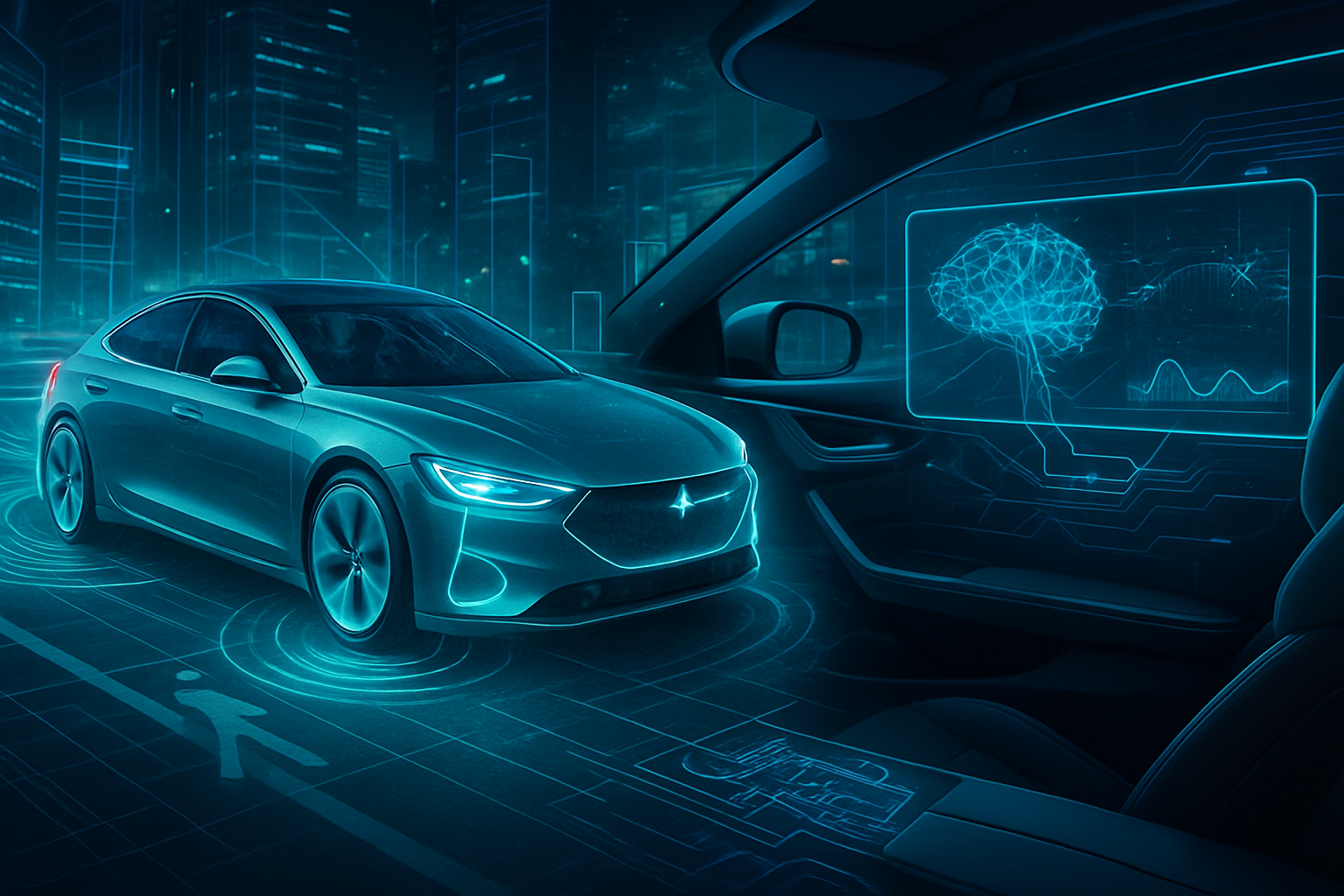
    The technical advancements underpinning this semiconductor revolution are multifaceted, leveraging novel materials, architectural innovations, and sophisticated integration techniques. In the automotive sector, the transition to Electric Vehicles (EVs) and autonomous driving has dramatically increased semiconductor content. Wide bandgap materials like silicon carbide (SiC) and gallium nitride (GaN) are displacing traditional silicon in power electronics, offering superior efficiency and thermal management for inverters and onboard chargers. This directly translates to extended EV ranges and reduced battery size. Furthermore, Advanced Driver Assistance Systems (ADAS) and autonomous platforms rely on a dense network of high-performance processors, AI accelerators, and a myriad of sensors (Lidar, radar, cameras, ultrasonic). These chips are engineered to process vast amounts of multimodal data in real-time, enabling sophisticated decision-making and control, a significant departure from simpler electronic control units of the past. The industry is moving towards software-defined vehicles, where the semiconductor architecture forms the "Internal Computing Engine" that dictates vehicle capabilities and value. Industry experts express significant enthusiasm for these developments, particularly the role of AI-powered semiconductors in enabling AVs and EVs, and the push towards software-defined vehicles. However, concerns persist regarding ongoing supply chain volatility, the immense complexity and reliability requirements of autonomous systems, and the need for robust cybersecurity measures in increasingly connected vehicles. Thermal management of high-performance chips also remains a critical engineering challenge.

    For the Internet of Things (IoT), semiconductors are the bedrock of pervasive connectivity and intelligent edge processing. Low-power microcontrollers, specialized sensors (temperature, light, motion, pressure), and integrated communication modules (Wi-Fi, Bluetooth, cellular) are designed for energy efficiency and compact form factors. The shift towards edge computing demands highly efficient processors and embedded AI accelerators, allowing data to be processed locally on devices rather than solely in the cloud. This reduces latency, conserves bandwidth, and enhances real-time responsiveness for applications ranging from smart home automation to industrial predictive maintenance. This contrasts sharply with earlier IoT iterations that often relied on more centralized cloud processing, making current devices smarter and more autonomous. The AI research community anticipates exponential growth in IoT, driven by AI-driven chip designs tailored for edge computing. However, challenges include meeting the ultra-small form factor and ultra-low power consumption requirements, alongside persistent supply chain volatility for specific components. Experts also highlight critical concerns around data security and privacy for the vast network of IoT devices, as well as maintaining reliability and stability as chip sizes continue to shrink.

    In healthcare, semiconductors are enabling a revolution in diagnostics, monitoring, and therapeutics. Miniaturized, power-efficient biosensors are at the heart of wearable and implantable devices, facilitating continuous monitoring of vital signs, glucose levels, and neurological activity. These devices rely on specialized analog, digital, and mixed-signal ICs for precise signal acquisition and processing. Point-of-care diagnostic tools leverage semiconductor platforms for rapid, on-site genetic and protein analysis, accelerating personalized medicine. Medical imaging technologies like ultrasound and MRI benefit from advanced image sensors and processing units that improve resolution and enable 3D rendering. These advancements represent a significant leap from bulky, less precise medical equipment, offering greater accessibility and patient comfort. Experts are highly optimistic about the emergence of "smart" healthcare, driven by AI and advanced semiconductors, enabling real-time data analysis, telemedicine, and personalized treatments. Yet, significant hurdles include ensuring data privacy and security for sensitive health information, validating the accuracy and reliability of AI algorithms in clinical settings, and navigating the evolving regulatory landscape for AI-powered medical devices. Power constraints for implantable devices also present ongoing design challenges.

    Finally, quantum computing represents the ultimate frontier, where semiconductors are crucial for building the very foundation of quantum processors. While still in its nascent stages, many qubit architectures, particularly those based on superconducting circuits and silicon spin qubits, leverage advanced semiconductor fabrication techniques. Companies like Intel Corporation (NASDAQ: INTC) and IBM (NYSE: IBM) are utilizing their expertise in silicon manufacturing to create quantum chips. Semiconductor-based control systems are also vital for manipulating and reading out the delicate quantum states of qubits. This application differs fundamentally from traditional computing, as semiconductors here are not just processing classical bits but are actively involved in creating and managing quantum phenomena. The consensus among experts is that quantum computing, heavily reliant on semiconductor advancements for qubit realization and control, holds unparalleled opportunities to revolutionize various industries, including semiconductor manufacturing itself. However, formidable challenges remain, including the need for specialized infrastructure (e.g., cryogenic cooling), significant talent shortages in quantum expertise, and the monumental task of error correction and maintaining quantum coherence in scalable systems. The potential for quantum computing to render some traditional technologies obsolete is also a long-term consideration.

    Reshaping the Tech Landscape: Winners, Losers, and Disruptors

    The burgeoning landscape of non-traditional semiconductor applications is profoundly reshaping the competitive dynamics across the tech industry, creating clear beneficiaries among established giants and innovative startups, while simultaneously posing significant challenges to those slow to adapt. The increased specialization and integration required for these advanced applications are driving a new wave of strategic positioning and market disruption.

    In the automotive sector, traditional silicon powerhouses are cementing their dominance. Infineon Technologies AG (FSE: IFX) stands out as a global leader, with a substantial market share in automotive semiconductors, driven by its power semiconductors, microcontrollers, and sensor solutions for ADAS and EVs. NXP Semiconductors (NASDAQ: NXPI) is another key player, focusing on secure connectivity and processing for software-defined vehicles with its S32G processors. STMicroelectronics (NYSE: STM) is making significant strides with its Silicon Carbide (SiC) power devices, crucial for EV efficiency, and its widely adopted STM32 microcontroller family. Texas Instruments (NASDAQ: TXN) and Renesas Electronics (TYO: 6723) continue to be vital suppliers of analog chips, embedded processors, and microcontrollers. Beyond these core semiconductor providers, tech giants like NVIDIA Corporation (NASDAQ: NVDA) are leveraging their AI and GPU expertise to provide powerful platforms for autonomous driving, while Intel Corporation (NASDAQ: INTC), through its Mobileye subsidiary, is a leader in ADAS solutions. The competitive implication here is a shift in value from traditional mechanical components to sophisticated electronics and software, forcing automakers into deeper collaborations with semiconductor firms and creating a demand for more resilient supply chains.

    The Internet of Things (IoT) market sees a similar scramble for dominance. NXP Semiconductors (NASDAQ: NXPI) remains a strong contender with its secure connectivity solutions. Analog Devices Inc. (NASDAQ: ADI) and Texas Instruments (NASDAQ: TXN) are well-positioned with their precision analog and mixed-signal chips, essential for sensors and industrial IoT applications. Qualcomm Technologies (NASDAQ: QCOM) benefits from its pervasive connectivity solutions, while Marvell Technology, Inc. (NASDAQ: MRVL) is relevant through its networking and storage solutions that underpin IoT infrastructure. Even memory giants like Micron Technology, Inc. (NASDAQ: MU) play a crucial role, supplying the necessary DRAM and NAND flash for edge IoT devices. The sheer volume and diversity of IoT applications mean that companies capable of delivering ultra-low power, compact, and secure chips for edge AI processing will gain a significant competitive edge, potentially disrupting older, less optimized solutions. Taiwan Semiconductor Manufacturing Company (NYSE: TSM), as the world's largest foundry, benefits broadly from the increased demand for custom IoT chips from all these players.

    In healthcare, precision and reliability are paramount, making companies with strong analog and mixed-signal capabilities crucial. Analog Devices Inc. (NASDAQ: ADI) is particularly well-suited to profit from advanced semiconductor content in medical devices, thanks to its high-precision chips. STMicroelectronics (NYSE: STM) and Texas Instruments (NASDAQ: TXN) also provide essential sensors, microcontrollers, and analog components for medical wearables, diagnostics, and imaging equipment. The disruption in healthcare is less about immediate obsolescence and more about the enablement of entirely new care models—from continuous remote monitoring to rapid point-of-care diagnostics—which favors agile medical device manufacturers leveraging these advanced chips.

    Quantum computing, though still nascent, is a battleground for tech giants and specialized startups. Microsoft (NASDAQ: MSFT) has made headlines with its Majorana 1 quantum chip, aiming for more stable and scalable qubits, while IBM (NYSE: IBM) continues its aggressive roadmap towards fault-tolerant quantum systems. Google (NASDAQ: GOOGL) (Alphabet) is also heavily invested, focusing on error correction and scalable chip architectures. NVIDIA Corporation (NASDAQ: NVDA) is bridging the gap by coupling its AI supercomputing with quantum research. Among the startups, IonQ (NYSE: IONQ) with its trapped-ion approach, Rigetti Computing (NASDAQ: RGTI) with multi-chip systems, and D-Wave Quantum (NYSE: QBTS) with its quantum annealing solutions, are all vying for commercial traction. The competitive landscape here is defined by a race to achieve scalable and reliable qubits, with the potential to fundamentally disrupt classical computational approaches for specific, complex problems across numerous industries. Success in this field promises not just market share, but a foundational shift in computational power.

    Wider Significance: A New Era of Ubiquitous Intelligence

    The expansion of semiconductor technology into these non-traditional sectors represents a profound shift in the broader AI and technological landscape, moving beyond incremental improvements to foundational changes in how intelligence is deployed and utilized. This trend signifies the maturation of AI from a purely software-driven discipline to one deeply intertwined with specialized hardware, where the efficiency and capabilities of the underlying silicon directly dictate the performance and feasibility of AI applications.

    The impacts are far-reaching. In the automotive industry, the push for fully autonomous vehicles, enabled by advanced semiconductors, promises a future of safer roads, reduced traffic congestion, and new mobility services. However, this also brings significant ethical and regulatory challenges concerning liability and decision-making in autonomous systems. For IoT, the pervasive deployment of smart sensors and edge AI creates unprecedented opportunities for data collection and analysis, leading to optimized industrial processes, smarter cities, and more responsive environments. Yet, this also amplifies concerns about data privacy, cybersecurity vulnerabilities across a vast attack surface, and the potential for surveillance. In healthcare, the rise of continuous monitoring, personalized medicine, and AI-driven diagnostics, all powered by specialized chips, holds the promise of vastly improved patient outcomes and more efficient healthcare systems. This marks a significant milestone, comparable to the advent of MRI or penicillin, but also raises questions about algorithmic bias in diagnosis and the equitable access to these advanced technologies.

    The most profound, albeit long-term, impact comes from quantum computing. While classical AI breakthroughs like large language models have revolutionized information processing, quantum computing promises to tackle problems currently intractable for even the most powerful supercomputers, from discovering new materials and drugs to breaking existing cryptographic standards. This represents a potential leap comparable to the invention of the transistor itself, offering a completely new paradigm for computation. However, the concerns are equally monumental, including the existential threat to current encryption methods and the immense resources required to achieve practical quantum advantage, raising questions about a potential "quantum divide." The ongoing global competition for semiconductor leadership underscores the strategic national importance of these technologies, with governments actively investing to secure their supply chains and technological sovereignty.

    Future Developments: The Road Ahead for Silicon Innovation

    Looking ahead, the trajectory for semiconductor innovation in these emerging sectors is marked by continued specialization, integration, and the relentless pursuit of efficiency. In the near term, we can expect further advancements in automotive semiconductors, particularly in the integration of more sophisticated AI accelerators and high-resolution imaging radar and lidar sensors. The focus will be on achieving higher levels of autonomy (Level 4 and 5) with enhanced safety and reliability, alongside more efficient power electronics for EVs, potentially pushing SiC and GaN technologies to even greater performance limits. Experts predict a continued drive towards modular, software-defined vehicle architectures that can be updated over the air.

    For IoT, the trend towards ultra-low-power, highly integrated System-on-Chips (SoCs) with embedded AI capabilities will intensify. This will enable more intelligent edge devices that can perform complex tasks locally, reducing reliance on cloud connectivity and improving real-time responsiveness. We can anticipate breakthroughs in energy harvesting technologies to power these devices autonomously, extending their deployment into remote and inaccessible environments. The convergence of 5G and future 6G networks with specialized IoT chips will unlock new applications requiring ultra-low latency and massive connectivity.

    In healthcare, the next wave of innovation will likely see even smaller, more discreet wearable and implantable devices capable of multi-modal sensing and advanced AI-driven diagnostics at the point of care. Expect further integration of genomics and proteomics directly into portable semiconductor-based platforms, enabling highly personalized and preventative medicine. Challenges in this area will revolve around standardizing data formats, ensuring interoperability between devices, and establishing robust regulatory frameworks for AI in medical diagnostics.

    Quantum computing remains the most speculative but potentially transformative area. Near-term developments will focus on improving qubit coherence times, reducing error rates through advanced error correction techniques, and scaling up the number of stable qubits. Long-term, experts anticipate the development of fault-tolerant quantum computers that can solve currently intractable problems. The challenges are immense, including the need for novel materials, extreme cryogenic cooling for many qubit types, and the development of a completely new quantum software stack. What experts predict is a gradual but accelerating path towards quantum advantage in specific applications, with hybrid classical-quantum systems becoming more prevalent before truly universal quantum computers emerge.

    Wrap-Up: Silicon's Enduring Legacy and the Dawn of a New Era

    The expansion of semiconductor technology into automotive, IoT, healthcare, and quantum computing marks a pivotal moment in technological history, signifying a profound shift from silicon merely powering computers to becoming the ubiquitous enabler of intelligent, connected, and autonomous systems across virtually every facet of our lives. This development is not merely an evolution but a revolution, akin to the internet's widespread adoption or the advent of mobile computing, but with an even deeper integration into the physical world.

    The key takeaways are clear: semiconductors are no longer a niche component but a strategic asset, driving unprecedented innovation and creating vast new markets. The demand for specialized chips, new materials, and advanced integration techniques is pushing the boundaries of what's possible, while also highlighting critical challenges related to supply chain resilience, cybersecurity, data privacy, and the ethical implications of pervasive AI. This era is characterized by a symbiotic relationship between AI and hardware, where advancements in one directly fuel progress in the other.

    As we move forward, the long-term impact will be a world imbued with ubiquitous intelligence, where cars make their own decisions, medical devices proactively manage our health, and previously unsolvable problems yield to quantum computation. What to watch for in the coming weeks and months includes further announcements on new chip architectures, strategic partnerships between chipmakers and industry verticals, and breakthroughs in quantum qubit stability and error correction. The race for silicon's new frontier is on, promising a future shaped by ever more intelligent and integrated technologies.

    This content is intended for informational purposes only and represents analysis of current AI developments.

    TokenRing AI delivers enterprise-grade solutions for multi-agent AI workflow orchestration, AI-powered development tools, and seamless remote collaboration platforms.
    For more information, visit https://www.tokenring.ai/.

  • STMicroelectronics Kicks Off Mass Production of Advanced Car Sensor Systems, Revolutionizing Automotive Safety and Autonomy

    STMicroelectronics Kicks Off Mass Production of Advanced Car Sensor Systems, Revolutionizing Automotive Safety and Autonomy

    GENEVA – October 2, 2025 – STMicroelectronics (NYSE: STM) today announced a pivotal leap in automotive technology, commencing mass production of advanced car sensor systems. This significant development, spearheaded by an innovative interior sensing system developed in collaboration with Tobii, marks a critical milestone for the global semiconductor giant and the broader automotive industry. The move directly addresses the escalating demand for enhanced vehicle safety, sophisticated human-machine interfaces, and the foundational components necessary for the next generation of autonomous and semi-autonomous vehicles.

    The interior sensing system, already slated for integration into a premium European carmaker's lineup, represents a powerful convergence of STMicroelectronics' deep expertise in imaging technology and Tobii's cutting-edge attention-computing algorithms. This rollout signifies not just a commercial success for STM but also a substantial advancement in making safer, smarter, and more intuitive vehicles a reality. As advanced sensor systems become the bedrock of future vehicles, this mass production initiative positions STMicroelectronics at the forefront of a rapidly expanding automotive semiconductor market, projected to reach over $77 billion by 2030.

    Technical Prowess Driving the Next Generation of Automotive Intelligence

    At the heart of STMicroelectronics' latest mass production effort is an advanced interior sensing system, engineered to simultaneously manage both Driver Monitoring Systems (DMS) and Occupant Monitoring Systems (OMS) using a remarkably efficient single-camera approach. This system leverages STMicroelectronics’ VD1940 image sensor, a high-resolution 5.1-megapixel device featuring a hybrid pixel design. This innovative design allows the sensor to be highly sensitive to both RGB (color) light for daytime operation and infrared (IR) light for robust performance in low-light or nighttime conditions, ensuring continuous 24-hour monitoring capabilities. Its wide-angle field of view is designed to cover the entire vehicle cabin, capturing high-quality images essential for precise monitoring. Tobii’s specialized algorithms then process the dual video streams, providing crucial data for assessing driver attention, fatigue, and occupant behavior.

    This integrated single-camera solution stands in stark contrast to previous approaches that often required multiple sensors or more complex setups to achieve comparable functionalities. By combining DMS and OMS into a unified system, STMicroelectronics (NYSE: STM) offers carmakers a more cost-efficient, streamlined, and easier-to-integrate solution without compromising on performance or accuracy. Beyond this new interior sensing system, STMicroelectronics boasts a comprehensive portfolio of advanced automotive sensors already in high-volume production. This includes state-of-the-art vision processing units built on ST's proprietary 28nm FD-SOI technology, automotive radars for both short-range (24GHz) and long-range (77GHz) applications, and a range of high-performance CMOS image sensors such as the VG5661 and VG5761 global shutter sensors for driver monitoring. The company also supplies advanced MEMS sensors, GNSS receivers from its Teseo VI family for precise positioning, and Vehicle-to-Everything (V2X) communication technologies developed in partnership with AutoTalks. The initial reaction from the automotive research community and industry experts has been overwhelmingly positive, highlighting the system's potential to significantly enhance road safety and accelerate the development of more advanced autonomous driving features.

    Reshaping the Competitive Landscape for AI and Tech Giants

    STMicroelectronics' (NYSE: STM) entry into mass production of these advanced car sensor systems carries profound implications for a diverse array of companies across the AI and tech sectors. Foremost among the beneficiaries are the automotive original equipment manufacturers (OEMs) who are increasingly under pressure to integrate sophisticated safety features and progress towards higher levels of autonomous driving. Premium carmakers, in particular, stand to gain immediate competitive advantages by deploying these integrated, high-performance systems to differentiate their vehicles and meet stringent regulatory requirements.

    The competitive implications for major AI labs and tech giants are significant. Companies like NVIDIA (NASDAQ: NVDA), Intel (NASDAQ: INTC), and Qualcomm (NASDAQ: QCOM), which are heavily invested in automotive computing platforms and AI for autonomous driving, will find their ecosystems further enriched by STMicroelectronics' robust sensor offerings. While STM provides the critical 'eyes' and 'ears' of the vehicle, these tech giants supply the 'brain' that processes the vast amounts of sensor data. This development could foster deeper collaborations or intensify competition in certain areas, as companies vie to offer the most comprehensive and integrated hardware-software solutions. Smaller startups specializing in AI-driven analytics for in-cabin experiences or advanced driver assistance stand to benefit from the availability of high-quality, mass-produced sensor data, enabling them to develop and deploy more accurate and reliable AI models. Conversely, companies relying on less integrated or lower-performance sensor solutions might face disruption, as the industry shifts towards more consolidated and advanced sensor packages. STMicroelectronics' strategic advantage lies in its vertically integrated approach and proven track record in automotive-grade manufacturing, solidifying its market positioning as a key enabler for the future of intelligent mobility.

    Broader Implications for the AI Landscape and Automotive Future

    The mass production of advanced car sensor systems by STMicroelectronics (NYSE: STM) is a pivotal development that seamlessly integrates into the broader AI landscape, particularly within the burgeoning field of edge AI and real-time decision-making. These sensors are not merely data collectors; they are sophisticated data generators that feed the complex AI algorithms driving modern vehicles. The ability to collect high-fidelity, multi-modal data (RGB, IR, radar, inertial) from both the external environment and the vehicle's interior is fundamental for the training and deployment of robust AI models essential for autonomous driving and advanced safety features. This development underscores the trend towards distributed intelligence, where AI processing is increasingly moving closer to the data source—the vehicle itself—to enable instantaneous reactions and reduce latency.

    The impacts are far-reaching. On the safety front, the interior sensing system's ability to accurately monitor driver attention and fatigue is a game-changer, promising a significant reduction in accidents caused by human error, which accounts for a substantial portion of road fatalities. This aligns with global regulatory pushes, particularly in Europe, to mandate such systems. Beyond safety, these sensors will enable more personalized and adaptive in-cabin experiences, from adjusting climate control based on occupant presence to detecting child behavior for enhanced protection. Potential concerns, however, include data privacy—how this highly personal in-cabin data will be stored, processed, and secured—and the ethical implications of continuous surveillance within a private space. This milestone can be compared to previous AI breakthroughs in perception, such as advancements in object detection and facial recognition, but with the added complexity and safety-critical nature of real-time automotive applications. It signifies a maturation of AI in a domain where reliability and precision are paramount.

    The Road Ahead: Future Developments and Expert Predictions

    The mass production of advanced car sensor systems by STMicroelectronics (NYSE: STM) is not an endpoint but a catalyst for exponential future developments in the automotive and AI sectors. In the near term, we can expect to see rapid integration of these sophisticated interior sensing systems across a wider range of vehicle models, moving beyond premium segments to become a standard feature. This will be driven by both consumer demand for enhanced safety and increasingly stringent global regulations. Concurrently, the fusion of data from these interior sensors with external perception systems (radar, LiDAR, external cameras) will become more seamless, leading to more holistic environmental understanding for Advanced Driver-Assistance Systems (ADAS) and higher levels of autonomous driving.

    Longer term, the potential applications are vast. Experts predict the evolution of "smart cabins" that not only monitor but also proactively adapt to occupant needs, recognizing gestures, voice commands, and even biometric cues to optimize comfort, entertainment, and productivity. These sensors will also be crucial for the development of fully autonomous Robotaxis and delivery vehicles, where comprehensive interior monitoring ensures safety and compliance without a human driver. Challenges that need to be addressed include the continuous improvement of AI algorithms to interpret complex human behaviors with higher accuracy, ensuring data privacy and cybersecurity, and developing industry standards for sensor data interpretation and integration across different vehicle platforms. What experts predict will happen next is a continued race for sensor innovation, with a focus on miniaturization, increased resolution, enhanced low-light performance, and the integration of more AI processing directly onto the sensor chip (edge AI) to reduce latency and power consumption. The convergence of these advanced sensor capabilities with ever more powerful in-vehicle AI processors promises to unlock unprecedented levels of vehicle intelligence and autonomy.

    A New Era of Intelligent Mobility: Key Takeaways and Future Watch

    STMicroelectronics' (NYSE: STM) announcement of mass production for its advanced car sensor systems, particularly the groundbreaking interior sensing solution developed with Tobii, marks a definitive turning point in the automotive industry's journey towards intelligent mobility. The key takeaway is the successful commercialization of highly integrated, multi-functional sensor technology that directly addresses critical needs in vehicle safety, regulatory compliance, and the foundational requirements for autonomous driving. This development underscores the growing maturity of AI-powered perception systems and their indispensable role in shaping the future of transportation.

    This development's significance in AI history lies in its tangible impact on real-world, safety-critical applications. It moves AI beyond theoretical models and into the everyday lives of millions, providing a concrete example of how advanced computational intelligence can enhance human safety and convenience. The long-term impact will be a profound transformation of the driving experience, making vehicles not just modes of transport but intelligent, adaptive co-pilots and personalized mobile environments. As we look to the coming weeks and months, it will be crucial to watch for further announcements regarding vehicle models integrating these new systems, the regulatory responses to these advanced safety features, and how competing semiconductor and automotive technology companies respond to STMicroelectronics' strategic move. The race to equip vehicles with the most sophisticated "senses" is intensifying, and today's announcement firmly places STMicroelectronics at the forefront of this revolution.

    This content is intended for informational purposes only and represents analysis of current AI developments.

    TokenRing AI delivers enterprise-grade solutions for multi-agent AI workflow orchestration, AI-powered development tools, and seamless remote collaboration platforms.
    For more information, visit https://www.tokenring.ai/.