Tag: B200

  • The Blackwell Era: How NVIDIA’s ‘Off the Charts’ Demand is Reshaping the Global AI Landscape in 2026

    The Blackwell Era: How NVIDIA’s ‘Off the Charts’ Demand is Reshaping the Global AI Landscape in 2026

    As of January 19, 2026, the artificial intelligence sector has entered a new phase of industrial-scale deployment, driven almost entirely by the ubiquity of NVIDIA's (NASDAQ:NVDA) Blackwell architecture. What began as a highly anticipated hardware launch in late 2024 has evolved into the foundational infrastructure for the "AI Factory" era. Jensen Huang, CEO of NVIDIA, recently described the current appetite for Blackwell-based systems like the B200 and the liquid-cooled GB200 NVL72 as "off the charts," a sentiment backed by a staggering backlog of approximately 3.6 million units from major cloud service providers and sovereign nations alike.

    The significance of this moment cannot be overstated. We are no longer discussing individual chips but rather integrated, rack-scale supercomputers that function as a single unit of compute. This shift has enabled the first generation of truly "agentic" AI—models capable of multi-step reasoning and autonomous task execution—that were previously hampered by the communication bottlenecks and memory constraints of the older Hopper architecture. As Blackwell units flood into data centers across the globe, the focus of the tech industry has shifted from whether these models can be built to how quickly they can be scaled to meet a seemingly bottomless well of enterprise demand.

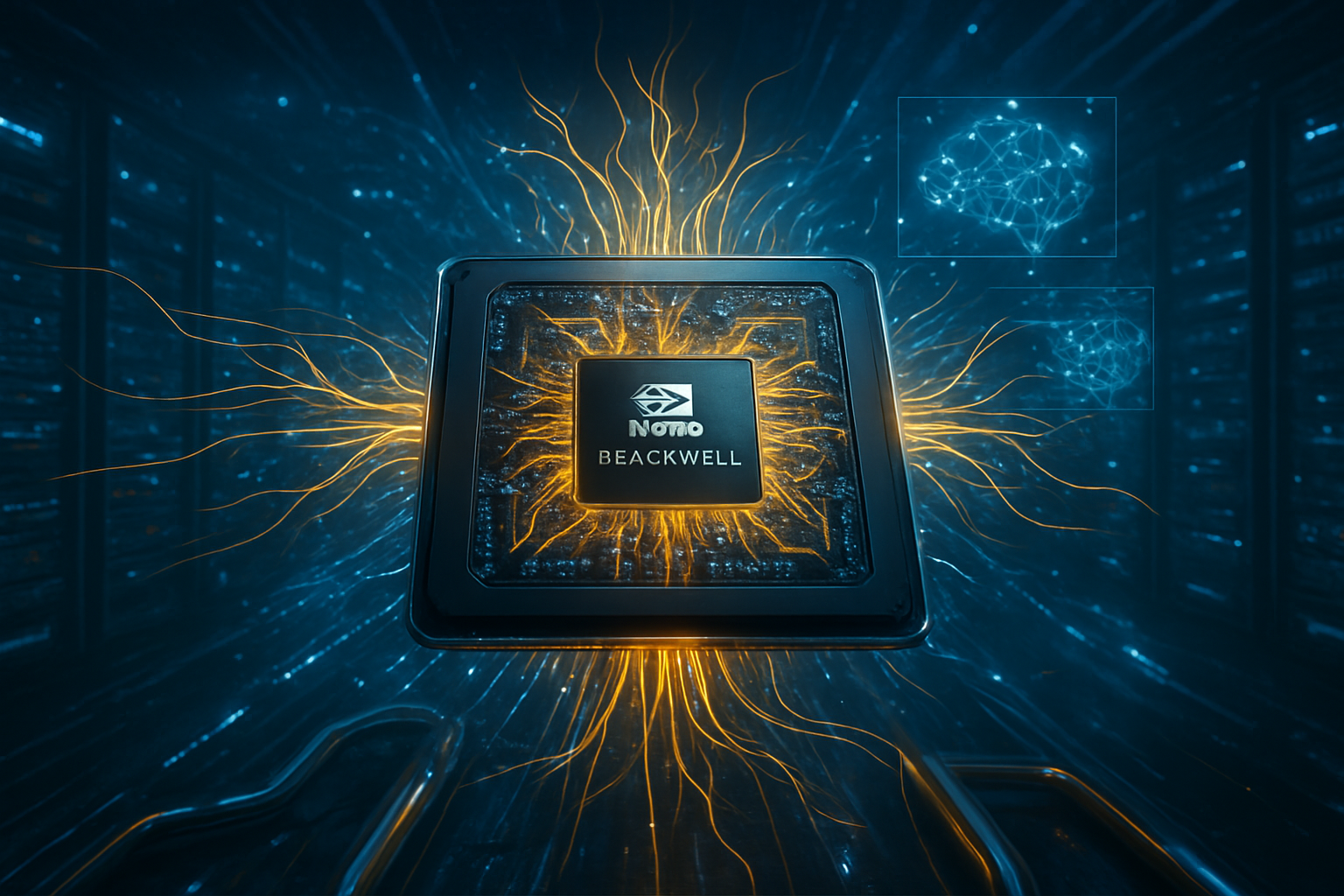
    The Blackwell architecture represents a radical departure from the monolithic GPU designs of the past, utilizing a dual-die chiplet approach that packs 208 billion transistors into a single package. The flagship B200 GPU delivers up to 20 PetaFLOPS of FP4 performance, a five-fold increase over the H100’s peak throughput. Central to this leap is the second-generation Transformer Engine, which introduces support for 4-bit floating point (FP4) precision. This allows massive Large Language Models (LLMs) to run with twice the throughput and significantly lower memory footprints without sacrificing accuracy, effectively doubling the "intelligence per watt" compared to previous generations.

    Beyond the raw compute power, the real breakthrough of 2026 is the GB200 NVL72 system. By interconnecting 72 Blackwell GPUs with the fifth-generation NVLink (offering 1.8 TB/s of bidirectional bandwidth), NVIDIA has created a single entity capable of 1.4 ExaFLOPS of AI inference. This "rack-as-a-GPU" philosophy addresses the massive communication overhead inherent in Mixture-of-Experts (MoE) models, where data must be routed between specialized "expert" layers across multiple chips at microsecond speeds. Initial reactions from the research community suggest that Blackwell has reduced the cost of training frontier models by over 60%, while the dedicated hardware decompression engine has accelerated data loading by up to 800 GB/s, removing one of the last major bottlenecks in deep learning pipelines.

    The deployment of Blackwell has solidified a "winner-takes-most" dynamic among hyperscalers. Microsoft (NASDAQ:MSFT) has emerged as a primary beneficiary, integrating Blackwell into its "Fairwater" AI superfactories to power the Azure OpenAI Service. These clusters are reportedly processing over 100 trillion tokens per quarter, supporting a new wave of enterprise-grade AI agents. Similarly, Amazon (NASDAQ:AMZN) Web Services has leveraged a multi-billion dollar agreement to deploy Blackwell and the upcoming Rubin chips within its EKS environment, facilitating "gigascale" generative AI for its global customer base. Alphabet (NASDAQ:GOOGL), while continuing to develop its internal TPU silicon, remains a major Blackwell customer to ensure its Google Cloud Platform remains a competitive destination for multi-cloud AI workloads.

    However, the competitive landscape is far from static. Advanced Micro Devices (NASDAQ:AMD) has countered with its Instinct MI400 series, which features a massive 432GB of HBM4 memory. By emphasizing "Open Standards" through UALink and Ultra Ethernet, AMD is positioning itself as the primary alternative for organizations wary of NVIDIA’s proprietary ecosystem. Meanwhile, Intel (NASDAQ:INTC) has pivoted its strategy toward the "Jaguar Shores" platform, focusing on the cost-effective "sovereign AI" market. Despite these efforts, NVIDIA’s deep software moat—specifically the CUDA 13.0 stack—continues to make Blackwell the default choice for developers, creating a strategic advantage that rivals are struggling to erode as the industry standardizes on Blackwell-native architectures.

    The broader significance of the Blackwell rollout extends into the realms of energy policy and national security. The power density of these new clusters is unprecedented; a single GB200 NVL72 rack can draw up to 120kW, requiring advanced liquid cooling infrastructure that many older data centers simply cannot support. This has triggered a global "cooling gold rush" and pushed data center electricity demand toward an estimated 1,000 TWh annually. Paradoxically, the 25x increase in energy efficiency for inference has allowed for the "Inference Supercycle," where the cost of running a sophisticated AI model has plummeted to a fraction of a cent per thousand tokens, making high-level reasoning accessible to small businesses and individual developers.

    Furthermore, we are witnessing the rise of "Sovereign AI." Nations now view compute capacity as a critical national resource. In Europe, countries like France and the UK have launched multi-billion dollar infrastructure programs—such as "Stargate UK"—to build domestic Blackwell clusters. In Asia, Saudi Arabia’s "Project HUMAIN" is constructing massive 6-gigawatt AI data centers, while India’s National AI Compute Grid is deploying over 10,000 GPUs to support regional language models. This trend suggests a future where AI capability is as geopolitically significant as oil reserves or semiconductor manufacturing capacity, with Blackwell serving as the primary currency of this new digital economy.

    Looking ahead to the remainder of 2026 and into 2027, the focus is already shifting toward NVIDIA’s next milestone: the Rubin (R100) architecture. Expected to enter mass availability in the second half of 2026, Rubin will mark the definitive transition to HBM4 memory and a 3nm process node, promising a further 3.5x improvement in training performance. We expect to see the "Blackwell Ultra" (B300) serve as a bridge, offering 288GB of HBM3e memory to support the increasingly massive context windows required by video-generative models and autonomous coding agents.

    The next frontier for these systems will be "Physical AI"—the integration of Blackwell-scale compute into robotics and autonomous manufacturing. With the computational overhead of real-time world modeling finally becoming manageable, we anticipate the first widespread deployment of humanoid robots powered by "miniaturized" Blackwell architectures by late 2027. The primary challenge remains the global supply chain for High Bandwidth Memory (HBM), where manufacturers like SK Hynix (KRX:000660) and TSMC (NYSE:TSM) are operating at maximum capacity to meet NVIDIA's relentless release cycle.

    In summary, the early 2026 landscape is defined by the transition of AI from a specialized experimental tool to a core utility of the global economy, powered by NVIDIA’s Blackwell architecture. The "off the charts" demand described by Jensen Huang is not merely hype; it is a reflection of a fundemental shift in how computing is performed, moving away from general-purpose CPUs toward accelerated, interconnected AI factories.

    As we move forward, the key metrics to watch will be the stabilization of energy-efficient cooling solutions and the progress of the Rubin architecture. Blackwell has set a high bar, effectively ending the era of "dumb" chatbots and ushering in an age of reasoning agents. Its legacy will be recorded as the moment when the "intelligence per watt" curve finally aligned with the needs of global industry, making the promise of ubiquitous artificial intelligence a physical and economic reality.


    This content is intended for informational purposes only and represents analysis of current AI developments.

    TokenRing AI delivers enterprise-grade solutions for multi-agent AI workflow orchestration, AI-powered development tools, and seamless remote collaboration platforms.
    For more information, visit https://www.tokenring.ai/.

  • The Blackwell Epoch: How NVIDIA’s 208-Billion Transistor Titan Redefined the AI Frontier

    The Blackwell Epoch: How NVIDIA’s 208-Billion Transistor Titan Redefined the AI Frontier

    As of early 2026, the landscape of artificial intelligence has been fundamentally reshaped by a single architectural leap: the NVIDIA Blackwell platform. When NVIDIA (NASDAQ: NVDA) first unveiled the Blackwell B200 GPU, it was described not merely as a chip, but as the "engine of the new industrial revolution." Today, with Blackwell clusters powering the world’s most advanced frontier models—including the recently debuted Llama 5 and GPT-5—the industry recognizes this architecture as the definitive milestone that transitioned generative AI from a burgeoning trend into a permanent, high-performance infrastructure for the global economy.

    The immediate significance of Blackwell lay in its unprecedented scale. By shattering the physical limits of single-die semiconductor manufacturing, NVIDIA provided the "compute oxygen" required for the next generation of Mixture-of-Experts (MoE) models. This development effectively ended the era of "compute scarcity" for the world's largest tech giants, enabling a shift in focus from simply training models to deploying agentic AI systems at a scale that was previously thought to be a decade away.

    A Technical Masterpiece: The 208-Billion Transistor Milestone

    At the heart of the Blackwell architecture sits the B200 GPU, a marvel of engineering that features a staggering 208 billion transistors. To achieve this density, NVIDIA moved away from the monolithic design of the previous Hopper H100 and adopted a sophisticated multi-die (chiplet) architecture. Fabricated on a custom-built TSMC (NYSE: TSM) 4NP process, the B200 consists of two primary dies connected by a 10 terabytes-per-second (TB/s) ultra-low-latency chip-to-chip interconnect. This design allows the two dies to function as a single, unified GPU, providing seamless performance for developers without the software complexities typically associated with multi-chip modules.

    The technical specifications of the B200 represent a quantum leap over its predecessors. It is equipped with 192GB of HBM3e memory, delivering 8 TB/s of bandwidth, which is essential for feeding the massive data requirements of trillion-parameter models. Perhaps the most significant innovation is the second-generation Transformer Engine, which introduced support for FP4 (4-bit floating point) precision. By doubling the throughput of FP8, the B200 can achieve up to 20 petaflops of sparse AI compute. This efficiency has proven critical for real-time inference, where the B200 offers up to 15x the performance of the H100, effectively collapsing the cost of generating high-quality AI tokens.

    Initial reactions from the AI research community were centered on the "NVLink 5" interconnect, which provides 1.8 TB/s of bidirectional bandwidth per GPU. This allowed for the creation of the GB200 NVL72—a liquid-cooled rack-scale system that acts as a single 72-GPU giant. Industry experts noted that while the previous Hopper architecture was a "GPU for a server," Blackwell was a "GPU for a data center." This shift necessitated a total overhaul of data center cooling and power delivery, as the B200’s power envelope can reach 1,200W, making liquid cooling a standard requirement for high-density AI deployments in 2026.

    The Trillion-Dollar CapEx Race and Market Dominance

    The arrival of Blackwell accelerated a massive capital expenditure (CapEx) cycle among the "Big Four" hyperscalers. Microsoft (NASDAQ: MSFT), Meta (NASDAQ: META), Alphabet (NASDAQ: GOOGL), and Amazon (NASDAQ: AMZN) have each projected annual CapEx spending exceeding $100 billion as they race to build "AI Factories" based on the Blackwell and the newly-announced Rubin architectures. For these companies, Blackwell isn't just a purchase; it is a strategic moat. Those who secured early allocations of the B200 were able to iterate on their foundational models months ahead of competitors, leading to a widening gap between the "compute-rich" and the "compute-poor."

    While NVIDIA maintains an estimated 90% share of the data center GPU market, Blackwell’s dominance has forced competitors to pivot. AMD (NASDAQ: AMD) has successfully positioned its Instinct MI350 and MI455X series as the primary alternative, particularly for companies seeking higher memory capacity for specialized inference. Meanwhile, Intel (NASDAQ: INTC) has struggled to keep pace at the high end, focusing instead on mid-tier enterprise AI with its Gaudi 3 line. The "Blackwell era" has also intensified the development of custom silicon; Google’s TPU v7p and Amazon’s Trainium 3 are now widely used for internal workloads to mitigate the "NVIDIA tax," though Blackwell remains the gold standard for third-party cloud developers.

    The strategic advantage of Blackwell extends into the supply chain. The massive demand for HBM3e and the transition to HBM4 have created a windfall for memory giants like SK Hynix (KRX: 000660), Samsung (KRX: 005930), and Micron (NASDAQ: MU). NVIDIA’s ability to orchestrate this complex supply chain—from TSMC’s advanced packaging to the liquid-cooling components provided by specialized vendors—has solidified its position as the central nervous system of the AI industry.

    The Broader Significance: From Chips to "AI Factories"

    Blackwell represents a fundamental shift in the broader AI landscape: the transition from individual chips to "system-level" scaling. In the past, AI progress was often bottlenecked by the performance of a single processor. With Blackwell, the unit of compute has shifted to the rack and the data center. This "AI Factory" concept—where thousands of GPUs operate as a single, coherent machine—has enabled the training of models with vastly improved reasoning capabilities, moving us closer to Artificial General Intelligence (AGI).

    However, this progress has not come without concerns. The energy requirements of Blackwell clusters have placed immense strain on global power grids. In early 2026, the primary bottleneck for AI expansion is no longer the availability of chips, but the availability of electricity. This has sparked a new wave of investment in modular nuclear reactors (SMRs) and renewable energy to power the massive data centers required for Blackwell NVL72 deployments. Additionally, the high cost of Blackwell systems has raised concerns about "AI Centralization," where only a handful of nations and corporations can afford the infrastructure necessary to develop frontier AI.

    Comparatively, Blackwell is to the 2020s what the mainframe was to the 1960s or the cloud was to the 2010s. It is the foundational layer upon which a new economy is being built. The architecture has also empowered "Sovereign AI" initiatives, with nations like Saudi Arabia and the UAE investing billions to build their own Blackwell-powered domestic compute clouds, ensuring they are not solely dependent on Western technology providers.

    Future Developments: The Road to Rubin and Agentic AI

    As we look toward the remainder of 2026, the focus is already shifting to NVIDIA’s next act: the Rubin (R100) architecture. Announced at CES 2026, Rubin is expected to feature 336 billion transistors and utilize the first generation of HBM4 memory. While Blackwell was about "Scaling," Rubin is expected to be about "Reasoning." Experts predict that the transition to Rubin will enable "Agentic AI" systems that can operate autonomously for weeks at a time, performing complex multi-step tasks across various digital and physical environments.

    Near-term developments will likely focus on the "Blackwell Ultra" (B300) refresh, which is currently being deployed to bridge the gap until Rubin reaches volume production. This refresh increases memory capacity to 288GB, further reducing the cost of inference for massive models. The challenges ahead remain significant, particularly in the realm of interconnects; as clusters grow to 100,000+ GPUs, the industry must solve the "tail latency" issues that can slow down training at such immense scales.

    A Legacy of Transformation

    NVIDIA’s Blackwell architecture will be remembered as the catalyst that turned the promise of generative AI into a global reality. By delivering a 208-billion transistor powerhouse that redefined the limits of semiconductor design, NVIDIA provided the hardware foundation for the most capable AI models in history. The B200 was the moment the industry stopped talking about "AI potential" and started building "AI infrastructure."

    The significance of this development in AI history cannot be overstated. It marked the successful transition to multi-die GPU architectures and the widespread adoption of liquid cooling in the data center. As we move into the Rubin era, the legacy of Blackwell remains visible in every AI-generated insight, every autonomous agent, and every "AI Factory" currently humming across the globe. For the coming months, the industry will be watching the ramp-up of Rubin, but the "Blackwell Epoch" has already left an indelible mark on the world.


    This content is intended for informational purposes only and represents analysis of current AI developments.

    TokenRing AI delivers enterprise-grade solutions for multi-agent AI workflow orchestration, AI-powered development tools, and seamless remote collaboration platforms.
    For more information, visit https://www.tokenring.ai/.
  • Nvidia’s Blackwell Dynasty: B200 and GB200 Sold Out Through Mid-2026 as Backlog Hits 3.6 Million Units

    Nvidia’s Blackwell Dynasty: B200 and GB200 Sold Out Through Mid-2026 as Backlog Hits 3.6 Million Units

    In a move that underscores the relentless momentum of the generative AI era, Nvidia (NASDAQ: NVDA) CEO Jensen Huang has confirmed that the company’s next-generation Blackwell architecture is officially sold out through mid-2026. During a series of high-level briefings and earnings calls in late 2025, Huang described the demand for the B200 and GB200 chips as "insane," noting that the global appetite for high-end AI compute has far outpaced even the most aggressive production ramps. This supply-demand imbalance has reached a fever pitch, with industry reports indicating a staggering backlog of 3.6 million units from the world’s largest cloud providers alone.

    The significance of this development cannot be overstated. As of December 29, 2025, Blackwell has become the definitive backbone of the global AI economy. The "sold out" status means that any enterprise or sovereign nation looking to build frontier-scale AI models today will likely have to wait over 18 months for the necessary hardware, or settle for previous-generation Hopper H100/H200 chips. This scarcity is not just a logistical hurdle; it is a geopolitical and economic bottleneck that is currently dictating the pace of innovation for the entire technology sector.

    The Technical Leap: 208 Billion Transistors and the FP4 Revolution

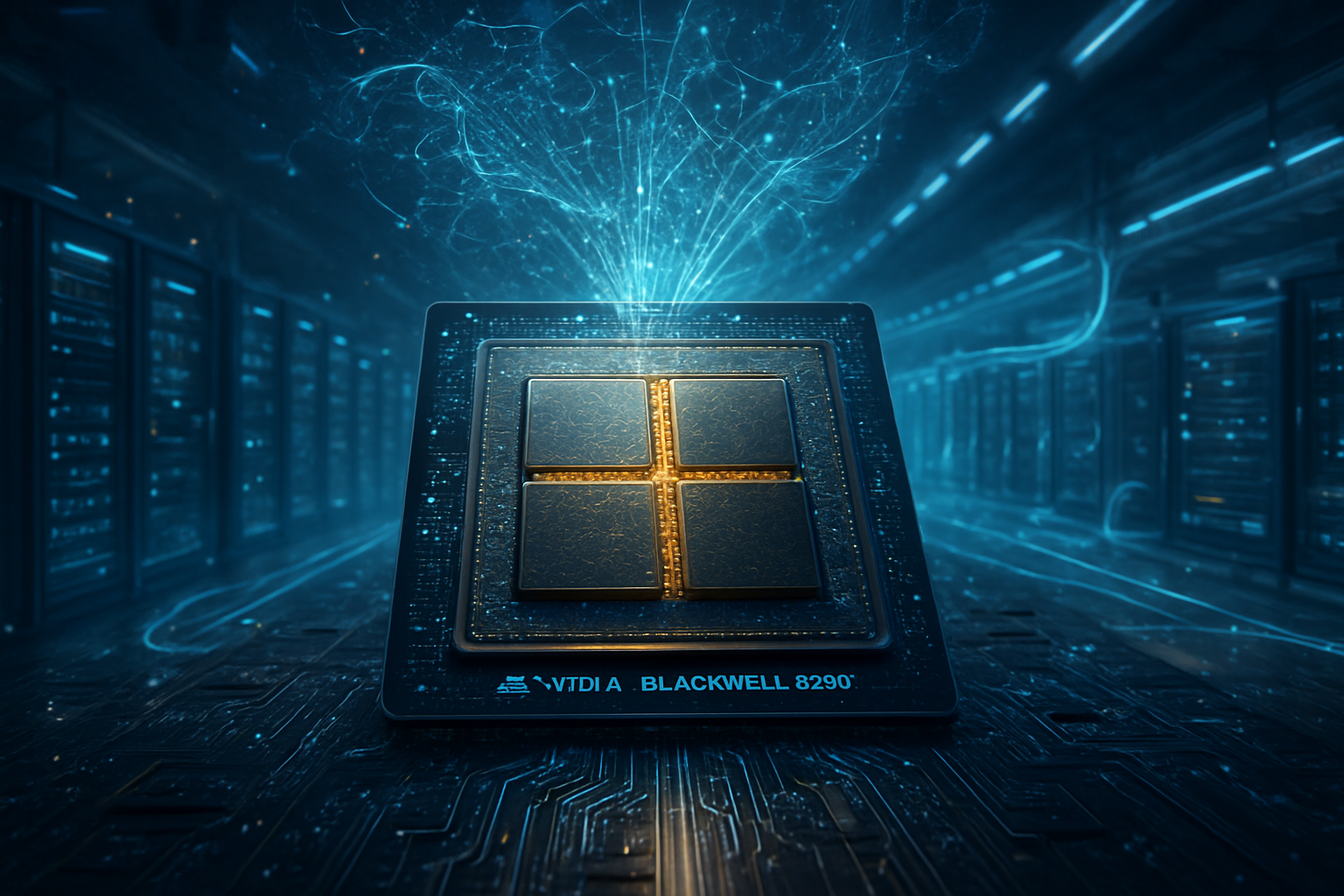
    The Blackwell B200 and GB200 represent the most significant architectural shift in Nvidia’s history, moving away from monolithic chip designs to a sophisticated dual-die "chiplet" approach. Each Blackwell GPU is composed of two primary dies connected by a massive 10 TB/s ultra-high-speed link, allowing them to function as a single, unified processor. This configuration enables a total of 208 billion transistors—a 2.6x increase over the 80 billion found in the previous H100. This leap in complexity is manufactured on a custom TSMC (NYSE: TSM) 4NP process, specifically optimized for the high-voltage requirements of AI workloads.

    Perhaps the most transformative technical advancement is the introduction of the FP4 (4-bit floating point) precision mode. By reducing the precision required for AI inference, Blackwell can deliver up to 20 PFLOPS of compute performance—roughly five times the throughput of the H100's FP8 mode. This allows for the deployment of trillion-parameter models with significantly lower latency. Furthermore, despite a peak power draw that can exceed 1,200W for a GB200 "Superchip," Nvidia claims the architecture is 25x more energy-efficient on a per-token basis than Hopper. This efficiency is critical as data centers hit the physical limits of power delivery and cooling.

    Initial reactions from the AI research community have been a mix of awe and frustration. While researchers at labs like OpenAI and Anthropic have praised the B200’s ability to handle "dynamic reasoning" tasks that were previously computationally prohibitive, the hardware's complexity has introduced new challenges. The transition to liquid cooling—a requirement for the high-density GB200 NVL72 racks—has forced a massive overhaul of data center infrastructure, leading to a "liquid cooling gold rush" for specialized components.

    The Hyperscale Arms Race: CapEx Surges and Product Delays

    The "sold out" status of Blackwell has intensified a multi-billion dollar arms race among the "Big Four" hyperscalers: Microsoft (NASDAQ: MSFT), Meta Platforms (NASDAQ: META), Alphabet (NASDAQ: GOOGL), and Amazon (NASDAQ: AMZN). Microsoft remains the lead customer, with quarterly capital expenditures (CapEx) surging to nearly $35 billion by late 2025 to secure its position as the primary host for OpenAI’s Blackwell-dependent models. Microsoft’s Azure ND GB200 V6 series has become the most coveted cloud instance in the world, often reserved months in advance by elite startups.

    Meta Platforms has taken an even more aggressive stance, with CEO Mark Zuckerberg projecting 2026 CapEx to exceed $100 billion. However, even Meta’s deep pockets couldn't bypass the physical reality of the backlog. The company was reportedly forced to delay the release of its most advanced "Llama 4 Behemoth" model until late 2025, as it waited for enough Blackwell clusters to come online. Similarly, Amazon’s AWS faced public scrutiny after its Blackwell Ultra (GB300) clusters were delayed, forcing the company to pivot toward its internal Trainium2 chips to satisfy customers who couldn't wait for Nvidia's hardware.

    The competitive landscape is now bifurcated between the "compute-rich" and the "compute-poor." Startups that secured early Blackwell allocations are seeing their valuations skyrocket, while those stuck on older H100 clusters are finding it increasingly difficult to compete on inference speed and cost. This has led to a strategic advantage for Oracle (NYSE: ORCL), which carved out a niche by specializing in rapid-deployment Blackwell clusters for mid-sized AI labs, briefly becoming the best-performing tech stock of 2025.

    Beyond the Silicon: Energy Grids and Geopolitics

    The wider significance of the Blackwell shortage extends far beyond corporate balance sheets. By late 2025, the primary constraint on AI expansion has shifted from "chips" to "kilowatts." A single large-scale Blackwell cluster consisting of 1 million GPUs is estimated to consume between 1.0 and 1.4 Gigawatts of power—enough to sustain a mid-sized city. This has placed immense strain on energy grids in Northern Virginia and Silicon Valley, leading Microsoft and Meta to invest directly in Small Modular Reactors (SMRs) and fusion energy research to ensure their future data centers have a dedicated power source.

    Geopolitically, the Blackwell B200 has become a tool of statecraft. Under the "SAFE CHIPS Act" of late 2025, the U.S. government has effectively banned the export of Blackwell-class hardware to China, citing national security concerns. This has accelerated China's reliance on domestic alternatives like Huawei’s Ascend series, creating a divergent AI ecosystem. Conversely, in a landmark deal in November 2025, the U.S. authorized the export of 70,000 Blackwell units to the UAE and Saudi Arabia, contingent on those nations shifting their AI partnerships exclusively toward Western firms and investing billions back into U.S. infrastructure.

    This era of "Sovereign AI" has seen nations like Japan and the UK scrambling to secure their own Blackwell allocations to avoid dependency on U.S. cloud providers. The Blackwell shortage has effectively turned high-end compute into a strategic reserve, comparable to oil in the 20th century. The 3.6 million unit backlog represents not just a queue of orders, but a queue of national and corporate ambitions waiting for the physical capacity to be realized.

    The Road to Rubin: What Comes After Blackwell

    Even as Nvidia struggles to fulfill Blackwell orders, the company has already provided a glimpse into the future with its "Rubin" (R100) architecture. Expected to enter mass production in late 2026, Rubin will move to TSMC’s 3nm process and utilize next-generation HBM4 memory from suppliers like SK Hynix and Micron (NASDAQ: MU). The Rubin R100 is projected to offer another 2.5x leap in FP4 compute performance, potentially reaching 50 PFLOPS per GPU.

    The transition to Rubin will be paired with the "Vera" CPU, forming the Vera Rubin Superchip. This new platform aims to address the memory bandwidth bottlenecks that still plague Blackwell clusters by offering a staggering 13 TB/s of bandwidth. Experts predict that the biggest challenge for the Rubin era will not be the chip design itself, but the packaging. TSMC’s CoWoS-L (Chip-on-Wafer-on-Substrate) capacity is already booked through 2027, suggesting that the "sold out" phenomenon may become a permanent fixture of the AI industry for the foreseeable future.

    In the near term, Nvidia is expected to release a "Blackwell Ultra" (B300) refresh in early 2026 to bridge the gap. This mid-cycle update will likely focus on increasing HBM3e capacity to 288GB per GPU, allowing for even larger models to be held in active memory. However, until the global supply chain for advanced packaging and high-bandwidth memory can scale by orders of magnitude, the industry will remain in a state of perpetual "compute hunger."

    Conclusion: A Defining Moment in AI History

    The 18-month sell-out of Nvidia’s Blackwell architecture marks a watershed moment in the history of technology. It is the first time in the modern era that the limiting factor for global economic growth has been reduced to a single specific hardware architecture. Jensen Huang’s "insane" demand is a reflection of a world that has fully committed to an AI-first future, where the ability to process data is the ultimate competitive advantage.

    As we look toward 2026, the key takeaways are clear: Nvidia’s dominance remains unchallenged, but the physical limits of power, cooling, and semiconductor packaging have become the new frontier. The 3.6 million unit backlog is a testament to the scale of the AI revolution, but it also serves as a warning about the fragility of a global economy dependent on a single supply chain.

    In the coming weeks and months, investors and tech leaders should watch for the progress of TSMC’s capacity expansions and any shifts in U.S. export policies. While Blackwell has secured Nvidia’s dynasty for the next two years, the race to build the infrastructure that can actually power these chips is only just beginning.


    This content is intended for informational purposes only and represents analysis of current AI developments.

    TokenRing AI delivers enterprise-grade solutions for multi-agent AI workflow orchestration, AI-powered development tools, and seamless remote collaboration platforms.
    For more information, visit https://www.tokenring.ai/.