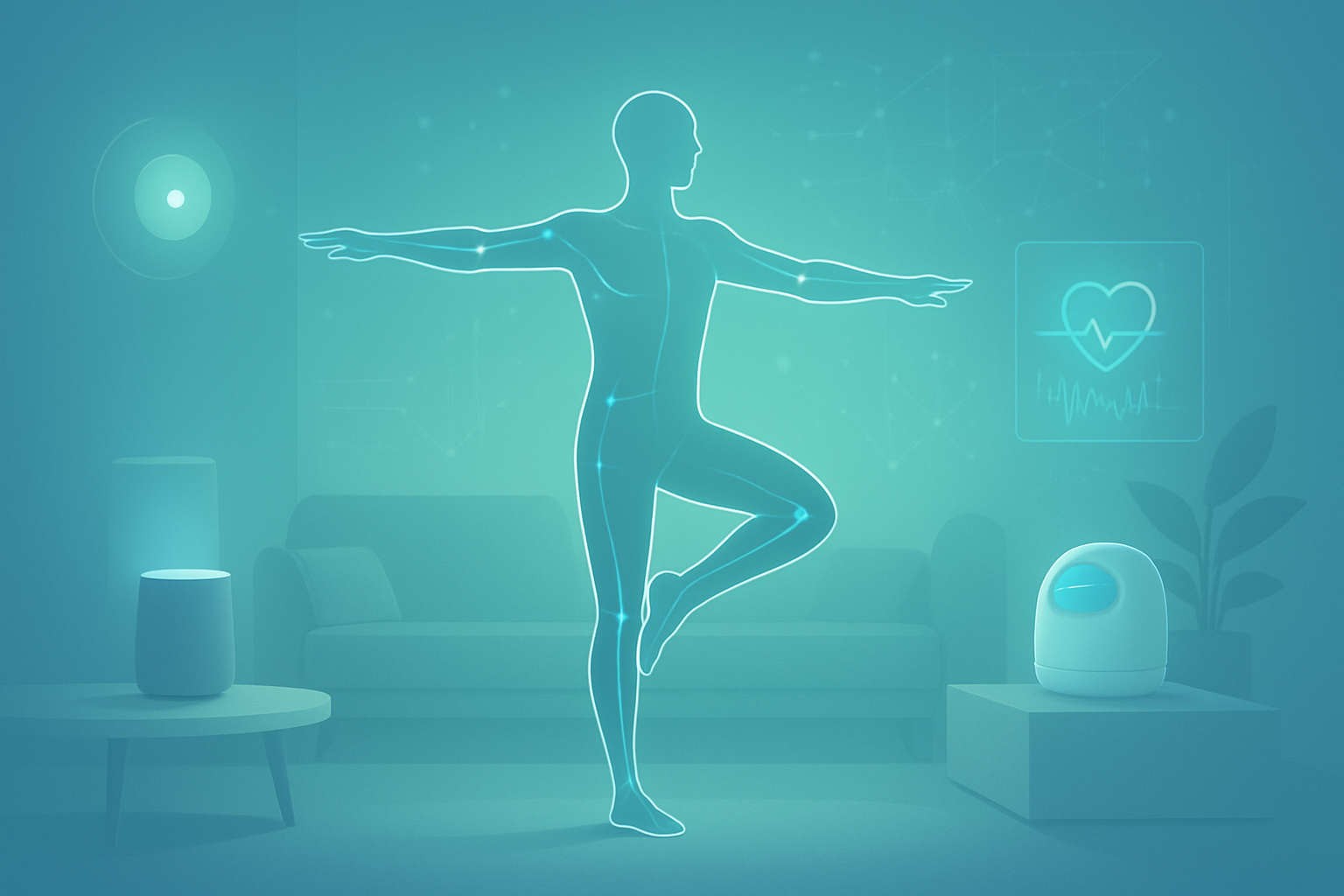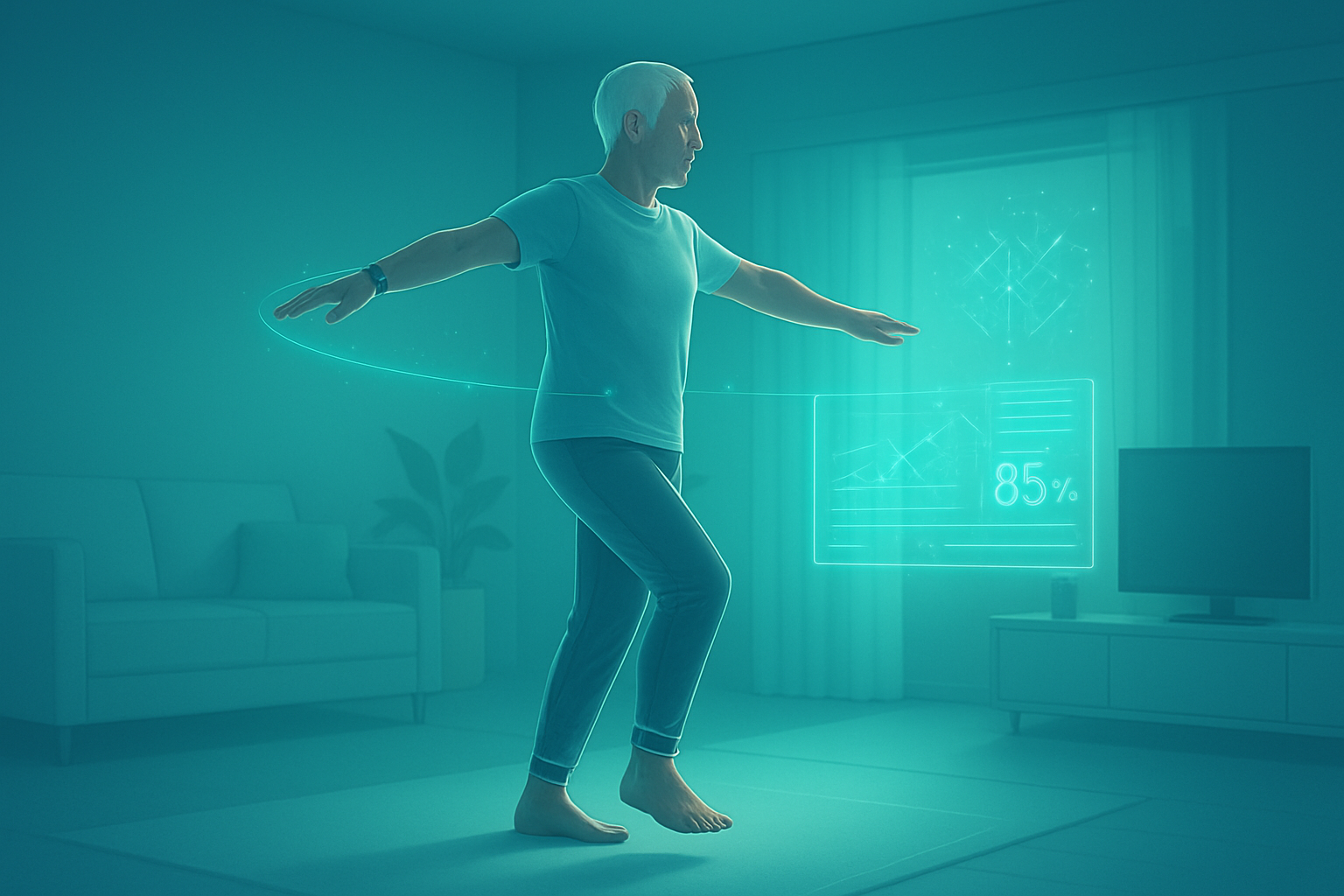
The convergence of advanced machine learning models and wearable technology is poised to fundamentally transform healthcare, particularly in the realm of AI-supported home-based balance training. This burgeoning field promises to democratize access to personalized rehabilitation, offering unprecedented levels of precision, real-time feedback, and objective assessment directly within the comfort and convenience of a patient's home. The immediate significance lies in its potential to dramatically reduce fall risks, enhance recovery outcomes for individuals with motor impairments, and empower an aging global population to maintain independence for longer.
This development marks a pivotal shift towards a more proactive, preventative, and personalized healthcare paradigm, moving beyond traditional, often subjective, and equipment-intensive clinical assessments. By leveraging the continuous data streams from wearable sensors, AI is enabling adaptive training regimens that respond to individual progress and needs, promising a future where expert-level balance therapy is accessible to virtually anyone, anywhere.
A Technical Deep-Dive into Intelligent Balance: Precision and Personalization
The new generation of machine learning models driving AI-supported balance training represents a significant leap from previous approaches. These sophisticated systems are built upon advanced sensor technology, primarily Inertial Measurement Units (IMUs) comprising accelerometers, gyroscopes, and magnetometers, strategically placed on body segments like the lower back, ankles, and sternum. Complementary sensors, such as smart insoles and pressure sensors, capture detailed foot dynamics, while smartwatches and fitness trackers are evolving to incorporate more granular motion analysis capabilities.
The data processed by these models is rich and multi-dimensional, including kinematic and spatiotemporal parameters (e.g., stride length, cadence, joint angles), balance-specific metrics (e.g., Center of Pressure and Center of Mass sway), and even biometric data that indirectly influences balance. Instead of relying on simpler rule-based algorithms or thresholding of sensor outputs, these new models employ a diverse range of machine learning architectures. Supervised learning algorithms like K-Nearest Neighbor (k-NN), Support Vector Machines (SVM), Random Forest (RF), and Gradient Boosting are used for classification tasks such as fall detection and activity recognition, while regression models estimate continuous variables like physical therapist ratings of balance performance.
Crucially, deep learning architectures, particularly 1D Convolutional Neural Networks (CNNs), are increasingly employed to automatically learn and extract complex features from raw time-series sensor data. This automated feature learning is a key differentiator, eliminating the need for manual feature engineering and allowing models to adapt to individual variability with greater robustness and accuracy than static statistical methods. For example, researchers at the University of Michigan have developed an ML model that predicts how a physical therapist would rate a patient's balance exercise performance with nearly 90% accuracy using just four wearable sensors. This capability provides real-time, objective feedback, enabling highly personalized and adaptive training schedules that evolve with the user's progress. Initial reactions from the AI research community and industry experts are overwhelmingly positive, citing the potential to revolutionize preventive healthcare and rehabilitation, enhance user engagement, and drive significant market growth, projected to reach $166.5 billion by 2030. However, concerns regarding data quality, algorithmic bias, computational limitations on wearables, and the critical need for robust data privacy and security measures are also actively being discussed.
Corporate Crossroads: Impact on AI Companies, Tech Giants, and Startups
The advent of new machine learning models for wearable technology in healthcare, particularly for AI-supported home-based balance training, is creating significant ripples across the tech industry. AI companies, tech giants, and nimble startups alike stand to benefit, but also face new competitive pressures and opportunities for disruption.
Specialized AI health tech companies like Helpp.ai, which focuses on fall injury prevention, and VirtuSense, already identifying fall risks, are uniquely positioned to expand their offerings from reactive detection to proactive training solutions. Developers of advanced ML models, particularly those skilled in deep learning and complex kinematic data interpretation, will be crucial suppliers or partners. Data analytics and personalization platforms will also thrive by translating vast amounts of individual balance data into actionable, tailored feedback, improving user engagement and outcomes.
Tech giants with existing wearable ecosystems, such as Apple (NASDAQ: AAPL) with its Apple Watch, Google (NASDAQ: GOOGL) through Fitbit, and Samsung (KRX: 005930), are well-positioned to integrate sophisticated balance training features into their devices, transforming them into medical-grade rehabilitation tools. Their robust cloud infrastructures (Amazon Web Services, Google Cloud, Microsoft Azure) will be essential for storing, processing, and analyzing the massive data streams generated by these wearables. Hardware manufacturers with expertise in miniaturization, sensor technology, and battery efficiency will also be critical. Startups, on the other hand, can carve out niche markets by innovating in specific areas like unique sensor configurations, novel biofeedback mechanisms, or gamified training programs for particular patient populations. Software-as-a-Service (SaaS) providers offering AI-powered platforms that integrate into existing physical therapy practices or telehealth services will also find fertile ground.
This intense competition will disrupt traditional healthcare technology, shifting focus from expensive in-clinic equipment to agile home-based solutions. Physical therapy and rehabilitation practices will need to adapt, embracing solutions that augment therapist capabilities through remote monitoring. Generic home exercise programs will likely become obsolete as AI wearables provide personalized, adaptive training with real-time feedback. Proactive fall prevention offered by these wearables will also challenge the market for purely reactive fall detection systems. Strategic advantages will hinge on clinical validation, seamless user experience, hyper-personalization, robust data security and privacy, and strategic partnerships with healthcare providers.
A Broader Horizon: AI's Role in a Healthier Future
The wider significance of AI-supported home-based balance training extends far beyond individual rehabilitation, fitting squarely into several transformative trends within the broader AI landscape. It embodies the shift towards preventive and proactive healthcare, leveraging continuous monitoring to detect subtle changes and intervene before major health events, especially for fall prevention in older adults. This aligns with the principles of P4 medicine: predictive, preventative, personalized, and participatory care.
This application is a prime example of the burgeoning Internet of Medical Things (IoMT), relying on sophisticated multi-modal sensors and advanced connectivity to enable real-time data transmission and analysis. The "magic" lies in sophisticated machine learning and deep learning models, which interpret vast amounts of sensor data to learn from user habits, generate personalized insights, and make predictions. Furthermore, trends like edge AI and federated learning are crucial for addressing data privacy and latency concerns, allowing on-device processing and distributed model training without sharing raw patient data. The success of "human-in-the-loop" AI, combining AI insights with human clinician oversight, as seen with companies like Sword Health, highlights a balanced approach.
The impacts are profound: enhanced patient empowerment through active health management, improved clinical outcomes in rehabilitation, more efficient healthcare delivery, and a revolution in preventive medicine that can support an aging global population. However, potential concerns loom large. Data privacy and security remain paramount, with the need for strict compliance with regulations like GDPR and HIPAA. The accuracy and reliability of sensor data in uncontrolled home environments are ongoing challenges, as is the potential for algorithmic bias if models are not trained on diverse datasets. Usability, accessibility, and integration with legacy healthcare systems also present hurdles. Compared to previous AI milestones, this represents a significant evolution from passive data collection to active, intelligent, and prescriptive intervention in complex real-world medical scenarios. It moves beyond basic tracking to predictive intelligence, from reactive analysis to real-time feedback, and enables personalization at an unprecedented scale, marking a new era of human-AI collaboration for well-being.
The Road Ahead: Future Innovations and Challenges
The future of AI wearables for home-based balance training promises a continuous evolution towards increasingly intelligent, integrated, and proactive health solutions. In the near term, we can expect further enhancements in machine learning models to interpret sensor data with even greater accuracy, predicting therapist assessments and providing immediate, actionable feedback to accelerate patient progress. Lightweight, portable devices capable of generating unexpected perturbations to improve reactive postural control at home will become more common, controlled via smartphone applications. Seamless integration with telemedicine platforms will also become standard, allowing clinicians to remotely monitor progress and adjust treatment plans with real-time data.
Longer-term developments will see AI wearables evolve into proactive health guardians, capable of anticipating illness or overtraining days before symptoms appear, aligning with the principles of predictive, preventative, personalized, and participatory care. Hyper-personalized health insights will adjust recommendations for diet, exercise, and medication in real time based on an individual's unique data, habits, and medical history. The integration of smart glasses and AI-integrated earbuds for immersive training experiences, offering real-time feedback directly within the user's field of view or through audio cues, is also on the horizon. Beyond external wearables, implantable AI devices, such as smart contact lenses and neural implants, could offer continuous health monitoring and targeted therapies.
Potential applications include highly personalized balance training programs, real-time performance feedback, advanced fall risk assessment and prevention, and remote monitoring for various conditions like Parkinson's disease or post-stroke recovery. However, significant challenges persist. Data privacy and security remain paramount, requiring robust encryption and compliance with regulations. Ensuring data quality, accuracy, and reliability from wearable sensors in diverse real-world environments is crucial, as is developing robust algorithms that perform across diverse populations without algorithmic bias. User dependence, potential misinterpretation of data, and seamless integration with existing healthcare systems (EHRs) are also key challenges. Experts predict continued advancements in sensor fusion, deep learning models for complex time-series data, and a strong emphasis on Explainable AI (XAI) to build trust and transparency. The integration of biofeedback modalities, gamification, and immersive experiences will also play a crucial role in enhancing user engagement and long-term adherence.
The Balance Revolution: A New Era in AI-Powered Healthcare
The emergence of new machine learning models for wearable technology in healthcare, specifically for AI-supported home-based balance training, represents a profound leap forward in the application of artificial intelligence. It signifies a pivotal shift from reactive treatment to proactive, personalized health management, bringing sophisticated rehabilitation directly to the individual. The key takeaways are clear: enhanced accessibility, highly personalized and adaptive training, improved patient adherence, significant fall prevention capabilities, and the potential for substantial cost reductions in healthcare.
This development holds immense significance in AI history, illustrating AI's evolution from passive data collection and basic pattern recognition to active, intelligent, and prescriptive intervention in complex real-world medical scenarios. It's a testament to AI's growing capacity to democratize expert-level care, making specialized physical therapy scalable and accessible to a global population, particularly older adults and those with mobility challenges. The long-term impact promises a future where individuals are empowered with greater autonomy over their health, fostering active participation in their well-being, while healthcare systems benefit from increased efficiency and a focus on preventative care.
In the coming weeks and months, we should watch for continued advancements in the accuracy and robustness of ML models, with a focus on exceeding 90% agreement with expert assessments and improving performance across diverse user populations. Expect more sophisticated predictive analytics that can forecast fall risks and optimize rehabilitation paths, along with enhanced personalization through adaptive learning algorithms. Crucially, watch for breakthroughs in seamless integration and interoperability solutions with existing healthcare IT infrastructure, as well as new models that prioritize ethical AI, data privacy, and security. The integration of gamification, virtual reality, and augmented reality will also be key to boosting long-term adherence. These advancements collectively promise to make AI-supported home-based balance training an indispensable component of future healthcare, enabling individuals to maintain balance, independence, and a higher quality of life for longer.
This content is intended for informational purposes only and represents analysis of current AI developments.
TokenRing AI delivers enterprise-grade solutions for multi-agent AI workflow orchestration, AI-powered development tools, and seamless remote collaboration platforms.
For more information, visit https://www.tokenring.ai/.