Tag: Blackwell Architecture

  • ByteDance Bets Big: A $14 Billion Nvidia Power Play for 2026 AI Dominance

    ByteDance Bets Big: A $14 Billion Nvidia Power Play for 2026 AI Dominance

    In a move that underscores the insatiable demand for high-end silicon in the generative AI era, ByteDance, the parent company of TikTok and Douyin, has reportedly committed a staggering $14 billion (approximately 100 billion yuan) to purchase Nvidia (NASDAQ: NVDA) AI chips for its 2026 infrastructure expansion. This massive investment represents a significant escalation in the global "compute arms race," as ByteDance seeks to transition from a social media titan into an AI-first powerhouse. The commitment is part of a broader $23 billion capital expenditure plan for 2026, aimed at securing the hardware necessary to maintain TikTok’s algorithmic edge while aggressively pursuing the next frontier of "Agentic AI."

    The announcement comes at a critical juncture for the semiconductor industry, as Nvidia prepares to transition from its dominant Blackwell architecture to the highly anticipated Rubin platform. For ByteDance, the $14 billion spend is a pragmatic hedge against tightening supply chains and evolving geopolitical restrictions. By securing a massive allocation of H200 and Blackwell-class GPUs, the company aims to solidify its position as the leader in AI-driven recommendation engines while scaling its "Doubao" large language model (LLM) ecosystem to compete with Western rivals.

    The Technical Edge: From Blackwell to the Rubin Frontier

    The core of ByteDance’s 2026 strategy relies on a multi-tiered hardware approach tailored to specific regulatory and performance requirements. For its domestic operations in China, the company is focusing heavily on the Nvidia H200, a Hopper-architecture GPU that has become the "workhorse" of the 2025–2026 AI landscape. Under the current "managed access" trade framework, ByteDance is utilizing these chips to power massive inference tasks for Douyin and its domestic AI chatbot, Doubao. The H200 offers a significant leap in memory bandwidth over the previous H100, enabling the real-time processing of multi-modal data—allowing ByteDance’s algorithms to "understand" video and audio content with human-like nuance.

    However, the most ambitious part of ByteDance’s technical roadmap involves Nvidia's cutting-edge Blackwell Ultra (B300) and the upcoming Rubin (R100) architectures. Deployed primarily in overseas data centers to navigate export controls, the Blackwell Ultra chips feature up to 288GB of HBM3e memory, providing the raw power needed for training the company's next-generation global models. Looking toward the second half of 2026, ByteDance has reportedly secured early production slots for the Rubin architecture. Rubin is expected to introduce the 3nm-based "Vera" CPU and HBM4 memory, promising a 3.5x to 5x performance increase over Blackwell. This leap is critical for ByteDance’s goal of moving beyond simple chatbots toward "AI Agents" capable of executing complex, multi-step tasks such as autonomous content creation and software development.

    Market Disruptions and the GPU Monopoly

    This $14 billion commitment further cements Nvidia’s role as the indispensable architect of the AI economy, but it also creates a ripple effect across the tech ecosystem. Major cloud competitors like Alphabet Inc. (NASDAQ: GOOGL) and Microsoft (NASDAQ: MSFT) are closely watching ByteDance’s move, as it signals that the window for "catch-up" in compute capacity is narrowing. By locking in such a vast portion of Nvidia’s 2026 output, ByteDance is effectively driving up the "cost of entry" for smaller AI startups, who may find themselves priced out of the market for top-tier silicon.

    Furthermore, the scale of this deal highlights the strategic importance of Taiwan Semiconductor Manufacturing Company (NYSE: TSM), which remains the sole manufacturer capable of producing Nvidia’s complex Blackwell and Rubin designs at scale. While ByteDance is doubling down on Nvidia, it is also working with Broadcom (NASDAQ: AVGO) to develop custom AI ASICs (Application-Specific Integrated Circuits). These custom chips, expected to debut in late 2026, are intended to offload "lighter" inference tasks from expensive Nvidia GPUs, creating a hybrid infrastructure that could eventually reduce ByteDance's long-term dependence on a single vendor. This "buy now, build later" strategy serves as a blueprint for other tech giants seeking to balance immediate performance needs with long-term cost sustainability.

    Navigating the Geopolitical Tightrope

    The sheer scale of ByteDance’s investment is inseparable from the complex geopolitical landscape of early 2026. The company is currently caught in a "double-squeeze" between Washington and Beijing. On one side, the U.S. "managed access" policy allows for the sale of specific chips like the H200 while strictly prohibiting the export of the Blackwell and Rubin architectures to China. This has forced ByteDance to bifurcate its AI strategy: utilizing domestic-compliant Western chips and local alternatives like Huawei’s Ascend series for its China-based services, while building out "sovereign AI" clusters in neutral territories for its international operations.

    This development mirrors previous milestones in the AI industry, such as the initial 2023 scramble for H100s, but with a significantly higher degree of complexity. Critics and industry observers have raised concerns about the environmental impact of such massive compute clusters, as well as the potential for an "AI bubble" if these multi-billion dollar investments do not yield proportional revenue growth. However, for ByteDance, the risk of falling behind in the AI race is far greater than the risk of over-investment. The ability to serve hyper-personalized content to billions of users is the foundation of their business, and that foundation now requires a $14 billion "silicon tax."

    The Road to Agentic AI and Beyond

    Looking ahead, the primary focus of ByteDance’s 2026 expansion is the transition to "Agentic AI." Unlike current LLMs that provide text or image responses, AI Agents are designed to interact with digital environments—booking travel, managing logistics, or coding entire applications autonomously. The Rubin architecture’s massive memory bandwidth is specifically designed to handle the "long-context" requirements of these agents, which must remember and process vast amounts of historical data to function effectively.

    Experts predict that the arrival of the Rubin "Vera" superchip in late 2026 will trigger another wave of AI breakthroughs, potentially leading to the first truly reliable autonomous content moderation systems. However, challenges remain. The energy requirements for these next-gen data centers are reaching levels that challenge local power grids, and ByteDance will likely need to invest as much in green energy infrastructure as it does in silicon. The next twelve months will be a test of whether ByteDance can successfully integrate this massive influx of hardware into its existing software stack without succumbing to the diminishing returns of scaling laws.

    A New Chapter in AI History

    ByteDance’s $14 billion commitment to Nvidia is more than just a purchase order; it is a declaration of intent. It marks the point where AI infrastructure has become the single most important asset on a technology company's balance sheet. By securing the Blackwell and Rubin architectures, ByteDance is positioning itself to lead the next decade of digital interaction, ensuring that its recommendation engines remain the most sophisticated in the world.

    As we move through 2026, the industry will be watching closely to see how this investment translates into product innovation. The key indicators of success will be the performance of the "Doubao" ecosystem and whether TikTok can maintain its dominance in the face of increasingly AI-integrated social platforms. For now, the message is clear: in the age of generative AI, compute is the ultimate currency, and ByteDance is spending it faster than almost anyone else in the world.


    This content is intended for informational purposes only and represents analysis of current AI developments.

    TokenRing AI delivers enterprise-grade solutions for multi-agent AI workflow orchestration, AI-powered development tools, and seamless remote collaboration platforms.
    For more information, visit https://www.tokenring.ai/.

  • NVIDIA Shatters $100 Billion Annual Sales Barrier as the Rubin Era Beckons

    NVIDIA Shatters $100 Billion Annual Sales Barrier as the Rubin Era Beckons

    In a definitive moment for the silicon age, NVIDIA (NASDAQ: NVDA) has officially crossed the historic milestone of $100 billion in annual semiconductor sales, cementing its role as the primary architect of the global artificial intelligence revolution. According to financial data released in early 2026, the company’s revenue for the 2025 calendar year surged to an unprecedented $125.7 billion—a 64% increase over the previous year—making it the first chipmaker in history to reach such heights. This growth has been underpinned by the relentless demand for the Blackwell architecture, which has effectively sold out through the middle of 2026 as cloud providers and nation-states race to build "AI factories."

    The significance of this achievement cannot be overstated. As of January 12, 2026, a new report from Gartner indicates that global AI infrastructure spending is forecast to surpass $1.3 trillion this year. NVIDIA’s dominance in this sector has seen its market capitalization hover near the $4.5 trillion mark, as the company transitions from a component supplier to a full-stack infrastructure titan. With the upcoming "Rubin" platform already casting a long shadow over the industry, NVIDIA appears to be widening its lead even as competitors like AMD (NASDAQ: AMD) and Intel (NASDAQ: INTC) mount their most aggressive challenges to date.

    The Engine of Growth: From Blackwell to Rubin

    The engine behind NVIDIA’s record-breaking 2025 was the Blackwell architecture, specifically the GB200 NVL72 system, which redefined the data center as a single, massive liquid-cooled computer. Blackwell introduced the second-generation Transformer Engine and support for the FP4 precision format, allowing for a 30x increase in performance for large language model (LLM) inference compared to the previous H100 generation. Industry experts note that Blackwell was the fastest product ramp in semiconductor history, generating over $11 billion in its first full quarter of shipping. This success was not merely about raw compute; it was about the integration of Spectrum-X Ethernet and NVLink 5.0, which allowed tens of thousands of GPUs to act as a unified fabric.

    However, the technical community is already looking toward the Rubin platform, officially unveiled for a late 2026 release. Named after astronomer Vera Rubin, the new architecture represents a fundamental shift toward "Physical AI" and agentic workflows. The Rubin R100 GPU will be manufactured on TSMC’s (NYSE: TSM) advanced 3nm (N3P) process and will be the first to feature High Bandwidth Memory 4 (HBM4). With a 2048-bit memory interface, Rubin is expected to deliver a staggering 22 TB/s of bandwidth—nearly triple that of Blackwell—effectively shattering the "memory wall" that has limited the scale of Mixture-of-Experts (MoE) models.

    Paired with the Rubin GPU is the new Vera CPU, which replaces the Grace architecture. Featuring 88 custom "Olympus" cores based on the Armv9.2-A architecture, the Vera CPU is designed specifically to manage the high-velocity data movement required by autonomous AI agents. Initial reactions from AI researchers suggest that Rubin’s support for NVFP4 (4-bit floating point) with hardware-accelerated adaptive compression could reduce the energy cost of token generation by an order of magnitude, making real-time, complex reasoning agents economically viable for the first time.

    Market Dominance and the Competitive Response

    NVIDIA’s ascent has forced a strategic realignment across the entire tech sector. Hyperscalers like Microsoft (NASDAQ: MSFT), Alphabet (NASDAQ: GOOGL), and Amazon (NASDAQ: AMZN) remain NVIDIA’s largest customers, but they are also its most complex competitors as they scale their own internal silicon efforts, such as the Azure Maia and Google TPU v6. Despite these internal chips, the "CUDA moat" remains formidable. NVIDIA has moved up the software stack with NVIDIA Inference Microservices (NIMs), providing pre-optimized containers that allow enterprises to deploy models in minutes, a level of vertical integration that cloud-native chips have yet to match.

    The competitive landscape has narrowed into a high-stakes "rack-to-rack" battle. AMD (NASDAQ: AMD) has responded with its Instinct MI400 series and the "Helios" platform, which boasts up to 432GB of HBM4—significantly more capacity than NVIDIA’s R100. AMD’s focus on open-source software through ROCm 7.2 has gained traction among Tier-2 cloud providers and research labs seeking a "non-NVIDIA" alternative. Meanwhile, Intel (NASDAQ: INTC) has pivoted toward its "Jaguar Shores" unified architecture, focusing on the total cost of ownership (TCO) for enterprise inference, though it continues to trail in the high-end training market.

    For startups and smaller AI labs, NVIDIA’s dominance is a double-edged sword. While the performance of Blackwell and Rubin enables the training of trillion-parameter models, the extreme cost and power requirements of these systems create a high barrier to entry. This has led to a burgeoning market for "sovereign AI," where nations like Saudi Arabia and Japan are purchasing NVIDIA hardware directly to ensure domestic AI capabilities, bypassing traditional cloud intermediaries and further padding NVIDIA’s bottom line.

    Rebuilding the Global Digital Foundation

    The broader significance of NVIDIA crossing the $100 billion threshold lies in the fundamental shift from general-purpose computing to accelerated computing. As Gartner’s Rajeev Rajput noted in the January 2026 report, AI infrastructure is no longer a niche segment of the semiconductor market; it is the market. With $1.3 trillion in projected spending, the world is effectively rebuilding its entire digital foundation around the GPU. This transition is comparable to the shift from mainframes to client-server architecture, but occurring at ten times the speed.

    However, this rapid expansion brings significant concerns regarding energy consumption and the environmental impact of massive data centers. A single Rubin-based rack is expected to consume over 120kW of power, necessitating a revolution in liquid cooling and power delivery. Furthermore, the concentration of so much economic and technological power within a single company has invited increased regulatory scrutiny from both the U.S. and the EU, as policymakers grapple with the implications of one firm controlling the "oxygen" of the AI economy.

    Comparatively, NVIDIA’s milestone dwarfs previous semiconductor breakthroughs. When Intel dominated the PC era or Qualcomm (NASDAQ: QCOM) led the mobile revolution, their annual revenues took decades to reach these levels. NVIDIA has achieved this scale in less than three years of the "generative AI" era. This suggests that we are not in a typical hardware cycle, but rather a permanent re-architecting of how human knowledge is processed and accessed.

    The Horizon: Agentic AI and Physical Systems

    Looking ahead, the next 24 months will be defined by the transition from "Chatbots" to "Agentic AI"—systems that don't just answer questions but execute complex, multi-step tasks autonomously. Experts predict that the Rubin platform’s massive memory bandwidth will be the key enabler for these agents, allowing them to maintain massive "context windows" of information in real-time. We can expect to see the first widespread deployments of "Physical AI" in 2026, where NVIDIA’s Thor chips (derived from Blackwell/Rubin tech) power a new generation of humanoid robots and autonomous industrial systems.

    The challenges remain daunting. The supply chain for HBM4 memory, primarily led by SK Hynix and Samsung (KRX: 005930), remains a potential bottleneck. Any disruption in the production of these specialized memory chips could stall the rollout of the Rubin platform. Additionally, the industry must address the "inference efficiency" problem; as models grow, the cost of running them must fall faster than the models expand, or the $1.3 trillion investment in infrastructure may struggle to find a path to profitability.

    A Legacy in the Making

    NVIDIA’s historic $100 billion milestone and its projected path to $200 billion by the end of fiscal year 2026 signal the beginning of a new era in computing. The success of Blackwell has proven that the demand for AI compute is not a bubble but a structural shift in the global economy. As the Rubin platform prepares to enter the market with its HBM4-powered breakthrough, NVIDIA is effectively competing against its own previous successes as much as it is against its rivals.

    In the coming weeks and months, the tech world will be watching for the first production benchmarks of the Rubin R100 and the progress of the UXL Foundation’s attempt to create a cross-platform alternative to CUDA. While the competition is more formidable than ever, NVIDIA’s ability to co-design silicon, software, and networking into a single, cohesive unit continues to set the pace for the industry. For now, the "AI factory" runs on NVIDIA green, and the $1.3 trillion infrastructure boom shows no signs of slowing down.


    This content is intended for informational purposes only and represents analysis of current AI developments.

    TokenRing AI delivers enterprise-grade solutions for multi-agent AI workflow orchestration, AI-powered development tools, and seamless remote collaboration platforms.
    For more information, visit https://www.tokenring.ai/.

  • The Great Decoupling: NVIDIA’s Data Center Revenue Now Six Times Larger Than Intel and AMD Combined

    The Great Decoupling: NVIDIA’s Data Center Revenue Now Six Times Larger Than Intel and AMD Combined

    As of January 8, 2026, the global semiconductor landscape has reached a definitive tipping point, marking the end of the "CPU-first" era that defined computing for nearly half a century. Recent financial disclosures for the final quarters of 2025 have revealed a staggering reality: NVIDIA (NASDAQ: NVDA) now generates more revenue from its data center segment alone than the combined data center and CPU revenues of its two largest historical rivals, Intel (NASDAQ: INTC) and AMD (NASDAQ: AMD). This financial chasm—with NVIDIA’s $51.2 billion in quarterly data center revenue dwarfing the $8.4 billion combined total of its competitors—signals a permanent shift in the industry’s center of gravity toward accelerated computing.

    The disparity is even more pronounced when isolating for general-purpose CPUs. Analysts estimate that NVIDIA's data center revenue is now approximately eight times the combined server CPU revenue of Intel and AMD. This "Great Decoupling" highlights a fundamental change in how the world’s most powerful computers are built. No longer are GPUs merely "accelerators" added to a CPU-based system; in the modern "AI Factory," the GPU is the primary compute engine, and the CPU has been relegated to a supporting role, managing housekeeping tasks while NVIDIA’s Blackwell architecture performs the heavy lifting of modern intelligence.

    The Blackwell Era and the Rise of the Integrated Platform

    The primary catalyst for this financial explosion has been the unprecedented ramp-up of NVIDIA’s Blackwell architecture. Throughout 2025, the B200 and GB200 chips became the most sought-after commodities in the tech world. Unlike previous generations where chips were sold individually, NVIDIA’s dominance in 2025 was driven by the sale of entire integrated systems, such as the NVL72 rack. These systems combine 72 Blackwell GPUs with NVIDIA’s own Grace CPUs and high-speed BlueField-3 DPUs, creating a unified "superchip" environment that competitors have struggled to replicate.

    Technically, the shift is driven by the transition from "Training" to "Reasoning." While 2023 and 2024 were defined by training Large Language Models (LLMs), 2025 saw the rise of "Reasoning AI"—models that perform complex multi-step thinking during inference. These models require massive amounts of memory bandwidth and inter-chip communication, areas where NVIDIA’s proprietary NVLink interconnect technology provides a significant moat. While AMD (NASDAQ: AMD) has made strides with its MI325X and MI350 series, and Intel has attempted to gain ground with its Gaudi 3 accelerators, NVIDIA’s ability to provide a full-stack solution—including the CUDA software layer and Spectrum-X networking—has made it the default choice for hyperscalers.

    Initial reactions from the research community suggest that the industry is no longer just buying "chips," but "time-to-market." The integration of hardware and software allows AI labs to deploy clusters of 100,000+ GPUs and begin training or serving models almost immediately. This "plug-and-play" capability at a massive scale has effectively locked in the world’s largest spenders, including Microsoft (NASDAQ: MSFT), Meta (NASDAQ: META), and Alphabet (NASDAQ: GOOGL), who are currently locked in a "Prisoner's Dilemma" where they must continue to spend record amounts on NVIDIA hardware to avoid falling behind in the AI arms race.

    Competitive Implications and the Shrinking CPU Pie

    The strategic implications for the rest of the semiconductor industry are profound. For Intel (NASDAQ: INTC), the rise of NVIDIA has forced a painful pivot toward its Foundry business. While Intel’s "Panther Lake" CPUs remain competitive in the dwindling market for general-purpose server chips, the company’s Data Center and AI (DCAI) segment has stagnated, hovering around $4 billion per quarter. Intel is now betting its future on becoming the primary manufacturer for other chip designers, including potentially its own rivals, as it struggles to regain its footing in the high-margin AI accelerator market.

    AMD (NASDAQ: AMD) has fared better in terms of market share, successfully capturing nearly 30% of the server CPU market from Intel by late 2025. However, this victory is increasingly viewed as a "king of the hill" battle on a shrinking mountain. As data center budgets shift toward GPUs, the total addressable market for CPUs is not growing at the same rate as the overall AI infrastructure spend. AMD’s Instinct GPU line has seen healthy growth, reaching several billion in revenue, but it still lacks the software ecosystem and networking integration that allows NVIDIA to command 75%+ gross margins.

    Startups and smaller AI labs are also feeling the squeeze. The high cost of NVIDIA’s top-tier Blackwell systems has created a two-tier AI landscape: "compute-rich" giants who can afford the latest $3 million racks, and "compute-poor" entities that must rely on older Hopper (H100) hardware or cloud rentals. This has led to a surge in demand for AI orchestration platforms that can maximize the efficiency of existing hardware, as companies look for ways to extract more performance from their multi-billion dollar investments.

    The Broader AI Landscape: From Components to Sovereign Clouds

    This shift fits into a broader trend of "Sovereign AI," where nations are now building their own domestic data centers to ensure data privacy and technological independence. In late 2025, countries like Saudi Arabia, the UAE, and Japan emerged as major NVIDIA customers, purchasing entire AI factories to fuel their national AI initiatives. This has diversified NVIDIA’s revenue stream beyond the "Big Four" US hyperscalers, further insulating the company from any potential cooling in Silicon Valley venture capital.

    The wider significance of NVIDIA’s $50 billion quarters cannot be overstated. It represents the most rapid reallocation of capital in industrial history. Comparisons are often made to the build-out of the internet in the late 1990s, but with a key difference: the AI build-out is generating immediate, tangible revenue for the infrastructure provider. While the "dot-com" era saw massive spending on fiber optics that took a decade to utilize, NVIDIA’s Blackwell chips are often sold out 12 months in advance, with demand for "Inference-as-a-Service" growing as fast as the hardware can be manufactured.

    However, this dominance has also raised concerns. Regulators in the US and EU have increased their scrutiny of NVIDIA’s "moat," specifically focusing on whether the bundling of CUDA software with hardware constitutes anti-competitive behavior. Furthermore, the sheer energy requirements of these GPU-dense data centers have led to a secondary crisis in power generation, with NVIDIA now frequently partnering with energy companies to secure the gigawatts of electricity needed to run its latest clusters.

    Future Horizons: Vera Rubin and the $500 Billion Visibility

    Looking ahead to the remainder of 2026 and 2027, NVIDIA has already signaled its next move with the announcement of the "Vera Rubin" platform. Named after the astronomer who discovered evidence of dark matter, the Rubin architecture is expected to focus on "Unified Compute," further blurring the lines between networking, memory, and processing. Experts predict that NVIDIA will continue its transition toward becoming a "Data Center-as-a-Service" company, potentially offering its own cloud capacity to compete directly with the very hyperscalers that are currently its largest customers.

    Near-term developments will likely focus on "Edge AI" and "Physical AI" (robotics). As the cost of inference drops due to Blackwell’s efficiency, we expect to see more complex AI models running locally on devices and within industrial robots. The challenge will be the "power wall"—the physical limit of how much heat can be dissipated and how much electricity can be delivered to a single rack. Addressing this will require breakthroughs in liquid cooling and power delivery, areas where NVIDIA is already investing heavily through its ecosystem of partners.

    A Permanent Shift in the Computing Hierarchy

    The data from early 2026 confirms that NVIDIA is no longer just a chip company; it is the architect of the AI era. By capturing more revenue than the combined forces of the traditional CPU industry, NVIDIA has proved that the future of computing is accelerated, parallel, and deeply integrated. The "CPU-centric" world of the last 40 years has been replaced by an "AI-centric" world where the GPU is the heart of the machine.

    Key takeaways for the coming months include the continued ramp-up of Blackwell, the first real-world benchmarks of the Vera Rubin architecture, and the potential for a "second wave" of AI investment from enterprise customers who are finally moving their AI pilots into full-scale production. While the competition from AMD and the manufacturing pivot of Intel will continue, the "center of gravity" has moved. For the foreseeable future, the world’s digital infrastructure will be built on NVIDIA’s terms.


    This content is intended for informational purposes only and represents analysis of current AI developments.

    TokenRing AI delivers enterprise-grade solutions for multi-agent AI workflow orchestration, AI-powered development tools, and seamless remote collaboration platforms.
    For more information, visit https://www.tokenring.ai/.

  • NVIDIA Blackwell vs. The Rise of Custom Silicon: The Battle for AI Dominance in 2026

    NVIDIA Blackwell vs. The Rise of Custom Silicon: The Battle for AI Dominance in 2026

    As we enter 2026, the artificial intelligence industry has reached a pivotal crossroads. For years, NVIDIA (NASDAQ: NVDA) has held a near-monopoly on the high-end compute market, with its chips serving as the literal bedrock of the generative AI revolution. However, the debut of the Blackwell architecture has coincided with a massive, coordinated push by the world’s largest technology companies to break free from the "NVIDIA tax." Amazon (NASDAQ: AMZN), Microsoft (NASDAQ: MSFT), and Meta Platforms (NASDAQ: META) are no longer just customers; they are now formidable competitors, deploying their own custom-designed silicon to power the next generation of AI.

    This "Great Decoupling" represents a fundamental shift in the tech economy. While NVIDIA’s Blackwell remains the undisputed champion for training the world’s most complex frontier models, the battle for "inference"—the day-to-day running of AI applications—has moved to custom-built territory. With billions of dollars in capital expenditures at stake, the rise of chips like Amazon’s Trainium 3 and Microsoft’s Maia 200 is challenging the notion that a general-purpose GPU is the only way to scale intelligence.

    Technical Supremacy vs. Architectural Specialization

    NVIDIA’s Blackwell architecture, specifically the B200 and the GB200 "Superchip," is a marvel of modern engineering. Boasting 208 billion transistors and manufactured on a custom TSMC (NYSE: TSM) 4NP process, Blackwell introduced the world to native FP4 precision, allowing for a 5x increase in inference throughput compared to the previous Hopper generation. Its NVLink 5.0 interconnect provides a staggering 1.8 TB/s of bidirectional bandwidth, creating a unified memory pool that allows hundreds of GPUs to act as a single, massive processor. This level of raw power is why Blackwell remains the primary choice for training trillion-parameter models that require extreme flexibility and high-speed communication between nodes.

    In contrast, the custom silicon from the "Big Three" hyperscalers is designed for surgical precision. Amazon’s Trainium 3, now in general availability as of early 2026, utilizes a 3nm process and focuses on "scale-out" efficiency. By stripping away the legacy graphics circuitry found in NVIDIA’s chips, Amazon has achieved roughly 50% better price-performance for training internal models like Claude 4. Similarly, Microsoft’s Maia 200 (internally codenamed "Braga") has been optimized for "Microscaling" (MX) data formats, allowing it to run ChatGPT and Copilot workloads with significantly lower power consumption than a standard Blackwell cluster.

    The technical divergence is most visible in the cooling and power delivery systems. While NVIDIA’s GB200 NVL72 racks require advanced liquid cooling to manage their 120kW power draw, Meta’s MTIA v3 (Meta Training and Inference Accelerator) is built with a chiplet-based design that prioritizes energy efficiency for recommendation engines. These custom ASICs (Application-Specific Integrated Circuits) are not trying to do everything; they are trying to do one thing—like ranking a Facebook feed or generating a Copilot response—at the lowest possible cost-per-token.

    The Economics of Silicon Sovereignty

    The strategic advantage of custom silicon is, first and foremost, financial. At an estimated $30,000 to $35,000 per B200 card, the cost of building a massive AI data center using only NVIDIA hardware is becoming unsustainable for even the wealthiest corporations. By designing their own chips, companies like Alphabet (NASDAQ: GOOGL) and Amazon can reduce their total cost of ownership (TCO) by 30% to 40%. This "silicon sovereignty" allows them to offer lower prices to cloud customers and maintain higher margins on their own AI services, creating a competitive moat that NVIDIA’s hardware-only business model struggles to penetrate.

    This shift is already disrupting the competitive landscape for AI startups. While the most well-funded labs still scramble for NVIDIA Blackwell allocations to train "God-like" models, mid-tier startups are increasingly pivoting to custom silicon instances on AWS and Azure. The availability of Trainium 3 and Maia 200 has democratized high-performance compute, allowing smaller players to run large-scale inference without the "NVIDIA premium." This has forced NVIDIA to move further up the stack, offering its own "AI Foundry" services to maintain its relevance in a world where hardware is becoming increasingly fragmented.

    Furthermore, the market positioning of these companies has changed. Microsoft and Amazon are no longer just cloud providers; they are vertically integrated AI powerhouses that control everything from the silicon to the end-user application. This vertical integration provides a massive strategic advantage in the "Inference Era," where the goal is to serve as many AI tokens as possible at the lowest possible energy cost. NVIDIA, recognizing this threat, has responded by accelerating its roadmap, recently teasing the "Vera Rubin" architecture at CES 2026 to stay one step ahead of the hyperscalers’ design cycles.

    The Erosion of the CUDA Moat

    For a decade, NVIDIA’s greatest defense was not its hardware, but its software: CUDA. The proprietary programming model made it nearly impossible for developers to switch to rival chips without rewriting their entire codebase. However, by 2026, that moat is showing significant cracks. The rise of hardware-agnostic compilers like OpenAI’s Triton and the maturation of the OpenXLA ecosystem have created an "off-ramp" for developers. Triton allows high-performance kernels to be written in Python and run seamlessly across NVIDIA, AMD (NASDAQ: AMD), and custom ASICs like Google’s TPU v7.

    This shift toward open-source software is perhaps the most significant trend in the broader AI landscape. It has allowed the industry to move away from vendor lock-in and toward a more modular approach to AI infrastructure. As of early 2026, "StableHLO" (Stable High-Level Operations) has become the standard portability layer, ensuring that a model trained on an NVIDIA workstation can be deployed to a Trainium or Maia cluster with minimal performance loss. This interoperability is essential for a world where energy constraints are the primary bottleneck to AI growth.

    However, this transition is not without concerns. The fragmentation of the hardware market could lead to a "Balkanization" of AI development, where certain models only run optimally on specific clouds. There are also environmental implications; while custom silicon is more efficient, the sheer volume of chip production required to satisfy the needs of Amazon, Meta, and Microsoft is putting unprecedented strain on the global semiconductor supply chain and rare-earth mineral mining. The race for silicon dominance is, in many ways, a race for the planet's resources.

    The Road Ahead: Vera Rubin and the 2nm Frontier

    Looking toward the latter half of 2026 and into 2027, the industry is bracing for the next leap in performance. NVIDIA’s Vera Rubin architecture, expected to ship in late 2026, promises a 10x reduction in inference costs through even more advanced data formats and HBM4 memory integration. This is NVIDIA’s attempt to reclaim the inference market by making its general-purpose GPUs so efficient that the cost savings of custom silicon become negligible. Experts predict that the "Rubin vs. Custom Silicon v4" battle will define the next three years of the AI economy.

    In the near term, we expect to see more specialized "edge" AI chips from these tech giants. As AI moves from massive data centers to local devices and specialized robotics, the need for low-power, high-efficiency silicon will only grow. Challenges remain, particularly in the realm of interconnects; while NVIDIA has NVLink, the hyperscalers are working on the Ultra Ethernet Consortium (UEC) standards to create a high-speed, open alternative for massive scale-out clusters. The company that masters the networking between the chips may ultimately win the war.

    A New Era of Computing

    The battle between NVIDIA’s Blackwell and the custom silicon of the hyperscalers marks the end of the "GPU-only" era of artificial intelligence. We have moved into a more mature, fragmented, and competitive phase of the industry. While NVIDIA remains the king of the frontier, providing the raw horsepower needed to push the boundaries of what AI can do, the hyperscalers have successfully carved out a massive territory in the operational heart of the AI economy.

    Key takeaways from this development include the successful challenge to the CUDA monopoly, the rise of "silicon sovereignty" as a corporate strategy, and the shift in focus from raw training power to inference efficiency. As we look forward, the significance of this moment in AI history cannot be overstated: it is the moment the industry stopped being a one-company show and became a multi-polar race for the future of intelligence. In the coming months, watch for the first benchmarks of the Vera Rubin platform and the continued expansion of "ASIC-first" data centers across the globe.


    This content is intended for informational purposes only and represents analysis of current AI developments.

    TokenRing AI delivers enterprise-grade solutions for multi-agent AI workflow orchestration, AI-powered development tools, and seamless remote collaboration platforms.
    For more information, visit https://www.tokenring.ai/.

  • Nvidia Solidifies AI Dominance with $20 Billion Strategic Acquisition of Groq’s LPU Technology

    Nvidia Solidifies AI Dominance with $20 Billion Strategic Acquisition of Groq’s LPU Technology

    In a move that has sent shockwaves through the semiconductor industry, Nvidia (NASDAQ: NVDA) announced on December 24, 2025, that it has entered into a definitive $20 billion agreement to acquire the core assets and intellectual property of Groq, the pioneer of the Language Processing Unit (LPU). The deal, structured as a massive asset purchase and licensing agreement to navigate an increasingly complex global regulatory environment, effectively integrates the world’s fastest AI inference technology into the Nvidia ecosystem. As part of the transaction, Groq founder and former Google TPU architect Jonathan Ross will join Nvidia to lead a new "Ultra-Low Latency" division, bringing the majority of Groq’s elite engineering team with him.

    The acquisition marks a pivotal shift in Nvidia's strategy as the AI market transitions from a focus on model training to a focus on real-time inference. By securing Groq’s deterministic architecture, Nvidia aims to eliminate the "memory wall" that has long plagued traditional GPU designs. This $20 billion bet is not merely about adding another chip to the catalog; it is a fundamental architectural evolution intended to consolidate Nvidia’s lead as the "AI Factory" for the world, ensuring that the next generation of generative AI applications—from humanoid robots to real-time translation—runs exclusively on Nvidia-powered silicon.

    The Death of Latency: Groq’s Deterministic Edge

    At the heart of this acquisition is Groq’s revolutionary LPU technology, which departs fundamentally from the probabilistic nature of traditional GPUs. While Nvidia’s current Blackwell architecture relies on complex scheduling, caches, and High Bandwidth Memory (HBM) to manage data, Groq’s LPU is entirely deterministic. The hardware is designed so that the compiler knows exactly where every piece of data is and what every transistor will be doing at every clock cycle. This eliminates the "jitter" and processing stalls common in multi-tenant GPU environments, allowing for the consistent, "speed-of-light" token generation that has made Groq a favorite among developers of real-time agents.

    Technically, the LPU’s greatest advantage lies in its use of massive on-chip SRAM (Static Random Access Memory) rather than the external HBM3e used by competitors. This configuration allows for internal memory bandwidth of up to 80 TB/s—roughly ten times faster than the top-tier chips from Advanced Micro Devices (NASDAQ: AMD) or Intel (NASDAQ: INTC). In benchmarks released earlier this year, Groq’s hardware achieved inference speeds of over 500 tokens per second for Llama 3 70B, a feat that typically requires a massive cluster of GPUs to replicate. By bringing this IP in-house, Nvidia can now solve the "Batch Size 1" problem, delivering near-instantaneous responses for individual user queries without the latency penalties inherent in traditional parallel processing.

    The initial reaction from the AI research community has been a mix of awe and apprehension. Experts note that while the integration of LPU technology will lead to unprecedented performance gains, it also signals the end of the "inference wars" that had briefly allowed smaller players to challenge Nvidia’s supremacy. "Nvidia just bought the one thing they didn't already have: the fastest short-burst inference engine on the planet," noted one lead analyst at a top Silicon Valley research firm. The move is seen as a direct response to the rising demand for "agentic AI," where models must think and respond in milliseconds to be useful in real-world interactions.

    Neutralizing the Competition: A Masterstroke in Market Positioning

    The competitive implications of this deal are devastating for Nvidia’s rivals. For years, AMD and Intel have attempted to carve out a niche in the inference market by offering high-memory GPUs as a more cost-effective alternative to Nvidia’s training-focused H100s and B200s. With the acquisition of Groq’s LPU technology, Nvidia has effectively closed that window. By integrating LPU logic into its upcoming Rubin architecture, Nvidia will be able to offer a hybrid "Superchip" that handles both massive-scale training and ultra-fast inference, leaving competitors with general-purpose architectures in a difficult position.

    The deal also complicates the "make-vs-buy" calculus for hyperscalers like Amazon (NASDAQ: AMZN), Microsoft (NASDAQ: MSFT), and Alphabet (NASDAQ: GOOGL). These tech giants have invested billions into custom silicon like AWS Inferentia and Google’s TPU to reduce their reliance on Nvidia. However, Groq was the only independent provider whose performance could consistently beat these internal chips. By absorbing Groq’s talent and tech, Nvidia has ensured that the "merchant" silicon available on the market remains superior to the proprietary chips developed by the cloud providers, potentially stalling further investment in custom internal hardware.

    For AI hardware startups like Cerebras and SambaNova, the $20 billion price tag sets an intimidating benchmark. These companies, which once positioned themselves as "Nvidia killers," now face a consolidated giant that possesses both the manufacturing scale of a trillion-dollar leader and the specialized architecture of a disruptive startup. Analysts suggest that the "exit path" for other hardware startups has effectively been choked, as few companies besides Nvidia have the capital or the strategic need to make a similar multi-billion-dollar acquisition in the current high-interest-rate environment.

    The Shift to Inference: Reshaping the AI Landscape

    This acquisition reflects a broader trend in the AI landscape: the transition from the "Build Phase" to the "Deployment Phase." In 2023 and 2024, the industry's primary bottleneck was training capacity. As we enter 2026, the bottleneck has shifted to the cost and speed of running these models at scale. Nvidia’s pivot toward LPU technology signals that the company views inference as the primary battlefield for the next five years. By owning the technology that defines the "speed of thought" for AI, Nvidia is positioning itself as the indispensable foundation for the burgeoning agentic economy.

    However, the deal is not without its concerns. Critics point to the "license-and-acquihire" structure of the deal—similar to Microsoft's 2024 deal with Inflection AI—as a strategic move to bypass antitrust regulators. By leaving the corporate shell of Groq intact to operate its "GroqCloud" service while hollowing out its engineering core and IP, Nvidia may avoid a full-scale merger review. This has raised red flags among digital rights advocates and smaller AI labs who fear that Nvidia’s total control over the hardware stack will lead to a "closed loop" where only those who pay Nvidia’s premium can access the fastest models.

    Comparatively, this milestone is being likened to Nvidia’s 2019 acquisition of Mellanox, which gave the company control over high-speed networking (InfiniBand). Just as Mellanox allowed Nvidia to build "data-center-scale" computers, the Groq acquisition allows them to build "real-time-scale" intelligence. It marks the moment when AI hardware moved beyond simply being "fast" to being "interactive," a requirement for the next generation of humanoid robotics and autonomous systems.

    The Road to Rubin: What Comes Next

    Looking ahead, the integration of Groq’s LPU technology will be the cornerstone of Nvidia’s future product roadmap. While the current Blackwell architecture will see immediate software-level optimizations based on Groq’s compiler tech, the true fusion will arrive with the Vera Rubin architecture, slated for late 2026. Internal reports suggest the development of a "Rubin CPX" chip—a specialized inference die that uses LPU-derived deterministic logic to handle the "prefill" phase of LLM processing, which is currently the most compute-intensive part of any user interaction.

    The most exciting near-term application for this technology is Project GR00T, Nvidia’s foundation model for humanoid robots. For a robot to operate safely in a human environment, it requires sub-100ms latency to process visual data and react to physical stimuli. The LPU’s deterministic performance is uniquely suited for these "hard real-time" requirements. Experts predict that by 2027, we will see the first generation of consumer-grade robots powered by hybrid GPU-LPU chips, capable of fluid, natural interaction that was previously impossible due to the lag inherent in cloud-based inference.

    Despite the promise, challenges remain. Integrating Groq’s SRAM-heavy design with Nvidia’s HBM-heavy GPUs will require a masterclass in chiplet packaging and thermal management. Furthermore, Nvidia must convince the developer community to adopt new compiler workflows to take full advantage of the LPU’s deterministic features. However, given Nvidia’s track record with CUDA, most industry observers expect the transition to be swift, further entrenching Nvidia’s software-hardware lock-in.

    A New Era for Artificial Intelligence

    The $20 billion acquisition of Groq is more than a business transaction; it is a declaration of intent. By absorbing its fastest competitor, Nvidia has moved to solve the most significant technical hurdle facing AI today: the latency gap. This deal ensures that as AI models become more complex and integrated into our daily lives, the hardware powering them will be able to keep pace with the speed of human thought. It is a definitive moment in AI history, marking the end of the era of "batch processing" and the beginning of the era of "instantaneous intelligence."

    In the coming weeks, the industry will be watching closely for the first "Groq-powered" updates to the Nvidia AI Enterprise software suite. As the engineering teams merge, the focus will shift to how quickly Nvidia can roll out LPU-enhanced inference nodes to its global network of data centers. For competitors, the message is clear: the bar for AI hardware has just been raised to a level that few, if any, can reach. As we move into 2026, the question is no longer who can build the biggest model, but who can make that model respond the fastest—and for now, the answer is unequivocally Nvidia.


    This content is intended for informational purposes only and represents analysis of current AI developments.

    TokenRing AI delivers enterprise-grade solutions for multi-agent AI workflow orchestration, AI-powered development tools, and seamless remote collaboration platforms.
    For more information, visit https://www.tokenring.ai/.
  • The Silicon Schism: NVIDIA’s Blackwell Faces a $50 Billion Custom Chip Insurgence

    The Silicon Schism: NVIDIA’s Blackwell Faces a $50 Billion Custom Chip Insurgence

    As 2025 draws to a close, the undisputed reign of NVIDIA (NASDAQ: NVDA) in the AI data center is facing its most significant structural challenge yet. While NVIDIA’s Blackwell architecture remains the gold standard for frontier model training, a parallel economy of "custom silicon" has reached a fever pitch. This week, industry reports and financial disclosures from Broadcom (NASDAQ: AVGO) have sent shockwaves through the semiconductor sector, revealing a staggering $50 billion pipeline for custom AI accelerators (XPUs) destined for the world’s largest hyperscalers.

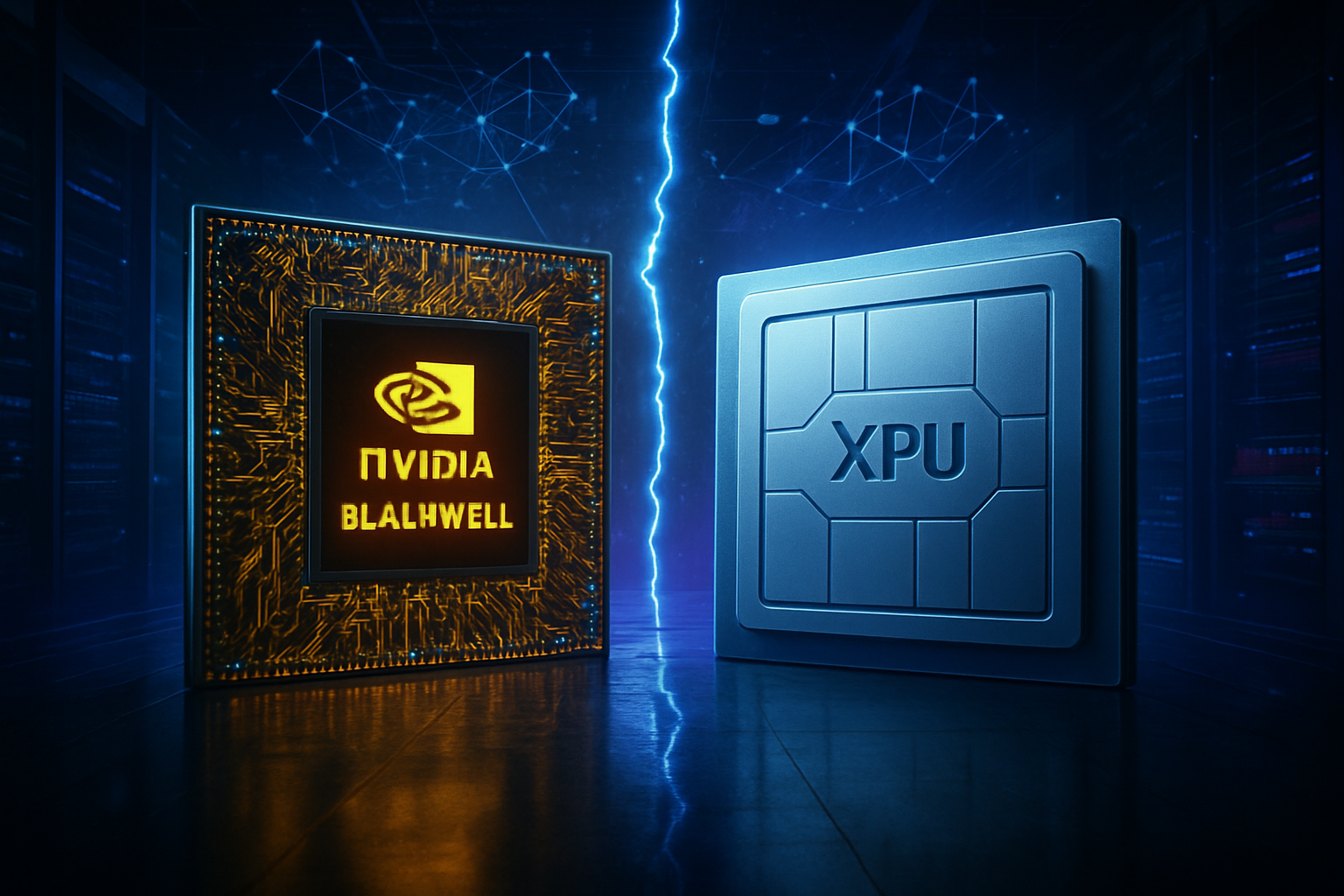
    This shift represents a fundamental "Silicon Schism" in the AI industry. On one side stands NVIDIA’s general-purpose, high-margin GPU dominance, and on the other, a growing coalition of tech giants like Google (NASDAQ: GOOGL), Microsoft (NASDAQ: MSFT), and Meta (NASDAQ: META) who are increasingly designing their own chips to bypass the "NVIDIA tax." With Broadcom acting as the primary architect for these bespoke solutions, the competitive tension between the "Swiss Army Knife" of Blackwell and the "Precision Scalpels" of custom ASICs has become the defining battle of the generative AI era.

    The Technical Tug-of-War: Blackwell Ultra vs. The Rise of the XPU

    At the heart of this rivalry is the technical divergence between flexibility and efficiency. NVIDIA’s current flagship, the Blackwell Ultra (B300), which entered mass production in the second half of 2025, is a marvel of engineering. Boasting 288GB of HBM3E memory and delivering 15 PFLOPS of dense FP4 compute, it is designed to handle any AI workload thrown at it. However, this versatility comes at a cost—both in terms of power consumption and price. The Blackwell architecture is built to be everything to everyone, a necessity for researchers experimenting with new model architectures that haven't yet been standardized.

    In contrast, the custom Application-Specific Integrated Circuits (ASICs), or XPUs, being co-developed by Broadcom and hyperscalers, are stripped-down powerhouses. By late 2025, Google’s TPU v7 and Meta’s MTIA 3 have demonstrated that for specific, high-volume tasks—particularly inference and stable Transformer-based training—custom silicon can deliver up to a 50% improvement in power efficiency (TFLOPs per Watt) compared to Blackwell. These chips eliminate the "dark silicon" or unused features of a general-purpose GPU, focusing entirely on the tensor operations that drive modern Large Language Models (LLMs).

    Furthermore, the networking layer has become a critical technical battleground. NVIDIA relies on its proprietary NVLink interconnect to maintain its "moat," creating a tightly coupled ecosystem that is difficult to leave. Broadcom, however, has championed an open-standard approach, leveraging its Tomahawk 6 switching silicon to enable massive clusters of 1 million or more XPUs via high-performance Ethernet. This architectural split means that while NVIDIA offers a superior integrated "black box" solution, the custom XPU route offers hyperscalers the ability to scale their infrastructure horizontally with far more granular control over their thermal and budgetary envelopes.

    The $50 Billion Shift: Strategic Implications for Big Tech

    The financial gravity of this trend was underscored by Broadcom’s recent revelation of an AI-specific backlog exceeding $73 billion, with annual custom silicon revenue projected to hit $50 billion by 2026. This is not just a rounding error; it represents a massive redirection of capital expenditure (CapEx) away from NVIDIA. For companies like Google and Microsoft, the move to custom silicon is a strategic necessity to protect their margins. As AI moves from the "R&D phase" to the "deployment phase," the cost of running inference for billions of users makes the $35,000+ price tag of a Blackwell GPU increasingly untenable.

    The competitive implications are particularly stark for Broadcom, which has positioned itself as the "Kingmaker" of the custom silicon era. By providing the intellectual property and physical design services for chips like Google's TPU and Anthropic’s new $21 billion custom cluster, Broadcom is capturing the value that previously flowed almost exclusively to NVIDIA. This has created a bifurcated market: NVIDIA remains the essential partner for the most advanced "frontier" research—where the next generation of reasoning models is being birthed—while Broadcom and its partners are winning the war for "production-scale" AI.

    For startups and smaller AI labs, this development is a double-edged sword. While the rise of custom silicon may eventually lower the cost of cloud compute, these bespoke chips are currently reserved for the "Big Five" hyperscalers. This creates a potential "compute divide," where the owners of custom silicon enjoy a significantly lower Total Cost of Ownership (TCO) than those relying on public cloud instances of NVIDIA GPUs. As a result, we are seeing a trend where major model builders, such as Anthropic, are seeking direct partnerships with silicon designers to secure their own long-term hardware independence.

    A New Era of Efficiency: The Wider Significance of Custom Silicon

    The rise of custom ASICs marks a pivotal transition in the AI landscape, mirroring the historical evolution of other computing paradigms. Just as the early days of the internet saw a transition from general-purpose CPUs to specialized networking hardware, the AI industry is realizing that the sheer energy demands of Blackwell-class clusters are unsustainable. In a world where data center power is the ultimate constraint, a 40% reduction in TCO and power consumption—offered by custom XPUs—is not just a financial preference; it is a requirement for continued scaling.

    This shift also highlights the growing importance of the software compiler layer. One of NVIDIA’s strongest defenses has been CUDA, the software platform that has become the industry standard for AI development. However, the $50 billion investment in custom silicon is finally funding a viable alternative. Open-source initiatives like OpenAI’s Triton and Google’s OpenXLA are maturing, allowing developers to write code that can run on both NVIDIA GPUs and custom ASICs with minimal friction. As the software barrier to entry for custom silicon lowers, NVIDIA’s "software moat" begins to look less like a fortress and more like a hurdle.

    There are, however, concerns regarding the fragmentation of the AI hardware ecosystem. If every major hyperscaler develops its own proprietary chip, the "write once, run anywhere" dream of AI development could become more difficult. We are seeing a divergence where the "Inference Era" is dominated by specialized, efficient hardware, while the "Innovation Era" remains tethered to the flexibility of NVIDIA. This could lead to a two-tier AI economy, where the most efficient models are those locked behind the proprietary hardware of a few dominant cloud providers.

    The Road to Rubin: Future Developments and the Next Frontier

    Looking ahead to 2026, the battle is expected to intensify as NVIDIA prepares to launch its Rubin architecture (R100). Taped out on TSMC’s (NYSE: TSM) 3nm process, Rubin will feature HBM4 memory and a new 4x reticle chiplet design, aiming to reclaim the efficiency lead that custom ASICs have recently carved out. NVIDIA is also diversifying its own lineup, introducing "inference-first" GPUs like the Rubin CPX, which are designed to compete directly with custom XPUs on cost and power.

    On the custom side, the next horizon is the "10-gigawatt chip" project. Reports suggest that major players like OpenAI are working with Broadcom on massive, multi-year silicon roadmaps that integrate power management and liquid cooling directly into the chip architecture. These "AI Super-ASICs" will be designed not just for today’s Transformers, but for the "test-time scaling" and agentic workflows that are expected to dominate the AI landscape in 2026 and beyond.

    The ultimate challenge for both camps will be the physical limits of silicon. As we move toward 2nm and beyond, the gains from traditional Moore’s Law are diminishing. The next phase of competition will likely move beyond the chip itself and into the realm of "System-on-a-Wafer" and advanced 3D packaging. Experts predict that the winner of the next decade won't just be the company with the fastest chip, but the one that can most effectively manage the "Power-Performance-Area" (PPA) triad at a planetary scale.

    Summary: The Bifurcation of AI Compute

    The emergence of a $50 billion custom silicon market marks the end of the "GPU Monoculture." While NVIDIA’s Blackwell architecture remains a monumental achievement and the preferred tool for pushing the boundaries of what is possible, the economic and thermal realities of 2025 have forced a diversification of the hardware stack. Broadcom’s massive backlog and the aggressive chip roadmaps of Google, Microsoft, and Meta signal that the future of AI infrastructure is bespoke.

    In the coming months, the industry will be watching the initial benchmarks of the Blackwell Ultra against the first wave of 3nm custom XPUs. If the efficiency gap continues to widen, NVIDIA may find itself in the position of a high-end boutique—essential for the most complex tasks but increasingly bypassed for the high-volume work that powers the global AI economy. For now, the silicon war is far from over, but the era of the universal GPU is clearly being challenged by a new generation of precision-engineered silicon.


    This content is intended for informational purposes only and represents analysis of current AI developments.

    TokenRing AI delivers enterprise-grade solutions for multi-agent AI workflow orchestration, AI-powered development tools, and seamless remote collaboration platforms.
    For more information, visit https://www.tokenring.ai/.
  • The Nvidia Paradox: Why a $4.3 Trillion Valuation is Just the Beginning

    The Nvidia Paradox: Why a $4.3 Trillion Valuation is Just the Beginning

    As of December 19, 2025, Nvidia (NASDAQ:NVDA) has achieved a feat once thought impossible: maintaining a market valuation of $4.3 trillion while simultaneously being labeled as "cheap" by a growing chorus of Wall Street analysts. While the sheer magnitude of the company's market cap makes it the most valuable entity on Earth—surpassing the likes of Apple (NASDAQ:AAPL) and Microsoft (NASDAQ:MSFT)—the financial metrics underlying this growth suggest that the market may still be underestimating the velocity of the artificial intelligence revolution.

    The "Nvidia Paradox" refers to the counter-intuitive reality where a stock's price rises by triple digits, yet its valuation multiples actually shrink. This phenomenon is driven by earnings growth that is outstripping even the most bullish stock price targets. As the world shifts from general-purpose computing to accelerated computing and generative AI, Nvidia has positioned itself not just as a chip designer, but as the primary architect of the global "AI Factory" infrastructure.

    The Math Behind the 'Bargain'

    The primary driver for the "cheap" designation is Nvidia’s forward price-to-earnings (P/E) ratio. Despite the $4.3 trillion valuation, the stock is currently trading at approximately 24x to 25x its projected earnings for the next fiscal year. To put this in perspective, this multiple places Nvidia in the 11th percentile of its historical valuation over the last decade. For nearly 90% of the past ten years, investors were paying a higher premium for Nvidia's earnings than they are today, even though the company's competitive moat has never been wider.

    Furthermore, the Price/Earnings-to-Growth (PEG) ratio—a favorite metric for growth investors—has dipped below 0.7x. In traditional valuation theory, any PEG ratio under 1.0 is considered undervalued. This suggests that the market has not fully priced in the 50% to 60% revenue growth projected for 2026. This disconnect is largely due to the massive earnings compression caused by the Blackwell architecture's rollout, which has seen unprecedented demand, with systems reportedly sold out for the next four quarters.

    Technically, the transition from the Blackwell B200 series to the upcoming Rubin R100 platform is the catalyst for this sustained growth. While Blackwell focused on massive efficiency gains in training, the Rubin architecture—utilizing Taiwan Semiconductor Manufacturing Co.'s (NYSE:TSM) 3nm process and next-generation HBM4 memory—is designed to treat an entire data center as a single, unified computer. This "rack-scale" approach makes it increasingly difficult for analysts to compare Nvidia to traditional semiconductor firms like Intel (NASDAQ:INTC) or AMD (NASDAQ:AMD), as Nvidia is effectively selling entire "AI Factories" rather than individual components.

    Initial reactions from the industry highlight that Nvidia’s move to a one-year release cycle (Blackwell in 2024, Rubin in 2026) has created a "velocity gap" that competitors are struggling to bridge. Industry experts note that by the time rivals release a chip to compete with Blackwell, Nvidia is already shipping Rubin, effectively resetting the competitive clock every twelve months.

    The Infrastructure Moat and the Hyperscaler Arms Race

    The primary beneficiaries of Nvidia’s continued dominance are the "Hyperscalers"—Microsoft, Alphabet (NASDAQ:GOOGL), Amazon (NASDAQ:AMZN), and Meta (NASDAQ:META). These companies have collectively committed over $400 billion in capital expenditures for 2025, a significant portion of which is flowing directly into Nvidia’s coffers. For these tech giants, the risk of under-investing in AI infrastructure is far greater than the risk of over-spending, as AI becomes the core engine for cloud services, search, and social media recommendation algorithms.

    Nvidia’s strategic advantage is further solidified by its CUDA software ecosystem, which remains the industry standard for AI development. While companies like AMD (NASDAQ:AMD) have made strides with their MI300 and MI350 series chips, the "switching costs" for moving away from Nvidia’s software stack are prohibitively high for most enterprise customers. This has allowed Nvidia to capture over 90% of the data center GPU market, leaving competitors to fight for the remaining niche segments.

    The potential disruption to existing services is profound. As Nvidia scales its "AI Factories," traditional CPU-based data centers are becoming obsolete for modern workloads. This has forced a massive re-architecting of the global cloud, where the value is shifting from general-purpose processing to specialized AI inference. This shift favors Nvidia’s integrated systems, such as the NVL72 rack, which integrates 72 GPUs and 36 CPUs into a single liquid-cooled unit, providing a level of performance that standalone chips cannot match.

    Strategically, Nvidia has also insulated itself from potential spending plateaus by Big Tech. By diversifying into enterprise AI and "Sovereign AI," the company has tapped into national budgets and public sector capital, creating a secondary layer of demand that is less sensitive to the cyclical nature of the consumer tech market.

    Sovereign AI: The New Industrial Revolution

    Perhaps the most significant development in late 2025 is the rise of "Sovereign AI." Nations such as Japan, France, Saudi Arabia, and the United Kingdom have begun treating AI capabilities as a matter of national security and digital autonomy. This shift represents a "New Industrial Revolution," where data is the raw material and Nvidia’s AI Factories are the refineries. By building domestic AI infrastructure, these nations ensure that their cultural values, languages, and sensitive data remain within their own borders.

    This movement has transformed Nvidia from a silicon vendor into a geopolitical partner. Sovereign AI initiatives are projected to contribute over $20 billion to Nvidia’s revenue in the coming fiscal year, providing a hedge against any potential cooling in the U.S. cloud market. This trend mirrors the historical development of national power grids or telecommunications networks; countries that do not own their AI infrastructure risk becoming "digital colonies" of foreign tech powers.

    Comparisons to previous milestones, such as the mobile internet or the dawn of the web, often fall short because of the speed of AI adoption. While the internet took decades to fully transform the global economy, the transition to AI-driven productivity is happening in a matter of years. The "Inference Era"—the phase where AI models are not just being trained but are actively running millions of tasks per second—is driving a recurring demand for "intelligence tokens" that functions more like a utility than a traditional hardware cycle.

    However, this dominance does not come without concerns. Antitrust scrutiny in the U.S. and Europe remains a persistent headwind, as regulators worry about Nvidia’s "full-stack" lock-in. Furthermore, the immense power requirements of AI Factories have sparked a global race for energy solutions, leading Nvidia to partner with energy providers to optimize the power-to-performance ratio of its massive GPU clusters.

    The Road to Rubin and Beyond

    Looking ahead to 2026, the tech world is focused on the mass production of the Rubin architecture. Named after astronomer Vera Rubin, this platform will feature the new "Vera" CPU and HBM4 memory, promising a 3x performance leap over Blackwell. This rapid cadence is designed to keep Nvidia ahead of the "AI scaling laws," which dictate that as models grow larger, they require exponentially more compute power to remain efficient.

    In the near term, expect to see Nvidia move deeper into the field of physical AI and humanoid robotics. The company’s GR00T project, a foundation model for humanoid robots, is expected to see its first large-scale industrial deployments in 2026. This expands Nvidia’s Total Addressable Market (TAM) from the data center to the factory floor, as AI begins to interact with and manipulate the physical world.

    The challenge for Nvidia will be managing its massive supply chain. Producing 1,000 AI racks per week is a logistical feat that requires flawless execution from partners like TSMC and SK Hynix. Any disruption in the semiconductor supply chain or a geopolitical escalation in the Taiwan Strait remains the primary "black swan" risk for the company’s $4.3 trillion valuation.

    A New Benchmark for the Intelligence Age

    The Nvidia Paradox serves as a reminder that in a period of exponential technological change, traditional valuation metrics can be misleading. A $4.3 trillion market cap is a staggering number, but when viewed through the lens of a 25x forward P/E and a 0.7x PEG ratio, the stock looks more like a value play than a speculative bubble. Nvidia has successfully transitioned from a gaming chip company to the indispensable backbone of the global intelligence economy.

    Key takeaways for investors and industry observers include the company's shift toward a one-year innovation cycle, the emergence of Sovereign AI as a major revenue pillar, and the transition from model training to large-scale inference. As we head into 2026, the primary metric to watch will be the "utilization of intelligence"—how effectively companies and nations can turn their massive investments in Nvidia hardware into tangible economic productivity.

    The coming months will likely see further volatility as the market digests these massive figures, but the underlying trend is clear: the demand for compute is the new oil of the 21st century. As long as Nvidia remains the only company capable of refining that oil at scale, its "expensive" valuation may continue to be the biggest bargain in tech.


    This content is intended for informational purposes only and represents analysis of current AI developments.

    TokenRing AI delivers enterprise-grade solutions for multi-agent AI workflow orchestration, AI-powered development tools, and seamless remote collaboration platforms.
    For more information, visit https://www.tokenring.ai/.