
Tag: Blackwell

  • Nvidia Navigates Geopolitical Minefield: Blackwell Chips and the China Conundrum

    Nvidia Navigates Geopolitical Minefield: Blackwell Chips and the China Conundrum

    Nvidia (NASDAQ: NVDA), a titan in the AI chip industry, finds itself at the epicenter of a fierce technological and geopolitical struggle, as it endeavors to sell its groundbreaking Blackwell AI chips to the lucrative Chinese market. This effort unfolds against a backdrop of stringent US export controls designed to curb China's access to advanced semiconductor technology, creating an intricate dance between commercial ambition and national security imperatives. As of November 2025, the global stage is set for a high-stakes drama where the future of AI dominance hangs in the balance, with Nvidia caught between two economic superpowers.

    The company's strategy involves developing specially tailored, less powerful versions of its flagship Blackwell chips to comply with Washington's restrictions, while simultaneously advocating for eased trade relations. However, this delicate balancing act is further complicated by Beijing's own push for indigenous alternatives and occasional discouragement of foreign purchases. The immediate significance of Nvidia's positioning is profound, impacting not only its own revenue streams but also the broader trajectory of AI development and the escalating tech rivalry between the United States and China.

    Blackwell's Dual Identity: Global Powerhouse Meets China's Custom Chip

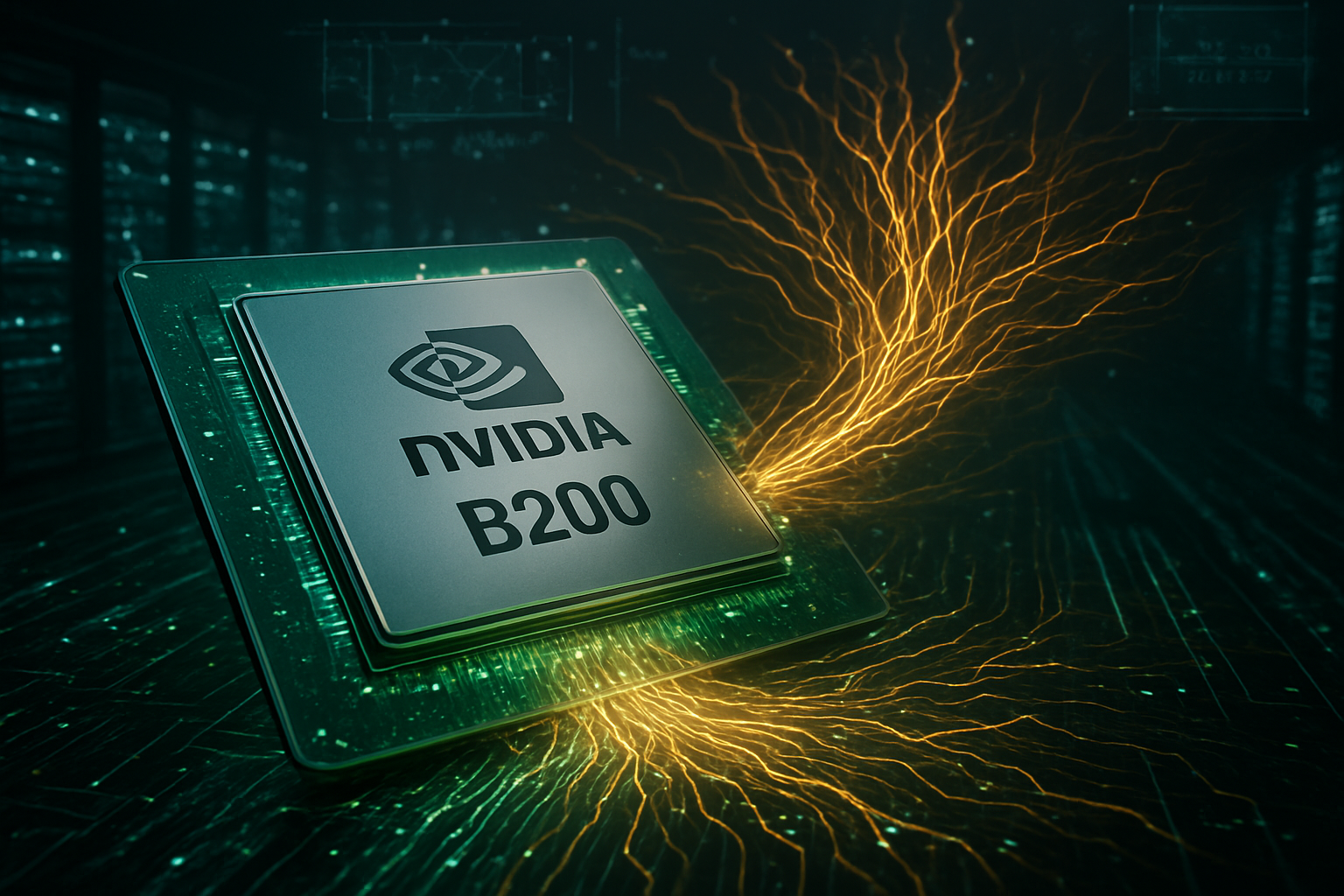
    Nvidia's Blackwell architecture, unveiled to much fanfare, represents a monumental leap in AI computing, designed to tackle the most demanding workloads. The global flagship models, including the B200 GPU and the Grace Blackwell (GB200) Superchip, are engineering marvels. Built on TSMC's (NYSE: TSM) custom 4NP process, these GPUs pack an astonishing 208 billion transistors in a dual-die configuration, making them Nvidia's largest to date. A single B200 GPU can deliver up to 20 PetaFLOPS of sparse FP4 AI compute, while a rack-scale GB200 NVL72 system, integrating 72 Blackwell GPUs and 36 Grace CPUs, can achieve a staggering 1,440 PFLOPS for FP4 Tensor Core operations. This translates to up to 30 times faster real-time trillion-parameter Large Language Model (LLM) inference compared to the previous generation, thanks to fifth-generation Tensor Cores, up to 192 GB of HBM3e memory with 8 TB/s bandwidth, and fifth-generation NVLink providing 1.8 TB/s bidirectional GPU-to-GPU interconnect.

    However, the geopolitical realities of US export controls have necessitated a distinct, modified version for the Chinese market: the B30A. This chip, a Blackwell-based accelerator, is specifically engineered to comply with Washington's performance thresholds. Unlike the dual-die flagship, the B30A is expected to utilize a single-die design, deliberately reducing its raw computing power to roughly half that of the global B300 accelerator. Estimated performance figures for the B30A include approximately 7.5 PFLOPS FP4 and 1.875 PFLOPS FP16/BF16, alongside 144GB HBM3E memory and 4TB/s bandwidth, still featuring NVLink technology, albeit likely with adjusted speeds to remain within regulatory limits.

    The B30A represents a significant performance upgrade over its predecessor, the H20, Nvidia's previous China-specific chip based on the Hopper architecture. While the H20 offered 148 FP16/BF16 TFLOPS, the B30A's estimated 1.875 PFLOPS FP16/BF16 marks a substantial increase, underscoring the advancements brought by the Blackwell architecture even in a constrained form. This leap in capability, even with regulatory limitations, is a testament to Nvidia's engineering prowess and its determination to maintain a competitive edge in the critical Chinese market.

    Initial reactions from the AI research community and industry experts, as of November 2025, highlight a blend of pragmatism and concern. Nvidia CEO Jensen Huang has publicly expressed optimism about eventual Blackwell sales in China, arguing for the mutual benefits of technological exchange and challenging the efficacy of the export curbs given China's domestic AI chip capabilities. While Beijing encourages local alternatives like Huawei, private Chinese companies reportedly show strong interest in the B30A, viewing it as a "sweet spot" for mid-tier AI projects due to its balance of performance and compliance. Despite an expected price tag of $20,000-$24,000—roughly double that of the H20—Chinese firms appear willing to pay for Nvidia's superior performance and software ecosystem, indicating the enduring demand for its hardware despite geopolitical headwinds.

    Shifting Sands: Blackwell's Ripple Effect on the Global AI Ecosystem

    Nvidia's (NASDAQ: NVDA) Blackwell architecture has undeniably cemented its position as the undisputed leader in the global AI hardware market, sending ripple effects across AI companies, tech giants, and startups alike. The demand for Blackwell platforms has been nothing short of "insane," with the entire 2025 production reportedly sold out by November 2024. This overwhelming demand is projected to drive Nvidia's data center revenue to unprecedented levels, with some analysts forecasting approximately $500 billion in AI chip orders through 2026, propelling Nvidia to become the first company to surpass a $5 trillion market capitalization.

    The primary beneficiaries are, naturally, Nvidia itself, which has solidified its near-monopoly and is strategically expanding into "AI factories" and potentially "AI cloud" services. Hyperscale cloud providers such as Amazon (NASDAQ: AMZN) (AWS), Microsoft (NASDAQ: MSFT) (Azure), Google (NASDAQ: GOOGL) (Google Cloud), and Oracle (NYSE: ORCL) (OCI) are also major winners, integrating Blackwell into their offerings to provide cutting-edge AI infrastructure. AI model developers like OpenAI, Meta (NASDAQ: META), and Mistral directly benefit from Blackwell's computational prowess, enabling them to train larger, more complex models faster. Server and infrastructure providers like Dell Technologies (NYSE: DELL), HPE (NYSE: HPE), and Supermicro (NASDAQ: SMCI), along with supply chain partners like TSMC (NYSE: TSM), are also experiencing a significant boom.

    However, the competitive implications are substantial. Rivals like Advanced Micro Devices (NASDAQ: AMD) and Intel (NASDAQ: INTC) are intensifying their efforts in AI accelerators but face an uphill battle against Nvidia's entrenched market presence and technological lead. A significant long-term disruption could come from major cloud providers, who are actively developing their own custom AI silicon to reduce dependence on Nvidia and optimize for their specific services. Furthermore, the escalating cost of advanced AI compute, driven by Blackwell's premium pricing and demand, could become a barrier for smaller AI startups, potentially leading to a consolidation of AI development around Nvidia's ecosystem and stifling innovation from less funded players. The rapid release cycle of Blackwell is also likely to cannibalize sales of Nvidia's previous-generation Hopper H100 GPUs.

    In the Chinese market, the introduction of the China-specific B30A chip is a strategic maneuver by Nvidia to maintain its crucial market share, estimated at a $50 billion opportunity in 2025. This modified Blackwell variant, while scaled back from its global counterparts, is still a significant upgrade over the previous China-compliant H20. If approved for export, the B30A could significantly supercharge China's frontier AI development, allowing Chinese cloud providers and tech giants to build more capable AI models within regulatory constraints. However, this also intensifies competition for domestic Chinese chipmakers like Huawei, who are rapidly advancing their own AI chip development but still lag behind Nvidia's memory bandwidth and software ecosystem. The B30A's availability presents a powerful, albeit restricted, foreign alternative, potentially accelerating China's drive for technological independence even as it satisfies immediate demand for advanced compute.

    The Geopolitical Chessboard: Blackwell and the AI Cold War

    Nvidia's (NASDAQ: NVDA) Blackwell chips are not merely another product upgrade; they represent a fundamental shift poised to reshape the global AI landscape and intensify the already heated "AI Cold War" between the United States and China. As of November 2025, the situation surrounding Blackwell sales to China intricately weaves national security imperatives with economic ambitions, reflecting a new era of strategic competition.

    The broader AI landscape is poised for an unprecedented acceleration. Blackwell's unparalleled capabilities for generative AI and Large Language Models will undoubtedly drive innovation across every sector, from healthcare and scientific research to autonomous systems and financial services. Nvidia's deeply entrenched CUDA software ecosystem continues to provide a significant competitive advantage, further solidifying its role as the engine of this AI revolution. This era will see the "AI trade" broaden beyond hyperscalers to smaller companies and specialized software providers, all leveraging the immense computational power to transform data centers into "AI factories" capable of generating intelligence at scale.

    However, the geopolitical impacts are equally profound. The US has progressively tightened its export controls on advanced AI chips to China since October 2022, culminating in the "AI Diffusion rule" in January 2025, which places China in the most restricted tier for accessing US AI technology. This strategy, driven by national security concerns, aims to prevent China from leveraging cutting-edge AI for military applications and challenging American technological dominance. While the Trump administration, after taking office in April 2025, initially halted all "green zone" chip exports, a compromise in August reportedly allowed mid-range AI chips like Nvidia's H20 and Advanced Micro Devices' (NASDAQ: AMD) MI308 to be exported under a controversial 15% revenue-sharing agreement. Yet, the most advanced Blackwell chips remain subject to stringent restrictions, with President Trump confirming in late October 2025 that these were not discussed for export to China.

    This rivalry is accelerating technological decoupling, leading both nations to pursue self-sufficiency and creating a bifurcated global technology market. Critics argue that allowing even modified Blackwell chips like the B30A—which, despite being scaled back, would be significantly more powerful than the H20—could diminish America's AI compute advantage. Nvidia CEO Jensen Huang has publicly challenged the efficacy of these curbs, pointing to China's existing domestic AI chip capabilities and the potential for US economic and technological leadership to be stifled. China, for its part, is responding with massive state-led investments and an aggressive drive for indigenous innovation, with domestic AI chip output projected to triple by 2025. Companies like Huawei are emerging as significant competitors, and Chinese officials have even reportedly discouraged procurement of less advanced US chips, signaling a strong push for domestic alternatives. This "weaponization" of technology, targeting foundational AI hardware, represents a more direct and economically disruptive form of rivalry than previous tech milestones, leading to global supply chain fragmentation and heightened international tensions.

    The Road Ahead: Navigating Innovation and Division

    The trajectory of Nvidia's (NASDAQ: NVDA) Blackwell AI chips, intertwined with the evolving landscape of US export controls and China's strategic ambitions, paints a complex picture for the near and long term. As of November 2025, the future of AI innovation and global technological leadership hinges on these intricate dynamics.

    In the near term, Blackwell chips are poised to redefine AI computing across various applications. The consumer market has already seen the rollout of the GeForce RTX 50-series GPUs, powered by Blackwell, offering features like DLSS 4 and AI-driven autonomous game characters. More critically, the enterprise sector will leverage Blackwell's unprecedented speed—2.5 times faster in AI training and five times faster in inference than Hopper—to power next-generation data centers, robotics, cloud infrastructure, and autonomous vehicles. Nvidia's Blackwell Ultra GPUs, showcased at GTC 2025, promise further performance gains and efficiency. However, challenges persist, including initial overheating issues and ongoing supply chain constraints, particularly concerning TSMC's (NYSE: TSM) CoWoS packaging, which have stretched lead times.

    Looking further ahead, the long-term developments point towards an increasingly divided global tech landscape. Both the US and China are striving for greater technological self-reliance, fostering parallel supply chains. China continues to invest heavily in its domestic semiconductor industry, aiming to bolster homegrown capabilities. Nvidia CEO Jensen Huang remains optimistic about eventually selling Blackwell chips in China, viewing it as an "irreplaceable and dynamic market" with a potential opportunity of hundreds of billions by the end of the decade. He argues that China's domestic AI chip capabilities are already substantial, rendering US restrictions counterproductive.

    The future of the US-China tech rivalry is predicted to intensify, evolving into a new kind of "arms race" that could redefine global power. Experts warn that allowing the export of even downgraded Blackwell chips, such as the B30A, could "dramatically shrink" America's AI advantage and potentially allow China to surpass the US in AI computing power by 2026 under a worst-case scenario. To counter this, the US must strengthen partnerships with allies. Nvidia's strategic path involves continuous innovation, solidifying its CUDA ecosystem lock-in, and diversifying its market footprint. This includes a notable deal to supply over 260,000 Blackwell AI chips to South Korea and a massive $500 billion investment in US AI infrastructure over the next four years to boost domestic manufacturing and establish new AI Factory Research Centers. The crucial challenge for Nvidia will be balancing its commercial imperative to access the vast Chinese market with the escalating geopolitical pressures and the US government's national security concerns.

    Conclusion: A Bifurcated Future for AI

    Nvidia's (NASDAQ: NVDA) Blackwell AI chips, while representing a monumental leap in computational power, are inextricably caught in the geopolitical crosscurrents of US export controls and China's assertive drive for technological self-reliance. As of November 2025, this dynamic is not merely shaping Nvidia's market strategy but fundamentally altering the global trajectory of artificial intelligence development.

    Key takeaways reveal Blackwell's extraordinary capabilities, designed to process trillion-parameter models with up to a 30x performance increase for inference over its Hopper predecessor. Yet, stringent US export controls have severely limited its availability to China, crippling Nvidia's advanced AI chip market share in the region from an estimated 95% in 2022 to "nearly zero" by October 2025. This precipitous decline is a direct consequence of both US restrictions and China's proactive discouragement of foreign purchases, favoring homegrown alternatives like Huawei's Ascend 910B. The contentious debate surrounding a downgraded Blackwell variant for China, potentially the B30A, underscores the dilemma: while it could offer a performance upgrade over the H20, experts warn it might significantly diminish America's AI computing advantage.

    This situation marks a pivotal moment in AI history, accelerating a technological decoupling that is creating distinct US-centric and China-centric AI ecosystems. The measures highlight how national security concerns can directly influence the global diffusion of cutting-edge technology, pushing nations towards domestic innovation and potentially fragmenting the collaborative nature that has often characterized scientific progress. The long-term impact will likely see Nvidia innovating within regulatory confines, a more competitive landscape with bolstered Chinese chip champions, and divergent AI development trajectories shaped by distinct hardware capabilities. The era of a truly global, interconnected AI hardware supply chain may be giving way to regionalized, politically influenced technology blocs, with profound implications for standardization and the overall pace of AI progress.

    In the coming weeks and months, all eyes will be on the US government's decision regarding an export license for Nvidia's proposed B30A chip for China. Any approval or denial will send a strong signal about the future of US export control policy. We must also closely monitor the advancements and adoption rates of Chinese domestic AI chips, particularly Huawei's Ascend series, and their ability to compete with or surpass "nerfed" Nvidia offerings. Further policy adjustments from both Washington and Beijing, alongside broader US-China relations, will heavily influence the tech landscape. Nvidia's ongoing market adaptation and CEO Jensen Huang's advocacy for continued access to the Chinese market will be critical for the company's sustained leadership in this challenging, yet dynamic, global environment.


    This content is intended for informational purposes only and represents analysis of current AI developments.

    TokenRing AI delivers enterprise-grade solutions for multi-agent AI workflow orchestration, AI-powered development tools, and seamless remote collaboration platforms.
    For more information, visit https://www.tokenring.ai/.

  • Nvidia Shatters Records: AI Powerhouse Hits $5 Trillion Market Cap, Reshaping Global Economy

    Nvidia Shatters Records: AI Powerhouse Hits $5 Trillion Market Cap, Reshaping Global Economy

    In a historic moment for the technology and financial worlds, Nvidia Corporation (NASDAQ: NVDA) officially achieved an unprecedented $5 trillion market capitalization on Wednesday, October 29, 2025. This landmark valuation, reached during early market trading as shares surged, solidifies Nvidia's position as the world's most valuable company and underscores the profound and accelerating dominance of artificial intelligence in the global stock market. The milestone comes less than four months after the Silicon Valley chipmaker first breached the $4 trillion mark in July 2025, reflecting an extraordinary period of growth fueled by insatiable demand for its AI hardware and software.

    The immediate reaction to Nvidia's record-breaking valuation was a significant rally in its stock, with shares climbing 4.5% to 5% in early trading. This surge was driven by a confluence of factors, including overwhelming demand for Nvidia's cutting-edge Graphics Processing Units (GPUs) – considered the indispensable engine for modern AI applications – and strategic announcements made during its recent GTC DC event. CEO Jensen Huang's revelation of "visibility into half a trillion in sales for Grace Blackwell and Vera Rubin through 2026," alongside his projection of a potential $3-$4 trillion annual infrastructure spending in AI by 2030, further bolstered investor confidence, cementing Nvidia's role as the foundational infrastructure provider for the burgeoning AI revolution.

    The Unseen Architecture: Nvidia's Technical Prowess Driving the AI Era

    Nvidia's meteoric rise to a $5 trillion market capitalization is not merely a financial anomaly but a direct reflection of its unparalleled technological leadership and vertically integrated strategy in artificial intelligence. The company's comprehensive ecosystem, spanning groundbreaking GPU architectures, the ubiquitous CUDA software platform, and continuous innovations across its AI software stack, has created a formidable moat that differentiates it significantly from competitors.

    At the heart of Nvidia's AI prowess are its revolutionary GPU architectures, meticulously designed for unparalleled performance in AI training and inference. The Blackwell architecture, unveiled in March 2024, represents a monumental leap forward. Chips like the B100, B200, Blackwell Ultra, and the GB200 Grace Blackwell Superchip pack an astounding 208 billion transistors, manufactured using a custom TSMC 4NP process. Blackwell GPUs are engineered for extraordinary efficiency in content generation and inference workloads, with the GB200 combining ultra-efficient CPU and GPU designs to deliver unprecedented performance for complex simulations, deep learning models, and large language applications. Its second-generation Transformer Engine, custom Blackwell Tensor Core technology, and new micro-scaling precision formats accelerate both inference and training for large language models (LLMs) and Mixture-of-Experts (MoE) models. Nvidia has already shipped 6 million Blackwell chips and anticipates $500 billion in cumulative revenue from Blackwell and the upcoming Rubin products through 2026. Furthermore, Blackwell integrates NVIDIA Confidential Computing, providing hardware-based security for sensitive data and AI models.

    Building on this, Nvidia introduced the Vera Rubin next-generation GPU family, with systems slated to ship in the second half of 2026. The Vera Rubin platform, comprising a Rubin GPU and a Vera CPU (Nvidia's first custom-designed processor based on an Olympus core architecture), promises even greater capabilities. When paired, the Vera CPU and Rubin GPU system can achieve inference performance of up to 50 petaflops, more than double that of the Blackwell generation, and boast up to 288 gigabytes of fast memory. The Rubin architecture, particularly the Rubin CPX GPU, is purpose-built for "massive-context AI," enabling models to reason across millions of tokens of knowledge simultaneously, thereby reducing inference costs and unlocking advanced developer capabilities. The Vera Rubin NVL144 CPX platform is projected to deliver 8 exaflops of AI performance and 100TB of fast memory in a single rack, necessitating increased adoption of liquid cooling solutions due to its immense performance demands.

    Beyond hardware, the Compute Unified Device Architecture (CUDA) platform is arguably Nvidia's most significant competitive advantage. This proprietary parallel computing platform and programming model allows software to leverage Nvidia GPUs for accelerated general-purpose processing, transforming GPUs from mere graphics tools into powerful AI engines. CUDA's nearly two-decade head start has fostered a vast developer base (over 4 million global developers) and an optimized software stack that is deeply embedded in major AI frameworks like TensorFlow and PyTorch. This robust ecosystem creates substantial "vendor lock-in," making it challenging and costly for developers and companies to switch to alternative platforms offered by competitors like Advanced Micro Devices, Inc. (NASDAQ: AMD) (ROCm) or Intel Corporation (NASDAQ: INTC) (oneAPI).

    Nvidia's software innovations extend to the CUDA-X Suite of libraries, the enterprise-grade NVIDIA AI Enterprise software suite for AI development and deployment, and the NGC Catalog for GPU-optimized software. Its Omniverse platform for virtual simulations has gained traction in AI-driven sectors, combining virtual environments with generative AI to train robots. Initial reactions from the AI research community and industry experts have been overwhelmingly positive, recognizing Nvidia's critical role in the "AI Supercycle." Experts emphasize Nvidia's "strategic moat," largely attributed to CUDA, and its continuous technological leadership, which promises significant leaps in deep learning performance, memory, and networking efficiency. The market's exceptional response, culminating in the $5 trillion valuation, reflects profound investor confidence in Nvidia's sustained exponential growth.

    Reshaping the AI Battleground: Impact on Tech Giants and Startups

    Nvidia's unprecedented market capitalization and its entrenched dominance in AI hardware and software are sending ripple effects throughout the entire technology ecosystem, profoundly impacting other AI companies, established tech giants, and nascent startups. Its strategic advantages, built on technological superiority and a robust ecosystem, are reshaping competitive dynamics and investment trends.

    Several entities stand to benefit directly from Nvidia's ascendancy. Taiwan Semiconductor Manufacturing Company (NYSE: TSM), as Nvidia's primary foundry, is a major beneficiary, dedicating substantial capacity to GPU production. Similarly, SK Hynix Inc. (KRX: 000660), a key supplier of high-bandwidth memory (HBM), has reportedly sold out its entire 2025 memory chip supply due to Nvidia's demand. Cloud Service Providers (CSPs) like Microsoft Corporation (NASDAQ: MSFT) Azure, Amazon.com, Inc. (NASDAQ: AMZN) Web Services (AWS), Alphabet Inc. (NASDAQ: GOOGL) Cloud, and Oracle Corporation (NYSE: ORCL) Cloud Infrastructure are significant consumers of Nvidia's GPUs, integrating them into their AI-as-a-service offerings to meet surging demand. Companies that build their AI solutions on Nvidia's CUDA ecosystem, such as Palantir Technologies Inc. (NYSE: PLTR) and Zoom Video Communications, Inc. (NASDAQ: ZM), also benefit from superior performance and widespread adoption. Furthermore, industry-specific integrators like Eli Lilly and Company (NYSE: LLY) in drug discovery and Nokia Corporation (NYSE: NOK) in 5G/6G AI-RAN are leveraging Nvidia's technology to accelerate innovation within their fields.

    However, Nvidia's dominance presents significant competitive challenges for its rivals. AMD and Intel, while making strides with their Instinct MI300X/MI350 series and Gaudi 3 chips, respectively, struggle to match Nvidia's comprehensive CUDA ecosystem and entrenched developer base. AMD, holding a smaller market share, is advocating for open alternatives to Nvidia's "walled garden," and has secured deals with OpenAI and Oracle for AI processors. Intel's Gaudi chips, aiming for cost-effectiveness, have yet to gain substantial traction. More critically, Nvidia's largest customers—the hyperscalers Google, Microsoft, and Amazon—are heavily investing in developing their own custom AI silicon (e.g., Google's TPUs, Amazon's Trainium, Microsoft's Maia) to reduce dependency and optimize for specific workloads. This strategic pivot, particularly in inference tasks, represents a long-term challenge to Nvidia's market share and pricing power. Qualcomm Incorporated (NASDAQ: QCOM) is also entering the data center AI chip market with its AI200 and AI250 processors, focusing on performance per watt and cost efficiency for inference. Chinese chipmakers like Huawei and Cambricon are actively challenging Nvidia within China, a situation exacerbated by U.S. export restrictions on advanced AI chips.

    The pervasive influence of Nvidia's technology also introduces potential disruptions. The high demand and pricing for Nvidia's GPUs mean that businesses investing in AI face rising hardware costs, potentially impacting the profitability and scalability of their AI initiatives. The deep integration of Nvidia's chips into customer software and hardware ecosystems creates significant switching costs, limiting flexibility and potentially stifling innovation outside the Nvidia ecosystem. Furthermore, Nvidia's reliance on TSMC (NYSE: TSM) for manufacturing exposes the industry to supply chain vulnerabilities. Nvidia's near-monopoly in certain high-performance AI chip segments has also attracted antitrust scrutiny from global regulators, including the U.S. Department of Justice (DOJ), raising concerns about market concentration and potential anti-competitive practices. Despite these challenges, Nvidia's market positioning is defined by its comprehensive AI platform, continuous innovation, strategic partnerships, and diversification into autonomous vehicles, industrial AI, robotics, and sovereign AI, solidifying its role as the foundational infrastructure provider for the global AI industry.

    The Broader Canvas: AI's Reshaping of Society and Economy

    Nvidia's ascent to a $5 trillion market capitalization on October 29, 2025, is far more than a financial headline; it is a powerful barometer of the profound shifts occurring in the global AI landscape and a clear signal of AI's transformative impact on society and the economy. This valuation, now surpassing the GDP of many nations, including India, and roughly equaling Germany's projected nominal GDP for 2025, underscores a fundamental re-evaluation by financial markets of companies at the epicenter of technological change.

    Nvidia's dominance is deeply intertwined with the broader AI landscape and emerging trends. Its GPUs form the essential backbone of AI development and deployment, driving an unprecedented global investment in data centers and AI infrastructure. The company is strategically moving beyond being solely a GPU vendor to becoming a global AI infrastructure leader, enabling "AI factories" for hyperscalers and governments (sovereign AI), and potentially expanding into its own "AI cloud" services. This full-stack approach encompasses compute, connectivity, and applications, with advancements like the Blackwell GPU architecture, Project Digits for democratizing AI, and the NeMo framework for managing AI agents. Nvidia is also deeply embedding its technology across various industries through strategic alliances, including building seven new AI supercomputers for the U.S. Department of Energy, a $1 billion investment in Nokia for AI-native 6G networks, and partnerships with Palantir for data analytics and CrowdStrike for AI-driven cybersecurity. Its work in autonomous vehicles (with Uber) and robotics (through NVIDIA Cosmos and Omniverse) further illustrates its pervasive influence. Moreover, Nvidia's advanced chips have become a flashpoint in the geopolitical tech rivalry between the U.S. and China, with export controls significantly impacting its market access in China, highlighting its strategic importance in national infrastructure.

    The societal and economic impacts are far-reaching. AI is projected to contribute a staggering $15.7 trillion to the global economy by 2030, with AI-related capital expenditures already surpassing the U.S. consumer as the primary driver of economic growth in the first half of 2025. Nvidia's performance is a primary catalyst for this surge, solidifying AI as the central investment theme of the decade. CEO Jensen Huang envisions "AI factories" driving a new industrial revolution, reshaping industries from semiconductors and cloud computing to healthcare and robotics. However, this transformation also raises concerns about job market disruption, with projections suggesting up to 100 million jobs could be lost in the next decade due to AI, raising risks of increased unemployment and social strife. Furthermore, the exponential demand for AI computing power is fueling a massive increase in energy-intensive data centers, which could account for a substantial percentage of national electricity demand, raising significant environmental concerns regarding carbon emissions and water usage.

    Nvidia's meteoric rise also brings forth significant concerns, particularly regarding market bubbles and monopolies. The rapid ascent and frothy valuations of AI-linked tech stocks have ignited a debate about whether this constitutes a market bubble, reminiscent of the dot-com era. Institutions like the Bank of England and the IMF have cautioned about potential market overheating and the risk of a sharp repricing if the AI boom's momentum falters. Nvidia's near-monopolistic share of the AI chip market (estimated 75% to 92%) has also attracted scrutiny from global regulators over potential antitrust violations, raising concerns about stifled innovation, increased prices, and a harmful dependency on a single provider that could create systemic risks. Regulators are investigating concerns that Nvidia might be implementing illegal tying agreements by promoting exclusive use of its chips and complementary AI services.

    Comparing Nvidia's current market trajectory to previous AI milestones and tech booms reveals both parallels and distinctions. While other tech giants like Apple Inc. (NASDAQ: AAPL) and Microsoft Corporation (NASDAQ: MSFT) have recently surpassed multi-trillion-dollar valuations, Nvidia's rapid ascent to $5 trillion is unique in its speed, adding a trillion dollars in mere months. This mirrors the infrastructure build-out of the internet boom, which required massive investments in fiber optics and servers, with AI now necessitating an equivalent build-out of data centers and powerful GPUs. Just as the internet spawned new business models, AI is creating opportunities in autonomous systems, personalized medicine, and advanced analytics. While some draw parallels to the dot-com bubble, many analysts distinguish Nvidia's rise by the tangible demand for its products and its foundational role in a transformative technology. However, the concentration of deals among a few major AI players and the dependence within this ecosystem do raise concerns about systemic risk and a potential "contagion" effect if AI promises fall short.

    The Road Ahead: Navigating AI's Future Frontier

    Nvidia's historic $5 trillion market capitalization positions it at the vanguard of the AI revolution, but the road ahead is dynamic, filled with both immense opportunities and significant challenges. The company's future trajectory, and by extension, much of the AI market's evolution, will be shaped by its continued innovation, strategic responses to competition, and the broader geopolitical and economic landscape.

    In the near term (next 1-2 years), Nvidia is poised for continued robust financial performance. Demand for its Blackwell and Hopper GPUs is expected to remain exceptionally strong, with Data Center revenue projected to reach around $110.5 billion for fiscal year 2025 and $170.8 billion for fiscal year 2026. The full-scale production of Blackwell, coupled with the anticipated commercialization of the next-generation Rubin architecture in late 2026, will maintain Nvidia's leadership in high-end AI training. Strategic partnerships, including a $1 billion investment in Nokia for AI-RAN innovation, a $100 billion agreement with OpenAI, and collaborations with Intel and Dell, will deepen its market penetration. Nvidia has disclosed visibility into $0.5 trillion of cumulative revenue for its Blackwell and Rubin products in calendar 2025 and 2026, signaling sustained demand.

    Looking further ahead (beyond 2 years), Nvidia's long-term strategy involves a significant pivot from solely being a GPU vendor to becoming a global AI infrastructure leader. This includes enabling "AI factories" for hyperscalers and governments (sovereign AI) and potentially expanding into its own "AI cloud" services. The introduction of NVLink Fusion, designed to allow custom CPUs and accelerators from other companies to connect directly to Nvidia GPUs, signals a strategic move towards a more open, ecosystem-driven AI infrastructure model. Nvidia is aggressively expanding into new revenue streams such as physical AI, robotics (e.g., Isaac GRZ N1 model for humanoid robots), and the industrial metaverse (Omniverse), representing multi-billion dollar opportunities. Further investment in software platforms like Mission Control and CUDA-X libraries, alongside its commitment to 6G technology, underscores its holistic approach to the AI stack. Experts predict AI opportunities will become a multi-trillion-dollar market within the next five years, with AI infrastructure spending potentially reaching $3 trillion-$4 trillion per year by 2030.

    Potential applications and use cases on the horizon are vast. Nvidia's AI technologies are set to revolutionize generative AI and LLMs, robotics and autonomous systems (humanoid robots, robotaxis), healthcare and life sciences (genomics, AI agents for healthcare, biomolecular foundation models), the industrial metaverse (digital twins), telecommunications (AI-native 6G networks), and scientific discovery (climate modeling, quantum simulations). Its push into enterprise AI, including partnerships with Palantir for data analytics and CrowdStrike for AI-driven cybersecurity, highlights the pervasive integration of AI across industries.

    However, Nvidia faces several significant challenges. Intensifying competition from hyperscale cloud providers developing their own custom AI silicon (Google's TPUs, Amazon's Trainium, Microsoft's Maia) could erode Nvidia's market share, particularly in inference workloads. Rival chipmakers such as AMD, Intel, Qualcomm, and Chinese companies like Huawei and Cambricon are also making concerted efforts to capture parts of the data center and edge AI markets. Geopolitical tensions and U.S. export controls on advanced AI technology remain a major risk, potentially impacting 10-15% of Nvidia's revenue from China and causing its market share there to drop significantly. Market concentration and antitrust scrutiny are also growing concerns. Some analysts also point to the possibility of "double-ordering" by some top customers and a potential tapering off of AI training needs within the next 18 months, leading to a cyclical downturn in revenue beginning in 2026.

    Despite these challenges, experts generally predict that Nvidia will maintain its leadership in high-end AI training and accelerated computing through continuous innovation and the formidable strength of its CUDA ecosystem. While its dominant market share may gradually erode due to intensifying competition, Nvidia's overall revenue is expected to continue growing as the total addressable market for AI expands. Analysts forecast continued stock growth for Nvidia, with some predicting a price target of $206-$288 by the end of 2025 and potentially a $6 trillion market capitalization by late 2026. However, skeptical buy-side analysts caution that the market might be "priced for elevated expectations," and a pullback could occur if AI enthusiasm fades or if competitors gain more significant traction.

    A New Era: Nvidia's Legacy and the Future of AI

    Nvidia's achievement of a $5 trillion market capitalization on October 29, 2025, is more than just a financial record; it is a defining moment in the history of artificial intelligence and a testament to the company's transformative impact on the global economy. This unprecedented valuation solidifies Nvidia's role as the indispensable backbone of the AI revolution, a position it has meticulously built through relentless innovation in hardware and software.

    The key takeaways from this milestone are clear: Nvidia's dominance in AI hardware, driven by its cutting-edge GPUs like Blackwell and the upcoming Rubin architectures, is unparalleled. Its robust CUDA software ecosystem creates a powerful network effect, fostering a loyal developer community and high switching costs. This technological superiority, coupled with exceptional financial performance and strategic diversification into critical sectors like data centers, robotics, autonomous vehicles, and 6G technology, underpins its explosive and sustained growth.

    In the annals of AI history, Nvidia is no longer merely a chipmaker; it has become the foundational infrastructure provider, empowering everything from generative AI models and large language models (LLMs) to advanced robotics and autonomous systems. This achievement sets a new benchmark for corporate value, demonstrating the immense economic potential of companies at the forefront of transformative technological shifts. By providing powerful and accessible AI computing tools, Nvidia is accelerating global AI innovation and adoption, effectively democratizing access to this revolutionary technology.

    The long-term impact of Nvidia's dominance is expected to be profound and far-reaching. Its sustained innovation in accelerated computing will continue to drive the rapid advancement and deployment of AI across virtually every industry, shaping the future digital economy. However, this future will also be marked by an intensified competitive landscape, with rivals and hyperscalers developing their own AI chips to challenge Nvidia's market share. Geopolitical tensions, particularly regarding U.S. export controls to China, will remain a significant factor influencing Nvidia's market opportunities and strategies.

    In the coming weeks and months, industry observers will be closely watching several key areas. Geopolitical developments, especially any further discussions between the U.S. and China regarding advanced AI chip exports, will be critical. Nvidia's upcoming earnings reports and forward guidance will provide crucial insights into its financial health and future projections. The introduction of new hardware generations and continuous advancements in its CUDA software platform will indicate its ability to maintain its technological edge. The progress of competitors in developing viable alternative AI hardware and software solutions, as well as the success of hyperscalers' in-house chip efforts, will shape future market dynamics. Finally, the broader AI market adoption trends and ongoing debates about potential "AI bubbles" will continue to influence investor sentiment and market stability. Nvidia's journey is a testament to the power of focused innovation, and its future will largely dictate the pace and direction of the global AI revolution.

  • Nvidia Shatters Records with $5 Trillion Valuation: A Testament to AI’s Unprecedented Economic Power

    Nvidia Shatters Records with $5 Trillion Valuation: A Testament to AI’s Unprecedented Economic Power

    In a monumental achievement that reverberates across the global technology landscape, NVIDIA Corporation (NASDAQ: NVDA) has officially reached an astonishing market valuation of $5 trillion. This unprecedented milestone, achieved on October 29, 2025, not only solidifies Nvidia's position as the world's most valuable company, surpassing tech titans like Apple (NASDAQ: AAPL) and Microsoft (NASDAQ: MSFT), but also serves as a stark, undeniable indicator of artificial intelligence's rapidly escalating economic might. The company's meteoric rise, adding a staggering $1 trillion to its market capitalization in just the last three months, underscores a seismic shift in economic power, firmly placing AI at the forefront of a new industrial revolution.

    Nvidia's journey to this historic valuation has been nothing short of spectacular, characterized by an accelerated pace that has left previous market leaders in its wake. From crossing the $1 trillion mark in June 2023 to hitting $2 trillion in March 2024—a feat accomplished in a mere 180 trading days—the company's growth trajectory has been fueled by an insatiable global demand for the computing power essential to developing and deploying advanced AI models. This $5 trillion valuation is not merely a number; it represents the immense investor confidence in Nvidia's indispensable role as the backbone of global AI infrastructure, a role that sees its advanced Graphics Processing Units (GPUs) powering everything from generative AI to autonomous vehicles and sophisticated robotics.

    The Unseen Engines of AI: Nvidia's Technical Prowess and Market Dominance

    Nvidia's stratospheric valuation is intrinsically linked to its unparalleled technical leadership in the field of AI, driven by a relentless pace of innovation in both hardware and software. At the core of its dominance are its state-of-the-art Graphics Processing Units (GPUs), which have become the de facto standard for AI training and inference. The H100 GPU, based on the Hopper architecture and built on a 5nm process with 80 billion transistors, exemplifies this prowess. Featuring fourth-generation Tensor Cores and a dedicated Transformer Engine with FP8 precision, the H100 delivers up to nine times faster training and an astonishing 30 times inference speedup for large language models compared to its predecessors. Its GH100 processor, with 16,896 shading units and 528 Tensor Cores, coupled with up to 96GB of HBM3 memory and the NVLink Switch System, enables exascale workloads by connecting up to 256 H100 GPUs with 900 GB/s bidirectional bandwidth.

    Looking ahead, Nvidia's recently unveiled Blackwell architecture, announced at GTC 2024, promises to redefine the generative AI era. Blackwell-architecture GPUs pack an incredible 208 billion transistors using a custom TSMC 4NP process, integrating two reticle-limited dies into a single, unified GPU. This architecture introduces fifth-generation Tensor Cores and native support for sub-8-bit data types like MXFP6 and MXFP4, effectively doubling performance and memory size for next-generation models while maintaining high accuracy. The GB200 Grace Blackwell Superchip, a cornerstone of this new architecture, integrates two high-performance Blackwell Tensor Core GPUs with an NVIDIA Grace CPU via the NVLink-C2C interconnect, creating a rack-scale system (GB200 NVL72) capable of 30x faster real-time trillion-parameter large language model inference.

    Beyond raw hardware, Nvidia's formidable competitive moat is significantly fortified by its comprehensive software ecosystem. The Compute Unified Device Architecture (CUDA) is Nvidia's proprietary parallel computing platform, providing developers with direct access to the GPU's power through a robust API. Since its inception in 2007, CUDA has cultivated a massive developer community, now supporting multiple programming languages and offering extensive libraries, debuggers, and optimization tools, making it the fundamental platform for AI and machine learning. Complementing CUDA are specialized libraries like cuDNN (CUDA Deep Neural Network library), which provides highly optimized routines for deep learning frameworks like TensorFlow and PyTorch, and TensorRT, an inference optimizer that can deliver up to 36 times faster inference performance by leveraging precision calibration, layer fusion, and automatic kernel tuning.

    This full-stack integration—from silicon to software—is what truly differentiates Nvidia from rivals like Advanced Micro Devices (NASDAQ: AMD) and Intel Corporation (NASDAQ: INTC). While AMD offers its Instinct GPUs with CDNA architecture and Intel provides Gaudi AI accelerators and Xeon CPUs for AI, neither has managed to replicate the breadth, maturity, or developer lock-in of Nvidia's CUDA ecosystem. Experts widely refer to CUDA as a "formidable barrier to entry" and a "durable moat," creating significant switching costs for customers deeply integrated into Nvidia's platform. The AI research community and industry experts consistently validate Nvidia's performance, with H100 GPUs being the industry standard for training large language models for tech giants, and the Blackwell architecture being heralded by CEOs of Google (NASDAQ: GOOGL), Meta Platforms (NASDAQ: META), Microsoft (NASDAQ: MSFT), and OpenAI as the "processor for the generative AI era."

    Reshaping the AI Landscape: Corporate Impacts and Competitive Dynamics

    Nvidia's unprecedented market dominance, culminating in its $5 trillion valuation, is fundamentally reshaping the competitive dynamics across the entire AI industry, influencing tech giants, AI startups, and its vast supply chain. AI companies of all sizes find themselves deeply reliant on Nvidia's GPUs and the pervasive CUDA software ecosystem, which have become the foundational compute engines for training and deploying advanced AI models. This reliance means that the speed and scale of AI innovation for many are inextricably linked to the availability and cost of Nvidia's hardware, creating a significant ecosystem lock-in that makes switching to alternative solutions challenging and expensive.

    For major tech giants and hyperscale cloud providers such as Amazon (NASDAQ: AMZN), Google (NASDAQ: GOOGL), and Microsoft (NASDAQ: MSFT), Nvidia is an indispensable partner and a formidable force. These companies are among Nvidia's largest customers, procuring vast quantities of GPUs to power their expansive cloud AI services and internal research initiatives. While these hyperscalers are aggressively investing in developing their own custom AI silicon to mitigate dependency and gain greater control over their AI infrastructure, they continue to be substantial buyers of Nvidia's offerings due to their superior performance and established ecosystem. Nvidia's strong market position allows it to significantly influence pricing and terms, directly impacting the operational costs and competitive strategies of these cloud AI behemoths.

    Nvidia's influence extends deeply into the AI startup ecosystem, where it acts not just as a hardware supplier but also as a strategic investor. Through its venture arm, Nvidia provides crucial capital, management expertise, and, most critically, access to its scarce and highly sought-after GPUs to numerous AI startups. Companies like Cohere (generative AI), Perplexity AI (AI search engine), and Reka AI (video analysis models) have benefited from Nvidia's backing, gaining vital resources that accelerate their development and solidify their market position. This strategic investment approach allows Nvidia to integrate advanced AI technologies into its own offerings, diversify its product portfolio, and effectively steer the trajectory of AI development, further reinforcing the centrality of its ecosystem.

    The competitive implications for rival chipmakers are profound. While companies like AMD (NASDAQ: AMD), Intel (NASDAQ: INTC), and Qualcomm (NASDAQ: QCOM) are actively developing their own AI accelerators—such as AMD's Instinct MI325 Series and Intel's Gaudi 3—they face an uphill battle against Nvidia's "nearly impregnable lead" and the deeply entrenched CUDA ecosystem. Nvidia's first-mover advantage, continuous innovation with architectures like Blackwell and the upcoming Rubin, and its full-stack AI strategy create a formidable barrier to entry. This dominance is not without scrutiny; Nvidia's accelerating market power has attracted global regulatory attention, with antitrust concerns being raised, particularly regarding its control over the CUDA software ecosystem and the impact of U.S. export controls on advanced AI chips to China.

    The Broader AI Canvas: Societal Impacts and Future Trajectories

    Nvidia's monumental $5 trillion valuation, achieved on October 29, 2025, transcends mere financial metrics; it serves as a powerful testament to the profound and accelerating impact of the AI revolution on the broader global landscape. Nvidia's GPUs and the ubiquitous CUDA software ecosystem have become the indispensable bedrock for AI model training and inference, effectively establishing the company as the foundational infrastructure provider for the AI age. Commanding an estimated 75% to 90% market share in the AI chip segment, with a staggering 92% share in data center GPUs, Nvidia's technological superiority and ecosystem lock-in have solidified its position with hyperscalers, cloud providers, and research institutions worldwide.

    This dominance is not just a commercial success story; it is a catalyst for a new industrial revolution. Nvidia's market capitalization now exceeds the GDP of several major nations, including Germany, India, Japan, and the United Kingdom, and surpasses the combined valuation of tech giants like Google (NASDAQ: GOOGL) and Meta Platforms (NASDAQ: META). Its stock performance has become a primary driver for the recent surge in global financial markets, firmly establishing AI as the central investment theme of the decade. This AI boom, with Nvidia at its "epicenter," is widely considered the next major industrial revolution, comparable to those driven by steam, electricity, and information technology, as industries leverage AI to unlock vast amounts of previously unused data.

    The impacts ripple across diverse sectors, fundamentally transforming industries and society. In healthcare and drug discovery, Nvidia's GPUs are accelerating breakthroughs, leading to faster research and development. In the automotive sector, partnerships with companies like Uber (NYSE: UBER) for robotaxis signal a significant shift towards fully autonomous vehicles. Manufacturing and robotics are being revolutionized by agentic AI and digital twins, enabling more intelligent factories and seamless human-robot interaction, potentially leading to a sharp decrease in the cost of industrial robots. Even traditional sectors like retail are seeing intelligent stores, optimized merchandising, and efficient supply chains powered by Nvidia's technology, while collaborations with telecommunications giants like Nokia (NYSE: NOK) on 6G technology point to future advancements in networking and data centers.

    However, Nvidia's unprecedented growth and market concentration also raise significant concerns. The immense power concentrated in Nvidia's hands, alongside a few other major AI players, has sparked warnings of a potential "AI bubble" with overheated valuations. The circular nature of some investments, such as Nvidia's investment in OpenAI (one of its largest customers), further fuels these concerns, with some analysts drawing parallels to the 2008 financial crisis if AI promises fall short. Global regulators, including the Bank of England and the IMF, have also flagged these risks. Furthermore, the high cost of advanced AI hardware and the technical expertise required can pose significant barriers to entry for individuals and smaller businesses, though cloud-based AI platforms are emerging to democratize access. Nvidia's dominance has also placed it at the center of geopolitical tensions, particularly the US-China tech rivalry, with US export controls on advanced AI chips impacting a significant portion of Nvidia's revenue from China sales and raising concerns from CEO Jensen Huang about long-term American technological leadership.

    The Horizon of AI: Expected Developments and Emerging Challenges

    Nvidia's trajectory in the AI landscape is poised for continued and significant evolution in the coming years, driven by an aggressive roadmap of hardware and software innovations, an expanding application ecosystem, and strategic partnerships. In the near term, the Blackwell architecture, announced at GTC 2024, remains central. Blackwell-architecture GPUs like the B100 and B200, with their 208 billion transistors and second-generation Transformer Engine, are purpose-built for generative AI workloads, accelerating large language model (LLM) training and inference. These chips, featuring new precisions and confidential computing capabilities, are already reportedly sold out for 2025 production, indicating sustained demand. The consumer-focused GeForce RTX 50 series, also powered by Blackwell, saw its initial launches in early 2025.

    Looking further ahead, Nvidia has unveiled its successor to Blackwell: the Vera Rubin Superchip, slated for mass production around Q3/Q4 2026, with the "Rubin Ultra" variant following in 2027. The Rubin architecture, named after astrophysicist Vera Rubin, will consist of a Rubin GPU and a Vera CPU, manufactured by TSMC using a 3nm process and utilizing HBM4 memory. These GPUs are projected to achieve 50 petaflops in FP4 performance, with Rubin Ultra doubling that to 100 petaflops. Nvidia is also pioneering NVQLink, an open architecture designed to tightly couple GPU supercomputing with quantum processors, signaling a strategic move towards hybrid quantum-classical computing. This continuous, yearly release cadence for data center products underscores Nvidia's commitment to maintaining its technological edge.

    Nvidia's proprietary CUDA software ecosystem remains a formidable competitive moat, with over 3 million developers and 98% of AI developers using the platform. In the near term, Nvidia continues to optimize CUDA for LLMs and inference engines, with its NeMo Framework and TensorRT-LLM integral to the Blackwell architecture's Transformer Engine. The company is also heavily focused on agentic AI, with the NeMo Agent Toolkit being a key software component. Notably, in October 2025, Nvidia announced it would open-source its Aerial software, including Aerial CUDA-Accelerated RAN, Aerial Omniverse Digital Twin (AODT), and the new Aerial Framework, empowering developers to build AI-native 5G and 6G RAN solutions. Long-term, Nvidia's partnership with Nokia (NYSE: NOK) to create an AI-RAN (Radio Access Network) platform, unifying AI and radio access workloads on an accelerated infrastructure for 5G-Advanced and 6G networks, showcases its ambition to embed AI into critical telecommunications infrastructure.

    The potential applications and use cases on the horizon are vast and transformative. Beyond generative AI and LLMs, Nvidia is a pivotal player in autonomous systems, collaborating with companies like Uber (NYSE: UBER), GM (NYSE: GM), and Mercedes-Benz (ETR: MBG) to develop self-driving platforms and launch autonomous fleets, with Uber aiming for 100,000 robotaxis by 2027. In scientific computing and climate modeling, Nvidia is building seven new supercomputers for the U.S. Department of Energy, including the largest, Solstice, deploying 100,000 Blackwell GPUs for scientific discovery and climate simulations. Healthcare and life sciences will see accelerated drug discovery, medical imaging, and personalized medicine, while manufacturing and industrial AI will leverage Nvidia's Omniverse platform and agentic AI for intelligent factories and "auto-pilot" chip design systems.

    Despite this promising outlook, significant challenges loom. Power consumption remains a critical concern as AI models grow, prompting Nvidia's "extreme co-design" approach and the development of more efficient architectures like Rubin. Competition is intensifying, with hyperscalers like Google (NASDAQ: GOOGL), Amazon (NASDAQ: AMZN), and Microsoft (NASDAQ: MSFT) heavily investing in custom AI silicon (e.g., TPUs, Trainium, Maia 100) to reduce dependency. Rival chipmakers like AMD (NASDAQ: AMD), Intel (NASDAQ: INTC), and Qualcomm (NASDAQ: QCOM) are also making concerted efforts to capture market share in data center and edge AI. Ethical considerations, including bias, privacy, and control, are paramount, with Nvidia emphasizing "Trustworthy AI" and states passing new AI safety and privacy laws. Finally, geopolitical tensions and U.S. export controls on advanced AI chips continue to impact Nvidia's market access in China, significantly affecting its revenue from the region and raising concerns from CEO Jensen Huang about long-term American technological leadership. Experts, however, generally predict Nvidia will maintain its leadership in high-end AI training and accelerated computing through continuous innovation and the formidable strength of its CUDA ecosystem, with some analysts forecasting a potential $6 trillion market capitalization by late 2026.

    A New Epoch: Nvidia's Defining Role in AI History

    Nvidia's market valuation soaring past $5 trillion on October 29, 2025, is far more than a financial headline; it marks a new epoch in AI history, cementing the company's indispensable role as the architect of the artificial intelligence revolution. This extraordinary ascent, from $1 trillion in May 2023 to $5 trillion in a little over two years, underscores the unprecedented demand for AI computing power and Nvidia's near-monopoly in providing the foundational infrastructure for this transformative technology. The company's estimated 86% control of the AI GPU market as of October 29, 2025 is a testament to its unparalleled hardware superiority, the strategic brilliance of its CUDA software ecosystem, and its foresight in anticipating the "AI supercycle."

    The key takeaways from Nvidia's explosive growth are manifold. Firstly, Nvidia has unequivocally transitioned from a graphics card manufacturer to the essential infrastructure provider of the AI era, making its GPUs and software ecosystem fundamental to global AI development. Secondly, the CUDA platform acts as an unassailable "moat," creating significant switching costs and deeply embedding Nvidia's hardware into the workflows of developers and enterprises worldwide. Thirdly, Nvidia's impact extends far beyond data centers, driving innovation across diverse sectors including autonomous driving, robotics, healthcare, and smart manufacturing. Lastly, the company's rapid innovation cycle, capable of producing new chips every six months, ensures it remains at the forefront of technological advancement.

    Nvidia's significance in AI history is profound and transformative. Its seminal step in 2006 with the release of CUDA, which unlocked the parallel processing capabilities of GPUs for general-purpose computing, proved prescient. This innovation laid the groundwork for the deep learning revolution of the 2010s, with researchers demonstrating that Nvidia GPUs could dramatically accelerate neural network training, effectively sparking the modern AI era. The company's hardware became the backbone for developing groundbreaking AI applications like OpenAI's ChatGPT, which was built upon 10,000 Nvidia GPUs. CEO Jensen Huang's vision, anticipating the broader application of GPUs beyond graphics and strategically investing in AI, has been instrumental in driving this technological revolution, fundamentally re-emphasizing hardware as a strategic differentiator in the semiconductor industry.

    Looking long-term, Nvidia is poised for continued robust growth, with analysts projecting the AI chip market to reach $621 billion by 2032. Its strategic pivots into AI infrastructure and open ecosystems, alongside diversification beyond hardware sales into areas like AI agents for industrial problems, will solidify its indispensable role in global AI development. However, this dominance also comes with inherent risks. Intensifying competition from rivals like AMD (NASDAQ: AMD), Intel (NASDAQ: INTC), and Qualcomm (NASDAQ: QCOM), as well as in-house accelerators from hyperscale cloud providers, threatens to erode its market share, particularly in the AI inference market. Geopolitical tensions, especially U.S.-China trade relations and export controls on advanced AI chips, remain a significant source of uncertainty, impacting Nvidia's market access in China. Concerns about a potential "AI bubble" also persist, with some analysts questioning the sustainability of rapid tech stock appreciation and the tangible returns on massive AI investments.

    In the coming weeks and months, all eyes will be on Nvidia's upcoming earnings reports for critical insights into its financial performance and management's commentary on market demand and competitive dynamics. The rollout of the Blackwell Ultra GB300 NVL72 in the second half of 2025 and the planned release of the Rubin platform in the second half of 2026, followed by Rubin Ultra in 2027, will be pivotal in showcasing next-generation AI capabilities. Developments from competitors, particularly in the inference market, and shifts in the geopolitical climate regarding AI chip exports, especially anticipated talks between President Trump and Xi Jinping about Nvidia's Blackwell chip, could significantly impact the company's trajectory. Ultimately, the question of whether enterprises begin to see tangible revenue returns from their significant AI infrastructure investments will dictate sustained demand for AI hardware and shape the future of this new AI epoch.


    This content is intended for informational purposes only and represents analysis of current AI developments.

    TokenRing AI delivers enterprise-grade solutions for multi-agent AI workflow orchestration, AI-powered development tools, and seamless remote collaboration platforms.
    For more information, visit https://www.tokenring.ai/.
  • Nvidia Fuels America’s AI Ascent: DOE Taps for Next-Gen Supercomputers, Bookings Soar to $500 Billion

    Nvidia Fuels America’s AI Ascent: DOE Taps for Next-Gen Supercomputers, Bookings Soar to $500 Billion

    Washington D.C., October 28, 2025 – In a monumental stride towards securing America's dominance in the artificial intelligence era, Nvidia (NASDAQ: NVDA) has announced a landmark partnership with the U.S. Department of Energy (DOE) to construct seven cutting-edge AI supercomputers. This initiative, unveiled by CEO Jensen Huang during his keynote at GTC Washington, D.C., represents a strategic national investment to accelerate scientific discovery, bolster national security, and drive unprecedented economic growth. The announcement, which Huang dubbed "our generation's Apollo moment," underscores the critical role of advanced computing infrastructure in the global AI race.

    The collaboration will see Nvidia’s most advanced hardware and software deployed across key national laboratories, including Argonne and Los Alamos, establishing a formidable "AI factory" ecosystem. This move not only solidifies Nvidia's position as the indispensable architect of the AI industrial revolution but also comes amidst a backdrop of staggering financial success, with the company revealing a colossal $500 billion in total bookings for its AI chips over the next six quarters, signaling an insatiable global demand for its technology.

    Unprecedented Power: Blackwell and Vera Rubin Architectures Lead the Charge

    The core of Nvidia's collaboration with the DOE lies in the deployment of its next-generation GPU architectures and high-speed networking, designed to handle the most complex AI and scientific workloads. At Argonne National Laboratory, two flagship systems are taking shape: Solstice, poised to be the DOE's largest AI supercomputer for scientific discovery, will feature an astounding 100,000 Nvidia Blackwell GPUs. Alongside it, Equinox will incorporate 10,000 Blackwell GPUs, with both systems, interconnected by Nvidia networking, projected to deliver a combined 2,200 exaflops of AI performance. This level of computational power, measured in quintillions of calculations per second, dwarfs previous supercomputing capabilities, with the world's fastest systems just five years ago barely cracking one exaflop. Argonne will also host three additional Nvidia-based systems: Tara, Minerva, and Janus.

    Meanwhile, Los Alamos National Laboratory (LANL) will deploy the Mission and Vision supercomputers, built by Hewlett Packard Enterprise (NYSE: HPE), leveraging Nvidia's upcoming Vera Rubin platform and the ultra-fast NVIDIA Quantum-X800 InfiniBand networking fabric. The Mission system, operational in late 2027, is earmarked for classified national security applications, including the maintenance of the U.S. nuclear stockpile, and is expected to be four times faster than LANL's previous Crossroads system. Vision will support unclassified AI and open science research. The Vera Rubin architecture, the successor to Blackwell, is slated for a 2026 launch and promises even greater performance, with Rubin GPUs projected to achieve 50 petaflops in FP4 performance, and a "Rubin Ultra" variant doubling that to 100 petaflops by 2027.

    These systems represent a profound leap over previous approaches. The Blackwell architecture, purpose-built for generative AI, boasts 208 billion transistors—more than 2.5 times that of its predecessor, Hopper—and introduces a second-generation Transformer Engine for accelerated LLM training and inference. The Quantum-X800 InfiniBand, the world's first end-to-end 800Gb/s networking platform, provides an intelligent interconnect layer crucial for scaling trillion-parameter AI models by minimizing data bottlenecks. Furthermore, Nvidia's introduction of NVQLink, an open architecture for tightly coupling GPU supercomputing with quantum processors, signals a groundbreaking move towards hybrid quantum-classical computing, a capability largely absent in prior supercomputing paradigms. Initial reactions from the AI research community and industry experts have been overwhelmingly positive, echoing Huang's "Apollo moment" sentiment and recognizing these systems as a pivotal step in advancing the nation's AI and computing infrastructure.

    Reshaping the AI Landscape: Winners, Challengers, and Strategic Shifts

    Nvidia's deep integration into the DOE's supercomputing initiatives unequivocally solidifies its market dominance as the leading provider of AI infrastructure. The deployment of 100,000 Blackwell GPUs in Solstice alone underscores the pervasive reach of Nvidia's hardware and software ecosystem (CUDA, Megatron-Core, TensorRT) into critical national projects. This ensures sustained, massive demand for its full stack of AI hardware, software, and networking solutions, reinforcing its role as the linchpin of the global AI rollout.

    However, the competitive landscape is also seeing significant shifts. Advanced Micro Devices (NASDAQ: AMD) stands to gain substantial prestige and market share through its own strategic partnership with the DOE. AMD, Hewlett Packard Enterprise (NYSE: HPE), and Oracle (NYSE: ORCL) are collaborating on the "Lux" and "Discovery" AI supercomputers at Oak Ridge National Laboratory (ORNL). Lux, deploying in early 2026, will utilize AMD's Instinct™ MI355X GPUs and EPYC™ CPUs, showcasing AMD's growing competitiveness in AI accelerators. This $1 billion partnership demonstrates AMD's capability to deliver leadership compute systems, intensifying competition in the high-performance computing (HPC) and AI supercomputer space. HPE, as the primary system builder for these projects, also strengthens its position as a leading integrator of complex AI infrastructure. Oracle, through its Oracle Cloud Infrastructure (OCI), expands its footprint in the public sector AI market, positioning OCI as a robust platform for sovereign, high-performance AI.

    Intel (NASDAQ: INTC), traditionally dominant in CPUs, faces a significant challenge in the GPU-centric AI supercomputing arena. While Intel has its own exascale system, Aurora, at Argonne National Laboratory in partnership with HPE, its absence from the core AI acceleration contracts for these new DOE systems highlights the uphill battle against Nvidia's and AMD's GPU dominance. The immense demand for advanced AI chips has also strained global supply chains, leading to reports of potential delays in Nvidia's Blackwell chips, which could disrupt the rollout of AI products for major customers and data centers. This "AI gold rush" for foundational infrastructure providers is setting new standards for AI deployment and management, potentially disrupting traditional data center designs and fostering a shift towards highly optimized, vertically integrated AI infrastructure.

    A New "Apollo Moment": Broader Implications and Looming Concerns

    Nvidia CEO Jensen Huang's comparison of this initiative to "our generation's Apollo moment" is not hyperbole; it underscores the profound, multifaceted significance of these AI supercomputers for the U.S. and the broader AI landscape. This collaboration fits squarely into a global trend of integrating AI deeply into HPC infrastructure, recognizing AI as the critical driver for future technological and economic leadership. The computational performance of leading AI supercomputers is doubling approximately every nine months, a pace far exceeding traditional supercomputers, driven by massive investments in AI-specific hardware and the creation of comprehensive "AI factory" ecosystems.

    The impacts are far-reaching. These systems will dramatically accelerate scientific discovery across diverse fields, from fusion energy and climate modeling to drug discovery and materials science. They are expected to drive economic growth by powering innovation across every industry, fostering new opportunities, and potentially leading to the development of "agentic scientists" that could revolutionize research and development productivity. Crucially, they will enhance national security by supporting classified applications and ensuring the safety and reliability of the American nuclear stockpile. This initiative is a strategic imperative for the U.S. to maintain technological leadership amidst intense global competition, particularly from China's aggressive AI investments.

    However, such monumental undertakings come with significant concerns. The sheer cost and exorbitant power consumption of building and operating these exascale AI supercomputers raise questions about long-term sustainability and environmental impact. For instance, some private AI supercomputers have hardware costs in the billions and consume power comparable to small cities. The "global AI arms race" itself can lead to escalating costs and potential security risks. Furthermore, Nvidia's dominant position in GPU technology for AI could create a single-vendor dependency for critical national infrastructure, a concern some nations are addressing by investing in their own sovereign AI capabilities. Despite these challenges, the initiative aligns with broader U.S. efforts to maintain AI leadership, including other significant supercomputer projects involving AMD and Intel, making it a cornerstone of America's strategic investment in the AI era.

    The Horizon of Innovation: Hybrid Computing and Agentic AI

    Looking ahead, the deployment of Nvidia's AI supercomputers for the DOE portends a future shaped by hybrid computing paradigms and increasingly autonomous AI models. In the near term, the operational status of the Equinox system in 2026 and the Mission system at Los Alamos in late 2027 will mark significant milestones. The AI Factory Research Center in Virginia, powered by the Vera Rubin platform, will serve as a crucial testing ground for Nvidia's Omniverse DSX blueprint—a vision for multi-generation, gigawatt-scale AI infrastructure deployments that will standardize and scale intelligent infrastructure across the country. Nvidia's BlueField-4 Data Processing Units (DPUs), expected in 2026, will be vital for managing the immense data movement and security needs of these AI factories.

    Longer term, the "Discovery" system at Oak Ridge National Laboratory, anticipated for delivery in 2028, will further push the boundaries of combined traditional supercomputing, AI, and quantum computing research. Experts, including Jensen Huang, predict that "in the near future, every NVIDIA GPU scientific supercomputer will be hybrid, tightly coupled with quantum processors." This vision, facilitated by NVQLink, aims to overcome the inherent error-proneness of qubits by offloading complex error correction to powerful GPUs, accelerating the path to viable quantum applications. The development of "agentic scientists" – AI models capable of significantly boosting R&D productivity – is a key objective, promising to revolutionize scientific discovery within the next decade. Nvidia is also actively developing an AI-based wireless stack for 6G internet connectivity, partnering with telecommunications giants to ensure the deployment of U.S.-built 6G networks. Challenges remain, particularly in scaling infrastructure for trillion-token workloads, effective quantum error correction, and managing the immense power consumption, but the trajectory points towards an integrated, intelligent, and autonomous computational future.

    A Defining Moment for AI: Charting the Path Forward

    Nvidia's partnership with the U.S. Department of Energy to build a fleet of advanced AI supercomputers marks a defining moment in the history of artificial intelligence. The key takeaways are clear: America is making an unprecedented national investment in AI infrastructure, leveraging Nvidia's cutting-edge Blackwell and Vera Rubin architectures, high-speed InfiniBand networking, and innovative hybrid quantum-classical computing initiatives. This strategic move, underscored by Nvidia's staggering $500 billion in total bookings, solidifies the company's position at the epicenter of the global AI revolution.

    This development's significance in AI history is comparable to major scientific endeavors like the Apollo program or the Manhattan Project, signaling a national commitment to harness AI for scientific advancement, economic prosperity, and national security. The long-term impact will be transformative, accelerating discovery across every scientific domain, fostering the rise of "agentic scientists," and cementing the U.S.'s technological leadership for decades to come. The emphasis on "sovereign AI" and the development of "AI factories" indicates a fundamental shift towards building robust, domestically controlled AI infrastructure.

    In the coming weeks and months, the tech world will keenly watch the rollout of the Equinox system, the progress at the AI Factory Research Center in Virginia, and the broader expansion of AI supercomputer manufacturing in the U.S. The evolving competitive dynamics, particularly the interplay between Nvidia's partnerships with Intel and the continued advancements from AMD and its collaborations, will also be a critical area of observation. This comprehensive national strategy, combining governmental impetus with private sector innovation, is poised to reshape the global technological landscape and usher in a new era of AI-driven progress.


    This content is intended for informational purposes only and represents analysis of current AI developments.

    TokenRing AI delivers enterprise-grade solutions for multi-agent AI workflow orchestration, AI-powered development tools, and seamless remote collaboration platforms.
    For more information, visit https://www.tokenring.ai/.

  • A New Dawn for American AI: Nvidia and TSMC Unveil US-Made Blackwell Wafer, Reshaping Global Tech Landscape

    A New Dawn for American AI: Nvidia and TSMC Unveil US-Made Blackwell Wafer, Reshaping Global Tech Landscape

    In a landmark moment for the global technology industry and a significant stride towards bolstering American technological sovereignty, Nvidia (NASDAQ: NVDA) and Taiwan Semiconductor Manufacturing Company (NYSE: TSM), or TSMC, have officially commenced the production of advanced AI chips within the United States. The unveiling of the first US-made Blackwell wafer in October 2025 marks a pivotal turning point, signaling a strategic realignment in the semiconductor supply chain and a robust commitment to domestic manufacturing for the burgeoning artificial intelligence sector. This collaborative effort, spearheaded by Nvidia's ambitious plans to localize its AI supercomputer production, is set to redefine the competitive landscape, enhance supply chain resilience, and solidify the nation's position at the forefront of AI innovation.

    This monumental development, first announced by Nvidia in April 2025, sees the cutting-edge Blackwell chips being fabricated at TSMC's state-of-the-art facilities in Phoenix, Arizona. Nvidia CEO Jensen Huang's presence at the Phoenix plant to commemorate the unveiling underscores the profound importance of this milestone. It represents not just a manufacturing shift, but a strategic investment of up to $500 billion over the next four years in US AI infrastructure, aiming to meet the insatiable and rapidly growing demand for AI chips and supercomputers. The initiative promises to accelerate the deployment of what Nvidia terms "gigawatt AI factories," fundamentally transforming how AI compute power is developed and delivered globally.

    The Blackwell Revolution: A Deep Dive into US-Made AI Processing Power

    NVIDIA's Blackwell architecture, unveiled in March 2024 and now manifesting in US-made wafers, represents a monumental leap in AI and accelerated computing, meticulously engineered to power the next generation of artificial intelligence workloads. The US-produced Blackwell wafer, fabricated at TSMC's advanced Phoenix facilities, is built on a custom TSMC 4NP process, featuring an astonishing 208 billion transistors—more than 2.5 times the 80 billion found in its Hopper predecessor. This dual-die configuration, where two reticle-limited dies are seamlessly connected by a blazing 10 TB/s NV-High Bandwidth Interface (NV-HBI), allows them to function as a single, cohesive GPU, delivering unparalleled computational density and efficiency.

    Technically, Blackwell introduces several groundbreaking advancements. A standout innovation is the incorporation of FP4 (4-bit floating point) precision, which effectively doubles the performance and memory support for next-generation models while rigorously maintaining high accuracy in AI computations. This is a critical enabler for the efficient inference and training of increasingly large-scale models. Furthermore, Blackwell integrates a second-generation Transformer Engine, specifically designed to accelerate Large Language Model (LLM) inference tasks, achieving up to a staggering 30x speed increase over the previous-generation Hopper H100 in massive models like GPT-MoE 1.8T. The architecture also includes a dedicated decompression engine, speeding up data processing by up to 800 GB/s, making it 6x faster than Hopper for handling vast datasets.

    Beyond raw processing power, Blackwell distinguishes itself from previous generations like Hopper (e.g., H100/H200) through its vastly improved interconnectivity and energy efficiency. The fifth-generation NVLink significantly boosts data transfer, offering 18 NVLink connections for 1.8 TB/s of total bandwidth per GPU. This allows for seamless scaling across up to 576 GPUs within a single NVLink domain, with the NVLink Switch providing up to 130 TB/s GPU bandwidth for complex model parallelism. This unprecedented level of interconnectivity is vital for training the colossal AI models of today and tomorrow. Moreover, Blackwell boasts up to 2.5 times faster training and up to 30 times faster cluster inference, all while achieving a remarkable 25 times better energy efficiency for certain inference workloads compared to Hopper, addressing the critical concern of power consumption in hyperscale AI deployments.

    The initial reactions from the AI research community and industry experts have been overwhelmingly positive, bordering on euphoric. Major tech players including Amazon Web Services (NASDAQ: AMZN), Google (NASDAQ: GOOGL), Meta Platforms (NASDAQ: META), Microsoft (NASDAQ: MSFT), Oracle (NYSE: ORCL), OpenAI, Tesla (NASDAQ: TSLA), and xAI have reportedly placed significant orders, leading analysts to declare Blackwell "sold out well into 2025." Experts have hailed Blackwell as "the most ambitious project Silicon Valley has ever witnessed" and a "quantum leap" expected to redefine AI infrastructure, calling it a "game-changer" for accelerating AI development. While the enthusiasm is palpable, some initial scrutiny focused on potential rollout delays, but Nvidia has since confirmed Blackwell is in full production. Concerns also linger regarding the immense complexity of the supply chain, with each Blackwell rack requiring 1.5 million components from 350 different manufacturing plants, posing potential bottlenecks even with the strategic US production push.

    Reshaping the AI Ecosystem: Impact on Companies and Competitive Dynamics

    The domestic production of Nvidia's Blackwell chips at TSMC's Arizona facilities, coupled with Nvidia's broader strategy to establish AI supercomputer manufacturing in the United States, is poised to profoundly reshape the global AI ecosystem. This strategic localization, now officially underway as of October 2025, primarily benefits American AI and technology innovation companies, particularly those at the forefront of large language models (LLMs) and generative AI.

    Nvidia (NASDAQ: NVDA) stands as the most direct beneficiary, with this move solidifying its already dominant market position. A more secure and responsive supply chain for its cutting-edge GPUs ensures that Nvidia can better meet the "incredible and growing demand" for its AI chips and supercomputers. The company's commitment to manufacturing up to $500 billion worth of AI infrastructure in the U.S. by 2029 underscores the scale of this advantage. Similarly, TSMC (NYSE: TSM), while navigating the complexities of establishing full production capabilities in the US, benefits significantly from substantial US government support via the CHIPS Act, expanding its global footprint and reaffirming its indispensable role as a foundry for leading-edge semiconductors. Hyperscale cloud providers such as Amazon (NASDAQ: AMZN), Google (NASDAQ: GOOGL), Microsoft (NASDAQ: MSFT), Oracle (NYSE: ORCL), and Meta Platforms (NASDAQ: META) are major customers for Blackwell chips and are set to gain from improved access and potentially faster delivery, enabling them to more efficiently expand their AI cloud offerings and further develop their LLMs. For instance, Amazon Web Services is reportedly establishing a server cluster with 20,000 GB200 chips, showcasing the direct impact on their infrastructure. Furthermore, supercomputer manufacturers and system integrators like Foxconn and Wistron, partnering with Nvidia for assembly in Texas, and Dell Technologies (NYSE: DELL), which has already unveiled new PowerEdge XE9785L servers supporting Blackwell, are integral to building these domestic "AI factories."

    Despite Nvidia's reinforced lead, the AI chip race remains intensely competitive. Rival chipmakers like AMD (NASDAQ: AMD), with its Instinct MI300 series and upcoming MI450 GPUs, and Intel (NASDAQ: INTC) are aggressively pursuing market share. Concurrently, major cloud providers continue to invest heavily in developing their custom Application-Specific Integrated Circuits (ASICs)—such as Google's TPUs, Microsoft's Maia AI Accelerator, Amazon's Trainium/Inferentia, and Meta's MTIA—to optimize their cloud AI workloads and reduce reliance on third-party GPUs. This trend towards custom silicon development will continue to exert pressure on Nvidia, even as its localized production enhances supply chain resilience against geopolitical risks and vulnerabilities. The immense cost of domestic manufacturing and the initial necessity of shipping chips to Taiwan for advanced packaging (CoWoS) before final assembly could, however, lead to higher prices for buyers, adding a layer of complexity to Nvidia's competitive strategy.

    The introduction of US-made Blackwell chips is poised to unleash significant disruptions and enable transformative advancements across various sectors. The chips' superior speed (up to 30 times faster) and energy efficiency (up to 25 times more efficient than Hopper) will accelerate the development and deployment of larger, more complex AI models, leading to breakthroughs in areas such as autonomous systems, personalized medicine, climate modeling, and real-time, low-latency AI processing. This new era of compute power is designed for "AI factories"—a new type of data center built solely for AI workloads—which will revolutionize data center infrastructure and facilitate the creation of more powerful generative AI and LLMs. These enhanced capabilities will inevitably foster the development of more sophisticated AI applications across healthcare, finance, and beyond, potentially birthing entirely new products and services that were previously unfeasible. Moreover, the advanced chips are set to transform edge AI, bringing intelligence directly to devices like autonomous vehicles, robotics, smart cities, and next-generation AI-enabled PCs.

    Strategically, the localization of advanced chip manufacturing offers several profound advantages. It strengthens the US's position in the global race for AI dominance, enhancing technological leadership and securing domestic access to critical chips, thereby reducing dependence on overseas facilities—a key objective of the CHIPS Act. This move also provides greater resilience against geopolitical tensions and disruptions in global supply chains, a lesson painfully learned during recent global crises. Economically, Nvidia projects that its US manufacturing expansion will create hundreds of thousands of jobs and drive trillions of dollars in economic security over the coming decades. By expanding production capacity domestically, Nvidia aims to better address the "insane" demand for Blackwell chips, potentially leading to greater market stability and availability over time. Ultimately, access to domestically produced, leading-edge AI chips could provide a significant competitive edge for US-based AI companies, enabling faster innovation and deployment of advanced AI solutions, thereby solidifying their market positioning in a rapidly evolving technological landscape.

    A New Era of Geopolitical Stability and Technological Self-Reliance

    The decision by Nvidia and TSMC to produce advanced AI chips within the United States, culminating in the US-made Blackwell wafer, represents more than just a manufacturing shift; it signifies a profound recalibration of the global AI landscape, with far-reaching implications for economics, geopolitics, and national security. This move is a direct response to the "AI Supercycle," a period of insatiable global demand for computing power that is projected to push the global AI chip market beyond $150 billion in 2025. Nvidia's Blackwell architecture, with its monumental leap in performance—208 billion transistors, 2.5 times faster training, 30 times faster inference, and 25 times better energy efficiency than its Hopper predecessor—is at the vanguard of this surge, enabling the training of larger, more complex AI models with trillions of parameters and accelerating breakthroughs across generative AI and scientific applications.

    The impacts of this domestic production are multifaceted. Economically, Nvidia's plan to produce up to half a trillion dollars of AI infrastructure in the US by 2029, through partnerships with TSMC, Foxconn (Taiwan Stock Exchange: 2317), Wistron (Taiwan Stock Exchange: 3231), Amkor (NASDAQ: AMKR), and Silicon Precision Industries (SPIL), is projected to create hundreds of thousands of jobs and drive trillions of dollars in economic security. TSMC (NYSE: TSM) is also accelerating its US expansion, with plans to potentially introduce 2nm node production at its Arizona facilities as early as the second half of 2026, further solidifying a robust, domestic AI supply chain and fostering innovation. Geopolitically, this initiative is a cornerstone of US national security, mitigating supply chain vulnerabilities exposed during recent global crises and reducing dependency on foreign suppliers amidst escalating US-China tech rivalry. The Trump administration's "AI Action Plan," released in July 2025, explicitly aims for "global AI dominance" through domestic semiconductor manufacturing, highlighting the strategic imperative. Technologically, the increased availability of powerful, efficiently produced chips in the US will directly accelerate AI research and development, enabling faster training times, reduced costs, and the exploration of novel AI models and applications, fostering a vertically integrated ecosystem for rapid scaling.

    Despite these transformative benefits, the path to technological self-reliance is not without its challenges. The immense manufacturing complexity and high costs of producing advanced chips in the US—up to 35% higher than in Asia—present a long-term economic hurdle, even with government subsidies like the CHIPS Act. A critical shortage of skilled labor, from construction workers to highly skilled engineers, poses a significant impediment, with a projected shortfall of 67,000 skilled workers in the US by 2030. Furthermore, while the US excels in chip design, it remains reliant on foreign sources for certain raw materials, such as silicon from China, and specialized equipment like EUV lithography machines from ASML (AMS: ASML) in the Netherlands. Geopolitical risks also persist; overly stringent export controls, while aiming to curb rivals' access to advanced tech, could inadvertently stifle global collaboration, push foreign customers toward alternative suppliers, and accelerate domestic innovation in countries like China, potentially counteracting the original intent. Regulatory scrutiny and policy uncertainty, particularly regarding export controls and tariffs, further complicate the landscape for companies operating on the global stage.

    Comparing this development to previous AI milestones reveals its profound significance. Just as the invention of the transistor laid the foundation for modern electronics, and the unexpected pairing of GPUs with deep learning ignited the current AI revolution, Blackwell is poised to power a new industrial revolution driven by generative AI and agentic AI. It enables the real-time deployment of trillion-parameter models, facilitating faster experimentation and innovation across diverse industries. However, the current context elevates the strategic national importance of semiconductor manufacturing to an unprecedented level. Unlike earlier technological revolutions, the US-China tech rivalry has made control over underlying compute infrastructure a national security imperative. The scale of investment, partly driven by the CHIPS Act, signifies a recognition of chips' foundational role in economic and military capabilities, akin to major infrastructure projects of past eras, but specifically tailored to the digital age. This initiative marks a critical juncture, aiming to secure America's long-term dominance in the AI era by addressing both burgeoning AI demand and the vulnerabilities of a highly globalized, yet politically sensitive, supply chain.

    The Horizon of AI: Future Developments and Expert Predictions

    The unveiling of the US-made Blackwell wafer is merely the beginning of an ambitious roadmap for advanced AI chip production in the United States, with both Nvidia (NASDAQ: NVDA) and TSMC (NYSE: TSM) poised for rapid, transformative developments in the near and long term. In the immediate future, Nvidia's Blackwell architecture, with its B200 GPUs, is already shipping, but the company is not resting on its laurels. The Blackwell Ultra (B300-series) is anticipated in the second half of 2025, promising an approximate 1.5x speed increase over the base Blackwell model. Looking further ahead, Nvidia plans to introduce the Rubin platform in early 2026, featuring an entirely new architecture, advanced HBM4 memory, and NVLink 6, followed by the Rubin Ultra in 2027, which aims for even greater performance with 1 TB of HBM4e memory and four GPU dies per package. This relentless pace of innovation, coupled with Nvidia's commitment to invest up to $500 billion in US AI infrastructure over the next four years, underscores a profound dedication to domestic production and a continuous push for AI supremacy.

    TSMC's commitment to advanced chip manufacturing in the US is equally robust. While its first Arizona fab began high-volume production on N4 (4nm) process technology in Q4 2024, TSMC is accelerating its 2nm (N2) production plans in Arizona, with construction commencing in April 2025 and production moving up from an initial expectation of 2030 due to robust AI-related demand from its American customers. A second Arizona fab is targeting N3 (3nm) process technology production for 2028, and a third fab, slated for N2 and A16 process technologies, aims for volume production by the end of the decade. TSMC is also acquiring additional land, signaling plans for a "Gigafab cluster" capable of producing 100,000 12-inch wafers monthly. While the front-end wafer fabrication for Blackwell chips will occur in TSMC's Arizona plants, a critical step—advanced packaging, specifically Chip-on-Wafer-on-Substrate (CoWoS)—currently still requires the chips to be sent to Taiwan. However, this gap is being addressed, with Amkor Technology (NASDAQ: AMKR) developing 3D CoWoS and integrated fan-out (InFO) assembly services in Arizona, backed by a planned $2 billion packaging facility. Complementing this, Nvidia is expanding its domestic infrastructure by collaborating with Foxconn (Taiwan Stock Exchange: 2317) in Houston and Wistron (Taiwan Stock Exchange: 3231) in Dallas to build supercomputer manufacturing plants, with mass production expected to ramp up in the next 12-15 months.

    The advanced capabilities of US-made Blackwell chips are poised to unlock transformative applications across numerous sectors. In artificial intelligence and machine learning, they will accelerate the training and deployment of increasingly complex models, power next-generation generative AI workloads, advanced reasoning engines, and enable real-time, massive-context inference. Specific industries will see significant impacts: healthcare could benefit from faster genomic analysis and accelerated drug discovery; finance from advanced fraud detection and high-frequency trading; manufacturing from enhanced robotics and predictive maintenance; and transportation from sophisticated autonomous vehicle training models and optimized supply chain logistics. These chips will also be vital for sophisticated edge AI applications, enabling more responsive and personalized AI experiences by reducing reliance on cloud infrastructure. Furthermore, they will remain at the forefront of scientific research and national security, providing the computational power to model complex systems and analyze vast datasets for global challenges and defense systems.

    Despite the ambitious plans, several formidable challenges must be overcome. The immense manufacturing complexity and high costs of producing advanced chips in the US—up to 35% higher than in Asia—present a long-term economic hurdle, even with government subsidies. A critical shortage of skilled labor, from construction workers to highly skilled engineers, poses a significant impediment, with a projected shortfall of 67,000 skilled workers in the US by 2030. The current advanced packaging gap, necessitating chips be sent to Taiwan for CoWoS, is a near-term challenge that Amkor's planned facility aims to address. Nvidia's Blackwell chips have also encountered initial production delays attributed to design flaws and overheating issues in custom server racks, highlighting the intricate engineering involved. The overall semiconductor supply chain remains complex and vulnerable, with geopolitical tensions and energy demands of AI data centers (projected to consume up to 12% of US electricity by 2028) adding further layers of complexity.

    Experts anticipate an acceleration of domestic chip production, with TSMC's CEO predicting faster 2nm production in the US due to strong AI demand, easing current supply constraints. The global AI chip market is projected to experience robust growth, exceeding $400 billion by 2030. While a global push for diversified supply chains and regionalization will continue, experts believe the US will remain reliant on Taiwan for high-end chips for many years, primarily due to Taiwan's continued dominance and the substantial lead times required to establish new, cutting-edge fabs. Intensified competition, with companies like Intel (NASDAQ: INTC) aggressively pursuing foundry services, is also expected. Addressing the talent shortage through a combination of attracting international talent and significant investment in domestic workforce development will remain a top priority. Ultimately, while domestic production may result in higher chip costs, the imperative for supply chain security and reduced geopolitical risk for critical AI accelerators is expected to outweigh these cost concerns, signaling a strategic shift towards resilience over pure cost efficiency.

    Forging the Future: A Comprehensive Wrap-up of US-Made AI Chips

    The United States has reached a pivotal milestone in its quest for semiconductor sovereignty and leadership in artificial intelligence, with Nvidia and TSMC announcing the production of advanced AI chips on American soil. This development, highlighted by the unveiling of the first US-made Blackwell wafer on October 17, 2025, marks a significant shift in the global semiconductor supply chain and a defining moment in AI history.

    Key takeaways from this monumental initiative include the commencement of US-made Blackwell wafer production at TSMC's Phoenix facilities, confirming Nvidia's commitment to investing hundreds of billions in US-made AI infrastructure to produce up to $500 billion worth of AI compute by 2029. TSMC's Fab 21 in Arizona is already in high-volume production of advanced 4nm chips and is rapidly accelerating its plans for 2nm production. While the critical advanced packaging process (CoWoS) initially remains in Taiwan, strategic partnerships with companies like Amkor Technology (NASDAQ: AMKR) are actively addressing this gap with planned US-based facilities. This monumental shift is largely a direct result of the US CHIPS and Science Act, enacted in August 2022, which provides substantial government incentives to foster domestic semiconductor manufacturing.

    This development's significance in AI history cannot be overstated. It fundamentally alters the geopolitical landscape of the AI supply chain, de-risking the flow of critical silicon from East Asia and strengthening US AI leadership. By establishing domestic advanced manufacturing capabilities, the US bolsters its position in the global race to dominate AI, providing American tech giants with a more direct and secure pipeline to the cutting-edge silicon essential for developing next-generation AI models. Furthermore, it represents a substantial economic revival, with multi-billion dollar investments projected to create hundreds of thousands of high-tech jobs and drive significant economic growth.

    The long-term impact will be profound, leading to a more diversified and resilient global semiconductor industry, albeit potentially at a higher cost. This increased resilience will be critical in buffering against future geopolitical shocks and supply chain disruptions. Domestic production fosters a more integrated ecosystem, accelerating innovation and intensifying competition, particularly with other major players like Intel (NASDAQ: INTC) also advancing their US-based fabs. This shift is a direct response to global geopolitical dynamics, aiming to maintain the US's technological edge over rivals.

    In the coming weeks and months, several critical areas warrant close attention. The ramp-up of US-made Blackwell production volume and the progress on establishing advanced CoWoS packaging capabilities in Arizona will be crucial indicators of true end-to-end domestic production. TSMC's accelerated rollout of more advanced process nodes (N3, N2, and A16) at its Arizona fabs will signal the US's long-term capability. Addressing the significant labor shortages and training a skilled workforce will remain a continuous challenge. Finally, ongoing geopolitical and trade policy developments, particularly regarding US-China relations, will continue to shape the investment landscape and the sustainability of domestic manufacturing efforts. The US-made Blackwell wafer is not just a technological achievement; it is a declaration of intent, marking a new chapter in the pursuit of technological self-reliance and AI dominance.


    This content is intended for informational purposes only and represents analysis of current AI developments.

    TokenRing AI delivers enterprise-grade solutions for multi-agent AI workflow orchestration, AI-powered development tools, and seamless remote collaboration platforms.
    For more information, visit https://www.tokenring.ai/.

  • Nvidia’s AI Factory Revolution: Blackwell and Rubin Forge the Future of Intelligence

    Nvidia’s AI Factory Revolution: Blackwell and Rubin Forge the Future of Intelligence

    Nvidia Corporation (NASDAQ: NVDA) is not just building chips; it's architecting the very foundations of a new industrial revolution powered by artificial intelligence. With its next-generation AI factory computing platforms, Blackwell and the upcoming Rubin, the company is dramatically escalating the capabilities of AI, pushing beyond large language models to unlock an era of reasoning and agentic AI. These platforms represent a holistic vision for transforming data centers into "AI factories" – highly optimized environments designed to convert raw data into actionable intelligence on an unprecedented scale, profoundly impacting every sector from cloud computing to robotics.

    The immediate significance of these developments lies in their ability to accelerate the training and deployment of increasingly complex AI models, including those with trillions of parameters. Blackwell, currently shipping, is already enabling unprecedented performance and efficiency for generative AI workloads. Looking ahead, the Rubin platform, slated for release in early 2026, promises to further redefine the boundaries of what AI can achieve, paving the way for advanced reasoning engines and real-time, massive-context inference that will power the next generation of intelligent applications.

    Engineering the Future: Power, Chips, and Unprecedented Scale

    Nvidia's Blackwell and Rubin architectures are engineered with meticulous detail, focusing on specialized power delivery, groundbreaking chip design, and revolutionary interconnectivity to handle the most demanding AI workloads.

    The Blackwell architecture, unveiled in March 2024, is a monumental leap from its Hopper predecessor. At its core is the Blackwell GPU, such as the B200, which boasts an astounding 208 billion transistors, more than 2.5 times that of Hopper. Fabricated on a custom TSMC (NYSE: TSM) 4NP process, each Blackwell GPU is a unified entity comprising two reticle-limited dies connected by a blazing 10 TB/s NV-High Bandwidth Interface (NV-HBI), a derivative of the NVLink 7 protocol. These GPUs are equipped with up to 192 GB of HBM3e memory, offering 8 TB/s bandwidth, and feature a second-generation Transformer Engine that adds support for FP4 (4-bit floating point) and MXFP6 precision, alongside enhanced FP8. This significantly accelerates inference and training for LLMs and Mixture-of-Experts models. The GB200 Grace Blackwell Superchip, integrating two B200 GPUs with one Nvidia Grace CPU via a 900GB/s ultra-low-power NVLink, serves as the building block for rack-scale systems like the liquid-cooled GB200 NVL72, which can achieve 1.4 exaflops of AI performance. The fifth-generation NVLink allows up to 576 GPUs to communicate with 1.8 TB/s of bidirectional bandwidth per GPU, a 14x increase over PCIe Gen5.

    Compared to Hopper (e.g., H100/H200), Blackwell offers a substantial generational leap: up to 2.5 times faster for training and up to 30 times faster for cluster inference, with a remarkable 25 times better energy efficiency for certain inference workloads. The introduction of FP4 precision and the ability to connect 576 GPUs within a single NVLink domain are key differentiators.

    Looking ahead, the Rubin architecture, slated for mass production in late 2025 and general availability in early 2026, promises to push these boundaries even further. Rubin GPUs will be manufactured by TSMC using a 3nm process, a generational leap from Blackwell's 4NP. They will feature next-generation HBM4 memory, with the Rubin Ultra variant (expected 2027) boasting a massive 1 TB of HBM4e memory per package and four GPU dies per package. Rubin is projected to deliver 50 petaflops performance in FP4, more than double Blackwell's 20 petaflops, with Rubin Ultra aiming for 100 petaflops. The platform will introduce a new custom Arm-based CPU named "Vera," succeeding Grace. Crucially, Rubin will feature faster NVLink (NVLink 6 or 7) doubling throughput to 260 TB/s, and a new CX9 link for inter-rack communication. A specialized Rubin CPX GPU, designed for massive-context inference (million-token coding, generative video), will utilize 128GB of GDDR7 memory. To support these demands, Nvidia is championing an 800 VDC power architecture for "gigawatt AI factories," promising increased scalability, improved energy efficiency, and reduced material usage compared to traditional systems.

    Initial reactions from the AI research community and industry experts have been overwhelmingly positive. Major tech players like Amazon Web Services (NASDAQ: AMZN), Google (NASDAQ: GOOGL), Meta Platforms (NASDAQ: META), Microsoft (NASDAQ: MSFT), Oracle (NYSE: ORCL), OpenAI, Tesla (NASDAQ: TSLA), and xAI have placed significant orders for Blackwell GPUs, with some analysts calling it "sold out well into 2025." Experts view Blackwell as "the most ambitious project Silicon Valley has ever witnessed," and Rubin as a "quantum leap" that will redefine AI infrastructure, enabling advanced agentic and reasoning workloads.

    Reshaping the AI Industry: Beneficiaries, Competition, and Disruption

    Nvidia's Blackwell and Rubin platforms are poised to profoundly reshape the artificial intelligence industry, creating clear beneficiaries, intensifying competition, and introducing potential disruptions across the ecosystem.

    Nvidia (NASDAQ: NVDA) itself is the primary beneficiary, solidifying its estimated 80-90% market share in AI accelerators. The "insane" demand for Blackwell and its rapid adoption, coupled with the aggressive annual update strategy towards Rubin, is expected to drive significant revenue growth for the company. TSMC (NYSE: TSM), as the exclusive manufacturer of these advanced chips, also stands to gain immensely.

    Cloud Service Providers (CSPs) are major beneficiaries, including Amazon Web Services (AWS), Microsoft Azure, Google Cloud, and Oracle Cloud Infrastructure (NYSE: ORCL), along with specialized AI cloud providers like CoreWeave and Lambda. These companies are heavily investing in Nvidia's platforms to build out their AI infrastructure, offering advanced AI tools and compute power to a broad range of businesses. Oracle, for example, is planning to build "giga-scale AI factories" using the Vera Rubin architecture. High-Bandwidth Memory (HBM) suppliers like Micron Technology (NASDAQ: MU), SK Hynix, and Samsung will see increased demand for HBM3e and HBM4. Data center infrastructure companies such as Super Micro Computer (NASDAQ: SMCI) and power management solution providers like Navitas Semiconductor (NASDAQ: NVTS) (developing for Nvidia's 800 VDC platforms) will also benefit from the massive build-out of AI factories. Finally, AI software and model developers like OpenAI and xAI are leveraging these platforms to train and deploy their next-generation models, with OpenAI planning to deploy 10 gigawatts of Nvidia systems using the Vera Rubin platform.

    The competitive landscape is intensifying. Nvidia's rapid, annual product refresh cycle with Blackwell and Rubin sets a formidable pace that rivals like Advanced Micro Devices (NASDAQ: AMD) and Intel (NASDAQ: INTC) struggle to match. Nvidia's robust CUDA software ecosystem, developer tools, and extensive community support remain a significant competitive moat. However, tech giants are also developing their own custom AI silicon (e.g., Google's TPUs, Amazon's Trainium/Inferentia, Microsoft's Maia) to reduce dependence on Nvidia and optimize for specific internal workloads, posing a growing challenge. This "AI chip war" is forcing accelerated innovation across the board.

    Potential disruptions include a widening performance gap between Nvidia and its competitors, making it harder for others to offer comparable solutions. The escalating infrastructure costs associated with these advanced chips could also limit access for smaller players. The immense power requirements of "gigawatt AI factories" will necessitate significant investments in new power generation and advanced cooling solutions, creating opportunities for energy providers but also raising environmental concerns. Finally, Nvidia's strong ecosystem, while a strength, can also lead to vendor lock-in, making it challenging for companies to switch hardware. Nvidia's strategic advantage lies in its technological leadership, comprehensive full-stack AI ecosystem (CUDA), aggressive product roadmap, and deep strategic partnerships, positioning it as the critical enabler of the AI revolution.

    The Dawn of a New Intelligence Era: Broader Significance and Future Outlook

    Nvidia's Blackwell and Rubin platforms are more than just incremental hardware upgrades; they are foundational pillars designed to power a new industrial revolution centered on artificial intelligence. They fit into the broader AI landscape as catalysts for the next wave of advanced AI, particularly in the realm of reasoning and agentic systems.

    The "AI factory" concept, championed by Nvidia, redefines data centers from mere collections of servers into specialized hubs for industrializing intelligence. This paradigm shift is essential for transforming raw data into valuable insights and intelligent models across the entire AI lifecycle. These platforms are explicitly designed to fuel advanced AI trends, including:

    • Reasoning and Agentic AI: Moving beyond pattern recognition to systems that can think, plan, and strategize. Blackwell Ultra and Rubin are built to handle the orders of magnitude more computing performance these require.
    • Trillion-Parameter Models: Enabling the efficient training and deployment of increasingly large and complex AI models.
    • Inference Ubiquity: Making AI inference more pervasive as AI integrates into countless devices and applications.
    • Full-Stack Ecosystem: Nvidia's comprehensive ecosystem, from CUDA to enterprise platforms and simulation tools like Omniverse, provides guaranteed compatibility and support for organizations adopting the AI factory model, even extending to digital twins and robotics.

    The impacts are profound: accelerated AI development, economic transformation (Blackwell-based AI factories are projected to generate significantly more revenue than previous generations), and cross-industry revolution across healthcare, finance, research, cloud computing, autonomous vehicles, and smart cities. These capabilities unlock possibilities for AI models that can simulate complex systems and even human reasoning.

    However, concerns persist regarding the initial cost and accessibility of these solutions, despite their efficiency gains. Nvidia's market dominance, while a strength, faces increasing competition from hyperscalers developing custom silicon. The sheer energy consumption of "gigawatt AI factories" remains a significant challenge, necessitating innovations in power delivery and cooling. Supply chain resilience is also a concern, given past shortages.

    Comparing Blackwell and Rubin to previous AI milestones highlights an accelerating pace of innovation. Blackwell dramatically surpasses Hopper in transistor count, precision (introducing FP4), and NVLink bandwidth, offering up to 2.5 times the training performance and 25 times better energy efficiency for inference. Rubin, in turn, is projected to deliver a "quantum jump," potentially 16 times more powerful than Hopper H100 and 2.5 times more FP4 inference performance than Blackwell. This relentless innovation, characterized by a rapid product roadmap, drives what some refer to as a "900x speedrun" in performance gains and significant cost reductions per unit of computation.

    The Horizon: Future Developments and Expert Predictions

    Nvidia's roadmap extends far beyond Blackwell, outlining a future where AI computing is even more powerful, pervasive, and specialized.

    In the near term, the Blackwell Ultra (B300-series), expected in the second half of 2025, will offer an approximate 1.5x speed increase over the base Blackwell model. This continuous iterative improvement ensures that the most cutting-edge performance is always within reach for developers and enterprises.

    Longer term, the Rubin AI platform, arriving in early 2026, will feature an entirely new architecture, advanced HBM4 memory, and NVLink 6. It's projected to offer roughly three times the performance of Blackwell. Following this, the Rubin Ultra (R300), slated for the second half of 2027, promises to be over 14 times faster than Blackwell, integrating four reticle-limited GPU chiplets into a single socket to achieve 100 petaflops of FP4 performance and 1TB of HBM4E memory. Nvidia is also developing the Vera Rubin NVL144 MGX-generation open architecture rack servers, designed for extreme scalability with 100% liquid cooling and 800-volt direct current (VDC) power delivery. This will support the NVIDIA Kyber rack server generation by 2027, housing up to 576 Rubin Ultra GPUs. Beyond Rubin, the "Feynman" GPU architecture is anticipated around 2028, further pushing the boundaries of AI compute.

    These platforms will fuel an expansive range of potential applications:

    • Hyper-realistic Generative AI: Powering increasingly complex LLMs, text-to-video systems, and multimodal content creation.
    • Advanced Robotics and Autonomous Systems: Driving physical AI, humanoid robots, and self-driving cars, with extensive training in virtual environments like Nvidia Omniverse.
    • Personalized Healthcare: Enabling faster genomic analysis, drug discovery, and real-time diagnostics.
    • Intelligent Manufacturing: Supporting self-optimizing factories and digital twins.
    • Ubiquitous Edge AI: Improving real-time inference for devices at the edge across various industries.

    Key challenges include the relentless pursuit of power efficiency and cooling solutions, which Nvidia is addressing through liquid cooling and 800 VDC architectures. Maintaining supply chain resilience amid surging demand and navigating geopolitical tensions, particularly regarding chip sales in key markets, will also be critical.

    Experts largely predict Nvidia will maintain its leadership in AI infrastructure, cementing its technological edge through successive GPU generations. The AI revolution is considered to be in its early stages, with demand for compute continuing to grow exponentially. Predictions include AI server penetration reaching 30% of all servers by 2029, a significant shift towards neuromorphic computing beyond the next three years, and AI driving 3.5% of global GDP by 2030. The rise of "AI factories" as foundational elements of future hyperscale data centers is a certainty. Nvidia CEO Jensen Huang envisions AI permeating everyday life with numerous specialized AIs and assistants, and foresees data centers evolving into "AI factories" that generate "tokens" as fundamental units of data processing. Some analysts even predict Nvidia could surpass a $5 trillion market capitalization.

    The Dawn of a New Intelligence Era: A Comprehensive Wrap-up

    Nvidia's Blackwell and Rubin AI factory computing platforms are not merely new product releases; they represent a pivotal moment in the history of artificial intelligence, marking the dawn of an era defined by unprecedented computational power, efficiency, and scale. These platforms are the bedrock upon which the next generation of AI — from sophisticated generative models to advanced reasoning and agentic systems — will be built.

    The key takeaways are clear: Nvidia (NASDAQ: NVDA) is accelerating its product roadmap, delivering annual architectural leaps that significantly outpace previous generations. Blackwell, currently operational, is already redefining generative AI inference and training with its 208 billion transistors, FP4 precision, and fifth-generation NVLink. Rubin, on the horizon for early 2026, promises an even more dramatic shift with 3nm manufacturing, HBM4 memory, and a new Vera CPU, enabling capabilities like million-token coding and generative video. The strategic focus on "AI factories" and an 800 VDC power architecture underscores Nvidia's holistic approach to industrializing intelligence.

    This development's significance in AI history cannot be overstated. It represents a continuous, exponential push in AI hardware, enabling breakthroughs that were previously unimaginable. While solidifying Nvidia's market dominance and benefiting its extensive ecosystem of cloud providers, memory suppliers, and AI developers, it also intensifies competition and demands strategic adaptation from the entire tech industry. The challenges of power consumption and supply chain resilience are real, but Nvidia's aggressive innovation aims to address them head-on.

    In the coming weeks and months, the industry will be watching closely for further deployments of Blackwell systems by major hyperscalers and early insights into the development of Rubin. The impact of these platforms will ripple through every aspect of AI, from fundamental research to enterprise applications, driving forward the vision of a world increasingly powered by intelligent machines.


    This content is intended for informational purposes only and represents analysis of current AI developments.

    TokenRing AI delivers enterprise-grade solutions for multi-agent AI workflow orchestration, AI-powered development tools, and seamless remote collaboration platforms.
    For more information, visit https://www.tokenring.ai/.

  • NVIDIA’s Unyielding Reign: Powering the AI Revolution with Blackwell and Beyond

    NVIDIA’s Unyielding Reign: Powering the AI Revolution with Blackwell and Beyond

    As of October 2025, NVIDIA (NASDAQ: NVDA) stands as the undisputed titan of the artificial intelligence (AI) chip landscape, wielding an unparalleled influence that underpins the global AI economy. With its groundbreaking Blackwell and upcoming Blackwell Ultra architectures, coupled with the formidable CUDA software ecosystem, the company not only maintains but accelerates its lead, setting the pace for innovation in an era defined by generative AI and high-performance computing. This dominance is not merely a commercial success; it represents a foundational pillar upon which the future of AI is being built, driving unprecedented technological advancements and reshaping industries worldwide.

    NVIDIA's strategic prowess and relentless innovation have propelled its market capitalization to an astounding $4.55 trillion, making it the world's most valuable company. Its data center segment, the primary engine of this growth, continues to surge, reflecting the insatiable demand from cloud service providers (CSPs) like Amazon Web Services (AWS) (NASDAQ: AMZN), Microsoft Azure (NASDAQ: MSFT), Google Cloud (NASDAQ: GOOGL), and Oracle Cloud Infrastructure (NYSE: ORCL). This article delves into NVIDIA's strategies, product innovations, and how it continues to assert its leadership amidst intensifying competition and evolving geopolitical dynamics.

    Engineering the Future: Blackwell, Blackwell Ultra, and the CUDA Imperative

    NVIDIA's technological superiority is vividly demonstrated by its latest chip architectures. The Blackwell architecture, launched in March 2024 and progressively rolling out through 2025, is a marvel of engineering designed specifically for the generative AI era and trillion-parameter large language models (LLMs). Building on this foundation, the Blackwell Ultra GPU, anticipated in the second half of 2025, promises even greater performance and memory capabilities.

    At the heart of Blackwell is a revolutionary dual-die design, merging two powerful processors into a single, cohesive unit connected by a high-speed 10 terabytes per second (TB/s) NVIDIA High-Bandwidth Interface (NV-HBI). This innovative approach allows the B200 GPU to feature an astonishing 208 billion transistors, more than 2.5 times that of its predecessor, the Hopper H100. Manufactured on TSMC's (NYSE: TSM) 4NP process, a proprietary node, a single Blackwell B200 GPU can achieve up to 20 petaFLOPS (PFLOPS) of AI performance in FP8 precision and introduces FP4 precision support, capable of 40 PFLOPS. The Grace Blackwell Superchip (GB200) combines two B200 GPUs with an NVIDIA Grace CPU, enabling rack-scale systems like the GB200 NVL72 to deliver up to 1.4 exaFLOPS of AI compute power. Blackwell GPUs also boast 192 GB of HBM3e memory, providing a massive 8 TB/s of memory bandwidth, and utilize fifth-generation NVLink, offering 1.8 TB/s of bidirectional bandwidth per GPU.

    The Blackwell Ultra architecture further refines these capabilities. A single B300 GPU delivers 1.5 times faster FP4 performance than the original Blackwell (B200), reaching 30 PFLOPS of FP4 Tensor Core performance. It features an expanded 288 GB of HBM3e memory, a 50% increase over Blackwell, and enhanced connectivity through ConnectX-8 network cards and 1.6T networking. These advancements represent a fundamental architectural shift from the monolithic Hopper design, offering up to a 30x boost in AI performance for specific tasks like real-time LLM inference for trillion-parameter models.

    NVIDIA's competitive edge is not solely hardware-driven. Its CUDA (Compute Unified Device Architecture) software ecosystem remains its most formidable "moat." With 98% of AI developers reportedly using CUDA, it creates substantial switching costs for customers. CUDA Toolkit 13.0 fully supports the Blackwell architecture, ensuring seamless integration and optimization for its next-generation Tensor Cores, Transformer Engine, and new mixed-precision modes like FP4. This extensive software stack, including specialized libraries like CUTLASS and integration into industry-specific platforms, ensures that NVIDIA's hardware is not just powerful but also exceptionally user-friendly for developers. While competitors like AMD (NASDAQ: AMD) with its Instinct MI300 series and Intel (NASDAQ: INTC) with Gaudi 3 offer compelling alternatives, often at lower price points or with specific strengths (e.g., AMD's FP64 performance, Intel's open Ethernet), NVIDIA generally maintains a lead in raw performance for demanding generative AI workloads and benefits from its deeply entrenched, mature software ecosystem.

    Reshaping the AI Industry: Beneficiaries, Battles, and Business Models

    NVIDIA's dominance, particularly with its Blackwell and Blackwell Ultra chips, profoundly shapes the AI industry. The company itself is the primary beneficiary, with its staggering market cap reflecting the "AI Supercycle." Cloud Service Providers (CSPs) like Amazon (AWS), Microsoft (Azure), and Google (Google Cloud) are also significant beneficiaries, as they integrate NVIDIA's powerful hardware into their offerings, enabling them to provide advanced AI services to a vast customer base. Manufacturing partners such as TSMC (NYSE: TSM) play a crucial role in producing these advanced chips, while AI software developers and infrastructure providers also thrive within the NVIDIA ecosystem.

    However, this dominance also creates a complex landscape for other players. Major AI labs and tech giants, while heavily reliant on NVIDIA's GPUs for training and deploying large AI models, are simultaneously driven to develop their own custom AI chips (e.g., Google's TPUs, Amazon's Inferentia and Trainium, Microsoft's custom AI chips, Meta's (NASDAQ: META) in-house silicon). This vertical integration aims to reduce dependency, optimize for specific workloads, and manage the high costs associated with NVIDIA's chips. These tech giants are also exploring open-source initiatives like the UXL Foundation, spearheaded by Google, Intel, and Arm (NASDAQ: ARM), to create a hardware-agnostic software ecosystem, directly challenging CUDA's lock-in.

    For AI startups, NVIDIA's dominance presents a double-edged sword. While the NVIDIA Inception program (over 16,000 startups strong) provides access to tools and resources, the high cost and intense demand for NVIDIA's latest hardware can be a significant barrier to entry and scaling. This can stifle innovation among smaller players, potentially centralizing advanced AI development among well-funded giants. The market could see disruption from increased adoption of specialized hardware or from software agnosticism if initiatives like UXL gain traction, potentially eroding NVIDIA's software moat. Geopolitical risks, particularly U.S. export controls to China, have already compelled Chinese tech firms to accelerate their self-sufficiency in AI chip development, creating a bifurcated market and impacting NVIDIA's global operations. NVIDIA's strategic advantages lie in its relentless technological leadership, the pervasive CUDA ecosystem, deep strategic partnerships, vertical integration across the AI stack, massive R&D investment, and significant influence over the supply chain.

    Broader Implications: An AI-Driven World and Emerging Concerns

    NVIDIA's foundational role in the AI chip landscape has profound wider significance, deeply embedding itself within the broader AI ecosystem and driving global technological trends. Its chips are the indispensable engine for an "AI Supercycle" projected to exceed $40 billion in 2025 and reach $295 billion by 2030, primarily fueled by generative AI. The Blackwell and Blackwell Ultra architectures, designed for the "Age of Reasoning" and "agentic AI," are enabling advanced systems that can reason, plan, and take independent actions, drastically reducing response times for complex queries. This is foundational for the continued progress of LLMs, autonomous vehicles, drug discovery, and climate modeling, making NVIDIA the "undisputed backbone of the AI revolution."

    Economically, the impact is staggering, with AI projected to contribute over $15.7 trillion to global GDP by 2030. NVIDIA's soaring market capitalization reflects this "AI gold rush," driving significant capital expenditures in AI infrastructure across all sectors. Societally, NVIDIA's chips underpin technologies transforming daily life, from advanced robotics to breakthroughs in healthcare. However, this progress comes with significant challenges. The immense computational resources required for AI are causing a substantial increase in electricity consumption by data centers, raising concerns about energy demand and environmental sustainability.

    The near-monopoly held by NVIDIA, especially in high-end AI accelerators, raises considerable concerns about competition and innovation. Industry experts and regulators are scrutinizing its market practices, arguing that its dominance and reliance on proprietary standards like CUDA stifle competition and create significant barriers for new entrants. Accessibility is another critical concern, as the high cost of NVIDIA's advanced chips may limit access to cutting-edge AI capabilities for smaller organizations and academia, potentially centralizing AI development among a few large tech giants. Geopolitical risks are also prominent, with U.S. export controls to China impacting NVIDIA's market access and fostering China's push for semiconductor self-sufficiency. The rapid ascent of NVIDIA's market valuation has also led to "bubble-level valuations" concerns among analysts.

    Compared to previous AI milestones, NVIDIA's current dominance marks an unprecedented phase. The pivotal moment around 2012, when GPUs were discovered to be ideal for neural network computations, initiated the first wave of AI breakthroughs. Today, the transition from general-purpose CPUs to highly optimized architectures like Blackwell, alongside custom ASICs, represents a profound evolution in hardware design. NVIDIA's "one-year rhythm" for data center GPU releases signifies a relentless pace of innovation, creating a more formidable and pervasive control over the AI computing stack than seen in past technological shifts.

    The Road Ahead: Rubin, Feynman, and an AI-Powered Horizon

    Looking ahead, NVIDIA's product roadmap promises continued innovation at an accelerated pace. The Rubin architecture, named after astrophysicist Vera Rubin, is scheduled for mass production in late 2025 and is expected to be available for purchase in early 2026. This comprehensive overhaul will include new GPUs featuring eight stacks of HBM4 memory, projected to deliver 50 petaflops of performance in FP4. The Rubin platform will also introduce NVIDIA's first custom CPU, Vera, based on an in-house core called Olympus, designed to be twice as fast as the Grace Blackwell CPU, along with enhanced NVLink 6 switches and CX9 SuperNICs.

    Further into the future, the Rubin Ultra, expected in 2027, will double Rubin's FP4 capabilities to 100 petaflops and potentially feature 12 HBM4 stacks, with each GPU loaded with 1 terabyte of HBM4E memory. Beyond that, the Feynman architecture, named after physicist Richard Feynman, is slated for release in 2028, promising new types of HBM and advanced manufacturing processes. These advancements will drive transformative applications across generative AI, large language models, data centers, scientific discovery, autonomous vehicles, robotics ("physical AI"), enterprise AI, and edge computing.

    Despite its strong position, NVIDIA faces several challenges. Intense competition from AMD (NASDAQ: AMD) and Intel (NASDAQ: INTC), coupled with the rise of custom silicon from tech giants like Google (NASDAQ: GOOGL), Amazon (NASDAQ: AMZN), Microsoft (NASDAQ: MSFT), Apple (NASDAQ: AAPL), and Meta (NASDAQ: META), will continue to exert pressure. Geopolitical tensions and export restrictions, particularly concerning China, remain a significant hurdle, forcing NVIDIA to navigate complex regulatory landscapes. Supply chain constraints, especially for High Bandwidth Memory (HBM), and the soaring power consumption of AI infrastructure also demand continuous innovation in energy efficiency.

    Experts predict an explosive and transformative future for the AI chip market, with projections reaching over $40 billion in 2025 and potentially swelling to $295 billion by 2030, driven primarily by generative AI. NVIDIA is widely expected to maintain its dominance in the near term, with its market share in AI infrastructure having risen to 94% as of Q2 2025. However, the long term may see increased diversification into custom ASICs and XPUs, potentially impacting NVIDIA's market share in specific niches. NVIDIA CEO Jensen Huang predicts that all companies will eventually operate "AI factories" dedicated to mathematics and digital intelligence, driving an entirely new industry.

    Conclusion: NVIDIA's Enduring Legacy in the AI Epoch

    NVIDIA's continued dominance in the AI chip landscape, particularly with its Blackwell and upcoming Rubin architectures, is a defining characteristic of the current AI epoch. Its relentless hardware innovation, coupled with the unparalleled strength of its CUDA software ecosystem, has created an indispensable foundation for the global AI revolution. This dominance accelerates breakthroughs in generative AI, high-performance computing, and autonomous systems, fundamentally reshaping industries and driving unprecedented economic growth.

    However, this leading position also brings critical scrutiny regarding market concentration, accessibility, and geopolitical implications. The ongoing efforts by tech giants to develop custom silicon and open-source initiatives highlight a strategic imperative to diversify the AI hardware landscape. Despite these challenges, NVIDIA's aggressive product roadmap, deep strategic partnerships, and vast R&D investments position it to remain a central and indispensable player in the rapidly expanding AI industry for the foreseeable future. The coming weeks and months will be crucial in observing the rollout of Blackwell Ultra, the first details of the Rubin architecture, and how the competitive landscape continues to evolve as the world races to build the next generation of AI.


    This content is intended for informational purposes only and represents analysis of current AI developments.

    TokenRing AI delivers enterprise-grade solutions for multi-agent AI workflow orchestration, AI-powered development tools, and seamless remote collaboration platforms.
    For more information, visit https://www.tokenring.ai/.

  • Nvidia’s AI Reign: A $4.55 Trillion Valuation and the Dawn of Blackwell

    Nvidia’s AI Reign: A $4.55 Trillion Valuation and the Dawn of Blackwell

    In a testament to the transformative power of artificial intelligence, Nvidia Corporation (NASDAQ: NVDA) has ascended to an unprecedented market capitalization of approximately $4.55 trillion as of October 2025, cementing its position as the world's most valuable company. This staggering valuation is a direct reflection of the insatiable global demand for its state-of-the-art AI accelerators, which have become the foundational infrastructure for the burgeoning AI economy. The company's relentless innovation, epitomized by its Hopper and the recently introduced Blackwell architectures, continues to drive the AI revolution, making Nvidia the undisputed leader in the AI chip market and a pivotal force shaping the future of technology.

    Nvidia's dominance is not merely a financial triumph but a technological one, underscored by its continuous stream of groundbreaking chip releases. The Hopper architecture, launched in September 2022, and the even more advanced Blackwell architecture, announced in March 2024 and progressively rolling out through 2025, represent significant leaps in computational power and efficiency. These chips are the backbone of large language models (LLMs), generative AI, and high-performance computing, enabling advancements that were once considered theoretical. The immediate significance of these developments lies in their ability to accelerate AI training and deployment at an unprecedented scale, making sophisticated AI more accessible and powerful for a vast array of industries and applications.

    Unpacking the Power: Hopper and Blackwell Architectures

    Nvidia's market leadership is firmly rooted in its relentless pursuit of innovation, with the Hopper and Blackwell architectures serving as the twin pillars of its current dominance. The Hopper architecture, named after computer science pioneer Grace Hopper, was officially unveiled in March 2022 and saw its primary products, like the H100 Tensor Core GPU, launch in September 2022. Designed specifically for demanding AI, high-performance computing (HPC), and data center workloads, Hopper introduced several transformative technologies. Key among these are its fourth-generation Tensor Cores, which dramatically accelerate matrix operations crucial for deep learning, and the groundbreaking Transformer Engine with FP8 precision. This engine dynamically adjusts computational precision, optimizing throughput for AI training tasks by leveraging lower, faster precisions when acceptable. Hopper also integrated advanced memory subsystems, utilizing High-Bandwidth Memory (HBM3) and later HBM3e in the H200 GPUs, offering substantial bandwidth improvements (e.g., 3 TB/s) vital for data-intensive AI. Enhanced NVLink and Multi-Instance GPU (MIG) technology further bolstered its capabilities, making the H100 and H200 indispensable for large-scale AI training and generative AI models.

    Succeeding Hopper, the Blackwell architecture represents Nvidia's next monumental leap, announced in March 2024 with a phased rollout through 2024-2025. Blackwell aims to redefine the economics of generative AI, promising to enable the building and running of trillion-parameter LLMs at up to 25 times less cost and energy consumption compared to its predecessor. This architecture introduces six transformative technologies designed for accelerated computing. While data center and industrial Blackwell GPUs (B100/B200) experienced some packaging complexities and phased releases, consumer RTX 50-series GPUs, also based on Blackwell, began launching in January 2025, with high-end models like the RTX 5090 making their debut. A critical innovation in Blackwell is the fifth-generation NVLink interconnect, boasting 1.8 TB/s of bidirectional bandwidth per GPU. This allows for seamless communication across up to 576 GPUs within a single cluster, addressing the escalating demands of increasingly complex AI models.

    The technical advancements in Blackwell differentiate it significantly from previous approaches. The sheer scale of interconnected GPUs possible with the new NVLink, combined with further optimizations for sparse matrix operations and enhanced energy efficiency, positions Blackwell as a platform capable of tackling the next generation of AI challenges. Initial reactions from the AI research community and industry experts have been overwhelmingly positive, with many hailing Blackwell as a necessary and timely innovation to keep pace with the exponential growth of AI model sizes and computational requirements.

    The transition from Hopper to Blackwell underscores a continuous cycle of innovation where each generation builds upon the last, pushing the boundaries of what's computationally feasible. While Hopper set the standard for the current wave of generative AI, Blackwell is poised to elevate it further, offering a platform for even more ambitious and complex AI systems. This iterative yet revolutionary approach ensures Nvidia maintains its technological edge, providing the foundational hardware for the most advanced AI applications across the globe.

    Shifting Tides: The Reshaping of the AI Industry Landscape

    Nvidia's (NASDAQ: NVDA) record-breaking valuation and the successive releases of its Hopper and Blackwell AI chip architectures have undeniably reshaped the competitive landscape for AI companies, tech giants, and burgeoning startups alike. The sheer computational prowess and efficiency offered by these chips are not just incremental upgrades; they are foundational enablers that dictate the pace of innovation and market positioning across the entire AI ecosystem.

    Beneficiaries and Strategic Alliances: The most immediate and significant beneficiaries are the major AI labs and cloud service providers (CSPs). Tech giants like Amazon (NASDAQ: AMZN) with AWS, Microsoft (NASDAQ: MSFT) with Azure, and Alphabet (NASDAQ: GOOGL) with Google Cloud are heavily reliant on Nvidia's GPUs to power their vast data centers and offer cutting-edge AI services to their clientele. These hyperscalers are investing hundreds of billions into foundational AI infrastructure, much of which is outfitted with Nvidia's hardware. Strategic partnerships, such as Nvidia's reported $100 billion commitment to OpenAI to deploy 10 gigawatts of Nvidia systems, or collaborations with Oracle (NYSE: ORCL) on the $500 billion "Stargate" project, underscore the critical role Nvidia plays in the development of next-generation AI. For AI companies, particularly those developing large language models and generative AI applications, the enhanced performance and scalability of Hopper and Blackwell chips translate directly into faster training times, more complex models, and quicker deployment, accelerating their development cycles and time to market.

    Competitive Implications and Disruption: Nvidia's near-monopoly in high-end AI accelerators presents a formidable challenge to other chip manufacturers. While Advanced Micro Devices (NASDAQ: AMD) with its Instinct MI series and Intel (NASDAQ: INTC) with its Gaudi accelerators are striving to carve out market share, they face an uphill battle against Nvidia's established ecosystem, particularly its robust CUDA software platform. This integrated hardware-software "moat" makes it incredibly difficult for rivals to replicate Nvidia's offerings and keeps developers tethered to its platform. The rapid advancements in AI chips are leading to potential disruptions across various products and services. New applications become feasible, existing ones become more efficient, and data center architectures are continually evolving. However, this also raises concerns about the escalating capital expenditures required to acquire these advanced chips and the immense energy consumption of massive AI data centers, which could strain power infrastructures and increase operational costs.

    Market Positioning and Strategic Advantages: Nvidia's strategic advantages are multifaceted. Its Hopper and Blackwell chips set the industry standard for performance and efficiency, while the CUDA platform fosters a sticky developer ecosystem. Deepened alliances with key players like OpenAI, Microsoft, and Oracle secure future demand and integrate Nvidia's hardware into critical AI infrastructure. The company's impressive financial performance, characterized by high revenue growth and gross margins, further reinforces its market position. For startups, while Nvidia's powerful chips offer unprecedented access to high-performance computing, enabling them to innovate, they also face the challenge of high capital expenditure. Nvidia actively supports startups through initiatives like Nvidia Inception and direct investments, often backing companies across various AI sectors, which in turn drives demand for its core products. However, there's a growing awareness of the potential for a "circular" AI ecosystem where large companies invest in their customers to ensure chip demand, raising questions about market dynamics and accessibility for smaller players. Meanwhile, some tech giants, like Meta Platforms (NASDAQ: META), are increasingly motivated to develop their custom AI silicon to reduce reliance on external suppliers, signaling a potential shift in the long-term competitive landscape.

    A New Era of AI: Broader Significance and Global Implications

    Nvidia's (NASDAQ: NVDA) unprecedented $4.55 trillion valuation and the continuous evolution of its AI chip architectures, from Hopper to Blackwell, signify far more than just corporate success; they represent a fundamental reshaping of the broader AI landscape and global technological trends. As of October 2025, Nvidia's hardware has become the undisputed backbone of the AI revolution, driving advancements at a pace previously unimaginable and setting new benchmarks for computational power.

    Fitting into the Broader AI Landscape: Nvidia's dominance is deeply interwoven with the current generative AI boom. The company's GPUs are specifically engineered to accelerate the training and deployment of complex transformer-based models, which are the foundational technology behind large language models (LLMs) like ChatGPT and other advanced generative AI applications. With an estimated 86% market share in the AI GPU market and its CUDA (Compute Unified Device Architecture) platform being the de facto standard for nearly 98% of AI developers, Nvidia's ecosystem has become an indispensable enabler. This pervasive influence means that virtually every significant AI breakthrough, from novel drug discovery algorithms to more sophisticated autonomous driving systems, is directly or indirectly powered by Nvidia's technology. CEO Jensen Huang has aptly described generative AI as "the most significant platform transition in the history of computing," and Nvidia's chips are the engines powering this transition.

    Impacts and Potential Concerns: The impacts are vast and varied. On one hand, Nvidia's powerful chips enable faster AI development, leading to rapid advancements in fields like healthcare, robotics, and scientific research. Its economic influence is immense, attracting massive investment into the AI sector and acting as a bellwether for the broader technology market. However, this dominance also brings significant concerns. Geopolitical ramifications are particularly salient, with U.S. export controls on advanced AI chips to China impacting Nvidia's market access and prompting China to accelerate its domestic chip development. This creates a delicate balance between maintaining technological leadership and managing global supply chain vulnerabilities. Furthermore, Nvidia faces increasing regulatory scrutiny, with antitrust probes in various regions examining potential anti-competitive practices related to its GPU market dominance and the CUDA software ecosystem. Concerns about a de facto monopoly in critical AI infrastructure, the high cost of advanced AI hardware creating barriers for smaller firms, and the immense energy consumption of AI data centers also loom large.

    Comparisons to Previous AI Milestones: Nvidia's current position is a culmination of past AI milestones and a new chapter in technological dependence. Earlier AI breakthroughs, such as Alan Turing's foundational work or the Dartmouth Conference, laid the theoretical groundwork. The deep learning revolution of 2010-2015, significantly propelled by researchers leveraging Nvidia GPUs for parallel processing, marked a turning point where AI became practically viable for complex tasks. The invention of the Transformer architecture and the subsequent explosion of LLMs like GPT-3 and ChatGPT elevated AI to mainstream consciousness. However, Nvidia's current dominance goes beyond simply accelerating these breakthroughs; its chips are now the foundational infrastructure upon which the entire modern AI ecosystem is built. This level of infrastructural dependence is unprecedented, making Nvidia's role in the current AI revolution more profound than any single hardware provider in previous AI eras. The speed of AI development has accelerated dramatically, with systems approaching human-level performance in a few years, a stark contrast to the decades it took for earlier technologies to mature.

    The Road Ahead: Future Developments and the AI Horizon

    Nvidia's (NASDAQ: NVDA) current dominance, marked by its record valuation and the rollout of its Hopper and Blackwell architectures, is not a static achievement but a springboard for an even more ambitious future. As of October 2025, the company is aggressively pursuing a "one-year rhythm" for its data center GPU releases, signaling a relentless pace of innovation designed to maintain its technological lead and capitalize on the ever-expanding AI market.

    Expected Near-Term and Long-Term Developments: In the immediate future, the Blackwell Ultra GPU is anticipated in the second half of 2025, promising a significant performance boost over the base Blackwell with increased memory capacity. Looking further ahead, the Rubin platform, the successor to Blackwell, is slated for an early 2026 debut, focusing on generational jumps in performance while crucially aiming to lower power draw—a growing concern as current architectures approach kilowatt ranges. Alongside Rubin GPUs, Nvidia will introduce the new Arm-based Vera CPU, designed to be integrated into the "Vera Rubin" superchip. The Rubin Ultra GPUs are projected for 2027, with the even more advanced Feynman platform planned for 2028, expected to utilize new types of High Bandwidth Memory (HBM). Beyond core silicon, Nvidia is pushing advancements in networking with Quantum-X (InfiniBand) and Spectrum-X (Ethernet) systems, and heavily promoting the concept of "AI factories"—new data centers purpose-built to produce AI. To democratize access, Nvidia is also introducing personal AI supercomputers like the DGX Spark.

    Potential Applications and Use Cases on the Horizon: These continuous advancements will unlock a vast array of new applications. Nvidia's chips are expected to power the next generation of autonomous driving and robotics, with projects like GR00T, a foundational model for humanoid robots, enabling machines to understand natural language and learn in real-world environments. The creation and simulation of digital twins for factories and urban environments, as well as the expansion of the metaverse through platforms like Omniverse Cloud APIs, will heavily rely on this computational power. Edge AI will see models trained in data centers seamlessly deployed on local devices. Furthermore, GPUs will remain indispensable for training ever-larger LLMs and other generative AI applications, including advanced video creation and complex inference, pushing the boundaries of scientific research, healthcare, and financial technology.

    Challenges That Need to Be Addressed: Despite this promising outlook, Nvidia faces significant challenges. Intensifying competition is a primary concern, with AMD aggressively pushing its Instinct accelerators and open ROCm ecosystem, and Intel making ambitious moves with its Gaudi chips. Crucially, hyperscalers like Amazon, Google, and Microsoft are increasingly developing their own custom AI silicon to reduce reliance on external suppliers. Geopolitical tensions and U.S. export controls continue to restrict access to high-performance GPUs for key markets like China, prompting Chinese competitors like Huawei to rapidly advance their domestic AI chip development. Market saturation concerns exist, with some analysts predicting a potential slowdown in AI training market revenue post-2026 after initial infrastructure setups. Furthermore, the immense power consumption of advanced AI chips necessitates innovative cooling solutions and massive investments in electrical power infrastructure, while supply chain resilience, particularly for high-bandwidth memory (HBM), remains a critical factor.

    What Experts Predict Will Happen Next: Experts largely predict continued strong growth and market dominance for Nvidia through 2030, driven by its powerful GPUs and the comprehensive CUDA software platform, which has become a de facto standard for AI development. Analysts project substantial revenue growth, with some bold predictions suggesting Nvidia could achieve a $10 trillion market cap by 2030. Nvidia is widely seen as the foundational infrastructure provider for the burgeoning AI revolution, acting as the "picks and shovels" for the "AI gold rush." The company's recursive advantage from AI-designed chips is expected to create a compounding innovation cycle, further widening its lead over competitors. While challenges are acknowledged, the consensus is that continuous technological innovation will address issues like power consumption, ensuring Nvidia remains at the forefront of AI advancement.

    The AI Epoch: A Comprehensive Wrap-up of Nvidia's Unrivaled Ascent

    Nvidia's (NASDAQ: NVDA) journey to an astounding $4.55 trillion market valuation as of October 2025 is more than a financial milestone; it is a definitive marker of the artificial intelligence epoch. The company stands as the undisputed titan of the AI era, with its Hopper and Blackwell chip architectures not just powering but actively shaping the global AI revolution. This unprecedented ascent is characterized by an insatiable demand for its high-performance AI hardware, strategic partnerships, and a relentless, accelerated innovation cycle that keeps it several steps ahead of the competition.

    Summary of Key Takeaways: At the heart of Nvidia's success is its dual dominance in both hardware and software. Its GPUs, from the Hopper H100/H200 to the Blackwell B100/B200 and the upcoming Blackwell Ultra and Vera Rubin platforms, set the industry standard for AI computation. This hardware prowess is inextricably linked to the CUDA software ecosystem, which has become the de facto standard for AI developers, creating a formidable "moat" that is difficult for rivals to penetrate. Nvidia's financial performance is nothing short of spectacular, with record revenues, high gross margins, and strategic alliances with AI giants like OpenAI and infrastructure behemoths like Oracle for projects such as the "Stargate" initiative. These partnerships underscore Nvidia's foundational role in building the global AI infrastructure. Furthermore, Nvidia is expanding AI's reach beyond cloud data centers into consumer PCs with the RTX 50 series and into "physical AI" in robotics and autonomous vehicles, signaling a pervasive integration of AI into every aspect of technology.

    Assessment of Significance in AI History: Nvidia's current position marks a pivotal moment in AI history. It is not merely a beneficiary of the AI boom but its primary enabler, serving as the "indispensable engine behind AI's future." Its GPUs have become the standard for training and deploying advanced AI systems, essentially dictating the "computational requirement, the scaling law of AI." The continuous advancements in GPU architectures and the rapid release cycle are directly responsible for accelerating the development and capability of AI models globally. The integrated hardware-software ecosystem, particularly the CUDA platform, creates a significant barrier to entry for competitors, effectively establishing Nvidia as the steward of AI's technological progression. The deployment of "million-GPU factories" through ambitious projects like the OpenAI partnership represents a monumental step toward making artificial intelligence an "everyday utility," comparable to the impact of electricity or the internet on the global economy.

    Final Thoughts on Long-Term Impact: Nvidia's dominance signals a long-term future where AI hardware will be even more deeply integrated into every facet of technology and industry. This pervasive integration will drive unprecedented innovation and economic transformation, solidifying AI as a central pillar of the global economy. While the relentless pace of Nvidia's innovation will intensify competition, pushing other chipmakers to accelerate their own R&D, such unprecedented market concentration could also attract increased regulatory scrutiny. Geopolitically, Nvidia's role in supplying critical AI infrastructure will keep it at the forefront of international trade and technological rivalry, with national AI strategies heavily influenced by access to its technology. The company's ability to navigate geopolitical headwinds, such as U.S.-China export restrictions, will also profoundly impact the global AI supply chain and the development of domestic alternatives.

    What to Watch For in the Coming Weeks and Months: The immediate future holds several key developments to observe. The upcoming Nvidia GTC Washington, D.C. 2025 event on October 27 will be a critical watch point for potential new product announcements and strategic updates. Monitoring the real-world performance and adoption rates of the Blackwell Ultra chips by cloud service providers will indicate their immediate impact on AI model training and inference. Updates on the construction and deployment phases of the massive "Stargate" project and the OpenAI partnership, particularly the integration of Vera Rubin systems, will offer insights into the future of large-scale AI infrastructure. Furthermore, observing how rivals like AMD (NASDAQ: AMD), Intel (NASDAQ: INTC), and emerging AI chip startups respond to Nvidia's latest releases will be crucial for understanding shifts in the competitive balance. Finally, continued analyst commentary and market reactions to Nvidia's financial performance will provide insights into the sustainability of current AI valuations and any potential market corrections in what many still consider a nascent, albeit rapidly expanding, industry.

    This content is intended for informational purposes only and represents analysis of current AI developments.

    TokenRing AI delivers enterprise-grade solutions for multi-agent AI workflow orchestration, AI-powered development tools, and seamless remote collaboration platforms.
    For more information, visit https://www.tokenring.ai/.