Tag: C3.ai

  • Anthropic’s ‘Cowork’ Launch Ignites Battle for the Agentic Enterprise, Challenging C3.ai’s Legacy Dominance

    Anthropic’s ‘Cowork’ Launch Ignites Battle for the Agentic Enterprise, Challenging C3.ai’s Legacy Dominance

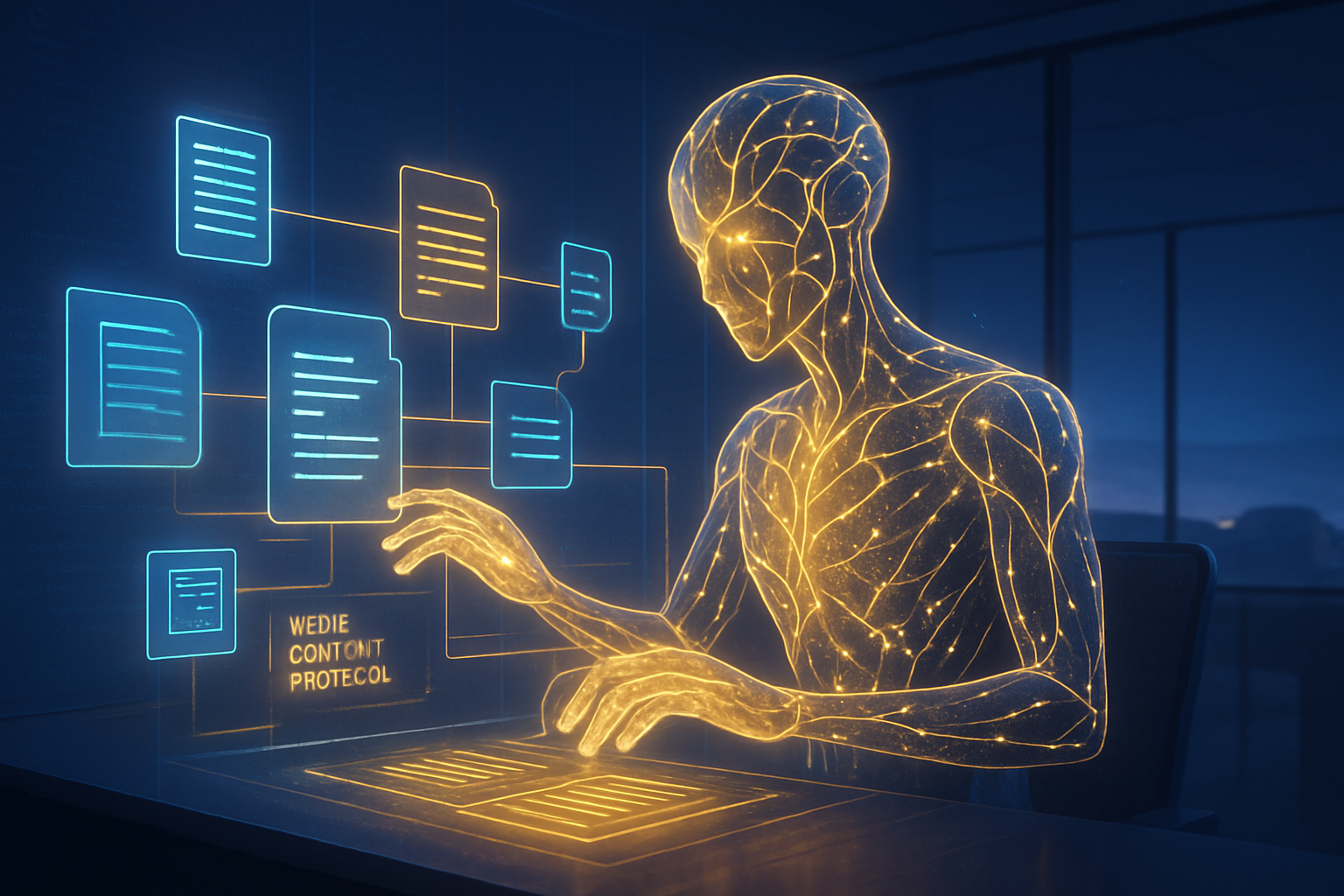
    On January 12, 2026, Anthropic fundamentally shifted the trajectory of corporate productivity with the release of Claude Cowork, a research preview that marks the end of the "chatbot era" and the beginning of the "agentic era." Unlike previous iterations of AI that primarily served as conversational interfaces, Cowork is a proactive agent capable of operating directly within a user’s file system and software environment. By granting the AI folder-level autonomy to read, edit, and organize data across local and cloud environments, Anthropic has moved beyond providing advice to executing labor—a development that threatens to upend the established order of enterprise AI.

    The immediate significance of this launch cannot be overstated. By targeting the "messy middle" of office work—the cross-application coordination, data synthesis, and file management that consumes the average worker's day—Anthropic is positioning Cowork as a direct competitor to long-standing enterprise platforms. This move has sent shockwaves through the industry, putting legacy providers like C3.ai (NYSE: AI) on notice as the market pivots from heavy, top-down implementations to agile, bottom-up agentic tools that individual employees can deploy in minutes.

    The Technical Leap: Multi-Agent Orchestration and Recursive Development

    Technically, Claude Cowork represents a departure from the "single-turn" interaction model. Built on a sophisticated multi-agent orchestration framework, Cowork utilizes Claude 4 (the "Opus" tier) as a lead agent responsible for high-level planning. When assigned a complex task—such as "reconcile these 50 receipts against the department budget spreadsheet and flag discrepancies"—the lead agent spawns multiple "sub-agents" using the more efficient Claude 4.5 Sonnet models to handle specific sub-tasks in parallel. This recursive architecture allows the system to self-correct and execute multi-step workflows without constant human prompting.

    Integration is handled through Anthropic’s Model Context Protocol (MCP), which provides native, standardized connections to essential enterprise tools like Slack, Jira, and Google Drive. Unlike traditional integrations that require complex API mapping, Cowork uses MCP to "see" and "interact" with data as a human collaborator would. Furthermore, the system addresses enterprise security concerns by utilizing isolated Linux containers and Apple’s Virtualization Framework to sandbox the AI’s activities. This ensures the agent only has access to the specific directories granted by the user, providing a level of "verifiable safety" that has become Anthropic’s hallmark.

    Initial reactions from the AI research community have focused on the speed of Cowork’s development. Reportedly, a significant portion of the tool was built by Anthropic’s own developers using Claude Code, their CLI-based coding agent, in just ten days. This recursive development cycle—where AI helps build the next generation of AI tools—highlights a velocity gap that legacy software firms are struggling to close. Industry experts note that while existing technology often relied on "AI wrappers" to connect models to file systems, Cowork integrates these capabilities at the model level, rendering many third-party automation startups redundant overnight.

    Competitive Disruption: Shifting the Power Balance

    The arrival of Cowork has immediate competitive implications for the "Big Three" of enterprise AI: Anthropic, Microsoft (NASDAQ: MSFT), and C3.ai. For years, C3.ai has dominated the market with its "Top-Down" approach, offering massive, multi-million dollar digital transformation platforms for industrial and financial giants. However, Cowork offers a "Bottom-Up" alternative. Instead of a multi-year rollout, a department head can subscribe to Claude Max for $200 a month and immediately begin automating internal workflows. This democratization of agentic AI threatens to "hollow out" the mid-market for legacy enterprise software.

    Market analysts have observed a distinct "re-rating" of software stocks in the wake of the announcement. While C3.ai shares saw a 4.17% dip as investors questioned its ability to compete with Anthropic’s agility, Palantir (NYSE: PLTR) remained resilient. Analysts at Citigroup noted that Palantir’s deep data integration (AIP) serves as a "moat" against general-purpose agents, whereas "wrapper-style" enterprise services are increasingly vulnerable. Microsoft, meanwhile, is under pressure to accelerate the rollout of its own "Copilot Actions" to prevent Anthropic from capturing the high-end professional market.

    The strategic advantage for Anthropic lies in its focus on the "Pro" user. By pricing Cowork as part of a high-tier $100–$200 per month subscription, they are targeting high-value knowledge workers who are willing to pay for significant time savings. This positioning allows Anthropic to capture the most profitable segment of the enterprise market without the overhead of the massive sales forces employed by legacy vendors.

    The Broader Landscape: Toward an Agentic Economy

    Cowork’s release is being hailed as a watershed moment in the broader AI landscape, signaling the transition from "Assisted Intelligence" to "Autonomous Agency." Gartner has predicted that tools like Cowork could reduce operational costs by up to 30% by automating routine data processing tasks. This fits into a broader trend of "Agentic Workflows," where the primary role of the human shifts from doing the work to reviewing the work.

    However, this transition is not without concerns. The primary anxiety among industry watchers is the potential for "agentic drift," where autonomous agents make errors in sensitive files that go unnoticed until they have cascaded through a system. Furthermore, the "end of AI wrappers" narrative suggests a consolidation of power. If the foundational model providers like Anthropic and OpenAI also provide the application layer, the ecosystem for independent AI startups may shrink, leading to a more centralized AI economy.

    Comparatively, Cowork is being viewed as the most significant milestone since the release of GPT-4. While GPT-4 showed that AI could think at a human level, Cowork is the first widespread evidence that AI can work at a human level. It validates the long-held industry belief that the true value of LLMs isn't in their ability to write poetry, but in their ability to act as an invisible, tireless digital workforce.

    Future Horizons: Applications and Obstacles

    In the near term, we expect Anthropic to expand Cowork from a macOS research preview to a full cross-platform enterprise suite. Potential applications are vast: from legal departments using Cowork to autonomously cross-reference thousands of contracts against new regulations, to marketing teams that use agents to manage multi-channel campaigns by directly interacting with social media APIs and CMS platforms.

    The next frontier for Cowork will likely be "Cross-Agent Collaboration," where a user’s Cowork agent communicates directly with a vendor's agent to negotiate prices or schedule deliveries without human intervention. However, significant challenges remain. Interoperability between different companies' agents—such as a Claude agent talking to a Microsoft agent—remains an unsolved technical and legal hurdle. Additionally, the high computational cost of running multi-agent "Opus-level" models means that scaling this technology to every desktop in a Fortune 500 company will require further optimizations in model efficiency or a significant drop in inference costs.

    Conclusion: A New Era of Enterprise Productivity

    Anthropic’s Claude Cowork is more than just a software update; it is a declaration of intent. By building a tool that can autonomously navigate the complex, unorganized world of enterprise data, Anthropic has challenged the very foundations of how businesses deploy technology. The key takeaway for the industry is clear: the era of static enterprise platforms is ending, and the era of the autonomous digital coworker has arrived.

    In the coming weeks and months, the tech world will be watching closely for two things: the rate of enterprise adoption among the "Claude Max" user base and the inevitable response from OpenAI and Microsoft. As the "war for the desktop" intensifies, the ultimate winners will be the organizations that can most effectively integrate these agents into their daily operations. For legacy providers like C3.ai, the challenge is now to prove that their specialized, high-governance models can survive in a world where general-purpose agents are becoming increasingly capable and autonomous.


    This content is intended for informational purposes only and represents analysis of current AI developments.

    TokenRing AI delivers enterprise-grade solutions for multi-agent AI workflow orchestration, AI-powered development tools, and seamless remote collaboration platforms.
    For more information, visit https://www.tokenring.ai/.
  • C3.ai Soars as Next-Generation Agentic AI Platform Revolutionizes Enterprise Automation

    C3.ai Soars as Next-Generation Agentic AI Platform Revolutionizes Enterprise Automation

    REDWOOD CITY, CA – October 2, 2025 – C3.ai (NYSE: AI) has captured the attention of the tech world and investors alike following the launch of its groundbreaking C3 AI Agentic Process Automation platform on September 9, 2025. This sophisticated new offering, designed to autonomously manage complex business and operational workflows, has been met with significant enthusiasm, signaling a potential paradigm shift in enterprise automation. The market's positive reaction underscores the growing anticipation for intelligent, adaptive AI solutions that move beyond traditional, rigid automation methods.

    The release of C3 AI Agentic Process Automation marks a pivotal moment for the company, building on its strong foundation in enterprise AI. While specific immediate stock performance details following the September 9th launch are still being fully assessed, earlier launches of C3.ai's "Agentic AI" products, such as the C3 Agentic AI Websites service in August 2025, have consistently triggered notable upticks in investor confidence and share value. This latest platform is poised to further solidify C3.ai's position at the forefront of the artificial intelligence market, offering a glimpse into the future of truly intelligent automation.

    Unpacking the Intelligence: A Deep Dive into Agentic Automation

    C3 AI Agentic Process Automation stands as a significant leap beyond conventional Robotic Process Automation (RPA), which typically relies on predefined, deterministic rules. At its core, this platform integrates advanced AI reasoning capabilities with structured workflow steps, enabling a more dynamic and intelligent approach to automation. Unlike its predecessors, which often struggle with variations or unexpected inputs, C3.ai's new system employs specialized AI agents that can adapt and make decisions within complex processes.

    Key technical specifications and capabilities include a no-code, natural language interface, empowering a broader range of users, from business analysts to operational managers, to design and deploy scalable AI-driven processes with unprecedented ease. The platform’s ability to combine deterministic workflow execution with the adaptive reasoning of AI agents allows it to transform static automation into continuously learning, value-generating systems. These AI agents are not generic; they are domain-specific, trained on industry-specific workflows, and connected to internal company data, acting as expert systems in sectors like defense, energy, manufacturing, and finance. This targeted intelligence enables the platform to tackle a vast array of tasks, from order-to-cash and customer service to intricate industrial operations like equipment troubleshooting and production planning. Furthermore, C3.ai emphasizes the platform's full transparency and auditability, addressing critical concerns regarding AI ethics and compliance in automated systems.

    Initial reactions from industry experts and the AI research community highlight the platform's potential to bridge the gap between human-defined processes and autonomous AI decision-making. The integration with C3 AI's broader Agentic AI Platform and enterprise software portfolio suggests a cohesive ecosystem designed to maximize scalability and interoperability across an organization's digital infrastructure. This departure from siloed, rule-based automation towards an integrated, intelligent agent-driven model is seen as a crucial step in realizing the full potential of enterprise AI.

    Reshaping the Competitive Landscape: Implications for AI Giants and Startups

    The launch of C3 AI Agentic Process Automation is set to ripple across the AI industry, creating both opportunities and challenges for a wide array of companies. C3.ai (NYSE: AI) itself stands to significantly benefit, leveraging this innovation to attract new enterprise clients seeking to modernize their operational frameworks. Its direct competitors in the enterprise AI and automation space, such as UiPath (NYSE: PATH), Automation Anywhere, and Pegasystems (NASDAQ: PEGA), will likely face increased pressure to accelerate their own intelligent automation roadmaps, potentially leading to a new wave of innovation and consolidation.

    For tech giants like Microsoft (NASDAQ: MSFT), Google (NASDAQ: GOOGL), and Amazon (NASDAQ: AMZN), which offer their own cloud-based AI and automation services, C3.ai's move could spur further investment in agentic AI capabilities. While these giants possess vast resources and established customer bases, C3.ai's specialized focus on enterprise AI and domain-specific agents could give it a competitive edge in niche, high-value sectors. Startups in the AI automation space, particularly those focused on specific industry verticals, might find themselves either acquired for their specialized expertise or needing to rapidly differentiate their offerings to compete with C3.ai's comprehensive platform.

    The potential disruption extends to existing products and services that rely on less sophisticated automation. Companies still heavily invested in traditional RPA or manual process management could find their operational efficiencies lagging, forcing them to adopt more advanced AI solutions. This development solidifies C3.ai's market positioning as a leader in enterprise-grade, industry-specific AI applications, offering strategic advantages through its integrated platform approach and focus on transparent, auditable AI agents.

    Broader Horizons: Agentic AI's Place in the Evolving AI Landscape

    The introduction of C3 AI Agentic Process Automation is more than just a product launch; it's a significant marker in the broader evolution of artificial intelligence, particularly within the realm of enterprise applications. This platform exemplifies a key trend in AI: the shift from predictive models to proactive, autonomous agents capable of complex decision-making and action. It fits squarely within the growing emphasis on "agentic AI," where AI systems are designed to perceive, reason, plan, and act in dynamic environments, often with a degree of autonomy previously unseen.

    The impact of such a platform could be transformative, leading to unprecedented levels of operational efficiency, cost reduction, and accelerated innovation across industries. By automating intricate workflows that traditionally required human oversight and intervention, businesses can reallocate human capital to more strategic and creative endeavors. However, with increased autonomy comes potential concerns, primarily around job displacement, ethical considerations in autonomous decision-making, and the need for robust governance frameworks. The transparency and auditability features highlighted by C3.ai are crucial steps in addressing these concerns, aiming to build trust and accountability into AI-driven processes.

    Comparing this to previous AI milestones, the move towards agentic process automation echoes the initial excitement around expert systems in the 1980s or the more recent surge in deep learning for pattern recognition. However, C3.ai's approach, combining domain-specific intelligence with a no-code interface and a focus on auditable autonomy, represents a more mature and practical application of advanced AI for real-world business challenges. It signifies a move beyond AI as a tool for analysis to AI as an active participant in business operations.

    The Road Ahead: Anticipating Future Developments and Challenges

    Looking to the near-term, we can expect C3.ai to rapidly expand the capabilities and industry-specific applications of its Agentic Process Automation platform. The company will likely focus on developing more specialized AI agents tailored to a broader range of vertical markets, driven by specific customer needs and emerging operational complexities. Integration with other enterprise software ecosystems and cloud platforms will also be a key area of development to ensure seamless adoption and scalability. In the long term, this technology could evolve to enable fully autonomous "lights-out" operations in certain sectors, where AI agents manage entire business units or industrial facilities with minimal human intervention.

    Potential applications on the horizon include highly personalized customer service agents that can resolve complex issues autonomously, intelligent supply chain management systems that dynamically adapt to disruptions, and advanced healthcare administration platforms that streamline patient care pathways. However, significant challenges remain. Ensuring the robust security and privacy of data handled by autonomous agents will be paramount. The continuous need for human oversight and intervention, even in highly automated systems, will require sophisticated human-in-the-loop mechanisms. Furthermore, the ethical implications of increasingly autonomous AI systems will demand ongoing research, regulation, and societal dialogue.

    Experts predict that the success of agentic AI platforms like C3.ai's will hinge on their ability to demonstrate tangible ROI, integrate smoothly with existing IT infrastructures, and maintain high levels of transparency and control. The next phase will likely involve a deeper exploration of multi-agent collaboration, where different AI agents work together to achieve complex objectives, mimicking human team dynamics. What experts predict will happen next is a rapid acceleration in the adoption of these platforms, particularly in industries grappling with labor shortages and the need for greater efficiency.

    A New Era of Enterprise Intelligence: Wrapping Up C3.ai's Milestone

    C3.ai's launch of the C3 AI Agentic Process Automation platform is a defining moment in the trajectory of enterprise AI. The key takeaway is the shift from rigid, rule-based automation to dynamic, intelligent, and adaptive systems powered by domain-specific AI agents. This development not only enhances operational efficiency and drives business value but also sets a new standard for how organizations can leverage AI to transform their core processes. The positive market reaction to C3.ai's "Agentic AI" offerings underscores the industry's readiness for more sophisticated, autonomous AI solutions.

    This development's significance in AI history lies in its pragmatic application of advanced AI research into a commercially viable, scalable enterprise product. It represents a maturation of AI, moving beyond theoretical concepts to practical, auditable systems that can deliver real-world impact. The focus on transparency, no-code accessibility, and integration within a broader AI platform positions C3.ai as a leader in this evolving landscape.

    In the coming weeks and months, industry observers should watch for further announcements regarding customer adoptions, expanded platform capabilities, and competitive responses from other major players in the AI and automation sectors. The long-term impact of agentic process automation will likely be profound, reshaping industries and redefining the relationship between human and artificial intelligence in the workplace. As AI agents become more sophisticated and ubiquitous, the challenge and opportunity will be to harness their power responsibly, ensuring that these technological advancements serve to augment human capabilities and drive sustainable progress.

    This content is intended for informational purposes only and represents analysis of current AI developments.

    TokenRing AI delivers enterprise-grade solutions for multi-agent AI workflow orchestration, AI-powered development tools, and seamless remote collaboration platforms.
    For more information, visit https://www.tokenring.ai/.