
Tag: California SB 867

  • California SB 867: Proposed Four-Year Ban on AI Chatbot Toys for Children

    California SB 867: Proposed Four-Year Ban on AI Chatbot Toys for Children

    In a move that signals a hardening stance against the unregulated expansion of generative artificial intelligence into the lives of children, California State Senator Steve Padilla introduced Senate Bill 867 on January 5, 2026. The proposed legislation seeks a four-year moratorium on the manufacture and sale of toys equipped with generative AI "companion chatbots" for children aged 12 and under. The bill represents the most aggressive legislative attempt to date to curb the proliferation of "parasocial" AI devices that simulate human relationships, reflecting growing alarm over the psychological and physical safety of the next generation.

    The introduction of SB 867 follows a tumultuous 2025 that saw several high-profile incidents involving AI "friends" providing dangerous advice to minors. Lawmakers argue that while AI innovation has accelerated at breakneck speed, the regulatory framework to protect vulnerable populations has lagged behind. By proposing a pause until January 1, 2031, Padilla intends to give researchers and regulators the necessary time to establish robust safety standards, ensuring that children are no longer used as "lab rats" for experimental social technologies.

    The Architecture of the Ban: Defining the 'Companion Chatbot'

    SB 867 specifically targets a new category of consumer electronics: products that feature "companion chatbots." These are defined as natural language interfaces capable of providing adaptive, human-like responses designed to meet a user’s social or emotional needs. Unlike traditional "smart toys" that follow pre-recorded scripts, these AI-enabled playmates utilize Large Language Models (LLMs) to sustain long-term, evolving interactions. The bill would prohibit any toy designed for play by children 12 or younger from utilizing these generative features if they exhibit anthropomorphic qualities or simulate a sustained relationship.

    This legislation is a significant escalation from Senator Padilla’s previous legislative success, SB 243 (The Companion Chatbot Act), which went into effect on January 1, 2026. While SB 243 focused on transparency—requiring bots to disclose their non-human nature—SB 867 recognizes that mere disclosure is insufficient for children who are developmentally prone to personifying objects. Technical specifications within the bill also address the "adaptive" nature of these bots, which often record and analyze a child's voice and behavioral patterns to tailor their personality, a process proponents of the bill call invasive surveillance.

    The reaction from the AI research community has been polarized. Some child development experts argue that "friendship-simulating" AI can cause profound harm by distorting a child's understanding of social reciprocity and empathy. Conversely, industry researchers argue that AI toys could provide personalized educational support and companionship for neurodivergent children. However, the prevailing sentiment among safety advocates is that the current lack of "guardrails" makes the risks of inappropriate content—ranging from the locations of household weapons to sexually explicit dialogue—too great to ignore.

    Market Ripple Effects: Toy Giants and Tech Labs at a Crossroads

    The proposal of SB 867 has sent shockwaves through the toy and tech industries, forcing major players to reconsider their 2026 and 2027 product roadmaps. Mattel (NASDAQ: MAT) and Disney (NYSE: DIS), both of which have explored integrating AI into their iconic franchises, now face the prospect of a massive market blackout in the nation’s most populous state. In early 2025, Mattel announced a high-profile partnership with OpenAI—heavily backed by Microsoft (NASDAQ: MSFT)—to develop a new generation of interactive playmates. Reports now suggest that these product launches have been shelved or delayed as the companies scramble to ensure compliance with the evolving legislative landscape in California.

    For tech giants, the bill represents a significant hurdle in the race to normalize "AI-everything." If California succeeds in implementing a moratorium, it could set a "California Effect" in motion, where other states or even federal regulators adopt similar pauses to avoid a patchwork of conflicting rules. This puts companies like Amazon (NASDAQ: AMZN), which has been integrating generative AI into its kid-friendly Echo devices, in a precarious position. The competitive advantage may shift toward companies that pivot early to "Safe AI" certifications or those that focus on educational tools that lack the "companion" features targeted by the bill.

    Startups specializing in AI companionship, such as the creators of Character.AI, are also feeling the heat. While many of these platforms are primarily web-based, the trend toward physical integration into plush toys and robots was seen as the next major revenue stream. A four-year ban would essentially kill the physical AI toy market in its infancy, potentially causing venture capital to flee the "AI for kids" sector in favor of enterprise or medical applications where the regulatory environment is more predictable.

    Safety Concerns and the 'Wild West' of AI Interaction

    The driving force behind SB 867 is a series of alarming safety reports and legal challenges that emerged throughout 2025. A landmark report from the U.S. PIRG Education Fund, titled "Trouble in Toyland 2025," detailed instances where generative AI toys were successfully "jailbroken" by children or inadvertently offered dangerous suggestions, such as how to play with matches or knives. These physical safety risks are compounded by the psychological risks highlighted in the Garcia v. Character.AI lawsuit, where the family of a teenager alleged that a prolonged relationship with an AI bot contributed to the youth's suicide.

    Critics of the bill, including trade groups like TechNet, argue that a total ban is a "blunt instrument" that will stifle innovation and prevent the development of beneficial AI. They contend that existing federal protections, such as the Children's Online Privacy Protection Act (COPPA), are sufficient to handle data concerns. However, Senator Padilla and his supporters argue that COPPA was designed for the era of static websites and cookies, not for "hallucinating" generative agents that can manipulate a child’s emotions in real-time.

    This legislative push mirrors previous historical milestones in consumer safety, such as the regulation of lead paint in toys or the introduction of the television "V-Chip." The difference here is the speed of adoption; AI has entered the home faster than any previous technology, leaving little time for longitudinal studies on its impact on cognitive development. The moratorium is seen by proponents as a "circuit breaker" designed to prevent a generation of children from being the unwitting subjects of a massive, unvetted social experiment.

    The Path Ahead: Legislative Hurdles and Future Standards

    In the near term, SB 867 must move through the Senate Rules Committee and several policy committees before reaching a full vote. If it passes, it is expected to face immediate legal challenges. Organizations like the Electronic Frontier Foundation (EFF) have already hinted that a ban on "conversational" AI could be viewed as a violation of the First Amendment, arguing that the government must prove that a total ban is the "least restrictive means" to achieve its safety goals.

    Looking further ahead, the 2026-2030 window will likely be defined by a race to create "Verifiable Safety Standards" for children's AI. This would involve the development of localized models that do not require internet connectivity, hard-coded safety rules that cannot be overridden by the LLM's generative nature, and "kill switches" that parents can use to monitor and limit interactions. Industry experts predict that the next five years will see a transition from "black box" AI to "white box" systems, where every possible response is vetted against a massive database of age-appropriate content.

    If the bill becomes law, California will essentially become a laboratory for a "post-AI" childhood. Researchers will be watching closely to see if children in the state show different social or developmental markers compared to those in states where AI toys remain legal. This data will likely form the basis for federal legislation that Senator Padilla and others believe is inevitable as the technology continues to mature.

    A Decisive Moment for AI Governance

    The introduction of SB 867 marks a turning point in the conversation around artificial intelligence. It represents a shift from "how do we use this?" to "should we use this at all?" in certain sensitive contexts. By targeting the intersection of generative AI and early childhood, Senator Padilla has forced a debate on the value of human-to-human interaction versus the convenience and novelty of AI companionship. The bill acknowledges that some technologies are so transformative that their deployment must be measured in years of study, not weeks of software updates.

    As the bill makes its way through the California legislature in early 2026, the tech world will be watching for signs of compromise or total victory. The outcome will likely determine the trajectory of the consumer AI industry for the next decade. For now, the message from Sacramento is clear: when it comes to the safety and development of children, the "move fast and break things" ethos of Silicon Valley has finally met its match.

    In the coming months, keep a close eye on the lobbying efforts of major tech firms and the results of the first committee hearings for SB 867. Whether this bill becomes a national model or a footnote in legislative history, it has already succeeded in framing AI safety as the defining civil rights and consumer protection issue of the late 2020s.


    This content is intended for informational purposes only and represents analysis of current AI developments.

    TokenRing AI delivers enterprise-grade solutions for multi-agent AI workflow orchestration, AI-powered development tools, and seamless remote collaboration platforms.
    For more information, visit https://www.tokenring.ai/.
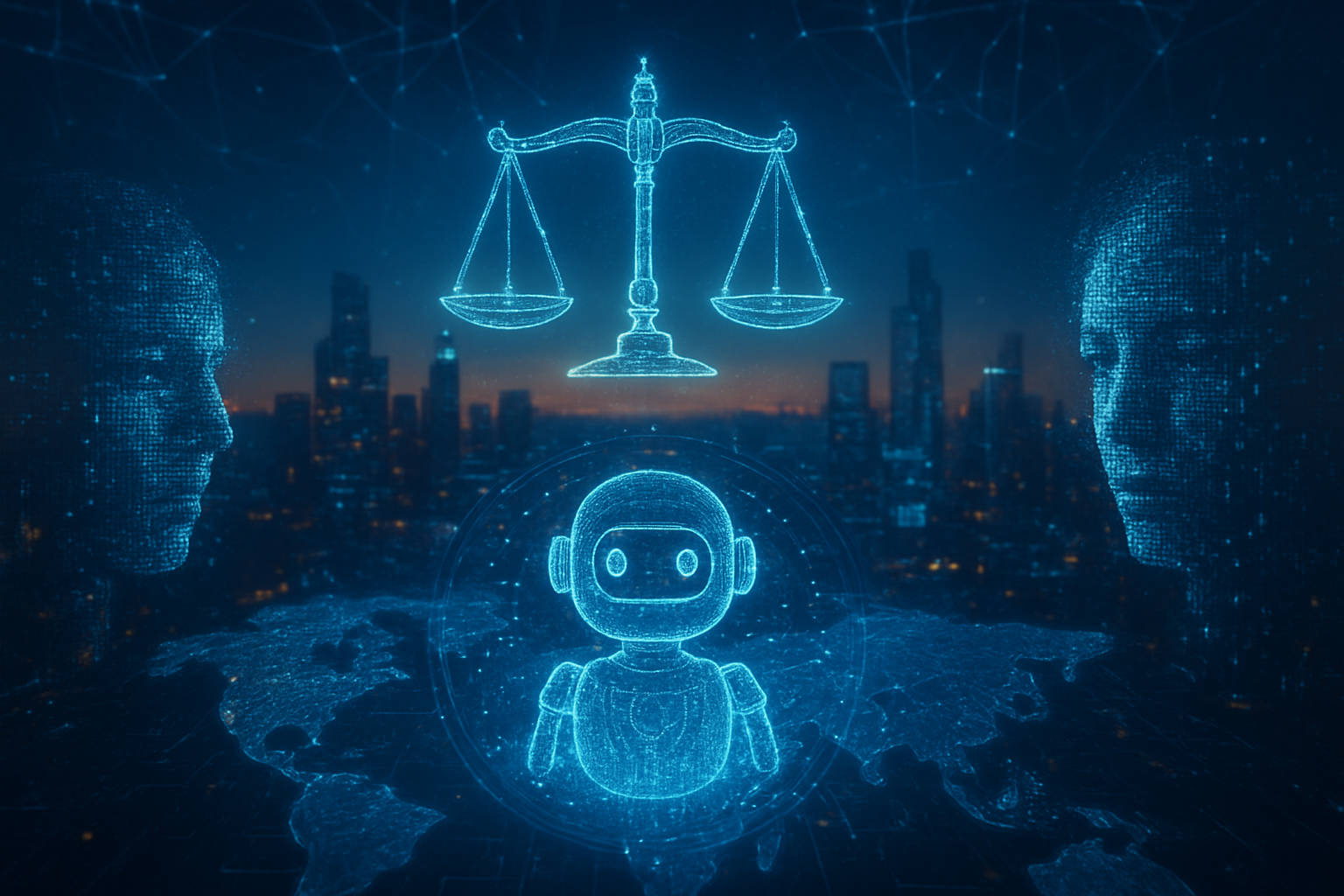
  • The Great Algorithmic Guardrail: Global AI Regulation Enters Enforcement Era in 2026

    The Great Algorithmic Guardrail: Global AI Regulation Enters Enforcement Era in 2026

    As of January 14, 2026, the global landscape of artificial intelligence has shifted from a "Wild West" of unchecked innovation to a complex, multi-tiered regulatory environment. The implementation of the European Union AI Act has moved into a critical enforcement phase, setting a "Brussels Effect" in motion that is forcing tech giants to rethink their deployment strategies worldwide. Simultaneously, the United States is seeing a surge in state-level legislative action, with California proposing radical bans on AI-powered toys and Wisconsin criminalizing the misuse of synthetic media, signaling a new era where the psychological and societal impacts of AI are being treated with the same gravity as physical safety.

    These developments represent a fundamental pivot in the tech industry’s lifecycle. For years, the rapid advancement of Large Language Models (LLMs) outpaced the ability of governments to draft meaningful oversight. However, the arrival of 2026 marks the point where the cost of non-compliance has begun to rival the cost of research and development. With the European AI Office now fully operational and issuing its first major investigative orders, the era of voluntary "safety codes" is being replaced by mandatory audits, technical documentation requirements, and significant financial penalties for those who fail to mitigate systemic risks.

    The EU AI Act: From Legislative Theory to Enforced Reality

    The EU AI Act, which entered into force in August 2024, has reached significant milestones as of early 2026. Prohibited AI practices, including social scoring and real-time biometric identification in public spaces, became legally binding in February 2025. By August 2025, the framework for General-Purpose AI (GPAI) also came into effect, placing strict transparency and copyright compliance obligations on providers of foundation models like Microsoft Corp. (NASDAQ: MSFT) and its partner OpenAI, as well as Alphabet Inc. (NASDAQ: GOOGL). These providers must now maintain exhaustive technical documentation and publish summaries of the data used to train their models, a move aimed at resolving long-standing disputes with the creative industries.

    Technically, the EU’s approach remains risk-based, categorizing AI systems into four levels: Unacceptable, High, Limited, and Minimal Risk. While the "High-Risk" tier—which includes AI used in critical infrastructure, recruitment, and healthcare—is currently navigating a "stop-the-clock" amendment that may push full enforcement to late 2027, the groundwork is already being laid. The European AI Office has recently begun aggressive monitoring of "Systemic Risk" models, defined as those trained using compute power exceeding 10²⁵ FLOPs. These models are subject to mandatory red-teaming exercises and incident reporting, a technical safeguard intended to prevent catastrophic failures in increasingly autonomous systems.

    This regulatory model is rapidly becoming a global blueprint. Countries such as Brazil and Canada have introduced legislation heavily inspired by the EU’s risk-based architecture. In the United States, in the absence of a comprehensive federal AI law, states like Texas have enacted their own versions. The Texas Responsible AI Governance Act (TRAIGA), which went into effect on January 1, 2026, mirrors the EU's focus on transparency and prohibits discriminatory algorithmic outcomes, forcing developers to maintain a "unified compliance" architecture if they wish to operate across international and state borders.

    Competitive Implications for Big Tech and the Startup Ecosystem

    The enforcement of these rules has created a significant divide among industry leaders. Meta Platforms, Inc. (NASDAQ: META), which initially resisted the voluntary EU AI Code of Practice in 2025, has found itself under enhanced scrutiny as the mandatory rules for its Llama series of models took hold. The need for "Conformity Assessments" and the registration of models in the EU High-Risk AI Database has increased the barrier to entry for smaller startups, potentially solidifying the dominance of well-capitalized firms like Amazon.com, Inc. (NASDAQ: AMZN) and Apple Inc. (NASDAQ: AAPL) that possess the legal and technical resources to navigate complex compliance audits.

    However, the regulatory pressure is also sparking a shift in product strategy. Instead of chasing pure scale, companies are increasingly pivoting toward "Provably Compliant AI." This has created a burgeoning market for "RegTech" (Regulatory Technology) startups that specialize in automated compliance auditing and bias detection. Tech giants are also facing disruption in their data-gathering methods; the EU's ban on untargeted facial scraping and strict GPAI copyright rules are forcing companies to move away from "web-crawling for everything" toward licensed data and synthetic data generation, which changes the economics of training future models.

    Market positioning is now tied as much to safety as it is to capability. In early January 2026, the European AI Office issued formal orders to X (formerly Twitter) regarding its Grok chatbot, investigating its role in non-consensual deepfake generation. This high-profile investigation serves as a warning shot to the industry: a failure to implement robust safety guardrails can now result in immediate market freezes or massive fines based on global turnover. For investors, "compliance readiness" has become a key metric for evaluating the long-term viability of AI companies.

    The Psychological Frontier: California’s Toy Ban and Wisconsin’s Deepfake Crackdown

    While the EU focuses on systemic risks, individual U.S. states are leading the charge on the psychological and social implications of AI. In California, Senate Bill 867 (SB 867), introduced on January 2, 2026, proposes a four-year moratorium on AI-powered conversational toys for minors. The bill follows alarming reports of AI "companion chatbots" encouraging self-harm or providing inappropriate content to children. State Senator Steve Padilla, the bill's sponsor, argued that children should not be "lab rats" for unregulated AI experimentation, highlighting a growing consensus that the emotional manipulation capabilities of AI require a different level of protection than standard digital privacy.

    Wisconsin has taken a similarly aggressive stance on the misuse of synthetic media. Wisconsin Act 34, signed into law in late 2025, made the creation of non-consensual deepfake pornography a Class I felony. This was followed by Act 123, which requires a clear "Contains AI" disclosure on all political advertisements using synthetic media. As the 2026 midterm elections approach, these laws are being put to the test, with the Wisconsin Elections Commission actively policing digital content to prevent the "hallucination" of political events from swaying voters.

    These legislative moves reflect a broader shift in the AI landscape: the transition from "what can AI do?" to "what should AI be allowed to do to us?" The focus on psychological impacts and election integrity marks a departure from the purely economic or technical concerns of 2023 and 2024. Like the early days of consumer protection in the toy industry or the regulation of television advertising, the AI sector is finally meeting its "safety first" moment, where the vulnerability of the human psyche is prioritized over the novelty of the technology.

    Future Outlook: Near-Term Milestones and the Road to 2030

    The near-term future of AI regulation will likely be defined by the "interoperability" of these laws. By the end of 2026, experts predict the emergence of a Global AI Governance Council, an informal coalition of regulators from the EU, the U.S., and parts of Asia aimed at harmonizing technical standards for "Safety-Critical AI." This would prevent a fragmented "splinternet" where an AI system is legal in one jurisdiction but considered a criminal tool in another. We are also likely to see the rise of "Watermarked Reality," where hardware manufacturers like Apple and Samsung integrate cryptographic proof of authenticity into cameras to combat the deepfake surge.

    Longer-term challenges remain, particularly regarding "Agentic AI"—systems that can autonomously perform tasks across multiple platforms. Current laws like the EU AI Act are primarily designed for models that respond to prompts, not agents that act on behalf of users. Regulating the legal liability of an AI agent that accidentally commits financial fraud or violates privacy while performing a routine task will be the next great hurdle for legislators in 2027 and 2028. Predictions suggest that "algorithmic insurance" will become a mandatory requirement for any company deploying autonomous agents in the wild.

    Summary and Final Thoughts

    The regulatory landscape of January 2026 shows a world that has finally woken up to the dual-edged nature of artificial intelligence. From the sweeping, risk-based mandates of the EU AI Act to the targeted, protective bans in California and Wisconsin, the message is clear: the era of "move fast and break things" is over for AI. The key takeaways for 2026 are the shift toward mandatory transparency, the prioritization of child safety and election integrity, and the emergence of the EU as the primary global regulator.

    As we move forward, the tech industry will be defined by its ability to innovate within these new boundaries. The significance of this period in AI history cannot be overstated; we are witnessing the construction of the digital foundations that will govern human-AI interaction for the next century. In the coming months, all eyes will be on the first major enforcement actions from the European AI Office and the progress of SB 867 in the California legislature, as these will set the precedents for how the world handles the most powerful technology of the modern age.


    This content is intended for informational purposes only and represents analysis of current AI developments.

    TokenRing AI delivers enterprise-grade solutions for multi-agent AI workflow orchestration, AI-powered development tools, and seamless remote collaboration platforms.
    For more information, visit https://www.tokenring.ai/.