Tag: CES 2026

  • LG’s CLOiD: The AI Laundry-Folding Robot and the Vision of a Zero Labor Home

    LG’s CLOiD: The AI Laundry-Folding Robot and the Vision of a Zero Labor Home

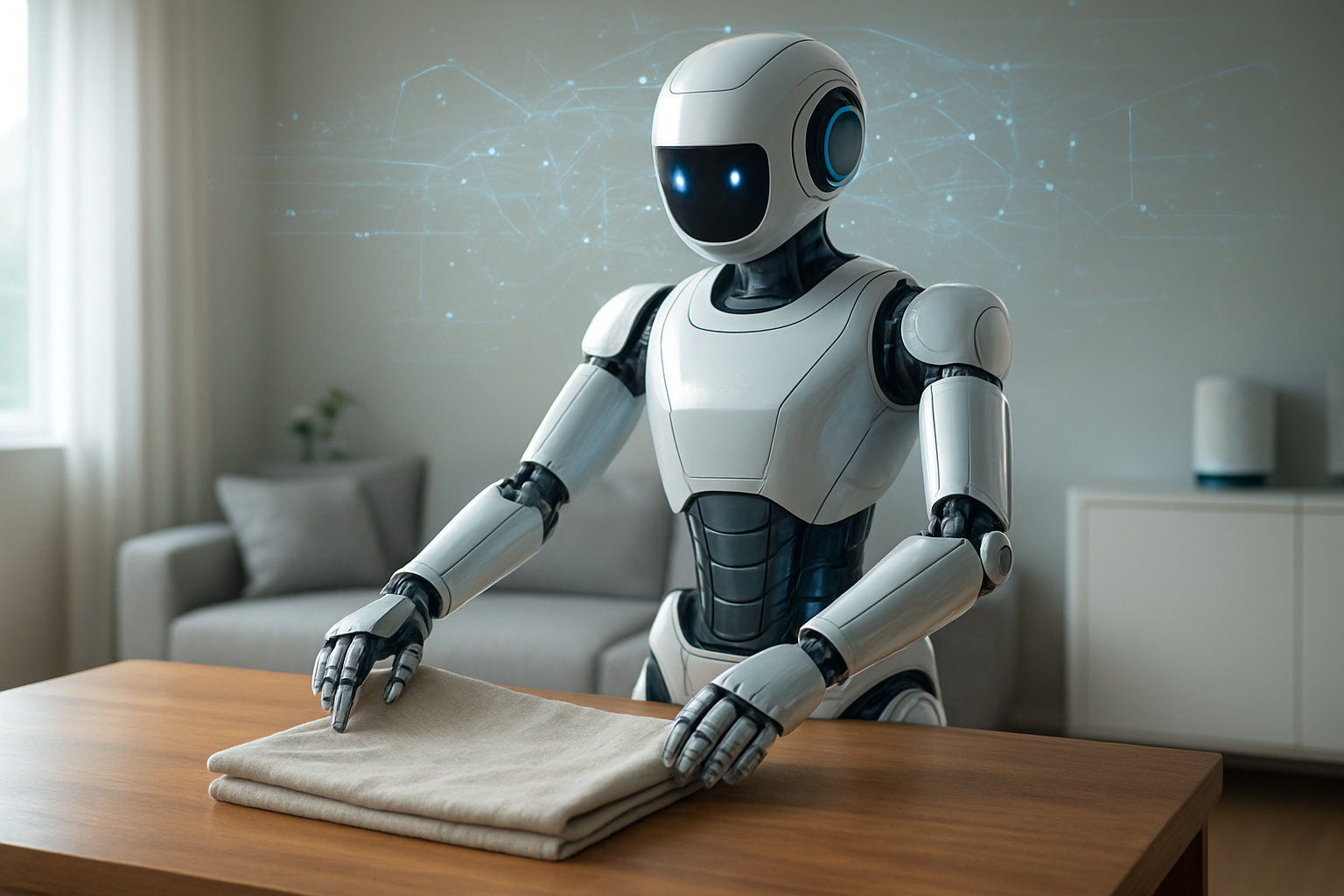
    LAS VEGAS — The dream of a home where laundry folds itself and the dishwasher unloads while you sleep moved one step closer to reality today. At the 2026 Consumer Electronics Show (CES), LG Electronics (KRX: 066570) unveiled its most ambitious project to date: CLOiD, an AI-powered domestic robot designed to serve as the physical manifestation of the company’s "Zero Labor Home" vision. While previous iterations of home robots were often relegated to vacuuming floors or acting as stationary smart speakers, CLOiD represents a leap into "Physical AI," featuring human-like dexterity and the intelligence to navigate the messy, unpredictable environment of a family household.

    The debut of CLOiD marks a significant pivot for the consumer electronics giant, shifting from "smart appliances" to "autonomous agents." LG’s vision is simple yet profound: to transform the home from a place of chores into a sanctuary of relaxation. By integrating advanced robotics with what LG calls "Affectionate Intelligence," CLOiD is intended to understand the context of a household—recognizing when a child has left toys on the floor or when the dryer has finished its cycle—and taking proactive action without needing a single voice command.

    Technical Mastery: From Vision to Action

    CLOiD is a marvel of modern engineering, standing on a stable, wheeled base but featuring a humanoid upper body with two highly articulated arms. Each arm boasts seven degrees of freedom (DOF), mimicking the full range of motion of a human limb. The true breakthrough, however, lies in its hands. Equipped with five independently actuated fingers, CLOiD demonstrated the ability to perform "fine manipulation" tasks that have long eluded domestic robots. During the CES keynote, the robot was seen delicately picking up a wine glass from a dishwasher and placing it in a high cabinet, as well as sorting and folding a basket of mixed laundry—including difficult items like hoodies and fitted sheets.

    Under the hood, CLOiD is powered by the Qualcomm (NASDAQ: QCOM) Robotics RB5 Platform and utilizes Vision-Language-Action (VLA) models. Unlike traditional robots that follow pre-programmed scripts, CLOiD uses these AI models to translate visual data and natural language instructions into complex motor movements in real-time. This is supported by LG’s new proprietary "AXIUM" actuators—high-torque, lightweight robotic joints that allow for smooth, human-like motion. The robot also utilizes a suite of LiDAR sensors and 3D cameras to map homes with centimeter-level precision, ensuring it can navigate around pets and furniture without incident.

    Initial reactions from the AI research community have been cautiously optimistic. Experts praised the integration of VLA models, noting that CLOiD’s ability to understand commands like "clean up the living room" requires a sophisticated level of semantic reasoning. However, many noted that the robot’s pace remains "methodical." In live demos, folding a single towel took nearly 40 seconds—a speed that, while impressive for a machine, still lags behind human efficiency. "We are seeing the 'Netscape moment' for home robotics," said one industry analyst. "It’s not perfect yet, but the foundation for a mass-market product is finally here."

    The Battle for the Living Room: Competitive Implications

    LG’s entrance into the humanoid space puts it on a direct collision course with Tesla (NASDAQ: TSLA) and its Optimus Gen 3 robot. While Tesla has focused on a bipedal (two-legged) design intended for both factory and home use, LG has opted for a wheeled base, prioritizing stability and battery life for the domestic environment. This strategic choice may give LG an edge in the near term, as bipedal balance remains one of the most difficult and power-hungry challenges in robotics.

    The "Zero Labor Home" ecosystem also strengthens LG’s position against Samsung Electronics (KRX: 005930), which has focused more on decentralized AI hubs and smaller companion bots. By providing a robot that can physically interact with any appliance, LG is positioning itself as the primary orchestrator of the future home. This development is also a win for NVIDIA (NASDAQ: NVDA), whose Isaac and Omniverse platforms were used to train CLOiD in "digital twin" environments, allowing the robot to "practice" thousands of hours of laundry folding in a virtual space before ever touching a real garment.

    The market for domestic service robots is projected to reach $17.5 billion by the end of 2026, and LG's move signals a shift away from standalone gadgets toward integrated AI services. Startups like Figure AI—backed by Microsoft (NASDAQ: MSFT) and OpenAI—are also in the race, but LG’s massive existing footprint in the appliance market (washers, dryers, and dishwashers) provides a unique "vertical integration" advantage. CLOiD doesn't just fold laundry; it communicates with the LG ThinQ dryer to know exactly when the load is ready.

    A New Paradigm in Physical AI

    The broader significance of CLOiD lies in the transition from "Generative AI" (text and images) to "Physical AI" (movement and labor). For the past two years, the tech world has been captivated by Large Language Models; CES 2026 is proving that the next frontier is applying that intelligence to the physical world. LG’s "Affectionate Intelligence" represents an attempt to humanize this transition, focusing on empathy and proactive care rather than just mechanical efficiency.

    However, the rise of a dual-armed, camera-equipped robot in the home brings significant concerns regarding privacy and safety. CLOiD requires constant visual monitoring of its environment to function, raising questions about where that data is stored. LG has addressed this by emphasizing "Edge AI," claiming that the majority of visual processing happens locally on the robot’s internal NPU rather than in the cloud. Furthermore, safety protocols are a major talking point; the robot’s AXIUM actuators include "force-feedback" sensors that cause the robot to stop instantly if it detects unexpected resistance, such as a child’s hand.

    Comparisons are already being made to the debut of the first iPhone or the first commercial PC. While CLOiD is currently a high-end luxury concept, it represents a milestone in the "democratization of leisure." Just as the washing machine liberated households from hours of manual scrubbing in the 20th century, CLOiD aims to liberate the 21st-century family from the "invisible labor" of daily tidying.

    The Road Ahead: 2026 and Beyond

    In the near term, LG expects to deploy CLOiD in limited "beta" trials in premium residential complexes in Seoul and Los Angeles. The primary goal is to refine the robot’s speed and its ability to handle "edge cases"—such as identifying stained clothing that needs re-washing or handling delicate silk garments. Experts predict that as VLA models continue to evolve, we will see a rapid increase in the variety of tasks these robots can perform, potentially moving into elder care and basic meal preparation by 2028.

    The long-term challenge remains cost. Current estimates suggest a retail price for a robot with CLOiD’s capabilities could exceed $20,000, making it a toy for the wealthy rather than a tool for the masses. However, LG’s investment in the AXIUM actuator brand suggests they are looking to drive down component costs through mass production, potentially offering "Robot-as-a-Service" (RaaS) subscription models to make the technology more accessible.

    The next few years will likely see a "Cambrian Explosion" of form factors in domestic robotics. While CLOiD is a generalist, we may see specialized versions for gardening, home security, or even dedicated "chef bots." The success of these machines will depend not just on their hardware, but on their ability to gain the trust of the families they serve.

    Conclusion: A Turning Point for Home Automation

    LG’s presentation at CES 2026 will likely be remembered as the moment the "Zero Labor Home" moved from science fiction to a tangible roadmap. CLOiD is more than just a laundry-folding machine; it is a sophisticated AI agent that bridges the gap between digital intelligence and physical utility. By mastering the complex motor skills required for dishwasher unloading and garment folding, LG has set a new bar for what consumers should expect from their home appliances.

    As we move through 2026, the tech industry will be watching closely to see if LG can move CLOiD from the showroom floor to the living room. The significance of this development in AI history cannot be overstated—it is the beginning of the end for manual domestic labor. While there are still hurdles in speed, cost, and privacy to overcome, the vision of a home that "cares for itself" is no longer a distant dream.


    This content is intended for informational purposes only and represents analysis of current AI developments.

    TokenRing AI delivers enterprise-grade solutions for multi-agent AI workflow orchestration, AI-powered development tools, and seamless remote collaboration platforms.
    For more information, visit https://www.tokenring.ai/.
  • NVIDIA Alpamayo: Bringing Human-Like Reasoning to Self-Driving Cars

    NVIDIA Alpamayo: Bringing Human-Like Reasoning to Self-Driving Cars

    At the 2026 Consumer Electronics Show (CES) in Las Vegas, NVIDIA (NASDAQ:NVDA) CEO Jensen Huang delivered what many are calling a watershed moment for the automotive industry. The company officially unveiled Alpamayo, a revolutionary family of "Physical AI" models designed to bring human-like reasoning to self-driving cars. Moving beyond the traditional pattern-matching and rule-based systems that have defined autonomous vehicle (AV) development for a decade, Alpamayo introduces a cognitive layer capable of "thinking through" complex road scenarios in real-time. This announcement marks a fundamental shift in how machines interact with the physical world, promising to solve the stubborn "long tail" of rare driving events that have long hindered the widespread adoption of fully autonomous transport.

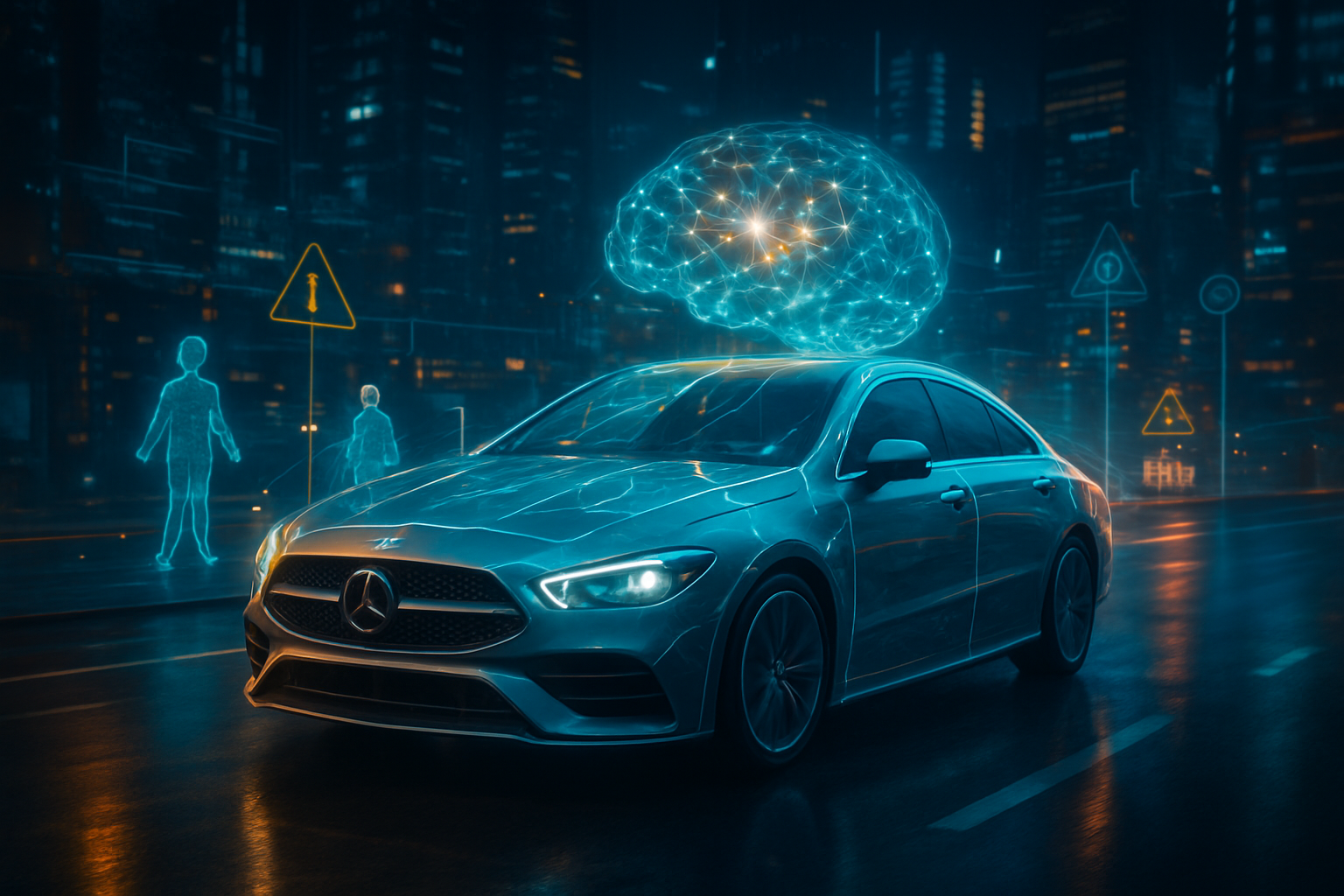
    The immediate significance of Alpamayo lies in its departure from the "black box" nature of previous end-to-end neural networks. By integrating chain-of-thought reasoning directly into the driving stack, NVIDIA is providing vehicles with the ability to explain their decisions, interpret social cues from pedestrians, and navigate environments they have never encountered before. The announcement was punctuated by a major commercial milestone: a deep, multi-year partnership with Mercedes-Benz Group AG (OTC:MBGYY), which will see the Alpamayo-powered NVIDIA DRIVE platform debut in the all-new Mercedes-Benz CLA starting in the first quarter of 2026.

    A New Architecture: Vision-Language-Action and Reasoning Traces

    Technically, Alpamayo 1 is built on a massive 10-billion-parameter Vision-Language-Action (VLA) architecture. Unlike current systems that translate sensor data directly into steering and braking commands, Alpamayo generates an internal "reasoning trace." This is a step-by-step logical path where the AI identifies objects, assesses their intent, and weighs potential outcomes before executing a maneuver. For example, if the car encounters a traffic officer using unconventional hand signals at a construction site, Alpamayo doesn’t just see an obstacle; it "reasons" that the human figure is directing traffic and interprets the specific gestures based on the context of the surrounding cones and vehicles.

    This approach represents a radical departure from the industry’s previous reliance on massive, brute-forced datasets of every possible driving scenario. Instead of needing to see a million examples of a sinkhole to know how to react, Alpamayo uses causal and physical reasoning to understand that a hole in the road violates the "drivable surface" rule and poses a structural risk to the vehicle. To support these computationally intensive models, NVIDIA also announced the mass production of its Rubin AI platform. The Rubin architecture, featuring the new Vera CPU, is designed to handle the massive token generation required for real-time reasoning at one-tenth the cost and power consumption of previous generations, making it viable for consumer-grade electric vehicles.

    Market Disruption and the Competitive Landscape

    The introduction of Alpamayo creates immediate pressure on other major players in the AV space, most notably Tesla (NASDAQ:TSLA) and Alphabet’s (NASDAQ:GOOGL) Waymo. While Tesla has championed an end-to-end neural network approach with its Full Self-Driving (FSD) software, NVIDIA’s Alpamayo adds a layer of explainability and symbolic reasoning that Tesla’s current architecture lacks. For Mercedes-Benz, the partnership serves as a massive strategic advantage, allowing the legacy automaker to leapfrog competitors in software-defined vehicle capabilities. By integrating Alpamayo into the MB.OS ecosystem, Mercedes is positioning itself as the gold standard for "Level 3 plus" autonomy, where the car can handle almost all driving tasks with a level of nuance previously reserved for human drivers.

    Industry experts suggest that NVIDIA’s decision to open-source the Alpamayo 1 weights on Hugging Face and release the AlpaSim simulation framework on GitHub is a strategic masterstroke. By providing the "teacher model" and the simulation tools to the broader research community, NVIDIA is effectively setting the industry standard for Physical AI. This move could disrupt smaller AV startups that have spent years building proprietary rule-based stacks, as the barrier to entry for high-level reasoning is now significantly lowered for any manufacturer using NVIDIA hardware.

    Solving the Long Tail: The Wider Significance of Physical AI

    The "long tail" of autonomous driving—the infinite variety of rare, unpredictable events like a loose animal on a highway or a confusing detour—has been the primary roadblock to Level 5 autonomy. Alpamayo’s ability to "decompose" a novel, complex scenario into familiar logical components allows it to avoid the "frozen" state that often plagues current AVs when they encounter something outside their training data. This shift from reactive to proactive AI fits into the broader 2026 trend of "General Physical AI," where models are no longer confined to digital screens but are given the "bodies" (cars, robots, drones) to interact with the world.

    However, the move toward reasoning-based AI also brings new concerns regarding safety certification. To address this, NVIDIA and Mercedes-Benz highlighted the NVIDIA Halos safety system. This dual-stack architecture runs the Alpamayo reasoning model alongside a traditional, deterministic safety fallback. If the AI’s reasoning confidence drops below a specific threshold, the Halos system immediately reverts to rigid safety guardrails. This "belt and suspenders" approach is what allowed the new CLA to achieve a EuroNCAP five-star safety rating, a crucial milestone for public and regulatory acceptance of AI-driven transport.

    The Horizon: From Luxury Sedans to Universal Autonomy

    Looking ahead, the Alpamayo family is expected to expand beyond luxury passenger vehicles. NVIDIA hinted at upcoming versions of the model optimized for long-haul trucking and last-mile delivery robots. The near-term focus will be the successful rollout of the Mercedes-Benz CLA in the United States, followed by European and Asian markets later in 2026. Experts predict that as the Alpamayo model "learns" from real-world reasoning traces, the speed of its logic will increase, eventually allowing for "super-human" reaction times that account not just for physics, but for the predicted social behavior of other drivers.

    The long-term challenge remains the "compute gap" between high-end hardware like the Rubin platform and the hardware found in budget-friendly vehicles. While NVIDIA has driven down the cost of token generation, the real-time execution of a 10-billion-parameter model still requires significant onboard power. Future developments will likely focus on "distilling" these massive reasoning models into smaller, more efficient versions that can run on lower-tier NVIDIA DRIVE chips, potentially democratizing human-like reasoning across the entire automotive market by the end of the decade.

    Conclusion: A Turning Point in the History of AI

    NVIDIA’s Alpamayo announcement at CES 2026 represents more than just an incremental update to self-driving software; it is a fundamental re-imagining of how AI perceives and acts within the physical world. By bridging the gap between the linguistic reasoning of Large Language Models and the spatial requirements of driving, NVIDIA has provided a blueprint for the next generation of autonomous systems. The partnership with Mercedes-Benz provides the necessary commercial vehicle to prove this technology on public roads, shifting the conversation from "if" cars can drive themselves to "how well" they can reason through the complexities of human life.

    As we move into the first quarter of 2026, the tech world will be watching the U.S. launch of the Alpamayo-equipped CLA with intense scrutiny. If the system delivers on its promise of handling long-tail scenarios with the grace of a human driver, it will likely be remembered as the moment the "AI winter" for autonomous vehicles finally came to an end. For now, NVIDIA has once again asserted its dominance not just as a chipmaker, but as the primary architect of the world’s most advanced physical intelligences.


    This content is intended for informational purposes only and represents analysis of current AI developments.

    TokenRing AI delivers enterprise-grade solutions for multi-agent AI workflow orchestration, AI-powered development tools, and seamless remote collaboration platforms.
    For more information, visit https://www.tokenring.ai/.
  • Samsung’s ‘Companion to AI Living’: The CES 2026 Vision

    Samsung’s ‘Companion to AI Living’: The CES 2026 Vision

    LAS VEGAS — January 5, 2026 — Kicking off the annual Consumer Electronics Show (CES) with a bold reimagining of the domestic sphere, Samsung Electronics (KRX: 005930 / OTC: SSNLF) has unveiled its comprehensive 2026 roadmap: "Your Companion to AI Living." Moving beyond the "AI for All" democratization phase of the previous two years, Samsung’s new vision positions artificial intelligence not as a collection of features, but as a proactive, human-centered "companion" that manages the complexities of modern home energy, security, and personal health.

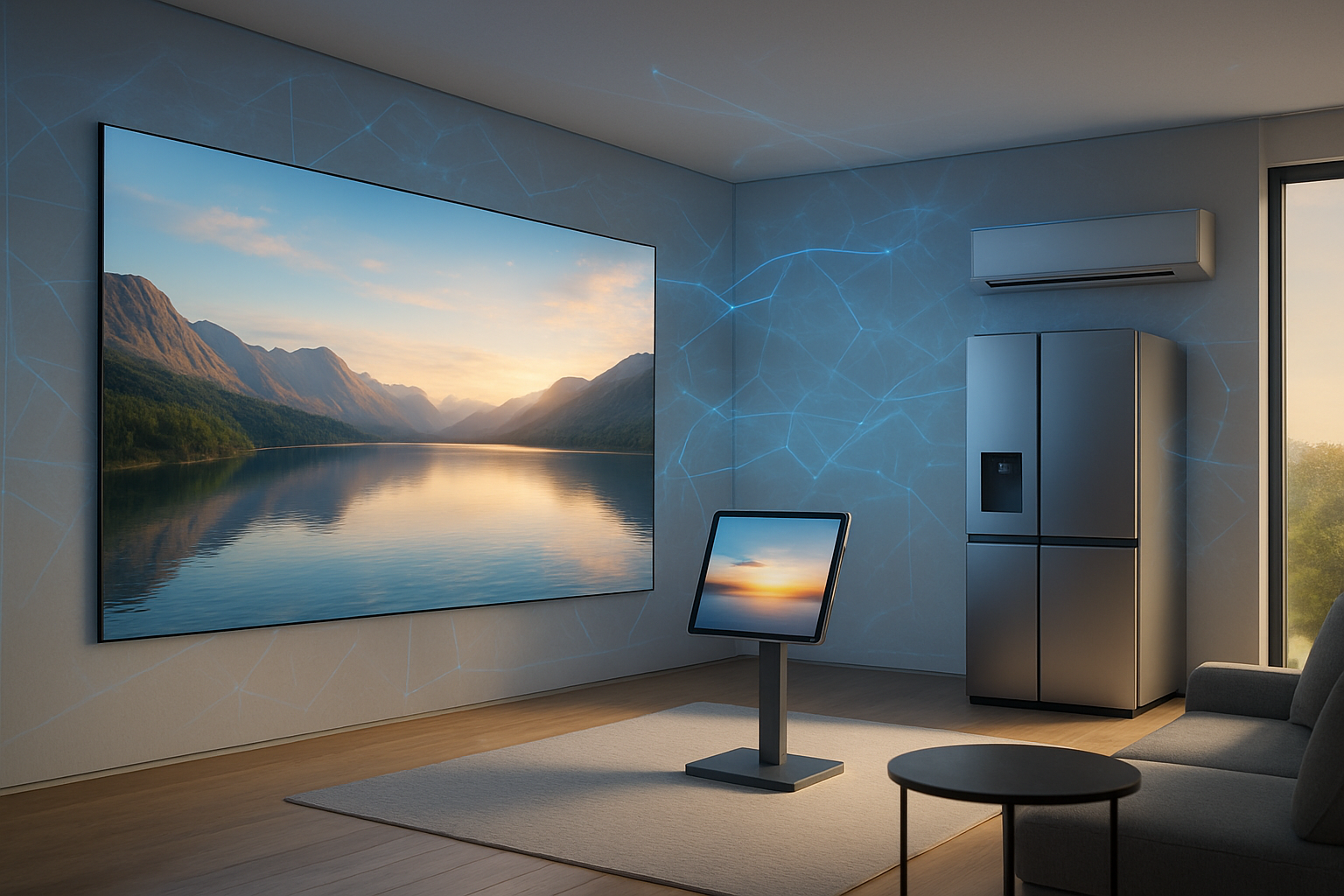
    The announcement marks a pivotal shift for the South Korean tech giant as it seeks to "platformize" the home. By integrating sophisticated "Vision AI" across its 2026 product lineup—from massive 130-inch Micro RGB displays to portable interactive hubs—Samsung is betting that the future of the smart home lies in "Ambient Sensing." This technology allows the home to understand user activity through motion, light, and sound sensors, enabling devices to act autonomously without the need for constant voice commands or manual app control.

    The Technical Core: Ambient Sensing and the Micro RGB AI Engine

    At the heart of the "Companion to AI Living" vision is a significant leap in processing power and sensory integration. Samsung introduced the NQ8 AI Gen3 processor for its flagship 8K displays, featuring eight times the neural networks of its 2024 predecessors. This silicon powers the new Vision AI Companion (VAC), a multi-agent software layer that acts as a household conductor. Unlike previous iterations of SmartThings, which required manual routines, VAC uses the built-in sensors in TVs, refrigerators, and the new WindFree Pro Air Conditioners to detect presence and context. For instance, if the system’s "Ambient Sensing" detects a user has fallen asleep on the couch, it can automatically transition the HVAC system to "Dry Comfort" mode and dim the lights across the home.

    The hardware centerpiece of this vision is the 130-inch Micro RGB TV (R95H). Rebranding from "Micro LED" to "Micro RGB," the display utilizes microscopic red, green, and blue LEDs that emit light independently, controlled by the Micro RGB AI Engine Pro. This allows for frame-by-frame color dimming and realism that industry experts claim sets a new benchmark for consumer displays. Furthermore, Samsung addressed the mobility gap by introducing "The Movingstyle," a 27-inch wireless portable touchscreen on a rollable stand. This device serves as a mobile AI hub, following users from the kitchen to the home office to provide persistent access to the VAC assistant, effectively replacing the niche filled by earlier robotic concepts like Ballie with a more utilitarian, screen-first approach.

    Market Disruption: The 7-Year Promise and Insurance Partnerships

    Samsung’s 2026 strategy is an aggressive play to secure ecosystem "stickiness" in the face of rising competition from Chinese manufacturers like Hisense and TCL. In a move that mirrors its smartphone policy, Samsung announced 7 years of guaranteed Tizen OS upgrades for its 2026 AI TVs. This shifts the smart TV market away from a disposable hardware model toward a long-term software platform, effectively doubling the functional lifespan of premium sets and positioning Samsung as a leader in sustainable technology and e-waste reduction.

    The most disruptive element of the announcement, however, is the "Smart Home Savings" program, a first-of-its-kind partnership with Hartford Steam Boiler (HSB). By opting into this program, users with connected appliances—such as the Bespoke AI Laundry Combo—can share anonymized safety data to receive direct reductions on their home insurance premiums. The AI’s ability to detect early signs of water leaks or electrical malfunctions transforms the smart home from a luxury convenience into a self-financing risk management tool. This move provides a tangible ROI for the smart home, a hurdle that has long plagued the industry, and forces competitors like LG and Apple to reconsider their cross-industry partnership strategies.

    The Care Companion: Health and Security in the AI Age

    The "Companion" vision extends deeply into personal well-being through the "Care Companion" initiative. Samsung is pivoting health monitoring from reactive tracking to proactive intervention. A standout feature is the new Dementia Detection Research integration within Galaxy wearables, which analyzes subtle changes in mobility and speech patterns to alert families to early cognitive shifts. Furthermore, through integration with the Xealth platform, health data can now be shared directly with medical providers for virtual consultations, while the Bespoke AI Refrigerator—now featuring Google Gemini integration—suggests recipes tailored to a user’s specific medical goals or nutritional deficiencies.

    To address the inevitable privacy concerns of such a deeply integrated system, Samsung unveiled Knox Enhanced Encrypted Protection (KEEP). This evolution of the Knox Matrix security suite creates app-specific encrypted "vaults" for personal insights. Unlike cloud-heavy AI models, Samsung’s 2026 architecture prioritizes on-device processing, ensuring that the most sensitive data—such as home occupancy patterns or health metrics—never leaves the local network. This "Security as the Connective Tissue" approach is designed to build the consumer trust necessary for a truly "ambient" AI experience.

    The Road Ahead: From Chatbots to Physical AI

    Looking toward the future, Samsung’s CES 2026 showcase signals the transition from "Generative AI" (chatbots) to "Physical AI" (systems that interact with the physical world). Industry analysts at Gartner predict that the "Multiagent Systems" displayed by Samsung—where a TV, a fridge, and a vacuum cleaner collaborate on a single task—will become the standard for the next decade. The primary challenge remains interoperability; while Samsung is a major proponent of the Matter standard, the full "Companion" experience still heavily favors a pure Samsung ecosystem.

    In the near term, we can expect Samsung to expand its "Care Companion" features to older devices via software updates, though the most advanced Ambient Sensing will remain exclusive to the 2026 hardware. Experts predict that the success of the HSB insurance partnership will likely trigger a wave of similar collaborations between tech giants and the financial services sector, fundamentally changing how consumers value their connected devices.

    A New Chapter in the AI Era

    Samsung’s "Companion to AI Living" is more than a marketing slogan; it is a comprehensive attempt to solve the "fragmentation problem" of the smart home. By combining cutting-edge Micro RGB hardware with a multi-agent software layer and tangible financial incentives like insurance discounts, Samsung has moved beyond the "gadget" phase of AI. This development marks a significant milestone in AI history, where the technology finally fades into the background, becoming an "invisible" but essential part of daily life.

    As we move through 2026, the industry will be watching closely to see if consumers embrace this high level of automation or if the "Trust Deficit" regarding data privacy remains a barrier. However, with a 7-year commitment to its platform and a clear focus on health and energy sustainability, Samsung has set a high bar for the rest of the tech world to follow.


    This content is intended for informational purposes only and represents analysis of current AI developments.

    TokenRing AI delivers enterprise-grade solutions for multi-agent AI workflow orchestration, AI-powered development tools, and seamless remote collaboration platforms.
    For more information, visit https://www.tokenring.ai/.
  • Samsung Targets 800 Million AI-Enabled Devices by 2026: The Gemini-Powered Future of the Galaxy Ecosystem

    Samsung Targets 800 Million AI-Enabled Devices by 2026: The Gemini-Powered Future of the Galaxy Ecosystem

    LAS VEGAS, Jan 5, 2026 — Samsung Electronics Co., Ltd. (KRX: 005930) has officially unveiled its most ambitious technological roadmap to date, announcing a goal to integrate "Galaxy AI" into 800 million devices by the end of 2026. This target represents a massive acceleration in the company’s artificial intelligence strategy, effectively doubling its AI-enabled footprint from the 400 million devices reached in 2025 and quadrupling the initial 200 million rollout seen in late 2024.

    The announcement, delivered by TM Roh, President and Head of Mobile Experience (MX), during "The First Look" event at CES 2026, signals a pivot from AI as a luxury smartphone feature to AI as a ubiquitous "ambient" layer across Samsung’s entire product portfolio. By deepening its partnership with Alphabet Inc. (NASDAQ: GOOGL) to integrate the latest Gemini 3 models into everything from budget-friendly "A" series phones to high-end Bespoke appliances, Samsung is betting that a unified, cross-category AI ecosystem will be the primary driver of consumer loyalty for the next decade.

    The Technical Backbone: 2nm Silicon and Gemini 3 Integration

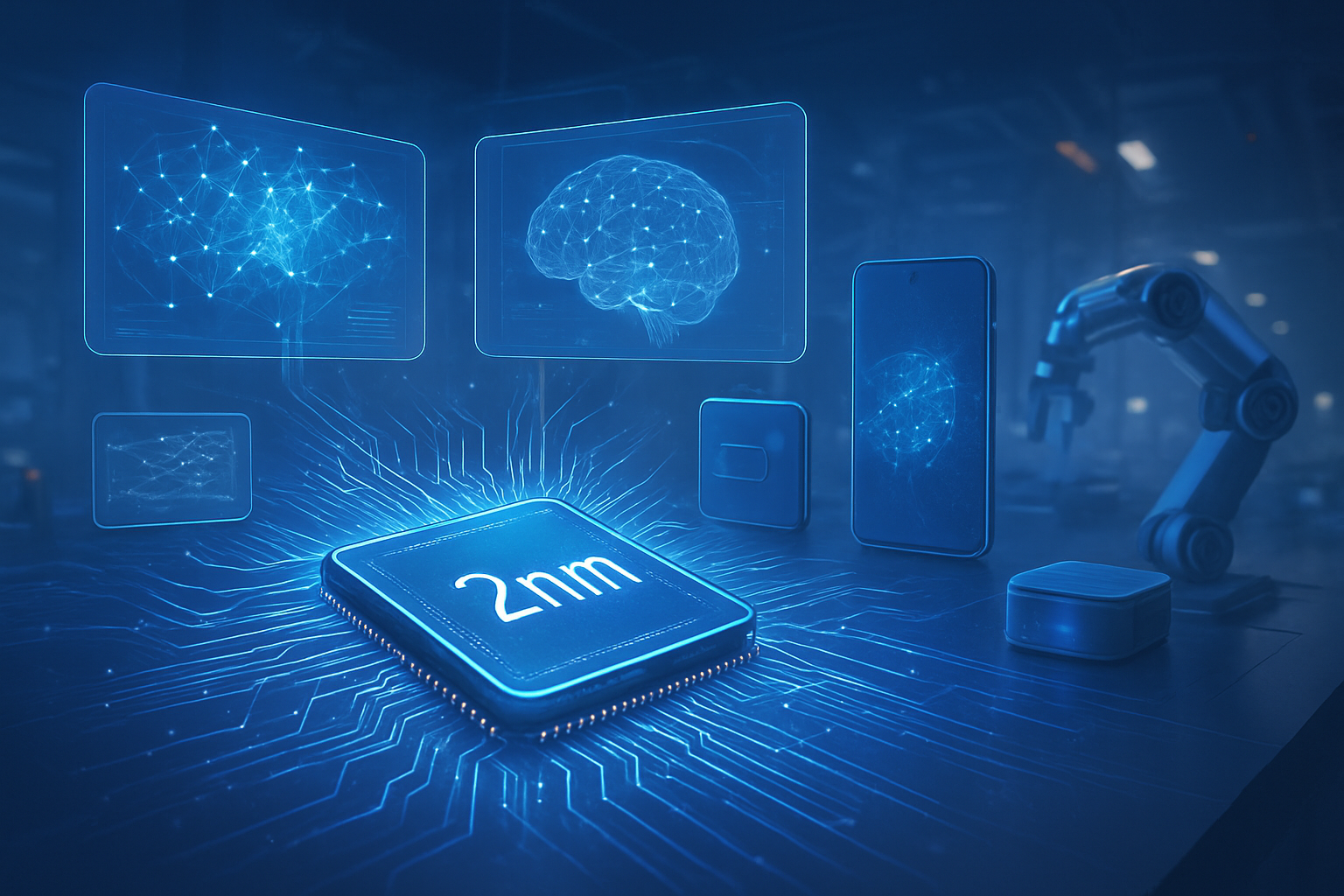
    The technical foundation of this 800-million-device push lies in Samsung’s shift to a "Local-First" hybrid AI model. Unlike early iterations of Galaxy AI that relied heavily on cloud processing, the 2026 lineup leverages the new Exynos 2600 and Snapdragon 8 Gen 5 (Elite 2) processors. These chips are manufactured on a cutting-edge 2nm process, featuring dedicated Neural Processing Units (NPUs) capable of delivering 80 Trillion Operations Per Second (TOPS). This hardware allows for the local execution of Gemini Nano 3, a 10-billion-parameter model that handles real-time translation, privacy-sensitive data, and "Universal Screen Awareness" without an internet connection.

    For more complex reasoning, Samsung has integrated Gemini 3 Pro, enabling a new feature called "Deep Research Agents." These agents can perform multi-step tasks—such as planning a week-long international itinerary while cross-referencing flight prices, calendar availability, and dietary preferences—within seconds. This differs from previous approaches by moving away from simple "command-and-response" interactions toward "agentic" behavior, where the device anticipates user needs based on context. Initial reactions from the AI research community have been largely positive, with experts noting that Samsung’s ability to compress high-parameter models for on-device use sets a new benchmark for mobile efficiency.

    Market Warfare: Reclaiming Dominance Through Scale

    Samsung’s aggressive expansion is a direct challenge to Apple Inc. (NASDAQ: AAPL), which has taken a more conservative, vertically integrated approach with its "Apple Intelligence" platform. While Apple remains focused on a "walled garden" of privacy-first AI, Samsung’s partnership with Google allows it to offer a more open ecosystem where users can choose between different AI agents. By 2026, analysts expect Samsung to use its vertical integration in HBM4 (High-Bandwidth Memory) to maintain a margin advantage over competitors, as the global memory chip shortage continues to drive up the cost of AI-capable hardware.

    The strategic advantage for Alphabet Inc. is equally significant. By embedding Gemini 3 into nearly a billion Samsung devices, Google secures a massive distribution channel for its foundational models, countering the threat of independent AI startups and Apple’s proprietary Siri 2.0. This partnership effectively positions the Samsung-Google alliance as the primary rival to the Apple-OpenAI ecosystem. Market experts predict that this scale will allow Samsung to reclaim global market share in regions where premium AI features were previously out of reach for mid-range consumers.

    The Ambient AI Era: Privacy, Energy, and the Digital Divide

    The broader significance of Samsung's 800-million-device goal lies in the transition to "Ambient AI"—where intelligence is integrated so deeply into the background of daily life that it is no longer perceived as a separate tool. At CES 2026, Samsung demonstrated this with its Bespoke AI Family Hub Refrigerator, which uses Gemini-powered vision to identify food items and automatically adjust meal plans. However, this level of integration has sparked renewed debates over the "Surveillance Home." While Samsung’s Knox Matrix provides blockchain-backed security, privacy advocates worry about the monetization of telemetry data, such as when appliance health data is shared with insurance companies to adjust premiums.

    There is also the "AI Paradox" regarding sustainability. While Samsung’s AI Energy Mode can reduce a washing machine’s electricity use by 30%, the massive data center requirements for running Gemini’s cloud-based features are staggering. Critics argue that the net environmental gain may be negligible unless the industry moves toward more efficient "Small Language Models" (SLMs). Furthermore, the "AI Divide" remains a concern; while 80% of consumers are now aware of Galaxy AI, only a fraction fully utilize its advanced capabilities, threatening to create a productivity gap between tech-literate users and the general population.

    Future Horizons: Brain Health and 6G Connectivity

    Looking toward 2027 and beyond, Samsung is already teasing the next frontier of its AI ecosystem: Brain Health and Neurological Monitoring. Using wearables and home sensors, the company plans to launch tools for the early detection of cognitive decline by analyzing gait, sleep patterns, and voice nuances. These applications represent a shift from productivity to preventative healthcare, though they will require navigating unprecedented regulatory and ethical hurdles regarding the ownership of neurological data.

    The long-term roadmap also includes the integration of 6G connectivity, which is expected to provide the ultra-low latency required for "Collective Intelligence"—where multiple devices in a home share a single, distributed NPU to solve complex problems. Experts predict that the next major challenge for Samsung will be moving from "screen-based AI" to "voice and gesture-only" interfaces, effectively making the smartphone a secondary hub for a much larger network of autonomous agents.

    Conclusion: A Milestone in AI History

    Samsung’s push to 800 million AI devices marks a definitive end to the "experimental" phase of consumer artificial intelligence. By the end of 2026, AI will no longer be a novelty but a standard requirement for consumer electronics. The key takeaway from this expansion is the successful fusion of high-performance silicon with foundational models like Gemini, proving that the future of technology lies in the synergy between hardware manufacturers and AI labs.

    As we move through 2026, the industry will be watching closely to see if Samsung can overcome the current memory chip shortage and if consumers will embrace the "Ambient AI" lifestyle or retreat due to privacy concerns. Regardless of the outcome, Samsung has fundamentally shifted the goalposts for the tech industry, moving the conversation from "What can AI do?" to "How many people can AI reach?"


    This content is intended for informational purposes only and represents analysis of current AI developments.

    TokenRing AI delivers enterprise-grade solutions for multi-agent AI workflow orchestration, AI-powered development tools, and seamless remote collaboration platforms.
    For more information, visit https://www.tokenring.ai/.
  • Qualcomm Redefines the AI PC: Snapdragon X2 Elite Debuts at CES 2026 with 85 TOPS NPU and 3nm Architecture

    Qualcomm Redefines the AI PC: Snapdragon X2 Elite Debuts at CES 2026 with 85 TOPS NPU and 3nm Architecture

    LAS VEGAS — At the opening of CES 2026, Qualcomm (NASDAQ:QCOM) has officially set a new benchmark for the personal computing industry with the debut of the Snapdragon X2 Elite. This second-generation silicon represents a pivotal moment in the "AI PC" era, moving beyond experimental features toward a future where "Agentic AI"—artificial intelligence capable of performing complex, multi-step tasks locally—is the standard. By leveraging a cutting-edge 3nm process and a record-breaking Neural Processing Unit (NPU), Qualcomm is positioning itself not just as a mobile chipmaker, but as the dominant architect of the next generation of Windows laptops.

    The announcement comes at a critical juncture for the industry, as consumers and enterprises alike demand more than just incremental speed increases. The Snapdragon X2 Elite delivers a staggering 80 to 85 TOPS (Trillions of Operations Per Second) of AI performance, effectively doubling the capabilities of many current-generation rivals. When paired with its new shared memory architecture and significant gains in single-core performance, the X2 Elite signals that the transition to ARM-based computing on Windows is no longer a compromise, but a competitive necessity for high-performance productivity.

    Technical Breakthroughs: The 3nm Powerhouse

    The technical specifications of the Snapdragon X2 Elite highlight a massive leap in engineering, centered on TSMC’s 3nm manufacturing process. This transition from the previous 4nm node has allowed Qualcomm to pack over 31 billion transistors into the silicon, drastically improving power density and thermal efficiency. The centerpiece of the chip is the third-generation Oryon CPU, which boasts a 39% increase in single-core performance over the original Snapdragon X Elite. For multi-threaded workloads, the top-tier 18-core variant—featuring 12 "Prime" cores and 6 "Performance" cores—claims to be up to 75% faster than its predecessor at the same power envelope.

    Beyond raw speed, the X2 Elite introduces a sophisticated shared memory architecture that mimics the unified memory structures seen in Apple’s M-series chips. By integrating LPDDR5x-9523 memory directly onto the package with a 192-bit bus, the chip achieves a massive 228 GB/s of bandwidth. This bandwidth is shared across the CPU, Adreno GPU, and Hexagon NPU, allowing for near-instantaneous data transfer between processing units. This is particularly vital for running Large Language Models (LLMs) locally, where the latency of moving data from traditional RAM to a dedicated NPU often creates a bottleneck.

    Initial reactions from the industry have been overwhelmingly positive, particularly regarding the NPU’s 80-85 TOPS output. While the standard X2 Elite delivers 80 TOPS, a specialized collaboration with HP (NYSE:HPQ) has resulted in an exclusive "Extreme" variant for the new HP OmniBook Ultra 14 that reaches 85 TOPS. Industry experts note that this level of performance allows for "always-on" AI features—such as real-time translation, advanced video noise cancellation, and proactive digital assistants—to run in the background with negligible impact on battery life.

    Market Implications and the Competitive Landscape

    The arrival of the X2 Elite intensifies the high-stakes rivalry between Qualcomm and Intel (NASDAQ:INTC). At CES 2026, Intel showcased its Panther Lake (Core Ultra Series 3) architecture, which also emphasizes AI capabilities. However, Qualcomm’s early benchmarks suggest a significant lead in "performance-per-watt." The X2 Elite reportedly matches the peak performance of Intel’s flagship Panther Lake chips while consuming 40-50% less power, a metric that is crucial for the ultra-portable laptop market. This efficiency advantage is expected to put pressure on Intel and AMD (NASDAQ:AMD) to accelerate their own transitions to more advanced nodes and specialized AI silicon.

    For PC manufacturers, the Snapdragon X2 Elite offers a path to challenge the dominance of the MacBook Air. The flagship HP OmniBook Ultra 14, unveiled alongside the chip, serves as the premier showcase for this new silicon. With a 14-inch 3K OLED display and a chassis thinner than a 13-inch MacBook Air, the OmniBook Ultra 14 is rated for up to 29 hours of video playback. This level of endurance, combined with the 85 TOPS NPU, provides a compelling reason for enterprise customers to migrate toward ARM-based Windows devices, potentially disrupting the long-standing "Wintel" (Windows and Intel) duopoly.

    Furthermore, Microsoft (NASDAQ:MSFT) has worked closely with Qualcomm to ensure that Windows 11 is fully optimized for the X2 Elite’s unique architecture. The "Prism" emulation layer has been further refined, allowing legacy x86 applications to run with near-native performance. This removes one of the final hurdles for ARM adoption in the corporate world, where legacy software compatibility has historically been a dealbreaker. As more developers release native ARM versions of their software, the strategic advantage of Qualcomm's integrated AI hardware will only grow.

    Broader Significance: The Shift to Localized AI

    The debut of the X2 Elite is a milestone in the broader shift from cloud-based AI to edge computing. Until now, most sophisticated AI tasks—like generating images or summarizing long documents—required a connection to powerful remote servers. This "cloud-first" model raises concerns about data privacy, latency, and subscription costs. By providing 85 TOPS of local compute, Qualcomm is enabling a "privacy-first" AI model where sensitive data never leaves the user's device. This fits into the wider industry trend of decentralizing AI, making it more accessible and secure for individual users.

    However, the rapid escalation of the "TOPS war" also raises questions about software readiness. While the hardware is now capable of running complex models locally, the ecosystem of AI-powered applications is still catching up. Critics argue that until there is a "killer app" that necessitates 80+ TOPS, the hardware may be ahead of its time. Nevertheless, the history of computing suggests that once the hardware floor is raised, software developers quickly find ways to utilize the extra headroom. The X2 Elite is effectively "future-proofing" the next two to three years of laptop hardware.

    Comparatively, this breakthrough mirrors the transition from single-core to multi-core processing in the mid-2000s. Just as multi-core CPUs enabled a new era of multitasking and media creation, the integration of high-performance NPUs is expected to enable a new era of "Agentic" computing. This is a fundamental shift in how humans interact with computers—moving from a command-based interface (where the user tells the computer what to do) to an intent-based interface (where the AI understands the user's goal and executes the necessary steps).

    Future Horizons: What Comes Next?

    Looking ahead, the success of the Snapdragon X2 Elite will likely trigger a wave of innovation in the "AI PC" space. In the near term, we can expect to see more specialized AI models, such as "Llama 4-mini" or "Gemini 2.0-Nano," being optimized specifically for the Hexagon NPU. These models will likely focus on hyper-local tasks like real-time coding assistance, automated spreadsheet management, and sophisticated local search that can index every file and conversation on a device without compromising security.

    Long-term, the competition is expected to push NPU performance toward the 100+ TOPS mark by 2027. This will likely involve even more advanced packaging techniques, such as 3D chip stacking and the integration of even faster memory standards. The challenge for Qualcomm and its partners will be to maintain this momentum while ensuring that the cost of these premium devices remains accessible to the average consumer. Experts predict that as the technology matures, we will see these high-performance NPUs trickle down into mid-range and budget laptops, democratizing AI access.

    There are also challenges to address regarding the thermal management of such powerful NPUs in thin-and-light designs. While the 3nm process helps, the heat generated during sustained AI workloads remains a concern. Innovations in active cooling, such as the solid-state AirJet systems seen in some high-end configurations at CES, will be critical to sustaining peak AI performance without throttling.

    Conclusion: A New Era for the PC

    The debut of the Qualcomm Snapdragon X2 Elite at CES 2026 marks the beginning of a new chapter in personal computing. By combining a 3nm architecture with an industry-leading 85 TOPS NPU and a unified memory design, Qualcomm has delivered a processor that finally bridges the gap between the efficiency of mobile silicon and the power of desktop-class computing. The HP OmniBook Ultra 14 stands as a testament to what is possible when hardware and software are tightly integrated to prioritize local AI.

    The key takeaway from this year's CES is that the "AI PC" is no longer a marketing buzzword; it is a tangible technological shift. Qualcomm’s lead in NPU performance and power efficiency has forced a massive recalibration across the industry, challenging established giants and providing consumers with a legitimate alternative to the traditional x86 ecosystem. As we move through 2026, the focus will shift from hardware specs to real-world utility, as developers begin to unleash the full potential of these local AI powerhouses.

    In the coming weeks, all eyes will be on the first independent reviews of the X2 Elite-powered devices. If the real-world battery life and AI performance live up to the CES demonstrations, we may look back at this moment as the day the PC industry finally moved beyond the cloud and brought the power of artificial intelligence home.


    This content is intended for informational purposes only and represents analysis of current AI developments.

    TokenRing AI delivers enterprise-grade solutions for multi-agent AI workflow orchestration, AI-powered development tools, and seamless remote collaboration platforms. For more information, visit https://www.tokenring.ai/.
  • The Rubin Revolution: NVIDIA Unveils the 3nm Roadmap to Trillion-Parameter Agentic AI at CES 2026

    The Rubin Revolution: NVIDIA Unveils the 3nm Roadmap to Trillion-Parameter Agentic AI at CES 2026

    In a landmark keynote at CES 2026, NVIDIA (NASDAQ: NVDA) CEO Jensen Huang officially ushered in the "Rubin Era," unveiling a comprehensive hardware roadmap that marks the most significant architectural shift in the company’s history. While the previous Blackwell generation laid the groundwork for generative AI, the newly announced Rubin (R100) platform is engineered for a world of "Agentic AI"—autonomous systems capable of reasoning, planning, and executing complex multi-step workflows without constant human intervention.

    The announcement signals a rapid transition from the Blackwell Ultra (B300) "bridge" systems of late 2025 to a completely overhauled architecture in 2026. By leveraging TSMC (NYSE: TSM) 3nm manufacturing and the next-generation HBM4 memory standard, NVIDIA is positioning itself to maintain an iron grip on the global data center market, providing the massive compute density required to train and deploy trillion-parameter "world models" that bridge the gap between digital intelligence and physical robotics.

    From Blackwell to Rubin: A Technical Leap into the 3nm Era

    The centerpiece of the CES 2026 presentation was the Rubin R100 GPU, the successor to the highly successful Blackwell architecture. Fabricated on TSMC’s enhanced 3nm (N3P) process node, the R100 represents a major leap in transistor density and energy efficiency. Unlike its predecessors, Rubin utilizes a sophisticated chiplet-based design using CoWoS-L packaging with a 4x reticle size, allowing NVIDIA to pack more compute units into a single package than ever before. This transition to 3nm is not merely a shrink; it is a fundamental redesign that enables the R100 to deliver a staggering 50 Petaflops of dense FP4 compute—a 3.3x increase over the Blackwell B300.

    Crucial to this performance leap is the integration of HBM4 memory. The Rubin R100 features 8 stacks of HBM4, providing up to 15 TB/s of memory bandwidth, effectively shattering the "memory wall" that has bottlenecked previous AI clusters. This is paired with the new Vera CPU, which replaces the Grace CPU. The Vera CPU is powered by 88 custom "Olympus" cores built on the Arm (NASDAQ: ARM) v9.2-A architecture. These cores support simultaneous multithreading (SMT) and are designed to run within an ultra-efficient 50W power envelope, ensuring that the "Vera-Rubin" Superchip can handle the intense logic and data shuffling required for real-time AI reasoning.

    The performance gains are most evident at the rack scale. NVIDIA’s new Vera Rubin NVL144 system achieves 3.6 Exaflops of FP4 inference, representing a 2.5x to 3.3x performance leap over the Blackwell-based NVL72. This massive jump is facilitated by NVLink 6, which doubles bidirectional bandwidth to 3.6 TB/s. This interconnect technology allows thousands of GPUs to act as a single, massive compute engine, a requirement for the emerging class of agentic AI models that require near-instantaneous data movement across the entire cluster.

    Consolidating Data Center Dominance and the Competitive Landscape

    NVIDIA’s aggressive roadmap places immense pressure on competitors like AMD (NASDAQ: AMD) and Intel (NASDAQ: INTC), who are still scaling their 5nm and 4nm-based solutions. By moving to 3nm so decisively, NVIDIA is widening the "moat" around its data center business. The Rubin platform is specifically designed to be the backbone for hyperscalers like Microsoft (NASDAQ: MSFT), Google (NASDAQ: GOOGL), and Meta (NASDAQ: META), all of whom are currently racing to develop proprietary agentic frameworks. The Blackwell Ultra B300 will remain the mainstream workhorse for general enterprise AI, while the Rubin R100 is being positioned as the "bleeding-edge" flagship for the world’s most advanced AI research labs.

    The strategic significance of the Vera CPU and its Olympus cores cannot be overstated. By deepening its integration with the Arm ecosystem, NVIDIA is reducing the industry's reliance on traditional x86 architectures for AI workloads. This vertical integration—owning the GPU, the CPU, the interconnect, and the software stack—gives NVIDIA a unique advantage in optimizing performance-per-watt. For startups and AI labs, this means the cost of training trillion-parameter models could finally begin to stabilize, even as the complexity of those models continues to skyrocket.

    The Dawn of Agentic AI and the Trillion-Parameter Frontier

    The move toward the Rubin architecture reflects a broader shift in the AI landscape from "Chatbots" to "Agents." Agentic AI refers to systems that can autonomously use tools, browse the web, and interact with software environments to achieve a goal. These systems require far more than just predictive text; they require "World Models" that understand physical laws and cause-and-effect. The Rubin R100’s FP4 compute performance is specifically tuned for these reasoning-heavy tasks, allowing for the low-latency inference necessary for an AI agent to "think" and act in real-time.

    Furthermore, NVIDIA is tying this hardware roadmap to its "Physical AI" initiatives, such as Project GR00T for humanoid robotics and DRIVE Thor for autonomous vehicles. The trillion-parameter models of 2026 will not just live in servers; they will power the brains of machines operating in the real world. This transition raises significant questions about the energy demands of the global AI infrastructure. While the 3nm process is more efficient, the sheer scale of the Rubin deployments will require unprecedented power management solutions, a challenge NVIDIA is addressing through its liquid-cooled NVL-series rack designs.

    Future Outlook: The Path to Rubin Ultra and Beyond

    Looking ahead, NVIDIA has already teased the "Rubin Ultra" for 2027, which is expected to feature 12 stacks of HBM4e and potentially push FP4 performance toward the 100 Petaflop mark per GPU. The company is also signaling a move toward 2nm manufacturing in the late 2020s, continuing its relentless "one-year release cadence." In the near term, the industry will be watching the initial rollout of the Blackwell Ultra B300 in late 2025, which will serve as the final testbed for the software ecosystem before the Rubin transition begins in earnest.

    The primary challenge facing NVIDIA will be supply chain execution. As the sole major customer for TSMC’s most advanced packaging and 3nm nodes, any manufacturing hiccups could delay the global AI roadmap. Additionally, as AI agents become more autonomous, the industry will face mounting pressure to implement robust safety guardrails. Experts predict that the next 18 months will see a surge in "Sovereign AI" projects, as nations rush to build their own Rubin-powered data centers to ensure technological independence.

    A New Benchmark for the Intelligence Age

    The unveiling of the Rubin roadmap at CES 2026 is more than a hardware refresh; it is a declaration of the next phase of the digital revolution. By combining the Vera CPU’s 88 Olympus cores with the Rubin GPU’s massive FP4 throughput, NVIDIA has provided the industry with the tools necessary to move beyond generative text and into the realm of truly autonomous, reasoning machines. The transition from Blackwell to Rubin marks the moment when AI moves from being a tool we use to a partner that acts on our behalf.

    As we move into 2026, the tech industry will be focused on how quickly these systems can be deployed and whether the software ecosystem can keep pace with such rapid hardware advancements. For now, NVIDIA remains the undisputed architect of the AI era, and the Rubin platform is the blueprint for the next trillion parameters of human progress.


    This content is intended for informational purposes only and represents analysis of current AI developments.

    TokenRing AI delivers enterprise-grade solutions for multi-agent AI workflow orchestration, AI-powered development tools, and seamless remote collaboration platforms.
    For more information, visit https://www.tokenring.ai/.

  • The Rise of the AI PC: Intel and AMD Battle for Desktop AI Supremacy at CES 2026

    The Rise of the AI PC: Intel and AMD Battle for Desktop AI Supremacy at CES 2026

    The "AI PC" era has transitioned from a marketing buzzword into a high-stakes silicon arms race at CES 2026. As the technology world converges in Las Vegas, the two titans of the x86 world, Intel (NASDAQ: INTC) and AMD (NASDAQ: AMD), have unveiled their most ambitious processors to date, signaling a fundamental shift in how personal computing is defined. No longer just tools for productivity, these new machines are designed to serve as ubiquitous, local AI assistants capable of handling complex generative tasks without ever pinging a cloud server.

    This shift is more than just a performance bump; it represents a total architectural pivot toward on-device intelligence. With Gartner (NYSE: IT) projecting that AI-capable PCs will command a staggering 55% market share by the end of 2026—totaling some 143 million units—the announcements made this week by Intel and AMD are being viewed as the opening salvos in a decade-long battle for the soul of the laptop.

    The Technical Frontier: 18A vs. Refined Performance

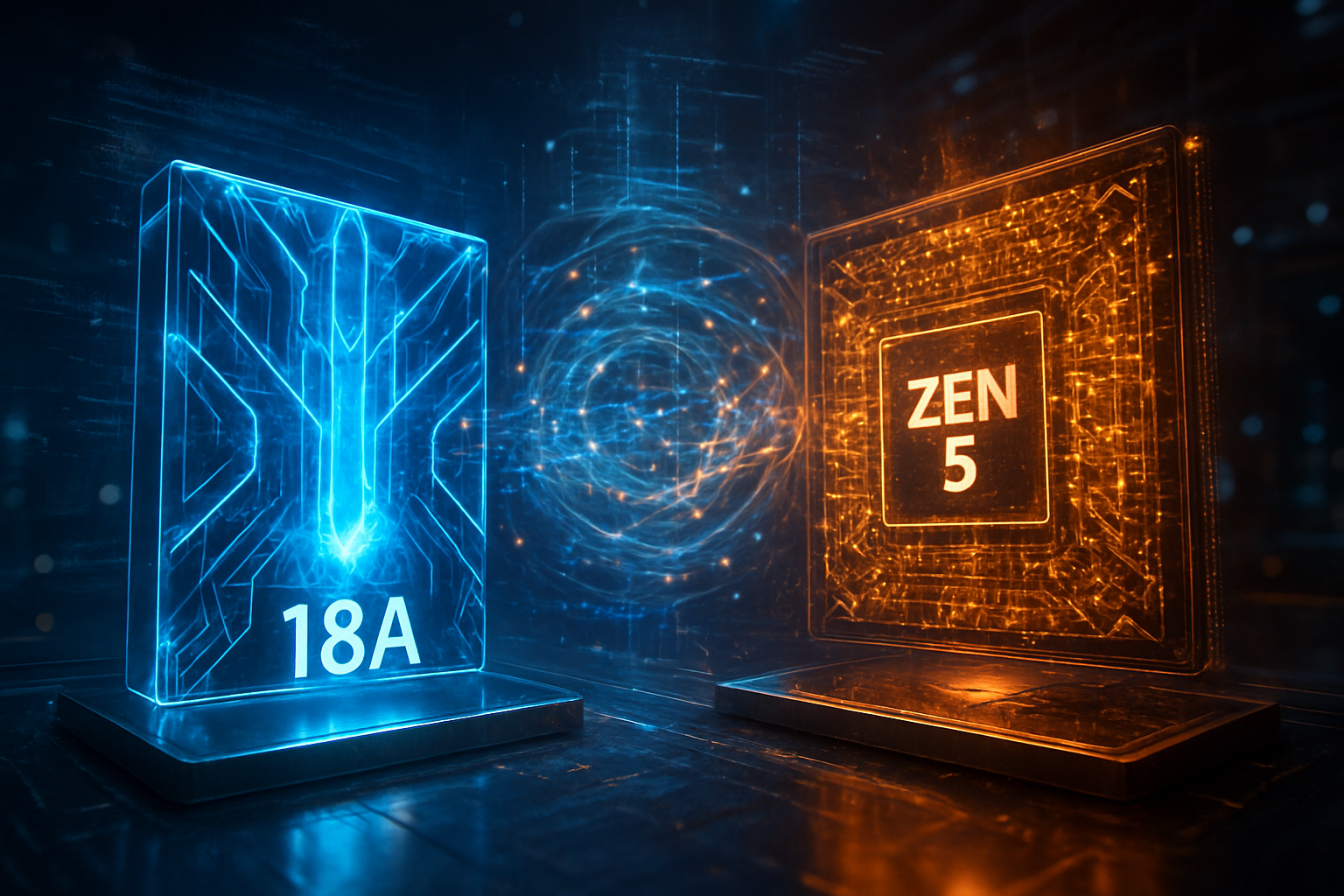
    Intel’s centerpiece at the show is "Panther Lake," officially branded as the Core Ultra Series 3. This lineup marks a historic milestone for the company as the first consumer chip built on the Intel 18A manufacturing process. By utilizing cutting-edge RibbonFET (gate-all-around) transistors and PowerVia (backside power delivery), Intel claims a 15–25% improvement in power efficiency and a 30% increase in chip density. However, the most eye-popping figure is the 50% GPU performance boost over the previous "Lunar Lake" generation, powered by the new Xe3 "Celestial" architecture. With a total platform throughput of 180 TOPS (Trillions of Operations Per Second), Intel is positioning Panther Lake as the definitive platform for "Physical AI," including real-time gesture recognition and high-fidelity local rendering.

    Not to be outdone, AMD has introduced its "Gorgon Point" (Ryzen AI 400) series. While Intel is swinging for the fences with a new manufacturing node, AMD is playing a game of refined execution. Gorgon Point utilizes a matured Zen 5/5c architecture paired with an upgraded XDNA 2 NPU capable of delivering over 55 TOPS. This ensures that even AMD’s mid-range and budget offerings comfortably exceed Microsoft (NASDAQ: MSFT) "Copilot+ PC" requirements. Industry experts note that while Gorgon Point is a mid-cycle refresh before the anticipated "Zen 6" architecture arrives later this year, its stability and high clock speeds make it a formidable "market defender" that is already seeing massive adoption across OEM laptop designs from Dell and HP.

    Strategic Maneuvers in the Silicon Bloodbath

    The competitive implications of these launches extend far beyond the showroom floor. For Intel, Panther Lake is a "credibility test" for its foundry services. Analysts from firms like Canalys suggest that Intel is essentially betting its future on the 18A node's success. A rumored $5 billion strategic partnership with NVIDIA (NASDAQ: NVDA) to co-design specialized "x86-RTX" chips has further bolstered confidence, suggesting that Intel's manufacturing leap is being taken seriously by even its fiercest rivals. If Intel can maintain high yields on 18A, it could reclaim the technological lead it lost to TSMC and Samsung over the last half-decade.

    AMD’s strategy, meanwhile, focuses on ubiquity and the "OEM shelf space" battle. By broadening the Ryzen AI 400 series to include everything from high-end HX chips to budget-friendly Ryzen 3 variants, AMD is aiming to democratize AI hardware. This puts immense pressure on Qualcomm (NASDAQ: QCOM), whose ARM-based Snapdragon X Elite chips sparked the AI PC trend in 2024. As x86 performance-per-watt catches up to ARM thanks to Intel’s 18A and AMD’s Zen 5 refinements, the "Windows on ARM" advantage may face its toughest challenge yet.

    From Cloud Chatbots to Local Agentic AI

    The wider significance of CES 2026 lies in the industry-wide pivot from cloud-dependent AI to "local agentic systems." We are moving past the era of simple chatbots into a world where AI agents autonomously manage files, edit video, and navigate complex software workflows entirely on-device. This transition addresses the two biggest hurdles to AI adoption: privacy and latency. By processing data locally on an NPU (Neural Processing Unit), enterprises can ensure that sensitive corporate data never leaves the machine, a factor that Gartner expects will drive 40% of software vendors to prioritize on-device AI investments by the end of the year.

    This milestone is being compared to the shift from dial-up to broadband. Just as always-on internet changed the nature of software, always-available local AI is changing the nature of the operating system. Industry watchers from The Register note that by the end of 2026, a non-AI-capable laptop will likely be considered obsolete for enterprise use, much like a laptop without a Wi-Fi card would have been in the mid-2000s.

    The Horizon: Zen 6 and Physical AI

    Looking ahead, the near-term roadmap is already heating up. AMD is expected to launch its next-generation "Medusa Point" (Zen 6) architecture in late 2026, which promises to move the needle even further on NPU performance. Meanwhile, software developers are racing to catch up with the hardware. We are likely to see the first "killer apps" for the AI PC—applications that utilize the 180 TOPS of power for tasks like real-time language translation in video calls without any lag, or generative video editing tools that function as fast as a filter.

    The challenge remains in the software ecosystem. While the hardware is ready, the "AI-first" version of Windows and popular creative suites must continue to evolve to take full advantage of these heterogeneous computing architectures. Experts predict that the next two years will be defined by "Physical AI," where the PC uses its cameras and sensors to understand the user's physical context, leading to more intuitive and proactive digital assistants.

    A New Benchmark for Computing

    The announcements at CES 2026 mark the definitive end of the "standard" PC. With Intel's Panther Lake pushing the boundaries of manufacturing and AMD's Gorgon Point ensuring AI is available at every price point, the industry has reached a point of no return. The "silicon bloodbath" in Las Vegas has shown that the battle for AI supremacy will be won or lost in the millimeters of a laptop's motherboard.

    As we look toward the rest of 2026, the key metrics to watch will be Intel’s 18A yield rates and the speed at which software developers integrate local NPU support. One thing is certain: the PC is no longer just a window to the internet; it is a localized powerhouse of intelligence, and the race to perfect that intelligence has only just begun.


    This content is intended for informational purposes only and represents analysis of current AI developments.

    TokenRing AI delivers enterprise-grade solutions for multi-agent AI workflow orchestration, AI-powered development tools, and seamless remote collaboration platforms.
    For more information, visit https://www.tokenring.ai/.
  • Samsung Heralded for Transformative AI and Semiconductor Innovation Ahead of CES® 2026

    Samsung Heralded for Transformative AI and Semiconductor Innovation Ahead of CES® 2026

    Seoul, South Korea – November 5, 2025 – Samsung Electronics (KRX: 005930) has once again cemented its position at the vanguard of technological advancement, earning multiple coveted CES® 2026 Innovation Awards from the Consumer Technology Association (CTA)®. This significant recognition, announced well in advance of the prestigious consumer electronics show slated for January 7-10, 2026, in Las Vegas, underscores Samsung’s unwavering commitment to pioneering transformative technologies, particularly in the critical fields of artificial intelligence and semiconductor innovation. The accolades not only highlight Samsung's robust pipeline of future-forward products and solutions but also signal the company's strategic vision to integrate AI seamlessly across its vast ecosystem, from advanced chip manufacturing to intelligent consumer devices.

    The immediate significance of these awards for Samsung is multifaceted. It powerfully reinforces the company's reputation as a global leader in innovation, generating considerable positive momentum and brand prestige ahead of CES 2026. This early acknowledgment positions Samsung as a key innovator to watch, amplifying anticipation for its official product announcements and demonstrations. For the broader tech industry, Samsung's consistent recognition often sets benchmarks, influencing trends and inspiring competitors to push their own technological boundaries. These awards further confirm the continued importance of AI, sustainable technology, and connected ecosystems as dominant themes, providing an early glimpse into the intelligent, integrated, and environmentally conscious technological solutions that will define the near future.

    Engineering Tomorrow: Samsung's AI and Semiconductor Breakthroughs

    While specific product details for the CES® 2026 Innovation Awards remain under wraps until the official event, Samsung's consistent leadership and recent advancements in 2024 and 2025 offer a clear indication of the types of transformative technologies likely to have earned these accolades. Samsung's strategy is characterized by an "AI Everywhere" vision, integrating intelligent capabilities across its extensive device ecosystem and into the very core of its manufacturing processes.

    In the realm of AI advancements, Samsung is pioneering on-device AI for enhanced user experiences. Innovations like Galaxy AI, first introduced with the Galaxy S24 series and expanding to the S25 and A series, enable sophisticated AI functions such as Live Translate, Interpreter, Chat Assist, and Note Assist directly on devices. This approach significantly advances beyond cloud-based processing by offering instant, personalized AI without constant internet connectivity, bolstering privacy, and reducing latency. Furthermore, Samsung is embedding AI into home appliances and displays with features like "AI Vision Inside" for smart inventory management in refrigerators and Vision AI for TVs, which offers on-device AI for real-time picture and sound quality optimization. This moves beyond basic automation to truly adaptive and intelligent environments. The company is also heavily investing in AI in robotics and "physical AI," developing advanced intelligent factory robotics and intelligent companions like Ballie, capable of greater autonomy and precision by linking virtual simulations with real-world data.

    The backbone of Samsung's AI ambitions lies in its semiconductor innovations. The company is at the forefront of next-generation memory solutions for AI, developing High-Bandwidth Memory (HBM4) as an essential component for AI servers and accelerators, aiming for superior performance. Additionally, Samsung has developed 10.7Gbps LPDDR5X DRAM, optimized for next-generation on-device AI applications, and 24Gb GDDR7 DRAM for advanced AI computing. These memory chips offer significantly higher bandwidth and lower power consumption, critical for processing massive AI datasets. In advanced process technology and AI chip design, Samsung is on track for mass production of its 2nm Gate-All-Around (GAA) process technology by 2025, with a roadmap to 1.4nm by 2027. This continuous reduction in transistor size leads to higher performance and lower power consumption. Samsung's Advanced Processor Lab (APL) is also developing next-generation AI chips based on RISC-V architecture, including the Mach 1 AI inference chip, allowing for greater technological independence and tailored AI solutions. Perhaps most transformative is Samsung's integration of AI into its own chip fabrication through the "AI Megafactory." This groundbreaking partnership with NVIDIA involves deploying over 50,000 NVIDIA GPUs to embed AI throughout the entire chip manufacturing flow, from design and development to automated physical tasks and digital twins for predictive maintenance. This represents a paradigm shift towards a "thinking" manufacturing system that continuously analyzes, predicts, and optimizes production in real-time, setting a new benchmark for intelligent chip manufacturing.

    The AI research community and industry experts generally view Samsung's consistent leadership with a mix of admiration and close scrutiny. They recognize Samsung as a global leader, often lauded for its innovations at CES. The strategic vision and massive investments, such as ₩47.4 trillion (US$33 billion) for capacity expansion in 2025, are seen as crucial for Samsung's AI-driven recovery and growth. The high-profile partnership with NVIDIA for the "AI Megafactory" has been particularly impactful, with NVIDIA CEO Jensen Huang calling it the "dawn of the AI industrial revolution." While Samsung has faced challenges in areas like high-bandwidth memory, its renewed focus on HBM4 and significant investments are interpreted as a strong effort to reclaim leadership. The democratization of AI through expanded language support in Galaxy AI is also recognized as a strategic move that could influence future industry standards.

    Reshaping the Competitive Landscape: Impact on Tech Giants and Startups

    Samsung's anticipated CES® 2026 Innovation Awards for its transformative AI and semiconductor innovations are set to significantly reshape the tech industry, creating new market dynamics and offering strategic advantages to some while posing considerable challenges to others. Samsung's comprehensive approach, spanning on-device AI, advanced memory, cutting-edge process technology, and AI-driven manufacturing, positions it as a formidable force.

    AI companies will experience a mixed impact. AI model developers and cloud AI providers stand to benefit from the increased availability of high-performance HBM4, enabling more complex and efficient model training and inference. Edge AI software and service providers will find new opportunities as robust on-device AI creates demand for lightweight AI models and privacy-preserving applications across various industries. Conversely, companies solely reliant on cloud processing for AI might face competition from devices offering similar functionalities locally, especially where latency, privacy, or offline capabilities are critical. Smaller AI hardware startups may also find it harder to compete in high-performance AI chip manufacturing given Samsung's comprehensive vertical integration and advanced foundry capabilities.

    Among tech giants, NVIDIA (NASDAQ: NVDA) is a clear beneficiary, with Samsung deploying 50,000 NVIDIA GPUs in its manufacturing and collaborating on HBM4 development, solidifying NVIDIA's dominance in AI infrastructure. Foundry customers like Qualcomm (NASDAQ: QCOM) and MediaTek (TPE: 2454), which rely on Samsung Foundry for their mobile SoCs, will benefit from advancements in 2nm GAA process technology, leading to more powerful and energy-efficient chips. Apple (NASDAQ: AAPL), Google (NASDAQ: GOOGL), and Microsoft (NASDAQ: MSFT), also heavily invested in on-device AI, will see the entire ecosystem pushed forward by Samsung's innovations. However, competitors like Intel (NASDAQ: INTC) and TSMC (NYSE: TSM) will face increased competition in leading-edge process technology as Samsung aggressively pursues its 2nm and 1.4nm roadmap. Memory competitors such as SK Hynix (KRX: 000660) and Micron (NASDAQ: MU) will also experience intensified competition as Samsung accelerates HBM4 development and production.

    Startups will find new avenues for innovation. AI software and application startups can leverage powerful on-device AI and advanced cloud infrastructure, fueled by Samsung's chips, to innovate faster in areas like personalized assistants, AR/VR, and specialized generative AI applications. Niche semiconductor design startups may find opportunities in specific IP blocks or custom accelerators that integrate with Samsung's advanced processes. However, hardware-centric AI startups, particularly those attempting to develop their own high-performance AI chips without strong foundry partnerships, will face immense difficulty competing with Samsung's vertically integrated approach.

    Samsung's comprehensive strategy forces a re-evaluation of market positions. Its unique vertical integration as a leading memory provider, foundry, and device manufacturer allows for unparalleled synergy, optimizing AI hardware from end-to-end. This drives an intense performance and efficiency race in AI chips, benefiting the entire industry by pushing innovation but demanding significant R&D from competitors. The emphasis on robust on-device AI also signals a shift away from purely cloud-dependent AI models, requiring major AI labs to adapt their strategies for effective AI deployment across a spectrum of devices. The AI Megafactory could also offer a more resilient and efficient supply chain, providing a competitive edge in chip production stability. These innovations will profoundly transform smartphones, TVs, and other smart devices with on-device generative AI, potentially disrupting traditional mobile app ecosystems. The AI Megafactory could also set new standards for manufacturing efficiency, pressuring other manufacturers to adopt similar AI-driven strategies. Samsung's market positioning will be cemented as a comprehensive AI solutions provider, leading an integrated AI ecosystem and strengthening its role as a foundry powerhouse and memory dominator in the AI era.

    A New Era of Intelligence: Wider Significance and Societal Impact

    Samsung's anticipated innovations at CES® 2026, particularly in on-device AI, high-bandwidth and low-power memory, advanced process technologies, and AI-driven manufacturing, represent crucial steps in enabling the next generation of intelligent systems and hold profound wider significance for the broader AI landscape and society. These advancements align perfectly with the dominant trends shaping the future of AI: the proliferation of on-device/edge AI, fueling generative AI's expansion, the rise of advanced AI agents and autonomous systems, and the transformative application of AI in manufacturing (Industry 4.0).

    The proliferation of on-device AI is a cornerstone of this shift, embedding intelligence directly into devices to meet the growing demand for faster processing, reduced latency, enhanced privacy, and lower power consumption. This decentralizes AI, making it more robust and responsive for everyday applications. Samsung's advancements in memory (HBM4, LPDDR5X) and process technology (2nm, 1.4nm GAA) directly support the insatiable data demands of increasingly complex generative AI models and advanced AI agents, providing the foundational hardware needed for both training and inference. HBM4 is projected to offer data transfer speeds up to 2TB/s and processing speeds of up to 11 Gbps, with capacities reaching 48GB, critical for high-performance computing and training large-scale AI models. LPDDR5X, supporting up to 10.7 Gbps, offers significant performance and power efficiency for power-sensitive on-device AI. The 2nm and 1.4nm GAA process technologies enable more transistors to be packed onto a chip, leading to significantly higher performance and lower power consumption crucial for advanced AI chips. Finally, the AI Megafactory in collaboration with NVIDIA signifies a profound application of AI within the semiconductor industry itself, optimizing production environments and accelerating the development of future semiconductors.

    These innovations promise accelerated AI development and deployment, leading to more sophisticated AI models across all sectors. They will enable enhanced consumer experiences through more intelligent, personalized, and secure functionalities in everyday devices, making technology more intuitive and responsive. The revolutionized manufacturing model of the AI Megafactory could become a blueprint for "intelligent manufacturing" across various industries, leading to unprecedented levels of automation, efficiency, and precision. This will also create new industry opportunities in healthcare, transportation, and smart infrastructure. However, potential concerns include the rising costs and investment required for cutting-edge AI chips and infrastructure, ethical implications and bias as AI becomes more pervasive, job displacement in traditional sectors, and the significant energy and water consumption of chip production and AI training. Geopolitical tensions also remain a concern, as the strategic importance of advanced semiconductor technology can exacerbate trade restrictions.

    Comparing these advancements to previous AI milestones, Samsung's current innovations are the latest evolution in a long history of AI breakthroughs. While early AI focused on theoretical concepts and rule-based systems, and the machine learning resurgence in the 1990s highlighted the importance of powerful computing, the deep learning revolution of the 2010s (fueled by GPUs and early HBM) demonstrated AI's capability in perception and pattern recognition. The current generative AI boom, with models like ChatGPT, has democratized advanced AI. Samsung's CES 2026 innovations build directly on this trajectory, with on-device AI making sophisticated intelligence more accessible, advanced memory and process technologies enabling the scaling challenges of today's generative AI, and the AI Megafactory representing a new paradigm: using AI to accelerate the creation of the very hardware that powers AI. This creates a virtuous cycle of innovation, moving beyond merely using AI to making AI more efficiently.

    The Horizon of Intelligence: Future Developments

    Samsung's strategic roadmap, underscored by its CES® 2026 Innovation Awards, signals a future where AI is deeply integrated into every facet of technology, from fundamental hardware to pervasive user experiences. The near-term and long-term developments stemming from these innovations promise to redefine industries and daily life.

    In the near term, Samsung plans a significant expansion of its Galaxy AI capabilities, aiming to equip over 400 million Galaxy devices with AI by 2025 and integrate AI into 90% of its products across all business areas by 2030. This includes highly personalized AI features leveraging knowledge graph technology and a hybrid AI model that balances on-device and cloud processing. For HBM4, mass production is expected in 2026, featuring significantly faster performance, increased capacity, and the ability for processor vendors like NVIDIA to design custom base dies, effectively turning the HBM stack into a more intelligent subsystem. Samsung also aims for mass production of its 2nm process technology by 2025 for mobile applications, expanding to HPC in 2026 and automotive in 2027. The AI Megafactory with NVIDIA will continue to embed AI throughout Samsung's manufacturing flow, leveraging digital twins via NVIDIA Omniverse for real-time optimization and predictive maintenance.

    The potential applications and use cases are vast. On-device AI will lead to personalized mobile experiences, enhanced privacy and security, offline functionality for mobile apps and IoT devices, and more intelligent smart homes and robotics. Advanced memory solutions like HBM4 will be critical for high-precision large language models, AI training clusters, and supercomputing, while LPDDR5X and its successor LPDDR6 will power flagship mobile devices, AR/VR headsets, and edge AI devices. The 2nm and 1.4nm GAA process technologies will enable more compact, feature-rich, and energy-efficient consumer electronics, AI and HPC acceleration, and advancements in automotive and healthcare technologies. AI-driven manufacturing will lead to optimized semiconductor production, accelerated development of next-generation devices, and improved supply chain resilience.

    However, several challenges need to be addressed for widespread adoption. These include the high implementation costs of advanced AI-driven solutions, ongoing concerns about data privacy and security, a persistent skill gap in AI and semiconductor technology, and the technical complexities and yield challenges associated with advanced process nodes like 2nm and 1.4nm GAA. Supply chain disruptions, exacerbated by the explosive demand for AI components like HBM and advanced GPUs, along with geopolitical risks, also pose significant hurdles. The significant energy and water consumption of chip production and AI training demand continuous innovation in energy-efficient designs and sustainable manufacturing practices.

    Experts predict that AI will continue to be the primary driver of market growth and innovation in the semiconductor sector, boosting design productivity by at least 20%. The "AI Supercycle" will lead to a shift from raw performance to application-specific efficiency, driving the development of customized chips. HBM will remain dominant in AI applications, with continuous advancements. The race to develop and mass-produce chips at 2nm and 1.4nm will intensify, and AI is expected to become even more deeply integrated into chip design and fabrication processes beyond 2028. A collaborative approach, with "alliances" becoming a trend, will be essential for addressing the technical challenges of advanced packaging and chiplet architectures.

    A Vision for the Future: Comprehensive Wrap-up

    Samsung's recognition for transformative technology and semiconductor innovation by the Consumer Technology Association, particularly for the CES® 2026 Innovation Awards, represents a powerful affirmation of its strategic direction and a harbinger of the AI-driven future. These awards, highlighting advancements in on-device AI, next-generation memory, cutting-edge process technology, and AI-driven manufacturing, collectively underscore Samsung's holistic approach to building an intelligent, interconnected, and efficient technological ecosystem.

    The key takeaways from these anticipated awards are clear: AI is becoming ubiquitous, embedded directly into devices for enhanced privacy and responsiveness; foundational hardware, particularly advanced memory and smaller process nodes, is critical for powering the next wave of complex AI models; and AI itself is revolutionizing the very process of technology creation through intelligent manufacturing. These developments mark a significant step towards the democratization of AI, making sophisticated capabilities accessible to a broader user base and integrating AI seamlessly into daily life. They also represent pivotal moments in AI history, enabling the scaling of generative AI, fostering the rise of advanced AI agents, and transforming industrial processes.

    The long-term impact on the tech industry and society will be profound. We can expect accelerated innovation cycles, the emergence of entirely new device categories, and a significant shift in the competitive landscape as companies vie for leadership in these foundational technologies. Societally, these innovations promise enhanced personalization, improved quality of life through smarter homes, cities, and healthcare, and continued economic growth. However, the ethical considerations surrounding AI bias, decision-making, and the transformation of the workforce will demand ongoing attention and proactive solutions.

    In the coming weeks and months, observers should keenly watch for Samsung's official announcements at CES 2026, particularly regarding the commercialization timelines and specific product integrations of its award-winning on-device AI capabilities. Further details on HBM4 and LPDDR5X product roadmaps, alongside partnerships with major AI chip designers, will be crucial. Monitoring news regarding the successful ramp-up and customer adoption of Samsung's 2nm and 1.4nm GAA process technologies will indicate confidence in its manufacturing prowess. Finally, expect more granular information on the technologies and efficiency gains within the "AI Megafactory" with NVIDIA, which could set a new standard for intelligent manufacturing. Samsung's strategic direction firmly establishes AI not merely as a software layer but as a deeply embedded force in the fundamental hardware and manufacturing processes that will define the next era of technology.


    This content is intended for informational purposes only and represents analysis of current AI developments.

    TokenRing AI delivers enterprise-grade solutions for multi-agent AI workflow orchestration, AI-powered development tools, and seamless remote collaboration platforms.
    For more information, visit https://www.tokenring.ai/.