
Tag: Chatbots

  • Congress to Convene Critical Hearing on AI Chatbots: Balancing Innovation with Public Safety

    Congress to Convene Critical Hearing on AI Chatbots: Balancing Innovation with Public Safety

    Washington D.C. stands poised for a pivotal discussion tomorrow, November 18, 2025, as the House Energy and Commerce Committee's Oversight and Investigations Subcommittee prepares to host a crucial hearing titled "Innovation with Integrity: Examining the Risks and Benefits of AI Chatbots." This highly anticipated session will bring together leading psychiatrists and data analysts to provide expert testimony on the burgeoning capabilities and profound ethical dilemmas posed by artificial intelligence in conversational agents. The hearing underscores a growing recognition among policymakers of the urgent need to navigate the rapidly evolving AI landscape, balancing its transformative potential with robust safeguards for public well-being and data privacy.

    The committee's focus on both the psychological and data-centric aspects of AI chatbots signals a comprehensive approach to understanding their societal integration. With AI chatbots increasingly permeating various sectors, from mental health support to customer service, the insights gleaned from this hearing are expected to shape future legislative efforts and industry best practices. The testimonies from medical and technical experts will be instrumental in informing a nuanced perspective on how these powerful tools can be harnessed responsibly while mitigating potential harms, particularly concerning vulnerable populations.

    Expert Perspectives to Unpack AI Chatbot Capabilities and Concerns

    Tomorrow's hearing is expected to delve into the intricate technical specifications and operational capabilities of modern AI chatbots, contrasting their current functionalities with previous iterations and existing human-centric approaches. Witnesses, including Dr. Marlynn Wei, MD, JD, a psychiatrist and psychotherapist, and Dr. John Torous, MD, MBI, Director of Digital Psychiatry at Beth Israel Deacon Medical Center, are anticipated to highlight the significant advantages AI chatbots offer in expanding access to mental healthcare. These advantages include 24/7 availability, affordability, and the potential to reduce stigma by providing a private, non-judgmental space for initial support. They may also discuss how AI can assist clinicians with administrative tasks, streamline record-keeping, and offer early intervention through monitoring and evidence-based suggestions.

    However, the technical discussion will inevitably pivot to the inherent limitations and risks. Dr. Jennifer King, PhD, a Privacy and Data Policy Fellow at Stanford Institute for Human-Centered Artificial Intelligence, is slated to address critical data privacy and security concerns. The vast collection of personal health information by these AI tools raises serious questions about data storage, monetization, and the ethical use of conversational data for training, especially involving minors, without explicit consent. Experts are also expected to emphasize the chatbots' fundamental inability to fully grasp and empathize with complex human emotions, a cornerstone of effective therapeutic relationships.

    This session will likely draw sharp distinctions between AI as a supportive tool and its limitations as a replacement for human interaction. Concerns about factual inaccuracies, the risk of misdiagnosis or harmful advice (as seen in past incidents where chatbots reportedly mishandled suicidal ideation or gave dangerous instructions), and the potential for over-reliance leading to social isolation will be central to the technical discourse. The hearing is also expected to touch upon the lack of comprehensive federal oversight, which has allowed a "digital Wild West" for unregulated products to operate with potentially deceptive claims and without rigorous pre-deployment testing.

    Competitive Implications for AI Giants and Startups

    The insights and potential policy recommendations emerging from tomorrow's hearing could significantly impact major AI players and agile startups alike. Tech giants such as Google (NASDAQ: GOOGL), Microsoft (NASDAQ: MSFT), and OpenAI, which are at the forefront of developing and deploying advanced AI chatbots, stand to face increased scrutiny and potentially new regulatory frameworks. Companies that have proactively invested in ethical AI development, robust data privacy measures, and transparent operational practices may gain a competitive edge, positioning themselves as trusted providers in an increasingly regulated environment.

    Conversely, firms that have been less scrupulous with data handling or have deployed chatbots without sufficient safety testing could face significant disruption. The hearing's focus on accuracy, privacy, and the potential for harm could lead to calls for industry-wide standards, pre-market approvals for certain AI applications, and stricter liability rules. This could compel companies to re-evaluate their product development cycles, prioritize safety and ethical considerations from inception, and invest heavily in explainable AI and human-in-the-loop oversight.

    For startups in the mental health tech space leveraging AI, the outcome could be a double-edged sword. While clearer guidelines might offer a framework for legitimate innovation, stringent regulations could also increase compliance costs, potentially stifling smaller players. However, startups that can demonstrate a commitment to patient safety, data integrity, and evidence-based efficacy, possibly through partnerships with medical professionals, may find new opportunities to differentiate themselves and gain market trust. The hearing will undoubtedly underscore that market positioning in the AI chatbot arena will increasingly depend not just on technological prowess, but also on ethical governance and public trust.

    Broader Significance in the Evolving AI Landscape

    Tomorrow's House committee hearing is more than just a review of AI chatbots; it represents a critical inflection point in the broader conversation surrounding artificial intelligence governance. It fits squarely within a global trend of increasing legislative interest in AI, reflecting growing concerns about its societal impacts, ethical implications, and the need for a regulatory framework that can keep pace with rapid technological advancement. The testimonies are expected to highlight how the current "digital Wild West" for AI, particularly in sensitive areas like mental health, poses significant risks that demand immediate attention.

    The hearing will likely draw parallels to previous AI milestones and breakthroughs, emphasizing that while AI offers unprecedented opportunities for progress, it also carries potential for unintended consequences. The discussions will contribute to the ongoing debate about striking a balance between fostering innovation and implementing necessary guardrails to protect consumers, ensure data privacy, and prevent misuse. Specific concerns about AI's potential to exacerbate mental health issues, contribute to misinformation, or erode human social connections will be central to this wider examination.

    Ultimately, this hearing is expected to reinforce the growing consensus among policymakers, researchers, and the public that a proactive, rather than reactive, approach to AI regulation is essential. It signals a move towards establishing clear accountability for AI developers and deployers, demanding greater transparency in AI models, and advocating for user-centric design principles that prioritize safety and well-being. The implications extend beyond mental health, setting a precedent for how AI will be governed across all critical sectors.

    Anticipating Future Developments and Challenges

    Looking ahead, tomorrow's hearing is expected to catalyze several near-term and long-term developments in the AI chatbot space. In the immediate future, we can anticipate increased calls for federal agencies, such as the FDA or HHS, to establish clearer guidelines and potentially pre-market approval processes for AI applications in healthcare and mental health. This could lead to the development of industry standards for data privacy, algorithmic transparency, and efficacy testing for mental health chatbots. We might also see a push for greater public education campaigns to inform users about the limitations and risks of relying on AI for sensitive issues.

    On the horizon, potential applications of AI chatbots will likely focus on augmenting human capabilities rather than replacing them entirely. This includes AI tools designed to support clinicians in diagnosis and treatment planning, provide personalized educational content, and facilitate access to human therapists. However, significant challenges remain, particularly in developing AI that can truly understand and respond to human nuance, ensuring equitable access to these technologies, and preventing the deepening of digital divides. Experts predict a continued struggle to balance rapid innovation with the slower, more deliberate pace of regulatory development, necessitating adaptive and flexible policy frameworks.

    The discussions are also expected to fuel research into more robust ethical AI frameworks, focusing on areas like explainable AI, bias detection and mitigation, and privacy-preserving machine learning. The goal will be to develop AI systems that are not only powerful but also trustworthy and beneficial to society. What happens next will largely depend on the committee's recommendations and the willingness of legislators to translate these concerns into actionable policy, setting the stage for a new era of responsible AI development.

    A Crucial Step Towards Responsible AI Governance

    Tomorrow's House committee hearing marks a crucial step in the ongoing journey toward responsible AI governance. The anticipated testimonies from psychiatrists and data analysts will provide a comprehensive overview of the dual nature of AI chatbots – their immense potential for societal good, particularly in expanding access to mental health support, juxtaposed with profound ethical challenges related to privacy, accuracy, and human interaction. The key takeaway from this event will undoubtedly be the urgent need for a balanced approach that fosters innovation while simultaneously establishing robust safeguards to protect users.

    This development holds significant historical weight in the timeline of AI. It reflects a maturing understanding among policymakers that the "move fast and break things" ethos is unsustainable when applied to technologies with such deep societal implications. The emphasis on ethical considerations, data security, and the psychological impact of AI underscores a shift towards a more human-centric approach to technological advancement. It serves as a stark reminder that while AI can offer powerful solutions, the core of human well-being often lies in genuine connection and empathy, aspects that AI, by its very nature, cannot fully replicate.

    In the coming weeks and months, all eyes will be on Washington to see how these discussions translate into concrete legislative action. Stakeholders, from AI developers and tech giants to healthcare providers and privacy advocates, will be closely watching for proposed regulations, industry standards, and enforcement mechanisms. The outcome of this hearing and subsequent policy initiatives will profoundly shape the trajectory of AI development, determining whether we can successfully harness its power for the greater good while mitigating its inherent risks.


    This content is intended for informational purposes only and represents analysis of current AI developments.

    TokenRing AI delivers enterprise-grade solutions for multi-agent AI workflow orchestration, AI-powered development tools, and seamless remote collaboration platforms.
    For more information, visit https://www.tokenring.ai/.

  • AI Chatbots: Empowering Therapists, Not Replacing Hearts in Mental Health Care

    AI Chatbots: Empowering Therapists, Not Replacing Hearts in Mental Health Care

    In an era defined by technological acceleration, the integration of Artificial Intelligence (AI) into nearly every facet of human endeavor continues to reshape industries and services. One of the most sensitive yet promising applications lies within mental health care, where AI chatbots are emerging not as replacements for human therapists, but as powerful allies designed to extend support, enhance accessibility, and streamline clinical workflows. As of November 17, 2025, the discourse surrounding AI in mental health has firmly shifted from apprehension about substitution to an embrace of augmentation, recognizing the profound potential for these digital companions to alleviate the global mental health crisis.

    The immediate significance of this development is undeniable. With mental health challenges on the rise worldwide and a persistent shortage of qualified professionals, AI chatbots offer a scalable, always-on resource. They provide a crucial first line of support, offering psychoeducation, mood tracking, and coping strategies between traditional therapy sessions. This symbiotic relationship between human expertise and artificial intelligence is poised to revolutionize how mental health care is delivered, making it more accessible, efficient, and ultimately, more effective for those in need.

    The Technical Tapestry: Weaving AI into Therapeutic Practice

    At the heart of the modern AI chatbot's capability to assist mental health therapists lies a sophisticated blend of Natural Language Processing (NLP) and machine learning (ML) algorithms. These advanced technologies enable chatbots to understand, process, and respond to human language with remarkable nuance, facilitating complex and context-aware conversations that were once the exclusive domain of human interaction. Unlike their rudimentary predecessors, these AI systems are not merely pattern-matching programs; they are designed to generate original content, engage in dynamic dialogue, and provide personalized support.

    Many contemporary mental health chatbots are meticulously engineered around established psychological frameworks such as Cognitive Behavioral Therapy (CBT), Dialectical Behavior Therapy (DBT), and Acceptance and Commitment Therapy (ACT). They deliver therapeutic interventions through conversational interfaces, guiding users through exercises, helping to identify and challenge negative thought patterns, and reinforcing healthy coping mechanisms. This grounding in evidence-based practices is a critical differentiator from earlier, less structured conversational agents. Furthermore, their capacity for personalization is a significant technical leap; by analyzing conversation histories and user data, these chatbots can adapt their interactions, offering tailored insights, mood tracking, and reflective journaling prompts that evolve with the individual's journey.

    This generation of AI chatbots represents a profound departure from previous technological approaches in mental health. Early systems, like ELIZA in 1966, relied on simple keyword recognition and rule-based responses, often just rephrasing user statements as questions. The "expert systems" of the 1980s, such as MYCIN, provided decision support for clinicians but lacked direct patient interaction. Even computerized CBT programs from the late 20th and early 21st centuries, while effective, often presented fixed content and lacked the dynamic, adaptive, and scalable personalization offered by today's AI. Modern chatbots can interact with thousands of users simultaneously, providing 24/7 accessibility that breaks down geographical and financial barriers, a feat impossible for traditional therapy or static software. Some advanced platforms even employ "dual-agent systems," where a primary chat agent handles real-time dialogue while an assistant agent analyzes conversations to provide actionable intelligence to the human therapist, thus streamlining clinical workflows.

    Initial reactions from the AI research community and industry experts are a blend of profound optimism and cautious vigilance. There's widespread excitement about AI's potential to dramatically expand access to mental health support, particularly for underserved populations, and its utility in early intervention by identifying at-risk individuals. Companies like Woebot Health and Wysa are at the forefront, developing clinically validated AI tools that demonstrate efficacy in reducing symptoms of depression and anxiety, often leveraging CBT and DBT principles. However, experts consistently highlight the AI's inherent limitations, particularly its inability to fully replicate genuine human empathy, emotional connection, and the nuanced understanding crucial for managing severe mental illnesses or complex, life-threatening emotional needs. Concerns regarding misinformation, algorithmic bias, data privacy, and the critical need for robust regulatory frameworks are paramount, with organizations like the American Psychological Association (APA) advocating for stringent safeguards and ethical guidelines to ensure responsible innovation and protect vulnerable individuals. The consensus leans towards a hybrid future, where AI chatbots serve as powerful complements to, rather than substitutes for, the irreplaceable expertise of human mental health professionals.

    Reshaping the Landscape: Impact on the AI and Mental Health Industries

    The advent of sophisticated AI chatbots is profoundly reshaping the mental health technology industry, creating a dynamic ecosystem where innovative startups, established tech giants, and even cloud service providers are finding new avenues for growth and competition. This shift is driven by the urgent global demand for accessible and affordable mental health care, which AI is uniquely positioned to address.

    Dedicated AI mental health startups are leading the charge, developing specialized platforms that offer personalized and often clinically validated support. Companies like Woebot Health, a pioneer in AI-powered conversational therapy based on evidence-based approaches, and Wysa, which combines an AI chatbot with self-help tools and human therapist support, are demonstrating the efficacy and scalability of these solutions. Others, such as Limbic, a UK-based startup that achieved UKCA Class IIa medical device status for its conversational AI, are setting new standards for clinical validation and integration into national health services, currently used in 33% of the UK's NHS Talking Therapies services. Similarly, Kintsugi focuses on voice-based mental health insights, using generative AI to detect signs of depression and anxiety from speech, while Spring Health and Lyra Health utilize AI to tailor treatments and connect individuals with appropriate care within employer wellness programs. Even Talkspace, a prominent online therapy provider, integrates AI to analyze linguistic patterns for real-time risk assessment and therapist alerts.

    Beyond the specialized startups, major tech giants are benefiting through their foundational AI technologies and cloud services. Developers of large language models (LLMs) such as OpenAI (NASDAQ: MSFT), Google (NASDAQ: GOOGL), and Microsoft (NASDAQ: MSFT) are seeing their general-purpose AI increasingly leveraged for emotional support, even if not explicitly designed for clinical mental health. However, the American Psychological Association (APA) strongly cautions against using these general-purpose chatbots as substitutes for qualified care due to potential risks. Furthermore, cloud service providers like Amazon Web Services (AWS) (NASDAQ: AMZN), Google Cloud (NASDAQ: GOOGL), and Microsoft Azure (NASDAQ: MSFT) provide the essential infrastructure, machine learning tools, and secure data storage that underpin the development and scaling of these mental health AI applications.

    The competitive implications are significant. AI chatbots are disrupting traditional mental health services by offering increased accessibility and affordability, providing 24/7 support that can reach underserved populations and often at a fraction of the cost of in-person therapy. This directly challenges existing models and necessitates a re-evaluation of service delivery. The ability of AI to provide data-driven personalization also disrupts "one-size-fits-all" approaches, leading to more precise and sensitive interactions. However, the market faces the critical challenge of regulation; the potential for unregulated or general-purpose AI to provide harmful advice underscores the need for clinical validation and ethical oversight, creating a clear differentiator for responsible, clinically-backed solutions. The market for mental health chatbots is projected for substantial growth, attracting significant investment and fostering intense competition, with strategies focusing on clinical validation, integration with healthcare systems, specialization, hybrid human-AI models, robust data privacy, and continuous innovation in AI capabilities.

    A Broader Lens: AI's Place in the Mental Health Ecosystem

    The integration of AI chatbots into mental health services represents more than just a technological upgrade; it signifies a pivotal moment in the broader AI landscape, reflecting a continuous evolution from rudimentary computational tools to sophisticated, generative conversational agents. This journey began with early experiments like ELIZA in the 1960s, which mimicked human conversation, progressing through expert systems in the 1980s that aided clinical decision-making, and computerized cognitive behavioral therapy (CCBT) programs in the 1990s and 2000s that delivered structured digital interventions. Today, the rapid adoption of large language models (LLMs) such as ChatGPT (NASDAQ: MSFT) and Gemini (NASDAQ: GOOGL) marks a qualitative leap, offering unprecedented conversational capabilities that are both a marvel and a challenge in the sensitive domain of mental health.

    The societal impacts of this shift are multifaceted. On the positive side, AI chatbots promise unparalleled accessibility and affordability, offering 24/7 support that can bridge the critical gap in mental health care, particularly for underserved populations in remote areas. They can help reduce the stigma associated with seeking help, providing a lower-pressure, anonymous entry point into care. Furthermore, AI can significantly augment the work of human therapists by assisting with administrative tasks, early screening, diagnosis support, and continuous patient monitoring, thereby alleviating clinician burnout. However, the societal risks are equally profound. Concerns about psychological dependency, where users develop an over-reliance on AI, potentially leading to increased loneliness or exacerbation of symptoms, are growing. Documented cases where AI chatbots have inadvertently encouraged self-harm or delusional thinking underscore the critical limitations of AI in replicating genuine human empathy and understanding, which are foundational to effective therapy.

    Ethical considerations are at the forefront of this discourse. A major concern revolves around accountability and the duty of care. Unlike licensed human therapists who are bound by stringent professional codes and regulatory bodies, commercially available AI chatbots often operate in a regulatory vacuum, making it difficult to assign liability when harmful advice is provided. The need for informed consent and transparency is paramount; users must be fully aware they are interacting with an AI, not a human, a principle that some states, like New York and Utah, are beginning to codify into law. The potential for emotional manipulation, given AI's ability to forge human-like relationships, also raises red flags, especially for vulnerable individuals. States like Illinois and Nevada have even begun to restrict AI's role in mental health to administrative and supplementary support, explicitly prohibiting its use for therapeutic decision-making without licensed professional oversight.

    Data privacy and algorithmic bias represent additional, significant concerns. Mental health apps and AI chatbots collect highly sensitive personal information, yet they often fall outside the strict privacy regulations, such as HIPAA, that govern traditional healthcare providers. This creates risks of data misuse, sharing with third parties, and potential for discrimination or stigmatization if data is leaked. Moreover, AI systems trained on vast, uncurated datasets can perpetuate and amplify existing societal biases. This can manifest as cultural or gender bias, leading to misinterpretations of distress, providing culturally inappropriate advice, or even exhibiting increased stigma towards certain conditions or populations, resulting in unequal and potentially harmful outcomes for diverse user groups.

    Compared to previous AI milestones in healthcare, current LLM-based chatbots represent a qualitative leap in conversational fluency and adaptability. While earlier systems were limited by scripted responses or structured data, modern AI can generate novel, contextually relevant dialogue, creating a more "human-like" interaction. However, this advanced capability introduces a new set of risks, particularly regarding the generation of unvalidated or harmful advice due to their reliance on vast, sometimes uncurated, datasets—a challenge less prevalent with the more controlled, rule-based systems of the past. The current challenge is to harness the sophisticated capabilities of modern AI responsibly, addressing the complex ethical and safety considerations that were not as pronounced with earlier, less autonomous AI applications.

    The Road Ahead: Charting the Future of AI in Mental Health

    The trajectory of AI chatbots in mental health points towards a future characterized by both continuous innovation and a deepening understanding of their optimal role within a human-centric care model. In the near term, we can anticipate further enhancements in their core functionalities, solidifying their position as accessible and convenient support tools. Chatbots will continue to refine their ability to provide evidence-based support, drawing from frameworks like CBT and DBT, and showing even more encouraging results in symptom reduction for anxiety and depression. Their capabilities in symptom screening, triage, mood tracking, and early intervention will become more sophisticated, offering real-time insights and nudges towards positive behavioral changes or professional help. For practitioners, AI tools will increasingly streamline administrative burdens, from summarizing session notes to drafting research, and even serving as training aids for aspiring therapists.

    Looking further ahead, the long-term vision for AI chatbots in mental health is one of profound integration and advanced personalization. Experts largely agree that AI will not replace human therapists but will instead become an indispensable complement within hybrid, stepped-care models. This means AI handling routine support and psychoeducation, thereby freeing human therapists to focus on complex cases requiring deep empathy and nuanced understanding. Advanced machine learning algorithms are expected to leverage extensive patient data—including genetic predispositions, past treatment responses, and real-time physiological indicators—to create highly personalized treatment plans. Future AI models will also strive for more sophisticated emotional understanding, moving beyond simulated empathy to a more nuanced replication of human-like conversational abilities, potentially even aiding in proactive detection of mental health distress through subtle linguistic and behavioral patterns.

    The horizon of potential applications and use cases is vast. Beyond current self-help and wellness apps, AI chatbots will serve as powerful adjunctive therapy tools, offering continuous support and homework between in-person sessions to intensify treatment for conditions like chronic depression. While crisis support remains a sensitive area, advancements are being made with critical safeguards and human clinician oversight. AI will also play a significant role in patient education, health promotion, and bridging treatment gaps for underserved populations, offering affordable and anonymous access to specialized interventions for conditions ranging from anxiety and substance use disorders to eating disorders.

    However, realizing this transformative potential hinges on addressing several critical challenges. Ethical concerns surrounding data privacy and security are paramount; AI systems collect vast amounts of sensitive personal data, often outside the strict regulations of traditional healthcare, necessitating robust safeguards and transparent policies. Algorithmic bias, inherent in training data, must be diligently mitigated to prevent misdiagnoses or unequal treatment outcomes, particularly for marginalized populations. Clinical limitations, such as AI's struggle with genuine empathy, its potential to provide misguided or even dangerous advice (e.g., in crisis situations), and the risk of fostering emotional dependence, require ongoing research and careful design. Finally, the rapid pace of AI development continues to outpace regulatory frameworks, creating a pressing need for clear guidelines, accountability mechanisms, and rigorous clinical validation, especially for large language model-based tools.

    Experts overwhelmingly predict that AI chatbots will become an integral part of mental health care, primarily in a complementary role. The future emphasizes "human + machine" synergy, where AI augments human capabilities, making practitioners more effective. This necessitates increased integration with human professionals, ensuring AI recommendations are reviewed, and clinicians proactively discuss chatbot use with patients. A strong call for rigorous clinical efficacy trials for AI chatbots, particularly LLMs, is a consensus, moving beyond foundational testing to real-world validation. The development of robust ethical frameworks and regulatory alignment will be crucial to protect patient privacy, mitigate bias, and establish accountability. The overarching goal is to harness AI's power responsibly, maintaining the irreplaceable human element at the core of mental health support.

    A Symbiotic Future: AI and the Enduring Human Element in Mental Health

    The journey of AI chatbots in mental health, from rudimentary conversational programs like ELIZA in the 1960s to today's sophisticated large language models (LLMs) from companies like OpenAI (NASDAQ: MSFT) and Google (NASDAQ: GOOGL), marks a profound evolution in AI history. This development is not merely incremental; it represents a transformative shift towards applying AI to complex, interpersonal challenges, redefining our perceptions of technology's role in well-being. The key takeaway is clear: AI chatbots are emerging as indispensable support tools, designed to augment, not supplant, the irreplaceable expertise and empathy of human mental health professionals.

    The significance of this development lies in its potential to address the escalating global mental health crisis by dramatically enhancing accessibility and affordability of care. AI-powered tools offer 24/7 support, facilitate early detection and monitoring, aid in creating personalized treatment plans, and significantly streamline administrative tasks for clinicians. Companies like Woebot Health and Wysa exemplify this potential, offering clinically validated, evidence-based support that can reach millions. However, this progress is tempered by critical challenges. The risks of ineffectiveness compared to human therapists, algorithmic bias, lack of transparency, and the potential for psychological dependence are significant. Instances of chatbots providing dangerous or inappropriate advice, particularly concerning self-harm, underscore the ethical minefield that must be carefully navigated. The American Psychological Association (APA) and other professional bodies are unequivocal: consumer AI chatbots are not substitutes for professional mental health care.

    In the long term, AI is poised to profoundly reshape mental healthcare by expanding access, improving diagnostic precision, and enabling more personalized and preventative strategies on a global scale. The consensus among experts is that AI will integrate into "stepped care models," handling basic support and psychoeducation, thereby freeing human therapists for more complex cases requiring deep empathy and nuanced judgment. The challenge lies in effectively navigating the ethical landscape—safeguarding sensitive patient data, mitigating bias, ensuring transparency, and preventing the erosion of essential human cognitive and social skills. The future demands continuous interdisciplinary collaboration between technologists, mental health professionals, and ethicists to ensure AI developments are grounded in clinical realities and serve to enhance human well-being responsibly.

    As we move into the coming weeks and months, several key areas will warrant close attention. Regulatory developments will be paramount, particularly following discussions from bodies like the U.S. Food and Drug Administration (FDA) regarding generative AI-enabled digital mental health medical devices. Watch for federal guidelines and the ripple effects of state-level legislation, such as those in New York, Utah, Nevada, and Illinois, which mandate clear AI disclosures, prohibit independent therapeutic decision-making by AI, and impose strict data privacy protections. Expect more legal challenges and liability discussions as civil litigation tests the boundaries of responsibility for harm caused by AI chatbots. The urgent call for rigorous scientific research and validation of AI chatbot efficacy and safety, especially for LLMs, will intensify, pushing for more randomized clinical trials and longitudinal studies. Professional bodies will continue to issue guidelines and training for clinicians, emphasizing AI's capabilities, limitations, and ethical use. Finally, anticipate further technological advancements in "emotionally intelligent" AI and predictive applications, but crucially, these must be accompanied by increased efforts to build in ethical safeguards from the design phase, particularly for detecting and responding to suicidal ideation or self-harm. The immediate future of AI in mental health will be a critical balancing act: harnessing its immense potential while establishing robust regulatory frameworks, rigorous scientific validation, and ethical guidelines to protect vulnerable users and ensure responsible, human-centered innovation.


    This content is intended for informational purposes only and represents analysis of current AI developments.

    TokenRing AI delivers enterprise-grade solutions for multi-agent AI workflow orchestration, AI-powered development tools, and seamless remote collaboration platforms.
    For more information, visit https://www.tokenring.ai/.
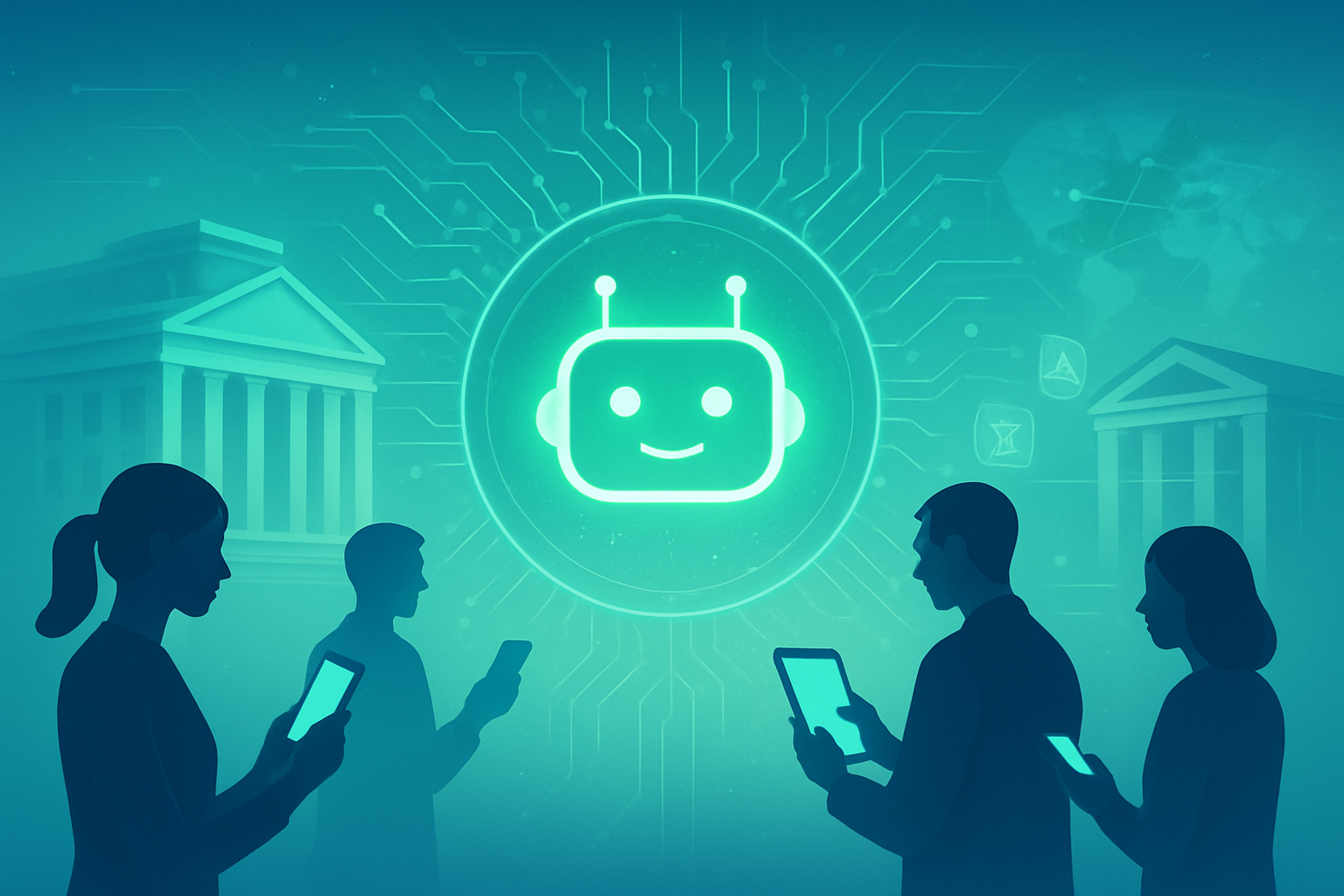
  • AI Chatbots: The New Digital Front Door Revolutionizing Government Services

    AI Chatbots: The New Digital Front Door Revolutionizing Government Services

    The landscape of public administration is undergoing a profound transformation, spearheaded by the widespread adoption of AI chatbots. These intelligent conversational agents are rapidly becoming the "new digital front door" for government services, redefining how citizens interact with their public agencies. This shift is not merely an incremental update but a fundamental re-engineering of service delivery, promising 24/7 access, instant answers, and comprehensive multilingual support. The immediate significance lies in their ability to modernize citizen engagement, streamline bureaucratic processes, and offer a level of convenience and responsiveness previously unattainable, thereby enhancing overall government efficiency and citizen satisfaction.

    This technological evolution signifies a move towards more adaptive, proactive, and citizen-centric governance. By leveraging advanced natural language processing (NLP) and generative AI models, these chatbots empower residents to self-serve, reduce operational bottlenecks, and ensure consistent, accurate information delivery across various digital platforms. Early examples abound, from the National Science Foundation (NSF) piloting a chatbot for grant opportunities to the U.S. Air Force deploying NIPRGPT for its personnel, and local governments like the City of Portland, Oregon, utilizing generative AI for permit scheduling. New York City's "MyCity" chatbot, built on GPT technology, aims to cover housing, childcare, and business services, demonstrating the ambitious scope of these initiatives despite early challenges in ensuring accuracy.

    The Technical Leap: From Static FAQs to Conversational AI

    The technical underpinnings of modern government chatbots represent a significant leap from previous digital offerings. At their core are sophisticated AI models, primarily driven by advancements in Natural Language Processing (NLP) and generative AI, including Large Language Models (LLMs) like OpenAI's (NASDAQ: MSFT) GPT series and Google's (NASDAQ: GOOGL) Gemini.

    Historically, government digital services relied on static FAQ pages, basic keyword-based search engines, or human-operated call centers. These systems often required citizens to navigate complex websites, formulate precise queries, or endure long wait times. Earlier chatbots were predominantly rules-based, following pre-defined scripts and intent matching with limited understanding of natural language. In contrast, today's government chatbots leverage advanced NLP techniques like tokenization and intent detection to process and understand complex user queries more effectively. The emergence of generative AI and LLMs marks a "third generation" of chatbots. These models, trained on vast datasets, can not only interpret intricate requests but also generate novel, human-like, and contextually relevant responses. This capability moves beyond selecting from pre-set answers, offering greater conversational flexibility and the ability to summarize reports, draft code, or analyze historical trends for decision-making.

    These technical advancements directly enable the core benefits: 24/7 access and instant answers are possible because AI systems operate continuously without human limitations. Multilingual support is achieved through advanced NLP and real-time translation capabilities, breaking down language barriers and promoting inclusivity. This contrasts sharply with traditional call centers, which suffer from limited hours, high staff workloads, and inconsistent responses. AI chatbots automate routine inquiries, freeing human agents to focus on more complex, sensitive tasks requiring empathy and judgment, potentially reducing call center costs by up to 70%.

    Initial reactions from the AI research community and industry experts are a mix of optimism and caution. While the transformative potential for efficiency, productivity, and citizen satisfaction is widely acknowledged, significant concerns persist. A major challenge is the accuracy and reliability of generative AI, which can "hallucinate" or generate confident-sounding but incorrect information. This is particularly problematic in government services where factual accuracy is paramount, as incorrect answers can have severe consequences. Ethical implications, including algorithmic bias, data privacy, security, and the need for robust human oversight, are also central to the discourse. The public's trust in AI used by government agencies is mixed, underscoring the need for transparency and fairness in implementation.

    Competitive Landscape: Tech Giants and Agile Startups Vie for GovTech Dominance

    The widespread adoption of AI chatbots by governments worldwide is creating a dynamic and highly competitive landscape within the artificial intelligence industry, attracting both established tech giants and agile, specialized startups. This burgeoning GovTech AI market is driven by the promise of enhanced efficiency, significant cost savings, and improved citizen satisfaction.

    Tech Giants like OpenAI, Microsoft (NASDAQ: MSFT), Google (NASDAQ: GOOGL), and Amazon Web Services (NASDAQ: AMZN) are dominant players. OpenAI, for instance, has launched "ChatGPT Gov," a tailored version for U.S. government agencies, providing access to its frontier models like GPT-4o within secure, compliant environments, often deployed in Microsoft Azure commercial or Azure Government clouds. Microsoft itself leverages its extensive cloud infrastructure and AI capabilities through solutions like Microsoft Copilot Studio and Enterprise GPT on Azure, offering omnichannel support and securing government-wide pacts that include free access to Microsoft 365 Copilot for federal agencies. Google Cloud is also a major contender, with its Gemini for Government platform offering features like image generation, enterprise search, and AI agent development, compliant with standards like FedRAMP. Government agencies like the State of New York and Dallas County utilize Google Cloud's Contact Center AI for multilingual chatbots. AWS is also active, with the U.S. Department of State developing an AI chatbot on Amazon Bedrock to transform customer experience. These giants hold strategic advantages due to their vast resources, advanced foundational AI models, established cloud infrastructure, and existing relationships with government entities, allowing them to offer highly secure, compliant, and scalable solutions.

    Alongside these behemoths, numerous Specialized AI Labs and Startups are carving out significant niches. Companies like Citibot specialize in AI chat and voice tools exclusively for government agencies, focusing on 24/7 multilingual support and equitable service, often by restricting their Generative AI to scour only the client's website to generate information, addressing accuracy concerns. DenserAI offers a "Human-Centered AI Chatbot for Government" that supports over 80 languages with private cloud deployment for security. NeuroSoph has partnered with the Commonwealth of Massachusetts to build chatbots that handled over 1.5 million interactions. NITCO Inc. developed "Larry" for the Texas Workforce Commission, which handled millions of queries during peak demand, and "EMMA" for the Department of Homeland Security, assisting with immigration queries. These startups often differentiate themselves through deeper public sector understanding, quicker deployment times, and highly customized solutions for specific government needs.

    The competitive landscape also sees a trend towards hybrid approaches, where governments like the General Services Administration (GSA) explore internal AI chatbots that can access models from multiple vendors, including OpenAI, Anthropic, and Google. This indicates a potential multi-vendor strategy within government, rather than sole reliance on one provider. Market disruption is evident in the increased demand for specialized GovTech AI, a shift from manual to automated processes driving demand for robust AI platforms, and an emphasis on security and compliance, which pushes AI companies to innovate in data privacy. Securing government contracts offers significant revenue, validation, access to unique datasets for model optimization, and influence on future AI policy and standards, making this a rapidly evolving and impactful sector for the AI industry.

    Wider Significance: Reshaping Public Trust and Bridging Divides

    The integration of AI chatbots as the "new digital front door" for government services holds profound wider significance, deeply intertwining with broader AI trends and carrying substantial societal impacts and potential concerns. This development is not merely about technological adoption; it's about fundamentally reshaping the relationship between citizens and their government.

    This movement aligns strongly with AI democratization, aiming to make government services more accessible to a wider range of citizens. By offering 24/7 availability, instant answers, and multilingual support, chatbots can bridge gaps for individuals with varying digital literacy levels or disabilities, simplifying complex interactions through a conversational interface. The goal is a "no-wrong-door" approach, integrating all access points into a unified system to ensure support regardless of a citizen's initial point of contact. Simultaneously, it underscores the critical importance of responsible AI. As AI becomes central to public services, ethical considerations around governance, transparency, and accountability in AI decision-making become paramount. This includes ensuring fairness, protecting sensitive data, maintaining human oversight, and cultivating trust to foster government legitimacy.

    The societal impacts are considerable. Accessibility and inclusion are greatly enhanced, with chatbots providing instant, context-aware responses that reduce wait times and streamline processes. They can translate legal jargon into plain language and adapt services to diverse linguistic and cultural contexts, as seen with the IRS and Georgia's Department of Labor achieving high accuracy rates. However, there's a significant risk of exacerbating the digital divide if implementation is not careful. Citizens lacking devices, connectivity, or digital skills could be further marginalized, emphasizing the need for inclusive design that caters to all populations. Crucially, building and maintaining public trust is paramount. While transparency and ethical safeguards can foster trust, issues like incorrect information, lack of transparency, or perceived unfairness can severely erode public confidence. Research highlights perceived usefulness, ease of use, and trust as key factors influencing citizen attitudes towards AI-enabled e-government services.

    Potential concerns are substantial. Bias is a major risk, as AI models trained on biased data can perpetuate and amplify existing societal inequities in areas like eligibility for services. Addressing this requires diverse training data, regular auditing, and transparency. Privacy and security are also critical, given the vast amounts of personal data handled by government. Risks include data breaches, misuse of sensitive information, and challenges in obtaining informed consent. The ethical use of "black box" AI models, which conceal their decision-making, raises questions of transparency and accountability. Finally, job displacement is a significant concern, as AI automation could take over routine tasks, necessitating substantial investment in workforce reskilling and a focus on human-in-the-loop approaches for complex problem-solving.

    Compared to previous AI milestones, such as IBM's Deep Blue or Watson, current generative AI chatbots represent a profound shift. Earlier AI excelled in specific cognitive tasks; today's chatbots not only process information but also generate human-like text and facilitate complex transactions, moving into "agentic commerce." This enables residents to pay bills or renew licenses through natural conversation, a capability far beyond previous digitalization efforts. It heralds a "cognitive government" that can anticipate citizen needs, offer personalized responses, and adapt operations based on real-time data, signifying a major technological and societal advancement in public administration.

    The Horizon: Proactive Services and Autonomous Workflows

    The future of AI chatbots in government services promises an evolution towards highly personalized, proactive, and autonomously managed citizen interactions. In the near term, we can expect continued enhancements in 24/7 accessibility, instant responses, and the automation of routine tasks, further reducing wait times and freeing human staff for more complex issues. Multilingual support will become even more sophisticated, ensuring greater inclusivity for diverse populations.

    Looking further ahead, the long-term vision involves AI chatbots transforming into integral components of government operations, delivering highly tailored and adaptive services. This includes highly personalized and adaptive services that anticipate citizen needs, offering customized updates and recommendations based on individual profiles and evolving circumstances. The expanded use cases will see AI applied to critical areas like disaster management, public health monitoring, urban planning, and smart city initiatives, providing predictive insights for complex decision-making. A significant development on the horizon is autonomous systems and "Agentic AI," where teams of AI agents could collaboratively handle entire workflows, from processing permits to scheduling inspections, with minimal human intervention.

    Potential advanced applications include proactive services, such as AI using predictive analytics to send automated notifications for benefit renewals or expiring deadlines, and assisting city planners in optimizing infrastructure and resource allocation before issues arise. For personalized experiences, chatbots will offer tailored welfare scheme recommendations, customized childcare subsidies, and explain complex tax changes in plain language. In complex workflow automation, AI will move beyond simple tasks to automate end-to-end government processes, including document processing, approvals, and cross-agency data integration, creating a 360-degree view of citizen needs. Multi-agent systems (MAS) could see specialized AI agents collaborating on complex tasks like validating data, checking policies, and drafting decision memos for benefits applications.

    However, several critical challenges must be addressed for widespread and effective deployment. Data privacy and security remain paramount, requiring robust governance frameworks and safeguards to prevent breaches and misuse of sensitive citizen data. The accuracy and trust of generative AI, particularly its propensity for "hallucinations," necessitate continuous improvement and validation to ensure factual reliability in critical government contexts. Ethical considerations and bias demand transparent AI decision-making, accountability, and ethical guidelines to prevent discriminatory outcomes. Integration with legacy systems poses a significant technical and logistical hurdle for many government agencies. Furthermore, workforce transformation and reskilling are essential to prepare government employees to collaborate with AI tools. The digital divide and inclusivity must be actively addressed to ensure AI-enabled services are accessible to all citizens, irrespective of their technological access or literacy. Designing effective conversational interfaces and establishing clear regulatory frameworks and governance for AI are also crucial.

    Experts predict a rapid acceleration in AI chatbot adoption within government. Gartner anticipates that by 2026, 30% of new applications will use AI for personalized experiences. Widespread implementation in state governments is expected within 5-10 years, contingent on collaboration between researchers, policymakers, and the public. The consensus is that AI will transform public administration from reactive to proactive, citizen-friendly service models, emphasizing a "human-in-the-loop" approach where AI handles routine tasks, allowing human staff to focus on strategy and empathetic citizen care.

    A New Era for Public Service: The Long-Term Vision

    The emergence of AI chatbots as the "new digital front door" for government services marks a pivotal moment in both AI history and public administration. This development signifies a fundamental redefinition of how citizens engage with their public institutions, moving towards a future characterized by unprecedented efficiency, accessibility, and responsiveness. The key takeaways are clear: 24/7 access, instant answers, multilingual support, and streamlined processes are no longer aspirational but are becoming standard offerings, dramatically improving citizen satisfaction and reducing operational burdens on government agencies.

    In AI history, this represents a significant leap from rules-based systems to sophisticated conversational AI powered by generative models and LLMs, capable of understanding nuance and facilitating complex transactions – a true evolution towards "agentic commerce." For public administration, it heralds a shift from bureaucratic, often slow, and siloed interactions to a more responsive, transparent, and citizen-centric model. Governments are embracing a "no-wrong-door" approach, aiming to provide unified access points that simplify complex life events for individuals, thereby fostering greater trust and legitimacy.

    The long-term impact will likely be a public sector that is more agile, data-driven, and capable of anticipating citizen needs, offering truly proactive and personalized services. However, this transformative journey is not without its challenges, particularly concerning data privacy, security, ensuring AI accuracy and mitigating bias, and the complex integration with legacy IT systems. The ethical deployment of AI, with robust human oversight and accountability, will be paramount in maintaining public trust.

    In the coming weeks and months, several aspects warrant close observation. We should watch for the development of more comprehensive policy and ethical frameworks that address data privacy, security, and algorithmic accountability, potentially including algorithmic impact assessments and the appointment of Chief AI Officers. Expect to see an expansion of new deployments and use cases, particularly in "agentic AI" capabilities that allow chatbots to complete transactions directly, and a greater emphasis on "no-wrong-door" integrations across multiple government departments. From a technological advancement perspective, continuous improvements in natural language understanding and generation, seamless data integration with legacy systems, and increasingly sophisticated personalization will be key. The evolution of government AI chatbots from simple tools to sophisticated digital agents is fundamentally reshaping public service delivery, and how policy, technology, and public trust converge will define this new era of governance.


    This content is intended for informational purposes only and represents analysis of current AI developments.

    TokenRing AI delivers enterprise-grade solutions for multi-agent AI workflow orchestration, AI-powered development tools, and seamless remote collaboration platforms.
    For more information, visit https://www.tokenring.ai/.