Tag: ChatGPT Atlas

  • OpenAI Unleashes ‘Atlas’ Browser, Challenging Google Chrome with Deep AI Integration

    OpenAI Unleashes ‘Atlas’ Browser, Challenging Google Chrome with Deep AI Integration

    In a bold move that signals a new frontier in the browser wars, OpenAI (NASDAQ: OPEN) officially launched its highly anticipated web browser, ChatGPT Atlas, on October 21, 2025. This innovative browser, deeply integrated with the company's powerful AI, aims to redefine how users interact with the internet, posing a direct challenge to established giants like Google (NASDAQ: GOOGL) Chrome and other traditional browsers. The launch marks a significant escalation in the race to embed advanced AI capabilities into everyday computing, transforming the browsing experience from a passive information retrieval tool into an active, intelligent assistant.

    The immediate significance of Atlas lies in its potential to disrupt the long-standing dominance of conventional browsers by offering a fundamentally different approach to web interaction. By leveraging the advanced capabilities of large language models, OpenAI is not just adding AI features to a browser; it's building a browser around AI. This strategic pivot could shift user expectations, making AI-powered assistance and proactive task execution a standard rather than a novelty, thereby setting a new benchmark for web navigation and productivity.

    A Deep Dive into Atlas's AI-Powered Architecture

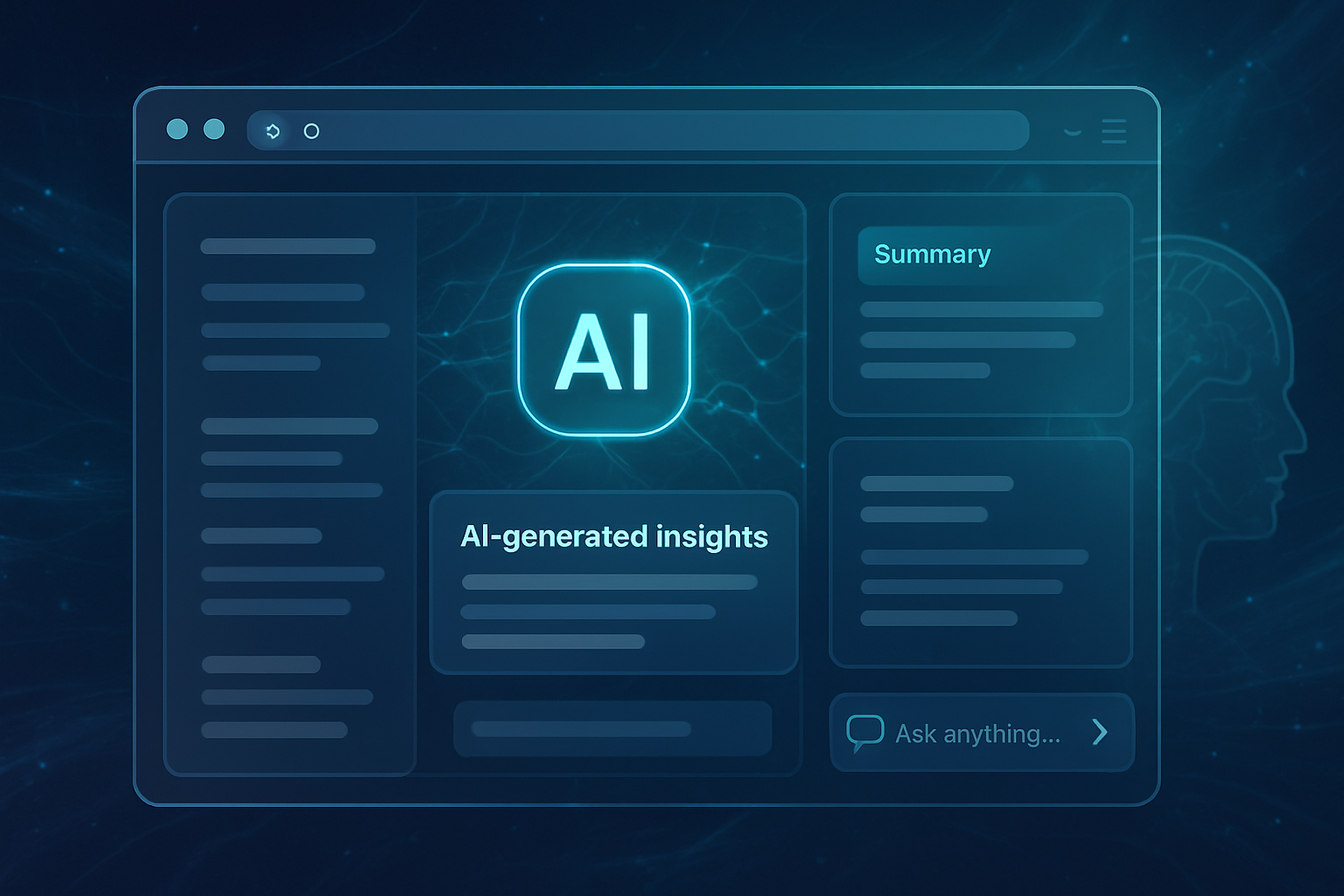
    ChatGPT Atlas is built on the familiar Chromium engine, ensuring compatibility with existing web standards and a smooth transition for users accustomed to Chrome-like interfaces. However, the similarities end there. At its core, Atlas is powered by OpenAI's cutting-edge GPT-4o model, allowing for unprecedented levels of AI integration. The browser features a dedicated "Ask ChatGPT" sidebar, providing real-time AI assistance on any webpage, offering summaries, explanations, or even generating content directly within the browsing context.

    One of the most revolutionary aspects is its AI-powered search, which moves beyond traditional keyword-based results to deliver ChatGPT-based responses, promising "faster, more useful results." While it offers AI-driven summaries, it's notable that the underlying search verticals for web, images, videos, and news still link to Google for raw results, indicating a strategic partnership or reliance on existing search infrastructure while innovating on the presentation layer. Furthermore, Atlas introduces "Browser Memory," allowing the AI to store and recall user online activities to personalize future interactions and refine search queries. Users maintain granular control over this feature, with options to view, edit, delete, or opt out of their browsing data being used for AI model training, emphasizing privacy by making the memory feature off by default for AI training purposes.

    A standout innovation, particularly for ChatGPT Plus and Pro subscribers, is "Agent Mode." This advanced feature empowers the AI to perform complex, multi-step tasks on the user's behalf, such as booking flights, ordering groceries, editing documents, or planning events across various websites. OpenAI has implemented crucial guardrails, preventing the AI from running code, installing extensions, or downloading files, and requiring user confirmation on sensitive websites. Another intuitive feature, "Cursor Chat" or inline editing, allows users to highlight text on any webpage or in an email draft and prompt ChatGPT to suggest edits, summaries, or rewrites, making content modification seamless and highly efficient. Personalized daily suggestions further enhance the proactive assistance offered by the browser.

    Competitive Implications and Market Disruption

    OpenAI's entry into the browser market with Atlas has profound competitive implications for major tech companies and could significantly disrupt existing products and services. Google, with its dominant Chrome browser and deep integration of search and AI services, stands to face the most direct challenge. While Google has been integrating AI into Chrome and its search offerings, Atlas's "AI-first" design philosophy and deep, pervasive ChatGPT integration present a compelling alternative that could attract users seeking a more proactive and intelligent browsing experience. This move forces Google to accelerate its own AI-centric browser innovations to maintain its market share.

    Other browser developers, including Mozilla (NASDAQ: MZLA) with Firefox and Microsoft (NASDAQ: MSFT) with Edge, will also feel the pressure. Edge, which has been incorporating Copilot AI features, might find its AI advantage diminished by Atlas's comprehensive approach. Startups in the AI productivity space, particularly those offering browser extensions or tools for content generation and summarization, may find themselves competing directly with Atlas's built-in functionalities. Companies that can quickly adapt their services to integrate with or complement Atlas's ecosystem could benefit, while those that rely on a traditional browser model might struggle.

    The launch also highlights a strategic advantage for OpenAI. By controlling the user's primary gateway to the internet, OpenAI can further entrench its AI models and services, collecting valuable user interaction data (with user consent) to refine its AI. This positions OpenAI not just as an AI model developer but as a comprehensive platform provider, challenging the platform dominance of companies like Google and Apple (NASDAQ: AAPL). The initial macOS-only launch for Apple silicon chips also hints at a potential strategic alignment or at least a focused rollout strategy.

    Wider Significance in the AI Landscape

    The introduction of ChatGPT Atlas is more than just a new browser; it's a significant milestone in the broader AI landscape, signaling a shift towards ubiquitous, embedded AI. This development fits into the trend of AI moving from specialized applications to becoming an integral part of everyday software and operating systems. It underscores the belief that the next generation of computing will be defined by intelligent agents that proactively assist users rather than merely responding to explicit commands.

    The impacts are wide-ranging. For users, it promises a more efficient and personalized online experience, potentially reducing the cognitive load of navigating complex information and tasks. For developers, it opens new avenues for creating AI-powered web applications and services that can leverage Atlas's deep AI integration. However, potential concerns include data privacy and security, despite OpenAI's stated commitment to user control. The power of an AI-driven browser to influence information consumption and decision-making raises ethical questions about bias, transparency, and the potential for over-reliance on AI.

    Comparing Atlas to previous AI milestones, it harks back to the introduction of intelligent personal assistants but elevates the concept to the entire web browsing experience. It's a leap from AI being an optional add-on to becoming the fundamental interface. This move could be as transformative for web interaction as the advent of graphical user interfaces was for command-line computing, or the smartphone for mobile internet access.

    Exploring Future Developments

    In the near term, users can expect OpenAI to rapidly expand Atlas's availability to Windows, iOS, and Android platforms, fulfilling its "coming soon" promise. This cross-platform expansion will be crucial for broader adoption and for truly challenging Chrome's ubiquity. Further enhancements to Agent Mode, including support for a wider array of complex tasks and deeper integrations with third-party services, are also highly probable. OpenAI will likely focus on refining the AI's understanding of user intent and improving the accuracy and relevance of its AI-powered responses and suggestions.

    Longer-term developments could see Atlas evolve into a more holistic personal AI operating system, where the browser acts as the primary interface for an AI that manages not just web browsing but also desktop applications, communication, and even smart home devices. Experts predict that the competition will intensify, with Google, Microsoft, and possibly Apple launching their own deeply integrated AI browsers or significantly overhauling their existing offerings. Challenges that need to be addressed include ensuring the AI remains unbiased, transparent, and controllable by the user, as well as developing robust security measures against new forms of AI-powered cyber threats. The evolution of web standards to accommodate AI agents will also be a critical area of development.

    A New Chapter in AI-Driven Computing

    OpenAI's launch of ChatGPT Atlas marks a pivotal moment in the history of web browsing and artificial intelligence. The key takeaway is clear: the era of AI-first browsing has begun. This development signifies a fundamental shift in how we interact with the internet, moving towards a more intelligent, proactive, and personalized experience. Its significance in AI history cannot be overstated, as it pushes the boundaries of AI integration into core computing functions, setting a new precedent for what users can expect from their digital tools.

    The long-term impact of Atlas could reshape the competitive landscape of the tech industry, forcing incumbents to innovate rapidly and opening new opportunities for AI-centric startups. It underscores OpenAI's ambition to move beyond foundational AI models to become a direct consumer platform provider. In the coming weeks and months, all eyes will be on user adoption rates, the performance of Atlas's AI features in real-world scenarios, and the inevitable responses from tech giants like Google and Microsoft. The browser wars are back, and this time, AI is at the helm.


    This content is intended for informational purposes only and represents analysis of current AI developments.

    TokenRing AI delivers enterprise-grade solutions for multi-agent AI workflow orchestration, AI-powered development tools, and seamless remote collaboration platforms.
    For more information, visit https://www.tokenring.ai/.

  • OpenAI Unveils ChatGPT Atlas: Redefining Web Browsing with AI at Its Core

    OpenAI Unveils ChatGPT Atlas: Redefining Web Browsing with AI at Its Core

    In a move set to profoundly reshape the digital landscape, OpenAI officially launched ChatGPT Atlas on October 21, 2025. This groundbreaking AI-powered web browser aims to fundamentally redefine the online experience by seamlessly integrating advanced AI capabilities, including persistent memory, sophisticated task automation, and a deeply embedded intelligent assistant. OpenAI's ambitious foray into the browser market signals a significant shift from passive web navigation to an active, intelligent, and highly personalized interaction with the internet, positioning ChatGPT as a true "super-assistant" at the heart of daily digital life.

    The launch of ChatGPT Atlas is not merely an incremental update to existing browsing technologies; it represents a bold strategic pivot by OpenAI to embed its powerful artificial intelligence directly into the user's primary interface with the web. By offering a browser where AI is not an add-on but the core operating principle, OpenAI (NYSE: OPENAI) is challenging the status quo and igniting a new era of "AI browser wars." This development promises to enhance productivity, streamline complex online tasks, and usher in a new paradigm of human-computer interaction, making the web more intuitive and responsive than ever before.

    The Dawn of Agentic Browsing: Technical Prowess and Core Differentiators

    ChatGPT Atlas is built upon the robust Chromium engine, the same open-source foundation that powers popular browsers like Alphabet's (NASDAQ: GOOGL) Chrome and Microsoft's (NASDAQ: MSFT) Edge. However, its fundamental departure lies in the deep, pervasive integration of OpenAI's ChatGPT directly into the browser's architecture, transforming it into an AI-first platform. This is a stark contrast to existing browsers that offer AI features as supplementary tools; Atlas makes ChatGPT an active, constant companion throughout the browsing journey.

    The browser's technical capabilities are spearheaded by several innovative features:

    • Integrated Memory ("Browser Memories"): Atlas incorporates an opt-in memory system that allows ChatGPT to recall key details from a user's browsing history, visited pages, and preferences. This enables the AI to provide more personalized responses, contextually relevant suggestions, and anticipate user needs more effectively. Users retain granular control over these memories, with options to view, archive, delete, or set site-specific visibility.
    • Task Automation ("Agent Mode"): A standout feature, Agent Mode, available for ChatGPT Plus, Pro, and Business subscribers, empowers the AI to perform complex, multi-step tasks autonomously on the user's behalf. This can range from researching and planning a meal, creating an ingredient list, and adding items to a shopping cart, to drafting emails, filling out forms, or booking reservations. OpenAI emphasizes user control, allowing interruption, pausing, or manual takeover at any point, with strict safeguards preventing the agent from running code, downloading files, or installing extensions.
    • Built-in Assistant Capabilities: ChatGPT is interwoven throughout the browsing experience. The "Ask ChatGPT Sidebar" allows for instant summarization, analysis, or task handling related to webpage content. In-line writing assistance is available in any form field, offering contextual suggestions and corrections. A smarter new tab page allows users to ask questions or enter URLs, providing organized results including search links, images, videos, and news, alongside contextual AI help.

    This approach fundamentally differs from previous AI integrations, which often functioned as isolated chatbots or search enhancements. Atlas aims for a seamless, proactive AI-driven workflow that understands the current webpage, open tabs, and even a user's login status (with permission), creating an unparalleled contextual AI experience. Initial reactions from the AI research community and industry experts are largely positive, with many hailing it as a "game-changer" and a crucial step towards a "true super-assistant." OpenAI CEO Sam Altman described the launch as "a rare moment to rethink what it means to use the web." However, some skepticism remains, with analysts like Gene Munster of Deepwater Asset Management questioning if it offers a "10x better" experience than Chrome, given Google's resources and control over Chromium. Concerns about security vulnerabilities, such as "Clipboard Injection," and user data privacy have also been raised, though OpenAI asserts robust privacy controls.

    Reshaping the AI and Tech Landscape: A New Competitive Frontier

    The launch of ChatGPT Atlas has profound competitive implications, sending ripples across the AI industry, tech giants, and numerous startups. OpenAI's strategic move to control the user's primary internet interface positions it as a direct competitor to established players and a potential disruptor across multiple sectors.

    For Google (NASDAQ: GOOGL), the impact is particularly acute. Atlas directly challenges Chrome's dominance in the browser market and, more critically, threatens Google's core search engine business and its massive advertising revenue. By enabling ChatGPT to act as the primary information retrieval and task execution agent, Atlas bypasses traditional search, potentially diminishing the need for users to navigate to Google Search. Alphabet's stock reportedly saw a decline following the announcement, reflecting investor concerns. Google is expected to accelerate its integration of Gemini AI into Chrome and its search services, focusing on multimodal AI and agentic capabilities to counter OpenAI's aggressive move.

    Apple (NASDAQ: AAPL), while not a direct competitor in large-scale public LLMs, is also affected. With Atlas rolling out on macOS and planned for iOS, it directly competes for user attention within Apple's ecosystem. Safari and Apple's integrated services could face pressure from a more AI-native browsing experience. This development will likely compel Apple to significantly enhance Siri, transforming it into a more proactive and capable "agent" that can perform complex, multi-step tasks across its devices and the web, rivaling Atlas's functionalities. Apple will likely emphasize its strengths in on-device AI processing and robust privacy protections as key differentiators.

    For other AI companies like Anthropic and smaller LLM developers, Atlas raises the bar for AI integration. They may face increased pressure to develop their own deeply integrated user interfaces or browser-like experiences to ensure their foundational models remain relevant. Startups in AI productivity, summarization, content creation, and task automation face a dual challenge and opportunity. Many niche AI tools may find their core functionalities absorbed by Atlas's native capabilities, forcing them to pivot or hyper-specialize. Conversely, Atlas could create new opportunities for startups to build highly specialized AI applications that integrate with or leverage the platform. Startups focusing on privacy-centric AI browsing solutions may also find a growing market segment. The overall competitive landscape will become more intense, favoring those with strong AI models and the ability to integrate them seamlessly into user workflows.

    A New Paradigm: Wider Significance and Societal Implications

    ChatGPT Atlas marks a significant inflection point in the broader AI landscape, signaling a clear shift towards agentic AI systems becoming mainstream. This development is not merely about a better browser; it's about embedding an active, intelligent AI agent at the core of how humanity interacts with the digital world. It pushes beyond the reactive chatbot model, positioning AI as a proactive co-pilot that understands intent, makes decisions, and performs complex tasks autonomously. This move by OpenAI signifies an ambition to transform from a chatbot platform into a comprehensive technology ecosystem, aiming to acquire user data, unlock new revenue streams, and reduce dependence on other tech giants.

    The potential impacts on society and technology are far-reaching. Atlas promises to redefine internet interaction and personalization, offering a deeply contextual and adaptive browsing experience. Its Agent Mode could dramatically enhance personal and professional productivity by automating multi-step online tasks, freeing users from mundane digital chores. However, these advancements come with significant privacy concerns. Atlas's "browser memories" feature, while offering personalization, involves extensive data collection, potentially surpassing even Google Chrome's tracking. Cybersecurity specialists have warned about potential data leakage and "prompt injection" risks, where malicious instructions hidden in web content could trick the AI agent into disclosing sensitive information or performing unintended actions. While OpenAI has implemented safeguards and offers user controls over privacy settings and incognito modes, critics argue that the complexity of these controls may obscure the true extent of data processing.

    Comparing Atlas to previous AI milestones, it builds directly on the breakthroughs of large language models like GPT-3 and GPT-4, which popularized conversational AI. While early search engines revolutionized information retrieval, and the original ChatGPT made AI widely accessible, Atlas represents a tangible realization of "agentic AI" in a mainstream consumer application. It moves beyond AI summarizing a document or answering a question to actively interacting with the web for the user, blurring the lines between user action and AI autonomy. This development intensifies the "AI browser war," with competitors like Perplexity AI's Comet and Microsoft's (NASDAQ: MSFT) Edge with Copilot also vying for market share, but OpenAI's unique advantage lies in owning the underlying AI model, potentially offering a more seamless and powerful integration.

    The Horizon of AI Browsing: Future Developments and Challenges

    The launch of ChatGPT Atlas is merely the opening chapter in what promises to be a rapidly evolving landscape of AI-powered browsing. In the near term, OpenAI is committed to expanding Atlas's availability beyond macOS to Windows, iOS, and Android, ensuring broad accessibility. Enhancements to its integrated AI assistance, smarter search capabilities, and in-line writing help are expected to become more refined and intuitive. The "browser memories" feature will likely evolve, offering even more sophisticated personalization while maintaining user control.

    Looking further ahead, OpenAI's long-term vision positions ChatGPT not just as a super-assistant but as the "operating system for your life," a fully connected hub for managing daily tasks and achieving long-term goals. This trajectory includes:

    • Enhanced Multimodal Capabilities: Future iterations, potentially powered by GPT-5, will likely process and understand a wider array of data types—text, images, voice, and even video—simultaneously, leading to more natural and intuitive interactions.
    • Deeper Integration: Expect ChatGPT Atlas to integrate more profoundly with other AI technologies and third-party applications, creating comprehensive AI ecosystems that extend beyond the browser.
    • Advanced Personalization and Context Awareness: The AI will become even more adept at learning individual preferences, habits, and nuanced intent, offering hyper-personalized experiences across all digital interactions.
    • Agentic Evolution: The Agent Mode is expected to grow in sophistication, capable of handling increasingly complex and abstract tasks, potentially even managing multiple parallel workflows autonomously.

    Potential applications and use cases on the horizon are vast, spanning personal productivity (scheduling, task management), content creation (AI as a creative partner), customer service, education, healthcare (diagnosis, treatment planning, drug discovery), e-commerce, and cybersecurity. AI will become an indispensable tool for data analysis, enabling businesses to unlock deeper insights and optimize operations.

    However, this ambitious future is not without its challenges. Technical hurdles include refining common sense reasoning, ensuring scalability and efficiency of AI models, and establishing interoperability standards. Data-related challenges involve maintaining high data quality, managing vast datasets, and mitigating inherent biases in training data. Ethical and regulatory concerns are paramount, particularly regarding user privacy, data security, transparency, and explainability of AI decisions. The potential for AI "hallucinations" and misuse necessitates robust safety protocols. Furthermore, the societal impacts of job displacement and widening inequalities due to automation will require careful consideration and proactive policy development. Organizations also face adoption challenges, including skill gaps, cost, and potential employee resistance to new AI-driven workflows.

    Experts predict an intensifying "AI browser war," with all major tech players rushing to integrate more sophisticated AI. The future of browsing will shift towards agentic models, where AI proactively completes tasks on behalf of the user. User adoption will hinge on performance, reliability, and, critically, trust. Ensuring data privacy, security, and transparent AI governance will be paramount. The ethical implications of powerful AI agents acting autonomously will demand ongoing scrutiny and robust frameworks to guide their development and deployment.

    A Defining Moment in AI History

    OpenAI's launch of ChatGPT Atlas represents a monumental leap in the integration of artificial intelligence into everyday digital life. It signifies a pivotal moment where the web browser transcends its traditional role as a mere window to the internet, evolving into an intelligent, proactive, and deeply personalized digital assistant. The key takeaways are clear: AI is moving from being a separate tool to an embedded, agentic core of our online interactions, promising unprecedented levels of productivity and convenience.

    This development holds immense significance in AI history, marking a tangible realization of the long-anticipated vision of an intelligent agent that can understand context, remember past interactions, and execute complex tasks across the vast expanse of the internet. It sets a new benchmark for what users can expect from their digital tools, fundamentally reshaping the competitive landscape for tech giants and AI startups alike.

    In the coming weeks and months, the tech world will be watching closely. Key aspects to observe include the rate of user adoption, how quickly competitors respond with their own advanced AI browser integrations, the evolution of privacy controls and user data management, and the emergence of new, unforeseen applications and challenges. OpenAI's ChatGPT Atlas is not just a new product; it's a bold declaration of a future where AI is inextricably woven into the fabric of our digital existence, prompting us to rethink the very nature of our online lives.


    This content is intended for informational purposes only and represents analysis of current AI developments.

    TokenRing AI delivers enterprise-grade solutions for multi-agent AI workflow orchestration, AI-powered development tools, and seamless remote collaboration platforms.
    For more information, visit https://www.tokenring.ai/.
  • OpenAI Unveils ChatGPT Atlas: An AI-Powered Browser Redefining the Web Experience

    OpenAI Unveils ChatGPT Atlas: An AI-Powered Browser Redefining the Web Experience

    San Francisco, CA – October 21, 2025 – OpenAI, the trailblazing artificial intelligence research and deployment company, today announced the launch of ChatGPT Atlas, an ambitious AI-powered web browser poised to fundamentally reshape how users interact with the internet. Unveiled through a live stream and detailed blog post, Atlas represents OpenAI's boldest move yet into consumer-facing applications, integrating advanced AI capabilities directly into the browsing experience to offer a truly intelligent digital companion. This launch is not merely an incremental update but a paradigm shift, challenging the established dominance of traditional browsers like Google Chrome and signaling a new era of AI-first web interaction.

    The immediate significance of ChatGPT Atlas cannot be overstated. By embedding its flagship ChatGPT technology at the core of web navigation, OpenAI aims to transform the browser from a simple portal to a proactive, intelligent agent capable of understanding context, summarizing content, and even performing complex tasks on a user's behalf. This strategic entry into the browser market positions OpenAI (Private) as a direct competitor to tech giants in a crucial digital battlespace, potentially disrupting advertising revenue models and redefining user expectations for online productivity and information consumption. The immediate availability for macOS users, with Windows, iOS, and Android versions "coming soon," indicates a rapid deployment strategy for widespread adoption.

    A Deep Dive into Atlas's AI-First Architecture

    ChatGPT Atlas distinguishes itself through a suite of innovative features built around an AI-centric design philosophy, moving beyond the incremental AI integrations seen in existing browsers. At its heart is a Unified New Tab Experience, which replaces the traditional search bar with an AI prompt interface, offering "faster, more useful results in one place" by seamlessly blending ChatGPT answers with conventional search results for links, images, videos, and news. This immediate AI engagement sets a new standard for information retrieval.

    Complementing this is the Integrated ChatGPT Sidebar, a persistent feature in every browser window that allows users to effortlessly summarize pages, compare products, analyze data, or engage in a conversational chat with the AI without ever leaving their current tab. The Cursor Chat feature further enhances this interaction, enabling users to highlight text in any web content and receive instant AI assistance—such as rewriting or editing—directly inline. Perhaps the most groundbreaking innovation is Agent Mode, currently a preview for ChatGPT Plus, Pro, and Business users. This feature empowers Atlas to perform complex, multi-step actions on the user's behalf, from booking appointments and filling out forms to planning events and making reservations, by autonomously navigating and interacting with websites. While acknowledged as an early experience, its potential to automate online tasks is immense.

    Unlike previous browser attempts to integrate AI, Atlas is built from the ground up with AI as its central operating principle, rather than an add-on. This fundamental architectural difference allows for Contextual Understanding across open tabs and browsing history (if enabled), providing more accurate and personalized assistance. The inclusion of Browser Memories, an opt-in feature, allows Atlas to recall past interactions and site contexts, further personalizing the browsing experience. While incorporating standard browser functionalities like tabs, bookmarks, and incognito mode, Atlas's core identity as an AI companion fundamentally redefines the user-browser relationship. Initial reactions from the AI research community and industry experts highlight the ambitious scope of Atlas, with many viewing it as a critical test of AI's ability to move beyond niche applications into core daily computing.

    Reshaping the Competitive Landscape of Tech Giants

    The launch of ChatGPT Atlas sends significant ripples across the tech industry, particularly for established players and emerging AI companies. OpenAI's direct foray into the browser market positions it as a formidable challenger to Alphabet (NASDAQ: GOOGL) and its dominant Chrome browser, as well as Microsoft (NASDAQ: MSFT) with Edge, and Apple (NASDAQ: AAPL) with Safari. OpenAI CEO Sam Altman articulated this ambition, describing Atlas as a "rare, once-a-decade opportunity to rethink what a browser can be about." The strategic advantage for OpenAI lies in its AI-first approach, which could allow it to capture a significant share of internet traffic and user attention, potentially disrupting Google's lucrative advertising revenue model by keeping users within its AI-powered ecosystem. Reports of Alphabet's stock falling post-announcement underscore the perceived threat.

    For other AI labs and startups, Atlas intensifies the burgeoning "AI browser wars." Companies like Perplexity with its Comet browser and The Browser Company with Arc have also been exploring AI-driven browsing experiences. OpenAI's entry, backed by its immense resources and brand recognition, is expected to accelerate innovation across the entire browser ecosystem, forcing competitors to rapidly advance their own AI integrations. This competitive pressure could benefit consumers by driving more sophisticated and user-friendly AI features. Startups focusing on AI agents and automation might find new platforms or competitive challenges, while those specializing in web-based AI tools could see increased demand for integration or face direct competition from Atlas's built-in capabilities.

    The potential disruption extends beyond browsers to search engines and various online services. If Atlas successfully shifts user behavior from traditional search queries to conversational AI interactions and autonomous task completion, it could redefine how brands are discovered, products are researched, and services are accessed. This could force companies reliant on traditional web traffic and advertising to re-evaluate their digital strategies and adapt to an AI-mediated internet. OpenAI's move highlights a broader trend: AI companies are no longer content with providing backend models but are actively seeking to own the user interface and interaction layer, positioning themselves at the forefront of the digital economy.

    The Broader Significance in the AI Landscape

    ChatGPT Atlas fits squarely into the broader trend of AI becoming an increasingly integrated and proactive force in daily life, moving beyond specialized applications into core human-computer interaction. It represents a significant step towards the vision of AI as an omnipresent digital assistant, capable of understanding and acting within complex environments. This launch underscores the industry's shift from merely providing AI models to deploying them in end-user products that redefine fundamental computing experiences. It parallels previous AI milestones, such as the widespread adoption of voice assistants or the emergence of generative AI for content creation, by pushing the boundaries of what users expect from their digital tools.

    The impacts of Atlas could be profound. On one hand, it promises unprecedented levels of productivity and convenience, streamlining tasks that previously required multiple steps and applications. For researchers, students, and professionals, the ability to instantly summarize, analyze, and act on web content could be transformative. However, the deep integration of AI and the concept of "Browser Memories" also raise significant privacy and data implications. While OpenAI states that browser memories are optional and agent actions require user approval, the sheer volume of contextual data that an AI-powered browser could collect sparks concerns about user data security, algorithmic bias, and how this information will be used for model training and personalization. Striking the right balance between powerful AI assistance and robust user privacy will be a critical challenge for OpenAI and the industry at large.

    Moreover, Atlas's Agent Mode hints at a future where AI agents routinely perform complex online tasks, potentially automating aspects of e-commerce, customer service, and even personal administration. This development could accelerate the demand for ethical AI frameworks and robust regulatory guidelines to ensure responsible deployment of autonomous AI systems that interact with sensitive personal information and financial transactions. The launch serves as a powerful reminder that as AI capabilities advance, so too must our consideration of their societal implications, from data governance to the future of work.

    Charting the Course: Future Developments and Expert Predictions

    Looking ahead, the immediate future of ChatGPT Atlas will likely involve rapid iteration and expansion. OpenAI has already indicated that Windows, iOS, and Android versions are "coming soon," which will be crucial for achieving widespread adoption and truly challenging Google Chrome's cross-platform dominance. We can expect continuous improvements to Agent Mode, with OpenAI focusing on enhancing its accuracy, expanding its range of supported tasks, and refining its ability to navigate increasingly complex web environments. Further personalization features, leveraging the Browser Memories, are also likely to evolve, offering an even more tailored browsing experience.

    In the long term, Atlas could become a central hub for an ecosystem of AI agents and services. We might see third-party developers creating specialized "Atlas Agents" or integrations, similar to browser extensions but with deeper AI capabilities. Potential applications are vast, ranging from highly personalized shopping assistants that compare prices and manage purchases across multiple sites, to advanced research tools that synthesize information from disparate sources and generate reports. Education could also be transformed, with Atlas acting as a dynamic tutor, providing contextual explanations and interactive learning experiences directly within web content.

    However, significant challenges remain. OpenAI will need to address user concerns regarding privacy and data security transparently and effectively, building trust in an era of increasing skepticism about data collection. The reliability and ethical behavior of Agent Mode will also be under constant scrutiny, as autonomous actions on the web carry inherent risks. Experts predict that the success of Atlas will hinge not just on its technical prowess, but on its ability to offer a truly seamless, reliable, and trustworthy experience that outweighs the convenience of existing browsers. The coming months will be critical in determining if ChatGPT Atlas can deliver on its ambitious promise and carve out a significant share of the browser market.

    A New Horizon for Web Interaction

    OpenAI's launch of ChatGPT Atlas marks a pivotal moment in the history of web browsing and artificial intelligence. By fundamentally reimagining the browser as an AI-first platform, OpenAI has not merely added AI features to an existing product but has set a new course for how humans will interact with the digital world. The key takeaways from this announcement are clear: AI is moving from the periphery to the core of everyday computing, the competitive landscape of the tech industry is undergoing a significant realignment, and the definition of a "browser" is rapidly evolving from a passive portal to an active, intelligent agent.

    This development holds immense significance in AI history, representing a bold step towards a future where AI proactively assists, automates, and enhances our digital lives. While the full long-term impact will unfold over time, Atlas has undeniably ignited a new phase of innovation in the browser space and intensified the race among tech giants to deliver the most intelligent user experience. What to watch for in the coming weeks and months includes user adoption rates, the performance and reliability of Agent Mode, how competitors respond with their own AI integrations, and critically, how OpenAI addresses the inevitable questions surrounding privacy and data governance. ChatGPT Atlas is more than just a new browser; it's a vision for the internet's future, powered by artificial intelligence.


    This content is intended for informational purposes only and represents analysis of current AI developments.

    TokenRing AI delivers enterprise-grade solutions for multi-agent AI workflow orchestration, AI-powered development tools, and seamless remote collaboration platforms.
    For more information, visit https://www.tokenring.ai/.

  • OpenAI Unleashes ‘Atlas’: A New Frontier in AI-Powered Web Browsing, Challenging Chrome and Comet

    OpenAI Unleashes ‘Atlas’: A New Frontier in AI-Powered Web Browsing, Challenging Chrome and Comet

    San Francisco, CA – October 21, 2025 – OpenAI has officially launched its highly anticipated AI-powered web browser, 'ChatGPT Atlas,' today, marking a significant and potentially transformative moment in the landscape of internet interaction. This ambitious move positions OpenAI (private) in direct competition with web browsing behemoths like Alphabet's (NASDAQ: GOOGL) Google Chrome and rising AI-native browsers such as Perplexity AI's (private) Comet, heralding a new era where artificial intelligence is not just a feature, but the core of the browsing experience. The introduction of Atlas is set to redefine how users search, interact with, and process information online, shifting the paradigm from traditional navigation to a more intelligent, conversational, and personalized digital journey.

    The launch of ChatGPT Atlas, initially available for macOS users with Windows, iOS, and Android versions slated for future release, represents OpenAI's deepest foray yet into consumer software designed for daily use. By embedding its powerful ChatGPT capabilities directly into the browser's architecture, OpenAI aims to move beyond foundational AI models and establish a full-stack presence in the digital ecosystem. This strategic expansion underscores the company's ambition to integrate AI seamlessly into every facet of a user's online life, potentially disrupting long-established browsing habits and fundamentally altering the competitive dynamics of the tech industry.

    Redefining Web Interaction: The Technical Prowess of ChatGPT Atlas

    ChatGPT Atlas is not merely a browser with an AI plugin; it is a browser built around ChatGPT, designed from the ground up to be an inherently conversational and intelligent companion. Its technical specifications and capabilities set it apart from previous approaches and existing technologies. At its core is a persistent "Ask ChatGPT" sidebar, allowing users to engage with the AI assistant directly within the browser window, eliminating the need to switch tabs or applications for AI-powered queries. This seamless integration ensures that AI assistance is always just a glance away, contextually aware of the content being viewed.

    A standout feature is Atlas's contextual understanding, enabling ChatGPT to analyze the current webpage's content to provide relevant summaries, compare products, answer specific questions about the text, and even assist with complex tasks like code editing. Furthermore, an optional "browser memory" feature allows Atlas to learn from browsing history and past conversations, personalizing interactions, recalling information, and resuming unfinished tasks over time, making the browser progressively smarter and more intuitive. Users maintain full control over this memory, with options to view, archive, or delete data. The browser also introduces a ChatGPT-based search, prioritizing AI-generated responses alongside quick access to traditional web results, images, and videos in a unified new tab experience.

    Perhaps the most revolutionary aspect is "Agent Mode," available as a preview for ChatGPT Plus, Pro, and Business subscribers. This leverages OpenAI's "Operator" AI agent to perform complex web-based tasks autonomously, such as booking restaurant reservations, ordering groceries, creating purchase lists from recipes, filling out online forms, and conducting in-depth research and data analysis. Another innovative tool, "Cursor Chat," allows users to highlight text anywhere on a webpage and receive inline AI assistance for editing, rewriting, or refining content. While incorporating all standard browser functionalities like tabs, bookmarks, and password management, Atlas often defaults to a split-screen view, fostering a constant "companion" browsing experience that significantly differs from traditional browser designs. Initial reactions from the AI research community and early testers highlight the browser's potential to dramatically enhance productivity and information access, though questions regarding performance and privacy at scale are also emerging.

    Competitive Tides: Atlas's Impact on Tech Giants and AI Startups

    The launch of ChatGPT Atlas ignites a fierce battle in the browser market, with profound competitive implications for major AI labs and tech companies. Alphabet's (NASDAQ: GOOGL) Google Chrome, which currently dominates with nearly 72% of the global market share, faces its most significant challenge yet from an AI-first competitor. While Google has been integrating its Gemini AI into Chrome, offering conversational search and enhanced web understanding, these are generally additions to an existing framework. Atlas, by contrast, is fundamentally built around AI, giving OpenAI (private) a crucial first-mover advantage in delivering a fully AI-native browsing experience, potentially disrupting Google's long-standing search and advertising revenue streams.

    Perplexity AI's (private) Comet, which launched publicly on October 3, 2025, after an invite-only period, also represents a new wave of AI-native browsers. Built on Chromium, Comet distinguishes itself with an integrated AI assistant that replaces the address bar with a natural language interface, focusing on "intention-based design." While Comet excels at delivering curated answers with source links, Atlas offers the full, versatile ChatGPT experience, allowing for direct conversation, inline editing, and agentic task completion across a wider range of functions. This head-to-head competition will accelerate innovation in the AI browser space, forcing all players, including other browser developers like Mozilla (private) and Microsoft (NASDAQ: MSFT) with Edge, to rapidly integrate more sophisticated AI capabilities to remain relevant.

    OpenAI's strategic advantage lies in its deep expertise in large language models and its ability to seamlessly integrate these into a user-facing product. By hiring former Chrome and Firefox developers, including Ben Goodger as Engineering Lead for Atlas, OpenAI has signaled its serious intent to compete on both AI innovation and traditional browser performance. This move could potentially disrupt existing products and services across the tech ecosystem, from search engines to productivity tools, as users gravitate towards a more unified and intelligent online experience.

    Broader Significance: Reshaping the Digital Landscape

    The advent of ChatGPT Atlas fits squarely into the broader AI landscape's trend towards more autonomous and intelligent agents. This development signifies a major leap in how humans interact with digital information, moving beyond passive consumption to active, AI-mediated engagement. The implications are vast, potentially redefining digital literacy and the very nature of online research and work. Atlas's ability to summarize, analyze, and even perform tasks on behalf of the user could democratize access to complex information and skills, making advanced digital capabilities accessible to a wider audience.

    However, this profound shift also brings potential concerns. The deep integration of AI into browsing raises significant questions regarding data privacy and security. With "browser memory" and agentic capabilities, the volume and sensitivity of personal data processed by the browser will increase exponentially. OpenAI has stated that users retain control over their data, but the responsible handling of such sensitive information will be paramount. Furthermore, the potential for AI-generated content to influence user perception and information consumption necessitates careful consideration of algorithmic bias and the accuracy of AI-provided answers, especially when traditional search results are de-emphasized.

    Comparing Atlas to previous AI milestones, this launch is akin to the introduction of the graphical user interface (GUI) or the first widely adopted search engines. It's not just an incremental improvement but a fundamental rethinking of a core digital tool. While previous AI breakthroughs focused on specific tasks or models, Atlas brings a comprehensive AI agent directly into the daily workflow of millions, signaling a paradigm shift towards an "agentic web." The impact on information discovery, content creation, and online commerce could be as significant as the rise of social media or mobile computing.

    The Horizon: Future Developments and Challenges

    Looking ahead, the immediate next steps for ChatGPT Atlas involve its expansion to Windows, iOS, and Android platforms, which will significantly broaden its user base and challenge Google Chrome's (NASDAQ: GOOGL) dominance across all major operating systems. The "Agent Mode" is expected to evolve rapidly, with OpenAI likely introducing more sophisticated automation capabilities and integrations with third-party services, allowing the browser to manage increasingly complex multi-step workflows. We can anticipate the development of an ecosystem around Atlas, with developers potentially creating custom "agents" or "skills" that can be integrated into the browser, similar to app stores for operating systems.

    Potential applications and use cases on the horizon are vast. Beyond personal productivity, Atlas could transform professional workflows in fields like research, data analysis, and content creation. Imagine an Atlas that can autonomously gather competitive intelligence, draft comprehensive reports from disparate web sources, or even manage complex project timelines by interacting with various online tools. Experts predict a future where the browser becomes a truly proactive digital assistant, anticipating user needs and executing tasks with minimal explicit instruction.

    However, several challenges need to be addressed for Atlas to achieve its full potential. User adoption will depend heavily on performance, reliability, and trust. Ensuring data privacy and security, as well as maintaining transparency about how AI processes user information, will be critical. Furthermore, the ethical implications of powerful AI agents acting on behalf of users will require ongoing scrutiny and robust governance frameworks. What experts predict will happen next is a rapid acceleration of AI integration into all major browsers, forcing a re-evaluation of the core functionalities and business models of web search and interaction.

    A New Chapter in AI and the Web

    OpenAI's (private) launch of ChatGPT Atlas marks a pivotal moment in the history of the internet and artificial intelligence. The key takeaway is a fundamental shift from the web as a collection of static pages and search results to an interactive, intelligent, and agent-driven experience. This development's significance in AI history cannot be overstated; it represents a tangible step towards the vision of truly autonomous and helpful AI companions integrated into our daily digital lives. By making AI the central operating principle of a web browser, OpenAI has not just introduced a new product but has proposed a new way of interacting with the entire digital world.

    The long-term impact of Atlas could be profound, potentially reshaping how information is consumed, how work is done, and even the very economics of the internet. It challenges the established order of tech giants and creates new opportunities for innovation, while also raising critical questions about privacy, control, and the future of human-AI collaboration. In the coming weeks and months, all eyes will be on user adoption rates, the performance of its advanced AI features, and how competitors like Alphabet's (NASDAQ: GOOGL) Google and Perplexity AI (private) respond with their own advancements. This is not just a browser launch; it's the opening salvo in the next generation of the internet.


    This content is intended for informational purposes only and represents analysis of current AI developments.

    TokenRing AI delivers enterprise-grade solutions for multi-agent AI workflow orchestration, AI-powered development tools, and seamless remote collaboration platforms.
    For more information, visit https://www.tokenring.ai/.