Tag: China Tech

  • Biren’s Explosive IPO: China’s Challenge to Western AI Chip Dominance

    Biren’s Explosive IPO: China’s Challenge to Western AI Chip Dominance

    The global landscape of artificial intelligence hardware underwent a seismic shift on January 2, 2026, as Shanghai Biren Technology Co. Ltd. (HKG: 06082) made its historic debut on the Hong Kong Stock Exchange. In a stunning display of investor confidence and geopolitical defiance, Biren’s shares surged by 76.2% on their first day of trading, closing at HK$34.46 after an intraday peak that saw the stock more than double its initial offering price of HK$19.60. The IPO, which raised approximately HK$5.58 billion (US$717 million), was oversubscribed by a staggering 2,348 times in the retail tranche, signaling a massive "chip frenzy" as China accelerates its pursuit of semiconductor self-sufficiency.

    This explosive market entry represents more than just a successful financial exit for Biren’s early backers; it marks the emergence of a viable domestic alternative to Western silicon. As U.S. export controls continue to restrict the flow of high-end chips from NVIDIA (NASDAQ: NVDA) and AMD (NASDAQ: AMD) into the Chinese market, Biren has positioned itself as the primary beneficiary of a trillion-dollar domestic AI vacuum. The success of the IPO underscores a growing consensus among global investors: the era of Western chip hegemony is facing its most significant challenge yet from a new generation of Chinese "unicorns" that are learning to innovate under the pressure of sanctions.

    The Technical Edge: Bridging the Gap with Chiplets and BIRENSUPA

    At the heart of Biren’s market appeal is its flagship BR100 series, a general-purpose graphics processing unit (GPGPU) designed specifically for large-scale AI training and high-performance computing (HPC). Built on the proprietary "BiLiren" architecture, the BR100 utilizes a sophisticated 7nm process technology. While this trails the 4nm nodes used by NVIDIA’s latest Blackwell architecture, Biren has employed a clever "chiplet" design to overcome manufacturing limitations. By splitting the processor into multiple smaller tiles and utilizing advanced 2.5D CoWoS packaging, Biren has improved manufacturing yields by roughly 20%, a critical innovation given the restricted access to the world’s most advanced lithography equipment.

    Technically, the BR100 is no lightweight. It delivers up to 2,048 TFLOPs of compute power in BF16 precision and features 77 billion transistors. To address the "memory wall"—the bottleneck where data processing speeds outpace data delivery—the chip integrates 64GB of HBM2e memory with a bandwidth of 2.3 TB/s. While these specs place it roughly on par with NVIDIA’s A100 in raw power, Biren’s hardware has demonstrated 2.6x speedups over the A100 in specific domestic benchmarks for natural language processing (NLP) and computer vision, proving that software-hardware co-design can compensate for older process nodes.

    Initial reactions from the AI research community have been cautiously optimistic. Experts note that Biren’s greatest achievement isn't just the hardware, but its "BIRENSUPA" software platform. For years, NVIDIA’s "CUDA moat"—a proprietary software ecosystem that makes it difficult for developers to switch hardware—has been the primary barrier to entry for competitors. BIRENSUPA aims to bypass this by offering seamless integration with mainstream frameworks like PyTorch and Baidu’s (NASDAQ: BIDU) PaddlePaddle. By focusing on a "plug-and-play" experience for Chinese developers, Biren is lowering the switching costs that have historically kept NVIDIA entrenched in Chinese data centers.

    A New Competitive Order: The "Good Enough" Strategy

    The surge in Biren’s valuation has immediate implications for the global AI hierarchy. While NVIDIA and AMD remain the gold standard for cutting-edge frontier models in the West, Biren is successfully executing a "good enough" strategy in the East. By providing hardware that is "comparable" to previous-generation Western chips but available without the risk of sudden U.S. regulatory bans, Biren has secured massive procurement contracts from state-owned enterprises, including China Mobile (HKG: 0941) and China Telecom (HKG: 0728). This guaranteed domestic demand provides a stable revenue floor that Western firms can no longer count on in the region.

    For major Chinese tech giants like Alibaba (NYSE: BABA) and Tencent (HKG: 0700), Biren represents a critical insurance policy. As these companies race to build their own proprietary Large Language Models (LLMs) to compete with OpenAI and Google, the ability to source tens of thousands of GPUs domestically is a matter of national and corporate security. Biren’s IPO success suggests that the market now views domestic chipmakers not as experimental startups, but as essential infrastructure providers. This shift threatens to permanently erode NVIDIA’s market share in what was once its second-largest territory, potentially costing the Santa Clara giant billions in long-term revenue.

    Furthermore, the capital infusion from the IPO allows Biren to aggressively poach talent and expand its R&D. The company has already announced that 85% of the proceeds will be directed toward the development of the BR200 series, which is expected to integrate HBM3e memory. This move directly targets the high-bandwidth requirements of 2026-era models like DeepSeek-V3 and Llama 4. By narrowing the hardware gap, Biren is forcing Western companies to innovate faster while simultaneously fighting a price war in the Asian market.

    Geopolitics and the Great Decoupling

    The broader significance of Biren’s explosive IPO cannot be overstated. It is a vivid illustration of the "Great Decoupling" in the global technology sector. Since being added to the U.S. Entity List in October 2023, Biren has been forced to navigate a minefield of export controls. Instead of collapsing, the company has pivoted, relying on domestic foundry SMIC (HKG: 0981) and local high-bandwidth memory (HBM) alternatives. This resilience has turned Biren into a symbol of Chinese technological nationalism, attracting "patriotic capital" that is less concerned with immediate dividends and more focused on long-term strategic sovereignty.

    This development also highlights the limitations of export controls as a long-term strategy. While U.S. sanctions successfully slowed China’s progress at the 3nm and 2nm nodes, they have inadvertently created a protected incubator for domestic firms. Without competition from NVIDIA’s latest H100 or Blackwell chips, Biren has had the "room to breathe," allowing it to iterate on its architecture and build a loyal customer base. The 76% surge in its IPO price reflects a market bet that China will successfully build a parallel AI ecosystem—one that is entirely independent of the U.S. supply chain.

    However, potential concerns remain. The bifurcation of the AI hardware market could lead to a fragmented software landscape, where models trained on Biren hardware are not easily portable to NVIDIA systems. This could slow global AI collaboration and lead to "AI silos." Moreover, Biren’s reliance on older manufacturing nodes means its chips are inherently less energy-efficient than their Western counterparts, a significant drawback as the world grapples with the massive power demands of AI data centers.

    The Road Ahead: HBM3e and the BR200 Series

    Looking toward the near-term future, the industry is closely watching the transition to the BR200 series. Expected to launch in late 2026, this next generation of silicon will be the true test of Biren’s ability to compete on the global stage. The integration of HBM3e memory is a high-stakes gamble; if Biren can successfully mass-produce these chips using domestic packaging techniques, it will have effectively neutralized the most potent parts of the current U.S. trade restrictions.

    Experts predict that the next phase of competition will move beyond raw compute power and into the realm of "edge AI" and specialized inference chips. Biren is already rumored to be working on a series of low-power chips designed for autonomous vehicles and industrial robotics—sectors where China already holds a dominant manufacturing position. If Biren can become the "brains" of China’s massive EV and robotics industries, its current IPO valuation might actually look conservative in retrospect.

    The primary challenge remains the supply chain. While SMIC has made strides in 7nm production, scaling to the volumes required for a global AI revolution remains a hurdle. Biren must also continue to evolve its software stack to keep pace with the rapidly changing world of transformer architectures and agentic AI. The coming months will be a period of intense scaling for Biren as it attempts to move from a "national champion" to a global contender.

    A Watershed Moment for AI Hardware

    Biren Technology’s 76% IPO surge is a landmark event in the history of artificial intelligence. It signals that the "chip war" has entered a new, more mature phase—one where Chinese firms are no longer just trying to survive, but are actively thriving and attracting massive amounts of public capital. The success of this listing provides a blueprint for other Chinese semiconductor firms, such as Moore Threads and Enflame, to seek public markets and fuel their own growth.

    The key takeaway is that the AI hardware market is no longer a one-horse race. While NVIDIA (NASDAQ: NVDA) remains the technological leader, Biren’s emergence proves that a "second ecosystem" is not just possible—it is already here. This development will likely lead to more aggressive price competition, a faster pace of innovation, and a continued shift in the global balance of technological power.

    In the coming weeks and months, investors and policy-makers will be watching Biren’s production ramp-up and the performance of the BR100 in real-world data center deployments. If Biren can deliver on its technical promises and maintain its stock momentum, January 2, 2026, will be remembered as the day the global AI hardware market officially became multipolar.


    This content is intended for informational purposes only and represents analysis of current AI developments.

    TokenRing AI delivers enterprise-grade solutions for multi-agent AI workflow orchestration, AI-powered development tools, and seamless remote collaboration platforms.
    For more information, visit https://www.tokenring.ai/.

  • The Silicon Curtain Rises: Huawei’s Ascend 950 Series Achieves H100 Parity via ‘EUV-Refined’ Breakthroughs

    The Silicon Curtain Rises: Huawei’s Ascend 950 Series Achieves H100 Parity via ‘EUV-Refined’ Breakthroughs

    As of January 1, 2026, the global landscape of artificial intelligence hardware has undergone a seismic shift. Huawei has officially announced the wide-scale deployment of its Ascend 950 series AI processors, a milestone that signals the end of the West’s absolute monopoly on high-end compute. By leveraging a sophisticated "EUV-refined" manufacturing process and a vertically integrated stack, Huawei has achieved performance parity with the NVIDIA (NASDAQ: NVDA) H100 and H200 architectures, effectively neutralizing the impact of multi-year export restrictions.

    This development marks a pivotal moment in what Beijing terms "Internal Circulation"—a strategic pivot toward total technological self-reliance. The Ascend 950 is not merely a chip; it is the cornerstone of a parallel AI ecosystem. For the first time, Chinese hyperscalers and AI labs have access to domestic silicon that can train the world’s largest Large Language Models (LLMs) without relying on smuggled or depreciated hardware, fundamentally altering the geopolitical balance of the AI arms race.

    Technical Mastery: SAQP and the 'Mount Everest' Breakthrough

    The Ascend 950 series, specifically the 950PR (optimized for inference prefill) and the forthcoming 950DT (dedicated to heavy training), represents a triumph of engineering over constraint. While NVIDIA (NASDAQ: NVDA) utilizes TSMC’s (NYSE: TSM) advanced 4N and 3nm nodes, Huawei and its primary manufacturing partner, Semiconductor Manufacturing International Corporation (SMIC) (HKG: 0981), have achieved 5nm-class densities through a technique known as Self-Aligned Quadruple Patterning (SAQP). This "EUV-refined" process uses existing Deep Ultraviolet (DUV) lithography machines in complex, multi-pass configurations to etch circuits that were previously thought impossible without ASML’s (NASDAQ: ASML) restricted Extreme Ultraviolet (EUV) hardware.

    Specifications for the Ascend 950DT are formidable, boasting peak FP8 compute performance of up to 2.0 PetaFLOPS, placing it directly in competition with NVIDIA’s H200. To solve the "memory wall" that has plagued previous domestic chips, Huawei introduced HiZQ 2.0, a proprietary high-bandwidth memory solution that offers 4.0 TB/s of bandwidth, rivaling the HBM3e standards used in the West. This is paired with UnifiedBus, an interconnect fabric capable of 2.0 TB/s, which allows for the seamless clustering of thousands of NPUs into a single logical compute unit.

    Initial reactions from the AI research community have been a mix of astonishment and strategic recalibration. Researchers at organizations like DeepSeek and the Beijing Academy of Artificial Intelligence (BAAI) report that the Ascend 950, when paired with Huawei’s CANN 8.0 (Compute Architecture for Neural Networks) software, allows for one-line code conversions from CUDA-based models. This eliminates the "software moat" that has long protected NVIDIA, as the CANN 8.0 compiler can now automatically optimize kernels for the Ascend architecture with minimal performance loss.

    Reshaping the Global AI Market

    The arrival of the Ascend 950 series creates immediate winners within the Chinese tech sector. Tech giants like Baidu (NASDAQ: BIDU), Tencent (HKG: 0700), and Alibaba (NYSE: BABA) are expected to be the primary beneficiaries, as they can now scale their internal "Ernie" and "Tongyi Qianwen" models on stable, domestic supply chains. For these companies, the Ascend 950 represents more than just performance; it offers "sovereign certainty"—the guarantee that their AI roadmaps cannot be derailed by further changes in U.S. export policy.

    For NVIDIA (NASDAQ: NVDA), the implications are stark. While the company remains the global leader with its Blackwell and upcoming Rubin architectures, the "Silicon Curtain" has effectively closed off the world’s second-largest AI market. The competitive pressure is also mounting on other Western firms like Advanced Micro Devices (NASDAQ: AMD) and Intel (NASDAQ: INTC), who now face a Chinese market that is increasingly hostile to foreign silicon. Huawei’s ability to offer a full-stack solution—from the Kunpeng 950 CPUs to the Ascend NPUs and the OceanStor AI storage—positions it as a "one-stop shop" for national-scale AI infrastructure.

    Furthermore, the emergence of the Atlas 950 SuperPoD—a massive cluster housing 8,192 Ascend 950 chips—threatens to disrupt the global cloud compute market. Huawei claims this system delivers 6.7x the total computing power of current Western-designed clusters of similar scale. This strategic advantage allows Chinese startups to train models with trillions of parameters at a fraction of the cost previously incurred when renting "sanction-compliant" GPUs from international cloud providers.

    The Global Reshoring Perspective: A New Industrial Era

    From the perspective of China’s "Global Reshoring" strategy, the Ascend 950 is the ultimate proof of concept for industrial "Internal Circulation." While the West has focused on reshoring to secure jobs and supply chains, China’s version is an existential mandate to decouple from Western IP entirely. The success of the "EUV-refined" process suggests that the technological "ceiling" imposed by sanctions was more of a "hurdle" that Chinese engineers have now cleared through sheer iterative volume and state-backed capital.

    This shift mirrors previous industrial milestones, such as the development of China’s high-speed rail or its dominance in the EV battery market. It signifies a transition from a globalized, interdependent tech world to a bifurcated one. The "Silicon Curtain" is now a physical reality, with two distinct stacks of hardware, software, and standards. This raises significant concerns about global interoperability and the potential for a "cold war" in AI safety and alignment standards, as the two ecosystems may develop along radically different ethical and technical trajectories.

    Critics and skeptics point out that the "EUV-refined" DUV process is inherently less efficient, with lower yields and higher power consumption than true EUV manufacturing. However, in the context of national security and strategic autonomy, these economic inefficiencies are secondary to the primary goal of compute sovereignty. The Ascend 950 proves that a nation-state with sufficient resources can "brute-force" its way into the top tier of semiconductor design, regardless of international restrictions.

    The Horizon: 3nm and Beyond

    Looking ahead to the remainder of 2026 and 2027, Huawei’s roadmap shows no signs of slowing. Rumors of the Ascend 960 suggest that Huawei is already testing prototypes that utilize a fully domestic EUV lithography system developed under the secretive "Project Mount Everest." If successful, this would move China into the 3nm frontier by 2027, potentially reaching parity with NVIDIA’s next-generation architectures ahead of schedule.

    The next major challenge for the Ascend ecosystem will be the expansion of its developer base outside of China. While domestic adoption is guaranteed, Huawei is expected to aggressively market the Ascend 950 to "Global South" nations looking for an alternative to Western technology stacks. We can expect to see "AI Sovereignty" packages—bundled hardware, software, and training services—offered to countries in Southeast Asia, the Middle East, and Africa, further extending the reach of the Chinese AI ecosystem.

    A New Chapter in AI History

    The launch of the Ascend 950 series will likely be remembered as the moment the "unipolar" era of AI compute ended. Huawei has demonstrated that through a combination of custom silicon design, innovative manufacturing workarounds, and a massive vertically integrated stack, it is possible to rival the world’s most advanced technology firms under the most stringent constraints.

    Key takeaways from this development include the resilience of the Chinese semiconductor supply chain and the diminishing returns of export controls on mature-node and refined-node technologies. As we move into 2026, the industry must watch for the first benchmarks of LLMs trained entirely on Ascend 950 clusters. The performance of these models will be the final metric of success for Huawei’s ambitious leap into the future of AI.


    This content is intended for informational purposes only and represents analysis of current AI developments.

    TokenRing AI delivers enterprise-grade solutions for multi-agent AI workflow orchestration, AI-powered development tools, and seamless remote collaboration platforms.
    For more information, visit https://www.tokenring.ai/.
  • The Silicon Curtain Descends: China Unveils Shenzhen EUV Prototype in ‘Manhattan Project’ Breakthrough

    The Silicon Curtain Descends: China Unveils Shenzhen EUV Prototype in ‘Manhattan Project’ Breakthrough

    As the calendar turns to 2026, the global semiconductor landscape has been fundamentally reshaped by a seismic announcement from Shenzhen. Reports have confirmed that a high-security research facility in China’s technology hub has successfully operated a functional Extreme Ultraviolet (EUV) lithography prototype. Developed under a state-mandated "whole-of-nation" effort often referred to as the "Chinese Manhattan Project," this breakthrough marks the first time a domestic Chinese entity has solved the fundamental physics of EUV light generation—a feat previously thought to be a decade away.

    The emergence of this operational machine, which reportedly utilizes a novel Laser-Induced Discharge Plasma (LDP) light source, signals a direct challenge to the Western monopoly on leading-edge chipmaking. For years, the Dutch firm ASML Holding N.V. (NASDAQ:ASML) has been the sole provider of EUV tools, which are essential for producing chips at 7nm and below. By achieving this milestone, China has effectively punctured the "hard ceiling" of Western export controls, setting an aggressive roadmap to reach 2nm parity by 2028 and threatening to bifurcate the global technology ecosystem into two distinct, non-interoperable stacks.

    Breaking the Light Barrier: The LDP Innovation

    The Shenzhen prototype represents a significant departure from the industry-standard architecture pioneered by ASML. While ASML’s machines rely on Laser-Produced Plasma (LPP)—where high-power $CO_2$ lasers vaporize tin droplets 50,000 times per second—the Chinese system utilizes Laser-Induced Discharge Plasma (LDP). Developed by a consortium led by the Harbin Institute of Technology (HIT) and the Shanghai Institute of Optics and Fine Mechanics (SIOM), the LDP source uses a solid-state laser to vaporize tin, followed by a high-voltage discharge to create the plasma. This approach is technically distinct and avoids many of the specific patents held by Western firms, though it currently requires a much larger physical footprint, with the prototype reportedly filling an entire factory floor.

    Technical specifications leaked from the Shenzhen facility indicate that the machine has achieved a stable 13.5nm EUV beam with a conversion efficiency of 3.42%. While this is still below the 5% to 6% efficiency required for high-volume commercial throughput, it is a massive leap from previous experimental results. The light source is currently outputting between 100W and 150W, with engineers targeting 250W for a production-ready model. The project has been bolstered by a "human intelligence" campaign that successfully recruited dozens of former ASML engineers, including high-ranking specialists like Lin Nan, who reportedly filed multiple EUV patents under an alias at SIOM after leaving the Dutch giant.

    Initial reactions from the semiconductor research community have been a mix of skepticism and alarm. Experts at the Interuniversity Microelectronics Centre (IMEC) note that while the physics of the light source have been validated, the immense challenge of precision optics remains. China’s Changchun Institute of Optics, Fine Mechanics and Physics (CIOMP) is tasked with developing the objective lens assembly and interferometers required to focus that light with sub-nanometer accuracy. Industry insiders suggest that while the machine is not yet ready for mass production, it serves as a "proof of concept" that justifies the billions of dollars in state subsidies poured into the project over the last three years.

    Market Shockwaves and the Rise of the 'Sovereign Stack'

    The confirmation of the Shenzhen prototype has sent shockwaves through the executive suites of Silicon Valley and Hsinchu. Huawei Technologies, the primary coordinator and financier of the project, stands to be the biggest beneficiary. By integrating this domestic EUV tool into its Dongguan testing facilities, Huawei aims to secure a "sovereign supply chain" that is immune to US Department of Commerce sanctions. This development directly benefits Shenzhen-based startups like SiCarrier Technologies, which provides the critical etching and metrology tools needed to complement the EUV system, and SwaySure Technology, a Huawei-linked firm focused on domestic DRAM production.

    For global giants like Intel Corporation (NASDAQ:INTC) and Taiwan Semiconductor Manufacturing Company (NYSE:TSM), the breakthrough accelerates an already frantic arms race. Intel has doubled down on its "first-mover" advantage with ASML’s next-generation High-NA EUV machines, aiming to launch its 1.4nm (14A) node by late 2026 to maintain a technological "moat." Meanwhile, TSMC has reportedly accelerated its A16 and A14 roadmaps, realizing that their "Silicon Shield" now depends on maintaining a permanent two-generation lead rather than a monopoly on the equipment itself. The market positioning of ASML has also been called into question, with its stock experiencing volatility as investors price in the eventual loss of the Chinese market, which previously accounted for a significant portion of its DUV (Deep Ultraviolet) revenue.

    The strategic advantage for China lies in its ability to ignore commercial margins in favor of national security. While an ASML EUV machine costs upwards of $200 million and must be profitable for a commercial fab, the Chinese "Manhattan Project" is state-funded. This allows Chinese fabs to operate at lower yields and higher costs, provided they can produce the 5nm and 3nm chips required for domestic AI accelerators like the Huawei Ascend series. This shift threatens to disrupt the existing service-based revenue models of Western toolmakers, as China moves toward a "100% domestic content" mandate for its internal chip industry.

    Global Reshoring and the 'Silicon Curtain'

    The Shenzhen breakthrough is the most significant milestone in the semiconductor industry since the invention of the transistor, signaling the end of the unified global supply chain. It fits into a broader trend of "Global Reshoring," where national governments are treating chip production as a critical utility rather than a globalized commodity. The US Department of Commerce, led by Under Secretary Howard Lutnick, has responded by moving from "selective restrictions" to "structural containment," recently revoking the "validated end-user" status for foreign-owned fabs in China to prevent the leakage of spare parts into the domestic EUV program.

    This development effectively lowers a "Silicon Curtain" between the East and West. On one side is the Western "High-NA" stack, led by the US, Japan, and the Netherlands, focused on high-efficiency, market-driven, leading-edge nodes. On the other is the Chinese "Sovereign" stack, characterized by state-subsidized resilience and a "good enough" philosophy for domestic AI and military applications. The potential concern for the global economy is the creation of two non-interoperable tech ecosystems, which could lead to redundant R&D costs, incompatible AI standards, and a fragmented market for consumer electronics.

    Comparisons to previous AI milestones, such as the release of GPT-4, are apt; while GPT-4 was a breakthrough in software and data, the Shenzhen EUV prototype is the hardware equivalent. It is the physical foundation upon which China’s future AI ambitions rest. Without domestic EUV, China would eventually be capped at 7nm or 5nm using multi-patterning DUV, which is prohibitively expensive and inefficient. With EUV, the path to 2nm and beyond—the "holy grail" of current semiconductor physics—is finally open to them.

    The Road to 2nm: 2028 and Beyond

    Looking ahead, the next 24 months will be critical for the refinement of the Shenzhen prototype. Near-term developments will likely focus on increasing the power of the LDP light source to 250W and improving the reliability of the vacuum systems. Analysts expect the first "EUV-refined" 5nm chips to roll out of Huawei’s Dongguan facility by late 2026, serving as a pilot run for more complex architectures. The ultimate goal remains 2nm parity by 2028, a target that would bring China within striking distance of the global leading edge.

    However, significant challenges remain. Lithography is only one part of the puzzle; China must also master advanced packaging, photoresist chemistry, and high-purity gases—all of which are currently subject to heavy export controls. Experts predict that China will continue to use "shadow supply chains" and domestic innovation to fill these gaps. We may also see the development of alternative paths, such as Steady-State Micro-Bunching (SSMB) particle accelerators, which Beijing is exploring as a way to provide EUV light to entire clusters of lithography machines at once, potentially leapfrogging the throughput of individual ASML units.

    The most immediate application for these domestic EUV chips will be in AI training and inference. As Nvidia Corporation (NASDAQ:NVDA) faces tightening restrictions on its exports to China, the pressure on Huawei to produce a 5nm or 3nm Ascend chip becomes an existential necessity for the Chinese AI industry. If the Shenzhen prototype can be successfully scaled, it will provide the compute power necessary for China to remain a top-tier player in the global AI race, regardless of Western sanctions.

    A New Era of Technological Sovereignty

    The successful operation of the Shenzhen EUV prototype is a watershed moment that marks the transition from a world of technological interdependence to one of technological sovereignty. The key takeaway is that the "unsolvable" problem of EUV lithography has been solved by a second global power, albeit through a different and more resource-intensive path. This development validates China’s "whole-of-nation" approach to science and technology and suggests that financial and geopolitical barriers can be overcome by concentrated state power and strategic talent acquisition.

    In the context of AI history, this will likely be remembered as the moment the hardware bottleneck was broken for the world’s second-largest economy. The long-term impact will be a more competitive, albeit more divided, global tech landscape. While the West continues to lead in absolute performance through High-NA EUV and 1.4nm nodes, the "performance gap" that sanctions were intended to maintain is narrowing faster than anticipated.

    In the coming weeks and months, watch for official statements from the Chinese Ministry of Industry and Information Technology (MIIT) regarding the commercialization roadmap for the "Famous Mountain" suite of tools. Simultaneously, keep a close eye on the US Department of Commerce for further "choke point" restrictions aimed at the LDP light source components. The era of the unified global chip is over; the era of the sovereign silicon stack has begun.


    This content is intended for informational purposes only and represents analysis of current AI and semiconductor developments as of January 1, 2026.

    TokenRing AI delivers enterprise-grade solutions for multi-agent AI workflow orchestration, AI-powered development tools, and seamless remote collaboration platforms. For more information, visit https://www.tokenring.ai/.

  • Beijing’s Silent Mandate: China Enforces 50% Domestic Tool Rule to Shield AI Ambitions

    Beijing’s Silent Mandate: China Enforces 50% Domestic Tool Rule to Shield AI Ambitions

    In a move that signals a decisive shift in the global technology cold war, Beijing has informally implemented a strict 50% domestic semiconductor equipment mandate for all new chip-making capacity. This "window guidance," enforced through the state’s rigorous approval process for new fabrication plants, requires domestic chipmakers to source at least half of their manufacturing tools from local suppliers. The directive is a cornerstone of China’s broader strategy to immunize its domestic artificial intelligence and high-performance computing sectors against escalating Western export controls.

    The significance of this mandate cannot be overstated. By creating a guaranteed market for domestic champions, China is accelerating its transition from a buyer of foreign technology to a self-sufficient powerhouse. This development directly supports the production of advanced silicon necessary for the next generation of large language models (LLMs) and autonomous systems, ensuring that China’s AI roadmap remains unhindered by geopolitical friction.

    Breakthroughs in the Clean Room: 7nm Testing and Localized Etching

    The technical heart of this mandate lies in the rapid advancement of etching and cleaning technologies, sectors once dominated by American and Japanese firms. Reports as of late 2025 confirm that Semiconductor Manufacturing International Corporation (HKG: 0981), or SMIC, has successfully integrated domestic etching tools into its 7nm production lines for pilot testing. These tools, primarily supplied by Naura Technology Group (SZSE: 002371), are performing critical "patterning" tasks that define the microscopic architecture of advanced AI accelerators. This represents a significant leap from just two years ago, when domestic tools were largely relegated to "mature" nodes of 28nm and above.

    Unlike previous self-sufficiency attempts that focused on low-end hardware, the current push emphasizes "learning-by-doing" on advanced nodes. In addition to etching, China has achieved nearly 50% self-sufficiency in cleaning and photoresist-removal tools. Firms like ACM Research (Shanghai) and Naura have developed advanced single-wafer cleaning systems that are now being integrated into SMIC’s most sophisticated process flows. These tools are essential for maintaining the high yields required for 7nm and 5nm production, where even a single microscopic particle can ruin a multi-thousand-dollar AI chip.

    Initial reactions from the global semiconductor research community suggest a mix of surprise and concern. While Western experts previously argued that China was decades away from replicating the precision of high-end etching gear, the sheer volume of state-backed R&D—bolstered by the $47.5 billion "Big Fund" Phase III—has compressed this timeline. The ability to test these tools in real-world, high-volume environments like SMIC’s fabs provides a feedback loop that is rapidly closing the performance gap with Western counterparts.

    The Great Decoupling: Market Winners and the Squeeze on US Giants

    The 50% mandate has created a bifurcated market where domestic firms are experiencing explosive growth at the expense of established Silicon Valley titans. Naura Technology Group has recently ascended to become the world’s sixth-largest semiconductor equipment maker, reporting a 30% revenue jump in the first half of 2025. Similarly, Advanced Micro-Fabrication Equipment Inc. (SSE: 688012), known as AMEC, has seen its revenue soar by 44%, driven by its specialized Capacitively Coupled Plasma (CCP) etching tools which are now capable of handling nearly all etching steps for 5nm processes.

    Conversely, the impact on U.S. equipment makers has transitioned from a temporary setback to a structural exclusion. Applied Materials, Inc. (NASDAQ: AMAT) has estimated a $710 million hit to its fiscal 2026 revenue as its share of the Chinese market continues to dwindle. Lam Research Corporation (NASDAQ: LRCX), which specializes in the very etching tools that AMEC and Naura are now replicating, has seen its China-based revenue drop significantly as local fabs swap out foreign gear for "good enough" domestic alternatives.

    Even firms that were once considered indispensable are feeling the pressure. While KLA Corporation (NASDAQ: KLAC) remains more resilient due to the extreme complexity of metrology and inspection tools, it now faces long-term competition from state-funded Chinese startups like Hwatsing and RSIC. The strategic advantage has shifted: Chinese chipmakers are no longer just buying tools; they are building a protected ecosystem that ensures their long-term survival in the AI era, regardless of future sanctions from Washington or The Hague.

    AI Sovereignty and the "Whole-Nation" Strategy

    This mandate is a critical component of China's broader AI landscape, where hardware sovereignty is viewed as a prerequisite for national security. By forcing a 50% domestic adoption rate, Beijing is ensuring that its AI industry is not built on a "foundation of sand." If the U.S. were to further restrict the export of tools from companies like ASML Holding N.V. (NASDAQ: ASML) or Tokyo Electron, China’s existing domestic capacity would act as a vital buffer, allowing for the continued production of the Ascend and Biren AI chips that power its domestic data centers.

    The move mirrors previous industrial milestones, such as China’s rapid dominance in the high-speed rail and solar panel industries. By utilizing a "whole-nation" approach, the government is absorbing the initial costs of lower-performing domestic tools to provide the scale necessary for technological convergence. This strategy addresses the primary concern of many industry analysts: that domestic tools might initially lead to lower yields. Beijing’s response is clear—yields can be improved through iteration, but a total cutoff from foreign technology cannot be easily mitigated without a local manufacturing base.

    However, this aggressive push toward self-sufficiency also raises concerns about global supply chain fragmentation. As China moves toward its 100% domestic goal, the global semiconductor industry risks splitting into two incompatible ecosystems. This could lead to increased costs for AI development globally, as the economies of scale provided by a unified global market begin to erode.

    The Road to 100%: What Lies Ahead

    Looking toward the near-term, industry insiders expect the 50% threshold to be just the beginning. Under the 15th Five-Year Plan (2026–2030), Beijing is projected to raise the informal mandate to 70% or higher by 2027. The ultimate goal is 100% domestic equipment for the entire supply chain, including the most challenging frontier: Extreme Ultraviolet (EUV) lithography. While China still lags significantly in lithography, the progress made in etching and cleaning provides a blueprint for how they intend to tackle the rest of the stack.

    The next major challenge will be the development of local alternatives for high-end metrology and chemical mechanical polishing (CMP) tools. Experts predict that the next two years will see a flurry of domestic acquisitions and state-led mergers as China seeks to consolidate its fragmented equipment sector into a few "national champions" capable of competing with the likes of Applied Materials on a global stage.

    A Final Assessment of the Semiconductor Shift

    The implementation of the 50% domestic equipment mandate marks a point of no return for the global chip industry. China has successfully leveraged its massive internal market to force a technological evolution that many thought was impossible under the weight of Western sanctions. By securing the tools of production, Beijing is effectively securing its future in artificial intelligence, ensuring that its researchers and companies have the silicon necessary to compete in the global AI race.

    In the coming weeks and months, investors and policy analysts should watch for the official release of the 15th Five-Year Plan details, which will likely codify these informal mandates into long-term national policy. The era of a globalized, borderless semiconductor supply chain is ending, replaced by a new reality of "silicon nationalism" where the ability to build the machine that builds the chip is the ultimate form of power.


    This content is intended for informational purposes only and represents analysis of current AI developments.

    TokenRing AI delivers enterprise-grade solutions for multi-agent AI workflow orchestration, AI-powered development tools, and seamless remote collaboration platforms.
    For more information, visit https://www.tokenring.ai/.
  • The Great Silicon Decoupling: How RISC-V is Powering a New Era of Global Technological Sovereignty

    The Great Silicon Decoupling: How RISC-V is Powering a New Era of Global Technological Sovereignty

    As of late 2025, the global semiconductor landscape has reached a definitive turning point. The rise of RISC-V, an open-standard instruction set architecture (ISA), has transitioned from a niche academic interest to a geopolitical necessity. Driven by the dual engines of China’s need to bypass Western trade restrictions and the European Union’s quest for "strategic autonomy," RISC-V has emerged as the third pillar of computing, challenging the long-standing duopoly of x86 and ARM.

    This shift is not merely about cost-saving; it is a fundamental reconfiguration of how nations secure their digital futures. With the official finalization of the RVA23 profile and the deployment of high-performance AI accelerators, RISC-V is now the primary vehicle for "sovereign silicon." By Decemeber 2025, industry analysts confirm that RISC-V-based processors account for nearly 25% of the global market share in specialized AI and IoT sectors, signaling a permanent departure from the proprietary dominance of the past four decades.

    The Technical Leap: RVA23 and the Era of High-Performance Open Silicon

    The technical maturity of RISC-V in late 2025 is anchored by the widespread adoption of the RVA23 profile. This standardization milestone has resolved the fragmentation issues that previously plagued the ecosystem, mandating critical features such as Hypervisor extensions, Bitmanip, and most importantly, Vector 1.0 (RVV). These capabilities allow RISC-V chips to handle the complex, math-intensive workloads required for modern generative AI and autonomous robotics. A standout example is the XuanTie C930, released by T-Head, the semiconductor arm of Alibaba Group Holding Limited (NYSE: BABA). The C930 is a server-grade 64-bit multi-core processor that integrates a specialized 8 TOPS Matrix engine, specifically designed to accelerate AI inference at the edge and in the data center.

    Parallel to China's commercial success, the third generation of the "Kunminghu" architecture—developed by the Chinese Academy of Sciences—has pushed the boundaries of open-source performance. Clocking in at 3GHz and built on advanced process nodes, the Kunminghu Gen 3 rivals the performance of the Neoverse N2 from Arm Holdings plc (NASDAQ: ARM). This achievement proves that open-source hardware can compete at the highest levels of cloud computing. Meanwhile, in the West, Tenstorrent—led by legendary architect Jim Keller—has entered full production of its Ascalon core. By decoupling the CPU from proprietary licensing, Tenstorrent has enabled a modular "chiplet" approach that allows companies to mix and match AI accelerators with RISC-V management cores, a flexibility that traditional architectures struggle to match.

    The European front has seen equally significant technical breakthroughs through the Digital Autonomy with RISC-V in Europe (DARE) project. Launched in early 2025, DARE has successfully produced the "Titania" AI Processing Unit (AIPU), which utilizes Digital In-Memory Computing (D-IMC) to achieve unprecedented energy efficiency in robotics. These advancements differ from previous approaches by removing the "black box" nature of proprietary ISAs. For the first time, researchers and sovereign states can audit every line of the instruction set, ensuring there are no hardware-level backdoors—a critical requirement for national security and critical infrastructure.

    Market Disruption: The End of the Proprietary Duopoly?

    The acceleration of RISC-V is creating a seismic shift in the competitive dynamics of the semiconductor industry. Companies like Alibaba (NYSE: BABA) and various state-backed Chinese entities have effectively neutralized the impact of U.S. export controls by building a self-sustaining domestic ecosystem. China now accounts for nearly 50% of all global RISC-V shipments, a statistic that has forced a strategic pivot from established giants. While Intel Corporation (NASDAQ: INTC) and NVIDIA Corporation (NASDAQ: NVDA) continue to dominate the high-end GPU and server markets, the erosion of their "moats" in specialized AI accelerators and edge computing is becoming evident.

    Major AI labs and tech startups are the primary beneficiaries of this shift. By utilizing RISC-V, startups can avoid the hefty licensing fees and restrictive "take-it-or-leave-it" designs associated with proprietary vendors. This has led to a surge in bespoke AI hardware tailored for specific tasks, such as humanoid robotics and real-time language translation. The strategic advantage has shifted toward "vertical integration," where a company can design a chip, the compiler, and the AI model in a single, unified pipeline. This level of customization was previously the exclusive domain of trillion-dollar tech titans; in 2025, it is becoming the standard for any well-funded AI startup.

    However, the transition has not been without its casualties. The traditional "IP licensing" business model is under intense pressure. As RISC-V matures, the value proposition of paying for a standard ISA is diminishing. We are seeing a "race to the top" where proprietary providers must offer significantly more than just an ISA—such as superior interconnects, software stacks, or support—to justify their costs. The market positioning of ARM, in particular, is being squeezed between the high-performance dominance of x86 and the open-source flexibility of RISC-V, leading to a more fragmented but competitive global hardware market.

    Geopolitical Significance: The Search for Strategic Autonomy

    The rise of RISC-V is inextricably linked to the broader trend of "technological decoupling." For China, RISC-V is a defensive necessity—a way to ensure that its massive AI and robotics industries can continue to function even under the most stringent sanctions. The late 2025 policy framework finalized by eight Chinese government agencies treats RISC-V as a national priority, effectively mandating its use in government procurement and critical infrastructure. This is not just a commercial move; it is a survival strategy designed to insulate the Chinese economy from external geopolitical shocks.

    In Europe, the motivation is slightly different but equally potent. The EU's push for "strategic autonomy" is driven by a desire to not be caught in the crossfire of the U.S.-China tech war. By investing in projects like the European Processor Initiative (EPI) and DARE, the EU is building a "third way" that relies on open standards rather than the goodwill of foreign corporations. This fits into a larger trend where data privacy, hardware security, and energy efficiency are viewed as sovereign rights. The successful deployment of Europe’s first Out-of-Order (OoO) RISC-V silicon in October 2025 marks a milestone in this journey, proving that the continent can design and manufacture its own high-performance logic.

    The wider significance of this movement cannot be overstated. It mirrors the rise of Linux in the software world decades ago. Just as Linux broke the monopoly of proprietary operating systems and became the backbone of the internet, RISC-V is becoming the backbone of the "Internet of Intelligence." However, this shift also brings concerns regarding fragmentation. If China and the EU develop significantly different extensions for RISC-V, the dream of a truly global, open standard could splinter into regional "walled gardens." The industry is currently watching the RISE (RISC-V Software Ecosystem) project closely to see if it can maintain a unified software layer across these diverse hardware implementations.

    Future Horizons: From Data Centers to Humanoid Robots

    Looking ahead to 2026 and beyond, the focus of RISC-V development is shifting toward two high-growth areas: data center CPUs and embodied AI. Tenstorrent’s roadmap for its Callandor core, slated for 2027, aims to challenge the fastest proprietary CPUs in the world. If successful, this would represent the final frontier for RISC-V, moving it from the "edge" and "accelerator" roles into the heart of general-purpose high-performance computing. We expect to see more "sovereign clouds" emerging in Europe and Asia, built entirely on RISC-V hardware to ensure data residency and security.

    In the realm of robotics, the partnership between Tenstorrent and CoreLab Technology on the Atlantis platform is a harbinger of things to come. Atlantis provides an open architecture for "embodied intelligence," allowing robots to process sensory data and make decisions locally without relying on cloud-based AI. This is a critical requirement for the next generation of humanoid robots, which need low-latency, high-efficiency processing to navigate complex human environments. As the software ecosystem stabilizes, we expect a "Cambrian explosion" of specialized RISC-V chips for drones, medical robots, and autonomous vehicles.

    The primary challenge remaining is the software gap. While the RVA23 profile has standardized the hardware, the optimization of AI frameworks like PyTorch and TensorFlow for RISC-V is still a work in progress. Experts predict that the next 18 months will be defined by a massive "software push," with major contributions coming from the RISE consortium. If the software ecosystem can reach parity with ARM and x86 by 2027, the transition to RISC-V will be effectively irreversible.

    A New Chapter in Computing History

    The events of late 2025 have solidified RISC-V’s place in history as the catalyst for a more multipolar and resilient technological world. What began as a research project at UC Berkeley has evolved into a global movement that transcends borders and corporate interests. The "Silicon Sovereignty" movement in China and the "Strategic Autonomy" push in Europe have provided the capital and political will necessary to turn an open standard into a world-class technology.

    The key takeaway for the industry is that the era of proprietary ISA dominance is ending. The future belongs to modular, open, and customizable hardware. For investors and tech leaders, the significance of this development lies in the democratization of silicon design; the barriers to entry have never been lower, and the potential for innovation has never been higher. As we move into 2026, the industry will be watching for the first exascale supercomputers powered by RISC-V and the continued expansion of the RISE software ecosystem.

    Ultimately, the push for technological sovereignty through RISC-V is about more than just chips. It is about the redistribution of power in the digital age. By moving away from "black box" hardware, nations and companies are reclaiming control over the foundational layers of their technology stacks. The "Great Silicon Decoupling" is not just a challenge to the status quo—it is the beginning of a more open and diverse future for artificial intelligence and robotics.


    This content is intended for informational purposes only and represents analysis of current AI developments.

    TokenRing AI delivers enterprise-grade solutions for multi-agent AI workflow orchestration, AI-powered development tools, and seamless remote collaboration platforms.
    For more information, visit https://www.tokenring.ai/.
  • Beijing’s Silicon Sovereignty: Inside China’s ‘Manhattan Project’ to Break the EUV Barrier

    Beijing’s Silicon Sovereignty: Inside China’s ‘Manhattan Project’ to Break the EUV Barrier

    As of late December 2025, the global semiconductor landscape has reached a historic inflection point. Reports emerging from Shenzhen and Beijing confirm that China’s state-led "Manhattan Project" for semiconductor independence has achieved its most critical milestone to date: the successful validation of a domestic Extreme Ultraviolet (EUV) lithography prototype. This breakthrough, occurring just as the year draws to a close, signals a dramatic shift in the "Chip War," suggesting that the technological wall erected by Western export controls is beginning to crumble under the weight of unprecedented state investment and engineering mobilization.

    The significance of this development cannot be overstated. For years, the Dutch firm ASML (NASDAQ: ASML) held a global monopoly on the EUV machines required to manufacture the world’s most advanced AI chips. By successfully generating a stable 13.5nm EUV beam using domestically developed light sources, China has moved from a defensive posture of "survival" to an offensive "insurgency." Backed by the $47.5 billion "Big Fund" Phase 3, this mobilization is not merely a corporate endeavor but a national mission overseen by the highest levels of the Central Science and Technology Commission, aimed at ensuring that China’s AI ambitions are no longer beholden to foreign supply chains.

    The Technical Frontier: SAQP, SSMB, and the Shenzhen Breakthrough

    The technical specifications of the new prototype, validated in a high-security facility in Shenzhen, indicate that China is pursuing a dual-track strategy to bypass existing patents. While the current prototype uses a Laser-Induced Discharge Plasma (LDP) system—developed in part by the Harbin Institute of Technology—to vaporize tin and create EUV light, a more ambitious "leapfrog" project is underway in Xiong'an. This secondary project utilizes Steady-State Micro-Bunching (SSMB), a technique that employs a particle accelerator to generate a high-power, continuous EUV beam. Analysts at SemiAnalysis suggest that if successfully scaled, SSMB could theoretically reach power levels exceeding 1kW, potentially surpassing the throughput of current Western lithography standards.

    Simultaneously, Chinese foundries led by SMIC (SHA: 601238) have mastered a stopgap technique known as Self-Aligned Quadruple Patterning (SAQP). By using existing Deep Ultraviolet (DUV) machines to print multiple overlapping patterns, SMIC has achieved volume production of 5nm-class chips. While this method is more expensive and has lower yields than native EUV lithography, the massive subsidies from the National Integrated Circuit Industry Investment Fund (the "Big Fund") have effectively neutralized the "technology tax." This has allowed Huawei to launch its latest Mate 80 series and Ascend 950 AI processors using domestic 5nm silicon, proving that high-performance compute is possible even under a total blockade of the most advanced tools.

    Initial reactions from the AI research community have been a mix of shock and pragmatic reassessment. Experts who previously predicted China would remain a decade behind the West now acknowledge that the gap has closed to perhaps three to five years. The ability to produce 5nm chips at scale, combined with the successful testing of an EUV light source, suggests that China’s roadmap to 2nm production by 2028 is no longer a propaganda goal, but a credible technical objective. Industry veterans note that the recruitment of thousands of specialized engineers—some reportedly former employees of Western semiconductor firms working under aliases—has been the "secret sauce" in solving the complex precision optics and metrology bottlenecks that define EUV technology.

    Market Disruptions: A Bifurcated Global Ecosystem

    This development has sent ripples through the boardrooms of Silicon Valley and Hsinchu. For NVIDIA (NASDAQ: NVDA), the emergence of a viable domestic Chinese AI stack represents a direct threat to its long-term dominance. Huawei’s Ascend 910C and 950 series are now being mandated for use in over 50% of Chinese state-owned data centers, leading analysts at Morgan Stanley (NYSE: MS) to project that NVIDIA’s China revenue will remain flat or decline even as global demand for AI continues to surge. The "sovereign AI" movement in China is no longer a theoretical risk; it is a market reality that is carving out a massive, self-contained ecosystem.

    Meanwhile, TSMC (NYSE: TSM) is accelerating its pivot toward the United States and Europe to de-risk its exposure to the escalating cross-strait tensions and China’s rising domestic capabilities. While TSMC still maintains a two-node lead with its 2nm production, the loss of market share in the high-volume AI inference segment to SMIC is becoming visible in quarterly earnings. For ASML, the "demand cliff" in China—previously its most profitable region—is forcing a strategic re-evaluation. As Chinese firms like SMEE (Shanghai Micro Electronics Equipment) and Naura Technology Group (SHE: 002371) begin to replace Dutch components in the lithography supply chain, the era of Western equipment manufacturers having unfettered access to the world’s largest chip market appears to be ending.

    Startups in the Chinese AI space are the immediate beneficiaries of this "Manhattan Project." Companies specializing in "More-than-Moore" technologies—such as advanced chiplet packaging and 3D stacking—are receiving unprecedented support. By connecting multiple 7nm or 5nm dies using high-bandwidth interconnects like Huawei’s proprietary UnifiedBus, these startups are producing AI accelerators that rival the performance of Western "monolithic" chips. This shift toward advanced packaging allows China to offset its lag in raw lithography resolution by excelling in system-level integration and compute density.

    Geopolitics and the New AI Landscape

    The wider significance of China’s 2025 breakthroughs lies in the total bifurcation of the global technology landscape. We are witnessing the birth of two entirely separate, incompatible semiconductor ecosystems: one led by the U.S. and its allies (the "Chip 4" alliance), and a vertically integrated, state-driven Chinese stack. This division mirrors the Cold War era but with much higher stakes, as the winner of the "EUV race" will likely dictate the pace of artificial general intelligence (AGI) development. Analysts at Goldman Sachs (NYSE: GS) suggest that China’s progress has effectively neutralized the "total containment" strategy envisioned by 2022-era sanctions.

    However, this progress comes with significant concerns. The environmental and energy costs of China’s SSMB particle accelerator projects are enormous, and the intense pressure on domestic engineers has led to reports of extreme "996" work cultures within the state-backed labs. Furthermore, the lack of transparency in China’s "shadow supply chain" makes it difficult for international regulators to track the proliferation of dual-use AI technologies. There is also the risk of a global supply glut in legacy and mid-range nodes (28nm to 7nm), as China ramps up capacity to dominate the foundational layers of the global electronics industry while it perfects its leading-edge EUV tools.

    Comparatively, this milestone is being viewed as the semiconductor equivalent of the 1957 Sputnik launch. Just as Sputnik forced the West to revolutionize its aerospace and education sectors, China’s EUV prototype is forcing a massive re-industrialization in the U.S. and Europe. The "Chip War" has evolved from a series of trade restrictions into a full-scale industrial mobilization, where the metric of success is no longer just intellectual property, but the physical ability to manufacture at the atomic scale.

    Looking Ahead: The Road to 2nm and Beyond

    In the near term, the industry expects China to focus on refining the yield of its 5nm SAQP process while simultaneously preparing its first-generation EUV machines for pilot production in 2026. The Xiong'an SSMB facility is slated for completion by mid-2026, which could provide a centralized "EUV factory" capable of feeding multiple lithography stations at once. If this centralized light-source model works, it could fundamentally change the economics of chip manufacturing, making EUV production more scalable than the current standalone machine model favored by ASML.

    Long-term challenges remain, particularly in the realm of precision optics. While China has made strides in generating EUV light, the mirrors required to reflect that light with atomic precision—currently a specialty of Germany’s Zeiss—remain a significant bottleneck. Experts predict that the next two years will be a "war of attrition" in material science, as Chinese researchers attempt to replicate or surpass the multilayer coatings required for high-NA (Numerical Aperture) EUV systems. The goal is clear: by 2030, Beijing intends to be the world leader in both AI software and the silicon that powers it.

    Summary and Final Thoughts

    The events of late 2025 mark the end of the "sanctions era" and the beginning of the "parallel era." China’s successful validation of an EUV prototype and the mass production of 5nm chips via DUV-based patterning prove that state-led mobilization can overcome even the most stringent export controls. While the West still holds the lead in the absolute frontier of 2nm and High-NA EUV, the gap is no longer an unbridgeable chasm. The "Manhattan Project" for chips has succeeded in its primary goal: ensuring that China cannot be cut off from the future of AI.

    As we move into 2026, the tech industry should watch for the first "all-domestic" AI server clusters powered by these new chips. The success of the Xiong'an SSMB facility will be the next major bellwether for China’s ability to leapfrog Western technology. For investors and policymakers alike, the takeaway is clear: the global semiconductor monopoly is over, and the race for silicon sovereignty has only just begun. The coming months will likely see further consolidation of the Chinese supply chain and perhaps a new wave of Western policy responses as the reality of a self-sufficient Chinese AI industry sets in.


    This content is intended for informational purposes only and represents analysis of current AI developments.

    TokenRing AI delivers enterprise-grade solutions for multi-agent AI workflow orchestration, AI-powered development tools, and seamless remote collaboration platforms.
    For more information, visit https://www.tokenring.ai/.
  • China’s Secret Lithography Race: Prototyping EUV and Extending DUV Life

    China’s Secret Lithography Race: Prototyping EUV and Extending DUV Life

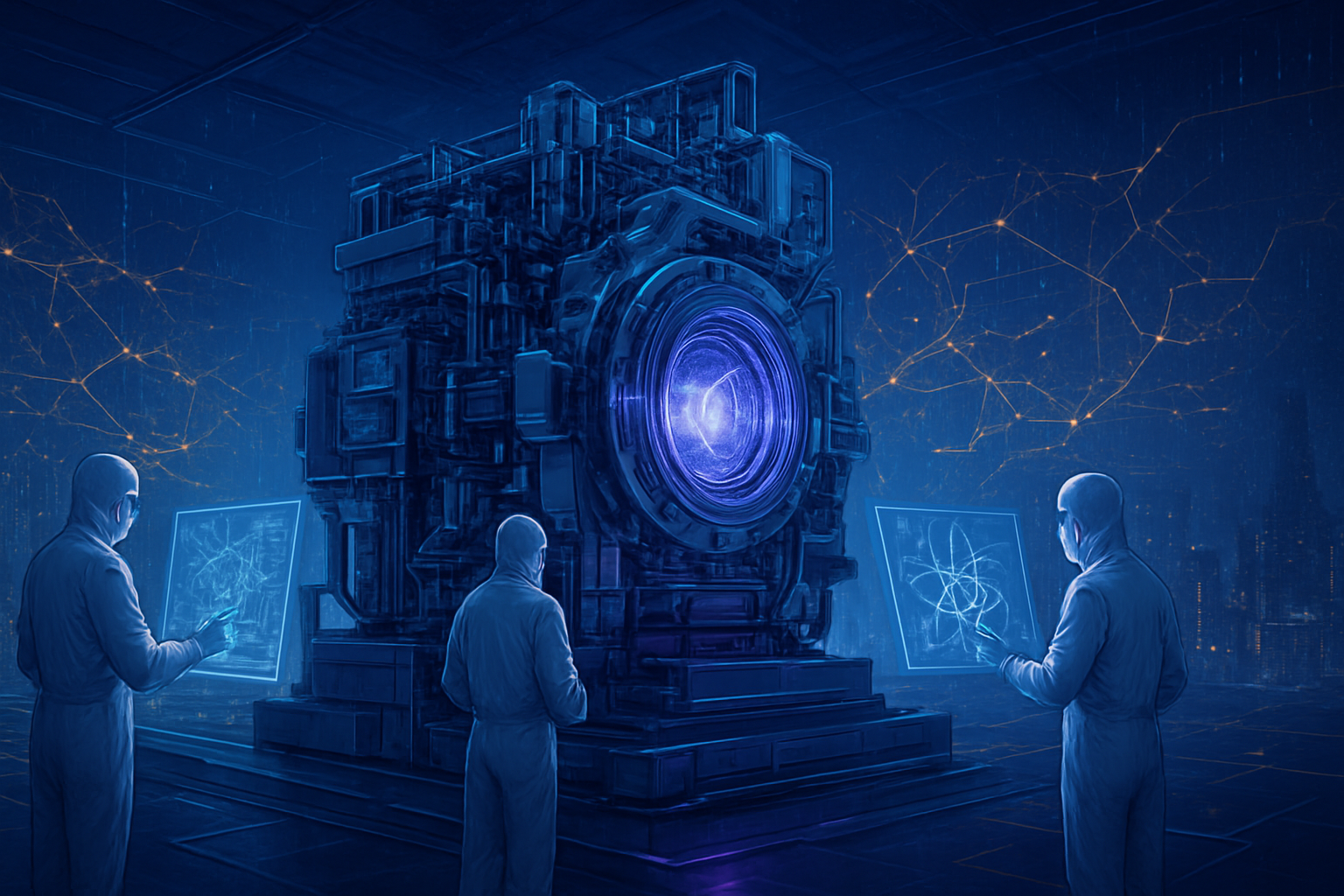
    In a move that signals a tectonic shift in the global semiconductor landscape, reports from high-security research facilities in Shenzhen and Shanghai indicate that China has successfully prototyped its first Extreme Ultraviolet (EUV) lithography machine. As of late 2024 and throughout 2025, the Chinese government has accelerated its "Manhattan Project" for chips, aiming to bypass stringent Western export controls that have sought to freeze the nation’s logic chip capabilities at the 7-nanometer (nm) threshold. This breakthrough, while still in the laboratory testing phase, represents the first credible domestic challenge to the monopoly held by the Dutch giant ASML (NASDAQ: ASML).

    The significance of this development cannot be overstated. For years, the inability to source EUV machinery—the only technology capable of efficiently printing features smaller than 7nm—was viewed as the "glass ceiling" for Chinese AI and high-performance computing. By successfully generating a stable 13.5nm EUV beam and integrating domestic projection optics, China is signaling to the world that it is no longer content with being a generation behind. While commercial-scale production remains years away, the prototype serves as a definitive proof of concept that the era of Western technological containment may be entering a period of diminishing returns.

    Technical Breakthroughs: LDP, LPP, and the SSMB Leapfrog

    The technical specifications of China’s EUV prototype reveal a multi-track engineering strategy designed to mitigate the risk of component failure. Unlike ASML’s high-NA systems, which rely on Laser Produced Plasma (LPP) powered by massive CO2 lasers, the Chinese prototype led by Huawei and SMEE (Shanghai Micro Electronics Equipment) utilizes a Laser-Induced Discharge Plasma (LDP) source. Developed by the Harbin Institute of Technology, this LDP source reportedly achieved power levels between 100W and 150W in mid-2025. While this is lower than the 250W+ required for high-volume manufacturing, it is sufficient for the "first-light" testing of 5nm-class logic circuits.

    Beyond the LDP source, the most radical technical departure is the Steady-State Micro-Bunching (SSMB) project at Tsinghua University. Rather than a standalone machine, SSMB uses a particle accelerator (synchrotron) to generate a continuous, high-power EUV beam. Construction of a dedicated SSMB-EUV facility began in Xiong’an in early 2025, with theoretical power outputs exceeding 1kW. This "leapfrog" approach differs from existing technology by centralizing the light source for multiple lithography stations, potentially offering a more scalable path to 2nm and 1nm nodes than the pulsed-light methods currently used by the rest of the industry.

    Initial reactions from the AI research community have been a mix of skepticism and alarm. Experts from the Interuniversity Microelectronics Centre (IMEC) note that while a prototype is a milestone, the "yield gap"—the ability to print millions of chips with minimal defects—remains a formidable barrier. However, industry analysts admit that the progress in domestic projection optics, spearheaded by the Changchun Institute of Optics (CIOMP), has surpassed expectations, successfully manufacturing the ultra-smooth reflective mirrors required to steer EUV light without significant energy loss.

    Market Impact: The DUV Longevity Strategy and the Yield War

    While the EUV prototype grabs headlines, the immediate survival of the Chinese chip industry relies on extending the life of older Deep Ultraviolet (DUV) systems. SMIC (HKG: 0981) has pioneered the use of Self-Aligned Quadruple Patterning (SAQP) to push existing DUV immersion tools to their physical limits. By late 2025, SMIC reportedly achieved a pilot run for 5nm AI processors, intended for Huawei’s next-generation Ascend series. This strategy allows China to maintain production of advanced AI silicon despite the Dutch government revoking export licenses for ASML’s Twinscan NXT:1980i units in late 2024.

    The competitive implications are severe for global giants. Companies like TSMC (NYSE: TSM) and Intel (NASDAQ: INTC) now face a competitor that is willing to accept significantly lower yields—estimated at 30-35% for 5nm DUV—to achieve strategic autonomy. This "cost-blind" manufacturing, subsidized by the $47 billion National Integrated Circuit Fund Phase III (Big Fund III), threatens to disrupt the market positioning of Western fabless companies. If China can produce "good enough" AI chips domestically, the addressable market for high-end exports from Nvidia or AMD could shrink faster than anticipated.

    Furthermore, Japanese equipment makers like Nikon (TYO: 7731) and Tokyo Electron (TYO: 8035) are feeling the squeeze. As Japan aligns its export controls with the US, Chinese fabs are rapidly replacing Japanese cleaning and metrology tools with domestic alternatives from startups like Yuliangsheng. This forced decoupling is accelerating the maturation of a parallel Chinese semiconductor supply chain that is entirely insulated from Western sanctions, potentially creating a bifurcated global market where technical standards and equipment ecosystems no longer overlap.

    Wider Significance: The End of Unipolar Tech Supremacy

    The emergence of a Chinese EUV prototype marks a pivotal moment in the broader AI landscape. It suggests that the "moat" created by extreme manufacturing complexity is not impassable. This development mirrors previous milestones, such as the Soviet Union’s rapid development of atomic capabilities or China’s own "Two Bombs, One Satellite" program. It reinforces the trend of "technological sovereignty," where nations view semiconductor manufacturing not just as a business, but as a core pillar of national defense and AI-driven governance.

    However, this race raises significant concerns regarding global stability and the environment. The energy intensity of SSMB-EUV facilities and the chemicals required for SAQP multi-patterning are substantial. Moreover, the lack of transparency in China’s high-security labs makes it difficult for international bodies to monitor for safety or ethical standards in semiconductor manufacturing. The move also risks a permanent split in AI development, with one "Western" stack optimized for EUV efficiency and a "Chinese" stack optimized for DUV-redundancy and massive-scale parallelization.

    Comparisons to the 2023 "Huawei Mate 60 Pro" shock are inevitable. While that event proved China could reach 7nm, the 2025 EUV prototype proves they have a roadmap for what comes next. The geopolitical pressure, rather than stifling innovation, appears to have acted as a catalyst, forcing Chinese firms to solve fundamental physics problems that they previously would have outsourced to ASML or Nikon. This suggests that the era of unipolar tech supremacy is rapidly giving way to a more volatile, multipolar reality.

    Future Outlook: The 2028 Commercial Horizon

    Looking ahead, the next 24 to 36 months will be defined by the transition from lab prototypes to pilot production lines. Experts predict that China will attempt to integrate its LDP light sources into a full-scale "Alpha" lithography tool by 2026. The ultimate goal is a commercial-ready 5nm EUV system by 2028. In the near term, expect to see more "hybrid" manufacturing, where DUV-SAQP is used for most layers of a chip, while the domestic EUV prototype is used sparingly for the most critical, high-density layers.

    The challenges remain immense. Metrology (measuring chip features at the atomic scale) and photoresist chemistry (the light-sensitive liquid used to print patterns) are still major bottlenecks. If China cannot master these supporting technologies, even the most powerful light source will be useless. However, the prediction among industry insiders is that China will continue to "brute force" these problems through massive talent recruitment from the global diaspora and relentless domestic R&D spending.

    Summary and Final Thoughts

    China’s dual-track approach—prototyping the future with EUV while squeezing every last drop of utility out of DUV—is a masterclass in industrial resilience. By late 2025, the narrative has shifted from "Can China survive the sanctions?" to "How quickly can China achieve parity?" The successful prototype of an EUV machine, even in a crude form, is a landmark achievement in AI history, signaling that the most complex machine ever built by humans is no longer the exclusive province of a single Western company.

    In the coming weeks and months, watch for the official unveiling of the SSMB facility in Xiong’an and potential "stealth" chip releases from Huawei that utilize these new manufacturing techniques. The semiconductor war is no longer just about who has the best tools today; it is about who can innovate their way out of a corner. For the global AI industry, the message is clear: the silicon ceiling has been cracked, and the race for 2nm supremacy is now a two-player game.


    This content is intended for informational purposes only and represents analysis of current AI developments.

    TokenRing AI delivers enterprise-grade solutions for multi-agent AI workflow orchestration, AI-powered development tools, and seamless remote collaboration platforms.
    For more information, visit https://www.tokenring.ai/.

  • The Great Decoupling: ASML Navigates a New Era of Export Controls as China Revenue ‘Normalizes’

    The Great Decoupling: ASML Navigates a New Era of Export Controls as China Revenue ‘Normalizes’

    As of December 22, 2025, the global semiconductor landscape has reached a definitive turning point. ASML Holding N.V. (NASDAQ: ASML), the linchpin of the world’s chipmaking supply chain, is now operating under the most stringent export regime in its history. Following a series of coordinated policy shifts between the United States and the Netherlands throughout late 2024 and 2025, the company has effectively seen its once-dominant market share in China restricted to a fraction of its former self, signaling a profound "normalization" of the industry’s geographic revenue mix.

    This development marks the culmination of years of geopolitical tension, where Deep Ultraviolet (DUV) lithography—the workhorse technology used to manufacture everything from automotive chips to advanced AI processors—has become the primary battlefield. The immediate significance lies in the successful "harmonization" of export rules between Washington and The Hague, a move that has closed previous loopholes and forced ASML to pivot its long-term growth strategy toward South Korea and the United States, even as Chinese domestic firms scramble to find workarounds.

    Technical Tightening: From EUV to DUV and Beyond

    The core of the recent restrictions centers on ASML’s immersion DUV systems, specifically the TWINSCAN NXT:1970i and NXT:1980i. While these systems were once considered "mid-range" compared to the cutting-edge Extreme Ultraviolet (EUV) machines, their ability to produce 7nm-class chips through multi-patterning techniques made them a target for U.S. regulators. In a significant policy shift that took effect in late 2024, the Dutch government expanded its licensing requirements to include these specific DUV models, effectively taking over jurisdiction from the U.S. Foreign Direct Product Rule to create a unified Western front.

    Beyond the hardware itself, the December 2024 U.S. "Advanced Computing and Semiconductor Manufacturing Equipment Rule" introduced granular controls on metrology and software. These rules prevent ASML from providing high-level system upgrades that could improve "overlay accuracy"—the precision with which layers of a chip are aligned—by more than 1%. This technical ceiling is designed to prevent Chinese fabs from squeezing more performance out of existing equipment. Industry experts note that while ASML can still provide basic maintenance, the prohibition on performance-enhancing software updates represents a "soft-kill" of the machines' long-term competitiveness for advanced nodes.

    Market Realignment: The Rise of South Korea and the China Pivot

    The financial impact of these rules has been stark but, according to ASML leadership, "entirely expected." In 2024, China accounted for a staggering 49% of ASML’s revenue as Chinese firms engaged in a massive stockpiling effort. By the end of 2025, that figure has plummeted to approximately 20%. ASML’s total net sales guidance remains robust at €30 billion to €35 billion, but the source of that capital has shifted. South Korea has emerged as the company’s largest market, accounting for 40% of system sales in 2025, driven by massive investments from memory giants and AI-focused foundries.

    For major players like Taiwan Semiconductor Manufacturing Company (NYSE: TSM) and Intel Corporation (NASDAQ: INTC), the restriction on China provides a competitive breather, ensuring that the most advanced lithography tools remain concentrated in allied nations. However, the loss of high-margin DUV sales to China has had a dilutive effect on ASML’s gross margin, which is currently hovering between 51% and 53%—slightly lower than the 55%+ margins seen during the China-driven boom of the early 2020s.

    The Geopolitical Landscape: 'Pax Silica' and European Alignment

    The year 2025 has seen the emergence of a new geopolitical framework known as "Pax Silica." This U.S.-led strategic alliance, which includes the Netherlands, Japan, South Korea, and the UK, aims to secure the AI and semiconductor supply chain against external shocks and technological leakage. The Netherlands’ decision to join this initiative in December 2025 marks a final departure from its previous "cautious cooperation" stance, fully aligning Dutch economic security with U.S. interests.

    This alignment is mirrored in the broader European Union’s updated Economic Security Strategy. While the EU maintains a "country-agnostic" rhetoric, the practical application of its policies has clearly targeted reducing dependencies on high-risk regions for critical technologies. This shift has raised concerns among some European trade advocates who fear the loss of the Chinese market will lead to a "dual-track" global economy, where China develops its own, albeit less efficient, domestic lithography ecosystem, potentially led by state-backed firms like Shanghai Micro Electronics Equipment (SMEE).

    Future Outlook: The 7nm Battle and AI Demand

    Looking ahead to 2026, the primary challenge for the export control regime will be the "secondary market" and indigenous Chinese innovation. Despite the restrictions, firms like Huawei and SMIC (HKG: 0981) have successfully utilized older DUV kits and third-party engineering to maintain 7nm production. Experts predict that the next phase of restrictions will likely focus on the spare parts market and the movement of specialized personnel, as the U.S. and its allies seek to degrade China's existing installed base of lithography tools.

    In the near term, the explosion in AI demand is expected to more than offset the revenue lost from China. The rollout of ASML’s High-NA (Numerical Aperture) EUV systems is accelerating, with major logic and memory customers in the U.S. and Asia ramping up capacity for the next generation of 2nm and 1.4nm chips. The challenge for ASML will be managing the complex logistics of a supply chain that is increasingly fragmented by national security concerns while maintaining the rapid pace of innovation required by the AI revolution.

    A New Status Quo in Silicon Diplomacy

    The events of late 2025 have solidified a new status quo for the semiconductor industry. ASML has successfully navigated a geopolitical minefield, maintaining its financial health and technological leadership despite the loss of its largest growth engine in China. The "normalization" of the China market share to 20% represents a successful, if painful, decoupling that has fundamentally altered the company’s geographic footprint.

    As we move into 2026, the industry will be watching for two key signals: the effectiveness of Chinese domestic lithography breakthroughs and the potential for even stricter controls on "legacy" nodes (28nm and above). For now, ASML remains the indispensable architect of the digital age, but it is an architect that must now build its future within the increasingly rigid walls of a bifurcated global trade system.


    This content is intended for informational purposes only and represents analysis of current AI and semiconductor developments.

    TokenRing AI delivers enterprise-grade solutions for multi-agent AI workflow orchestration, AI-powered development tools, and seamless remote collaboration platforms.
    For more information, visit https://www.tokenring.ai/.
  • China Shatters the Silicon Monopoly: Domestic EUV Breakthrough Signals the End of ASML’s Hegemony

    China Shatters the Silicon Monopoly: Domestic EUV Breakthrough Signals the End of ASML’s Hegemony

    In a development that has sent shockwaves through the global semiconductor industry, reports emerging in late 2025 confirm that China has successfully breached the "technological wall" of Extreme Ultraviolet (EUV) lithography. A high-security facility in Shenzhen has reportedly validated a functional domestic EUV prototype, marking the first time a nation has independently replicated the complex light-source technology previously monopolized by the Dutch giant ASML (NASDAQ:ASML). This breakthrough signals a decisive shift in the global "chip war," suggesting that the era of Western-led containment through equipment bottlenecks is rapidly drawing to a close.

    The immediate significance of this achievement cannot be overstated. For years, EUV lithography—the process of using 13.5nm wavelength light to etch microscopic circuits onto silicon—was considered the "Holy Grail" of manufacturing, accessible only to those with access to ASML's multi-billion dollar supply chain. China’s success in developing a working prototype, combined with Semiconductor Manufacturing International Corp (SMIC) (HKG:0981) reaching volume production on its 5nm-class nodes, effectively bypasses the most stringent U.S. export controls. This development ensures that China’s domestic AI and high-performance computing (HPC) sectors will have a sustainable, sovereign path toward the 2nm frontier.

    Breaking the 13.5nm Barrier: The SSMB and LDP Revolution

    Technically, the Chinese breakthrough deviates significantly from the architecture pioneered by ASML. While ASML utilizes Laser-Produced Plasma (LPP)—where high-power CO2 lasers vaporize tin droplets 50,000 times a second—the new Shenzhen prototype reportedly employs Laser-Induced Discharge Plasma (LDP). This method uses a combination of lasers and high-voltage discharge to generate the required plasma, a path that experts suggest is more cost-effective and simpler to maintain, even if it currently operates at a lower power output of approximately 50–100W.

    Parallel to the LDP efforts, a more radical "Manhattan Project" for chips is unfolding in Xiong'an. Led by Tsinghua University, the Steady-State Micro-Bunching (SSMB) project utilizes a particle accelerator to generate a "clean" and continuous EUV beam. Unlike the pulsed light of traditional lithography, SSMB could theoretically reach power levels of 1kW or higher, potentially leapfrogging ASML’s current High-NA EUV capabilities by providing a more stable light source with fewer debris issues. This dual-track approach—LDP for immediate industrial application and SSMB for future-generation dominance—demonstrates a sophisticated R&D strategy that has outpaced Western intelligence estimates.

    Furthermore, Huawei has played a pivotal role as the coordinator of a "shadow supply chain." Recent patent filings reveal that Huawei and its partner SiCarrier have perfected Self-Aligned Quadruple Patterning (SAQP) for 2nm-class features. While this "brute force" method using older Deep Ultraviolet (DUV) tools was once considered economically unviable due to low yields, the integration of domestic EUV prototypes is expected to stabilize production. Initial reactions from the international research community suggest that while China still trails in yield efficiency, the fundamental physics and engineering hurdles have been cleared.

    Market Disruption: ASML’s Demand Cliff and the Rise of the "Two-Track" Supply Chain

    The emergence of a viable Chinese EUV alternative poses an existential threat to the current market structure. ASML (NASDAQ:ASML), which has long enjoyed a 100% market share in EUV equipment, now faces what analysts call a "long-term demand cliff" in China—previously its most profitable region. While ASML’s 2025 revenues remained buoyed by Chinese firms stockpiling DUV spare parts, the projection for 2026 and beyond shows a sharp decline as domestic alternatives from Shanghai Micro Electronics Equipment (SMEE) and SiCarrier begin to replace Dutch and Japanese components in metrology and wafer handling.

    The competitive implications extend to the world’s leading foundries. Taiwan Semiconductor Manufacturing Company (TSMC) (NYSE:TSM) and Intel (NASDAQ:INTC) are now facing a competitor in SMIC that is no longer bound by international sanctions. Although SMIC’s 5nm yields are currently estimated at 33% to 35%—far below TSMC’s ~85%—the massive $47.5 billion "Big Fund" Phase III provides the financial cushion necessary to absorb these costs. For Chinese AI giants like Baidu (NASDAQ:BIDU) and Alibaba (NYSE:BABA), this means a guaranteed supply of domestic chips for their large language models, reducing their reliance on "stripped-down" export-compliant chips from Nvidia (NASDAQ:NVDA).

    Moreover, the strategic advantage is shifting toward "good enough" sovereign technology. Even if Chinese EUV machines are 50% more expensive to operate per wafer, the removal of geopolitical risk is a premium the Chinese government is willing to pay. This is forcing global tech giants to reconsider their manufacturing footprints, as the "Two-Track World"—one supply chain for the West and an entirely separate, vertically integrated one for China—becomes a permanent reality.

    Geopolitical Fallout: The Export Control Paradox

    The success of China’s EUV program highlights the "Export Control Paradox": the very sanctions intended to stall China’s progress served as the ultimate accelerant. By cutting off access to ASML and Lam Research (NASDAQ:LRCX) equipment, the U.S. and its allies forced Chinese firms to collaborate with domestic academia and the military-industrial complex in ways that were previously fragmented. The result is a semiconductor landscape that is more resilient and less dependent on global trade than it was in 2022.

    This development fits into a broader trend of "technological sovereignty" that is defining the mid-2020s. Similar to how the launch of Sputnik galvanized the U.S. space program, the "EUV breakthrough" is being hailed in Beijing as a landmark victory for the socialist market economy. However, it also raises significant concerns regarding global security. A China that is self-sufficient in advanced silicon is a China that is less vulnerable to economic pressure, potentially altering the calculus for regional stability in the Taiwan Strait and the South China Sea.

    Comparisons are already being made to the 1960s nuclear breakthroughs. Just as the world had to adjust to a multi-polar nuclear reality, the semiconductor industry must now adjust to a multi-polar advanced manufacturing reality. The era where a single company in Veldhoven, Netherlands, could act as the gatekeeper for the world’s most advanced AI applications has effectively ended.

    The Road to 2nm: What Lies Ahead

    Looking toward 2026 and 2027, the focus will shift from laboratory prototypes to industrial scaling. The primary challenge for China remains yield optimization. While producing a functional 5nm chip is a feat, producing millions of them at a cost that competes with TSMC is another matter entirely. Experts predict that China will focus on "advanced packaging" and "chiplet" designs to compensate for lower yields, effectively stitching together smaller, functional dies to create massive AI accelerators.

    The next major milestone to watch will be the completion of the SSMB-EUV light source facility in Xiong'an. If this particle accelerator-based approach becomes operational for mass production, it could theoretically allow China to produce 2nm and 1nm chips with higher efficiency than ASML’s current High-NA systems. This would represent a complete leapfrog event, moving China from a follower to a leader in lithography physics.

    However, significant challenges remain. The ultra-precision optics required for EUV—traditionally provided by Carl Zeiss for ASML—are notoriously difficult to manufacture. While the Changchun Institute of Optics has made strides, the durability and coating consistency of domestic mirrors under intense EUV radiation will be the ultimate test of the system's longevity in a 24/7 factory environment.

    Conclusion: A New Era of Global Competition

    The reports of China’s EUV breakthrough mark a definitive turning point in the history of technology. It proves that with sufficient capital, state-level coordination, and a clear strategic mandate, even the most complex industrial monopolies can be challenged. The key takeaways are clear: China has successfully transitioned from "brute-forcing" 7nm chips to developing the fundamental tools for sub-5nm manufacturing, and the global semiconductor supply chain has irrevocably split into two distinct spheres.

    In the history of AI and computing, this moment will likely be remembered as the end of the "unipolar silicon era." The long-term impact will be a more competitive, albeit more fragmented, global market. For the tech industry, the coming months will be defined by a scramble to adapt to this new reality. Investors and policymakers should watch for the first "all-domestic" 5nm chip releases from Huawei in early 2026, which will serve as the ultimate proof of concept for this new era of Chinese semiconductor sovereignty.


    This content is intended for informational purposes only and represents analysis of current AI and semiconductor developments.

    TokenRing AI delivers enterprise-grade solutions for multi-agent AI workflow orchestration, AI-powered development tools, and seamless remote collaboration platforms.
    For more information, visit https://www.tokenring.ai/.
  • Silicon Sovereignty: China’s Strategic Pivot as Trump-Era Restrictions Redefine the Global Semiconductor Landscape

    Silicon Sovereignty: China’s Strategic Pivot as Trump-Era Restrictions Redefine the Global Semiconductor Landscape

    As of December 19, 2025, the global semiconductor industry has entered a period of "strategic bifurcation." Following a year of intense industrial mobilization, China has signaled a decisive shift from merely surviving U.S.-led sanctions to actively building a vertically integrated, self-contained AI ecosystem. This movement comes as the second Trump administration has fundamentally rewritten the rules of engagement, moving away from the "small yard, high fence" approach of the previous years toward a transactional "pay-to-play" export model that has sent shockwaves through the global supply chain.

    The immediate significance of this development cannot be overstated. By leveraging massive state capital and innovative software optimizations, Chinese tech giants and state-backed fabs are proving that hardware restrictions may slow, but cannot stop, the march toward domestic AI capability. With the recent launch of the "Triple Output" AI strategy, Beijing aims to triple its domestic production of AI processors by the end of 2026, a goal that looks increasingly attainable following a series of technical breakthroughs in the final quarter of 2025.

    Breakthroughs in the Face of Scarcity

    The technical landscape in late 2025 is dominated by news of China’s successful push into the 5nm logic node. Teardowns of the newly released Huawei Mate 80 series have confirmed that SMIC (HKG: 0981) has achieved volume production on its "N+3" 5nm-class node. Remarkably, this was accomplished without access to Extreme Ultraviolet (EUV) lithography machines. Instead, SMIC utilized advanced Deep Ultraviolet (DUV) systems paired with Self-Aligned Quadruple Patterning (SAQP). While this method is significantly more expensive and complex than EUV-based manufacturing, it demonstrates a level of engineering resilience that many Western analysts previously thought impossible under current export bans.

    Beyond logic chips, a significant milestone was reached on December 17, 2025, when reports emerged from a Shenzhen-based research collective—often referred to as China’s "Manhattan Project" for chips—confirming the development of a functional EUV machine prototype. While the prototype is not yet ready for commercial-scale manufacturing, it has successfully generated the critical 13.5nm light required for advanced lithography. This breakthrough suggests that China could potentially reach EUV-enabled production by the 2028–2030 window, significantly shortening the expected timeline for total technological independence.

    Furthermore, Chinese AI labs have turned to software-level innovation to bridge the "compute gap." Companies like DeepSeek have championed the FP8 (UE8M0) data format, which optimizes how AI models process information. By standardizing this format, domestic processors like the Huawei Ascend 910C are achieving training performance comparable to restricted Western hardware, such as the NVIDIA (NASDAQ: NVDA) H100, despite running on less efficient 7nm or 5nm hardware. This "software-first" approach has become a cornerstone of China's strategy to maintain AI parity while hardware catch-up continues.

    The Trump Administration’s Transactional Tech Policy

    The corporate landscape has been upended by the Trump administration’s radical "Revenue Share" policy, announced on December 8, 2025. In a dramatic pivot, the U.S. government now permits companies like NVIDIA (NASDAQ: NVDA), AMD (NASDAQ: AMD), and Intel (NASDAQ: INTC) to export high-end (though not top-tier) AI chips, such as the H200 series, to approved Chinese entities—provided the U.S. government receives a 25% revenue stake on every sale. This "export tax" is designed to fund domestic American R&D while simultaneously keeping Chinese firms "addicted" to American software stacks and hardware architectures, preventing them from fully migrating to domestic alternatives.

    However, this transactional approach is balanced by the STRIDE Act, passed in November 2025. The Semiconductor Technology Resilience, Integrity, and Defense Enhancement Act mandates a "Clean Supply Chain," barring any company receiving CHIPS Act subsidies from using Chinese-made semiconductor manufacturing equipment for a decade. This has created a competitive vacuum where Western firms are incentivized to purge Chinese tools, even as U.S. chip designers scramble to navigate the new revenue-sharing licenses. Major AI labs in the U.S. are now closely watching how these "taxed" exports will affect the pricing of global AI services.

    The strategic advantages are shifting. While U.S. tech giants maintain a lead in raw compute power, Chinese firms are becoming masters of efficiency. Big Fund III, China’s Integrated Circuit Industry Investment Fund, has deployed approximately $47.5 billion this year, specifically targeting chokepoints like 3D Advanced Packaging and Electronic Design Automation (EDA) software. By focusing on these "bottleneck" technologies, China is positioning its domestic champions to eventually bypass the need for Western design tools and packaging services entirely, threatening the long-term market dominance of firms like ASML (NASDAQ: ASML) and Tokyo Electron (TYO: 8035).

    Global Supply Chain Bifurcation and Geopolitical Friction

    The broader significance of these developments lies in the physical restructuring of the global supply chain. The "China Plus One" strategy has reached its zenith in 2025, with Vietnam and Malaysia emerging as the new nerve centers of semiconductor assembly and testing. Malaysia is now the world’s fourth-largest semiconductor exporter, having absorbed much of the packaging work that was formerly centralized in China. Meanwhile, Mexico has become the primary hub for AI server assembly serving the North American market, effectively decoupling the final stages of production from Chinese influence.

    However, this bifurcation has created significant friction between the U.S. and its allies. The Trump administration’s "Revenue Share" deal has angered officials in the Netherlands and South Korea. Partners like ASML (NASDAQ: ASML) and Samsung (KRX: 005930) have questioned why they are pressured to forgo the Chinese market while U.S. firms are granted licenses to sell advanced chips in exchange for payments to the U.S. Treasury. ASML, in particular, has seen its revenue share from China plummet from nearly 50% in 2024 to roughly 20% by late 2025, leading to internal pressure for the Dutch government to push back against further U.S. maintenance bans on existing equipment.

    This era of "chip diplomacy" is also seeing China use its own leverage in the raw materials market. In December 2025, Beijing intensified export controls on gallium, germanium, and rare earth elements—materials essential for the production of advanced sensors and power electronics. This tit-for-tat escalation mirrors previous AI milestones, such as the 2023 export controls, but with a heightened sense of permanence. The global landscape is no longer a single, interconnected market; it is two competing ecosystems, each racing to secure its own resource base and manufacturing floor.

    Future Horizons: The Path to 2030

    Looking ahead, the next 12 to 24 months will be a critical test for China’s "Triple Output" strategy. Experts predict that if SMIC can stabilize yields on its 5nm process, the cost of domestic AI hardware will drop significantly, potentially allowing China to export its own "sanction-proof" AI infrastructure to Global South nations. We also expect to see the first commercial applications of 3D-stacked "chiplets" from Chinese firms, which allow multiple smaller chips to be combined into a single powerful processor, a key workaround for lithography limitations.

    The long-term challenge remains the maintenance of existing Western-made equipment. As the U.S. pressures ASML and Tokyo Electron to stop servicing machines already in China, the industry is watching to see if Chinese engineers can develop "aftermarket" maintenance capabilities or if these fabs will eventually grind to a halt. Predictions for 2026 suggest a surge in "gray market" parts and a massive push for domestic component replacement in the semiconductor manufacturing equipment (SME) sector.

    Conclusion: A New Era of Silicon Realpolitik

    The events of late 2025 mark a definitive end to the era of globalized semiconductor cooperation. China’s rally of its domestic industry, characterized by the Mate 80’s 5nm breakthrough and the Shenzhen EUV prototype, demonstrates a formidable capacity for state-led innovation. Meanwhile, the Trump administration’s "pay-to-play" policies have introduced a new level of pragmatism—and volatility—into the tech war, prioritizing U.S. revenue and software dominance over absolute decoupling.

    The key takeaway is that the "compute gap" is no longer a fixed distance, but a moving target. As China optimizes its software and matures its domestic manufacturing, the strategic advantage of U.S. export controls may begin to diminish. In the coming months, the industry must watch the implementation of the STRIDE Act and the response of U.S. allies, as the world adjusts to a fragmented, high-stakes semiconductor reality where silicon is the ultimate currency of sovereign power.


    This content is intended for informational purposes only and represents analysis of current AI developments.

    TokenRing AI delivers enterprise-grade solutions for multi-agent AI workflow orchestration, AI-powered development tools, and seamless remote collaboration platforms.
    For more information, visit https://www.tokenring.ai/.