Tag: China

  • China’s AI Boom Ignites Stock Market Rally, Propelling Tech Giants Like Alibaba to New Heights

    China’s AI Boom Ignites Stock Market Rally, Propelling Tech Giants Like Alibaba to New Heights

    China's stock market is currently experiencing a powerful surge, largely fueled by an unprecedented wave of investor enthusiasm for Artificial Intelligence (AI). This AI-driven rally is reshaping the economic landscape, with leading Chinese tech companies, most notably Alibaba (NYSE: BABA), witnessing dramatic gains and signaling a profound shift in global AI investment dynamics. The immediate significance of this trend extends beyond mere market fluctuations, pointing towards a broader reinvigoration of the Chinese economy and a strategic repositioning of its technological prowess on the world stage.

    The rally reflects a growing conviction in China's indigenous AI capabilities, particularly in the realm of generative AI and large language models (LLMs). Both domestic and international investors are pouring capital into AI-related sectors, anticipating robust growth and enhanced business efficiency across various industries. While broader economic challenges persist, the market's laser focus on AI-driven innovation suggests a long-term bet on technology as a primary engine for future prosperity, drawing comparisons to transformative tech shifts of past decades.

    The Technical Underpinnings of China's AI Ascent

    The current AI stock market rally in China is rooted in significant advancements in the country's AI capabilities, particularly in the development and deployment of large language models (LLMs) and foundational AI infrastructure. These breakthroughs are not merely incremental improvements but represent a strategic leap that is enabling Chinese tech giants to compete more effectively on a global scale.

    A prime example of this advancement is the emergence of sophisticated LLMs like Alibaba's Qwen3-Max and DeepSeek. These models showcase advanced natural language understanding, generation, and reasoning capabilities, positioning them as direct competitors to Western counterparts. The technical specifications often involve billions of parameters, trained on vast datasets of Chinese and multilingual text, allowing for nuanced contextual comprehension and highly relevant outputs. This differs from previous approaches that often relied on adapting existing global models or developing more specialized, narrower AI applications. The current focus is on building general-purpose AI, capable of handling a wide array of tasks.

    Beyond LLMs, Chinese companies are also making significant strides in AI chip development and cloud computing infrastructure. Alibaba Cloud, for instance, has demonstrated consistent triple-digit growth in AI-related revenue, underscoring the robust demand for the underlying computational power and services necessary to run these advanced AI models. This vertical integration, from chip design to model deployment, provides a strategic advantage, allowing for optimized performance and greater control over the AI development pipeline. Initial reactions from the AI research community and industry experts have been largely positive, acknowledging the technical sophistication and rapid pace of innovation. While some express caution about the sustainability of the market's enthusiasm, there's a general consensus that China's AI ecosystem is maturing rapidly, producing genuinely competitive and innovative solutions.

    Corporate Beneficiaries and Competitive Realignment

    The AI-driven rally has created a clear hierarchy of beneficiaries within the Chinese tech landscape, fundamentally reshaping competitive dynamics and market positioning. Companies that have made early and substantial investments in AI research, development, and infrastructure are now reaping significant rewards, while others face the imperative to rapidly adapt or risk falling behind.

    Alibaba (NYSE: BABA) stands out as a primary beneficiary, with its stock experiencing a dramatic resurgence in 2025. This performance is largely attributed to its aggressive strategic pivot towards generative AI, particularly through its Alibaba Cloud division. The company's advancements in LLMs like Qwen3-Max, coupled with its robust cloud computing services and investments in AI chip development, have propelled its AI-related revenue to triple-digit growth for eight consecutive quarters. Alibaba's announcement to raise $3.17 billion for AI infrastructure investments and its partnerships, including one with Nvidia (NASDAQ: NVDA), underscore its commitment to solidifying its leadership in the AI space. This strategic foresight has provided a significant competitive advantage, enabling it to offer comprehensive AI solutions from foundational models to cloud-based deployment.

    Other major Chinese tech giants like Baidu (NASDAQ: BIDU) and Tencent Holdings (HKEX: 0700) are also significant players in this AI boom. Baidu, with its long-standing commitment to AI, has seen its American Depositary Receipts (ADRs) increase by over 60% this year, driven by its in-house AI chip development and substantial AI expenditures. Tencent, a developer of large language models, is leveraging AI to enhance its vast ecosystem of social media, gaming, and enterprise services. The competitive implications are profound: these companies are not just adopting AI; they are building the foundational technologies that will power the next generation of digital services. This vertical integration and investment in core AI capabilities position them to disrupt existing products and services across various sectors, from e-commerce and logistics to entertainment and autonomous driving. Smaller startups and specialized AI firms are also benefiting, often through partnerships with these giants or by focusing on niche AI applications, but the sheer scale of investment from the tech behemoths creates a formidable competitive barrier.

    Broader Implications and Societal Impact

    The AI-driven stock market rally in China is more than just a financial phenomenon; it signifies a profound shift in the broader AI landscape and carries significant implications for global technological development and societal impact. This surge fits squarely into the global trend of accelerating AI adoption, but with distinct characteristics that reflect China's unique market and regulatory environment.

    One of the most significant impacts is the potential for AI to act as a powerful engine for economic growth and modernization within China. Goldman Sachs analysts project that widespread AI adoption could boost Chinese earnings per share (EPS) by 2.5% annually over the next decade and potentially increase the fair value of Chinese equity by 15-20%. This suggests that AI is seen not just as a technological advancement but as a critical tool for improving productivity, driving innovation across industries, and potentially offsetting some of the broader economic challenges the country faces. The scale of investment and development in AI, particularly in generative models, positions China as a formidable contender in the global AI race, challenging the dominance of Western tech giants.

    However, this rapid advancement also brings potential concerns. The intense competition and the rapid deployment of AI technologies raise questions about ethical AI development, data privacy, and the potential for job displacement. While the government has expressed intentions to regulate AI, the speed of innovation often outpaces regulatory frameworks, creating a complex environment. Furthermore, the geopolitical implications are significant. The U.S. export restrictions on advanced AI chips and technology aimed at China have paradoxically spurred greater domestic innovation and self-sufficiency in key areas like chip design and manufacturing. This dynamic could lead to a more bifurcated global AI ecosystem, with distinct technological stacks and supply chains emerging. Comparisons to previous AI milestones, such as the rise of deep learning, highlight the current moment as a similar inflection point, where foundational technologies are being developed that will underpin decades of future innovation, with China playing an increasingly central role.

    The Road Ahead: Future Developments and Expert Outlook

    The current AI boom in China sets the stage for a wave of anticipated near-term and long-term developments that promise to further transform industries and daily life. Experts predict a continuous acceleration in the sophistication and accessibility of AI technologies, with a strong focus on practical applications and commercialization.

    In the near term, we can expect to see further refinement and specialization of large language models. This includes the development of more efficient, smaller models that can run on edge devices, expanding AI capabilities beyond large data centers. There will also be a push towards multimodal AI, integrating text, image, audio, and video processing into single, more comprehensive models, enabling richer human-computer interaction and more versatile applications. Potential applications on the horizon include highly personalized educational tools, advanced medical diagnostics, autonomous logistics systems, and hyper-realistic content creation. Companies like Alibaba and Baidu will likely continue to integrate their advanced AI capabilities deeper into their core business offerings, from e-commerce recommendations and cloud services to autonomous driving solutions.

    Longer term, the focus will shift towards more generalized AI capabilities, potentially leading to breakthroughs in artificial general intelligence (AGI), though this remains a subject of intense debate and research. Challenges that need to be addressed include ensuring the ethical development and deployment of AI, mitigating biases in models, enhancing data security, and developing robust regulatory frameworks that can keep pace with technological advancements. The "irrational exuberance" some analysts warn about also highlights the need for sustainable business models and a clear return on investment for the massive capital being poured into AI. Experts predict that the competitive landscape will continue to intensify, with a greater emphasis on talent acquisition and the cultivation of a robust domestic AI ecosystem. The interplay between government policy, private sector innovation, and international collaboration (or lack thereof) will significantly shape what happens next in China's AI journey.

    A New Era for Chinese Tech: Assessing AI's Enduring Impact

    The current AI-driven stock market rally in China marks a pivotal moment, not just for the nation's tech sector but for the global artificial intelligence landscape. The key takeaway is clear: China is rapidly emerging as a formidable force in AI development, driven by significant investments, ambitious research, and the strategic deployment of advanced technologies like large language models and robust cloud infrastructure. This development signifies a profound shift in investor confidence and a strategic bet on AI as the primary engine for future economic growth and technological leadership.

    This period will likely be assessed as one of the most significant in AI history, akin to the internet boom or the rise of mobile computing. It underscores the global race for AI supremacy and highlights the increasing self-sufficiency of China's tech industry, particularly in the face of international trade restrictions. The impressive gains seen by companies like Alibaba (NYSE: BABA), Baidu (NASDAQ: BIDU), and Tencent Holdings (HKEX: 0700) are not just about market capitalization; they reflect a tangible progression in their AI capabilities and their potential to redefine various sectors.

    Looking ahead, the long-term impact of this AI surge will be multifaceted. It will undoubtedly accelerate digital transformation across Chinese industries, foster new business models, and potentially enhance national productivity. However, it also brings critical challenges related to ethical AI governance, data privacy, and the socio-economic implications of widespread automation. What to watch for in the coming weeks and months includes further announcements of AI product launches, new partnerships, and regulatory developments. The performance of these AI-centric stocks will also serve as a barometer for investor sentiment, indicating whether the current enthusiasm is a sustainable trend or merely a speculative bubble. Regardless, China's AI ascent is undeniable, and its implications will resonate globally for years to come.

    This content is intended for informational purposes only and represents analysis of current AI developments.

    TokenRing AI delivers enterprise-grade solutions for multi-agent AI workflow orchestration, AI-powered development tools, and seamless remote collaboration platforms.
    For more information, visit https://www.tokenring.ai/.

  • Nvidia’s Geopolitical Gauntlet: CEO Huang’s Frustration Mounts Amid Stalled UAE Chip Deal and China Tensions

    Nvidia’s Geopolitical Gauntlet: CEO Huang’s Frustration Mounts Amid Stalled UAE Chip Deal and China Tensions

    October 2, 2025 – Nvidia (NASDAQ: NVDA) CEO Jensen Huang is reportedly expressing growing frustration as a multi-billion dollar deal to supply advanced AI chips to the United Arab Emirates (UAE) remains stalled. The delay, attributed to national security concerns raised by the U.S. Commerce Secretary over alleged links between UAE entities and China, underscores the escalating geopolitical complexities entangling the global semiconductor industry. This high-stakes situation highlights how cutting-edge AI technology has become a central battleground in the broader U.S.-China rivalry, forcing companies like Nvidia to navigate a treacherous landscape where national security often trumps commercial aspirations.

    The stalled agreement, which envisioned the UAE securing hundreds of thousands of Nvidia's most advanced AI chips annually, was initially heralded as a significant step in the UAE's ambitious drive to become a global AI hub. However, as of October 2025, the deal faces significant headwinds, reflecting a U.S. government increasingly wary of technology diversion to strategic adversaries. This development not only impacts Nvidia's immediate revenue streams and global market expansion but also casts a long shadow over international AI collaborations, signaling a new era where technological partnerships are heavily scrutinized through a geopolitical lens.

    The Geopolitical Crucible: Advanced Chips, G42, and the Specter of China

    At the heart of the stalled Nvidia-UAE deal are the world's most advanced AI GPUs, specifically Nvidia's H100 and potentially the newer GB300 Grace Blackwell systems. The initial agreement, announced in May 2025, envisioned the UAE acquiring up to 500,000 H100 chips annually, with a substantial portion earmarked for the Abu Dhabi-based AI firm G42. These chips are the backbone of modern AI, essential for training massive language models and powering the high-stakes race for AI supremacy.

    The primary impediment, according to reports, stems from the U.S. Commerce Department's national security concerns regarding G42's historical and alleged ongoing links to Chinese tech ecosystems. U.S. officials fear that even with assurances, these cutting-edge American AI chips could be indirectly diverted to Chinese entities, thereby undermining U.S. efforts to restrict Beijing's access to advanced technology. G42, chaired by Sheikh Tahnoon bin Zayed Al Nahyan, the UAE's national security adviser, has previously invested in Chinese AI ventures, and its foundational technical infrastructure was reportedly developed with support from Chinese firms like Huawei. While G42 has reportedly taken steps to divest from Chinese partners and remove China-made hardware from its data centers, securing a $1.5 billion investment from Microsoft (NASDAQ: MSFT) and committing to Western hardware, the U.S. government's skepticism remains.

    The U.S. conditions for approval are stringent, including demands for robust security guarantees, the exclusion or strict oversight of G42 from direct chip access, and significant UAE investments in U.S.-based data centers. This situation is a microcosm of the broader U.S.-China chip war, where semiconductors are treated as strategic assets. The U.S. employs stringent export controls to restrict China's access to advanced chip technology, aiming to slow Beijing's progress in AI and military modernization. The U.S. Commerce Secretary, Howard Lutnick, has reportedly conditioned approval on the UAE finalizing its promised U.S. investments, emphasizing the interconnectedness of economic and national security interests.

    This intricate dance reflects a fundamental shift from a globalized semiconductor industry to one increasingly characterized by techno-nationalism and strategic fragmentation. The U.S. is curating a "tiered export regime," favoring strategic allies while scrutinizing others, especially those perceived as potential transshipment hubs for advanced AI chips to China. The delay also highlights the challenge for U.S. policymakers in balancing the desire to maintain technological leadership and national security with the need to foster international partnerships and allow U.S. companies like Nvidia to capitalize on burgeoning global AI markets.

    Ripple Effects: Nvidia, UAE, and the Global Tech Landscape

    The stalled Nvidia-UAE chip deal and the overarching U.S.-China tensions have profound implications for major AI companies, tech giants, and nascent startups worldwide. For Nvidia (NASDAQ: NVDA), the leading manufacturer of AI GPUs, the situation presents a significant challenge to its global expansion strategy. While demand for its chips remains robust outside China, the loss or delay of multi-billion dollar deals in rapidly growing markets like the Middle East impacts its international revenue streams and supply chain planning. CEO Jensen Huang's reported frustration underscores the delicate balance Nvidia must strike between maximizing commercial opportunities and complying with increasingly stringent U.S. national security directives. The company has already been compelled to develop less powerful, "export-compliant" versions of its chips for the Chinese market, diverting engineering resources and potentially hindering its technological lead.

    The UAE's ambitious AI development plans face substantial hurdles due to these delays. The nation aims for an AI-driven economic growth projected at $182 billion by 2035 and has invested heavily in building one of the world's largest AI data centers. Access to cutting-edge semiconductor chips is paramount for these initiatives, and the prolonged wait for Nvidia's technology directly threatens the UAE's immediate access to necessary hardware and its long-term competitiveness in the global AI race. This geopolitical constraint forces the UAE to either seek alternative, potentially less advanced, suppliers or further accelerate its own domestic AI capabilities, potentially straining its relationship with the U.S. while opening doors for competitors like China's Huawei.

    Beyond Nvidia and the UAE, the ripple effects extend across the entire chip and AI industry. Other major chip manufacturers like Advanced Micro Devices (NASDAQ: AMD) and Intel (NASDAQ: INTC) also face similar pressures, experiencing revenue impacts and market share erosion in China due to export controls and Beijing's push for domestic alternatives. This has spurred a focus on diversifying manufacturing footprints and strengthening partnerships within the U.S., leveraging initiatives like the CHIPS Act. For cloud providers, the "cloud loophole," where Chinese developers access advanced U.S. chips via cloud services, challenges the efficacy of current sanctions and could lead to more stringent regulations, affecting global innovation and data localization. AI startups, particularly those without established supply chain resilience, face increased costs and limited access to cutting-edge hardware, though some may find opportunities in developing alternative solutions or catering to regional "sovereign AI" initiatives. The competitive landscape is fundamentally reshaping, with U.S. companies facing market restrictions but also government support, while Chinese companies accelerate their drive for self-sufficiency, potentially establishing a parallel, independent tech ecosystem.

    A Bifurcated Future: AI's New Geopolitical Reality

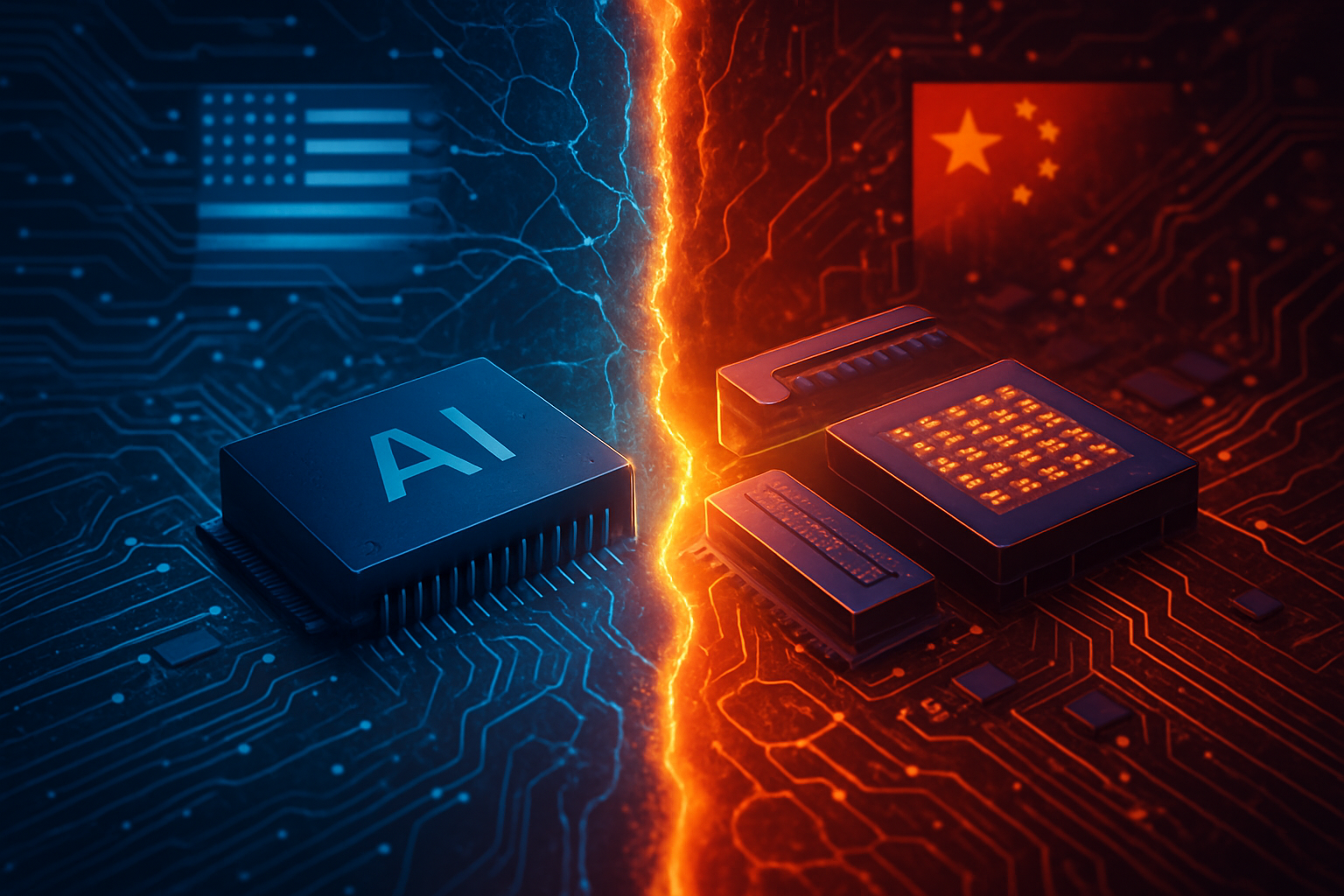
    The stalled Nvidia-UAE deal is more than just a commercial dispute; it's a stark illustration of how AI and advanced chip technology have become central to national security and global power dynamics. This situation fits squarely into the broader trend of "techno-nationalism" and the accelerating "AI Cold War" between the U.S. and China, fundamentally reshaping the global AI landscape and pushing towards a bifurcated technological future. The U.S. strategy of restricting China's access to advanced computing and semiconductor manufacturing aims to curb its military modernization and AI ambitions, while China retaliates by pouring billions into domestic production and fostering its own AI ecosystems.

    This intense rivalry is severely impacting international AI collaboration. Hopes for a global consensus on AI governance are dimming as major AI companies from both countries are often absent from global forums on AI ethics. Instead, the world is witnessing divergent national AI strategies, with the U.S. adopting a more domestically focused approach and China pursuing centralized control over data and models while aggressively building indigenous capabilities. This fragmentation creates operational complexities for multinational firms, potentially stifling innovation that has historically thrived on global collaboration. The absence of genuine cooperation on critical AI safety issues is particularly concerning as the world approaches the development of artificial general intelligence (AGI).

    The race for AI supremacy is now inextricably linked to semiconductor dominance. The U.S. believes that controlling access to top-tier semiconductors, like Nvidia's GPUs, is key to maintaining its lead. However, this strategy has inadvertently galvanized China's efforts, pushing it to innovate new AI approaches, optimize software for existing hardware, and accelerate domestic research. Chinese companies are now building platforms optimized for their own hardware and software stacks, leading to divergent AI architectures. While U.S. controls may slow China's progress in certain areas, they also risk fostering a more resilient and independent Chinese tech industry in the long run.

    The potential for a bifurcated global AI ecosystem, often referred to as a "Silicon Curtain," means that nations and corporations are increasingly forced to align with either a U.S.-led or China-led technological bloc. This divide limits interoperability, increases costs for hardware and software development globally, and raises concerns about reduced interoperability, increased costs, and new supply chain vulnerabilities. This fragmentation is a significant departure from previous tech milestones that often emphasized global integration. Unlike the post-WWII nuclear revolution that led to deterrence-based camps and arms control treaties, or the digital revolution that brought global connectivity, the current AI race is creating a world of competing technological silos, where security and autonomy outweigh efficiency.

    The Road Ahead: Navigating a Fragmented Future

    The trajectory of U.S.-China chip tensions and their impact on AI development points towards a future defined by strategic rivalry and technological fragmentation. In the near term, expect continued tightening of U.S. export controls, albeit with nuanced adjustments, such as the August 2025 approval of Nvidia's H20 chip exports to China under a revenue-sharing arrangement. This reflects a recognition that total bans might inadvertently accelerate Chinese self-reliance. China, in turn, will likely intensify its "import controls" to foster domestic alternatives, as seen with reports in September 2025 of its antitrust regulator investigating Nvidia and urging domestic companies to halt purchases of China-tailored GPUs in favor of local options like Huawei's Ascend series.

    Long-term developments will likely see the entrenchment of two parallel AI systems, with nations prioritizing domestic technological self-sufficiency. The U.S. will continue its tiered export regime, intertwining AI chip access with national security and diplomatic influence, while China will further pursue its "dual circulation" strategy, significantly reducing reliance on foreign imports for semiconductors. This will accelerate the construction of new fabrication plants globally, with TSMC (NYSE: TSM) and Samsung (KRX: 005930) pushing towards 2nm and HBM4 advancements by late 2025, while China's SMIC progresses towards 7nm and even trial 5nm production.

    Potential applications on the horizon, enabled by a more resilient global chip supply, include more sophisticated autonomous systems, personalized medicine, advanced edge AI for real-time decision-making, and secure hardware for critical infrastructure and defense. However, significant challenges remain, including market distortion from massive government investments, a slowdown in global innovation due to fragmentation, the risk of escalation into broader conflicts, and persistent smuggling challenges. The semiconductor sector also faces a critical workforce shortage, estimated to reach 67,000 by 2030 in the U.S. alone.

    Experts predict a continued acceleration of efforts to diversify and localize semiconductor manufacturing, leading to a more regionalized supply chain. The Nvidia-UAE deal exemplifies how AI chip access has become a geopolitical issue, with the U.S. scrutinizing even allies. Despite the tensions, cautious collaborations on AI safety and governance might emerge, as evidenced by joint UN resolutions supported by both countries in 2024, suggesting a pragmatic necessity for cooperation on global challenges posed by AI. However, the underlying strategic competition will continue to shape the global AI landscape, forcing companies and nations to adapt to a new era of "sovereign tech."

    The New AI Order: A Concluding Assessment

    The stalled Nvidia-UAE chip deal serves as a potent microcosm of the profound geopolitical shifts occurring in the global AI landscape. It underscores that AI and advanced chip technology are no longer mere commercial commodities but critical instruments of national power, deeply intertwined with national security, economic competitiveness, and diplomatic influence. The reported frustration of Nvidia CEO Jensen Huang highlights the immense pressure faced by tech giants caught between the imperative to innovate and expand globally and the increasingly strict mandates of national governments.

    This development marks a significant turning point in AI history, signaling a definitive departure from an era of relatively open global collaboration to one dominated by techno-nationalism and strategic competition. The emergence of distinct technological ecosystems, driven by U.S. containment strategies and China's relentless pursuit of self-sufficiency, risks slowing collective global progress in AI and exacerbating technological inequalities. The concentration of advanced AI chip production in a few key players makes these entities central to global power dynamics, intensifying the "chip war" beyond mere trade disputes into a fundamental reordering of the global technological and geopolitical landscape.

    In the coming weeks and months, all eyes will be on the resolution of the Nvidia-UAE deal, as it will be a crucial indicator of the U.S.'s flexibility and priorities in balancing national security with economic interests and allied relationships. We must also closely monitor China's domestic chip advancements, particularly the performance and mass production capabilities of indigenous AI chips like Huawei's Ascend series, as well as any retaliatory measures from Beijing, including broader import controls or new antitrust investigations. How other key players like the EU, Japan, and South Korea navigate these tensions, balancing compliance with U.S. restrictions against their own independent technological strategies, will further define the contours of this new AI order. The geopolitical nature of AI is undeniable, and its implications will continue to reshape global trade, innovation, and international relations for decades to come.


    This content is intended for informational purposes only and represents analysis of current AI developments.

    TokenRing AI delivers enterprise-grade solutions for multi-agent AI workflow orchestration, AI-powered development tools, and seamless remote collaboration platforms. For more information, visit https://www.tokenring.ai/.

  • Silicon Shield Stands Firm: Taiwan Rejects U.S. Chip Sourcing Demand Amid Escalating Geopolitical Stakes

    Silicon Shield Stands Firm: Taiwan Rejects U.S. Chip Sourcing Demand Amid Escalating Geopolitical Stakes

    In a move that reverberated through global technology and diplomatic circles, Taiwan has unequivocally rejected the United States' proposed "50:50 chip sourcing plan," a strategy aimed at significantly rebalancing global semiconductor manufacturing. This decisive refusal, announced by Vice Premier Cheng Li-chiun following U.S. trade talks, underscores the deepening geopolitical fault lines impacting the vital semiconductor industry and highlights the diverging strategic interests between Washington and Taipei. The rejection immediately signals increased friction in U.S.-Taiwan relations and reinforces the continued concentration of advanced chip production in a region fraught with escalating tensions.

    The immediate significance of Taiwan's stance is profound. It underscores Taipei's unwavering commitment to its "silicon shield" defense strategy, where its indispensable role in the global technology supply chain, particularly through Taiwan Semiconductor Manufacturing Company (TSMC) (NYSE: TSM), serves as a critical economic leverage and a deterrent against potential aggression. For the U.S., the rejection represents a significant hurdle in its ambitious drive to onshore chip manufacturing and reduce its estimated 95% reliance on Taiwanese semiconductor supply, a dependence Washington increasingly views as an unacceptable national security risk.

    The Clash of Strategic Visions: U.S. Onshoring vs. Taiwan's Silicon Shield

    The U.S. 50:50 chip sourcing plan, championed by figures such as U.S. Commerce Secretary Howard Lutnick, envisioned a scenario where the United States and Taiwan would each produce half of the semiconductors required by the American economy. This initiative was part of a broader, multi-billion dollar U.S. strategy to bolster domestic chip production, potentially reaching 40% of global supply by 2028, necessitating investments exceeding $500 billion. Currently, the U.S. accounts for less than 10% of global chip manufacturing, while Taiwan, primarily through TSMC, commands over half of the world's chips and virtually all of the most advanced-node semiconductors crucial for cutting-edge technologies like artificial intelligence.

    Taiwan's rejection was swift and firm, with Vice Premier Cheng Li-chiun clarifying that the proposal was an "American idea" never formally discussed or agreed upon in negotiations. Taipei's rationale is multifaceted and deeply rooted in its economic sovereignty and national security imperatives. Central to this is the "silicon shield" concept: Taiwan views its semiconductor prowess as its most potent strategic asset, believing that its critical role in global tech supply chains discourages military action, particularly from mainland China, due to the catastrophic global economic consequences any conflict would unleash.

    Furthermore, Taiwanese politicians and scholars have lambasted the U.S. proposal as an "act of exploitation and plunder," arguing it would severely undermine Taiwan's economic sovereignty and national interests. Relinquishing a significant portion of its most valuable industry would, in their view, weaken this crucial "silicon shield" and diminish Taiwan's diplomatic and security bargaining power. Concerns also extend to the potential loss of up to 200,000 high-tech jobs and the erosion of Taiwan's hard-won technological leadership and sensitive know-how. Taipei is resolute in maintaining tight control over its advanced semiconductor technologies, refusing to fully transfer them abroad. This stance starkly contrasts with the U.S.'s push for supply chain diversification for risk management, highlighting a fundamental clash of strategic visions where Taiwan prioritizes national self-preservation through technological preeminence.

    Corporate Giants and AI Labs Grapple with Reinforced Status Quo

    Taiwan's firm rejection of the U.S. 50:50 chip sourcing plan carries substantial implications for the world's leading semiconductor companies, tech giants, and the burgeoning artificial intelligence sector. While the U.S. sought to diversify its supply chain, Taiwan's decision effectively reinforces the current global semiconductor landscape, maintaining the island nation's unparalleled dominance in advanced chip manufacturing.

    At the epicenter of this decision is Taiwan Semiconductor Manufacturing Company (TSMC) (NYSE: TSM). As the world's largest contract chipmaker, responsible for over 90% of the most advanced semiconductors and a significant portion of AI chips, TSMC's market leadership is solidified. The company will largely maintain its leading position in advanced chip manufacturing within Taiwan, preserving its technological superiority and the efficiency of its established domestic ecosystem. While TSMC continues its substantial $165 billion investment in new fabs in Arizona, the vast majority of its cutting-edge production capacity and most advanced technologies are slated to remain in Taiwan, underscoring the island's determination to protect its technological "crown jewels."

    For U.S. chipmakers like Intel (NASDAQ: INTC), the rejection presents a complex challenge. While it underscores the urgent need for the U.S. to boost domestic manufacturing, potentially reinforcing the strategic importance of initiatives like the CHIPS Act, it simultaneously makes it harder for Intel Foundry Services (IFS) to rapidly gain significant market share in leading-edge nodes. TSMC retains its primary technological and production advantage, meaning Intel faces an uphill battle to attract major foundry customers for the absolute cutting edge. Similarly, Samsung Electronics Co., Ltd. (KRX: 005930), TSMC's closest rival in advanced foundry services, will continue to navigate a landscape where the core of advanced manufacturing remains concentrated in Taiwan, even as global diversification efforts persist.

    Fabless tech giants, heavily reliant on TSMC's advanced manufacturing capabilities, are particularly affected. Companies like NVIDIA (NASDAQ: NVDA), Apple (NASDAQ: AAPL), Advanced Micro Devices (NASDAQ: AMD), and Qualcomm (NASDAQ: QCOM) rely almost exclusively on TSMC for their cutting-edge AI accelerators, GPUs, CPUs, and mobile chips. This deep interdependence means that while they benefit from TSMC's leading-edge technology, high yield rates, and established ecosystem, their reliance amplifies supply chain risks should any disruption occur in Taiwan. The continued concentration of advanced manufacturing capabilities in Taiwan means that AI development, in particular, remains highly dependent on the island's stability and TSMC's production, as Taiwan holds 92% of advanced logic chips using sub-10nm technology, essential for training and running large AI models. This reinforces the strategic advantages of those companies with established relationships with TSMC, while posing challenges for those seeking rapid diversification.

    A New Geopolitical Chessboard: AI, Supply Chains, and Sovereignty

    Taiwan's decisive rejection of the U.S. 50:50 chip sourcing plan extends far beyond bilateral trade, reshaping the broader artificial intelligence landscape, intensifying debates over global supply chain control, and profoundly influencing international relations and technological sovereignty. This move underscores a fundamental recalibration of strategic priorities in an era where semiconductors are increasingly seen as the new oil.

    For the AI industry, Taiwan's continued dominance, particularly through TSMC, means that global AI development remains inextricably linked to a concentrated and geopolitically sensitive supply base. The AI sector is voraciously dependent on cutting-edge semiconductors for training massive models, powering edge devices, and developing specialized AI chips. Taiwan, through TSMC, controls a dominant share of the global foundry market for advanced nodes (7nm and below), which are the backbone of AI accelerators from companies like NVIDIA (NASDAQ: NVDA) and Google (NASDAQ: GOOGL). Projections indicate Taiwan could control up to 90% of AI server manufacturing capacity by 2025, solidifying its indispensable role in the AI revolution, encompassing not just chips but the entire AI hardware ecosystem. This continued reliance amplifies geopolitical risks for nations aspiring to AI leadership, as the stability of the Taiwan Strait directly impacts the pace and direction of global AI innovation.

    In terms of global supply chain control, Taiwan's decision reinforces the existing concentration of advanced semiconductor manufacturing. This complicates efforts by the U.S. and other nations to diversify and secure their supply chains, highlighting the immense challenges in rapidly re-localizing such complex and capital-intensive production. While initiatives like the U.S. CHIPS Act aim to boost domestic capacity, the economic realities of a highly specialized and concentrated industry mean that efforts towards "de-globalization" or "friend-shoring" will face continued headwinds. The situation starkly illustrates the tension between national security imperatives—seeking supply chain resilience—and the economic efficiencies derived from specialized global supply chains. A more fragmented and regionalized supply chain, while potentially enhancing resilience, could also lead to less efficient global production and higher manufacturing costs.

    The geopolitical ramifications are significant. The rejection reveals a fundamental divergence in strategic priorities between the U.S. and Taiwan. While the U.S. pushes for domestic production for national security, Taiwan prioritizes maintaining its technological dominance as a geopolitical asset, its "silicon shield." This could lead to increased tensions, even as both nations maintain a crucial security alliance. For U.S.-China relations, Taiwan's continued role as the linchpin of advanced technology solidifies its "silicon shield" amidst escalating tensions, fostering a prolonged era of "geoeconomics" where control over critical technologies translates directly into geopolitical power. This situation resonates with historical semiconductor milestones, such as the U.S.-Japan semiconductor trade friction in the 1980s, where the U.S. similarly sought to mitigate reliance on a foreign power for critical technology. It also underscores the increasing "weaponization of technology," where semiconductors are a strategic tool in geopolitical competition, akin to past arms races.

    Taiwan's refusal is a powerful assertion of its technological sovereignty, demonstrating its determination to control its own technological future and leverage its indispensable position in the global tech ecosystem. The island nation is committed to safeguarding its most advanced technological prowess on home soil, ensuring it remains the core hub for chipmaking. However, this concentration also brings potential concerns: amplified risk of global supply disruptions from geopolitical instability in the Taiwan Strait, intensified technological competition as nations redouble efforts for self-sufficiency, and potential bottlenecks to innovation if geopolitical factors constrain collaboration. Ultimately, Taiwan's rejection marks a critical juncture where a technologically dominant nation explicitly prioritizes its strategic economic leverage and national security over an allied nation's diversification efforts, underscoring that the future of AI and global technology is not just about technological prowess but also about the intricate dance of global power, economic interests, and national sovereignty.

    The Road Ahead: Fragmented Futures and Enduring Challenges

    Taiwan's rejection of the U.S. 50:50 chip sourcing plan sets the stage for a complex and evolving future in the semiconductor industry and global geopolitics. While the immediate impact reinforces the existing structure, both near-term and long-term developments point towards a recalibration rather than a complete overhaul, marked by intensified national efforts and persistent strategic challenges.

    In the near term, the U.S. is expected to redouble its efforts to bolster domestic semiconductor manufacturing capabilities, leveraging initiatives like the CHIPS Act. Despite TSMC's substantial investments in Arizona, these facilities represent only a fraction of the capacity needed for a true 50:50 split, especially for the most advanced nodes. This could lead to continued U.S. pressure on Taiwan, potentially through tariffs, to incentivize more chip-related firms to establish operations on American soil. For major AI labs and tech companies like NVIDIA (NASDAQ: NVDA), Advanced Micro Devices (NASDAQ: AMD), and Qualcomm (NASDAQ: QCOM), their deep reliance on TSMC for cutting-edge AI accelerators and GPUs will persist, reinforcing existing strategic advantages while also highlighting the inherent vulnerabilities of such concentration. This situation is likely to accelerate investments by companies like Intel (NASDAQ: INTC) in their foundry services as they seek to offer viable alternatives and mitigate geopolitical risks.

    Looking further ahead, experts predict a future characterized by a more geographically diversified, yet potentially more expensive and less efficient, global semiconductor supply chain. The "global subsidy race" to onshore critical chip production, with initiatives in the U.S., Europe, Japan, China, and India, will continue, leading to increased regional self-sufficiency for critical components. However, this decentralization will come at a cost; manufacturing in the U.S., for instance, is estimated to be 30-50% higher than in Asia. This could foster technological bipolarity between major powers, potentially slowing global innovation as companies navigate fragmented ecosystems and are forced to align with regional interests. Taiwan, meanwhile, is expected to continue leveraging its "silicon shield," retaining its most advanced research and development (R&D) and manufacturing capabilities (e.g., 2nm and 1.6nm processes) within its borders, with TSMC projected to break ground on 1.4nm facilities soon, ensuring its technological leadership remains robust.

    The relentless growth of Artificial Intelligence (AI) and High-Performance Computing (HPC) will continue to drive demand for advanced semiconductors, with AI chips forecasted to experience over 30% growth in 2025. This concentrated production of critical AI components in Taiwan means global AI development remains highly dependent on the stability of the Taiwan Strait. Beyond AI, diversified supply chains will underpin growth in 5G/6G communications, Electric Vehicles (EVs), the Internet of Things (IoT), and defense. However, several challenges loom large: the immense capital costs of building new fabs, persistent global talent shortages in the semiconductor industry, infrastructure gaps in emerging manufacturing hubs, and ongoing geopolitical volatility that can lead to trade conflicts and fragmented supply chains. Economically, while Taiwan's "silicon shield" provides leverage, some within Taiwan fear that significant capacity shifts could diminish their strategic importance and potentially reduce U.S. incentives to defend the island. Experts predict a "recalibration rather than a complete separation," with Taiwan maintaining its core technological and research capabilities. The global semiconductor market is projected to reach $1 trillion by 2030, driven by innovation and strategic investment, but navigated by a more fragmented and complex landscape.

    Conclusion: A Resilient Silicon Shield in a Fragmented World

    Taiwan's unequivocal rejection of the U.S. 50:50 chip sourcing plan marks a pivotal moment in the ongoing saga of global semiconductor geopolitics, firmly reasserting the island nation's strategic autonomy and the enduring power of its "silicon shield." This decision, driven by a deep-seated commitment to national security and economic sovereignty, has significant and lasting implications for the semiconductor industry, international relations, and the future trajectory of artificial intelligence.

    The key takeaway is that Taiwan remains resolute in leveraging its unparalleled dominance in advanced chip manufacturing as its primary strategic asset. This ensures that Taiwan Semiconductor Manufacturing Company (TSMC) (NYSE: TSM), the world's largest contract chipmaker, will continue to house the vast majority of its cutting-edge production, research, and development within Taiwan. While the U.S. will undoubtedly redouble efforts to onshore semiconductor manufacturing through initiatives like the CHIPS Act, Taiwan's stance signals that achieving rapid parity for advanced nodes remains an extended and challenging endeavor. This maintains the critical concentration of advanced chip manufacturing capabilities in a single, geopolitically sensitive region, a reality that both benefits and burdens the global technology ecosystem.

    In the annals of AI history, this development is profoundly significant. Artificial intelligence's relentless advancement is intrinsically tied to the availability of cutting-edge semiconductors. With Taiwan producing an estimated 90% of the world's most advanced chips, including virtually all of NVIDIA's (NASDAQ: NVDA) AI accelerators, the island is rightly considered the "beating heart of the wider AI ecosystem." Taiwan's refusal to dilute its manufacturing core underscores that the future of AI is not solely about algorithms and data, but fundamentally shaped by the physical infrastructure that enables it and the political will to control that infrastructure. The "silicon shield" has proven to be a tangible source of leverage for Taiwan, influencing the strategic calculus of global powers in an era where control over advanced semiconductor technology is a key determinant of future economic and military power.

    Looking long-term, Taiwan's rejection will likely lead to a prolonged period of strategic competition over semiconductor manufacturing globally. Nations will continue to pursue varying degrees of self-sufficiency, often at higher costs, while still relying on the efficiencies of the global system. This could result in a more diversified, yet potentially more expensive, global semiconductor ecosystem where national interests increasingly override pure market forces. Taiwan is expected to maintain its core technological and research capabilities, including its highly skilled engineering talent and intellectual property for future chip nodes. The U.S., while continuing to build significant advanced manufacturing capacity, will still need to rely on global partnerships and a complex international division of labor. This situation could also accelerate China's efforts towards semiconductor self-sufficiency, further fragmenting the global tech landscape.

    In the coming weeks and months, observers should closely monitor how the U.S. government recalibrates its semiconductor strategy, potentially focusing on more targeted incentives or diplomatic approaches rather than broad relocation demands. Any shifts in investment patterns by major AI companies, as they strive to de-risk their supply chains, will be critical. Furthermore, the evolving geopolitical dynamics in the Indo-Pacific region will remain a key area of focus, as the strategic importance of Taiwan's semiconductor industry continues to be a central theme in international relations. Specific indicators include further announcements regarding CHIPS Act funding allocations, the progress of new fab constructions and staffing in the U.S., and ongoing diplomatic negotiations between the U.S. and Taiwan concerning trade and technology transfer, particularly regarding the contentious reciprocal tariffs. Continued market volatility in the semiconductor sector should also be anticipated due to the ongoing geopolitical uncertainties.

    This content is intended for informational purposes only and represents analysis of current AI developments.

    TokenRing AI delivers enterprise-grade solutions for multi-agent AI workflow orchestration, AI-powered development tools, and seamless remote collaboration platforms. For more information, visit https://www.tokenring.ai/.