
Tag: China

  • China’s Rare Earth Clampdown Ignites Global Tech Tensions, Threatening AI and Defense Supply Chains

    China’s Rare Earth Clampdown Ignites Global Tech Tensions, Threatening AI and Defense Supply Chains

    Beijing's Expanded Export Restrictions Send Shockwaves Through Semiconductor and Defense Industries

    On Thursday, October 9, 2025, China significantly expanded its rare earth export restrictions, implementing stringent new controls that directly target foreign defense and advanced semiconductor users. This decisive move, announced by China's Ministry of Commerce, marks a critical escalation in the ongoing geopolitical competition, leveraging Beijing's near-monopoly on these vital materials to assert national security interests and strategic leverage. The immediate significance of these restrictions lies in their profound potential to disrupt global supply chains, impede national defense capabilities, and introduce significant uncertainty for the worldwide semiconductor industry, particularly impacting the development and deployment of artificial intelligence (AI) technologies.

    The expanded measures, some taking immediate effect and others slated for December 1, 2025, go far beyond previous rare earth export quotas. They introduce broad licensing requirements for a wider range of rare earth elements and, critically, the advanced processing technologies used to extract and refine them. This strategic pivot signals China's intent to control not just the raw materials, but also the intellectual property and manufacturing know-how that underpins the global rare earth supply chain, directly challenging the technological independence of nations reliant on these critical inputs.

    The Indispensable Role of Rare Earths in High-Tech and China's Strategic Chokepoint

    Rare earth elements (REEs), a group of 17 metallic elements including the 15 lanthanides, scandium, and yttrium, are not "rare" in geological terms but are notoriously difficult and costly to mine and process. Their unique electrical, magnetic, and optical properties make them indispensable for modern high-tech applications, particularly in semiconductor manufacturing and advanced AI hardware. For instance, cerium oxide (CeO2) is crucial for chemical-mechanical planarization (CMP), a vital wafer polishing step in chip fabrication. Neodymium, often alloyed with praseodymium, is essential for powerful permanent magnets used in critical semiconductor manufacturing equipment like lithography scanners, as well as in AI-powered robotics, drones, and electric vehicle motors. Dysprosium and terbium enhance the high-temperature performance of these magnets, while europium is pivotal for phosphors in advanced displays. Gallium and germanium, also categorized as critical rare earths, are fundamental to high-performance chips and optoelectronics.

    The October 2025 restrictions significantly broaden the scope of China's export controls. They now encompass all 17 rare earth elements, adding holmium, erbium, thulium, europium, and ytterbium to the existing list. More importantly, the controls extend to advanced processing technologies for rare earth mining, smelting, separation, metallurgy, magnetic material manufacturing, and secondary resource recovery, including specialized equipment for rare earth recycling. Export applications for "advanced semiconductors" (logic chips at 14 nanometers and below, memory chips with 256 layers or more, and associated manufacturing tools) will be approved only on a case-by-case basis, introducing immense uncertainty. Furthermore, licenses for "foreign military forces" or "overseas defense users" will, "in principle," not be granted, effectively imposing a near-blanket ban.

    These new measures represent a significant escalation from previous Chinese export controls. Earlier restrictions, such as those implemented in April 2025, primarily focused on specific rare earth elements and magnets. The October 2025 controls shift towards a technology-focused approach, explicitly targeting downstream applications in advanced tech sectors like semiconductors and AI with military potential. A key departure is the "extraterritorial" application, requiring foreign entities to obtain export licenses for products containing even "tiny amounts" (0.1% or more of value) of Chinese-origin rare earths or those manufactured using Chinese rare earth processing technology. This mirrors Western, particularly U.S., restrictions on semiconductor exports, signaling a tit-for-tat escalation in the tech trade war. Initial reactions from the AI research community and industry experts are largely characterized by alarm, with many interpreting the move as China "weaponizing" its rare earth dominance to gain geopolitical leverage.

    Ripple Effects: Tech Giants, AI Innovators, and Defense Contractors on Edge

    The expanded rare earth export restrictions are poised to send significant ripple effects across the global technology landscape, creating clear winners and losers. Major tech giants and defense contractors, heavily reliant on Chinese rare earths for their sophisticated products and manufacturing processes, stand to be severely disadvantaged. Conversely, non-Chinese rare earth producers, alternative material developers, and recycling innovators are likely to see a surge in demand and investment.

    Companies like Apple (NASDAQ: AAPL), Dell Technologies (NYSE: DELL), HP (NYSE: HPQ), IBM (NYSE: IBM), Intel (NASDAQ: INTC), Samsung (KRX: 005930), and TSMC (NYSE: TSM) face substantial disruption. Their extensive use of rare earths in smartphones, laptops, servers, AI accelerators, and data centers, as well as in critical semiconductor manufacturing equipment, will lead to potential production delays, increased costs, and complex compliance hurdles. AI labs and startups developing hardware, robotics, or advanced computing solutions that depend on specialized rare earth components will also experience heightened supply chain uncertainty and potentially prohibitive material costs. Defense contractors are perhaps the most impacted, facing a near-blanket license prohibition for rare earth materials used in military applications, which will disrupt supply chains for guidance systems, radar technologies, and advanced weaponry.

    On the other hand, non-Chinese rare earth producers and processors are poised to benefit significantly. Companies such as MP Materials (NYSE: MP), operating the Mountain Pass mine in California, USA Rare Earth, which is building an integrated "mine-to-magnet" supply chain in the U.S., American Battery Technology (NASDAQ: ABML), focusing on rare earth salvage from battery recycling, and NioCorp (NASDAQ: NB), exploring rare earth magnet recycling, are strategically positioned. These firms will likely attract increased demand and strategic investments from governments and industries seeking to diversify supply chains. Developers of rare earth alternatives, such as ceramic magnets or advanced alloys, and e-waste recycling companies will also find new opportunities. Interestingly, Chinese rare earth companies like China Northern Rare Earth Group and Shenghe Resources saw their share prices surge, as these restrictions solidify China's dominant market position and enhance its pricing power.

    The competitive implications are profound, accelerating global efforts to establish resilient rare earth supply chains outside China. This includes increased investment in mining, processing, and recycling facilities in other countries, as well as the development of "friend-shoring" initiatives. Tech companies will face higher raw material costs and potential manufacturing delays, compelling them to invest heavily in R&D to redesign products or develop viable alternative materials. Nations and companies that successfully secure diversified rare earth supply chains or develop effective alternatives will gain a significant strategic and competitive advantage, while those heavily reliant on Chinese rare earths will face persistent vulnerabilities.

    Geopolitical Chessboard: AI, National Security, and Resource Nationalism

    China's expanded rare earth export restrictions signify a major geopolitical maneuver, underscoring the critical role of these materials in the broader AI landscape and global power dynamics. This move fits squarely into a global trend of resource nationalism and technological decoupling, where nations increasingly view control over strategic materials as essential for national security and economic sovereignty.

    The restrictions establish China's overwhelming control over the rare earth supply chain as a critical "chokepoint" in the global AI race. By controlling these essential inputs for AI chips, robotics, and advanced computing infrastructure, Beijing gains substantial leverage over nations developing advanced AI capabilities. This weaponization of resources is not new for China, which previously imposed an embargo on Japan in 2010 and, more recently, restricted exports of gallium, germanium, antimony, graphite, and tungsten between 2023 and 2025—all crucial for defense applications. These actions draw parallels to historical strategic resource control events, such as the OPEC oil embargoes of the 1970s, which similarly demonstrated how controlling vital resources could exert significant geopolitical pressure and reshape industrial strategies.

    The direct targeting of foreign defense and semiconductor industries has profound national security implications, particularly for the United States and its allies. It poses a significant threat to military readiness and reindustrialization ambitions, forcing a rapid reassessment of strategic vulnerabilities. The extraterritorial reach of the new rules, requiring licenses for products containing even trace amounts of Chinese rare earths, creates widespread uncertainty and compliance challenges across global manufacturing. This escalates the ongoing trade and technology rivalry between the U.S. and China, raising the specter of further retaliatory measures and increasing the risk of a more confrontational global environment, akin to the "chip wars" but upstreamed to the raw material level.

    These restrictions will undoubtedly intensify efforts by countries to "friendshore" or "reshore" critical mineral supplies, building more resilient supply chains with politically aligned nations or boosting domestic production. The European Commission has already expressed concern, urging China to act as a reliable partner, while South Korea and Taiwan, major semiconductor hubs, are assessing the impact and exploring diversification strategies. The long-term consequence is a likely acceleration towards a more fragmented global technology landscape, driven by national security imperatives rather than purely economic efficiency.

    The Road Ahead: Diversification, Innovation, and Enduring Challenges

    Looking ahead, China's expanded rare earth export restrictions will catalyze significant near-term and long-term developments in global supply chains, material science, and geopolitical responses. While immediate disruptions and price volatility are expected, particularly as existing rare earth inventory buffers deplete within the next 3-6 months, the long-term trajectory points towards a concerted global effort to reduce dependence on Chinese rare earths.

    In the near term, high-tech manufacturers and defense contractors will grapple with securing critical components, potentially facing complete license bans for military uses and stricter conditions for advanced semiconductors. This will lead to increased costs and investment uncertainty. In the long term, nations are accelerating efforts to develop indigenous rare earth supply chains, investing in mining projects in Australia, the U.S., Canada, and Brazil, and enhancing recycling capacities. New processing plants, such as one set to open in Texas by 2026, and efforts by Belgium and South Korea to produce rare earth oxides and magnets by 2025, signal a determined push for diversification.

    Material science research is also intensifying to find rare earth substitutes. While the unique properties of REEs make them difficult to replace without performance compromises, breakthroughs are emerging. A UK-based company, Materials Nexus, reportedly developed a rare-earth-free magnet using AI in just three months, showcasing the potential of advanced computational methods. Other research focuses on manganese-based, iron-nitride, and tetrataenite magnets as alternatives. Innovations in rare earth processing, including advanced hydrometallurgical techniques, bioleaching, in-situ leaching, and AI-enhanced recycling methods, are crucial for establishing competitive non-Chinese supply chains and reducing environmental impact.

    Despite these promising developments, significant challenges remain. Building new rare earth production capacity is a lengthy and costly endeavor, often taking 10-15 years and hundreds of millions of dollars. Non-Chinese projects face higher production costs, complex permitting, and environmental concerns. Alternative magnet materials often offer lower magnetic strength and may require larger components, posing a performance gap. Western nations also face a skilled workforce shortage in the rare earth industry. Experts predict that while China's dominance is formidable, it may diminish over the next decade as new sources emerge globally, particularly reducing China's share of raw materials from an estimated 62% to 28% by 2035. However, the demand for rare earth elements is projected to double by 2050, driven by the renewable energy transition, creating persistent supply constraints even with diversification efforts.

    A New Era of Resource Geopolitics: AI's Unforeseen Vulnerability

    China's expanded rare earth export restrictions on October 9, 2025, mark a pivotal moment in global trade and technology, fundamentally reshaping the landscape for AI development and national security. This strategic move, leveraging China's unparalleled dominance in rare earth mining and processing, underscores a stark reality: access to critical raw materials is now as vital a battleground as control over advanced semiconductor manufacturing.

    The key takeaway is that the era of globally integrated and optimized supply chains, driven purely by economic efficiency, is rapidly giving way to a new paradigm defined by resource nationalism and strategic autonomy. For the AI industry, this represents an unforeseen vulnerability. The very building blocks of AI hardware—from high-performance chips and data center cooling systems to advanced robotics and autonomous vehicles—are now subject to geopolitical leverage. This will undoubtedly accelerate the trend towards technological decoupling, forcing nations to prioritize supply chain resilience over cost, even if it means slower innovation or higher prices in the short term.

    The long-term impact will be a profound restructuring of global technology supply chains, characterized by intensified investment in non-Chinese rare earth sources, a surge in R&D for alternative materials and recycling technologies, and closer integration of critical minerals policy with climate and security agendas. While China's short-term leverage is undeniable, the long-term effectiveness of such export controls remains debated, with some experts suggesting they may ultimately accelerate global self-sufficiency and diminish China's future dominance.

    In the coming weeks and months, observers should closely watch for official responses from major importing nations, particularly the U.S., EU, Japan, and South Korea, including potential retaliatory measures and diplomatic efforts. The immediate impact on critical industries, rare earth price volatility, and the strategic adjustments made by major tech and defense companies will be crucial indicators. Furthermore, any announcements of new mining projects, processing facilities, and recycling initiatives outside of China will signal the global commitment to building truly resilient rare earth supply chains, charting a new course for the future of AI and global technological independence.


    This content is intended for informational purposes only and represents analysis of current AI developments.

    TokenRing AI delivers enterprise-grade solutions for multi-agent AI workflow orchestration, AI-powered development tools, and seamless remote collaboration platforms. For more information, visit https://www.tokenring.ai/.

  • China Blacklists Canadian Consultancy TechInsights: A New Front in the Global Chip War

    China Blacklists Canadian Consultancy TechInsights: A New Front in the Global Chip War

    October 9, 2025 – In a significant escalation of geopolitical tensions within the semiconductor industry, China has officially added the Canadian semiconductor consultancy, TechInsights, to its "Unreliable Entity List." This move, announced today, effectively bans the firm from conducting business with organizations or individuals within China, sending a clear message to foreign entities scrutinizing Beijing's technological advancements. The immediate fallout marks a critical juncture in the ongoing tech war, underscoring China's resolve to protect its technological ambitions and control the narrative around its domestic chip capabilities.

    TechInsights, a prominent global authority in semiconductor and electronics analysis, has gained notoriety for its meticulous chip teardowns, particularly those that have exposed the intricate details of Huawei Technologies Co. Ltd. (SHE: 002502)'s advanced chip designs and supply chain dependencies. This retaliatory action by Beijing is a direct consequence of TechInsights' recent reports, which, in collaboration with Bloomberg and other outlets, revealed the presence of non-Chinese components—specifically from Taiwan Semiconductor Manufacturing Company (TSMC) (NYSE: TSM), Samsung Electronics Co. Ltd. (KRX: 005930), and SK Hynix Inc. (KRX: 000660)—in Huawei's cutting-edge AI semiconductors, such as the Ascend 910C and 910B. These findings challenged China's narrative of complete domestic technological independence for Huawei's most advanced products amidst stringent U.S. export controls.

    The Indispensable Role of Chip Teardowns in a Geopolitical Minefield

    Semiconductor consultancies like TechInsights are not merely dismantling gadgets; they are dissecting the very sinews of modern technology, providing indispensable insights that drive competitive intelligence, safeguard intellectual property, and enable crucial supply chain scrutiny. Their work involves a painstaking process of reverse engineering, where engineers meticulously delayer chips to the transistor level, reconstructing schematics and identifying internal structures, materials, and fabrication processes. This granular analysis reveals a chip's architecture, process node (e.g., 7nm, 5nm), packaging techniques, and the origins of its components.

    For competitive intelligence, these teardowns offer an unparalleled window into rivals' design strategies, manufacturing costs, and technological innovations, allowing companies to benchmark performance and anticipate market shifts. In the realm of intellectual property (IP) analysis, teardowns are critical for detecting potential patent infringements and developing "evidence-of-use" charts vital for licensing and litigation. However, it is in supply chain scrutiny where their importance has soared amidst escalating geopolitical tensions. By identifying specific components and their manufacturers, consultancies expose the intricate web of global dependencies, helping governments and corporations assess compliance with sanctions, manage risks, and understand vulnerabilities to geopolitical disruptions. TechInsights' revelations about Huawei's AI chips, for instance, provided concrete evidence of how Chinese firms navigate complex global supply chains despite stringent sanctions, offering critical data for policymakers and industry observers alike.

    Navigating the Tech War: Implications for Global Semiconductor Players and National Strategies

    China's targeting of TechInsights is a clear manifestation of its broader strategy to achieve technological self-sufficiency and assert tech sovereignty in the face of aggressive U.S. export controls. Beijing's motivations are multi-faceted: to deter further foreign scrutiny into its domestic technological progress, to control information that might undermine its narrative of self-reliance, and to acquire critical knowledge for reverse engineering and accelerating indigenous innovation. The incident underscores China's persistent reliance on foreign hardware for advanced chips, despite massive investments and its "Made in China 2025" initiative.

    The implications for major semiconductor companies are profound. Huawei (SHE: 002502), already under severe U.S. export curbs since 2019, continues its aggressive push for indigenous solutions, with its HiSilicon subsidiary ramping up production of AI chips like the Ascend 910B and the forthcoming 910D to rival offerings from Nvidia Corporation (NASDAQ: NVDA). However, the TechInsights reports highlight the enduring challenge of achieving complete self-sufficiency. TSMC (NYSE: TSM), as the world's leading contract chipmaker, finds itself precariously positioned between U.S. restrictions and its significant business with Chinese customers. Following the recent revelations, TSMC has reportedly halted advanced chip orders from mainland China for certain clients to ensure compliance with U.S. regulations, a move that could impact its revenue. Similarly, South Korean memory giants Samsung Electronics Co. Ltd. (KRX: 005930) and SK Hynix Inc. (KRX: 000660) are navigating U.S. export controls on equipment for their Chinese plants, adopting a "dual-track strategy" to balance Western market expansion with continued supply to China, even as China's AI chip self-sufficiency drive threatens to narrow the technology gap. For nations, the overarching goal is tech sovereignty, with the U.S. strengthening export controls and fostering domestic manufacturing through the CHIPS and Science Act, while the EU pursues its own European Chips Act. This global scramble is leading to a strategic shift towards diversifying supply chains and localizing capabilities to mitigate geopolitical risks.

    A Widening "Silicon Curtain" and the Future of AI

    This latest development fits squarely into a broader AI landscape characterized by a fierce global race for AI dominance and heightened concerns over technological control. The ability to design and manufacture advanced semiconductors is unequivocally seen as fundamental to AI development and national security, making control over this domain synonymous with economic power and geopolitical influence. China's pursuit of "independent and controllable" AI directly challenges the U.S.'s efforts to restrict its access to advanced AI chips, creating a "Silicon Curtain" that threatens to bifurcate the global technology ecosystem.

    The US-China tech war has starkly exposed the extreme vulnerabilities of the global semiconductor supply chain, which is highly concentrated and specialized, with Taiwan alone producing over 50% of the world's chips. This incident further underscores the urgent need for nations to secure their access to critical components, driving a strategic shift from "just-in-time" to "just-in-case" supply chain strategies. Massive investments in regional fabrication, vertical integration by tech giants, and diversification of suppliers are now the norm. The fragmentation of the supply chain creates both challenges and strategic opportunities, emphasizing the need for robust technological infrastructure and vendor diversification. This ongoing "chip war" is a defining feature of current international relations, fueling geopolitical tensions and competition, and risks stifling global scientific collaboration and the pace of global AI development.

    The Road Ahead: Bifurcation, Resilience, and Unwavering Ambition

    In the near term, the geopolitical semiconductor landscape will be marked by intensified government-backed investments aimed at boosting domestic manufacturing capabilities across the U.S., Europe, and China. Expect continued supply chain disruptions and rising costs as export controls and trade restrictions persist. Companies will accelerate "friend-shoring" strategies, diversifying their manufacturing bases to allied countries to mitigate risks. China, for its part, will double down on its "Made in China 2025" initiative, channeling billions into indigenous R&D to achieve self-sufficiency in advanced semiconductors, reportedly aiming for 5nm chips for smartphones and instructing major tech companies to prioritize local AI chips.

    Longer term, experts predict the solidification of a bifurcated global semiconductor market, characterized by distinct technological ecosystems and standards catering to different geopolitical blocs. This "Silicon Curtain" risks leading to divergent technological standards and potentially incompatible hardware, which could slow global AI progress as innovation becomes increasingly siloed. The emphasis in supply chain management will fundamentally shift from economic efficiency to strategic resilience and national security, resulting in a more regionalized, and likely more expensive, semiconductor industry. Despite current efforts by the U.S. to slow its progress, China's long-term goal of becoming a global leader in chip production remains undeterred, though it is currently estimated to be 5-10 years behind in the most advanced semiconductor technologies. Challenges remain formidable, including the fragility of the global supply chain, concentration of manufacturing in Taiwan, reliance on critical minerals, talent shortages, and the immense costs of domestic manufacturing. Experts foresee continued escalation of the US-China tech war, with the U.S. imposing further controls on chips and future technologies, and China continuing its retaliatory measures, expanding the battleground to AI and 6G wireless technology.

    A Defining Moment in the Tech Geopolitics

    The blacklisting of TechInsights by China is more than just an isolated incident; it is a profound indicator of the intensifying geopolitical struggle for technological supremacy. This development highlights the critical role of independent analysis in exposing the realities of global supply chains and the lengths to which nations will go to protect their technological ambitions. It underscores the ongoing "chip war" as a defining battle for global technological leadership, national security, and economic dominance.

    As the "Silicon Curtain" descends, the world watches to see how nations and companies will adapt to this increasingly fragmented and politicized landscape. The coming weeks and months will likely bring further retaliatory measures, accelerated domestic investment, and continued efforts by all parties to secure their technological future. The drive for tech sovereignty and supply chain resilience will continue to reshape the global semiconductor industry, with profound implications for the pace and direction of AI innovation worldwide.


    This content is intended for informational purposes only and represents analysis of current AI developments.

    TokenRing AI delivers enterprise-grade solutions for multi-agent AI workflow orchestration, AI-powered development tools, and seamless remote collaboration platforms. For more information, visit https://www.tokenring.ai/.
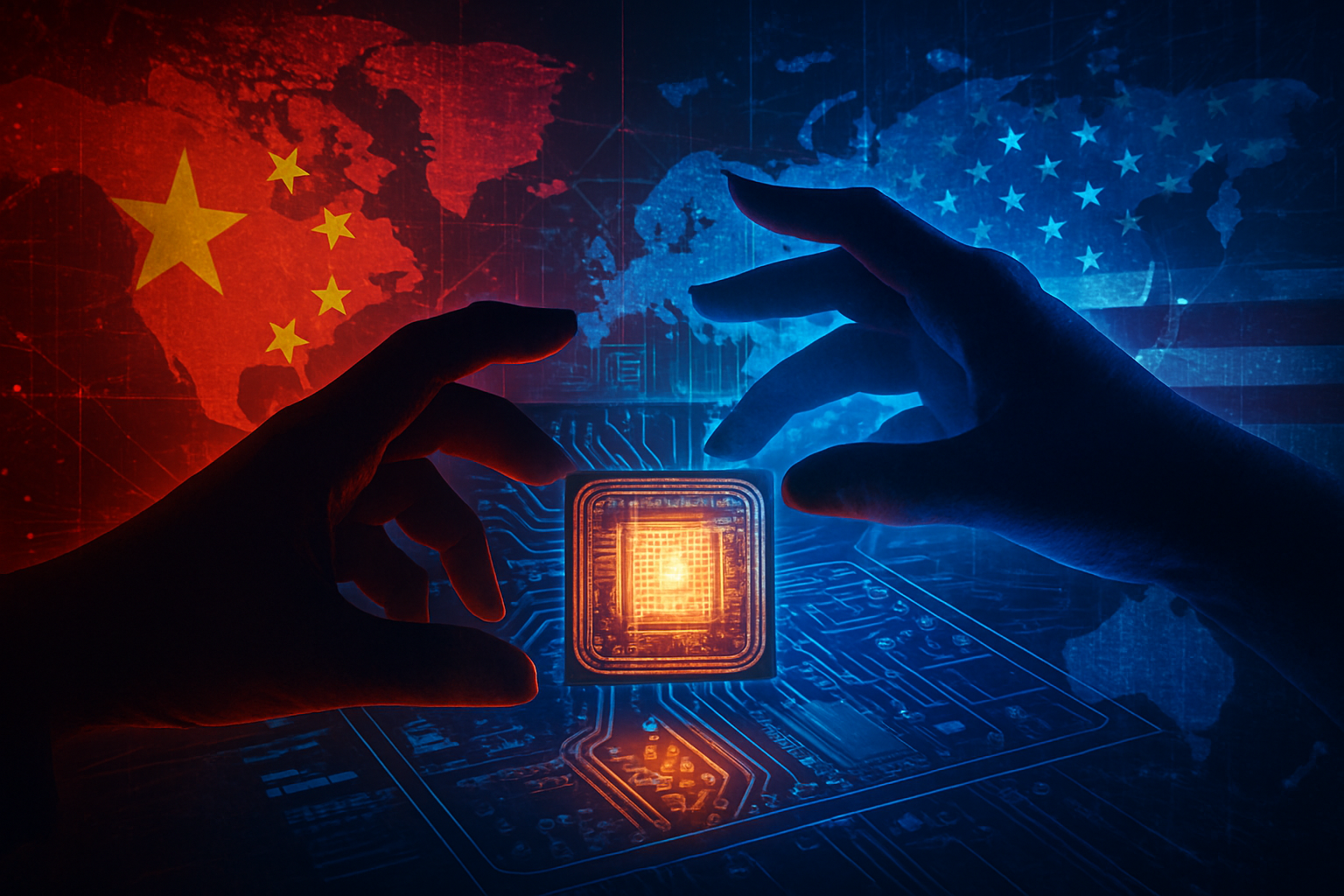
  • China’s Ambitious Five-Year Sprint: A Global Tech Powerhouse in the Making

    China’s Ambitious Five-Year Sprint: A Global Tech Powerhouse in the Making

    As the world hurtles towards an increasingly AI-driven future, China is in the final year of its comprehensive 14th Five-Year Plan (2021-2025), a strategic blueprint designed to catapult the nation into global leadership in artificial intelligence and semiconductor technology. This ambitious initiative, building upon the foundations of the earlier "Made in China 2025" program, represents a monumental state-backed effort to achieve technological self-reliance and reshape the global tech landscape. With the current date of October 6, 2025, the outcomes of this critical period are under intense scrutiny, as China seeks to cement its position as a formidable competitor to established tech giants.

    The plan's immediate significance lies in its direct challenge to the existing technological order, particularly in areas where Western nations, especially the United States, have historically held dominance. By pouring vast resources into domestic research, development, and manufacturing of advanced chips and AI capabilities, Beijing aims to mitigate its vulnerability to international supply chain disruptions and export controls. The strategic push is not merely about economic growth but is deeply intertwined with national security and geopolitical influence, signaling a new era of technological competition that will have profound implications for industries worldwide.

    Forging a New Silicon Frontier: Technical Specifications and Strategic Shifts

    China's 14th Five-Year Plan outlines an aggressive roadmap for technical advancement in both AI and semiconductors, emphasizing indigenous innovation and the development of a robust domestic ecosystem. At its core, the plan targets significant breakthroughs in integrated circuit design tools, crucial semiconductor equipment and materials—including high-purity targets, insulated gate bipolar transistors (IGBT), and micro-electromechanical systems (MEMS)—as well as advanced memory technology and wide-gap semiconductors like silicon carbide and gallium nitride. The focus extends to high-end chips and neurochips, deemed essential for powering the nation's burgeoning digital economy and AI applications.

    This strategic direction marks a departure from previous reliance on foreign technology, prioritizing a "whole-of-nation" approach to cultivate a complete domestic supply chain. Unlike earlier efforts that often involved technology transfer or joint ventures, the current plan underscores independent R&D, aiming to develop proprietary intellectual property and manufacturing processes. For instance, companies like Huawei Technologies Co. Ltd. (SHE: 002502) are reportedly planning to mass-produce advanced AI chips such as the Ascend 910D in early 2025, directly challenging offerings from NVIDIA Corporation (NASDAQ: NVDA). Similarly, Alibaba Group Holding Ltd. (NYSE: BABA) has made strides in developing its own AI-focused chips, signaling a broader industry-wide commitment to indigenous solutions.

    Initial reactions from the global AI research community and industry experts have been mixed but largely acknowledging of China's formidable progress. While China has demonstrated significant capabilities in mature-node semiconductor manufacturing and certain AI applications, the consensus suggests that achieving complete parity with leading-edge US technology, especially in areas like high-bandwidth memory, advanced chip packaging, sophisticated manufacturing tools, and comprehensive software ecosystems, remains a significant challenge. However, the sheer scale of investment and the coordinated national effort are undeniable, leading many to predict that China will continue to narrow the gap in critical technological domains over the next five to ten years.

    Reshaping the Global Tech Arena: Implications for Companies and Competitive Dynamics

    China's aggressive pursuit of AI and semiconductor self-sufficiency under the 14th Five-Year Plan carries significant competitive implications for both domestic and international tech companies. Domestically, Chinese firms are poised to be the primary beneficiaries, receiving substantial state support, subsidies, and preferential policies. Companies like Semiconductor Manufacturing International Corporation (SMIC) (HKG: 00981), Hua Hong Semiconductor Ltd. (HKG: 1347), and Yangtze Memory Technologies Co. (YMTC) are at the forefront of the semiconductor drive, aiming to scale up production and reduce reliance on foreign foundries and memory suppliers. In the AI space, giants such as Baidu Inc. (NASDAQ: BIDU), Tencent Holdings Ltd. (HKG: 0700), and Alibaba are leveraging their vast data resources and research capabilities to develop cutting-edge AI models and applications, often powered by domestically produced chips.

    For major international AI labs and tech companies, particularly those based in the United States, the plan presents a complex challenge. While China remains a massive market for technology products, the increasing emphasis on indigenous solutions could lead to market share erosion for foreign suppliers of chips, AI software, and related equipment. Export controls imposed by the US and its allies further complicate the landscape, forcing non-Chinese companies to navigate a bifurcated market. Companies like NVIDIA, Intel Corporation (NASDAQ: INTC), and Advanced Micro Devices, Inc. (NASDAQ: AMD), which have traditionally supplied high-performance AI accelerators and processors to China, face the prospect of a rapidly developing domestic alternative.

    The potential disruption to existing products and services is substantial. As China fosters its own robust ecosystem of hardware and software, foreign companies may find it increasingly difficult to compete on price, access, or even technological fit within the Chinese market. This could lead to a re-evaluation of global supply chains and a push for greater regionalization of technology development. Market positioning and strategic advantages will increasingly hinge on a company's ability to innovate rapidly, adapt to evolving geopolitical dynamics, and potentially form new partnerships that align with China's long-term technological goals. The plan also encourages Chinese startups in niche AI and semiconductor areas, fostering a vibrant domestic innovation scene that could challenge established players globally.

    A New Era of Tech Geopolitics: Wider Significance and Global Ramifications

    China's 14th Five-Year Plan for AI and semiconductors fits squarely within a broader global trend of technological nationalism and strategic competition. It underscores the growing recognition among major powers that leadership in AI and advanced chip manufacturing is not merely an economic advantage but a critical determinant of national security, economic prosperity, and geopolitical influence. The plan's aggressive targets and state-backed investments are a direct response to, and simultaneously an accelerator of, the ongoing tech decoupling between the US and China.

    The impacts extend far beyond the tech industry. Success in these areas could grant China significant leverage in international relations, allowing it to dictate terms in emerging technological standards and potentially export its AI governance models. Conversely, failure to meet key objectives could expose vulnerabilities and limit its global ambitions. Potential concerns include the risk of a fragmented global technology landscape, where incompatible standards and restricted trade flows hinder innovation and economic growth. There are also ethical considerations surrounding the widespread deployment of AI, particularly in a state-controlled environment, which raises questions about data privacy, surveillance, and algorithmic bias.

    Comparing this initiative to previous AI milestones, such as the development of deep learning or the rise of large language models, China's plan represents a different kind of breakthrough—a systemic, state-driven effort to achieve technological sovereignty rather than a singular scientific discovery. It echoes historical moments of national industrial policy, such as Japan's post-war economic resurgence or the US Apollo program, but with the added complexity of a globally interconnected and highly competitive tech environment. The sheer scale and ambition of this coordinated national endeavor distinguish it as a pivotal moment in the history of artificial intelligence and semiconductor development, setting the stage for a prolonged period of intense technological rivalry and collaboration.

    The Road Ahead: Anticipating Future Developments and Expert Predictions

    Looking ahead, the successful execution of China's 14th Five-Year Plan will undoubtedly pave the way for a new phase of technological development, with significant near-term and long-term implications. In the immediate future, experts predict a continued surge in domestic chip production, particularly in mature nodes, as China aims to meet its self-sufficiency targets. This will likely be accompanied by accelerated advancements in AI model development and deployment across various sectors, from smart cities to autonomous vehicles and advanced manufacturing. We can expect to see more sophisticated Chinese-designed AI accelerators and a growing ecosystem of domestic software and hardware solutions.

    Potential applications and use cases on the horizon are vast. In AI, breakthroughs in natural language processing, computer vision, and robotics, powered by increasingly capable domestic hardware, could lead to innovative applications in healthcare, education, and public services. In semiconductors, the focus on wide-gap materials like silicon carbide and gallium nitride could revolutionize power electronics and 5G infrastructure, offering greater efficiency and performance. Furthermore, the push for indigenous integrated circuit design tools could foster a new generation of chip architects and designers within China.

    However, significant challenges remain. Achieving parity in leading-edge semiconductor manufacturing, particularly in extreme ultraviolet (EUV) lithography and advanced packaging, requires overcoming immense technological hurdles and navigating a complex web of international export controls. Developing a comprehensive software ecosystem that can rival the breadth and depth of Western offerings is another formidable task. Experts predict that while China will continue to make impressive strides, closing the most advanced technological gaps may take another five to ten years, underscoring the long-term nature of this strategic endeavor. The ongoing geopolitical tensions and the potential for further restrictions on technology transfer will also continue to shape the trajectory of these developments.

    A Defining Moment: Assessing Significance and Future Watchpoints

    China's 14th Five-Year Plan for AI and semiconductor competitiveness stands as a defining moment in the nation's technological journey and a pivotal chapter in the global tech narrative. It represents an unprecedented, centrally planned effort to achieve technological sovereignty in two of the most critical fields of the 21st century. The plan's ambitious goals and the substantial resources allocated reflect a clear understanding that leadership in AI and chips is synonymous with future economic power and geopolitical influence.

    The key takeaways from this five-year sprint are clear: China is deeply committed to building a self-reliant and globally competitive tech industry. While challenges persist, particularly in the most advanced segments of semiconductor manufacturing, the progress made in mature nodes, AI development, and ecosystem building is undeniable. This initiative is not merely an economic policy; it is a strategic imperative that will reshape global supply chains, intensify technological competition, and redefine international power dynamics.

    In the coming weeks and months, observers will be closely watching for the final assessments of the 14th Five-Year Plan's outcomes and the unveiling of the subsequent 15th Five-Year Plan, which is anticipated to launch in 2026. The new plan will likely build upon the current strategies, potentially adjusting targets and approaches based on lessons learned and evolving geopolitical realities. The world will be scrutinizing further advancements in domestic chip production, the emergence of new AI applications, and how China navigates the complex interplay of innovation, trade restrictions, and international collaboration in its relentless pursuit of technological leadership.

    This content is intended for informational purposes only and represents analysis of current AI developments.

    TokenRing AI delivers enterprise-grade solutions for multi-agent AI workflow orchestration, AI-powered development tools, and seamless remote collaboration platforms.
    For more information, visit https://www.tokenring.ai/.
  • China’s Semiconductor Quest: A Race for Self-Sufficiency

    China’s Semiconductor Quest: A Race for Self-Sufficiency

    In a bold and ambitious push for technological autonomy, China is fundamentally reshaping the global semiconductor landscape. Driven by national security imperatives, aggressive industrial policies, and escalating geopolitical tensions, particularly with the United States, Beijing's pursuit of self-sufficiency in its domestic semiconductor industry is yielding significant, albeit uneven, progress. As of October 2025, these concerted efforts have seen China make substantial strides in mature and moderately advanced chip technologies, even as the ultimate goal of complete reliance in cutting-edge nodes remains a formidable challenge. The implications of this quest extend far beyond national borders, influencing global supply chains, intensifying technological competition, and fostering a new era of innovation under pressure.

    Ingenuity Under Pressure: China's Technical Strides in Chipmaking

    China's semiconductor industry has demonstrated remarkable ingenuity in circumventing international restrictions, particularly those imposed by the U.S. on advanced lithography equipment. At the forefront of this effort is Semiconductor Manufacturing International Corporation (SMIC) (SSE: 688981, HKG: 0981), China's largest foundry. SMIC has reportedly achieved 7-nanometer (N+2) process technology and is even trialing 5-nanometer-class chips, both accomplished using existing Deep Ultraviolet (DUV) lithography equipment. This is a critical breakthrough, as global leaders like Taiwan Semiconductor Manufacturing Company (TSMC) (NYSE: TSM) and Samsung Electronics (KRX: 005930) rely on advanced Extreme Ultraviolet (EUV) lithography for these nodes. SMIC's approach involves sophisticated multi-patterning techniques like Self-Aligned Quadruple Patterning (SAQP), and potentially even Self-Aligned Octuple Patterning (SAOP), to replicate ultra-fine patterns, a testament to innovation under constraint. While DUV-based chips may incur higher costs and potentially lower yields compared to EUV, they are proving "good enough" for many modern AI and 5G workloads.

    Beyond foundational manufacturing, Huawei Technologies, through its HiSilicon division, has emerged as a formidable player in AI accelerators. The company's Ascend series, notably the Ascend 910C, is a flagship chip, with Huawei planning to double its production to around 600,000 units in 2025 and aiming for 1.6 million dies across its Ascend line by 2026. Huawei has an ambitious roadmap, including the Ascend 950DT (late 2026), 960 (late 2027), and 970 (late 2028), with a goal of doubling computing power annually. Their strategy involves creating "supernode + cluster" computing solutions, such as the Atlas 900 A3 SuperPoD, to deliver world-class computing power even with chips manufactured on less advanced nodes. Huawei is also building its own AI computing framework, MindSpore, as an open-source alternative to Nvidia's (NASDAQ: NVDA) CUDA.

    In the crucial realm of memory, ChangXin Memory Technologies (CXMT) is making significant strides in LPDDR5 production and is actively developing High-Bandwidth Memory (HBM), essential for AI and high-performance computing. Reports from late 2024 indicated CXMT had begun mass production of HBM2, and the company is reportedly building HBM production lines in Beijing and Hefei, with aims to produce HBM3 in 2026 and HBM3E in 2027. While currently a few generations behind market leaders like SK Hynix (KRX: 000660) and Samsung, CXMT's rapid development is narrowing the gap, providing a much-needed domestic source for Chinese AI companies facing supply constraints.

    The push for self-sufficiency extends to the entire supply chain, with significant investment in semiconductor equipment and materials. Companies like Advanced Micro-Fabrication Equipment Inc. (AMEC) (SSE: 688012), NAURA Technology Group (SHE: 002371), and ACM Research (NASDAQ: ACMR) are experiencing strong growth. By 2024, China's semiconductor equipment self-sufficiency rate reached 13.6%, with notable progress in etching, Chemical Vapor Deposition (CVD), Physical Vapor Deposition (PVD), and packaging equipment. There are also reports of China testing a domestically developed DUV immersion lithography machine, with the goal of achieving 5nm or 7nm capabilities, though this technology is still in its nascent stages.

    A Shifting Landscape: Impact on AI Companies and Tech Giants

    China's semiconductor advancements are profoundly impacting both domestic and international AI companies, tech giants, and startups, creating a rapidly bifurcating technological environment. Chinese domestic AI companies are the primary beneficiaries, experiencing a surge in demand and preferential government procurement policies. Tech giants like Tencent Holdings Ltd. (HKG: 0700) and Alibaba Group Holding Ltd. (NYSE: BABA) are actively integrating local chips into their AI frameworks, with Tencent committing to domestic processors for its cloud computing services. Baidu Inc. (NASDAQ: BIDU) is also utilizing in-house developed chips to train some of its AI models.

    Huawei's HiSilicon is poised to dominate the domestic AI accelerator market, offering powerful alternatives to Nvidia's GPUs. Its CloudMatrix system is gaining traction as a high-performance alternative to Nvidia systems. Other beneficiaries include Cambricon Technology (SSE: 688256), which reported a record surge in profit in the first half of 2025, and a host of AI startups like DeepSeek, Moore Threads, MetaX, Biren Technology, Enflame, and Hygon, which are accelerating IPO plans to capitalize on domestic demand for alternatives. These firms are forming alliances to build a robust domestic AI supply chain.

    For international AI companies, particularly U.S. tech giants, the landscape is one of increased competition, market fragmentation, and geopolitical maneuvering. Nvidia (NASDAQ: NVDA), long the dominant player in AI accelerators, faces significant challenges. Huawei's rapid production of AI chips, coupled with government support and competitive pricing, poses a serious threat to Nvidia's market share in China. U.S. export controls have severely impacted Nvidia's ability to sell its most advanced AI chips to China, forcing it and Advanced Micro Devices (AMD) (NASDAQ: AMD) to offer modified, less powerful chips. In August 2025, reports indicated that Nvidia and AMD agreed to pay 15% of their China AI chip sales revenue to the U.S. government for export licenses for these modified chips (e.g., Nvidia's H20 and AMD's MI308), a move to retain a foothold in the market. However, Chinese officials have urged domestic firms not to procure Nvidia's H20 chips due to security concerns, further complicating market access.

    The shift towards domestic chips is also fostering the development of entirely Chinese AI technology stacks, from hardware to software frameworks like Huawei's MindSpore and Baidu's PaddlePaddle, potentially disrupting the dominance of existing ecosystems like Nvidia's CUDA. This bifurcation is creating a "two-track AI world," where Nvidia dominates one track with cutting-edge GPUs and a global ecosystem, while Huawei builds a parallel infrastructure emphasizing independence and resilience. The massive investment in China's chip sector is also creating an oversupply in mature nodes, leading to potential price wars that could challenge the profitability of foundries worldwide.

    A New Era: Wider Significance and Geopolitical Shifts

    The wider significance of China's semiconductor self-sufficiency drive is profound, marking a pivotal moment in AI history and fundamentally reshaping global technological and geopolitical landscapes. This push is deeply integrated with China's ambition for leadership in Artificial Intelligence, viewing indigenous chip capabilities as critical for national security, economic growth, and overall competitiveness. It aligns with a broader global trend of technological nationalism, where major powers prioritize self-sufficiency in critical technologies, leading to a "decoupling" of the global technology ecosystem into distinct, potentially incompatible, supply chains.

    The U.S. export controls, while intended to slow China's progress, have arguably acted as a catalyst, accelerating domestic innovation and strengthening Beijing's resolve for self-reliance. The emergence of Chinese AI models like DeepSeek-R1 in early 2025, performing comparably to leading Western models despite hardware limitations, underscores this "innovation under pressure." This is less about a single "AI Sputnik moment" and more about the validation of a state-led development model under duress, fostering a resilient, increasingly self-sufficient Chinese AI ecosystem.

    The implications for international relations are significant. China's growing sophistication in its domestic AI software and semiconductor supply chain enhances its leverage in global discussions. The increased domestic capacity, especially in mature-node chips, is projected to lead to global oversupply and significant price pressures, potentially damaging the competitiveness of firms in other countries and raising concerns about China gaining control over strategically important segments of the semiconductor market. Furthermore, China's semiconductor self-sufficiency could lessen its reliance on Taiwan's critical semiconductor industry, potentially altering geopolitical calculations. There are also concerns that China's domestic chip industry could augment the military ambitions of countries like Russia, Iran, and North Korea.

    A major concern is the potential for oversupply, particularly in mature-node chips, as China aggressively expands its manufacturing capacity. This could lead to global price wars and disrupt market dynamics. Another critical concern is dual-use technology – innovations that can serve both civilian and military purposes. The close alignment of China's semiconductor and AI development with national security goals raises questions about the potential for these advancements to enhance military capabilities and surveillance, a primary driver behind U.S. export controls.

    The Road Ahead: Future Developments and Challenges

    Looking ahead, China's semiconductor journey is expected to feature continued aggressive investment and targeted development, though significant challenges persist. In the near-term (2025-2027), China will continue to expand its mature-node chip capacity, further contributing to a global oversupply and downward price pressure. SMIC's progress in 7nm and 5nm-class DUV production will be closely watched for yield improvements and effective capacity scaling. The development of fully indigenous semiconductor equipment and materials will accelerate, with domestic companies aiming to increase the localization rate of photoresists from 20% in 2024 to 50% by 2027-2030. Huawei's aggressive roadmap for its Ascend AI chips, including the Atlas 950 SuperCluster by Q4 2025 and the Atlas 960 SuperCluster by Q4 2027, will be crucial in its bid to offset individual chip performance gaps through cluster computing and in-house HBM development. The Ministry of Industry and Information Technology (MIIT) is also pushing for automakers to achieve 100% self-developed chips by 2027, a significant target for the automotive sector.

    Long-term (beyond 2027), experts predict a permanently regionalized and fragmented global semiconductor supply chain, with "techno-nationalism" remaining a guiding principle. China will likely continue heavy investment in novel chip architectures, advanced packaging, and alternative computing paradigms to circumvent existing technological bottlenecks. While highly challenging, there will be ongoing efforts to develop indigenous EUV technology, with some experts predicting significant success in commercial production of more advanced systems with some form of EUV technology ecosystem between 2027 and 2030.

    Potential applications and use cases are vast, including widespread deployment of fully Chinese-made AI systems in critical infrastructure, autonomous vehicles, and advanced manufacturing. The increase in mid- to low-tech logic chip capacity will enable self-sufficiency for autonomous vehicles and smart devices. New materials like Wide-Bandgap Semiconductors (Gallium Nitride, Silicon Carbide) are also being explored for advancements in 5G, electric vehicles, and radio frequency applications.

    However, significant challenges remain. The most formidable is the persistent gap in cutting-edge lithography, particularly EUV access, which is crucial for manufacturing chips below 5nm. While DUV-based alternatives show promise, scaling them to compete with EUV-driven processes from global leaders will be extremely difficult and costly. Yield rates and quality control for advanced nodes using DUV lithography present monumental tasks. China also faces a chronic and intensifying talent gap in its semiconductor industry, with a predicted shortfall of 200,000 to 250,000 specialists by 2025-2027. Furthermore, despite progress, a dependence on foreign components persists, as even Huawei's Ascend 910C processors contain advanced components from foreign chipmakers, highlighting a reliance on stockpiled hardware and the dominance of foreign suppliers in HBM production.

    Experts predict a continued decoupling and bifurcation of the global semiconductor industry. China is anticipated to achieve significant self-sufficiency in mature and moderately advanced nodes, but the race for the absolute leading edge will remain fiercely competitive. The insatiable demand for specialized AI chips will continue to be the primary market driver, making access to these components a critical aspect of national power. China's ability to innovate under sanctions has surprised many, leading to a consensus that while a significant gap in cutting-edge lithography persists, China is rapidly closing the gap in critical areas and building a resilient, albeit parallel, semiconductor supply chain.

    Conclusion: A Defining Moment in AI's Future

    China's semiconductor self-sufficiency drive stands as a defining moment in the history of artificial intelligence and global technological competition. It underscores a fundamental shift in the global tech landscape, moving away from a single, interdependent supply chain towards a more fragmented, bifurcated future. While China has not yet achieved its most ambitious targets, its progress, fueled by massive state investment and national resolve, is undeniable and impactful.

    The key takeaway is the remarkable resilience and ingenuity demonstrated by China's semiconductor industry in the face of stringent international restrictions. SMIC's advancements in 7nm and 5nm DUV technology, Huawei's aggressive roadmap for its Ascend AI chips, and CXMT's progress in HBM development are all testaments to this. These developments are not merely incremental; they represent a strategic pivot that is reshaping market dynamics, challenging established tech giants, and fostering the emergence of entirely new, parallel AI ecosystems.

    The long-term impact will be characterized by sustained technological competition, a permanently fragmented global supply chain, and the rise of domestic alternatives that erode the market share of foreign incumbents. China's investments in next-generation technologies like photonic chips and novel architectures could also lead to breakthroughs that redefine the limits of computing, particularly in AI. The strategic deployment of economic statecraft, including import controls and antitrust enforcement, will likely become a more prominent feature of international tech relations.

    In the coming weeks and months, observers should closely watch SMIC's yield rates and effective capacity for its advanced node production, as well as any further updates on its 3nm development. Huawei's continued execution of its aggressive Ascend AI chip roadmap, particularly the rollout of the Ascend 950 family in Q1 2026, will be crucial. Further acceleration in the development of indigenous semiconductor equipment and materials, coupled with any new geopolitical developments or retaliatory actions, will significantly shape the market. The progress of Chinese automakers towards 100% self-developed chips by 2027 will also be a key indicator of broader industrial self-reliance. This evolving narrative of technological rivalry and innovation will undoubtedly continue to define the future of AI.


    This content is intended for informational purposes only and represents analysis of current AI developments.

    TokenRing AI delivers enterprise-grade solutions for multi-agent AI workflow orchestration, AI-powered development tools, and seamless remote collaboration platforms. For more information, visit https://www.tokenring.ai/.

  • China’s Silicon Ascent: A Geopolitical Earthquake in Global Chipmaking

    China’s Silicon Ascent: A Geopolitical Earthquake in Global Chipmaking

    China is aggressively accelerating its drive for domestic chip self-sufficiency, a strategic imperative that is profoundly reshaping the global semiconductor industry and intensifying geopolitical tensions. Bolstered by massive state investment and an unwavering national resolve, the nation has achieved significant milestones, particularly in advanced manufacturing processes and AI chip development, fundamentally challenging the established hierarchy of global chip production. This technological push, fueled by a desire for "silicon sovereignty" and a response to escalating international restrictions, marks a pivotal moment in the race for technological dominance.

    The immediate significance of China's progress cannot be overstated. By achieving breakthroughs in areas like 7-nanometer (N+2) process technology using Deep Ultraviolet (DUV) lithography and rapidly expanding its capacity in mature nodes, China is not only reducing its reliance on foreign suppliers but also positioning itself as a formidable competitor. This trajectory is creating a more fragmented global supply chain, prompting a re-evaluation of strategies by international tech giants and fostering a bifurcated technological landscape that will have lasting implications for innovation, trade, and national security.

    Unpacking China's Technical Strides and Industry Reactions

    China's semiconductor industry, spearheaded by entities like Semiconductor Manufacturing International Corporation (SMIC) (SSE: 688981, HKEX: 00981) and Huawei's HiSilicon division, has demonstrated remarkable technical progress, particularly in circumventing advanced lithography export controls. SMIC has successfully moved into 7-nanometer (N+2) process technology, reportedly achieving this feat using existing DUV equipment, a significant accomplishment given the restrictions on advanced Extreme Ultraviolet (EUV) technology. By early 2025, reports indicate SMIC is even trialing 5-nanometer-class chips with DUV and rapidly expanding its advanced node capacity. While still behind global leaders like Taiwan Semiconductor Manufacturing Company (TSMC) (NYSE: TSM) and Samsung (KRX: 005930), who are progressing towards 3nm and 2nm with EUV, China's ability to achieve 7nm with DUV represents a crucial leap, showcasing ingenuity in process optimization.

    Beyond manufacturing, China's chip design capabilities are also flourishing. Huawei (SHE: 002502) continues to innovate with its Kirin series, introducing the Kirin 9010 chip in 2024 with improved CPU performance, following the surprising debut of the 7nm Kirin 9000s in 2023. More critically for the AI era, Huawei is a frontrunner in AI accelerators with its Ascend series, announcing a three-year roadmap in September 2025 to double computing power annually and integrate its own high-bandwidth memory (HBM) chips. Other domestic players like Alibaba's (NYSE: BABA) T-Head and Baidu's (NASDAQ: BIDU) Kunlun Chip are also deploying and securing significant procurement deals for their AI accelerators in data centers.

    The advancements extend to memory chips, with ChangXin Memory Technologies (CXMT) making headway in LPDDR5 production and pioneering HBM development, a critical component for AI and high-performance computing. Concurrently, China is heavily investing in its semiconductor equipment and materials sector. Companies such as Advanced Micro-Fabrication Equipment Inc. (AMEC) (SSE: 688012), NAURA Technology Group (SHE: 002371), and ACM Research (NASDAQ: ACMR) are experiencing strong growth. By 2024, China's semiconductor equipment self-sufficiency rate reached 13.6%, with progress in etching, CVD, PVD, and packaging equipment. The country is even testing a domestically developed DUV immersion lithography machine, aiming for eventual 5nm or 7nm capabilities, though this remains an unproven technology from a nascent startup and requires significant maturation.

    Initial reactions from the global AI research community and industry experts are mixed but generally acknowledge the seriousness of China's progress. While some express skepticism about the long-term scalability and competitiveness of DUV-based advanced nodes against EUV, the sheer speed and investment behind these developments are undeniable. The ability of Chinese firms to iterate and improve under sanctions has surprised many, leading to a consensus that while a significant gap in cutting-edge lithography persists, China is rapidly closing the gap in critical areas and building a resilient, albeit parallel, semiconductor supply chain. This push is seen as a direct consequence of export controls, inadvertently accelerating China's indigenous capabilities and fostering a "de-Nvidiaization" trend within its AI chip market.

    Reshaping the AI and Tech Landscape

    China's rapid advancements in domestic chip technology are poised to significantly alter the competitive dynamics for AI companies, tech giants, and startups worldwide. Domestic Chinese companies are the primary beneficiaries, experiencing a surge in demand and preferential procurement policies. Huawei's HiSilicon, for instance, is regaining significant market share in smartphone chips and is set to dominate the domestic AI accelerator market with its Ascend series. Other local AI chip developers like Alibaba's T-Head and Baidu's Kunlun Chip are also seeing increased adoption within China's vast data center infrastructure, directly displacing foreign alternatives.

    For major international AI labs and tech companies, particularly those heavily reliant on the Chinese market, the implications are complex and challenging. Companies like Nvidia (NASDAQ: NVDA) and Advanced Micro Devices (AMD) (NASDAQ: AMD), historically dominant in AI accelerators, are facing growing uncertainty. They are being compelled to adapt their strategies by offering modified, less powerful chips for the Chinese market to comply with export controls. This not only limits their revenue potential but also creates a fragmented product strategy. The "de-Nvidiaization" trend is projected to see domestic AI chip brands capture 54% of China's AI chip market by 2025, a significant competitive shift.

    The potential disruption to existing products and services is substantial. As China pushes for "silicon sovereignty," directives from Beijing, such as replacing chips from AMD and Intel (NASDAQ: INTC) with local alternatives in telecoms by 2027 and prohibiting US-made CPUs in government PCs and servers, signal a systemic shift. This will force foreign hardware and software providers to either localize their offerings significantly or risk being shut out of a massive market. For startups, particularly those in the AI hardware space, China's domestic focus could mean reduced access to a crucial market, but also potential opportunities for collaboration with Chinese firms seeking advanced components for their localized ecosystems.

    Market positioning and strategic advantages are increasingly defined by geopolitical alignment and supply chain resilience. Companies with diversified manufacturing footprints and R&D capabilities outside of China may gain an advantage in non-Chinese markets. Conversely, Chinese companies, backed by substantial state investment and a protected domestic market, are rapidly building scale and expertise, potentially becoming formidable global competitors in the long run, particularly in areas like AI-specific hardware and mature node production. The surge in China's mature-node chip capacity is expected to create an oversupply, putting downward pressure on prices globally and challenging the competitiveness of other semiconductor industries.

    Broader Implications and Global AI Landscape Shifts

    China's relentless pursuit of domestic chip technology is more than just an industrial policy; it's a profound geopolitical maneuver that is reshaping the broader AI landscape and global technological trends. This drive fits squarely into a global trend of technological nationalism, where major powers are prioritizing self-sufficiency in critical technologies to secure national interests and economic competitiveness. It signifies a move towards a more bifurcated global technology ecosystem, where two distinct supply chains – one centered around China and another around the U.S. and its allies – could emerge, each with its own standards, suppliers, and technological trajectories.

    The impacts are far-reaching. Economically, the massive investment in China's chip sector, evidenced by a staggering $25 billion spent on chipmaking equipment in the first half of 2024, is creating an oversupply in mature nodes, potentially leading to price wars and challenging the profitability of foundries worldwide. Geopolitically, China's growing sophistication in its domestic AI software and semiconductor supply chain enhances Beijing's leverage in international discussions, potentially leading to more assertive actions in trade and technology policy. This creates a complex environment for international relations, where technological dependencies are being weaponized.

    Potential concerns include the risk of technological fragmentation hindering global innovation, as different ecosystems may develop incompatible standards or proprietary technologies. There are also concerns about the economic viability of parallel supply chains, which could lead to inefficiencies and higher costs for consumers in the long run. Comparisons to previous AI milestones reveal that while breakthroughs like the development of large language models were primarily driven by open collaboration and global research, the current era of semiconductor development is increasingly characterized by strategic competition and national security interests, marking a significant departure from previous norms.

    This shift also highlights the critical importance of foundational hardware for AI. The ability to design and manufacture advanced AI chips, including specialized accelerators and high-bandwidth memory, is now seen as a cornerstone of national power. China's focused investment in these areas underscores a recognition that software advancements in AI are ultimately constrained by underlying hardware capabilities. The struggle for "silicon sovereignty" is, therefore, a struggle for future AI leadership.

    The Road Ahead: Future Developments and Expert Predictions

    The coming years are expected to witness further intensification of China's domestic chip development efforts, alongside evolving global responses. In the near-term, expect continued expansion of mature node capacity within China, potentially leading to an even greater global oversupply and competitive pressures. The focus on developing fully indigenous semiconductor equipment, including advanced DUV lithography alternatives and materials, will also accelerate, although the maturation of these complex technologies will take time. Huawei's aggressive roadmap for its Ascend AI chips and HBM integration suggests a significant push towards dominating the domestic AI hardware market.

    Long-term developments will likely see China continue to invest heavily in next-generation technologies, potentially exploring novel chip architectures, advanced packaging, and alternative computing paradigms to circumvent current technological bottlenecks. The goal of 100% self-developed chips for automobiles by 2027, for instance, signals a deep commitment to localization across critical industries. Potential applications and use cases on the horizon include the widespread deployment of fully Chinese-made AI systems in critical infrastructure, autonomous vehicles, and advanced manufacturing, further solidifying the nation's technological independence.

    However, significant challenges remain. The most formidable is the persistent gap in cutting-edge lithography, particularly EUV technology, which is crucial for manufacturing the most advanced chips (below 5nm). While China is exploring DUV-based alternatives, scaling these to compete with EUV-driven processes from TSMC and Samsung will be extremely difficult. Quality control, yield rates, and the sheer complexity of integrating a fully indigenous supply chain from design to fabrication are also monumental tasks. Furthermore, the global talent war for semiconductor engineers will intensify, with China needing to attract and retain top talent to sustain its momentum.

    Experts predict a continued "decoupling" or "bifurcation" of the global semiconductor industry, with distinct supply chains emerging. This could lead to a more resilient, albeit less efficient, global system. Many anticipate that China will achieve significant self-sufficiency in mature and moderately advanced nodes, but the race for the absolute leading edge will remain fiercely competitive and largely dependent on access to advanced lithography. The next few years will be critical in determining the long-term shape of this new technological order, with continued tit-for-tat export controls and investment drives defining the landscape.

    A New Era in Semiconductor Geopolitics

    China's rapid progress in domestic chip technology marks a watershed moment in the history of the semiconductor industry and global AI development. The key takeaway is clear: China is committed to achieving "silicon sovereignty," and its substantial investments and strategic focus are yielding tangible results, particularly in advanced manufacturing processes like 7nm DUV and in the burgeoning field of AI accelerators. This shift is not merely an incremental improvement but a fundamental reordering of the global technology landscape, driven by geopolitical tensions and national security imperatives.

    The significance of this development in AI history is profound. It underscores the critical interdependency of hardware and software in the age of AI, demonstrating that leadership in AI is intrinsically linked to control over the underlying silicon. This era represents a departure from a globally integrated semiconductor supply chain towards a more fragmented, competitive, and strategically vital industry. The ability of Chinese companies to innovate under pressure, as exemplified by Huawei's Kirin and Ascend chips, highlights the resilience and determination within the nation's tech sector.

    Looking ahead, the long-term impact will likely include a more diversified global semiconductor manufacturing base, albeit one characterized by increased friction and potential inefficiencies. The economic and geopolitical ramifications will continue to unfold, affecting trade relationships, technological alliances, and the pace of global innovation. What to watch for in the coming weeks and months includes further announcements on domestic lithography advancements, the market penetration of Chinese AI accelerators, and the evolving strategies of international tech companies as they navigate this new, bifurcated reality. The race for technological supremacy in semiconductors is far from over, but China has undeniably asserted itself as a formidable and increasingly independent player.

    This content is intended for informational purposes only and represents analysis of current AI developments.

    TokenRing AI delivers enterprise-grade solutions for multi-agent AI workflow orchestration, AI-powered development tools, and seamless remote collaboration platforms.
    For more information, visit https://www.tokenring.ai/.

  • China’s AI Boom Ignites Stock Market Rally, Propelling Tech Giants Like Alibaba to New Heights

    China’s AI Boom Ignites Stock Market Rally, Propelling Tech Giants Like Alibaba to New Heights

    China's stock market is currently experiencing a powerful surge, largely fueled by an unprecedented wave of investor enthusiasm for Artificial Intelligence (AI). This AI-driven rally is reshaping the economic landscape, with leading Chinese tech companies, most notably Alibaba (NYSE: BABA), witnessing dramatic gains and signaling a profound shift in global AI investment dynamics. The immediate significance of this trend extends beyond mere market fluctuations, pointing towards a broader reinvigoration of the Chinese economy and a strategic repositioning of its technological prowess on the world stage.

    The rally reflects a growing conviction in China's indigenous AI capabilities, particularly in the realm of generative AI and large language models (LLMs). Both domestic and international investors are pouring capital into AI-related sectors, anticipating robust growth and enhanced business efficiency across various industries. While broader economic challenges persist, the market's laser focus on AI-driven innovation suggests a long-term bet on technology as a primary engine for future prosperity, drawing comparisons to transformative tech shifts of past decades.

    The Technical Underpinnings of China's AI Ascent

    The current AI stock market rally in China is rooted in significant advancements in the country's AI capabilities, particularly in the development and deployment of large language models (LLMs) and foundational AI infrastructure. These breakthroughs are not merely incremental improvements but represent a strategic leap that is enabling Chinese tech giants to compete more effectively on a global scale.

    A prime example of this advancement is the emergence of sophisticated LLMs like Alibaba's Qwen3-Max and DeepSeek. These models showcase advanced natural language understanding, generation, and reasoning capabilities, positioning them as direct competitors to Western counterparts. The technical specifications often involve billions of parameters, trained on vast datasets of Chinese and multilingual text, allowing for nuanced contextual comprehension and highly relevant outputs. This differs from previous approaches that often relied on adapting existing global models or developing more specialized, narrower AI applications. The current focus is on building general-purpose AI, capable of handling a wide array of tasks.

    Beyond LLMs, Chinese companies are also making significant strides in AI chip development and cloud computing infrastructure. Alibaba Cloud, for instance, has demonstrated consistent triple-digit growth in AI-related revenue, underscoring the robust demand for the underlying computational power and services necessary to run these advanced AI models. This vertical integration, from chip design to model deployment, provides a strategic advantage, allowing for optimized performance and greater control over the AI development pipeline. Initial reactions from the AI research community and industry experts have been largely positive, acknowledging the technical sophistication and rapid pace of innovation. While some express caution about the sustainability of the market's enthusiasm, there's a general consensus that China's AI ecosystem is maturing rapidly, producing genuinely competitive and innovative solutions.

    Corporate Beneficiaries and Competitive Realignment

    The AI-driven rally has created a clear hierarchy of beneficiaries within the Chinese tech landscape, fundamentally reshaping competitive dynamics and market positioning. Companies that have made early and substantial investments in AI research, development, and infrastructure are now reaping significant rewards, while others face the imperative to rapidly adapt or risk falling behind.

    Alibaba (NYSE: BABA) stands out as a primary beneficiary, with its stock experiencing a dramatic resurgence in 2025. This performance is largely attributed to its aggressive strategic pivot towards generative AI, particularly through its Alibaba Cloud division. The company's advancements in LLMs like Qwen3-Max, coupled with its robust cloud computing services and investments in AI chip development, have propelled its AI-related revenue to triple-digit growth for eight consecutive quarters. Alibaba's announcement to raise $3.17 billion for AI infrastructure investments and its partnerships, including one with Nvidia (NASDAQ: NVDA), underscore its commitment to solidifying its leadership in the AI space. This strategic foresight has provided a significant competitive advantage, enabling it to offer comprehensive AI solutions from foundational models to cloud-based deployment.

    Other major Chinese tech giants like Baidu (NASDAQ: BIDU) and Tencent Holdings (HKEX: 0700) are also significant players in this AI boom. Baidu, with its long-standing commitment to AI, has seen its American Depositary Receipts (ADRs) increase by over 60% this year, driven by its in-house AI chip development and substantial AI expenditures. Tencent, a developer of large language models, is leveraging AI to enhance its vast ecosystem of social media, gaming, and enterprise services. The competitive implications are profound: these companies are not just adopting AI; they are building the foundational technologies that will power the next generation of digital services. This vertical integration and investment in core AI capabilities position them to disrupt existing products and services across various sectors, from e-commerce and logistics to entertainment and autonomous driving. Smaller startups and specialized AI firms are also benefiting, often through partnerships with these giants or by focusing on niche AI applications, but the sheer scale of investment from the tech behemoths creates a formidable competitive barrier.

    Broader Implications and Societal Impact

    The AI-driven stock market rally in China is more than just a financial phenomenon; it signifies a profound shift in the broader AI landscape and carries significant implications for global technological development and societal impact. This surge fits squarely into the global trend of accelerating AI adoption, but with distinct characteristics that reflect China's unique market and regulatory environment.

    One of the most significant impacts is the potential for AI to act as a powerful engine for economic growth and modernization within China. Goldman Sachs analysts project that widespread AI adoption could boost Chinese earnings per share (EPS) by 2.5% annually over the next decade and potentially increase the fair value of Chinese equity by 15-20%. This suggests that AI is seen not just as a technological advancement but as a critical tool for improving productivity, driving innovation across industries, and potentially offsetting some of the broader economic challenges the country faces. The scale of investment and development in AI, particularly in generative models, positions China as a formidable contender in the global AI race, challenging the dominance of Western tech giants.

    However, this rapid advancement also brings potential concerns. The intense competition and the rapid deployment of AI technologies raise questions about ethical AI development, data privacy, and the potential for job displacement. While the government has expressed intentions to regulate AI, the speed of innovation often outpaces regulatory frameworks, creating a complex environment. Furthermore, the geopolitical implications are significant. The U.S. export restrictions on advanced AI chips and technology aimed at China have paradoxically spurred greater domestic innovation and self-sufficiency in key areas like chip design and manufacturing. This dynamic could lead to a more bifurcated global AI ecosystem, with distinct technological stacks and supply chains emerging. Comparisons to previous AI milestones, such as the rise of deep learning, highlight the current moment as a similar inflection point, where foundational technologies are being developed that will underpin decades of future innovation, with China playing an increasingly central role.

    The Road Ahead: Future Developments and Expert Outlook

    The current AI boom in China sets the stage for a wave of anticipated near-term and long-term developments that promise to further transform industries and daily life. Experts predict a continuous acceleration in the sophistication and accessibility of AI technologies, with a strong focus on practical applications and commercialization.

    In the near term, we can expect to see further refinement and specialization of large language models. This includes the development of more efficient, smaller models that can run on edge devices, expanding AI capabilities beyond large data centers. There will also be a push towards multimodal AI, integrating text, image, audio, and video processing into single, more comprehensive models, enabling richer human-computer interaction and more versatile applications. Potential applications on the horizon include highly personalized educational tools, advanced medical diagnostics, autonomous logistics systems, and hyper-realistic content creation. Companies like Alibaba and Baidu will likely continue to integrate their advanced AI capabilities deeper into their core business offerings, from e-commerce recommendations and cloud services to autonomous driving solutions.

    Longer term, the focus will shift towards more generalized AI capabilities, potentially leading to breakthroughs in artificial general intelligence (AGI), though this remains a subject of intense debate and research. Challenges that need to be addressed include ensuring the ethical development and deployment of AI, mitigating biases in models, enhancing data security, and developing robust regulatory frameworks that can keep pace with technological advancements. The "irrational exuberance" some analysts warn about also highlights the need for sustainable business models and a clear return on investment for the massive capital being poured into AI. Experts predict that the competitive landscape will continue to intensify, with a greater emphasis on talent acquisition and the cultivation of a robust domestic AI ecosystem. The interplay between government policy, private sector innovation, and international collaboration (or lack thereof) will significantly shape what happens next in China's AI journey.

    A New Era for Chinese Tech: Assessing AI's Enduring Impact

    The current AI-driven stock market rally in China marks a pivotal moment, not just for the nation's tech sector but for the global artificial intelligence landscape. The key takeaway is clear: China is rapidly emerging as a formidable force in AI development, driven by significant investments, ambitious research, and the strategic deployment of advanced technologies like large language models and robust cloud infrastructure. This development signifies a profound shift in investor confidence and a strategic bet on AI as the primary engine for future economic growth and technological leadership.

    This period will likely be assessed as one of the most significant in AI history, akin to the internet boom or the rise of mobile computing. It underscores the global race for AI supremacy and highlights the increasing self-sufficiency of China's tech industry, particularly in the face of international trade restrictions. The impressive gains seen by companies like Alibaba (NYSE: BABA), Baidu (NASDAQ: BIDU), and Tencent Holdings (HKEX: 0700) are not just about market capitalization; they reflect a tangible progression in their AI capabilities and their potential to redefine various sectors.

    Looking ahead, the long-term impact of this AI surge will be multifaceted. It will undoubtedly accelerate digital transformation across Chinese industries, foster new business models, and potentially enhance national productivity. However, it also brings critical challenges related to ethical AI governance, data privacy, and the socio-economic implications of widespread automation. What to watch for in the coming weeks and months includes further announcements of AI product launches, new partnerships, and regulatory developments. The performance of these AI-centric stocks will also serve as a barometer for investor sentiment, indicating whether the current enthusiasm is a sustainable trend or merely a speculative bubble. Regardless, China's AI ascent is undeniable, and its implications will resonate globally for years to come.

    This content is intended for informational purposes only and represents analysis of current AI developments.

    TokenRing AI delivers enterprise-grade solutions for multi-agent AI workflow orchestration, AI-powered development tools, and seamless remote collaboration platforms.
    For more information, visit https://www.tokenring.ai/.

  • Nvidia’s Geopolitical Gauntlet: CEO Huang’s Frustration Mounts Amid Stalled UAE Chip Deal and China Tensions

    Nvidia’s Geopolitical Gauntlet: CEO Huang’s Frustration Mounts Amid Stalled UAE Chip Deal and China Tensions

    October 2, 2025 – Nvidia (NASDAQ: NVDA) CEO Jensen Huang is reportedly expressing growing frustration as a multi-billion dollar deal to supply advanced AI chips to the United Arab Emirates (UAE) remains stalled. The delay, attributed to national security concerns raised by the U.S. Commerce Secretary over alleged links between UAE entities and China, underscores the escalating geopolitical complexities entangling the global semiconductor industry. This high-stakes situation highlights how cutting-edge AI technology has become a central battleground in the broader U.S.-China rivalry, forcing companies like Nvidia to navigate a treacherous landscape where national security often trumps commercial aspirations.

    The stalled agreement, which envisioned the UAE securing hundreds of thousands of Nvidia's most advanced AI chips annually, was initially heralded as a significant step in the UAE's ambitious drive to become a global AI hub. However, as of October 2025, the deal faces significant headwinds, reflecting a U.S. government increasingly wary of technology diversion to strategic adversaries. This development not only impacts Nvidia's immediate revenue streams and global market expansion but also casts a long shadow over international AI collaborations, signaling a new era where technological partnerships are heavily scrutinized through a geopolitical lens.

    The Geopolitical Crucible: Advanced Chips, G42, and the Specter of China

    At the heart of the stalled Nvidia-UAE deal are the world's most advanced AI GPUs, specifically Nvidia's H100 and potentially the newer GB300 Grace Blackwell systems. The initial agreement, announced in May 2025, envisioned the UAE acquiring up to 500,000 H100 chips annually, with a substantial portion earmarked for the Abu Dhabi-based AI firm G42. These chips are the backbone of modern AI, essential for training massive language models and powering the high-stakes race for AI supremacy.

    The primary impediment, according to reports, stems from the U.S. Commerce Department's national security concerns regarding G42's historical and alleged ongoing links to Chinese tech ecosystems. U.S. officials fear that even with assurances, these cutting-edge American AI chips could be indirectly diverted to Chinese entities, thereby undermining U.S. efforts to restrict Beijing's access to advanced technology. G42, chaired by Sheikh Tahnoon bin Zayed Al Nahyan, the UAE's national security adviser, has previously invested in Chinese AI ventures, and its foundational technical infrastructure was reportedly developed with support from Chinese firms like Huawei. While G42 has reportedly taken steps to divest from Chinese partners and remove China-made hardware from its data centers, securing a $1.5 billion investment from Microsoft (NASDAQ: MSFT) and committing to Western hardware, the U.S. government's skepticism remains.

    The U.S. conditions for approval are stringent, including demands for robust security guarantees, the exclusion or strict oversight of G42 from direct chip access, and significant UAE investments in U.S.-based data centers. This situation is a microcosm of the broader U.S.-China chip war, where semiconductors are treated as strategic assets. The U.S. employs stringent export controls to restrict China's access to advanced chip technology, aiming to slow Beijing's progress in AI and military modernization. The U.S. Commerce Secretary, Howard Lutnick, has reportedly conditioned approval on the UAE finalizing its promised U.S. investments, emphasizing the interconnectedness of economic and national security interests.

    This intricate dance reflects a fundamental shift from a globalized semiconductor industry to one increasingly characterized by techno-nationalism and strategic fragmentation. The U.S. is curating a "tiered export regime," favoring strategic allies while scrutinizing others, especially those perceived as potential transshipment hubs for advanced AI chips to China. The delay also highlights the challenge for U.S. policymakers in balancing the desire to maintain technological leadership and national security with the need to foster international partnerships and allow U.S. companies like Nvidia to capitalize on burgeoning global AI markets.

    Ripple Effects: Nvidia, UAE, and the Global Tech Landscape

    The stalled Nvidia-UAE chip deal and the overarching U.S.-China tensions have profound implications for major AI companies, tech giants, and nascent startups worldwide. For Nvidia (NASDAQ: NVDA), the leading manufacturer of AI GPUs, the situation presents a significant challenge to its global expansion strategy. While demand for its chips remains robust outside China, the loss or delay of multi-billion dollar deals in rapidly growing markets like the Middle East impacts its international revenue streams and supply chain planning. CEO Jensen Huang's reported frustration underscores the delicate balance Nvidia must strike between maximizing commercial opportunities and complying with increasingly stringent U.S. national security directives. The company has already been compelled to develop less powerful, "export-compliant" versions of its chips for the Chinese market, diverting engineering resources and potentially hindering its technological lead.

    The UAE's ambitious AI development plans face substantial hurdles due to these delays. The nation aims for an AI-driven economic growth projected at $182 billion by 2035 and has invested heavily in building one of the world's largest AI data centers. Access to cutting-edge semiconductor chips is paramount for these initiatives, and the prolonged wait for Nvidia's technology directly threatens the UAE's immediate access to necessary hardware and its long-term competitiveness in the global AI race. This geopolitical constraint forces the UAE to either seek alternative, potentially less advanced, suppliers or further accelerate its own domestic AI capabilities, potentially straining its relationship with the U.S. while opening doors for competitors like China's Huawei.

    Beyond Nvidia and the UAE, the ripple effects extend across the entire chip and AI industry. Other major chip manufacturers like Advanced Micro Devices (NASDAQ: AMD) and Intel (NASDAQ: INTC) also face similar pressures, experiencing revenue impacts and market share erosion in China due to export controls and Beijing's push for domestic alternatives. This has spurred a focus on diversifying manufacturing footprints and strengthening partnerships within the U.S., leveraging initiatives like the CHIPS Act. For cloud providers, the "cloud loophole," where Chinese developers access advanced U.S. chips via cloud services, challenges the efficacy of current sanctions and could lead to more stringent regulations, affecting global innovation and data localization. AI startups, particularly those without established supply chain resilience, face increased costs and limited access to cutting-edge hardware, though some may find opportunities in developing alternative solutions or catering to regional "sovereign AI" initiatives. The competitive landscape is fundamentally reshaping, with U.S. companies facing market restrictions but also government support, while Chinese companies accelerate their drive for self-sufficiency, potentially establishing a parallel, independent tech ecosystem.

    A Bifurcated Future: AI's New Geopolitical Reality

    The stalled Nvidia-UAE deal is more than just a commercial dispute; it's a stark illustration of how AI and advanced chip technology have become central to national security and global power dynamics. This situation fits squarely into the broader trend of "techno-nationalism" and the accelerating "AI Cold War" between the U.S. and China, fundamentally reshaping the global AI landscape and pushing towards a bifurcated technological future. The U.S. strategy of restricting China's access to advanced computing and semiconductor manufacturing aims to curb its military modernization and AI ambitions, while China retaliates by pouring billions into domestic production and fostering its own AI ecosystems.

    This intense rivalry is severely impacting international AI collaboration. Hopes for a global consensus on AI governance are dimming as major AI companies from both countries are often absent from global forums on AI ethics. Instead, the world is witnessing divergent national AI strategies, with the U.S. adopting a more domestically focused approach and China pursuing centralized control over data and models while aggressively building indigenous capabilities. This fragmentation creates operational complexities for multinational firms, potentially stifling innovation that has historically thrived on global collaboration. The absence of genuine cooperation on critical AI safety issues is particularly concerning as the world approaches the development of artificial general intelligence (AGI).

    The race for AI supremacy is now inextricably linked to semiconductor dominance. The U.S. believes that controlling access to top-tier semiconductors, like Nvidia's GPUs, is key to maintaining its lead. However, this strategy has inadvertently galvanized China's efforts, pushing it to innovate new AI approaches, optimize software for existing hardware, and accelerate domestic research. Chinese companies are now building platforms optimized for their own hardware and software stacks, leading to divergent AI architectures. While U.S. controls may slow China's progress in certain areas, they also risk fostering a more resilient and independent Chinese tech industry in the long run.

    The potential for a bifurcated global AI ecosystem, often referred to as a "Silicon Curtain," means that nations and corporations are increasingly forced to align with either a U.S.-led or China-led technological bloc. This divide limits interoperability, increases costs for hardware and software development globally, and raises concerns about reduced interoperability, increased costs, and new supply chain vulnerabilities. This fragmentation is a significant departure from previous tech milestones that often emphasized global integration. Unlike the post-WWII nuclear revolution that led to deterrence-based camps and arms control treaties, or the digital revolution that brought global connectivity, the current AI race is creating a world of competing technological silos, where security and autonomy outweigh efficiency.

    The Road Ahead: Navigating a Fragmented Future

    The trajectory of U.S.-China chip tensions and their impact on AI development points towards a future defined by strategic rivalry and technological fragmentation. In the near term, expect continued tightening of U.S. export controls, albeit with nuanced adjustments, such as the August 2025 approval of Nvidia's H20 chip exports to China under a revenue-sharing arrangement. This reflects a recognition that total bans might inadvertently accelerate Chinese self-reliance. China, in turn, will likely intensify its "import controls" to foster domestic alternatives, as seen with reports in September 2025 of its antitrust regulator investigating Nvidia and urging domestic companies to halt purchases of China-tailored GPUs in favor of local options like Huawei's Ascend series.

    Long-term developments will likely see the entrenchment of two parallel AI systems, with nations prioritizing domestic technological self-sufficiency. The U.S. will continue its tiered export regime, intertwining AI chip access with national security and diplomatic influence, while China will further pursue its "dual circulation" strategy, significantly reducing reliance on foreign imports for semiconductors. This will accelerate the construction of new fabrication plants globally, with TSMC (NYSE: TSM) and Samsung (KRX: 005930) pushing towards 2nm and HBM4 advancements by late 2025, while China's SMIC progresses towards 7nm and even trial 5nm production.

    Potential applications on the horizon, enabled by a more resilient global chip supply, include more sophisticated autonomous systems, personalized medicine, advanced edge AI for real-time decision-making, and secure hardware for critical infrastructure and defense. However, significant challenges remain, including market distortion from massive government investments, a slowdown in global innovation due to fragmentation, the risk of escalation into broader conflicts, and persistent smuggling challenges. The semiconductor sector also faces a critical workforce shortage, estimated to reach 67,000 by 2030 in the U.S. alone.

    Experts predict a continued acceleration of efforts to diversify and localize semiconductor manufacturing, leading to a more regionalized supply chain. The Nvidia-UAE deal exemplifies how AI chip access has become a geopolitical issue, with the U.S. scrutinizing even allies. Despite the tensions, cautious collaborations on AI safety and governance might emerge, as evidenced by joint UN resolutions supported by both countries in 2024, suggesting a pragmatic necessity for cooperation on global challenges posed by AI. However, the underlying strategic competition will continue to shape the global AI landscape, forcing companies and nations to adapt to a new era of "sovereign tech."

    The New AI Order: A Concluding Assessment

    The stalled Nvidia-UAE chip deal serves as a potent microcosm of the profound geopolitical shifts occurring in the global AI landscape. It underscores that AI and advanced chip technology are no longer mere commercial commodities but critical instruments of national power, deeply intertwined with national security, economic competitiveness, and diplomatic influence. The reported frustration of Nvidia CEO Jensen Huang highlights the immense pressure faced by tech giants caught between the imperative to innovate and expand globally and the increasingly strict mandates of national governments.

    This development marks a significant turning point in AI history, signaling a definitive departure from an era of relatively open global collaboration to one dominated by techno-nationalism and strategic competition. The emergence of distinct technological ecosystems, driven by U.S. containment strategies and China's relentless pursuit of self-sufficiency, risks slowing collective global progress in AI and exacerbating technological inequalities. The concentration of advanced AI chip production in a few key players makes these entities central to global power dynamics, intensifying the "chip war" beyond mere trade disputes into a fundamental reordering of the global technological and geopolitical landscape.

    In the coming weeks and months, all eyes will be on the resolution of the Nvidia-UAE deal, as it will be a crucial indicator of the U.S.'s flexibility and priorities in balancing national security with economic interests and allied relationships. We must also closely monitor China's domestic chip advancements, particularly the performance and mass production capabilities of indigenous AI chips like Huawei's Ascend series, as well as any retaliatory measures from Beijing, including broader import controls or new antitrust investigations. How other key players like the EU, Japan, and South Korea navigate these tensions, balancing compliance with U.S. restrictions against their own independent technological strategies, will further define the contours of this new AI order. The geopolitical nature of AI is undeniable, and its implications will continue to reshape global trade, innovation, and international relations for decades to come.


    This content is intended for informational purposes only and represents analysis of current AI developments.

    TokenRing AI delivers enterprise-grade solutions for multi-agent AI workflow orchestration, AI-powered development tools, and seamless remote collaboration platforms. For more information, visit https://www.tokenring.ai/.

  • Silicon Shield Stands Firm: Taiwan Rejects U.S. Chip Sourcing Demand Amid Escalating Geopolitical Stakes

    Silicon Shield Stands Firm: Taiwan Rejects U.S. Chip Sourcing Demand Amid Escalating Geopolitical Stakes

    In a move that reverberated through global technology and diplomatic circles, Taiwan has unequivocally rejected the United States' proposed "50:50 chip sourcing plan," a strategy aimed at significantly rebalancing global semiconductor manufacturing. This decisive refusal, announced by Vice Premier Cheng Li-chiun following U.S. trade talks, underscores the deepening geopolitical fault lines impacting the vital semiconductor industry and highlights the diverging strategic interests between Washington and Taipei. The rejection immediately signals increased friction in U.S.-Taiwan relations and reinforces the continued concentration of advanced chip production in a region fraught with escalating tensions.

    The immediate significance of Taiwan's stance is profound. It underscores Taipei's unwavering commitment to its "silicon shield" defense strategy, where its indispensable role in the global technology supply chain, particularly through Taiwan Semiconductor Manufacturing Company (TSMC) (NYSE: TSM), serves as a critical economic leverage and a deterrent against potential aggression. For the U.S., the rejection represents a significant hurdle in its ambitious drive to onshore chip manufacturing and reduce its estimated 95% reliance on Taiwanese semiconductor supply, a dependence Washington increasingly views as an unacceptable national security risk.

    The Clash of Strategic Visions: U.S. Onshoring vs. Taiwan's Silicon Shield

    The U.S. 50:50 chip sourcing plan, championed by figures such as U.S. Commerce Secretary Howard Lutnick, envisioned a scenario where the United States and Taiwan would each produce half of the semiconductors required by the American economy. This initiative was part of a broader, multi-billion dollar U.S. strategy to bolster domestic chip production, potentially reaching 40% of global supply by 2028, necessitating investments exceeding $500 billion. Currently, the U.S. accounts for less than 10% of global chip manufacturing, while Taiwan, primarily through TSMC, commands over half of the world's chips and virtually all of the most advanced-node semiconductors crucial for cutting-edge technologies like artificial intelligence.

    Taiwan's rejection was swift and firm, with Vice Premier Cheng Li-chiun clarifying that the proposal was an "American idea" never formally discussed or agreed upon in negotiations. Taipei's rationale is multifaceted and deeply rooted in its economic sovereignty and national security imperatives. Central to this is the "silicon shield" concept: Taiwan views its semiconductor prowess as its most potent strategic asset, believing that its critical role in global tech supply chains discourages military action, particularly from mainland China, due to the catastrophic global economic consequences any conflict would unleash.

    Furthermore, Taiwanese politicians and scholars have lambasted the U.S. proposal as an "act of exploitation and plunder," arguing it would severely undermine Taiwan's economic sovereignty and national interests. Relinquishing a significant portion of its most valuable industry would, in their view, weaken this crucial "silicon shield" and diminish Taiwan's diplomatic and security bargaining power. Concerns also extend to the potential loss of up to 200,000 high-tech jobs and the erosion of Taiwan's hard-won technological leadership and sensitive know-how. Taipei is resolute in maintaining tight control over its advanced semiconductor technologies, refusing to fully transfer them abroad. This stance starkly contrasts with the U.S.'s push for supply chain diversification for risk management, highlighting a fundamental clash of strategic visions where Taiwan prioritizes national self-preservation through technological preeminence.

    Corporate Giants and AI Labs Grapple with Reinforced Status Quo

    Taiwan's firm rejection of the U.S. 50:50 chip sourcing plan carries substantial implications for the world's leading semiconductor companies, tech giants, and the burgeoning artificial intelligence sector. While the U.S. sought to diversify its supply chain, Taiwan's decision effectively reinforces the current global semiconductor landscape, maintaining the island nation's unparalleled dominance in advanced chip manufacturing.

    At the epicenter of this decision is Taiwan Semiconductor Manufacturing Company (TSMC) (NYSE: TSM). As the world's largest contract chipmaker, responsible for over 90% of the most advanced semiconductors and a significant portion of AI chips, TSMC's market leadership is solidified. The company will largely maintain its leading position in advanced chip manufacturing within Taiwan, preserving its technological superiority and the efficiency of its established domestic ecosystem. While TSMC continues its substantial $165 billion investment in new fabs in Arizona, the vast majority of its cutting-edge production capacity and most advanced technologies are slated to remain in Taiwan, underscoring the island's determination to protect its technological "crown jewels."

    For U.S. chipmakers like Intel (NASDAQ: INTC), the rejection presents a complex challenge. While it underscores the urgent need for the U.S. to boost domestic manufacturing, potentially reinforcing the strategic importance of initiatives like the CHIPS Act, it simultaneously makes it harder for Intel Foundry Services (IFS) to rapidly gain significant market share in leading-edge nodes. TSMC retains its primary technological and production advantage, meaning Intel faces an uphill battle to attract major foundry customers for the absolute cutting edge. Similarly, Samsung Electronics Co., Ltd. (KRX: 005930), TSMC's closest rival in advanced foundry services, will continue to navigate a landscape where the core of advanced manufacturing remains concentrated in Taiwan, even as global diversification efforts persist.

    Fabless tech giants, heavily reliant on TSMC's advanced manufacturing capabilities, are particularly affected. Companies like NVIDIA (NASDAQ: NVDA), Apple (NASDAQ: AAPL), Advanced Micro Devices (NASDAQ: AMD), and Qualcomm (NASDAQ: QCOM) rely almost exclusively on TSMC for their cutting-edge AI accelerators, GPUs, CPUs, and mobile chips. This deep interdependence means that while they benefit from TSMC's leading-edge technology, high yield rates, and established ecosystem, their reliance amplifies supply chain risks should any disruption occur in Taiwan. The continued concentration of advanced manufacturing capabilities in Taiwan means that AI development, in particular, remains highly dependent on the island's stability and TSMC's production, as Taiwan holds 92% of advanced logic chips using sub-10nm technology, essential for training and running large AI models. This reinforces the strategic advantages of those companies with established relationships with TSMC, while posing challenges for those seeking rapid diversification.

    A New Geopolitical Chessboard: AI, Supply Chains, and Sovereignty

    Taiwan's decisive rejection of the U.S. 50:50 chip sourcing plan extends far beyond bilateral trade, reshaping the broader artificial intelligence landscape, intensifying debates over global supply chain control, and profoundly influencing international relations and technological sovereignty. This move underscores a fundamental recalibration of strategic priorities in an era where semiconductors are increasingly seen as the new oil.

    For the AI industry, Taiwan's continued dominance, particularly through TSMC, means that global AI development remains inextricably linked to a concentrated and geopolitically sensitive supply base. The AI sector is voraciously dependent on cutting-edge semiconductors for training massive models, powering edge devices, and developing specialized AI chips. Taiwan, through TSMC, controls a dominant share of the global foundry market for advanced nodes (7nm and below), which are the backbone of AI accelerators from companies like NVIDIA (NASDAQ: NVDA) and Google (NASDAQ: GOOGL). Projections indicate Taiwan could control up to 90% of AI server manufacturing capacity by 2025, solidifying its indispensable role in the AI revolution, encompassing not just chips but the entire AI hardware ecosystem. This continued reliance amplifies geopolitical risks for nations aspiring to AI leadership, as the stability of the Taiwan Strait directly impacts the pace and direction of global AI innovation.

    In terms of global supply chain control, Taiwan's decision reinforces the existing concentration of advanced semiconductor manufacturing. This complicates efforts by the U.S. and other nations to diversify and secure their supply chains, highlighting the immense challenges in rapidly re-localizing such complex and capital-intensive production. While initiatives like the U.S. CHIPS Act aim to boost domestic capacity, the economic realities of a highly specialized and concentrated industry mean that efforts towards "de-globalization" or "friend-shoring" will face continued headwinds. The situation starkly illustrates the tension between national security imperatives—seeking supply chain resilience—and the economic efficiencies derived from specialized global supply chains. A more fragmented and regionalized supply chain, while potentially enhancing resilience, could also lead to less efficient global production and higher manufacturing costs.

    The geopolitical ramifications are significant. The rejection reveals a fundamental divergence in strategic priorities between the U.S. and Taiwan. While the U.S. pushes for domestic production for national security, Taiwan prioritizes maintaining its technological dominance as a geopolitical asset, its "silicon shield." This could lead to increased tensions, even as both nations maintain a crucial security alliance. For U.S.-China relations, Taiwan's continued role as the linchpin of advanced technology solidifies its "silicon shield" amidst escalating tensions, fostering a prolonged era of "geoeconomics" where control over critical technologies translates directly into geopolitical power. This situation resonates with historical semiconductor milestones, such as the U.S.-Japan semiconductor trade friction in the 1980s, where the U.S. similarly sought to mitigate reliance on a foreign power for critical technology. It also underscores the increasing "weaponization of technology," where semiconductors are a strategic tool in geopolitical competition, akin to past arms races.

    Taiwan's refusal is a powerful assertion of its technological sovereignty, demonstrating its determination to control its own technological future and leverage its indispensable position in the global tech ecosystem. The island nation is committed to safeguarding its most advanced technological prowess on home soil, ensuring it remains the core hub for chipmaking. However, this concentration also brings potential concerns: amplified risk of global supply disruptions from geopolitical instability in the Taiwan Strait, intensified technological competition as nations redouble efforts for self-sufficiency, and potential bottlenecks to innovation if geopolitical factors constrain collaboration. Ultimately, Taiwan's rejection marks a critical juncture where a technologically dominant nation explicitly prioritizes its strategic economic leverage and national security over an allied nation's diversification efforts, underscoring that the future of AI and global technology is not just about technological prowess but also about the intricate dance of global power, economic interests, and national sovereignty.

    The Road Ahead: Fragmented Futures and Enduring Challenges

    Taiwan's rejection of the U.S. 50:50 chip sourcing plan sets the stage for a complex and evolving future in the semiconductor industry and global geopolitics. While the immediate impact reinforces the existing structure, both near-term and long-term developments point towards a recalibration rather than a complete overhaul, marked by intensified national efforts and persistent strategic challenges.

    In the near term, the U.S. is expected to redouble its efforts to bolster domestic semiconductor manufacturing capabilities, leveraging initiatives like the CHIPS Act. Despite TSMC's substantial investments in Arizona, these facilities represent only a fraction of the capacity needed for a true 50:50 split, especially for the most advanced nodes. This could lead to continued U.S. pressure on Taiwan, potentially through tariffs, to incentivize more chip-related firms to establish operations on American soil. For major AI labs and tech companies like NVIDIA (NASDAQ: NVDA), Advanced Micro Devices (NASDAQ: AMD), and Qualcomm (NASDAQ: QCOM), their deep reliance on TSMC for cutting-edge AI accelerators and GPUs will persist, reinforcing existing strategic advantages while also highlighting the inherent vulnerabilities of such concentration. This situation is likely to accelerate investments by companies like Intel (NASDAQ: INTC) in their foundry services as they seek to offer viable alternatives and mitigate geopolitical risks.

    Looking further ahead, experts predict a future characterized by a more geographically diversified, yet potentially more expensive and less efficient, global semiconductor supply chain. The "global subsidy race" to onshore critical chip production, with initiatives in the U.S., Europe, Japan, China, and India, will continue, leading to increased regional self-sufficiency for critical components. However, this decentralization will come at a cost; manufacturing in the U.S., for instance, is estimated to be 30-50% higher than in Asia. This could foster technological bipolarity between major powers, potentially slowing global innovation as companies navigate fragmented ecosystems and are forced to align with regional interests. Taiwan, meanwhile, is expected to continue leveraging its "silicon shield," retaining its most advanced research and development (R&D) and manufacturing capabilities (e.g., 2nm and 1.6nm processes) within its borders, with TSMC projected to break ground on 1.4nm facilities soon, ensuring its technological leadership remains robust.

    The relentless growth of Artificial Intelligence (AI) and High-Performance Computing (HPC) will continue to drive demand for advanced semiconductors, with AI chips forecasted to experience over 30% growth in 2025. This concentrated production of critical AI components in Taiwan means global AI development remains highly dependent on the stability of the Taiwan Strait. Beyond AI, diversified supply chains will underpin growth in 5G/6G communications, Electric Vehicles (EVs), the Internet of Things (IoT), and defense. However, several challenges loom large: the immense capital costs of building new fabs, persistent global talent shortages in the semiconductor industry, infrastructure gaps in emerging manufacturing hubs, and ongoing geopolitical volatility that can lead to trade conflicts and fragmented supply chains. Economically, while Taiwan's "silicon shield" provides leverage, some within Taiwan fear that significant capacity shifts could diminish their strategic importance and potentially reduce U.S. incentives to defend the island. Experts predict a "recalibration rather than a complete separation," with Taiwan maintaining its core technological and research capabilities. The global semiconductor market is projected to reach $1 trillion by 2030, driven by innovation and strategic investment, but navigated by a more fragmented and complex landscape.

    Conclusion: A Resilient Silicon Shield in a Fragmented World

    Taiwan's unequivocal rejection of the U.S. 50:50 chip sourcing plan marks a pivotal moment in the ongoing saga of global semiconductor geopolitics, firmly reasserting the island nation's strategic autonomy and the enduring power of its "silicon shield." This decision, driven by a deep-seated commitment to national security and economic sovereignty, has significant and lasting implications for the semiconductor industry, international relations, and the future trajectory of artificial intelligence.

    The key takeaway is that Taiwan remains resolute in leveraging its unparalleled dominance in advanced chip manufacturing as its primary strategic asset. This ensures that Taiwan Semiconductor Manufacturing Company (TSMC) (NYSE: TSM), the world's largest contract chipmaker, will continue to house the vast majority of its cutting-edge production, research, and development within Taiwan. While the U.S. will undoubtedly redouble efforts to onshore semiconductor manufacturing through initiatives like the CHIPS Act, Taiwan's stance signals that achieving rapid parity for advanced nodes remains an extended and challenging endeavor. This maintains the critical concentration of advanced chip manufacturing capabilities in a single, geopolitically sensitive region, a reality that both benefits and burdens the global technology ecosystem.

    In the annals of AI history, this development is profoundly significant. Artificial intelligence's relentless advancement is intrinsically tied to the availability of cutting-edge semiconductors. With Taiwan producing an estimated 90% of the world's most advanced chips, including virtually all of NVIDIA's (NASDAQ: NVDA) AI accelerators, the island is rightly considered the "beating heart of the wider AI ecosystem." Taiwan's refusal to dilute its manufacturing core underscores that the future of AI is not solely about algorithms and data, but fundamentally shaped by the physical infrastructure that enables it and the political will to control that infrastructure. The "silicon shield" has proven to be a tangible source of leverage for Taiwan, influencing the strategic calculus of global powers in an era where control over advanced semiconductor technology is a key determinant of future economic and military power.

    Looking long-term, Taiwan's rejection will likely lead to a prolonged period of strategic competition over semiconductor manufacturing globally. Nations will continue to pursue varying degrees of self-sufficiency, often at higher costs, while still relying on the efficiencies of the global system. This could result in a more diversified, yet potentially more expensive, global semiconductor ecosystem where national interests increasingly override pure market forces. Taiwan is expected to maintain its core technological and research capabilities, including its highly skilled engineering talent and intellectual property for future chip nodes. The U.S., while continuing to build significant advanced manufacturing capacity, will still need to rely on global partnerships and a complex international division of labor. This situation could also accelerate China's efforts towards semiconductor self-sufficiency, further fragmenting the global tech landscape.

    In the coming weeks and months, observers should closely monitor how the U.S. government recalibrates its semiconductor strategy, potentially focusing on more targeted incentives or diplomatic approaches rather than broad relocation demands. Any shifts in investment patterns by major AI companies, as they strive to de-risk their supply chains, will be critical. Furthermore, the evolving geopolitical dynamics in the Indo-Pacific region will remain a key area of focus, as the strategic importance of Taiwan's semiconductor industry continues to be a central theme in international relations. Specific indicators include further announcements regarding CHIPS Act funding allocations, the progress of new fab constructions and staffing in the U.S., and ongoing diplomatic negotiations between the U.S. and Taiwan concerning trade and technology transfer, particularly regarding the contentious reciprocal tariffs. Continued market volatility in the semiconductor sector should also be anticipated due to the ongoing geopolitical uncertainties.

    This content is intended for informational purposes only and represents analysis of current AI developments.

    TokenRing AI delivers enterprise-grade solutions for multi-agent AI workflow orchestration, AI-powered development tools, and seamless remote collaboration platforms. For more information, visit https://www.tokenring.ai/.