Tag: Chip Packaging

  • The Glass Age of Silicon: Intel and Samsung Pivot to Glass Substrates to Power Next-Gen AI

    The Glass Age of Silicon: Intel and Samsung Pivot to Glass Substrates to Power Next-Gen AI

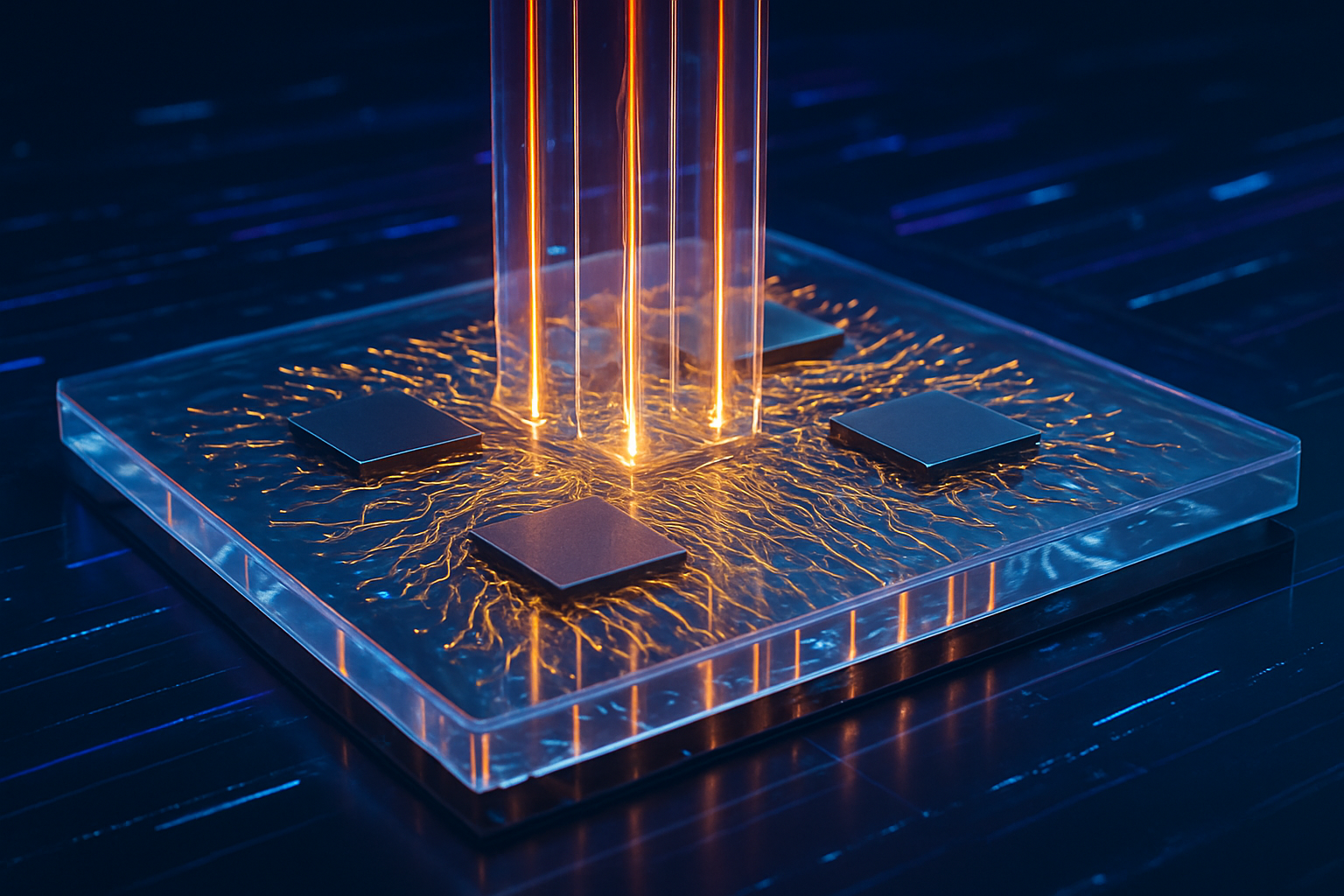
    In a definitive move to shatter the physical limitations of modern computing, the semiconductor industry has officially entered the "Glass Age." As of January 2026, the transition from traditional organic substrates to glass-core packaging has moved from a research-intensive ambition to a high-volume manufacturing (HVM) reality. Led by Intel Corporation (NASDAQ: INTC) and Samsung Electronics (KRX: 005930), this shift represents the most significant change in chip architecture in decades, providing the structural foundation necessary for the massive "superchips" required to drive the next generation of generative AI models.

    The significance of this pivot cannot be overstated. For over twenty years, organic materials like Ajinomoto Build-up Film (ABF) have served as the bridge between silicon dies and circuit boards. However, as AI accelerators push toward 1,000-watt power envelopes and transistor counts approaching one trillion, organic materials have hit a "warpage wall." Glass substrates offer near-perfect flatness, superior thermal stability, and unprecedented interconnect density, effectively acting as a rigid, high-performance platform that allows silicon to perform at its theoretical limit.

    Technical Foundations: The 18A and 14A Revolution

    The technical shift to glass substrates is driven by the extreme demands of upcoming process nodes, specifically Intel’s 18A and 14A architectures. Intel has taken the lead in this space, confirming that its early 2026 high-volume manufacturing includes the launch of Clearwater Forest, a Xeon 6+ processor that is the world’s first commercial product to utilize a glass core. By replacing organic resins with glass, Intel has achieved a 10x increase in interconnect density. This is made possible by Through-Glass Vias (TGVs), which allow for much tighter spacing between connections than the mechanical drilling used in traditional organic substrates.

    Unlike organic substrates, which shrink and expand significantly under heat—causing "warpage" that can crack delicate micro-bumps—glass possesses a Coefficient of Thermal Expansion (CTE) that closely matches silicon. This allows for "reticle-busting" package sizes, where multiple massive dies and High Bandwidth Memory (HBM) stacks can be placed on a single substrate up to 120mm x 120mm in size without the risk of mechanical failure. Furthermore, the optical properties of glass facilitate a future transition to integrated optical I/O, allowing chips to communicate via light rather than electrical signals, drastically reducing energy loss.

    Initial reactions from the AI research community and hardware engineers have been overwhelmingly positive, with experts noting that glass substrates are the only viable path for the 1.4nm-class (14A) node. The extreme precision required by High-NA EUV lithography—the cornerstone of the 14A node—demands the sub-micron flatness that only glass can provide. Industry analysts at NEPCON Japan 2026 have described this transition as the "saving grace" for Moore’s Law, providing a way to continue scaling performance through advanced packaging even as transistor shrinking becomes more difficult.

    Competitive Landscape: Samsung's Late-2026 Counter-Strike

    The shift to glass creates a new competitive theater for tech giants and equipment manufacturers. Samsung Electro-Mechanics (KRX: 009150), often referred to as SEMCO, has emerged as Intel’s primary rival in this space. SEMCO has officially set a target of late 2026 for the start of mass production of its own glass substrates. To achieve this, Samsung has formed a "Triple Alliance" between its display, foundry, and memory divisions, leveraging its expertise in large-format glass handling from its television and smartphone display businesses to accelerate its packaging roadmap.

    This development provides a strategic advantage to companies building bespoke AI ASICs (Application-Specific Integrated Circuits). For example, Apple (NASDAQ: AAPL) and NVIDIA (NASDAQ: NVDA) are reportedly in talks with both Intel and Samsung to secure glass substrate capacity for their 2027 product cycles. Those who secure early access to glass packaging will be able to produce larger, more efficient AI accelerators that outperform competitors still reliant on organic packaging. Conversely, Taiwan Semiconductor Manufacturing Co. (NYSE: TSM) has taken a more cautious approach, with its glass-based "CoPoS" (Chip-on-Panel-on-Substrate) platform not expected for high-volume production until 2028, potentially leaving a temporary opening for Intel and Samsung to capture the "extreme-size" packaging market.

    For startups and smaller AI labs, the emergence of glass substrates may initially increase costs due to the premium associated with new manufacturing techniques. However, the long-term benefit is a reduction in the "memory wall" and thermal bottlenecks that currently plague AI development. As Intel begins licensing certain aspects of its glass technology to foster an ecosystem, the market positioning of substrate suppliers like LG Innotek (KRX: 011070) and Japan’s DNP will be critical to watch as they race to provide the auxiliary components for this new glass-centric supply chain.

    Broader Significance: Packaging as the New Frontier

    The adoption of glass substrates fits into a broader trend in the AI landscape: the move toward "system-technology co-optimization" (STCO). In this era, the performance of an AI model is no longer determined solely by the design of the chip, but by how that chip is packaged and cooled. Glass is the "enabler" for the 1,000-watt accelerators that are becoming the standard for training trillion-parameter models. Without the thermal resilience and dimensional stability of glass, the physical limits of organic materials would have effectively capped the size and power of AI hardware by 2027.

    However, this transition is not without concerns. Moving to glass requires a complete overhaul of the back-end-of-line (BEOL) manufacturing process. Unlike organic substrates, glass is brittle and prone to shattering during the assembly process if not handled with specialized equipment. This has necessitated billions of dollars in capital expenditure for new cleanrooms and handling robotics. There are also environmental considerations; while glass is highly recyclable, the energy-intensive process of creating high-purity glass for semiconductors adds a new layer to the industry’s carbon footprint.

    Comparatively, this milestone is as significant as the introduction of FinFET transistors or the shift to EUV lithography. It marks the moment where the "package" has become as high-tech as the "chip." In the same way that the transition from vacuum tubes to silicon defined the mid-20th century, the transition from organic to glass cores is defining the physical infrastructure of the AI revolution in the mid-2020s.

    Future Horizons: From Power Delivery to Optical I/O

    Looking ahead, the near-term focus will be on the successful ramp-up of Samsung’s production lines in late 2026 and the integration of HBM4 memory onto glass platforms. Experts predict that by 2027, the first "all-glass" AI clusters will be deployed, where the substrate itself acts as a high-speed communication plane between dozens of compute dies. This could lead to the development of "wafer-scale" packages that are essentially giant, glass-backed supercomputers the size of a dinner plate.

    One of the most anticipated future applications is the integration of integrated power delivery. Researchers are exploring ways to embed inductors and capacitors directly into the glass substrate, which would significantly reduce the distance electricity has to travel to reach the processor. This "PowerDirect" technology, expected to mature around the time of Intel’s 14A-E node, could improve power efficiency by another 15-20%. The ultimate challenge remains yield; as package sizes grow, the cost of a single defect on a massive glass substrate becomes increasingly high, making the development of advanced inspection and repair technologies a top priority for 2026.

    Summary and Key Takeaways

    The move to glass substrates is a watershed moment for the semiconductor industry, signaling the end of the organic era and the beginning of a new paradigm in chip packaging. Intel’s early lead with the 18A node and its Clearwater Forest processor has set a high bar, while Samsung’s aggressive late-2026 production goal ensures that the market will remain highly competitive. This transition is the direct result of the relentless demand for AI compute, proving once again that the industry will re-engineer its most fundamental materials to keep pace with the needs of neural networks.

    In the coming months, the industry will be watching for the first third-party benchmarks of Intel’s glass-core Xeon chips and for updates on Samsung’s "Triple Alliance" pilot lines. As the first glass-packaged AI accelerators begin to ship to data centers, the gap between those who can leverage this technology and those who cannot will likely widen. The "Glass Age" is no longer a futuristic concept—it is the foundation upon which the next decade of artificial intelligence will be built.


    This content is intended for informational purposes only and represents analysis of current AI developments.

    TokenRing AI delivers enterprise-grade solutions for multi-agent AI workflow orchestration, AI-powered development tools, and seamless remote collaboration platforms.
    For more information, visit https://www.tokenring.ai/.
  • The Glass Revolution: How Intel’s High-Volume Glass Substrates Are Unlocking the Next Era of AI Scale

    The Glass Revolution: How Intel’s High-Volume Glass Substrates Are Unlocking the Next Era of AI Scale

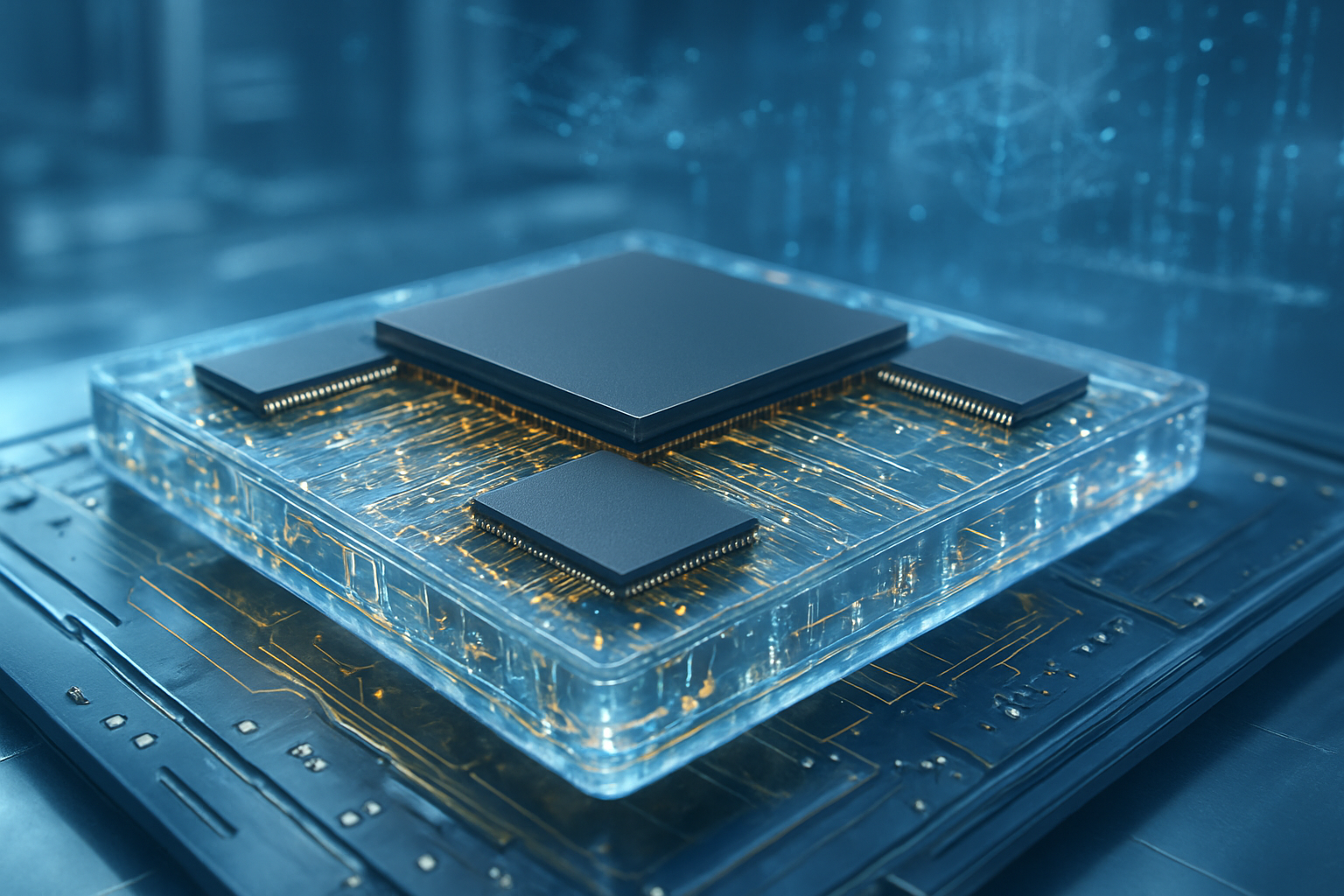
    The semiconductor industry reached a historic milestone this month as Intel Corporation (NASDAQ: INTC) officially transitioned its glass substrate technology into high-volume manufacturing (HVM). Announced during CES 2026, the shift from traditional organic materials to glass marks the most significant change in chip packaging in over two decades. By moving beyond the physical limitations of organic resin, Intel has successfully launched the Xeon 6+ "Clearwater Forest" processor, the first commercial product to utilize a glass core, signaling a new era for massive AI systems-on-package (SoP).

    This development is not merely a material swap; it is a structural necessity for the survival of Moore’s Law in the age of generative AI. As artificial intelligence models demand increasingly larger silicon footprints and more high-bandwidth memory (HBM), the industry had hit a "warpage wall" with traditional organic substrates. Intel’s leap into glass provides the mechanical rigidity and thermal stability required to build the "reticle-busting" chips of the future, enabling interconnect densities that were previously thought to be impossible outside of a laboratory setting.

    Breaking the Warpage Wall: The Technical Leap to Glass

    For years, the industry relied on organic substrates—specifically Ajinomoto Build-up Film (ABF)—which are essentially high-tech plastics. While cost-effective, organic materials expand and contract at different rates than the silicon chips sitting on top of them, a phenomenon known as Coefficient of Thermal Expansion (CTE) mismatch. In the high-heat environment of a 1,000-watt AI accelerator, this causes the substrate to warp, cracking the microscopic solder bumps that connect the chip to the board. Glass, however, possesses a CTE that nearly matches silicon. This allows Intel to manufacture packages exceeding 100mm x 100mm without the risk of mechanical failure, providing a perfectly flat "optical" surface with less than 1 micrometer of roughness.

    The most transformative technical achievement lies in the Through Glass Vias (TGVs). Intel’s new manufacturing process at its Chandler, Arizona facility allows for a 10-fold increase in interconnect density compared to organic substrates. These ultra-fine TGVs enable pitch widths of less than 10 micrometers, allowing thousands of additional pathways for data to travel between compute chiplets and memory stacks. Furthermore, glass is an exceptional insulator, leading to a 40% reduction in signal loss and a nearly 50% improvement in power delivery efficiency. This technical trifecta—flatness, density, and efficiency—allows for the integration of up to 12 HBM4 stacks alongside multiple compute tiles, creating a singular, massive AI engine.

    Initial reactions from the AI hardware community have been overwhelmingly positive. Research analysts at the Interuniversity Microelectronics Centre (IMEC) noted that the transition to glass represents a "paradigm shift" in how we define a processor. By moving the complexity of the interconnect into the substrate itself, Intel has effectively turned the packaging into a functional part of the silicon architecture, rather than just a protective shell.

    Competitive Stakes and the Global Race for "Panel-Level" Dominance

    While Intel currently holds a clear first-mover advantage with its 2026 HVM rollout, other industry titans are racing to catch up. Taiwan Semiconductor Manufacturing Co. (NYSE: TSM) recently accelerated its own glass roadmap, unveiling the CoPoS (Chip-on-Panel-on-Substrate) platform. However, TSMC’s mass production is not expected until late 2028, as the foundry giant remains focused on maximizing its current silicon-based CoWoS (Chip-on-Wafer-on-Substrate) capacity to meet the relentless demand for NVIDIA GPUs. This window gives Intel a strategic opportunity to win back high-performance computing (HPC) clients who are outgrowing the size limits of silicon interposers.

    Samsung Electronics (KRX: 005930) has also entered the fray, announcing a "Triple Alliance" at CES 2026 that leverages its display division’s glass-handling expertise and its semiconductor division’s HBM4 production. Samsung aims to reach mass production by the end of 2026, positioning itself as a "one-stop shop" for custom AI ASICs. Meanwhile, the SK Hynix (KRX: 000660) subsidiary Absolics is finalizing its specialized facility in Georgia, USA, with plans to provide glass substrates to companies like AMD (NASDAQ: AMD) by mid-2026.

    The implications for the market are profound. Intel’s lead in glass technology could make its foundry services (IFS) significantly more attractive to AI startups and hyperscalers like Amazon (NASDAQ: AMZN) and Google (NASDAQ: GOOGL), who are designing their own custom silicon. As AI models scale toward trillions of parameters, the ability to pack more compute power into a single, thermally stable package becomes the primary competitive differentiator in the data center market.

    The Broader AI Landscape: Efficiency in the Era of Giant Models

    The shift to glass substrates is a direct response to the "energy crisis" facing the AI industry. As training clusters grow to consume hundreds of megawatts, the inefficiency of traditional packaging has become a bottleneck. By reducing signal loss and improving power delivery, glass substrates allow AI chips to perform more calculations per watt. This fits into a broader trend of "system-level" optimization, where performance gains are no longer coming from shrinking transistors alone, but from how those transistors are connected and cooled within a massive system-on-package.

    This transition also mirrors previous semiconductor milestones, such as the introduction of High-K Metal Gate or FinFET transistors. Just as those technologies allowed Moore’s Law to continue when traditional planar transistors reached their limits, glass substrates solve the "packaging limit" that threatened to stall the growth of AI hardware. However, the transition is not without concerns. The manufacturing of glass substrates requires entirely new supply chains and specialized handling equipment, as glass is more brittle than organic resin during the assembly phase. Reliability over a 10-year data center lifecycle remains a point of intense study for the industry.

    Despite these challenges, the move to glass is viewed as inevitable. The ability to create "reticle-busting" designs—chips that are larger than the standard masks used in lithography—is the only way to meet the memory bandwidth requirements of future large language models (LLMs). Without glass, the physical footprint of the next generation of AI accelerators would likely be too unstable to manufacture at scale.

    The Future of Glass: From Chiplets to Integrated Photonics

    Looking ahead, the roadmap for glass substrates extends far beyond simple structural support. By 2028, experts predict the introduction of "Panel-Level Packaging," where chips are processed on massive 600mm x 600mm glass sheets, similar to how flat-panel displays are made. This would drastically reduce the cost of advanced packaging and allow for even larger AI systems that could bridge the gap between individual chips and entire server racks.

    Perhaps the most exciting long-term development is the integration of optical interconnects. Because glass is transparent, it provides a natural medium for silicon photonics. Future iterations of Intel’s glass substrates are expected to include integrated optical wave-guides, allowing chips to communicate using light instead of electricity. This would virtually eliminate data latency and power consumption for chip-to-chip communication, paving the way for the first truly "planetary-scale" AI computers.

    While the industry must still refine the yields of these complex glass structures, the momentum is irreversible. Engineers are already working on the next generation of 14A process nodes that will rely exclusively on glass-based architectures to handle the massive power densities of the late 2020s.

    A New Foundation for Artificial Intelligence

    The launch of Intel’s high-volume glass substrate manufacturing marks a definitive turning point in computing history. It represents the moment the industry moved beyond the "plastic" era of the 20th century into a "glass" era designed specifically for the demands of artificial intelligence. By solving the critical issues of thermal expansion and interconnect density, Intel has provided the physical foundation upon which the next decade of AI breakthroughs will be built.

    As we move through 2026, the industry will be watching the yields and field performance of the Xeon 6+ "Clearwater Forest" chips closely. If the performance and reliability gains hold, expect a rapid migration as NVIDIA, AMD, and the hyperscalers scramble to adopt glass for their own flagship products. The "Glass Age" of semiconductors has officially begun, and it is clear that the future of AI will be transparent, flat, and more powerful than ever before.


    This content is intended for informational purposes only and represents analysis of current AI developments.

    TokenRing AI delivers enterprise-grade solutions for multi-agent AI workflow orchestration, AI-powered development tools, and seamless remote collaboration platforms.
    For more information, visit https://www.tokenring.ai/.

  • The Glass Revolution: How Intel’s Breakthrough in Substrates is Powering the Next Leap in AI

    The Glass Revolution: How Intel’s Breakthrough in Substrates is Powering the Next Leap in AI

    As the artificial intelligence revolution accelerates, the industry has hit a physical barrier: traditional organic materials used to house the world’s most powerful chips are literally buckling under the pressure. Today, Intel (NASDAQ:INTC) has officially turned the page on that era, announcing the transition of its glass substrate technology into high-volume manufacturing (HVM). This development, centered at Intel’s advanced facility in Chandler, Arizona, represents one of the most significant shifts in semiconductor packaging in three decades, providing the structural foundation required for the 1,000-watt processors that will define the next phase of generative AI.

    The immediate significance of this move cannot be overstated. By replacing traditional organic resins with glass, Intel has dismantled the "warpage wall"—a phenomenon where massive AI chips expand and contract at different rates than their housing, leading to mechanical failure. As of early 2026, this breakthrough is no longer a research project; it is the cornerstone of Intel’s latest server processors and a critical service offering for its expanding foundry business, signaling a major strategic pivot as the company battles for dominance in the AI hardware landscape.

    The End of the "Warpage Wall": Technical Mastery of Glass

    Intel’s transition to glass substrates solves a looming crisis in chip design: the inability of organic materials like Ajinomoto Build-up Film (ABF) to stay flat and rigid as chip sizes grow. Modern AI accelerators, which often combine dozens of "chiplets" onto a single package, have become so large and hot that traditional substrates often warp or crack during the manufacturing process or under heavy thermal loads. Glass, by contrast, offers ultra-low flatness with sub-1nm surface roughness, providing a nearly perfect "optical" surface for lithography. This precision allows Intel to etch circuits with a 10x increase in interconnect density, enabling the massive I/O throughput required for trillion-parameter AI models.

    Technically, the advantages of glass are transformative. Intel’s 2026 implementation matches the Coefficient of Thermal Expansion (CTE) of silicon (3–5 ppm/°C), virtually eliminating the mechanical stress that leads to cracked solder bumps. Furthermore, glass is significantly stiffer than organic resins, supporting "reticle-busting" package sizes that exceed 100mm x 100mm. To connect the various layers of these massive chips, Intel utilizes high-speed laser-etched Through-Glass Vias (TGVs) with pitches of less than 10μm. This shift has resulted in a 40% reduction in signal loss and a 50% improvement in power efficiency for data movement between processing cores and High Bandwidth Memory (HBM4) stacks.

    The first commercial product to showcase this technology is the Xeon 6+ "Clearwater Forest" server processor, which debuted at CES 2026. Industry experts and researchers have reacted with overwhelming optimism, noting that while competitors are still in pilot stages, Intel’s move to high-volume manufacturing gives it a distinct "first-mover" advantage. "We are seeing the transition from the era of organic packaging to the era of materials science," noted one leading analyst. "Intel has essentially built a more stable, efficient skyscraper for silicon, allowing for vertical integration that was previously impossible."

    A Strategic Chess Move in the AI Foundry Wars

    The shift to glass substrates has major implications for the competitive dynamics between Intel, TSMC (NYSE:TSM), and Samsung (KRX:005930). Intel’s "foundry-first" strategy leverages its glass substrate lead to attract high-value clients who are hitting thermal limits with other providers. Reports indicate that hyperscale giants like Google (NASDAQ:GOOGL) and Microsoft (NASDAQ:MSFT) have already engaged Intel Foundry for custom AI silicon designs that require the extreme stability of glass. By offering glass packaging as a service, Intel is positioning itself as an essential partner for any company building "super-chips" for the data center.

    While Intel holds the current lead in volume production, its rivals are not sitting idle. TSMC has accelerated its "Rectangular Revolution," moving toward Fan-Out Panel-Level Packaging (FO-PLP) on glass to support the massive "Rubin" R100 GPU architecture from Nvidia (NASDAQ:NVDA). Meanwhile, Samsung has formed a "Triple Alliance" between its electronics and display divisions to fast-track its own glass interposers for HBM4 integration. However, Intel’s strategic move to license its glass patent portfolio to equipment and material partners, such as Corning (NYSE:GLW), suggests an attempt to set the global industry standard before its competitors can catch up.

    For AI chip designers like Nvidia and AMD (NASDAQ:AMD), the availability of glass substrates changes the roadmap for their upcoming products. Nvidia’s R100 series and AMD’s Instinct MI400 series—which reportedly uses glass substrates from merchant supplier Absolics—are designed to push the limits of power and performance. The strategic advantage for Intel lies in its vertical integration; by manufacturing both the chips and the substrates, Intel can optimize the entire stack for performance-per-watt, a metric that has become the gold standard in the AI era.

    Reimagining Moore’s Law for the AI Landscape

    In the broader context of the semiconductor industry, the adoption of glass substrates represents a fundamental shift in how we extend Moore’s Law. For decades, progress was defined by shrinking transistors. In 2026, progress is defined by "heterogeneous integration"—the ability to stitch together diverse chips into a single, cohesive unit. Glass is the "glue" that makes this possible at a massive scale. It allows engineers to move past the limitations of the "Power Wall," where the energy required to move data between chips becomes a bottleneck for performance.

    This development also addresses the increasing concern over environmental impact and energy consumption in AI data centers. By improving power efficiency for data movement by 50%, glass substrates directly contribute to more sustainable AI infrastructure. Furthermore, the move to larger, more complex packages allows for more powerful AI models to run on fewer physical servers, potentially slowing the footprint expansion of hyperscale facilities.

    However, the transition is not without challenges. The brittleness of glass compared to organic materials presents new hurdles for manufacturing yields and handling. While Intel’s Chandler facility has achieved high-volume readiness, maintaining those yields as package sizes scale to even more massive dimensions remains a concern. Comparison with previous milestones, such as the shift from aluminum to copper interconnects in the late 1990s, suggests that while the initial transition is difficult, the long-term benefits will redefine the ceiling for computing power for the next twenty years.

    The Future: From Glass to Light

    Looking ahead, the near-term roadmap for glass substrates involves scaling package sizes even further. Intel has already projected a move to 120x180mm packages by 2028, which would allow for the integration of even more HBM4 modules and specialized AI tiles on a single substrate. This will enable the creation of "super-accelerators" capable of training the first generation of multi-trillion parameter artificial general intelligence (AGI) models.

    Perhaps most exciting is the potential for glass to act as a conduit for light. Because glass is transparent and has superior optical properties, it is expected to facilitate the integration of Co-Packaged Optics (CPO) by the end of the decade. Experts predict that by 2030, copper wiring inside chip packages will be largely replaced by optical interconnects etched directly into the glass substrate. This would move data at the speed of light with virtually no heat generation, effectively solving the interconnect bottleneck once and for all.

    The challenges remaining are largely focused on the global supply chain. Establishing a robust ecosystem of glass suppliers and specialized laser-drilling equipment is essential for the entire industry to transition away from organic materials. As Intel, Samsung, and TSMC build out these capabilities, we expect to see a surge in demand for specialized materials and precision engineering tools, creating a new multi-billion dollar sub-sector within the semiconductor equipment market.

    A New Foundation for the Intelligence Age

    Intel’s successful push into high-volume manufacturing of glass substrates marks a definitive turning point in the history of computing. By solving the physical limitations of organic materials, Intel hasn't just improved a component; it has redesigned the foundation upon which all modern AI is built. This development ensures that the growth of AI compute will not be stifled by the "warpage wall" or thermal constraints, but will instead find new life in increasingly complex and efficient 3D architectures.

    As we move through 2026, the industry will be watching Intel’s yield rates and the adoption of its foundry services closely. The success of the "Clearwater Forest" Xeon processors will be the first real-world test of glass in the wild, and its performance will likely dictate the speed at which the rest of the industry follows. For now, Intel has reclaimed a crucial piece of the technological lead, proving that in the race for AI supremacy, the most important breakthrough may not be the silicon itself, but the glass that holds it together.


    This content is intended for informational purposes only and represents analysis of current AI developments.

    TokenRing AI delivers enterprise-grade solutions for multi-agent AI workflow orchestration, AI-powered development tools, and seamless remote collaboration platforms.
    For more information, visit https://www.tokenring.ai/.
  • The Glass Revolution: How Intel and Samsung are Shattering the Thermal Limits of AI

    The Glass Revolution: How Intel and Samsung are Shattering the Thermal Limits of AI

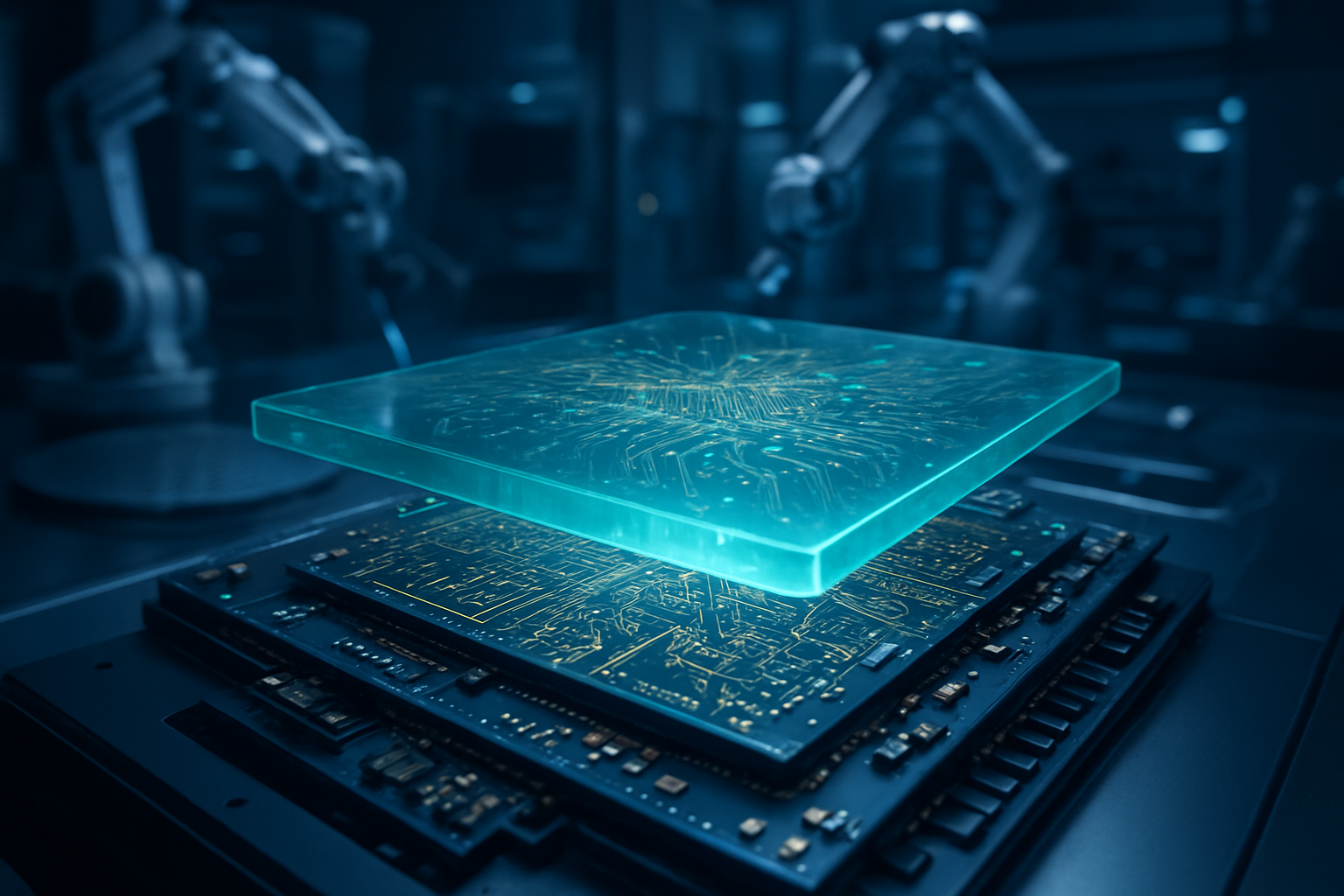
    As the demand for generative AI pushes semiconductor design to its physical breaking point, a fundamental shift in materials science is taking hold across the industry. In a move that signals the end of the traditional plastic-based era, industry titans Intel and Samsung have transitioned into a high-stakes race to commercialize glass substrates. This "Glass Revolution" marks the most significant change in chip packaging in over three decades, promising to solve the crippling thermal and electrical bottlenecks that have begun to stall the progress of next-generation AI accelerators.

    The transition from organic materials, such as Ajinomoto Build-up Film (ABF), to glass cores is not merely an incremental upgrade; it is a necessary evolution for the age of the 1,000-watt GPU. As of January 2026, the industry has officially moved from laboratory prototypes to active pilot production, with major players betting that glass will be the key to maintaining the trajectory of Moore’s Law. By replacing the flexible, heat-sensitive organic resins of the past with ultra-rigid, thermally stable glass, manufacturers are now able to pack more processing power and high-bandwidth memory into a single package than ever before possible.

    Breaking the Warpage Wall: The Technical Leap to Glass

    The technical motivation for the shift to glass stems from a phenomenon known as the "warpage wall." Traditional organic substrates expand and contract at a much higher rate than the silicon chips they support. As AI chips like the latest NVIDIA (NASDAQ:NVDA) "Rubin" GPUs consume massive amounts of power, they generate intense heat, causing the organic substrate to warp and potentially crack the microscopic solder bumps that connect the chip to the board. Glass substrates, however, possess a Coefficient of Thermal Expansion (CTE) that nearly matches silicon. This allows for a 10x increase in interconnect density, enabling "sub-2 micrometer" line spacing that was previously impossible.

    Beyond thermal stability, glass offers superior flatness and rigidity, which is crucial for the ultra-precise lithography used in modern packaging. With glass, manufacturers can utilize Through-Glass Vias (TGV)—microscopic holes drilled with high-speed lasers—to create vertical electrical connections with far less signal loss than traditional copper-plated vias in organic material. This shift allows for an estimated 40% reduction in signal loss and a 50% improvement in power efficiency for data movement across the chip. This efficiency is vital for integrating HBM4 (High Bandwidth Memory) with processing cores, as it reduces the energy-per-bit required to move data, effectively cooling the entire system from the inside out.

    Furthermore, the industry is moving from circular 300mm wafers to large 600mm x 600mm rectangular glass panels. This "Rectangular Revolution" allows for "reticle-busting" package sizes. While organic substrates become unstable at sizes larger than 55mm, glass remains perfectly flat even at sizes exceeding 100mm. This capability allows companies like Intel (NASDAQ:INTC) to house dozens of chiplets—individual silicon components—on a single substrate, effectively creating a "system-on-package" that rivals the complexity of a mid-2000s motherboard but in the palm of a hand.

    The Global Power Struggle for Substrate Supremacy

    The competitive landscape for glass substrates has reached a fever pitch in early 2026, with Intel currently holding a slight technical lead. Intel’s dedicated glass substrate facility in Chandler, Arizona, has successfully transitioned to High-Volume Manufacturing (HVM) support. By focusing on the assembly and laser-drilling of glass cores sourced from specialized partners like Corning (NYSE:GLW), Intel is positioning its "foundry-first" model to attract major AI chip designers who are frustrated by the physical limits of traditional packaging. Intel’s 18A and 14A nodes are already leveraging this technology to power the Xeon 6+ "Clearwater Forest" processors.

    Samsung Electronics (KRX:000660) is pursuing a different, vertically integrated strategy often referred to as the "Triple Alliance." By combining the glass-processing expertise of Samsung Display, the design capabilities of Samsung Electronics, and the substrate manufacturing of Samsung Electro-Mechanics, the conglomerate aims to offer a "one-stop shop" for glass-based AI solutions. Samsung recently announced at CES 2026 that it expects full-scale mass production of glass substrates by the end of the year, specifically targeting the integration of its proprietary HBM4 memory modules directly onto glass interposers for custom AI ASIC clients.

    Not to be outdone, Taiwan Semiconductor Manufacturing Company (NYSE:TSM), or TSMC, has rapidly accelerated its "CoPoS" (Chip-on-Panel-on-Substrate) technology. Historically a proponent of silicon-based interposers (CoWoS), TSMC was forced to pivot toward glass panels to meet the demands of its largest customer, NVIDIA, for larger and more efficient AI clusters. TSMC is currently establishing a mini-production line at its AP7 facility in Chiayi, Taiwan. This move suggests that the industry's largest foundry recognizes glass as the indispensable foundation for the next five years of semiconductor growth, creating a strategic advantage for those who can master the yields of this difficult-to-handle material.

    A New Frontier for the AI Landscape

    The broader significance of the Glass Substrate Revolution lies in its ability to sustain the breakneck pace of AI development. As data centers grapple with skyrocketing energy costs and cooling requirements, the energy savings provided by glass-based packaging are no longer optional—they are a prerequisite for the survival of the industry. By reducing the power consumed by data movement between the processor and memory, glass substrates directly lower the Total Cost of Ownership (TCO) for AI giants like Meta (NASDAQ:META) and Google (NASDAQ:GOOGL), who are deploying hundreds of thousands of these chips simultaneously.

    This transition also marks a shift in the hierarchy of the semiconductor supply chain. For decades, packaging was considered a "back-end" process with lower margins than the actual chip fabrication. Now, with glass, packaging has become a "front-end" high-tech discipline that requires laser physics, advanced chemistry, and massive capital investment. The emergence of glass as a structural element in chips also opens the door for Silicon Photonics—the use of light instead of electricity to move data. Because glass is transparent, it is the natural medium for integrated optical I/O, which many experts believe will be the next major milestone after glass substrates, virtually eliminating latency in AI training clusters.

    However, the transition is not without its challenges. Glass is notoriously brittle, and handling 600mm panels without breakage requires entirely new robotic systems and cleanroom protocols. There are also concerns about the initial cost of glass-based chips, which are expected to carry a premium until yields reach the 90%+ levels seen in organic substrates. Despite these hurdles, the industry's total commitment to glass indicates that the benefits of performance and thermal management far outweigh the risks.

    The Road to 2030: What Comes Next?

    In the near term, expect to see the first wave of consumer "enthusiast" products featuring glass-integrated chips by early 2027, as the technology trickles down from the data center. While the primary focus is currently on massive AI accelerators, the benefits of glass—thinner profiles and better signal integrity—will eventually revolutionize high-end laptops and mobile devices. Experts predict that by 2028, glass substrates will be the standard for any processor with a Thermal Design Power (TDP) exceeding 150 watts.

    Looking further ahead, the integration of optical interconnects directly into the glass substrate is the next logical step. By 2030, we may see "all-optical" communication paths etched directly into the glass core of the chip, allowing for exascale computing on a single server rack. The current investments by Intel and Samsung are laying the foundational infrastructure for this future. The primary challenge remains scaling the supply chain to provide enough high-purity glass panels to meet a global demand that shows no signs of slowing.

    A Pivot Point in Silicon History

    The Glass Substrate Revolution will likely be remembered as the moment the semiconductor industry successfully decoupled performance from the physical constraints of organic materials. It is a triumph of materials science that has effectively reset the timer on the thermal limitations of chip design. As Intel and Samsung race to perfect their production lines, the resulting chips will provide the raw horsepower necessary to realize the next generation of artificial general intelligence and hyper-scale simulation.

    For investors and industry watchers, the coming months will be defined by "yield watch." The company that can first demonstrate consistent, high-volume production of glass substrates without the fragility issues of the past will likely secure a dominant position in the AI hardware market for the next decade. The "Glass Age" of computing has officially arrived, and with it, a new era of silicon potential.


    This content is intended for informational purposes only and represents analysis of current AI developments.

    TokenRing AI delivers enterprise-grade solutions for multi-agent AI workflow orchestration, AI-powered development tools, and seamless remote collaboration platforms.
    For more information, visit https://www.tokenring.ai/.