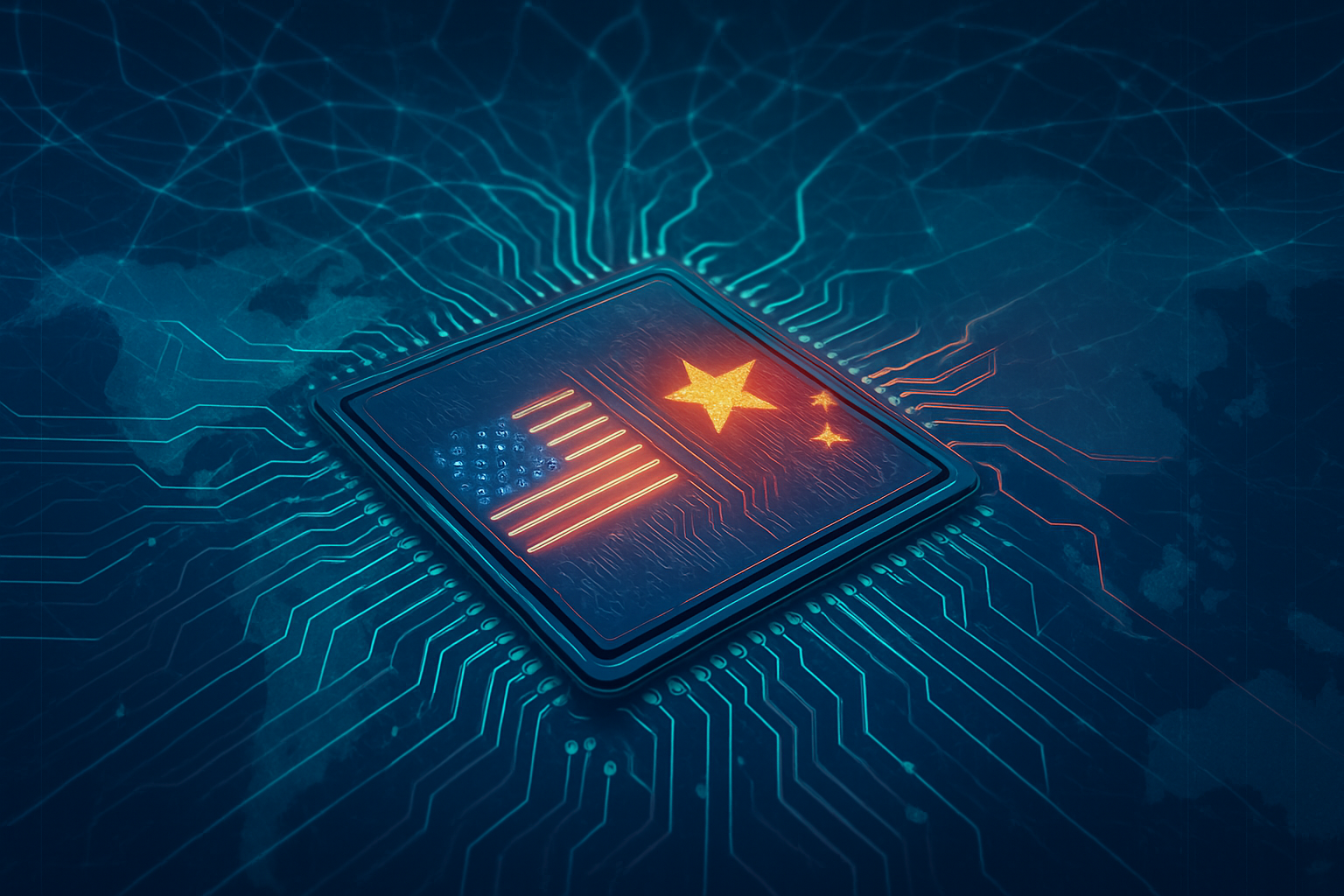
The geopolitical landscape of global technology has entered an unprecedented era of fragmentation, driven by an escalating "chip war" between the United States and China and Beijing's strategic weaponization of rare earth magnet exports. As of October 2, 2025, these intertwined developments are not merely trade disputes; they represent a fundamental restructuring of the global tech supply chain, forcing industries worldwide to recalibrate strategies, accelerate diversification efforts, and brace for a future defined by competing technological ecosystems. The immediate significance is palpable, with immediate disruptions, price volatility, and a palpable sense of urgency as nations and corporations grapple with the implications for national security, economic stability, and the very trajectory of artificial intelligence development.
This tech conflict has moved beyond tariffs to encompass strategic materials and foundational technologies, marking a decisive shift towards techno-nationalism. The US aims to curb China's access to advanced computing and semiconductor manufacturing to limit its military modernization and AI ambitions, while China retaliates by leveraging its dominance in critical minerals. The result is a profound reorientation of global manufacturing, innovation, and strategic alliances, setting the stage for an "AI Cold War" that promises to redefine the 21st century's technological and geopolitical order.
Technical Deep Dive: The Anatomy of Control
The US-China tech conflict is characterized by sophisticated technical controls targeting specific, high-value components. On the US side, export controls on advanced semiconductors and manufacturing equipment have become progressively stringent. Initially implemented in October 2022 and further tightened in October 2023, December 2024, and March 2025, these restrictions aim to choke off China's access to cutting-edge AI chips and the tools required to produce them. The controls specifically target high-performance Graphics Processing Units (GPUs) from companies like Nvidia (NASDAQ: NVDA) (e.g., A100, H100, Blackwell, A800, H800, L40, L40S, RTX4090, H200, B100, B200, GB200) and AMD (NASDAQ: AMD) (e.g., MI250, MI300, MI350 series), along with high-bandwidth memory (HBM) and advanced semiconductor manufacturing equipment (SME). Performance thresholds, defined by metrics like "Total Processing Performance" (TPP) and "Performance Density" (PD), are used to identify restricted chips, preventing circumvention through the combination of less powerful components. A new global tiered framework, introduced in January 2025, categorizes countries into three tiers, with Tier 3 nations like China facing outright bans on advanced AI technology, and computational power caps for restricted countries set at approximately 50,000 Nvidia (NASDAQ: NVDA) H100 GPUs.
These US measures represent a significant escalation from previous trade restrictions. Earlier sanctions, such as the ban on companies using American technology to produce chips for Huawei (SHE: 002502) in May 2020, were more narrowly focused. The current controls are comprehensive, aiming to inhibit China's ability to obtain advanced computing chips, develop supercomputers, or manufacture advanced semiconductors for military applications. The expansion of the Foreign Direct Product Rule (FDPR) compels foreign manufacturers using US technology to comply, effectively globalizing the restrictions. However, a recent shift under the Trump administration in 2025 saw the approval of Nvidia's (NASDAQ: NVDA) H20 chip exports to China under a revenue-sharing arrangement, signaling a pivot towards keeping China reliant on US technology rather than a total ban, a move that has drawn criticism from national security officials.
Beijing's response has been equally strategic, leveraging its near-monopoly on rare earth elements (REEs) and their processing. China controls approximately 60% of global rare earth material production and 85-90% of processing capacity, with an even higher share (around 90%) for high-performance permanent magnets. On April 4, 2025, China's Ministry of Commerce imposed new export controls on seven critical medium and heavy rare earth elements—samarium, gadolinium, terbium, dysprosium, lutetium, scandium, and yttrium—along with advanced magnets. These elements are crucial for a vast array of high-tech applications, from defense systems and electric vehicles (EVs) to wind turbines and consumer electronics. The restrictions are justified as national security measures and are seen as direct retaliation to increased US tariffs.
Unlike previous rare earth export quotas, which were challenged at the WTO, China's current system employs a sophisticated licensing framework. This system requires extensive documentation and lengthy approval processes, resulting in critically low approval rates and introducing significant uncertainty. The December 2023 ban on exporting rare earth extraction and separation technologies further solidifies China's control, preventing other nations from acquiring the critical know-how to replicate its dominance. Initial reactions from industries heavily reliant on these materials, particularly in Europe and the US, have been one of "full panic," with warnings of imminent production stoppages and dramatic price increases, highlighting the severe supply chain vulnerabilities.
Corporate Crossroads: Navigating a Fragmented Tech Landscape
The escalating US-China tech war has created a bifurcated global tech order, presenting both formidable challenges and unexpected opportunities for AI companies, tech giants, and startups worldwide. The most immediate impact is the fragmentation of the global technology ecosystem, forcing companies to recalibrate supply chains and re-evaluate strategic partnerships.
US export controls have compelled American semiconductor giants like Nvidia (NASDAQ: NVDA) and AMD (NASDAQ: AMD) to dedicate significant engineering resources to developing "China-only" versions of their advanced AI chips. These chips are intentionally downgraded to comply with US mandates on performance, memory bandwidth, and interconnect speeds, diverting innovation efforts from cutting-edge advancements to regulatory compliance. Nvidia (NASDAQ: NVDA), for instance, has seen its Chinese market share for AI chips plummet from an estimated 95% to around 50%, with China historically accounting for roughly 20% of its revenue. Beijing's retaliatory move in August 2025, instructing Chinese tech giants to halt purchases of Nvidia's (NASDAQ: NVDA) China-tailored GPUs, further underscores the volatile market conditions.
Conversely, this environment has been a boon for Chinese national champions and domestic startups. Companies like Huawei (SHE: 002502), with its Ascend 910 series AI accelerators, and SMIC (SHA: 688981), are making significant strides in domestic chip design and manufacturing, albeit still lagging behind the most advanced US technology. Huawei's (SHE: 002502) CloudMatrix 384 system exemplifies China's push for technological independence. Chinese AI startups such as Cambricon (SHA: 688256) and Moore Threads (MTT) have also seen increased demand for their homegrown alternatives to Nvidia's (NASDAQ: NVDA) GPUs, with Cambricon (SHA: 688256) reporting a staggering 4,300% revenue increase. While these firms still struggle to access the most advanced chipmaking equipment, the restrictions have spurred a fervent drive for indigenous innovation.
The rare earth magnet export controls, initially implemented in April 2025, have sent shockwaves through industries reliant on high-performance permanent magnets, including defense, electric vehicles, and advanced electronics. European automakers, for example, faced production challenges and shutdowns due to critically low stocks by June 2025. This disruption has accelerated efforts by Western nations and companies to establish alternative supply chains. Companies like USA Rare Earth are aiming to begin producing neodymium magnets in early 2026, while countries like Australia and Vietnam are bolstering their rare earth mining and processing capabilities. This diversification benefits players like TSMC (NYSE: TSM) and Samsung (KRX: 005930), which are seeing increased demand as global clients de-risk their supply chains. Hyperscalers such as Alphabet (NASDAQ: GOOGL) (Google), Microsoft (NASDAQ: MSFT), and Amazon (NASDAQ: AMZN) are also heavily investing in developing their own custom AI accelerators to reduce reliance on external suppliers and mitigate geopolitical risks, further fragmenting the AI hardware ecosystem.
Broader Implications: A New Era of Techno-Nationalism
The US-China tech conflict is more than a trade spat; it is a defining geopolitical event that is fundamentally reshaping the broader AI landscape and global power dynamics. This rivalry is accelerating the emergence of two rival technology ecosystems, often described as a "Silicon Curtain" descending, forcing nations and corporations to increasingly align with either a US-led or China-led technological bloc.
At the heart of this conflict is the recognition that AI chips and rare earth elements are not just commodities but critical national security assets. The US views control over advanced semiconductors as essential to maintaining its military and economic superiority, preventing China from leveraging AI for military modernization and surveillance. China, in turn, sees its dominance in rare earths as a strategic lever, a countermeasure to US restrictions, and a means to secure its own technological future. This techno-nationalism is evident in initiatives like the US CHIPS and Science Act, which allocates over $52 billion to incentivize domestic chip manufacturing, and China's "Made in China 2025" strategy, which aims for widespread technological self-sufficiency.
The wider impacts are profound and multifaceted. Economically, the conflict leads to significant supply chain disruptions, increased production costs due to reshoring and diversification efforts, and potential market fragmentation that could reduce global GDP. For instance, if countries are forced to choose between incompatible technology ecosystems, global GDP could be reduced by up to 7% in the long run. While these policies spur innovation within each bloc—China driven to develop indigenous solutions, and the US striving to maintain its lead—some experts argue that overly stringent US controls risk isolating US firms and inadvertently accelerating China's AI progress by incentivizing domestic alternatives.
From a national security perspective, the race for AI supremacy is seen as critical for future military and geopolitical advantages. The concentration of advanced chip manufacturing in geopolitically sensitive regions like Taiwan creates vulnerabilities, while China's control over rare earths provides a powerful tool for strategic bargaining, directly impacting defense capabilities from missile guidance systems to advanced jet engines. Ethically, the intensifying rivalry is dimming hopes for a global consensus on AI governance. The absence of major AI companies from both the US and China at recent global forums on AI ethics highlights the challenge of achieving a unified framework, potentially leading to divergent standards for AI development and deployment and raising concerns about control, bias, and the use of AI in sensitive areas. This systemic fracturing represents a more profound and potentially more dangerous phase of technological competition than any previous AI milestone, moving beyond mere innovation to an ideological struggle over the architecture of the future digital world.
The Road Ahead: Dual Ecosystems and Persistent Challenges
The trajectory of the US-China tech conflict points towards an ongoing intensification, with both near-term disruptions and long-term structural changes expected to define the global technology landscape. As of October 2025, experts predict a continued "techno-resource containment" strategy from the US, coupled with China's relentless drive for self-reliance.
In the near term (2025-2026), expect further tightening of US export controls, potentially targeting new technologies or expanding existing blacklists, while China continues to accelerate its domestic semiconductor production. Companies like SMIC (SHA: 688981) have already surprised the industry by producing 7-nanometer chips despite lacking advanced EUV lithography, demonstrating China's resilience. Globally, supply chain diversification will intensify, with massive investments in new fabs outside Asia, such as TSMC's (NYSE: TSM) facilities in Arizona and Japan, and Intel's (NASDAQ: INTC) domestic expansion. Beijing's strict licensing for rare earth magnets will likely continue to cause disruptions, though temporary truces, like the limited trade framework in June 2025, may offer intermittent relief without resolving the underlying tensions. China's nationwide tracking system for rare earth exports signifies its intent for comprehensive supervision.
Looking further ahead (beyond 2026), the long-term outlook points towards a fundamentally transformed, geographically diversified, but likely costlier, semiconductor supply chain. Experts widely predict the emergence of two parallel AI ecosystems: a US-led system dominating North America, Europe, and allied nations, and a China-led system gaining traction in regions tied to Beijing through initiatives like the Belt and Road. This fragmentation will lead to an "armed détente," where both superpowers invest heavily in reducing their vulnerabilities and operating dual tech systems. While promising, alternative rare earth magnet materials like iron nitride and manganese aluminum carbide are not yet ready for widespread replacement, meaning the US will remain significantly dependent on China for critical materials for several more years.
The technologies at the core of this conflict are vital for a wide array of future applications. Advanced chips are the linchpin for continued AI innovation, powering large language models, autonomous systems, and high-performance computing. Rare earth magnets are indispensable for the motors in electric vehicles, wind turbines, and, crucially, advanced defense technologies such as missile guidance systems, drones, and stealth aircraft. The competition extends to 5G/6G, IoT, and advanced manufacturing. However, significant challenges remain, including the high costs of building new fabs, skilled labor shortages, the inherent geopolitical risks of escalation, and the technological hurdles in developing viable alternatives for rare earths. Experts predict that the chip war is not just about technology but about shaping the rules and balance of global power in the 21st century, with an ongoing intensification of "techno-resource containment" strategies from both sides.
Comprehensive Wrap-Up: A New Global Order
The US-China tech war, fueled by escalating chip export controls and Beijing's strategic weaponization of rare earth magnets, has irrevocably altered the global technological and geopolitical landscape. As of October 2, 2025, the world is witnessing the rapid formation of two distinct, and potentially incompatible, technological ecosystems, marking a pivotal moment in AI history and global geopolitics.
Key takeaways reveal a relentless cycle of restrictions and countermeasures. The US has continuously tightened its grip on advanced semiconductors and manufacturing equipment, aiming to hobble China's AI and military ambitions. While some limited exports of downgraded chips like Nvidia's (NASDAQ: NVDA) H20 were approved under a revenue-sharing model in August 2025, China's swift retaliation, including instructing major tech companies to halt purchases of Nvidia's (NASDAQ: NVDA) China-tailored GPUs, underscores the deep-seated mistrust and strategic intent on both sides. China, for its part, has aggressively pursued self-sufficiency through massive investments in domestic chip production, with companies like Huawei (SHE: 002502) making significant strides in developing indigenous AI accelerators. Beijing's rare earth magnet export controls, implemented in April 2025, further demonstrate its willingness to leverage its resource dominance as a strategic weapon, causing severe disruptions across critical industries globally.
This conflict's significance in AI history cannot be overstated. While US restrictions aim to curb China's AI progress, they have inadvertently galvanized China's efforts, pushing it to innovate new AI approaches, optimize software for existing hardware, and accelerate domestic research in AI and quantum computing. This is fostering the emergence of two parallel AI development paradigms globally. Geopolitically, the tech war is fragmenting the global order, intensifying tensions, and compelling nations and companies to choose sides, leading to a complex web of alliances and rivalries. The race for AI and quantum computing dominance is now unequivocally viewed as a national security imperative, defining future military and economic superiority.
The long-term impact points towards a fragmented and potentially unstable global future. The decoupling risks reducing global GDP and exacerbating technological inequalities. While challenging in the short term, these restrictive measures may ultimately accelerate China's drive for technological self-sufficiency, potentially leading to a robust domestic industry that could challenge the global dominance of American tech firms in the long run. The continuous cycle of restrictions and retaliations ensures ongoing market instability and higher costs for consumers and businesses globally, with the world heading towards two distinct, and potentially incompatible, technological ecosystems.
In the coming weeks and months, observers should closely watch for further policy actions from both the US and China, including new export controls or retaliatory import bans. The performance and adoption of Chinese-developed chips, such as Huawei's (SHE: 002502) Ascend series, will be crucial indicators of China's success in achieving semiconductor self-reliance. The responses from key allies and neutral nations, particularly the EU, Japan, South Korea, and Taiwan, regarding compliance with US restrictions or pursuing independent technological paths, will also significantly shape the global tech landscape. Finally, the evolution of AI development paradigms, especially how China's focus on software-side innovation and alternative AI architectures progresses in response to hardware limitations, will offer insights into the future of global AI. This is a defining moment, and its ripples will be felt across every facet of technology and international relations for decades to come.
This content is intended for informational purposes only and represents analysis of current AI developments.
TokenRing AI delivers enterprise-grade solutions for multi-agent AI workflow orchestration, AI-powered development tools, and seamless remote collaboration platforms.
For more information, visit https://www.tokenring.ai/.