Seoul, South Korea – November 18, 2025 – South Korea's semiconductor industry is experiencing an unprecedented price surge, particularly in memory chips, a phenomenon directly fueled by the insatiable global demand for artificial intelligence (AI) infrastructure. This "AI memory supercycle," as dubbed by industry analysts, is causing significant ripples across the global electronics market, signaling a period of "chipflation" that is expected to drive up the cost of electronic products like computers and smartphones in the coming year.
The immediate significance of this surge is multifaceted. Leading South Korean memory chip manufacturers, Samsung Electronics (KRX: 005930) and SK Hynix (KRX: 000660), which collectively dominate an estimated 75% of the global DRAM market, have implemented substantial price increases. This strategic move, driven by explosive demand for High-Bandwidth Memory (HBM) crucial for AI servers, is creating severe supply shortages for general-purpose DRAM and NAND flash. While bolstering South Korea's economy, this surge portends higher manufacturing costs and retail prices for a wide array of electronic devices, with consumers bracing for increased expenditures in 2026.
The Technical Core of the AI Supercycle: HBM Dominance and DDR Evolution
The current semiconductor price surge is fundamentally driven by the escalating global demand for high-performance memory chips, essential for advanced Artificial Intelligence (AI) applications, particularly generative AI, neural networks, and large language models (LLMs). These sophisticated AI models require immense computational power and, critically, extremely high memory bandwidth to process and move vast datasets efficiently during training and inference.
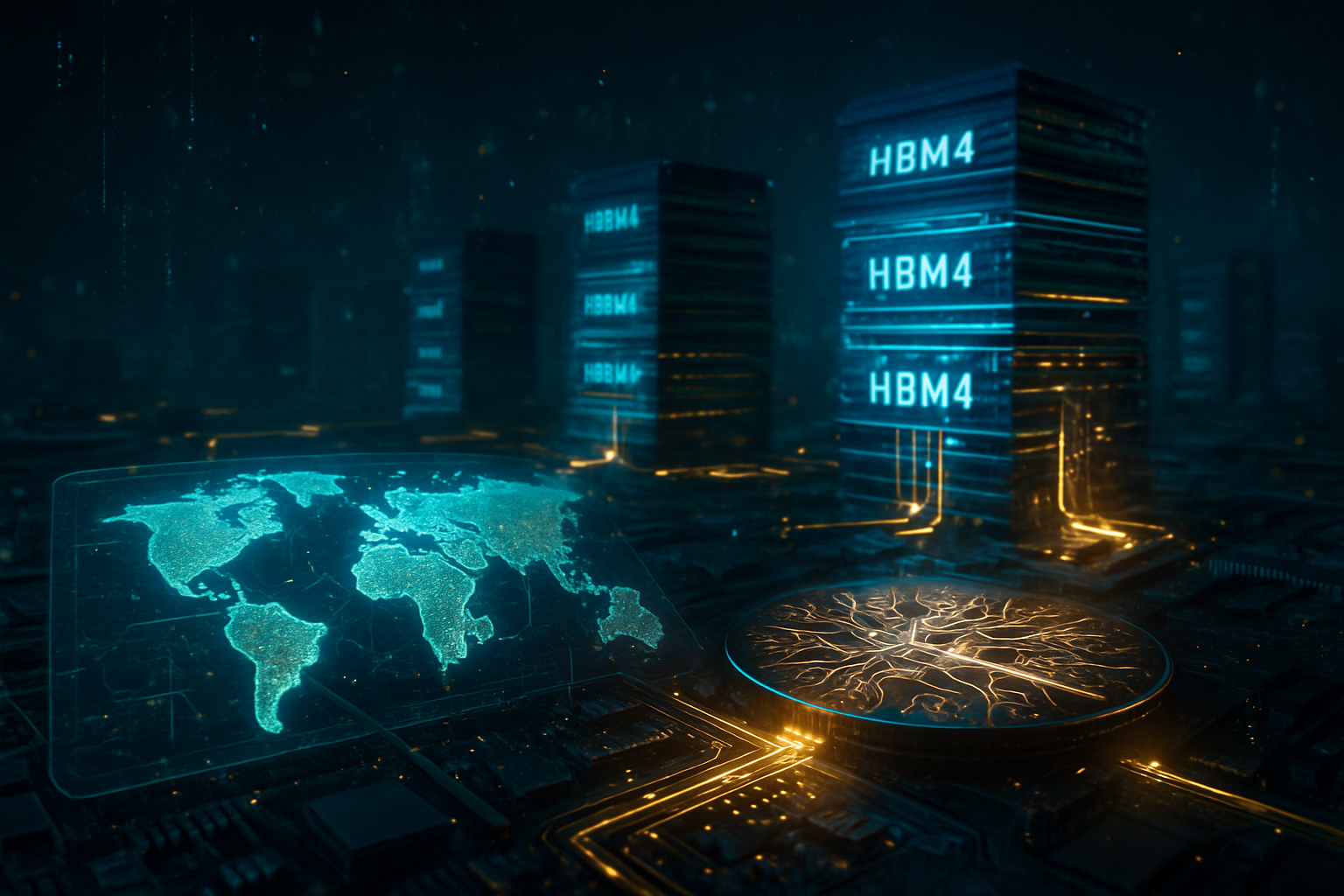
High-Bandwidth Memory (HBM) is at the epicenter of this technical revolution. By November 2025, HBM3E has become a critical component, offering significantly higher bandwidth—up to 1.2 TB/s per stack—while maintaining power efficiency, making it ideal for generative AI workloads. Micron Technology (NASDAQ: MU) has become the first U.S.-based company to mass-produce HBM3E, currently used in NVIDIA's (NASDAQ: NVDA) H200 GPUs. The industry is rapidly transitioning towards HBM4, with JEDEC finalizing the standard earlier this year. HBM4 doubles the I/O count from 1,024 to 2,048 compared to previous generations, delivering twice the data throughput at the same speed. It introduces a more complex, logic-based base die architecture for enhanced performance, lower latency, and greater stability. Samsung and SK Hynix are collaborating with foundries to adopt this design, with SK Hynix having shipped the world's first 12-layer HBM4 samples in March 2025, and Samsung aiming for mass production by late 2025.
Beyond HBM, DDR5 remains the current standard for mainstream computing and servers, with speeds up to 6,400 MT/s. Its adoption is growing in data centers, though it faces barriers such as stability issues and limited CPU compatibility. Development of DDR6 is accelerating, with JEDEC specifications expected to be finalized in 2025. DDR6 is poised to offer speeds up to 17,600 MT/s, with server adoption anticipated by 2027.
This "ultra supercycle" differs significantly from previous market fluctuations. Unlike past cycles driven by PC or mobile demand, the current boom is fundamentally propelled by the structural and sustained demand for AI, primarily corporate infrastructure investment. The memory chip "winter" of late 2024 to early 2025 was notably shorter, indicating a quicker rebound. The prolonged oligopoly of Samsung Electronics, SK Hynix, and Micron has led to more controlled supply, with these companies strategically reallocating production capacity from traditional DDR4/DDR3 to high-value AI memory like HBM and DDR5. This has tilted the market heavily in favor of suppliers, allowing them to effectively set prices, with DRAM operating margins projected to exceed 70%—a level not seen in roughly three decades. Industry experts, including SK Group Chairperson Chey Tae-won, dismiss concerns of an AI bubble, asserting that demand will continue to grow, driven by the evolution of AI models.
Reshaping the Tech Landscape: Winners, Losers, and Strategic Shifts
The South Korean semiconductor price surge, particularly driven by AI demand, is profoundly reshaping the competitive landscape for AI companies, tech giants, and startups alike. The escalating costs of advanced memory chips are creating significant financial pressures across the AI ecosystem, while simultaneously creating unprecedented opportunities for key players.
The primary beneficiaries of this surge are undoubtedly the leading South Korean memory chip manufacturers. Samsung Electronics and SK Hynix are directly profiting from the increased demand and higher prices for memory chips, especially HBM. Samsung's stock has surged, partly due to its maintained DDR5 capacity while competitors shifted production, giving it significant pricing power. SK Hynix expects its AI chip sales to more than double in 2025, solidifying its position as a key supplier for NVIDIA (NASDAQ: NVDA). NVIDIA, as the undisputed leader in AI GPUs and accelerators, continues its dominant run, with strong demand for its products driving significant revenue. Advanced Micro Devices (NASDAQ: AMD) is also benefiting from the AI boom with its competitive offerings like the MI300X. Furthermore, Taiwan Semiconductor Manufacturing Company (NYSE: TSM), as the world's largest independent semiconductor foundry, plays a pivotal role in manufacturing these advanced chips, leading to record quarterly figures and increased full-year guidance, with reports of price increases for its most advanced semiconductors by up to 10%.
The competitive implications for major AI labs and tech companies are significant. Giants like OpenAI, Google (NASDAQ: GOOGL), Microsoft (NASDAQ: MSFT), and Apple (NASDAQ: AAPL) are increasingly investing in developing their own AI-specific chips (ASICs and TPUs) to reduce reliance on third-party suppliers, optimize performance, and potentially lower long-term operational costs. Securing a stable supply of advanced memory chips has become a critical strategic advantage, prompting major AI players to forge preliminary agreements and long-term contracts with manufacturers like Samsung and SK Hynix.
However, the prioritization of HBM for AI servers is creating a memory chip shortage that is rippling across other sectors. Manufacturers of traditional consumer electronics, including smartphones, laptops, and PCs, are struggling to secure sufficient components, leading to warnings from companies like Xiaomi (HKEX: 1810) about rising production costs and higher retail prices for consumers. The automotive industry, reliant on memory chips for advanced systems, also faces potential production bottlenecks. This strategic shift gives companies with robust HBM production capabilities a distinct market advantage, while others face immense pressure to adapt or risk being left behind in the rapidly evolving AI landscape.
Broader Implications: "Chipflation," Accessibility, and Geopolitical Chess
The South Korean semiconductor price surge, driven by the AI Supercycle, is far more than a mere market fluctuation; it represents a fundamental reshaping of the global economic and technological landscape. This phenomenon is embedding itself into broader AI trends, creating significant economic and societal impacts, and raising critical concerns that demand attention.
At the heart of the broader AI landscape, this surge underscores the industry's increasing reliance on specialized, high-performance hardware. The shift by South Korean giants like Samsung and SK Hynix to prioritize HBM production for AI accelerators is a direct response to the explosive growth of AI applications, from generative AI to advanced machine learning. This strategic pivot, while propelling South Korea's economy, has created a notable shortage in general-purpose DRAM, highlighting a bifurcation in the memory market. Global semiconductor sales are projected to reach $697 billion in 2025, with AI chips alone expected to exceed $150 billion, demonstrating the sheer scale of this AI-driven demand.
The economic impacts are profound. The most immediate concern is "chipflation," where rising memory chip prices directly translate to increased costs for a wide range of electronic devices. Laptop prices are expected to rise by 5-15% and smartphone manufacturing costs by 5-7% in 2026. This will inevitably lead to higher retail prices for consumers and a potential slowdown in the consumer IT market. Conversely, South Korea's semiconductor-driven manufacturing sector is "roaring ahead," defying a slowing domestic economy. Samsung and SK Hynix are projected to achieve unprecedented financial performance, with operating profits expected to surge significantly in 2026. This has fueled a "narrow rally" on the KOSPI, largely driven by these chip giants.
Societally, the high cost and scarcity of advanced AI chips raise concerns about AI accessibility and a widening digital divide. The concentration of AI development and innovation among a few large corporations or nations could hinder broader technological democratization, leaving smaller startups and less affluent regions struggling to participate in the AI-driven economy. Geopolitical factors, including the US-China trade war and associated export controls, continue to add complexity to supply chains, creating national security risks and concerns about the stability of global production, particularly in regions like Taiwan.
Compared to previous AI milestones, the current "AI Supercycle" is distinct in its scale of investment and its structural demand drivers. The $310 billion commitment from Samsung over five years and the $320 billion from hyperscalers for AI infrastructure in 2025 are unprecedented. While some express concerns about an "AI bubble," the current situation is seen as a new era driven by strategic resilience rather than just cost optimization. Long-term implications suggest a sustained semiconductor growth, aiming for $1 trillion by 2030, with semiconductors unequivocally recognized as critical strategic assets, driving "technonationalism" and regionalization of supply chains.
The Road Ahead: Navigating Challenges and Embracing Innovation
As of November 2025, the South Korean semiconductor price surge continues to dictate the trajectory of the global electronics industry, with significant near-term and long-term developments on the horizon. The ongoing "chipflation" and supply constraints are set to shape product availability, pricing, and technological innovation for years to come.
In the near term (2026-2027), the global semiconductor market is expected to maintain robust growth, with the World Semiconductor Trade Statistics (WSTS) forecasting an 8.5% increase in 2026, reaching $760.7 billion. Demand for HBM, essential for AI accelerators, will remain exceptionally high, sustaining price increases and potential shortages into 2026. Technological advancements will see a transition from FinFET to Gate-All-Around (GAA) transistors with 2nm manufacturing processes in 2026, promising lower power consumption and improved performance. Samsung aims for initial production of its 2nm GAA roadmap for mobile applications in 2025, expanding to high-performance computing (HPC) in 2026. An inflection point for silicon photonics, in the form of co-packaged optics (CPO), and glass substrates is also expected in 2026, enhancing data transfer performance.
Looking further ahead (2028-2030+), the global semiconductor market is projected to exceed $1 trillion annually by 2030, with some estimates reaching $1.3 trillion due to the pervasive adoption of Generative AI. Samsung plans to begin mass production at its new P5 plant in Pyeongtaek, South Korea, in 2028, investing heavily to meet rising demand for traditional and AI servers. Persistent shortages of NAND flash are anticipated to continue for the next decade, partly due to the lengthy process of establishing new production capacity and manufacturers' motivation to maintain higher prices. Advanced semiconductors will power a wide array of applications, including next-generation smartphones, PCs with integrated AI capabilities, electric vehicles (EVs) with increased silicon content, industrial automation, and 5G/6G networks.
However, the industry faces critical challenges. Supply chain vulnerabilities persist due to geopolitical tensions and an over-reliance on concentrated production in regions like Taiwan and South Korea. Talent shortage is a severe and worsening issue in South Korea, with an estimated shortfall of 56,000 chip engineers by 2031, as top science and engineering students abandon semiconductor-related majors. The enormous energy consumption of semiconductor manufacturing and AI data centers is also a growing concern, with the industry currently accounting for 1% of global electricity consumption, projected to double by 2030. This raises issues of power shortages, rising electricity costs, and the need for stricter energy efficiency standards.
Experts predict a continued "supercycle" in the memory semiconductor market, driven by the AI boom. The head of Chinese contract chipmaker SMIC warned that memory chip shortages could affect electronics and car manufacturing from 2026. Phison CEO Khein-Seng Pua forecasts that NAND flash shortages could persist for the next decade. To mitigate these challenges, the industry is focusing on investments in energy-efficient chip designs, vertical integration, innovation in fab construction, and robust talent development programs, with governments offering incentives like South Korea's "K-Chips Act."
A New Era for Semiconductors: Redefining Global Tech
The South Korean semiconductor price surge of late 2025 marks a pivotal moment in the global technology landscape, signaling the dawn of a new era fundamentally shaped by Artificial Intelligence. This "AI memory supercycle" is not merely a cyclical upturn but a structural shift driven by unprecedented demand for advanced memory chips, particularly High-Bandwidth Memory (HBM), which are the lifeblood of modern AI.
The key takeaways are clear: dramatic price increases for memory chips, fueled by AI-driven demand, are leading to severe supply shortages across the board. South Korean giants Samsung Electronics (KRX: 005930) and SK Hynix (KRX: 000660) stand as the primary beneficiaries, consolidating their dominance in the global memory market. This surge is simultaneously propelling South Korea's economy to new heights while ushering in an era of "chipflation" that will inevitably translate into higher costs for consumer electronics worldwide.
This development's significance in AI history cannot be overstated. It underscores the profound and transformative impact of AI on hardware infrastructure, pushing the boundaries of memory technology and redefining market dynamics. The scale of investment, the strategic reallocation of manufacturing capacity, and the geopolitical implications all point to a long-term impact that will reshape supply chains, foster in-house chip development among tech giants, and potentially widen the digital divide. The industry is on a trajectory towards a $1 trillion annual market by 2030, with AI as its primary engine.
In the coming weeks and months, the world will be watching several critical indicators. The trajectory of contract prices for DDR5 and HBM will be paramount, as further increases are anticipated. The manifestation of "chipflation" in retail prices for consumer electronics and its subsequent impact on consumer demand will be closely monitored. Furthermore, developments in the HBM production race between SK Hynix and Samsung, the capital expenditure of major cloud and AI companies, and any new geopolitical shifts in tech trade relations will be crucial for understanding the evolving landscape of this AI-driven semiconductor supercycle.
This content is intended for informational purposes only and represents analysis of current AI developments.
TokenRing AI delivers enterprise-grade solutions for multi-agent AI workflow orchestration, AI-powered development tools, and seamless remote collaboration platforms.
For more information, visit https://www.tokenring.ai/.