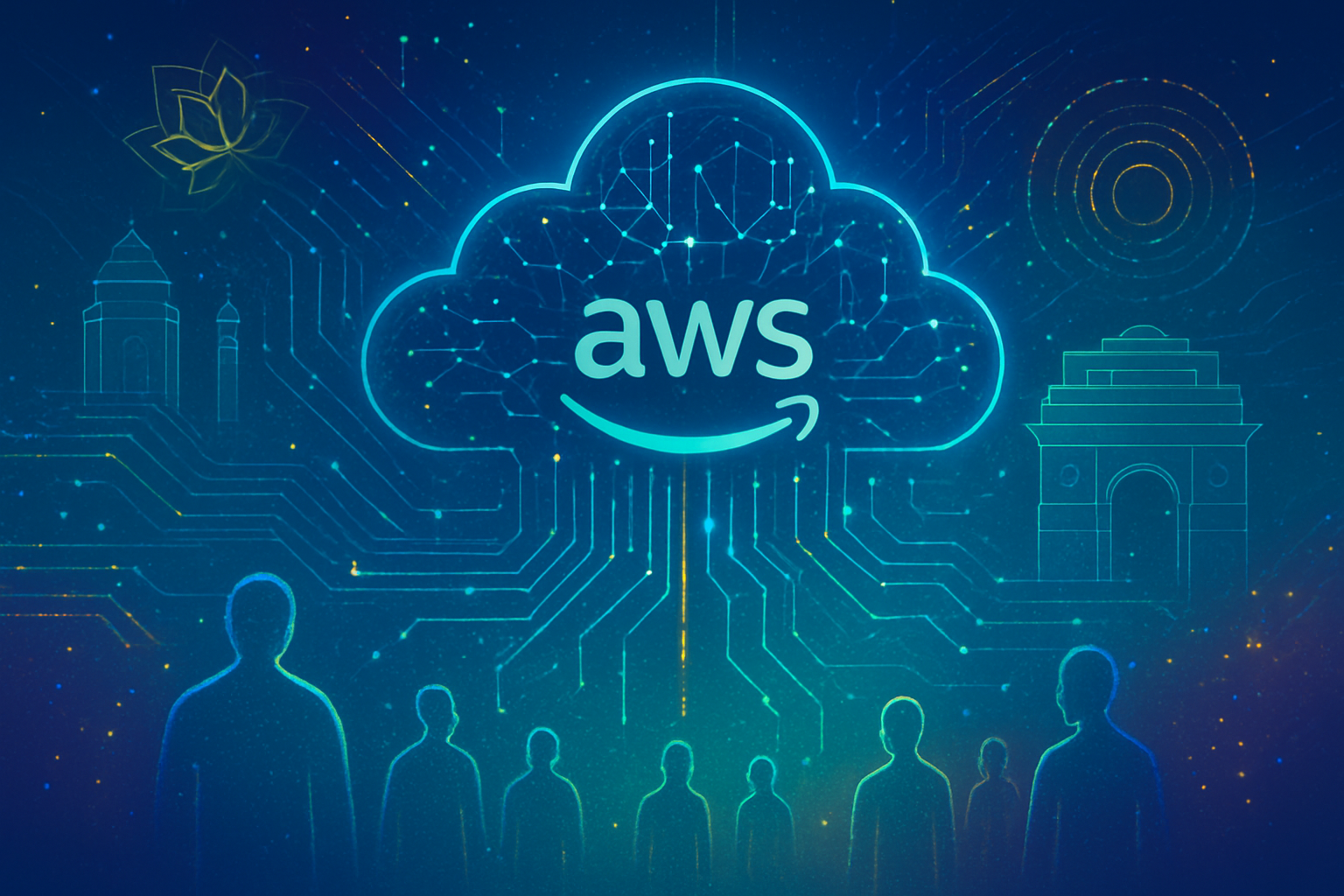
India is rapidly accelerating its digital transformation journey within the public sector, driven by a powerful collaboration between global cloud giant Amazon Web Services (NASDAQ: AMZN) and a burgeoning ecosystem of innovative Indian startups. This strategic partnership is fundamentally reshaping how government services are conceived, developed, and delivered, promising a future of more efficient, transparent, and citizen-centric governance across the nation. At its core, this initiative leverages cloud computing and cutting-edge technologies to build robust digital networks, making essential services accessible to India's vast and diverse population, from bustling urban centers to remote rural communities.
The immediate significance of this alliance cannot be overstated. It marks a pivotal moment in India's pursuit of a comprehensive Digital Public Infrastructure (DPI), a vision aimed at fostering inclusive growth and modernizing government operations at an unprecedented scale. By combining AWS's scalable and secure cloud infrastructure with the agility and disruptive innovation of Indian startups, the collaboration is not just digitizing existing processes but is actively creating new paradigms for public service delivery. This synergy is critical for India, a nation committed to leveraging technology to address societal challenges and empower its citizens through enhanced digital literacy and economic inclusion.
Cloud-Powered Innovation: The Technical Backbone of India's Digital Public Infrastructure
The digital transformation in India's public sector, spearheaded by AWS and its startup partners, is built upon a foundation of advanced cloud technologies and innovative technical solutions. At the heart of this transformation is the strategic deployment of scalable, secure, and resilient cloud infrastructure provided by AWS. This shift from traditional on-premise data centers to cloud-native architectures represents a fundamental departure from previous approaches, offering unparalleled flexibility and efficiency.
Technically, AWS provides a comprehensive suite of services that enable startups to rapidly develop and deploy public sector applications. These include compute services like Amazon EC2, storage solutions such as Amazon S3, and a wide array of database, networking, analytics, and machine learning services. For instance, the National Health Authority (NHA) leverages AWS to power the Pradhan Mantri Jan Arogya Yojana (PM-JAY) scheme, processing over 1.2 million claims and 2.5 million associated documents monthly. AWS’s AI platforms also assist NHA in detecting fraudulent insurance claims, showcasing the integration of advanced analytics. Similarly, the Government e-Marketplace (GeM), India's national public procurement portal, runs entirely on AWS, connecting millions of sellers and buyers and utilizing AI-driven solutions to streamline procurement processes. The CoWIN platform, instrumental in India’s COVID-19 vaccination drive, demonstrated extreme scalability by administering 25 million vaccinations in a single day, a feat made possible by its AWS-powered infrastructure.
This approach significantly differs from older models by emphasizing agility, scalability, and cost-effectiveness. Traditional government IT projects often faced lengthy procurement cycles, high upfront infrastructure costs, and limited ability to scale with demand. Cloud-based solutions, conversely, allow for pay-as-you-go models, rapid prototyping, and elastic scaling, enabling startups to innovate quickly and government agencies to respond dynamically to citizen needs. Programs like the AWS Public Sector Startup Ramp, launched first in India, provide early-stage startups with crucial resources, including AWS Promotional Credit, technical training, and expert support, accelerating their journey from concept to deployment. The Joint Innovation Centre (JIC) further fosters this environment by leveraging cloud computing, Generative AI, and analytics to support startups, Independent Software Vendors (ISVs), and System Integrators (SIs) in developing citizen-driven solutions.
Initial reactions from the AI research community and industry experts have been overwhelmingly positive, highlighting India as a global leader in leveraging digital public infrastructure. Experts commend the strategic foresight in combining robust cloud technology with the nimble innovation of the startup ecosystem. The ability to deploy population-scale applications like UMANG (Unified Mobile Application for New-age Governance), offering 1,700 services from 300 departments to over 50 million users, and DigiLocker, providing secure digital document storage for over 300 million users, underscores the technical prowess and transformative potential of this collaboration. These platforms demonstrate how cloud-native architectures can support massive user bases while ensuring security and reliability, setting a benchmark for other nations looking to modernize their public services.
Competitive Dynamics: Reshaping the Landscape for Tech Giants and Startups
The collaboration between AWS and Indian startups in public sector digital transformation is significantly reshaping the competitive landscape for both established tech giants and emerging players. This strategic alliance creates a powerful dynamic where innovation, scalability, and localized solutions become key differentiators, benefiting specific companies while posing challenges to others.
AWS (NASDAQ: AMZN) stands to benefit immensely from this development. By being the foundational cloud provider for numerous critical public sector projects in India, AWS solidifies its market leadership in one of the world's fastest-growing digital economies. Its extensive suite of services, global reach, and dedicated programs like the AWS Public Sector Startup Ramp and the Joint Innovation Centre (JIC) ensure that it remains the preferred partner for government agencies and the startups building solutions for them. This deep integration into India's digital public infrastructure not only secures substantial revenue streams but also provides AWS with invaluable insights into large-scale digital governance, which can be leveraged globally. The commitment of $12.7 billion by 2030 to expand local cloud infrastructure further underscores its long-term strategic advantage.
For Indian startups, this collaboration is a game-changer. Companies like EdIndia Foundation, CollPoll, and CropIn, which leverage AWS to develop solutions for education, university management, and agriculture respectively, gain access to world-class infrastructure, technical expertise, and a direct pathway to government contracts. This significantly lowers their barrier to entry into the public sector market, which is often complex and highly regulated. The ability to build, test, and scale solutions rapidly on AWS allows these startups to innovate at an accelerated pace, addressing specific local challenges with tailored digital solutions. This model fosters a vibrant ecosystem where agile startups can disrupt traditional service delivery, creating new market opportunities and driving economic growth within India's tech sector.
The competitive implications for other major AI labs and tech companies are significant. While other cloud providers like Microsoft Azure (NASDAQ: MSFT) and Google Cloud (NASDAQ: GOOGL) are also vying for public sector contracts in India, AWS's early and deep entrenchment with key government initiatives and its robust startup ecosystem support give it a strong competitive edge. This could potentially disrupt existing products or services offered by companies that rely on legacy infrastructure or lack the comprehensive cloud offerings and local startup engagement of AWS. Companies that cannot match AWS's scale, security, and developer-friendly environment might find it challenging to compete for large-scale public sector projects.
Furthermore, this development highlights a shift in market positioning. The focus is increasingly on partnerships that combine global technological prowess with local innovation. Tech giants that embrace and empower local startup ecosystems, rather than merely competing with them, are likely to gain a more sustainable strategic advantage. The success stories of platforms like DigiYatra, which streamlines airport experiences, and the National Highways Authority of India's FastTag, automating toll management, serve as powerful testimonials to the effectiveness of this collaborative model. These examples demonstrate how the synergy between a global cloud leader and local innovators can create significant public value and establish new benchmarks for digital service delivery, influencing how other nations approach their own digital transformation agendas.
Broader Significance: Reshaping Governance and Citizen Engagement
The alliance between AWS and Indian startups in transforming public sector service delivery carries profound broader significance, extending far beyond technological upgrades. It represents a paradigm shift in governance, citizen engagement, and the overall digital landscape, setting new precedents for how nations can leverage technology for societal good.
This initiative fits seamlessly into the broader AI landscape and global trends emphasizing digital public infrastructure, data-driven governance, and inclusive technology. India's aggressive push for DPI, exemplified by platforms like Aadhaar, UPI, and CoWIN, has positioned it as a global leader in creating scalable digital solutions for massive populations. The collaboration with AWS further strengthens this position by providing the underlying cloud infrastructure and fostering an ecosystem where AI and machine learning can be applied to complex public sector challenges, from fraud detection in healthcare (as seen with NHA) to optimizing agricultural yields (through startups like CropIn). This trend signals a move towards governments as platform providers, enabling a multitude of services through secure, interoperable digital networks.
The impacts are multi-faceted and overwhelmingly positive. For citizens, it translates into enhanced accessibility, efficiency, and transparency of government services. Platforms like UMANG and DigiLocker are democratizing access to essential services and documents, reducing bureaucratic hurdles, and empowering individuals with greater control over their digital identities. For governance, it means improved decision-making through data analytics, reduced corruption due to transparent digital processes (e.g., GeM saving billions in taxpayer money), and greater responsiveness to public needs. The ability to rapidly deploy and scale solutions, as demonstrated by CoWIN, is crucial for effective crisis management and large-scale public welfare programs.
However, potential concerns also exist. Data privacy and security remain paramount, especially when dealing with sensitive citizen information. While AWS provides robust security measures, the responsibility for data governance and protection also lies with the government agencies and startups utilizing the platform. Ensuring digital equity, where access to these services is universal and not limited by digital literacy or device ownership, is another ongoing challenge. This involves not only infrastructure development but also extensive digital education and support programs. Regulatory frameworks will need to evolve to keep pace with technological advancements, especially concerning data privacy, algorithmic bias, and ethical AI deployment.
This development also underscores a global trend where governments are increasingly looking towards cloud providers and agile startups to modernize their infrastructure rather than relying solely on traditional, often slower, government IT procurement processes. It validates the model of public-private partnerships as a powerful engine for national digital transformation, offering a blueprint for other developing and developed nations grappling with similar challenges in service delivery and governance.
The Road Ahead: Anticipating Future Developments and Addressing Challenges
The digital transformation driven by AWS and Indian startups in the public sector is a dynamic and evolving landscape, with numerous expected near-term and long-term developments on the horizon. The foundation laid by current initiatives suggests a future characterized by even deeper integration of advanced technologies and a wider array of citizen-centric applications.
In the near term, we can anticipate a significant expansion of existing digital public infrastructure and the emergence of new use cases. The focus will likely intensify on leveraging Generative AI (GenAI) to personalize government services, enhance citizen interactions through intelligent chatbots, and automate complex administrative tasks. AWS’s establishment of Generative AI Startup Hubs, such as the one with iTNT Hub in Tamil Nadu, indicates a strong push towards fostering GenAI solutions for citizen-driven innovation. We can expect more government departments to migrate critical workloads to the AWS cloud, further improving efficiency and reducing operational costs. The successful models seen in healthcare (NHA), procurement (GeM), and transportation (DigiYatra) will likely be replicated across other sectors, including urban planning, environmental monitoring, and disaster management.
Long-term developments will see the continuous evolution of India's digital public infrastructure into a more interconnected and intelligent network. The integration of blockchain for enhanced security and transparency in public records, advanced IoT solutions for smart cities, and sophisticated data analytics platforms for predictive governance are all on the horizon. The goal is to create a truly seamless digital experience for citizens, where services are proactive, personalized, and accessible on any device. Experts predict a future where AI-powered decision support systems will assist policymakers in areas like resource allocation, public health interventions, and economic forecasting, leading to more data-driven and effective governance.
However, several challenges need to be addressed to realize this ambitious vision fully. Ensuring robust cybersecurity measures against evolving threats remains a paramount concern, requiring continuous investment and vigilance. Bridging the digital divide, particularly in rural areas where internet penetration and digital literacy may be lower, is critical to ensuring equitable access to these advanced services. This involves not only infrastructure development but also extensive digital education and support programs. Regulatory frameworks will need to evolve to keep pace with technological advancements, especially concerning data privacy, algorithmic bias, and ethical AI deployment.
What experts predict will happen next is a continued acceleration in the adoption of cloud-native and AI-first strategies within the Indian public sector. The success stories will inspire further innovation, attracting more startups to develop solutions for government challenges. The model of collaboration between global tech giants and local innovators is expected to become a global blueprint for public sector modernization, with India leading the way in demonstrating how technology can be harnessed to deliver better, more inclusive governance.
A Digital Revolution for Public Service: Key Takeaways and Future Watch
The profound collaboration between Amazon Web Services and India's vibrant startup ecosystem is orchestrating a digital revolution in public sector service delivery. This partnership is not merely about adopting new technologies; it's about fundamentally reimagining the relationship between government and citizens, paving the way for a more agile, transparent, and inclusive form of governance.
The key takeaways from this transformative journey are clear: Cloud computing, particularly through platforms like AWS, provides the essential backbone for scalable and secure digital public infrastructure. Indian startups, fueled by their innovative spirit and supported by dedicated acceleration programs, are proving to be indispensable partners in developing citizen-centric solutions that address unique local challenges. The success of initiatives like CoWIN, GeM, UMANG, and DigiLocker stands as a testament to the power of this synergy, demonstrating how technology can be leveraged to deliver services to millions efficiently and effectively. This model significantly enhances service accessibility, reduces costs, and fosters greater transparency, marking a significant stride towards digital equity.
This development's significance in AI history is profound, showcasing a leading example of how artificial intelligence and cloud technologies can move beyond enterprise applications to directly impact public welfare at a national scale. It positions India as a global pioneer in leveraging digital public infrastructure, offering a replicable model for other nations striving to modernize their government services. The focus on citizen empowerment and inclusive growth through technology represents a crucial evolution in the application of AI, moving towards a future where technology serves as a powerful enabler of societal progress.
Looking ahead, the long-term impact will be the establishment of a resilient and adaptable digital government ecosystem capable of responding to future challenges and opportunities. The continuous integration of Generative AI, advanced analytics, and other emerging technologies will further personalize and automate public services, making them more intuitive and responsive. What to watch for in the coming weeks and months includes further announcements of government agencies migrating to the cloud, new startup innovations addressing niche public sector needs, and policy developments around data governance and ethical AI to ensure responsible technological deployment. The ongoing evolution of this partnership will undoubtedly continue to set benchmarks for digital transformation globally.
This content is intended for informational purposes only and represents analysis of current AI developments.
TokenRing AI delivers enterprise-grade solutions for multi-agent AI workflow orchestration, AI-powered development tools, and seamless remote collaboration platforms.
For more information, visit https://www.tokenring.ai/.