
Tag: Cloud AI

  • From Silicon to Sentience: Semiconductors as the Indispensable Backbone of Modern AI

    From Silicon to Sentience: Semiconductors as the Indispensable Backbone of Modern AI

    The age of artificial intelligence is inextricably linked to the relentless march of semiconductor innovation. These tiny, yet incredibly powerful microchips—ranging from specialized Graphics Processing Units (GPUs) and Tensor Processing Units (TPUs) to Neural Processing Units (NPUs) and Application-Specific Integrated Circuits (ASICs)—are the fundamental bedrock upon which the entire AI ecosystem is built. Without their immense computational power and efficiency, the breakthroughs in machine learning, natural language processing, and computer vision that define modern AI would remain theoretical aspirations.

    The immediate significance of semiconductors in AI is profound and multifaceted. In large-scale cloud AI, these chips are the workhorses for training complex machine learning models and large language models, powering the expansive data centers that form the "beating heart" of the AI economy. Simultaneously, at the "edge," semiconductors enable real-time AI processing directly on devices like autonomous vehicles, smart wearables, and industrial IoT sensors, reducing latency, enhancing privacy, and minimizing reliance on constant cloud connectivity. This symbiotic relationship—where AI's rapid evolution fuels demand for ever more powerful and efficient semiconductors, and in turn, semiconductor advancements unlock new AI capabilities—is driving unprecedented innovation and projected exponential growth in the semiconductor industry.

    The Evolution of AI Hardware: From General-Purpose to Hyper-Specialized Silicon

    The journey of AI hardware began with Central Processing Units (CPUs), the foundational general-purpose processors. In the early days, CPUs handled basic algorithms, but their architecture, optimized for sequential processing, proved inefficient for the massively parallel computations inherent in neural networks. This limitation became glaringly apparent with tasks like basic image recognition, which required thousands of CPUs.

    The first major shift came with the adoption of Graphics Processing Units (GPUs). Originally designed for rendering images by simultaneously handling numerous operations, GPUs were found to be exceptionally well-suited for the parallel processing demands of AI and Machine Learning (ML) tasks. This repurposing, significantly aided by NVIDIA (NASDAQ: NVDA)'s introduction of CUDA in 2006, made GPU computing accessible and led to dramatic accelerations in neural network training, with researchers observing speedups of 3x to 70x compared to CPUs. Modern GPUs, like NVIDIA's A100 and H100, feature thousands of CUDA cores and specialized Tensor Cores optimized for mixed-precision matrix operations (e.g., TF32, FP16, BF16, FP8), offering unparalleled throughput for deep learning. They are also equipped with High Bandwidth Memory (HBM) to prevent memory bottlenecks.

    As AI models grew in complexity, the limitations of even GPUs, particularly in energy consumption and cost-efficiency for specific AI operations, led to the development of specialized AI accelerators. These include Tensor Processing Units (TPUs), Neural Processing Units (NPUs), and Application-Specific Integrated Circuits (ASICs). Google (NASDAQ: GOOGL)'s TPUs, for instance, are custom-developed ASICs designed around a matrix computation engine and systolic arrays, making them highly adept at the massive matrix operations frequent in ML. They prioritize bfloat16 precision and integrate HBM for superior performance and energy efficiency in training. NPUs, on the other hand, are domain-specific processors primarily for inference workloads at the edge, enabling real-time, low-power AI processing on devices like smartphones and IoT sensors, supporting low-precision arithmetic (INT8, INT4). ASICs offer maximum efficiency for particular applications by being highly customized, resulting in faster processing, lower power consumption, and reduced latency for their specific tasks.

    Current semiconductor approaches differ significantly from previous ones in several ways. There's a profound shift from general-purpose, von Neumann architectures towards highly parallel and specialized designs built for neural networks. The emphasis is now on massive parallelism, leveraging mixed and low-precision arithmetic to reduce memory usage and power consumption, and employing High Bandwidth Memory (HBM) to overcome the "memory wall." Furthermore, AI itself is now transforming chip design, with AI-powered Electronic Design Automation (EDA) tools automating tasks, improving verification, and optimizing power, performance, and area (PPA), cutting design timelines from months to weeks. The AI research community and industry experts widely recognize these advancements as a "transformative phase" and the dawn of an "AI Supercycle," emphasizing the critical need for continued innovation in chip architecture and memory technology to keep pace with ever-growing model sizes.

    The AI Semiconductor Arms Race: Redefining Industry Leadership

    The rapid advancements in AI semiconductors are profoundly reshaping the technology industry, creating new opportunities and challenges for AI companies, tech giants, and startups alike. This transformation is marked by intense competition, strategic investments in custom silicon, and a redefinition of market leadership.

    Chip Manufacturers like NVIDIA (NASDAQ: NVDA) and Advanced Micro Devices (NASDAQ: AMD) are experiencing unprecedented demand for their GPUs. NVIDIA, with its dominant market share (80-90%) and mature CUDA software ecosystem, currently holds a commanding lead. However, this dominance is catalyzing a strategic shift among its largest customers—the tech giants—towards developing their own custom AI silicon to reduce dependency and control costs. Intel (NASDAQ: INTC) is also aggressively pushing its Gaudi line of AI chips and leveraging its Xeon 6 CPUs for AI inferencing, particularly at the edge, while also pursuing a foundry strategy. AMD is gaining traction with its Instinct MI300X GPUs, adopted by Microsoft (NASDAQ: MSFT) for its Azure cloud platform.

    Hyperscale Cloud Providers are at the forefront of this transformation, acting as both significant consumers and increasingly, producers of AI semiconductors. Google (NASDAQ: GOOGL) has been a pioneer with its Tensor Processing Units (TPUs) since 2015, used internally and offered via Google Cloud. Its recently unveiled seventh-generation TPU, "Ironwood," boasts a fourfold performance increase for AI inferencing, with AI startup Anthropic committing to use up to one million Ironwood chips. Microsoft (NASDAQ: MSFT) is making massive investments in AI infrastructure, committing $80 billion for fiscal year 2025 for AI-ready data centers. While a large purchaser of NVIDIA's GPUs, Microsoft is also developing its own custom AI accelerators, such as the Maia 100, and cloud CPUs, like the Cobalt 100, for Azure. Similarly, Amazon (NASDAQ: AMZN)'s AWS is actively developing custom AI chips, Inferentia for inference and Trainium for training AI models. AWS recently launched "Project Rainier," featuring nearly half a million Trainium2 chips, which AI research leader Anthropic is utilizing. These tech giants leverage their vast resources for vertical integration, aiming for strategic advantages in performance, cost-efficiency, and supply chain control.

    For AI Software and Application Startups, advancements in AI semiconductors offer a boon, providing increased accessibility to high-performance AI hardware, often through cloud-based AI services. This democratization of compute power lowers operational costs and accelerates development cycles. However, AI Semiconductor Startups face high barriers to entry due to substantial R&D and manufacturing costs, though cloud-based design tools are lowering these barriers, enabling them to innovate in specialized niches. The competitive landscape is an "AI arms race," with potential disruption to existing products as the industry shifts from general-purpose to specialized hardware, and AI-driven tools accelerate chip design and production.

    Beyond the Chip: Societal, Economic, and Geopolitical Implications

    AI semiconductors are not just components; they are the very backbone of modern AI, driving unprecedented technological progress, economic growth, and societal transformation. This symbiotic relationship, where AI's growth drives demand for better chips and better chips unlock new AI capabilities, is a central engine of global progress, fundamentally re-architecting computing with an emphasis on parallel processing, energy efficiency, and tightly integrated hardware-software ecosystems.

    The impact on technological progress is profound, as AI semiconductors accelerate data processing, reduce power consumption, and enable greater scalability for AI systems, pushing the boundaries of what's computationally possible. This is extending or redefining Moore's Law, with innovations in advanced process nodes (like 2nm and 1.8nm) and packaging solutions. Societally, these advancements are transformative, enabling real-time health monitoring, enhancing public safety, facilitating smarter infrastructure, and revolutionizing transportation with autonomous vehicles. The long-term impact points to an increasingly autonomous and intelligent future. Economically, the impact is substantial, leading to unprecedented growth in the semiconductor industry. The AI chip market, which topped $125 billion in 2024, is projected to exceed $150 billion in 2025 and potentially reach $400 billion by 2027, with the overall semiconductor market heading towards a $1 trillion valuation by 2030. This growth is concentrated among a few key players like NVIDIA (NASDAQ: NVDA), driving a "Foundry 2.0" model emphasizing technology integration platforms.

    However, this transformative era also presents significant concerns. The energy consumption of advanced AI models and their supporting data centers is staggering. Data centers currently consume 3-4% of the United States' total electricity, projected to triple to 11-12% by 2030, with a single ChatGPT query consuming roughly ten times more electricity than a typical Google Search. This necessitates innovations in energy-efficient chip design, advanced cooling technologies, and sustainable manufacturing practices. The geopolitical implications are equally significant, with the semiconductor industry being a focal point of intense competition, particularly between the United States and China. The concentration of advanced manufacturing in Taiwan and South Korea creates supply chain vulnerabilities, leading to export controls and trade restrictions aimed at hindering advanced AI development for national security reasons. This struggle reflects a broader shift towards technological sovereignty and security, potentially leading to an "AI arms race" and complicating global AI governance. Furthermore, the concentration of economic gains and the high cost of advanced chip development raise concerns about accessibility, potentially exacerbating the digital divide and creating a talent shortage in the semiconductor industry.

    The current "AI Supercycle" driven by AI semiconductors is distinct from previous AI milestones. Historically, semiconductors primarily served as enablers for AI. However, the current era marks a pivotal shift where AI is an active co-creator and engineer of the very hardware that fuels its own advancement. This transition from theoretical AI concepts to practical, scalable, and pervasive intelligence is fundamentally redefining the foundation of future AI, arguably as significant as the invention of the transistor or the advent of integrated circuits.

    The Horizon of AI Silicon: Beyond Moore's Law

    The future of AI semiconductors is characterized by relentless innovation, driven by the increasing demand for more powerful, energy-efficient, and specialized chips. In the near term (1-3 years), we expect to see continued advancements in advanced process nodes, with mass production of 2nm technology anticipated to commence in 2025, followed by 1.8nm (Intel (NASDAQ: INTC)'s 18A node) and Samsung (KRX: 005930)'s 1.4nm by 2027. High-Bandwidth Memory (HBM) will continue its supercycle, with HBM4 anticipated in late 2025. Advanced packaging technologies like 3D stacking and chiplets will become mainstream, enhancing chip density and bandwidth. Major tech companies will continue to develop custom silicon chips (e.g., AWS Graviton4, Azure Cobalt, Google Axion), and AI-driven chip design tools will automate complex tasks, including translating natural language into functional code.

    Looking further ahead into long-term developments (3+ years), revolutionary changes are expected. Neuromorphic computing, aiming to mimic the human brain for ultra-low-power AI processing, is becoming closer to reality, with single silicon transistors demonstrating neuron-like functions. In-Memory Computing (IMC) will integrate memory and processing units to eliminate data transfer bottlenecks, significantly improving energy efficiency for AI inference. Photonic processors, using light instead of electricity, promise higher speeds, greater bandwidth, and extreme energy efficiency, potentially serving as specialized accelerators. Even hybrid AI-quantum systems are on the horizon, with companies like International Business Machines (NYSE: IBM) focusing efforts in this sector.

    These advancements will enable a vast array of transformative AI applications. Edge AI will intensify, enabling real-time, low-power processing in autonomous vehicles, industrial automation, robotics, and medical diagnostics. Data centers will continue to power the explosive growth of generative AI and large language models. AI will accelerate scientific discovery in fields like astronomy and climate modeling, and enable hyper-personalized AI experiences across devices.

    However, significant challenges remain. Energy efficiency is paramount, as data centers' electricity consumption is projected to triple by 2030. Manufacturing costs for cutting-edge chips are incredibly high, with fabs costing up to $20 billion. The supply chain remains vulnerable due to reliance on rare materials and geopolitical tensions. Technical hurdles include memory bandwidth, architectural specialization, integration of novel technologies like photonics, and precision/scalability issues. A persistent talent shortage in the semiconductor industry and sustainability concerns regarding power and water demands also need to be addressed. Experts predict a sustained "AI Supercycle" driven by diversification of AI hardware, pervasive integration of AI, and an unwavering focus on energy efficiency.

    The Silicon Foundation: A New Era for AI and Beyond

    The AI semiconductor market is undergoing an unprecedented period of growth and innovation, fundamentally reshaping the technological landscape. Key takeaways highlight a market projected to reach USD 232.85 billion by 2034, driven by the indispensable role of specialized AI chips like GPUs, TPUs, NPUs, and HBM. This intense demand has reoriented industry focus towards AI-centric solutions, with data centers acting as the primary engine, and a complex, critical supply chain underpinning global economic growth and national security.

    In AI history, these developments mark a new epoch. While AI's theoretical underpinnings have existed for decades, its rapid acceleration and mainstream adoption are directly attributable to the astounding advancements in semiconductor chips. These specialized processors have enabled AI algorithms to process vast datasets at incredible speeds, making cost-effective and scalable AI implementation possible. The synergy between AI and semiconductors is not merely an enabler but a co-creator, redefining what machines can achieve and opening doors to transformative possibilities across every industry.

    The long-term impact is poised to be profound. The overall semiconductor market is expected to reach $1 trillion by 2030, largely fueled by AI, fostering new industries and jobs. However, this era also brings challenges: staggering energy consumption by AI data centers, a fragmented geopolitical landscape surrounding manufacturing, and concerns about accessibility and talent shortages. The industry must navigate these complexities to realize AI's full potential.

    In the coming weeks and months, watch for continued announcements from major chipmakers like NVIDIA (NASDAQ: NVDA), AMD (NASDAQ: AMD), Intel (NASDAQ: INTC), and Samsung Electronics (KRX: 005930) regarding new AI accelerators and advanced packaging technologies. Google's 7th-gen Ironwood TPU is also expected to become widely available. Intensified focus on smaller process nodes (3nm, 2nm) and innovations in HBM and advanced packaging will be crucial. The evolving geopolitical landscape and its impact on supply chain strategies, as well as developments in Edge AI and efforts to ease cost bottlenecks for advanced AI models, will also be critical indicators of the industry's direction.


    This content is intended for informational purposes only and represents analysis of current AI developments.

    TokenRing AI delivers enterprise-grade solutions for multi-agent AI workflow orchestration, AI-powered development tools, and seamless remote collaboration platforms.
    For more information, visit https://www.tokenring.ai/.

  • Google’s AI Gambit: Billions Poured into SMBs for a Future Forged in Artificial Intelligence

    Google’s AI Gambit: Billions Poured into SMBs for a Future Forged in Artificial Intelligence

    Google (NASDAQ: GOOGL) is making substantial, ongoing investments in AI infrastructure and tools, specifically targeting the Small and Medium-sized Business (SMB) market. This isn't just a minor initiative; it's a major strategic bet on AI's future profitability and widespread adoption, aiming to deeply embed AI into the core operations of millions of SMBs. This aggressive push is designed to democratize access to advanced AI capabilities, enabling smaller businesses to compete more effectively, boost productivity, and drive measurable growth in an increasingly digital and AI-driven economy. Google's strategy positions AI not merely as an add-on but as the fundamental operating system for future business workflows, securing its own relevance and expanding its ecosystem. The company's multifaceted approach includes significant capital expenditure on core AI infrastructure, the development of user-friendly AI-powered tools, and extensive educational initiatives to onboard SMBs into this new technological paradigm.

    Deep Dive into Google's AI Arsenal for SMBs

    Google's commitment to the SMB AI sector is evident in its comprehensive suite of offerings, ranging from foundational infrastructure to specialized applications. Alphabet, Google's parent company, is investing billions into its AI infrastructure, recognizing it as the bedrock for its next growth phase. This robust infrastructure underpins Google Cloud's managed AI services, which provide SMBs with access to pre-trained models like Vision AI, Natural Language AI, and AutoML. These services are designed to be low-code or no-code, significantly lowering the barrier to entry for businesses without extensive technical expertise or large development teams.

    A key differentiator from previous approaches is the seamless integration of generative AI directly into widely used platforms. As of January 2025, Google Workspace (including Gmail, Docs, Sheets, and Meet) has integrated advanced AI capabilities into its Business and Enterprise plans without requiring additional add-ons. This means SMBs can leverage tools for automated email summarization and drafting, document generation, meeting note creation, and enhanced data analysis in Sheets, all powered by Gemini AI. Workspace Flows further allows for the automation of repetitive tasks, transforming mundane workflows into efficient, AI-driven processes. This contrasts sharply with earlier AI tools that often required separate subscriptions, complex integrations, or significant technical know-how.

    Beyond productivity suites, Google is innovating in marketing and advertising tools. October 2025 saw the introduction of Pomelli, an AI experiment from Google Labs and DeepMind. Pomelli helps SMBs craft professional, on-brand marketing campaigns by analyzing a business's website to generate a "Business DNA" profile, then producing editable assets for social media, websites, and ads. This move simplifies sophisticated marketing, previously the domain of larger agencies, for smaller players. Furthermore, Google Ads' Performance Max, an AI-powered campaign tool, optimizes ad targeting and discovers conversion opportunities, aiming for higher conversions at a lower cost. Google Analytics 4, with AI at its core, provides predictive insights into consumer behavior, helping SMBs refine their marketing strategies more effectively than previous analytics platforms. Initial reactions from the SMB community have been largely positive, with businesses expressing enthusiasm for the potential to automate tasks, gain deeper customer insights, and level the playing field against larger competitors. Industry experts highlight Google's strategy of embedding AI directly into familiar tools as a critical factor for rapid adoption.

    Competitive Landscape and Strategic Implications

    Google's aggressive foray into the SMB AI market carries significant implications for a wide array of tech companies, from established giants to nimble startups. Primarily, Google stands to benefit immensely by solidifying its ecosystem as the default operating system for AI-driven business workflows. By integrating AI deeply into Workspace, Cloud, and Ads, Google aims to make its suite indispensable, fostering greater reliance and stickiness among its vast SMB user base. This strategy expands Google's addressable market beyond traditional search advertising, creating new, recurring revenue streams from subscriptions and enhanced services.

    The competitive implications for major AI labs and tech companies are substantial. Microsoft (NASDAQ: MSFT), with its Copilot integration across Microsoft 365, is a direct competitor in this space, vying for the same SMB market share. Google's approach of making AI capabilities often included in existing Workspace subscriptions, as seen with Gemini AI, puts pressure on competitors who might offer AI as a premium add-on. Companies specializing in niche AI tools for marketing, customer service, or operational efficiency may face increased competition as Google's comprehensive, integrated offerings become more robust and accessible. Startups focusing on specific AI solutions for SMBs will need to innovate rapidly and demonstrate unique value propositions to differentiate themselves from Google's broad, powerful ecosystem.

    This development poses a potential disruption to existing products and services that cater to SMBs without strong AI integration. Businesses reliant on manual processes or less sophisticated analytics tools will find themselves at a disadvantage, pushing them towards AI adoption. For marketing agencies serving SMBs, the availability of tools like Pomelli could either streamline their operations or challenge their traditional service models, necessitating a shift towards higher-value strategic consulting rather than basic content creation. Google's market positioning is strengthened by its existing relationships with millions of SMBs through Google My Business, Google Ads, and Google Workspace, providing a massive distribution channel for its new AI tools. This strategic advantage, combined with its massive AI research and development capabilities, positions Google as a formidable leader in democratizing AI for the small business sector.

    Broader Significance and AI Landscape Trends

    Google's deep dive into the SMB AI market is not just a corporate strategy; it's a significant inflection point in the broader AI landscape. It underscores a major trend: the democratization of artificial intelligence. Historically, advanced AI capabilities were largely the domain of large enterprises with deep pockets and specialized data science teams. Google's investment aims to dismantle this barrier, making sophisticated tools accessible and affordable for the millions of small and medium-sized businesses that form the backbone of global economies. This move aligns with the broader industry shift towards making AI practical, user-friendly, and embedded into everyday applications, rather than being a standalone, complex technology.

    The impacts are wide-ranging. For SMBs, it promises enhanced productivity, operational efficiency, and a newfound ability to compete with larger players by leveraging AI for tasks like personalized marketing, customer service automation, and data-driven decision-making. This could lead to a surge in innovation and economic growth within the SMB sector. However, potential concerns include data privacy, the ethical implications of AI deployment, and the digital divide – ensuring that all SMBs, regardless of their technological readiness, can benefit. There's also the risk of over-reliance on a single vendor's AI ecosystem, potentially limiting choice and fostering vendor lock-in.

    Comparing this to previous AI milestones, Google's current strategy echoes the widespread adoption of cloud computing and mobile technology. Just as these technologies transformed how businesses operated, AI integration into SMBs is poised to be equally transformative. Earlier breakthroughs, such as deep learning's impact on image recognition or natural language processing, were foundational. Now, the focus is on practical application and widespread accessibility. Google's "Make AI Work for You" and "Small Business B(AI)sics" initiatives, along with the funding for America's SBDC AI U, highlight a critical understanding that technology adoption requires education and support, not just powerful tools. This comprehensive approach, combining cutting-edge technology with extensive user enablement, signifies a maturing of the AI industry, moving from theoretical advancements to pervasive, real-world utility.

    Future Developments and Expert Predictions

    The trajectory of Google's AI investments in the SMB market suggests several exciting near-term and long-term developments. In the near future, we can expect a continuous rollout of more refined and specialized AI features within Google Workspace, Google Ads, and Google Cloud. This will likely include more sophisticated generative AI capabilities tailored for specific industry verticals within the SMB sector, offering hyper-personalized solutions for retail, hospitality, professional services, and more. Enhanced predictive analytics will become even more prevalent, allowing SMBs to anticipate market shifts, customer needs, and supply chain disruptions with greater accuracy. The ongoing development of tools like Pomelli indicates a future where AI will not only assist but actively co-create marketing content, business plans, and even product designs.

    Looking further ahead, the potential applications and use cases are vast. We could see AI-powered virtual assistants becoming ubiquitous for SMB customer service, capable of handling complex queries and providing proactive support. AI might also revolutionize inventory management, logistics, and supply chain optimization for small businesses, predicting demand and automating reordering processes. Personalized customer relationship management (CRM) systems, driven by AI, could offer unprecedented insights into customer behavior, enabling micro-targeted campaigns and bespoke service. Furthermore, AI could empower SMBs in areas like cybersecurity, offering advanced threat detection and automated response systems that were once only available to large enterprises.

    However, several challenges need to be addressed for this vision to fully materialize. Data privacy and security remain paramount, especially as AI systems process sensitive business and customer information. Ensuring the ethical deployment of AI, avoiding biases, and maintaining transparency in AI-driven decisions will be crucial. Scalability and affordability will also be ongoing challenges, as Google must continue to offer powerful AI solutions that are both accessible and cost-effective for businesses with varying budgets. Experts predict that the next phase will involve greater interoperability between different AI tools and platforms, creating a more seamless and integrated AI ecosystem. They also anticipate a growing demand for AI literacy among SMB owners and employees, necessitating continued investment in training and educational programs. The focus will shift from merely providing tools to fostering an AI-first mindset across the SMB landscape.

    A New Era for Small Business: Google's AI Bet Pays Off

    Google's substantial and ongoing investments in AI infrastructure and tools for the SMB market mark a pivotal moment in the history of artificial intelligence and its commercial application. The key takeaway is Google's strategic commitment to democratizing AI, making sophisticated capabilities accessible, affordable, and deeply integrated into the daily operations of small and medium-sized businesses. This isn't a peripheral initiative; it's a fundamental reorientation of Google's product strategy, aiming to position its ecosystem as the indispensable backbone for AI-driven business workflows. By embedding AI into Workspace, Cloud, and advertising platforms, Google is not just selling tools; it's cultivating an environment where AI is the default mode of operation, enabling SMBs to achieve unprecedented levels of productivity, efficiency, and growth.

    This development's significance in AI history cannot be overstated. It represents a crucial step beyond theoretical advancements and into widespread, practical utility. While previous milestones focused on breaking new ground in AI research, Google's current push is about bringing those breakthroughs to the masses, empowering businesses that traditionally lacked the resources for such technology. The long-term impact is likely to be transformative, fostering a more competitive and innovative SMB sector globally. It could lead to a redefinition of what a "small business" is capable of, narrowing the gap between small enterprises and corporate giants.

    In the coming weeks and months, it will be crucial to watch for further announcements regarding new AI features, expanded training programs, and partnerships aimed at accelerating SMB AI adoption. The competitive response from other tech giants, particularly Microsoft, will also be a key area of observation, as the battle for the AI-powered business ecosystem heats up. Ultimately, Google's comprehensive strategy, combining robust infrastructure, user-friendly tools, and extensive educational support, positions it to profoundly shape the future of small business, making AI not just a technology, but a fundamental enabler of economic prosperity.


    This content is intended for informational purposes only and represents analysis of current AI developments.

    TokenRing AI delivers enterprise-grade solutions for multi-agent AI workflow orchestration, AI-powered development tools, and seamless remote collaboration platforms.
    For more information, visit https://www.tokenring.ai/.

  • Tech Titans Fuel Market Rally with AI Innovations: Apple, Amazon Lead the Charge, Netflix Makes Hollywood Moves

    Tech Titans Fuel Market Rally with AI Innovations: Apple, Amazon Lead the Charge, Netflix Makes Hollywood Moves

    As of late October 2025, the tech industry continues to be a powerful engine for market rallies, with giants like Apple (NASDAQ: AAPL) and Amazon (NASDAQ: AMZN) at the forefront, demonstrating sustained growth and influence. Despite earlier market jitters over escalating AI infrastructure spending, robust earnings reports and strategic advancements in artificial intelligence have reignited investor confidence, pushing these companies to new heights. This resurgence is not merely a reflection of market sentiment but a testament to profound underlying technological innovations, with AI serving as the primary catalyst for their continued expansion and competitive edge.

    Apple, fresh off a strong fiscal Q4 2025, saw its market capitalization briefly eclipse the $4 trillion mark, propelled by record services revenue and the anticipation surrounding its privacy-centric AI initiatives like Apple Intelligence. Similarly, Amazon's impressive Q3 2025 results, driven by the explosive growth of Amazon Web Services (AWS) and significant investments in custom AI chips and infrastructure, sent its stock soaring. Meanwhile, Netflix (NASDAQ: NFLX) is quietly but effectively integrating generative AI into its content production and advertising strategies, signaling a broader industry shift towards AI-powered operational enhancements and new viewer experiences, even amidst a slight dip in its stock after a tax-related earnings miss. These developments underscore a pivotal moment where technological leadership, particularly in AI, directly translates into market dominance and sets the stage for the next era of digital transformation.

    Underlying Technological Innovations and AI Paradigms

    The recent market dynamism is deeply rooted in the distinct and ambitious technological advancements spearheaded by these tech titans, particularly in the realm of artificial intelligence. Each company is carving out its unique niche, pushing the boundaries of what AI can achieve, from on-device privacy-centric intelligence to expansive cloud-based AI infrastructure and generative AI-powered content creation.

    Apple's (NASDAQ: AAPL) strategy revolves around deeply embedding AI into its ecosystem with Apple Intelligence, a suite of generative AI models designed for iOS 18, iPadOS 18, and macOS Sequoia. This approach prioritizes privacy and on-device processing, leveraging its custom Apple Silicon chips and Neural Engine to perform complex machine learning tasks locally. This allows for features like custom-generated emojis, advanced photo editing, sophisticated writing assistance, and a more contextually aware Siri—a fully AI-powered version of which is anticipated in 2026. A significant departure from its historically closed ecosystem, Apple is also embracing a multi-model strategy, integrating third-party AI models like OpenAI's ChatGPT, with rumored discussions underway for Google's Gemini, Anthropic, and Perplexity. This shift distinguishes Apple by offering a hybrid AI experience that combines the best of on-device privacy with the power of leading cloud-based models, directly addressing the capabilities of competitors while maintaining its core privacy principles.

    Amazon (NASDAQ: AMZN), through its powerhouse Amazon Web Services (AWS), is positioning itself as the foundational layer for enterprise AI. Its strategy is characterized by aggressive investment in custom AI hardware and a comprehensive suite of cloud-based machine learning services. AWS Bedrock has expanded significantly, now offering access to a broader array of foundation models from partners like OpenAI, DeepSeek, and Anthropic, alongside its own proprietary models. Crucially, Amazon's commitment to custom AI silicon is evident with the strong adoption of its Trainium2 chips, which have become a multi-billion-dollar business, experiencing 150% quarter-over-quarter growth. The company further solidified its infrastructure leadership with Project Rainier, a massive AI compute cluster featuring nearly 500,000 Trainium2 chips dedicated to training Anthropic's Claude AI models, and the introduction of new Amazon EC2 P6e-GB200 UltraServers utilizing NVIDIA Grace Blackwell Superchips. This focus on scalable, high-performance, and cost-efficient AI infrastructure via AWS, coupled with internal AI tools like "Quick Suite" and "Transform" for employee productivity, sets Amazon apart as a key enabler of the global AI revolution.

    Netflix (NASDAQ: NFLX) is demonstrating a practical and impactful application of generative AI directly within its core business: content creation and viewer experience. While AI has long powered its recommendation engine, the streaming giant is now integrating generative AI into its production pipeline. A notable example is the Argentine sci-fi series "El Eternauta," which utilized AI for visual effects, reportedly achieving results ten times faster and at a lower cost than traditional methods for scenes like a collapsing building. This move showcases a shift from purely analytical AI to creative AI, enhancing production workflows rather than replacing human creativity. Furthermore, Netflix is deploying generative AI in its advertising systems, preparing to launch interactive, AI-driven ads in the latter half of 2025 that dynamically adjust to viewer interests. The company has also rolled out new conversational AI experiences for title search, further refining content discovery. These advancements highlight Netflix's pragmatic approach to leveraging AI for operational efficiency, innovative content delivery, and enhanced monetization, demonstrating a tangible return on AI investment in a highly competitive entertainment landscape.

    Initial reactions from the AI research community and industry experts have largely lauded these strategic moves. Apple's multi-model AI integration is seen as a pragmatic acknowledgment of the diverse strengths of different AI systems, while its on-device approach is praised for advancing privacy in generative AI. Amazon's relentless pursuit of custom silicon and massive compute clusters through AWS is viewed as critical for scaling the next generation of AI models and democratizing access for enterprises. Netflix's direct application of generative AI in content production is considered a significant step towards industrializing creative AI, offering a glimpse into the future of media production where AI tools augment human artistry and efficiency.

    Competitive Landscape and Corporate Impact

    The aggressive AI advancements by Apple (NASDAQ: AAPL), Amazon (NASDAQ: AMZN), and Netflix (NASDAQ: NFLX) are reshaping the competitive landscape across multiple industries, creating both immense opportunities and significant challenges for established tech giants, emerging AI labs, and startups alike. These developments solidify the market leaders' positions while simultaneously fostering an environment ripe for strategic partnerships and potential disruptions.

    Apple's foray into on-device AI with Apple Intelligence, coupled with its willingness to integrate third-party models, presents a dual impact. For Apple, it enhances the value proposition of its entire hardware and software ecosystem, driving both device sales and its burgeoning services revenue—a division that saw 15% growth in its latest fiscal quarter. This strategy also helps Apple directly compete with Google (NASDAQ: GOOGL) and Microsoft (NASDAQ: MSFT) in the generative AI space, where it had previously lagged. For leading AI labs like OpenAI, Anthropic, and potentially Google (with Gemini), securing integration into Apple's vast user base represents a massive distribution channel and validation of their models, opening up new revenue streams and accelerating their reach. However, this also intensifies competition among these AI model providers to secure prime positioning within Apple's ecosystem, potentially leading to a "winner-take-most" scenario for specific use cases. Startups focusing solely on cloud-based AI solutions might find it harder to compete with Apple's privacy-first, on-device processing unless they offer truly differentiated capabilities.

    Amazon's strategic focus on AI infrastructure through AWS has profound implications for the entire tech industry. By offering custom AI chips like Trainium2 and massive compute clusters such as Project Rainier, Amazon is not just participating in the AI race; it's building the very tracks on which the race is run. This benefits not only Amazon by cementing AWS's dominance in cloud computing and attracting top-tier AI developers, but also a myriad of AI startups and enterprises that rely on AWS for their computational needs. The strong adoption of Trainium2 and the launch of new NVIDIA Grace Blackwell Superchip-powered UltraServers underscore Amazon's commitment to providing cutting-edge, scalable AI compute. This competitive advantage in infrastructure could disrupt traditional hardware manufacturers and smaller cloud providers, making it difficult for them to match Amazon's scale and cost efficiencies. Furthermore, Amazon's substantial investment in Anthropic, yielding a $9.5 billion pre-tax gain, positions it as a key player in the development and deployment of leading-edge foundation models, potentially giving AWS customers early or preferential access to advanced AI capabilities.

    Netflix's integration of generative AI into content production and advertising signals a significant shift in the entertainment industry. For Netflix, these innovations promise efficiency gains in content creation, potentially leading to faster production cycles and cost savings, as demonstrated by "El Eternauta." The introduction of interactive, AI-driven ads could unlock new monetization avenues and enhance advertiser appeal, directly impacting its revenue growth. This move puts pressure on traditional studios and other streaming services to adopt similar AI-powered workflows to remain competitive in content volume, quality, and cost-effectiveness. While AI is augmenting human creativity rather than replacing it, this development could lead to a restructuring of roles within Hollywood, with new demands for AI-savvy creatives and technicians. For AI startups specializing in creative tools or advertising technology, Netflix's adoption creates a massive market opportunity, but also necessitates robust, ethically sound, and scalable solutions that can integrate seamlessly into large-scale production environments.

    Broader AI Landscape and Societal Implications

    The current wave of AI integration by tech giants like Apple, Amazon, and Netflix transcends mere product updates; it signifies a profound shift in the broader AI landscape, marking a new era of practical, pervasive, and economically impactful artificial intelligence. This moment can be likened to previous technological inflection points, such as the advent of the internet or mobile computing, as AI moves from a specialized domain to a fundamental driver of innovation across diverse sectors, from consumer electronics to cloud infrastructure and creative industries.

    These developments underscore several key trends in the AI world. Firstly, the emphasis on hybrid AI deployments is growing, as exemplified by Apple's blend of on-device privacy-preserving AI with selective cloud-based models. This reflects an industry-wide effort to balance performance, scalability, and data privacy. Secondly, the democratization of advanced AI capabilities through cloud platforms like AWS Bedrock, coupled with specialized hardware, is accelerating. Amazon's massive investments in custom AI chips and compute clusters make cutting-edge AI accessible to a wider range of enterprises and startups, lowering the barrier to entry for developing and deploying sophisticated AI solutions. Thirdly, the practical application of generative AI in creative fields is becoming a reality, with Netflix leading the charge in content production and advertising. This moves AI beyond analytical tasks into generative roles, augmenting human creativity and opening new avenues for efficiency and innovation in media.

    However, this rapid advancement is not without its potential concerns. The escalating capital expenditure by Big Tech on AI infrastructure, while fueling market rallies, also raises questions about the concentration of AI power and resources within a few dominant players. This could create a widening gap between tech giants and smaller entities, potentially stifling competition and innovation in the long run. Ethical considerations surrounding the use of generative AI in content creation, including issues of intellectual property and potential job displacement in creative industries, remain paramount. While Netflix has established guidelines for responsible AI use, the broader industry will need robust frameworks to address these challenges. Furthermore, the sheer scale of data processing required for these AI systems continues to raise privacy concerns, even with efforts like Apple's on-device processing, highlighting an ongoing tension between AI utility and user data protection.

    Compared to previous AI milestones, such as the initial breakthroughs in machine learning for pattern recognition or the rise of deep learning for image and speech recognition, the current phase is characterized by generative AI's ability to create novel content and its direct integration into core business operations. Past AI innovations often served as backend enhancements; today, AI is becoming a front-facing, interactive, and transformative force. The collective efforts of Apple, Amazon, and Netflix illustrate a maturation of AI technology, where theoretical capabilities are now being translated into tangible products, services, and operational efficiencies that directly impact financial performance and consumer experience on a global scale. This marks a significant leap from specialized AI applications to pervasive, ecosystem-wide intelligence.

    The Road Ahead: Future Developments and Challenges

    Looking ahead, the trajectory set by Apple, Amazon, and Netflix points towards a future where AI becomes even more deeply embedded in every facet of technology, from personal devices to global cloud infrastructure and creative industries. The near-term promises a rapid evolution of existing AI capabilities, while the long-term forecasts revolutionary shifts in how we interact with technology and consume content.

    For Apple (NASDAQ: AAPL), the immediate future will see the maturation of Apple Intelligence, with a more advanced, personalized, and contextually aware Siri expected in 2026. The integration of additional third-party AI models beyond OpenAI, potentially including Google's Gemini, Anthropic, and Perplexity, will broaden the capabilities of its ecosystem, offering users unparalleled choice and flexibility. We can anticipate deeper AI integration within augmented reality (AR) experiences, particularly with advancements in the Vision Pro and future iPhone models, creating seamless blend of digital and physical worlds. Amazon (NASDAQ: AMZN) will continue its aggressive expansion of AWS AI services, with further iterations of custom AI chips like Trainium and the deployment of even larger compute clusters to meet the insatiable demand for AI training and inference. The focus will be on making secure, scalable AI agents via AWS Bedrock AgentCore more accessible for enterprises, alongside continued internal AI optimization through tools like "Quick Suite." Netflix (NASDAQ: NFLX) is poised to launch interactive, AI-driven ads in the latter half of 2025, promising a new frontier in personalized advertising. Expect generative AI to become even more pervasive in content production, not just for visual effects but potentially for script development, character design, and even dynamic content adaptation, pushing the boundaries of storytelling.

    However, this accelerated pace of innovation also brings significant challenges. The escalating cost of AI development and deployment, particularly the capital expenditure on advanced hardware, remains a critical concern, potentially widening the gap between tech behemoths and smaller players. Ethical considerations around generative AI—ensuring content integrity, preventing misuse, and navigating complex intellectual property rights—will demand robust solutions and industry-wide standards. While companies like Netflix are proactively developing internal guidelines, regulatory bodies will likely play an increasing role in shaping the ethical landscape of AI. Furthermore, the imperative to balance powerful AI capabilities with user privacy will intensify, requiring continuous innovation in areas like federated learning and secure multi-party computation. Experts predict a continued convergence of hardware and software, the emergence of more sophisticated multimodal AI, and the development of truly autonomous AI agents that can perform complex tasks with minimal human oversight. The next few years will be defined by how these tech giants navigate these opportunities and challenges, setting the precedent for the responsible and impactful deployment of artificial intelligence globally.

    Conclusion: A New Era of AI-Driven Growth

    The current market rally, substantially driven by the technological prowess of Apple, Amazon, and Netflix, marks a pivotal moment in the history of artificial intelligence. The key takeaway is clear: AI has moved beyond a theoretical or niche application to become the central engine for innovation, operational efficiency, and market value creation for the world's leading tech companies. Their distinct yet equally impactful approaches—Apple's privacy-centric on-device intelligence, Amazon's foundational cloud AI infrastructure, and Netflix's creative generative AI applications—collectively illustrate a mature and multifaceted AI ecosystem that is transforming industries from the ground up.

    This period stands as a significant milestone in AI history, demonstrating the technology's readiness for widespread commercial adoption and its capacity to directly influence financial markets and consumer experiences. Unlike earlier phases where AI was often an invisible backend process, we are now witnessing AI as a front-and-center feature, enabling new product capabilities, streamlining complex operations, and even generating creative content. The long-term impact will likely see AI becoming an indispensable layer across all digital interactions and services, fundamentally redefining user interfaces, business models, and creative workflows. The strategic investments and innovations by these tech titans are not merely incremental improvements but foundational shifts that will shape the competitive landscape for decades to come.

    In the coming weeks and months, industry observers should closely watch several key indicators. For Apple (NASDAQ: AAPL), the performance and user adoption of Apple Intelligence, particularly its multi-model integration strategy, will reveal how successfully it can leverage AI to further differentiate its ecosystem and drive services revenue. For Amazon (NASDAQ: AMZN), continued growth in AWS AI services and the expansion of its custom AI chip ecosystem will be crucial metrics for its leadership in foundational AI infrastructure. Netflix (NASDAQ: NFLX) will offer insights into the commercial viability and creative impact of generative AI in media production, especially with the rollout of interactive, AI-driven advertising. Beyond these individual companies, the broader implications—including the ongoing debate around AI ethics, the development of regulatory frameworks, and the potential for AI to foster both unprecedented growth and societal challenges—will remain critical areas of focus as the AI revolution continues to unfold.


    This content is intended for informational purposes only and represents analysis of current AI developments.

    TokenRing AI delivers enterprise-grade solutions for multi-agent AI workflow orchestration, AI-powered development tools, and seamless remote collaboration platforms.
    For more information, visit https://www.tokenring.ai/.

  • AI as a Service (AIaaS) Market Surges Towards a Trillion-Dollar Future, Reshaping IT and Telecom

    AI as a Service (AIaaS) Market Surges Towards a Trillion-Dollar Future, Reshaping IT and Telecom

    The Artificial Intelligence as a Service (AIaaS) market is experiencing an unprecedented surge, poised to become a cornerstone of technological innovation and business transformation. This cloud-based model, which delivers sophisticated AI capabilities on demand, is rapidly democratizing access to advanced intelligence, allowing businesses of all sizes to integrate machine learning, natural language processing, and computer vision without the prohibitive costs and complexities of in-house development. This paradigm shift is not merely a trend; it's a fundamental reorientation of how artificial intelligence is consumed, promising to redefine competitive landscapes and accelerate digital transformation across the Information Technology (IT) and Telecommunications (Telecom) sectors.

    The immediate significance of AIaaS lies in its ability to level the technological playing field. It enables small and medium-sized enterprises (SMEs) to harness the power of AI that was once exclusive to tech giants, fostering innovation and enhancing competitiveness. By offering a pay-as-you-go model, AIaaS significantly reduces upfront investments and operational risks, allowing companies to experiment and scale AI solutions rapidly. This accessibility, coupled with continuous updates from providers, ensures businesses always have access to cutting-edge AI, freeing them to focus on core competencies rather than infrastructure management.

    Technical Foundations and a New Era of AI Accessibility

    AIaaS platforms are built upon a robust, scalable cloud infrastructure, leveraging the immense computational power, storage, and networking capabilities of providers like Amazon Web Services (AWS) (NASDAQ: AMZN), Microsoft Azure (NASDAQ: MSFT), and Google Cloud (NASDAQ: GOOGL). These platforms extensively utilize specialized hardware such as Graphics Processing Units (GPUs) and Tensor Processing Units (TPUs) to manage the computationally intensive demands of deep learning and other advanced AI tasks. A microservices architecture is increasingly common, enabling modular, scalable AI applications and simplifying deployment and maintenance. Robust data ingestion and management layers handle diverse data types, supported by distributed storage solutions and tools for data preparation and processing.

    The technical capabilities offered via AIaaS are vast and accessible through Application Programming Interfaces (APIs) and Software Development Kits (SDKs). These include comprehensive Machine Learning (ML) and Deep Learning frameworks, pre-trained models for various tasks that can be fine-tuned, and Automated Machine Learning (AutoML) tools to simplify model building. Natural Language Processing (NLP) services cover sentiment analysis, text generation, and language translation, while Computer Vision capabilities extend to image classification, object detection, and facial recognition. Predictive analytics, data analytics, speech recognition, and even code generation are all part of the growing AIaaS portfolio. Crucially, many platforms feature no-code/low-code environments, making AI implementation feasible even for users with limited technical skills.

    AIaaS fundamentally differs from previous AI approaches. Unlike traditional on-premise AI deployments, which demand substantial upfront investments in hardware, software, and specialized personnel, AIaaS offers a cost-effective, pay-as-you-go model. This eliminates the burden of infrastructure management, as providers handle all underlying complexities, ensuring services are always available, up-to-date, and scalable. This leads to significantly faster deployment times, reducing the time from concept to deployment from months to days or weeks. Furthermore, while Software as a Service (SaaS) provides access to software tools, AIaaS offers learning systems that analyze data, generate insights, automate complex tasks, and improve over time, representing a deeper level of intelligence as a service. The AI research community and industry experts have largely embraced AIaaS, recognizing its role in democratizing AI and accelerating innovation, though concerns around data privacy, ethical AI, vendor lock-in, and the "black box" problem of some models remain active areas of discussion and development.

    Competitive Dynamics and Market Disruption

    The rise of AIaaS is creating significant shifts in the competitive landscape, benefiting both the providers of these services and the businesses that adopt them. Major tech giants with established cloud infrastructures are leading the charge. Google Cloud AI, Microsoft Azure AI, and Amazon Web Services (AWS) are at the forefront, leveraging their vast client bases, extensive data resources, and continuous R&D investments to offer comprehensive suites of AI and ML solutions. Companies like IBM (NYSE: IBM) with Watson, and Salesforce (NYSE: CRM) with Einstein, integrate AI capabilities into their enterprise platforms, targeting specific industry verticals. Specialized providers such as DataRobot and Clarifai also carve out niches with automated ML development and computer vision solutions, respectively.

    For businesses adopting AIaaS, the advantages are transformative. Small and medium-sized enterprises (SMEs) gain access to advanced tools, enabling them to compete effectively with larger corporations without the need for massive capital expenditure or in-house AI expertise. Large enterprises utilize AIaaS for sophisticated analytics, process optimization, and accelerated digital transformation. Industries like Banking, Financial Services, and Insurance (BFSI) leverage AIaaS for fraud detection, risk management, and personalized customer experiences. Retail and E-commerce benefit from personalized recommendations and optimized product distribution, while Healthcare uses AIaaS for diagnostics, patient monitoring, and treatment planning. Manufacturing integrates AI for smart factory practices and supply chain optimization.

    AIaaS is a significant disruptive force, fundamentally altering how software is developed, delivered, and consumed. It is driving the "AI Disruption in SaaS," lowering the barrier to entry for new SaaS products by automating development tasks and commoditizing core AI features, intensifying pricing pressures. The automation enabled by AIaaS extends across industries, from data entry to customer service, freeing human capital for more strategic tasks. This accelerates product innovation and reduces time-to-market. The shift reinforces cloud-first strategies and is paving the way for "Agentic AI," which can take initiative and solve complex workflow problems autonomously. While major players dominate, the focus on specialized, customizable solutions and seamless integration is crucial for competitive differentiation, as is the ability to leverage proprietary datasets for training specialized AI models.

    Wider Significance and the AI Evolution

    AIaaS represents a pivotal moment in the broader AI landscape, democratizing access to capabilities that were once the exclusive domain of large research institutions and tech giants. It is a natural evolution, building upon decades of AI research and the maturation of cloud computing. This model transforms AI from a specialized research area into a widely accessible utility, deeply integrated with trends like vertical AI-as-a-Service, which delivers tailored solutions for specific industries, and the ongoing development of multimodal and agent-based AI systems. The global AIaaS market, with projections ranging from $105.04 billion to $269.4 billion by 2030-2033, underscores its profound economic and technological impact.

    The wider impacts of AIaaS are multifaceted. It fosters accelerated innovation and productivity by providing ready-to-use AI models, allowing businesses to rapidly experiment and bring new products to market. Cost optimization and resource efficiency are significant, as organizations avoid hefty upfront investments and scale capabilities based on need. This enhances business operations across various departments, from customer service to data analysis. However, this transformative power also introduces concerns. Data privacy and security are paramount, as sensitive information is transferred to third-party providers, necessitating robust compliance with regulations like GDPR. Vendor lock-in, ethical considerations regarding bias in algorithms, and a potential lack of control over underlying models are also critical challenges that the industry must address.

    Comparing AIaaS to previous AI milestones reveals its evolutionary nature. While earlier AI, such as expert systems in the 1980s, relied on handcrafted rules, AIaaS leverages sophisticated machine learning and deep learning models that learn from vast datasets. It builds upon the maturation of machine learning in the 1990s and 2000s, making these complex algorithms readily available as services rather than requiring extensive in-house expertise. Crucially, AIaaS democratizes deep learning breakthroughs, like the transformer models underpinning generative AI (e.g., OpenAI's ChatGPT and Google's Gemini), which previously demanded specialized hardware and deep expertise. This shift moves beyond simply integrating AI as a feature within software to establishing AI as a foundational infrastructure for new types of applications and agent-based systems, marking a significant leap from earlier AI advancements.

    The Horizon: Future Developments and Expert Predictions

    The future of AIaaS is characterized by rapid advancements, promising increasingly sophisticated, autonomous, and integrated AI capabilities. In the near term, we can expect deeper integration of AIaaS with other emerging technologies, such as the Internet of Things (IoT) and blockchain, leading to smarter, more secure, and interconnected systems. The trend towards "democratization of AI" will intensify, with more user-friendly, low-code/no-code platforms and highly customizable pre-trained models becoming standard. Vertical AIaaS, offering industry-specific solutions for sectors like healthcare and finance, will continue its strong growth, addressing nuanced challenges with tailored intelligence.

    Looking further ahead, long-term developments point towards the proliferation of agent-based AI systems capable of managing complex, multi-step tasks with minimal human intervention. Expanded multimodality will become a standard feature, allowing AIaaS offerings to seamlessly process and integrate text, images, video, and audio. Significant improvements in AI reasoning capabilities, coupled with even greater personalization and customization of services, will redefine human-AI interaction. The integration of AI into edge computing will enable new applications with low latency and enhanced data protection, bringing AI closer to the source of data generation.

    However, several challenges need to be addressed to realize the full potential of AIaaS. Data privacy and security remain paramount, demanding robust encryption, strict access controls, and adherence to evolving regulations. Integration complexities, particularly with legacy IT infrastructure, require innovative solutions. The risk of vendor lock-in and the need for greater control and customization over AI models are ongoing concerns. Furthermore, despite the ease of use, a persistent skills gap in AI expertise and data analysis within organizations needs to be overcome. Experts predict explosive market growth, with projections for the global AIaaS market reaching between $105.04 billion and $261.32 billion by 2030, driven by increasing AI adoption and continuous innovation. The competitive landscape will intensify, fostering faster innovation and potentially more accessible pricing. Spending on AI-optimized Infrastructure as a Service (IaaS) is also expected to more than double by 2026, with a significant portion driven by inferencing workloads.

    A Transformative Era for AI

    The growth of Artificial Intelligence as a Service marks a pivotal moment in the history of AI. It signifies a profound shift from an era where advanced AI was largely confined to a select few, to one where sophisticated intelligence is a readily accessible utility for virtually any organization. The key takeaways are clear: AIaaS is democratizing AI, accelerating innovation, and optimizing costs across industries. Its impact on the IT and Telecom sectors is particularly profound, enabling unprecedented levels of automation, predictive analytics, and enhanced customer experiences.

    This development is not merely an incremental step but a fundamental reorientation, comparable in its significance to the advent of cloud computing itself. It empowers businesses to focus on their core competencies, leveraging AI to drive strategic growth and competitive advantage without the burden of managing complex AI infrastructures. While challenges related to data privacy, ethical considerations, and integration complexities persist, the industry is actively working towards solutions, emphasizing responsible AI practices and robust security measures.

    In the coming weeks and months, we should watch for continued innovation from major cloud providers and specialized AIaaS vendors, particularly in the realm of generative AI and vertical-specific solutions. The evolving regulatory landscape around data governance and AI ethics will also be critical. As AIaaS matures, it promises to unlock new applications and redefine business processes, making intelligence a ubiquitous and indispensable service that drives the next wave of technological and economic growth.


    This content is intended for informational purposes only and represents analysis of current AI developments.

    TokenRing AI delivers enterprise-grade solutions for multi-agent AI workflow orchestration, AI-powered development tools, and seamless remote collaboration platforms.
    For more information, visit https://www.tokenring.ai/.
  • Google Unveils Next-Gen AI Silicon: Ironwood TPU and Tensor G5 Set to Reshape Cloud and Mobile AI Landscapes

    Google Unveils Next-Gen AI Silicon: Ironwood TPU and Tensor G5 Set to Reshape Cloud and Mobile AI Landscapes

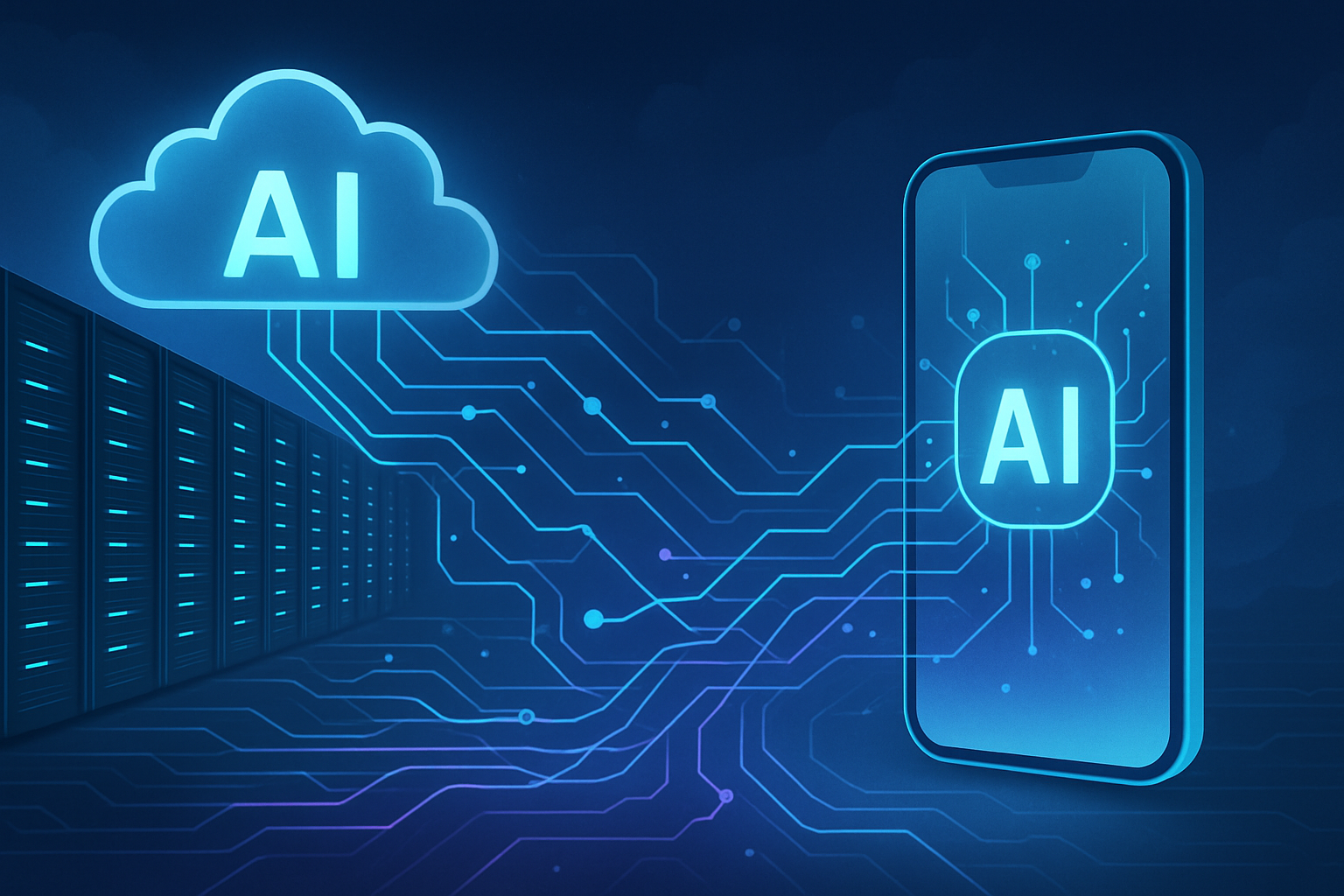
    In a strategic double-strike against the escalating demands of artificial intelligence, Google (NASDAQ: GOOGL) has officially unveiled its latest custom-designed AI chips in 2025: the Ironwood Tensor Processing Unit (TPU) for powering its expansive cloud AI workloads and the Tensor G5, engineered to bring cutting-edge AI directly to its Pixel devices. These announcements, made at Google Cloud Next in April and the Made by Google event in August, respectively, signal a profound commitment by the tech giant to vertical integration and specialized hardware, aiming to redefine performance, energy efficiency, and competitive dynamics across the entire AI ecosystem.

    The twin chip unveilings underscore Google's aggressive push to optimize its AI infrastructure from the data center to the palm of your hand. With the Ironwood TPU, Google is arming its cloud with unprecedented processing power, particularly for the burgeoning inference needs of large language models (LLMs), while the Tensor G5 promises to unlock deeply integrated, on-device generative AI experiences for millions of Pixel users. This dual-pronged approach is poised to accelerate the development and deployment of next-generation AI applications, setting new benchmarks for intelligent systems globally.

    A Deep Dive into Google's Custom AI Engines: Ironwood TPU and Tensor G5

    Google's seventh-generation Ironwood Tensor Processing Unit (TPU), showcased at Google Cloud Next 2025, represents a pivotal advancement, primarily optimized for AI inference workloads—a segment projected to outpace training growth significantly in the coming years. Designed to meet the immense computational requirements of "thinking models" that generate proactive insights, Ironwood is built to handle the demands of LLMs and Mixture of Experts (MoEs) with unparalleled efficiency and scale.

    Technically, Ironwood TPUs boast impressive specifications. A single pod can scale up to an astounding 9,216 liquid-cooled chips, collectively delivering 42.5 Exaflops of compute power, a figure that reportedly surpasses the world's largest supercomputers in AI-specific tasks. This iteration offers a 5x increase in peak compute capacity over its predecessor, Trillium, coupled with 6x more High Bandwidth Memory (HBM) capacity (192 GB per chip) and 4.5x greater HBM bandwidth (7.37 TB/s per chip). Furthermore, Ironwood achieves a 2x improvement in performance per watt, making it nearly 30 times more power efficient than Google's inaugural Cloud TPU from 2018. Architecturally, Ironwood features a single primary compute die, likely fabricated on TSMC's N3P process with CoWoS packaging, and is Google's first multiple compute chiplet die, housing two Ironwood compute dies per chip. The system leverages a 3D Torus topology and breakthrough Inter-Chip Interconnect (ICI) networking for high density and minimal latency, all integrated within Google's Cloud AI Hypercomputer architecture and the Pathways software stack.

    Concurrently, the Tensor G5, debuting with the Pixel 10 series at the Made by Google event in August 2025, marks a significant strategic shift for Google's smartphone silicon. This chip is a custom design from scratch by Google and is manufactured by Taiwan Semiconductor Manufacturing Company (TSMC) (NYSE: TSM) using their advanced 3nm N3E process. This move away from Samsung, who manufactured previous Tensor chips, is expected to yield substantial efficiency improvements and enhanced battery life. The Tensor G5 is described as the most significant upgrade since the original Tensor, delivering snappy performance and enabling deeply helpful, on-device generative AI experiences powered by the newest Gemini Nano model. Initial benchmarks indicate a promising 73% increase in CPU multi-core performance over its predecessor and a 16% overall improvement in AnTuTu scores. The 8-core chipset features 1x Cortex-X4 at 3.78 GHz, 5x Cortex-A725 at 3.05 GHz, and 2x Cortex-A520 at 2.25 GHz, powering advanced AI features like "Magic Cue" for proactive in-app assistance and "Pro Res Zoom" for high-detail imagery.

    Reshaping the AI Industry: Competitive Implications and Strategic Advantages

    Google's unveiling of Ironwood TPU and Tensor G5 carries profound implications for the AI industry, poised to reshape competitive landscapes and strategic advantages for tech giants, AI labs, and even startups. The most direct beneficiary is undoubtedly Google (NASDAQ: GOOGL) itself, which gains unprecedented control over its AI hardware-software stack, allowing for highly optimized performance and efficiency across its cloud services and consumer devices. This vertical integration strengthens Google's position in the fiercely competitive cloud AI market and provides a unique selling proposition for its Pixel smartphone lineup.

    The Ironwood TPU directly challenges established leaders in the cloud AI accelerator market, most notably NVIDIA (NASDAQ: NVDA), whose GPUs have long dominated AI training and inference. By offering a scalable, highly efficient, and cost-effective alternative specifically tailored for inference workloads, Ironwood could disrupt NVIDIA's market share, particularly for large-scale deployments of LLMs in the cloud. This increased competition is likely to spur further innovation from all players, potentially leading to a more diverse and competitive AI hardware ecosystem. For AI companies and startups, the availability of Ironwood through Google Cloud could democratize access to cutting-edge AI processing, enabling them to deploy more sophisticated models without the prohibitive costs of building their own specialized infrastructure.

    The Tensor G5 intensifies competition in the mobile silicon space, directly impacting rivals like Qualcomm (NASDAQ: QCOM) and Apple (NASDAQ: AAPL), which also design custom chips for their flagship devices. Google's shift to TSMC (NYSE: TSM) for manufacturing signals a desire for greater control over performance and efficiency, potentially setting a new bar for on-device AI capabilities. This could pressure other smartphone manufacturers to accelerate their own custom silicon development or to seek more advanced foundry services. The Tensor G5's ability to run advanced generative AI models like Gemini Nano directly on-device could disrupt existing services that rely heavily on cloud processing for AI features, offering enhanced privacy, speed, and offline functionality to Pixel users. This strategic move solidifies Google's market positioning as a leader in both cloud and edge AI.

    The Broader AI Landscape: Trends, Impacts, and Concerns

    Google's 2025 AI chip unveilings—Ironwood TPU and Tensor G5—are not isolated events but rather integral pieces of a broader, accelerating trend within the AI landscape: the relentless pursuit of specialized hardware for optimized AI performance and efficiency. This development significantly reinforces the industry's pivot towards vertical integration, where leading tech companies are designing their silicon to tightly integrate with their software stacks and AI models. This approach, pioneered by companies like Apple, is now a crucial differentiator in the AI race, allowing for unprecedented levels of optimization that general-purpose hardware often cannot match.

    The impact of these chips extends far beyond Google's immediate ecosystem. Ironwood's focus on inference for large-scale cloud AI is a direct response to the explosion of generative AI and LLMs, which demand immense computational power for deployment. By making such power more accessible and efficient through Google Cloud, it accelerates the adoption and practical application of these transformative models across various industries, from advanced customer service bots to complex scientific simulations. Simultaneously, the Tensor G5's capabilities bring sophisticated on-device generative AI to the masses, pushing the boundaries of what smartphones can do. This move empowers users with more private, responsive, and personalized AI experiences, reducing reliance on constant cloud connectivity and opening doors for innovative offline AI applications.

    However, this rapid advancement also raises potential concerns. The increasing complexity and specialization of AI hardware could contribute to a widening "AI divide," where companies with the resources to design and manufacture custom silicon gain a significant competitive advantage, potentially marginalizing those reliant on off-the-shelf solutions. There are also environmental implications, as even highly efficient chips contribute to the energy demands of large-scale AI, necessitating continued innovation in sustainable computing. Comparisons to previous AI milestones, such as the initial breakthroughs in deep learning with GPUs, show a consistent pattern: specialized hardware is key to unlocking the next generation of AI capabilities, and Google's latest chips are a clear continuation of this trajectory, pushing the envelope of what's possible at both the cloud and edge.

    The Road Ahead: Future Developments and Expert Predictions

    The unveiling of Ironwood TPU and Tensor G5 marks a significant milestone, but it is merely a waypoint on the rapidly evolving journey of AI hardware. In the near term, we can expect Google (NASDAQ: GOOGL) to aggressively roll out Ironwood TPUs to its Google Cloud customers, focusing on demonstrating tangible performance and cost-efficiency benefits for large-scale AI inference workloads, particularly for generative AI models. The company will likely showcase new developer tools and services that leverage Ironwood's unique capabilities, further enticing businesses to migrate or expand their AI operations on Google Cloud. For Pixel devices, the Tensor G5 will be the foundation for a suite of enhanced, on-device AI features, with future software updates likely unlocking even more sophisticated generative AI experiences, potentially extending beyond current "Magic Cue" and "Pro Res Zoom" functionalities.

    Looking further ahead, experts predict a continued escalation in the "AI chip arms race." The success of Ironwood and Tensor G5 will likely spur even greater investment from Google and its competitors into custom silicon development. We can anticipate future generations of TPUs and Tensor chips that push the boundaries of compute density, memory bandwidth, and energy efficiency, possibly incorporating novel architectural designs and advanced packaging technologies. Potential applications and use cases on the horizon include highly personalized, proactive AI assistants that anticipate user needs, real-time multimodal AI processing directly on devices, and even more complex, context-aware generative AI that can operate with minimal latency.

    However, several challenges need to be addressed. The increasing complexity of chip design and manufacturing, coupled with global supply chain volatilities, poses significant hurdles. Furthermore, ensuring the ethical and responsible deployment of increasingly powerful on-device AI, particularly concerning privacy and potential biases, will be paramount. Experts predict that the next wave of innovation will not only be in raw processing power but also in the seamless integration of hardware, software, and AI models, creating truly intelligent and adaptive systems. The focus will shift towards making AI not just powerful, but also ubiquitous, intuitive, and inherently helpful, setting the stage for a new era of human-computer interaction.

    A New Era for AI: Google's Hardware Gambit and Its Lasting Impact

    Google's (NASDAQ: GOOGL) 2025 unveiling of the Ironwood Tensor Processing Unit (TPU) for cloud AI and the Tensor G5 for Pixel devices represents a monumental strategic move, solidifying the company's commitment to owning the full stack of AI innovation, from foundational hardware to end-user experience. The key takeaways from this announcement are clear: Google is doubling down on specialized AI silicon, not just for its massive cloud infrastructure but also for delivering cutting-edge, on-device intelligence directly to consumers. This dual-pronged approach positions Google as a formidable competitor in both the enterprise AI and consumer electronics markets, leveraging custom hardware for unparalleled performance and efficiency.

    This development holds immense significance in AI history, marking a decisive shift towards vertical integration as a competitive imperative in the age of generative AI. Just as the advent of GPUs catalyzed the deep learning revolution, these custom chips are poised to accelerate the next wave of AI breakthroughs, particularly in inference and on-device intelligence. The Ironwood TPU's sheer scale and efficiency for cloud inference, coupled with the Tensor G5's ability to bring sophisticated AI to mobile, collectively set new benchmarks for what is technologically feasible. This move underscores a broader industry trend where companies like Google are taking greater control over their hardware destiny to unlock unique AI capabilities that off-the-shelf components simply cannot provide.

    Looking ahead, the long-term impact of Ironwood and Tensor G5 will likely be measured by how effectively they democratize access to advanced AI, accelerate the development of new applications, and ultimately reshape user interactions with technology. We should watch for the widespread adoption of Ironwood in Google Cloud, observing how it influences the cost and performance of deploying large-scale AI models for businesses. On the consumer front, the evolution of Pixel's AI features, powered by the Tensor G5, will be a critical indicator of how deeply integrated and useful on-device generative AI can become in our daily lives. The coming weeks and months will reveal the initial market reactions and real-world performance metrics, providing further insights into how these custom chips will truly redefine the future of artificial intelligence.

    This content is intended for informational purposes only and represents analysis of current AI developments.

    TokenRing AI delivers enterprise-grade solutions for multi-agent AI workflow orchestration, AI-powered development tools, and seamless remote collaboration platforms.
    For more information, visit https://www.tokenring.ai/.

  • Google Unveils Ironwood TPU and Tensor G5: A Dual Assault on AI’s Next Frontier

    Google Unveils Ironwood TPU and Tensor G5: A Dual Assault on AI’s Next Frontier

    Google (NASDAQ: GOOGL) has ignited a new era in artificial intelligence hardware with the unveiling of its latest custom-designed AI chips in 2025: the Ironwood Tensor Processing Unit (TPU) for cloud AI workloads and the Tensor G5 for its flagship Pixel devices. These announcements, made at Cloud Next in April and the Made by Google event in August, respectively, signal a strategic and aggressive push by the tech giant to redefine performance, energy efficiency, and competitive dynamics across the entire AI ecosystem. With Ironwood squarely targeting large-scale AI inference in data centers and the Tensor G5 empowering next-generation on-device AI, Google is poised to significantly reshape how AI is developed, deployed, and experienced.

    The immediate significance of these chips cannot be overstated. Ironwood, Google's 7th-generation TPU, marks a pivotal shift by primarily optimizing for AI inference, a workload projected to outpace training growth by a factor of 12 by 2026. This move directly challenges the established market leaders like Nvidia (NASDAQ: NVDA) by offering a highly scalable and cost-effective solution for deploying AI at an unprecedented scale. Concurrently, the Tensor G5 solidifies Google's vertical integration strategy, embedding advanced AI capabilities directly into its hardware products, promising more personalized, efficient, and powerful experiences for users. Together, these chips underscore Google's comprehensive vision for AI, from the cloud's vast computational demands to the intimate, everyday interactions on personal devices.

    Technical Deep Dive: Inside Google's AI Silicon Innovations

    Google's Ironwood TPU, the 7th generation of its Tensor Processing Units, represents a monumental leap in specialized hardware, primarily designed for the burgeoning demands of large-scale AI inference. Unveiled at Cloud Next 2025, a full 9,216-chip Ironwood cluster boasts an astonishing 42.5 exaflops of AI compute, making it 24 times faster than the world's current top supercomputer. Each individual Ironwood chip delivers 4,614 teraflops of peak FP8 performance, signaling Google's aggressive intent to dominate the inference segment of the AI market.

    Technically, Ironwood is a marvel of engineering. It features a substantial 192GB of HBM3 (High Bandwidth Memory), a six-fold increase in capacity and 4.5 times more bandwidth (7.37 TB/s) compared to its predecessor, the Trillium TPU. This memory expansion is critical for handling the immense context windows and parameter counts of modern large language models (LLMs) and Mixture of Experts (MoE) architectures. Furthermore, Ironwood achieves a remarkable 2x better performance per watt than Trillium and is nearly 30 times more power-efficient than the first Cloud TPU from 2018, a testament to its advanced, likely sub-5nm manufacturing process and sophisticated liquid cooling solutions. Architectural innovations include an inference-first design optimized for low-latency and real-time applications, an enhanced Inter-Chip Interconnect (ICI) offering 1.2 TBps bidirectional bandwidth for seamless scaling across thousands of chips, improved SparseCore accelerators for embedding models, and native FP8 support for enhanced throughput.

    The AI research community and industry experts have largely hailed Ironwood as a transformative development. It's widely seen as Google's most direct and potent challenge to Nvidia's (NASDAQ: NVDA) long-standing dominance in the AI accelerator market, with some early performance comparisons reportedly suggesting Ironwood's capabilities rival or even surpass Nvidia's GB200 in certain performance-per-watt scenarios. Experts emphasize Ironwood's role in ushering in an "age of inference," enabling "thinking models" and proactive AI agents at an unprecedented scale, while its energy efficiency improvements are lauded as crucial for the sustainability of increasingly demanding AI workloads.

    Concurrently, the Tensor G5, Google's latest custom mobile System-on-a-Chip (SoC), is set to power the Pixel 10 series, marking a significant strategic shift. Manufactured by Taiwan Semiconductor Manufacturing Company (TSMC) (NYSE: TSM) using its cutting-edge 3nm process node, the Tensor G5 promises substantial gains over its predecessor. Google claims a 34% faster CPU and an NPU (Neural Processing Unit) that is up to 60% more powerful than the Tensor G4. This move to TSMC is particularly noteworthy, addressing previous concerns about efficiency and thermal management associated with earlier Tensor chips manufactured by Samsung (KRX: 005930).

    The Tensor G5's architectural innovations are heavily focused on enhancing on-device AI. Its next-generation TPU enables the chip to run the newest Gemini Nano model 2.6 times faster and 2 times more efficiently than the Tensor G4, expanding the token window from 12,000 to 32,000. This empowers advanced features like real-time voice translation, sophisticated computational photography (e.g., advanced segmentation, motion deblur, 10-bit HDR video, 100x AI-processed zoom), and proactive AI agents directly on the device. Improved thermal management, with graphite cooling in base models and vapor chambers in Pro variants, aims to sustain peak performance.

    Initial reactions to the Tensor G5 are more nuanced. While its vastly more powerful NPU and enhanced ISP are widely praised for delivering unprecedented on-device AI capabilities and a significantly improved Pixel experience, some industry observers have noted reservations regarding its raw CPU and particularly GPU performance. Early benchmarks suggest the Tensor G5's GPU may lag behind flagship offerings from rivals like Qualcomm (NASDAQ: QCOM) (Snapdragon 8 Elite) and Apple (NASDAQ: AAPL) (A18 Pro), and in some tests, even its own predecessor, the Tensor G4. The absence of ray tracing support for gaming has also been a point of criticism. However, experts generally acknowledge Google's philosophy with Tensor chips: prioritizing deeply integrated, AI-driven experiences and camera processing over raw, benchmark-topping CPU/GPU horsepower to differentiate its Pixel ecosystem.

    Industry Impact: Reshaping the AI Hardware Battleground

    Google's Ironwood TPU is poised to significantly reshape the competitive landscape of cloud AI, particularly for inference workloads. By bolstering Google Cloud's (NASDAQ: GOOGL) "AI Hypercomputer" architecture, Ironwood dramatically enhances the capabilities available to customers, enabling them to tackle the most demanding AI tasks with unprecedented performance and efficiency. Internally, these chips will supercharge Google's own vast array of AI services, from Search and YouTube recommendations to advanced DeepMind experiments. Crucially, Google is aggressively expanding the external supply of its TPUs, installing them in third-party data centers like FluidStack and offering financial guarantees to promote adoption, a clear strategic move to challenge the established order.

    This aggressive push directly impacts the major players in the AI hardware market. Nvidia (NASDAQ: NVDA), which currently holds a commanding lead in AI accelerators, faces its most formidable challenge yet, especially in the inference segment. While Nvidia's H100 and B200 GPUs remain powerful, Ironwood's specialized design and superior efficiency for LLMs and MoE models aim to erode Nvidia's market share. The move also intensifies pressure on AMD (NASDAQ: AMD) and Intel (NASDAQ: INTC), who are also vying for a larger slice of the specialized AI silicon pie. Among hyperscale cloud providers, the competition is heating up, with Amazon (NASDAQ: AMZN) (AWS Inferentia/Trainium) and Microsoft (NASDAQ: MSFT) (Azure Maia/Cobalt) similarly investing heavily in custom silicon to optimize their AI offerings and reduce reliance on third-party hardware.

    The disruptive potential of Ironwood extends beyond direct competition. Its specialized nature and remarkable efficiency for inference could accelerate a broader shift away from using general-purpose GPUs for certain AI deployment tasks, particularly in vast data centers where cost and power efficiency are paramount. The superior performance-per-watt could significantly lower the operational costs of running large AI models, potentially democratizing access to powerful AI inference for a wider range of companies and enabling entirely new types of AI-powered products and services that were previously too expensive or computationally intensive to deploy.

    On the mobile front, the Tensor G5 is set to democratize advanced on-device AI. With its vastly enhanced NPU, the G5 can run the powerful Gemini Nano model entirely on the device, fostering innovation for startups focused on privacy-preserving and offline AI. This creates new opportunities for developers to build next-generation mobile AI applications, leveraging Google's tightly integrated hardware and AI models.

    The Tensor G5 intensifies the rivalry in the premium smartphone market. Google's (NASDAQ: GOOGL) shift to TSMC's (NYSE: TSM) 3nm process positions the G5 as a more direct competitor to Apple's (NASDAQ: AAPL) A-series chips and their Neural Engine, with Google aiming for "iPhone-level SoC upgrades" and seeking to close the performance gap. Within the Android ecosystem, Qualcomm (NASDAQ: QCOM), the dominant supplier of premium SoCs, faces increased pressure. As Google's Tensor chips become more powerful and efficient, they enable Pixel phones to offer unique, AI-driven features that differentiate them, potentially making it harder for other Android OEMs relying on Qualcomm to compete directly on AI capabilities.

    Ultimately, both Ironwood and Tensor G5 solidify Google's strategic advantage through profound vertical integration. By designing both the chips and the AI software (like TensorFlow, JAX, and Gemini) that run on them, Google achieves unparalleled optimization and specialized capabilities. This reinforces its position as an AI leader across all scales, enhances Google Cloud's competitiveness, differentiates Pixel devices with unique AI experiences, and significantly reduces its reliance on external chip suppliers, granting greater control over its innovation roadmap and supply chain.

    Wider Significance: Charting AI's Evolving Landscape

    Google's introduction of the Ironwood TPU and Tensor G5 chips arrives at a pivotal moment, profoundly influencing the broader AI landscape and accelerating several key trends. Both chips are critical enablers for the continued advancement and widespread adoption of Large Language Models (LLMs) and generative AI. Ironwood, with its unprecedented scale and inference optimization, empowers the deployment of massive, complex LLMs and Mixture of Experts (MoE) models in the cloud, pushing AI from reactive responses towards "proactive intelligence" where AI agents can autonomously retrieve and generate insights. Simultaneously, the Tensor G5 brings the power of generative AI directly to consumer devices, enabling features like Gemini Nano to run efficiently on-device, thereby enhancing privacy, responsiveness, and personalization for millions of users.

    The Tensor G5 is a prime embodiment of Google's commitment to the burgeoning trend of Edge AI. By integrating a powerful TPU directly into a mobile SoC, Google is pushing sophisticated AI capabilities closer to the user and the data source. This is crucial for applications demanding low latency, enhanced privacy, and the ability to operate without continuous internet connectivity, extending beyond smartphones to a myriad of IoT devices and autonomous systems. Concurrently, Google has made significant strides in addressing the sustainability of its AI operations. Ironwood's remarkable energy efficiency—nearly 30 times more power-efficient than the first Cloud TPU from 2018—underscores the company's focus on mitigating the environmental impact of large-scale AI. Google actively tracks and improves the carbon efficiency of its TPUs using a metric called Compute Carbon Intensity (CCI), recognizing that operational electricity accounts for over 70% of a TPU's lifetime carbon footprint.

    These advancements have profound impacts on AI development and accessibility. Ironwood's inference optimization enables developers to deploy and iterate on AI models with greater speed and efficiency, accelerating the pace of innovation, particularly for real-time applications. Both chips democratize access to advanced AI: Ironwood by making high-performance AI compute available as a service through Google Cloud, allowing a broader range of businesses and researchers to leverage its power without massive capital investment; and Tensor G5 by bringing sophisticated AI features directly to consumer devices, fostering ubiquitous on-device AI experiences. Google's integrated approach, where it designs both the AI hardware and its corresponding software stack (Pathways, Gemini Nano), allows for unparalleled optimization and unique capabilities that are difficult to achieve with off-the-shelf components.

    However, the rapid advancement also brings potential concerns. While Google's in-house chip development reduces its reliance on third-party manufacturers, it also strengthens Google's control over the foundational infrastructure of advanced AI. By offering TPUs primarily as a cloud service, Google integrates users deeper into its ecosystem, potentially leading to a centralization of AI development and deployment power within a few dominant tech companies. Despite Google's significant efforts in sustainability, the sheer scale of AI still demands immense computational power and energy, and the manufacturing process itself carries an environmental footprint. The increasing power and pervasiveness of AI, facilitated by these chips, also amplify existing ethical concerns regarding potential misuse, bias in AI systems, accountability for AI-driven decisions, and the broader societal impact of increasingly autonomous AI agents, issues Google (NASDAQ: GOOGL) has faced scrutiny over in the past.

    Google's Ironwood TPU and Tensor G5 represent significant milestones in the continuous evolution of AI hardware, building upon a rich history of breakthroughs. They follow the early reliance on general-purpose CPUs, the transformative repurposing of Graphics Processing Units (GPUs) for deep learning, and Google's own pioneering introduction of the first TPUs in 2015, which marked a shift towards custom Application-Specific Integrated Circuits (ASICs) for AI. The advent of the Transformer architecture in 2017 further propelled the development of LLMs, which these new chips are designed to accelerate. Ironwood's inference-centric design signifies the maturation of AI from a research-heavy field to one focused on large-scale, real-time deployment of "thinking models." The Tensor G5, with its advanced on-device AI capabilities and shift to a 3nm process, marks a critical step in democratizing powerful generative AI, bringing it directly into the hands of consumers and further blurring the lines between cloud and edge computing.

    Future Developments: The Road Ahead for AI Silicon

    Google's latest AI chips, Ironwood TPU and Tensor G5, are not merely incremental updates but foundational elements shaping the near and long-term trajectory of artificial intelligence. In the immediate future, the Ironwood TPU is expected to become broadly available through Google Cloud (NASDAQ: GOOGL) later in 2025, enabling a new wave of highly sophisticated, inference-heavy AI applications for businesses and researchers. Concurrently, the Tensor G5 will power the Pixel 10 series, bringing cutting-edge on-device AI experiences directly into the hands of consumers. Looking further ahead, Google's strategy points towards continued specialization, deeper vertical integration, and an "AI-on-chip" paradigm, where AI itself, through tools like Google's AlphaChip, will increasingly design and optimize future generations of silicon, promising faster, cheaper, and more power-efficient chips.

    These advancements will unlock a vast array of potential applications and use cases. Ironwood TPUs will further accelerate generative AI services in Google Cloud, enabling more sophisticated LLMs, Mixture of Experts models, and proactive insight generation for enterprises, including real-time AI systems for complex tasks like medical diagnostics and fraud detection. The Tensor G5 will empower Pixel phones with advanced on-device AI features such as Magic Cue, Voice Translate, Call Notes with actions, and enhanced camera capabilities like 100x ProRes Zoom, all running locally and efficiently. This push towards edge AI will inevitably extend to other consumer electronics and IoT devices, leading to more intelligent personal assistants and real-time processing across diverse environments. Beyond Google's immediate products, these chips will fuel AI revolutions in healthcare, finance, autonomous vehicles, and smart industrial automation.

    However, the road ahead is not without significant challenges. Google must continue to strengthen its software ecosystem around its custom chips to compete effectively with Nvidia's (NASDAQ: NVDA) dominant CUDA platform, ensuring its tools and frameworks are compelling for broad developer adoption. Despite Ironwood's improved energy efficiency, scaling to massive TPU pods (e.g., 9,216 chips with a 10 MW power demand) presents substantial power consumption and cooling challenges for data centers, demanding continuous innovation in sustainable energy management. Furthermore, AI/ML chips introduce new security vulnerabilities, such as data poisoning and model inversion, necessitating "security and privacy by design" from the outset. Crucially, ethical considerations remain paramount, particularly regarding algorithmic bias, data privacy, accountability for AI-driven decisions, and the potential misuse of increasingly powerful AI systems, especially given Google's recently updated AI principles.

    Experts predict explosive growth in the AI chip market, with revenues projected to reach an astonishing $927.76 billion by 2034. While Nvidia is expected to maintain its lead in the AI GPU segment, Google and other hyperscalers are increasingly challenging this dominance with their custom AI chips. This intensifying competition is anticipated to drive innovation, potentially leading to lower prices and more diverse, specialized AI chip offerings. A significant shift towards inference-optimized chips, like Google's TPUs, is expected as AI use cases evolve towards real-time reasoning and responsiveness. Strategic vertical integration, where major tech companies design proprietary chips, will continue to disrupt traditional chip design markets and reduce reliance on third-party vendors, with AI itself playing an ever-larger role in the chip design process.

    Comprehensive Wrap-up: Google's AI Hardware Vision Takes Center Stage

    Google's simultaneous unveiling of the Ironwood TPU and Tensor G5 chips represents a watershed moment in the artificial intelligence landscape, solidifying the company's aggressive and vertically integrated "AI-first" strategy. The Ironwood TPU, Google's 7th-generation custom accelerator, stands out for its inference-first design, delivering an astounding 42.5 exaflops of AI compute at pod-scale—making it 24 times faster than today's top supercomputer. Its massive 192GB of HBM3 with 7.2 TB/s bandwidth, coupled with a 30x improvement in energy efficiency over the first Cloud TPU, positions it as a formidable force for powering the most demanding Large Language Models and Mixture of Experts architectures in the cloud.

    The Tensor G5, destined for the Pixel 10 series, marks a significant strategic shift with its manufacturing on TSMC's (NYSE: TSM) 3nm process. It boasts an NPU up to 60% faster and a CPU 34% faster than its predecessor, enabling the latest Gemini Nano model to run 2.6 times faster and twice as efficiently entirely on-device. This enhances a suite of features from computational photography (with a custom ISP) to real-time AI assistance. While early benchmarks suggest its GPU performance may lag behind some competitors, the G5 underscores Google's commitment to delivering deeply integrated, AI-driven experiences on its consumer hardware.

    The combined implications of these chips are profound. They underscore Google's (NASDAQ: GOOGL) unwavering pursuit of AI supremacy through deep vertical integration, optimizing every layer from silicon to software. This strategy is ushering in an "Age of Inference," where the efficient deployment of sophisticated AI models for real-time applications becomes paramount. Together, Ironwood and Tensor G5 democratize advanced AI, making high-performance compute accessible in the cloud and powerful generative AI available directly on consumer devices. This dual assault squarely challenges Nvidia's (NASDAQ: NVDA) long-standing dominance in AI hardware, intensifying the "chip war" across both data center and mobile segments.

    In the long term, these chips will accelerate the development and deployment of increasingly sophisticated AI models, deepening Google's ecosystem lock-in by offering unparalleled integration of hardware, software, and AI models. They will undoubtedly drive industry-wide innovation, pushing other tech giants to invest further in specialized AI silicon. We can expect new AI paradigms, with Ironwood enabling more proactive, reasoning AI agents in the cloud, and Tensor G5 fostering more personalized and private on-device AI experiences.

    In the coming weeks and months, the tech world will be watching closely. Key indicators include the real-world adoption rates and performance benchmarks of Ironwood TPUs in Google Cloud, particularly against Nvidia's latest offerings. For the Tensor G5, attention will be on potential software updates and driver optimizations for its GPU, as well as the unveiling of new, Pixel-exclusive AI features that leverage its enhanced on-device capabilities. Finally, the ongoing competitive responses from other major players like Apple (NASDAQ: AAPL), Qualcomm (NASDAQ: QCOM), Amazon (NASDAQ: AMZN), and Microsoft (NASDAQ: MSFT) in this rapidly evolving AI hardware landscape will be critical in shaping the future of artificial intelligence.

    This content is intended for informational purposes only and represents analysis of current AI developments.

    TokenRing AI delivers enterprise-grade solutions for multi-agent AI workflow orchestration, AI-powered development tools, and seamless remote collaboration platforms.
    For more information, visit https://www.tokenring.ai/.