Tag: Cloud Computing

  • Bitdeer Technologies Group Surges 19.5% as Aggressive Data Center Expansion and AI Pivot Ignite Investor Confidence

    Bitdeer Technologies Group Surges 19.5% as Aggressive Data Center Expansion and AI Pivot Ignite Investor Confidence

    Singapore – October 4, 2025 – Bitdeer Technologies Group (NASDAQ: BTDR) has witnessed a remarkable surge in its stock, climbing an impressive 19.5% in the past week. This significant upturn is a direct reflection of the company's aggressive expansion of its global data center infrastructure and a decisive strategic pivot towards the burgeoning artificial intelligence (AI) sector. Investors are clearly bullish on Bitdeer's transformation from a prominent cryptocurrency mining operator to a key player in high-performance computing (HPC) and AI cloud services, positioning it at the forefront of the next wave of technological innovation.

    The company's strategic reorientation, which began gaining significant traction in late 2023 and has accelerated throughout 2024 and 2025, underscores a broader industry trend where foundational infrastructure providers are adapting to the insatiable demand for AI compute power. Bitdeer's commitment to building out massive, energy-efficient data centers capable of hosting advanced AI workloads, coupled with strategic partnerships with industry giants like NVIDIA, has solidified its growth prospects and captured the market's attention.

    Engineering the Future: Bitdeer's Technical Foundation for AI Dominance

    Bitdeer's pivot is not merely a rebranding exercise but a deep-seated technical transformation centered on robust infrastructure and cutting-edge AI capabilities. A cornerstone of this strategy is the strategic partnership with NVIDIA, announced in November 2023, which established Bitdeer as a preferred cloud service provider within the NVIDIA Partner Network. This collaboration culminated in the launch of Bitdeer AI Cloud in Q1 2024, offering NVIDIA-powered AI computing services across Asia, starting with Singapore. The platform leverages NVIDIA DGX SuperPOD systems, including the highly coveted H100 and H200 GPUs, specifically optimized for large-scale HPC and AI workloads such as generative AI and large language models (LLMs).

    Further solidifying its technical prowess, Bitdeer AI introduced its advanced AI Training Platform in August 2024. This platform provides serverless GPU infrastructure, enabling scalable and efficient AI/ML inference and model training. It allows enterprises, startups, and research labs to build, train, and fine-tune AI models at scale without the overhead of managing complex hardware. This approach differs significantly from traditional cloud offerings by providing specialized, high-performance environments tailored for the demanding computational needs of modern AI, distinguishing Bitdeer as one of the first NVIDIA Cloud Service Providers in Asia to offer both comprehensive cloud services and a dedicated AI training platform.

    Beyond external partnerships, Bitdeer is also investing in proprietary technology, developing its own ASIC chips like the SEALMINER A4. While initially designed for Bitcoin mining, these chips are engineered with a groundbreaking 5 J/TH efficiency and are being adapted for HPC and AI applications, signaling a long-term vision of vertically integrated AI infrastructure. This blend of best-in-class third-party hardware and internal innovation positions Bitdeer to offer highly optimized and cost-effective solutions for the most intensive AI tasks.

    Reshaping the AI Landscape: Competitive Implications and Market Positioning

    Bitdeer's aggressive move into AI infrastructure has significant implications for the broader AI ecosystem, affecting tech giants, specialized AI labs, and burgeoning startups alike. By becoming a key NVIDIA Cloud Service Provider, Bitdeer directly benefits from the explosive demand for NVIDIA's leading-edge GPUs, which are the backbone of most advanced AI development today. This positions the company to capture a substantial share of the growing market for AI compute, offering a compelling alternative to established hyperscale cloud providers.

    The competitive landscape is intensifying, with Bitdeer emerging as a formidable challenger. While tech giants like Amazon (NASDAQ: AMZN) AWS, Microsoft (NASDAQ: MSFT) Azure, and Alphabet (NASDAQ: GOOGL) Google Cloud offer broad cloud services, Bitdeer's specialized focus on HPC and AI, coupled with its massive data center capacity and commitment to sustainable energy, provides a distinct advantage for AI-centric enterprises. Its ability to provide dedicated, high-performance GPU clusters can alleviate bottlenecks faced by AI labs and startups struggling to access sufficient compute resources, potentially disrupting existing product offerings that rely on more general-purpose cloud infrastructure.

    Furthermore, Bitdeer's strategic choice to pause Bitcoin mining construction at its Clarington, Ohio site to actively explore HPC and AI opportunities, as announced in May 2025, underscores a clear shift in market positioning. This strategic pivot allows the company to reallocate resources towards higher-margin, higher-growth AI opportunities, thereby enhancing its competitive edge and long-term strategic advantages in a market increasingly defined by AI innovation. Its recent win of the 2025 AI Breakthrough Award for MLOps Innovation further validates its advancements and expertise in the sector.

    Broader Significance: Powering the AI Revolution Sustainably

    Bitdeer's strategic evolution fits perfectly within the broader AI landscape, reflecting a critical trend: the increasing importance of robust, scalable, and sustainable infrastructure to power the AI revolution. As AI models become more complex and data-intensive, the demand for specialized computing resources is skyrocketing. Bitdeer's commitment to building out a global network of data centers, with a focus on clean and affordable green energy, primarily hydroelectricity, addresses not only the computational needs but also the growing environmental concerns associated with large-scale AI operations.

    This development has profound impacts. It democratizes access to high-performance AI compute, enabling a wider range of organizations to develop and deploy advanced AI solutions. By providing the foundational infrastructure, Bitdeer accelerates innovation across various industries, from scientific research to enterprise applications. Potential concerns, however, include the intense competition for GPU supply and the rapid pace of technological change in the AI hardware space. Bitdeer's NVIDIA partnership and proprietary chip development are strategic moves to mitigate these risks.

    Comparisons to previous AI milestones reveal a consistent pattern: breakthroughs in algorithms and models are always underpinned by advancements in computing power. Just as the rise of deep learning was facilitated by the widespread availability of GPUs, Bitdeer's expansion into AI infrastructure is a crucial enabler for the next generation of AI breakthroughs, particularly in generative AI and autonomous systems. Its ongoing data center expansions, such as the 570 MW power facility in Ohio and the 500 MW Jigmeling, Bhutan site, are not just about capacity but about building a sustainable and resilient foundation for the future of AI.

    The Road Ahead: Future Developments and Expert Predictions

    Looking ahead, Bitdeer's trajectory points towards continued aggressive expansion and deeper integration into the AI ecosystem. Near-term developments include the energization of significant data center capacity, such as the 21 MW at Massillon, Ohio by the end of October 2025, and further phases expected by Q1 2026. The 266 MW at Clarington, Ohio, anticipated in Q3 2025, is a prime candidate for HPC/AI opportunities, indicating a continuous shift in focus. Long-term, the planned 101 MW gas-fired power plant and 99 MW data center in Fox Creek, Alberta, slated for Q4 2026, suggest a sustained commitment to expanding its energy and compute footprint.

    Potential applications and use cases on the horizon are vast. Bitdeer's AI Cloud and Training Platform are poised to support the development of next-generation LLMs, advanced AI agents, complex simulations, and real-time inference for a myriad of industries, from healthcare to finance. The company is actively seeking AI development partners for its HPC/AI data center strategy, particularly for its Ohio sites, aiming to provide a comprehensive range of AI solutions, from Infrastructure as a Service (IaaS) to Software as a Service (SaaS) and APIs.

    Challenges remain, particularly in navigating the dynamic AI hardware market, managing supply chain complexities for advanced GPUs, and attracting top-tier AI talent to leverage its infrastructure effectively. However, experts predict that companies like Bitdeer, which control significant, energy-efficient compute infrastructure, will become increasingly invaluable as AI continues its exponential growth. Roth Capital, for instance, has increased its price target for Bitdeer from $18 to $40, maintaining a "Buy" rating, citing the company's focus on HPC and AI as a key driver.

    A New Era: Bitdeer's Enduring Impact on AI Infrastructure

    In summary, Bitdeer Technologies Group's recent 19.5% stock surge is a powerful validation of its strategic pivot towards AI and its relentless data center expansion. The company's transformation from a Bitcoin mining specialist to a critical provider of high-performance AI cloud services, backed by NVIDIA partnership and proprietary innovation, marks a significant moment in its history and in the broader AI infrastructure landscape.

    This development is more than just a financial milestone; it represents a crucial step in building the foundational compute power necessary to fuel the next generation of AI. Bitdeer's emphasis on sustainable energy and massive scale positions it as a key enabler for AI innovation globally. The long-term impact could see Bitdeer becoming a go-to provider for organizations requiring intensive AI compute, diversifying the cloud market and fostering greater competition.

    What to watch for in the coming weeks and months includes further announcements regarding data center energization, new AI partnerships, and the continued evolution of its AI Cloud and Training Platform offerings. Bitdeer's journey highlights the dynamic nature of the tech industry, where strategic foresight and aggressive execution can lead to profound shifts in market position and value.


    This content is intended for informational purposes only and represents analysis of current AI developments.

    TokenRing AI delivers enterprise-grade solutions for multi-agent AI workflow orchestration, AI-powered development tools, and seamless remote collaboration platforms. For more information, visit https://www.tokenring.ai/.
  • Hyperscalers Ignite Semiconductor Revolution: The AI Supercycle Reshapes Chip Design

    Hyperscalers Ignite Semiconductor Revolution: The AI Supercycle Reshapes Chip Design

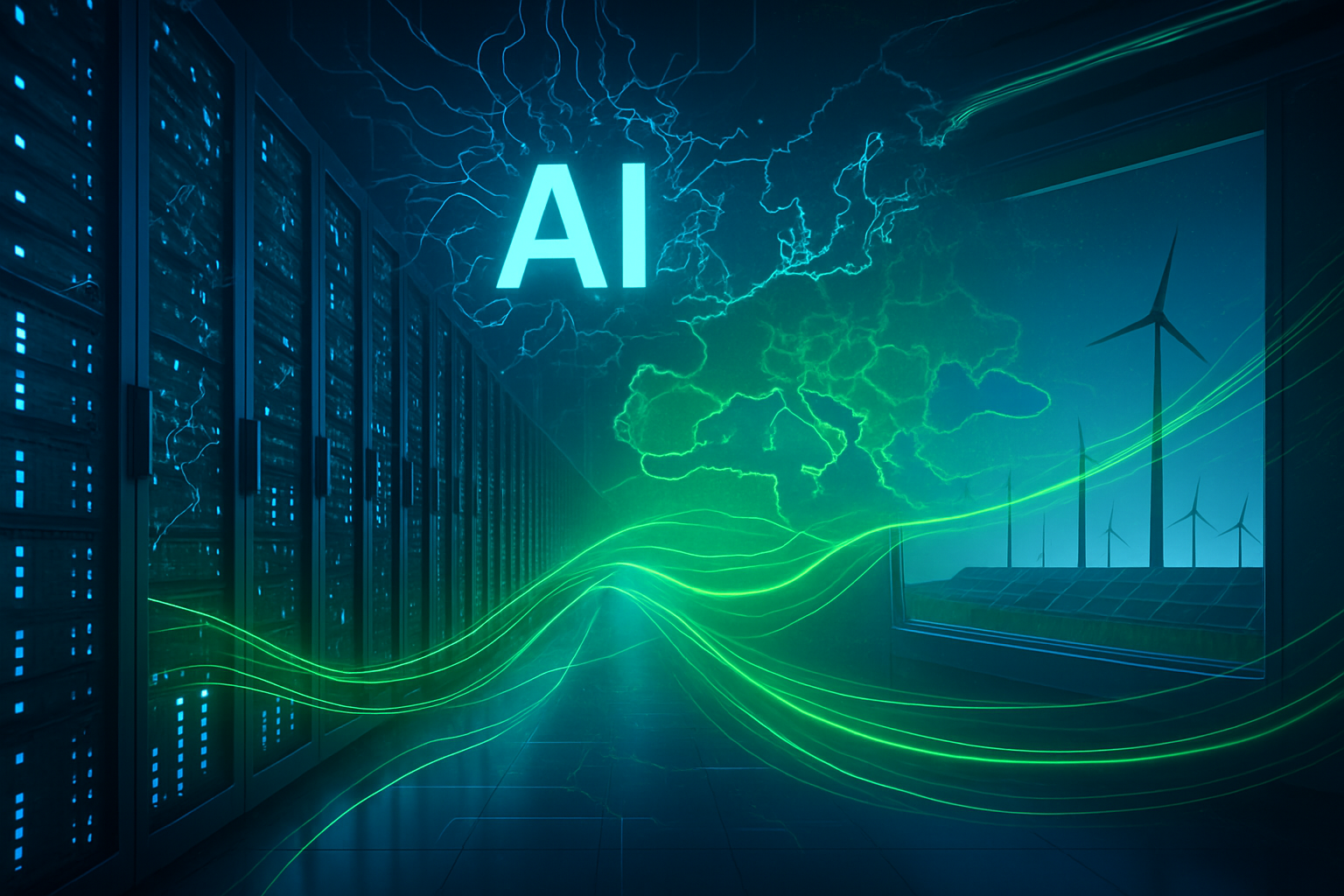
    The global technology landscape, as of October 2025, is undergoing a profound and transformative shift, driven by the insatiable appetite of hyperscale data centers for advanced computing power. This surge, primarily fueled by the burgeoning artificial intelligence (AI) boom, is not merely increasing demand for semiconductors; it is fundamentally reshaping chip design, manufacturing processes, and the entire ecosystem of the tech industry. Hyperscalers, the titans of cloud computing, are now the foremost drivers of semiconductor innovation, dictating the specifications for the next generation of silicon.

    This "AI Supercycle" marks an unprecedented era of capital expenditure and technological advancement. The data center semiconductor market is projected to expand dramatically, from an estimated $209 billion in 2024 to nearly $500 billion by 2030, with the AI chip market within this segment forecasted to exceed $400 billion by 2030. Companies like Amazon (NASDAQ: AMZN), Google (NASDAQ: GOOGL), Microsoft (NASDAQ: MSFT), and Meta (NASDAQ: META) are investing tens of billions annually, signaling a continuous and aggressive build-out of AI infrastructure. This massive investment underscores a strategic imperative: to control costs, optimize performance, and reduce reliance on third-party suppliers, thereby ushering in an era of vertical integration where hyperscalers design their own custom silicon.

    The Technical Core: Specialized Chips for a Cloud-Native AI Future

    The evolution of cloud computing chips is a fundamental departure from traditional, general-purpose silicon, driven by the unique requirements of hyperscale environments and AI-centric workloads. Hyperscalers demand a diverse array of chips, each optimized for specific tasks, with an unyielding emphasis on performance, power efficiency, and scalability.

    While AI accelerators handle intensive machine learning (ML) tasks, Central Processing Units (CPUs) remain the backbone for general-purpose computing and orchestration. A significant trend here is the widespread adoption of Arm-based CPUs. Hyperscalers like AWS (Amazon Web Services), Google Cloud, and Microsoft Azure are deploying custom Arm-based chips, projected to account for half of the compute shipped to top hyperscalers by 2025. These custom Arm CPUs, such as AWS Graviton4 (96 cores, 12 DDR5-5600 memory channels) and Microsoft's Azure Cobalt 100 CPU (128 Arm Neoverse N2 cores, 12 channels of DDR5 memory), offer significant energy and cost savings, along with superior performance per watt compared to traditional x86 offerings.

    However, the most critical components for AI/ML workloads are Graphics Processing Units (GPUs) and AI Accelerators (ASICs/TPUs). High-performance GPUs from NVIDIA (NASDAQ: NVDA) (e.g., Hopper H100/H200, Blackwell B200/B300, and upcoming Rubin) and AMD (NASDAQ: AMD) (MI300 series) remain dominant for training large AI models due to their parallel processing capabilities and robust software ecosystems. These chips feature massive computational power, often exceeding exaflops, and integrate large capacities of High-Bandwidth Memory (HBM). For AI inference, there's a pivotal shift towards custom ASICs. Google's 7th-generation Tensor Processing Unit (TPU), Ironwood, unveiled at Cloud Next 2025, is primarily optimized for large-scale AI inference, achieving an astonishing 42.5 exaflops of AI compute with a full cluster. Microsoft's Azure Maia 100, extensively deployed by 2025, boasts 105 billion transistors on a 5-nanometer TSMC (NYSE: TSM) process and delivers 1,600 teraflops in certain formats. OpenAI, a leading AI research lab, is even partnering with Broadcom (NASDAQ: AVGO) and TSMC to produce its own custom AI chips using a 3nm process, targeting mass production by 2026. These chips now integrate over 250GB of HBM (e.g., HBM4) to support larger AI models, utilizing advanced packaging to stack memory adjacent to compute chiplets.

    Field-Programmable Gate Arrays (FPGAs) offer flexibility for custom AI algorithms and rapidly evolving workloads, while Data Processing Units (DPUs) are critical for offloading networking, storage, and security tasks from main CPUs, enhancing overall data center efficiency.

    The design evolution is marked by a fundamental departure from monolithic chips. Custom silicon and vertical integration are paramount, allowing hyperscalers to optimize chips specifically for their unique workloads, improving price-performance and power efficiency. Chiplet architecture has become standard, overcoming monolithic design limits by building highly customized systems from smaller, specialized blocks. Google's Ironwood TPU, for example, is its first multiple compute chiplet die. This is coupled with leveraging the most advanced process nodes (5nm and below, with TSMC planning 2nm mass production by Q4 2025) and advanced packaging techniques like TSMC's CoWoS-L. Finally, the increased power density of these AI chips necessitates entirely new approaches to data center design, including higher direct current (DC) architectures and liquid cooling, which is becoming essential (Microsoft's Maia 100 is only deployed in water-cooled configurations).

    The AI research community and industry experts largely view these developments as a necessary and transformative phase, driving an "AI supercycle" in semiconductors. While acknowledging the high R&D costs and infrastructure overhauls required, the move towards vertical integration is seen as a strategic imperative to control costs, optimize performance, and secure supply chains, fostering a more competitive and innovative hardware landscape.

    Corporate Chessboard: Beneficiaries, Battles, and Strategic Shifts

    The escalating demand for specialized chips from hyperscalers and data centers is profoundly reshaping the competitive landscape for AI companies, tech giants, and startups. This "AI Supercycle" has led to an unprecedented growth phase in the AI chip market, projected to reach over $150 billion in sales in 2025.

    NVIDIA remains the undisputed dominant force in the AI GPU market, holding approximately 94% market share as of Q2 2025. Its powerful Hopper and Blackwell GPU architectures, combined with the robust CUDA software ecosystem, provide a formidable competitive advantage. NVIDIA's data center revenue has seen meteoric growth, and it continues to accelerate its GPU roadmap with annual updates. However, the aggressive push by hyperscalers (Amazon, Google, Microsoft, Meta) into custom silicon directly challenges NVIDIA's pricing power and market share. Their custom chips, like AWS's Trainium/Inferentia, Google's TPUs, and Microsoft's Azure Maia, position them to gain significant strategic advantages in cost-performance and efficiency for their own cloud services and internal AI models. AWS, for instance, is deploying its Trainium chips at scale, claiming better price-performance compared to NVIDIA's latest offerings.

    TSMC (Taiwan Semiconductor Manufacturing Company Limited) stands as an indispensable partner, manufacturing advanced chips for NVIDIA, AMD, Apple (NASDAQ: AAPL), and the hyperscalers. Its leadership in advanced process nodes and packaging technologies like CoWoS solidifies its critical role. AMD is gaining significant traction with its MI series (MI300, MI350, MI400 roadmap) in the AI accelerator market, securing billions in AI accelerator orders for 2025. Other beneficiaries include Broadcom (NASDAQ: AVGO) and Marvell Technology (NASDAQ: MRVL), benefiting from demand for custom AI accelerators and advanced networking chips, and Astera Labs (NASDAQ: ALAB), seeing strong demand for its interconnect solutions.

    The competitive implications are intense. Hyperscalers' vertical integration is a direct response to the limitations and high costs of general-purpose hardware, allowing them to fine-tune every aspect for their native cloud environments. This reduces reliance on external suppliers and creates a more diversified hardware landscape. While NVIDIA's CUDA platform remains strong, the proliferation of specialized hardware and open alternatives (like AMD's ROCm) is fostering a more competitive environment. However, the astronomical cost of developing advanced AI chips creates significant barriers for AI startups, centralizing AI power among well-resourced tech giants. Geopolitical tensions, particularly export controls, further fragment the market and create production hurdles.

    This shift leads to disruptions such as delayed product development due to chip scarcity, and a redefinition of cloud offerings, with providers differentiating through proprietary chip architectures. Infrastructure innovation extends beyond chips to advanced cooling technologies, like Microsoft's microfluidics, to manage the extreme heat generated by powerful AI chips. Companies are also moving from "just-in-time" to "just-in-case" supply chain strategies, emphasizing diversification.

    Broader Horizons: AI's Foundational Shift and Global Implications

    The hyperscaler-driven chip demand is inextricably linked to the broader AI landscape, signaling a fundamental transformation in computing and society. The current era is characterized by an "AI supercycle," where the proliferation of generative AI and large language models (LLMs) serves as the primary catalyst for an unprecedented hunger for computational power. This marks a shift in semiconductor growth from consumer markets to one primarily fueled by AI data center chips, making AI a fundamental layer of modern technology, driving an infrastructural overhaul rather than a fleeting trend. AI itself is increasingly becoming an indispensable tool for designing next-generation processors, accelerating innovation in custom silicon.

    The impacts are multifaceted. The global AI chip market is projected to contribute over $15.7 trillion to global GDP by 2030, transforming daily life across various sectors. The surge in demand has led to significant strain on supply chains, particularly for advanced packaging and HBM chips, driving strategic partnerships like OpenAI's reported $10 billion order for custom AI chips from Broadcom, fabricated by TSMC. This also necessitates a redefinition of data center infrastructure, moving towards new modular designs optimized for high-density GPUs, TPUs, and liquid cooling, with older facilities being replaced by massive, purpose-built campuses. The competitive landscape is being transformed as hyperscalers become active developers of custom silicon, challenging traditional chip vendors.

    However, this rapid advancement comes with potential concerns. The immense computational resources for AI lead to a substantial increase in electricity consumption by data centers, posing challenges for meeting sustainability targets. Global projections indicate AI's energy demand could double from 260 terawatt-hours in 2024 to 500 terawatt-hours in 2027. Supply chain bottlenecks, high R&D costs, and the potential for centralization of AI power among a few tech giants are also significant worries. Furthermore, while custom ASICs offer optimization, the maturity of ecosystems like NVIDIA's CUDA makes it easier for developers, highlighting the challenge of developing and supporting new software stacks for custom chips.

    In terms of comparisons to previous AI milestones, this current era represents one of the most revolutionary breakthroughs, overcoming computational barriers that previously led to "AI Winters." It's characterized by a fundamental shift in hardware architecture – from general-purpose processors to AI-optimized chips (GPUs, ASICs, NPUs), high-bandwidth memory, and ultra-fast interconnect solutions. The economic impact and scale of investment surpass previous AI breakthroughs, with AI projected to transform daily life on a societal level. Unlike previous milestones, the sheer scale of current AI operations brings energy consumption and sustainability to the forefront as a critical challenge.

    The Road Ahead: Anticipating AI's Next Chapter

    The future of hyperscaler and data center chip demand is characterized by continued explosive growth and rapid innovation. The semiconductor market for data centers is projected to grow significantly, with the AI chip market alone expected to surpass $400 billion by 2030.

    Near-term (2025-2027) and long-term (2028-2030+) developments will see GPUs continue to dominate, but AI ASICs will accelerate rapidly, driven by hyperscalers' pursuit of vertical integration and cost control. The trend of custom silicon will extend beyond CPUs to XPUs, CXL devices, and NICs, with Arm-based chips gaining significant traction in data centers. R&D will intensely focus on resolving bottlenecks in memory and interconnects, with HBM market revenue expected to reach $21 billion in 2025, and CXL gaining traction for memory disaggregation. Advanced packaging techniques like 2.5D and 3D integration will become essential for high-performance AI systems.

    Potential applications and use cases are boundless. Generative AI and LLMs will remain primary drivers, pushing the boundaries for training and running increasingly larger and more complex multimodal AI models. Real-time AI inference will skyrocket, enabling faster AI-powered applications and smarter assistants. Edge AI will proliferate into enterprise and edge devices for real-time applications like autonomous transport and intelligent factories. AI's influence will also expand into consumer electronics, with AI-enabled PCs expected to make up 43% of all shipments by the end of 2025, and the automotive sector becoming the fastest-growing segment for AI chips.

    However, significant challenges must be addressed. The immense power consumption of AI data centers necessitates innovations in energy-efficient designs and advanced cooling solutions. Manufacturing complexity and capacity, along with a severe talent shortage, pose technical hurdles. Supply chain resilience remains critical, prompting diversification and regionalization. The astronomical cost of advanced AI chip development creates high barriers to entry, and the slowdown of Moore's Law pushes semiconductor design towards new directions like 3D, chiplets, and complex hybrid packages.

    Experts predict that AI will continue to be the primary driver of growth in the semiconductor industry, with hyperscale cloud providers remaining major players in designing and deploying custom silicon. NVIDIA's role will evolve as it responds to increased competition by offering new solutions like NVLink Fusion to build semi-custom AI infrastructure with hyperscalers. The focus will be on flexible and scalable architectures, with chiplets being a key enabler. The AI compute cycle has accelerated significantly, and massive investment in AI infrastructure will continue, with cloud vendors' capital expenditures projected to exceed $360 billion in 2025. Energy efficiency and advanced cooling will be paramount, with approximately 70% of data center capacity needing to run advanced AI workloads by 2030.

    A New Dawn for AI: The Enduring Impact of Hyperscale Innovation

    The demand from hyperscalers and data centers has not merely influenced; it has fundamentally reshaped the semiconductor design landscape as of October 2025. This period marks a pivotal inflection point in AI history, akin to an "iPhone moment" for data centers, driven by the explosive growth of generative AI and high-performance computing. Hyperscalers are no longer just consumers but active architects of the AI revolution, driving vertical integration from silicon to services.

    Key takeaways include the explosive market growth, with the data center semiconductor market projected to nearly halve a trillion dollars by 2030. GPUs remain dominant, but custom AI ASICs from hyperscalers are rapidly gaining momentum, leading to a diversified competitive landscape. Innovations in memory (HBM) and interconnects (CXL), alongside advanced packaging, are crucial for supporting these complex systems. Energy efficiency has become a core requirement, driving investments in advanced cooling solutions.

    This development's significance in AI history is profound. It represents a shift from general-purpose computing to highly specialized, domain-specific architectures tailored for AI workloads. The rapid iteration in chip design, with development cycles accelerating, demonstrates the urgency and transformative nature of this period. The ability of hyperscalers to invest heavily in hardware and pre-built AI services is effectively democratizing AI, making advanced capabilities accessible to a broader range of users.

    The long-term impact will be a diversified semiconductor landscape, with continued vertical integration and ecosystem control by hyperscalers. Sustainable AI infrastructure will become paramount, driving significant advancements in energy-efficient designs and cooling technologies. The "AI Supercycle" will ensure a sustained pace of innovation, with AI itself becoming a tool for designing advanced processors, reshaping industries for decades to come.

    In the coming weeks and months, watch for new chip launches and roadmaps from NVIDIA (Blackwell Ultra, Rubin Ultra), AMD (MI400 line), and Intel (Gaudi accelerators). Pay close attention to the deployment and performance benchmarks of custom silicon from AWS (Trainium2), Google (TPU v6), Microsoft (Maia 200), and Meta (Artemis), as these will indicate the success of their vertical integration strategies. Monitor TSMC's mass production of 2nm chips and Samsung's accelerated HBM4 memory development, as these manufacturing advancements are crucial. Keep an eye on the increasing adoption of liquid cooling solutions and the evolution of "agentic AI" and multimodal AI systems, which will continue to drive exponential growth in demand for memory bandwidth and diverse computational capabilities.

    This content is intended for informational purposes only and represents analysis of current AI developments.

    TokenRing AI delivers enterprise-grade solutions for multi-agent AI workflow orchestration, AI-powered development tools, and seamless remote collaboration platforms. For more information, visit https://www.tokenring.ai/.
  • Google’s AI-Fueled Restructure: Job Cuts and the Evolving Tech Workforce

    Google’s AI-Fueled Restructure: Job Cuts and the Evolving Tech Workforce

    In a significant move signaling a profound shift in the technology landscape, Google (GOOGL) (NASDAQ) has initiated a new round of layoffs within its Cloud division, specifically targeting design and UX research roles. Occurring between October 1-4, 2025, these job cuts, affecting over 100 employees primarily based in the US, are not merely a cost-cutting measure but a strategic realignment driven by the company's aggressive push into artificial intelligence. This restructuring underscores a broader industry trend where traditional roles are being re-evaluated and resources are being redirected towards AI infrastructure and AI-focused engineering, reshaping the future of the tech workforce.

    The decision to trim design and user experience research teams within Google Cloud is a direct consequence of Google's overarching strategy to embed AI deeply into every facet of its operations. The company's leadership has articulated a clear vision: to streamline processes, enhance efficiency, and allocate substantial budget and human capital towards AI development. CEO Sundar Pichai has repeatedly emphasized the necessity for Google to "be more efficient as we scale up so we don't solve everything with headcount" and to "accomplish more by taking advantage of this transition to drive higher productivity" in this "AI moment." This strategic pivot aims to solidify Google's competitive edge against rivals like Microsoft (MSFT) (NASDAQ) and OpenAI in the rapidly expanding AI market.

    The Technical Shift: AI's Incursion into Design and UX

    The layoffs predominantly impacted roles traditionally focused on understanding user behavior through extensive data analysis, surveys, and research to guide product design. Teams such as "quantitative user experience research" and "platform and service experience" within the Cloud division reportedly saw significant reductions, with some areas cut by as much as 50%. This move signals a radical departure from previous approaches, where human-led design and UX research were paramount in shaping product development.

    Google's rationale suggests that AI-assisted tools are increasingly capable of handling preliminary design iterations, user flow analysis, and even some aspects of user feedback synthesis more swiftly and efficiently. While traditional UX methodologies relied heavily on human intuition and qualitative analysis, the rise of advanced AI models promises to automate and accelerate these processes, potentially reducing the need for large, dedicated human teams for foundational research. This doesn't necessarily mean the end of design, but rather a transformation, where designers and researchers might increasingly oversee AI-driven processes, refine AI-generated insights, and focus on higher-level strategic challenges that AI cannot yet address. Initial reactions from the broader AI research community and industry experts have been mixed, with some expressing concerns that an over-reliance on AI might lead to a loss of nuanced, human-centric design, while others view it as an inevitable evolution that will free up human talent for more complex, creative endeavors.

    Competitive Ripples: Reshaping the AI Industry Landscape

    Google's aggressive restructuring carries significant competitive implications across the tech industry. Companies heavily invested in AI development and those building AI-powered design and research tools stand to benefit immensely. Google itself, through this internal realignment, aims to accelerate its AI product development and market penetration, particularly within its lucrative Cloud offerings. By reallocating resources from traditional UX roles to AI infrastructure and engineering, Google (GOOGL) (NASDAQ) is making a bold statement about its commitment to leading the AI race.

    This strategic pivot puts immense pressure on other tech giants like Microsoft (MSFT) (NASDAQ), Amazon (AMZN) (NASDAQ), and Meta (META) (NASDAQ) to re-evaluate their own workforce compositions and investment strategies. The move could trigger a domino effect, prompting other major players to scrutinize their non-AI-centric departments and potentially initiate similar restructures. Startups specializing in AI solutions for design, user research, and product development may find increased demand for their tools, as companies seek to integrate AI into their workflows to achieve similar efficiencies. The disruption to existing products and services is evident: traditional design agencies or internal design departments that do not embrace AI-driven tools risk falling behind. This marks a clear market positioning strategy for Google, solidifying its stance as an AI-first company willing to make difficult organizational changes to maintain its strategic advantage.

    Wider Significance: The Human Element in an AI-First World

    These layoffs are not an isolated incident but a stark illustration of AI's broader, transformative impact on the global workforce. This development transcends mere automation of repetitive tasks; it signifies AI's entry into creative and strategic domains previously considered uniquely human. The immediate impact is job displacement in certain established roles, but concurrently, it fuels the creation of new AI-centric positions in areas like prompt engineering, AI ethics, machine learning operations, and AI-driven product management. This necessitates a massive societal push for reskilling and upskilling programs to prepare the workforce for these evolving demands.

    Potential concerns revolve around the erosion of the human element in product design. Critics worry that an over-reliance on AI in UX could lead to products lacking empathy, intuitive user experience, or the nuanced understanding that only human designers can provide. The ethical implications of AI-driven design, including biases embedded in algorithms and the potential for a less diverse range of design perspectives, also warrant careful consideration. This shift draws parallels to previous industrial revolutions where new technologies rendered certain skill sets obsolete while simultaneously catalyzing entirely new industries and job categories. It forces a fundamental re-evaluation of the human-machine collaboration paradigm, asking where human creativity and critical thinking remain indispensable.

    Future Developments: A Continuous Evolution

    Looking ahead, the near-term future will likely see more companies across various sectors following Google's (GOOGL) (NASDAQ) lead, rigorously assessing their workforce for AI alignment. This will intensify the demand for AI-related skills, making expertise in machine learning, data science, and prompt engineering highly coveted. Educational institutions and professional development programs will need to rapidly adapt to equip professionals with the competencies required for these new roles.

    In the long term, the tech workforce will be fundamentally reshaped. AI tools are expected to become not just supplementary but integral to design, research, and development processes. Experts predict the rise of new hybrid roles, such as "AI-UX Designer" or "AI Product Strategist," where professionals leverage AI as a powerful co-creator and analytical engine. However, significant challenges remain, including managing the social and economic impact of job transitions, ensuring ethical and unbiased AI development, and striking a delicate balance between AI-driven efficiency and the preservation of human creativity and oversight. What experts predict is a continuous evolution rather than a static endpoint, with ongoing adaptation being the only constant in the AI-driven future.

    Comprehensive Wrap-up: Navigating the AI Paradigm Shift

    The recent layoffs at Google Cloud serve as a powerful and immediate indicator of AI's profound and accelerating impact on the tech workforce. This is not merely a corporate reshuffle but a pivotal moment demonstrating how artificial intelligence is not just enhancing existing functions but actively redefining core business processes and the very nature of job roles within one of the world's leading technology companies. It underscores a fundamental shift towards an AI-first paradigm, where efficiency, automation, and AI-driven insights take precedence.

    The long-term impact of such moves will likely be a catalyst for a broader industry-wide transformation, pushing both companies and individual professionals to adapt or risk obsolescence. While concerns about job displacement and the preservation of human-centric design are valid, this moment also presents immense opportunities for innovation, new career paths, and unprecedented levels of productivity. In the coming weeks and months, the industry will be watching for further corporate restructures, the evolution and adoption of advanced AI design and research tools, the emergence of new educational pathways for AI-centric roles, and the ongoing critical debate about AI's ultimate impact on human creativity, employment, and societal well-being.


    This content is intended for informational purposes only and represents analysis of current AI developments.

    TokenRing AI delivers enterprise-grade solutions for multi-agent AI workflow orchestration, AI-powered development tools, and seamless remote collaboration platforms. For more information, visit https://www.tokenring.ai/.

  • Microsoft Unleashes AI Ambitions with US$19.4 Billion Nebius Deal for 100,000 Nvidia GB300 GPUs

    Microsoft Unleashes AI Ambitions with US$19.4 Billion Nebius Deal for 100,000 Nvidia GB300 GPUs

    In a monumental move set to redefine the artificial intelligence landscape, Microsoft (NASDAQ: MSFT) has cemented a strategic partnership with Nebius Group N.V., an Amsterdam-headquartered "neocloud" provider specializing in AI infrastructure. The deal, valued at up to an staggering US$19.4 billion, secures Microsoft access to over 100,000 of Nvidia's (NASDAQ: NVDA) cutting-edge GB300 chips. This colossal investment, publicly reported in September and October 2025, is a clear signal of Microsoft's aggressive "land-grab" strategy in the AI race, aiming to supercharge its internal AI development, alleviate pressure on its own data centers, and solidify its competitive edge against rivals.

    The immediate significance of this agreement cannot be overstated. By securing a dedicated fleet of Nvidia's most powerful AI GPUs, Microsoft directly addresses the prevailing "AI crunch" and data center capacity shortage. This ensures its internal teams, particularly those focused on large language models (LLMs) and consumer AI assistants like its "Copilot" initiatives, can accelerate development without being bottlenecked by hardware availability. Furthermore, this partnership offers Microsoft strategic diversification and financial flexibility, allowing it to leverage specialized third-party providers for intensive AI workloads, thereby freeing up its own Azure data centers for lucrative AI services offered to paying enterprise customers. For Nebius, a company that rebranded in July 2024 to focus on AI infrastructure, this deal provides substantial long-term revenue and validates its "AI-native cloud infrastructure" business model, solidifying its role within the burgeoning "neocloud" ecosystem.

    The Blackwell Revolution: Powering Microsoft's AI Future

    The core of this transformative deal lies in the acquisition of Nvidia's Grace Blackwell (GB200) platform, which includes the B200 Tensor Core GPU and the GB200 Grace Blackwell Superchip. These chips represent a significant leap in AI and high-performance computing, built on the Blackwell architecture using TSMC’s 4NP process. Each GB200 Superchip boasts a groundbreaking dual-die design, merging two powerful processors into a single unit via a 10 terabytes per second (TB/s) chip-to-chip interconnect, resulting in an astonishing 208 billion transistors—more than 2.5 times that of its predecessor, the Hopper H100. The Blackwell GPU achieves 20 petaFLOPS at FP4 precision, delivering up to 30 times faster real-time trillion-parameter LLM inference and up to 4 times faster LLM training compared to the Nvidia H100, all while offering 25 times greater energy efficiency. Key features also include a second-generation Transformer Engine supporting new precisions like FP4, a fifth-generation NVLink interconnect providing 1.8 TB/s of bidirectional bandwidth per GPU, and up to 192 GB of HBM3e memory per GPU. The GB200 NVL72 system, a rack-scale liquid-cooled unit integrating 36 Grace CPUs and 72 Blackwell GPUs, functions as a single, massive GPU optimized for unprecedented AI scale.

    Microsoft's approach with Nebius differs significantly from traditional cloud infrastructure acquisition. Instead of solely building and operating its own extensive data centers, Microsoft is increasingly adopting a hybrid model. It is leasing dedicated AI compute capacity from "neocloud" providers like Nebius, CoreWeave, Nscale, and Lambda, having committed over US$33 billion to these firms in total. This strategy allows Microsoft to rapidly scale its AI compute capacity without the full capital expenditure and long lead times associated with building new data centers from scratch. This financial flexibility enables Microsoft to categorize these substantial costs as operational expenses, potentially benefiting cash flow and financial reporting. Moreover, partnering with specialized neoclouds like Nebius accelerates access to critical hardware, as these providers have already navigated the complex logistics of securing sufficient power and obtaining large quantities of advanced chips. The Nebius deal specifically grants Microsoft access to dedicated capacity from Nebius's new data center in Vineland, New Jersey, with deliveries commencing in late 2025.

    Initial reactions from the AI research community and industry experts have been overwhelmingly positive. Blackwell is widely hailed as a "game-changer" and a "necessary and timely innovation" to keep pace with the exponential growth of AI model sizes. Analysts anticipate that Blackwell's superior performance, energy efficiency, and scalability will solidify Nvidia's near-monopoly in the AI chip market. Major hyperscale cloud providers, including Amazon (NASDAQ: AMZN), Meta (NASDAQ: META), and Oracle (NYSE: ORCL), have publicly committed to integrating Blackwell, underscoring its perceived importance. Microsoft's deal with Nebius is regarded as a "smart" and "savvy" move to address the current shortage of AI data center capacity, allowing the tech giant to accelerate its AI infrastructure deployment and maintain its competitive edge.

    Reshaping the AI Competitive Landscape

    Microsoft's US$19.4 billion investment in Nebius for Nvidia GB300 GPUs is poised to dramatically reshape the competitive dynamics across the AI industry, impacting tech giants, specialized AI companies, and startups alike. This move is a crucial component of Microsoft's broader US$33 billion strategy to leverage "neocloud" providers to meet the insatiable demand for AI computing power.

    Microsoft itself stands as a primary beneficiary. By strategically outsourcing a significant portion of its internal AI training workloads to Nebius, Microsoft gains immediate and dedicated access to a massive cluster of cutting-edge GPUs. This frees up its own Azure data centers to focus on serving paying enterprise customers with lucrative AI services, thereby strengthening its competitive position in the cloud AI market. The deal also offers Microsoft valuable financial flexibility, potentially allowing it to classify these substantial costs as operational expenses rather than capital expenditures. This enhanced compute power will directly accelerate the development of Microsoft's internal AI initiatives, including its large language models and consumer AI assistants like Copilot, and other AI-infused services, further solidifying its AI leadership.

    For other tech giants, this deal intensifies the pressure in the global AI infrastructure race. Competitors such as Google (NASDAQ: GOOGL), Amazon, and Meta will likely need to pursue equally aggressive strategies to secure high volumes of advanced GPUs. This could involve escalating direct purchases from Nvidia, increasing investments in their own AI infrastructure build-outs, or forming similar partnerships with "neocloud" providers. The scarcity and high demand for GB300s, with mass shipments ramping up in Q3 2025, mean that securing such a massive deal is a significant competitive differentiator. Meta, for instance, has already committed substantial capital expenditures, up to US$72 billion for 2025, primarily for AI.

    The impact on AI startups is multifaceted. While the deal might indirectly benefit some by potentially making more Azure capacity available, the intensified demand for high-end GPUs could lead to higher prices or limited availability for smaller players relying on public cloud providers. This could widen the resource gap between well-funded tech giants and startups, potentially hindering their ability to train and deploy cutting-edge AI models. However, startups focused on highly specialized AI models or those that can leverage Nebius's AI-native cloud infrastructure and managed services might find new opportunities. Nvidia, as the dominant force in AI hardware, is an unequivocal beneficiary, with this deal guaranteeing a massive revenue stream and reinforcing its indispensable role in the AI ecosystem. Nebius Group N.V. also receives a monumental boost, with a long-term, high-value revenue anchor that validates its business model and positions it for significant expansion. Other "neocloud" providers like CoreWeave, Nscale, and Lambda also benefit from the validation of their specialized infrastructure model, potentially leading to similar lucrative partnerships.

    A New Era of AI Infrastructure: Wider Implications and Concerns

    Microsoft's colossal US$19.4 billion investment in Nebius for Nvidia GB300 GPUs is more than just a corporate transaction; it's a profound indicator of the broader shifts and trends defining the current AI landscape. This deal, part of Microsoft's over US$33 billion commitment to various "neocloud" providers, underscores the unprecedented demand for AI computing power and the strategic pivot towards specialized infrastructure.

    The deal highlights the intense "AI crunch" and the industry's reliance on cutting-edge hardware to train ever-larger and more complex AI models. By leveraging neoclouds, Microsoft is effectively outsourcing a critical component of its AI development, allowing it to accelerate innovation without the full capital expenditure and logistical complexities of building all the necessary infrastructure in-house. This approach also allows Microsoft to strategically free up its own Azure data centers to serve revenue-generating AI services to customers, thereby optimizing its existing resources. The agreement further solidifies Nvidia's pivotal role, demonstrating its near-monopoly in providing the foundational hardware essential for AI advancement.

    The overall impacts are significant. It will undoubtedly accelerate Microsoft's ability to develop, train, and deploy more advanced LLMs and AI applications, translating into more powerful and sophisticated AI offerings. This proactive stance aims to maintain or enhance Microsoft's leading position in the fierce AI race against competitors like Google and Amazon. The rise of neoclouds and major tech companies' reliance on them also signals a transformation of traditional cloud infrastructure strategies, moving towards a more hybrid and specialized approach.

    However, such massive investments also raise potential concerns. The concentration of immense AI computing power in the hands of a few tech giants and specialized neocloud providers could lead to market power imbalances, potentially limiting competition and innovation from smaller players. The environmental impact of AI data centers is another pressing issue; these facilities are notoriously energy-intensive, consuming vast amounts of electricity. While Microsoft is investing in renewable energy, the sheer scale of this GPU deployment by Nebius, funded by Microsoft, exacerbates concerns about increased carbon emissions and demand for cooling resources. Furthermore, the reliance on highly leveraged neocloud partners for critical infrastructure, particularly when their revenue may be significantly smaller than the deal value, introduces potential financial and supply chain risks. The near-monopoly of Nvidia in high-end AI GPUs also creates a dependence that could lead to pricing power issues and future bottlenecks.

    Comparing this moment to previous technological milestones, the current drive for AI infrastructure mirrors the early internet infrastructure boom of the late 1990s and early 2000s, where vast sums were invested in laying foundational fiber optic networks and data centers. It's an "industrial revolution" for intelligence, demanding unprecedented computational resources, akin to the shift where specialized machinery transformed production capabilities. This era also highlights a shift from software to hardware as the primary bottleneck in AI progress, with specialized hardware like GPUs becoming the critical enabler.

    The Horizon of AI: Future Developments and Challenges

    Microsoft's monumental investment in Nebius for Nvidia GB300 GPUs sets the stage for a wave of transformative developments in the near and long term, promising to reshape the capabilities of artificial intelligence and the infrastructure that supports it.

    In the near term, the most immediate impact will be a significant boost to Microsoft's AI computing capacity. Direct access to over 100,000 Nvidia GB300 chips will accelerate the training of large language models and the development of its consumer AI assistant, ensuring Microsoft remains at the forefront of AI innovation. This strategic outsourcing will also free up Microsoft's own Azure data centers to focus on serving lucrative AI services to customers, optimizing its existing infrastructure for revenue generation. For Nebius, the deal guarantees a substantial revenue stream and solidifies its position as a key player in the AI cloud service landscape, likely attracting further investment and partnerships. The sheer scale of this agreement is also expected to create a ripple effect, building momentum around the entire GPU cloud sector and potentially prompting other hyperscalers to pursue similar partnerships.

    Looking further ahead, the long-term implications are even more profound. The enormous computing power provided by the GB300 GPUs will enable Microsoft to develop more sophisticated and powerful AI models, pushing the boundaries of what AI can achieve across various applications. This partnership also underscores an evolving trend of strategic alliances between major cloud providers and specialized AI infrastructure companies, which is becoming essential for meeting the escalating demand for AI compute. Unconstrained by compute capacity, Microsoft can further diversify and enhance its AI-powered offerings, from GitHub Copilot to new OpenAI applications, delivering more advanced and integrated AI experiences to users. Nvidia's dominance in AI hardware will be further cemented by the substantial demand for its GB300 GPUs, reinforcing its market leadership.

    The influx of Nvidia GB300 GPUs will unlock a wide array of advanced AI applications and use cases. Primarily, it will enable the training of next-generation large language models with increasingly complex and nuanced understanding, generation, and reasoning capabilities. This will lead to the development of highly sophisticated AI assistants capable of performing complex tasks and interacting more naturally with users. The robust compute power will also facilitate complex AI inference tasks, enabling real-time processing and deployment of advanced AI models in various applications, and driving industry-specific AI solutions across sectors like healthcare, finance, and scientific research.

    Despite the immense potential, several challenges need to be addressed. The underlying shortage of AI data center capacity remains an industry-wide concern, even as Microsoft addresses its immediate needs. The high power consumption of generative AI places enormous strain on data center infrastructure, necessitating innovative cooling solutions and access to substantial, sustainable power sources. Logistical hurdles, such as securing sufficient power and land, remain ongoing concerns for the industry. Nebius's heavy reliance on Microsoft for revenue presents a potential risk, requiring strategic diversification of its client base. Furthermore, regulatory scrutiny, particularly concerning energy consumption, environmental impact, and market concentration, is likely to increase.

    Experts predict a transformative era for AI infrastructure. Scott Guthrie, who leads Microsoft's cloud efforts, describes the current environment as "very much land-grab mode in the AI space." Nvidia forecasts that AI infrastructure spending could reach a staggering US$4 trillion by 2030, with the AI infrastructure market projected to balloon from approximately US$244 billion in 2025 to US$1 trillion by 2031. This signals a fundamental shift in the global race for AI dominance, moving beyond just clever algorithms to a fierce competition for raw computing power. The rise of "neoclouds" is expected to continue, with Nvidia remaining the indispensable backbone of both Big Tech's AI ambitions and the rapidly expanding neocloud sector.

    A Defining Moment in AI History

    Microsoft's monumental US$19.4 billion investment in Nebius for over 100,000 Nvidia GB300 GPUs marks a defining moment in the history of artificial intelligence, encapsulating the intense competition, unprecedented scale of investment, and strategic shifts characterizing the current AI era. This deal, finalized in late 2025, is not merely a hardware procurement but a strategic maneuver to secure the foundational compute power essential for future AI dominance.

    The key takeaway is Microsoft's aggressive and innovative approach to addressing the insatiable demand for AI compute. By leveraging specialized "neocloud" providers like Nebius, Microsoft gains rapid access to cutting-edge infrastructure without the full capital expenditure and logistical complexities of building everything in-house. This strategy allows Microsoft to accelerate its internal AI development, particularly for its large language models and Copilot initiatives, while simultaneously freeing up its own Azure data centers to serve lucrative AI services to enterprise customers. For Nebius, this multi-billion dollar agreement provides a long-term revenue anchor, validating its AI-native cloud infrastructure model and elevating its position as a critical enabler in the AI ecosystem. Nvidia, as the supplier of the GB300 chips and an investor in Nebius, further solidifies its indispensable role as the backbone of global AI infrastructure.

    This development's significance in AI history lies in its clear illustration of the "AI infrastructure race." It underscores that the next frontier of AI innovation is not solely about algorithms or data, but critically about access to immense, specialized computing power. The emergence of "neoclouds" as strategic partners for tech giants represents a fundamental evolution in cloud computing, where highly specialized infrastructure providers are becoming crucial for specific, high-demand AI workloads. This deal sets a new precedent for the scale of investment and strategic partnerships required to compete at the highest levels of AI development.

    Looking at the long-term impact, this investment will undoubtedly accelerate Microsoft's AI development trajectory, leading to more sophisticated AI products and services across its ecosystem. It validates and propels the "neocloud" model, suggesting a future where hyperscalers increasingly rely on these specialists. Nvidia's dominance in AI hardware will continue to be reinforced, shaping the technological landscape for years to come. The deal also highlights the growing economic and environmental considerations associated with scaling AI, particularly regarding energy consumption and resource concentration.

    In the coming weeks and months, several key indicators will be crucial to watch. The actual deployment and integration of the Nvidia GB300 chips from Nebius's New Jersey data center into Microsoft's AI operations, commencing in late 2025, will be a critical milestone. Observers should also monitor Nebius's expansion plans and how it leverages this significant capital to grow its infrastructure and client base. Crucially, watch for announcements from Microsoft regarding new AI services or enhancements to existing ones (e.g., Copilot features, Azure AI offerings) that directly benefit from this expanded GPU capacity. Finally, the responses from other major cloud providers like Google and Amazon, as they strategize to secure their own AI compute resources in this fiercely competitive environment, will be telling. This deal is not just a transaction; it's a powerful statement about the future of AI, a future built on unprecedented computational scale and strategic collaboration.

    This content is intended for informational purposes only and represents analysis of current AI developments.

    TokenRing AI delivers enterprise-grade solutions for multi-agent AI workflow orchestration, AI-powered development tools, and seamless remote collaboration platforms.
    For more information, visit https://www.tokenring.ai/.
  • Microsoft Realigns for AI Supremacy: Nadella Takes the Helm of a Trillion-Dollar Transformation

    Microsoft Realigns for AI Supremacy: Nadella Takes the Helm of a Trillion-Dollar Transformation

    REDMOND, WA – October 2, 2025 – In a move signaling an unprecedented commitment to leading the artificial intelligence revolution, Microsoft (NASDAQ: MSFT) announced a significant leadership restructuring yesterday, October 1, 2025. CEO Satya Nadella has strategically reshuffled his executive team, effectively delegating extensive commercial responsibilities to Judson Althoff, now CEO of Commercial Business, to intensely focus his own efforts on AI development, data center expansion, systems architecture, and AI science. This pivot underscores Nadella's conviction that AI represents a "tectonic platform shift" poised to redefine productivity and drive substantial global economic growth.

    The immediate significance of this realignment is profound. Microsoft aims to solidify its position as the "partner of choice for AI transformation," targeting a rapidly expanding market estimated to be worth $3 trillion. By streamlining operational efficiencies and accelerating in-house AI innovation, the company is intensifying the global AI race, setting new benchmarks for productivity and cloud services, and reshaping the digital landscape. Investor confidence has surged, with Microsoft's stock price crossing the $500 mark, reflecting strong market validation for an AI-centric roadmap that promises sustained profitability and a dominant share in the AI-driven cloud market.

    Pioneering the AI Frontier: Microsoft's Technical Vision Unveiled

    Microsoft's renewed AI focus is underpinned by a robust technical strategy that includes the development of proprietary AI models, enhanced platforms, and monumental infrastructure investments. This approach marks a departure from solely relying on third-party solutions, emphasizing greater self-sufficiency and purpose-built AI systems.

    Among the notable in-house AI models are MAI-Voice-1, a high-speed, expressive speech generation model capable of producing a minute of high-quality audio in under a second on a single GPU. Integrated into Copilot Daily and Podcasts, it positions voice as a future primary interface for AI companions. Complementing this is MAI-1-preview, Microsoft's first internally developed foundation model, featuring a mixture-of-experts architecture trained on approximately 15,000 NVIDIA (NASDAQ: NVDA) H100 GPUs. Optimized for instruction following and everyday queries, MAI-1-preview is currently undergoing community benchmarking and is slated for integration into text-based Copilot use cases, offering API access to trusted testers.

    These models are deeply embedded within Microsoft's platform offerings. Microsoft 365 Copilot is seamlessly integrated across applications like Word, Excel, PowerPoint, Teams, and Outlook, leveraging natural language processing to assist users with content creation, data analysis, and workflow automation. Furthermore, Copilot Studio, a low-code/no-code platform, empowers organizations to build bespoke AI assistants tailored to their internal workflows and data, providing a significant leap from previous approaches like Power Virtual Agents by democratizing AI development within enterprises.

    To support these ambitions, Microsoft is undertaking massive infrastructure investments, including a commitment of $30 billion in the UK over four years for cloud and AI infrastructure, featuring the construction of the UK's largest supercomputer with over 23,000 NVIDIA GPUs. Globally, Microsoft is investing an estimated $80 billion in 2025 for AI-enabled data centers. The company is also developing custom AI chips, such as Azure Maia (an AI accelerator) and Azure Cobalt (a CPU), and innovating in cooling technologies like microfluidic cooling, which etches microscopic channels directly into silicon chips to remove heat three times more effectively than current methods. This integrated hardware-software strategy, coupled with a shift towards "agentic AI" capable of autonomous decision-making, represents a fundamental redefinition of the application stack. Initial reactions from the AI research community and industry experts have been overwhelmingly positive, highlighting Microsoft's competitive edge, the tangible productivity gains from Copilot, and the transformative potential of "agentic AI" for various industries.

    Reshaping the AI Battleground: Competitive Dynamics and Market Shifts

    Microsoft's aggressive AI strategy is sending ripples throughout the technology industry, creating both immense opportunities for some and intensified competitive pressures for others. The "cloud wars" are escalating, with AI capabilities now the primary battleground.

    While Microsoft (NASDAQ: MSFT) is developing its own custom chips, the overall surge in AI development continues to drive demand for high-performance GPUs, directly benefiting companies like NVIDIA (NASDAQ: NVDA) and Advanced Micro Devices (NASDAQ: AMD). Independent Software Vendors (ISVs) and developers also stand to gain, as Microsoft actively empowers them to build and integrate AI applications on its Azure platform, positioning Azure as a central hub for enterprise AI solutions. Niche AI startups offering specialized, customizable solutions that can integrate with major cloud platforms may also find new avenues for growth.

    However, major tech giants face significant competitive implications. Cloud rivals Amazon Web Services (AWS) and Google Cloud (NASDAQ: GOOGL) are under immense pressure to accelerate their own AI initiatives, with both making substantial capital investments in AI infrastructure and developing custom silicon (like Google's TPUs and Amazon's Trainium2 and Nova models) to reduce reliance on external suppliers. The relationship with OpenAI is also evolving; while Microsoft's foundational partnership has provided early access to cutting-edge AI, OpenAI is reportedly seeking more strategic independence, exploring partnerships with other cloud providers. Microsoft's own development of models like MAI-Voice-1 and MAI-1-preview could position OpenAI as a direct competitor in certain areas. Furthermore, other enterprise software rivals, such as Salesforce (NYSE: CRM) and Oracle (NYSE: ORCL), are compelled to rapidly advance their AI offerings to keep pace with Microsoft's deep integration of Copilot across its comprehensive suite of enterprise products.

    Microsoft's resulting market positioning is one of strong leadership. Its strategic partnership with OpenAI, coupled with its robust Azure cloud infrastructure, provides a powerful competitive advantage. The ability to seamlessly integrate AI into its vast and widely adopted product suite—from Microsoft 365 to Windows and GitHub—creates a "sticky" ecosystem that rivals struggle to replicate. The vertical integration strategy, encompassing custom AI chips and proprietary models, aims to reduce reliance on external partners, cut licensing costs, and gain greater control over the AI stack, ultimately boosting profit margins and competitive differentiation. This enterprise-first approach, backed by massive financial and R&D power, solidifies Microsoft as a critical infrastructure provider and a preferred partner for businesses seeking end-to-end AI solutions.

    The Broader AI Canvas: Societal Shifts and Ethical Imperatives

    Microsoft's intensified AI focus is not merely a corporate strategy; it's a driving force reshaping the broader AI landscape, impacting global innovation, workforce dynamics, and igniting crucial societal and ethical discussions. This strategic pivot underscores AI's ascent as a foundational technology, integrating intelligence into every facet of digital life.

    This move reflects the "AI Everywhere" trend, where AI transitions from a niche technology to an embedded intelligence within everyday software and services. Microsoft's aggressive integration of AI, particularly through Copilot, sets new benchmarks and intensifies pressure across the industry, driving a race towards Artificial General Intelligence (AGI) through collaborations like that with OpenAI. However, this consolidation of AI expertise among a few dominant players raises concerns about concentrated power and the potential for diverging from earlier visions of democratizing AI technology.

    Beyond direct competition, Microsoft's AI leadership profoundly impacts the global workforce and innovation. The integration of AI into tools like Copilot is projected to significantly enhance productivity, particularly for less experienced workers, enabling them to tackle more complex roles. However, this transformation also brings concerns about potential widespread job displacement and the loss of human knowledge if organizations prioritize AI over human effort. Simultaneously, there will be a surge in demand for skilled IT professionals capable of deploying and optimizing these new AI technologies. Microsoft's estimated $80 billion investment in building data centers worldwide underscores its intent to remain competitive in the global AI race, influencing geopolitical dynamics and the global balance of power in technology development.

    The rapid deployment of powerful AI tools also brings critical concerns. While Microsoft champions responsible AI development, guided by principles of fairness, reliability, safety, privacy, inclusiveness, transparency, and accountability, potential pitfalls remain. These include algorithmic bias, the spread of misinformation, the misuse of AI in harmful applications, and ensuring proper human oversight. Societal impacts center on potential job displacement and widening social inequalities if the benefits of AI are not broadly distributed. Economically, there is a risk of increased market concentration, with dominant tech companies potentially monopolizing AI expertise. From a regulatory standpoint, Microsoft's partnership with OpenAI has already attracted scrutiny regarding potential antitrust issues, as governments worldwide grapple with drafting AI laws that address high-risk applications and complex questions of AI rights.

    This current AI thrust marks a pivotal moment, drawing parallels to previous transformative periods like the advent of personal computing or the internet. While AI has a long history, the advent of generative AI and Microsoft's aggressive integration into widely used productivity suites is being hailed as a "major technological paradigm shift," fundamentally altering how work is done and fostering new levels of creativity. This moment is frequently described as a "critical juncture" and AI as the "defining technology of our time," underscoring its profound and enduring impact on society and the global economy.

    The Road Ahead: Anticipating AI's Next Evolution

    Microsoft's intensified AI focus is poised to drive significant near-term and long-term developments, impacting various sectors and presenting both immense opportunities and substantial challenges. The company is positioning itself at the forefront of the AI revolution, aiming to integrate AI deeply into its product ecosystem and provide foundational AI capabilities globally.

    In the near term, Microsoft's strategy heavily centers on the pervasive integration of its Copilot assistant across core product offerings. Enhanced productivity and efficiency are expected as Microsoft 365 Copilot embeds into everyday tools, assisting with content creation, data analysis, and workflow automation. The company is also empowering Independent Software Vendors (ISVs) to develop and integrate AI applications on Azure, aiming to become a central hub for enterprise AI solutions. Microsoft's continued strategic investments, including $80 billion globally in AI-enabled data centers in 2025, reinforce this commitment. Furthermore, a dual AI development strategy, balancing the pivotal partnership with OpenAI with strengthened in-house AI development through acquisitions like Inflection AI's team, aims to accelerate its proprietary model roadmap.

    Looking further ahead, Microsoft envisions AI as a transformative force shaping society, with a key long-term focus on advancing autonomous AI agents capable of planning and executing complex tasks. These agents are expected to handle increasingly proactive tasks, anticipating user needs. Microsoft Research is also dedicated to developing AI systems for scientific discovery, capable of understanding the "languages of nature" to drive breakthroughs in fields like biology and materials science, ultimately pushing towards Artificial General Intelligence (AGI). The democratization of AI, making advanced capabilities accessible to a wider range of users, remains a core objective, alongside continuous infrastructure expansion and optimization.

    Potential applications span industries: Microsoft 365 Copilot will profoundly transform workplaces by automating routine tasks and enhancing creativity; AI will advance diagnostics and drug discovery in healthcare; AI for Earth will address environmental sustainability; generative AI will optimize manufacturing processes; and AI will enhance accessibility, education, and cybersecurity. However, significant challenges remain. Technically, managing massive AI infrastructure, ensuring data quality and governance, addressing scalability constraints, refining AI accuracy to reduce "hallucinations," and managing the complexity of new tools are critical. Ethically, concerns around bias, transparency, accountability, privacy, security, plagiarism, and the misuse of AI demand continuous vigilance. Societally, job displacement, the need for massive reskilling efforts, and the potential for competitive imbalances among tech giants require proactive solutions and robust regulatory frameworks. Experts predict a shift from AI experimentation to execution in 2025, with the rise of AI agents and synthetic data dominance by 2030. Microsoft's disciplined capital allocation, AI-first innovation, and evolving partnerships position it as a juggernaut in the generative AI race, with responsible AI as a core, ongoing commitment.

    A New Era for AI: Microsoft's Defining Moment

    Microsoft's (NASDAQ: MSFT) recent leadership restructuring, placing CEO Satya Nadella squarely at the helm of its AI endeavors, marks a defining moment in the history of artificial intelligence. This strategic pivot, announced yesterday, October 1, 2025, is not merely an adjustment but a comprehensive "reinvention" aimed at harnessing AI as the singular, most transformative technology of our time.

    Key takeaways from this monumental shift include Nadella's unprecedented personal focus on AI, massive financial commitments exceeding $80 billion globally for AI data centers in 2025, a dual strategy of deepening its OpenAI partnership while aggressively developing in-house AI models like MAI-Voice-1 and MAI-1-preview, and the ubiquitous integration of Copilot across its vast product ecosystem. This "AI-first" strategy, characterized by vertical integration from custom chips to cloud platforms and applications, solidifies Microsoft's position as a dominant force in the generative AI race.

    In the annals of AI history, this move is comparable to the foundational shifts brought about by personal computing or the internet. By deeply embedding AI into its core productivity suite and cloud services, Microsoft is not just accelerating adoption but also setting new industry standards for responsible AI deployment. The long-term impact is expected to be transformative, fundamentally altering how work is done, fostering new levels of creativity, and reshaping the global workforce. Businesses and individuals will increasingly rely on AI-powered tools, leading to significant productivity gains and creating ample opportunities for ISVs and System Integrators to build a new wave of innovation on Microsoft's platforms. This strategic pivot is projected to drive sustained profitability and market leadership for Microsoft for years to come.

    In the coming weeks and months, the tech world will be closely watching several key indicators. Monitor the adoption rates and monetization success of Copilot features and Microsoft 365 Premium subscriptions. Observe the competitive responses from rivals like Amazon (NASDAQ: AMZN), Google (NASDAQ: GOOGL), and NVIDIA (NASDAQ: NVDA), as the AI arms race intensifies. Regulatory developments concerning AI ethics, data privacy, and antitrust scrutiny will also be crucial. Furthermore, keep an eye on Microsoft's proprietary AI model evolution and how it balances with its ongoing OpenAI partnership, especially as OpenAI explores relationships with other infrastructure providers. Finally, Microsoft's upcoming earnings reports, such as the one on October 28, 2025, will provide vital insights into the financial implications of its aggressive AI expansion. The continued emergence of autonomous AI agents capable of multi-step workflows will signal the next frontier, blending machine intelligence with human judgment in what promises to be a truly revolutionary era.

    This content is intended for informational purposes only and represents analysis of current AI developments.

    TokenRing AI delivers enterprise-grade solutions for multi-agent AI workflow orchestration, AI-powered development tools, and seamless remote collaboration platforms.
    For more information, visit https://www.tokenring.ai/.