Tag: CMOS

  • The Silicon Wall: How 2nm CMOS and Backside Power are Saving the AI Revolution

    The Silicon Wall: How 2nm CMOS and Backside Power are Saving the AI Revolution

    As of December 19, 2025, the semiconductor industry has reached a definitive crossroads where the traditional laws of physics and the insatiable demands of artificial intelligence have finally collided. For decades, "Moore’s Law" was sustained by simply shrinking transistors on a two-dimensional plane, but the era of Large Language Models (LLMs) has pushed these classical manufacturing processes to their absolute breaking point. To prevent a total stagnation in AI performance, the world’s leading foundries have been forced to reinvent the very architecture of the silicon chip, moving from the decades-old FinFET design to radical new "Gate-All-Around" (GAA) structures and innovative power delivery systems.

    This transition marks the most significant shift in microchip fabrication since the 1960s. As trillion-parameter models become the industry standard, the bottleneck is no longer just raw compute power, but the physical ability to deliver electricity to billions of transistors and dissipate the resulting heat without melting the silicon. The rollout of 2-nanometer (2nm) class nodes by late 2025 represents a "hail mary" for the AI industry, utilizing atomic-scale engineering to keep the promise of exponential intelligence alive.

    The Death of the Fin: GAAFET and the 2nm Frontier

    The technical centerpiece of this evolution is the industry-wide abandonment of the FinFET (Fin Field-Effect Transistor) in favor of Gate-All-Around (GAA) technology. In traditional FinFETs, the gate controlled the channel from three sides; however, at the 2nm scale, electrons began "leaking" out of the channel due to quantum tunneling, leading to massive power waste. The new GAA architecture—referred to as "Nanosheets" by TSMC (NYSE:TSM), "RibbonFET" by Intel (NASDAQ:INTC), and "MBCFET" by Samsung (KRX:005930)—wraps the gate entirely around the channel on all four sides. This provides total electrostatic control, allowing for higher clock speeds at lower voltages, which is essential for the high-duty-cycle matrix multiplications required by LLM inference.

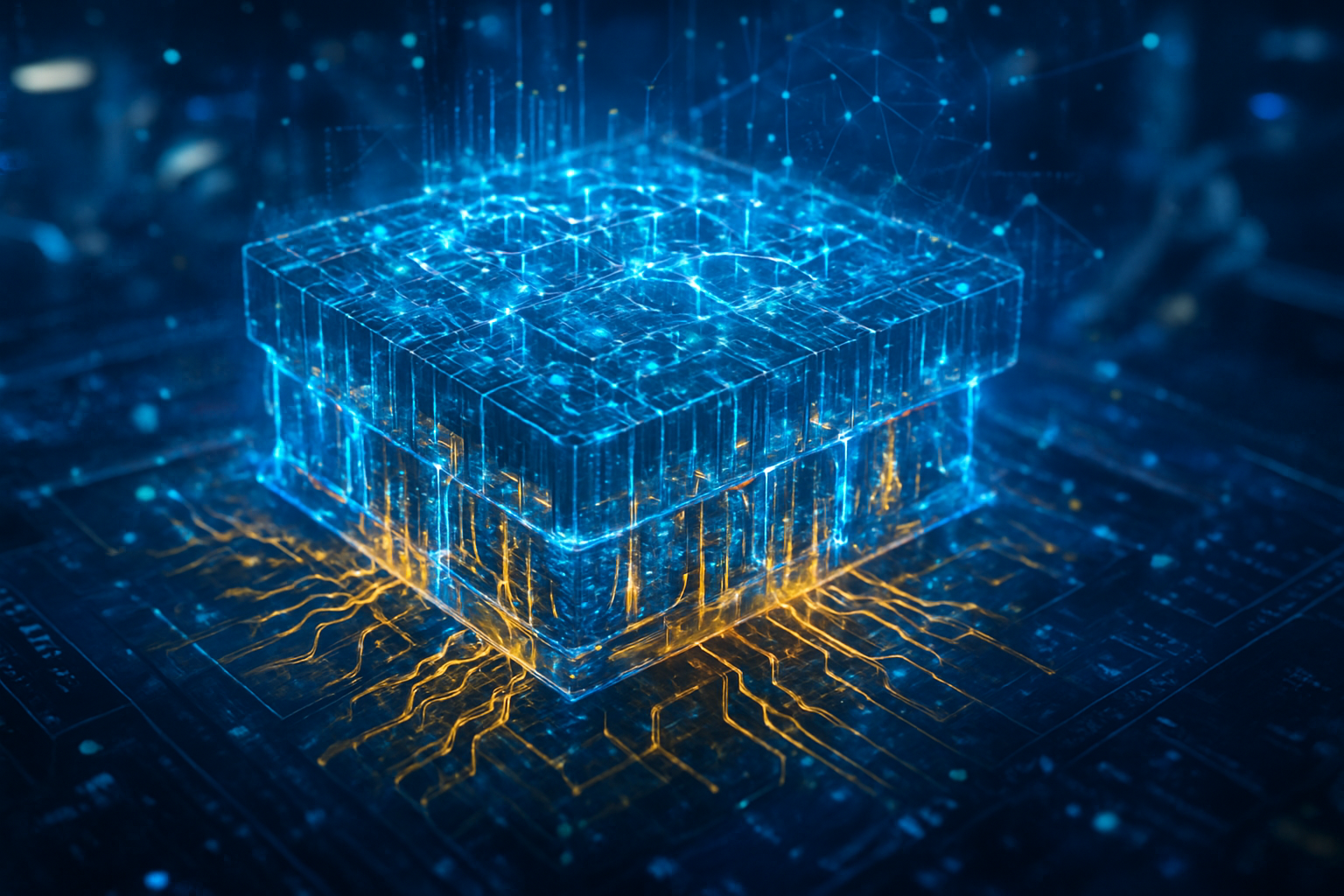
    Beyond the transistor itself, the most disruptive technical advancement of 2025 is Backside Power Delivery (BSPDN). Historically, chips were built like a house where the plumbing and electrical wiring were all crammed into the ceiling, creating a congested mess that blocked the "residents" (the transistors) from moving efficiently. Intel’s "PowerVia" and TSMC’s "Super Power Rail" have moved the entire power distribution network to the bottom of the silicon wafer. This decoupling of power and signal lines reduces voltage drops by up to 30% and frees up the top layers for the ultra-fast data interconnects that AI clusters crave.

    Initial reactions from the AI research community have been overwhelmingly positive, though tempered by the sheer cost of these advancements. High-NA (Numerical Aperture) EUV lithography machines from ASML (NASDAQ:ASML), which are required to print these 2nm features, now cost upwards of $380 million each. Experts note that while these technologies solve the immediate "Power Wall," they introduce a new "Economic Wall," where only the largest hyperscalers can afford to design and manufacture the cutting-edge silicon necessary for next-generation frontier models.

    The Foundry Wars: Who Wins the AI Hardware Race?

    This technological shift has fundamentally rewired the competitive landscape for tech giants. NVIDIA (NASDAQ:NVDA) remains the primary beneficiary, as its upcoming "Rubin" R100 architecture is the first to fully leverage TSMC’s 2nm N2 process and advanced CoWoS-L (Chip-on-Wafer-on-Substrate) packaging. By stitching together multiple 2nm compute dies with the newly standardized HBM4 memory, NVIDIA has managed to maintain its lead in training efficiency, making it difficult for competitors to catch up on a performance-per-watt basis.

    However, the 2nm era has also provided a massive opening for Intel. After years of trailing, Intel’s 18A (1.8nm) node has entered high-volume manufacturing at its Arizona fabs, successfully integrating both RibbonFET and PowerVia ahead of its rivals. This has allowed Intel to secure major foundry customers like Microsoft (NASDAQ:MSFT) and Amazon (NASDAQ:AMZN), who are increasingly looking to design their own custom AI ASICs (Application-Specific Integrated Circuits) to reduce their reliance on NVIDIA. The ability to offer "system-level" foundry services—combining 1.8nm logic with advanced 3D packaging—has positioned Intel as a formidable challenger to TSMC’s long-standing dominance.

    For startups and mid-tier AI companies, the implications are more double-edged. While the increased efficiency of 2nm chips may eventually lower the cost of API tokens for models like GPT-5 or Claude 4, the "barrier to entry" for building custom hardware has never been higher. The industry is seeing a consolidation of power, where the strategic advantage lies with companies that can secure guaranteed capacity at 2nm fabs. This has led to a flurry of long-term supply agreements and "pre-payments" for fab space, effectively turning silicon capacity into a form of geopolitical and corporate currency.

    Beyond the Transistor: The Memory Wall and Sustainability

    The evolution of CMOS for AI is not occurring in a vacuum; it is part of a broader trend toward "System-on-Package" (SoP) design. As transistors hit physical limits, the "Memory Wall"—the speed gap between the processor and the RAM—has become the primary bottleneck for LLMs. The response in 2025 has been the rapid adoption of HBM4 (High Bandwidth Memory), developed by leaders like SK Hynix (KRX:000660) and Micron (NASDAQ:MU). HBM4 utilizes a 2048-bit interface to provide over 2 terabytes per second of bandwidth, but it requires the same advanced packaging techniques used for 2nm logic, further blurring the line between chip design and manufacturing.

    There are, however, significant concerns regarding the environmental impact of this hardware arms race. While 2nm chips are more power-efficient per operation, the sheer scale of the deployments means that total AI energy consumption continues to skyrocket. The manufacturing process for 2nm wafers is also significantly more water-and-chemical-intensive than previous generations. Critics argue that the industry is "running to stand still," using massive amounts of resources to achieve incremental gains in model performance that may eventually face diminishing returns.

    Comparatively, this milestone is being viewed as the "Post-Silicon Era" transition. Much like the move from vacuum tubes to transistors, or from planar transistors to FinFETs, the shift to GAA and Backside Power represents a fundamental change in the building blocks of computation. It marks the moment when "Moore's Law" transitioned from a law of physics to a law of sophisticated 3D engineering and material science.

    The Road to 14A and Glass Substrates

    Looking ahead, the roadmap for AI silicon is already moving toward the 1.4nm (14A) node, expected to arrive around 2027. Experts predict that the next major breakthrough will involve the replacement of organic packaging materials with glass substrates. Companies like Intel and SK Absolics are currently piloting glass cores, which offer superior thermal stability and flatness. This will allow for even larger "gigascale" packages that can house dozens of chiplets and HBM stacks, essentially creating a "supercomputer on a single substrate."

    Another area of intense research is the use of alternative metals like Ruthenium and Molybdenum for chip wiring. As copper wires become too thin and resistive at the 2nm level, these exotic metals will be required to keep signals moving at the speed of light. The challenge will be integrating these materials into the existing CMOS workflow without tanking yields. If successful, these developments could pave the way for AGI-scale hardware capable of trillion-parameter real-time reasoning.

    Summary and Final Thoughts

    The evolution of CMOS technology in late 2025 serves as a testament to human ingenuity in the face of physical limits. By transitioning to GAAFET architectures, implementing Backside Power Delivery, and embracing HBM4, the semiconductor industry has successfully extended the life of Moore’s Law for at least another decade. The key takeaway is that AI development is no longer just a software or algorithmic challenge; it is a deep-tech manufacturing challenge that requires the tightest possible integration between silicon design and fabrication.

    In the history of AI, the 2nm transition will likely be remembered as the moment hardware became the ultimate gatekeeper of progress. While the performance gains are staggering, the concentration of this technology in the hands of a few global foundries and hyperscalers will continue to be a point of contention. In the coming weeks and months, the industry will be watching the yield rates of TSMC’s N2 and Intel’s 18A nodes closely, as these numbers will ultimately determine the pace of AI innovation through 2026 and beyond.


    This content is intended for informational purposes only and represents analysis of current AI developments.

    TokenRing AI delivers enterprise-grade solutions for multi-agent AI workflow orchestration, AI-powered development tools, and seamless remote collaboration platforms.
    For more information, visit https://www.tokenring.ai/.
  • SEALSQ Unveils 2026-2030 Roadmap: The Dawn of CMOS-Compatible Quantum-AI Integration

    SEALSQ Unveils 2026-2030 Roadmap: The Dawn of CMOS-Compatible Quantum-AI Integration

    In a move that signals a paradigm shift for the semiconductor and cybersecurity industries, SEALSQ Corp (NASDAQ:LAES) has officially unveiled its strategic roadmap for 2026–2030. The ambitious plan focuses on the industrialization of CMOS-compatible quantum technologies, aiming to bridge the gap between experimental quantum physics and mass-market digital infrastructure. By leveraging existing silicon manufacturing processes, SEALSQ intends to deliver scalable, secure quantum computing solutions that could redefine the foundations of artificial intelligence and global data security before the end of the decade.

    The announcement, made as 2025 draws to a close, positions SEALSQ at the forefront of the "Quantum-AI Convergence." The roadmap outlines a transition from current Post-Quantum Cryptography (PQC) hardware to the realization of a "secure sovereign quantum computer" by 2030. This strategy is designed to address the looming threat of "Q-Day"—the point at which quantum computers become powerful enough to break traditional encryption—while simultaneously providing the massive computational throughput required for the next generation of AI models.

    The Silicon Path to Quantum Supremacy: Technical Deep Dive

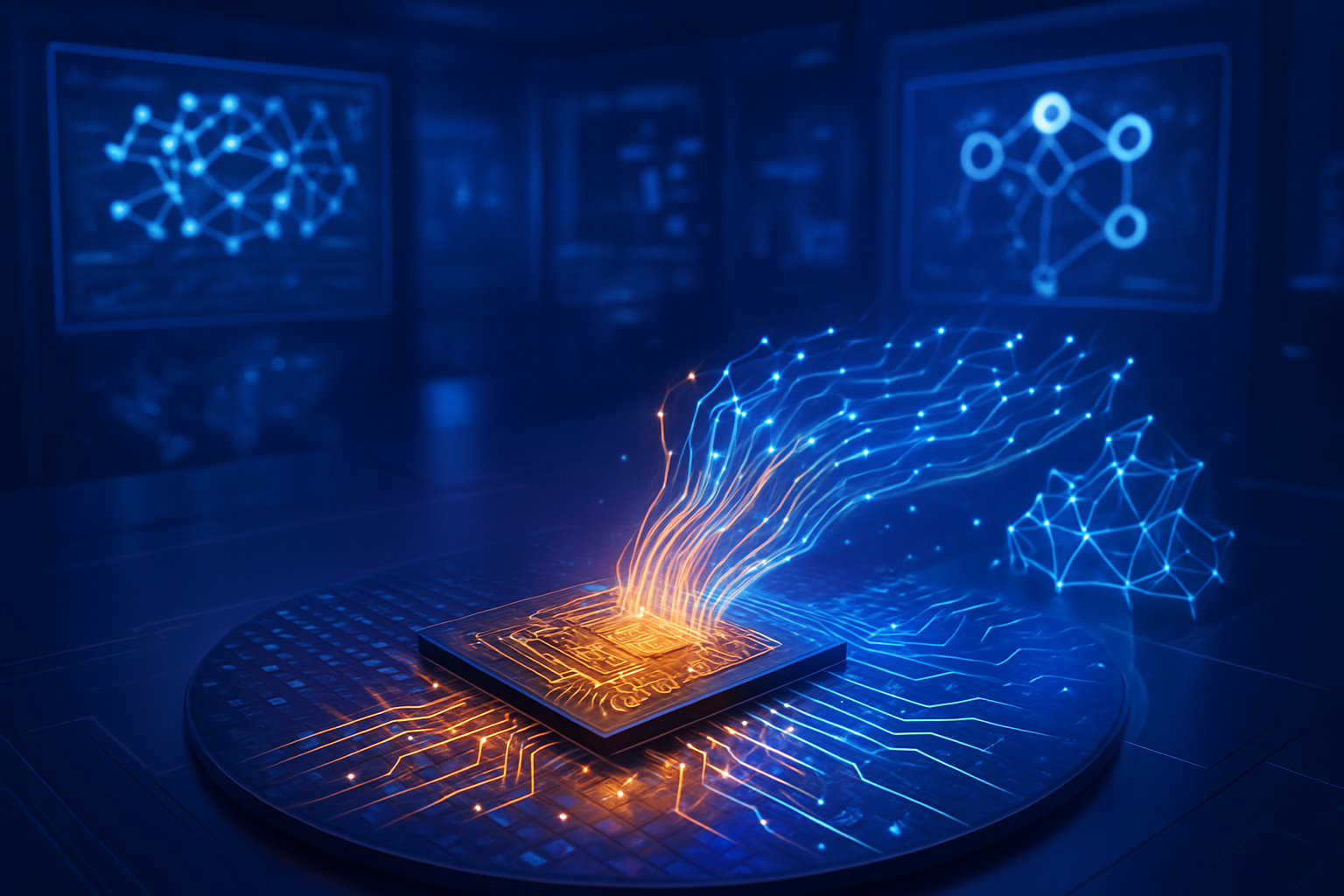
    At the heart of SEALSQ’s 2026-2030 plan is a commitment to CMOS-compatible quantum architectures. Unlike the massive, cryogenically cooled dilution refrigerators required by superconducting qubits—used by pioneers like IBM and Google—SEALSQ is betting on silicon spin qubits and "electrons on superfluid helium" technologies. Through partnerships with Quobly and EeroQ, SEALSQ aims to fabricate millions of high-fidelity qubits on standard 300mm silicon wafers. This approach allows the company to utilize the existing global semiconductor supply chain, drastically lowering the cost and physical footprint of quantum processors.

    The roadmap kicks off Phase 1 (2025-2026) with the commercial rollout of the QS7001 Quantum Shield and the QVault Trusted Platform Module (TPM). The QS7001 is a specialized 32-bit Secured RISC-V CPU designed to handle NIST-standardized PQC algorithms like CRYSTALS-Kyber and CRYSTALS-Dilithium. By implementing these algorithms in dedicated hardware rather than software, SEALSQ claims a 10x performance improvement, providing a critical security layer for IoT devices and AI edge servers that must resist future quantum attacks today.

    Moving into Phase 2 (2026-2028), the focus shifts to Quantum ASICs (QASICs) and the development of the "Quantum Corridor." This transnational infrastructure, spanning Spain, France, Switzerland, and the U.S., is intended to decentralize the manufacturing of quantum-secure components. The technical milestone for this period is the integration of cryogenic control electronics directly onto the silicon chip, a feat that would eliminate the "wiring bottleneck" currently hindering the scaling of quantum systems. By placing the control logic next to the qubits, SEALSQ expects to achieve the density required for fault-tolerant quantum computing.

    Initial reactions from the research community have been cautiously optimistic. While some physicists argue that silicon spin qubits still face significant coherence time challenges, industry experts note that SEALSQ’s strategy bypasses the "lab-to-fab" hurdle that has stalled other quantum startups. By sticking to CMOS-compatible materials, SEALSQ is effectively "piggybacking" on decades of silicon R&D, a move that many believe is the only viable path to shipping quantum-enabled devices in the millions.

    Market Disruption and the Competitive Landscape

    The 2026-2030 roadmap places SEALSQ in direct competition with both traditional semiconductor giants and specialized quantum hardware firms. By focusing on sovereign quantum capabilities, SEALSQ is positioning itself as a key partner for government and defense agencies in Europe and the U.S. who are wary of relying on foreign-controlled quantum infrastructure. This "sovereignty" angle provides a significant strategic advantage over competitors who rely on centralized, cloud-based quantum access models.

    Major AI labs and tech giants like Microsoft (NASDAQ:MSFT) and Alphabet (NASDAQ:GOOGL) may find SEALSQ’s hardware-first approach complementary or disruptive, depending on their own quantum progress. If SEALSQ successfully delivers compact, thumbnail-sized quantum processors via its EeroQ partnership, it could decentralize quantum power, moving it from massive data centers directly into high-end AI workstations and edge gateways. This would disrupt the current "Quantum-as-a-Service" market, which is currently dominated by a few players with large-scale superconducting systems.

    Furthermore, SEALSQ's acquisition of IC’Alps, a French ASIC design house, gives it the internal capability to produce custom chips for specific verticals such as medical diagnostics and autonomous systems. This vertical integration allows SEALSQ to offer "Quantum-AI-on-a-Chip" solutions, potentially capturing a significant share of the burgeoning AI security market. Startups in the AI space that adopt SEALSQ’s PQC-ready hardware early on may gain a competitive edge by offering "quantum-proof" data privacy guarantees to their enterprise clients.

    The Quantum-AI Convergence: Broader Implications

    The broader significance of SEALSQ’s roadmap lies in the "Convergence" initiative, where quantum computing, AI, and satellite communications are unified into a single secure ecosystem. As AI models become more complex, the energy required to train and run them is skyrocketing. SEALSQ intends to use quantum algorithms to solve partial differential equations (PDEs) that optimize chip manufacturing at nodes below 7nm. By reducing "IR Drop" (voltage loss) in next-gen AI accelerators, quantum technology is paradoxically being used to improve the efficiency of the very classical silicon that runs today’s LLMs.

    Security remains the most pressing concern. The roadmap addresses the "Harvest Now, Decrypt Later" threat, where malicious actors collect encrypted data today with the intent of decrypting it once quantum computers are available. By embedding PQC directly into AI accelerators, SEALSQ ensures that the massive datasets used for training AI—which often contain sensitive personal or corporate information—remain protected throughout their lifecycle. This is a critical development for the long-term viability of AI in regulated industries like finance and healthcare.

    Comparatively, this milestone mirrors the transition from vacuum tubes to transistors in the mid-20th century. Just as the transistor allowed computing to scale beyond the laboratory, SEALSQ’s CMOS-compatible roadmap aims to take quantum technology out of the liquid-helium vats and into the palm of the hand. The integration with WISeAI, a decentralized machine-learning model, further enhances this by using AI to monitor security networks for quantum-era vulnerabilities, creating a self-healing security loop.

    Looking Ahead: The Road to 2030

    In the near term, the industry will be watching for the successful rollout of the QS7001 Quantum Shield in early 2026. This will be the first "litmus test" for SEALSQ’s ability to move from theoretical roadmaps to tangible hardware sales. If the QS7001 gains traction in the IoT and automotive sectors, it will provide the necessary capital and validation to fund the more ambitious QASIC developments planned for 2027 and beyond.

    The long-term challenge remains the physical scaling of qubits. While CMOS compatibility solves the manufacturing problem, the "error correction" problem still looms large over the entire quantum industry. Experts predict that the next five years will see a "Quantum Cold War" of sorts, where companies race to demonstrate not just "quantum supremacy" in a lab, but "quantum utility" in a commercial product. SEALSQ’s focus on hybrid classical-quantum systems—where a quantum co-processor assists a classical CPU—is seen as the most realistic path to achieving this utility by 2030.

    Future applications on the horizon include real-time quantum-secured satellite links and AI models that can perform "blind computation," where the data remains encrypted even while it is being processed. These use cases would revolutionize global finance and national security, making data breaches of the current variety a relic of the past.

    Final Thoughts: A New Era of Secure Intelligence

    SEALSQ’s 2026-2030 strategic plan is more than just a corporate roadmap; it is a blueprint for the future of secure industrialization. By tethering the exotic potential of quantum physics to the proven reliability of silicon manufacturing, the company is attempting to solve the two greatest challenges of the digital age: the need for infinite computing power and the need for absolute data security.

    As we move into 2026, the significance of this development in AI history cannot be overstated. We are witnessing the birth of "Quantum-Native AI," where the security and processing capabilities are built into the hardware from the ground up. Investors and tech leaders should watch closely for the deployment of the "Quantum Corridor" and the first wave of PQC-certified devices. If SEALSQ executes on this vision, the 2030s will begin with a digital landscape that is fundamentally faster, smarter, and—most importantly—secure against the quantum storm.


    This content is intended for informational purposes only and represents analysis of current AI developments.

    TokenRing AI delivers enterprise-grade solutions for multi-agent AI workflow orchestration, AI-powered development tools, and seamless remote collaboration platforms.
    For more information, visit https://www.tokenring.ai/.
  • The Silicon Renaissance: How CMOS Manufacturing is Solving the Quantum Scaling Crisis

    The Silicon Renaissance: How CMOS Manufacturing is Solving the Quantum Scaling Crisis

    As 2025 draws to a close, the quantum computing landscape has reached a historic inflection point. Long dominated by exotic architectures like superconducting loops and trapped ions, the industry is witnessing a decisive shift toward silicon-based spin qubits. In a series of breakthrough announcements this month, researchers and industrial giants have demonstrated that the path to a million-qubit quantum computer likely runs through the same 300mm silicon wafer foundries that powered the digital revolution.

    The immediate significance of this shift cannot be overstated. By leveraging existing Complementary Metal-Oxide-Semiconductor (CMOS) manufacturing techniques, the quantum industry is effectively "piggybacking" on trillions of dollars of historical investment in semiconductor fabrication. This month's data suggests that the "utility-scale" era of quantum computing is no longer a theoretical projection but a manufacturing reality, as silicon chips begin to offer the high fidelities and industrial reproducibility required for fault-tolerant operations.

    Industrializing the Qubit: 99.99% Fidelity and 300mm Scaling

    The most striking technical achievement of December 2025 came from Silicon Quantum Computing (SQC), which published results in Nature demonstrating a multi-register processor with a staggering 99.99% gate fidelity. Unlike previous "hero" devices that lost performance as they grew, SQC’s architecture showed that qubit quality actually strengthens as the system scales. This breakthrough is complemented by Diraq, which, in collaboration with the research hub imec, proved that high-fidelity qubits could be mass-produced. They reported that qubits randomly selected from a standard 300mm industrial wafer achieved over 99% two-qubit fidelity, a milestone that signals the end of hand-crafted quantum processors.

    Technically, these silicon spin qubits function by trapping single electrons in "quantum dots" defined within a silicon layer. The 2025 breakthroughs have largely focused on the integration of cryo-CMOS control electronics. Historically, quantum chips were limited by the "wiring nightmare"—thousands of coaxial cables required to connect qubits at millikelvin temperatures to room-temperature controllers. New "monolithic" designs now place the control transistors directly on the same silicon footprint as the qubits. This is made possible by the development of low-power cryo-CMOS transistors, such as those from European startup SemiQon, which reduce power consumption by 100x, preventing the delicate quantum state from being disrupted by heat.

    This approach differs fundamentally from the superconducting qubits favored by early pioneers. While superconducting systems are physically large—often the size of a thumbnail for a single qubit—silicon spin qubits are roughly the size of a standard transistor (about 100 nanometers). This allows for a density of millions of qubits per square centimeter, mirroring the scaling trajectory of classical microprocessors. The initial reaction from the research community has been one of "cautious triumph," with experts noting that the transition to 300mm wafers solves the reproducibility crisis that has plagued quantum hardware for a decade.

    The Foundry Model: Intel and IBM Pivot to Silicon Scale

    The move toward silicon-based quantum computing has massive implications for the semiconductor titans. Intel Corp (NASDAQ: INTC) has emerged as a frontrunner by aligning its quantum roadmap with its most advanced logic nodes. In late 2025, Intel’s 18A (1.8nm equivalent) process entered mass production, featuring RibbonFET (gate-all-around) architecture. Intel is now adapting these GAA transistors to act as quantum dots, essentially treating a qubit as a specialized transistor. By using standard Extreme Ultraviolet (EUV) lithography, Intel can define qubit arrays with a precision and uniformity that smaller startups cannot match.

    Meanwhile, International Business Machines Corp (NYSE: IBM), though traditionally a champion of superconducting qubits, has made a strategic pivot toward silicon-style manufacturing efficiencies. In November 2025, IBM unveiled its Nighthawk processor, which officially shifted its fabrication to 300mm facilities. This move has allowed IBM to increase the physical complexity of its chips by 10x while maintaining the low error rates needed for its "Quantum Loon" error-correction architecture. The competitive landscape is shifting from "who has the best qubit" to "who can manufacture the most qubits at scale," favoring companies with deep ties to major foundries.

    Foundries like GlobalFoundries Inc (NASDAQ: GFS) and Taiwan Semiconductor Manufacturing Company (NYSE: TSM) are positioning themselves as the essential "factories" for the quantum ecosystem. GlobalFoundries’ 22FDX process has become a gold standard for spin qubits, as seen in the recent "Bloomsbury" chip which features over 1,000 integrated quantum dots. For TSMC, the opportunity lies in advanced packaging; their CoWoS (Chip-on-Wafer-on-Substrate) technology is now being used to stack classical AI processors directly on top of quantum chips, enabling the low-latency error decoding required for real-time quantum calculations.

    Geopolitics and the "Wiring Nightmare" Breakthrough

    The wider significance of silicon-based quantum computing extends into energy efficiency and global supply chains. One of the primary concerns with scaling quantum computers has been the massive energy required to cool the systems. However, the 2025 breakthroughs in cryo-CMOS mean that more of the control logic happens inside the dilution refrigerator, reducing the thermal load and the physical footprint of the machine. This makes quantum data centers a more realistic prospect for the late 2020s, potentially fitting into existing server rack architectures rather than requiring dedicated warehouses.

    There is also a significant geopolitical dimension to the silicon shift. High-performance spin qubits require isotopically pure silicon-28, a material that was once difficult to source. The industrialization of Si-28 production in 2024 and 2025 has created a new high-tech commodity market. Much like the race for lithium or cobalt, the ability to produce and refine "quantum-grade" silicon is becoming a matter of national security for technological superpowers. This mirrors previous milestones in the AI landscape, such as the rush for H100 GPUs, where the hardware substrate became the ultimate bottleneck for progress.

    However, the rapid move toward CMOS-based quantum chips has raised concerns about the "quantum divide." As the manufacturing requirements shift toward multi-billion dollar 300mm fabs, smaller research institutions and startups may find themselves priced out of the hardware game, forced to rely on cloud access provided by the few giants—Intel, IBM, and the major foundries—who control the means of production.

    The Road to Fault Tolerance: What’s Next for 2026?

    Looking ahead, the next 12 to 24 months will likely focus on the transition from "noisy" qubits to logical qubits. While we now have the ability to manufacture thousands of physical qubits on a single chip, several hundred physical qubits are needed to form one error-corrected "logical" qubit. Experts predict that 2026 will see the first demonstration of a "logical processor" where multiple logical qubits perform a complex algorithm with higher fidelity than their underlying physical components.

    Potential applications on the near horizon include high-precision material science and drug discovery. With the density provided by silicon chips, we are approaching the threshold where quantum computers can simulate the molecular dynamics of nitrogen fixation or carbon capture more accurately than any classical supercomputer. The challenge remains in the software stack—developing compilers that can efficiently map these algorithms onto the specific topologies of silicon spin qubit arrays.

    In the long term, the integration of quantum and classical processing on a single "Quantum SoC" (System on a Chip) is the ultimate goal. Experts from Diraq and Intel suggest that by 2028, we could see chips containing millions of qubits, finally reaching the scale required to break current RSA encryption or revolutionize financial modeling.

    A New Chapter in the Quantum Race

    The breakthroughs of late 2025 have solidified silicon's position as the most viable substrate for the future of quantum computing. By proving that 99.99% fidelity is achievable on 300mm wafers, the industry has bridged the gap between laboratory curiosity and industrial product. The significance of this development in AI and computing history cannot be understated; it represents the moment quantum computing stopped trying to reinvent the wheel and started using the most sophisticated wheel ever created: the silicon transistor.

    As we move into 2026, the key metrics to watch will be the "logical qubit count" and the continued integration of cryo-CMOS electronics. The race is no longer just about quantum physics—it is about the mastery of the semiconductor supply chain. For the tech industry, the message is clear: the quantum future will be built on a silicon foundation.


    This content is intended for informational purposes only and represents analysis of current AI and quantum developments.

    TokenRing AI delivers enterprise-grade solutions for multi-agent AI workflow orchestration, AI-powered development tools, and seamless remote collaboration platforms.
    For more information, visit https://www.tokenring.ai/.