
Tag: Colossus

  • The Velocity of Intelligence: Inside xAI’s ‘Colossus’ and the 122-Day Sprint to 100,000 GPUs

    The Velocity of Intelligence: Inside xAI’s ‘Colossus’ and the 122-Day Sprint to 100,000 GPUs

    In the heart of Memphis, Tennessee, a technological titan has risen with a speed that has left the traditional data center industry in a state of shock. Known as "Colossus," this massive supercomputer cluster—the brainchild of Elon Musk’s xAI—was constructed from the ground up in a mere 122 days. Built to fuel the development of the Grok large language models, the facility initially housed 100,000 NVIDIA (NASDAQ:NVDA) H100 GPUs, creating what is widely considered the most powerful AI training cluster on the planet. As of January 27, 2026, the facility has not only proven its operational viability but has already begun a massive expansion phase that targets a scale previously thought impossible.

    The significance of Colossus lies not just in its raw compute power, but in the sheer logistical audacity of its creation. While typical hyperscale data centers of this magnitude often require three to four years of planning, permitting, and construction, xAI managed to achieve "power-on" status in less than four months. This rapid deployment has fundamentally rewritten the playbook for AI infrastructure, signaling a shift where speed-to-market is the ultimate competitive advantage in the race toward Artificial General Intelligence (AGI).

    Engineering the Impossible: Technical Specs and the 122-Day Miracle

    The technical foundation of Colossus is a masterclass in modern hardware orchestration. The initial deployment of 100,000 H100 GPUs was made possible through a strategic partnership with Super Micro Computer, Inc. (NASDAQ:SMCI) and Dell Technologies (NYSE:DELL), who each supplied approximately 50% of the server racks. To manage the immense heat generated by such a dense concentration of silicon, the entire system utilizes an advanced liquid-cooling architecture. Each building block consists of specialized racks housing eight 4U Universal GPU servers, which are then grouped into 512-GPU "mini-clusters" to optimize data flow and thermal management.

    Beyond the raw chips, the networking fabric is what truly separates Colossus from its predecessors. The cluster utilizes NVIDIA’s Spectrum-X Ethernet platform, a networking technology specifically engineered for multi-tenant, hyperscale AI environments. While standard Ethernet often suffers from significant packet loss and throughput drops at this scale, Spectrum-X enables a staggering 95% data throughput. This is achieved through advanced congestion control and Remote Direct Memory Access (RDMA), ensuring that the GPUs spend more time calculating and less time waiting for data to travel across the network.

    Initial reactions from the AI research community have ranged from awe to skepticism regarding the sustainability of such a build pace. Industry experts noted that the 19-day window between the first server rack arriving on the floor and the commencement of AI training is a feat of engineering logistics that has never been documented in the private sector. By bypassing traditional utility timelines through the use of 20 mobile natural gas turbines and a 150 MW Tesla (NASDAQ:TSLA) Megapack battery system, xAI demonstrated a "full-stack" approach to infrastructure that most competitors—reliant on third-party data center providers—simply cannot match.

    Shifting the Power Balance: Competitive Implications for Big Tech

    The existence of Colossus places xAI in a unique strategic position relative to established giants like OpenAI, Google, and Meta. By owning and operating its own massive-scale infrastructure, xAI avoids the "compute tax" and scheduling bottlenecks associated with public cloud providers. This vertical integration allows for faster iteration cycles for the Grok models, potentially allowing xAI to bridge the gap with its more established rivals in record time. For NVIDIA, the project serves as a premier showcase for the Hopper and now the Blackwell architectures, proving that their hardware can be deployed at a "gigawatt scale" when paired with aggressive engineering.

    This development creates a high-stakes "arms race" for physical space and power. Competitors are now forced to reconsider their multi-year construction timelines, as the 122-day benchmark set by xAI has become the new metric for excellence. Major AI labs that rely on Microsoft or AWS may find themselves at a disadvantage if they cannot match the sheer density of compute available in Memphis. Furthermore, the massive $5 billion deal reported between xAI and Dell for the next generation of Blackwell-based servers underscores a shift where the supply chain itself becomes a primary theater of war.

    Strategic advantages are also emerging in the realm of talent and capital. The ability to build at this speed attracts top-tier hardware and infrastructure engineers who are frustrated by the bureaucratic pace of traditional tech firms. For investors, Colossus represents a tangible asset that justifies the massive valuations of xAI, moving the company from a "software-only" play to a powerhouse that controls the entire stack—from the silicon and cooling to the weights of the neural networks themselves.

    The Broader Landscape: Environmental Challenges and the New AI Milestone

    Colossus fits into a broader trend of "gigafactory-scale" computing, where the focus has shifted from algorithmic efficiency to the brute force of massive hardware clusters. This milestone mirrors the historical shift in the 1940s toward massive industrial projects like the Manhattan Project, where the physical scale of the equipment was as important as the physics behind it. However, this scale comes with significant local and global impacts. The Memphis facility has faced scrutiny over its massive water consumption for cooling and its reliance on mobile gas turbines, highlighting the growing tension between rapid AI advancement and environmental sustainability.

    The potential concerns regarding power consumption are not trivial. As Colossus moves toward a projected 2-gigawatt capacity by the end of 2026, the strain on local electrical grids will be immense. This has led xAI to expand into neighboring Mississippi with a new facility nicknamed "MACROHARDRR," strategically placed to leverage different power resources. This geographical expansion suggests that the future of AI will not be determined by code alone, but by which companies can successfully secure and manage the largest shares of the world's energy and water resources.

    Comparisons to previous AI breakthroughs, such as the original AlphaGo or the release of GPT-3, show a marked difference in the nature of the milestone. While those were primarily mathematical and research achievements, Colossus is an achievement of industrial manufacturing and logistical coordination. It marks the era where AI training is no longer a laboratory experiment but a heavy industrial process, requiring the same level of infrastructure planning as a major automotive plant or a semiconductor fabrication facility.

    Looking Ahead: Blackwell, Grok-3, and the Road to 1 Million GPUs

    The future of the Memphis site and its satellite extensions is focused squarely on the next generation of silicon. xAI has already begun integrating NVIDIA's Blackwell (GB200) GPUs, which promise a 30x performance increase for LLM inference over the H100s currently in the racks. As of January 2026, tens of thousands of these new chips are reportedly coming online, with the ultimate goal of reaching a total of 1 million GPUs across all xAI sites. This expansion is expected to provide the foundation for Grok-3 and subsequent models, which Musk has hinted will surpass the current state-of-the-art in reasoning and autonomy.

    Near-term developments will likely include the full transition of the Memphis grid from mobile turbines to a more permanent, high-capacity substation, coupled with an even larger deployment of Tesla Megapacks for grid stabilization. Experts predict that the next major challenge will not be the hardware itself, but the data required to keep such a massive cluster utilized. With 1 million GPUs, the "data wall"—the limit of high-quality human-generated text available for training—becomes a very real obstacle, likely pushing xAI to lean more heavily into synthetic data generation and video-based training.

    The long-term applications for a cluster of this size extend far beyond chatbots. The immense compute capacity is expected to be used for complex physical simulations, the development of humanoid robot brains (Tesla's Optimus), and potentially even genomic research. As the "gigawatt scale" becomes the new standard for Tier-1 AI labs, the industry will watch closely to see if this massive investment in hardware translates into the elusive breakthrough of AGI or if it leads to a plateau in diminishing returns for LLM scaling.

    A New Era of Industrial Intelligence

    The story of Colossus is a testament to what can be achieved when the urgency of a startup is applied to the scale of a multi-billion dollar industrial project. In just 122 days, xAI turned a vacant facility into the world’s most concentrated hub of intelligence, fundamentally altering the expectations for AI infrastructure. The collaboration between NVIDIA, Supermicro, and Dell has proven that the global supply chain can move at "Elon time" when the stakes—and the capital—are high enough.

    As we look toward the remainder of 2026, the success of Colossus will be measured by the capabilities of the models it produces. If Grok-3 achieves the leap in reasoning that its creators predict, the Memphis cluster will be remembered as the cradle of a new era of compute. Regardless of the outcome, the 122-day sprint has set a permanent benchmark, ensuring that the race for AI supremacy will be as much about concrete, copper, and cooling as it is about algorithms and data.


    This content is intended for informational purposes only and represents analysis of current AI developments.

    TokenRing AI delivers enterprise-grade solutions for multi-agent AI workflow orchestration, AI-powered development tools, and seamless remote collaboration platforms.
    For more information, visit https://www.tokenring.ai/.

  • The Colossus Awakening: xAI’s 555,000-GPU Supercluster and the Global Race for AGI Compute

    The Colossus Awakening: xAI’s 555,000-GPU Supercluster and the Global Race for AGI Compute

    In the heart of Memphis, Tennessee, a technological titan has reached its full stride. As of January 15, 2026, xAI’s "Colossus" supercluster has officially expanded to a staggering 555,000 GPUs, solidifying its position as the most concentrated burst of artificial intelligence compute on the planet. Built in a timeframe that has left traditional data center developers stunned, Colossus is not merely a server farm; it is a high-octane industrial engine designed for a singular purpose: training the next generation of Large Language Models (LLMs) to achieve what Elon Musk describes as "the dawn of digital superintelligence."

    The significance of Colossus extends far beyond its sheer size. It represents a paradigm shift in how AI infrastructure is conceived and executed. By bypassing the multi-year timelines typically associated with gigawatt-scale data centers, xAI has forced competitors to abandon cautious incrementalism in favor of "superfactory" deployments. This massive hardware gamble is already yielding dividends, providing the raw power behind the recently debuted Grok-3 and the ongoing training of the highly anticipated Grok-4 model.

    The technical architecture of Colossus is a masterclass in extreme engineering. Initially launched in mid-2024 with 100,000 NVIDIA (NASDAQ: NVDA) H100 GPUs, the cluster underwent a hyper-accelerated expansion throughout 2025. Today, the facility integrates a sophisticated mix of NVIDIA’s H200 and the newest Blackwell GB200 and GB300 units. To manage the immense heat generated by over half a million chips, xAI partnered with Supermicro (NASDAQ: SMCI) to implement a direct-to-chip liquid-cooling (DLC) system. This setup utilizes redundant pump manifolds that circulate coolant directly across the silicon, allowing for unprecedented rack density that would be impossible with traditional air cooling.

    Networking remains the secret sauce of the Memphis site. Unlike many legacy supercomputers that rely on InfiniBand, Colossus utilizes NVIDIA’s Spectrum-X Ethernet platform equipped with BlueField-3 Data Processing Units (DPUs). Each server node is outfitted with 400GbE network interface cards, facilitating a total bandwidth of 3.6 Tbps per server. This high-throughput, low-latency fabric allows the cluster to function as a single, massive brain, updating trillions of parameters across the entire GPU fleet in less than a second—a feat necessary for the stable training of "Frontier" models that exceed current LLM benchmarks.

    This approach differs radically from previous generation clusters, which were often geographically distributed or limited by power bottlenecks. xAI solved the energy challenge through a hybrid power strategy, utilizing a massive array of 168+ Tesla (NASDAQ: TSLA) Megapacks. These batteries act as a giant buffer, smoothing out the massive power draws required during training runs and protecting the local Memphis grid from volatility. Industry experts have noted that the 122-day "ground-to-online" record for Phase 1 has set a new global benchmark, effectively cutting the standard industry deployment time by nearly 80%.

    The rapid ascent of Colossus has sent shockwaves through the competitive landscape, forcing a massive realignment among tech giants. Microsoft (NASDAQ: MSFT) and OpenAI, once the undisputed leaders in compute scale, have accelerated their "Project Stargate" initiative in response. As of early 2026, Microsoft’s first 450,000-GPU Blackwell campus in Abilene, Texas, has gone live, marking a direct challenge to xAI’s dominance. However, while Microsoft’s strategy leans toward a distributed "planetary computer" model, xAI’s focus on single-site density gives it a unique advantage in iteration speed, as engineers can troubleshoot and optimize the entire stack within a single physical campus.

    Other players are feeling the pressure to verticalize their hardware stacks to avoid the "NVIDIA tax." Google (NASDAQ: GOOGL) has doubled down on its proprietary TPU v7 "Ironwood" chips, which now power over 90% of its internal training workloads. By controlling the silicon, the networking (via optical circuit switching), and the software, Google remains the most power-efficient competitor in the race, even if it lacks the raw GPU headcount of Colossus. Meanwhile, Meta (NASDAQ: META) has pivoted toward "Compute Sovereignty," investing over $10 billion in its Hyperion cluster in Louisiana, which seeks to blend NVIDIA hardware with Meta’s in-house MTIA chips to drive down the cost of open-source model training.

    For xAI, the strategic advantage lies in its integration with the broader Musk ecosystem. By using Tesla’s energy storage expertise and borrowing high-speed manufacturing techniques from SpaceX, xAI has turned data center construction into a repeatable industrial process. This vertical integration allows xAI to move faster than traditional cloud providers, which are often bogged down by multi-vendor negotiations and complex regulatory hurdles. The result is a specialized "AI foundry" that can adapt to new chip architectures months before more bureaucratic competitors.

    The emergence of "superclusters" like Colossus marks the beginning of the Gigawatt Era of computing. We are no longer discussing data centers in terms of "megawatts" or "thousands of chips"; the conversation has shifted to regional power consumption comparable to medium-sized cities. This move toward massive centralization of compute raises significant questions about energy sustainability and the environmental impact of AI. While xAI has mitigated some local concerns through its use of on-site gas turbines and Megapacks, the long-term strain on the Tennessee Valley Authority’s grid remains a point of intense public debate.

    In the broader AI landscape, Colossus represents the "industrialization" of intelligence. Much like the Manhattan Project or the Apollo program, the scale of investment—estimated to be well over $20 billion for the current phase—suggests that the industry believes the path to AGI (Artificial General Intelligence) is fundamentally a scaling problem. If "Scaling Laws" continue to hold, the massive compute advantage held by xAI could lead to a qualitative leap in reasoning and multi-modal capabilities that smaller labs simply cannot replicate, potentially creating a "compute moat" that stifles competition from startups.

    However, this centralization also brings risks. A single-site failure, whether due to a grid collapse or a localized disaster, could sideline the world's most powerful AI development for months. Furthermore, the concentration of such immense power in the hands of a few private individuals has sparked renewed calls for "compute transparency" and federal oversight. Comparisons to previous breakthroughs, like the first multi-core processors or the rise of cloud computing, fall short because those developments democratized access, whereas the supercluster race is currently concentrating power among the wealthiest entities on Earth.

    Looking toward the horizon, the expansion of Colossus is far from finished. Elon Musk has already teased the "MACROHARDRR" expansion, which aims to push the Memphis site toward 1 million GPUs by 2027. This next phase will likely see the first large-scale deployment of NVIDIA’s "Rubin" architecture, the successor to Blackwell, which promises even higher energy efficiency and memory bandwidth. Near-term applications will focus on Grok-5, which xAI predicts will be the first model capable of complex scientific discovery and autonomous engineering, moving beyond simple text generation into the realm of "agentic" intelligence.

    The primary challenge moving forward will be the "Power Wall." As clusters move toward 5-gigawatt requirements, traditional grid connections will no longer suffice. Experts predict that the next logical step for xAI and its rivals is the integration of small modular reactors (SMRs) or dedicated nuclear power plants directly on-site. Microsoft has already begun exploring this with the Three Mile Island restart, and xAI is rumored to be scouting locations with high nuclear potential for its Phase 4 expansion.

    As we move into late 2026, the focus will shift from "how many GPUs do you have?" to "how efficiently can you use them?" The development of new software frameworks that can handle the massive "jitter" and synchronization issues of 500,000+ chip clusters will be the next technical frontier. If xAI can master the software orchestration at this scale, the gap between "Frontier AI" and "Commodity AI" will widen into a chasm, potentially leading to the first verifiable instances of AGI-level performance in specialized domains like drug discovery and materials science.

    The Colossus supercluster is a monument to the relentless pursuit of scale. From its record-breaking construction in the Memphis suburbs to its current status as a 555,000-GPU behemoth, it serves as the definitive proof that the AI hardware race has entered a new, more aggressive chapter. The key takeaways are clear: speed-to-market is now as important as algorithmic innovation, and the winners of the AI era will be those who can command the most electrons and the most silicon in the shortest amount of time.

    In the history of artificial intelligence, Colossus will likely be remembered as the moment the "Compute Arms Race" went global and industrial. It has transformed xAI from an underdog startup into a heavyweight contender capable of staring down the world’s largest tech conglomerates. While the long-term societal and environmental impacts remain to be seen, the immediate reality is that the ceiling for what AI can achieve has been significantly raised by the sheer weight of the hardware in Tennessee.

    In the coming months, the industry will be watching the performance benchmarks of Grok-3 and Grok-4 closely. If these models demonstrate a significant lead over their peers, it will validate the "supercluster" strategy and trigger an even more frantic scramble for chips and power. For now, the world’s most powerful digital brain resides in Memphis, and its influence is only just beginning to be felt across the global tech economy.


    This content is intended for informational purposes only and represents analysis of current AI developments.

    TokenRing AI delivers enterprise-grade solutions for multi-agent AI workflow orchestration, AI-powered development tools, and seamless remote collaboration platforms.
    For more information, visit https://www.tokenring.ai/.
  • Colossus Unbound: xAI’s Memphis Expansion Targets 1 Million GPUs in the Race for AGI

    Colossus Unbound: xAI’s Memphis Expansion Targets 1 Million GPUs in the Race for AGI

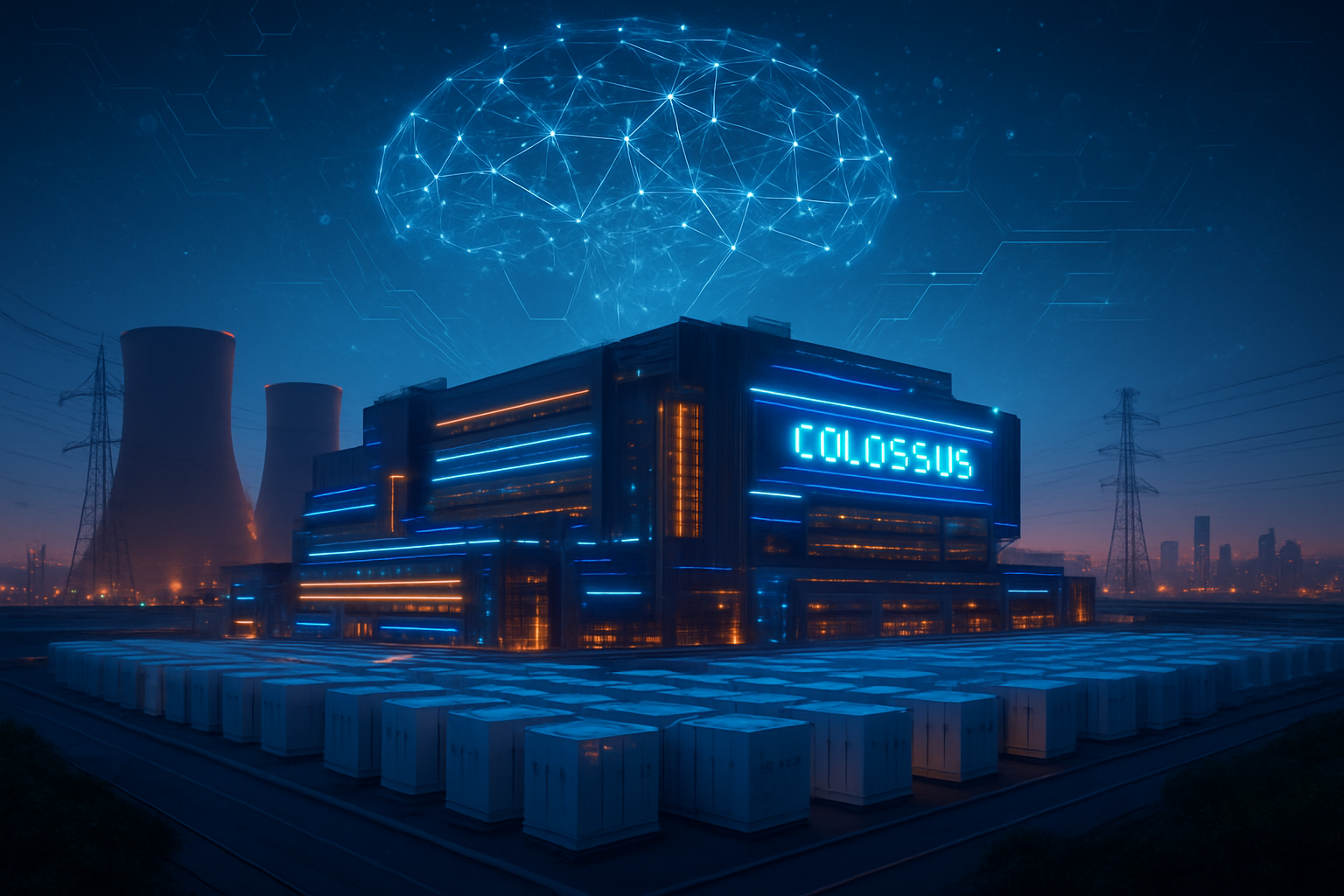
    In a move that has sent shockwaves through the technology sector, xAI has announced a massive expansion of its "Colossus" supercomputer cluster, solidifying the Memphis and Southaven region as the epicenter of the global artificial intelligence arms race. As of January 2, 2026, the company has successfully scaled its initial 100,000-GPU cluster to over 200,000 units and is now aggressively pursuing a roadmap to reach 1 million GPUs by the end of the year. Central to this expansion is the acquisition of a massive new facility nicknamed "MACROHARDRR," a move that signals Elon Musk’s intent to outpace traditional tech giants through sheer computational brute force.

    The immediate significance of this development cannot be overstated. By targeting a power capacity of 2 gigawatts (GW)—roughly enough to power nearly 2 million homes—xAI is transitioning from a high-scale startup to a "Gigafactory of Compute." This expansion is not merely about quantity; it is the primary engine behind the training of Grok-3 and the newly unveiled Grok-4, models designed to push the boundaries of agentic reasoning and autonomous problem-solving. As the "Digital Delta" takes shape across the Tennessee-Mississippi border, the project is redefining the physical and logistical requirements of the AGI era.

    The Technical Architecture of a Million-GPU Cluster

    The technical specifications of the Colossus expansion reveal a sophisticated, heterogeneous hardware strategy. While the original cluster was built on 100,000 NVIDIA (NASDAQ: NVDA) H100 "Hopper" GPUs, the current 200,000+ unit configuration includes a significant mix of 50,000 H200s and over 30,000 of the latest liquid-cooled Blackwell GB200 units. The "MACROHARDRR" building in Southaven, Mississippi—an 810,000-square-foot facility acquired in late 2025—is being outfitted specifically to house the Blackwell architecture, which offers up to 30 times the real-time throughput of previous generations.

    This expansion differs from existing technology hubs through its "single-cluster" coherence. Utilizing the NVIDIA Spectrum-X Ethernet platform and BlueField-3 SuperNICs, xAI has managed to keep tail latency at near-zero levels, allowing 200,000 GPUs to operate as a unified computational entity. This level of interconnectivity is critical for training Grok-4, which utilizes massive-scale reinforcement learning (RL) to navigate complex "agentic" tasks. Industry experts have noted that while competitors often distribute their compute across multiple global data centers, xAI’s centralized approach in Memphis minimizes the "data tax" associated with long-distance communication between clusters.

    Shifting the Competitive Landscape: The "Gigafactory" Model

    The rapid buildout of Colossus has forced a strategic pivot among major AI labs and tech giants. OpenAI, which is currently planning its "Stargate" supercomputer with Microsoft (NASDAQ: MSFT), has reportedly accelerated its release cycle for GPT-5.2 to keep pace with Grok-3’s reasoning benchmarks. Meanwhile, Meta (NASDAQ: META) and Alphabet (NASDAQ: GOOGL) are finding themselves in a fierce bidding war for high-density power sites, as xAI’s aggressive land and power acquisition in the Mid-South has effectively cornered a significant portion of the available industrial energy capacity in the region.

    NVIDIA stands as a primary beneficiary of this expansion, having recently participated in a $20 billion financing round for xAI through a Special Purpose Vehicle (SPV) that uses the GPU hardware itself as collateral. This deep financial integration ensures that xAI receives priority access to the Blackwell and upcoming "Rubin" architectures, potentially "front-running" other cloud providers. Furthermore, companies like Dell (NYSE: DELL) and Supermicro (NASDAQ: SMCI) have established local service hubs in Memphis to provide 24/7 on-site support for the thousands of server racks required to maintain the cluster’s uptime.

    Powering the Future: Infrastructure and Environmental Impact

    The most daunting challenge for the 1 million GPU goal is the 2-gigawatt power requirement. To meet this demand, xAI is building its own 640-megawatt natural gas power plant to supplement the 150-megawatt substation managed by the Tennessee Valley Authority (TVA). To manage the massive power swings that occur when a cluster of this size ramps up or down, xAI has deployed over 300 Tesla (NASDAQ: TSLA) MegaPacks. These energy storage units act as a "shock absorber" for the local grid, preventing brownouts and ensuring that a millisecond-level power flicker doesn't wipe out weeks of training progress.

    However, the environmental and community impact has become a focal point of local debate. The cooling requirements for a 2GW cluster are immense, leading to concerns about the Memphis Sand Aquifer. In response, xAI broke ground on an $80 million greywater recycling plant late last year. Set to be operational by late 2026, the facility will process 13 million gallons of wastewater daily, offsetting the project’s water footprint and providing recycled water to the TVA Allen power station. While local activists remain cautious about air quality and ecological impacts, the project has brought thousands of high-tech jobs to the "Digital Delta."

    The Road to AGI: Predictions for Grok-5 and Beyond

    Looking ahead, the expansion of Colossus is explicitly tied to Elon Musk’s prediction that AGI will be achieved by late 2026. The 1 million GPU target is intended to power Grok-5, a model that researchers believe will move beyond text and image generation into "world model" territory—the ability to simulate and predict physical outcomes in the real world. This would have profound implications for autonomous robotics, drug discovery, and scientific research, as the AI begins to function as a high-speed collaborator rather than just a tool.

    The near-term challenge remains the transition to the GB200 Blackwell architecture at scale. Experts predict that managing the liquid cooling and power delivery for a million-unit cluster will require breakthroughs in data center engineering that have never been tested. If xAI successfully addresses these hurdles, the sheer scale of the Colossus cluster may validate the "scaling laws" of AI—the theory that more data and more compute will inevitably lead to higher intelligence—potentially ending the debate over whether we are hitting a plateau in LLM performance.

    A New Chapter in Computational History

    The expansion of xAI’s Colossus in Memphis marks a definitive moment in the history of artificial intelligence. It represents the transition of AI development from a software-focused endeavor to a massive industrial undertaking. By integrating the MACROHARDRR facility, a diverse mix of NVIDIA’s most advanced silicon, and Tesla’s energy storage technology, xAI has created a blueprint for the "Gigafactory of Compute" that other nations and corporations will likely attempt to replicate.

    In the coming months, the industry will be watching for the first benchmarks from Grok-4 and the progress of the 640-megawatt on-site power plant. Whether this "brute-force" approach to AGI succeeds or not, the physical reality of Colossus has already permanently altered the economic and technological landscape of the American South. The race for 1 million GPUs is no longer a theoretical projection; it is a multi-billion-dollar construction project currently unfolding in real-time.


    This content is intended for informational purposes only and represents analysis of current AI developments.

    TokenRing AI delivers enterprise-grade solutions for multi-agent AI workflow orchestration, AI-powered development tools, and seamless remote collaboration platforms.
    For more information, visit https://www.tokenring.ai/.

  • Colossus Rising: How xAI’s Memphis Supercomputer Redefined the Global Compute Race

    Colossus Rising: How xAI’s Memphis Supercomputer Redefined the Global Compute Race

    As of January 1, 2026, the landscape of artificial intelligence has been irrevocably altered by a singular, monolithic achievement in hardware engineering: the xAI Colossus supercomputer. Situated in a repurposed factory in Memphis, Tennessee, Colossus has grown from an audacious construction project into the beating heart of the world’s most powerful AI training cluster. Its existence has not only accelerated the development of the Grok series of large language models but has also fundamentally shifted the "compute-to-intelligence" ratio that defines modern machine learning.

    The immediate significance of Colossus lies in its sheer scale and the unprecedented speed of its deployment. By successfully clustering hundreds of thousands of high-end GPUs into a single, cohesive training fabric, xAI has bypassed the multi-year development cycles typically associated with hyperscale data centers. This "speed-as-a-weapon" strategy has allowed Elon Musk’s AI venture to leapfrog established incumbents, turning a 750,000-square-foot facility into the epicenter of the race toward Artificial General Intelligence (AGI).

    The 122-Day Miracle: Engineering at the Edge of Physics

    The technical genesis of Colossus is a feat of industrial logistics that many in the industry initially deemed impossible. The first phase of the project, which involved the installation and commissioning of 100,000 Nvidia (NASDAQ: NVDA) H100 Tensor Core GPUs, was completed in a staggering 122 days. Even more impressive was the "rack-to-training" window: once the server racks were rolled onto the facility floor, it took only 19 days to begin the first massive training runs. This was achieved by utilizing Nvidia’s Spectrum-X Ethernet networking platform, which provided the low-latency, high-throughput communication necessary for a cluster of this magnitude to function as a single unit.

    By early 2025, the cluster underwent a massive expansion, doubling its capacity to 200,000 GPUs. This second phase integrated 50,000 of Nvidia’s H200 units, which featured 141GB of HBM3e memory. The addition of H200s was critical, as the higher memory bandwidth allowed for the training of models with significantly more complex reasoning capabilities. To manage the immense thermal output of 200,000 chips drawing hundreds of megawatts of power, xAI implemented a sophisticated Direct Liquid Cooling (DLC) system. This setup differed from traditional air-cooled data centers by piping coolant directly to the chips, allowing for extreme hardware density that would have otherwise led to catastrophic thermal throttling.

    As we enter 2026, Colossus has evolved even further. The "Colossus 1" cluster now houses over 230,000 GPUs, including a significant deployment of over 30,000 GB200 Blackwell chips. The technical community’s reaction has shifted from skepticism to awe, as the Memphis facility has proven that "brute force" compute, when paired with efficient liquid cooling and high-speed networking, can yield exponential gains in model performance. Industry experts now view Colossus not just as a data center, but as a blueprint for the "Gigascale" era of AI infrastructure.

    A New Power Dynamic: The Partners and the Disrupted

    The construction of Colossus was made possible through a strategic "split-supply" partnership that has significantly benefited two major hardware players: Dell Technologies (NYSE: DELL) and Super Micro Computer (NASDAQ: SMCI). Dell provided half of the server racks, utilizing its PowerEdge XE9680 platform, which was specifically optimized for Nvidia’s HGX architecture. Meanwhile, Super Micro supplied the other half, leveraging its deep expertise in liquid cooling and rack-scale integration. This dual-sourcing strategy ensured that xAI was not beholden to a single supply chain bottleneck, allowing for the rapid-fire deployment that defined the project.

    For the broader tech industry, Colossus represents a direct challenge to the dominance of Microsoft (NASDAQ: MSFT) and Alphabet (NASDAQ: GOOGL). While these giants have historically held the lead in compute reserves, xAI’s ability to build and scale a specialized "training-first" facility in months rather than years has disrupted the traditional competitive advantage of legacy cloud providers. Startups and smaller AI labs now face an even steeper "compute moat," as the baseline for training a frontier model has moved from thousands of GPUs to hundreds of thousands.

    The strategic advantage for xAI is clear: by owning the infrastructure end-to-end, they have eliminated the "cloud tax" and latency issues associated with renting compute from third-party providers. This vertical integration has allowed for a tighter feedback loop between hardware performance and software optimization. As a result, xAI has been able to iterate on its Grok models at a pace that has forced competitors like OpenAI and Meta to accelerate their own multi-billion dollar infrastructure investments, such as the rumored "Stargate" project.

    The Memphis Impact and the Global Compute Landscape

    Beyond the silicon, Colossus has had a profound impact on the local and global landscape. In Memphis, the facility has become a focal point of both economic revitalization and infrastructure strain. The massive power requirements—climbing toward a 2-gigawatt draw as the site expands—have forced local utilities and the Tennessee Valley Authority to fast-track grid upgrades. This has sparked a broader conversation about the environmental and social costs of the AI boom, as communities balance the promise of high-tech jobs against the reality of increased energy consumption and water usage for cooling.

    In the global context, Colossus marks the transition into the "Compute is King" era. It follows the trend of AI milestones where hardware scaling has consistently led to emergent capabilities in software. Just as the original AlexNet breakthrough was enabled by a few GPUs in 2012, the reasoning capabilities of 2025’s frontier models are directly tied to the 200,000+ GPU clusters of today. Colossus is the physical manifestation of the scaling laws, proving that as long as data and power are available, more compute continues to yield smarter, more capable AI.

    However, this milestone also brings concerns regarding the centralization of power. With only a handful of entities capable of building and operating "Colossus-class" systems, the future of AGI development is increasingly concentrated in the hands of a few ultra-wealthy individuals and corporations. The sheer capital required—billions of dollars in Nvidia chips alone—creates a barrier to entry that may permanently sideline academic research and open-source initiatives from the absolute frontier of AI capability.

    The Road to One Million GPUs and Grok 5

    Looking ahead, the expansion of xAI’s infrastructure shows no signs of slowing. A second facility, Colossus 2, is currently coming online with an initial batch of 550,000 Blackwell-generation chips. Furthermore, xAI’s recent acquisition of a third site in Southaven, Mississippi—playfully nicknamed "MACROHARDRR"—suggests a roadmap toward a total cluster capacity of 1 million GPUs by late 2026. This scale is intended to support the training of Grok 5, a model rumored to feature a 6-trillion parameter architecture.

    The primary challenge moving forward will be the transition from training to inference at scale. While Colossus is a training powerhouse, the energy and latency requirements for serving a 6-trillion parameter model to millions of users are immense. Experts predict that xAI will need to innovate further in "test-time compute" and model distillation to make its future models commercially viable. Additionally, the sheer physical footprint of these clusters will require xAI to explore more sustainable energy sources, potentially including dedicated small modular reactors (SMRs) to power its future "MACRO" sites.

    A Landmark in AI History

    The xAI Colossus supercomputer will likely be remembered as the project that proved "Silicon Valley speed" could be applied to heavy industrial infrastructure. By delivering a world-class supercomputer in 122 days, xAI set a new standard for the industry, forcing every other major player to rethink their deployment timelines. The success of Grok 3 and the current dominance of Grok 4.1 on global leaderboards are the direct results of this massive investment in hardware.

    As we look toward the coming weeks and months, all eyes are on the release of Grok 5. If this new model achieves the "AGI-lite" capabilities that Musk has hinted at, it will be because of the foundation laid in Memphis. Colossus isn't just a collection of chips; it is the engine of a new era, a monument to the belief that the path to intelligence is paved with massive amounts of compute. The race is no longer just about who has the best algorithms, but who can build the biggest, fastest, and most efficient "Colossus" to run them.


    This content is intended for informational purposes only and represents analysis of current AI developments.

    TokenRing AI delivers enterprise-grade solutions for multi-agent AI workflow orchestration, AI-powered development tools, and seamless remote collaboration platforms.
    For more information, visit https://www.tokenring.ai/.

  • The Memphis Powerhouse: How xAI’s 200,000-GPU ‘Colossus’ is Redefining the Global AI Arms Race

    The Memphis Powerhouse: How xAI’s 200,000-GPU ‘Colossus’ is Redefining the Global AI Arms Race

    As of December 31, 2025, the artificial intelligence landscape has been fundamentally reshaped by a single industrial site in Memphis, Tennessee. Elon Musk’s xAI has officially reached a historic milestone with its "Colossus" supercomputer, now operating at a staggering capacity of 200,000 Nvidia H100 and H200 GPUs. This massive concentration of compute power has served as the forge for Grok-3, a model that has stunned the industry by achieving near-perfect scores on high-level reasoning benchmarks and introducing a new era of "agentic" search capabilities.

    The significance of this development cannot be overstated. By successfully scaling a single cluster to 200,000 high-end accelerators—supported by a massive infrastructure of liquid cooling and off-grid power generation—xAI has challenged the traditional dominance of established giants like OpenAI and Google. The deployment of Grok-3 marks the moment when "deep reasoning"—the ability for an AI to deliberate, self-correct, and execute multi-step logical chains—became the primary frontier of the AI race, moving beyond the simple "next-token prediction" that defined earlier large language models.

    Technical Mastery: Inside the 200,000-GPU Cluster

    The Colossus supercomputer is a marvel of modern engineering, constructed in a record-breaking 122 days for its initial phase and doubling in size by late 2025. The cluster is a heterogeneous powerhouse, primarily composed of 150,000 Nvidia (NASDAQ:NVDA) H100 GPUs, supplemented by 50,000 of the newer H200 units and the first major integration of Blackwell-generation GB200 chips. This hardware configuration delivers a unified memory bandwidth of approximately 194 Petabytes per second (PB/s), utilizing the Nvidia Spectrum-X Ethernet platform to maintain a staggering 3.6 Terabits per second (Tbps) of network bandwidth per server.

    This immense compute reservoir powers Grok-3’s standout features: "Think Mode" and "Big Brain Mode." Unlike previous iterations, Grok-3 utilizes a chain-of-thought (CoT) architecture that allows it to visualize its logical steps before providing an answer, a process that enables it to solve PhD-level mathematics and complex coding audits with unprecedented accuracy. Furthermore, its "DeepSearch" technology functions as an agentic researcher, scanning the web and the X platform in real-time to verify sources and synthesize live news feeds that are only minutes old. This differs from existing technologies by prioritizing "freshness" and verifiable citations over static training data, giving xAI a distinct advantage in real-time information processing.

    The hardware was brought to life through a strategic partnership with Dell Technologies (NYSE:DELL) and Super Micro Computer (NASDAQ:SMCI). Dell assembled half of the server racks using its PowerEdge XE9680 platform, while Supermicro provided the other half, leveraging its expertise in Direct Liquid Cooling (DLC) to manage the intense thermal output of the high-density racks. Initial reactions from the AI research community have been a mix of awe and scrutiny, with many experts noting that Grok-3’s 93.3% score on the 2025 American Invitational Mathematics Examination (AIME) sets a new gold standard for machine intelligence.

    A Seismic Shift in the AI Competitive Landscape

    The rapid expansion of Colossus has sent shockwaves through the tech industry, forcing a "Code Red" at rival labs. OpenAI, which released GPT-5 earlier in 2025, found itself in a cycle of rapid-fire updates to keep pace with Grok’s reasoning depth. By December 2025, OpenAI was forced to rush out GPT-5.2, specifically targeting the "Thinking" capabilities that Grok-3 popularized. Similarly, Alphabet (NASDAQ:GOOGL) has had to lean heavily into its Gemini 3 Deep Think models to maintain its position on the LMSYS Chatbot Arena leaderboard, where Grok-3 has frequently held the top spot throughout the latter half of the year.

    The primary beneficiaries of this development are the hardware providers. Nvidia has reported record-breaking quarterly net incomes, with CEO Jensen Huang citing the Memphis "AI Factory" as the blueprint for future industrial-scale compute. Dell and Supermicro have also seen significant market positioning advantages; Dell’s server segment grew by an estimated 25% due to its xAI partnership, while Supermicro stabilized after earlier supply chain hurdles by signing multi-billion dollar deals to maintain the liquid-cooling infrastructure in Memphis.

    For startups and smaller AI labs, the sheer scale of Colossus creates a daunting barrier to entry. The "compute moat" established by xAI suggests that training frontier-class models may soon require a minimum of 100,000 GPUs, potentially consolidating the industry around a few "hyper-labs" that can afford the multi-billion dollar price tags for such clusters. This has led to a strategic shift where many startups are now focusing on specialized, smaller "distilled" models rather than attempting to compete in the general-purpose LLM space.

    Scaling Laws, Energy Crises, and Environmental Fallout

    The broader significance of the Memphis cluster lies in its validation of "Scaling Laws"—the theory that more compute and more data consistently lead to more intelligent models. However, this progress has come with significant societal and environmental costs. The Colossus facility now demands upwards of 1.2 Gigawatts (GW) of power, nearly half of the peak demand for the entire city of Memphis. To bypass local grid limitations, xAI deployed dozens of mobile natural gas turbines and 168 Tesla (NASDAQ:TSLA) Megapack battery units to stabilize the site.

    This massive energy footprint has sparked a legal and environmental crisis. In mid-2025, the NAACP and Southern Environmental Law Center filed an intent to sue xAI under the Clean Air Act, alleging that the facility’s methane turbines are a major source of nitrogen oxides and formaldehyde. These emissions are particularly concerning for the neighboring Boxtown community, which already faces high cancer rates. While xAI has attempted to mitigate its impact by constructing an $80 million greywater recycling plant to reduce its reliance on the Memphis Sands Aquifer, the environmental trade-offs of the AI revolution remain a flashpoint for public debate.

    Comparatively, the Colossus milestone is being viewed as the "Apollo Program" of the AI era. While previous breakthroughs like GPT-4 focused on the breadth of knowledge, Grok-3 and Colossus represent the shift toward "Compute-on-Demand" reasoning. The ability to throw massive amounts of processing power at a single query to "think" through a problem is a paradigm shift that mirrors the transition from simple calculators to high-performance computing in the late 20th century.

    The Road to One Million GPUs and Beyond

    Looking ahead, xAI shows no signs of slowing down. Plans are already in motion for "Colossus 2" and a third facility, colloquially named "Macrohardrr," with the goal of reaching 1 million GPUs by late 2026. This next phase will transition fully into Nvidia’s Blackwell architecture, providing the foundation for Grok-4. Experts predict that this level of compute will enable truly "agentic" AI—models that don't just answer questions but can autonomously navigate software, conduct scientific research, and manage complex supply chains with minimal human oversight.

    The near-term focus for xAI will be addressing the cooling and power challenges that come with gigawatt-scale computing. Potential applications on the horizon include real-time simulation of chemical reactions for drug discovery and the development of "digital twins" for entire cities. However, the industry must still address the "data wall"—the fear that AI will eventually run out of high-quality human-generated data to train on. Grok-3’s success in using synthetic data and real-time X data suggests that xAI may have found a temporary workaround to this looming bottleneck.

    A Landmark in Machine Intelligence

    The emergence of Grok-3 and the Colossus supercomputer marks a definitive chapter in the history of artificial intelligence. It is the moment when the "compute-first" philosophy reached its logical extreme, proving that massive hardware investment, when paired with sophisticated reasoning algorithms, can bridge the gap between conversational bots and genuine problem-solving agents. The Memphis facility stands as a monument to this ambition, representing both the incredible potential and the daunting costs of the AI age.

    As we move into 2026, the industry will be watching closely to see if OpenAI or Google can reclaim the compute crown, or if xAI’s aggressive expansion will leave them in the rearview mirror. For now, the "Digital Delta" in Memphis remains the center of the AI universe, a 200,000-GPU engine that is quite literally thinking its way into the future. The long-term impact will likely be measured not just in benchmarks, but in how this concentrated power is harnessed to solve the world's most complex challenges—and whether the environmental and social costs can be effectively managed.


    This content is intended for informational purposes only and represents analysis of current AI developments.

    TokenRing AI delivers enterprise-grade solutions for multi-agent AI workflow orchestration, AI-powered development tools, and seamless remote collaboration platforms.
    For more information, visit https://www.tokenring.ai/.