
Tag: Compliance

  • ISO 42001: The New Gold Standard for Responsible AI Management

    ISO 42001: The New Gold Standard for Responsible AI Management

    The landscape of artificial intelligence is undergoing a profound transformation, moving beyond mere technological advancement to a critical emphasis on responsible deployment and ethical governance. At the forefront of this shift is the ISO/IEC 42001:2023 certification, the world's first international standard for Artificial Intelligence Management Systems (AIMS). This landmark standard, published in December 2023, has been widely hailed by industry leaders, most notably by global professional services network KPMG, as a pivotal step towards ensuring AI is developed and utilized in a trustworthy and accountable manner. Its immediate significance lies in providing organizations with a structured, certifiable framework to navigate the complex ethical, legal, and operational challenges inherent in AI, solidifying the foundation for robust AI governance and ethical integration.

    This certification marks a crucial turning point, signaling a maturation of the AI industry where ethical considerations and responsible management are no longer optional but foundational. As AI permeates every sector, from healthcare to finance, the need for a universally recognized benchmark for managing its risks and opportunities has become paramount. KPMG's strong endorsement underscores the standard's potential to build consumer confidence, drive regulatory compliance, and foster a culture of responsible AI innovation across the globe.

    Demystifying the AI Management System: ISO 42001's Technical Blueprint

    ISO 42001 is meticulously structured, drawing parallels with other established ISO management system standards like ISO 27001 for information security and ISO 9001 for quality management. It adopts the high-level structure (HLS) or Annex SL, comprising 10 main clauses that outline mandatory requirements for certification, alongside several crucial annexes. Clauses 4 through 10 detail the organizational context, leadership commitment, planning for risks and opportunities, necessary support resources, operational controls throughout the AI lifecycle, performance evaluation, and a commitment to continuous improvement. This comprehensive approach ensures that AI governance is embedded across all business functions and stages of an AI system's life.

    A standout feature of ISO 42001 is Annex A, which presents 39 specific AI controls. These controls are designed to guide organizations in areas such as data governance, ensuring data quality and bias mitigation; AI system transparency and explainability; establishing human oversight; and implementing robust accountability structures. Uniquely, Annex B provides detailed implementation guidance for these controls directly within the standard, offering practical support for adoption. This level of prescriptive guidance, combined with a management system approach, sets ISO 42001 apart from previous, often less structured, ethical AI guidelines or purely technical standards. While the EU AI Act, for instance, is a binding legal regulation classifying AI systems by risk, ISO 42001 offers a voluntary, auditable management system that complements such regulations by providing a framework for operationalizing compliance.

    Initial reactions from the AI research community and industry experts have been overwhelmingly positive. The standard is widely regarded as a "game-changer" for AI governance, providing a systematic approach to balance innovation with accountability. Experts appreciate its technical depth in mandating a structured process for identifying, evaluating, and addressing AI-specific risks, including algorithmic bias and security vulnerabilities, which are often more complex than traditional security assessments. While acknowledging the significant time, effort, and resources required for implementation, the consensus is that ISO 42001 is essential for building trust, ensuring regulatory readiness, and fostering ethical and transparent AI development.

    Strategic Advantage: How ISO 42001 Reshapes the AI Competitive Landscape

    The advent of ISO 42001 certification has profound implications for AI companies, from established tech giants to burgeoning startups, fundamentally reshaping their competitive positioning and market access. For large technology corporations like Microsoft (NASDAQ: MSFT) and Alphabet (NASDAQ: GOOGL), which have already achieved or are actively pursuing ISO 42001 certification, it serves to solidify their reputation as leaders in responsible AI innovation. This proactive stance not only helps them navigate complex global regulations but also positions them to potentially mandate similar certifications from their vast networks of partners and suppliers, creating a ripple effect across the industry.

    For AI startups, early adoption of ISO 42001 can be a significant differentiator in a crowded market. It provides a credible "badge of trust" that can attract early-stage investors, secure partnerships, and win over clients who prioritize ethical and secure AI solutions. By establishing a robust AI Management System from the outset, startups can mitigate risks early, build a foundation for scalable and responsible growth, and align with global ethical standards, thereby accelerating their path to market and enhancing their long-term viability. Furthermore, companies operating in highly regulated sectors such as finance, healthcare, and government stand to gain immensely by demonstrating adherence to international best practices, improving their eligibility for critical contracts.

    However, the path to certification is not without its challenges. Implementing ISO 42001 requires significant financial, technical, and human resources, which could pose a disruption, particularly for smaller organizations. Integrating the new AI governance requirements with existing management systems demands careful planning to avoid operational complexities and redundancies. Nonetheless, the strategic advantages far outweigh these hurdles. Certified companies gain a distinct competitive edge by differentiating themselves as responsible AI leaders, enhancing market access through increased trust and credibility, and potentially commanding premium pricing for their ethically governed AI solutions. In an era of increasing scrutiny, ISO 42001 is becoming an indispensable tool for strategic market positioning and long-term sustainability.

    A New Era of AI Governance: Broader Significance and Ethical Imperatives

    ISO 42001 represents a critical non-technical milestone that profoundly influences the broader AI landscape. Unlike technological breakthroughs that expand AI capabilities, this standard redefines how AI is managed, emphasizing ethical, legal, and operational frameworks. It directly addresses the growing global demand for responsible and ethical AI by providing a systematic approach to governance, risk management, and regulatory alignment. As AI continues its pervasive integration into society, the standard serves as a universal benchmark for ensuring AI systems adhere to principles of human rights, fairness, transparency, and accountability, thereby fostering public trust and mitigating societal risks.

    The overall impacts are far-reaching, promising improved AI governance, reduced legal and reputational risks through proactive compliance, and enhanced trust among all stakeholders. By mandating transparency and explainability, ISO 42001 helps demystify AI decision-making processes, a crucial step in building confidence in increasingly autonomous systems. However, potential concerns include the significant costs and resources required for implementation, the ongoing challenge of adapting to a rapidly evolving regulatory landscape, and the inherent complexity of auditing and governing "black box" AI systems. The standard's success hinges on overcoming these hurdles through sustained organizational commitment and expert guidance.

    Comparing ISO 42001 to previous AI milestones, such as the development of deep learning or large language models, highlights its unique influence. While technological breakthroughs pushed the boundaries of what AI could do, ISO 42001 is about standardizing how AI is done responsibly. It shifts the focus from purely technical achievement to the ethical and societal implications, providing a certifiable mechanism for organizations to demonstrate their commitment to responsible AI. This standard is not just a set of guidelines; it's a catalyst for embedding a culture of ethical AI into organizational DNA, ensuring that the transformative power of AI is harnessed safely and equitably for the benefit of all.

    The Horizon of Responsible AI: Future Trajectories and Expert Outlook

    Looking ahead, the adoption and evolution of ISO 42001 are poised to shape the future of AI governance significantly. In the near term, a surge in certifications is expected throughout 2024 and 2025, driven by increasing awareness, the imperative of regulatory compliance (such as the EU AI Act), and the growing demand for trustworthy AI in supply chains. Organizations will increasingly focus on integrating ISO 42001 with existing management systems (e.g., ISO 27001, ISO 9001) to create unified and efficient governance frameworks, streamlining processes and minimizing redundancies. The emphasis will also be on comprehensive training programs to build internal AI literacy and compliance expertise across various departments.

    Longer-term, ISO 42001 is predicted to become a foundational pillar for global AI compliance and governance, continuously evolving to keep pace with rapid technological advancements and emerging AI challenges. Experts anticipate that the standard will undergo revisions and updates to address new AI technologies, risks, and ethical considerations, ensuring its continued relevance. Its influence is expected to foster a more harmonized approach to responsible AI governance globally, guiding policymakers in developing and updating national and international AI regulations. This will lead to enhanced AI trust and accountability, fostering sustainable AI innovation that prioritizes human rights, security, and social responsibility.

    Potential applications and use cases for ISO 42001 are vast and span across diverse industries. In financial services, it will ensure fairness and transparency in AI-powered risk scoring and fraud detection. In healthcare, it will guarantee unbiased diagnostic tools and protect patient data. Government agencies will leverage it for transparent decision-making in public services, while manufacturers will apply it to autonomous systems for safety and reliability. Challenges remain, including resource constraints for SMEs, the complexity of integrating the standard with existing frameworks, and the ongoing need to address algorithmic bias and transparency in complex AI models. However, experts predict an "early adopter" advantage, with certified companies gaining significant competitive edges. The standard is increasingly viewed not just as a compliance checklist but as a strategic business asset that drives ethical, transparent, and responsible AI application, ensuring AI's transformative power is wielded for the greater good.

    Charting the Course: A Comprehensive Wrap-Up of ISO 42001's Impact

    The emergence of ISO 42001 marks an indelible moment in the history of artificial intelligence, signifying a collective commitment to responsible AI development and deployment. Its core significance lies in providing the world's first internationally recognized and certifiable framework for AI Management Systems, moving the industry beyond abstract ethical guidelines to concrete, auditable processes. KPMG's strong advocacy for this standard underscores its critical role in fostering trust, ensuring regulatory readiness, and driving ethical innovation across the global tech landscape.

    This standard's long-term impact is poised to be transformative. It will serve as a universal language for AI governance, enabling organizations of all sizes and sectors to navigate the complexities of AI responsibly. By embedding principles of transparency, accountability, fairness, and human oversight into the very fabric of AI development, ISO 42001 will help mitigate risks, build stakeholder confidence, and unlock the full, positive potential of AI technologies. As we move further into 2025 and beyond, the adoption of this standard will not only differentiate market leaders but also set a new benchmark for what constitutes responsible AI.

    In the coming weeks and months, watch for an acceleration in ISO 42001 certifications, particularly among major tech players and organizations in regulated industries. Expect increased demand for AI governance expertise, specialized training programs, and the continuous refinement of the standard to keep pace with AI's rapid evolution. ISO 42001 is more than just a certification; it's a blueprint for a future where AI innovation is synonymous with ethical responsibility, ensuring that humanity remains at the heart of technological progress.


    This content is intended for informational purposes only and represents analysis of current AI developments.

    TokenRing AI delivers enterprise-grade solutions for multi-agent AI workflow orchestration, AI-powered development tools, and seamless remote collaboration platforms.
    For more information, visit https://www.tokenring.ai/.

  • Intellebox.ai Spins Out, Unifying AI for Financial Advisory’s Future

    Intellebox.ai Spins Out, Unifying AI for Financial Advisory’s Future

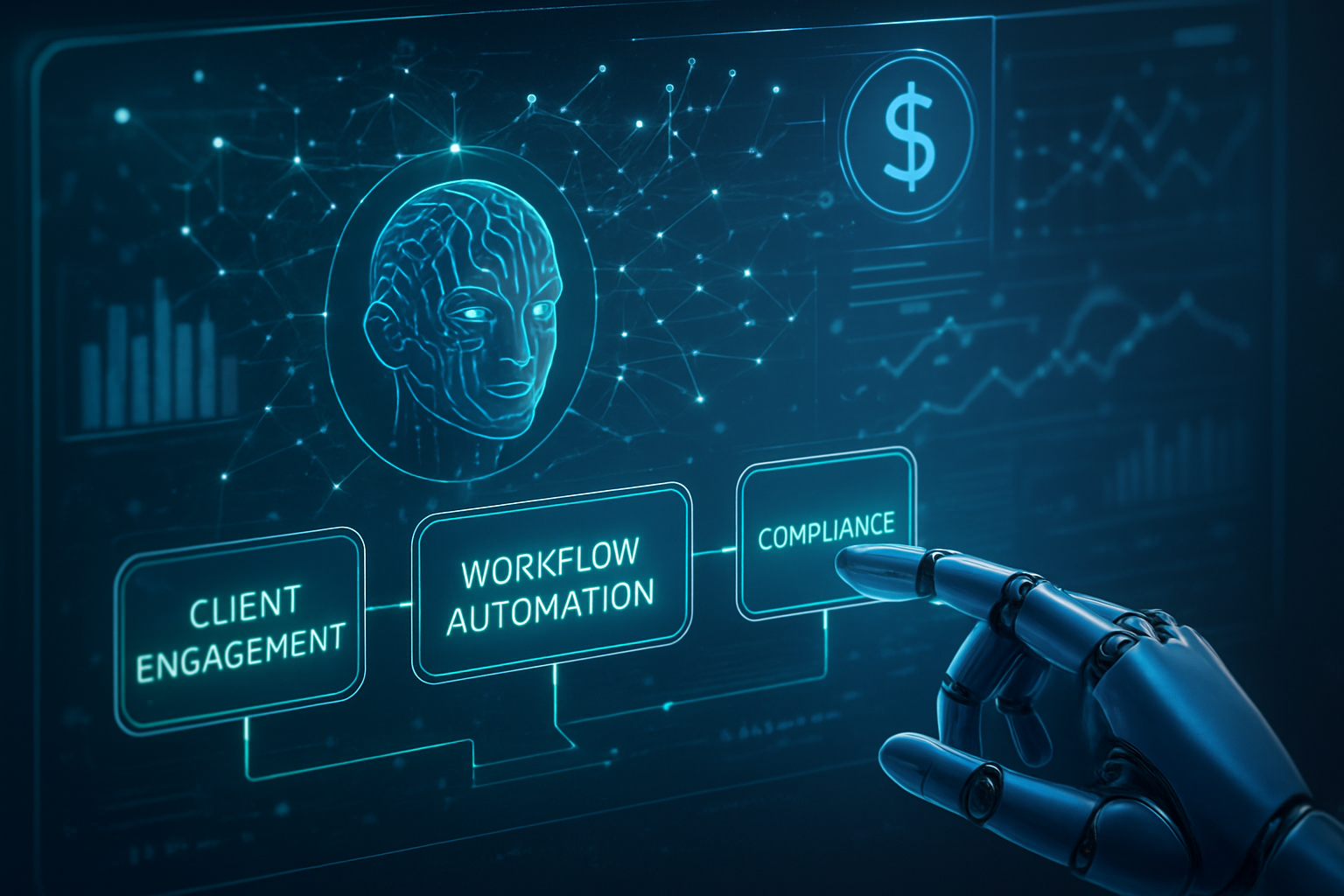
    November 17, 2025 – In a significant move poised to redefine the landscape of financial advisory, Intellebox.ai has officially spun out as an independent company from Intellectus Partners, an independent registered investment adviser. This strategic transition, effective October 1, 2025, with the appointment of AJ De Rosa as CEO, heralds the arrival of a full-stack artificial intelligence platform dedicated to empowering investor success by unifying client engagement, workflow automation, and compliance for financial advisory firms.

    Intellebox.ai's emergence as a standalone entity marks a pivotal moment, transforming an internal innovation into a venture-scalable solution for the broader advisory and wealth management industry. Its core mission is to serve as the "Advisor's Intelligence Operating System," integrating human expertise with advanced AI to tackle critical challenges such as fragmented client interactions, inefficient workflows, and complex regulatory compliance. The platform promises to deliver valuable intelligence to clients at scale, automate a substantial portion of advisory functions, and strengthen compliance oversight, thereby enhancing efficiency, improving communication, and fortifying operational integrity across the sector.

    The Technical Core: Agentic AI Redefining Financial Operations

    Intellebox.ai distinguishes itself through an "AI-native advisory" approach, built on a proprietary infrastructure designed for enterprise-grade security and full data control. At its heart lies the INTLX Agentic AI Ecosystem, a sophisticated framework that deploys personalized AI agents for wealth management. These agents, unlike conventional AI tools, are designed to operate autonomously, reason, plan, remember, and adapt to clients' unique preferences, behaviors, and real-time activities.

    The platform leverages advanced machine learning (ML) models and proprietary Large Language Models (LLMs) specifically engineered for "human-like understanding" in client communications. These LLMs craft personalized messages, market commentaries, and educational content with unprecedented efficiency. Furthermore, Intellebox.ai is developing patented AI Virtual Advisors (AVAs), intelligent avatars trained on a firm’s specific investment philosophy and expertise, capable of continuous learning through deep neural networks to handle both routine inquiries and advanced services. A Predictive AI Analytics Lab, employing proprietary deep learning algorithms, identifies investment opportunities, predicts client needs, and surfaces actionable intelligence.

    This agentic approach significantly differs from previous technologies, which often provided siloed AI solutions or basic automation. While many existing platforms offer AI for specific tasks like note-taking or CRM updates, Intellebox.ai presents a holistic, unified operating system that integrates client engagement, workflow automation, and compliance into a seamless experience. For instance, its AI agents automate up to 80% of advisory functions, including portfolio management, tax optimization, and compliance-related activities, a capability far exceeding traditional rule-based automation. The platform's compliance mechanisms are particularly noteworthy, featuring compliance-trained AI models that understand financial regulations deeply, akin to an experienced compliance team, and conduct automated regulatory checks on every client interaction.

    Initial reactions from the AI research community and industry experts are largely positive, viewing agentic AI as the "next killer application for AI" in wealth management. The spin-out itself is seen as a strategic evolution from "stealth stage innovation to a venture scalable company," underscoring confidence in its commercial potential. Early customer adoption, including its rollout to "The Bear Traps Institutional and Retail Research Platform," further validates its market relevance and technological maturity.

    Analyzing the Industry Impact: A New Competitive Frontier

    The emergence of Intellebox.ai and its agentic AI platform is set to profoundly reshape the competitive landscape for AI companies, tech giants, and startups within the financial technology and wealth management sectors. Intellebox.ai positions itself as a critical "Advisor's Intelligence Operating System," offering a full-stack AI solution that scales personalized engagement tenfold and automates 80% of advisory functions.

    Companies standing to benefit significantly include early-adopting financial advisory and wealth management firms. These firms can gain a substantial competitive edge through dramatically increased operational efficiency, reduced human error, and enhanced client satisfaction via hyper-personalization. Integrators and consulting firms specializing in AI implementation and data integration will also see increased demand. Furthermore, major cloud infrastructure providers such as Amazon (NASDAQ: AMZN), Google (NASDAQ: GOOGL), and Microsoft (NASDAQ: MSFT) stand to benefit from the increased demand for robust computational power and data storage required by sophisticated agentic AI platforms. Intellebox.ai itself leverages Google's Vertex AI Search platform for its search capabilities, highlighting this symbiotic relationship.

    Conversely, companies facing disruption include traditional wealth management firms still reliant on manual processes or legacy systems, which will struggle to match the efficiency and personalization offered by agentic AI. Basic robo-advisor platforms, while offering automated investment management, may find themselves outmaneuvered by Intellebox.ai's "human-like understanding" in client communications, proactive strategies, and comprehensive compliance, which goes beyond algorithmic portfolio management. Fintech startups with limited AI capabilities or those offering niche solutions without a comprehensive agentic AI strategy may also struggle to compete with full-stack platforms. Legacy software providers whose products do not easily integrate with or support agentic AI architectures risk market share erosion.

    Competitive implications for major AI labs and tech companies are significant, even if they don't directly compete in Intellebox.ai's niche. These giants provide the foundational LLMs, cloud infrastructure, and AI-as-a-Service (AIaaS) offerings that power agentic platforms. Their continuous advancements in LLMs (e.g., Google's Gemini, OpenAI's GPT-4o, Meta's Llama, Anthropic's Claude) directly enhance the capabilities of systems like Intellebox.ai. Tech giants with existing enterprise footprints like Salesforce (NYSE: CRM) and SAP (NYSE: SAP) are actively integrating agentic AI into their platforms, transforming static systems into dynamic ecosystems that could eventually offer integrated financial capabilities.

    Potential disruption to existing products and services is widespread. Client communication will shift from one-way reporting to smart, two-way, context-powered conversations. Manual workflows across advisory firms will be largely automated, leading to significant reductions in low-value human work. Portfolio management, tax optimization, and compliance services will see enhanced automation and personalization. Even the role of the financial advisor will evolve, shifting from performing routine tasks to orchestrating AI agents and focusing on complex problem-solving and strategic guidance, aiming to build "10x Advisors" rather than replacing them.

    Examining the Wider Significance: AI's March Towards Autonomy in Finance

    Intellebox.ai's spin-out and its agentic AI platform represent a crucial step in the broader AI landscape, signaling a significant trend toward more autonomous and intelligent systems in sensitive sectors like finance. This development aligns with expert predictions that agentic AI will be the "next big thing," moving beyond generative AI to systems capable of taking autonomous actions, planning multi-step workflows, and dynamically interacting across various systems. Gartner predicts that by 2028, one-third of enterprise software solutions will incorporate agentic AI, with up to 15% of daily decisions becoming autonomous.

    The societal and economic impacts are substantial. Intellebox.ai promises enhanced efficiency and cost reduction for financial institutions, improved risk management, and more personalized financial services, potentially facilitating financial inclusion by making sophisticated advice accessible to a broader demographic. The burgeoning AI agents market, projected to grow significantly, is expected to add trillions to the global economy, driven by increased AI spending from financial services firms.

    However, the increasing autonomy of AI in finance also raises significant concerns. Job displacement is a primary worry, as AI automates complex tasks traditionally performed by humans, potentially impacting a vast number of white-collar roles. Ethical AI and algorithmic bias are critical considerations; AI systems trained on historical data risk perpetuating or amplifying discrimination in financial decisions, necessitating robust responsible AI frameworks that prioritize fairness, accountability, privacy, and safety. The lack of transparency and explainability in "black box" AI models poses challenges for compliance and trust, making it difficult to understand the rationale behind AI-driven decisions. Furthermore, the processing of vast amounts of sensitive financial data by autonomous AI agents heightens data privacy and cybersecurity risks, demanding stringent security measures and compliance with regulations like GDPR. The complex question of accountability and human oversight for errors or harmful outcomes from autonomous AI decisions also remains a pressing issue.

    Comparing this to previous AI milestones, Intellebox.ai marks an evolution from early algorithmic trading systems and neural networks of the past, and even beyond the machine learning and natural language processing breakthroughs of the 2000s and 2010s. While previous advancements focused on data analysis, prediction, or content generation, agentic AI allows systems to proactively take goal-oriented actions and adapt independently. This represents a shift from AI assisting with decision-making to AI initiating and executing decisions autonomously, making Intellebox.ai a harbinger of a new era where AI plays a more active and integrated role in financial operations. The implications of AI becoming more autonomous in finance include potential risks to financial stability, as interconnected AI systems could amplify market volatility, and significant regulatory challenges as current frameworks struggle to keep pace with rapid innovation.

    Future Developments: The Road Ahead for Agentic AI in Finance

    The next 1-5 years promise rapid advancements for Intellebox.ai and the broader agentic AI landscape within financial advisory. Intellebox.ai's near-term focus will be on scaling its platform to enable advisors to achieve tenfold personalized client engagement and 80% automation of advisory functions. This includes the continued development of its compliance-trained AI models and the deployment of AI Virtual Advisors (AVAs) to deliver consistent, branded client experiences. The platform's ongoing market penetration, as evidenced by its rollout to firms like The Bear Traps Institutional and Retail Research Platform, underscores its immediate growth trajectory.

    For agentic AI in general, the market is projected for explosive growth, with the global agentic AI tools market expected to reach $10.41 billion in 2025. Experts predict that by 2028, a significant portion of enterprise software and daily business decisions will incorporate agentic AI, fundamentally altering how financial institutions operate. Financial advisors will increasingly rely on AI copilots for real-time insights, risk management, and hyper-personalized client solutions, leading to scalable efficiency. Long-term, the vision extends to fully autonomous wealth ecosystems, "self-driving portfolios" that continuously rebalance, and the democratization of sophisticated wealth management strategies for retail investors.

    Potential new applications and use cases on the horizon are vast. These include hyper-personalized financial planning that offers constantly evolving recommendations, proactive portfolio management with automated rebalancing and tax optimization, real-time regulatory compliance and risk mitigation with autonomous fraud detection, and advanced customer engagement through dynamic financial coaching. Agentic AI will also streamline client onboarding, automate loan underwriting, and enhance financial education through personalized, interactive experiences.

    However, several key challenges must be addressed for widespread adoption. Data quality and governance remain paramount, as inaccurate or siloed data can compromise AI effectiveness. Regulatory uncertainty and compliance pose a significant hurdle, as the pace of AI innovation outstrips existing frameworks, necessitating clear guidelines for "high-risk" AI systems in finance. Algorithmic bias and ethical concerns demand continuous vigilance to prevent discriminatory outcomes, while the lack of transparency (Explainable AI) must be overcome to build trust among advisors, clients, and regulators. Cybersecurity and data privacy risks will require robust protections for sensitive financial information. Furthermore, addressing the talent shortage and skills gap in AI and finance, along with the high development and integration costs, will be crucial.

    Experts predict that AI will augment, rather than entirely replace, human financial advisors, shifting their roles to more strategic functions. Agentic AI is expected to deliver substantial efficiency gains (30-80% in advice processes) and productivity improvements (22-30%), potentially leading to significant revenue growth for financial institutions. The workforce will undergo a transformation, requiring massive reskilling efforts to adapt to new roles created by AI. Ultimately, agentic AI is becoming a strategic necessity for wealth management firms to remain competitive, scale operations, and deliver enhanced client value.

    Comprehensive Wrap-Up: A Defining Moment for Financial AI

    The spin-out of Intellebox.ai marks a defining moment in the history of artificial intelligence, particularly within the financial advisory sector. It represents a significant leap towards an "AI-native" era, where intelligent agents move beyond mere assistance to autonomous action, fundamentally transforming how financial services are delivered and consumed. The platform's ability to unify client engagement, workflow automation, and compliance through sophisticated agentic AI offers unprecedented opportunities for efficiency, personalization, and operational integrity.

    This development underscores a broader trend in AI – the shift from analytical and generative capabilities to proactive, goal-oriented autonomy. Intellebox.ai's emphasis on proprietary infrastructure, enterprise-grade security, and compliance-trained AI models positions it as a leader in responsible AI adoption within a highly regulated industry.

    In the coming weeks and months, the industry will be watching closely for Intellebox.ai's continued market penetration, the evolution of its AI Virtual Advisors, and how financial advisory firms leverage its platform to gain a competitive edge. The long-term impact will depend on how effectively the industry addresses the accompanying challenges of ethical AI, data governance, regulatory adaptation, and workforce reskilling. Intellebox.ai is not just a new company; it is a blueprint for the future of intelligent, autonomous finance, promising a future where financial advice is more accessible, personalized, and efficient than ever before.


    This content is intended for informational purposes only and represents analysis of current AI developments.

    TokenRing AI delivers enterprise-grade solutions for multi-agent AI workflow orchestration, AI-powered development tools, and seamless remote collaboration platforms.
    For more information, visit https://www.tokenring.ai/.
  • The Privacy Imperative: Tech Giants Confront Escalating Cyber Threats, AI Risks, and a Patchwork of Global Regulations

    The Privacy Imperative: Tech Giants Confront Escalating Cyber Threats, AI Risks, and a Patchwork of Global Regulations

    November 14, 2025 – The global tech sector finds itself at a critical juncture, grappling with an unprecedented confluence of sophisticated cyber threats, the burgeoning risks posed by artificial intelligence, and an increasingly fragmented landscape of data privacy regulations. As we approach late 2025, organizations worldwide are under immense pressure to fortify their defenses, adapt to evolving legal frameworks, and fundamentally rethink their approach to data handling. This period is defined by a relentless series of data breaches, groundbreaking legislative efforts like the EU AI Act, and a desperate race to leverage advanced technologies to safeguard sensitive information in an ever-connected world.

    The Evolving Battlefield: Technical Challenges and Regulatory Overhauls

    The technical landscape of data privacy and security is more intricate and perilous than ever. A primary challenge is the sheer regulatory complexity and fragmentation. In the United States, the absence of a unified federal privacy law has led to a burgeoning "patchwork" of state-level legislation, including the Delaware Personal Data Privacy Act (DPDPA) and New Jersey's law, both effective January 1, 2025, and the Minnesota Consumer Data Privacy Act (MCDPA) on July 31, 2025. Internationally, the European Union continues to set global benchmarks with the EU AI Act, which began initial enforcement for high-risk AI practices on February 2, 2025, and the Digital Operational Resilience Act (DORA), effective January 17, 2025, for financial entities. This intricate web demands significant compliance resources and poses substantial operational hurdles for multinational corporations.

    Compounding this regulatory maze is the rise of AI-related risks. The Stanford 2025 AI Index Report highlighted a staggering 56.4% jump in AI incidents in 2024, encompassing data breaches, algorithmic biases, and the amplification of misinformation. AI systems, while powerful, present new vectors for privacy violations through inappropriate data access and processing, and their potential for discriminatory outcomes is a growing concern. Furthermore, sophisticated cyberattacks and human error remain persistent threats. The Verizon (NYSE: VZ) Data Breach Investigations Report (DBIR) 2025 starkly revealed that human error directly caused 60% of all breaches, making it the leading driver of successful attacks. Business Email Compromise (BEC) attacks have surged, and the cybercrime underground increasingly leverages AI tools, stolen credentials, and service-based offerings to launch more potent social engineering campaigns and reconnaissance efforts. The vulnerability of third-party and supply chain risks has also been dramatically exposed, with major incidents like the Snowflake (NYSE: SNOW) data breach in April 2024, which impacted over 100 customers and involved the theft of billions of call records, underscoring the critical need for robust vendor oversight. Emerging concerns like neural privacy, pertaining to data gathered from brainwaves and neurological activity via new technologies, are also beginning to shape the future of privacy discussions.

    Corporate Ripples: Impact on Tech Giants and Startups

    These developments are sending significant ripples through the tech industry, profoundly affecting both established giants and agile startups. Companies like Google (NASDAQ: GOOGL), Meta (NASDAQ: META), and Microsoft (NASDAQ: MSFT), which handle vast quantities of personal data and are heavily invested in AI, face immense pressure to navigate the complex regulatory landscape. The EU AI Act, for instance, imposes strict requirements on transparency, bias detection, and human oversight for general-purpose AI models, necessitating substantial investment in compliance infrastructure and ethical AI development. The "patchwork" of U.S. state laws also creates a compliance nightmare, forcing companies to implement different data handling practices based on user location, which can be costly and inefficient.

    The competitive implications are significant. Companies that can demonstrate superior data privacy and security practices stand to gain a strategic advantage, fostering greater consumer trust and potentially attracting more business from privacy-conscious clients. Conversely, those that fail to adapt risk substantial fines—as seen with GDPR penalties—and severe reputational damage. The numerous high-profile breaches, such as the National Public Data Breach (August 2024) and the Change Healthcare ransomware attack (2024), which impacted over 100 million individuals, highlight the potential for massive financial and operational disruption. Startups developing AI solutions, particularly those involving sensitive data, are under intense scrutiny from inception, requiring a "privacy by design" approach to avoid future legal and ethical pitfalls. This environment also spurs innovation in security solutions, benefiting companies specializing in Privacy-Enhancing Technologies (PETs) and AI-driven security tools.

    Broader Significance: A Paradigm Shift in Data Governance

    The current trajectory of data privacy and security marks a significant paradigm shift in how data is perceived and governed across the broader AI landscape. The move towards more stringent regulations, such as the EU AI Act and the proposed American Privacy Rights Act of 2024 (APRA), signifies a global consensus that data protection is no longer a secondary concern but a fundamental right. These legislative efforts aim to provide enhanced consumer rights, including access, correction, deletion, and limitations on data usage, and mandate explicit consent for sensitive personal data. This represents a maturation of the digital economy, moving beyond initial laissez-faire approaches to a more regulated and accountable era.

    However, this shift is not without its concerns. The fragmentation of laws can inadvertently stifle innovation for smaller entities that lack the resources to comply with disparate regulations. There are also ongoing debates about the balance between data utility for AI development and individual privacy. The "Protecting Americans' Data from Foreign Adversaries Act of 2024 (PADFA)," enacted in 2024, reflects geopolitical tensions impacting data flows, prohibiting data brokers from selling sensitive American data to certain foreign adversaries. This focus on data sovereignty and national security adds another complex layer to global data governance. Comparisons to previous milestones, such as the initial implementation of GDPR, show a clear trend: the world is moving towards stricter data protection, with AI now taking center stage as the next frontier for regulatory oversight and ethical considerations.

    The Road Ahead: Anticipated Developments and Challenges

    Looking forward, the tech sector can expect several key developments to shape the future of data privacy and security. In the near term, the continued enforcement of new regulations will drive significant changes. The Colorado AI Act (CAIA), passed in May 2024 and effective February 1, 2026, will make Colorado the first U.S. state with comprehensive AI regulation, setting a precedent for others. The UK's Cyber Security and Resilience Bill, unveiled in November 2025, will empower regulators with stronger penalties for breaches and mandate rapid incident reporting, indicating a global trend towards increased accountability.

    Technologically, the investment in Privacy-Enhancing Technologies (PETs) will accelerate. Differential privacy, federated learning, and homomorphic encryption are poised for wider adoption, enabling data analysis and AI model training while preserving individual privacy, crucial for cross-border data flows and compliance. AI and Machine Learning for data protection will also become more sophisticated, deployed for automated compliance monitoring, advanced threat identification, and streamlining security operations. Experts predict a rapid progression in quantum-safe cryptography, as the industry races to develop encryption methods resilient to future quantum computing capabilities, projected to render current encryption obsolete by 2035. The adoption of Zero-Trust Architecture will become a standard security model, assuming no user or device can be trusted by default, thereby enhancing data security postures. Challenges will include effectively integrating these advanced technologies into legacy systems, addressing the skills gap in cybersecurity and AI ethics, and continuously adapting to novel attack vectors and evolving regulatory interpretations.

    A New Era of Digital Responsibility

    In summation, the current state of data privacy and security in the tech sector marks a pivotal moment, characterized by an escalating threat landscape, a surge in regulatory activity, and profound technological shifts. The proliferation of sophisticated cyberattacks, exacerbated by human error and supply chain vulnerabilities, underscores the urgent need for robust security frameworks. Simultaneously, the global wave of new privacy laws, particularly those addressing AI, is reshaping how companies collect, process, and protect personal data.

    This era demands a comprehensive, proactive approach from all stakeholders. Companies must prioritize "privacy by design," embedding data protection considerations into every stage of product development and operation. Investment in advanced security technologies, particularly AI-driven solutions and privacy-enhancing techniques, is no longer optional but essential for survival and competitive advantage. The significance of this development in AI history cannot be overstated; it represents a maturation of the digital age, where technological innovation must be balanced with ethical responsibility and robust safeguards for individual rights. In the coming weeks and months, watch for further regulatory clarifications, the emergence of more sophisticated AI-powered security tools, and how major tech players adapt their business models to thrive in this new era of digital responsibility. The future of the internet's trust and integrity hinges on these ongoing developments.


    This content is intended for informational purposes only and represents analysis of current AI developments.

    TokenRing AI delivers enterprise-grade solutions for multi-agent AI workflow orchestration, AI-powered development tools, and seamless remote collaboration platforms.
    For more information, visit https://www.tokenring.ai/.

  • California Unleashes Groundbreaking AI Regulations: A Wake-Up Call for Businesses

    California Unleashes Groundbreaking AI Regulations: A Wake-Up Call for Businesses

    California has once again positioned itself at the forefront of technological governance, enacting pioneering regulations for Automated Decisionmaking Technology (ADMT) under the California Consumer Privacy Act (CCPA). Approved by the California Office of Administrative Law in September 2025, these landmark rules introduce comprehensive requirements for transparency, consumer control, and accountability in the deployment of artificial intelligence. With primary compliance obligations taking effect on January 1, 2027, and risk assessment requirements commencing January 1, 2026, these regulations are poised to fundamentally reshape how AI is developed, deployed, and interacted with, not just within the Golden State but potentially across the global tech landscape.

    The new ADMT framework represents a significant leap forward in addressing the ethical and societal implications of AI, compelling businesses to scrutinize their automated systems with unprecedented rigor. From hiring algorithms to credit scoring models, any AI-driven tool making "significant decisions" about consumers will fall under its purview, demanding a new era of responsible AI development. This move by California's regulatory bodies signals a clear intent to protect consumer rights in an increasingly automated world, presenting both formidable compliance challenges and unique opportunities for companies committed to building trustworthy AI.

    Unpacking the Technical Blueprint: California's ADMT Regulations in Detail

    California's ADMT regulations, stemming from amendments to the CCPA by the California Privacy Rights Act (CPRA) of 2020, establish a robust framework enforced by the California Privacy Protection Agency (CPPA). At its core, the regulations define ADMT broadly as any technology that processes personal information and uses computation to execute a decision, replace human decision-making, or substantially facilitate human decision-making. This expansive definition explicitly includes AI, machine learning, and statistical data-processing techniques, encompassing tools such as resume screeners, performance monitoring systems, and other applications influencing critical life aspects like employment, finance, housing, and healthcare. A crucial nuance is that nominal human review will not suffice to circumvent compliance where technology "substantially replaces" human judgment, underscoring the intent to regulate the actual impact of automation.

    The regulatory focus sharpens on ADMT used for "significant decisions," which are meticulously defined to include outcomes related to financial or lending services, housing, education enrollment, employment or independent contracting opportunities or compensation, and healthcare services. It also covers "extensive profiling," such as workplace or educational profiling, public-space surveillance, or processing personal information to train ADMT for these purposes. This targeted approach, a refinement from earlier drafts that included behavioral advertising, ensures that the regulations address the most impactful applications of AI. The technical demands on businesses are substantial, requiring an inventory of all in-scope ADMTs, meticulous documentation of their purpose and operational scope, and the ability to articulate how personal information is processed to reach a significant decision.

    These regulations introduce a suite of strengthened consumer rights that necessitate significant technical and operational overhauls for businesses. Consumers are granted the right to pre-use notice, requiring businesses to provide clear and accessible explanations of the ADMT's purpose, scope, and potential impacts before it's used to make a significant decision. Furthermore, consumers generally have an opt-out right from ADMT use for significant decisions, with provisions for exceptions where a human appeal option capable of overturning the automated decision is provided. Perhaps most technically challenging is the right to access and explanation, which mandates businesses to provide information on "how the ADMT processes personal information to make a significant decision," including the categories of personal information utilized. This moves beyond simply stating the logic to requiring a tangible understanding of the data's role. Finally, an explicit right to appeal adverse automated decisions to a qualified human reviewer with overturning authority introduces a critical human-in-the-loop requirement.

    Beyond consumer rights, the regulations mandate comprehensive risk assessments for high-risk processing activities, which explicitly include using ADMT for significant decisions. These assessments, required before initiating such processing, must identify purposes, benefits, foreseeable risks, and proposed safeguards, with initial submissions to the CPPA due by April 1, 2028, for activities conducted in 2026-2027. Additionally, larger businesses (over $100M revenue) face annual cybersecurity audit requirements, with certifications due starting April 1, 2028, and smaller firms phased in by 2030. These independent audits must provide a realistic assessment of security programs, adding another layer of technical and governance responsibility. Initial reactions from the AI research community and industry experts, while acknowledging the complexity, largely view these regulations as a necessary step towards establishing guardrails for AI, with particular emphasis on the technical challenges of providing meaningful explanations and ensuring effective human appeal mechanisms for opaque algorithmic systems.

    Reshaping the AI Business Landscape: Competitive Implications and Disruptions

    California's ADMT regulations are set to profoundly reshape the competitive dynamics within the AI business landscape, creating clear winners and presenting significant hurdles for others. Companies that have proactively invested in explainable AI (XAI), robust data governance, and privacy-by-design principles stand to benefit immensely. These early adopters, often smaller, agile startups focused on ethical AI solutions, may find a competitive edge by offering compliance-ready products and services. For instance, firms specializing in algorithmic auditing, bias detection, and transparent decision-making platforms will likely see a surge in demand as businesses scramble to meet the new requirements. This could lead to a strategic advantage for companies like (ALTR) Alteryx, Inc. or (SPLK) Splunk Inc. if they pivot to offer such compliance-focused AI tools, or create opportunities for new entrants.

    For major AI labs and tech giants, the implications are two-fold. On one hand, their vast resources and legal teams can facilitate compliance, potentially allowing them to absorb the costs more readily than smaller entities. Companies like (GOOGL) Alphabet Inc. and (MSFT) Microsoft Corporation, which have already committed to responsible AI principles, may leverage their existing frameworks to adapt. However, the sheer scale of their AI deployments means the task of inventorying all ADMTs, conducting risk assessments, and implementing consumer rights mechanisms will be monumental. This could disrupt existing products and services that rely heavily on automated decision-making without sufficient transparency or appeal mechanisms, particularly in areas like recruitment, content moderation, and personalized recommendations if they fall under "significant decisions." The regulations might also accelerate the shift towards more privacy-preserving AI techniques, potentially challenging business models reliant on extensive personal data processing.

    The market positioning of AI companies will increasingly hinge on their ability to demonstrate compliance and ethical AI practices. Businesses that can credibly claim to offer "California-compliant" AI solutions will gain a strategic advantage, especially when contracting with other regulated entities. This could lead to a "flight to quality" where companies prefer vendors with proven responsible AI governance. Conversely, firms that struggle with transparency, fail to mitigate bias, or cannot provide adequate consumer recourse mechanisms face significant reputational and legal risks, including potential fines and consumer backlash. The regulations also create opportunities for new service lines, such as ADMT compliance consulting, specialized legal advice, and technical solutions for implementing opt-out and appeal systems, fostering a new ecosystem of AI governance support.

    The potential for disruption extends to existing products and services across various sectors. For instance, HR tech companies offering automated resume screening or performance management systems will need to overhaul their offerings to include pre-use notices, opt-out features, and human review processes. Financial institutions using AI for credit scoring or loan applications will face similar pressures to enhance transparency and provide appeal mechanisms. This could slow down the adoption of purely black-box AI solutions in critical decision-making contexts, pushing the industry towards more interpretable and controllable AI. Ultimately, the regulations are likely to foster a more mature and accountable AI market, where responsible development is not just an ethical aspiration but a legal and competitive imperative.

    The Broader AI Canvas: Impacts, Concerns, and Milestones

    California's ADMT regulations arrive at a pivotal moment in the broader AI landscape, aligning with a global trend towards increased AI governance and ethical considerations. This move by the world's fifth-largest economy and a major tech hub is not merely a state-level policy; it sets a de facto standard that will likely influence national and international discussions on AI regulation. It positions California alongside pioneering efforts like the European Union's AI Act, underscoring a growing consensus that unchecked AI development poses significant societal risks. This fits into a larger narrative where the focus is shifting from pure innovation to responsible innovation, prioritizing human rights and consumer protection in the age of advanced algorithms.

    The impacts of these regulations are multifaceted. On one hand, they promise to enhance consumer trust in AI systems by mandating transparency and accountability, particularly in critical areas like employment, finance, and healthcare. The requirements for risk assessments and bias mitigation could lead to fairer and more equitable AI outcomes, addressing long-standing concerns about algorithmic discrimination. By providing consumers with the right to opt out and appeal automated decisions, the regulations empower individuals, shifting some control back from algorithms to human agency. This could foster a more human-centric approach to AI design, where developers are incentivized to build systems that are not only efficient but also understandable and contestable.

    However, the regulations also raise potential concerns. The broad definition of ADMT and "significant decisions" could lead to compliance ambiguities and overreach, potentially stifling innovation in nascent AI fields or imposing undue burdens on smaller startups. The technical complexity of providing meaningful explanations for sophisticated AI models, particularly deep learning systems, remains a significant challenge, and the "substantially replace human decision-making" clause may require further clarification to avoid inconsistent interpretations. There are also concerns about the administrative burden and costs associated with compliance, which could disproportionately affect small and medium-sized enterprises (SMEs), potentially creating barriers to entry in the AI market.

    Comparing these regulations to previous AI milestones, California's ADMT framework represents a shift from reactive problem-solving to proactive governance. Unlike earlier periods where AI advancements often outpaced regulatory foresight, this move signifies a concerted effort to establish guardrails before widespread negative impacts materialize. It builds upon the foundation laid by general data privacy laws like GDPR and the CCPA itself, extending privacy principles specifically to the context of automated decision-making. While not as comprehensive as the EU AI Act's risk-based approach, California's regulations are notable for their focus on consumer rights and their immediate, practical implications for businesses operating within the state, serving as a critical benchmark for future AI legislative efforts globally.

    The Horizon of AI Governance: Future Developments and Expert Predictions

    Looking ahead, California's ADMT regulations are likely to catalyze a wave of near-term and long-term developments across the AI ecosystem. In the near term, we can expect a rapid proliferation of specialized compliance tools and services designed to help businesses navigate the new requirements. This will include software for ADMT inventorying, automated risk assessment platforms, and solutions for managing consumer opt-out and appeal requests. Legal and consulting firms will also see increased demand for expertise in interpreting and implementing the regulations. Furthermore, AI development itself will likely see a greater emphasis on "explainability" and "interpretability," pushing researchers and engineers to design models that are not only performant but also transparent in their decision-making processes.

    Potential applications and use cases on the horizon will include the development of "ADMT-compliant" AI models that are inherently designed with transparency, fairness, and consumer control in mind. This could lead to the emergence of new AI product categories, such as "ethical AI hiring platforms" or "transparent lending algorithms," which explicitly market their adherence to these stringent regulations. We might also see the rise of independent AI auditors and certification bodies, providing third-party verification of ADMT compliance, similar to how cybersecurity certifications operate today. The emphasis on human appeal mechanisms could also spur innovation in human-in-the-loop AI systems, where human oversight is seamlessly integrated into automated workflows.

    However, significant challenges still need to be addressed. The primary hurdle will be the practical implementation of these complex regulations across diverse industries and AI applications. Ensuring consistent enforcement by the CPPA will be crucial, as will providing clear guidance on ambiguous aspects of the rules, particularly regarding what constitutes "substantially replacing human decision-making" and the scope of "meaningful explanation." The rapid pace of AI innovation means that regulations, by their nature, will always be playing catch-up; therefore, a mechanism for periodic review and adaptation of the ADMT framework will be essential to keep it relevant.

    Experts predict that California's regulations will serve as a powerful catalyst for a "race to the top" in responsible AI. Companies that embrace these principles early will gain a significant reputational and competitive advantage. Many foresee other U.S. states and even federal agencies drawing inspiration from California's framework, potentially leading to a more harmonized, albeit stringent, national approach to AI governance. The long-term impact is expected to foster a more ethical and trustworthy AI ecosystem, where innovation is balanced with robust consumer protections, ultimately leading to AI technologies that better serve societal good.

    A New Chapter for AI: Comprehensive Wrap-Up and Future Watch

    California's ADMT regulations mark a seminal moment in the history of artificial intelligence, transitioning the industry from a largely self-regulated frontier to one subject to stringent legal and ethical oversight. The key takeaways are clear: transparency, consumer control, and accountability are no longer aspirational goals but mandatory requirements for any business deploying automated decision-making technologies that impact significant aspects of a Californian's life. This framework necessitates a profound shift in how AI is conceived, developed, and deployed, demanding a proactive approach to risk assessment, bias mitigation, and the integration of human oversight.

    The significance of this development in AI history cannot be overstated. It underscores a global awakening to the profound societal implications of AI and establishes a robust precedent for how governments can intervene to protect citizens in an increasingly automated world. While presenting considerable compliance challenges, particularly for identifying in-scope ADMTs and building mechanisms for consumer rights like opt-out and appeal, it also offers a unique opportunity for businesses to differentiate themselves as leaders in ethical and responsible AI. This is not merely a legal burden but an invitation to build better, more trustworthy AI systems that foster public confidence and drive sustainable innovation.

    In the long term, these regulations are poised to foster a more mature and responsible AI industry, where the pursuit of technological advancement is intrinsically linked with ethical considerations and human welfare. The ripple effect will likely extend beyond California, influencing national and international policy discussions and encouraging a global standard for AI governance. What to watch for in the coming weeks and months includes how businesses begin to operationalize these requirements, the initial interpretations and enforcement actions by the CPPA, and the emergence of new AI tools and services specifically designed to aid compliance. The journey towards truly responsible AI has just entered a critical new phase, with California leading the charge.


    This content is intended for informational purposes only and represents analysis of current AI developments.

    TokenRing AI delivers enterprise-grade solutions for multi-agent AI workflow orchestration, AI-powered development tools, and seamless remote collaboration platforms.
    For more information, visit https://www.tokenring.ai/.

  • LeapXpert’s AI Unleashes a New Era of Order and Accountability in Business Messaging

    LeapXpert’s AI Unleashes a New Era of Order and Accountability in Business Messaging

    San Francisco, CA – October 31, 2025 – In a significant stride towards harmonizing the often-conflicting demands of innovation and compliance, LeapXpert, a leading provider of enterprise-grade messaging solutions, has introduced a groundbreaking AI-powered suite designed to instill unprecedented levels of order, oversight, and accountability in business communications. Launched in March 2024 with its Maxen™ Generative AI application, and further bolstered by its Messaging Security Package in November 2024, LeapXpert's latest offerings are reshaping how global enterprises manage client interactions across the fragmented landscape of modern messaging platforms.

    The introduction of these advanced AI capabilities marks a pivotal moment for industries grappling with regulatory pressures while striving for enhanced client engagement and operational efficiency. By leveraging artificial intelligence, LeapXpert enables organizations to embrace the agility and ubiquity of consumer messaging apps like WhatsApp, iMessage, and WeChat for business purposes, all while maintaining rigorous adherence to compliance standards. This strategic move addresses the long-standing challenge of "dark data" – unmonitored and unarchived communications – transforming a potential liability into a structured, auditable asset for enterprises worldwide.

    Technical Prowess: AI-Driven Precision for Enterprise Communications

    At the heart of LeapXpert's new solution lies Maxen™, a patented Generative AI (GenAI) application that generates "Communication Intelligence" by integrating data from diverse communication sources. Maxen™ provides relationship managers with live insights and recommendations based on recent communications, suggesting impactful message topics and content. This not only standardizes communication quality but also significantly boosts productivity by assisting in the creation of meeting agendas, follow-ups, and work plans. Crucially, Maxen™ incorporates robust fact and compliance checking for every message, ensuring integrity and adherence to regulatory standards in real-time.

    Complementing Maxen™ is the broader LeapXpert Communications Platform, built on the Federated Messaging Orchestration Platform (FMOP), which acts as a central hub for managing business communications across various channels. The platform assigns employees a "Single Professional Identity™," consolidating client communications (voice, SMS, WhatsApp, iMessage, WeChat, Telegram, LINE, Signal) under one business number accessible across corporate and personal devices. This centralized approach simplifies interactions and streamlines monitoring. Furthermore, the Messaging Security Package, launched nearly a year ago, introduced an AI-driven Impersonation Detection system that analyzes linguistic and behavioral patterns to flag potential impersonation attempts in real-time. This package also includes antivirus/anti-malware scanning and Content Disarm and Reconstruction (CDR) to proactively neutralize malicious content, offering a multi-layered defense far exceeding traditional, reactive security measures.

    What sets LeapXpert's approach apart from previous methods is its proactive, integrated compliance. Instead of merely archiving communications after the fact, the AI actively participates in the communication process—offering guidance, checking facts, and detecting threats before they can cause harm. Traditional solutions often relied on blanket restrictions or cumbersome, separate applications that hindered user experience and adoption. LeapXpert's solution, however, embeds governance directly into the popular messaging apps employees and clients already use, bridging the gap between user convenience and corporate control. This seamless integration with leading archiving systems (e.g., MirrorWeb, Veritas, Behavox) ensures granular data ingestion and meticulous recordkeeping, providing tamper-proof audit trails vital for regulatory compliance.

    Initial reactions from the AI research community and industry experts have been largely positive, highlighting the solution's innovative use of GenAI for proactive compliance. Analysts commend LeapXpert for tackling a persistent challenge in financial services and other regulated industries where the rapid adoption of consumer messaging has created significant compliance headaches. The ability to maintain a single professional identity while enabling secure, monitored communication across diverse platforms is seen as a significant leap forward.

    Competitive Implications and Market Dynamics

    LeapXpert's new AI solution positions the company as a formidable player in the enterprise communication and compliance technology space. While LeapXpert itself is a private entity, its advancements have significant implications for a range of companies, from established tech giants to nimble startups. Companies in highly regulated sectors, such as financial services, healthcare, and legal, stand to benefit immensely from a solution that de-risks modern communication channels.

    The competitive landscape sees major cloud communication platforms and enterprise software providers, including those offering unified communications as a service (UCaaS), facing pressure to integrate similar robust compliance and AI-driven oversight capabilities. While companies like Microsoft (NASDAQ: MSFT) with Teams, Salesforce (NYSE: CRM) with Slack, or Zoom Video Communications (NASDAQ: ZM) offer extensive communication tools, LeapXpert's specialized focus on federating consumer messaging apps for enterprise compliance offers a distinct advantage in a niche that these larger players have historically struggled to fully address. The potential disruption to existing compliance and archiving services that lack real-time AI capabilities is substantial, as LeapXpert's proactive approach could render reactive solutions less effective.

    LeapXpert's market positioning is strengthened by its ability to offer both innovation and compliance in a single, integrated platform. This strategic advantage allows enterprises to adopt customer-centric communication strategies without compromising security or regulatory adherence. By transforming "dark data" into auditable records, LeapXpert not only mitigates risk but also unlocks new avenues for data-driven insights from client interactions, potentially influencing product development and service delivery strategies for its enterprise clients. The company’s continued focus on integrating cutting-edge AI, as demonstrated by the recent launches, ensures it remains at the forefront of this evolving market.

    Wider Significance in the AI Landscape

    LeapXpert's AI solution is more than just a product update; it represents a significant development within the broader AI landscape, particularly in the domain of responsible AI and AI for governance. It exemplifies a growing trend where AI is not merely used for efficiency or creative generation but is actively deployed to enforce rules, ensure integrity, and maintain accountability in complex human interactions. This fits squarely into the current emphasis on ethical AI, demonstrating how AI can be a tool for good governance, rather than solely a source of potential risk.

    The impact extends to redefining how organizations perceive and manage communication risks. Historically, the adoption of new, informal communication channels has been met with either outright bans or inefficient, manual oversight. LeapXpert's AI flips this paradigm, enabling innovation by embedding compliance. This has profound implications for industries struggling with regulatory mandates like MiFID II, Dodd-Frank, and GDPR, as it offers a practical pathway to leverage modern communication tools without incurring severe penalties.

    Potential concerns, however, always accompany powerful AI solutions. Questions around data privacy, the potential for AI biases in communication analysis, and the continuous need for human oversight to validate AI-driven decisions remain pertinent. While LeapXpert emphasizes robust data controls and tamper-proof storage, the sheer volume of data processed by such systems necessitates ongoing vigilance. This development can be compared to previous AI milestones that automated complex tasks; however, its unique contribution lies in automating compliance and oversight in real-time, moving beyond mere data capture to active, intelligent intervention. It underscores the maturation of AI from a purely analytical tool to an active participant in maintaining organizational integrity.

    Exploring Future Developments

    Looking ahead, the trajectory of solutions like LeapXpert's suggests several exciting near-term and long-term developments. In the near future, we can expect to see deeper integration of contextual AI, allowing for more nuanced understanding of conversations and a reduction in false positives for compliance flags. The AI's ability to learn and adapt to specific organizational policies and industry-specific jargon will likely improve, making the compliance checks even more precise and less intrusive. Enhanced sentiment analysis and predictive analytics could also emerge, allowing enterprises to not only ensure compliance but also anticipate client needs or potential escalations before they occur.

    Potential applications and use cases on the horizon include AI-driven training modules that use communication intelligence to coach employees on best practices for compliant messaging, or even AI assistants that can draft compliant responses based on predefined templates and real-time conversation context. The integration with other enterprise systems, such as CRM and ERP, will undoubtedly become more seamless, creating a truly unified data fabric for all client interactions.

    However, challenges remain. The evolving nature of communication platforms, the constant emergence of new messaging apps, and the ever-changing regulatory landscape will require continuous adaptation and innovation from LeapXpert. Ensuring the explainability and transparency of AI decisions, particularly in compliance-critical scenarios, will be paramount to building trust and avoiding legal challenges. Experts predict that the next frontier will involve AI not just monitoring but actively shaping compliant communication strategies, offering proactive advice and even intervening in real-time to prevent breaches, moving towards a truly intelligent compliance co-pilot.

    A Comprehensive Wrap-Up

    LeapXpert's recent AI solution for business messaging, spearheaded by Maxen™ and its Federated Messaging Orchestration Platform, represents a monumental leap forward in enterprise communication. Its core achievement lies in successfully bridging the chasm between the demand for innovative, client-centric communication and the imperative for stringent regulatory compliance. By offering granular oversight, proactive accountability, and systematic order across diverse messaging channels, LeapXpert has provided a robust framework for businesses to thrive in a highly regulated digital world.

    This development is significant in AI history as it showcases the maturation of artificial intelligence from a tool for automation and analysis to a sophisticated agent of governance and integrity. It underscores a crucial shift: AI is not just about doing things faster or smarter, but also about doing them right and responsibly. The ability to harness the power of consumer messaging apps for business, without sacrificing security or compliance, will undoubtedly set a new benchmark for enterprise communication platforms.

    In the coming weeks and months, the industry will be watching closely for adoption rates, further enhancements to the AI's capabilities, and how competitors respond to this innovative approach. As the digital communication landscape continues to evolve, solutions like LeapXpert's will be crucial in defining the future of secure, compliant, and efficient business interactions, solidifying AI's role as an indispensable partner in corporate governance.


    This content is intended for informational purposes only and represents analysis of current AI developments.

    TokenRing AI delivers enterprise-grade solutions for multi-agent AI workflow orchestration, AI-powered development tools, and seamless remote collaboration platforms.
    For more information, visit https://www.tokenring.ai/.

  • Geotab Ace: Revolutionizing Australian Fleet Management with Generative AI on the Eve of its Full Launch

    Geotab Ace: Revolutionizing Australian Fleet Management with Generative AI on the Eve of its Full Launch

    Sydney, Australia – October 7, 2025 – The world of fleet management in Australia is on the cusp of a significant transformation with the full launch of Geotab Ace, the industry's first fully integrated generative AI assistant. Built within the MyGeotab platform and powered by Alphabet (NASDAQ: GOOGL) Google Cloud and Gemini models, Geotab Ace promises to redefine how fleet operators tackle persistent challenges like escalating fuel costs, complex compliance regulations, and ambitious sustainability targets. This innovative AI copilot, which has been in beta as "Project G" since September 2023, is set to officially roll out to all Australian customers on October 8, 2025 (or October 7, 2025, ET), marking a pivotal moment for data-driven decision-making in the logistics and transportation sectors.

    The immediate significance of Geotab Ace for Australian fleets cannot be overstated. Facing pressures from rising operational costs, a persistent driver shortage, and increasingly stringent environmental mandates, fleet managers are in dire need of tools that can distill vast amounts of data into actionable insights. Geotab Ace addresses this by offering intuitive, natural language interaction with telematics data, democratizing access to critical information and significantly boosting productivity and efficiency across fleet operations.

    The Technical Edge: How Geotab Ace Reimagines Telematics

    Geotab Ace is a testament to the power of integrating advanced generative AI into specialized enterprise applications. At its core, the assistant leverages a sophisticated architecture built on Alphabet (NASDAQ: GOOGL) Google Cloud, utilizing Google's powerful Gemini 1.5 Pro AI models for natural language understanding and generation. For semantic matching of user queries, it employs a fine-tuned version of OpenAI's text-embedding-002 as its embedding model. All fleet data, which amounts to over 100 billion data points daily from nearly 5 million connected vehicles globally, resides securely in Alphabet (NASDAQ: GOOGL) Google BigQuery, a robust, AI-ready data analytics platform.

    The system operates on a Retrieval-Augmented Generation (RAG) architecture. When a user poses a question in natural language, Geotab Ace processes it through its embedding model to create a vector representation. This vector is then used to search a Vector Database for semantically similar questions, their corresponding SQL queries, and relevant contextual information. This enriched context is then fed to the Gemini large language model, which generates precise SQL queries. These queries are executed against the extensive telematics data in Google BigQuery, and the results are presented back to the user as customized, actionable insights, often accompanied by "reasoning reports" that explain the AI's interpretation and deconstruct the query for transparency. This unique approach ensures that insights are not only accurate and relevant but also understandable, fostering user trust.

    This generative AI approach marks a stark departure from traditional telematics reporting. Historically, fleet managers would navigate complex dashboards, sift through static reports, or require specialized data analysts with SQL expertise to extract meaningful insights. This was often a time-consuming and cumbersome process. Geotab Ace, however, transforms this by allowing anyone to query data using everyday language, instantly receiving customized answers on everything from predictive safety analytics and maintenance needs to EV statistics and fuel consumption patterns. It moves beyond passive data consumption to active, conversational intelligence, drastically reducing the time from question to actionable insight from hours or days to mere seconds. Initial reactions from early adopters have been overwhelmingly positive, with beta participants reporting "practical, immediate gains in productivity and insight" and a significant improvement in their ability to quickly address critical operational questions related to driver safety and vehicle utilization.

    Competitive Ripples: Impact on the AI and Telematics Landscape

    The launch of Geotab Ace sends a clear signal across the AI and telematics industries, establishing a new benchmark for intelligent fleet management solutions. Alphabet (NASDAQ: GOOGL) Google Cloud emerges as a significant beneficiary, as Geotab's reliance on its infrastructure and Gemini models underscores the growing trend of specialized enterprise AI solutions leveraging foundational LLMs and robust cloud services. Companies specializing in AI observability and MLOps, such as Arize AI, which Geotab utilized for monitoring Ace's performance, also stand to benefit from the increasing demand for tools to manage and evaluate complex AI deployments.

    For other major AI labs, Geotab Ace validates the immense potential of applying LLMs to domain-specific enterprise challenges. It incentivizes further development of models that prioritize accuracy, data grounding, and strong privacy protocols—features critical for enterprise adoption. The RAG architecture and the ability to convert natural language into precise SQL queries will likely become areas of intense focus for AI research and development.

    Within the telematics sector, Geotab Ace significantly raises the competitive bar. Established competitors like Samsara (NYSE: IOT), Powerfleet (NASDAQ: PWFL) (which also offers its own Gen AI assistant, Aura), and Verizon Connect will face immense pressure to develop or acquire comparable generative AI capabilities. Geotab's extensive data advantage, processing billions of data points daily, provides a formidable moat, as such vast, proprietary datasets are crucial for training and refining highly accurate AI models. Telematics providers slow to integrate similar AI-driven solutions risk losing market share to more innovative players, as customers increasingly prioritize ease of data access and actionable intelligence.

    Geotab Ace fundamentally disrupts traditional fleet data analysis. It simplifies data access, reducing reliance on static reports and manual data manipulation, tasks that previously consumed considerable time and resources. This not only streamlines workflows but also empowers a broader range of users to make faster, more informed data-driven decisions. Geotab's enhanced market positioning is solidified by offering a cutting-edge, integrated generative AI copilot, reinforcing its leadership and attracting new clients. Its "privacy-by-design" approach, ensuring customer data remains secure within its environment and is never shared with external LLMs, further builds trust and provides a crucial differentiator in a competitive landscape increasingly concerned with data governance.

    Broader Horizons: AI's Evolving Role and Societal Implications

    Geotab Ace is more than just a fleet management tool; it's a prime example of how generative AI is democratizing complex data insights across enterprise applications. It aligns with the broader AI trend of developing "AI co-pilots" that augment human capabilities, enabling users to perform sophisticated analyses more quickly and efficiently without needing specialized technical skills. This shift towards natural language interfaces for data interaction is a significant step in making AI accessible and valuable to a wider audience, extending its impact beyond the realm of data scientists to everyday operational users.

    The underlying principles and technologies behind Geotab Ace have far-reaching implications for industries beyond fleet management. Its ability to query vast, complex datasets using natural language and provide tailored insights is a universal need. This could extend to logistics and supply chain management (optimizing routes, predicting delays), field services (improving dispatch, predicting equipment failures), manufacturing (machine health, production optimization), and even smart city initiatives (urban planning, traffic flow). Any sector grappling with large, siloed operational data stands to benefit from similar AI-driven solutions that simplify data access and enhance decision-making.

    However, with great power comes great responsibility, and Geotab has proactively addressed potential concerns associated with generative AI. Data privacy is paramount: customer telematics data remains securely within Geotab's environment and is never shared with LLMs or third parties. Geotab also employs robust anonymization strategies and advises users to avoid entering sensitive information into prompts. The risk of AI "hallucinations" (generating incorrect information) is mitigated through extensive testing, continuous refinement by data scientists, simplified database schemas, and the provision of "reasoning reports" to foster transparency. Furthermore, Geotab emphasizes that Ace is designed to augment, not replace, human roles, allowing fleet managers to focus on strategic decisions and coaching rather than manual data extraction. This responsible approach to AI deployment is crucial for building trust and ensuring ethical adoption across industries.

    Compared to previous AI milestones, Geotab Ace represents a significant leap towards democratized, domain-specific, conversational AI for complex enterprise data. While early AI systems were often rigid and rule-based, and early machine learning models required specialized expertise, Geotab Ace makes sophisticated insights accessible through natural language. It bridges the gap left by traditional big data analytics tools, which, while powerful, often required technical skills to extract value. This integration of generative AI into a specific industry vertical, coupled with a strong focus on "trusted data" and "privacy-by-design," marks a pivotal moment in the practical and responsible adoption of AI in daily operations.

    The Road Ahead: Future Developments and Challenges

    The future for Geotab Ace and generative AI in fleet management promises a trajectory of continuous innovation, leading to increasingly intelligent, automated, and predictive operations. In the near term, we can expect Geotab Ace to further refine its intuitive data interaction capabilities, offering even faster and more nuanced insights into vehicle performance, driver behavior, and operational efficiency. Enhancements in predictive safety analytics and proactive maintenance will continue to be a focus, moving fleets from reactive problem-solving to preventive strategies. The integration of AI-powered dash cams for real-time driver coaching and the expansion of AI into broader operational aspects like job site and warehouse management are also on the horizon.

    Looking further ahead, the long-term vision for generative AI in fleet management points towards a highly automated and adaptive ecosystem. This includes seamless integration with autonomous vehicles, enabling complex real-time decision-making with reduced human oversight. AI will play a critical role in optimizing electric vehicle (EV) fleets, including smart charging schedules and overall energy efficiency, aligning with global sustainability goals. Potential new applications range from direct, personalized AI communication and coaching for drivers, to intelligent road sign and hazard detection using computer vision, and advanced customer instruction processing through natural language understanding. AI will also automate back-office functions, streamline workflows, and enable more accurate demand forecasting and fleet sizing.

    However, the path to widespread adoption and enhanced capabilities is not without its challenges. Data security and privacy remain paramount, requiring continuous vigilance and robust "privacy-by-design" architectures like Geotab's, which ensure customer data never leaves its secure environment. The issue of data quality and the challenge of unifying fragmented, inconsistent data from various sources (telematics, maintenance, fuel cards) must be addressed for AI models to perform optimally. Integration complexity with existing fleet management systems also presents a hurdle. Furthermore, ensuring AI accuracy and mitigating "hallucinations" will require ongoing investment in model refinement, explainable AI (XAI) to provide transparency, and user education. The scarcity of powerful GPUs, essential for running advanced AI models, could also impact scalability.

    Industry experts are largely optimistic, predicting a "game-changer" impact from solutions like Geotab Ace. Neil Cawse, CEO of Geotab, envisions a future where AI simplifies data analysis and unlocks actionable fleet intelligence. Predictions point to rapid market growth, with the generative AI market potentially reaching $1.3 trillion by 2032. Experts largely agree that AI will act as a "co-pilot," augmenting human capabilities rather than replacing jobs, allowing managers to focus on strategic decision-making. 2025 is seen as a transformative year, with a focus on extreme accuracy, broader AI applications, and a definitive shift towards proactive and predictive fleet management models.

    A New Era for Fleet Management: The AI Co-pilot Takes the Wheel

    The full launch of Geotab Ace in Australia marks a significant milestone in the evolution of artificial intelligence, particularly in its practical application within specialized industries. By democratizing access to complex telematics data through intuitive, conversational AI, Geotab is empowering fleet managers to make faster, more informed decisions that directly impact their bottom line, regulatory compliance, and environmental footprint. This development underscores a broader trend in the AI landscape: the shift from general-purpose AI to highly integrated, domain-specific AI co-pilots that augment human intelligence and streamline operational complexities.

    The key takeaways from this development are clear: generative AI is no longer a futuristic concept but a tangible tool delivering immediate value in enterprise settings. Geotab Ace exemplifies how strategic partnerships (like with Alphabet (NASDAQ: GOOGL) Google Cloud) and a commitment to "privacy-by-design" can lead to powerful, trustworthy AI solutions. Its impact will resonate not only within the telematics industry, setting a new competitive standard, but also across other sectors grappling with large datasets and the need for simplified, actionable insights.

    As Geotab Ace officially takes the wheel for Australian fleets, the industry will be watching closely for its real-world impact on efficiency gains, cost reductions, and sustainability achievements. The coming weeks and months will undoubtedly showcase new use cases and further refinements, paving the way for a future where AI-driven intelligence is an indispensable part of fleet operations. This move by Geotab solidifies the notion that the future of enterprise AI lies in its ability to be seamlessly integrated, intelligently responsive, and unequivocally trustworthy.


    This content is intended for informational purposes only and represents analysis of current AI developments.
    TokenRing AI delivers enterprise-grade solutions for multi-agent AI workflow orchestration, AI-powered development tools, and seamless remote collaboration platforms. For more information, visit https://www.tokenring.ai/.