Tag: Computing

  • UTSA Inaugurates Pioneering College of AI, Cyber and Computing, Appoints Visionary Jinjun Xiong as Founding Dean

    UTSA Inaugurates Pioneering College of AI, Cyber and Computing, Appoints Visionary Jinjun Xiong as Founding Dean

    SAN ANTONIO, TX – November 25, 2025 – The University of Texas at San Antonio (UTSA) today announced a landmark appointment that solidifies its position at the forefront of technological innovation: Dr. Jinjun Xiong has been named the inaugural dean of its newly established College of AI, Cyber and Computing. This pivotal announcement, made on the very day of November 25, 2025, marks a significant milestone following the college's formal launch on September 1, 2025, with classes having commenced this Fall. The new college represents a strategic and forward-thinking integration of artificial intelligence, cybersecurity, computing, and data science into a unified academic powerhouse.

    The establishment of this "first-of-its-kind" college, coupled with Dr. Xiong's leadership, signals UTSA's unwavering commitment to addressing the escalating global demand for a skilled workforce in these critical sectors. With projections anticipating over 5,000 undergraduate and graduate students, the college is poised to become a vital pipeline for talent and a hub for groundbreaking research, further cementing San Antonio's reputation as a burgeoning technology and security center.

    A Unified Vision for the Digital Frontier

    The College of AI, Cyber and Computing is engineered to be a comprehensive academic entity, uniquely integrating disciplines that are often siloed. Its foundation rests on four specialized departments: Computer Science, Computer Engineering, Information Systems and Cybersecurity, and Data Science and Statistics. This integrated approach aims to cultivate a new generation of professionals equipped with interdisciplinary expertise, capable of navigating and innovating within the complex digital landscape. UTSA President Taylor Eighmy has lauded the college as being "at the epicenter of the digital convergence that will shape the future," underscoring its focus on thought leadership and transdisciplinary collaboration.

    Dr. Jinjun Xiong, who is set to assume his role on March 1, 2026, brings a wealth of experience and a distinguished track record to UTSA. Prior to this appointment, Dr. Xiong served as the SUNY Empire Innovation Professor and director of the Institute for Artificial Intelligence and Data Science at the University at Buffalo (UB). He also held the position of scientific director for the National AI Institute for Exceptional Education, a testament to his expertise in leveraging AI for societal benefit. His extensive background includes fostering strategic partnerships between academia, industry, and government agencies, which is crucial for advancing multidisciplinary research and curriculum development in AI and data science—a perfect alignment with the new college's ambitious vision. This holistic design differentiates it from more traditional, separate departments, promising a more cohesive and future-ready educational experience.

    Reshaping the Landscape for AI Companies and Tech Giants

    The advent of the College of AI, Cyber and Computing, under Dr. Xiong's guidance, is expected to have a profound impact on AI companies, established tech giants, and burgeoning startups alike. By producing a highly skilled and interdisciplinary workforce, the college directly addresses a critical talent shortage that many companies face. The U.S. Bureau of Labor Statistics anticipates job growth in data science and cybersecurity to exceed 35% by 2031, highlighting the immense demand this college is designed to meet. Companies looking to innovate in AI, enhance their cybersecurity posture, or leverage advanced data analytics will find a rich talent pool emerging from UTSA.

    Furthermore, the college's strategic location at UTSA’s Downtown Campus in San Pedro I and the under-construction San Pedro II facilities promotes closer collaboration with industry and government partners in San Antonio's urban core. This proximity fosters opportunities for sponsored research, internships, and joint ventures, allowing companies to tap directly into cutting-edge academic research and student innovation. For major AI labs and tech companies, this presents a competitive advantage by providing access to fresh perspectives and advanced research that can drive product development and service enhancement. Startups, in particular, stand to benefit from the availability of skilled graduates and potential partnerships that could accelerate their growth and disruptive potential in the market.

    A Beacon in the Broader AI Landscape

    The establishment of UTSA's College of AI, Cyber and Computing is a significant development within the broader AI landscape, reflecting a growing trend towards integrated and applied AI education. It underscores the recognition that AI, cybersecurity, and computing are no longer disparate fields but intrinsically linked, forming the backbone of modern technological advancement. This initiative aligns with the global push to democratize AI knowledge and skill development, ensuring that a wider array of professionals are equipped to contribute to the AI-driven economy.

    The college's focus on transdisciplinary research promises to yield innovations that transcend traditional boundaries, potentially leading to breakthroughs in areas such as secure AI, ethical AI, and data-driven solutions for complex societal challenges. While the immediate impact is positive, potential concerns might include the rapid evolution of these fields, necessitating continuous curriculum updates and faculty development to remain at the cutting edge. However, by building on the success of UTSA's School of Data Science, launched in 2018, which has already grown to over 1,000 students and researchers, the new college is well-positioned to adapt and thrive, setting a new standard for integrated technology education.

    Charting the Course for Future Innovations

    Looking ahead, the College of AI, Cyber and Computing is poised for rapid evolution and expansion. In the near term, we can expect to see the full rollout of its diverse degree programs and the establishment of robust research centers focused on key areas within AI, cybersecurity, and computing. The integration of Dr. Xiong's leadership will undoubtedly catalyze new strategic partnerships and research initiatives, particularly given his background in leading large-scale, multidisciplinary projects. The physical expansion into the under-construction San Pedro II facility will further enhance its capacity for research and collaboration.

    Potential applications and use cases on the horizon are vast, ranging from developing next-generation secure AI systems for critical infrastructure to pioneering data-driven solutions for healthcare, smart cities, and national security. Challenges will include attracting top-tier faculty in a highly competitive market and ensuring the curriculum remains agile enough to adapt to the rapid pace of technological change. Experts predict that this integrated model will become a blueprint for other institutions, as the demand for professionals with a holistic understanding of AI, cyber, and computing continues to surge, making UTSA a key player in shaping the future of technological education and innovation.

    A New Era for Technology Education

    The establishment of the College of AI, Cyber and Computing at UTSA and the appointment of Dr. Jinjun Xiong as its founding dean represent a monumental stride forward in technology education and research. The key takeaway is the strategic foresight demonstrated by UTSA in creating a truly integrated academic unit that mirrors the convergent nature of modern technology. This development is not merely an expansion but a redefinition of how universities can prepare students for the complexities of the digital age.

    Its significance in AI history lies in pioneering a comprehensive, interdisciplinary approach that is likely to become a model for institutions worldwide. The long-term impact will be felt across industries, as a new generation of skilled professionals and innovative research emerges from San Antonio. In the coming weeks and months, observers should watch for announcements regarding specific research initiatives, industry partnerships, and the continued growth of its student body. UTSA's bold move positions it as a critical node in the global network of AI and cybersecurity advancement, promising a future rich with innovation and opportunity.


    This content is intended for informational purposes only and represents analysis of current AI developments.

    TokenRing AI delivers enterprise-grade solutions for multi-agent AI workflow orchestration, AI-powered development tools, and seamless remote collaboration platforms.
    For more information, visit https://www.tokenring.ai/.
  • The Dawn of On-Device Intelligence: AI PCs Reshape the Computing Landscape

    The Dawn of On-Device Intelligence: AI PCs Reshape the Computing Landscape

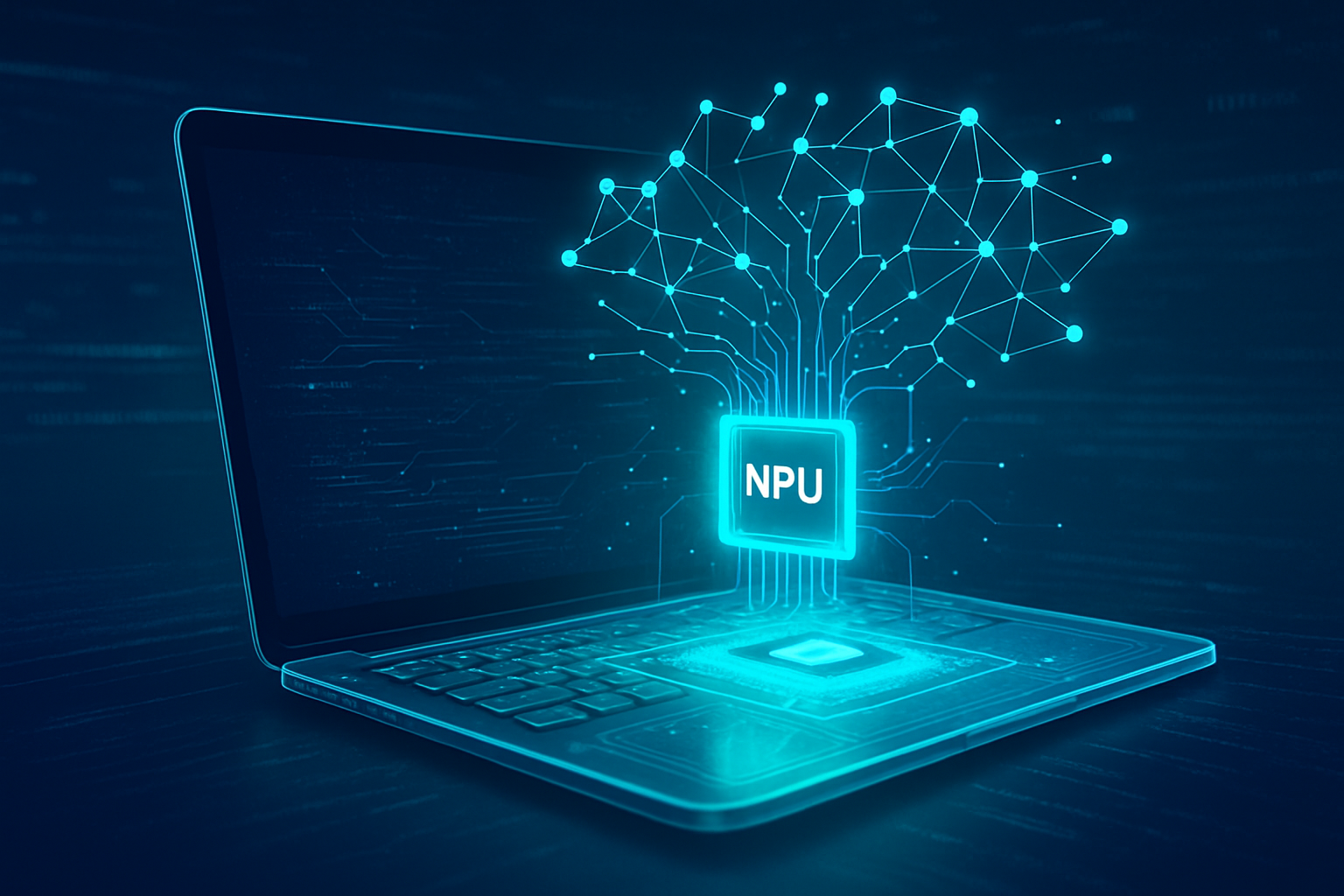
    The personal computing world is undergoing a profound transformation with the rapid emergence of "AI PCs." These next-generation devices are engineered with dedicated hardware, most notably Neural Processing Units (NPUs), designed to efficiently execute artificial intelligence tasks directly on the device, rather than relying solely on cloud-based solutions. This paradigm shift promises a future of computing that is more efficient, secure, personalized, and responsive, fundamentally altering how users interact with their machines and applications.

    The immediate significance of AI PCs lies in their ability to decentralize AI processing. By moving AI workloads from distant cloud servers to the local device, these machines address critical limitations of cloud-centric AI, such as network latency, data privacy concerns, and escalating operational costs. This move empowers users with real-time AI capabilities, enhanced data security, and the ability to run sophisticated AI models offline, marking a pivotal moment in the evolution of personal technology and setting the stage for a new era of intelligent computing experiences.

    The Engine of Intelligence: A Deep Dive into AI PC Architecture

    The distinguishing characteristic of an AI PC is its specialized architecture, built around a powerful Neural Processing Unit (NPU). Unlike traditional PCs that primarily leverage the Central Processing Unit (CPU) for general-purpose tasks and the Graphics Processing Unit (GPU) for graphics rendering and some parallel processing, AI PCs integrate an NPU specifically designed to accelerate AI neural networks, deep learning, and machine learning tasks. These NPUs excel at performing massive amounts of parallel mathematical operations with exceptional power efficiency, making them ideal for sustained AI workloads.

    Leading chip manufacturers like Intel (NASDAQ: INTC), AMD (NASDAQ: AMD), and Qualcomm (NASDAQ: QCOM) are at the forefront of this integration, embedding NPUs into their latest processor lines. Apple (NASDAQ: AAPL) has similarly incorporated its Neural Engine into its M-series chips, demonstrating a consistent industry trend towards dedicated AI silicon. Microsoft (NASDAQ: MSFT) has further solidified the category with its "Copilot+ PC" initiative, establishing a baseline hardware requirement: an NPU capable of over 40 trillion operations per second (TOPS). This benchmark ensures optimal performance for its integrated Copilot AI assistant and a suite of local AI features within Windows 11, often accompanied by a dedicated Copilot Key on the keyboard for seamless AI interaction.

    This dedicated NPU architecture fundamentally differs from previous approaches by offloading AI-specific computations from the CPU and GPU. While GPUs are highly capable for certain AI tasks, NPUs are engineered for superior power efficiency and optimized instruction sets for AI algorithms, crucial for extending battery life in mobile form factors like laptops. This specialization ensures that complex AI computations do not monopolize general-purpose processing resources, thereby enhancing overall system performance, energy efficiency, and responsiveness across a range of applications from real-time language translation to advanced creative tools. Initial reactions from the AI research community and industry experts have been overwhelmingly positive, highlighting the potential for greater accessibility to powerful AI models and a significant boost in user productivity and privacy.

    Reshaping the Tech Ecosystem: Competitive Shifts and Strategic Imperatives

    The rise of AI PCs is creating a dynamic landscape of competition and collaboration, profoundly affecting tech giants, AI companies, and startups alike. Chipmakers are at the epicenter of this revolution, locked in an intense battle to develop and integrate powerful AI accelerators. Intel (NASDAQ: INTC) is pushing its Core Ultra and upcoming Lunar Lake processors, aiming for higher Trillions of Operations Per Second (TOPS) performance in their NPUs. Similarly, AMD (NASDAQ: AMD) is advancing its Ryzen AI processors with XDNA architecture, while Qualcomm (NASDAQ: QCOM) has made a significant entry with its Snapdragon X Elite and Snapdragon X Plus platforms, boasting high NPU performance (45 TOPS) and redefining efficiency, particularly for ARM-based Windows PCs. While Nvidia (NASDAQ: NVDA) dominates the broader AI chip market with its data center GPUs, it is also actively partnering with PC manufacturers to bring AI capabilities to laptops and desktops.

    Microsoft (NASDAQ: MSFT) stands as a primary catalyst, having launched its "Copilot+ PC" initiative, which sets stringent minimum hardware specifications, including an NPU with 40+ TOPS. This strategy aims for deep AI integration at the operating system level, offering features like "Recall" and "Cocreator," and initially favored ARM-based Qualcomm chips, though Intel and AMD are rapidly catching up with their own compliant x86 processors. This move has intensified competition within the Windows ecosystem, challenging traditional x86 dominance and creating new dynamics. PC manufacturers such as HP (NYSE: HPQ), Dell Technologies (NYSE: DELL), Lenovo (HKG: 0992), Acer (TWSE: 2353), Asus (TWSE: 2357), and Samsung (KRX: 005930) are actively collaborating with these chipmakers and Microsoft, launching diverse AI PC models and anticipating a major catalyst for the next PC refresh cycle, especially driven by enterprise adoption.

    For AI software developers and model providers, AI PCs present a dual opportunity: creating new, more sophisticated on-device AI experiences with enhanced privacy and reduced latency, while also necessitating a shift in development paradigms. The emphasis on NPUs will drive optimization of applications for these specialized chips, moving certain AI workloads from generic CPUs and GPUs for improved power efficiency and performance. This fosters a "hybrid AI" strategy, combining the scalability of cloud computing with the efficiency and privacy of local AI processing. Startups also find a dynamic environment, with opportunities to develop innovative local AI solutions, benefiting from enhanced development environments and potentially reducing long-term operational costs associated with cloud resources, though talent acquisition and adapting to heterogeneous hardware remain challenges. The global AI PC market is projected for rapid growth, with some forecasts suggesting it could reach USD 128.7 billion by 2032, and comprise over half of the PC market by next year, signifying a massive industry-wide shift.

    The competitive landscape is marked by both fierce innovation and potential disruption. The race for NPU performance is intensifying, while Microsoft's strategic moves are reshaping the Windows ecosystem. While a "supercycle" of adoption is debated due to macroeconomic uncertainties and the current lack of exclusive "killer apps," the long-term trend points towards significant growth, primarily driven by enterprise adoption seeking enhanced productivity, improved data privacy, and cost reduction through reduced cloud dependency. This heralds a potential obsolescence for older PCs lacking dedicated AI hardware, necessitating a paradigm shift in software development to fully leverage the CPU, GPU, and NPU in concert, while also introducing new security considerations related to local AI model interactions.

    A New Chapter in AI's Journey: Broadening the Horizon of Intelligence

    The advent of AI PCs marks a pivotal moment in the broader artificial intelligence landscape, solidifying the trend of "edge AI" and decentralizing computational power. Historically, major AI breakthroughs, particularly with large language models (LLMs) like those powering ChatGPT, have relied heavily on massive, centralized cloud computing resources for training and inference. AI PCs represent a crucial shift by bringing AI inference and smaller, specialized AI models (SLMs) directly to the "edge" – the user's device. This move towards on-device processing enhances accessibility, reduces latency, and significantly boosts privacy by keeping sensitive data local, thereby democratizing powerful AI capabilities for individuals and businesses without extensive infrastructure investments. Industry analysts predict a rapid ascent, with AI PCs potentially comprising 80% of new computer sales by late 2025 and over 50% of laptops shipped by 2026, underscoring their transformative potential.

    The impacts of this shift are far-reaching. AI PCs are poised to dramatically enhance productivity and efficiency by streamlining workflows, automating repetitive tasks, and providing real-time insights through sophisticated data analysis. Their ability to deliver highly personalized experiences, from tailored recommendations to intelligent assistants that anticipate user needs, will redefine human-computer interaction. Crucially, dedicated AI processors (NPUs) optimize AI tasks, leading to faster processing and significantly reduced power consumption, extending battery life and improving overall system performance. This enables advanced applications in creative fields like photo and video editing, more precise real-time communication features, and robust on-device security protocols, making generative AI features more efficient and widely available.

    However, the rapid integration of AI into personal devices also introduces potential concerns. While local processing offers privacy benefits, the increased embedding of AI capabilities on devices necessitates robust security measures to prevent data breaches or unauthorized access, especially as cybercriminals might attempt to tamper with local AI models. The inherent bias present in AI algorithms, derived from training datasets, remains a challenge that could lead to discriminatory outcomes if not meticulously addressed. Furthermore, the rapid refresh cycle driven by AI PC adoption raises environmental concerns regarding e-waste, emphasizing the need for sustainable manufacturing and disposal practices. A significant hurdle to widespread adoption also lies in educating users and businesses about the tangible value and effective utilization of AI PC capabilities, as some currently perceive them as a "gimmick."

    Comparing AI PCs to previous technological milestones, their introduction echoes the transformative impact of the personal computer itself, which revolutionized work and creativity decades ago. Just as the GPU revolutionized graphics and scientific computing, the NPU is a dedicated hardware milestone for AI, purpose-built to efficiently handle the next generation of AI workloads. While historical AI breakthroughs like IBM's Deep Blue (1997) or AlphaGo's victory (2016) demonstrated AI's capabilities in specialized domains, AI PCs focus on the application and localization of such powerful models, making them a standard, on-device feature for everyday users. This signifies an ongoing journey where technology increasingly adapts to and anticipates human needs, marking AI PCs as a critical step in bringing advanced intelligence into the mainstream of daily life.

    The Road Ahead: Evolving Capabilities and Emerging Horizons

    The trajectory of AI PCs points towards an accelerated evolution in both hardware and software, promising increasingly sophisticated on-device intelligence in the near and long term. In the immediate future (2024-2026), the focus will be on solidifying the foundational elements. We will see the continued proliferation of powerful NPUs from Intel (NASDAQ: INTC), Qualcomm (NASDAQ: QCOM), and AMD (NASDAQ: AMD), with a relentless pursuit of higher TOPS performance and greater power efficiency. Operating systems like Microsoft Windows, particularly with its Copilot+ PC initiative, and Apple Intelligence, will become deeply intertwined with AI, offering integrated AI capabilities across the OS and applications. The end-of-life for Windows 10 in 2025 is anticipated to fuel a significant PC refresh cycle, driving widespread adoption of these AI-enabled machines. Near-term applications will center on enhancing productivity through automated administrative tasks, improving collaboration with AI-powered video conferencing features, and providing highly personalized user experiences that adapt to individual preferences, alongside faster content creation and enhanced on-device security.

    Looking further ahead (beyond 2026), AI PCs are expected to become the ubiquitous standard, seamlessly integrated into daily life and business operations. Future hardware innovations may extend beyond current NPUs to include nascent technologies like quantum computing and neuromorphic computing, offering unprecedented processing power for complex AI tasks. A key development will be the seamless synergy between local AI processing on the device and scalable cloud-based AI resources, creating a robust hybrid AI environment that optimizes for performance, efficiency, and data privacy. AI-driven system management will become autonomous, intelligently allocating resources, predicting user needs, and optimizing workflows. Experts predict the rise of "Personal Foundation Models," AI systems uniquely tailored to individual users, proactively offering solutions and information securely from the device without constant cloud reliance. This evolution promises proactive assistance, real-time data analysis for faster decision-making, and transformative impacts across various industries, from smart homes to urban infrastructure.

    Despite this promising outlook, several challenges must be addressed. The current high cost of advanced hardware and specialized software could hinder broader accessibility, though economies of scale are expected to drive prices down. A significant skill gap exists, necessitating extensive training to help users and businesses understand and effectively leverage the capabilities of AI PCs. Data privacy and security remain paramount concerns, especially with features like Microsoft's "Recall" sparking debate; robust encryption and adherence to regulations are crucial. The energy consumption of powerful AI models, even on-device, requires ongoing optimization for power-efficient NPUs and models. Furthermore, the market awaits a definitive "killer application" that unequivocally demonstrates the superior value of AI PCs over traditional machines, which could accelerate commercial refreshes. Experts, however, remain optimistic, with market projections indicating massive growth, forecasting AI PC shipments to double to over 100 million in 2025, becoming the norm by 2029, and commercial adoption leading the charge.

    A New Era of Intelligence: The Enduring Impact of AI PCs

    The emergence of AI PCs represents a monumental leap in personal computing, signaling a definitive shift from cloud-centric to a more decentralized, on-device intelligence paradigm. This transition, driven by the integration of specialized Neural Processing Units (NPUs), is not merely an incremental upgrade but a fundamental redefinition of what a personal computer can achieve. The immediate significance lies in democratizing advanced AI capabilities, offering enhanced privacy, reduced latency, and greater operational efficiency by bringing powerful AI models directly to the user's fingertips. This move is poised to unlock new levels of productivity, creativity, and personalization across consumer and enterprise landscapes, fundamentally altering how we interact with technology.

    The long-term impact of AI PCs is profound, positioning them as a cornerstone of future technological ecosystems. They are set to drive a significant refresh cycle in the PC market, with widespread adoption expected in the coming years. Beyond hardware specifications, their true value lies in fostering a new generation of AI-first applications that leverage local processing for real-time, context-aware assistance. This shift will empower individuals and businesses with intelligent tools that adapt to their unique needs, automate complex tasks, and enhance decision-making. The strategic investments by tech giants like Microsoft (NASDAQ: MSFT), Intel (NASDAQ: INTC), AMD (NASDAQ: AMD), and Qualcomm (NASDAQ: QCOM) underscore the industry's conviction in this new computing era, promising continuous innovation in both silicon and software.

    As we move forward, it will be crucial to watch for the development of compelling "killer applications" that fully showcase the unique advantages of AI PCs, driving broader consumer adoption beyond enterprise use. The ongoing advancements in NPU performance and power efficiency, alongside the evolution of hybrid AI strategies that seamlessly blend local and cloud intelligence, will be key indicators of progress. Addressing challenges related to data privacy, ethical AI implementation, and user education will also be vital for ensuring a smooth and beneficial transition to this new era of intelligent computing. The AI PC is not just a trend; it is the next frontier of personal technology, poised to reshape our digital lives for decades to come.


    This content is intended for informational purposes only and represents analysis of current AI developments.

    TokenRing AI delivers enterprise-grade solutions for multi-agent AI workflow orchestration, AI-powered development tools, and seamless remote collaboration platforms.
    For more information, visit https://www.tokenring.ai/.