Tag: Core Ultra Series 3

  • Intel Regains Silicon Crown with Core Ultra Series 3: The 18A Era of Agentic AI Has Arrived

    Intel Regains Silicon Crown with Core Ultra Series 3: The 18A Era of Agentic AI Has Arrived

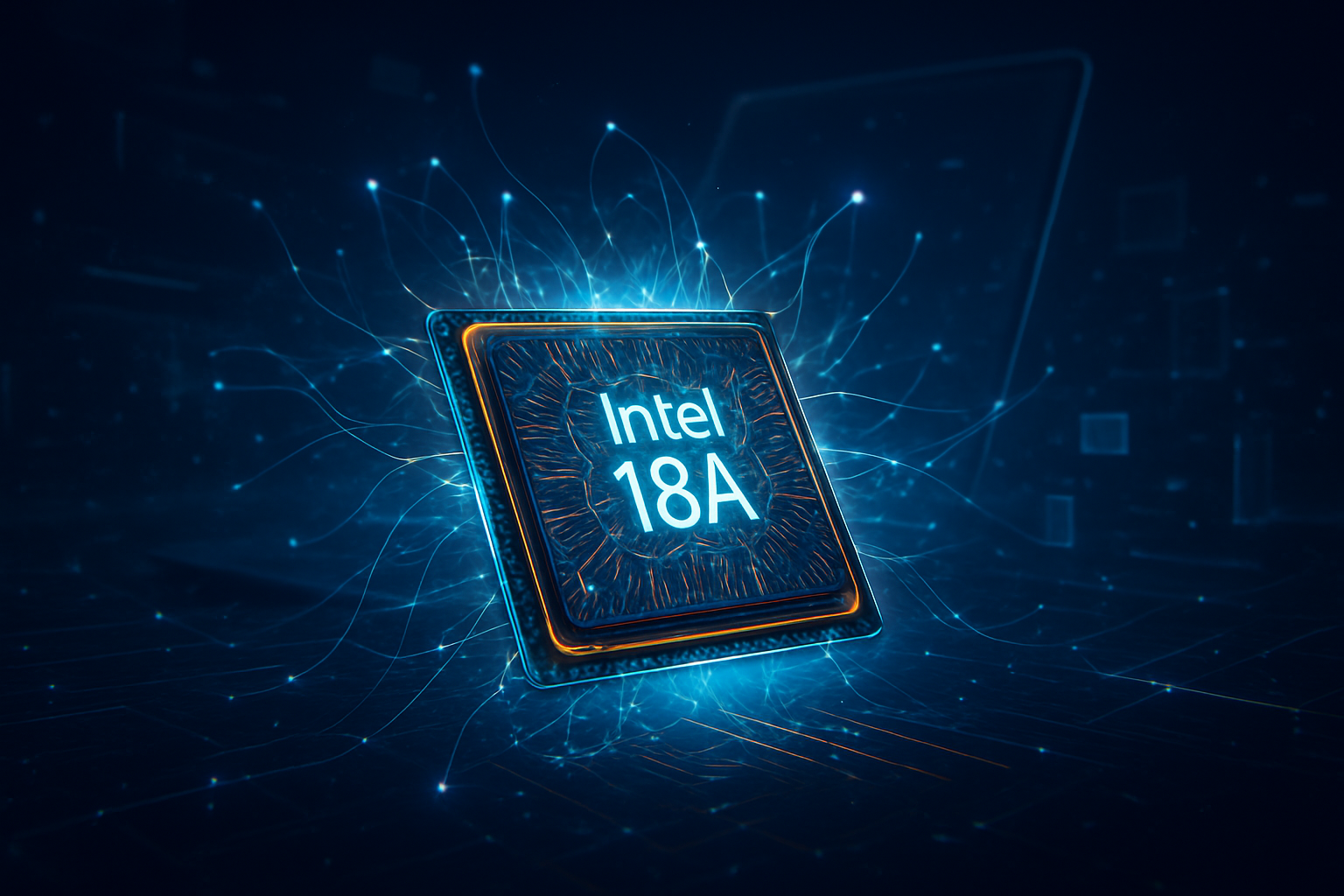
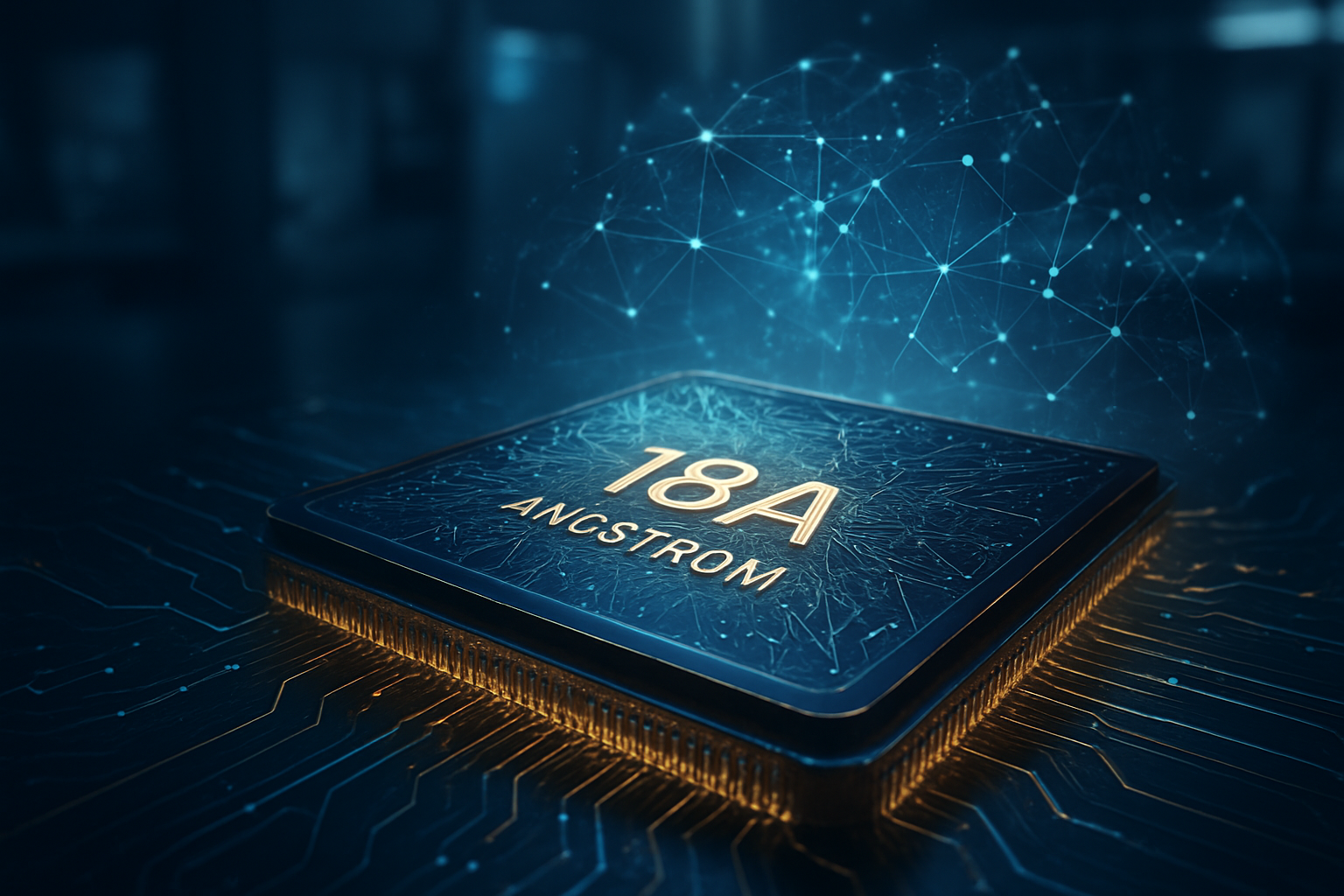
    In a landmark moment for the semiconductor industry, Intel (NASDAQ: INTC) officially launched its Core Ultra Series 3 processors, codenamed "Panther Lake," at CES 2026. This release marks the first high-volume consumer product built on the highly anticipated Intel 18A (1.8nm-class) process node. The announcement signals a definitive return to process leadership for the American chipmaker, delivering the world's first AI PC platform that integrates advanced gate-all-around transistors and backside power delivery to the mass market.

    The significance of the Core Ultra Series 3 extends far beyond a traditional generational speed bump. By achieving the "5 nodes in 4 years" goal set by CEO Pat Gelsinger, Intel has positioned its new chips as the foundational hardware for "Agentic AI"—a new paradigm where artificial intelligence moves from reactive chatbots to proactive, autonomous digital agents capable of managing complex workflows locally on a user’s laptop or desktop. With systems scheduled for global availability on January 27, 2026, the technology marks a pivotal shift in the balance of power between cloud-based and edge-based machine learning.

    The Technical Edge: 18A Manufacturing and Xe3 Graphics

    The Core Ultra Series 3 architecture is a masterclass in modern silicon engineering, featuring two revolutionary manufacturing technologies: RibbonFET and PowerVia. RibbonFET, Intel’s implementation of a gate-all-around (GAA) transistor, replaces the long-standing FinFET design to provide higher transistor density and better drive current. Simultaneously, PowerVia introduces backside power delivery, moving the power routing to the bottom of the silicon wafer to reduce interference and drastically improve energy efficiency. These innovations allow the flagship Core Ultra X9 388H to deliver a 60% multithreaded performance uplift over its predecessor, "Lunar Lake," while maintaining a remarkably thin 25W power envelope.

    Central to its AI capabilities is the NPU 5 architecture, a dedicated neural processing engine that provides 50 TOPS (Trillion Operations per Second) of dedicated AI throughput. However, Intel’s "XPU" strategy leverages the entire platform, utilizing the Xe3 "Celestial" integrated graphics (Arc B390) and the new hybrid CPU cores—Cougar Cove P-cores and Darkmont E-cores—to reach a staggering total of 180 platform TOPS. The Xe3 iGPU alone represents a massive leap, offering up to 77% faster gaming performance than the previous generation and introducing XeSS 4.0, which uses AI-driven multi-frame generation to quadruple frame rates in supported titles. Initial reactions from the research community highlight that the 18A node's efficiency gains are finally enabling local execution of large language models (LLMs) with up to 34 billion parameters without draining the battery in under two hours.

    Navigating a Three-Way Rivalry: Intel, AMD, and Qualcomm

    The launch of Panther Lake has reignited the competitive fires among the "big three" chipmakers. While Qualcomm (NASDAQ: QCOM) remains the NPU speed leader with its Snapdragon X2 Elite boasting 85 TOPS, and AMD (NASDAQ: AMD) offers a compelling 60 TOPS with its Ryzen AI 400 "Gorgon Point" series, Intel is betting on its integrated ecosystem and superior graphics. By maintaining the x86 architecture while matching the power efficiency of ARM-based competitors, Intel provides a seamless transition for enterprise clients who require legacy app compatibility alongside cutting-edge ML performance.

    Strategic advantages for Intel now extend into its foundry business. The successful rollout of the 18A node has reportedly led Apple (NASDAQ: AAPL) to begin qualifying the process for future M-series chip production, a development that could transform Intel into the primary rival to TSMC. This diversification strengthens Intel's market positioning, allowing it to benefit from the AI boom even when competitors win hardware contracts. Meanwhile, PC manufacturers like Dell (NYSE: DELL), HP (NYSE: HPQ), and Lenovo are already pivoting their flagship lineups, such as the XPS and Yoga series, to capitalize on the "Agentic AI" branding, potentially disrupting the premium laptop market where Apple's MacBook Pro has long held the efficiency crown.

    The Shift to Local Intelligence and Agentic AI

    The broader AI landscape is currently transitioning from "Generative AI" to "Agentic AI," where the computer acts as an assistant that can execute tasks across multiple applications autonomously. The Core Ultra Series 3 is the first platform specifically designed to handle these background agents locally. By processing sensitive data on-device rather than in the cloud, Intel addresses critical concerns regarding data privacy and latency. This move mirrors the industry-wide trend toward decentralized AI, where the "Edge" becomes the primary site for inference, leaving the "Cloud" primarily for training and massive-scale computation.

    However, this transition is not without its hurdles. The industry must now grapple with the "AI tax" on hardware prices and the potential for increased electronic waste as users feel pressured to upgrade to AI-capable silicon. Comparisons are already being made to the "Pentium moment" of the 1990s—a hardware breakthrough that fundamentally changed how people interacted with technology. Experts suggest that the 18A node represents the most significant milestone in semiconductor manufacturing since the introduction of the planar transistor, setting a new standard for what constitutes a "high-performance" computer in the age of machine learning.

    Looking Ahead: The Road to 14A and Enterprise Autonomy

    In the near term, the industry expects a surge in "Agentic" software releases designed to take advantage of Intel's 50 TOPS NPU. We are likely to see personal AI assistants that can autonomously manage emails, schedule meetings, and even perform complex coding tasks across different IDEs without user intervention. Long-term, Intel is already teasing its next milestone, the 14A node, which is expected to debut in 2027. This next step will further refine the RibbonFET architecture and push the boundaries of energy density even closer to the physical limits of silicon.

    The primary challenge moving forward will be software optimization. While Intel’s OpenVINO 2025 toolkit provides a robust bridge for developers, the fragmentation between Intel, AMD, and Qualcomm NPUs remains a hurdle for a unified AI ecosystem. Predictions from industry analysts suggest that 2026 will be the year of the "Enterprise Agent," where corporations deploy custom local LLMs on Series 3-powered laptop fleets to ensure proprietary data never leaves the corporate firewall.

    A New Chapter in Computing History

    The launch of the Intel Core Ultra Series 3 and the 18A process node is more than just a product release; it is a validation of Intel’s long-term survival strategy and a bold claim to the future of the AI PC. By successfully deploying RibbonFET and PowerVia, Intel has not only caught up with its rivals but has arguably set the pace for the next half-decade of silicon development. The combination of 180 platform TOPS and unprecedented power efficiency makes this the most significant leap in x86 history.

    As we look toward the coming weeks and months, the market's reception of the "Agentic AI" feature set will be the true test of this platform. Watch for the first wave of independent benchmarks following the January 27th release, as well as announcements from major software vendors like Microsoft and Adobe regarding deeper integration with Intel’s NPU 5. For now, the silicon crown has returned to Santa Clara, and the era of truly personal, autonomous AI is officially underway.


    This content is intended for informational purposes only and represents analysis of current AI developments.

    TokenRing AI delivers enterprise-grade solutions for multi-agent AI workflow orchestration, AI-powered development tools, and seamless remote collaboration platforms.
    For more information, visit https://www.tokenring.ai/.
  • Intel Reclaims the Silicon Crown: Panther Lake and the 18A Revolution Debut at CES 2026

    Intel Reclaims the Silicon Crown: Panther Lake and the 18A Revolution Debut at CES 2026

    The technological landscape shifted decisively at CES 2026 as Intel Corporation (NASDAQ: INTC) officially unveiled its "Panther Lake" processors, branded as the Core Ultra Series 3. This landmark release represents more than just a seasonal hardware update; it is the definitive debut of the Intel 18A (1.8nm) manufacturing process, a node that the company has bet its entire future on. For the first time in nearly a decade, Intel appears to have leaped ahead of its competitors in semiconductor density and power delivery, effectively signaling the end of the "efficiency gap" that has plagued x86 architecture since the rise of ARM-based alternatives.

    The immediate significance of the Core Ultra Series 3 lies in its unprecedented combination of raw compute power and mobile endurance. By achieving a staggering 27 hours of battery life on standard reference designs, Intel has effectively eliminated "battery anxiety" for the professional and creative classes. This launch is the culmination of Intel CEO Pat Gelsinger’s "five nodes in four years" strategy, moving the company from a period of manufacturing stagnation to the bleeding edge of the sub-2nm era.

    The Engineering Marvel of 18A: RibbonFET and PowerVia

    At the heart of Panther Lake is the Intel 18A process, which introduces two foundational shifts in transistor physics: RibbonFET and PowerVia. RibbonFET is Intel’s first implementation of Gate-All-Around (GAA) architecture, allowing for more precise control over the electrical current and significantly reducing power leakage compared to the aging FinFET designs. Complementing this is PowerVia, the industry’s first backside power delivery network. By moving power routing to the back of the wafer and keeping data signals on the front, Intel has reduced electrical resistance and simplified the manufacturing process, resulting in an estimated 20% gain in overall efficiency.

    The architectural layout of the Core Ultra Series 3 follows a sophisticated hybrid design. It features the new "Cougar Cove" Performance-cores (P-cores) and "Darkmont" Efficiency-cores (E-cores). While Cougar Cove provides a respectable 10% gain in instructions per clock (IPC) for single-threaded tasks, the true star is the multithreaded performance. Intel’s benchmarks show a 60% improvement in multithreaded workloads compared to the previous "Lunar Lake" generation, specifically when operating within a constrained 25W power envelope. This allows thin-and-light ultrabooks to tackle heavy video editing and compilation tasks that previously required bulky gaming laptops.

    Furthermore, the integrated graphics have undergone a radical transformation with the Xe3 "Celestial" architecture. The flagship SKUs, featuring the Arc B390 integrated GPU, boast a 77% leap in gaming performance over the previous generation. In early testing, this iGPU outperformed the dedicated mobile offerings from several mid-range competitors, enabling high-fidelity 1080p gaming on devices weighing less than three pounds. This is supplemented by the fifth-generation NPU (NPU 5), which delivers 50 TOPS of AI-specific compute, pushing the total platform AI performance to a massive 180 TOPS.

    Market Disruption and the Return of the Foundry King

    The debut of Panther Lake has sent shockwaves through the semiconductor market, directly challenging the recent gains made by Advanced Micro Devices (NASDAQ: AMD) and Qualcomm (NASDAQ: QCOM). While AMD’s "Gorgon Point" Ryzen AI 400 series remains a formidable opponent in the enthusiast space, Intel’s 18A process gives it a temporary but clear lead in the "performance-per-watt" metric that dominates the lucrative corporate laptop market. Qualcomm, which had briefly held the battery life crown with its Snapdragon X Elite series, now finds its efficiency advantage largely neutralized by the 27-hour runtime of the Core Ultra Series 3, all while Intel maintains a significant lead in native x86 software compatibility.

    The strategic implications extend beyond consumer chips. The successful high-volume rollout of 18A has revitalized Intel’s foundry business. Industry analysts at firms like KeyBanc have already issued upgrades for Intel stock, citing the Panther Lake launch as proof that Intel can once again compete with TSMC at the leading edge. Rumors of a $5 billion strategic investment from Nvidia (NASDAQ: NVDA) into Intel’s foundry capacity have intensified following the CES announcement, as the industry seeks to diversify manufacturing away from geopolitical flashpoints.

    Major OEMs including Dell, Lenovo, and MSI have responded with the most aggressive product refreshes in years. Dell’s updated XPS line and MSI’s Prestige series are both expected to ship with Panther Lake exclusively in their flagship configurations. This widespread adoption suggests that the "Intel Inside" brand has regained its prestige among hardware partners who had previously flirted with ARM-based designs or shifted focus to AMD.

    Agentic AI and the End of the Cloud Dependency

    The broader significance of Panther Lake lies in its role as a catalyst for "Agentic AI." By providing 180 total platform TOPS, Intel is enabling a shift from simple chatbots to autonomous AI agents that live and run entirely on the user's device. For the first time, thin-and-light laptops are capable of running 70-billion-parameter Large Language Models (LLMs) locally, ensuring data privacy and reducing latency for enterprise applications. This shift could fundamentally disrupt the business models of cloud-service providers, as companies move toward "on-device-first" AI policies.

    This release also marks a critical milestone in the global semiconductor race. As the first major platform built on 18A in the United States, Panther Lake is a flagship for the U.S. government’s goals of domestic manufacturing resilience. It represents a successful pivot from the "Intel 7" and "Intel 4" delays of the early 2020s, showing that the company has regained its footing in extreme ultraviolet (EUV) lithography and advanced packaging.

    However, the launch is not without concerns. The complexity of the 18A node and the sheer number of new architectural components—Cougar Cove, Darkmont, Xe3, and NPU 5—raise questions about initial yields and supply chain stability. While Intel has promised high-volume availability by the second quarter of 2026, any production hiccups could give competitors a window to reclaim the narrative.

    Looking Ahead: The Road to Intel 14A

    Looking toward the near future, the success of Panther Lake sets the stage for the "Intel 14A" node, which is already in early development. Experts predict that the lessons learned from the 18A rollout will accelerate Intel’s move into even smaller nanometer classes, potentially reaching 1.4nm as early as 2027. We expect to see the "Agentic AI" ecosystem blossom over the next 12 months, with software developers releasing specialized local models for coding, creative writing, and real-time translation that take full advantage of the NPU 5’s capabilities.

    The next challenge for Intel will be extending this 18A dominance into the desktop and server markets. While Panther Lake is primarily mobile-focused, the upcoming "Clearwater Forest" Xeon chips will use a similar manufacturing foundation to challenge the data center dominance of competitors. If Intel can replicate the efficiency gains seen at CES 2026 in the server rack, the competitive landscape of the entire tech industry could look drastically different by 2027.

    A New Era for Computing

    In summary, the debut of the Core Ultra Series 3 "Panther Lake" at CES 2026 is a watershed moment for the computing industry. Intel has delivered on its promise of a 60% multithreaded performance boost and 27 hours of battery life, effectively reclaiming its position as a technology leader. The successful deployment of the 18A node validates years of intensive R&D and billions of dollars in investment, proving that the x86 architecture still has significant room for innovation.

    As we move through 2026, the tech world will be watching closely to see if Intel can maintain this momentum. The immediate focus will be on the retail availability of these new laptops and the real-world performance of the Xe3 graphics architecture. For now, the narrative has shifted: Intel is no longer the legacy giant struggling to keep up—it is once again the company setting the pace for the rest of the industry.


    This content is intended for informational purposes only and represents analysis of current AI developments.

    TokenRing AI delivers enterprise-grade solutions for multi-agent AI workflow orchestration, AI-powered development tools, and seamless remote collaboration platforms.
    For more information, visit https://www.tokenring.ai/.
  • Intel Unleashes Panther Lake: The Core Ultra Series 3 Redefines the AI PC Era

    Intel Unleashes Panther Lake: The Core Ultra Series 3 Redefines the AI PC Era

    In a landmark announcement at CES 2026, Intel Corporation (NASDAQ: INTC) has officially unveiled its Core Ultra Series 3 processors, codenamed "Panther Lake." Representing a pivotal moment in the company’s history, Panther Lake marks the return of high-volume manufacturing to Intel’s own factories using the cutting-edge Intel 18A process node. This launch is not merely a generational refresh; it is a strategic strike aimed at reclaiming dominance in the rapidly evolving AI PC market, where local processing power and energy efficiency have become the primary battlegrounds.

    The immediate significance of the Core Ultra Series 3 lies in its role as the premier silicon for the next generation of Microsoft (NASDAQ: MSFT) Copilot+ PCs. By integrating the new NPU 5 and the Xe3 "Celestial" graphics architecture, Intel is delivering a platform that promises "Arrow Lake-level performance with Lunar Lake-level efficiency." As the tech industry pivots from reactive AI tools to proactive "Agentic AI"—where digital assistants perform complex tasks autonomously—Intel’s Panther Lake provides the hardware foundation necessary to move these heavy AI workloads from the cloud directly onto the user's desk.

    The 18A Revolution: Technical Mastery and NPU 5.0

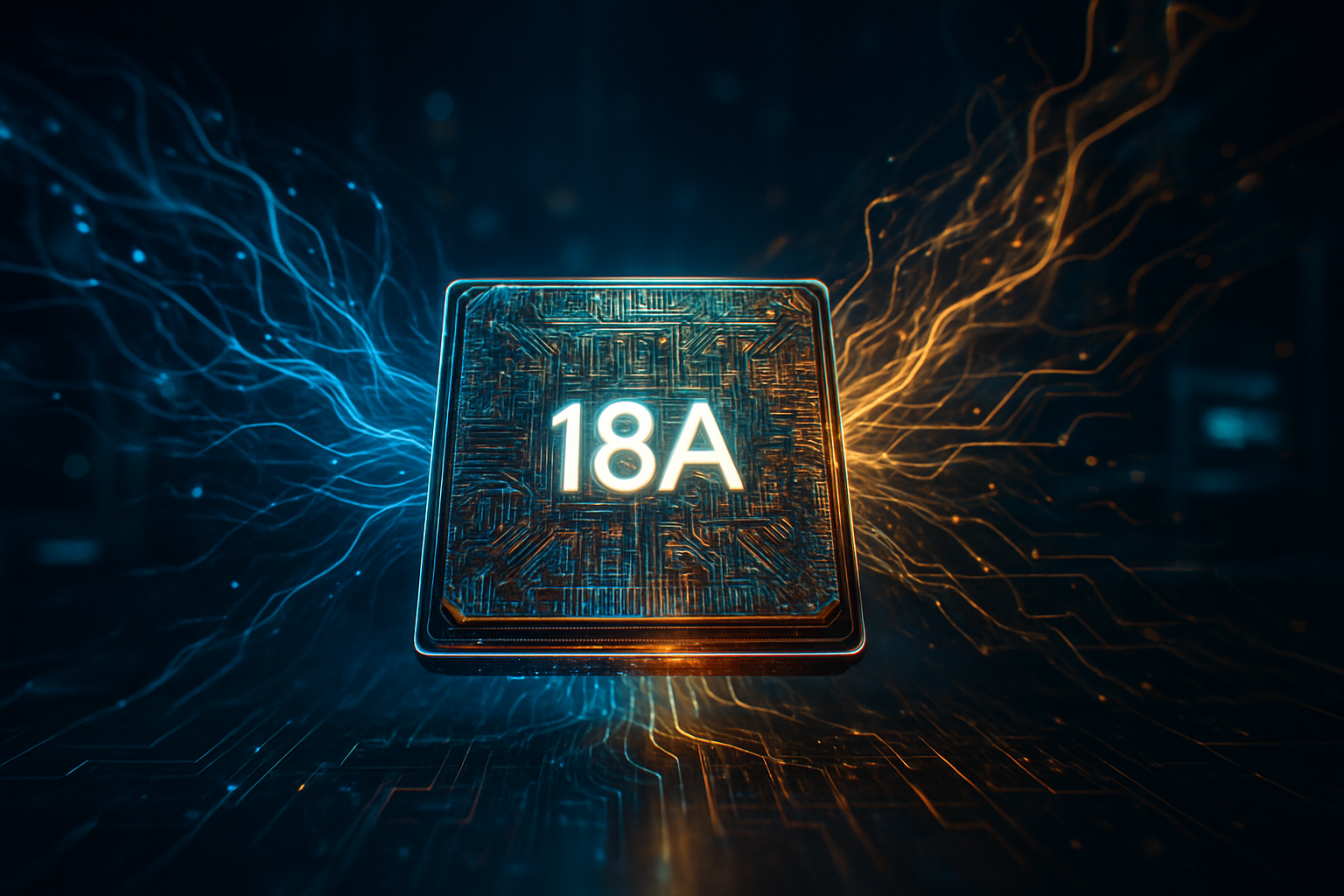
    At the heart of Panther Lake is the Intel 18A manufacturing process, a 1.8nm-class node that introduces two industry-leading technologies: RibbonFET and PowerVia. RibbonFET is Intel’s implementation of gate-all-around (GAA) transistor architecture, which allows for tighter control of electrical current and significantly reduced leakage. Supplementing this is PowerVia, the industry’s first implementation of backside power delivery. By moving power routing to the back of the wafer, Intel has decoupled power and signal wires, drastically reducing interference and allowing the "Cougar Cove" performance cores and "Darkmont" efficiency cores to run at higher frequencies with lower power draw.

    The AI capabilities of Panther Lake are centered around the NPU 5, which delivers 50 trillion operations per second (TOPS) of dedicated AI throughput. While the NPU alone meets the strict requirements for Copilot+ PCs, the total platform performance—combining the CPU, GPU, and NPU—reaches a staggering 180 TOPS. This "XPU" approach allows Panther Lake to handle diverse AI tasks, from real-time language translation to complex generative image manipulation, with 50% more total throughput than the previous Lunar Lake generation. Furthermore, the Xe3 Celestial graphics architecture provides a 50% performance boost over its predecessor, incorporating XeSS 3 with Multi-Frame Generation to bring high-end AI gaming to ultra-portable laptops.

    Initial reactions from the semiconductor industry have been overwhelmingly positive, with analysts noting that Intel appears to have finally closed the "efficiency gap" that allowed ARM-based competitors to gain ground in recent years. Technical experts have highlighted that the integration of the NPU 5 into the 18A node provides a 40% improvement in performance-per-area compared to NPU 4. This density allows Intel to pack more AI processing power into smaller, thinner chassis without the thermal throttling issues that plagued earlier high-performance mobile chips.

    Shifting the Competitive Landscape: Intel’s Market Fightback

    The launch of Panther Lake creates immediate pressure on competitors like Advanced Micro Devices, Inc. (NASDAQ: AMD) and Qualcomm Inc. (NASDAQ: QCOM). While Qualcomm's Snapdragon X2 Elite currently leads in raw NPU TOPS with its Hexagon processor, Intel is leveraging its massive x86 software ecosystem and the superior area efficiency of the 18A node to argue that Panther Lake is the more versatile choice for enterprise and consumer users alike. By bringing manufacturing back in-house, Intel also gains a strategic advantage in supply chain control, potentially offering better margins and availability than competitors who rely entirely on external foundries like TSMC.

    Microsoft (NASDAQ: MSFT) stands as a major beneficiary of this development. The Core Ultra Series 3 is the "hero" platform for the 2026 rollout of "Agentic Windows," a version of the OS where AI agents can navigate the file system, manage emails, and automate workflows based on natural language commands. PC manufacturers such as Dell Technologies (NYSE: DELL), HP Inc. (NYSE: HPQ), and ASUS are already showcasing flagship laptops powered by Panther Lake, signaling a unified industry push toward a hardware-software synergy that prioritizes local AI over cloud dependency.

    For the broader tech ecosystem, Panther Lake represents a potential disruption to the cloud-centric AI model favored by companies like Google and Amazon. By enabling high-performance AI locally, Intel is reducing the latency and privacy concerns associated with sending data to the cloud. This shift favors startups and developers who are building "edge-first" AI applications, as they can now rely on a standardized, high-performance hardware target across millions of new Windows devices.

    The Dawn of Physical and Agentic AI

    Panther Lake’s arrival marks a transition in the broader AI landscape from "Generative AI" to "Physical" and "Agentic AI." While previous generations focused on generating text or images, the Core Ultra Series 3 is designed to sense and interact with the physical world. Through its high-efficiency NPU, the chip enables laptops to use low-power sensors for gesture recognition, eye-tracking, and environmental awareness without draining the battery. This "Physical AI" allows the computer to anticipate user needs—dimming the screen when the user looks away or waking up as they approach—creating a more seamless human-computer interaction.

    This milestone is comparable to the introduction of the Centrino platform in the early 2000s, which standardized Wi-Fi and mobile computing. Just as Centrino made the internet ubiquitous, Panther Lake aims to make high-performance AI an invisible, always-on utility. However, this shift also raises potential concerns regarding privacy and data security. With features like Microsoft’s "Recall" becoming more integrated into the hardware level, the industry must address how local AI models handle sensitive user data and whether the "always-sensing" capabilities of these chips can be exploited.

    Compared to previous AI milestones, such as the first NPU-equipped chips in 2023, Panther Lake represents the maturation of the "AI PC" concept. It is no longer a niche feature for early adopters; it is the baseline for the entire Windows ecosystem. The move to 18A signifies that AI is now the primary driver of semiconductor innovation, dictating everything from transistor design to power delivery architectures.

    The Road to Nova Lake and Beyond

    Looking ahead, the success of Panther Lake sets the stage for "Nova Lake," the expected Core Ultra Series 4, which is rumored to further scale NPU performance toward the 100 TOPS mark. In the near term, we expect to see a surge in specialized software that takes advantage of the Xe3 Celestial architecture’s AI-enhanced rendering, potentially revolutionizing mobile gaming and professional creative work. Developers are already working on "Local LLMs" (Large Language Models) that are small enough to run entirely on the Panther Lake NPU, providing users with a private, offline version of ChatGPT.

    The primary challenge moving forward will be the software-hardware "handshake." While Intel has delivered the hardware, the success of the Core Ultra Series 3 depends on how quickly developers can optimize their applications for NPU 5. Experts predict that 2026 will be the year of the "Killer AI App"—a software breakthrough that makes the NPU as essential to the average user as the CPU or GPU is today. If Intel can maintain its manufacturing lead with 18A and subsequent nodes, it may well secure its position as the undisputed leader of the AI era.

    A New Chapter for Silicon and Intelligence

    The launch of the Intel Core Ultra Series 3 "Panther Lake" is a definitive statement that the "silicon wars" have entered a new phase. By successfully deploying the 18A process and integrating a high-performance NPU, Intel has proved that it can still innovate at the bleeding edge of physics and computer science. The significance of this development in AI history cannot be overstated; it represents the moment when high-performance, local AI became accessible to the mass market, fundamentally changing how we interact with our personal devices.

    In the coming weeks and months, the tech world will be watching for the first independent benchmarks of Panther Lake laptops in real-world scenarios. The true test will be whether the promised efficiency gains translate into the "multi-day battery life" that has long been the holy grail of x86 computing. As the first Panther Lake devices hit the market in late Q1 2026, the industry will finally see if Intel’s massive bet on 18A and the AI PC will pay off, potentially cementing the company’s legacy for the next decade of computing.


    This content is intended for informational purposes only and represents analysis of current AI developments.

    TokenRing AI delivers enterprise-grade solutions for multi-agent AI workflow orchestration, AI-powered development tools, and seamless remote collaboration platforms.
    For more information, visit https://www.tokenring.ai/.