
Tag: CPUs

  • Black Friday 2025: A Strategic Window for PC Hardware Amidst Rising AI Demands

    Black Friday 2025: A Strategic Window for PC Hardware Amidst Rising AI Demands

    Black Friday 2025 has unfolded as a critical period for PC hardware enthusiasts, offering a complex tapestry of aggressive discounts on GPUs, CPUs, and SSDs, set against a backdrop of escalating demand from the artificial intelligence (AI) sector and looming memory price hikes. As consumers navigated a landscape of compelling deals, particularly in the mid-range and previous-generation categories, industry analysts cautioned that this holiday shopping spree might represent one of the last opportunities to acquire certain components, especially memory, at relatively favorable prices before a significant market recalibration driven by AI data center needs.

    The current market sentiment is a paradoxical blend of consumer opportunity and underlying industry anxiety. While retailers have pushed forth with robust promotions to clear existing inventory, the shadow of anticipated price increases for DRAM and NAND memory, projected to extend well into 2026, has added a strategic urgency to Black Friday purchases. The PC market itself is undergoing a transformation, with AI PCs featuring Neural Processing Units (NPUs) rapidly gaining traction, expected to constitute a substantial portion of all PC shipments by the end of 2025. This evolving landscape, coupled with the impending end-of-life for Windows 10 in October 2025, is driving a global refresh cycle, but also introduces volatility due to rising component costs and broader macroeconomic uncertainties.

    Unpacking the Deals: GPUs, CPUs, and SSDs Under the AI Lens

    Black Friday 2025 has proven to be one of the more generous years for PC hardware deals, particularly for graphics cards, processors, and storage, though with distinct nuances across each category.

    In the GPU market, NVIDIA (NASDAQ: NVDA) has strategically offered attractive deals on its new RTX 50-series cards, with models like the RTX 5060 Ti, RTX 5070, and RTX 5070 Ti frequently available below their Manufacturer’s Suggested Retail Price (MSRP) in the mid-range and mainstream segments. AMD (NASDAQ: AMD) has countered with aggressive pricing on its Radeon RX 9000 series, including the RX 9070 XT and RX 9060 XT, presenting strong performance alternatives for gamers. Intel's (NASDAQ: INTC) Arc B580 and B570 GPUs also emerged as budget-friendly options for 1080p gaming. However, the top-tier, newly released GPUs, especially NVIDIA's RTX 5090, have largely remained insulated from deep discounts, a direct consequence of overwhelming demand from the AI sector, which is voraciously consuming high-performance chips. This selective discounting underscores the dual nature of the GPU market, serving both gaming enthusiasts and the burgeoning AI industry.

    The CPU market has also presented favorable conditions for consumers, particularly for mid-range processors. CPU prices had already seen a roughly 20% reduction earlier in 2025 and have maintained stability, with Black Friday sales adding further savings. Notable deals included AMD’s Ryzen 7 9800X3D, Ryzen 7 9700X, and Ryzen 5 9600X, alongside Intel’s Core Ultra 7 265K and Core i7-14700K. A significant trend emerging is Intel's reported de-prioritization of low-end PC microprocessors, signaling a strategic shift towards higher-margin server parts. This could lead to potential shortages in the budget segment in 2026 and may prompt Original Equipment Manufacturers (OEMs) to increasingly turn to AMD and Qualcomm (NASDAQ: QCOM) for their PC offerings.

    Perhaps the most critical purchasing opportunity of Black Friday 2025 has been in the SSD market. Experts have issued strong warnings of an "impending NAND apocalypse," predicting drastic price increases for both RAM and SSDs in the coming months due to overwhelming demand from AI data centers. Consequently, retailers have offered substantial discounts on both PCIe Gen4 and the newer, ultra-fast PCIe Gen5 NVMe SSDs. Prominent brands like Samsung (KRX: 005930) (e.g., 990 Pro, 9100 Pro), Crucial (a brand of Micron Technology, NASDAQ: MU) (T705, T710, P510), and Western Digital (NASDAQ: WDC) (WD Black SN850X) have featured heavily in these sales, with some high-capacity drives seeing significant percentage reductions. This makes current SSD deals a strategic "buy now" opportunity, potentially the last chance to acquire these components at present price levels before the anticipated market surge takes full effect. In contrast, older 2.5-inch SATA SSDs have seen fewer dramatic deals, reflecting their diminishing market relevance in an era of high-speed NVMe.

    Corporate Chessboard: Beneficiaries and Competitive Shifts

    Black Friday 2025 has not merely been a boon for consumers; it has also significantly influenced the competitive landscape for PC hardware companies, with clear beneficiaries emerging across the GPU, CPU, and SSD segments.

    In the GPU market, NVIDIA (NASDAQ: NVDA) continues to reap substantial benefits from its dominant position, particularly in the high-end and AI-focused segments. Its robust CUDA software platform further entrenches its ecosystem, creating high switching costs for users and developers. While NVIDIA strategically offers deals on its mid-range and previous-generation cards to maintain market presence, the insatiable demand for its high-performance GPUs from the AI sector means its top-tier products command premium prices and are less susceptible to deep discounts. This allows NVIDIA to sustain high Average Selling Prices (ASPs) and overall revenue. AMD (NASDAQ: AMD), meanwhile, is leveraging aggressive Black Friday pricing on its current-generation Radeon RX 9000 series to clear inventory and gain market share in the consumer gaming segment, aiming to challenge NVIDIA's dominance where possible. Intel (NASDAQ: INTC), with its nascent Arc series, utilizes Black Friday to build brand recognition and gain initial adoption through competitive pricing and bundling.

    The CPU market sees AMD (NASDAQ: AMD) strongly positioned to continue its trend of gaining market share from Intel (NASDAQ: INTC). AMD's Ryzen 7000 and 9000 series processors, especially the X3D gaming CPUs, have been highly successful, and Black Friday deals on these models are expected to drive significant unit sales. AMD's robust AM5 platform adoption further indicates consumer confidence. Intel, while still holding the largest overall CPU market share, faces pressure. Its reported strategic shift to de-prioritize low-end PC microprocessors, focusing instead on higher-margin server and mobile segments, could inadvertently cede ground to AMD in the consumer desktop space, especially if AMD's Black Friday deals are more compelling. This competitive dynamic could lead to further market share shifts in the coming months.

    The SSD market, characterized by impending price hikes, has turned Black Friday into a crucial battleground for market share. Companies offering aggressive discounts stand to benefit most from the "buy now" sentiment among consumers. Samsung (KRX: 005930), a leader in memory technology, along with Micron Technology's (NASDAQ: MU) Crucial brand, Western Digital (NASDAQ: WDC), and SK Hynix (KRX: 000660), are all highly competitive. Micron/Crucial, in particular, has indicated "unprecedented" discounts on high-performance SSDs, signaling a strong push to capture market share and provide value amidst rising component costs. Any company able to offer compelling price-to-performance ratios during this period will likely see robust sales volumes, driven by both consumer upgrades and the underlying anxiety about future price escalations. This competitive scramble is poised to benefit consumers in the short term, but the long-term implications of AI-driven demand will continue to shape pricing and supply.

    Broader Implications: AI's Shadow and Economic Undercurrents

    Black Friday 2025 is more than just a seasonal sales event; it serves as a crucial barometer for the broader PC hardware market, reflecting significant trends driven by the pervasive influence of AI, evolving consumer spending habits, and an uncertain economic climate. The aggressive deals observed across GPUs, CPUs, and SSDs are not merely a celebration of holiday shopping but a strategic maneuver by the industry to navigate a transitional period.

    The most profound implication stems from the insatiable demand for memory (DRAM and NAND/SSDs) by AI data centers. This demand is creating a supply crunch that is fundamentally reshaping pricing dynamics. While Black Friday offers a temporary reprieve with discounts, experts widely predict that memory prices will escalate dramatically well into 2026. This "NAND apocalypse" and corresponding DRAM price surges are expected to increase laptop prices by 5-15% and could even lead to a contraction in overall PC and smartphone unit sales in 2026. This trend marks a significant shift, where the enterprise AI market's needs directly impact consumer affordability and product availability.

    The overall health of the PC market, however, remains robust in 2025, primarily propelled by two major forces: the impending end-of-life for Windows 10 in October 2025, necessitating a global refresh cycle, and the rapid integration of AI. AI PCs, equipped with NPUs, are becoming a dominant segment, projected to account for a significant portion of all PC shipments by year-end. This signifies a fundamental shift in computing, where AI capabilities are no longer niche but are becoming a standard expectation. The global PC market is forecasted for substantial growth through 2030, underpinned by strong commercial demand for AI-capable systems. However, this positive outlook is tempered by potential new US tariffs on Chinese imports, implemented in April 2025, which could increase PC costs by 5-10% and impact demand, adding another layer of complexity to the supply chain and pricing.

    Consumer spending habits during this Black Friday reflect a cautious yet value-driven approach. Shoppers are actively seeking deeper discounts and comparing prices, with online channels remaining dominant. The rise of "Buy Now, Pay Later" (BNPL) options also highlights a consumer base that is both eager for deals and financially prudent. Interestingly, younger demographics like Gen Z, while reducing overall electronics spending, are still significant buyers, often utilizing AI tools to find the best deals. This indicates a consumer market that is increasingly savvy and responsive to perceived value, even amidst broader economic uncertainties like inflation.

    Compared to previous years, Black Friday 2025 continues the trend of strong online sales and significant discounts. However, the underlying drivers have evolved. While past years saw demand spurred by pandemic-induced work-from-home setups, the current surge is distinctly AI-driven, fundamentally altering component demand and pricing structures. The long-term impact points towards a premiumization of the PC market, with a focus on higher-margin, AI-capable devices, likely leading to increased Average Selling Prices (ASPs) across the board, even as unit sales might face challenges due to rising memory costs. This period marks a transition where the PC is increasingly defined by its AI capabilities, and the cost of enabling those capabilities will be a defining factor in its future.

    The Road Ahead: AI, Innovation, and Price Volatility

    The PC hardware market, post-Black Friday 2025, is poised for a period of dynamic evolution, characterized by aggressive technological innovation, the pervasive influence of AI, and significant shifts in pricing and consumer demand. Experts predict a landscape of both exciting new releases and considerable challenges, particularly concerning memory components.

    In the near-term (post-Black Friday 2025 into 2026), the most critical development will be the escalating prices of DRAM and NAND memory. DRAM prices have already doubled in a short period, and further increases are predicted well into 2026 due to the immense demand from AI hyperscalers. This surge in memory costs is expected to drive up laptop prices by 5-15% and contribute to a contraction in overall PC and smartphone unit sales throughout 2026. This underscores why Black Friday 2025 has been highlighted as a strategic purchasing window for memory components. Despite these price pressures, the global computer hardware market is still forecast for long-term growth, primarily fueled by enterprise-grade AI integration, the discontinuation of Windows 10 support, and the enduring relevance of hybrid work models.

    Looking at long-term developments (2026 and beyond), the PC hardware market will see a wave of new product releases and technological advancements:

    • GPUs: NVIDIA (NASDAQ: NVDA) is expected to release its Rubin GPU architecture in early 2026, featuring a chiplet-based design with TSMC's 3nm process and HBM4 memory, promising significant advancements in AI and gaming. AMD (NASDAQ: AMD) is developing its UDNA (Unified Data Center and Gaming) or RDNA 5 GPU architecture, aiming for enhanced efficiency across gaming and data center GPUs, with mass production forecast for Q2 2026.
    • CPUs: Intel (NASDAQ: INTC) plans a refresh of its Arrow Lake processors in 2026, followed by its next-generation Nova Lake designs by late 2026 or early 2027, potentially featuring up to 52 cores and utilizing advanced 2nm and 1.8nm process nodes. AMD's (NASDAQ: AMD) Zen 6 architecture is confirmed for 2026, leveraging TSMC's 2nm (N2) process nodes, bringing IPC improvements and more AI features across its Ryzen and EPYC lines.
    • SSDs: Enterprise-grade SSDs with capacities up to 300 TB are predicted to arrive by 2026, driven by advancements in 3D NAND technology. Samsung (KRX: 005930) is also scheduled to unveil its AI-optimized Gen5 SSD at CES 2026.
    • Memory (RAM): GDDR7 memory is expected to improve bandwidth and efficiency for next-gen GPUs, while DDR6 RAM is anticipated to launch in niche gaming systems by mid-2026, offering double the bandwidth of DDR5. Samsung (KRX: 005930) will also showcase LPDDR6 RAM at CES 2026.
    • Other Developments: PCIe 5.0 motherboards are projected to become standard in 2026, and the expansion of on-device AI will see both integrated and discrete NPUs handling AI workloads. Third-generation Neuromorphic Processing Units (NPUs) are set for a mainstream debut in 2026, and alternative processor architectures like ARM from Qualcomm (NASDAQ: QCOM) and Apple (NASDAQ: AAPL) are expected to challenge x86 dominance.

    Evolving consumer demands will be heavily influenced by AI integration, with businesses prioritizing AI PCs for future-proofing. The gaming and esports sectors will continue to drive demand for high-performance hardware, and the Windows 10 end-of-life will necessitate widespread PC upgrades. However, pricing trends remain a significant concern. Escalating memory prices are expected to persist, leading to higher overall PC and smartphone prices. New U.S. tariffs on Chinese imports, implemented in April 2025, are also projected to increase PC costs by 5-10% in the latter half of 2025. This dynamic suggests a shift towards premium, AI-enabled devices while potentially contracting the lower and mid-range market segments.

    The Black Friday 2025 Verdict: A Crossroads for PC Hardware

    Black Friday 2025 has concluded as a truly pivotal moment for the PC hardware market, simultaneously offering a bounty of aggressive deals for discerning consumers and foreshadowing a significant transformation driven by the burgeoning demands of artificial intelligence. This period has been a strategic crossroads, where retailers cleared current inventory amidst a market bracing for a future defined by escalating memory costs and a fundamental shift towards AI-centric computing.

    The key takeaways from this Black Friday are clear: consumers who capitalized on deals for GPUs, particularly mid-range and previous-generation models, and strategically acquired SSDs, are likely to have made prudent investments. The CPU market also presented robust opportunities, especially for mid-range processors. However, the overarching message from industry experts is a stark warning about the "impending NAND apocalypse" and soaring DRAM prices, which will inevitably translate to higher costs for PCs and related devices well into 2026. This dynamic makes the Black Friday 2025 deals on memory components exceptionally significant, potentially representing the last chance for some time to purchase at current price levels.

    This development's significance in AI history is profound. The insatiable demand for high-performance memory and compute from AI data centers is not merely influencing supply chains; it is fundamentally reshaping the consumer PC market. The rapid rise of AI PCs with NPUs is a testament to this, signaling a future where AI capabilities are not an add-on but a core expectation. The long-term impact will see a premiumization of the PC market, with a focus on higher-margin, AI-capable devices, potentially at the expense of budget-friendly options.

    In the coming weeks and months, all eyes will be on the escalation of DRAM and NAND memory prices. The impact of Intel's (NASDAQ: INTC) strategic shift away from low-end desktop CPUs will also be closely watched, as it could foster greater competition from AMD (NASDAQ: AMD) and Qualcomm (NASDAQ: QCOM) in those segments. Furthermore, the full effects of new US tariffs on Chinese imports, implemented in April 2025, will likely contribute to increased PC costs throughout the second half of the year. The Black Friday 2025 period, therefore, marks not an end, but a crucial inflection point in the ongoing evolution of the PC hardware industry, where AI's influence is now an undeniable and dominant force.


    This content is intended for informational purposes only and represents analysis of current AI developments.

    TokenRing AI delivers enterprise-grade solutions for multi-agent AI workflow orchestration, AI-powered development tools, and seamless remote collaboration platforms.
    For more information, visit https://www.tokenring.ai/.
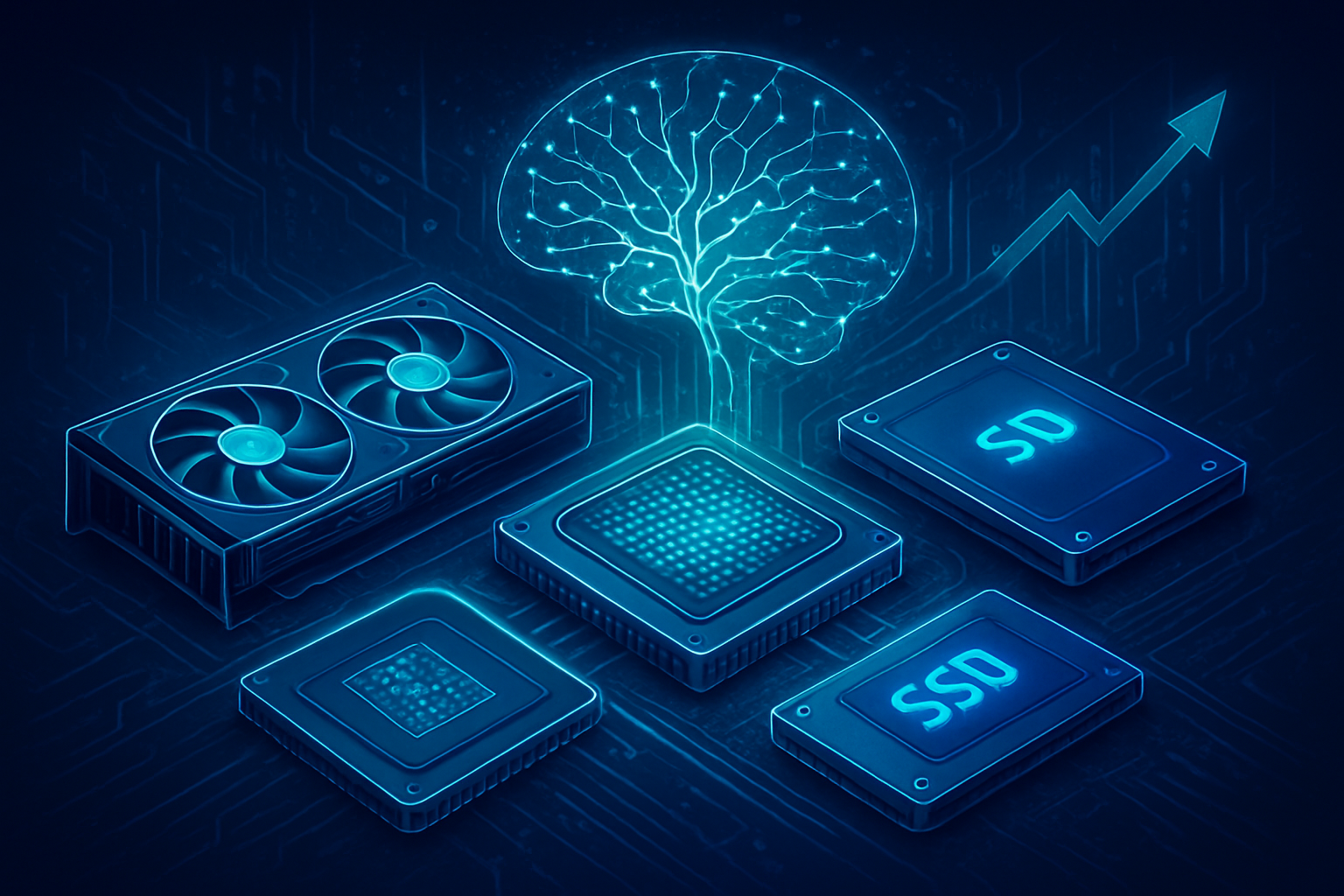
  • Black Friday 2025: A Deep Dive into PC Hardware Deals Amidst AI Boom and Shifting Markets

    Black Friday 2025: A Deep Dive into PC Hardware Deals Amidst AI Boom and Shifting Markets

    Black Friday 2025 has arrived as a pivotal moment for the PC hardware industry, offering a complex blend of aggressive consumer deals and underlying market shifts driven by the insatiable demand from artificial intelligence. Live tech deals are painting a nuanced picture of current consumer trends, fierce market competition, and the overall health of a sector grappling with both unprecedented growth drivers and looming supply challenges. From highly sought-after GPUs and powerful CPUs to essential SSDs, the discounts reflect a strategic maneuver by retailers to clear inventory and capture holiday spending, even as warnings of impending price hikes for critical components cast a long shadow over future affordability.

    This year's Black Friday sales are more than just an opportunity for enthusiasts to upgrade their rigs; they are a real-time indicator of a tech landscape in flux. The sheer volume and depth of discounts on current-generation hardware signal a concerted effort to stimulate demand, while simultaneously hinting at a transitional phase before next-generation products, heavily influenced by AI integration, reshape the market. The immediate significance lies in the delicate balance between enticing consumers with attractive prices now and preparing them for a potentially more expensive future.

    Unpacking the Deals: A Technical Review of Black Friday's Hardware Bonanza

    Black Friday 2025 has delivered a torrent of deals across the PC hardware spectrum, with a particular focus on graphics cards, processors, and storage solutions. These early and ongoing promotions offer a glimpse into the industry's strategic positioning ahead of a potentially volatile market.

    In the GPU (Graphics Processing Unit) arena, NVIDIA (NASDAQ: NVDA) has been a prominent player, with its new RTX 50-series GPUs frequently dipping below their Manufacturer’s Suggested Retail Price (MSRP). Mid-range and mainstream cards, such as the RTX 5060 Ti 16GB, were notable, with some models seen at $399.99, a $20 reduction from its $429.99 MSRP. The PNY GeForce RTX 5070 12GB was also observed at $489, an 11% markdown from its $549.99 MSRP, offering strong value for high-resolution gaming. The RTX 5070 Ti, performing similarly to the previous RTX 4080 Super, presented an attractive proposition for 4K gaming at a better price point. AMD’s (NASDAQ: AMD) Radeon RX 9000 series, including the RX 9070 XT and RX 9060 XT, also featured competitive discounts, alongside Intel’s (NASDAQ: INTC) Arc B580. This aggressive pricing for current-gen GPUs suggests a push to clear inventory ahead of next-gen releases and to maintain market share against fierce competition.

    CPUs (Central Processing Units) from both Intel and AMD have seen significant reductions. Intel's 14th-generation (Raptor Lake Refresh) and newer Arrow Lake processors were available at reduced prices, with the Intel Core i5 14600K being a standout deal at $149. The Core Ultra 5 245K and 245KF were discounted to $229 and $218 respectively, often bundled with incentives. AMD’s Ryzen 9000 series chips, particularly the Ryzen 7 9700X, offered compelling value in the mid-range segment. Older AM4 Ryzen CPUs like the 5600 series, though becoming scarcer, also presented budget-friendly options. These CPU deals reflect intense competition between the two giants, striving to capture market share in a period of significant platform transitions, including the upcoming Windows 10 end-of-life.

    The SSD (Solid State Drive) market has been a tale of two narratives this Black Friday. While PCIe Gen4 and Gen5 NVMe SSDs, such as the Samsung (KRX: 005930) 990 Pro, Crucial (a brand of Micron (NASDAQ: MU)) T705, and WD Black SN850X, saw significant discounts with some drives boasting speeds exceeding 14,000 MB/s, the broader memory market is under severe pressure. Despite attractive Black Friday pricing, experts are warning of an "impending NAND apocalypse" threatening to skyrocket prices for RAM and SSDs in the coming months due to overwhelming demand from AI data centers. This makes current SSD deals a strategic "buy now" opportunity, potentially representing the last chance for consumers to acquire these components at current price levels.

    Initial reactions from the tech community are mixed. While enthusiasts are celebrating the opportunity to upgrade at lower costs, particularly for GPUs and higher-end CPUs, there's a palpable anxiety regarding the future of memory pricing. The depth of discounts on current-gen hardware is welcomed, but the underlying market forces, especially the AI sector's impact on memory, are causing concern about the sustainability of these price points beyond the Black Friday window.

    Corporate Chessboard: Navigating Black Friday's Competitive Implications

    Black Friday 2025's PC hardware deals are not merely about consumer savings; they are a strategic battleground for major tech companies, revealing shifting competitive dynamics and potential market share realignments. The deals offered by industry giants like NVIDIA, AMD, Intel, Samsung, and Micron reflect their immediate market objectives and long-term strategic positioning.

    NVIDIA (NASDAQ: NVDA), with its near-monopoly in the discrete GPU market, particularly benefits from sustained high demand, especially from the AI sector. While deep discounts on its absolute top-tier, newly released GPUs are unlikely due to overwhelming AI workload demand, NVIDIA strategically offers attractive deals on previous-generation or mid-range RTX 50 series cards. This approach helps clear inventory, maintains market dominance in gaming, and ensures a continuous revenue stream. The company’s robust CUDA software platform further solidifies its ecosystem, making switching costs high for users and developers. NVIDIA’s aggressive push into AI, with its Blackwell architecture (B200) GPUs, ensures its market leadership is tied more to innovation and enterprise demand than consumer price wars for its most advanced products.

    AMD (NASDAQ: AMD) presents a more complex picture. While showing strong gains in the x86 CPU market against Intel, its discrete GPU market share has significantly declined. Black Friday offers on AMD CPUs, such as the Ryzen 9000 series, are designed to capitalize on this CPU momentum, potentially accelerating market share gains. For GPUs, AMD is expected to be aggressive with pricing on its Radeon 9000 series to challenge NVIDIA, particularly in the enthusiast segment, and to regain lost ground. The company's strategy often involves offering compelling CPU and GPU bundles, which are particularly attractive to gamers and content creators seeking value. AMD’s long-term financial targets and significant investments in AI, including partnerships with OpenAI, indicate a broad strategic ambition that extends beyond individual component sales.

    Intel (NASDAQ: INTC), while still holding the majority of the x86 CPU market, has steadily lost ground to AMD. Black Friday deals on its 14th-gen and newer Arrow Lake CPUs are crucial for defending its market share. Intel's presence in the discrete GPU market with its Arc series is minimal, making aggressive price cuts or bundling with CPUs a probable strategy to establish a foothold. The company's reported de-prioritization of low-end PC microprocessors, focusing more on server chips and mobile segments, could lead to shortages in 2026, creating opportunities for AMD and Qualcomm. Intel's significant investments in AI and its foundry services underscore a strategic repositioning to adapt to a changing tech landscape.

    In the SSD market, Samsung (KRX: 005930) and Micron (NASDAQ: MU) (through its Crucial brand) are key players. Samsung, having regained leadership in the global memory market, leverages its position to offer competitive deals across its range of client SSDs to maintain or grow market share. Its aggressive investment in the AI semiconductor market and focus on DRAM production due to surging demand for HBM will likely influence its SSD pricing strategies. Micron, similarly, is pivoting towards high-value AI memory, with its HBM3e chips fully booked for 2025. While offering competitive pricing on Crucial brand client SSDs, its strategic focus on AI-driven memory might mean more targeted discounts rather than widespread, deep cuts on all SSD lines. Both companies face the challenge of balancing consumer demand with the overwhelming enterprise demand for memory from AI data centers, which is driving up component costs.

    The competitive implications of Black Friday 2025 are clear: NVIDIA maintains GPU dominance, AMD continues its CPU ascent while fighting for GPU relevance, and Intel is in a period of strategic transformation. The memory market, driven by AI, is a significant wild card, potentially leading to higher prices and altering the cost structure for all hardware manufacturers. Bundling components will likely remain a key strategy for all players to offer perceived value without direct price slashing, while the overall demand from AI hyperscalers will continue to prioritize enterprise over consumer supply, potentially limiting deep discounts on cutting-edge components.

    The Broader Canvas: Black Friday's Place in the AI Era

    Black Friday 2025’s PC hardware deals are unfolding against a backdrop of profound shifts in the broader tech landscape, offering crucial insights into consumer behavior, industry health, and the pervasive influence of artificial intelligence. These sales are not merely isolated events but a barometer of a market in flux, reflecting a cautious recovery, escalating component costs, and a strategic pivot towards AI-powered computing.

    The PC hardware industry is poised for a significant rebound in 2025, largely driven by the impending end-of-life support for Windows 10 in October 2025. This necessitates a global refresh cycle for both consumers and businesses, with global PC shipments showing notable year-over-year increases in Q3 2025. A major trend shaping this landscape is the rapid rise of AI-powered PCs, equipped with integrated Neural Processing Units (NPUs). These AI-enhanced devices are projected to account for 43-44% of all PC shipments by the end of 2025, a substantial leap from 17% in 2024. This integration is not just a technological advancement; it's a driver of higher average selling prices (ASPs) for notebooks and other components, signaling a premiumization of the PC market.

    Consumer spending on technology in the U.S. is expected to see a modest increase in 2025, yet consumers are demonstrating cautious and strategic spending habits, actively seeking promotional offers. While Black Friday remains a prime opportunity for PC upgrades, the market is described as "weird" due to conflicting forces. Online sales continue to dominate, with mobile shopping becoming increasingly popular, and "Buy Now, Pay Later" (BNPL) options gaining traction. This highlights a consumer base that is both eager for deals and financially prudent.

    Inventory levels for certain PC hardware components are experiencing significant fluctuations. DRAM prices, for instance, have doubled in a short period due to high demand from AI hyperscalers, leading to potential shortages for general consumers in 2026. SSD prices, while seeing Black Friday deals, are also under pressure from this "NAND apocalypse." This creates a sense of urgency for consumers to purchase during Black Friday, viewing it as a potential "last chance" to secure certain components at current price levels. Despite these pressures, the broader outlook for Q4 2025 suggests sufficient buffer inventory and expanded supplier capacity in most sectors, though unforeseen events or new tariffs could quickly alter this.

    Pricing sustainability is a significant concern. The strong demand for AI integration is driving up notebook prices, and the surging demand from AI data centers is causing DRAM prices to skyrocket. New U.S. tariffs on Chinese imports, implemented in April 2025, are anticipated to increase PC costs by 5-10% in the second half of 2025, further threatening pricing stability. While premium PC categories might have more margin to absorb increased costs, lower- and mid-range PC prices are expected to be more susceptible to increases or less dramatic sales. Regarding market saturation, the traditional PC market is showing signs of slowing growth after 2025, with a projected "significant decrease in entry-level PC gaming" as some gamers migrate to consoles or mobile platforms, though a segment of these gamers are shifting towards higher-tier PC hardware.

    Compared to previous Black Friday cycles, 2025 is unique due to the profound impact of AI demand on component pricing. While the traditional pattern of retailers clearing older inventory with deep discounts persists, the underlying market forces are more complex. Recent cycles have seen an increase in discounting intensity, with a significant portion of tech products sold at 50% discounts in 2024. However, the current environment introduces an urgency driven by impending price hikes, making Black Friday 2025 a critical window before a potentially more expensive future for certain components.

    The Horizon Beyond Black Friday: Future Developments in PC Hardware

    The PC hardware market, post-Black Friday 2025, is poised for a period of dynamic evolution, driven by relentless technological innovation, the pervasive influence of AI, and ongoing market adjustments. Experts predict a landscape characterized by both exciting advancements and significant challenges.

    In the near term (post-Black Friday 2025 into 2026), the most critical development will be the escalating prices of DRAM and NAND memory. DRAM prices have already doubled in a short period, with predictions of further increases well into 2026, largely due to AI hyperscalers demanding vast quantities of advanced memory. This surge is expected to cause laptop prices to rise by 5-15% and contribute to a shrinking PC and smartphone market in 2026. Intel's reported de-prioritization of low-end PC microprocessors also signals potential shortages in this segment. The rapid proliferation of "AI PCs" with integrated Neural Processing Units (NPUs) will continue, expected to constitute 43% of all PC shipments by 2025, becoming the virtually exclusive choice for businesses by 2026. Processor evolution will see AMD's Zen 6 and Intel's Nova Lake architectures in late 2026, potentially leveraging advanced fabrication processes for substantial performance gains and AI accelerators. DDR6 RAM and GDDR7 memory for GPUs are also on the horizon, promising double the bandwidth and speeds exceeding 32 Gbps respectively. PCIe 5.0 motherboards are projected to become standard in 2026, enhancing overall system performance.

    Looking at long-term developments (2026-2030), the global computer hardware market is forecast to continue its growth, driven by enterprise-grade AI integration, the Windows 10 end-of-life, and the lasting impact of hybrid work models. AI-optimized laptops are expected to expand significantly, reflecting the increasing integration of AI capabilities across all PC tiers. The gaming and esports segment is also predicted to advance strongly, indicating sustained demand for high-performance hardware. A significant shift could also occur with ARM-based PCs, projected to increase their market share significantly and pose a strong challenge to the long-standing dominance of x86 systems. Emerging interfaces like Brain-Computer Interfaces (BCIs) might see early applications in fields such as prosthetic control and augmented reality by 2026.

    Potential applications and use cases, influenced by current pricing trends, will increasingly leverage local AI acceleration for enhanced privacy, lower latency, and improved productivity in hybrid work environments. This includes more sophisticated voice assistants, real-time language translation, advanced content creation tools, and intelligent security features. Advanced gaming and content creation will continue to push hardware boundaries, with dropping OLED monitor prices making high-quality visuals more accessible. There's also a noticeable shift in high-end hardware purchases towards prosumer and business workstation use, particularly for 3D design and complex computational tasks.

    However, several challenges need to be addressed. The memory supply crisis, driven by AI demand, is the most pressing near-term concern, threatening to create shortages and rapidly increase prices for consumers. Broader supply chain vulnerabilities, geopolitical tensions, and tariff impacts could further complicate component availability and costs. Sustainability and e-waste are growing concerns, requiring the industry to focus on reducing waste, minimizing energy usage, and designing for modularity. Insufficient VRAM in some new graphics cards remains a recurring issue, potentially limiting their longevity for modern games.

    Expert predictions largely align on the dominance of AI PCs, with TechInsights, Gartner, and IDC all foreseeing their rapid expansion. Trendforce and Counterpoint Research are particularly vocal about the memory supply crisis, predicting shrinking PC and smartphone markets in 2026 due to surging DRAM prices. Experts from PCWorld are advising consumers to buy hardware during Black Friday 2025, especially memory, as prices are expected to rise significantly thereafter. The long-term outlook remains positive, driven by new computing paradigms and evolving work environments, but the path forward will require careful navigation of these challenges.

    Wrapping Up: Black Friday's Lasting Echoes in the AI Hardware Era

    Black Friday 2025 has been a period of compelling contradictions for the PC hardware market. While offering undeniable opportunities for consumers to snag significant deals on GPUs, CPUs, and SSDs, it has simultaneously served as a stark reminder of the underlying market forces, particularly the escalating demand from the AI sector, that are reshaping the industry's future. The deals, in essence, were a strategic inventory clear-out and a temporary reprieve before a potentially more expensive and AI-centric computing era.

    The key takeaways from this Black Friday are multifaceted. Consumers benefited from aggressive pricing on current-generation graphics cards and processors, allowing for substantial upgrades or new PC builds. However, the "heartbreak category" of RAM and the looming threat of increased SSD prices, driven by the "DRAM apocalypse" fueled by AI hyperscalers, highlighted a critical vulnerability in the supply chain. The deals on pre-built gaming PCs and laptops also presented strong value, often featuring the latest components at attractive price points. This reflected retailers' fierce competition and their efforts to move inventory manufactured with components acquired before the recent surge in memory costs.

    In the context of recent market history, Black Friday 2025 marks a pivotal moment where the consumer PC hardware market's dynamics are increasingly intertwined with and overshadowed by the enterprise AI sector. The aggressive discounting, especially on newer GPUs, suggests a transition period, an effort to clear the decks before the full impact of rising component costs and the widespread adoption of AI-specific hardware fundamentally alters pricing structures. This year's sales were a stark departure from the relative stability of past Black Fridays, driven by a unique confluence of post-pandemic recovery, strategic corporate shifts, and the insatiable demand for AI compute power.

    The long-term impact on the industry is likely to be profound. We can anticipate sustained higher memory prices into 2026 and beyond, potentially leading to a contraction in overall PC and smartphone unit sales, even if average selling prices (ASPs) increase due to premiumization. The industry will increasingly pivot towards higher-margin, AI-capable devices, with AI-enabled PCs expected to dominate shipments. This shift, coupled with Intel's potential de-prioritization of low-end desktop CPUs, could foster greater competition in these segments from AMD and Qualcomm. Consumers will need to become more strategic in their purchasing, and retailers will face continued pressure to balance promotions with profitability in a more volatile market.

    In the coming weeks and months, consumers should closely watch for any further price increases on RAM and SSDs, as the post-Black Friday period may see these components become significantly more expensive. Evaluating pre-built systems carefully will remain crucial, as they might continue to offer better overall value compared to building a PC from scratch. For investors, monitoring memory market trends, AI PC adoption rates, shifts in CPU market share, and the financial health of major retailers will be critical indicators of the industry's trajectory. The resilience of supply chains against global economic factors and potential tariffs will also be a key factor to watch. Black Friday 2025 was more than just a sales event; it was a powerful signal of a PC hardware industry on the cusp of a major transformation, with AI as the undeniable driving force.


    This content is intended for informational purposes only and represents analysis of current AI developments.

    TokenRing AI delivers enterprise-grade solutions for multi-agent AI workflow orchestration, AI-powered development tools, and seamless remote collaboration platforms.
    For more information, visit https://www.tokenring.ai/.

  • AMD Ignites Data Center Offensive: Powering the Trillion-Dollar AI Future

    AMD Ignites Data Center Offensive: Powering the Trillion-Dollar AI Future

    New York, NY – Advanced Micro Devices (AMD) (NASDAQ: AMD) is aggressively accelerating its push into the data center sector, unveiling audacious expansion plans and projecting rapid growth driven primarily by the insatiable demand for artificial intelligence (AI) compute. With a strategic pivot marked by recent announcements, particularly at its Financial Analyst Day on November 11, 2025, AMD is positioning itself to capture a significant share of the burgeoning AI and tech industry, directly challenging established players and offering critical alternatives for AI infrastructure development.

    The company anticipates its data center chip market to swell to a staggering $1 trillion by 2030, with AI serving as the primary catalyst for this explosive growth. AMD projects its overall data center business to achieve an impressive 60% compound annual growth rate (CAGR) over the next three to five years. Furthermore, its specialized AI data center revenue is expected to surge at an 80% CAGR within the same timeframe, aiming for "tens of billions of dollars of revenue" from its AI business by 2027. This aggressive growth strategy, coupled with robust product roadmaps and strategic partnerships, underscores AMD's immediate significance in the tech landscape as it endeavors to become a dominant force in the era of pervasive AI.

    Technical Prowess: AMD's Arsenal for AI Dominance

    AMD's comprehensive strategy for data center growth is built upon a formidable portfolio of CPU and GPU technologies, designed to challenge the dominance of NVIDIA (NASDAQ: NVDA) and Intel (NASDAQ: INTC). The company's focus on high memory capacity and bandwidth, an open software ecosystem (ROCm), and advanced chiplet designs aims to deliver unparalleled performance for HPC and AI workloads.

    The AMD Instinct MI300 series, built on the CDNA 3 architecture, represents a significant leap. The MI300A, a breakthrough discrete Accelerated Processing Unit (APU), integrates 24 AMD Zen 4 x86 CPU cores and 228 CDNA 3 GPU compute units with 128 GB of unified HBM3 memory, offering 5.3 TB/s bandwidth. This APU design eliminates bottlenecks by providing a single shared address space for CPU and GPU, simplifying programming and data management, a stark contrast to traditional discrete CPU/GPU architectures. The MI300X, a dedicated generative AI accelerator, maximizes GPU compute with 304 CUs and an industry-leading 192 GB of HBM3 memory, also at 5.3 TB/s. This memory capacity is crucial for large language models (LLMs), allowing them to run efficiently on a single chip—a significant advantage over NVIDIA's H100 (80 GB HBM2e/96GB HBM3). AMD has claimed the MI300X to be up to 20% faster than the H100 in single-GPU setups and up to 60% faster in 8-GPU clusters for specific LLM workloads, with a 40% advantage in inference latency on Llama 2 70B.

    Looking ahead, the AMD Instinct MI325X, part of the MI300 series, will feature 256 GB HBM3E memory with 6 TB/s bandwidth, providing 1.8X the memory capacity and 1.2X the bandwidth compared to competitive accelerators like NVIDIA H200 SXM, and up to 1.3X the AI performance (TF32). The upcoming MI350 series, anticipated in mid-2025 and built on the CDNA 4 architecture using TSMC's 3nm process, promises up to 288 GB of HBM3E memory and 8 TB/s bandwidth. It will introduce native support for FP4 and FP6 precision, delivering up to 9.2 PetaFLOPS of FP4 compute on the MI355X and a claimed 4x generation-on-generation AI compute increase. This series is expected to rival NVIDIA's Blackwell B200 AI chip. Further out, the MI450 series GPUs are central to AMD's "Helios" rack-scale systems slated for Q3 2026, offering up to 432GB of HBM4 memory and 19.6 TB/s bandwidth, with the "Helios" system housing 72 MI450 GPUs for up to 1.4 exaFLOPS (FP8) performance. The MI500 series, planned for 2027, aims for even greater scalability in "Mega Pod" architectures.

    Complementing its GPU accelerators, AMD's EPYC CPUs continue to strengthen its data center offerings. The 4th Gen EPYC "Bergamo" processors, with up to 128 Zen 4c cores, are optimized for cloud-native, dense multi-threaded environments, often outperforming Intel Xeon in raw multi-threaded workloads and offering superior consolidation ratios in virtualization. The "Genoa-X" variant, featuring AMD's 3D V-Cache technology, significantly increases L3 cache (up to 1152MB), providing substantial performance uplifts for memory-intensive HPC applications like CFD and FEA, surpassing Intel Xeon's cache capabilities. Initial reactions from the AI research community have been largely optimistic, citing the MI300X's strong performance for LLMs due to its high memory capacity, its competitiveness against NVIDIA's H100, and the significant maturation of AMD's open-source ROCm 7 software ecosystem, which now has official PyTorch support.

    Reshaping the AI Industry: Impact on Tech Giants and Startups

    AMD's aggressive data center strategy is creating significant ripple effects across the AI industry, fostering competition, enabling new deployments, and shifting market dynamics for tech giants, AI companies, and startups alike.

    OpenAI has inked a multibillion-dollar, multi-year deal with AMD, committing to deploy hundreds of thousands of AMD's AI chips, starting with the MI450 series in H2 2026. This monumental partnership, expected to generate over $100 billion in revenue for AMD and granting OpenAI warrants for up to 160 million AMD shares, is a transformative validation of AMD's AI hardware and software, helping OpenAI address its insatiable demand for computing power. Major Cloud Service Providers (CSPs) like Microsoft Azure (NASDAQ: MSFT) and Oracle Cloud Infrastructure (NYSE: ORCL) are integrating AMD's MI300X and MI350 accelerators into their AI infrastructure, diversifying their AI hardware supply chains. Google Cloud (NASDAQ: GOOGL) is also partnering with AMD, leveraging its fifth-generation EPYC processors for new virtual machines.

    The competitive implications for NVIDIA are substantial. While NVIDIA currently dominates the AI GPU market with an estimated 85-90% share, AMD is methodically gaining ground. The MI300X and upcoming MI350/MI400 series offer superior memory capacity and bandwidth, providing a distinct advantage in running very large AI models, particularly for inference workloads. AMD's open ecosystem strategy with ROCm directly challenges NVIDIA's proprietary CUDA, potentially attracting developers and partners seeking greater flexibility and interoperability, although NVIDIA's mature software ecosystem remains a formidable hurdle. Against Intel, AMD is gaining server CPU revenue share, and in the AI accelerator space, AMD appears to be "racing ahead of Intel" in directly challenging NVIDIA, particularly with its major customer wins like OpenAI.

    AMD's growth is poised to disrupt the AI industry by diversifying the AI hardware supply chain, providing a credible alternative to NVIDIA and alleviating potential bottlenecks. Its products, with high memory capacity and competitive power efficiency, can lead to more cost-effective AI and HPC deployments, benefiting smaller companies and startups. The open-source ROCm platform challenges proprietary lock-in, potentially fostering greater innovation and flexibility for developers. Strategically, AMD is aligning its portfolio to meet the surging demand for AI inferencing, anticipating that these workloads will surpass training in compute demand by 2028. Its memory-centric architecture is highly advantageous for inference, potentially shifting the market balance. AMD has significantly updated its projections, now expecting the AI data center market to reach $1 trillion by 2030, aiming for a double-digit market share and "tens of billions of dollars" in annual revenue from data centers by 2027.

    Wider Significance: Shaping the Future of AI

    AMD's accelerated data center strategy is deeply integrated with several key trends shaping the AI landscape, signifying a more mature and strategically nuanced phase of AI development.

    A cornerstone of AMD's strategy is its commitment to an open ecosystem through its Radeon Open Compute platform (ROCm) software stack. This directly contrasts with NVIDIA's proprietary CUDA, aiming to free developers from vendor lock-in and foster greater transparency, collaboration, and community-driven innovation. AMD's active alignment with the PyTorch Foundation and expanded ROCm compatibility with major AI frameworks is a critical move toward democratizing AI. Modern AI, particularly LLMs, are increasingly memory-bound, demanding substantial memory capacity and bandwidth. AMD's Instinct MI series accelerators are specifically engineered for this, with the MI300X offering 192 GB of HBM3 and the MI325X boasting 256 GB of HBM3E. These high-memory configurations allow massive AI models to run on a single chip, crucial for faster inference and reduced costs, especially as AMD anticipates inference workloads to account for 70% of AI compute demand by 2027.

    The rapid adoption of AI is significantly increasing data center electricity consumption, making energy efficiency a core design principle for AMD. The company has set ambitious goals, aiming for a 30x increase in energy efficiency for its processors and accelerators in AI training and HPC from 2020-2025, and a 20x rack-scale energy efficiency goal for AI training and inference by 2030. This focus is critical for scaling AI sustainably. Broader impacts include the democratization of AI, as high-performance, memory-centric solutions and an open-source platform make advanced computational resources more accessible. This fosters increased competition and innovation, driving down costs and accelerating hardware development. The emergence of AMD as a credible hyperscale alternative also helps diversify the AI infrastructure, reducing single-vendor lock-in.

    However, challenges remain. Intense competition from NVIDIA's dominant market share and mature CUDA ecosystem, as well as Intel's advancements, demands continuous innovation from AMD. Supply chain and geopolitical risks, particularly reliance on TSMC and U.S. export controls, pose potential bottlenecks and revenue constraints. While AMD emphasizes energy efficiency, the overall explosion in AI demand itself raises concerns about energy consumption and the environmental footprint of AI hardware manufacturing. Compared to previous AI milestones, AMD's current strategy is a significant milestone, moving beyond incremental hardware improvements to a holistic approach that actively shapes the future computational needs of AI. The high stakes, the unprecedented scale of investment, and the strategic importance of both hardware and software integration underscore the profound impact this will have.

    Future Horizons: What's Next for AMD's Data Center Vision

    AMD's aggressive roadmap outlines a clear trajectory for near-term and long-term advancements across its data center portfolio, poised to further solidify its position in the evolving AI and HPC landscape.

    In the near term, the AMD Instinct MI325X accelerator, with its 288GB of HBM3E memory, will be generally available in Q4 2024. This will be followed by the MI350 series in 2025, powered by the new CDNA 4 architecture on 3nm process technology, promising up to a 35x increase in AI inference performance over the MI300 series. For CPUs, the Zen 5-based "Turin" processors are already seeing increased deployment, with the "Venice" EPYC processors (Zen 6, 2nm-class process) slated for 2026, offering up to 256 cores and significantly increased CPU-to-GPU bandwidth. AMD is also launching the Pensando Pollara 400 AI NIC in H1 2025, providing 400 Gbps bandwidth and adhering to Ultra Ethernet Consortium standards.

    Longer term, the AMD Instinct MI400 series (CDNA "Next" architecture) is anticipated in 2026, followed by the MI500 series in 2027, bringing further generational leaps in AI performance. The 7th Gen EPYC "Verano" processors (Zen 7) are expected in 2027. AMD's vision includes comprehensive, rack-scale "Helios" systems, integrating MI450 series GPUs with "Venice" CPUs and next-generation Pensando NICs, expected to deliver rack-scale performance leadership starting in Q3 2026. The company will continue to evolve its open-source ROCm software stack (now in ROCm 7), aiming to close the gap with NVIDIA's CUDA and provide a robust, long-term development platform.

    Potential applications and use cases on the horizon are vast, ranging from large-scale AI training and inference for ever-larger LLMs and generative AI, to scientific applications in HPC and exascale computing. Cloud providers will continue to leverage AMD's solutions for their critical infrastructure and public services, while enterprise data centers will benefit from accelerated server CPU revenue share gains. Pensando DPUs will enhance networking, security, and storage offloads, and AMD is also expanding into edge computing.

    Challenges remain, including intense competition from NVIDIA and Intel, the ongoing maturation of the ROCm software ecosystem, and regulatory risks such as U.S. export restrictions that have impacted sales to markets like China. The increasing trend of hyperscalers developing their own in-house silicon could also impact AMD's total addressable market. Experts predict continued explosive growth in the data center chip market, with AMD CEO Lisa Su expecting it to reach $1 trillion by 2030. The competitive landscape will intensify, with AMD positioning itself as a strong alternative to NVIDIA, offering superior memory capacity and an open software ecosystem. The industry is moving towards chiplet-based designs, integrated AI accelerators, and a strong focus on performance-per-watt and energy efficiency. The shift towards an open ecosystem and diversified AI compute supply chain is seen as critical for broader innovation and is where AMD aims to lead.

    Comprehensive Wrap-up: AMD's Enduring Impact on AI

    AMD's accelerated growth strategy for the data center sector marks a pivotal moment in the evolution of artificial intelligence. The company's aggressive product roadmap, spanning its Instinct MI series GPUs and EPYC CPUs, coupled with a steadfast commitment to an open software ecosystem via ROCm, positions it as a formidable challenger to established market leaders. Key takeaways include AMD's industry-leading memory capacity in its AI accelerators, crucial for the efficient execution of large language models, and its strategic partnerships with major players like OpenAI, Microsoft Azure, and Oracle Cloud Infrastructure, which validate its technological prowess and market acceptance.

    This development signifies more than just a new competitor; it represents a crucial step towards diversifying the AI hardware supply chain, potentially lowering costs, and fostering a more open and innovative AI ecosystem. By offering compelling alternatives to proprietary solutions, AMD is empowering a broader range of AI companies and researchers, from tech giants to nimble startups, to push the boundaries of AI development. The company's emphasis on energy efficiency and rack-scale solutions like "Helios" also addresses critical concerns about the sustainability and scalability of AI infrastructure.

    In the grand tapestry of AI history, AMD's current strategy is a significant milestone, moving beyond incremental hardware improvements to a holistic approach that actively shapes the future computational needs of AI. The high stakes, the unprecedented scale of investment, and the strategic importance of both hardware and software integration underscore the profound impact this will have.

    In the coming weeks and months, watch for further announcements regarding the deployment of the MI325X and MI350 series, continued advancements in the ROCm ecosystem, and any new strategic partnerships. The competitive dynamics with NVIDIA and Intel will remain a key area of observation, as will AMD's progress towards its ambitious revenue and market share targets. The success of AMD's open platform could fundamentally alter how AI is developed and deployed globally.


    This content is intended for informational purposes only and represents analysis of current AI developments.

    TokenRing AI delivers enterprise-grade solutions for multi-agent AI workflow orchestration, AI-powered development tools, and seamless remote collaboration platforms.
    For more information, visit https://www.tokenring.ai/.

  • AMD’s AI Ascent Fuels Soaring EPS Projections: A Deep Dive into the Semiconductor Giant’s Ambitious Future

    AMD’s AI Ascent Fuels Soaring EPS Projections: A Deep Dive into the Semiconductor Giant’s Ambitious Future

    Advanced Micro Devices (NASDAQ: AMD) is charting an aggressive course for financial expansion, with analysts projecting impressive Earnings Per Share (EPS) growth over the next several years. Fuelled by a strategic pivot towards the booming artificial intelligence (AI) and data center markets, coupled with a resurgent PC segment and anticipated next-generation gaming console launches, the semiconductor giant is poised for a significant uplift in its financial performance. These ambitious forecasts underscore AMD's growing prowess and its determination to capture a larger share of the high-growth technology sectors.

    The company's robust product roadmap, highlighted by its Instinct MI series GPUs and EPYC CPUs, alongside critical partnerships with industry titans like OpenAI, Microsoft, and Meta Platforms, forms the bedrock of these optimistic projections. As the tech world increasingly relies on advanced computing power for AI workloads, AMD's calculated investments in research and development, coupled with an open software ecosystem, are positioning it as a formidable competitor in the race for future innovation and market dominance.

    Driving Forces Behind the Growth: AMD's Technical and Market Strategy

    At the heart of AMD's (NASDAQ: AMD) projected surge is its formidable push into the AI accelerator market with its Instinct MI series GPUs. The MI300 series has already demonstrated strong demand, contributing significantly to a 122% year-over-year increase in data center revenue in Q3 2024. Building on this momentum, the MI350 series, expected to be commercially available from Q3 2025, promises a 4x increase in AI compute and a staggering 35x improvement in inferencing performance compared to its predecessor. This rapid generational improvement highlights AMD's aggressive product cadence, aiming for a one-year refresh cycle to directly challenge market leader NVIDIA (NASDAQ: NVDA).

    Looking further ahead, the highly anticipated MI400 series, coupled with the "Helios" full-stack AI platform, is slated for a 2026 launch, promising even greater advancements in AI compute capabilities. A key differentiator for AMD is its commitment to an open architecture through its ROCm software ecosystem. This stands in contrast to NVIDIA's proprietary CUDA platform, with ROCm 7.0 (and 6.4) designed to enhance developer productivity and optimize AI workloads. This open approach, supported by initiatives like the AMD Developer Cloud, aims to lower barriers for adoption and foster a broader developer community, a critical strategy in a market often constrained by vendor lock-in.

    Beyond AI accelerators, AMD's EPYC server CPUs continue to bolster its data center segment, with sustained demand from cloud computing customers and enterprise clients. Companies like Google Cloud (NASDAQ: GOOGL) and Oracle (NYSE: ORCL) are set to launch 5th-gen EPYC instances in 2025, further solidifying AMD's position. In the client segment, the rise of AI-capable PCs, projected to comprise 60% of the total PC market by 2027, presents another significant growth avenue. AMD's Ryzen CPUs, particularly those featuring the new Ryzen AI 300 Series processors integrated into products like Dell's (NYSE: DELL) Plus 14 2-in-1 notebook, are poised to capture a substantial share of this evolving market, contributing to both revenue and margin expansion.

    The gaming sector, though cyclical, is also expected to rebound, with AMD (NASDAQ: AMD) maintaining its critical role as the semi-custom chip supplier for the next-generation gaming consoles from Microsoft (NASDAQ: MSFT) and Sony (NYSE: SONY), anticipated around 2027-2028. Financially, analysts project AMD's EPS to reach between $3.80 and $3.95 per share in 2025, climbing to $5.55-$5.89 in 2026, and around $6.95 in 2027. Some bullish long-term outlooks, factoring in substantial AI GPU chip sales, even project EPS upwards of $40 by 2028-2030, underscoring the immense potential seen in the company's strategic direction.

    Industry Ripple Effects: Impact on AI Companies and Tech Giants

    AMD's (NASDAQ: AMD) aggressive pursuit of the AI and data center markets has profound implications across the tech landscape. Tech giants like Microsoft (NASDAQ: MSFT), Meta Platforms (NASDAQ: META), Amazon Web Services (NASDAQ: AMZN), Google Cloud (NASDAQ: GOOGL), and Oracle (NYSE: ORCL) stand to benefit directly from AMD's expanding portfolio. These companies, already deploying AMD's EPYC CPUs and Instinct GPUs in their cloud and AI infrastructures, gain a powerful alternative to NVIDIA's (NASDAQ: NVDA) offerings, fostering competition and potentially driving down costs or increasing innovation velocity in AI hardware. The multi-year partnership with OpenAI, for instance, could see AMD processors powering a significant portion of future AI data centers.

    The competitive implications for major AI labs and tech companies are significant. NVIDIA, currently the dominant player in AI accelerators, faces a more robust challenge from AMD. AMD's one-year cadence for new Instinct product launches, coupled with its open ROCm software ecosystem, aims to erode NVIDIA's market share and address the industry's desire for more diverse, open hardware options. This intensified competition could accelerate the pace of innovation across the board, pushing both companies to deliver more powerful and efficient AI solutions at a faster rate.

    Potential disruption extends to existing products and services that rely heavily on a single vendor for AI hardware. As AMD's solutions mature and gain wider adoption, companies may re-evaluate their hardware strategies, leading to a more diversified supply chain for AI infrastructure. For startups, AMD's open-source initiatives and accessible hardware could lower the barrier to entry for developing and deploying AI models, fostering a more vibrant ecosystem of innovation. The acquisition of ZT Systems also positions AMD to offer more integrated AI accelerator infrastructure solutions, further streamlining deployment for large-scale customers.

    AMD's strategic advantages lie in its comprehensive product portfolio spanning CPUs, GPUs, and AI accelerators, allowing it to offer end-to-end solutions for data centers and AI PCs. Its market positioning is strengthened by its focus on high-growth segments and strategic partnerships that secure significant customer commitments. The $10 billion global AI infrastructure partnership with Saudi Arabia's HUMAIN exemplifies AMD's ambition to build scalable, open AI platforms globally, further cementing its strategic advantage and market reach in emerging AI hubs.

    Broader Significance: AMD's Role in the Evolving AI Landscape

    AMD's (NASDAQ: AMD) ambitious growth trajectory and its deep dive into the AI market fit perfectly within the broader AI landscape, which is currently experiencing an unprecedented boom in demand for specialized hardware. The company's focus on high-performance computing for both AI training and, critically, AI inferencing, aligns with industry trends predicting inferencing workloads to surpass training demands by 2028. This strategic alignment positions AMD not just as a chip supplier, but as a foundational enabler of the next wave of AI applications, from enterprise-grade solutions to the proliferation of AI PCs.

    The impacts of AMD's expansion are multifaceted. Economically, it signifies increased competition in a market largely dominated by NVIDIA (NASDAQ: NVDA), which could lead to more competitive pricing, faster innovation cycles, and a broader range of choices for consumers and businesses. Technologically, AMD's commitment to an open software ecosystem (ROCm) challenges the proprietary models that have historically characterized the semiconductor industry, potentially fostering greater collaboration and interoperability in AI development. This could democratize access to advanced AI hardware and software tools, benefiting smaller players and academic institutions.

    However, potential concerns also exist. The intense competition in the AI chip market demands continuous innovation and significant R&D investment. AMD's ability to maintain its aggressive product roadmap and software development pace will be crucial. Geopolitical challenges, such as U.S. export restrictions, could also impact its global strategy, particularly in key markets. Comparisons to previous AI milestones, such as the initial breakthroughs in deep learning, suggest that the availability of diverse and powerful hardware is paramount for accelerating progress. AMD's efforts are akin to providing more lanes on the information superhighway, allowing more AI traffic to flow efficiently.

    Ultimately, AMD's ascent reflects a maturing AI industry that requires robust, scalable, and diverse hardware solutions. Its strategy of targeting both the high-end data center AI market and the burgeoning AI PC segment demonstrates a comprehensive understanding of where AI is heading – from centralized cloud-based intelligence to pervasive edge computing. This holistic approach, coupled with strategic partnerships, positions AMD as a critical player in shaping the future infrastructure of artificial intelligence.

    The Road Ahead: Future Developments and Expert Outlook

    In the near term, experts predict that AMD (NASDAQ: AMD) will continue to aggressively push its Instinct MI series, with the MI350 series becoming widely available in Q3 2025 and the MI400 series launching in 2026. This rapid refresh cycle is expected to intensify the competition with NVIDIA (NASDAQ: NVDA) and capture increasing market share in the AI accelerator space. The continued expansion of the ROCm software ecosystem, with further optimizations and broader developer adoption, will be crucial for solidifying AMD's position. We can also anticipate more partnerships with cloud providers and major tech firms as they seek diversified AI hardware solutions.

    Longer-term, the potential applications and use cases on the horizon are vast. Beyond traditional data center AI, AMD's advancements could power more sophisticated AI capabilities in autonomous vehicles, advanced robotics, personalized medicine, and smart cities. The rise of AI PCs, driven by AMD's Ryzen AI processors, will enable a new generation of local AI applications, enhancing productivity, creativity, and security directly on user devices. The company's role in next-generation gaming consoles also ensures its continued relevance in the entertainment sector, which is increasingly incorporating AI-driven graphics and gameplay.

    However, several challenges need to be addressed. Maintaining a competitive edge against NVIDIA's established ecosystem and market dominance requires sustained innovation and significant R&D investment. Ensuring robust supply chains for advanced chip manufacturing, especially in a volatile global environment, will also be critical. Furthermore, the evolving landscape of AI software and models demands continuous adaptation and optimization of AMD's hardware and software platforms. Experts predict that the success of AMD's "Helios" full-stack AI platform and its ability to foster a vibrant developer community around ROCm will be key determinants of its long-term market position.

    Conclusion: A New Era for AMD in AI

    In summary, Advanced Micro Devices (NASDAQ: AMD) is embarking on an ambitious journey fueled by robust EPS growth projections for the coming years. The key takeaways from this analysis underscore the company's strategic pivot towards the burgeoning AI and data center markets, driven by its powerful Instinct MI series GPUs and EPYC CPUs. Complementing this hardware prowess is AMD's commitment to an open software ecosystem via ROCm, a critical move designed to challenge existing industry paradigms and foster broader adoption. Significant partnerships with industry giants and a strong presence in the recovering PC and gaming segments further solidify its growth narrative.

    This development marks a significant moment in AI history, as it signals a maturing competitive landscape in the foundational hardware layer of artificial intelligence. AMD's aggressive product roadmap and strategic initiatives are poised to accelerate innovation across the AI industry, offering compelling alternatives and potentially democratizing access to high-performance AI computing. The long-term impact could reshape market dynamics, driving down costs and fostering a more diverse and resilient AI ecosystem.

    As we move into the coming weeks and months, all eyes will be on AMD's execution of its MI350 and MI400 series launches, the continued growth of its ROCm developer community, and the financial results that will validate these ambitious projections. The semiconductor industry, and indeed the entire tech world, will be watching closely to see if AMD can fully capitalize on its strategic investments and cement its position as a leading force in the artificial intelligence revolution.


    This content is intended for informational purposes only and represents analysis of current AI developments.

    TokenRing AI delivers enterprise-grade solutions for multi-agent AI workflow orchestration, AI-powered development tools, and seamless remote collaboration platforms.
    For more information, visit https://www.tokenring.ai/.

  • AMD Unleashes ‘Helios’ Platform: A New Dawn for Open AI Scalability

    AMD Unleashes ‘Helios’ Platform: A New Dawn for Open AI Scalability

    San Jose, California – October 14, 2025 – Advanced Micro Devices (NASDAQ: AMD) today unveiled its groundbreaking “Helios” rack-scale platform at the Open Compute Project (OCP) Global Summit, marking a pivotal moment in the quest for open, scalable, and high-performance infrastructure for artificial intelligence workloads. Designed to address the insatiable demands of modern AI, Helios represents AMD's ambitious move to democratize AI hardware, offering a powerful, standards-based alternative to proprietary systems and setting a new benchmark for data center efficiency and computational prowess.

    The Helios platform is not merely an incremental upgrade; it is a comprehensive, integrated solution engineered from the ground up to support the next generation of AI and high-performance computing (HPC). Its introduction signals a strategic shift in the AI hardware landscape, emphasizing open standards, robust scalability, and superior performance to empower hyperscalers, enterprises, and research institutions in their pursuit of advanced AI capabilities.

    Technical Prowess and Open Innovation Driving AI Forward

    At the heart of the Helios platform lies a meticulous integration of cutting-edge AMD hardware components and adherence to open industry standards. Built on the new Open Rack Wide (ORW) specification, a standard championed by Meta Platforms (NASDAQ: META) and contributed to the OCP, Helios leverages a double-wide rack design optimized for the extreme power, cooling, and serviceability requirements of gigawatt-scale AI data centers. This open architecture integrates OCP DC-MHS, UALink, and Ultra Ethernet Consortium (UEC) architectures, fostering unprecedented interoperability and significantly mitigating the risk of vendor lock-in.

    The platform is a powerhouse of AMD's latest innovations, combining AMD Instinct GPUs (including the MI350/MI355X series and anticipating future MI400/MI450 and MI500 series), AMD EPYC CPUs (featuring upcoming “Zen 6”-based “Venice” CPUs), and AMD Pensando networking components (such as Pollara 400 and “Vulcano” NICs). This synergistic integration creates a cohesive system capable of delivering exceptional performance for the most demanding AI tasks. AMD projects future Helios iterations with MI400 series GPUs to deliver up to 10 times more performance for inference on Mixture of Experts models compared to previous generations, while the MI350 series already boasts a 4x generational AI compute increase and a staggering 35x generational leap in inferencing capabilities. Furthermore, Helios is optimized for large language model (LLM) serving, supporting frameworks like vLLM and SGLang, and features FlashAttentionV3 for enhanced memory efficiency.

    This open, integrated, and rack-scale design stands in stark contrast to more proprietary, vertically integrated AI systems prevalent in the market. By providing a comprehensive reference platform, AMD aims to simplify and accelerate the deployment of AI and HPC infrastructure for original equipment manufacturers (OEMs), original design manufacturers (ODMs), and hyperscalers. The platform’s quick-disconnect liquid cooling system is crucial for managing the high power density of modern AI accelerators, while its double-wide layout enhances serviceability – critical operational needs in large-scale AI data centers. Initial reactions have been overwhelmingly positive, with OpenAI, Inc. engaging in co-design efforts for future platforms and Oracle Corporation’s (NYSE: ORCL) Oracle Cloud Infrastructure (OCI) announcing plans to deploy a massive AI supercluster powered by 50,000 AMD Instinct MI450 Series GPUs, validating AMD’s strategic direction.

    Reshaping the AI Industry Landscape

    The introduction of the Helios platform is poised to significantly impact AI companies, tech giants, and startups across the ecosystem. Hyperscalers and large enterprises, constantly seeking to scale their AI operations efficiently, stand to benefit immensely from Helios's open, flexible, and high-performance architecture. Companies like OpenAI and Oracle, already committed to leveraging AMD's technology, exemplify the immediate beneficiaries. OEMs and ODMs will find it easier to design and deploy custom AI solutions using the open reference platform, reducing time-to-market and integration complexities.

    Competitively, Helios presents a formidable challenge to established players, particularly Nvidia Corporation (NASDAQ: NVDA), which has historically dominated the AI accelerator market with its tightly integrated, proprietary solutions. AMD's emphasis on open standards, including industry-standard racks and networking over proprietary interconnects like NVLink, aims to directly address concerns about vendor lock-in and foster a more competitive and interoperable AI hardware ecosystem. This strategic move could disrupt existing product offerings and services by providing a viable, high-performance open alternative, potentially leading to increased market share for AMD in the rapidly expanding AI infrastructure sector.

    AMD's market positioning is strengthened by its commitment to an end-to-end open hardware philosophy, complementing its open-source ROCm software stack. This comprehensive approach offers a strategic advantage by empowering developers and data center operators with greater flexibility and control over their AI infrastructure, fostering innovation and reducing total cost of ownership in the long run.

    Broader Implications for the AI Frontier

    The Helios platform's unveiling fits squarely into the broader AI landscape's trend towards more powerful, scalable, and energy-efficient computing. As AI models, particularly LLMs, continue to grow in size and complexity, the demand for underlying infrastructure capable of handling gigawatt-scale data centers is skyrocketing. Helios directly addresses this need, providing a foundational element for building the necessary infrastructure to meet the world's escalating AI demands.

    The impacts are far-reaching. By accelerating the adoption of scalable AI infrastructure, Helios will enable faster research, development, and deployment of advanced AI applications across various industries. The commitment to open standards will encourage a more heterogeneous and diverse AI ecosystem, allowing for greater innovation and reducing reliance on single-vendor solutions. Potential concerns, however, revolve around the speed of adoption by the broader industry and the ability of the open ecosystem to mature rapidly enough to compete with deeply entrenched proprietary systems. Nevertheless, this development can be compared to previous milestones in computing history where open architectures eventually outpaced closed systems due to their flexibility and community support.

    The Road Ahead: Future Developments and Challenges

    Looking ahead, the Helios platform is expected to evolve rapidly. Near-term developments will likely focus on the widespread availability of the MI350/MI355X series GPUs within the platform, followed by the introduction of the more powerful MI400/MI450 and MI500 series. Continued contributions to the Open Compute Project and collaborations with key industry players are anticipated, further solidifying Helios's position as an industry-standard.

    Potential applications and use cases on the horizon are vast, ranging from even larger and more sophisticated LLM training and inference to complex scientific simulations in HPC, and the acceleration of AI-driven analytics across diverse sectors. However, challenges remain. The maturity of the open-source software ecosystem around new hardware platforms, sustained performance leadership in a fiercely competitive market, and the effective management of power and cooling at unprecedented scales will be critical for long-term success. Experts predict that AMD's aggressive push for open architectures will catalyze a broader industry shift, encouraging more collaborative development and offering customers greater choice and flexibility in building their AI supercomputers.

    A Defining Moment in AI Hardware

    AMD's Helios platform is more than just a new product; it represents a defining moment in AI hardware. It encapsulates a strategic vision that prioritizes open standards, integrated performance, and scalability to meet the burgeoning demands of the AI era. The platform's ability to combine high-performance AMD Instinct GPUs and EPYC CPUs with advanced networking and an open rack design creates a compelling alternative for companies seeking to build and scale their AI infrastructure without the constraints of proprietary ecosystems.

    The key takeaways are clear: Helios is a powerful, open, and scalable solution designed for the future of AI. Its significance in AI history lies in its potential to accelerate the adoption of open-source hardware and foster a more competitive and innovative AI landscape. In the coming weeks and months, the industry will be watching closely for further adoption announcements, benchmarks comparing Helios to existing solutions, and the continued expansion of its software ecosystem. AMD has laid down a gauntlet, and the race for the future of AI infrastructure just got a lot more interesting.


    This content is intended for informational purposes only and represents analysis of current AI developments.

    TokenRing AI delivers enterprise-grade solutions for multi-agent AI workflow orchestration, AI-powered development tools, and seamless remote collaboration platforms.
    For more information, visit https://www.tokenring.ai/.

  • AMD Ignites AI Arms Race: MI350 Accelerators and Landmark OpenAI Deal Reshape Semiconductor Landscape

    AMD Ignites AI Arms Race: MI350 Accelerators and Landmark OpenAI Deal Reshape Semiconductor Landscape

    Sunnyvale, CA – October 7, 2025 – Advanced Micro Devices (NASDAQ: AMD) has dramatically escalated its presence in the artificial intelligence arena, unveiling an aggressive product roadmap for its Instinct MI series accelerators and securing a "transformative" multi-billion dollar strategic partnership with OpenAI. These pivotal developments are not merely incremental upgrades; they represent a fundamental shift in the competitive dynamics of the semiconductor industry, directly challenging NVIDIA's (NASDAQ: NVDA) long-standing dominance in AI hardware and validating AMD's commitment to an open software ecosystem. The immediate significance of these moves signals a more balanced and intensely competitive landscape, promising innovation and diverse choices for the burgeoning AI market.

    The strategic alliance with OpenAI is particularly impactful, positioning AMD as a core strategic compute partner for one of the world's leading AI developers. This monumental deal, which includes AMD supplying up to 6 gigawatts of its Instinct GPUs to power OpenAI's next-generation AI infrastructure, is projected to generate "tens of billions" in revenue for AMD and potentially over $100 billion over four years from OpenAI and other customers. Such an endorsement from a major AI innovator not only validates AMD's technological prowess but also paves the way for a significant reallocation of market share in the lucrative generative AI chip sector, which is projected to exceed $150 billion in 2025.

    AMD's AI Arsenal: Unpacking the Instinct MI Series and ROCm's Evolution

    AMD's aggressive push into AI is underpinned by a rapid cadence of its Instinct MI series accelerators and substantial investments in its open-source ROCm software platform, creating a formidable full-stack AI solution. The MI300 series, including the MI300X, launched in 2023, already demonstrated strong competitiveness against NVIDIA's H100 in AI inference workloads, particularly for large language models like LLaMA2-70B. Building on this foundation, the MI325X, with its 288GB of HBM3E memory and 6TB/s of memory bandwidth, released in Q4 2024 and shipping in volume by Q2 2025, has shown promise in outperforming NVIDIA's H200 in specific ultra-low latency inference scenarios for massive models like Llama3 405B FP8.

    However, the true game-changer appears to be the upcoming MI350 series, slated for a mid-2025 launch. Based on AMD's new CDNA 4 architecture and fabricated on an advanced 3nm process, the MI350 promises an astounding up to 35x increase in AI inference performance and a 4x generation-on-generation AI compute improvement over the MI300 series. This leap forward, coupled with 288GB of HBM3E memory, positions the MI350 as a direct and potent challenger to NVIDIA's Blackwell (B200) series. This differs significantly from previous approaches where AMD often played catch-up; the MI350 represents a proactive, cutting-edge design aimed at leading the charge in next-generation AI compute. Initial reactions from the AI research community and industry experts indicate significant optimism, with many noting the potential for AMD to provide a much-needed alternative in a market heavily reliant on a single vendor.

    Further down the roadmap, the MI400 series, expected in 2026, will introduce the next-gen UDNA architecture, targeting extreme-scale AI applications with preliminary specifications indicating 40 PetaFLOPS of FP4 performance, 432GB of HBM memory, and 20TB/s of HBM memory bandwidth. This series will form the core of AMD's fully integrated, rack-scale "Helios" solution, incorporating future EPYC "Venice" CPUs and Pensando networking. The MI450, an upcoming GPU, is central to the initial 1 gigawatt deployment for the OpenAI partnership, scheduled for the second half of 2026. This continuous innovation cycle, extending to the MI500 series in 2027 and beyond, showcases AMD's long-term commitment.

    Crucially, AMD's software ecosystem, ROCm, is rapidly maturing. ROCm 7, generally available in Q3 2025, delivers over 3.5x the inference capability and 3x the training power compared to ROCm 6. Key enhancements include improved support for industry-standard frameworks like PyTorch and TensorFlow, expanded hardware compatibility (extending to Radeon GPUs and Ryzen AI APUs), and new development tools. AMD's vision of "ROCm everywhere, for everyone," aims for a consistent developer environment from client to cloud, directly addressing the developer experience gap that has historically favored NVIDIA's CUDA. The recent native PyTorch support for Windows and Linux, enabling AI inference workloads directly on Radeon 7000 and 9000 series GPUs and select Ryzen AI 300 and AI Max APUs, further democratizes access to AMD's AI hardware.

    Reshaping the AI Competitive Landscape: Winners, Losers, and Disruptions

    AMD's strategic developments are poised to significantly reshape the competitive landscape for AI companies, tech giants, and startups. Hyperscalers and cloud providers like Microsoft (NASDAQ: MSFT), Meta (NASDAQ: META), and Oracle (NYSE: ORCL), who have already partnered with AMD, stand to benefit immensely from a viable, high-performance alternative to NVIDIA. This diversification of supply chains reduces vendor lock-in, potentially leading to better pricing, more tailored solutions, and increased innovation from a competitive market. Companies focused on AI inference, in particular, will find AMD's MI300X and MI325X compelling due to their strong performance and potentially better cost-efficiency for specific workloads.

    The competitive implications for major AI labs and tech companies are profound. While NVIDIA continues to hold a substantial lead in AI training, particularly due to its mature CUDA ecosystem and robust Blackwell series, AMD's aggressive roadmap and the OpenAI partnership directly challenge this dominance. The deal with OpenAI is a significant validation that could prompt other major AI developers to seriously consider AMD's offerings, fostering growing trust in its capabilities. This could lead to a capture of a more substantial share of the lucrative AI GPU market, with some analysts suggesting AMD could reach up to one-third. Intel (NASDAQ: INTC), with its Gaudi AI accelerators, faces increased pressure as AMD appears to be "sprinting past" it in AI strategy, leveraging superior hardware and a more mature ecosystem.

    Potential disruption to existing products or services could come from the increased availability of high-performance, cost-effective AI compute. Startups and smaller AI companies, often constrained by the high cost and limited availability of top-tier AI accelerators, might find AMD's offerings more accessible, fueling a new wave of innovation. AMD's strategic advantages lie in its full-stack approach, offering not just chips but rack-scale solutions and an expanding software ecosystem, appealing to hyperscalers and enterprises building out their AI infrastructure. The company's emphasis on an open ecosystem with ROCm also provides a compelling alternative to proprietary platforms, potentially attracting developers seeking greater flexibility and control.

    Wider Significance: Fueling the AI Supercycle and Addressing Concerns

    AMD's advancements fit squarely into the broader AI landscape as a powerful catalyst for the ongoing "AI Supercycle." By intensifying competition and driving innovation in AI hardware, AMD is accelerating the development and deployment of more powerful and efficient AI models across various industries. This push for higher performance and greater energy efficiency is crucial as AI models continue to grow in size and complexity, demanding exponentially more computational resources. The company's ambitious 2030 goal to achieve a 20x increase in rack-scale energy efficiency from a 2024 baseline highlights a critical trend: the need for sustainable AI infrastructure capable of training large models with significantly less space and electricity.

    The impacts of AMD's invigorated AI strategy are far-reaching. Technologically, it means a faster pace of innovation in chip design, interconnects (with AMD being a founding member of the UALink Consortium, an open-source alternative to NVIDIA's NVLink), and software optimization. Economically, it promises a more competitive market, potentially leading to lower costs for AI compute and broader accessibility, which could democratize AI development. Societally, more powerful and efficient AI hardware will enable the deployment of more sophisticated AI applications in areas like healthcare, scientific research, and autonomous systems.

    Potential concerns, however, include the environmental impact of rapidly expanding AI infrastructure, even with efficiency gains. The demand for advanced manufacturing capabilities for these cutting-edge chips also presents geopolitical and supply chain vulnerabilities. Compared to previous AI milestones, AMD's current trajectory signifies a shift from a largely monopolistic hardware environment to a more diversified and competitive one, a healthy development for the long-term growth and resilience of the AI industry. It echoes earlier periods of intense competition in the CPU market, which ultimately drove rapid technological progress.

    The Road Ahead: Future Developments and Expert Predictions

    The near-term and long-term developments from AMD in the AI space are expected to be rapid and continuous. Following the MI350 series in mid-2025, the MI400 series in 2026, and the MI500 series in 2027, AMD plans to integrate these accelerators with next-generation EPYC CPUs and advanced networking solutions to deliver fully integrated, rack-scale AI systems. The initial 1 gigawatt deployment of MI450 GPUs for OpenAI in the second half of 2026 will be a critical milestone to watch, demonstrating the real-world scalability and performance of AMD's solutions in a demanding production environment.

    Potential applications and use cases on the horizon are vast. With more accessible and powerful AI hardware, we can expect breakthroughs in large language model training and inference, enabling more sophisticated conversational AI, advanced content generation, and intelligent automation. Edge AI applications will also benefit from AMD's Ryzen AI APUs, bringing AI capabilities directly to client devices. Experts predict that the intensified competition will drive further specialization in AI hardware, with different architectures optimized for specific workloads (e.g., training, inference, edge), and a continued emphasis on software ecosystem development to ease the burden on AI developers.

    Challenges that need to be addressed include further maturing the ROCm software ecosystem to achieve parity with CUDA's breadth and developer familiarity, ensuring consistent supply chain stability for cutting-edge manufacturing processes, and managing the immense power and cooling requirements of next-generation AI data centers. What experts predict will happen next is a continued "AI arms race," with both AMD and NVIDIA pushing the boundaries of silicon innovation, and an increasing focus on integrated hardware-software solutions that simplify AI deployment for a broader range of enterprises.

    A New Era in AI Hardware: A Comprehensive Wrap-Up

    AMD's recent strategic developments mark a pivotal moment in the history of artificial intelligence hardware. The key takeaways are clear: AMD is no longer just a challenger but a formidable competitor in the AI accelerator market, driven by an aggressive product roadmap for its Instinct MI series and a rapidly maturing open-source ROCm software platform. The transformative multi-billion dollar partnership with OpenAI serves as a powerful validation of AMD's capabilities, signaling a significant shift in market dynamics and an intensified competitive landscape.

    This development's significance in AI history cannot be overstated. It represents a crucial step towards diversifying the AI hardware supply chain, fostering greater innovation through competition, and potentially accelerating the pace of AI advancement across the globe. By providing a compelling alternative to existing solutions, AMD is helping to democratize access to high-performance AI compute, which will undoubtedly fuel new breakthroughs and applications.

    In the coming weeks and months, industry observers will be watching closely for several key indicators: the successful volume ramp-up and real-world performance benchmarks of the MI325X and MI350 series, further enhancements and adoption of the ROCm software ecosystem, and any additional strategic partnerships AMD might announce. The initial deployment of MI450 GPUs with OpenAI in 2026 will be a critical test, showcasing AMD's ability to execute on its ambitious vision. The AI hardware landscape is entering an exciting new era, and AMD is firmly at the forefront of this revolution.


    This content is intended for informational purposes only and represents analysis of current AI developments.

    TokenRing AI delivers enterprise-grade solutions for multi-agent AI workflow orchestration, AI-powered development tools, and seamless remote collaboration platforms.
    For more information, visit https://www.tokenring.ai/.